
Explore the RHS Facebook Archives, a rich repository of local history written by Carol Flynn. For two decades, Carol brought a deeply dedicated voice to public education at RHS. Her role as Facebook administrator through mid-2025 naturally extended her prolific research into meticulously detailed articles, most notably her multi-part historical series posts. Today, Carol continues her local history writing for The Beverly Review and other outlets.
Women's History Month
The Ridge Historical Society
March: Women’s History Month – Part 3 on the Hofer Sisters
By Carol Flynn
The five daughters of the Hofer family that lived in Beverly were leaders in the kindergarten movement in the U.S.
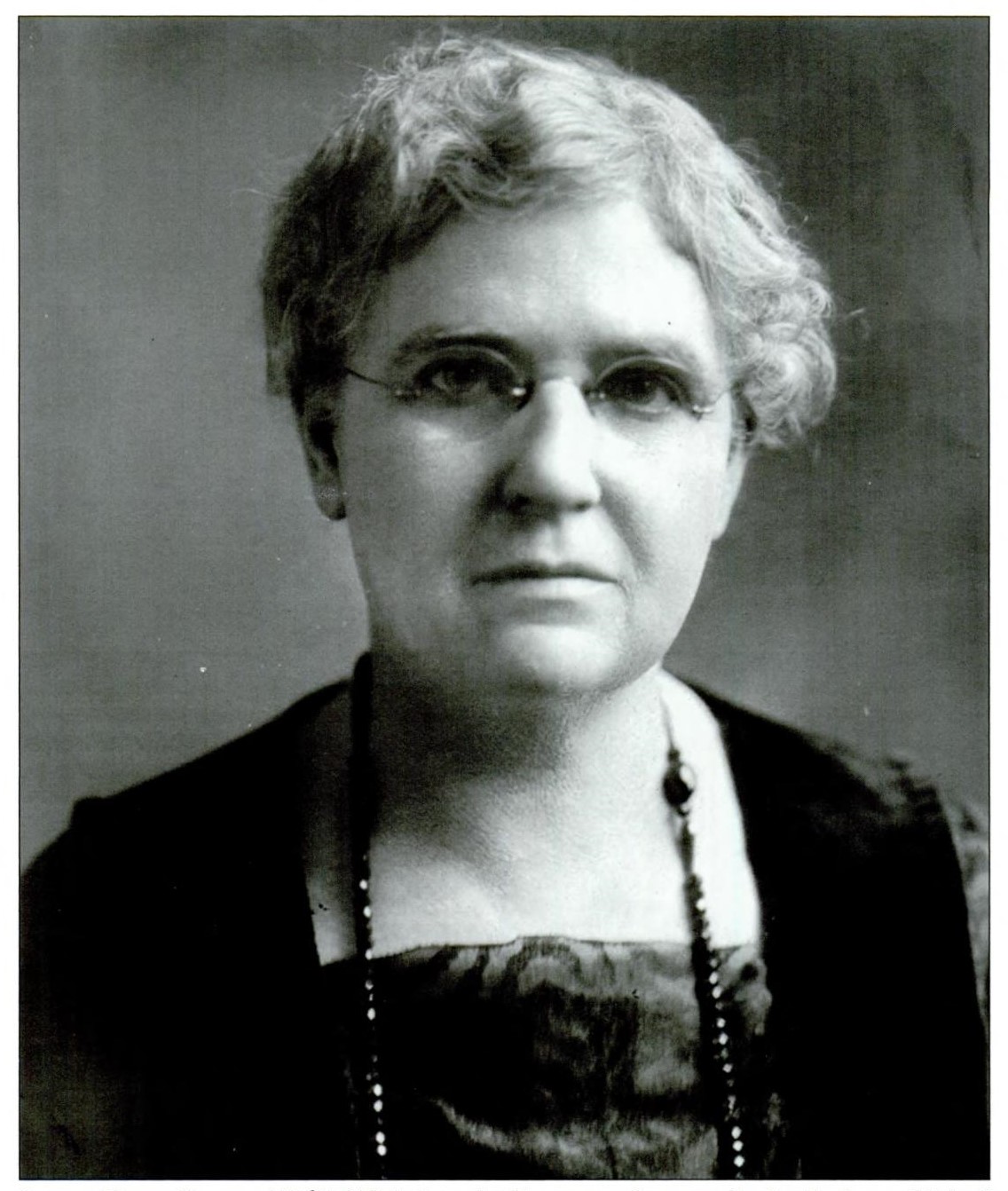
Oldest daughter Mari, profiled in the last post, was an expert in music education for children. This post will look at the second daughter, Bertha, whose career focused on education, administration, and social settlement services, especially for mothers and children.
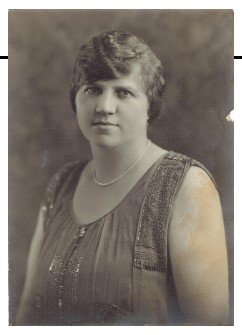
Bertha Hofer Hegner (1862-1937), like her siblings, was born in Iowa, where her parents settled after immigrating from Baden, on the German-Swiss border.
In the 1880s, several of the Hofer daughters moved to Chicago. Bertha enrolled in a training school for kindergarten teachers run by Elizabeth Harrison, a well-respected educator, as part of the Loring School, a private day and boarding school for girls in the Kenwood area.
[As an aside, the Loring School moved to Beverly and operated in the England J. Barker House at 107th and Longwood Drive from 1935 to its closure in 1962.]
Bertha graduated from that program in 1890, the same year her parents sold the newspaper they were running in Iowa and moved to Chicago, to 1833 West 96th Street, in Beverly, about where the entrance to Ridge Park now exists.
Bertha taught in Lake Forest for a few years, then in 1894, she completed graduate studies in Berlin, Germany, at the Pestalozzi-Fröbel-Haus. The kindergarten movement had started with Swiss educator Johan Pestalozzi in the late 1700s, and was furthered in the 1800s by Friedrich Froebel in Prussia/Germany. Froebel’s niece ran the program in Berlin. Bertha later did further graduate study at the University of Chicago and Columbia University in New York.
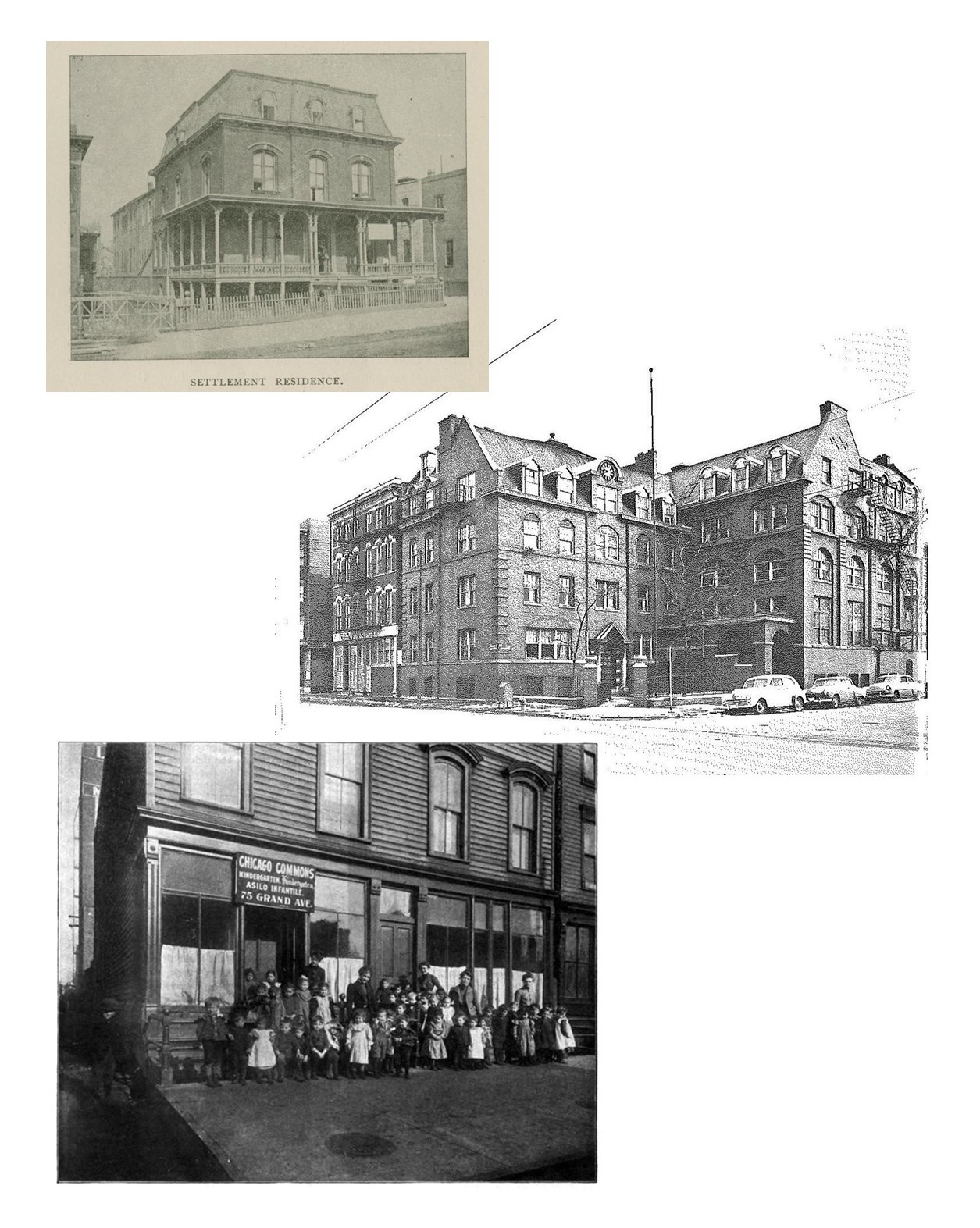
Chicago saw its first kindergarten in 1873, followed by a training course for teachers a few years later. In 1895, Bertha started the first kindergarten and teacher training program at the Chicago Commons Social Settlement.
Social settlements, started during the Progressive Era of reform, were centers for neighborhood social services usually located in crowded, low-income city areas, primarily populated by recent immigrants. The centers were called settlement houses because social workers, educators, ministers, and health care workers lived on site, or “settled” there, to be close to the people they were assisting.
In addition to providing food, clothing, medical care, and other basic needs, the settlements offered schooling to help people develop skills and knowledge for better jobs and advancement, and to improve their lives in general. Many of the settlements were affiliated with churches.
Hull House, started by social worker Jane Addams, was the most famous U.S. social settlement, but there were others in Chicago that were just as well-regarded.
The Chicago Commons Social Settlement was founded in 1894 by Graham Taylor on the near northwest side of the city.
Taylor was a professor at the Chicago Theological Seminary who specialized in training social workers at the University of Chicago. He was joined in his efforts by Herman F. Hegner from Wisconsin and Iowa, who had graduated from the Milwaukee Normal School for training teachers in 1890, and from the Chicago Theological Seminary in 1894, and was ordained a minister in 1895. Taylor and Hegner were the head residents at the Commons.
Bertha was also a resident at the settlement, and in June of 1896, she and Herman Hegner married.
By this point, the Hofer sisters were developing reputations for their various expertises, and Bertha was described as “one of the Hofer sisters, a graduate of the Pestalozzi School in Berlin, whose kindergarten work is widely known through her lectures and her writings.” The Hofer sisters were appearing on stage now with people like Jane Addams and Elizabeth Harrison.
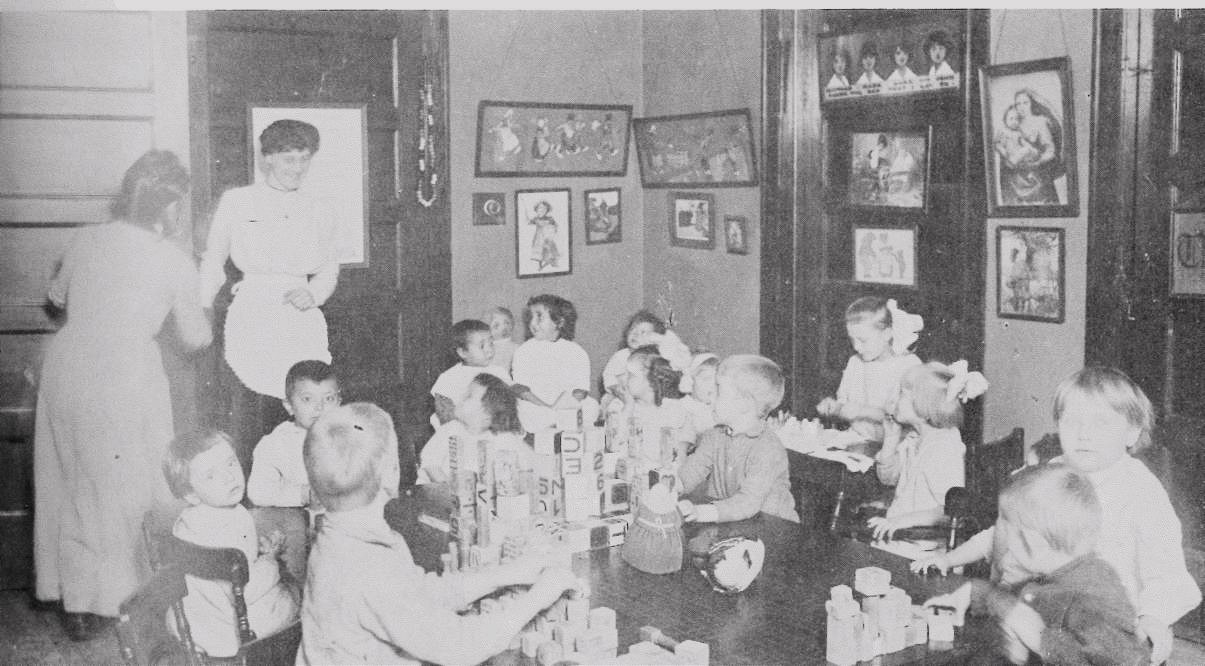
Bertha’s kindergarten became an important part of the Commons’ operations, the foundation for other education programs, like an industrial training school, and services for mothers, children, and families, like a mother’s club and childcare classes. The neighborhood residents strongly supported the kindergarten.
In 1896, Bertha started the Pestalozzi-Froebel Teachers College through the Commons to train kindergarten teachers. In the summers, they offered special teacher institutes. Usually, teachers preferred to attend summer programs in resort areas, not inner cities, but they flocked to Bertha’s program, described at the time as “a boon to would-be successful kindergartners.”
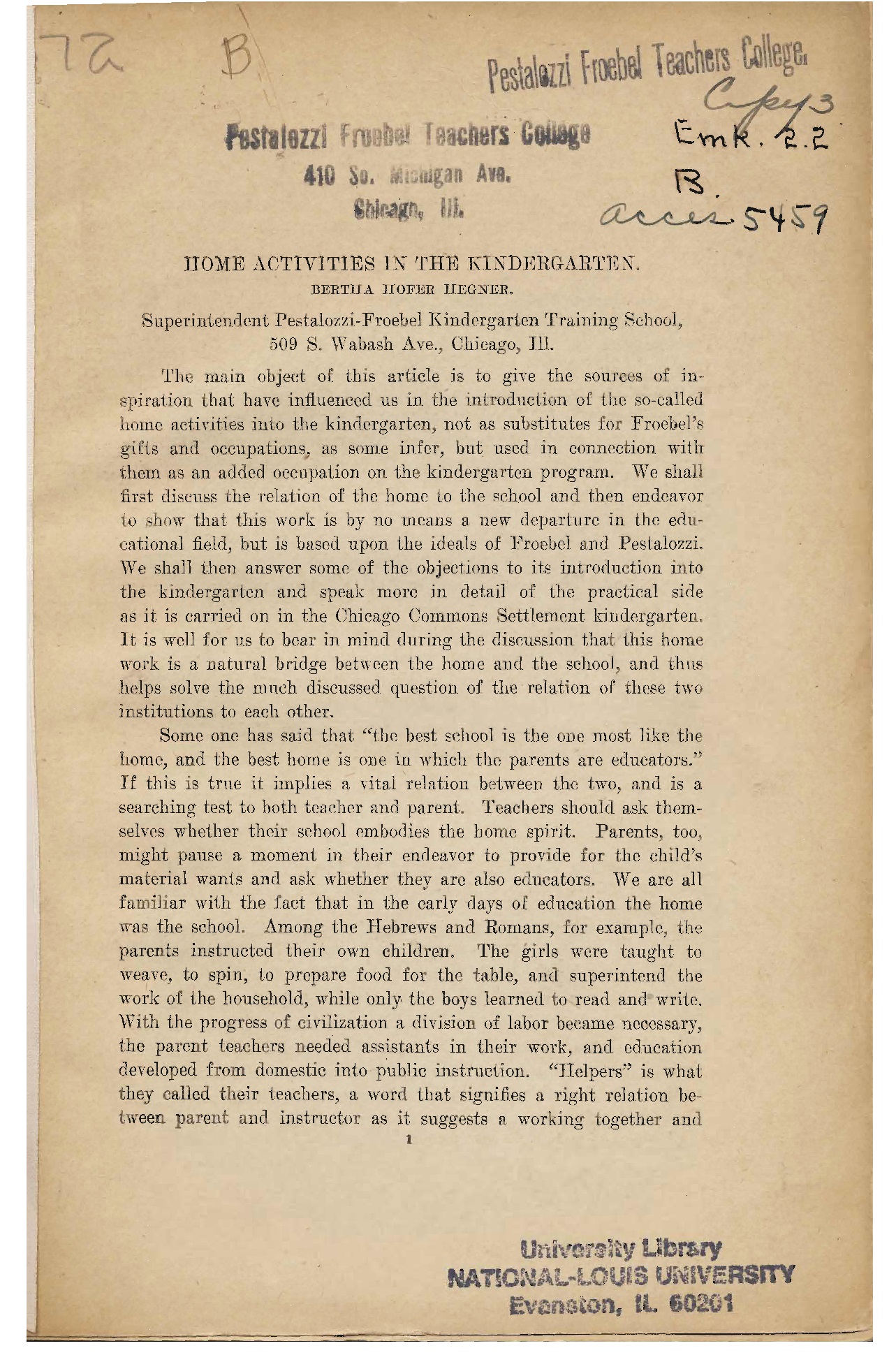
Progressive theory called for educating people to become useful and contributing members of society in general, as well as learning trades for employment. Supportive of working mothers, Bertha introduced “home activities” in her kindergarten to train children to help with basic home chores. This did not replace the teachings of Pestalozzi and Froebel, but, in Bertha’s words, added activities based on their “ideals” to create “a natural bridge between the home and the school.”
Some of the activities the kindergarten children engaged in included washing and putting away items they used including small-scale utensils and dishes; dusting the classroom furniture like the piano; emptying the waste basket; caring for the fish, birds, and plants; and washing the dolls and their clothes. Older children in the settlement’s other education programs helped in the settlement kitchen and dining room, and with the residents’ quarters and general housekeeping. The little ones assisted the older children.
They did these chores accompanied by songs, stories, and pictures. At holiday times, they did special projects like jack-o-lanterns and popcorn garland. In spring, they helped with the outside gardens and milking the cows.
The children loved these projects, and so did the parents. Mothers reported their children willingly helped at home as a result of these activities at school. The children helped throughout the neighborhood, for example, by cleaning up litter.
Training teachers on how to incorporate these home activities into school activities became part of the training program of Bertha’s college.
In 1904, Bertha published a scholarly article titled “Home Activities in the Kindergarten” in Kindergarten Magazine, which was reprinted numerous times. The U.S. Department of Education reproduced the article and distributed thousands of copies.
Bertha and Herman moved from the Commons to raise their family, two daughters and a son, and for Herman to take ministries at several churches in the city. They did some traveling to Europe and the Holy Land.
In 1904, Bertha resigned as head of the kindergarten to concentrate on the training school. Her sister Amalie joined her at the school for several years as principal, and her sister Mari was on the faculty for Music and Games. Herman and Graham Taylor were also on the faculty.
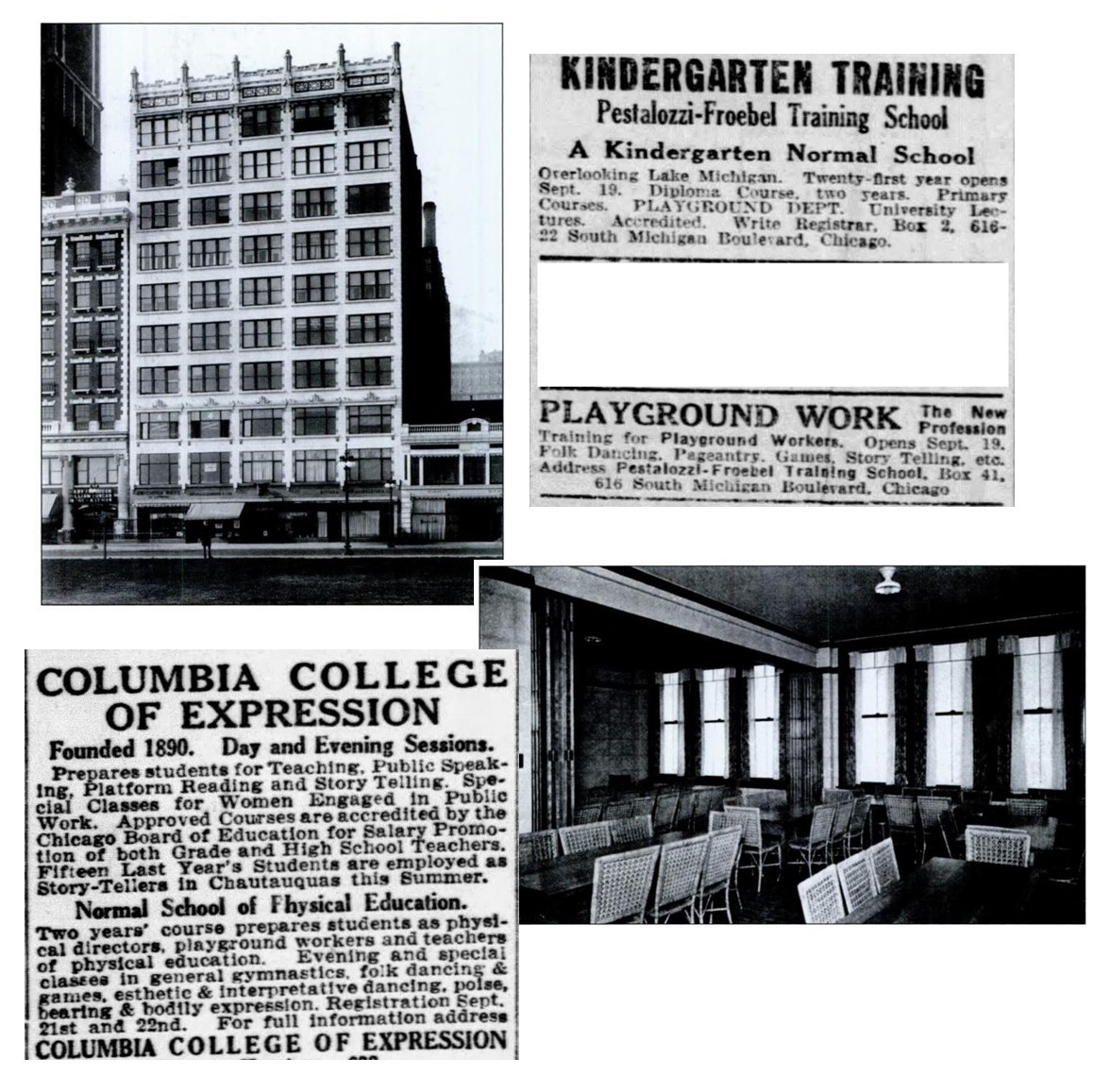
In 1913, Bertha moved the school, now free-standing from the Commons, to a new location, at 618 S. Michigan Ave. Herman became the full-time business manager for the school.
In 1927, the Columbia College of Expression, which offered programs in dramatics, public speaking, and physical education, ran into financial difficulties, and was purchased by the Hofer-Hegner school, and moved to the same building. Bertha ran both schools until she retired in 1936, and her son took over. Bertha introduced a program in 1934 to train people for radio work, something new at the time.
Bertha died in 1937. She left a legacy of education programs that lasts today. Both her kindergarten training school and the dramatic arts school were incorporated into other schools that still exist.
The third daughter, Amalie Hofer Jerome, was a pioneer in the playground movement and will be profiled next.
The Ridge Historical Society
March: Women’s History Month – Part 2 on the Hofer Sisters
By Carol Flynn
A few weeks ago, posts on the Hofer sisters started. The Hofer sisters are stellar examples of the intelligent, accomplished women who lived on the Ridge whose stories need to be shared. The five Hofer sisters were leaders in the kindergarten, social settlement, and playground movements in the U.S.
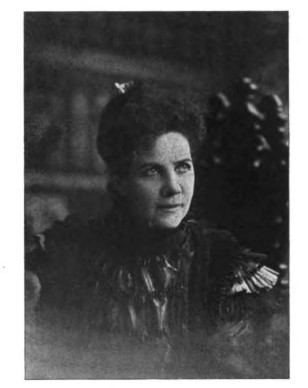
Oldest daughter Mari Ruef Hofer (1858 – 1929) was the musician in the family. She was a pioneer in music education for children, and in incorporating singing, dancing, pageantry, and games into regular classroom and playtime for children.
Young children learn by observing, experimenting, and doing, not by being lectured to and forced to memorize a bunch of facts. While this seems like an obvious concept today, it was a novel thought in the 1800s. It was people like Mari Hofer and her sisters who revolutionized the way child education was viewed, leading to the kindergarten and early childhood programs of today.
Mari graduated from the Mount Carroll Seminary, Illinois, in 1887, and did graduate work at the University of Chicago in 1897-99.
Mari taught school children herself, in Chicago and other locations, and she taught teachers how to educate young children, as a faculty member at several universities and a frequent guest lecturer. Her credentials are just way too long to include in a Facebook post.
She never married or had children of her own, but her understanding of children was profound. She advised that teachers had to recognize and nurture both the child sitting at the desk learning the “three R’s” and the unknown “other child,” the “inner child,” the “child of imagination and feeling, the creative, originative child.” This could prove to be the more difficult task.
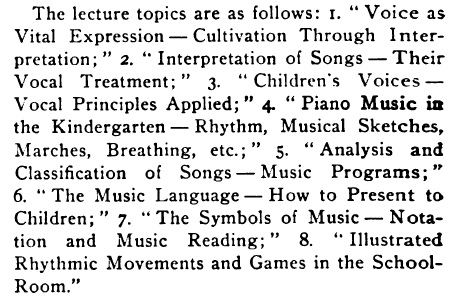
Mari was an expert on the development of speech in children, and the interconnection of speech and song. She advocated that the mind, speech, and song should be cultivated together in young children, using simple songs with words and concepts children could grasp.
As she said, “Words and thoughts associated with melody remain graven in the mind when more important data vanish away.” Anyone with a song stuck in his or her head recognizes the truth of this – and it’s why the abc’s are taught as a song.
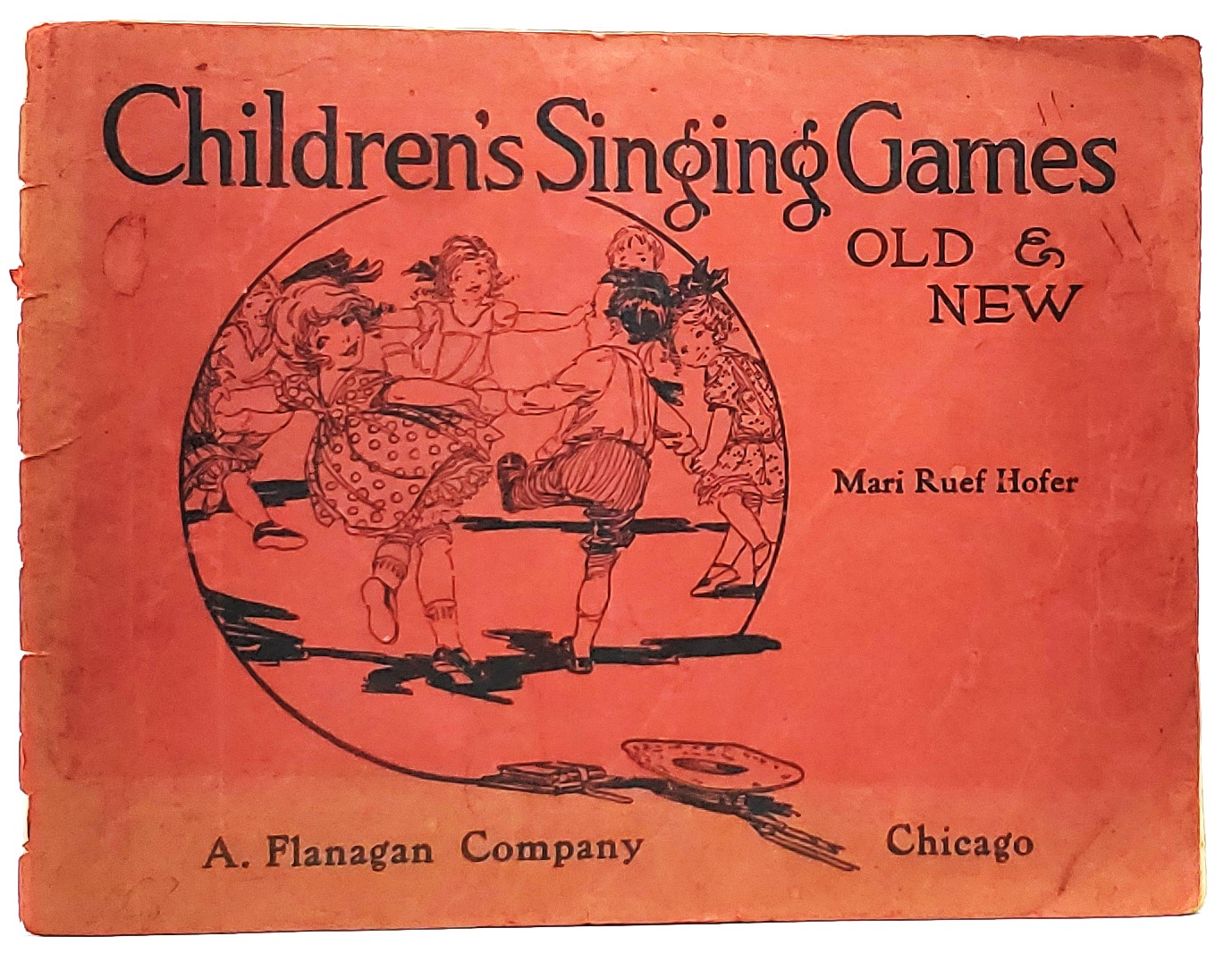
Mari’s expertise was in folk music, and she authored at least twelve publications. Some of the titles include Children’s Singing Games, Popular Folk Games and Dances, Music for the Child World, Camp Recreations, and Educational Playbook Series for Junior and Senior High Schools.
She arranged and managed plays and games for festivals, playgrounds, and settlement houses, including at the World’s Fair in Chicago in 1893.
Perhaps her work can best be illustrated through case studies of some of her events while she was on the faculty at the University of Tennessee in Knoxville.
The National Guild of Play held its annual meeting there in 1907, and Mari was president of the Guild and in charge of the program. It started with a big outdoor playtime festival for the children, parents, and teachers of Knoxville, with events ranging from kindergarten games to athletics (leap frog, racing, baseball) for the older boys. Singing, dancing, and ring games arranged by Mari were included. Male faculty members volunteered to teach the children how to play marbles and other games.
The next morning included a series of professional speakers on playgrounds and their organization, plays and games for schools and school yards, and playtime festivals. One of the speakers was her sister Amelie Hofer, a founder of the Playground Association of America.
For years, the University held a “Summer School of the South” program for teachers, well attended by people from all over the country, and Mari was on the faculty. In 1908, a summer festival was arranged, with Mari as the chairman.
Today, when we think of summer festivals, we think of beer tents and outside concerts. Back then, summer festivals meant physical activity – games and athletics for all ages.
And there were plenty of activities. The afternoon started with events for children, like Robin Hood and his Merry Men, with costumes, archery contests and bouts, and Maid Marion and a maypole dance, all arranged by Mari.
Just some of the other events included pony races, Olympic sports, tug-o-war, potato and sack races, ring toss, horseshoes, and plenty of costumes, plays, songs, and dances.
Evening events included pantomime and other social games, guild activities like wool weaving and shoe making, and folk activities and performances featuring the cultures of Sweden, Denmark, the Netherlands, Germany, Switzerland, Norway, Russia, France, Scotland, Poland, and of course, the U.S.
The coordination of this event had to have been amazing, attesting to Mari’s organizational skills as well as her educator and musical talents.
Settlement houses were organizations set up to provide services to help alleviate poverty. They were usually found in large buildings in urban areas heavily populated with recent immigrants.
The most famous settlement house was Hull House in Chicago started by Jane Addams.
All of the Hofer sisters were involved in settlement houses, and they will be covered in more detail in the next posts. Mari ran the music programs for children in several settlement houses. She managed the children’s chorus, made up of 150 youngsters, at the University of Chicago Settlement, founded in 1894. The chorus was considered very well trained, and the concerts they gave were heavily patronized. She was also known to “sympathetically help” the children at the settlement houses in other ways.
When the friends and neighbors of the Hofer family in Beverly managed to find Mari at home, they loved her involvement in community endeavors. For example, at Christmastime, 1915, Mari arranged a “Community Concert of Christmas Carols” at Ridge Park. She was also busy that year staging Nativity plays at St. Paul’s Evangelical Sunday School and the Fellowship House, another Chicago settlement house.
It wasn’t unusual for her sisters to build an entire party around Mari’s talents, back in the days before there were even radios. As an example, in 1911, her youngest sister Elsa and Elsa’s artist husband George Schreiber invited forty friends over for an evening of folk songs conducted by Mari, who was visiting Elsa and George on the west coast.
“Music,” an illustrated magazine on the art, science, and technique of music, or, as the magazine described itself, “music as musicians understand it,” wrote of Mari that “few personalities are more interesting than that of Miss Mari Hofer.”
Mari had her own philosophy on life: “A thoroughly good time is not incompatible with learning something worthwhile.”
Today, parents and grandparents who attend the performances of their beloved little ones in kindergarten holiday shows can thank Mari Hofer for the experience.
Our next post will look at the second daughter, Bertha Hofer.
This week's article in the Beverly Review for Women's History Month is on Pleasant Thiele Rowland, the founder of the American Girl doll line.
The theme of this year’s Women’s History Month is "Celebrating Women Who Tell Our Stories."
Pleasant Rowland made history through history. She created dolls from various periods of American history and told their stories from the viewpoints of young girls.
Pleasant was strongly influenced by her paternal grandmother, who lived in Beverly for over forty years. Pleasant herself lived in Beverly from the ages 6 to 10.
https://www.beverlyreview.net/news/community_news/article_a38a7d5e-c802-11ed-9bff-db91a8d9655e.html
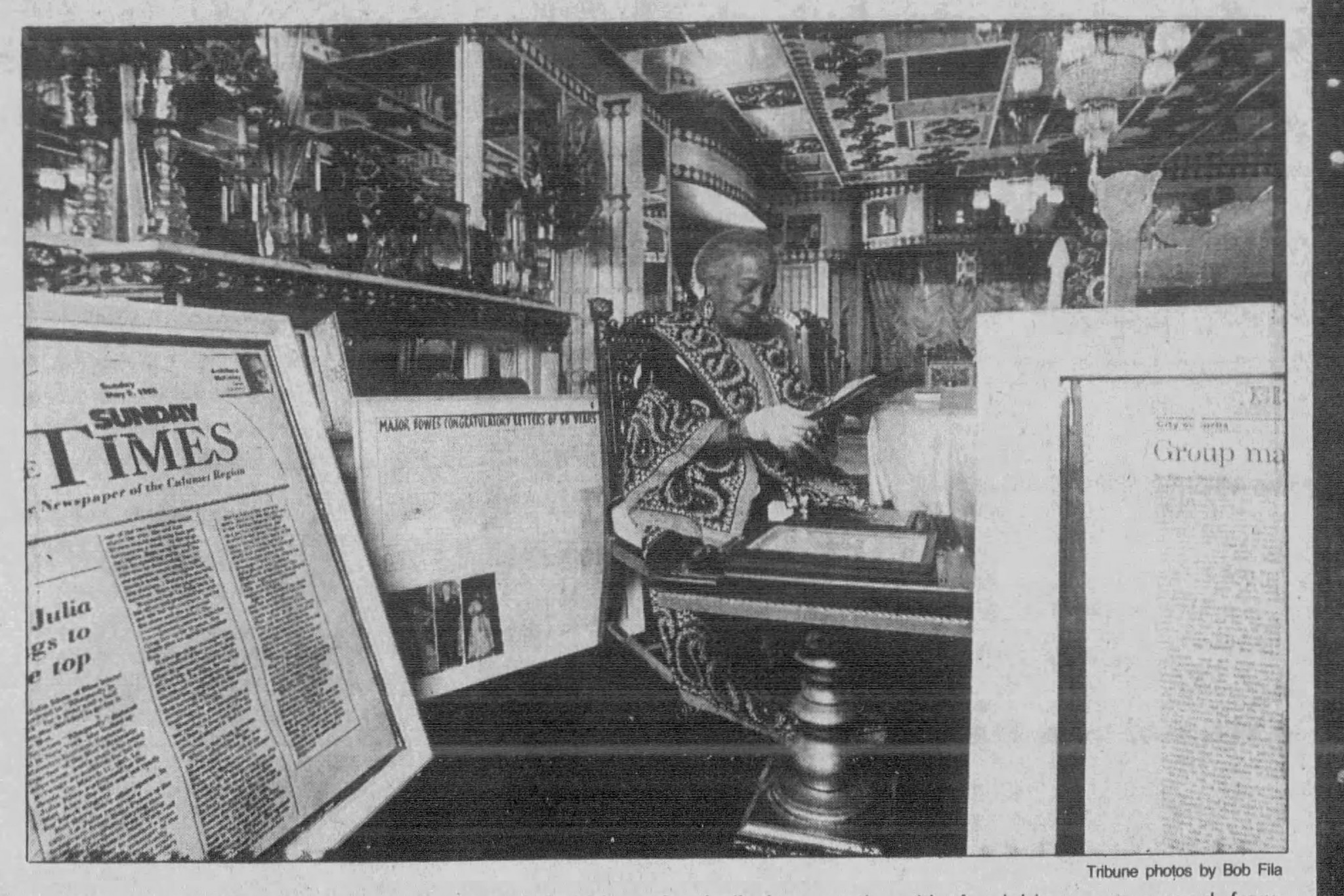
March continues as Women's History Month. This week's Beverly Review includes a feature on La Julia Rhea, a Black opera singer of exceptional talent who lived in Blue Island.
Her career spanned the 1930s and 1940s. Although her voice was acknowledged as amazing, she was denied opportunites due to her race; plus, no recordings of her voice have been found. Not many people are familiar with her.
The article can be found online today at: https://www.beverlyreview.net/eedition/page_73fee2c1-47ca-5765-a156-b4f6b99fe0da.html and is out in print tomorrow.
Rhea did break two race barriers that laid the groundwork to help other Black singers.
Rhea was the first Black woman allowed to audition for the Metropolitan Opera Capmpany in New York, and although the audition went very well, she was told “there is no chance for a colored singer to appear at the Metropolitan."
She also broke the race barrier at the Chicago Lyric Opera, where she sang the lead in "Aida," her signature role, for a special benefit performance. It was a one-time event and she was not invited back.
The family moved to Blue Island in the 1950s, restoring an old farmhouse into a "fairy tale creation." She died in Blue Island at the age of 94 in 1992.
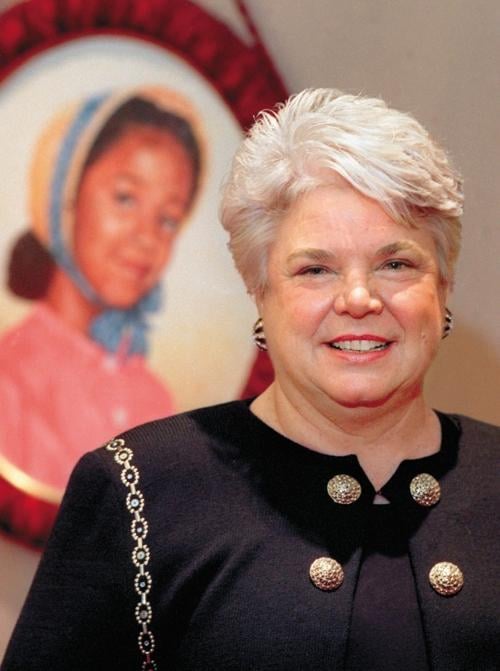
This photo by Bob Fila of the Chicago Tribune shows La Julia Rhea in her home in Blue Island in 1986.
The Ridge Historical Society will be open today, Sunday, March 5, from 1 to 4 p.m. The address is 10621 S. Seeley Avenue. Admission is free.
The Ridge Historical Society
March: Women’s History Month and Irish American Heritage Month – Part 1
By Carol Flynn
March is both Women’s History Month and Irish American Heritage Month so for the next few weeks we’ll alternate in exploring these topics in relationship to the Ridge.
Many remarkable women have had connections to Beverly/Morgan Park. The Hofer family stands out because all five daughters – Mari, Bertha, Amalie, Andrea, and Elizabeth – were pioneers in the kindergarten movement and other social causes at the beginning of the 1900s.
The kindergarten movement helped to revolutionize the way children’s education was viewed. The work of the Hofer sisters helped establish kindergarten as the foundation of the American school system.
In the traditional model for educating young children, they were taught at home how to read and write and do simple arithmetic. They learned by lecture and memorization, and they were expected to be quiet and industrious to prepare themselves for the working world.
In the late 1700s, Johan Heinrich Pestalozzi, a Swiss educator and reformer, shared his observations that children learned best by investigation, imagination, and doing. He started experimental schools with activities like drawing, writing, singing, physical exercise, model making, collecting, and field trips. He allowed for individual differences and grouped students together by ability.
In 1837, Friedrich Froebel, a follower of Pestalozzi, opened a program in Prussia/Germany he called “kindergarten,” or child garden, to signify children should be nourished like flowers in a garden.
Froebel sought to teach children how to think, not what to think, and used the natural play of children to enhance learning. He developed learning experiences using educational toys, stories, songs, games, and crafts.
He trained women as teachers for his program, believing they had superior nurturing ability for working with young children.
Froebel’s work was banned in Prussia for being too radical, causing those trained in his methods to leave the country to establish programs elsewhere.
Famous "graduates" of early revolutionary kindergarten programs included Albert Einstein and Frank Lloyd Wright.
The first kindergarten in the U.S. was started in Wisconsin in 1855 by one of Froebel’s students, and was conducted in German. The first English-language kindergarten opened in Boston.
The kindergarten movement became closely tied to two other social reform movements of the Progressive Era of the late 1800s, settlements and playgrounds.
Settlement houses were organizations set up to provide services to help alleviate poverty. They were usually found in large buildings in urban areas heavily populated by recent immigrants. Social workers, teachers, ministers, and other service providers lived or “settled” in the facility to be closer to the people with whom they worked.
The most famous settlement house in this country was Hull House in Chicago started by Jane Addams. Other Chicago settlement houses included the Chicago Commons Social Settlement and the Fellowship House.
The first outreach at the settlement houses was to children and mothers, with daycares, kindergartens, and playgrounds; classes in English, crafts, and homemaking; and mothers’ clubs.
The playground movement was started in the 1890s by reformers who advocated that supervised play could improve the mental, moral, and physical well-being of children. Private athletic clubs had always been around for the wealthy, but now city parks and playgrounds, swimming pools and fieldhouses were built, and trained play leaders were hired to plan and conduct activities. This soon expanded to include adult activities as well.
The Chicago park system developed as one of the largest and best in the country.
The Hofers were leaders in all of these movements.
The five Hofer sisters and their three brothers were the children of Mari Ruef and Franz Xaver Hofer.
Born in 1821 in Baden, a state in Germany bordering France and Switzerland, Hofer fled to the U.S. in 1849 after participating in a failed revolution. He and Mari Ruef, born in Baden in 1836, married in 1853 in New York. They moved to Iowa where they farmed. He served as a lieutenant in the Union Army during the U.S. Civil War.
The Hofers had a passion for social justice and reform that they passed down to their children. They bought a newspaper in Iowa through which they shared their “progressive” views, and all the children were trained in the newspaper and printing fields.
The sons left to seek their fortunes on the west coast and started several newspapers. The daughters worked at the family newspaper and attended colleges to become teachers.
Two of the daughters moved to Chicago, and were soon followed by the parents and the other three sisters. They made their home at 1753 West 96th Street, where their house still stands on the edge of Ridge Park.
One of the sons wrote in his newspaper out west that his parents “are now comfortably settled in a cosy (sic) home in one of the most charming and healthful suburbs – Longwood.”
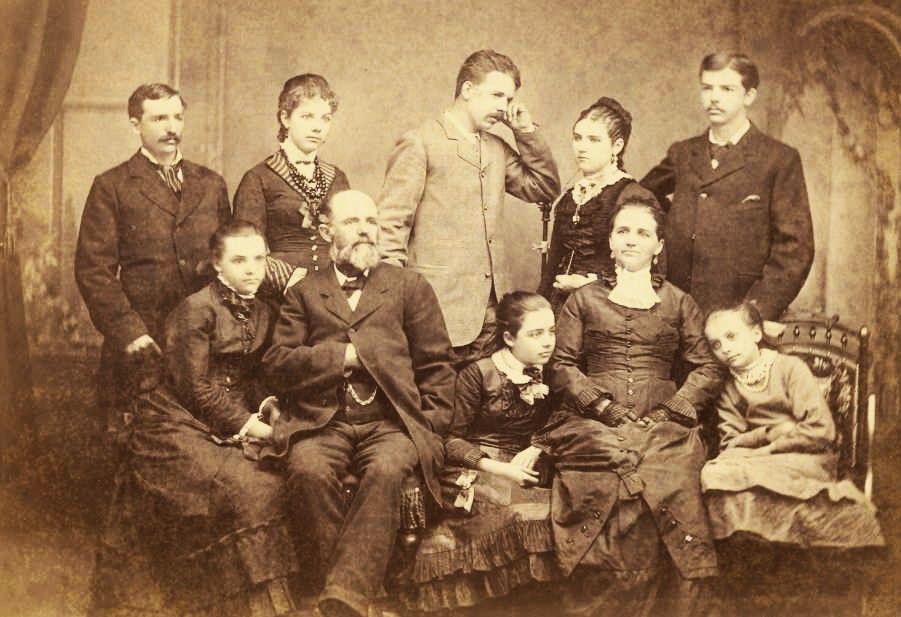
In the next posts we will look at the amazing work of the Hofer sisters. This picture of the Hofer family was user submitted on Ancestry.com.
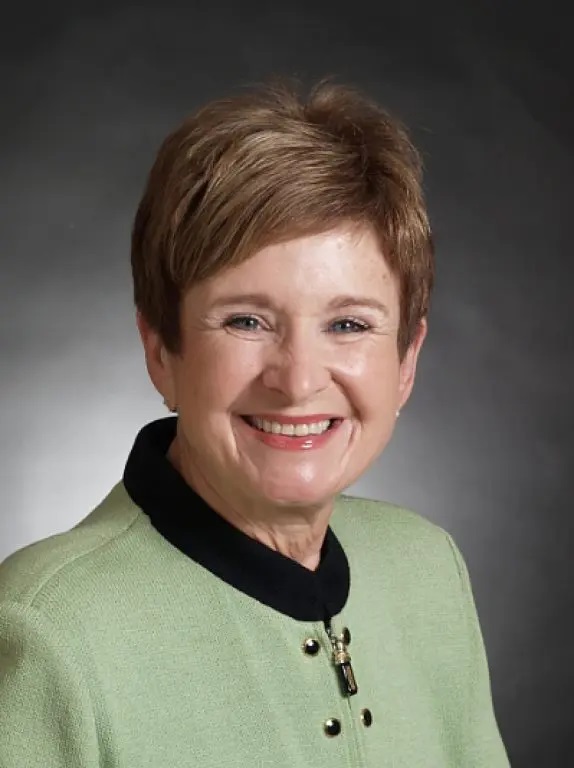
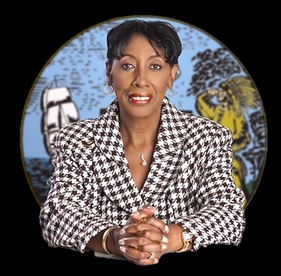
Ridge Historical Society
Woman’s Equality Day
By Carol Flynn
Woman’s Equality Day has been an annual event in the U.S. on August 26 since President Richard Nixon issued a proclamation in 1972. The day started as “Women’s Rights Day.”
August 26 was chosen as the date because the Nineteenth Amendment to the U.S. Constitution, which states that “The right of citizens of the United States to vote shall not be denied or abridged by the United States or by any State on account of sex,” was signed into law that day in 1920.
Tennessee’s ratification of the Amendment a few days before had secured the required support from the states to finally grant the right to vote to the twenty-seven million women in the country. The official letter from Tennessee certifying ratification was sent by train to Washington, D.C.
The train was due to arrive shortly after midnight, and Secretary of State Bainbridge Colby promised to stay up late to receive the letter and officially proclaim the amendment as law. However, the train was delayed, and when the letter had not been delivered by 3:00 a.m., Colby went to bed. Even the women suffragists who had been on watch all night finally turned in.
Later that day, the proclamation was made. President Woodrow Wilson declared it the day that “the men and women of America are on an equal footing, citizens all.”
The ratification of the Nineteenth Amendment was somewhat anti-climactic for the women of Chicago, who had won limited voting rights in Illinois in 1913. It did give new purpose to those working for election of women to Chicago’s City Council.
In 1922, the Illinois League of Woman Voters advocated for a “fifty-fifty” rule, that is, half the Chicago aldermen should be women. One hundred years later, that goal has still not been met. Today, seventeen of the fifty aldermen are women.
The first women candidates for Chicago aldermen were on the ballot in 1914. Four were from the Socialist Party and three from the Progressive Party. Two others from the Democratic party had lost in the primaries. None of the women were elected.
The first women aldermen, Anna Langford and Marilou McCarthy Hedlund, were not elected to the Chicago City Council until 1971. Langford was an African American attorney and civil rights activist from Englewood; Hedlund was a white newspaper reporter from Edgewater. Both were Democrats.
In the nineteenth ward, which includes Beverly, Mount Greenwood, and some of Morgan Park, the first woman to be nominated for alderman from a major party was Margaret Norman White, who ran as the Republican candidate in 1959. She lost to the Democratic incumbent, Thomas Fitzpatrick.
It would be another twenty years before the nineteenth ward saw a second woman candidate, Mary Quinn Olsson, who ran in 1979. Although a strong Democrat, Olsson ran as an Independent because the official Democratic Party backed Michael Sheahan that year. Sheahan won the election.
Sheahan served from 1979 to 1990, when he was elected to the position of Cook County Sheriff. Richard M. Daley, who had won election as Mayor in 1989, appointed Virginia “Ginger” Meares Rugai to fill the nineteenth ward alderman vacancy, making Rugai the first woman to represent any portion of the Ridge on the City Council. She won re-election in 1991, and served as alderman until 2011.
Since that time, other women have also represented parts of the Ridge on the City Council. These are Lona Lane in the eighteenth ward, and Carrie Austin in the thirty-fourth ward. Both were appointed to their positions by Mayor Daley and went on to be re-elected.
Lane served from 2006 to 2015. Austin has served since 1994 and has announced her retirement at the end of this term.
The Ridge Historical Society
Jean Hetherington – Part 3
By Carol Flynn
This continues the series of posts related to the Ridge Historical Society’s exhibit on the Hetherington family of architects.
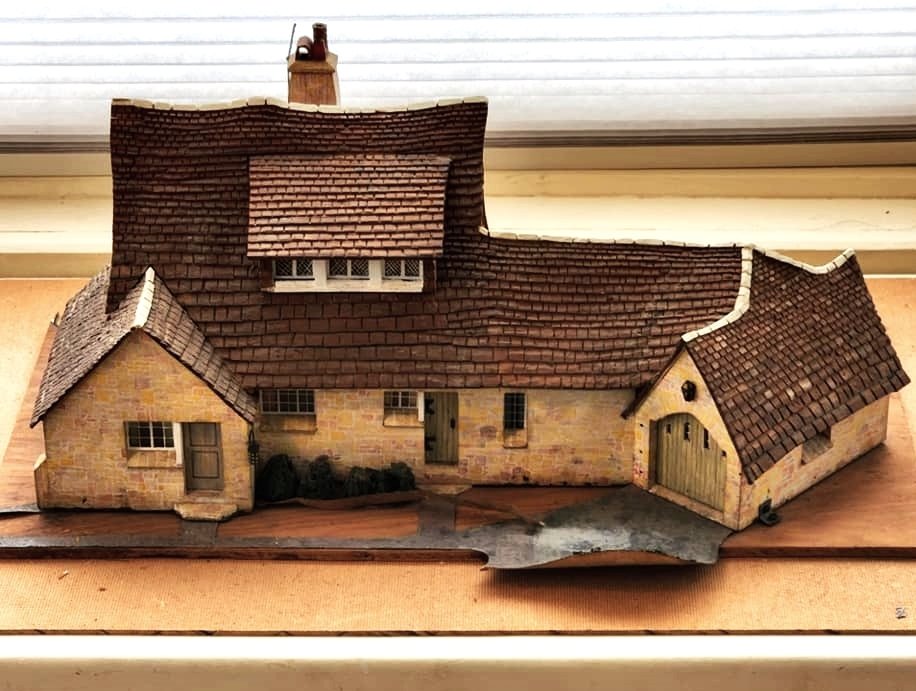
Jean Hetherington was the youngest of the Hetherington children. She worked as a draftswoman and became known for her skills in making architectural models.
In 1922, the Englewood Times newspaper reported that Jean, “one of the Ridge’s enterprising young women,” made miniature homes for Chicago real estate dealers. Her picture and one of her “perfect” models had been covered in the Herald-Examiner, one of Chicago’s daily newspapers. The article reported she used cockle burrs from the fields near her home, which was with her parents at 9236 Winchester, to create the hedges for her models.
By 1922, the Hetheringtons had moved to 9122 Longwood Drive. Jean remained with her parents. On the 1930 U.S. Census, Jean’s occupation was listed as architectural drafting in an architect office. This was the business of her father, John Todd Hetherington, and her brother, Murray Hetherington. Likely, Jean’s models were an asset in promoting their designs.
Murray Hetherington designed one of the “Homes of Tomorrow” for the exhibition at the 1933 Century of Progress at the World’s Fair in Chicago. This exhibit, considered one of the most noteworthy of the Fair, featured twelve full-size houses that showcased innovations in architecture and building materials.
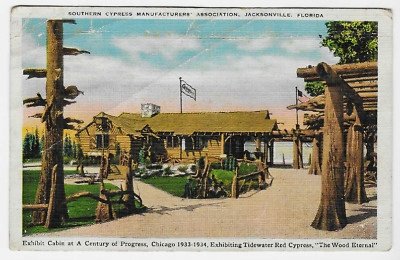
Murray’s contribution was the Cypress Log Cabin, which actually was made of traditional materials rather than experimental materials like those used in the other houses. The house was eventually moved to Beverly Shores, Indiana, where it is part of the Indiana Dunes National Park. More on this house will be covered in a future post.
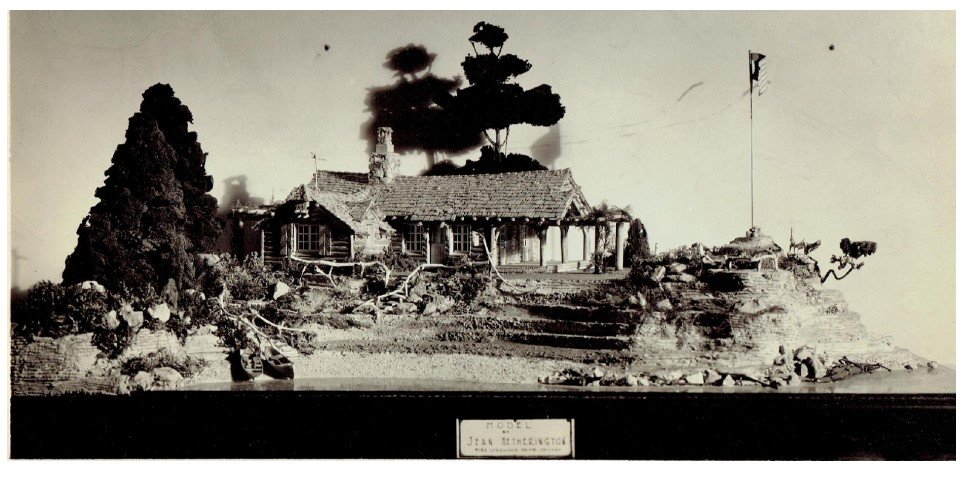
Jean created a model of the Cypress Log Cabin, which was displayed at the Fair. She had other models on display, also.
John Todd Hetherington died in 1936, leaving Jean and her mother Jane living in the home on Longwood. Son Alec had also lived with the parents on and off, but he died in 1939 in Wyoming. There will be more on Alec in the next post.
Then in 1948, at the age of 53, Jean married William Geanopolos.
Geanopolos was born in Greece in 1888 and immigrated to the U.S. in 1905. He married Clara Cooper in 1914. He became a naturalized U.S. citizen in 1925.
The Geanopoloses took up residence in Rockford, where he worked in various capacities in the restaurant and food business. In different records, he is listed as the merchant in the confectionary industry, a clerk in a fruit store, a grocer, and a soda dispenser in an ice cream parlor.
Clara died in 1936. In 1942, on his World War II draft registration, Geanopolos is listed as working in a restaurant at 70th and South State Street.
William and Jean Geanopolos lived with her mother, Jane Hetherington, at 9540 S. Prospect Avenue. In 1950, his occupation is listed as chef in a restaurant, and Jean is listed as a draftsman for an architect.
Jane Hetherington died in December 1950, and Jean Hetherington Geanopolos died in August 1956, at the age of 61. Jean spent her life, from the age of 5 or 6 on, in Beverly.
Next post: Alec Todd Hetherington
The Ridge Historical Society
Jean Hetherington – Part 1
By Carol Flynn
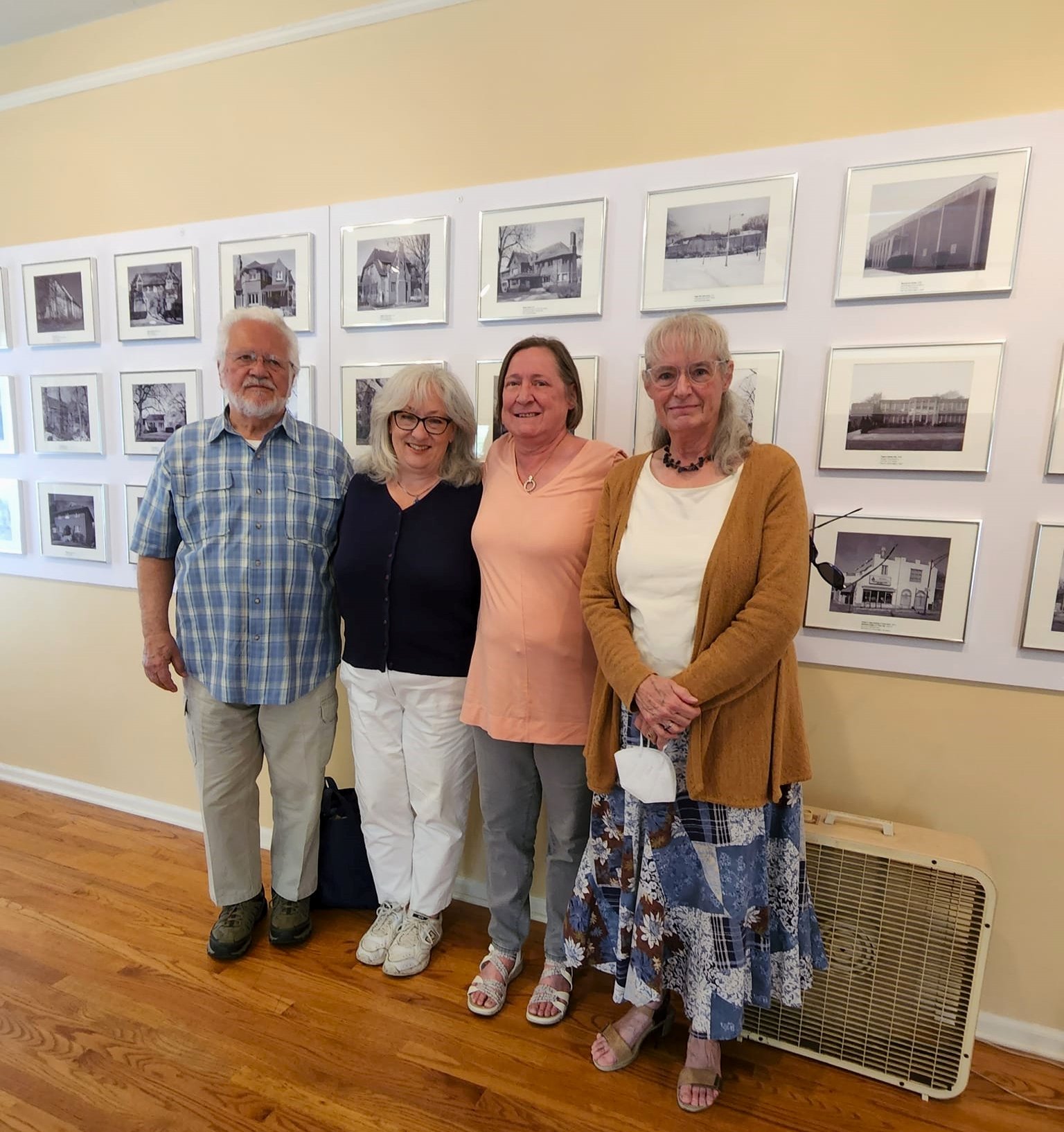
The Ridge Historical Society (RHS) premiered a new exhibit on the Hetherington family of architects at the Beverly House Walk last Sunday. This post begins a series of stories that augment the exhibit.
John Todd Hetherington (1858 – 1936) and his family moved to Beverly around 1901. He, his son Murray Douglas Hetherington, and his grandson John Murray Hetherington are credited with designing upwards of a hundred buildings in the Ridge communities, including the Graver-Driscoll House that is owned by RHS. Upcoming posts will cover the stories of these men.
Today, however, the story will start with the Hetherington whose contributions largely go unnoticed – Jean Hetherington, John Todd and Jane Hetherington’s youngest child and only daughter who lived to adulthood.
Jean was born in 1895, which made her about six years old when the family moved to the Ridge, and about eleven when the family built their home at 9326 South Winchester Avenue in 1906. Jean spent her life in Beverly.
In 1917, Jean graduated with first honors from the three-year School of Normal Instruction of the Art Institute of Chicago. A “normal” program trained teachers – the word “normal” came from the “norms” or standards established for subjects to be taught in school. The Normal program at the Art Institute included courses in the history and philosophy of art, the masterpieces, drawing, composition and design, color, and manual training, which included modeling in clay and other materials.
Teaching was a traditional career route encouraged for women. Jean’s older brother Murray had graduated from the Chicago School of Architecture, a joint program of the Art Institute and the Armour Institute, in 1914, but there were few women pursuing architecture as a career option back then. For the Art Institute’s summer program in 1916, for example, forty-six women and three men attended the Normal program, while fifteen men and one woman attended the Architecture program.
There were only two licensed woman architects in Chicago at the time. One was Marion Mahony Griffin, the first employee to be hired by Frank Lloyd Wright. She married Walter Burley Griffin, the architect who designed the houses in Beverly’s Walter Burley Griffin Place District, a Chicago landmark site on 104th Place. It is well known that Wright took credit for much of Marion’s work. The Griffins left Chicago in 1914 for Australia.
That left Elisabeth A. Martini as the only woman architect. She shared the story that to keep her job as an architect, she also had to take on tasks such as helping the boss’s wife clean out their pantry.
Jean Hetherington became known for the architecture models she created, and this will be explored further in the next post.
On the day of the Beverly House Walk, RHS was fortunate to have members of the Hetherington family as visitors. They loaned to RHS for that day one of Jean’s models that was a family heirloom. The model is of a charming cottage-style house, but the family does not know what house this model might depict.
Arrangements may be made to view the exhibit by contacting RHS at 773/881-1675, or ridgehistory@hotmail.com.
Next post: Jean Hetherington’s career and life.
The Ridge Historical Society
Women’s History Month: Real American Girls of the Ridge
By Carol Flynn
As we wrap up March, Women’s History Month, this is a last call to see the current exhibit at the Ridge Historical Society – Real American Girls of the Ridge.
This exhibit started right when the COVID pandemic started, in 2020, and unfortunately, it never got the attention – and visitors – it deserved because RHS, like other historical and cultural institutions, had to close its doors for a long time. And now it has to come down because RHS has to get ready for the big event in May – the Beverly Area Planning Association (BAPA) house walk, which will feature Hetherington-designed homes. More on the Hetherington project will be announced in coming weeks.
Real American Girls on the Ridge takes a historic doll from the American Girl collection and pairs it with a real woman from the history of the Ridge who had a similar life experience.
Five of the original American Girl (AG) dolls and a collection of their furniture, clothes, books, and other items were donated to RHS by a member of the community, Joan Regnier O’Connor. As children, Joan’s daughters became interested in the dolls through their grandmother, a librarian who held tea parties and other events for the dolls and their young owners, to foster reading, history – and fun. Joan wanted to see the dolls used for like purposes and donated them to RHS.
The inventor of the dolls, Pleasant Rowland, lived in the Beverly/Morgan Park community as a young girl. RHS did a post on this several years ago. Her grandparents lived here, and it was through her grandmother that Pleasant became interested in history and antiques. Information on Pleasant is included in the exhibit.
The first five dolls in the series and their Ridge counterparts are:
• Felicity and Abigail Shipman Wilcox (Colonial era)
• Kirsten and Anna Lovisa Larson (Pioneer era)
• Addy and Cornelia “Mother” Reeves (U.S. Civil War Era)
• Samantha and Margaret Gear Lawrence (late Victorian Era)
• Molly and Elaine Spencer (World War II Era).
RHS will summarize the real American Girl stories over the next few days. The exhibit will be up until mid-April and anyone who wants to view it, including school, Scouts, or other groups, can contact RHS through this Facebook page, and arrangements will be made.
(Photo of Pleasant Rowland)
“Invisible Labors” is a collaborative project to explore the role that women played in the use of the land, as gatherers, farmers, gardeners, and artists, in the history of the Ridge communities of Beverly and Morgan Park. It is one of five projects currently supported by 3Arts, a nonprofit organization that supports Chicago’s women artists, artists of color, and Deaf and disabled artists who work in the performing, teaching, and visual arts. 3Arts includes a built-in match that helps Chicago artists finance new creative work.
“Invisible labors,” curated by Susannah Papish, the Director of boundary, the art project space in Morgan Park, has several components. It started last fall with a garden of native plants and a paper-making exhibition at boundary by artist and educator Melissa Potter, a professor at Columbia College Chicago.
The next component will be a publication featuring the research and writing of the Ridge Historical Society’s experts on local history. With research assistance form RHS Historian Linda Lamberty, RHS researcher/writer Carol Flynn, who develops all the stories that appear on the RHS Facebook page as well as stories for the local newspapers and other sources, will write about the pre-history days of Native Americans and their use of the land; the coming of the white European settlers and their development of the land; and the history of the early community of Black Americans who settled here after the U.S. Civil War. For the record, Carol Flynn is legally disabled.
The publication, which is still in the planning stages, will include artwork and other contributions from Susannah and Melissa, in addition to the written stories.
Susannah Papish has started a fund-raising campaign to offset some of the expenses of the project through this link: https://3arts.org/projects/invisible-labors/
We hope that if you truly support the arts in the Beverly/Morgan Park community, and/or appreciate the historical stories shared by the Ridge Historical Society, that you will consider putting a few dollars towards this project. We will be very grateful for the contributions.
The RHS page will share some of the highlights of the stories in the coming days.
Artist Louise Barwick lived in one of Beverly’s oldest and most charming houses on 103rd and Seeley. She painted beautiful local scenes in water color, as well as made a name for herself in the academic field with geographic modeling techniques. Her story is one that will be told in “Invisible Labors.”