
Explore the RHS Facebook Archives, a rich repository of local history written by Carol Flynn. For two decades, Carol brought a deeply dedicated voice to public education at RHS. Her role as Facebook administrator through mid-2025 naturally extended her prolific research into meticulously detailed articles, most notably her multi-part historical series posts. Today, Carol continues her local history writing for The Beverly Review and other outlets.
Women's History Month
The new exhibit, “Real American Girls of the Ridge,” opened at the Ridge Historical Society on March 1. This exhibit pairs dolls from the historical collection of the American Girl Dolls with real women connected to the Ridge from the same time period. During March, Women’s History Month, we’ll begin to look at some of these women’s interesting stories.
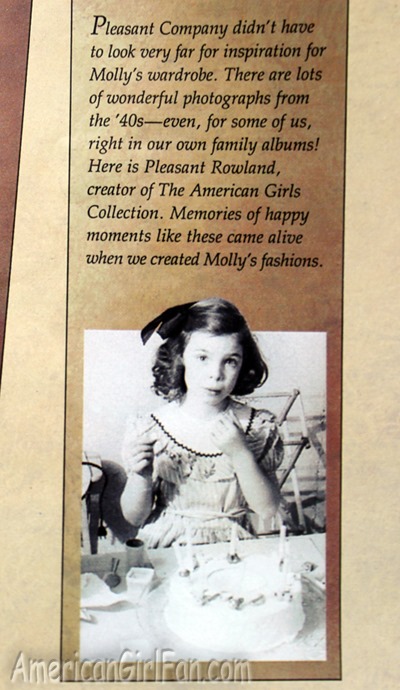
But first we need to finish the story of the connection between Pleasant Thiele Rowland, the founder of the American Girl Doll line, and the Ridge.
If you scroll through the posts on the RHS Facebook page, you will find the first post about Pleasant, made on February 13. We reported that Pleasant’s paternal grandparents, Edward A. and Maude Thiele, lived for decades at 9556 S. Winchester Ave., and her father, Edward M. Theile, lived there as a teen-ager and young man.
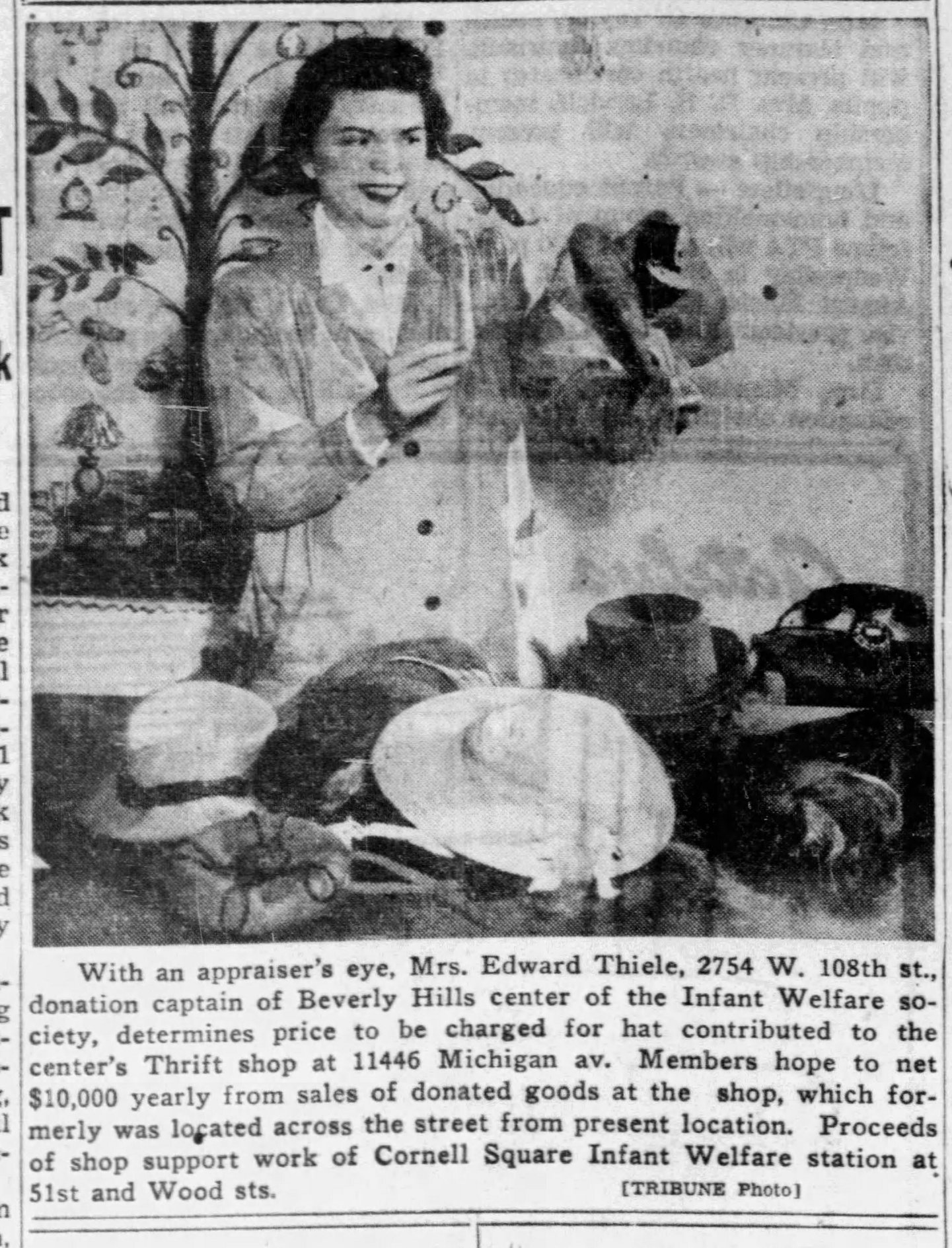
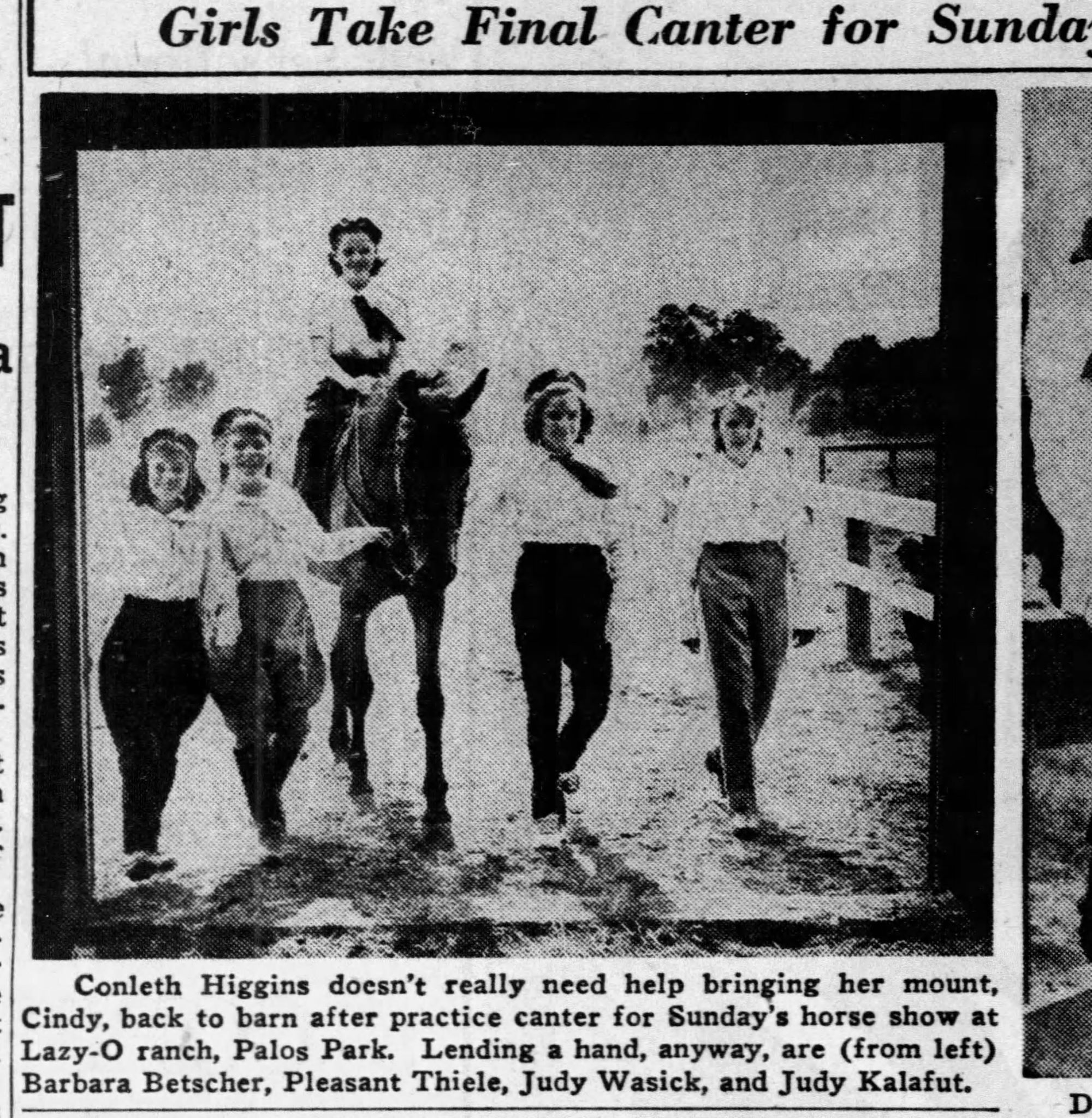
We also reported that Pleasant’s parents, Edward M. (E.M.) and Pleasant “Petty” Theile, moved their young family to the Ridge from 1947 to 1951, residing at 2754 West 108th Street. Pleasant was 10 years old when her father took a job with Leo Burnett Co., Inc., a well-known advertising agency, and the family moved to Bannockburn, Illinois.
There are “clues” as to what young Pleasant’s life was like on the Ridge.
First, her mother appeared in the newspapers for society and charity events. Petty was active with the Infant Welfare Society, a non-governmental volunteer organization founded in 1911 to help low-income women and children. The organization still exists today. For many years, the organization ran thrift shops, including one in Beverly, to raise funds.
One 1948 Chicago Tribune article reports that the Beverly volunteers, including Petty, were restoring used dolls to sell in a thrift shop in Roseland. The group also held annual balls, and Petty was listed as an assistant. A 1951 Chicago Tribune article had Petty assisting with a tea at Mickelberry’s Log Cabin restaurant on 95th Street.
Second, a childhood acquaintance of Pleasant’s shared some remembrances. Her mother was friends with E.M.’s sister, Pleasant’s aunt, Barbara Thiele.
This acquaintance called Pleasant “precocious and fun” and shared with us stories about Pleasant’s birthday parties, at her grandparents’ house and up north. The girls dressed very nicely, embroidered organdy with ruffles in the summer and velvet in the winter. Many photos of children in Beverly were on the Chicago Tribune society page.
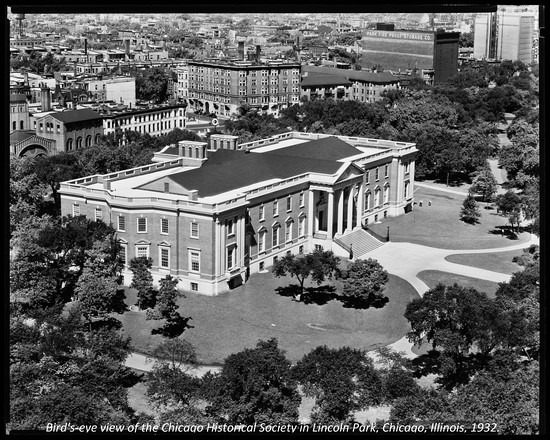
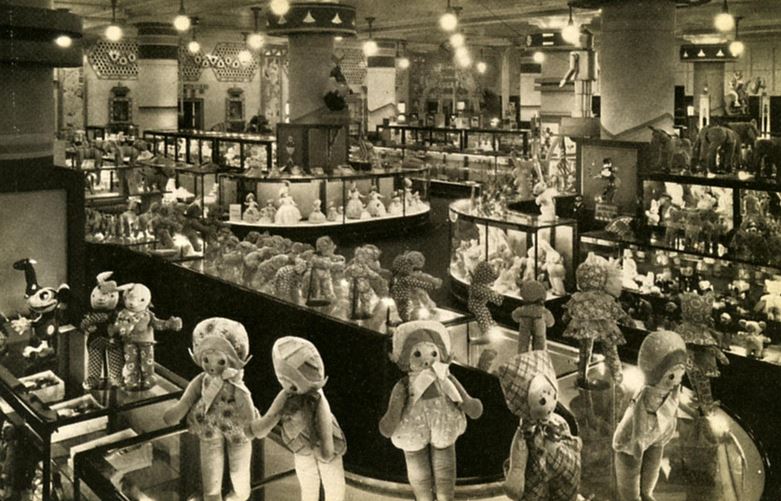
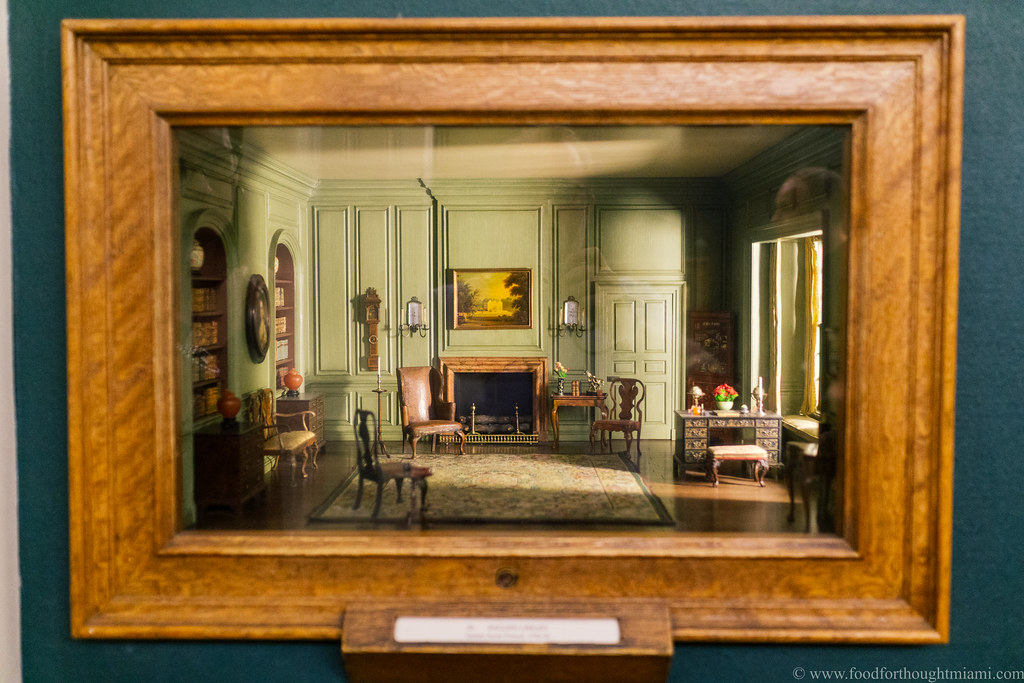
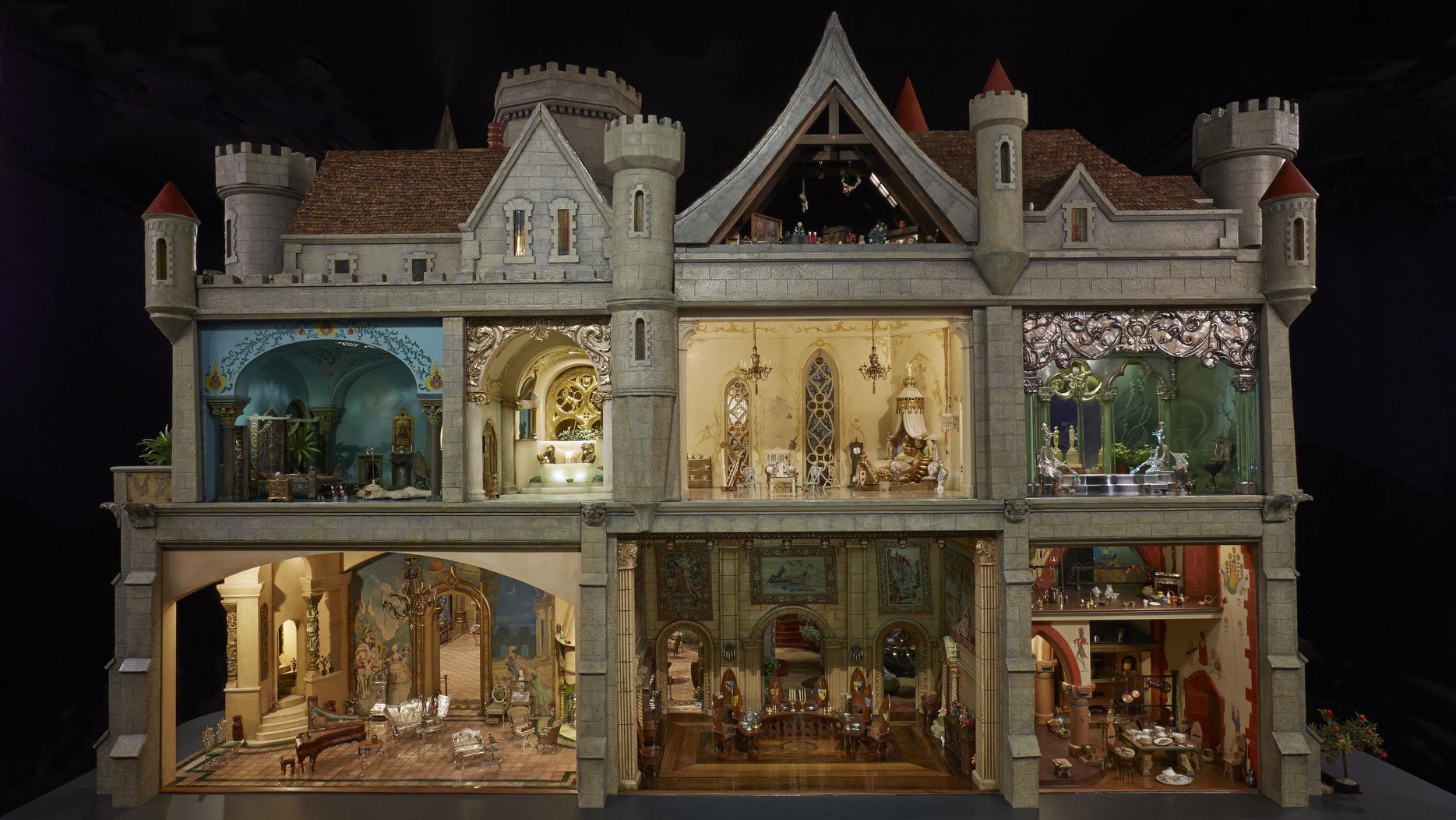
Keeping in mind that T.V.s were just becoming available then, and there were no home computers and smart phones, children relied on books and visits to museums for entertainment and information. This acquaintance remembers the dolls, doll clothes and doll furniture at the Chicago Historical Society, and the miniature Thorne rooms at the Art Institute. There was also the Marshall Field and Co. toy and doll department. Surely we can also add the Colleen Moore Fairy Castle at the Museum of Science and Industry to the list of exhibits that likely influenced Pleasant.
A third influence on Pleasant was her paternal grandmother, Maude Daugherty Thiele.
In 2003, the Wisconsin State Journal newspaper ran an article stating that:
“Pleasant Rowland grew up in Chicago’s Beverly area. At age 10 she moved to north suburban Bannockburn, Ill.
“’My childhood was one of loving to read and of loving to put on plays and act out stories and marshalling the neighborhood to put on the carnival or the Fourth of July parade,’ says Rowland in a rare interview. ‘It was a very active life of the mind.
“’My interest in things old was piqued by my paternal grandmother. She loved to go antiquing, and I would go with her. I began to see the value of old things and other times through her eyes.’”
In the early American Girl catalogs, Pleasant told stories from her youth – learning to crochet from her grandmother, etc. Some of these stories surely were from Beverly.
Pleasant also grew up listening to successful marketing and advertising people, as her father rose to become president of Leo Burnett.
Pleasant graduated from Wells College in 1962. She married Richard Henry Rowland, Jr., from South Carolina. Although the marriage did not last, she kept the Rowland name professionally. She had a career as a teacher, news reporter and anchor, and children’s textbook writer.
She developed two highly regarded reading programs. The first was a comprehensive language arts program. The second was the Superkids Reading Program that is used in thousands of U.S. classrooms.
She married businessman and philanthropist Jerome Frautschi from Madison, Wisconsin in 1977.
In 1986, she founded the Pleasant Company, which began manufacturing the line of 18-inch dolls from different historic eras, with authentic period clothing, furniture and accessories. Very important to the series were the books with stories told from the perspectives of girls eight to eleven-years old.
Pleasant said she was motivated by two things to start the line of dolls. First, a visit to Colonial Williamsburg got her thinking about girls’ stories from various periods in history.
Second, while trying to buy dolls for her nieces, she found the only real options to be Barbie or Cabbage Patch dolls. Both dolls forced girls to assume grown-up roles – fashion model or adoptive mother. She wanted dolls that let girls be girls to play at the appropriate age level.
In 1998, Pleasant Rowland sold the Pleasant Company, now called American Girl, to Mattel, the American multinational toy manufacturing and entertainment company, for $700 million. Today she and her husband continue other business and philanthropic activities.
On Valentine’s Day, February 14, we celebrate romance and love. It is one of the oldest holidays we recognize.
The origins of the day go back to the folklore about several saints named Valentine. One was St. Valentine of Rome, believed to have been martyred in AD 269 for ministering to early Christians and performing marriages for Roman soldiers forbidden to marry.
Another is Valentine of Terni, again, an early Christian who was martyred. The Catholic Encyclopedia includes a third Valentine, of whom little in known except he was martyred in Africa.
The feast day of St. Valentine was set as February 14 in AD 496 because it is believed to be the date St. Valentine of Rome was martyred and buried. Because of the unknown history, however, the Roman Catholic Church actually removed this feast day from the official calendar in 1969, relegating it to local recognition. It does remain an established feast day in some other Christian churches. It is not a public holiday in any country.
The idea of associating the day with courtly love became popular in England in the 14th century thanks to poet Geoffrey Chaucer and his circle. By the 1800s, presenting flowers, candy and greetings of affection, particularly poetry, were common practice. Mass-produced valentines have been around since about 1850 in the U.S.
The U.S. greeting card industry estimates about 190 million valentines are sent each year, about half from children. If you add in homemade valentines, the number one recipient is teachers. No surprise, Valentine’s Day is a major day for gift buying – the flower, candy and jewelry businesses do particularly well.
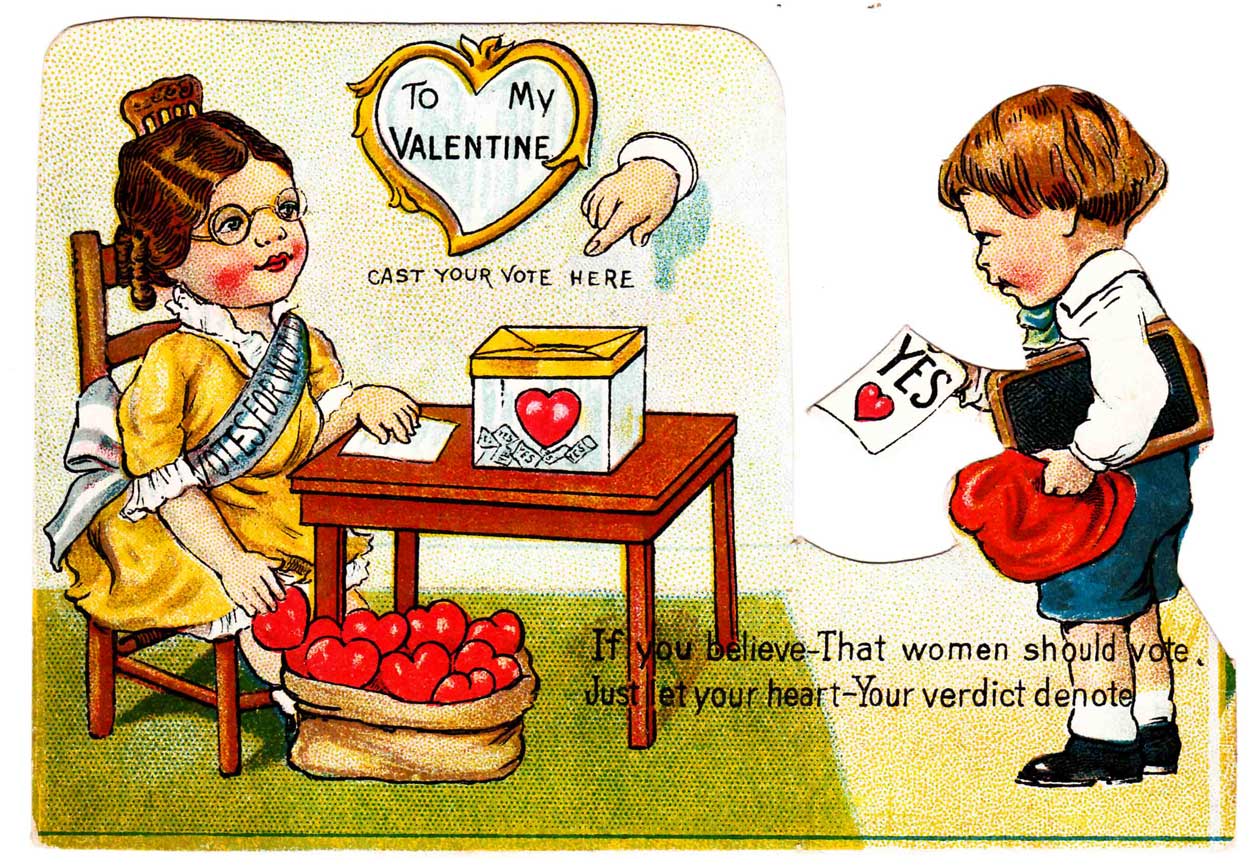
Also as no surprise, valentines have incorporated political and other messages depending on the times. This little gem from about 100 years ago incorporates a pro-woman suffrage message in it. In 1920, the 19th Amendment to the U.S. Constitution was ratified, granting women the right to vote.
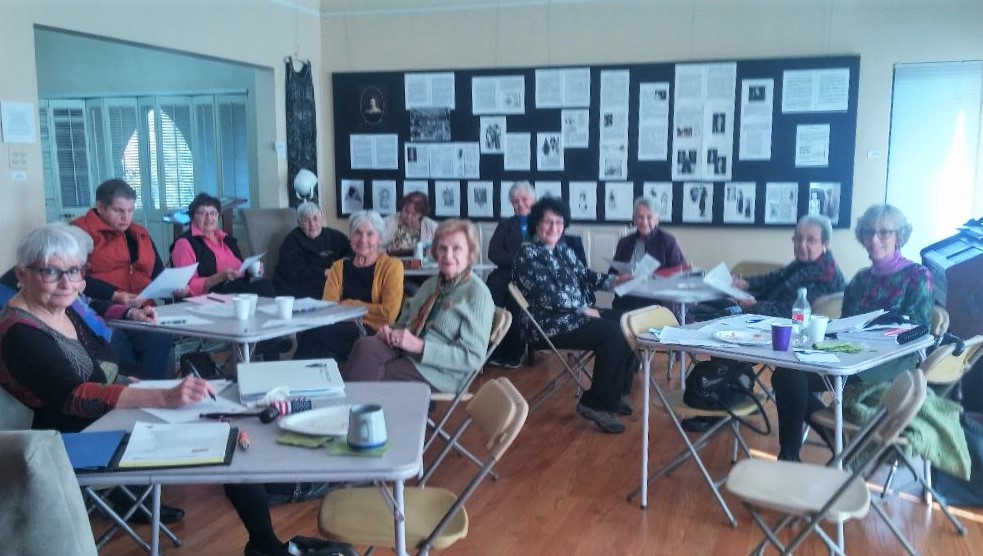
Today the Ridge Historical Society was honored to host the Morgan Park Woman's Club (MPWC) for its monthly meeting and a program on the current RHS exhibit, Threads of Imagination.
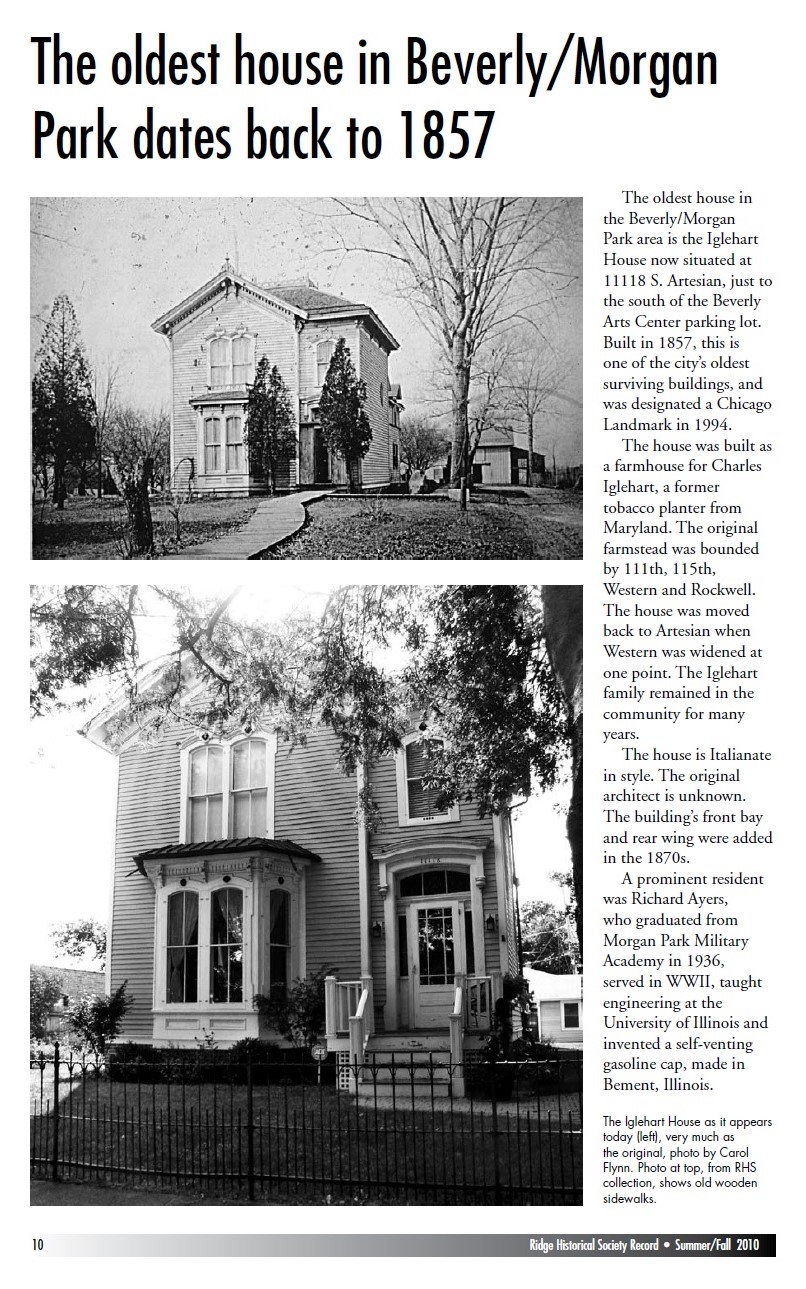
MPWC is the longest running women's club in Chicago, and the second longest in the state of Illinois. Formed on November 5, 1889, as "The Ladies Club of Morgan Park," the club adopted its current name in 1897. The famous Gertrude Blackwelder was an organizer of the group. The first meeting was held in the Iglehart House, one of the oldest houses not only in Morgan Park but in the entire City of Chicago, which was moved to its current location at 11118 S. Artesian from its original location at 111th and Western. The purpose of the club was intellectual self-improvement, and educational, philanthropic and civic causes. The Morgan Park Junior Woman's Club is an offshoot of the original MPWC.
MPWC has accomplished much good for the community, from advocating for women's right to vote over 100 years ago; to forming PTAs at the local schools; to working with the Chicago Park District in the 1930s to turn the land that is now Kennedy Park from a waste dump into a bird sanctuary and wildflower preserve; to today's projects including supplying books to local school libraries and clipping news articles for RHS.
MPWC has been recognized many, many times for its accomplishments, including an award from the Red Cross for many hours of service during World War II to just this month being named one of the Illinois 10 Outstanding Club Signature Project winners. The project was collecting socks for A New Direction, the local organization providing services for victims of domestics violence, something MPWC does every year. Interestingly, socks are the #! most requested item at shelters.
Women's clubs have an interesting history. Women's lives traditionally revolved around the home and family, and any "clubs" were usually church-based activities such as caring for the sick. All this changed with the U.S. Civil War, when women used their considerable organizational and management skills for relief efforts including care for the hundreds of thousands of soldiers and veterans. Following was the Progressive Era, that time of great social reform. Long denied membership in men's clubs, women formed their own clubs and became a mighty force to be reckoned with for the good of the country.
As new education and employment opportunities opened up for women, with time women found additional outlets for their interests and skills and most of the early clubs dissolved. But in Morgan Park the legacy of the crusading women of the past lives on.
Picture 1 – Today's MPWC at RHS. Photo by C. Flynn. Pic 2 – The Iglehart House, where it all began on November 5, 1889. RHS newsletter by C. Flynn. .
"The right of citizens of the United States to vote shall not be denied or abridged by the United States or by any state on account of sex. Congress shall have power to enforce this article by appropriate legislation."
These two sentences brought to an end decades of demands and campaigning for the right for women to vote in all elections – including Presidential.
This is the Nineteenth Amendment to the U. S. Constitution, passed on June 4, 1919, one hundred years ago.
Illinois was the first state to ratify this amendment, on June 10, 1919. Ratification was declared on August 26, 1920, with 36 of the 48 states affirming by that time. (The last state to ratify the amendment was Mississippi – in 1984!)
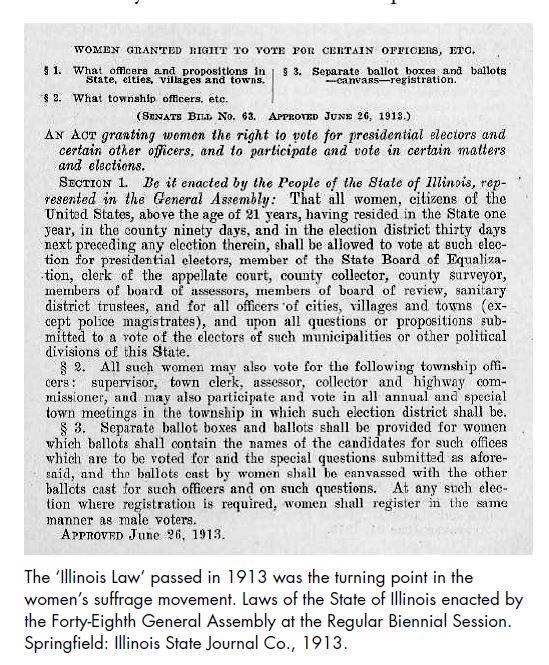
It is no surprise that Illinois was the first state to ratify the amendment – it was largely due to an Illinois law passed in 1913 that the final push at the federal level occurred. In fact, the federal outcome was so anticlimactic, it did not even receive much notice in the press. Illinois women had been voting for President for years.
In 1913, the Progressive Party held the balance of power in the Illinois State legislature. Women lawyers came up with a way to significantly increase the voting power of women.
The Electoral College was established by the Founding Fathers as a compromise on how to elect the President – by popular vote or by vote of Congress. Individuals known as Electors are chosen by each state, and it is actually these Electors who choose the President. The U. S, Constitution gives the authority to each state to decide how to choose the Electors.
A bill allowing women to vote for the Electors was introduced into the Illinois legislature. The opposition tried every conceivable parliamentary maneuver to keep the bill from going forward. But after receiving an overwhelming flood of letters, telegrams, visits, and telephone calls in support, the Speaker allowed the bill to go to vote.
Women "captains" went to the legislators' houses to round them up for the vote, and stood guard at the chamber doors to prevent them from leaving before the vote was cast.
The bill passed. Women in Illinois became the first women in the country to vote for President, through electing the state Electors. The new law also expanded voting rights at the municipal level.
Women on the Ridge were very active in the suffrage movement. Gertrude Blackwelder of Morgan Park served as the president of the Chicago Political Equality League for three years. Mrs. Blackwelder made history on Saturday, July 26, 1913, when she cast her ballot in Morgan Park’s special election on building a new high school. She was the first woman to vote in Cook County after the 1913 Illinois law passed.
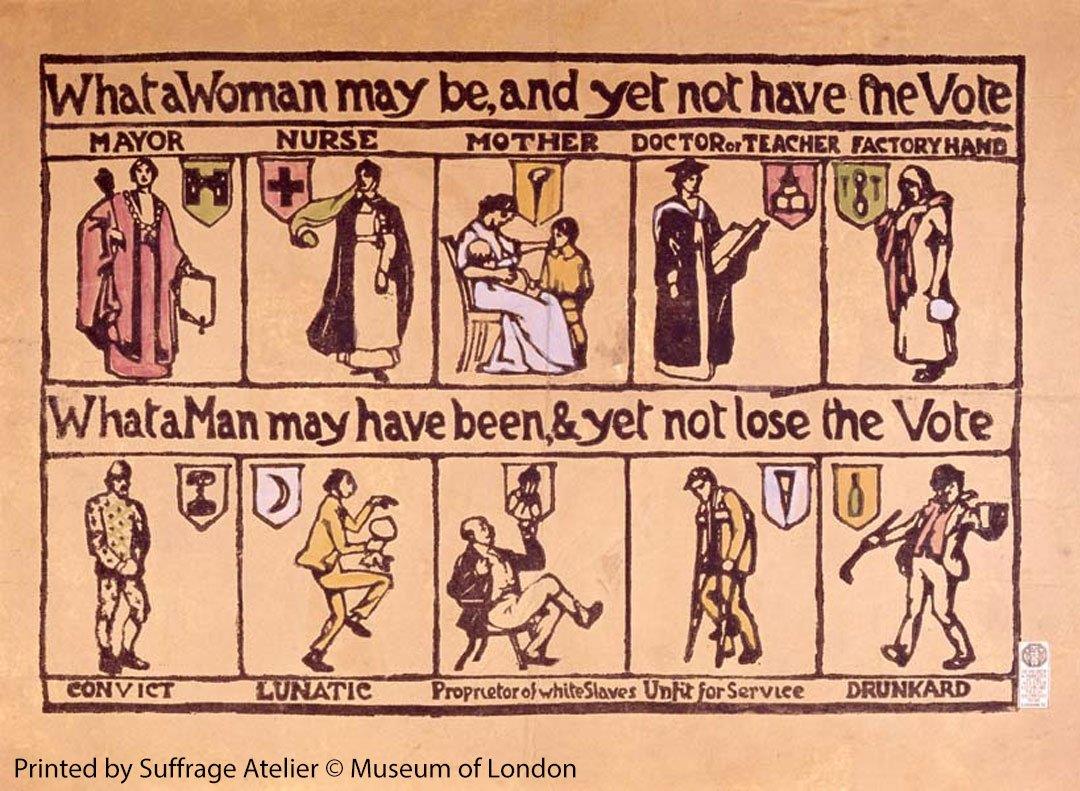
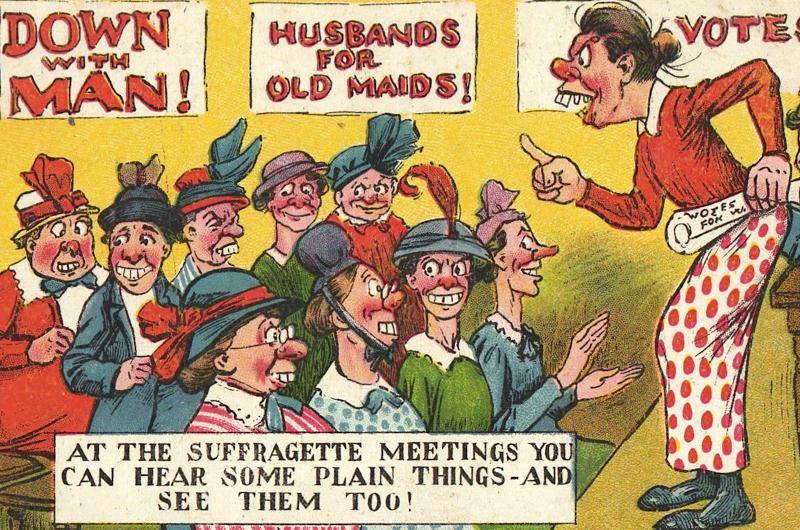
Pic 1: The 1913 Illinois law.
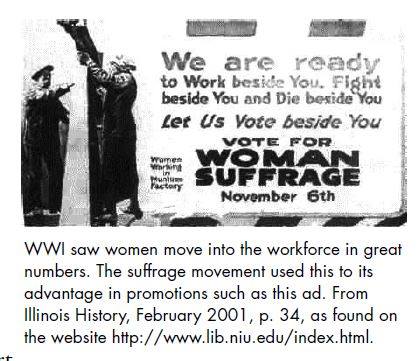
Pic 2: A WWI-era pro-suffrage ad.
Pic 3: Pro-suffrage propaganda.
Pic 4: Anti-suffrage propaganda. Both sides could be brutal. .
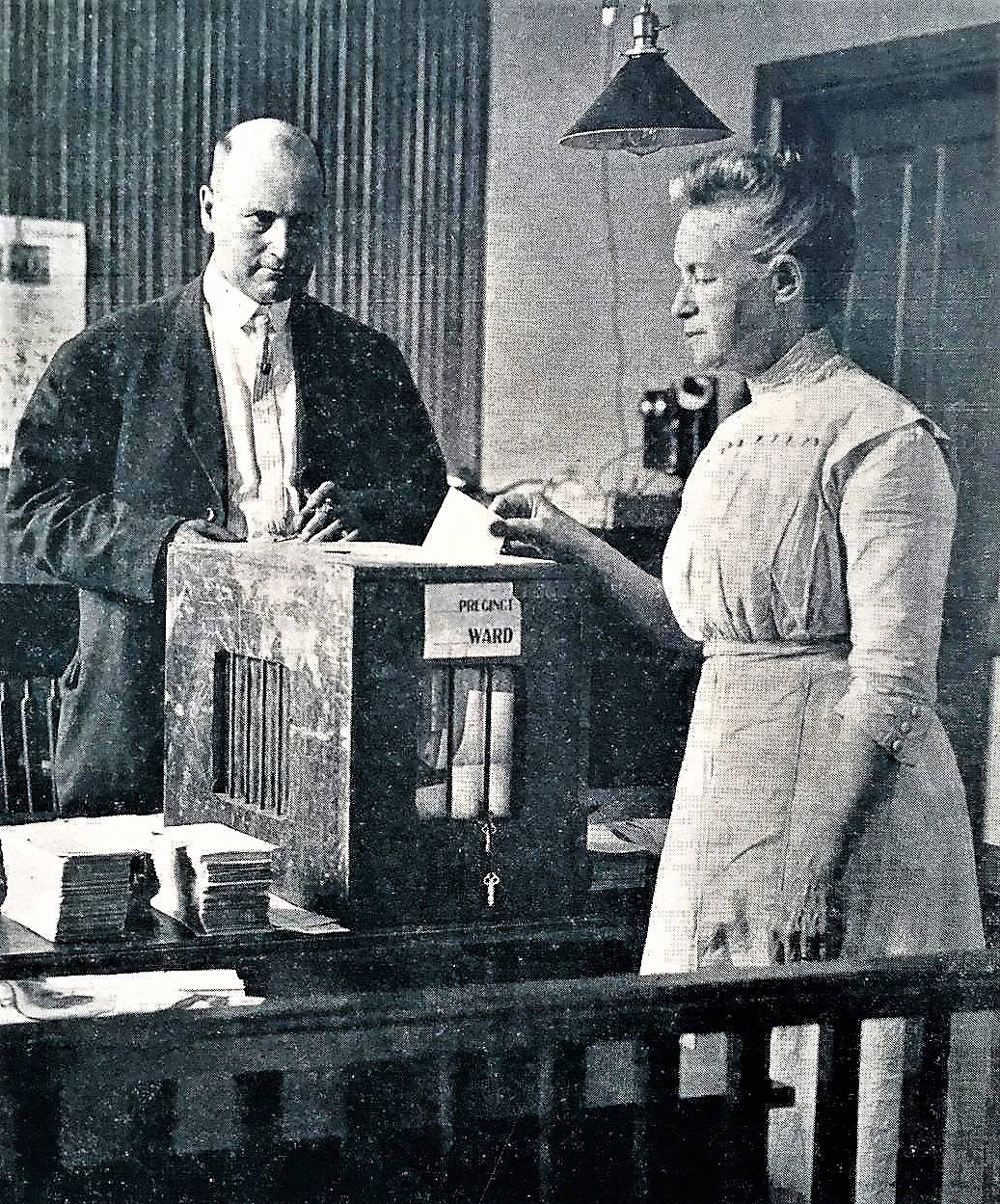
March is Women's History Month. This year the Ridge Historical Society salutes Gertrude Blackwelder, a remarkable woman who lived during the Progressive Era and worked tirelessly for women's suffrage and education reform. Mrs. Blackwelder made history by being the first woman to cast a vote in Cook County when women won expanded voting rights in 1913.
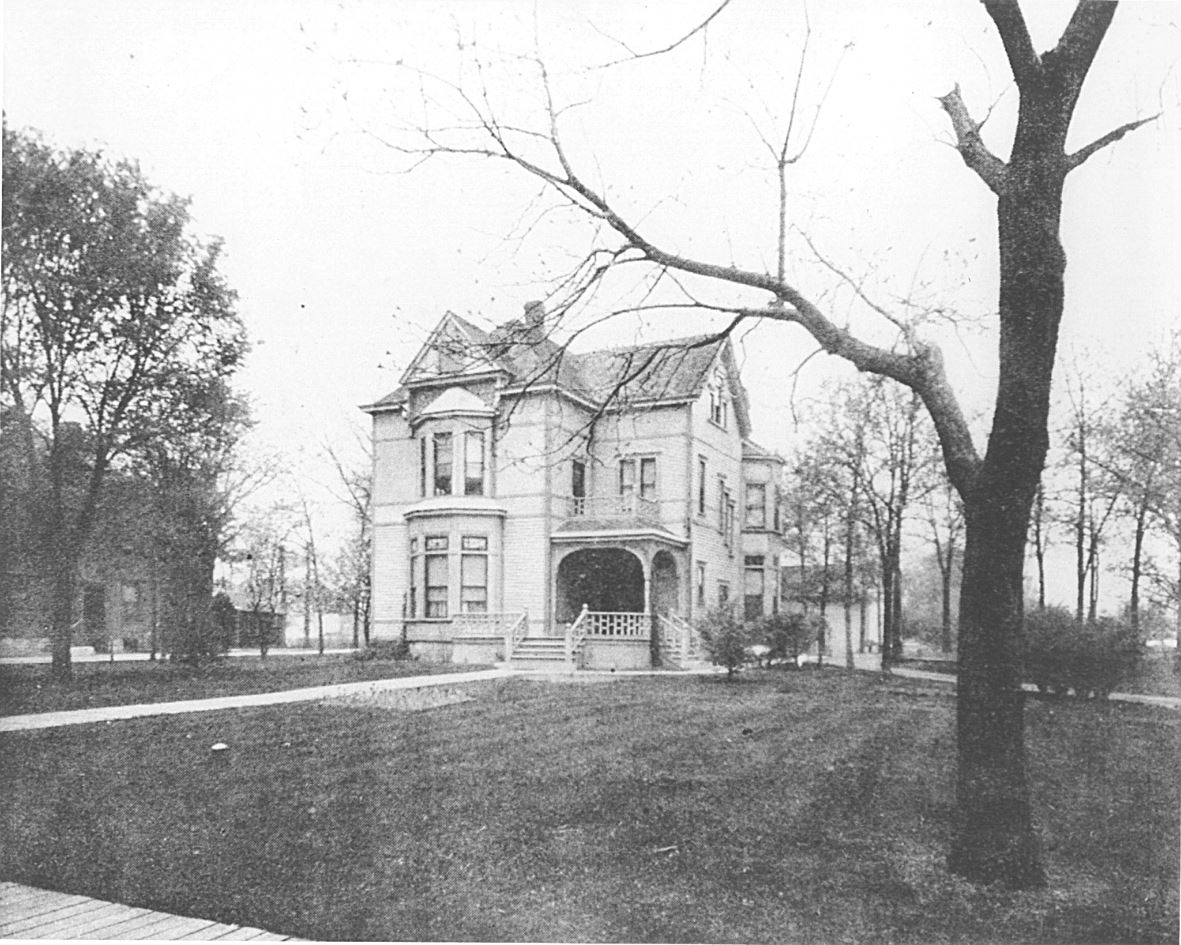
Gertrude and her husband, I.S. Blackwelder, were early settlers in Morgan Park, where I.S. served as president of the Village Board. Gertrude co-founded the Morgan Park Woman's Club in 1889, the oldest such club still in existence in Chicago. The Blackwelders were instrumental in establishing the Morgan Park High School, which opened in 1916. Their house is one of the most famous historical residences in the neighborhood – the Ingersoll-Blackwelder-Simmerling House on Prospect.
We've just entered a major feature on Mrs. Blackwelder on the RHS website so go here for more information: www.ridgehistorical.org.
Pictures: Mrs. Blackwelder voting, from the Chicago Tribune in 1913.
The Ingersoll-Blackwelder House as it appeared when the Blackwelders lived there – RHS archives.