Explore the RHS Facebook Archives, a rich repository of local history written by Carol Flynn. For two decades, Carol brought a deeply dedicated voice to public education at RHS. Her role as Facebook administrator through mid-2025 naturally extended her prolific research into meticulously detailed articles, most notably her multi-part historical series posts. Today, Carol continues her local history writing for The Beverly Review and other outlets.
April 2021


The Ridge Historical Society
Easter Sunday 2021
By Carol Flynn
Here are some vintage postcards for Easter.
I always wonder on a day like today as we compare the true meaning of the day, a religious holy day, and the secular, commercial aspect.
Who is the bigger hero on Easter? Jesus Christ or the Easter Bunny?
Happy Easter.
The Ridge Historical Society
Native Americans in the South Side Communities
By Carol Flynn
Seeking: People from the Blue Island Ridge communities and other south/southwest Chicagoland areas who are of Native American descent who would be willing to talk to me about their perspectives and experiences living in this area.
Why?
What we are working on: We are currently finishing up a background paper on the history of Native Americans in the Blue Island Ridge communities that can serve as a beginning point for local groups or individuals writing Land Acknowledgement Statements, or putting together any kind of programs on the topic, etc. This will be available to anyone who wants it. We will run this as a series on Facebook, also. This will be a constant "work in progress" updated and enhanced regularly. It is not an exhaustive document, it is a beginning point to help people get familiar with the history and issues.
I have plenty of historical resources – we've been in touch with the American Indian Center, Newberry Library, we have resources from the University of Chicago, plenty of books and articles and old maps and local history resources. I am looking for real, everyday people to talk to.
I intend to turn this into a general article for the Daily Southtown newspaper, expanding the information to include points west and south of the Ridge – Palos, Will County, Thornton, etc.
It is reported that there are around 65,000 Native Americans representing 175 Nations in the Chicago area, but most of these people are concentrated on the North Side. There is very little Native American presence reported in the Blue Island Ridge communities. Depending on the source, the population of Native Americans or “Other” which includes Native Americans is always given as less than 2%. One source lists 0% for Mount Greenwood and Washington Heights, 0.4% for Beverly, 0.9% for Morgan Park, and 0.8% for Blue Island.
My guess is that there are people with some Native American ancestry who are counted in the other groups.
So I would love to "meet" some people of Native American ancestry who would agree to be interviewed. They can contact me personally through Messenger, or through the RHS Facebook page – I see the messages but they are not made public. Please feel free to share this request with anyone you know.
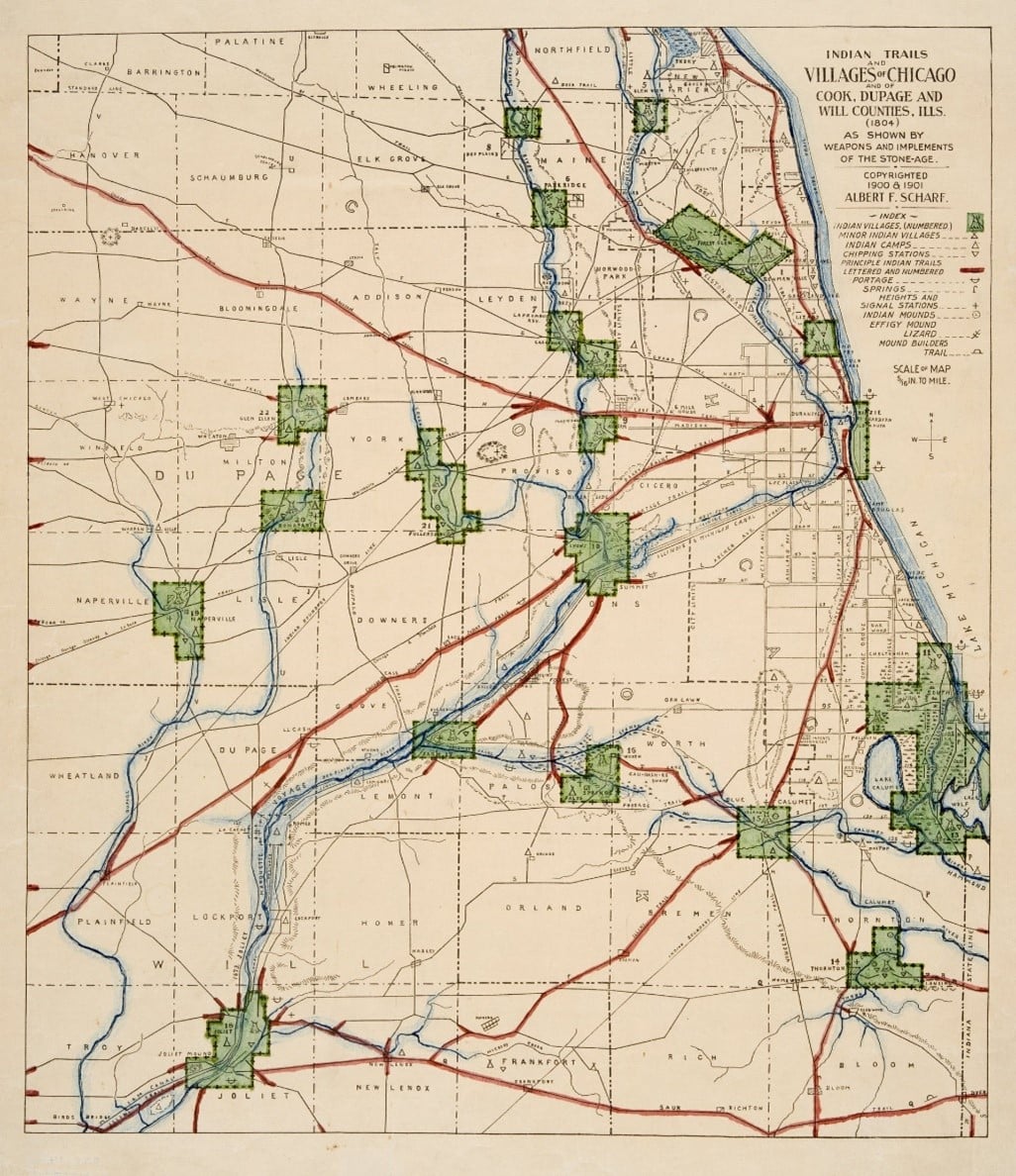
Here is a very interesting map, going back to 1804, updated and reproduced in 1900-01, showing Indian trails and sites in the area. Note the outline of the Blue Island and the sites in the area.
The Ridge Historical Society
“Harvesting Ethnic Roots”
By Carol Flynn
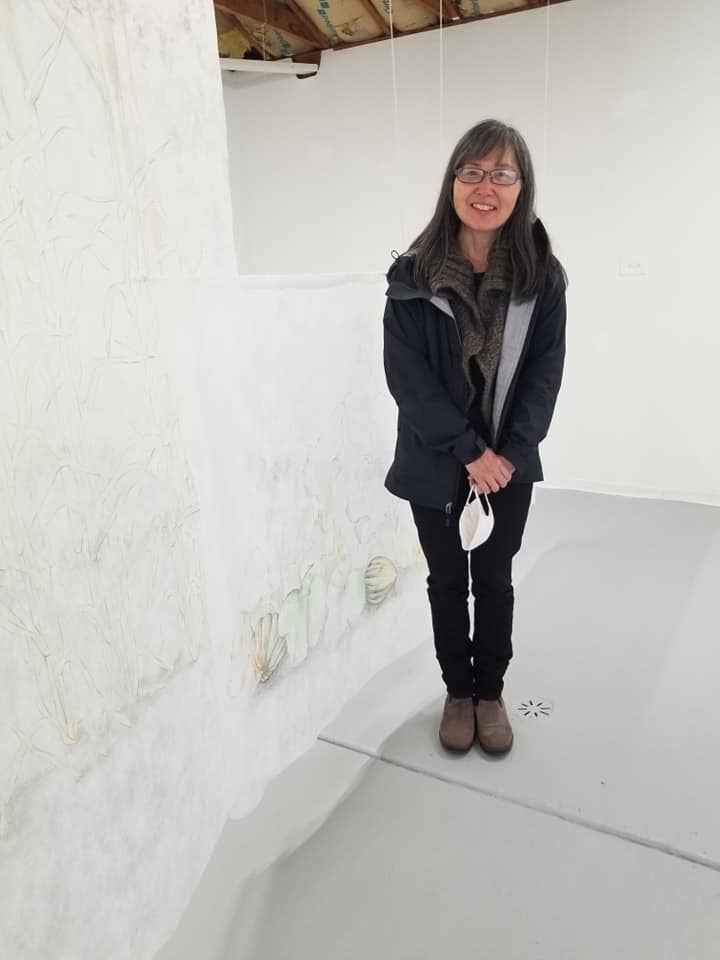
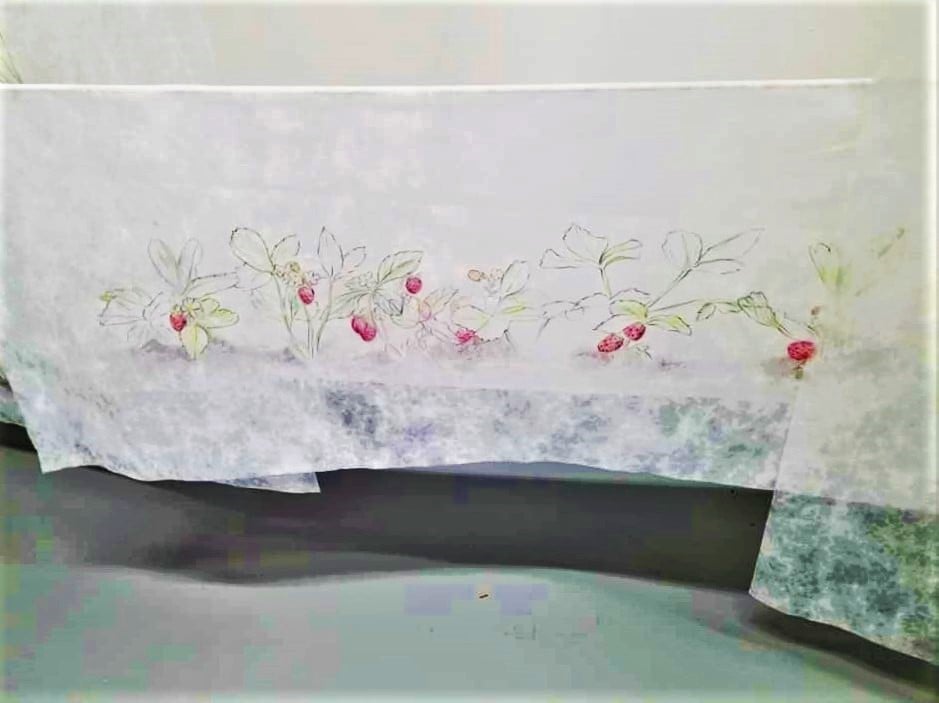
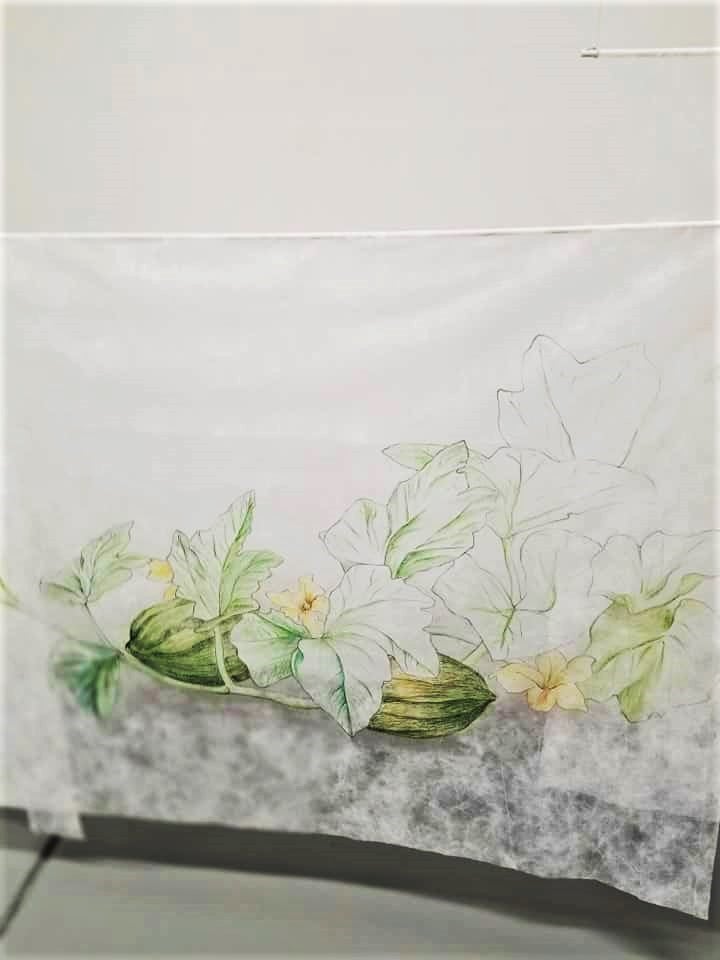
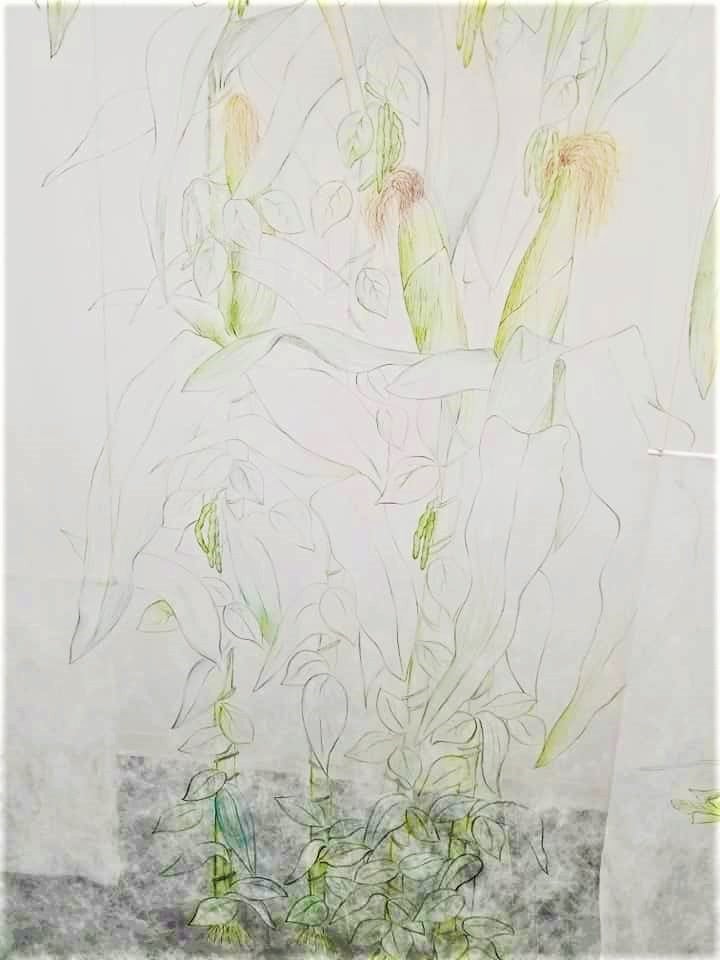
Chicago artist Joanne Aono opened a new exhibit today at boundary. The exhibit is called “Harvesting Ethnic Roots” and it represents the cultural food identity and history of the diverse peoples who settled in the Ridge area. In fact, Joanne used the Ridge Historical Society (RHS) and RHS Historian Linda Lamberty as research resources while she developed the concept of the project.
Joanne is interested in food sovereignty and immigration experiences. Food sovereignty is the right of peoples to healthy and culturally appropriate food produced through ecologically sound and sustainable methods. Joanne and her husband have a 10-acre holistic farm.
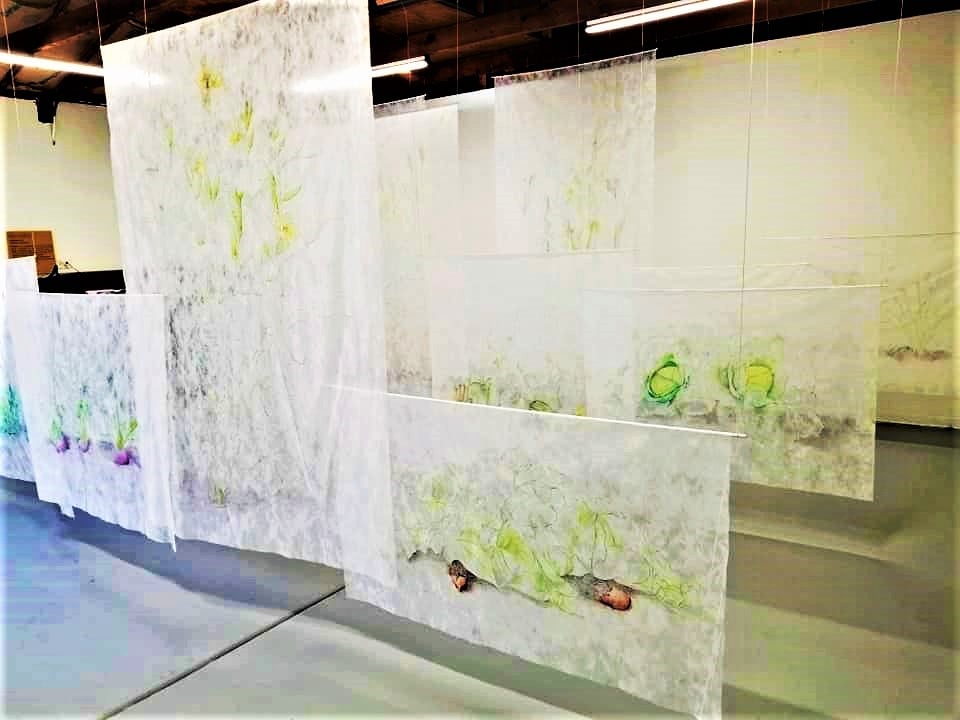
In this exhibit, large drawings depict foods gathered or cultivated in the Ridge communities by inhabitants during three historical periods. The back row of drawings depicts the foods gathered and grown by Indigenous Peoples who lived in the area until 1835. These include wild rice, strawberries and onions; and cultivated corn, beans and squash.
The middle row depicts the foods raised by the European settlers, who arrived in the 1830s. Rye and lettuce are two of the crops depicted.
The front row depicts the food items grown by Black Americans who settled in the Chicago area after the U.S. Civil War, many of them descendants of slaves. Collards and okra are two of the items included.
The images are created in pencil, colored pencil, and marker, on sheer material that is used to cover crops. The panels are hung to overlap and sway in the breeze as the viewer walks through them. The delicate drawings and white sheer material create a ghostly, dreamlike experience of days past when the Ridge was natural and rural and some of the land was used for raising and gathering food.
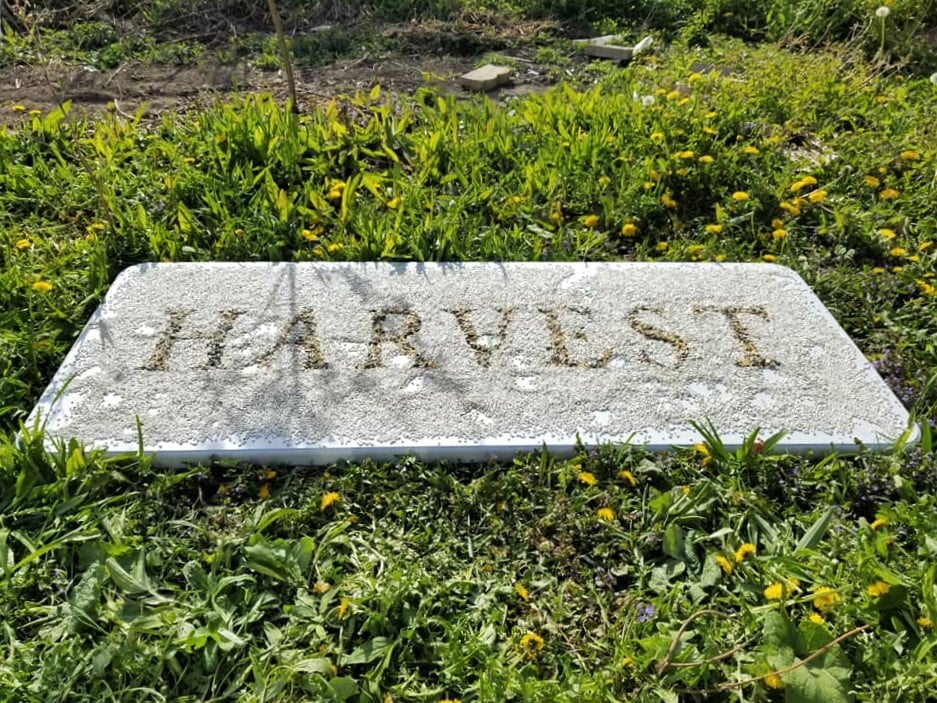
A second part of the exhibit is an outside installation called “Harvest” and consists of a base covered with seeds. Nature – animals, birds, wind and weather – will scatter the seeds and eventually reveal a quote underneath, by Fannie Lou Hamer, a sharecropper and civil rights activist. To learn the quote, you’ll have to visit the exhibit.
Joanne’s website is www.JoanneAono.com.
boundary is a visual arts project space located in a renovated garage on the Ridge, at 2334 West 111th Place, Chicago. The owner is Susannah Papish. The exhibit will run until June. Gallery hours are Saturdays, 12-4 p.m., or by appointment. Go to boundarychicago.space to book an appointment.
My photos do not do justice to the exhibit. The drawings are very delicate and dreamlike, and the details and colors are not caught well in these photos, so I did a lot of enhancing. I‘ll try to get better pictures – or better yet, get over to the exhibit to see it for yourself.
The Ridge Historical Society
Anniversary of Tornado
By Carol Flynn
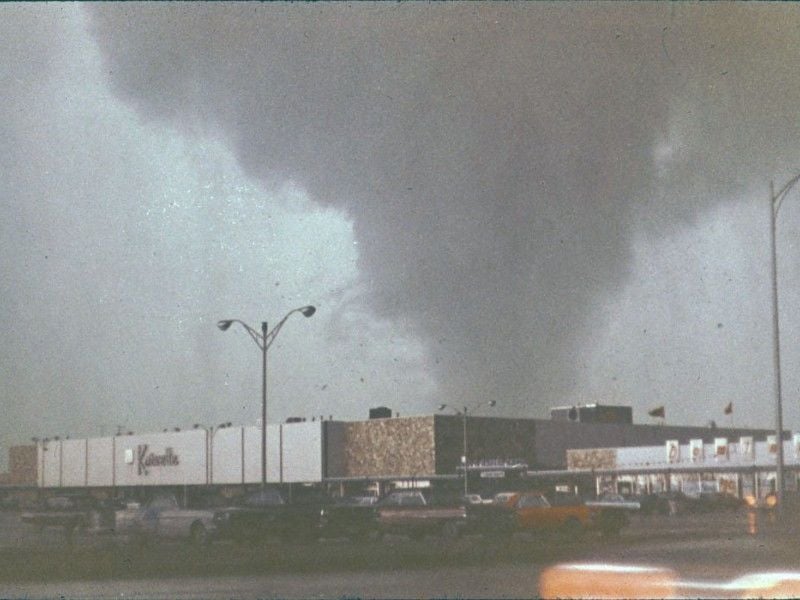
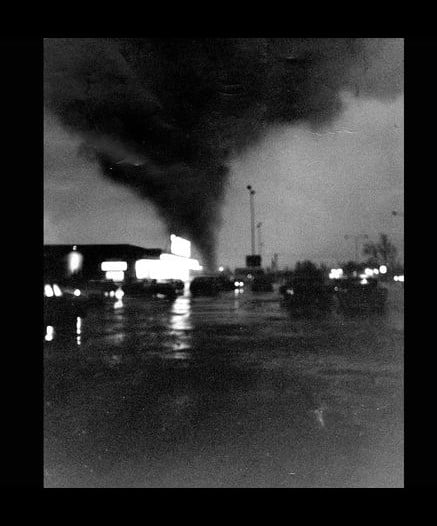
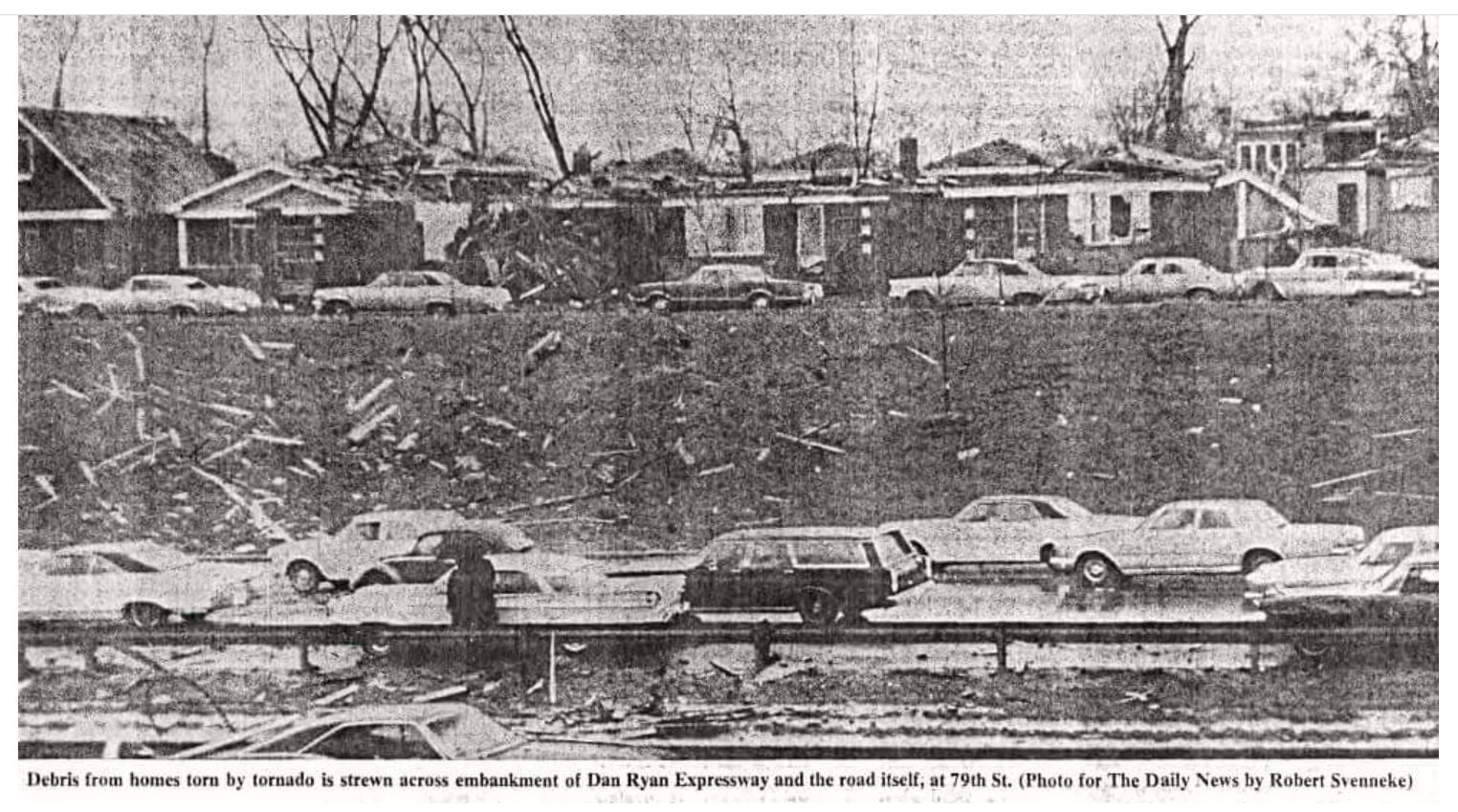
On April 21, 1967, the deadliest tornado in the history of northern Illinois came through the area right at evening rush hour.
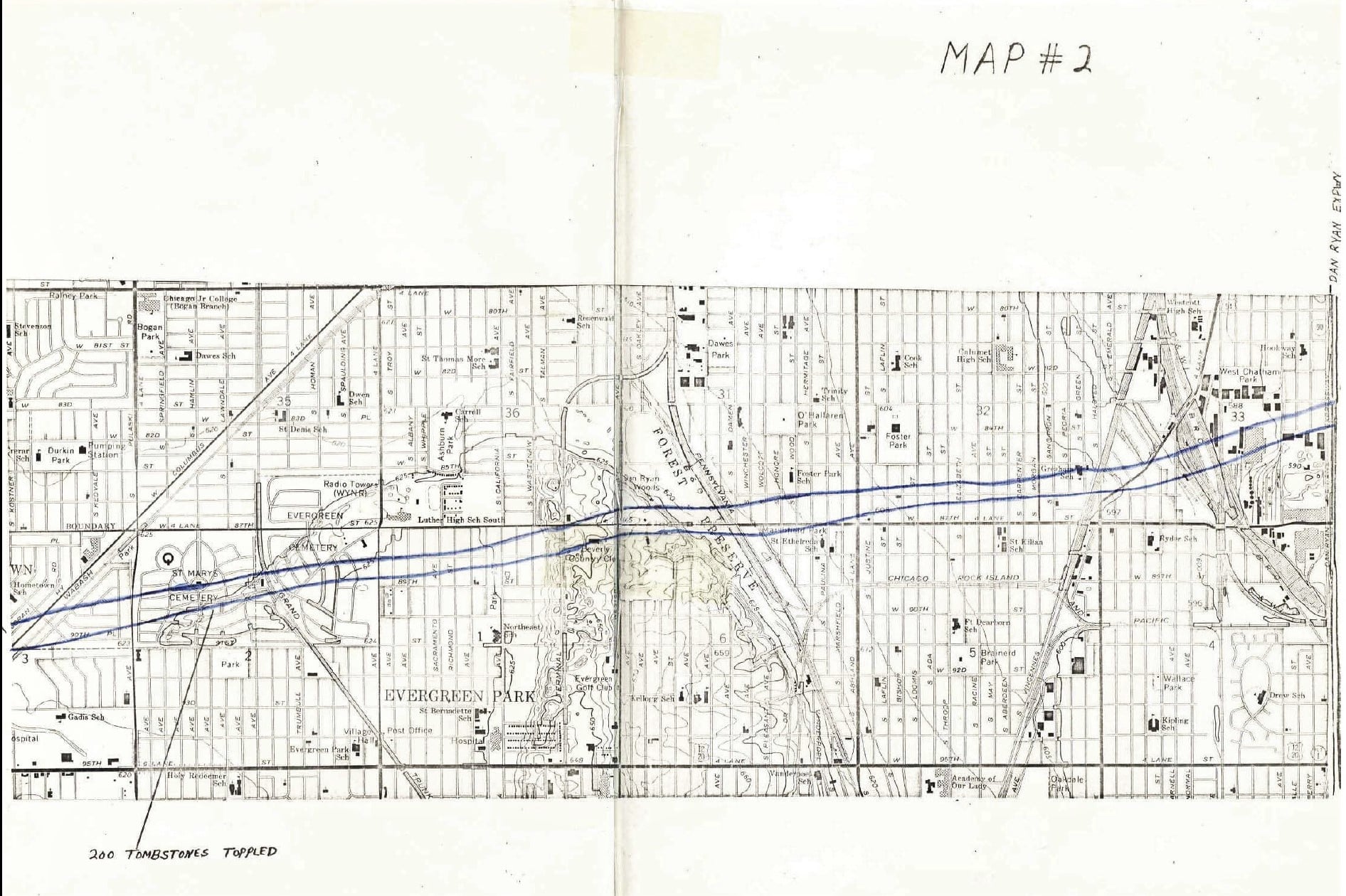
At 5:24 p.m., the twister touched down in Palos Hills by 106th Street and 88th Avenue where Moraine Valley Community College is now, and started moving east-northeast. It reached its maximum size and intensity as it passed through Oak Lawn, Hometown and Evergreen Park.
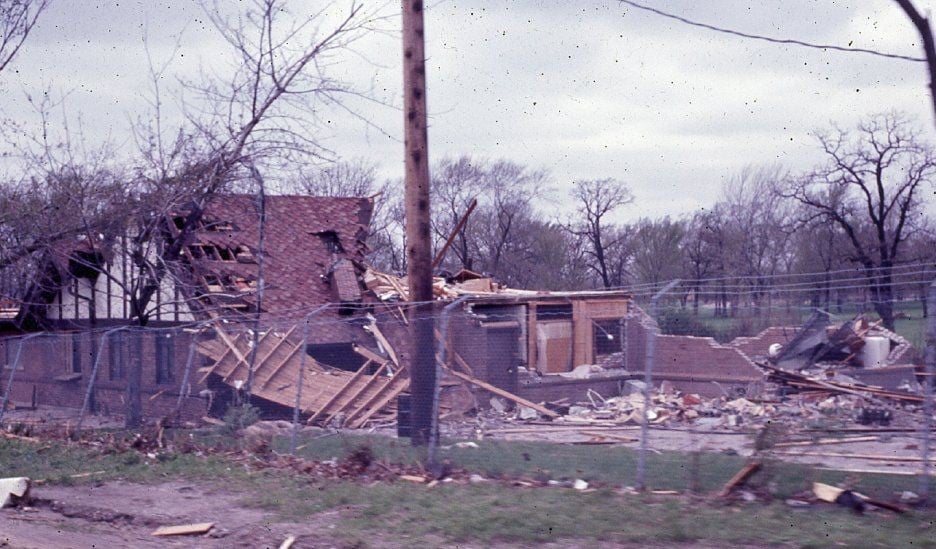
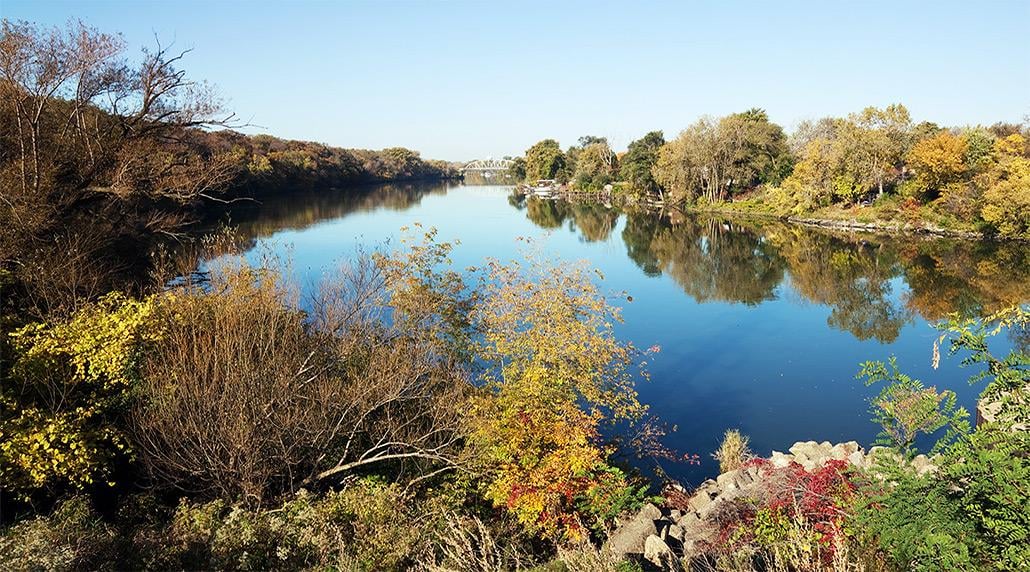
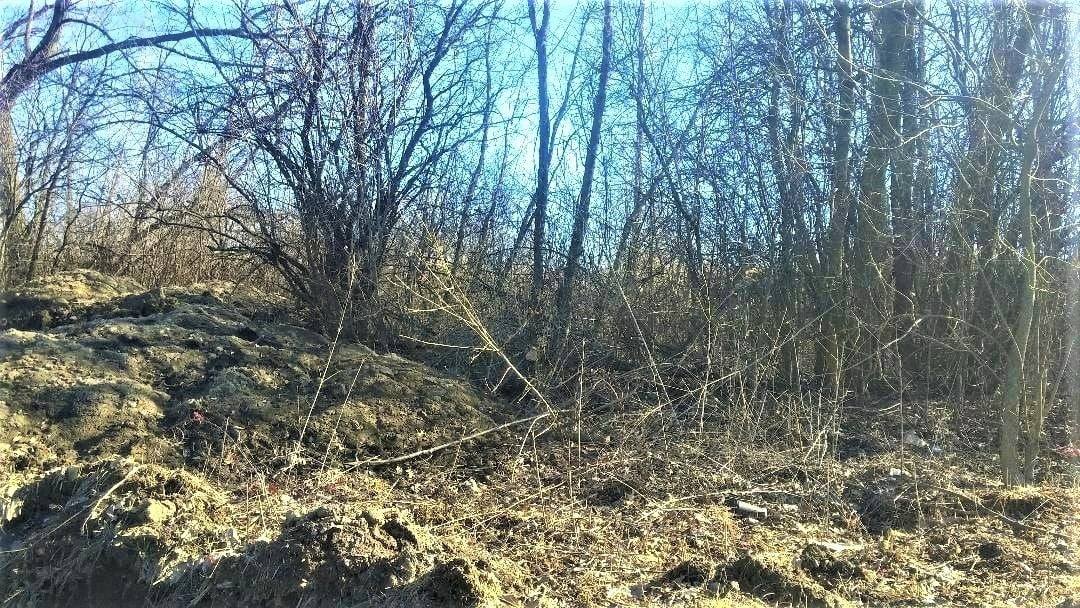
The funnel continued along 87th Street, destroying a building at the Beverly Country Club, and tore through Dan Ryan Woods, uprooting and damaging hundreds of trees.
It continued northeast, weakening, until it moved into the lake as a waterspout at Rainbow Beach around 79th Street.
The tornado caused 33 fatalities and over 1,000 injuries, and more than $50 million in property damage. Beverly was largely spared because of the forest preserve’s location. Our sympathies continue to this day to be extended to the communities devasted by this natural disaster.
The Ridge Historical Society
Earth Day 2021
By Carol Flynn
Edited: I did not mention Dan Ryan Woods in my original post! Of course, the forest preserve connects us to Earth Day and the "Wild Ridge." That is an obvious example. The upper woods are an example of "Open Woodlands," an ecosystem that was prevalent in the area. Water drained from the top of the Ridge to the east into the lower woodlands where the water pooled into wet areas before being absorbed into the ground. Descriptions of the "island" itself reported that the sides were heavily wooded and much of the top of the table of land was prairie.
Following is information about the other ecosystems of which there are still remnants in the Ridge area.
Thursday, April 22, is Earth Day. It is a global event established in 1970 to support environmental protection. The theme this year is Restore Our Earth.
This is a good opportunity to once again share a favorite history topic – the “Wild Ridge.” This is a look back at the natural environment of the Ridge before it was “developed” by European settlers. There are a few remnants of the land left from the days when it was the ancestral homelands of Native Americans.
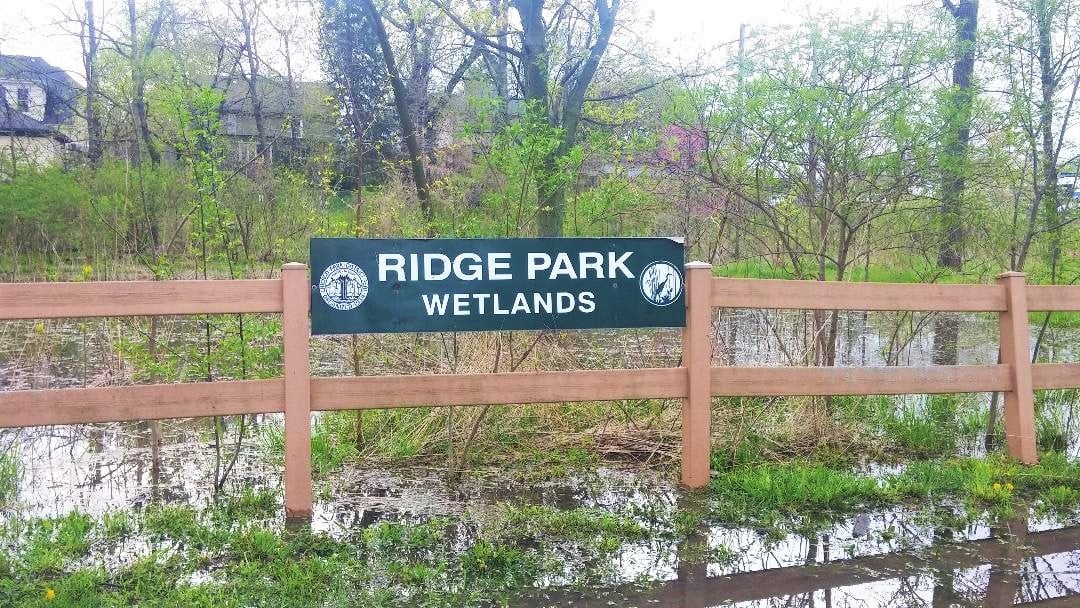
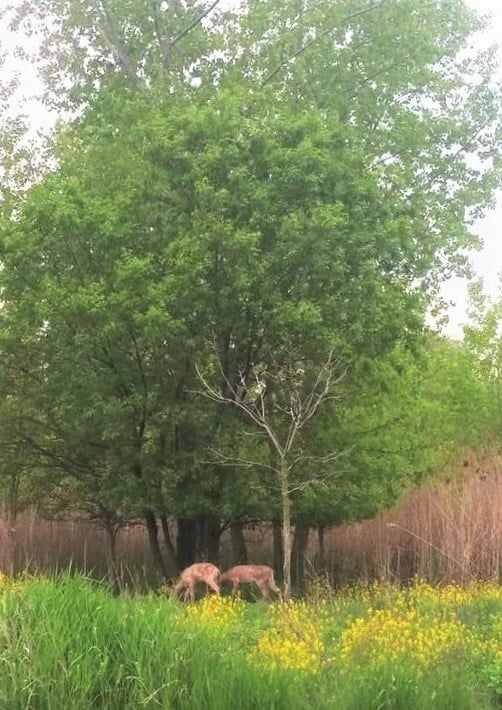
The Ridge Wetlands is a teeny-tiny remnant of the marshes and sloughs that predominated in the land between the Ridge area and Lake Michigan. This land provided abundant nourishment and other life necessities for wildlife and Indigenous Peoples – wild rice, berry brambles, and other food plants; stop-overs and breeding grounds for migratory waterfowl; ecosystem for fur-bearing animals like beaver and muskrats.
Note that this is why so many lawns and basements to the east of the Ridge flood – they are built on natural wetlands and there is no place for the water to go. The water is supposed to be there – houses are not!
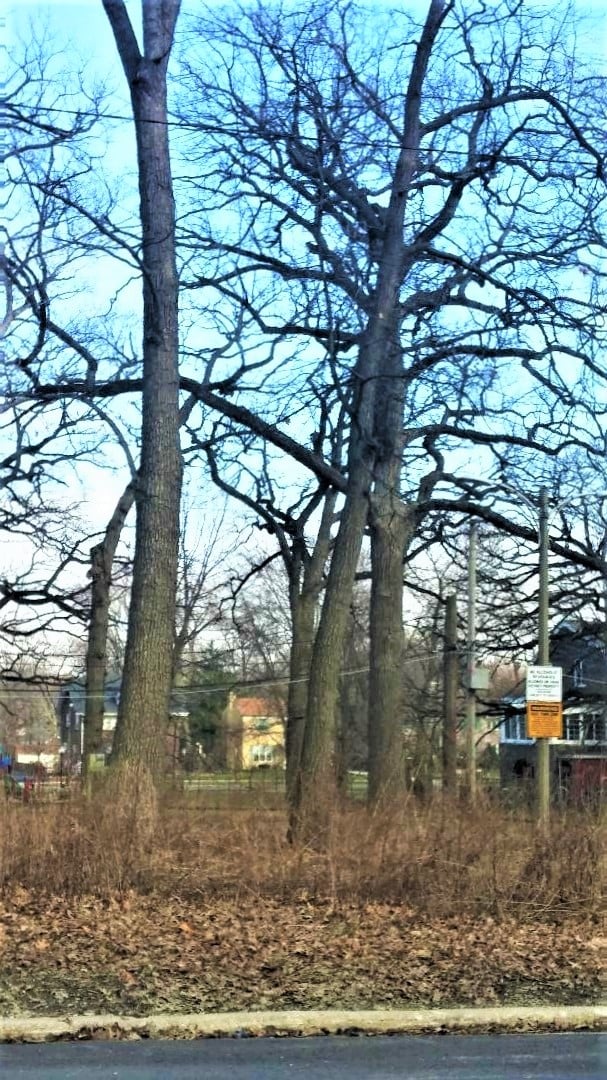
The Oak Savannah remnant at Hurley Park. The drier areas had numerous groves of timber, predominated by oak. Also included were fruit trees like apples and plums, nut trees like walnuts and hickories, and birch trees good for making canoes. Numerous species of birds and small mammals made their homes in the trees. Deer and bears and lynx found refuge there.
Note that many of the heritage oak trees in the Ridge areas are reaching the end of their lifespans, about 200 years. They have not been replaced. Within the next 50 years, a lot of these trees will die, and the tree canopy will be gone.
Vast stretches of prairie land were the migration path for buffalo, as well as the home for countless species of birds and small mammals, and wild food plants, including the wild onion or garlic that gave Chicago its name.
Any substantial prairie land is gone from this area. Some prairie remnants can be seen in local cemeteries.
The waterways, the Calumet River system and Stony Creek at the southern edge of the Ridge, teemed with fish – trout, pike, bass, perch, etc.
Stony Creek was absorbed into the Cal-Sag Channel. The Illinois Department of Public Health puts severe restrictions on eating fish caught from the Calumet system due to contamination.
The sand dunes which formed on the western side of the Blue Island, which can still be seen today in the cemeteries along that ancient shoreline, also had their own ecosystem of plants, birds, and other animals. Wolves built their dens there, in the well-drained soil.
Ridge Historical Society
National Arbor Day 2021
By Carol Flynn
There is an old Chinese proverb that states: “The best time to plant a tree was 20 years ago. The next best time is now.”
Today – Friday, April 30, 2021 – is National Arbor Day. Arbor Day was started for one very specific reason: to encourage people to plant trees.
By now, there shouldn’t be anyone who doesn’t recognize the importance of trees to our environment, from aesthetic to scientific reasons. They beautify, they give us comfort and shade, they give us food and building materials, they are the homes to numerous other species of animals and birds, they clean and cool the air, they stabilize the ground. They respond to pain and injury, they communicate with each other. They are living creatures, not inanimate props along the street.
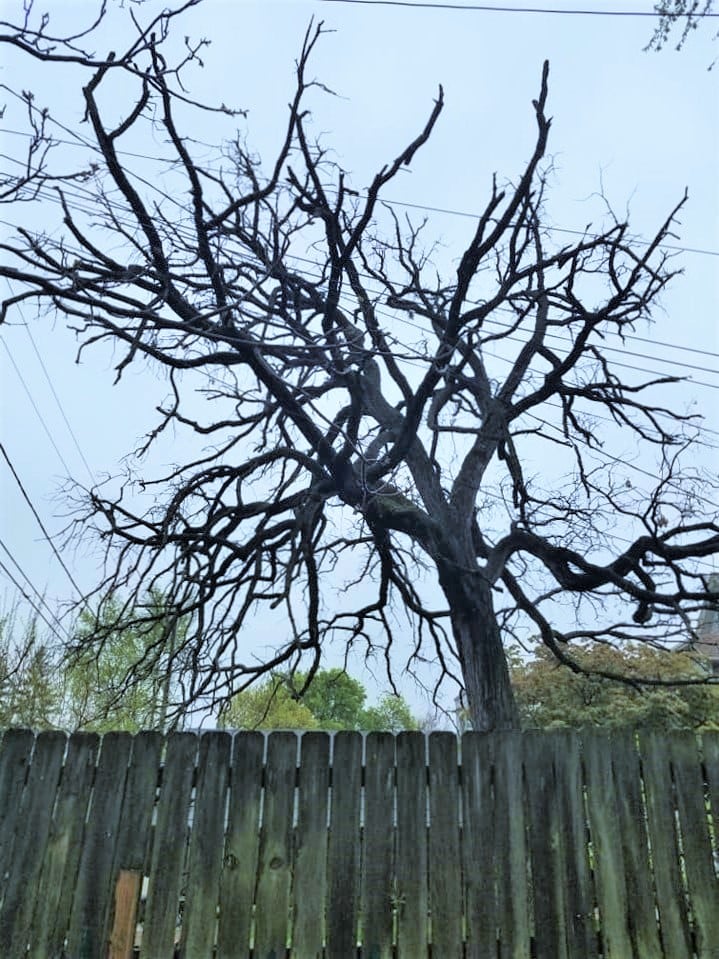
An enormous oak tree in a yard on the Ridge is pictured here. For scale, the fence is about seven feet tall. The tree was mature when the house was built in the 1870s, and its age is estimated to be around 225 years old. It is nearing the end of its lifespan.
Many of the old-growth oak trees in the Ridge communities are in this situation – within the next fifty years, many, perhaps most, of them will die off.
The trees have been taken for granted for well over a century. A few people in the community have tried hard to educate and encourage people to consider the situation. Now is the time for the community to take action so the wonderful tree canopy that has been enjoyed for generations will not become a historic feature lost to the past.
“We plant trees not for ourselves, but for future generations.” – Caecilius, Pompeian banker, 14 A.D.–79 A.D.
Trees are past, present, and future.