
Explore the RHS Facebook Archives, a rich repository of local history written by Carol Flynn. For two decades, Carol brought a deeply dedicated voice to public education at RHS. Her role as Facebook administrator through mid-2025 naturally extended her prolific research into meticulously detailed articles, most notably her multi-part historical series posts. Today, Carol continues her local history writing for The Beverly Review and other outlets.
April 2024
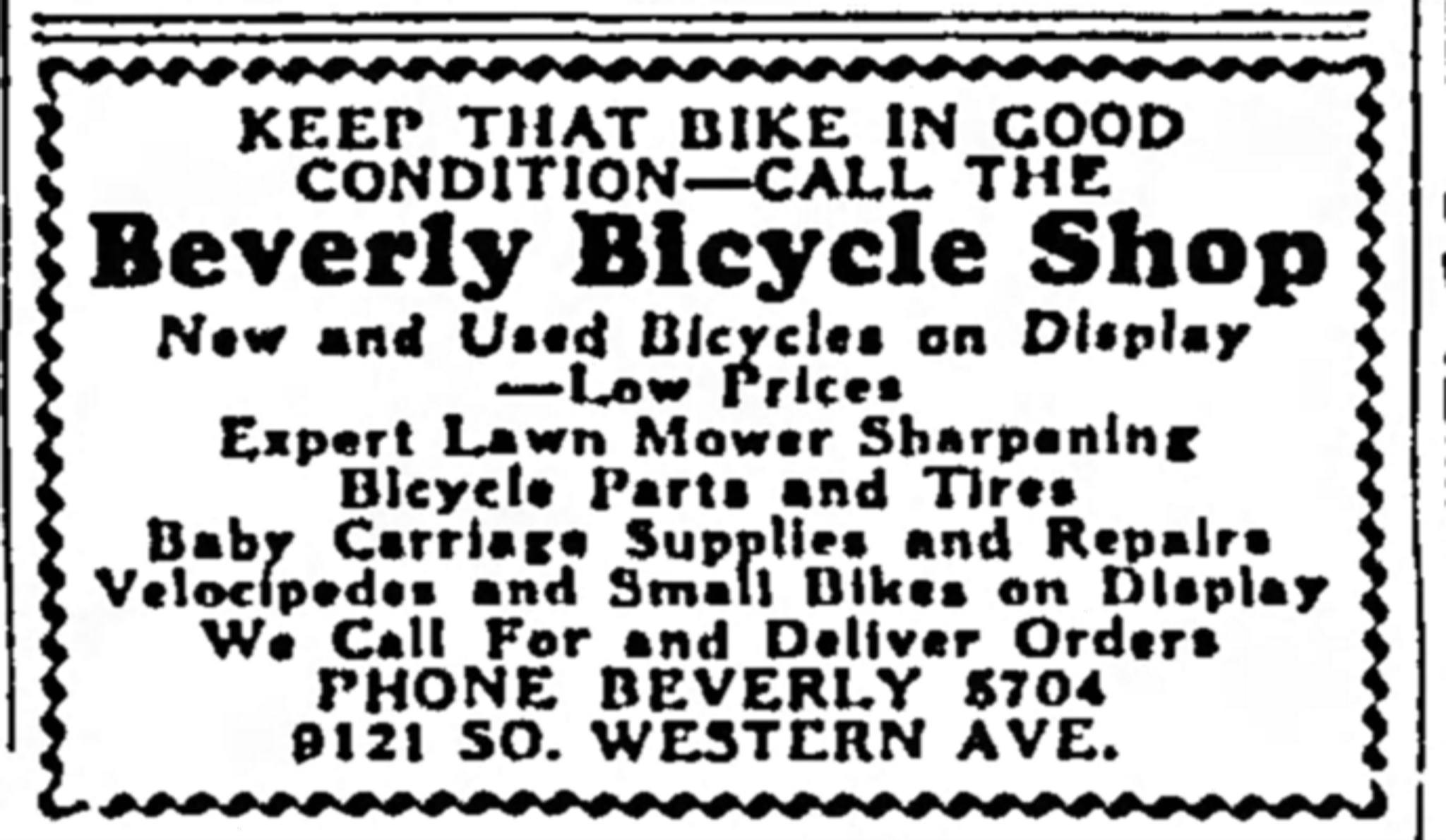
Beverly Bike and Ski Inc. at 9121 S. Western Avenue is a historic business in the community, with roots going back to the 1920s – actually, longer than the 100 years mentioned in this headline.
By 1920, James and Bessie Kosar and their family were already living at 9121 S. Western Ave. From directories and other sources from the time, it appears they ran a grocery there and started the bike shop, also, which was called the Beverly Bicycle Shop, but provided many services, as the attached ad shows.
At the time, Western Avenue was very rural, but it was a thoroughfare connecting the north side to the south side for many miles. There had been stopping places along the route for many years, as it was one of the routes used to reach the cemeteries (Mt. Greenwood, Mt. Hope, Mt. Olivet).
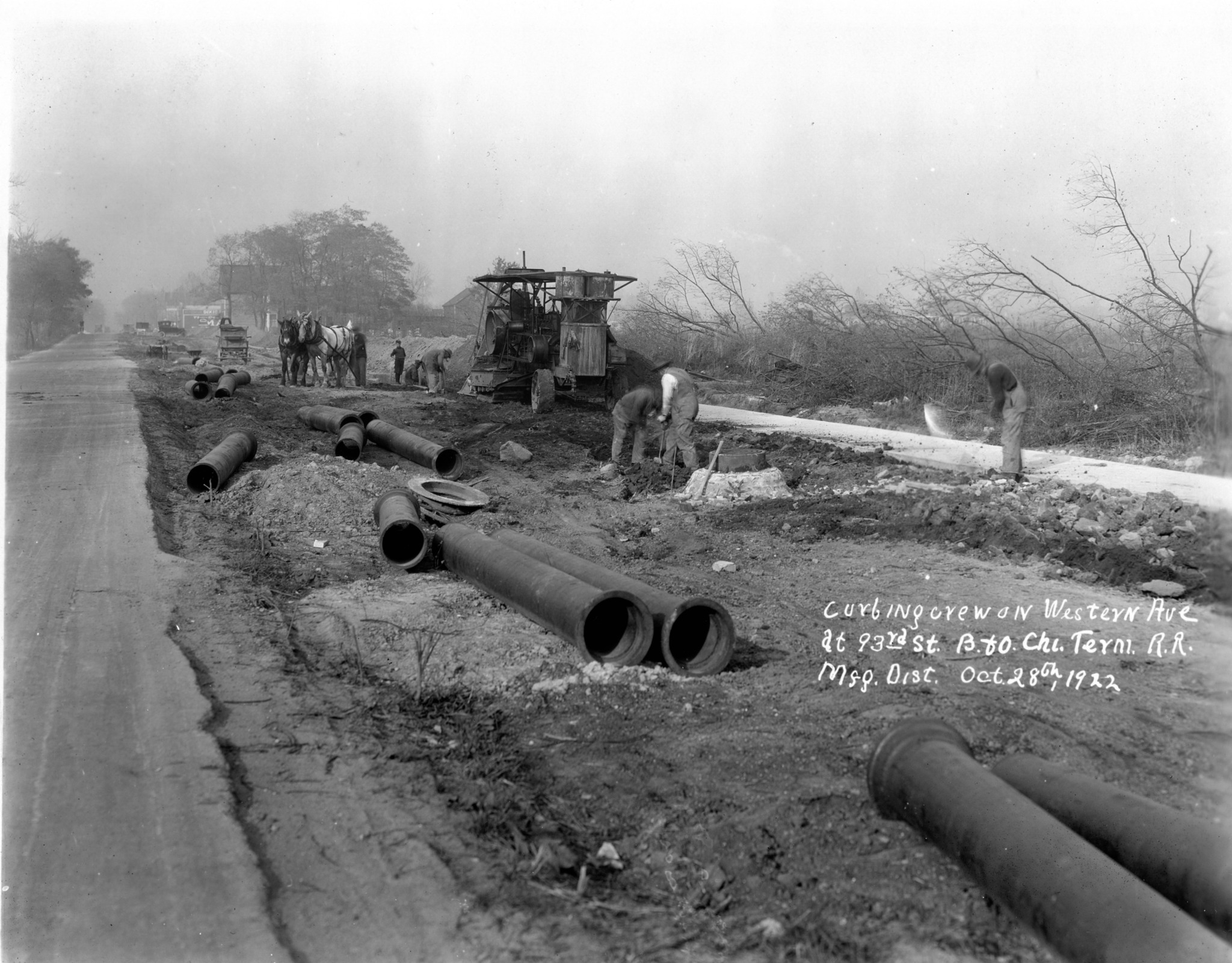
In 1922, Western Avenue through this area was graded, widened, and repaved, leading to the Western Avenue we know today.
The Ridge Historical Society has a photo of the paving work at 93rd Street and Western Avenue in 1922, showing the building that housed the Kosar family and their businesses in the background.
Eventually, the son James, born in 1914, ran the shop, likely starting in his teen-age years, around 1930. He was awarded a bronze star for his service in World War II. He ran the business for many years, and even stayed on for a while as a mechanic after he sold the shop to Bob Green in the 1970s.
The current owners, Paul and Kathleen Weise, bought the shop in 1996, and modernized it. They also involved the shop in community activities, from starting their own racing group to sponsoring the Beverly Cycling Classic.
Recently, the shop has been receiving a lot of media attention because Paul Weise has announced his retirement and has put the shop up for sale. Hopefully, he will find a buyer that will carry on the tradition of the store.
Read more about Beverly Bike and Ski in this month's BAPA Villager. https://bapa.org/beverly-bike-ski-nears-100-years-at-91st-and-western/
Since the Eugene S. Pike House was built as a "gardener's cottage" in 1894, it has served as a residence for many people.
Eugene Pike's first business, before he ever moved to Chicago, was as a distributor of nursery plants. He imported fruit trees, rose bushes, and other plants from France. His business, largely with the southern states, was booming, until the start of the U.S. Civil War caused an end to that.
He then turned his attention to banking. He and his family moved to Chicago, where he also got into the real estate business. He was very successful with both. When he died his estate was worth over $3 million, about equal to $85 million today.
He bought land on the top of the Ridge, some of which he developed into homeowner sites for sale. He kept a piece of the land for himself, and eventually this became part of the Forest Preserves of Cook County (FPCC), now known as Dan Ryan Woods.
His gardener's cottage, designed by architect H.H. Waterman, was built to be both ornamental and to serve a useful purpose. It housed several landscapers and gardeners while it was owned by the Pike family, and one of Pike's sons lived there for a while.
After the land and house were bought by the FPCC, it was used as a headquarters for FPCC area supervisors, then as a "watchman's residence." At least eight families lived there, and the research has just begun.
Here is an introductory article on the residents of the Pike House. Watch for more on this topic.
Those Who Have Called the Pike House “Home” – Part 1
In addition to answering many questions about local history and helping people research their families and their homes, the Ridge Historical Society (RHS) helps students, journalists, writers, historians, artists, and many other people with in-depth research for projects they are working on.
Some recent projects included an eighth grader’s history fair presentation on Prohibition (which won awards), a church’s Land Acknowledgment Statement, two artist projects on historical land usage, several media projects on local unincorporated land, and the histories of a local church and a famous south side sign company. We even found the owner of a wedding ring that was discovered buried in a local garden.
So when we were approached by Michael Angland, a student working on his Ph.D. in cultural anthropology at Northwestern University, seeking information on the history of the area, we of course did what we could to assist him.
Cultural anthropology studies humans through the societies they establish by looking at the society’s culture – what the members believe and value, how they behave, the social structures and organizations they form. Researchers in the current world involve themselves right in the society they are studying – they interact and talk with the people, they attend events, they participate in local activities.
Michael is studying the culture of the 19th Ward, which he identified as unique in the city.
He identified such traits as political involvement, multi-generational families, the approach to integration in the 1970s resulting in today’s diverse population, the mix of white-collar and blue-collar workers and city employees, the unique geography, the beautiful historic homes and the importance of home ownership, even the wet-dry issue, all as factors that make the community unique.
This recent article in the Beverly Review introduces Michael Angland.
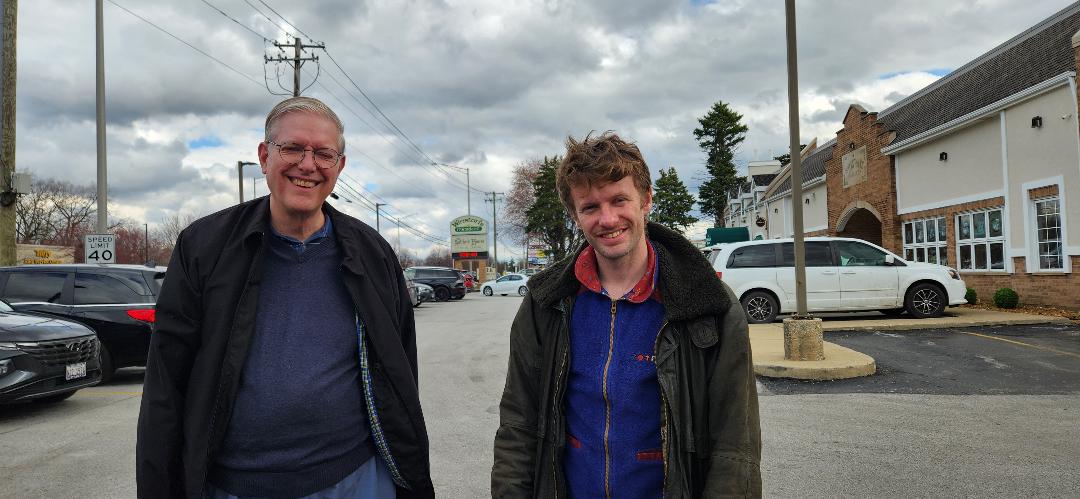
Michael is interviewing people throughout the ward. Here he is with Fr. Michael Flynn (left), a past associate pastor at St. Christina's Church in Mount Greenwood. People who want to share their perspectives on life in the 19th ward can contact him at michaelangland2026@u.northwestern.edu.
https://www.beverlyreview.net/news/community_news/article_e4dfd340-f109-11ee-9e57-1f78bb2a6c6e.html


Tomorrow, April 8, 2024, there will be an eclipse of the sun viewable in the Ridge communities. This is a historic event of the celestial kind.
The sun, the moon, and the earth are all lined up right now so that the moon, on its normal trajectory, will pass between the sun and the earth, blocking the light of the sun from the earth.
On the Ridge, a "partial eclipse" will be viewable, but it is almost full. From North Beverly down to Blue Island, viewers will be able to see a 94.3 – 94.5% full eclipse, from 12:51 p.m. to 3:21 p.m., with the maximum point at 2:07 p.m.
People are advised not to stare directly at the eclipse so the retinas of their eyes are not damaged. Special glasses that are 1,000 times darker than sun glasses, blocking out almost all light, have been available from many vendors, including the Adler Planetarium, Amazon, Walmart, and libraries.
Viewers are advised to use filters to protect the lenses of their cameras, recorders, and phones from being "fried."
Many people are traveling hundreds of miles from Chicago to areas where the full eclipse is viewable. The path passes from southwest to northeast of Chicago.
Undoubtably there will be numerous pictures and videos of the eclipse for people to study.
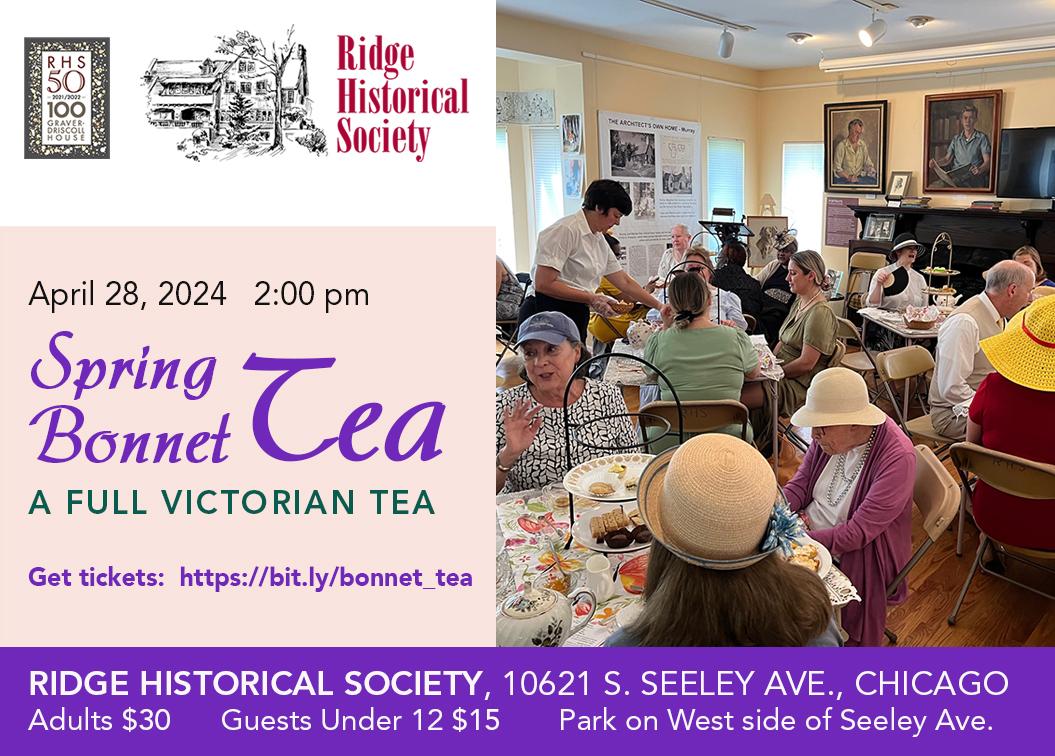
Sunday, APRIL 28, 2024 – 2pm
Spring Bonnet Tea
RHS is happy to be able to hold this annual fundraiser event again. Join us for a Full Victorian Tea featuring a fine selection of savories, scones and pastries. Ladies, please wear a spring hat or bonnet!
A wonderful multi-generational event — bring your daughters or granddaughters!
This Full Victorian Tea set in the Historic Graver-Driscoll House, on the Ridge in the Beverly Hills neighborhood of Chicago.
Space is limited, advance ticket purchase or RSVP required.
Adults $30 Guests Under 12 $15
Get tickets online: bit.ly/bonnet_tea
RSVP: ridgehistory@hotmail.com 773.881.1675
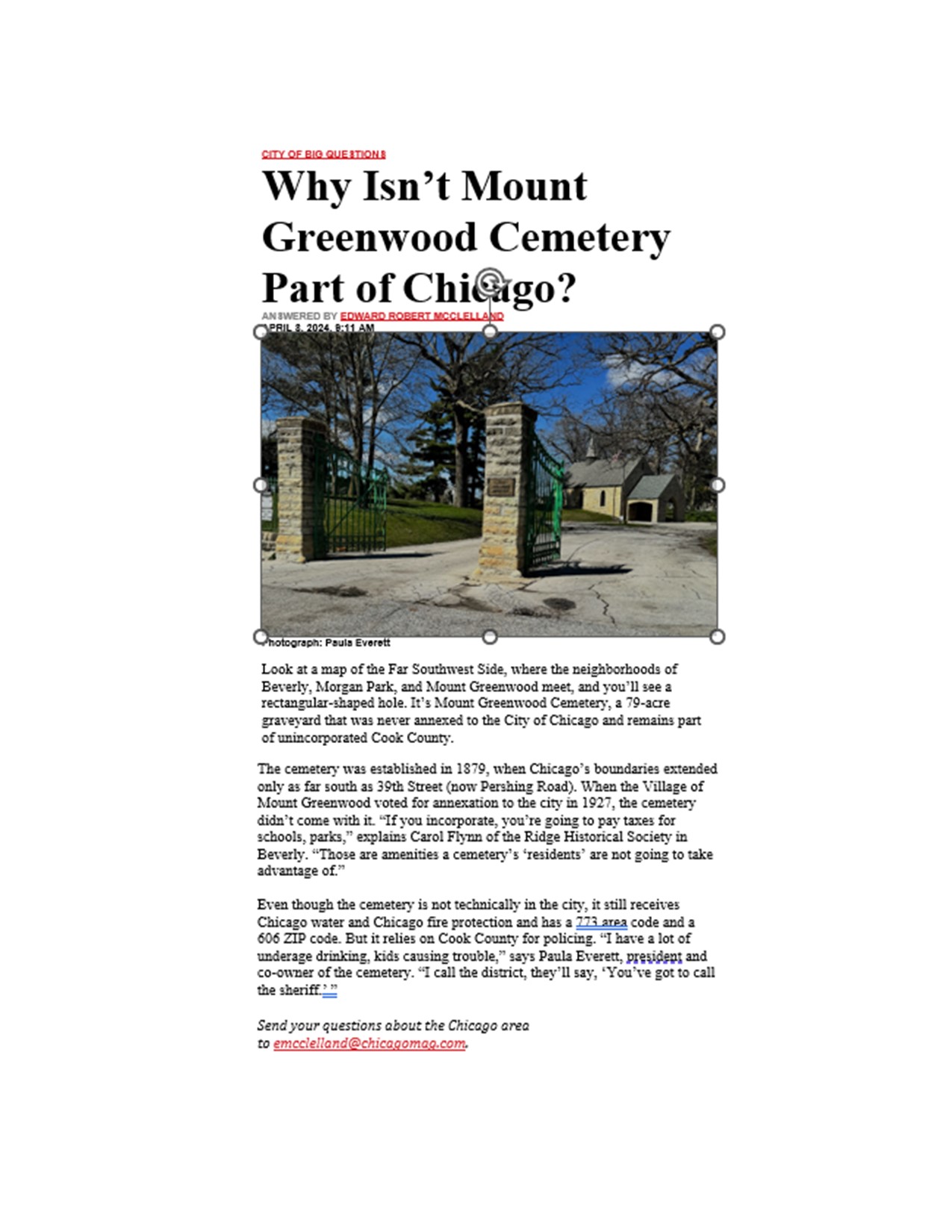
The Ridge Historical Society (RHS) is in the News – with Mt. Greenwood Cemetery
RHS is featured in a brief article in Chicago Magazine and is scheduled to be part of a podcast on Thursday.
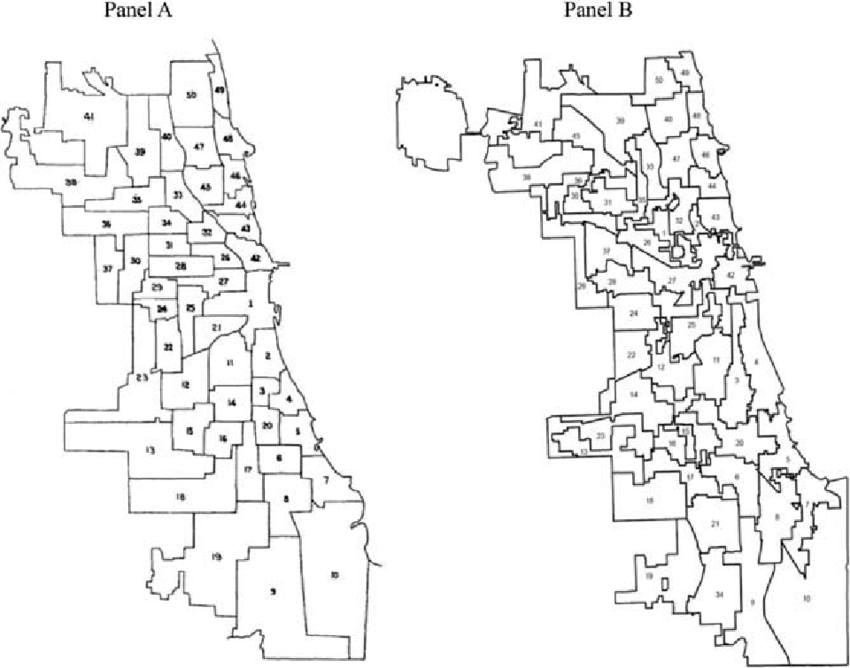
It all has to do with the map of the 19th ward. When you look at the map of this little piece of Chicago on the far south outskirts of the city, you see a blank rectangle of unincorporated land in the ward, and that is Mt. Greenwood Cemetery. The cemetery is not incorporated into the city of Chicago, it is on unincorporated land in Cook County.
Mt. Greenwood Cemetery is in between the communities of Morgan Park to the east and Mount Greenwood to the west. Morgan Park was incorporated as a village in 1884 and was annexed to Chicago in 1914, and Mount Greenwood was incorporated as a village in 1907 and was annexed to Chicago in 1927. In all these cases of incorporation and annexation, the cemetery was not included.
To the north of Mt. Greenwood Cemetery is the Ridge Country Club, and that land apparently became part of Chicago in two stages, in 1914 and 1927.
To the south of Mt. Greenwood Cemetery is Mount Olivet Cemetery and south of that is Mount Hope Cemetery, which runs to 119th Street, Chicago’s southern boundary. Originally, none of these three cemeteries were incorporated into the city, so the land that Ridge Country Club is on formed a bridge connecting the east and west sides of the 19th ward.
However, Mount Olivet Cemetery, which is owned by the Catholic Archdiocese of Chicago, became part of Chicago in 1970. Mt. Greenwood Cemetery and Mt. Hope Cemetery remain in unincorporated Cook County, making Mt. Greenwood Cemetery an island in the 19th ward.
Mt. Greenwood Cemetery is the only one of the three that is entirely within the boundaries of Chicago. Mt. Olivet Cemetery borders on Chicago and Merrionette Park, and Mt. Hope Cemetery borders on Chicago, Merrionette Park, and the City of Blue Island.
Two media outlets, Chicago Magazine and WBEZ, expressed interest in this “phenomenon” recently, contacting Mt. Greenwood Cemetery and RHS with the question, why is Mt. Greenwood Cemetery not part of Chicago? They both neglected to notice that Mt. Hope Cemetery is also on unincorporated land. The cemeteries along Kedzie Avenue, Beverly, Lincoln, and Oak Hill, are also on unincorporated land.
The short answer to the question is no one knows exactly why Mt. Greenwood Cemetery never opted to annex to Chicago, but there are some possible clues.
First is the issue of taxes. Villages annexed to the city to obtain better services, and the landowners in those villages pay taxes for those services. Cemetery owners were not concerned about schools, parks, libraries, streetlights, and sidewalks. There was no reason to become part of the city and pay those taxes.
And the city had no reason to want the cemeteries. By law, abandoned cemeteries could become the responsibility of the city or village they were part of for upkeep and security. Many cemeteries in Illinois are on unincorporated ground.
To be clear, the cemetery is incorporated as a business in Illinois, but it is located on land in Cook County that is not incorporated as part of any municipality.
It was when Mt. Olivet Cemetery became part of Chicago in 1970 that Mt. Greenwood Cemetery became an island in the 19th ward. The real question is why did Mt. Olivet Cemetery annex to Chicago?
The definitive answer to that is not known either, but it could have something to do with private residences being located partially on
cemetery property. Taxes for Mt. Olivet Cemetery would not be an issue. Religious organizations are tax-exempt.
When Mt. Greenwood Cemetery sold off a corner of its property at 111th Street and California Avenue for a townhouse development, the land had to join Chicago before the residences were built.
In 2020, 19th ward Alderman Matt O’Shea expressed interest in annexing Mt. Hope Cemetery to Chicago to increase security and a police presence from the Chicago Police Department. This has not happened. Right now, both Mt. Greenwood and Mt. Hope Cemeteries are covered by the Cook County Sheriff’s Office.
Paula Everett, president of Mount Greenwood Cemetery Association, and a Board member of the Ridge Historical Society (RHS), and RHS Facebook Page Administrator Carol Flynn (past RHS Board member) made the news again because of the Cemetery being an island of unincorporated Cook County land in the middle of the 19th ward.
They were interviewed by journalist Mariah Woelfel for a segment for WBEZ Chicago, the National Public Radio station.
There is a written article to accompany the recording. Here is the link to access both.
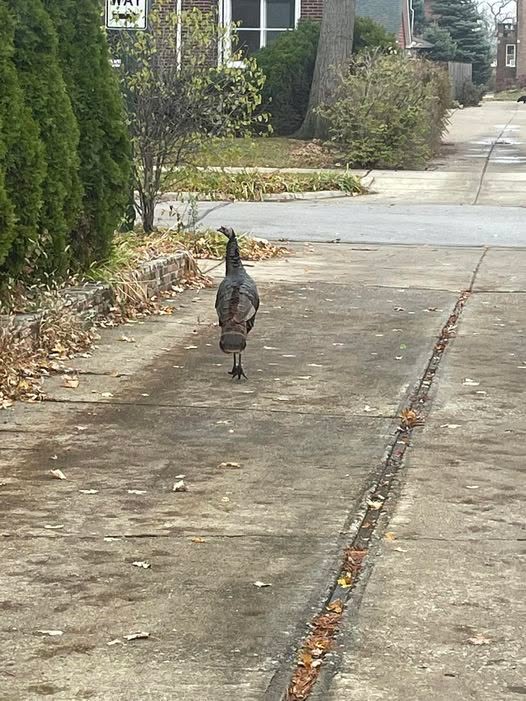
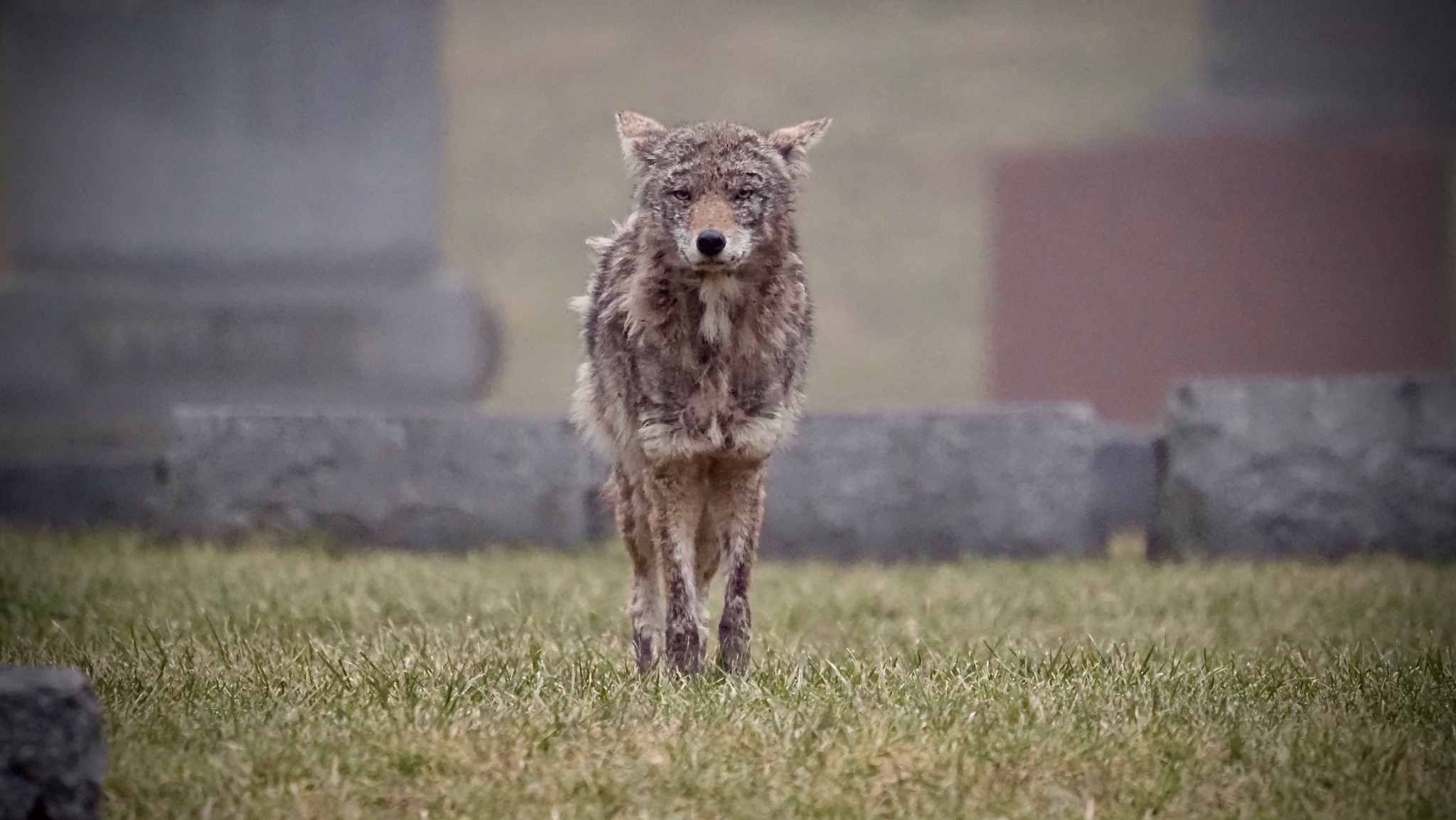
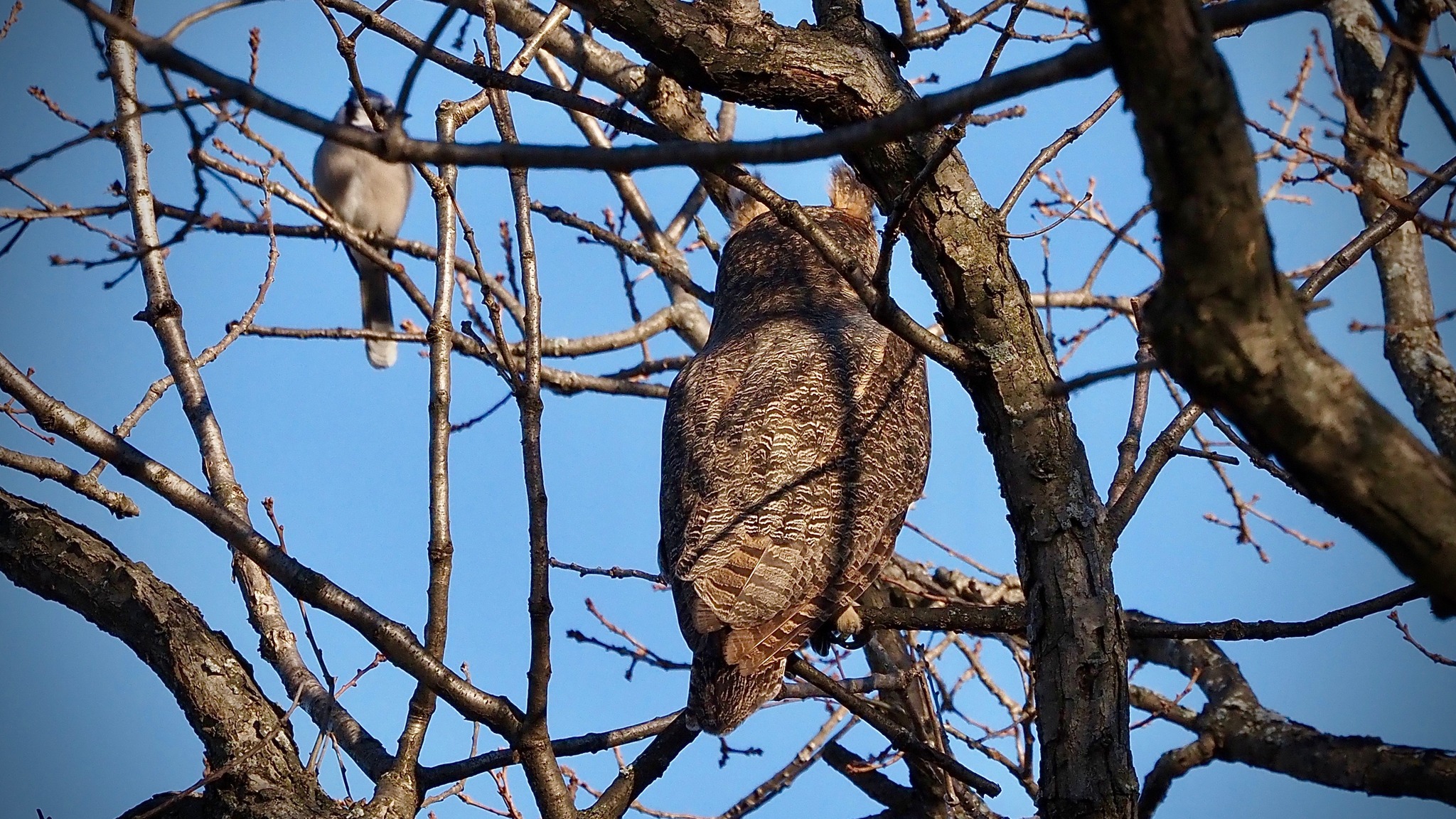
The Wild Ridge by Carol Flynn
The Ridge once was home to wolves (hunted down until they were all killed), sandhill cranes (lost to habitat destruction), and other species that no longer exist in this setting.
However, other wildlife have managed to adapt to the urban environment.
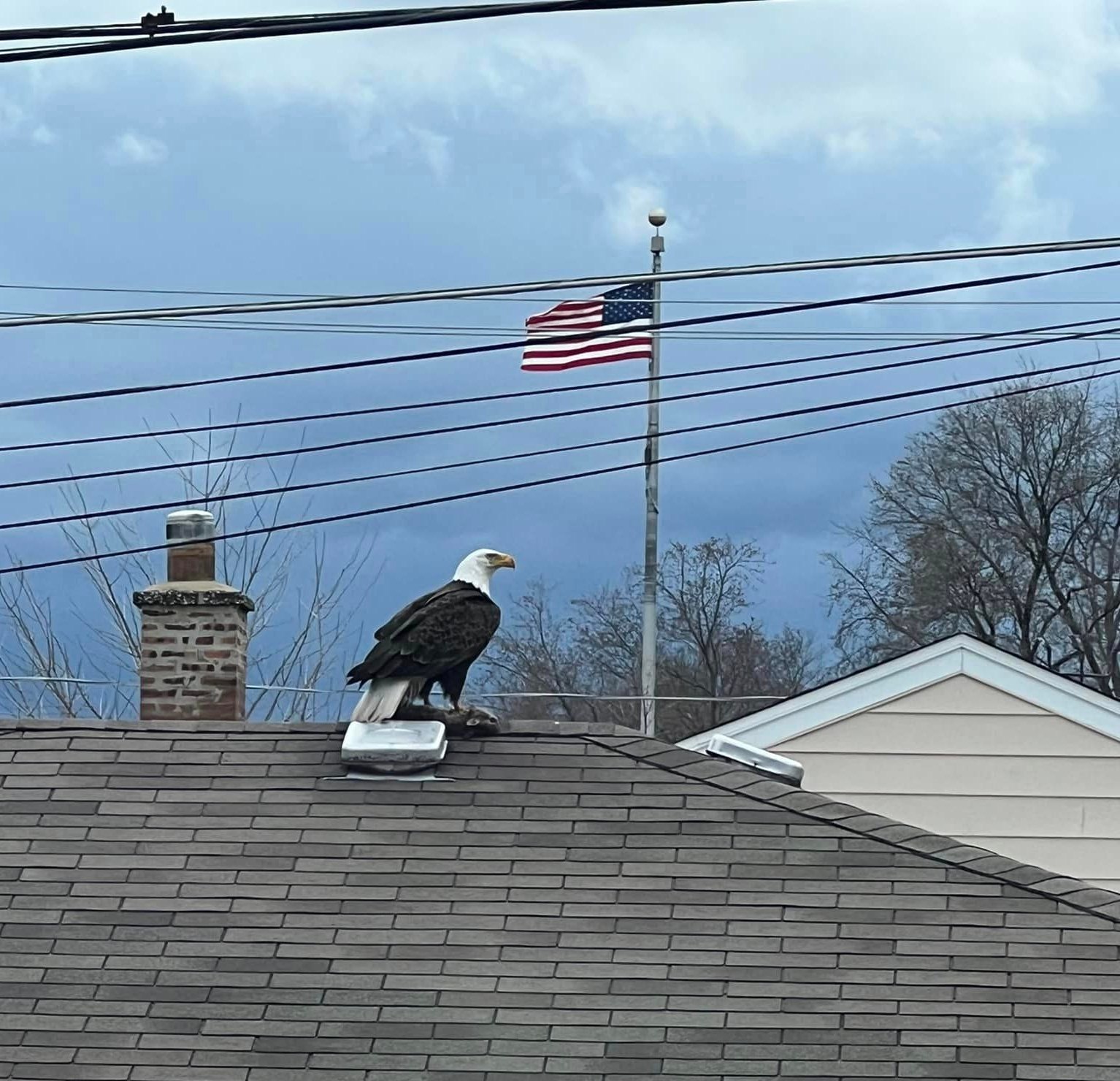
Here are some pictures of wildlife in the area in the last few months.
So many predators (coyote, owl, eagle) means there has to be a fairly strong prey base. The turkey is prey, but its size helps protect it. Rabbits, squirrels and other rodents, and smaller birds are plentiful around here.
The bald eagle is the national bird. Benjamin Franklin advocated for the wild turkey as the national bird. Here they both are, today, in an urban setting on the south side of Chicago. Considering the bald eagle was at the point of extinction just a few decades ago, seeing them now on local rooftops is just amazing. This one seems to recognize a photo op, posing with the U.S. flag.
Credit to Jamie Anderson for the coyote and owl photos. The photos of the eagle and the turkey were shared from other posts.
The Ridge Historical Society
Lost or Found? – Building #1: FOUND – Part 2 on the Iglehart House
By Carol Flynn
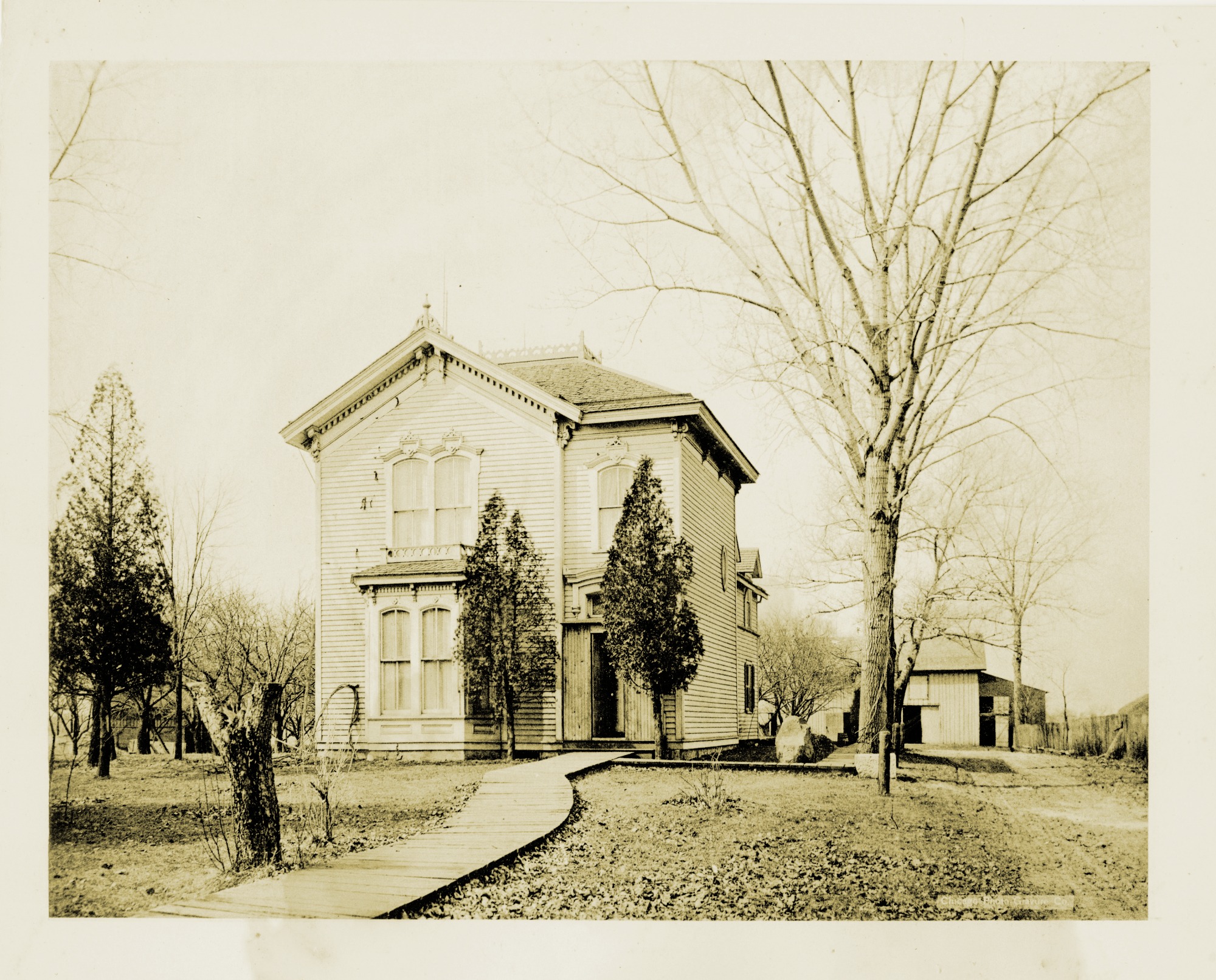
This new Facebook series from the Ridge Historical Society, “Lost or Found?”, presents photos of buildings in Morgan Park from an 1889 publication, and invites the reader to comment if the building is still standing, and if so, where it is located.
The first building was correctly “found” and identified by several people as the Charles D. Iglehart House at 11118 S. Artesian Avenue. The previous post discussed the house itself. This post will share some information on the Iglehart family.
Charles Duvall Iglehart was born in 1818 to a farming family in Maryland. His father, Richard, was a slave-owner. The Slave Schedule for the 1850 U.S. Census lists eleven enslaved people living at Richard’s residence, ranging from a 7-year-old boy to a 70-year-old woman.
Charles was also listed as part of that residence, with his wife Marietta and an infant son, Jacob. Marietta died shortly after that census was taken, leaving Charles with a motherless Jacob.
In 1853, Iglehart married Elizabeth A. Haslup in the District of Columbia. They had their first child, son Charles, in 1854.
Andreas’ History of Cook County, published in 1884, reported that “C.D. Iglehart and family came in November 1856, and settled … on what is now known as the corner of One Hundred and Eleventh Street, on Morgan and Western avenues.”
Their second child was a daughter, Mary Ann. Andreas claims she was “the first birth in the immediate vicinity of Morgan Park … in 1857.”
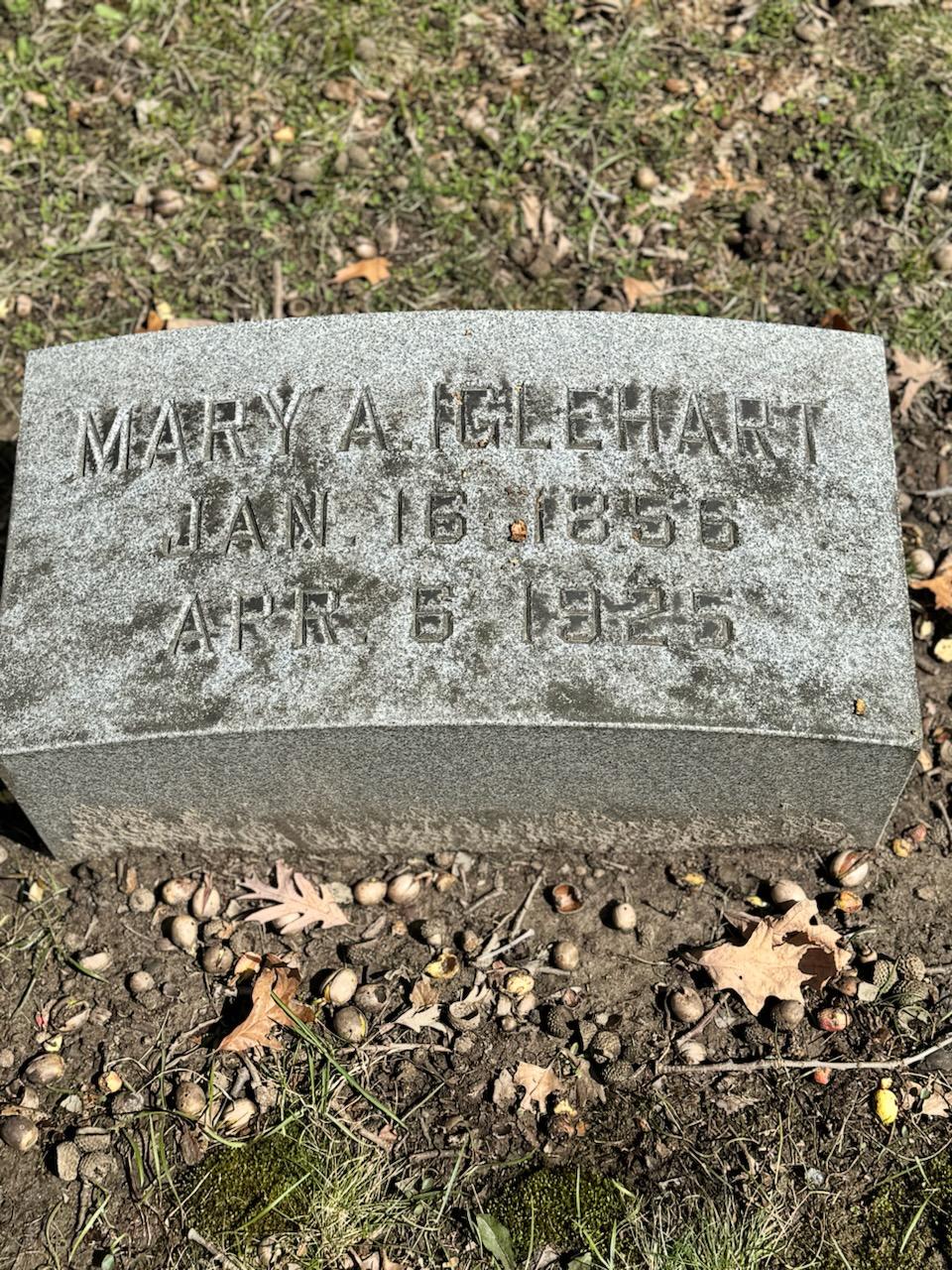
However, Mary Ann is buried in Mt. Greenwood Cemetery, and her date of birth engraved on her gravestone is given as January 16, 1856. This is also mentioned on family trees on Ancestry, and one entry lists her birth occurring out east before they left for Chicago.
If Andreas’ date of November for the Igleharts’ arrival in Cook County is accurate, this means that the claim about being the first (white) child born here cannot be accurate – it is quite possibly just urban folklore. The source of the claim that Andreas makes is not mentioned.
Three more children were born to the Iglehart family on the Ridge. Third was Margaret Ellen, who went by Ellen or Nellie, born in 1858; then Thomas born in 1859; and Elizabeth, or Lizzie, born in 1865. Iglehart’s oldest son Jacob was listed living with the family on the 1870 census.
Charles Iglehart was described as an educated, cultured man who attracted the same type of people as guests in his home. The Iglehart family remained in the Morgan Park community for many years. They are credited with starting the second orchard on the Ridge, around 1857 (William Morgan, son of Thomas Morgan, established the first).
They were among the original subscribers to the Morgan Park Baptist Church, which held its dedication in April of 1874. They also were founders of the Church of the Mediator, sitting empty now at 109th Street and Hoyne Avenue.
Charles Iglehart died in 1886 at the age of 68. His family stayed in the house, and on the 1910 census, Elizabeth Haslup Iglehart was listed as the matron of the house. She died in 1917 and was buried with her husband in Mount Greenwood Cemetery.
The three Iglehart daughters lived in the house in 1920, but left within a few years, moving to other locations on the Ridge. The original farm property, which extended at one time from 111th to 115th Street, from Western to Rockwell, was sold for residential and commercial development. When Western Avenue was regraded, widened, and repaved in 1922, the house was moved a block west, and set on a new foundation. A street was later added, Artesian Avenue.
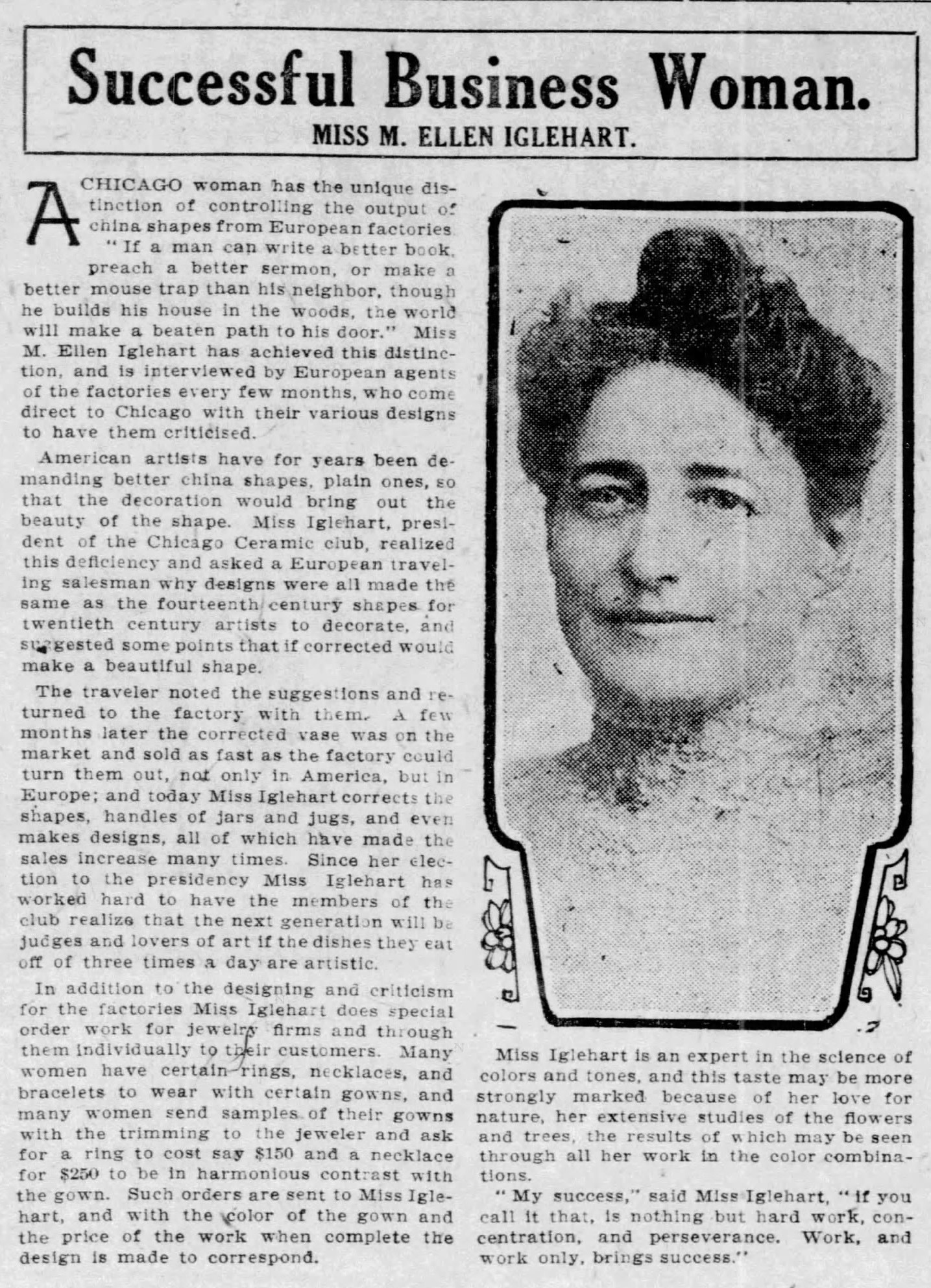
Mary and Ellen were both art teachers, and neither married. Ellen became famous for her work in ceramics, including hand-painted chinaware.
Youngest daughter Lizzie was a widow; her husband Edward James Carson, a salesman, died in 1916. In 1920, she was working as a piano teacher. She had three adult children also living at the house.
The Iglehart daughters were active in the Daughters of the American Revolution, and Lizzie was a contributor to early local history groups. She was a member of the Morgan Park Woman’s Club.
Charles Iglehart’s oldest son Jacob moved to Tennessee, where he practiced as an osteopath. In one directory he was listed as a “magnetic healer.” Magnets have been used for hundreds of years to treat pain and there is some slight research evidence that electromagnetic therapy may be helpful.
The younger sons, Charles and Thomas, went into business together as contractors. Both lived in Morgan Park with their families.
The Ridge Historical Society
More on Aerial Photography
By Carol Flynn
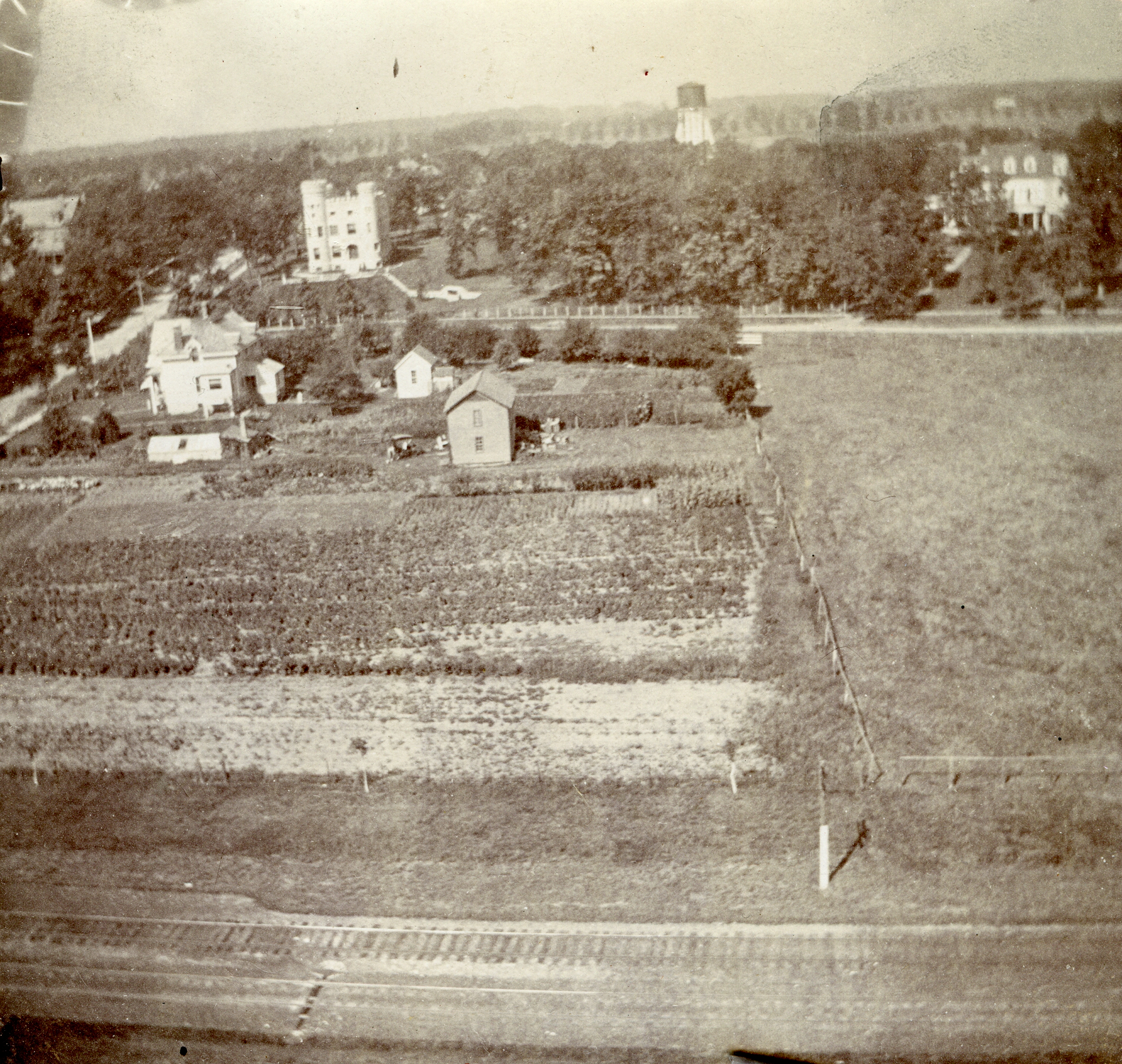
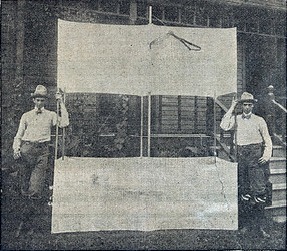
The current Ridge Historical Society (RHS) exhibit, “Louise Barwick’s Lost Ridge,” includes aerial photographs taken in 1899 by young men who attached a camera to a kite and sent it soaring over the community.
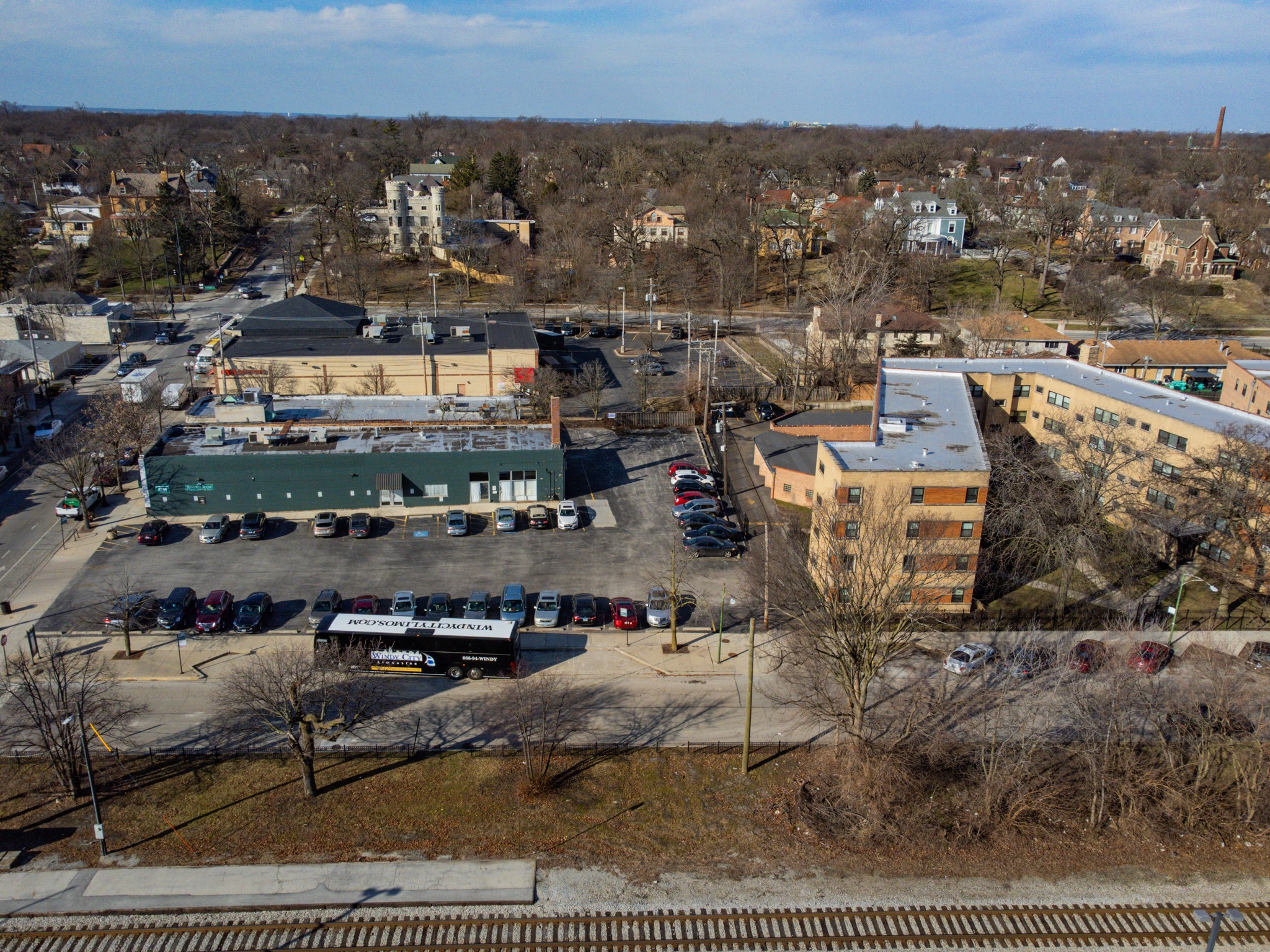
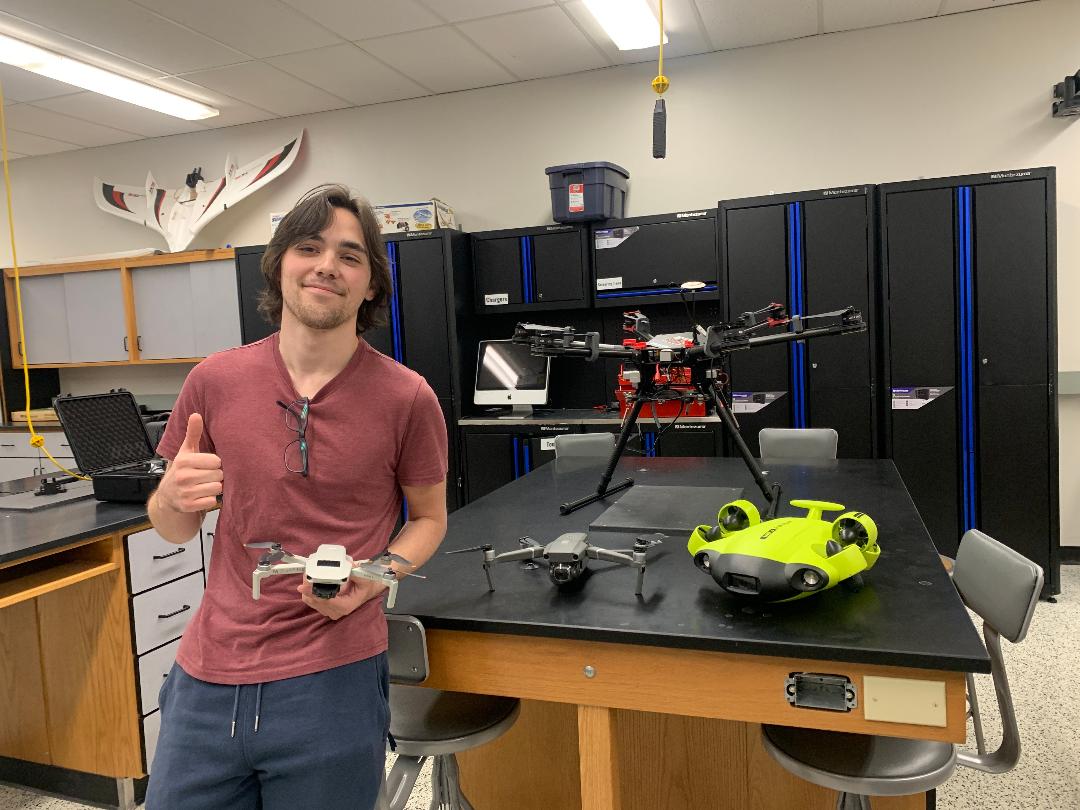
As covered in this article in the Beverly Review, in February, a college student from Morgan Park, Ben Johnson, took photos of those same views using drone technology:
https://www.beverlyreview.net/news/community_news/article_6454103a-0192-11ef-b6e6-53a4c44db920.html
Here we present the “then-and-now” photos of the area surrounding the corner of 103rd Street and Longwood Drive, as well as images of the photographers.
For more information on the topic, visit the RHS exhibit on Tuesday and Sunday afternoons from 1:00 to 4:00 p.m. RHS is located at 10621 S. Seeley Avenue.