
Explore the RHS Facebook Archives, a rich repository of local history written by Carol Flynn. For two decades, Carol brought a deeply dedicated voice to public education at RHS. Her role as Facebook administrator through mid-2025 naturally extended her prolific research into meticulously detailed articles, most notably her multi-part historical series posts. Today, Carol continues her local history writing for The Beverly Review and other outlets.
August 2024
Ridge Historical Society
National Dog Day – August 26, 2024
By Carol Flynn
National Dog Day occurs annually on August 26 as a world-wide event to bring attention to all breeds of dogs and the importance of dogs in our lives.
Started 20 years ago by an animal welfare advocate, the day also calls attention to the many dogs that need to be rescued and adopted each year.
Of course, there are many stories related to dogs in the Ridge communities’ history. One favorite story, however, directly relates to rescue and adoption.
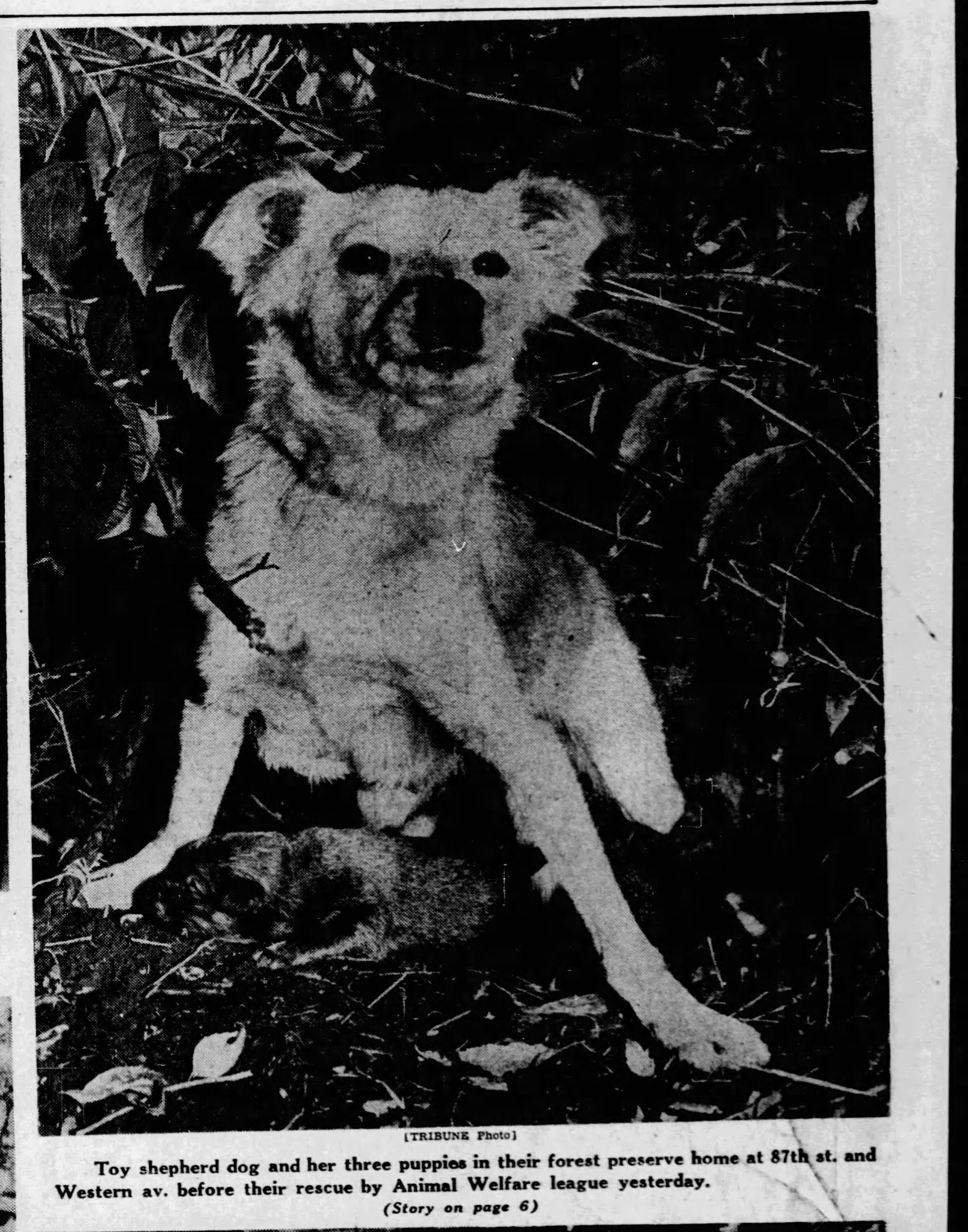
In the summer of 1945, a small dog described as a “brown toy shepherd” started to be noticed living in Dan Ryan Woods. It was assumed she had been dumped there because many people abandon animals of all kinds in the forest preserves. The animals rarely survive a Chicago winter.
The little dog was elusive with people. She would allow them to get just so close before she scampered away. She was often seen hunting for rabbits and warily searching picnic grounds for half-eaten sandwiches.
She began to be known as “the wild dog of Ryans Woods” but the children in the neighborhood called her Dollie, and eventually the adults started calling her that, also.
In October, as the weather cooled, the neighbors started leaving food out for Dollie at the edge of the woods. Mrs. Northrup, who lived at 8957 S. Oakley Ave., an active charity and “club” woman in the community, determined to capture Dollie and find her a good home.
That proved more difficult than expected. Talking softly to Dollie and offering tasty tidbits of food still brought Mrs. Northrup no closer than 10 to 15 feet from the dog.
Mrs. Northrup called in the Illinois Citizens’ Animal Welfare League, who sent experienced field agent Allen Glisch over to the woods.
While Mrs. Northrup distracted Dollie, Glisch managed to get a leash around the dog’s neck. Little Dollie, still shy, didn’t fight them; she wagged her tail when Mrs. Northrup and Glisch approached her and petted her.
When they started leading her out of the woods, however, Dollie hesitated to go. Instead, she led them to a nearby brush heap. There, in a leaf-lined den that she had dug, they found three puppies, about a week old whose eyes had not yet opened, fast asleep.
Dollie whined and danced around proudly as Glisch gathered the puppies in his arms, and she happily followed him as her puppies were carried over to Mrs. Northrup’s home.
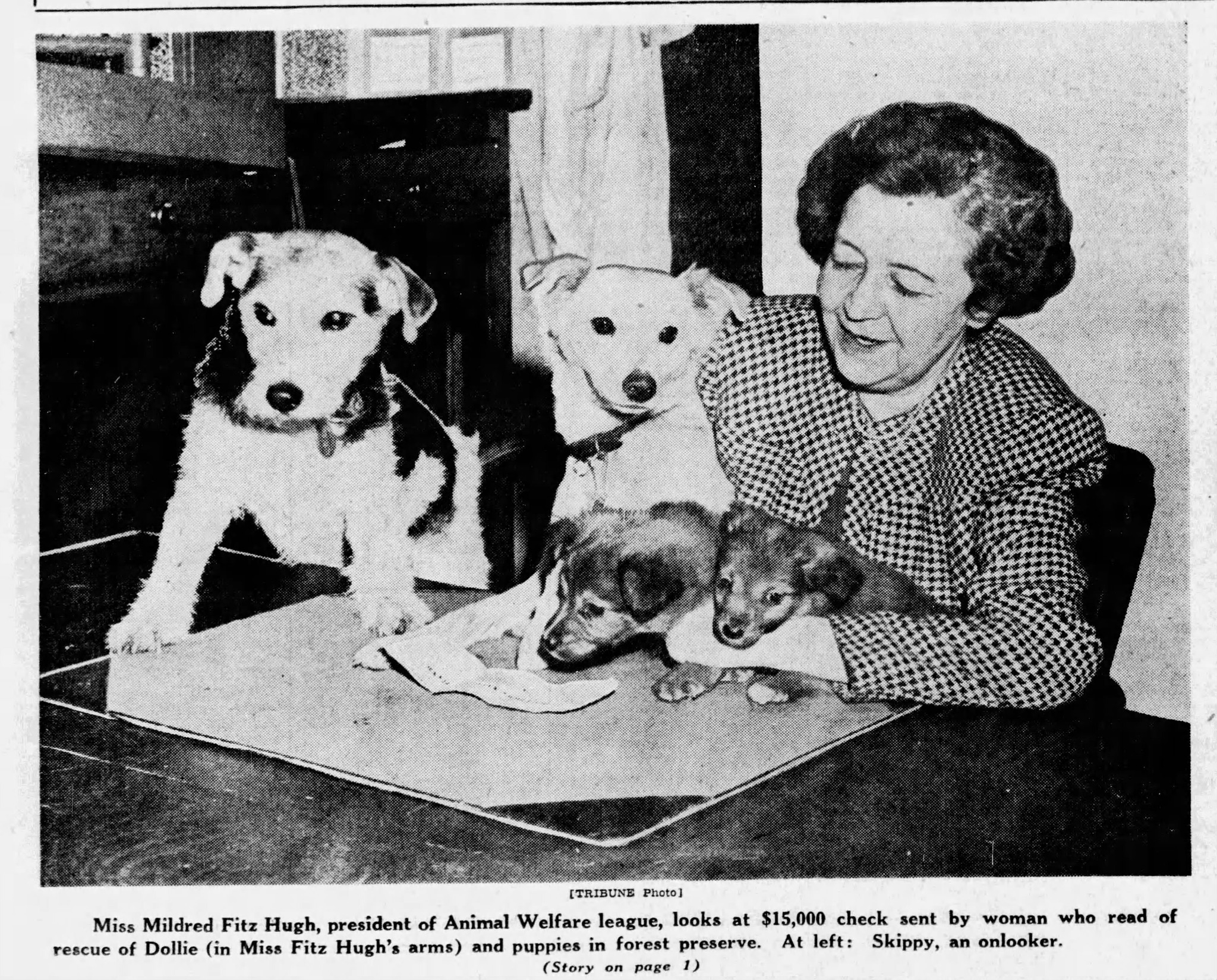
Dollie became a bit of a media sensation, attracting the attention of the Chicago Tribune. In California, Marguerite Doe Ravenscroft, a wealthy socialite and philanthropist who strongly supported humane efforts and was the honorary chairman of the local animal welfare league, saw the article, and in December, sent a check for $15,000 to the Illinois organization to help build a new shelter in Chicago.
Dollie, her puppies, Mildred Fitz Hugh, the founder and president of the Illinois chapter, and Skippy, a terrier mix who got in on the act, posed for a picture with the check that appeared in the Chicago Tribune.
Fitz Hugh, also a wealthy socialite and the grandniece of Mayor Carter Harrison, announced in February of 1946 that the money was used to purchase two buildings at 3138-3140 Walton Street, for a new shelter. There was already a shelter at 6224 S. Wabash Ave.
What became of Dollie and her puppies wasn’t reported in the newspaper, but given their star qualities, and their downright adorableness, it’s probably safe to assume that they found “forever” homes.
Ridge Historical Society
The Connection Between the Ridge and Ukraine
By Carol Flynn
This Saturday, August 24th, is Ukrainian Independence Day.
Ukraine remains in the headlines as that independence continues to be threatened by Russia.
This post is a reminder that the Ridge has a historical connection to Ukraine, as well as a current one.
The historical connection comes through a prominent Ukrainian American family that lived on the Ridge.
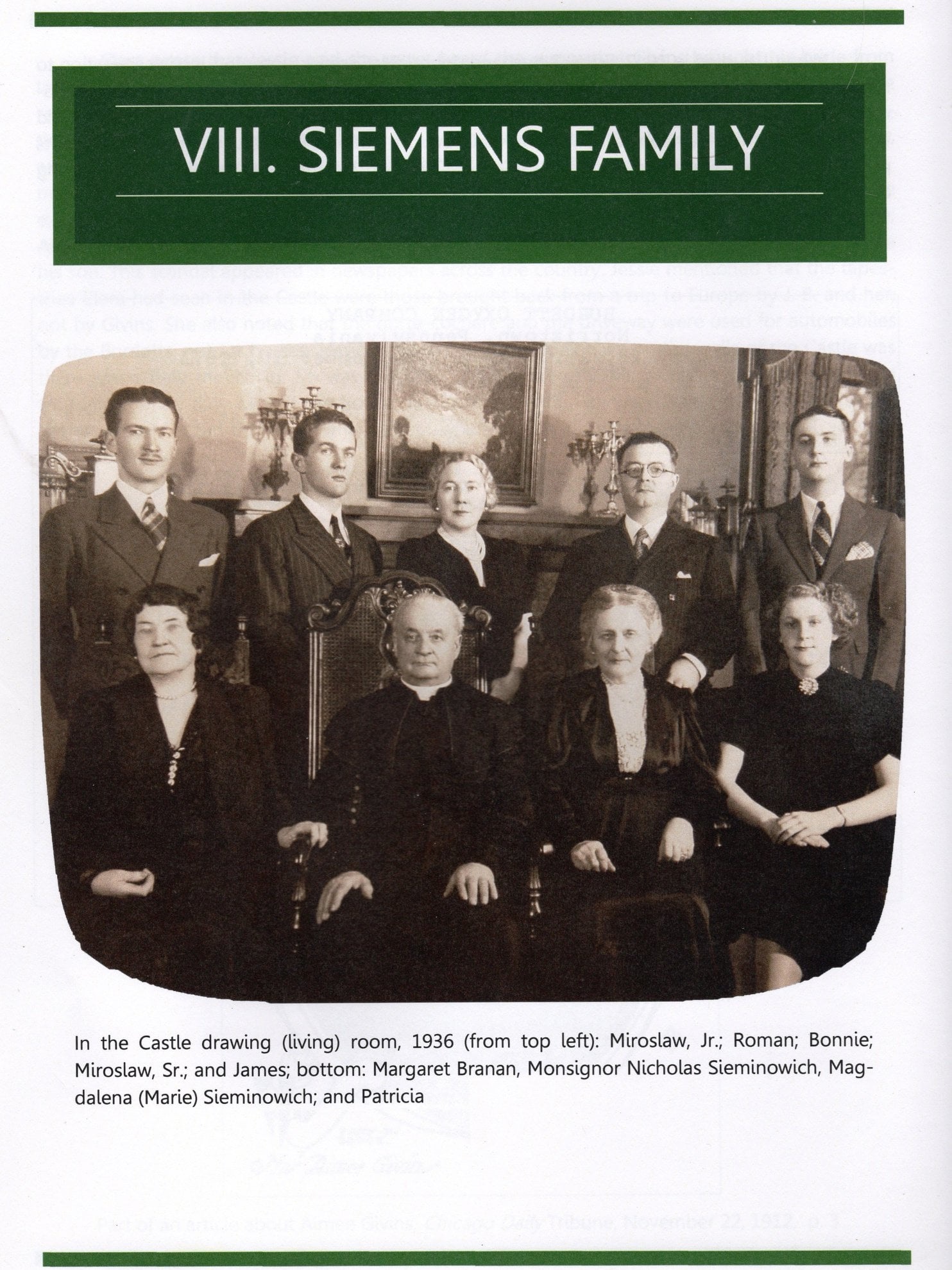
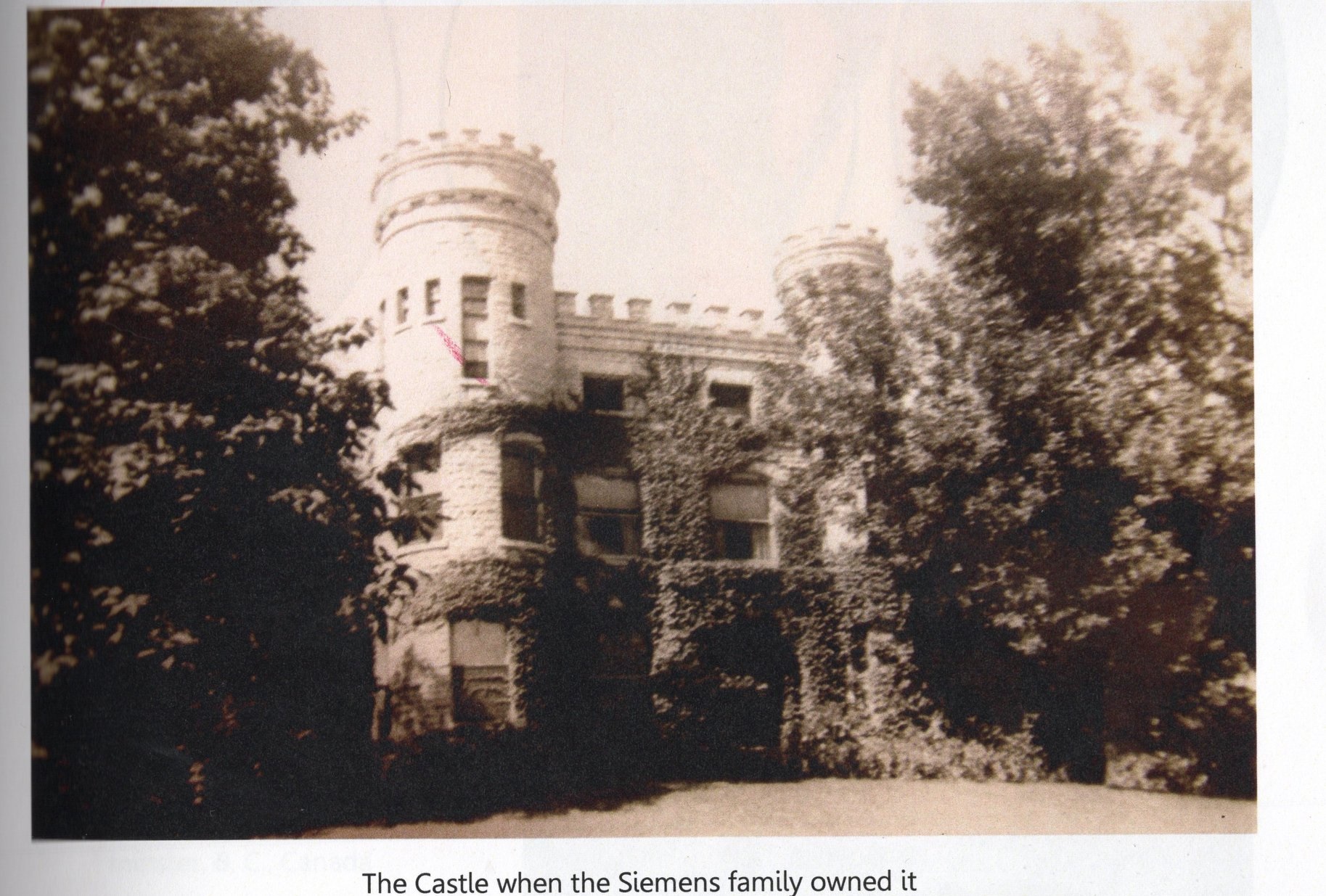
Dr. Miroslaw and Bonnie Siemens (Sieminowycz, Sieminowich) owned and lived in the Givins Beverly Castle at 103rd St. and Longwood Drive from 1921 until the Beverly Unitarian Church bought the building in 1942.
At the time of Dr. Siemens’ death in 1967, at the age of 82, the family was living at 9559 S. Longwood Drive.
Dr. Siemens was born in 1885 in Ukraine and came to the USA in 1907. He graduated in 1913 from Bennett Medical College, affiliated with Loyola University.
He was naturalized as a U.S. citizen in 1914, and served in the U.S. military during World War I. He was a major, a regimental surgeon, with the 497th Field Artillery.
He then practiced at Roseland Community Hospital and kept an office in the Castle. He was also the physician for the Nickel Plate Railroad.
Dr. Siemens’ parents, Nicholas and Maria Magdalena Seiminowich, also lived in the Castle. Nicholas was a Ukrainian Catholic priest who rose to monsignor. In this rite, married men can be ordained priests.
Bonnie Veronica Barry Siemens, born in 1890, was Irish Catholic. They married in 1915 and had four children, Miroslaw, Jr., Roman, James, and Patricia.
Bonnie's mother Margaret Branan also lived with the family. Bonnie had tuberculosis and the grandparents did much of the childcare.
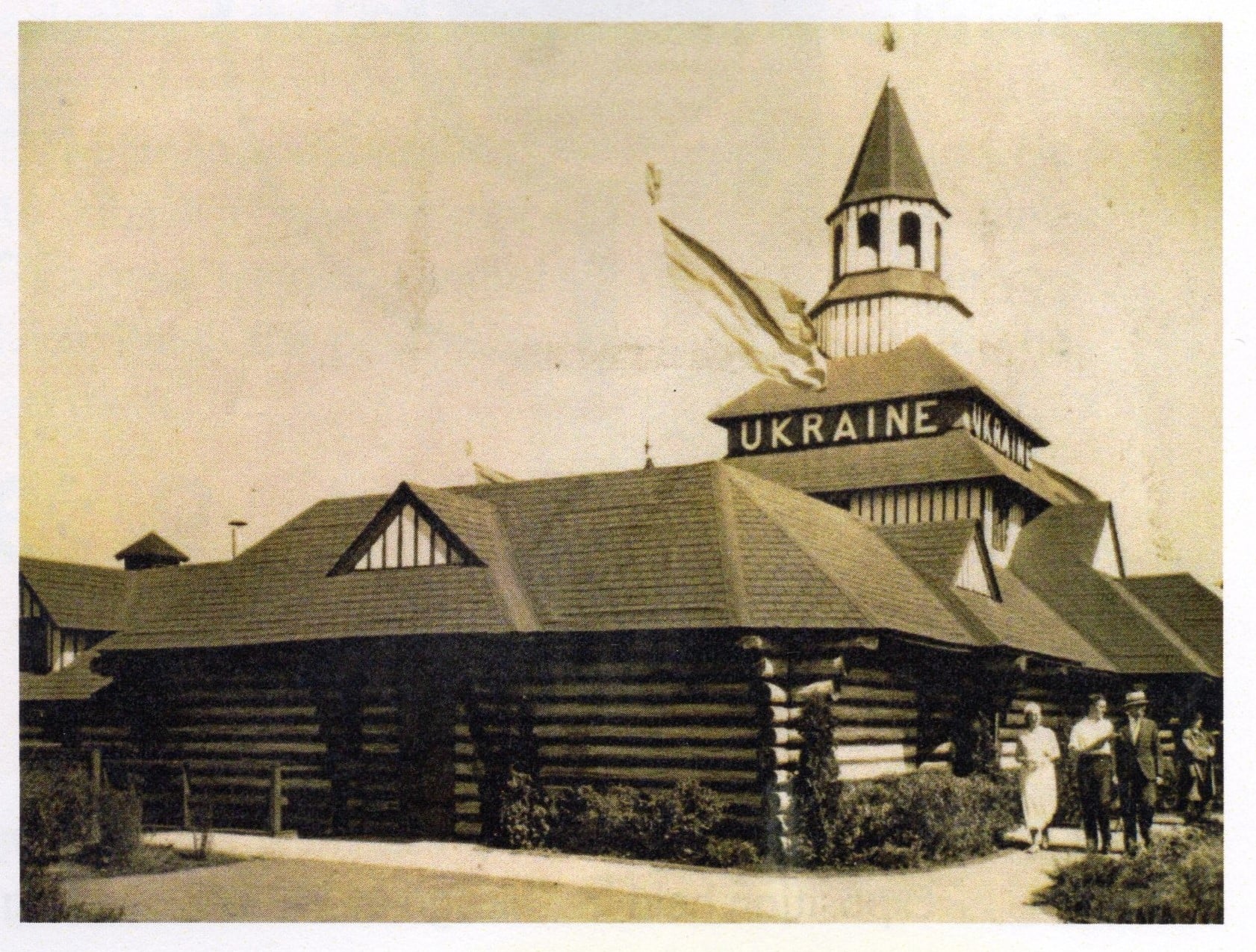
Dr. Siemens was very active and important in the Ukrainian American community. One notable achievement was to serve as the planner, fundraiser, and chair of the Ukrainian exhibit at the Century of Progress World’s Fair in Chicago in 1933-34. The exhibit showcased the country’s traditional arts and culture, including pysanky, the famous Ukrainian Easter eggs decorated using a wax-resist method. The tradition of decorating eggs, now associated with Easter, originated in Ukraine and the practice goes back thousands of years, predating the arrival of Christianity.
In 1939, Siemens was called to testify before the Special Committee on Un-American Activities of the U.S. House of Representatives because of a Ukrainian organization of which he was president. This was a precursor of “McCarthyism” when private citizens as well as public employees were investigated for “subversive activities” because of suspected communist ties. No charges were ever laid against Siemens’ group. The group dissolved in 1942.
Siemens was a benefactor of St. Nicholas Ukrainian Catholic Cathedral in Ukrainian Village on Chicago’s north side.
In the early 1950s he was instrumental in establishing the Ukrainian National Museum and served as honorary president.
Dr. Siemens has been called the “first ambassador for Ukraine in the U.S.” because of his efforts to preserve Ukrainian history and to help refugees from the country. Many dignitaries including the Crown Prince of Ukraine visited the family in the Castle.
The Siemens family is covered in "Chicago’s Only Castle – The History of Givins’ Irish Castle and Its Keepers" by Errol Magidson.
The Ridge community currently has two events going on that relate to Ukraine.
First, the book-signing for a new children’s picture story book, the “Plucky Ukrainian Sunflower,” created by local artist Judie Anderson and her daughter Karen Doornebos, will be on Ukrainian Independence Day, Saturday, August 24, from 2 to 4 p.m. at Bookie’s New and Used Books, 10324 S. Western Ave. Here is a link to an article on that event: https://www.beverlyreview.net/news/community_news/article_ce43cdba-598e-11ef-9490-3f76ccffd4b3.html
Second, the exhibit by Ukrainian artist Valeriia Tarasenko at the Beverly Arts Center, 2407 West 111th St., will continue through September 15th. Here is a link to an article on that event: https://www.beverlyreview.net/news/community_news/article_252dd3e2-4e94-11ef-9901-33b32ad93eb6.html
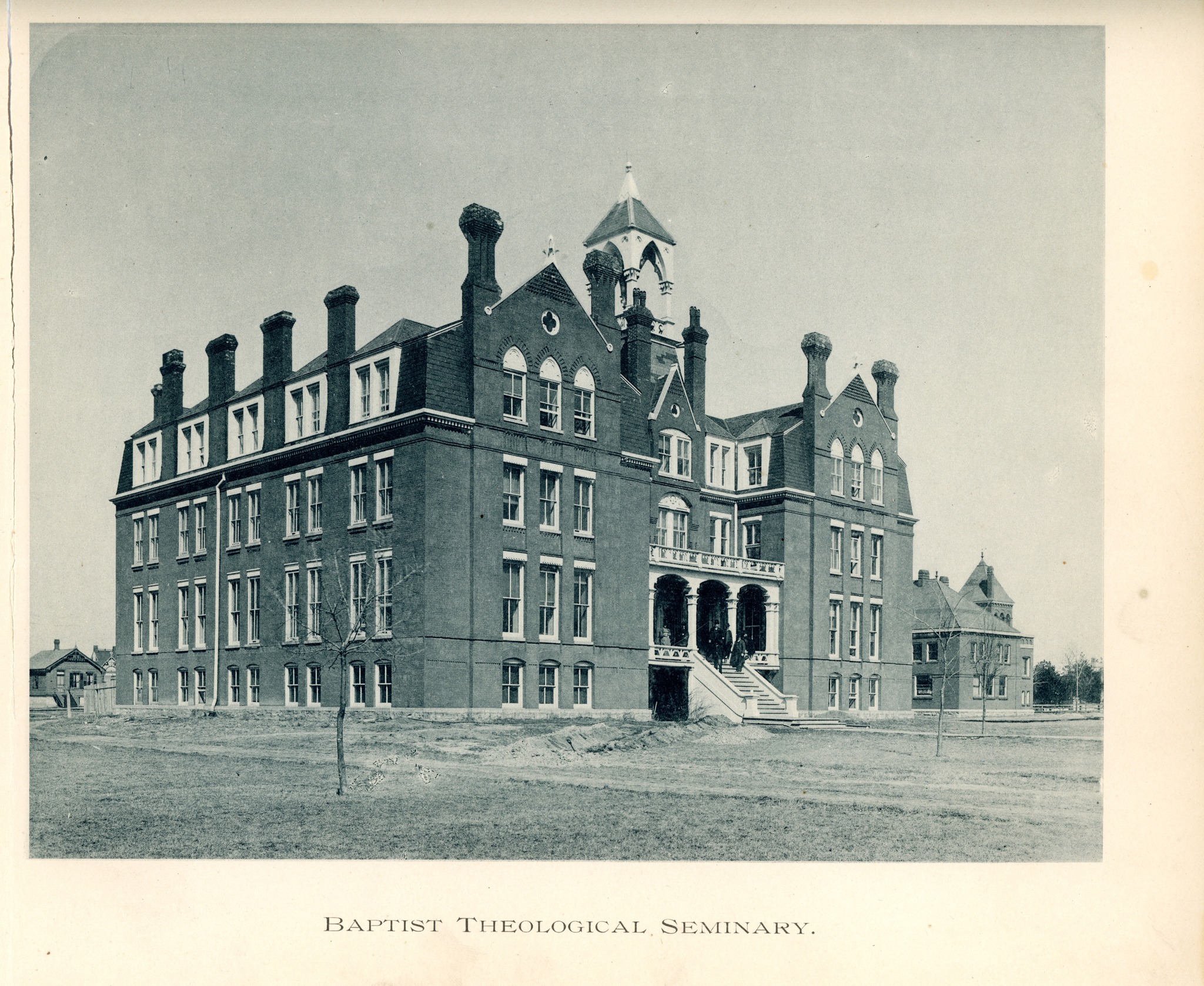
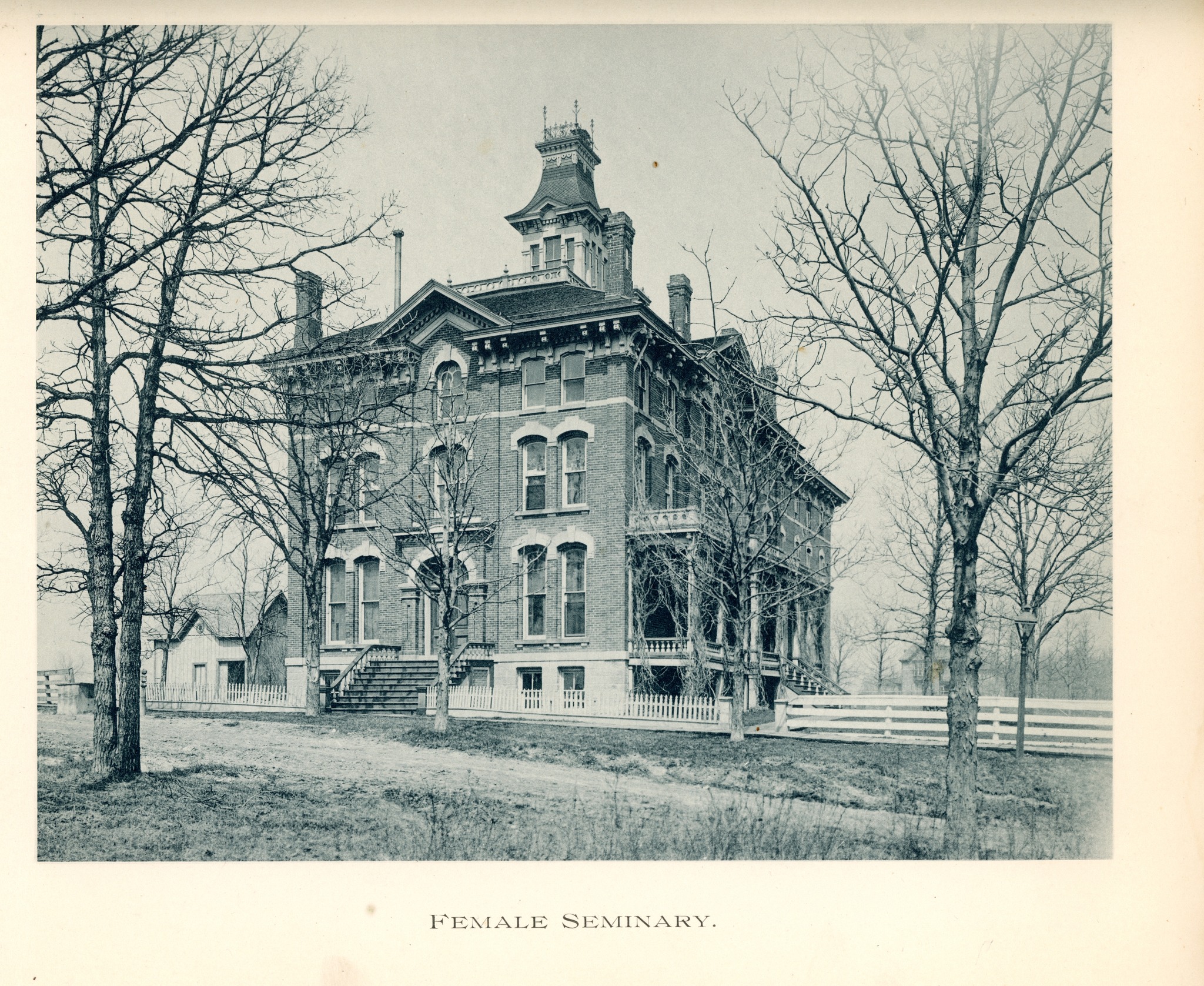
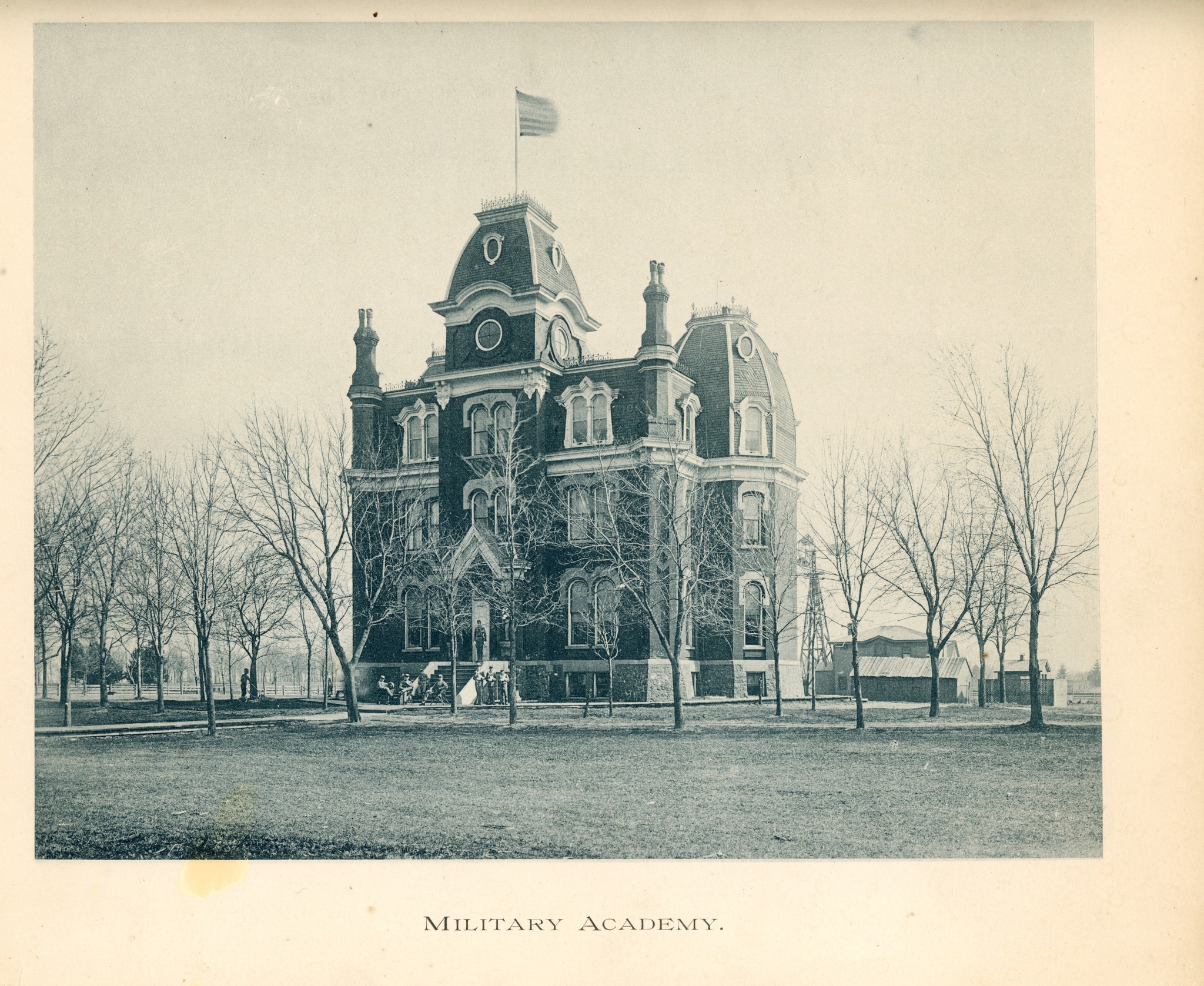
The Ridge Historical Society
Lost or Found Series – The Northrup House
By Carol Flynn
The final post to wrap up the Lost or Found Series is on the Rev. Dr. George William Northrup House.
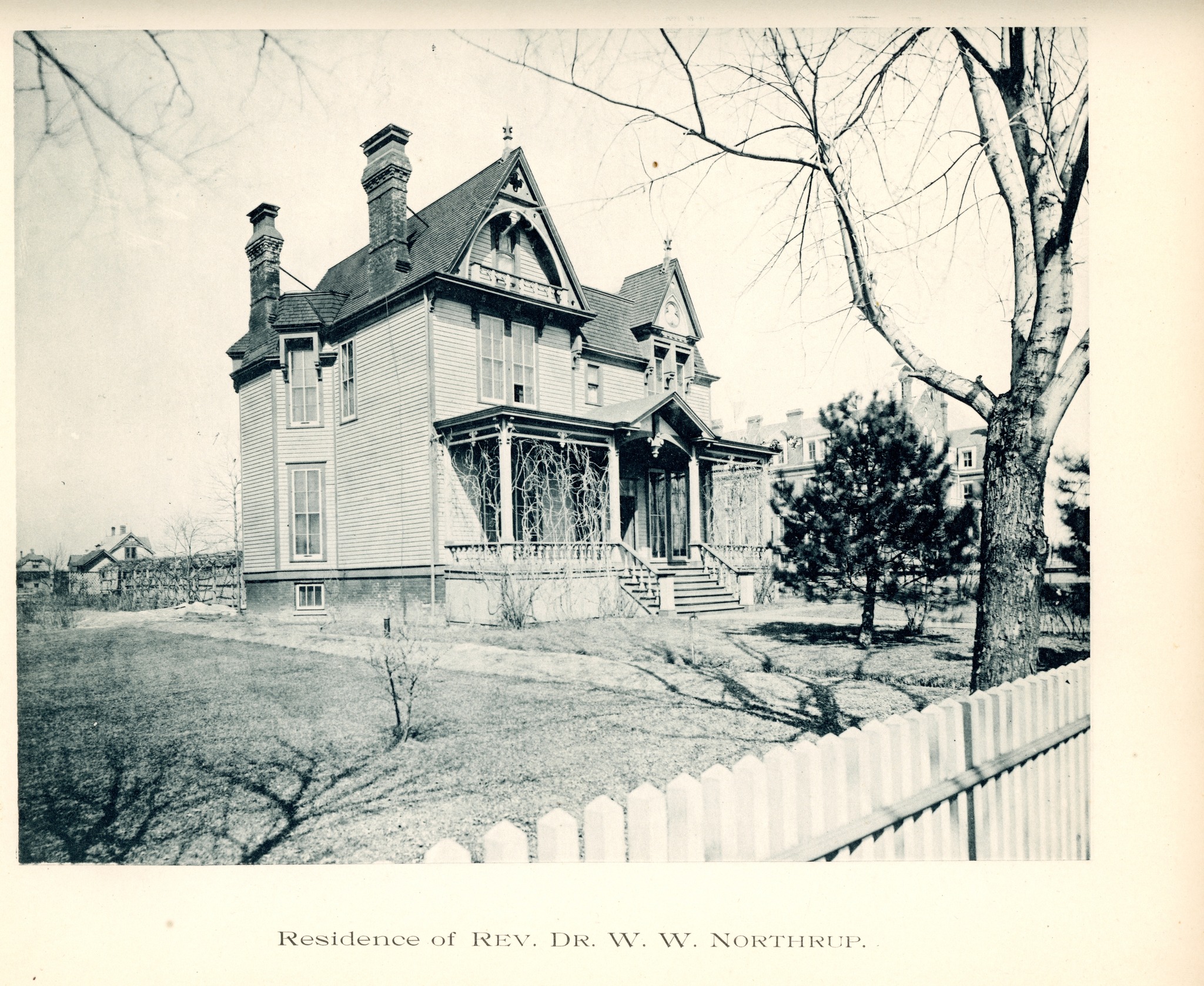
This house is “lost,” that is, it was demolished sometime in the past. It was located at 2242 Morgan Avenue, the name of 111th Street before Morgan Park was annexed to the City of Chicago in 1914. Today the location is a vacant lot between 2154 and 2204 West 111th Street.
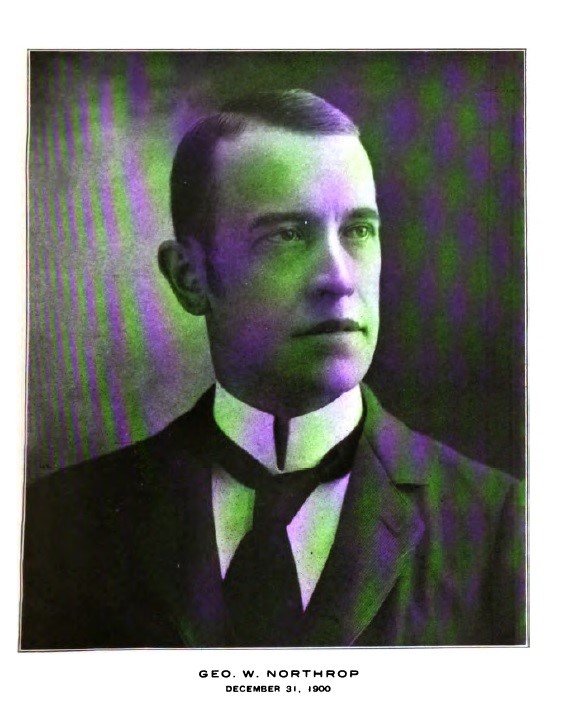
Northrup is one of the most prominent people in Chicago history to have lived on the Ridge. He was the President of the Baptist Union Theological Seminary, as well as a professor there. He was part of the story of how the “new” University of Chicago was established with an original connection to Morgan Park.
The Baptist church came to Chicago with the earliest settlers. In 1863, a group of Baptist leaders created the Baptist Theological Union, and the Illinois legislature granted the Union a charter to found an institution for theological instruction.
The Baptist Union Theological Seminary was founded in 1865 along with the “Old” University of Chicago, that is, the first attempt to form an institution of higher learning in the city, started by Illinois Senator Stephen Douglas.
The formal work of the Seminary began with the appointment of George W. Northrup as President and Professor of Systematic Theology.
Northrup was born in New York in 1826. He was self-taught, and without formal education, he entered college as a sophomore, and graduated with top honors. He then received a degree from Rochester Theological Seminary and was hired there as a professor.
His reputation spread as an educator and orator, and he was invited to Chicago to take charge of the new Seminary.
Originally classes were taught in buildings near Douglas’ Oakenwald estate at 35th Street and Cottage Grove. The Seminary grew under his leadership and earned a reputation for excellence.
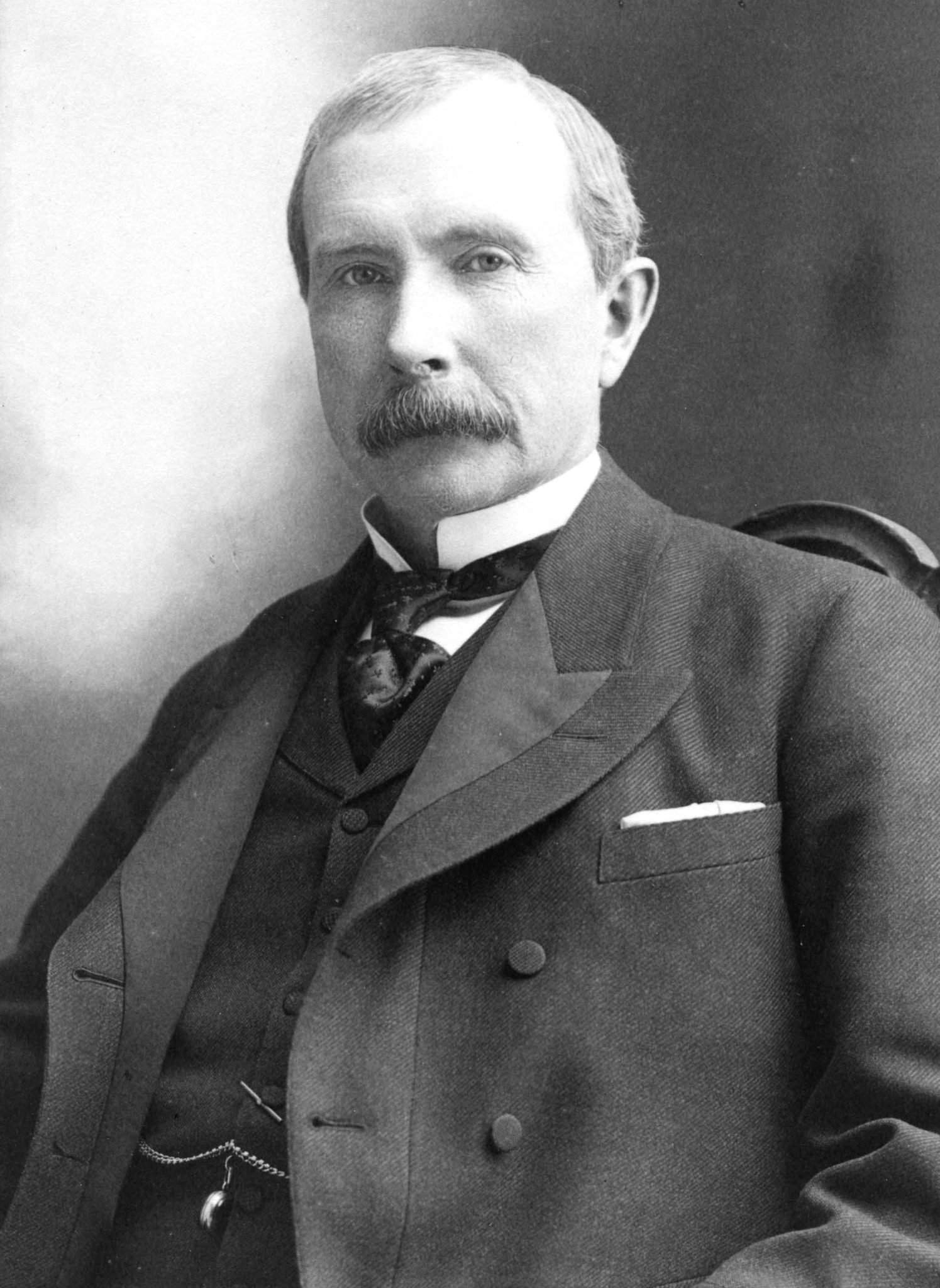
Northrup was personally involved in fund raising for the Seminary, and through this, he met and developed a relationship with John D. Rockefeller, business icon and philanthropist.
In the mid-1870s, the Seminary, and the Old University of Chicago, started having financial issues, and there was talk of having to close.
In 1877, a generous offer of free land (five acres) from the Blue Island Land & Building Co. (BILBCo.) led to the Seminary selling its buildings and land, relocating to Morgan Park, and building new facilities there.
This was quite a coup for the BILBCo., and helped fulfill the plan to establish Morgan Park as a prestigious religious, education, and temperance community. It was anticipated that additional educational facilities would follow, creating a new University of Chicago. Morgan Park Academy, started as the Mount Vernon Military Academy, and the Chicago Female College, were already established in Morgan Park.
The Seminary built an imposing three-story office and classroom building, now long gone, on the north side of 111th Street, just east of Western Avenue. Funding partially came from Rockefeller to do this, as well as from the BILBCo.
The Seminary brought to Morgan Park a considerable number of administrators, professors, clergymen, students, and members of the Baptist church. This led to a building boom for new houses.
Northrup moved to Morgan Park to continue to head the Seminary. Other important names were William Rainey Harper, a Baptist clergyman of Irish and Scottish ancestry who was an expert in Semitic languages and a professor of Hebrew at the Seminary.
There was also Thomas Wakefield Goodspeed from New York, who studied at the Old University of Chicago, was a founder of the Morgan Park Baptist Church, and was the financial officer for the Seminary.
The Old University of Chicago closed in 1886. Immediately talk about founding a new university was started. Public sentiment was in favor of building the school near the location of the original one, partly to honor the legacy of Senator Douglas, but also because people did not want the school in a suburb away from city accessibility.
Northrup, Goodspeed, Harper, and other leaders of the Seminary approached Rockefeller about establishing a new University of Chicago. The proposal was that the main university would be in Hyde Park, with some auxiliary components in Morgan Park.
Rockefeller agreed to the funding, but he was not interested in the Morgan Park part of the plan. His donations, which totaled over $1.5 million, included the stipulation that the Baptist Seminary become the Divinity School of the new university, and move back to Hyde Park. The Board for the new university readily accepted this plan.
In 1892, the Baptist Theological Seminary became the Divinity School of the new University of Chicago, and relocated from Morgan Park. Harper was named the president of the new university, and Goodspeed was a member of the Board of Trustees serving as secretary, registrar, and historian
Northrup, now approaching his 70s and having health issues, declined a leadership role, preferring to devote his time to teaching.
Northrup died in 1900. His personal library, consisting of 1,500 valuable books, was gifted to the university. His body lay in state at the university, and the famous sculptor from the Art Institute of Chicago, Lorado Taft, produced a marble bust of Northrup. He was buried in Oak Woods Cemetery.
Northrup outlived his two wives, Mary and Naomi, and had four adult children, three sons and a daughter. The daughter, Alice Northrup Simpson, lived her life in Morgan Park. She was employed as a teacher before marrying the Rev. Benjamin J. Simpson, and becoming the mother of five children. Simpson died in 1894 at the age of 39, leaving Alice a widow with five children. Alice died in 1916.
Other institutions used the Morgan Park Seminary buildings for a while, but shortly after 1900, the main building was demolished.
The female college continued for a number of years, but eventually closed as more education opportunities became available for women. The original building, on the Ridge on Lothair Avenue, was demolished in 1911.
The military academy was a preparatory school for the university for a few years, but the university decided to close it, and the school became the independent Morgan Park Military Academy.
The Ridge Historical Society
Cowboys on the Ridge – Part 2
By Carol Flynn
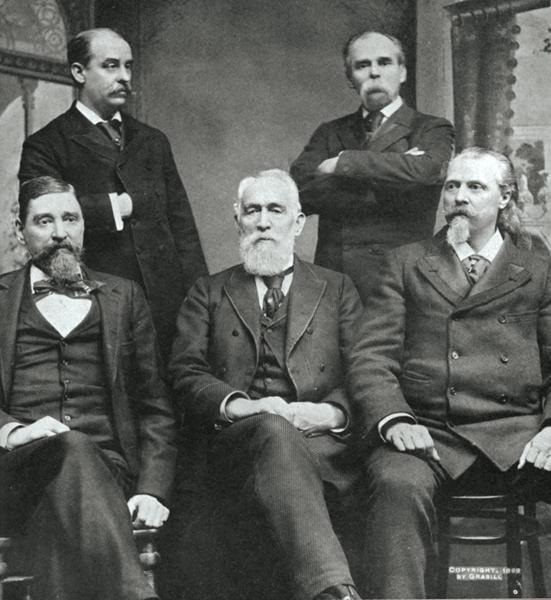
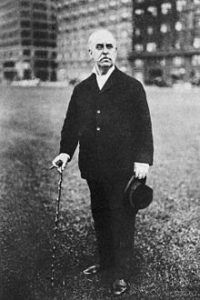
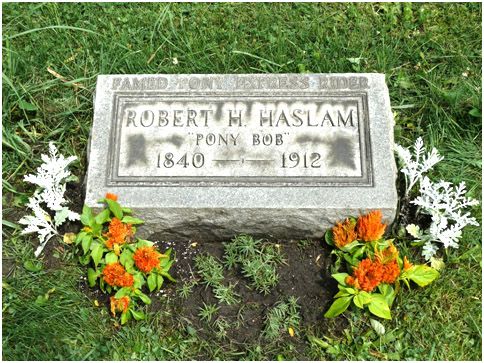
The last post introduced Robert “Pony Bob” Haslam, a youth who came to the U.S. from London at the age of 16 and became a true-life Wild West hero. He’s buried in Mount Greenwood Cemetery.
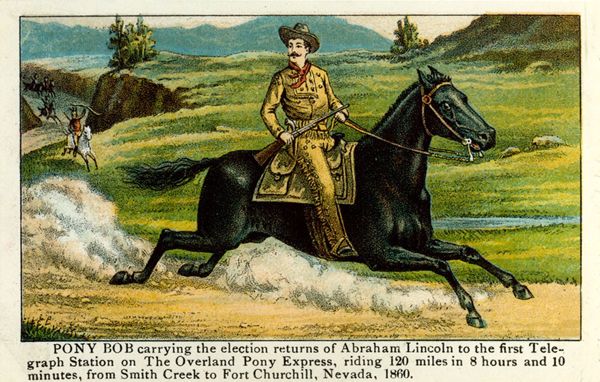
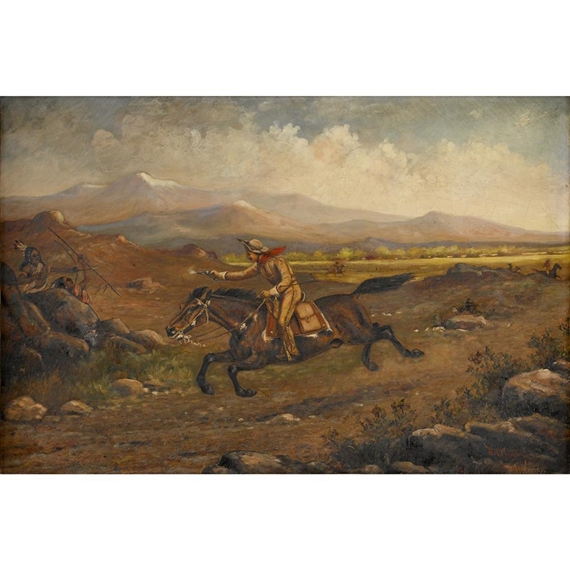
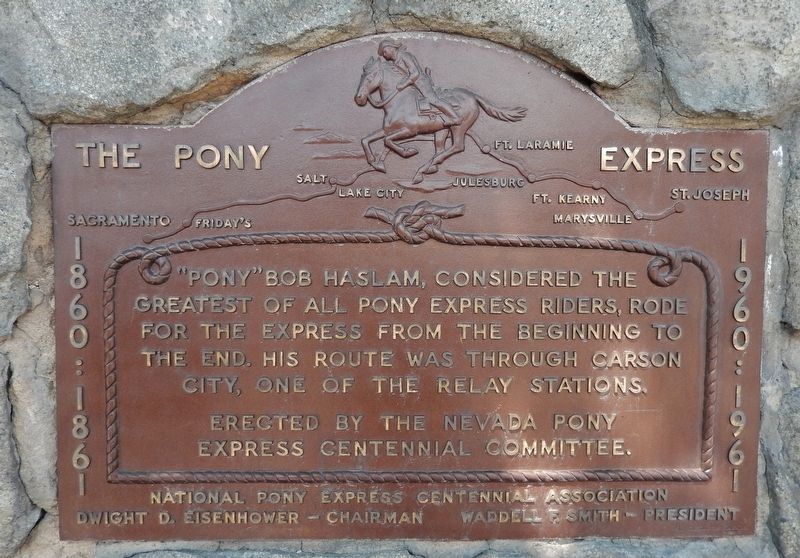
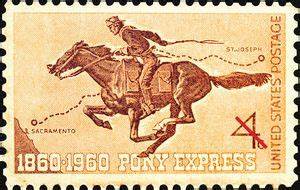
Haslam earned his renown, and the title “Pony Bob,” considered an honor, for his feats as a Pony Express rider in 1860-61. He was known for having both the fastest and the longest rides recorded for the Pony Express riders.
In March 1861, he was part of the relay that carried Abraham Lincoln’s inauguration speech to California. He traveled 120 miles in 8 hours and 10 minutes, using nine horses, while wounded in an attack by Paiute Indians that fractured his jaw, knocked out five of his teeth, and injured his arm.
It took a total of seven days and 17 hours to carry the news to California that time. The average trip was usually around ten days.
The speech included the announcement that the Confederates had attacked Fort Sumter, starting the U.S. Civil War. This caused California to back the Union, sending gold and 17,000 troops east to help the cause. Some news sources credited Pony Bob as “the man who saved the Union.”
The longest ride occurred in May of that year, when Pony Bob completed a 380-mile round trip, covering not only his own route but that of another rider too frightened of the Indian attacks to make the run.
Pony Bob developed a strong friendship with Buffalo Bill Cody and joined his Wild West Show. Pony Bob decided to settle in Chicago and took a job with the Congress Hotel as a porter where he entertained guests with stories of his adventures. He was in Chicago with Buffalo Bill for the 1893 World’s Fair.
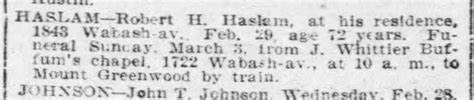
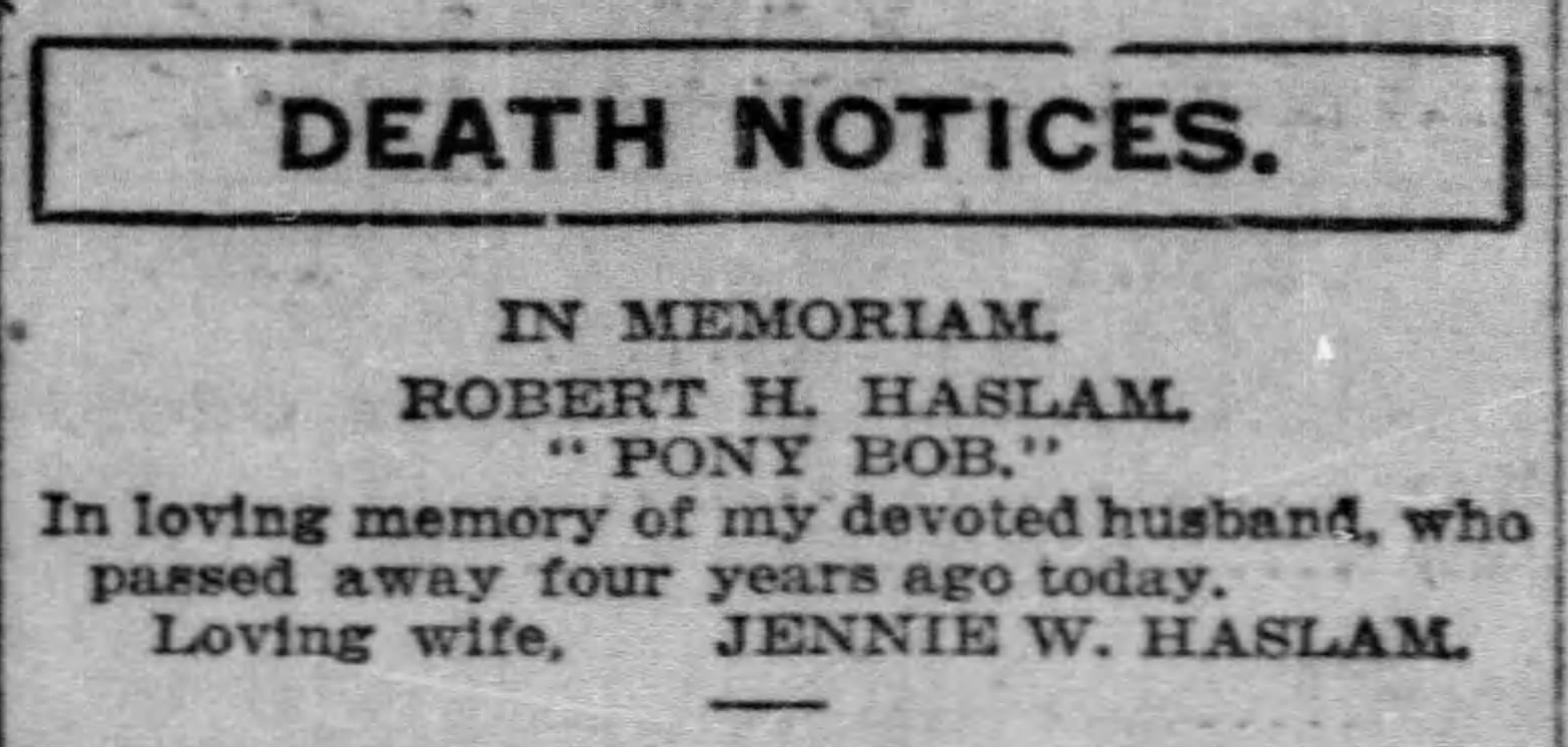
At the age of 47, he married Jenny Weiner, 19. Pony Bob died on Leap Year, February 29, 1912, at the age of 72. He was buried in Mt. Greenwood Cemetery, and it was rumored that Buffalo Bill paid for his grave, although cemetery records show it was purchased by his wife – but perhaps the money might have come from Buffalo Bill.
Jennie remarried, and they lived at 11825 S. Western Avenue in Morgan Park. That husband died in 1939. In 1940, Jennie had the marker there now in Mt. Greenwood Cemetery installed on the grave of her first husband, Robert “Pony Bob” Haslam.