
Explore the RHS Facebook Archives, a rich repository of local history written by Carol Flynn. For two decades, Carol brought a deeply dedicated voice to public education at RHS. Her role as Facebook administrator through mid-2025 naturally extended her prolific research into meticulously detailed articles, most notably her multi-part historical series posts. Today, Carol continues her local history writing for The Beverly Review and other outlets.
August 2022
The Ridge Historical Society
August 1, 2022
By Carol Flynn
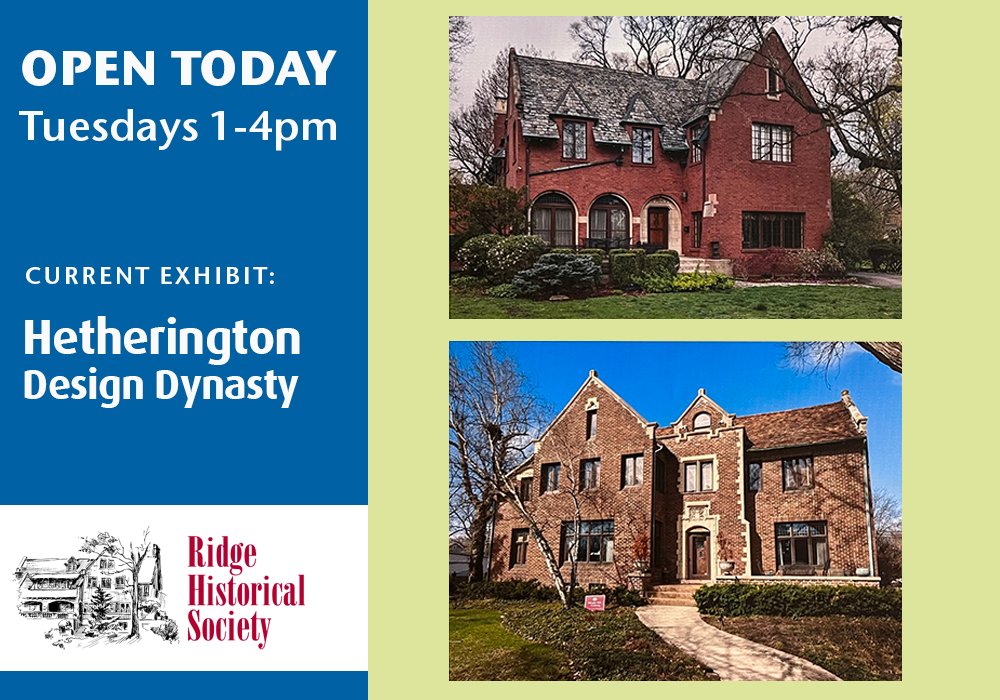
The Ridge Historical Society is now open to the public, for free, on Tuesday afternoons from 1:00 p.m. to 4:00 p.m. RHS volunteers will be there to answer questions about the current exhibit, Hetherington Design Dynasty, which celebrates the Hetherington family of architects.
Beverly/Morgan Park is renowned for its collection of architecturally significant buildings. Block after block of residences, churches, and business buildings, although varied in style, present a visual cohesiveness that has earned the area four official historic districts.
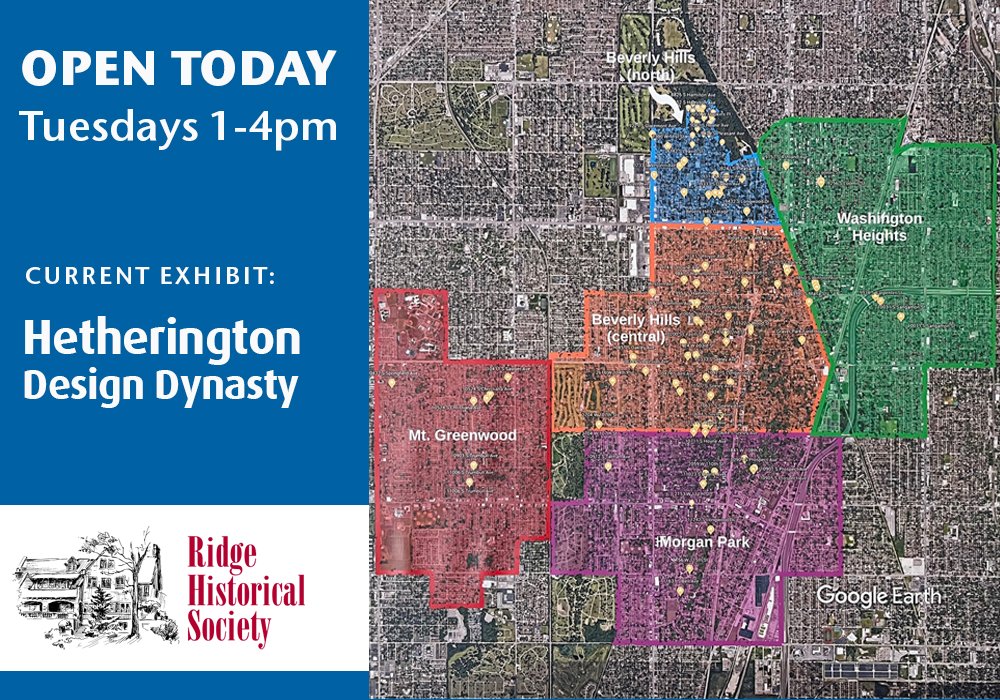
The most prolific architects in the community were the Hetherington family. John Todd Hetherington, his son Murray and daughter Jean, and Murray’s son John Murray created designs for at least seventy buildings on the Ridge that RHS researchers have documented so far.
John Todd and Murray Hetherington were known for the quality of their designs. They worked in a variety of styles – Tudor Revival, French Eclectic, even Prairie School.
To learn more about the Hetheringtons, their contributions to the community, and architecture styles, visit the current RHS exhibit.
RHS is located in the historic Graver – Driscoll House, a John Todd Hetherington creation, at 10621 S. Seeley Avenue. The grounds are entered through the driveway on Seeley, where there is some parking right at the house. Parking is also available on Seeley Avenue. The Graver-House is not wheelchair accessible and is not air conditioned.
The Ridge Historical Society
History of the Wards: Why Beverly and Morgan Park Are “Dry”
By Carol Flynn
This week’s Beverly Review includes the seventh installment of the series about the history of the Chicago wards in the Ridge communities. This installment looks at the 1930s and 1940s.
One of the issues that the U.S. dealt with in the 1930s was the end of Prohibition. The consumption of alcohol was never illegal. The Eighteenth Amendment to the U.S. Constitution, which went into effect in 1920, prohibited the manufacture, transportation, and sale of alcoholic beverages. This Amendment was repealed in December 1933 with the ratification of the Twenty-first Amendment.
While most of Chicago took the end of Prohibition in stride, it became a major issue on the Ridge. Decisions made by the community beginning in 1934 have kept Beverly and Morgan Park “dry” east of Western Avenue since that time.
Sections of the Ridge communities were dry before Prohibition began, of course. Morgan Park was intentionally founded in the 1870s as a religious, educational, and temperance community, and the Protestant ministers of the community led the way with the temperance movement even years before that.
When Prohibition began in 1920, every locale officially went dry. When Prohibition ended in 1933, every locale officially became “wet.” Saloons opened all over the country, including on the east side of Western Avenue and along 95th Street.
The new Illinois Liquor Control Act of 1934, however, provided that election precincts could vote by referendum to stay “dry.”
A campaign was undertaken in Beverly/Morgan Park to vote dry the precincts bounded by 89th Street, Western Avenue, 119th Street, and the Rock Island Railroad tracks. Members of a Ridge civic association went door-to-door, precinct-by-precinct, to collect petition signatures for a referendum and to obtain promises of votes when the referendum was held. The campaign was successful, and additional precincts in the ward also voted to stay dry.
The nineteenth ward became the driest ward in the city. The newspapers referred to it as “bone-dry Beverly.” The saloons that had opened on the east side of Western Avenue and on 95th Street all had to close.
In 1946, a referendum was held to make the precincts between Western Avenue, 99th Street, California Avenue, and 119th Street dry. This included the west side of Western Avenue. The proposal was defeated, paving the way for the bars, breweries, and restaurants that are found along that strip now.
Since that time, there have been campaigns to allow the sale of alcohol east of Western Avenue, but they have been voted down consistently by the community. The decision is made by the registered voters within the precinct, not by the alderman or the
city or any civic group.
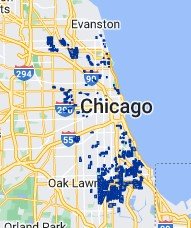
This map shows the dry precincts in the City of Chicago. Note the concentration in the far southwest area – a good-sized portion of the nineteenth ward.
https://www.beverlyreview.net/news/community_news/article_e56364d2-1283-11ed-b3b7-b38813422447.html
The Ridge Historical Society
Hetherington Photographs
By Carol Flynn
The Ridge Historical Society, 10621 S. Seeley Avenue, is open today, Sunday, August 7, 2022, from 1:00 p.m. to 4:00 p.m. Admission is free.
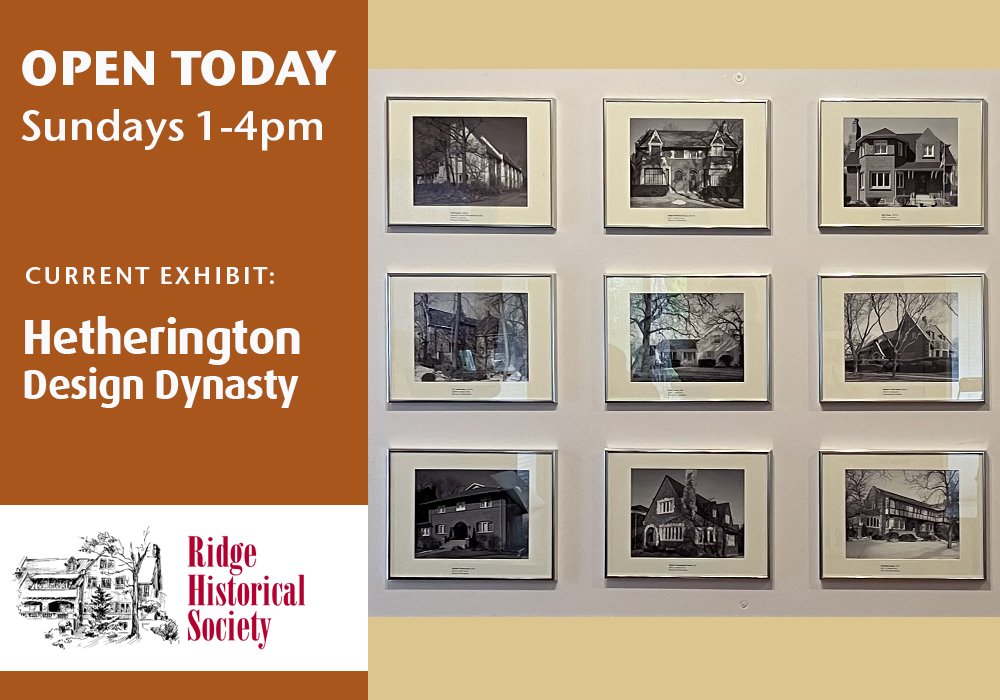
The current exhibit is Hetherington Design Dynasty, profiling the Hetherington family of architects who lived in Beverly and designed over 70 buildings in the Ridge communities.
The exhibit includes photographs of many of the Hetherington houses taken by Mati Maldre, Professor Emeritus of Art, Chicago State University.
The Ridge Historical Society is located at 10621 S. Seeley Avenue, Chicago. Admission is free.
The current exhibit is Hetherington Design Dynasty, profiling the Hetherington family of architects who designed many buildings in the Beverly/Morgan Park community.
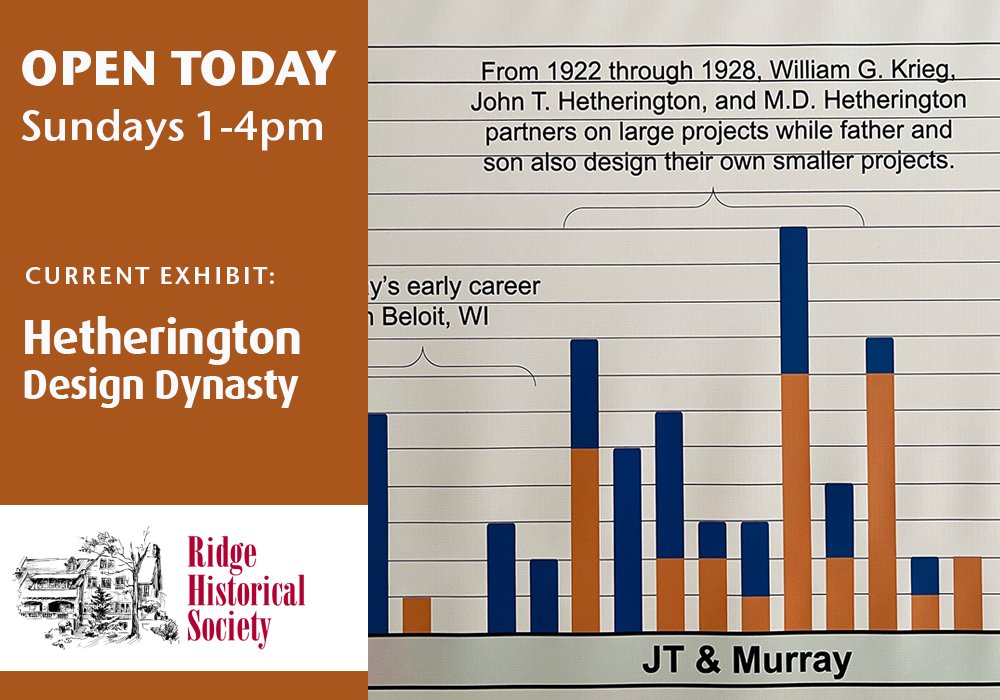
The Ridge Historical Society is now open on Sundays from 1 to 4 p.m., free admission. The address is 10621 S. Seeley Avenue, in Chicago.
The current exhibit is the Hetherington Design Dynasty, profiling the work of three generations of the Hetherington family of architects.
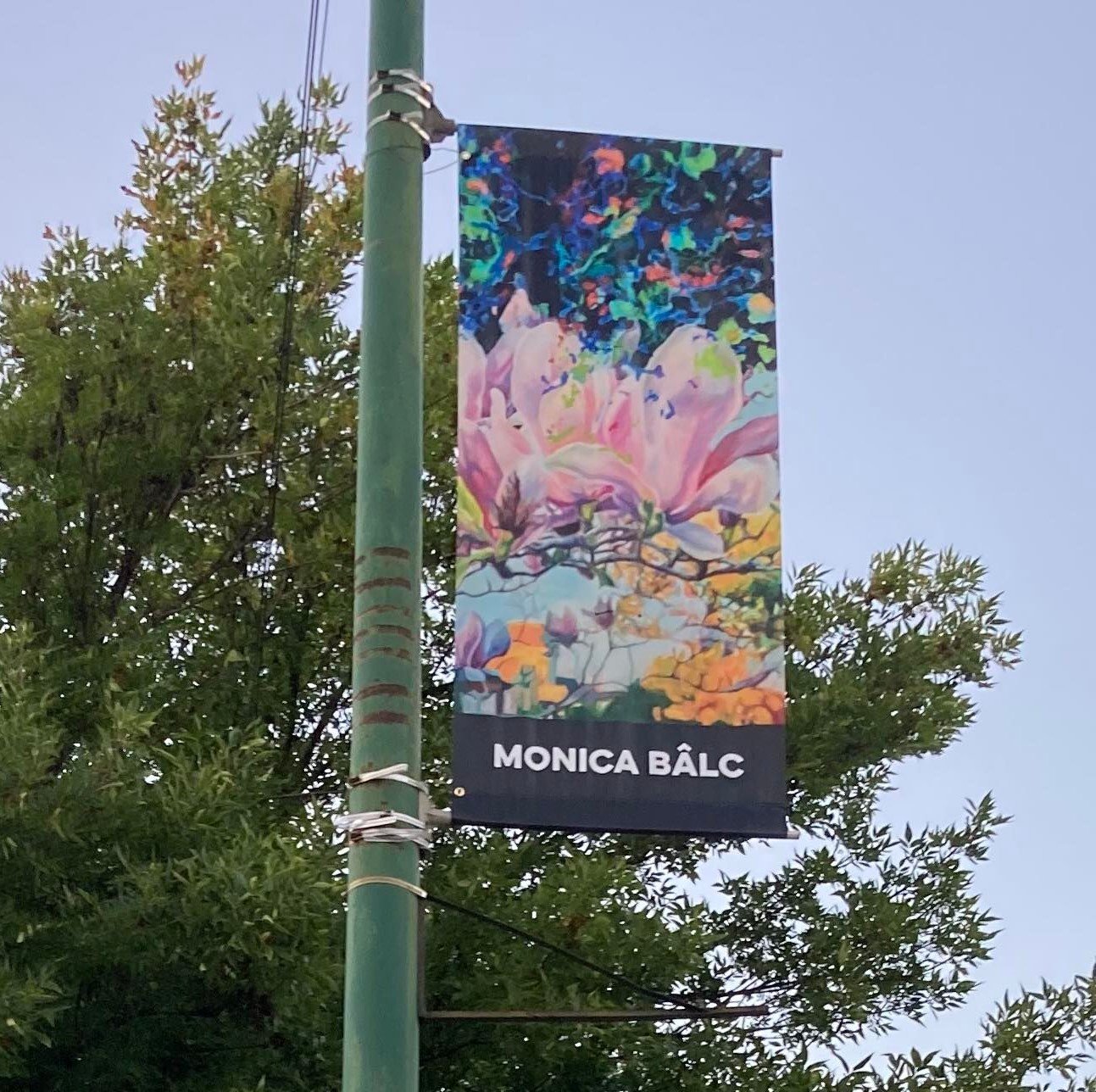
As you drive down Western Avenue in Beverly/Morgan Park, look for the banners showcasing this year’s Beverly Art Walk, which will be held exactly one month from today on Saturday, September 17, 2022.
This year the Beverly Area Arts Alliance is partnering with local cultural institutions to bring awareness to these groups by displaying the artwork of local artists.
The Ridge Historical Society is honored to be a focus of the Beverly Art Walk this year with an exhibit of the work of artist Monica Balc.
Monica is featured on one of the banners. Look for it at 103rd Street and Western Avenue. There will be much more on Monica in upcoming posts.
RHS will also add a new feature to the current RHS exhibit on the Hetherington Design Dynasty. The Hetherington family included three generations of architects who lived in Beverly and designed over seventy buildings in the community.
Murray Hetherington married local artist Mildred Lyon, a prolific illustrator and portrait artist. Mildred’s work will be become a special part of the exhibit.
Stay tuned to this page for more information on the Beverly Art Walk event at RHS.
The countdown begins – 30 days to go.
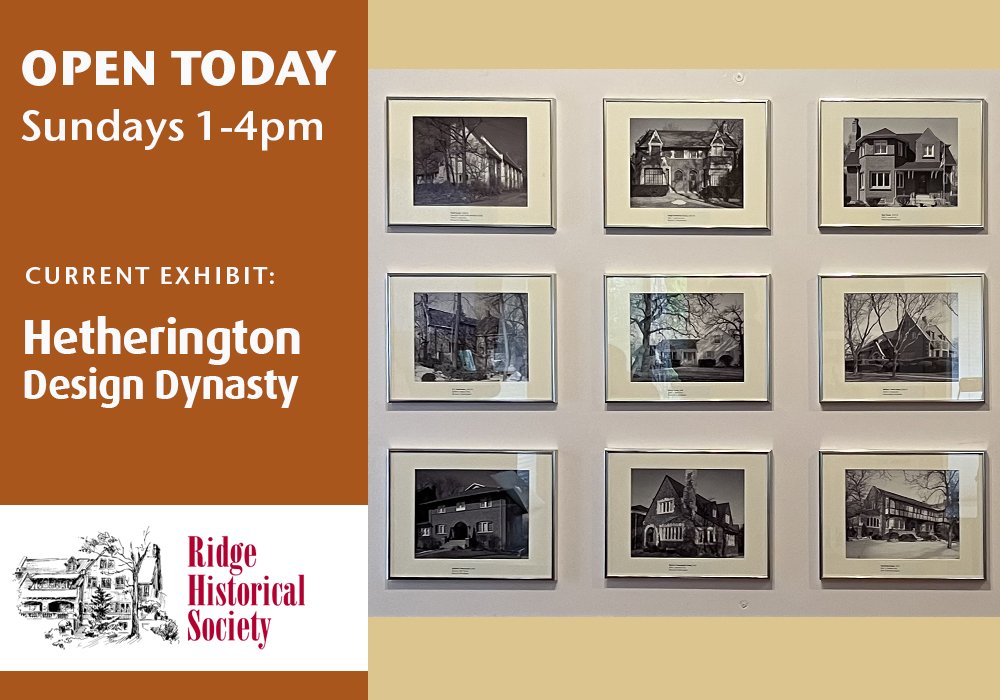
The Ridge Historical Society will be open tomorrow, Sunday, from 1:00 to 4:00 p.m., free admission, for anyone and everyone to stop by. Enter through the driveway at 10621 S. Seeley Avenue. There is some limited parking right at the house or park on Seeley Avenue. The house is not wheelchair accessible.
The current exhibit is the Hetherington Design Dynasty, featuring the Hetherington family of architects, three generations who lived in Beverly and designed over seventy buildings in the neighborhood, including the Graver-Driscoll House, RHS Headquarters.
The patriarch of the family was John Todd Hetherington, born in Canada in 1858, and educated in Scotland. He came to Chicago and began his architecture career in the 1880s.
John Todd’s son Murray became an architect, also, and joined his father in practice. Together, they designed the Ridge Park field house at 96th Street and Longwood Drive.
Murray married Beverly artist Mildred Lyon in 1924, and they had a son, John Murray, who also became an architect. Mildred had a career as an illustrator and portrait painter.
Visit RHS to learn more about the Hetherington family.
And mark your calendar for the Beverly Art Walk on September 17th, when RHS will be a major attraction, showcasing the work of two artists. First, the work of Mildred Hetherington will be added to the Hetherington exhibit.
Second, the work of artist Monica Balc will be displayed. Stay tuned to this page for more news on this event.
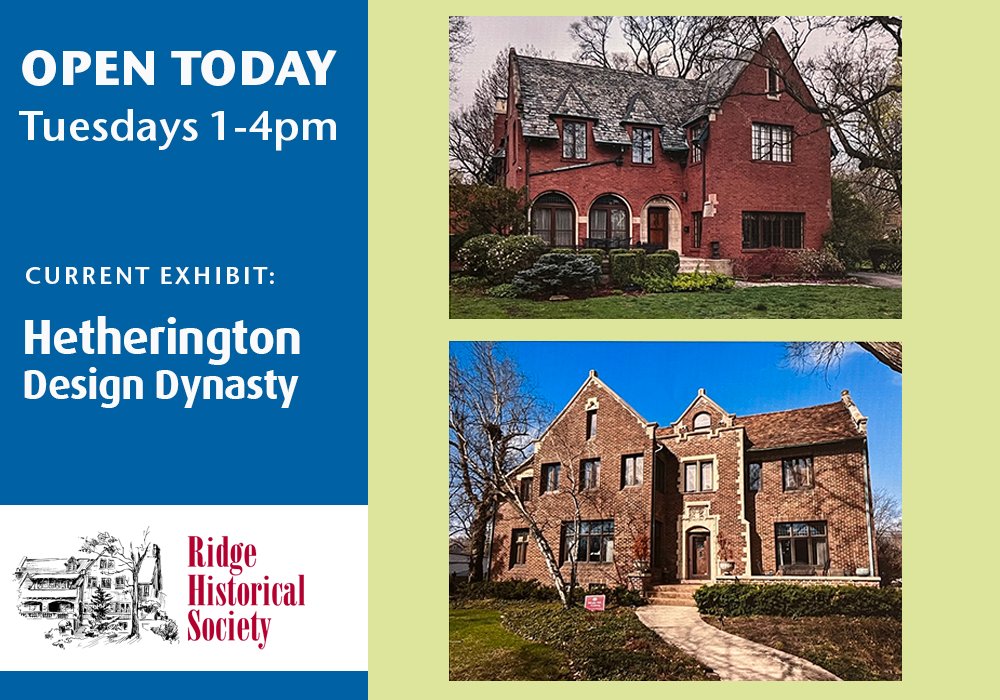
The Ridge Historical Society is open on Tuesday afternoons from 1:00 to 4:00 p.m. Admission is free and everyone is welcomed. RHS is entered through the driveway at 10621 S. Seeley Avenue. There is limited parking by the house, or on Seeley Avenue.
The current exhibit is the Hetherington Design Dynasty, featuring the Hetherington family of architects, who lived in Beverly and designed at least seventy houses and other buildings in the community.
Ridge Historical Society
Woman’s Equality Day
By Carol Flynn
Woman’s Equality Day has been an annual event in the U.S. on August 26 since President Richard Nixon issued a proclamation in 1972. The day started as “Women’s Rights Day.”
August 26 was chosen as the date because the Nineteenth Amendment to the U.S. Constitution, which states that “The right of citizens of the United States to vote shall not be denied or abridged by the United States or by any State on account of sex,” was signed into law that day in 1920.
Tennessee’s ratification of the Amendment a few days before had secured the required support from the states to finally grant the right to vote to the twenty-seven million women in the country. The official letter from Tennessee certifying ratification was sent by train to Washington, D.C.
The train was due to arrive shortly after midnight, and Secretary of State Bainbridge Colby promised to stay up late to receive the letter and officially proclaim the amendment as law. However, the train was delayed, and when the letter had not been delivered by 3:00 a.m., Colby went to bed. Even the women suffragists who had been on watch all night finally turned in.
Later that day, the proclamation was made. President Woodrow Wilson declared it the day that “the men and women of America are on an equal footing, citizens all.”
The ratification of the Nineteenth Amendment was somewhat anti-climactic for the women of Chicago, who had won limited voting rights in Illinois in 1913. It did give new purpose to those working for election of women to Chicago’s City Council.
In 1922, the Illinois League of Woman Voters advocated for a “fifty-fifty” rule, that is, half the Chicago aldermen should be women. One hundred years later, that goal has still not been met. Today, seventeen of the fifty aldermen are women.
The first women candidates for Chicago aldermen were on the ballot in 1914. Four were from the Socialist Party and three from the Progressive Party. Two others from the Democratic party had lost in the primaries. None of the women were elected.
The first women aldermen, Anna Langford and Marilou McCarthy Hedlund, were not elected to the Chicago City Council until 1971. Langford was an African American attorney and civil rights activist from Englewood; Hedlund was a white newspaper reporter from Edgewater. Both were Democrats.
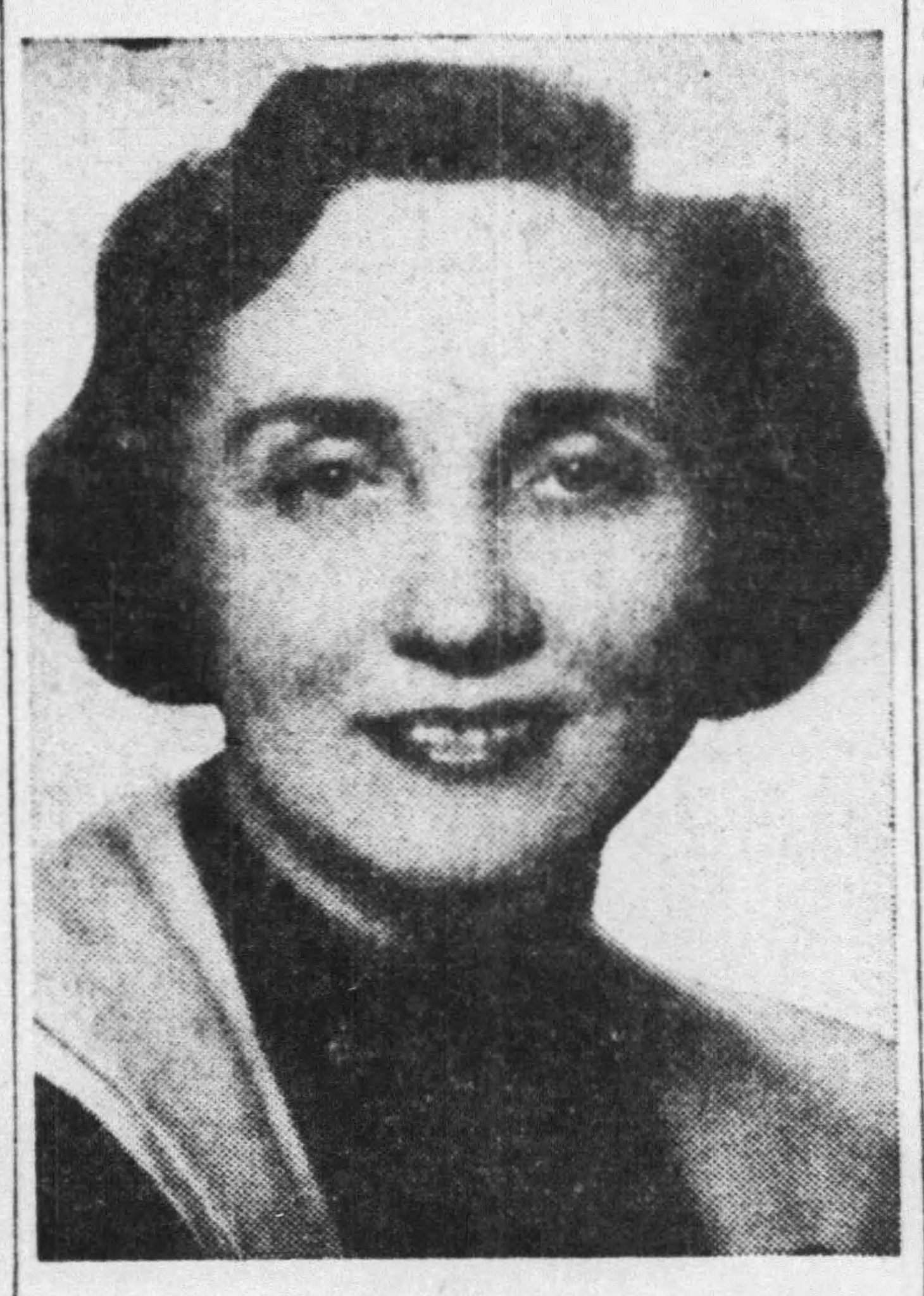
In the nineteenth ward, which includes Beverly, Mount Greenwood, and some of Morgan Park, the first woman to be nominated for alderman from a major party was Margaret Norman White, who ran as the Republican candidate in 1959. She lost to the Democratic incumbent, Thomas Fitzpatrick.
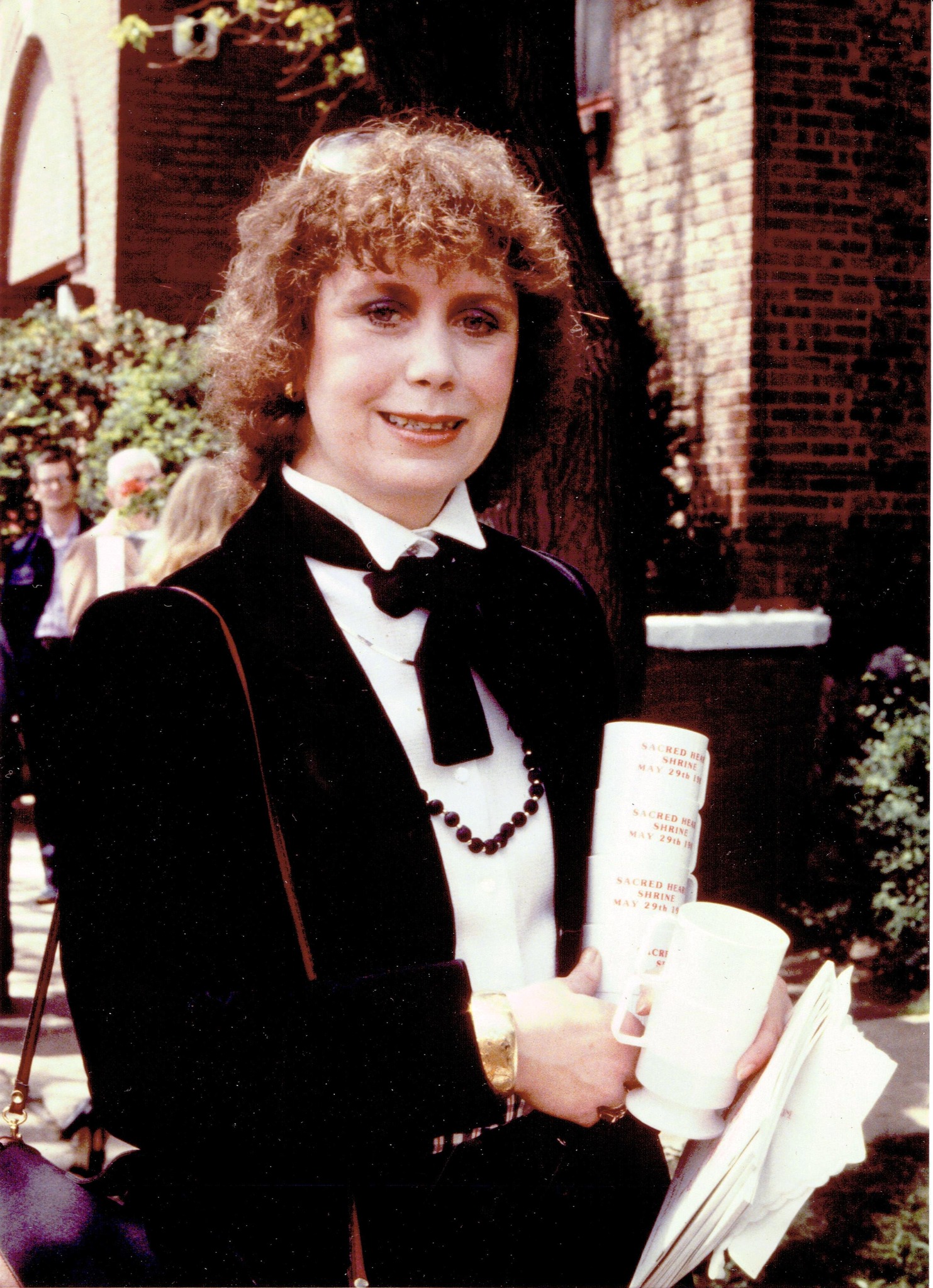
It would be another twenty years before the nineteenth ward saw a second woman candidate, Mary Quinn Olsson, who ran in 1979. Although a strong Democrat, Olsson ran as an Independent because the official Democratic Party backed Michael Sheahan that year. Sheahan won the election.
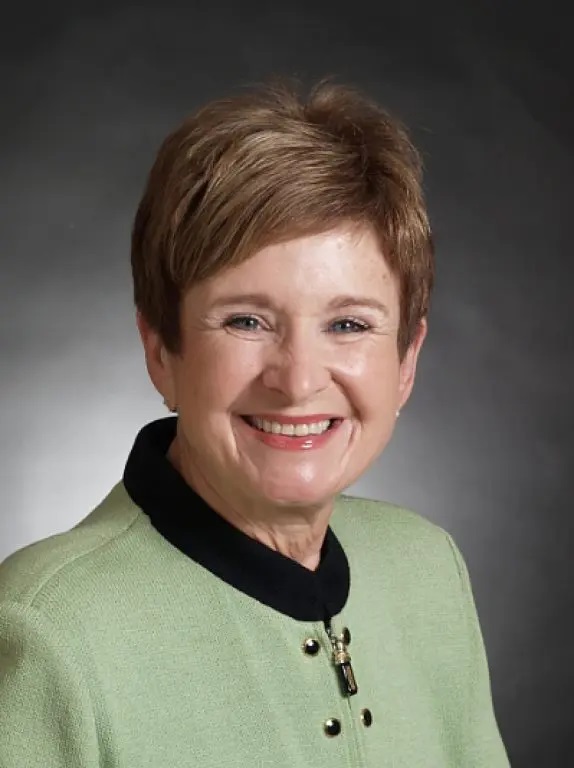
Sheahan served from 1979 to 1990, when he was elected to the position of Cook County Sheriff. Richard M. Daley, who had won election as Mayor in 1989, appointed Virginia “Ginger” Meares Rugai to fill the nineteenth ward alderman vacancy, making Rugai the first woman to represent any portion of the Ridge on the City Council. She won re-election in 1991, and served as alderman until 2011.
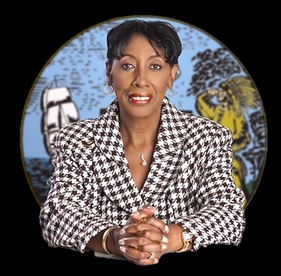
Since that time, other women have also represented parts of the Ridge on the City Council. These are Lona Lane in the eighteenth ward, and Carrie Austin in the thirty-fourth ward. Both were appointed to their positions by Mayor Daley and went on to be re-elected.
Lane served from 2006 to 2015. Austin has served since 1994 and has announced her retirement at the end of this term.
The Ridge Historical Society
International Dog Day
By Carol Flynn
Yesterday, the RHS post covered Woman’s Equality Day, an annual event on August 26. Many more people, however, were excited that the day was International Dog Day. Americans do love their dogs.
To prove that the folks at RHS love dogs as much as everyone else, here is a favorite story from the history of the Ridge about a visit from an international dog star.
Rear Admiral Richard E. Byrd, famous for his stay at the South Pole (Antarctica) in 1928-30, visited Morgan Park High School on December 4, 1930. He was accompanied by his Smooth Fox Terrier, Igloo. Igloo was a huge media star in his own right.
The dog was a stray found by a friend of Byrd’s who talked dog-lover Byrd into adopting him. The terrier became Byrd’s constant companion, accompanying Byrd to Antarctica in 1928 where the dog received the name Igloo, or Iggy for short. Igloo shared Byrd’s solitude during the harsh winter and had to be dressed in polar clothing to withstand the blizzards. Special boots were made for him.
Upon returning to New York, Igloo shared the glory of a Broadway ticker-tape parade and was presented to President Hoover at the White House. The dog became the subject of news dispatches and even a book "Igloo." He was also the first dog to fly over ‘Santa Claus’s home’ at the North Pole. People around the world became enamored with the Fox Terrier breed, thanks to Igloo.
On December 12, 1930, the school newspaper, The Empehi News, ran two articles about Byrd’s and Igloo’s visit. The articles are reprinted here (complete with errors).
First article: Admiral Byrd Tells of Desire to “Visit New Places” All His Life
By Muriel McClure
“I am an explorer,” said Rear Admiral Richard E. Byrd, “because it was born in me. I have always felt the urge to see new places. You know I traveled around the world alone when I was twelve.”
Admiral Byrd spoke at the high school both in the afternoon and evening of December 4. During this interview he was seated in Mr. Schoch’s office waiting his curtain call. Admiral Byrd is a thin, robust man. He has an easy, charming way of talking.
“I think my last trip, to the South Pole, has contributed the most to science, for the reason that we had the funds and a greater chance to combat the dangers than we had on our other trips.”
When he was asked what he thought was the most important quality of character young people should develop, he replied, “Loyalty I hold before all else, even before honor. I would a hundred times rather have a dishonest man who is loyal than an honest man who is disloyal. Yes, I think one should develop loyalty to church, morals, country and home above all things. Now take dogs for instance, the dogs we had in the Antarctic were the loyalest of animals. Give a dog a chance to serve you and that will be his reaction.”
Commander Byrd’s own fox terrier, igloo, is a loyal pal. He has gone to the North Pole and the South Pole with his master. Igloo, during the interview, lay at the admiral’s feet.
“Our Antarctic stay was something new to all of us,” said Mr. Byrd. “The Antarctic is so different from the Arctic because it is just in the process of evolution which the Arctic underwent thousands of years ago. The Antarctic is perennially frozen over, of course. While the Arctic is mostly land, the antarctic is ice floating above 10,000 feet of water. There is very little life in the Antarctic and in the Arctic there is abundant animal and human life.”
In his lecture Admiral Byrd showed movies taken of the two-year exploration trip, as well as giving a short talk as an introduction to the polar regions. He told of days 72 degrees below zero, when the men’s eyelashes froze together, and other hardships.
As Admiral Byrd left the school he said, “I have enjoyed my visit very much, in spite of the fact that I had to speak!”
Second article: Byrd-dog Grants Reporter of Empehi an Interview
Igloo, the famous Byrd-dog, for probably the first time in his illustrious career as a polar explorer, granted an interview to a newspaper reporter last Thursday, December 4.
Igloo was very calm, cool and indifferent to everything, possibly due to training at the South pole. As he had very little to say, we could get nothing but a description of him.
Igloo possesses two brown ears, big brown eyes, brown spots on his back, all the rest of him being white. The famous “pooch” wore a plain black collar with no name on the name plate. He was dark under the eyes, from staying up all night at the South Pole probably!
While at the South Pole he obtained a scar during a fight with his enemies, the penguins. It makes us wonder how the penguins looked.
During his stay under the desk in Mr. Schoch’s office, he posed for Mary Jane McAllister. He took his posing very seriously, holding himself quite steady for a dog. When he did move, the artist tried to make him turn back by making a noise like a cat, but cats were of no interest to the pup. Due to the lack of cats at the South Pole?
The dog was nearly, if not, as popular as his master, Rear Admiral Byrd. Igloo had quite an audience, but to that mob he paid not the slightest heed.
If all dogs were only like Igloo, quiet, reserved and peaceful (?) but alack! They are not!
Igloo, here’s your chance to open an etiquette class! for dogs.
The moral of this story? The companionship of a friend like Igloo surely eases the loneliness of isolation.
RHS note: Sadly, Igloo died prematurely at the age of 6 in 1931 from food poisoning. Byrd was away at the time, and chartered an airplane to rush home, while a group of veterinarians worked to save Igloo’s life, but it was too late. Buried in a pet cemetery in Massachusetts, Igloo has a marker shaped like an iceberg and his plaque reads “Igloo – He Was More Than A Friend.”