
Explore the RHS Facebook Archives, a rich repository of local history written by Carol Flynn. For two decades, Carol brought a deeply dedicated voice to public education at RHS. Her role as Facebook administrator through mid-2025 naturally extended her prolific research into meticulously detailed articles, most notably her multi-part historical series posts. Today, Carol continues her local history writing for The Beverly Review and other outlets.
December 2024
Merry (Pink) Christmas!
The color pink is “in” right now for Christmas decorating, thanks in large part to the Barbie movie a few years ago.
One recent article described pink as "a very modern Christmas color that adds chicness, glamour, and even whimsy to the holiday décor."
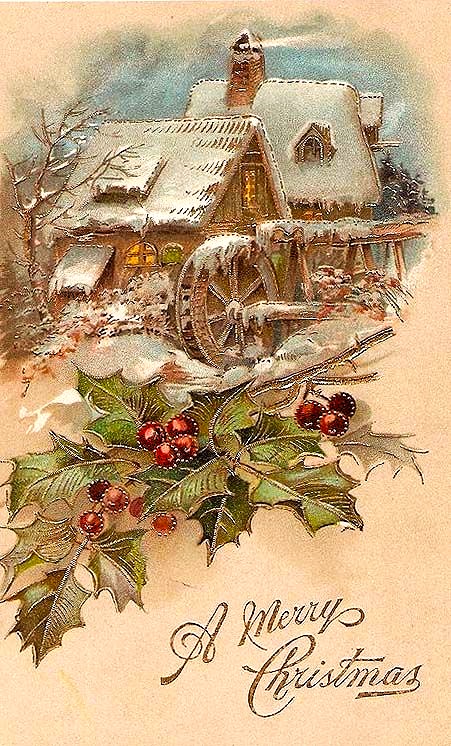
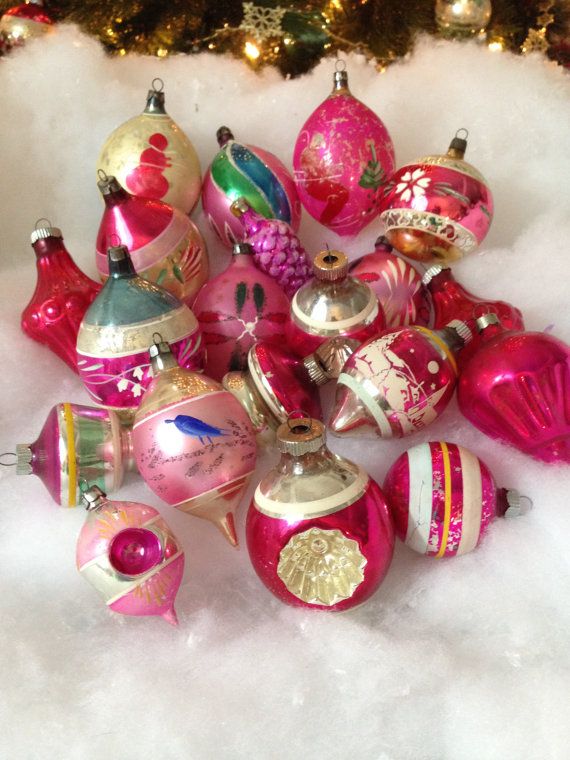
However, as this vintage postcard that dates back to the early 1900s shows, pink has been a “Christmas color” for well over 100 years. Pink glass ornaments were popular back then.
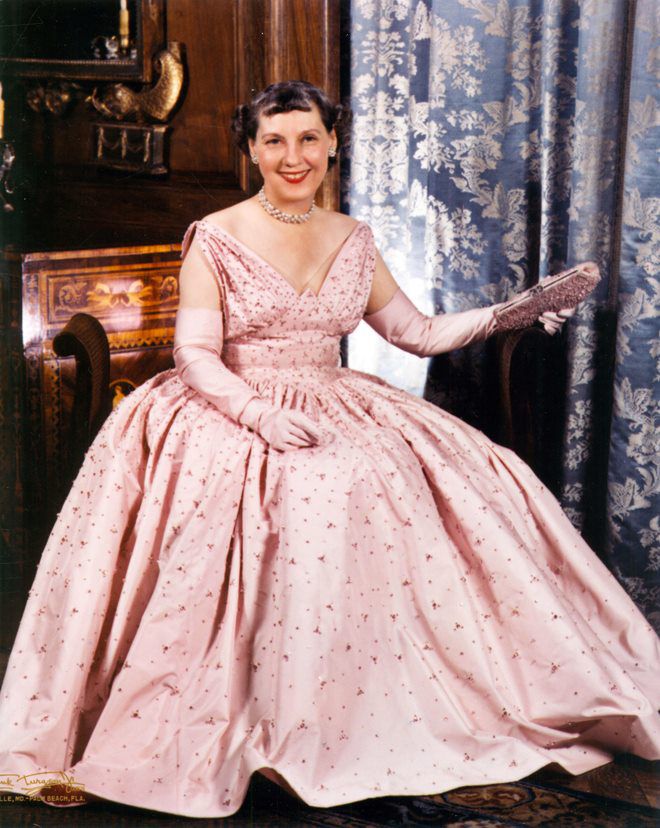
Pink was quite the rage for Christmas in the 1950s. First Lady Mamie Eisenhower loved pink and wore it frequently. She used the color for decorating the White House to the extent the presidential residence was referred to as the “pink palace.”
In the 1700s, as a variant of red, the color pink was considered an aggressive military color. But over time, pink came to be considered more a feminine color. Some people avoid the color for that reason, but others embrace it as a symbol of empowerment – for example, pink ribbons are the symbol for fighting breast cancer.
Although pink may not stay trendy forever as the primary color for the holidays, it will always be part of the Christmas color palette.
The Ridge Historical Society
Wintertime on the Ridge 100 Years Ago
By Carol Flynn
Winter begins today, December 21st, the shortest day of the year. It’s the day that, due to the tilt of the Earth’s axis, the Blue Island Ridge is the farthest away from the sun during the Earth’s 365¼-day rotation around that celestial body. That distance from the planet’s source of heat and light produces our coldest and darkest season.
The weather is always a concern this time of year. One hundred years ago, on December 21st, it was considerably colder in Chicago than it is today. It was only 6°F during the day, up from -6°F overnight. The winds were moderate and there was no precipitation. Wind chill factor wasn’t reported yet.
Leading up to the Christmas holiday, special events occurred. Some of the churches, like the Morgan Park Congregational Church and Bethany Union Church, held holiday bazaars, the forerunner of today’s arts and crafts markets. Local organizations held celebrations; one example was the Longwood Manor Improvement Association’s masquerade party, and another was the Tracy Masonic Lodge’s Christmas party for children. The Chicago Bridge and Iron Works, a business located on 95th Street, held its annual party.
There were no computers and no cell phones, and television did not yet exist. Entertainment was mostly in-person – people gathered around the piano, played games, or attended concerts and plays. Music and singing were listened to either live on the radio, or through records on phonographs. The Morgan Park High School girls’ glee club was scheduled to sing live on WGN radio on December 23rd. A group from St. Paul’s Church sang live at Englewood Hospital.
There were movie theaters downtown and popping up in neighborhoods. On the south side, there were several along 63rd Street. The closest one to the Ridge was "Ascher's West Englewood" at 63rd Street and Ashland. These theaters showed silent films and live vaudeville shows. The more “proper” society had not yet decided if motion pictures were an acceptable form of entertainment. The Woodlawn Woman’s Club presented a motion picture machine to Oakhaven Old People’s Home as a Christmas present. Oakhaven, today’s Smith Village Senior Living community at 113th Place and Western Ave., opened in April.
The U.S. was in the midst of Prohibition. Alcohol could not be manufactured, sold, transported, or served anywhere in the country. Shutting down illegal operations, for gambling as well as alcohol, kept law enforcement officers busy. The week before, two local “notorious joints” had been closed, and the doors and windows “nailed up.” These were the Blue Goose on 119th Street and Marshfield Ave., and an unnamed gambling place on 119th and Vincennes. Ave.
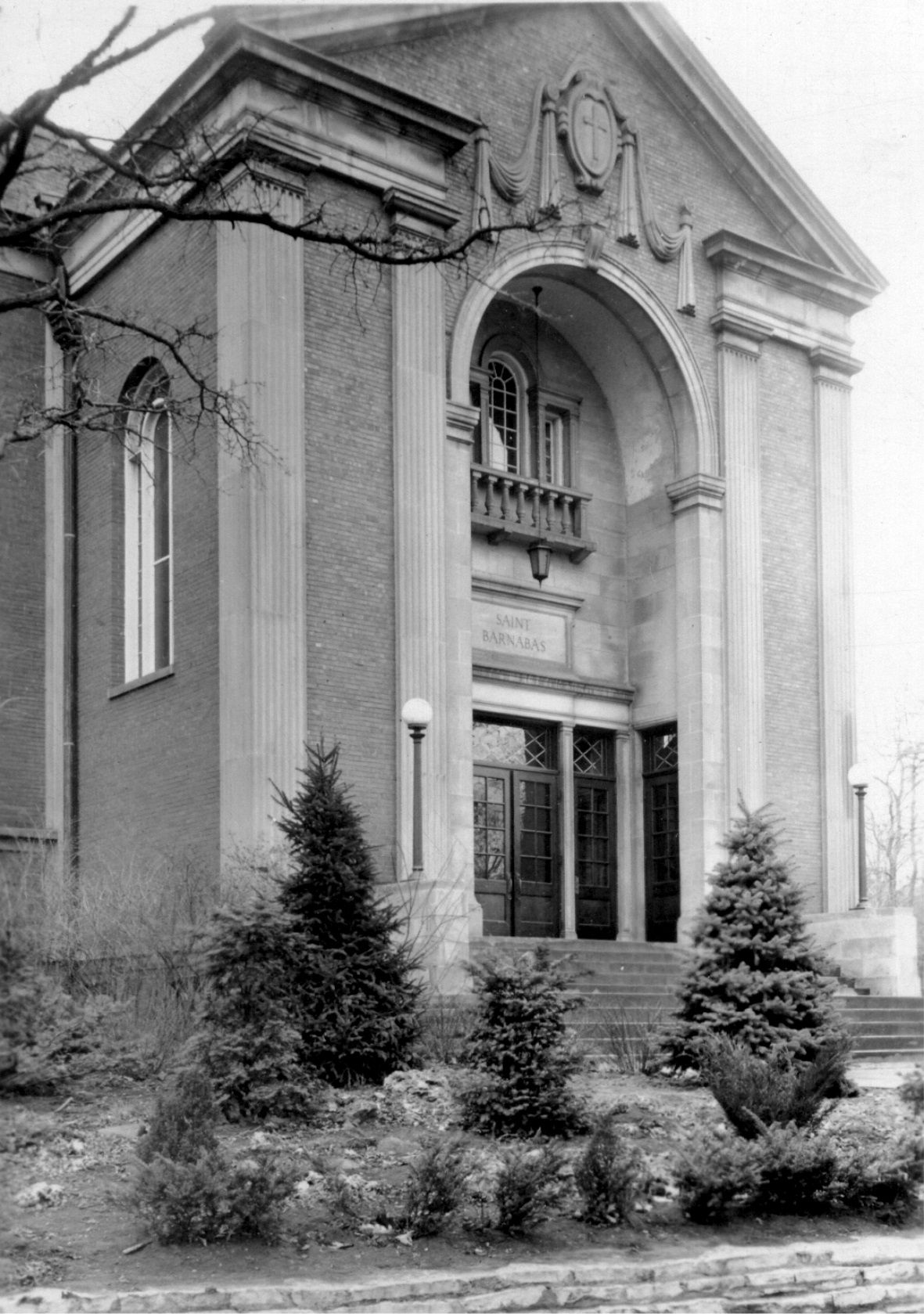
St. Barnabas Parish was newly established, and the church was under construction. The first Mass was planned for Christmas. Father T. J. Hurley, the pastor, had recently purchased the house at 9901 S. Longwood Drive to use as a convent for the Dominican sisters who would teach in the new school.
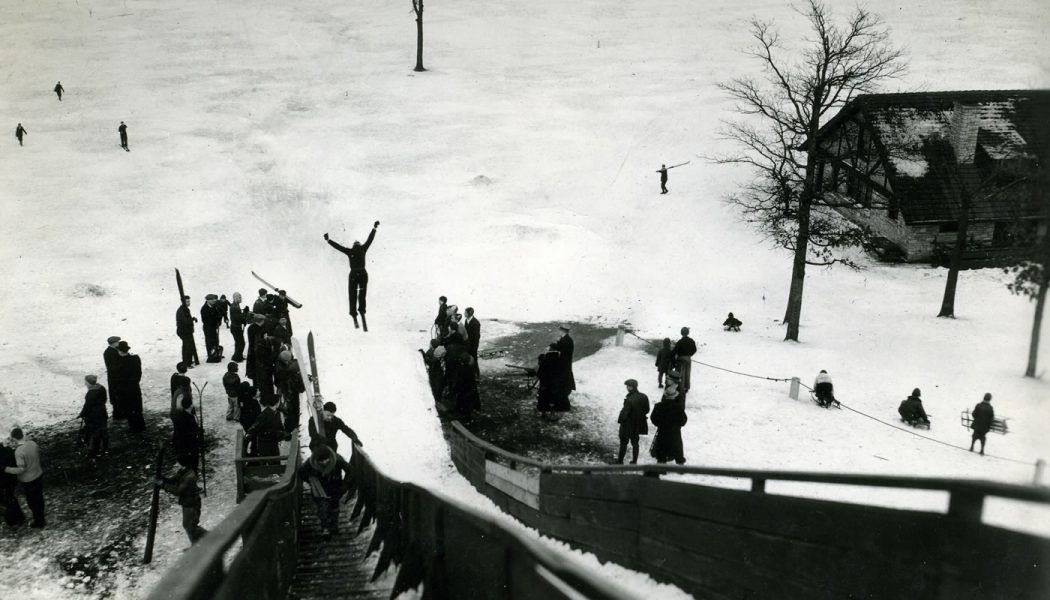
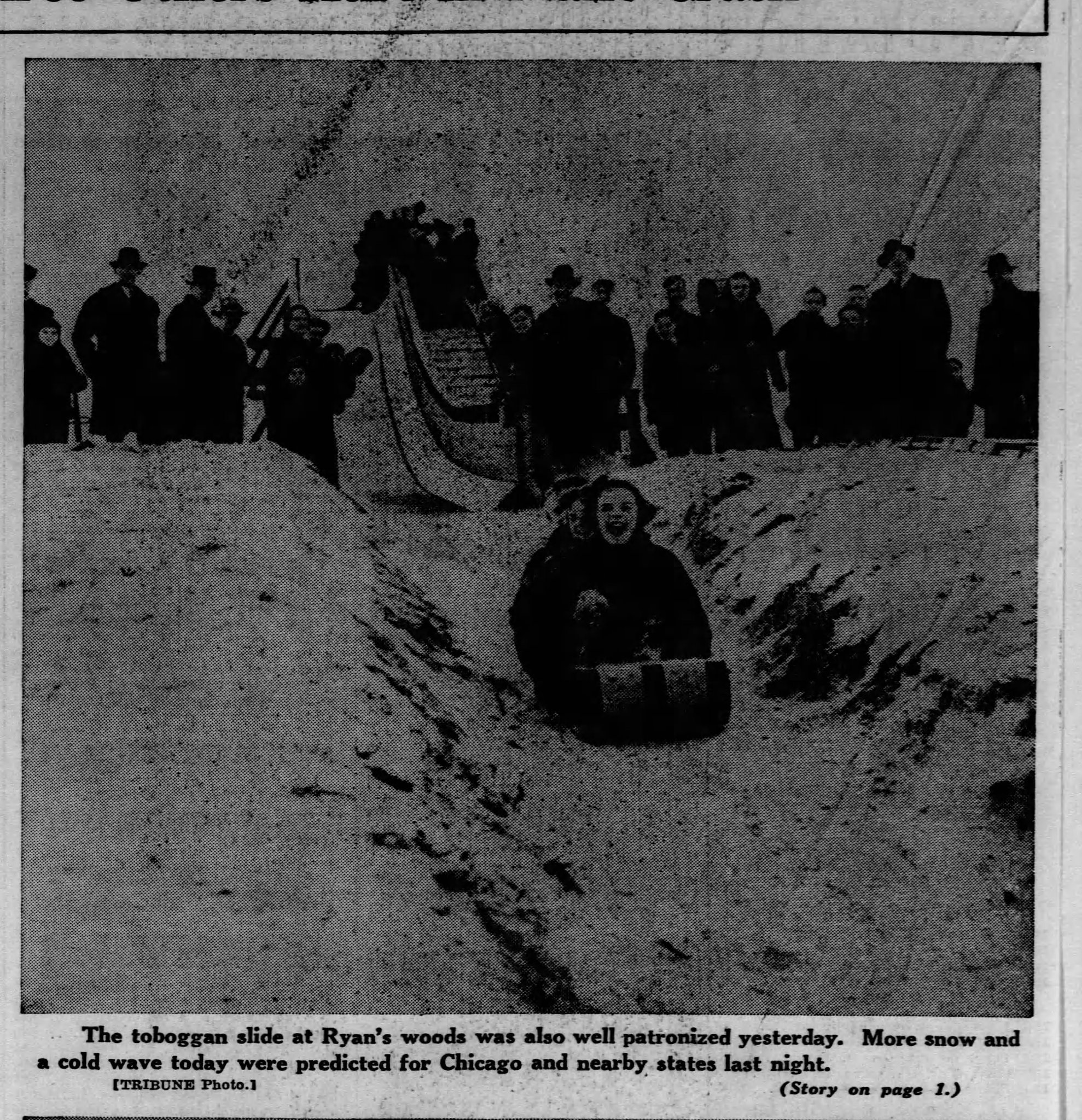
The city’s school children were on break for the holiday, and a popular spot for them to enjoy outdoor winter activities was the Beverly Forest Preserve at 87th Street and Western Avenue (since renamed the Dan Ryan Woods). The baseball diamonds had been turned into ice skating rinks by the Fire Department flooding them with hoses, and a new shelter was being constructed.
A toboggan slide was already in place on the hill, and a new 30-foot ski jump was being constructed north of that.
The Beverly Preserve was becoming the center for outdoor amateur sports for the outlying southern section of the city, and it was already one of the most popular spots in the city for summer picnics. There was a strong public and political push to extend the 87th St. streetcar line west from Cottage Grove to the Preserve so that people from the east side could more easily access the grounds. The Preserve could be reached already by trains coming from downtown.
Life on the Ridge went on as usual.
The Eisemann family at 94th and Winchester welcomed a new baby girl and the stork delivered a baby boy to the Compton family at 99th and Winchester. Katherine Maloney and Fred Campbell were planning their wedding at St. Margaret of Scotland Church. Frank Mock had bronchitis, but his neighbor Mrs. Bowen had recovered. Mr. and Mrs. Rupel from LaPorte, Indiana, were spending the winter with their daughter, Mrs. Gammell, on Walden Parkway. The Charles Hall family left for a 16-month trip to Europe on Thanksgiving Day and D. P. Crane would live in their house during their absence. The Gadsden family purchased a new Studebaker automobile.
Real estate agents promoted local home ownership. Richardson and Richardson, “two live wires” with a real estate, loan, and insurance business on 95th Street, wrote: “If you are considering building or buying a home, there are many beautiful places in Beverly Hills and Morgan Park where culture and refinement are everywhere in evidence. Beautiful well kept homes, broad, clean asphalt streets, trees, flowers, and shrubbery all combine to make this a place of beauty and desirable residence.”
The Ridge Historical Society
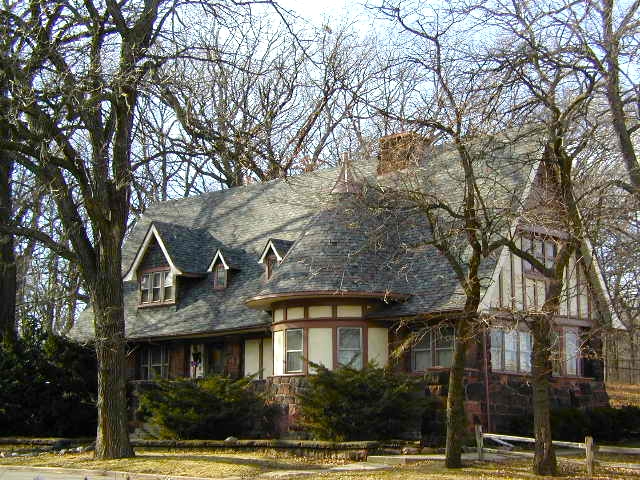
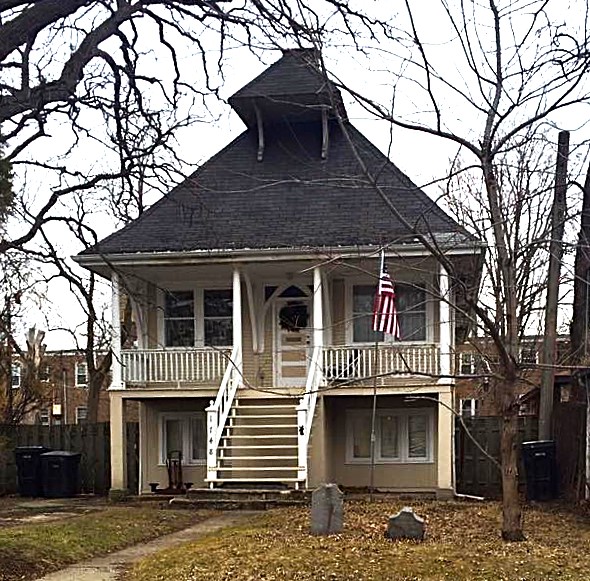
Harry Hale Waterman Houses and the People Who Called Them Home: Introduction
By Carol Flynn
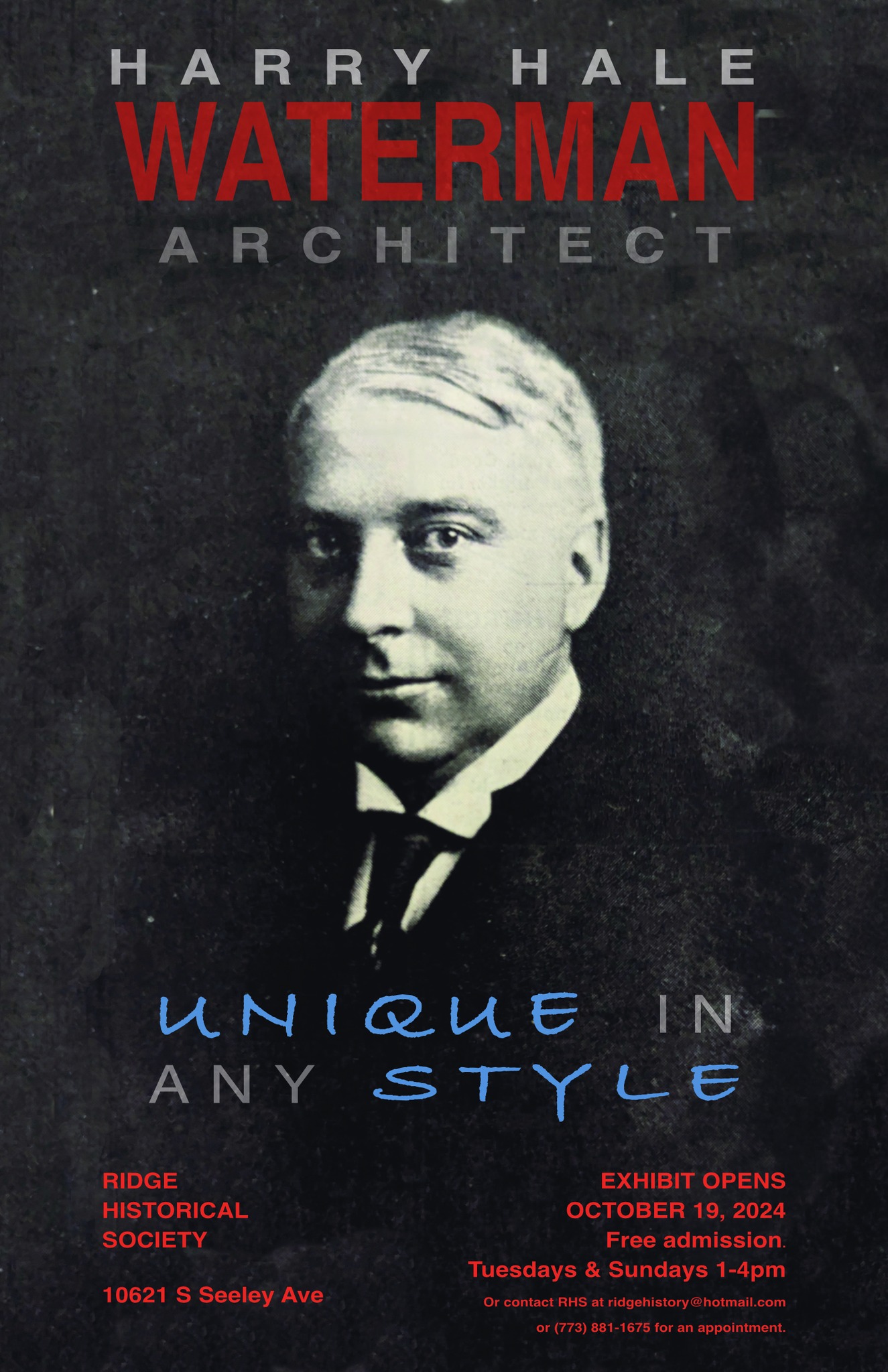
The Ridge Historical Society (RHS) has opened a new exhibit, “Harry Hale Waterman, Architect: Unique in any Style.”
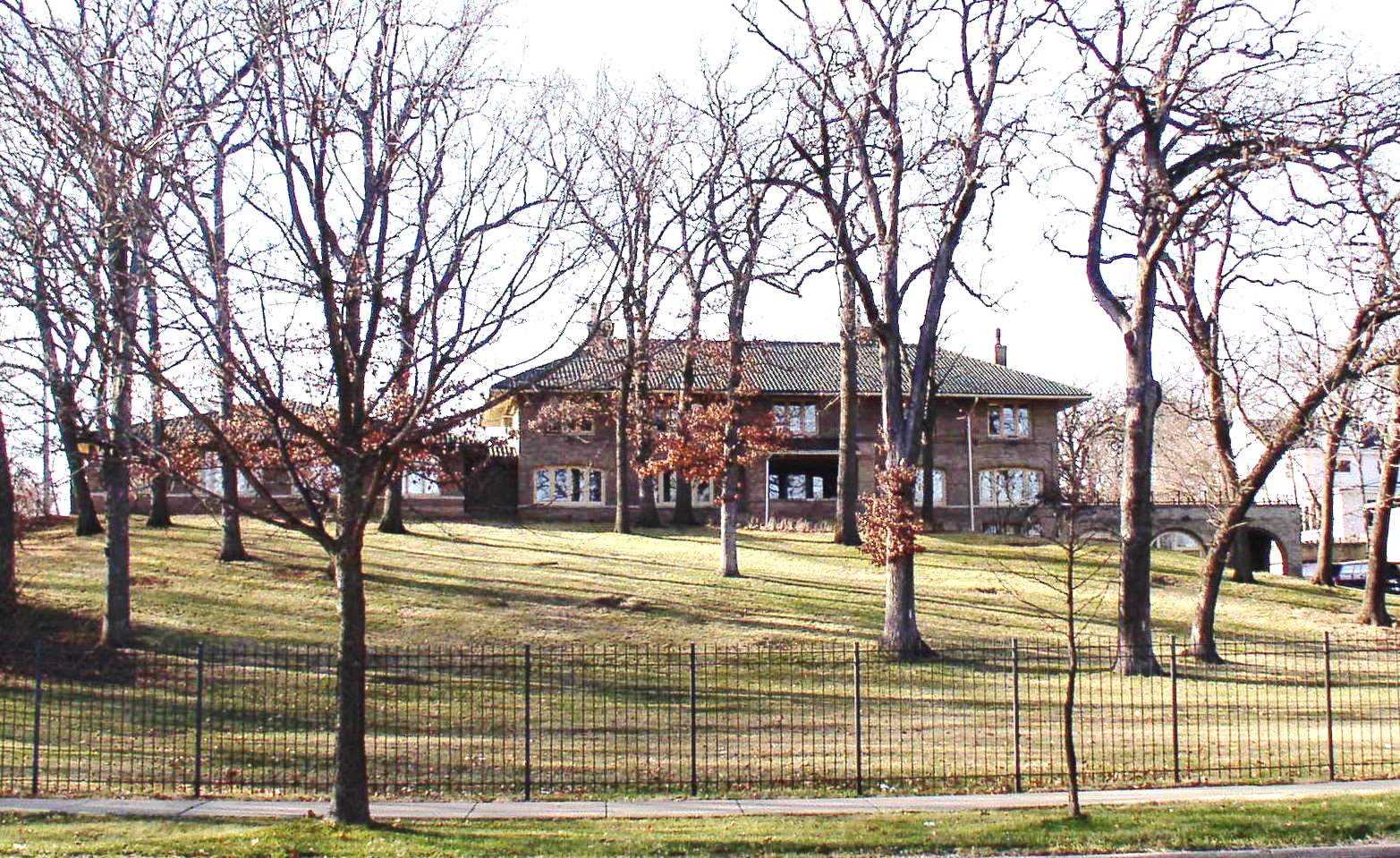
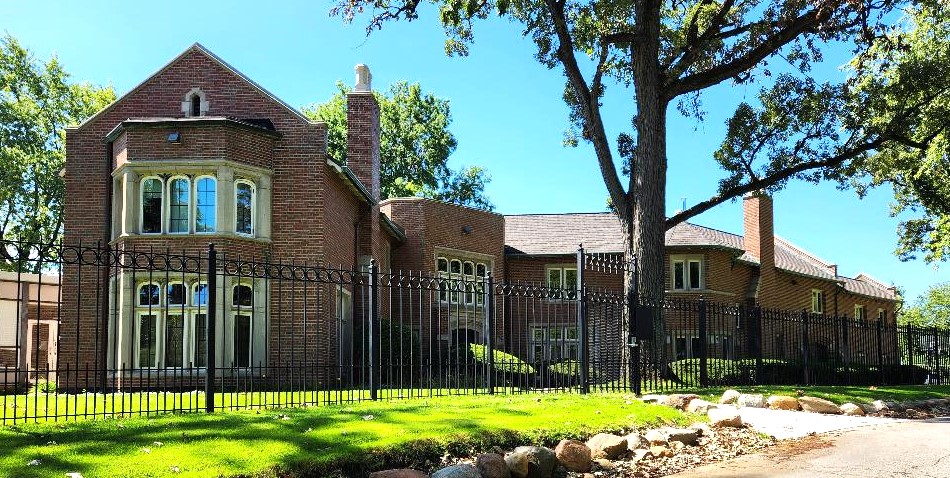
At least 41 buildings in Beverly and Morgan Park are attributed to Waterman, making him the most prolific architect in this community. Most of these buildings are still standing.
The buildings he designed in other Chicago neighborhoods have not fared as well, so this community offers the best opportunity to see his work.
Waterman was a contemporary of Frank Lloyd Wright. They worked together as young architects just starting out, and Wright even lived with the Waterman family for a time.
They took different paths for their careers, however.
Wright developed his own style and founded a new movement or “school” of architecture, the Chicago Prairie School, for which he became very famous.
Waterman had a thriving practice, but never achieved the fame of Wright. While Wright appeared more fixed on developing his own style, Waterman appeared more client focused. He worked in many styles of architecture, bringing his own unique interpretation to each one.
In 1995, the Chicago Tribune stated that Beverly “is like an outdoor museum of architectural styles.” The newspaper said that the variety makes this community one of Chicago’s architectural high points.
Waterman clearly contributed to that reputation with his work.
However, while architecture has always been a very important feature for this community, these houses and buildings are more than just a collection of interesting architectural details. They are also the places where real people and families lived their lives and created their stories and legacies and memories.
Houses can be thought of as stage or movie sets where the action takes place.
The people who live in the houses elevate them above an outdoor museum exhibit to create a community.
This Facebook series will complement the exhibit by looking at the people who lived in the Waterman houses.
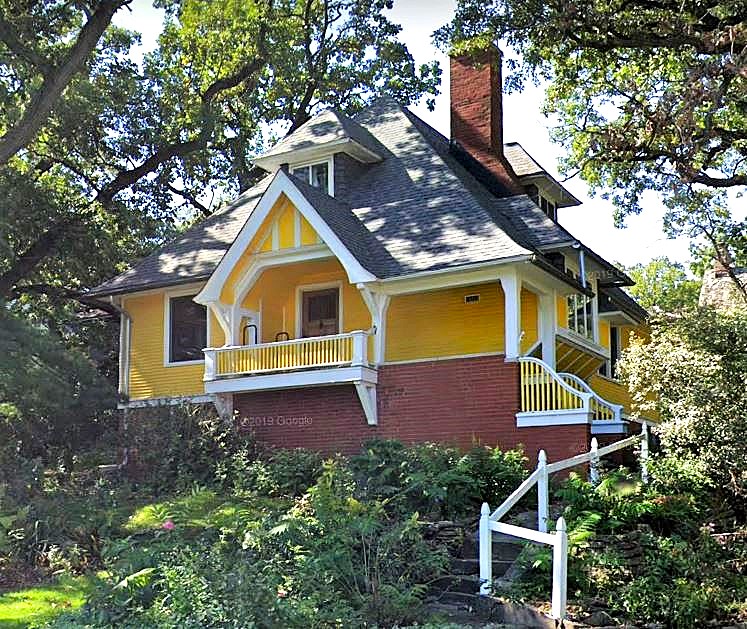
The series will start with Waterman himself, because the first house he built in Beverly, in 1892, that is still standing, was a house for himself and his wife Ida. The Harry Hale Waterman House, at 10838 S. Longwood Drive, is also known as the “Honeymoon Cottage” and is a local favorite.
The RHS exhibit, “Harry Hale Waterman, Architect: Unique in Any Style,” is open to the public for free on Tuesday and Sunday afternoons from 1:00 p.m. to 4:00 p.m., or by appointment. RHS is located at 10621 S. Seeley Avenue, Chicago.
Next post: Waterman’s biography.
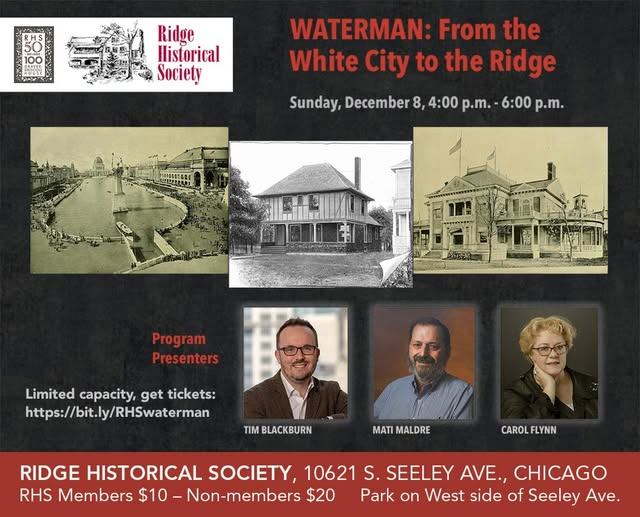
SOLD OUT!!
We are completely booked for tomorrow's presentation – Sunday, December 8. We have so much great new info to share with everyone on Waterman's buildings and the people who called them home on the Ridge.
We'll likely do a second event in January – February. Plus I'll be doing a new series on Facebook built around the Waterman houses so watch this page. (I've been quiet lately while I prepared for this presentation but I'll be back this week.)
– Carol Flynn, RHS FB Administrator