
Explore the RHS Facebook Archives, a rich repository of local history written by Carol Flynn. For two decades, Carol brought a deeply dedicated voice to public education at RHS. Her role as Facebook administrator through mid-2025 naturally extended her prolific research into meticulously detailed articles, most notably her multi-part historical series posts. Today, Carol continues her local history writing for The Beverly Review and other outlets.
February 2019
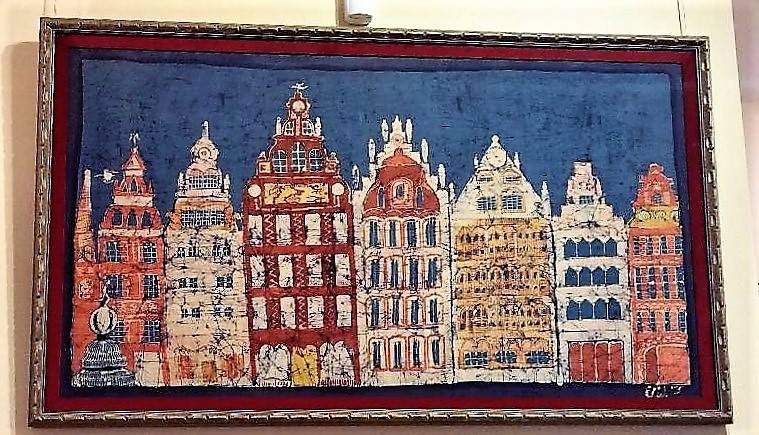
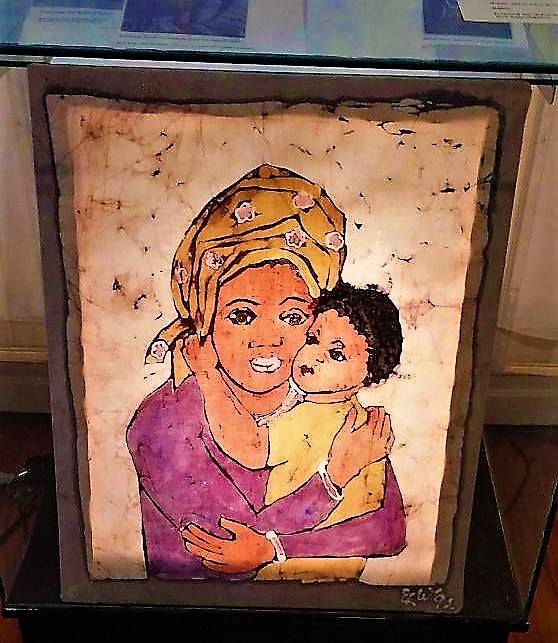
Winter got you down? Right about now, cabin fever is setting in big time in Chicago. We need to find fun, local, free things to do! And the Ridge Historical Society is coming to the rescue. On Friday, February 8, RHS will open its doors from 1 to 3 pm, and again from 7 to 9 pm, to welcome in everyone to view the current exhibit of the "Art of Ethel Wirtshafter."
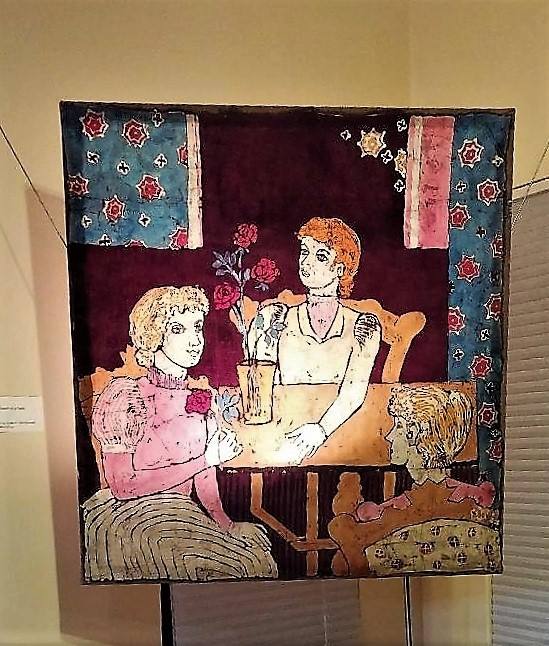
Ethel was a beloved local artist whose signature works were batiks. Batik is an ancient method for dying fabric, where layers of beeswax are applied to the cloth and scraped off, allowing the dye to be absorbed.
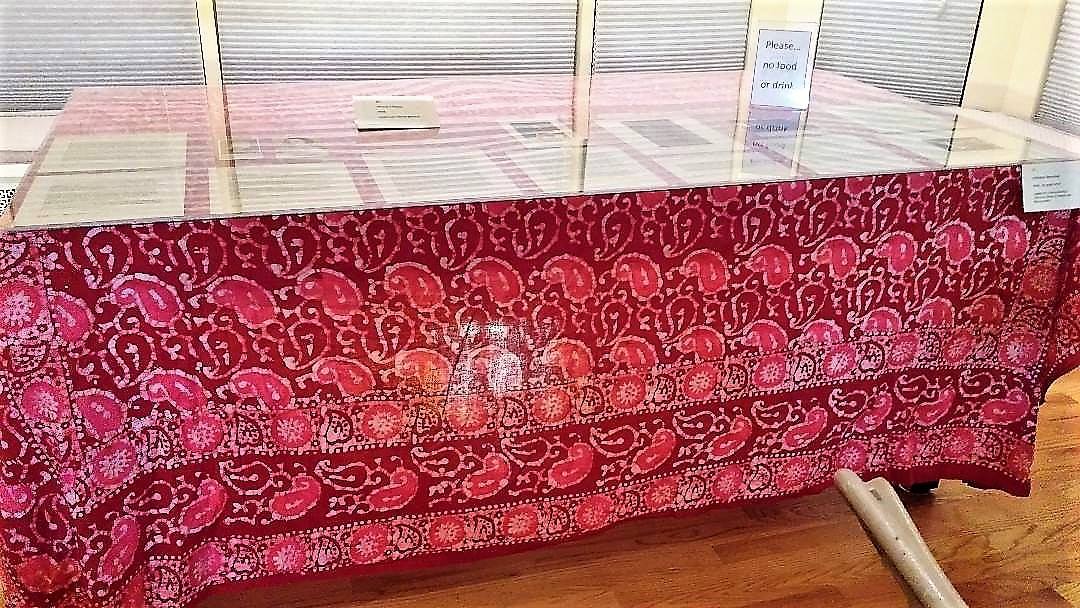
Most batiks we know are from Indonesia and feature repetitive geometric designs. But Ethel used the fabric like a canvas and created scenes with people and objects.
I will post more about this during the coming week. Please come over to RHS, 10621 S. Seeley Ave., next Friday for the Open House! If you have ever been curious about the historical society, here is your opportunity to come inside this amazing place. The mission is to investigate and preserve the history of the Beverly Hills, Morgan Park, Washington Heights, and Mt. Greenwood neighborhoods of Chicago. And what a rich history we have! Membership is open to everyone and there are loads of volunteer opportunities to work with the collection, house and grounds, and programs and events,
I will be there and I hope to meet a lot of you that day.
– Carol Flynn, RHS Communications
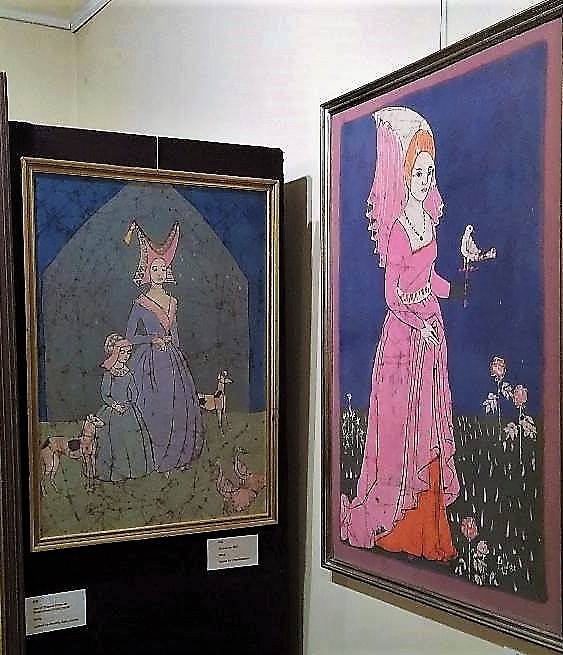
Here are just two of Ethel's works, again, batiks, dye on cloth. The first is a cityscape on loan from a private collector, the second shows one of her favorite themes, Madonna and Child, and is on loan from the Vanderpoel Art Association, where Ethel taught art classes for 45 years.
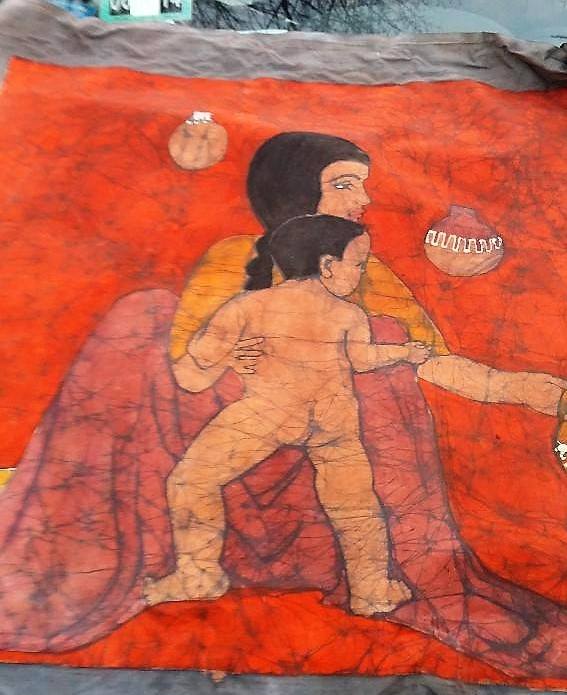
Being added to the Wirtshafter exhibit this week – another batik found all rolled up at a house, and is now part of my personal collection, and it will be on loan to RHS until Feb. 24. This would be from Ethel's "Madonna and Child" series, with a Southwest theme. The colors are amazing – very vibrant. Ethel mixed her own dyes for her work. See the exhibit, "The Art of Ethel Wirtshafter," at the Ridge Historical Society, 10621 S. Seeley Ave., at the Open House on Friday, Feb. 8, from 1 to 3 p.m. and from 7 to 9 p.m. All are welcomed, free of charge. Get to know your local historical society!
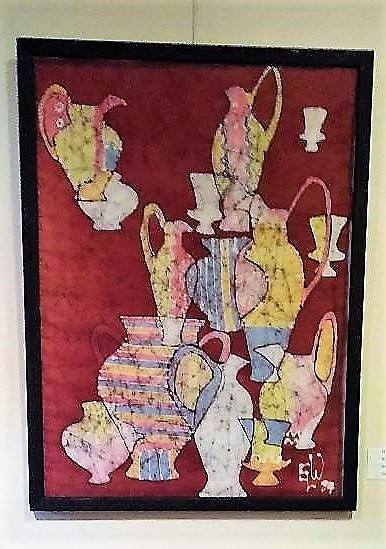
Reminder! Tomorrow, Friday, February 8, is the Open House at the Ridge Historical Society, 10621 S. Seeley Ave. We will be welcoming all visitors from 1:00 to 3:00 p.m. and from 7:00 to 9:00 p.m. The event is free and refreshments will be served. Please join us!
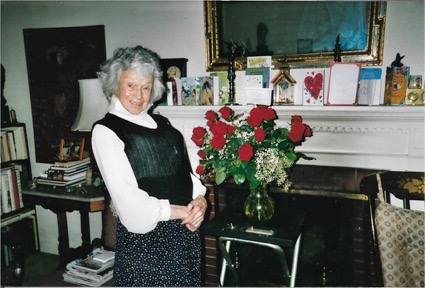
The special exhibit right now is “The Art of Ethel Wirtshafter.” More than 30 pieces by this beloved local artist and art teacher, who died in 2009 at the age of 99, are on display. Included are some paintings, but mostly Ethel’s signature work, batiks, created using the ancient technique for dyeing cloth.
The artwork is on loan from private collectors and from the Vanderpoel Art Association and the Beverly Arts Center. This exhibit offers an extraordinary opportunity to see so many of Ethel’s works in one location. Pictures of Ethel’s work on display are posted here, followed by a picture of the artist.
RHS is located in the Graver-Driscoll House, designed in 1921 by John Todd Hetherington, and part of the Longwood Drive Historic District. Our mission is to preserve and interpret the history of the local communities. Tomorrow’s Open House is an invitation to learn more about us. Membership is open to everyone and there are many opportunities for involvement. We hope you will stop by!
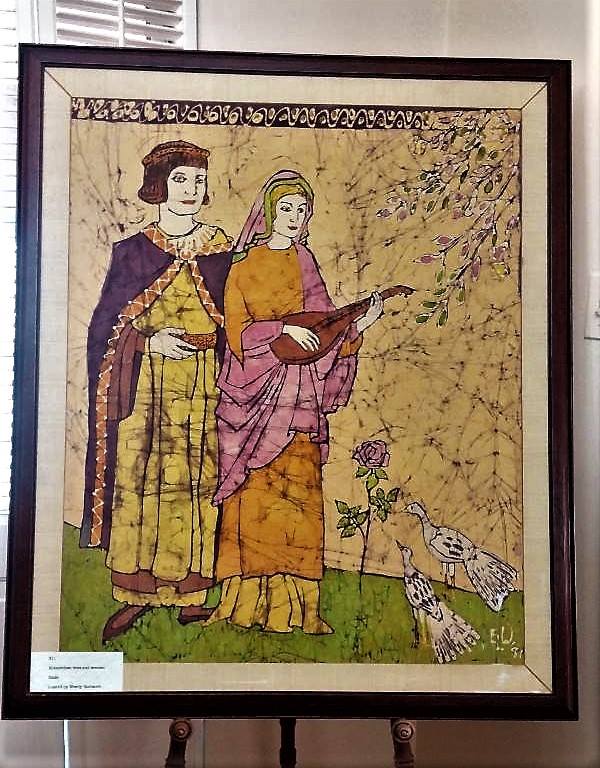
Thanks to the folks who visited the Ridge Historical Society today for our Open House and to view "The Art of Ethel Wirtshafter" exhibit. Despite the freezing cold below-zero temperatures, and I do mean COLD, at least 100 people came over. We even had someone bring over her Ethel Wirtshafter batik to add to the display – making for three additional pieces added this week.
One of the new pieces added this week is posted here. It is one of Ethel's signature batiks, created using the ancient fabric-dyeing technique. The word that comes to mind when you see it in person is "exquisite."
For those who missed today's event, the exhibit will run through February 24. Arrangements may be made to view the exhibit by contacting RHS at 773/881-1675, or ridgehistory@hotmail.com.
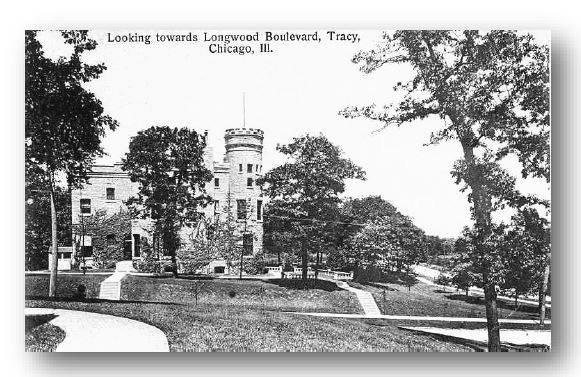
Tomorrow is Valentine’s Day, which brings to mind tales of love and devotion. Beverly/Morgan Park has its share of love stories (and a few scandals, but that is for another day). One of the most compelling surely has to be that a man built an actual castle for his new bride. We’re talking about the Givins Castle at 103rd Street and Longwood Drive, of course. This entire story has a lot of urban myth attached to it, and here are the real facts.
Robert Cartwright Givins was a very popular man in Chicago, very well-liked. The newspapers often referred to him as “Bob,” something unusual for the formal times of the late 1800s. He was a real estate developer, a lawyer, a writer of romance and science fiction novels, a world traveler, and the biggest booster of Chicago to be found. Bob Givins was even proposed for mayor. He had moved to Chicago from Canada, and his family came from Northern Ireland Protestant descendancy.
Givins lost his first wife and three of his four children at an early age. Only one son, Robert Saltern Givins, made it to adulthood – and he was involved in one of the scandals we will save until later.
On August 17, 1884, the Inter Ocean newspaper ran this little blurb: “Mr. Robert C. Givins has gone to St. Paul and Lake Minnetonka. Will he come back alone?”
Givins came back with a new wife, the former Emma Steen. Emma was a Chicago school teacher, 13 years younger than Givins, and of Norwegian descent. They built the Castle on the hill in Tracy, as the area was then known, in 1886-87. Tracy was the name of the street that would become 103rd Street.
Now we get to some of the myths. First, that Givins visited Ireland, saw this castle on the River Dee, and came home and built it for his new wife. Well, there is no documentation of this that we have found – yet. It seems the first time this was mentioned was about 50 years after the Castle was built. It actually could be highly likely that the Castle was built due to Masonic influence – the Givinses were very active in the Knights Templar of the Masons.
Second, there is a myth that the Givinses never lived in the Castle. They most certainly did. There are numerous newspaper articles about their activities there, and their involvement in the local community. They even brought a trendy new game to the Ridge: “pin-the-tail-on-the-donkey.” During the winters, they took up rooms in downtown hotels, which is something the rich living outside the city often did to avoid the commute downtown for business and social activities.
Givins was in favor of the annexation of Washington Heights, which included Beverly, to Chicago in 1890. He sat on the finance committee for the first Church of the Mediator at 110th St. and Hoyne Ave.
Emma Givins was a strong supporter of education for women and teachers’ rights. She was a founder of an early domestic science school through the Chicago Woman’s Club. This was a forerunner of today’s Family and Consumer Sciences programs.
The Castle was sold in 1909. The Givinses divided their time between the north suburbs and Sarasota, Florida. Emma died in 1914 at the age of 56. Bob died the following year, age 69. They are buried in Rosehill Cemetery on Chicago’s north side.
– Carol Flynn, RHS Communications @ridgehistoricalociety
The Ridge Historical Society has several events coming up. First, this Sunday, February 24, is the annual meeting of the members, starting at 2:00 p.m. Evites went out to members.
This week is the last chance to view the "Art of Ethel Wirtshafter" exhibit. It will be dismantled next week. What a wonderful exhibit it has been, with participation with so many members of the community. You can still catch the exhibit if you hurry – call RHS at 773/881-1675 to arrange a visit.
Two very interesting programs are coming up in early March. On Friday, March 8 at 7:00 p.m., John Langer will present “Planning a Nation, a State, a Town.” Langer is with the Friends of the Chicago Portage, and will discuss the connection between the Chicago Portage and the Northwest Territory; the shape and boundaries of the State of Illinois; and the original Plat of Survey for the City of Chicago. This is a "must" program for anyone interested in the earliest days of exploration of the Chicago area.
On Sunday, March 10, at 2:00 p.m., author Chris Fogarty will discuss his 2015 book, “Ireland 1845-1850: The Perfect Holocaust, and Who Kept it ‘Perfect.’” The author explores the conditions that led to the “Great Hunger” resulting in the deaths or emigration of millions of the Irish people.
RHS is located in the historic Graver-Driscoll House at 10621 S. Seeley Ave. There is parking on the street, then walk down the drive to the house. The cost for the programs is $5 per RHS member, and $10 for non-members. Light refreshments will be served. There will be more detailed information posted under Events.
February is Black History Month. Few people realize that Morgan Park is home to one of Chicago's pioneer black communities, dating back to the 1880s.
The earliest days of Morgan Park included a small settlement of African Americans, some of whom were former slaves and others descended from Southern slave families, who migrated north after the Civil War. They settled east of Vincennes Ave., near the main line of the Rock Island railroad. Families continued to settle there, and by 1920, almost 12% of Morgan Park residents were black.
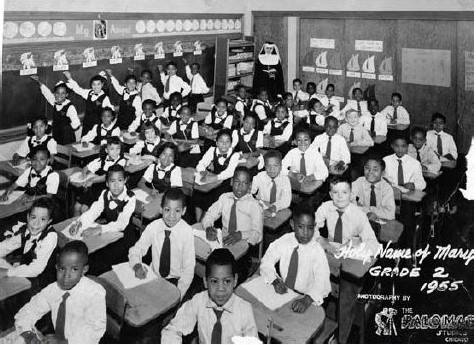
They established their own churches, beginning with Beth Eden in 1891, and in 1940, the Catholic parish of Holy Name of Mary was formed. Public institutions such as Morgan Park High School (built in 1916) and the Walker Branch Library (founded in 1890) were always integrated.
Interstate 57, built during the 1960s, isolated the original black settlement. At the same time, racial integration throughout the Morgan Park area was increasing.
About ten years ago, under the direction of the late Sue Delves, the Ridge Historical Society worked extensively with members of this community to preserve their history through pictures, other documents and recorded interviews. Many of the participants were third and fourth generation residents. This information is part of the RHS collection.
This photo of second grade at Holy Name of Mary School is from 1955.
In celebration of Black History Month: The Ridge area includes one of Chicagoland’s most historic African American cemeteries, Lincoln Cemetery at 12300 S. Kedzie Avenue.
By the early 1900s, the growing population and the encroachment of segregationist ‘Jim Crow’ laws from the South had made it increasingly difficult for blacks to find burial plots in white cemeteries. So as many ethnic groups were doing, African Americans established their own cemeteries. In 1911, a group of black undertakers approached the owners of Oak Hill Cemetery on Kedzie Avenue, established in 1902 for Swedish families, to ask if some of their unused land could be opened to African Americans. The request was agreed to and Lincoln Cemetery was founded.
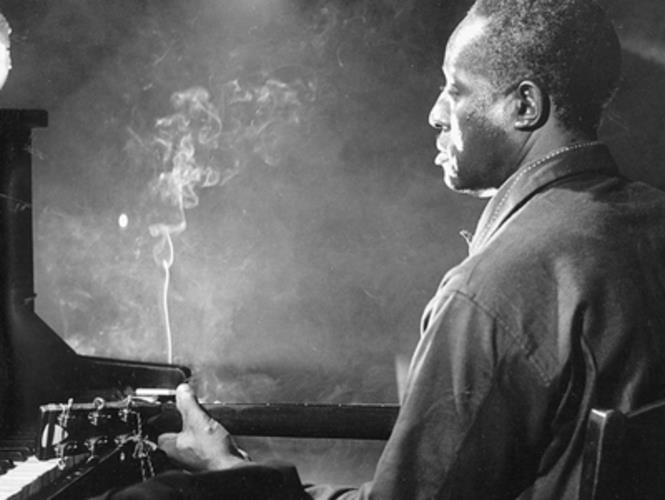
This is the final resting place for notable musicians and other personalities associated with blues music, including Big Bill Broonzy, Mathis James ‘Jimmy’ Reed, Jack L. Cooper, Lillian ‘Lil’ Hardin Armstrong, and several others.
A number of men connected to the Negro Baseball Leagues are buried there.
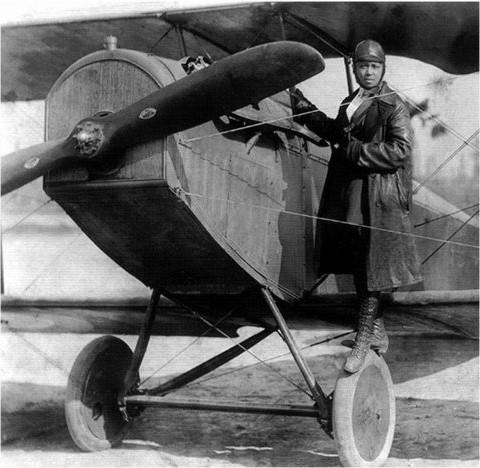
Bessie Coleman (1892-1926), the first woman of African-American descent and the first woman of Native American descent to earn a pilot’s license, is buried there. She was a successful air show pilot but died in a crash while testing a new plane.
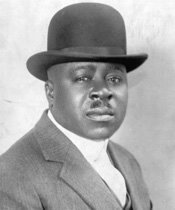
Robert Sengstacke Abbott (1870 – 1940), lawyer and newspaper publisher, is buried there. He founded The Chicago Defender in 1905 and started the Bud Billiken Parade and Picnic in 1929.
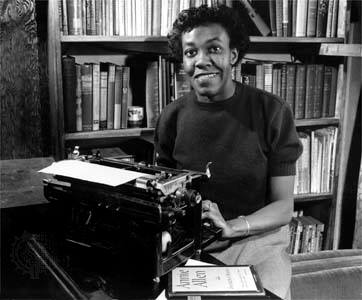
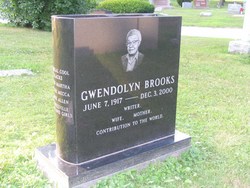
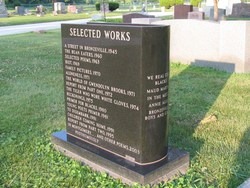
The most famous person buried in Lincoln Cemetery is the poet Gwendolyn Brooks (1917 – 2000). She won the Pulitzer Prize for Poetry in 1950 and was appointed Poet Laureate of Illinois in 1968 and Poet Laureate Consultant in Poetry to the Library of Congress in 1985. Her tombstone is a marble book.
Pictures: Gwendolyn Brooks, and the grave of Ms. Brooks; Big Bill Broonzy, Bessie Coleman, Robert S. Abbott.
One of the duties of a legitimate history organization like the Ridge Historical Society is to investigate and either verify or "debunk" local myths and legends to maintain historical accuracy. It's not always easy to get to the truth, and it can be dismaying and downright upsetting to the public to find out something they have believed for years is just not accurate.
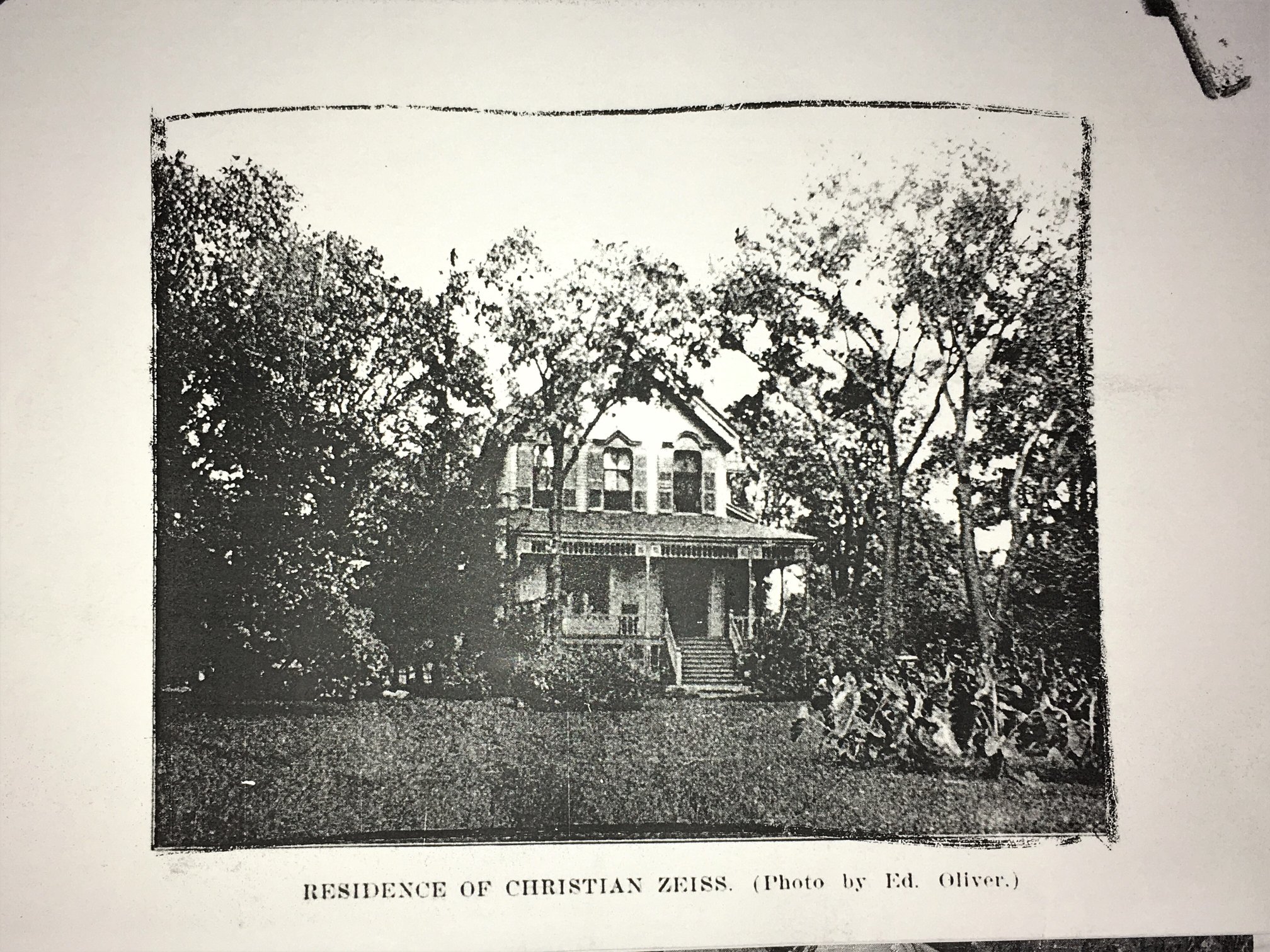
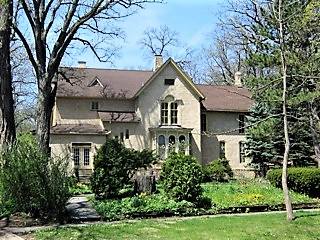
Case in point for Morgan Park: The widespread belief that the Hopkinson-Platt House on 108th and Drew was a stop on the Underground Railroad. As we finish up Black History Month, let's take a look at this local urban myth, which someone referred to on an RHS post last week.
The Underground Railroad was a network of safe stops where escaping slaves could find refuge and help as they made their way north to freedom. The locations were passed along by word of mouth and secret symbols.
The Blue Island Land and Building Co. began platting and selling the land bordered by today's Western Ave., Ashland Ave., 107th St., and 119th St., in 1869, after the U.S. Civil War ended. William Hopkinson purchased that land at 108th and Drew and built that house in 1871, too late for the Underground Railroad.
The Platts owned the house in later years. What appears to have happened is that a man investigating an ancestor's escape to freedom using the Underground Railroad told Mrs. Platt that the ancestor's journal described a house with windows like the ones on the Hopkinson-Platt House. From this, Ms. Platt drew the conclusion this was the house. But the dates just do not confirm this.
There are oral histories that confirm that escaping slaves passed through Beverly/Morgan Park and hid in barns. And there are several verified Underground Railroad stops on the South Side. But, unfortunately, the Platt House was not one of them.
So what about the "hidden room?" Well, it could have been a storage area, or changes could have been made to the house at any time along the way. It could have been used in any number of ways. Prohibition?
Does this lessen the historical significance of the house? Not at all. It is one of the earliest structures in Morgan Park, and has a fascinating history. Its nearly three acres of never-developed land make it a prime spot to study for potential significance to the Native Americans who lived in the area.
Two pictures here show, first, the house in its early years, then owned by Christian Zeiss, when the front entrance faced Prospect Ave. As land around the house was sold off, the house was remodeled to create the entrance on the Drew Ave. side, which is shown in the second photo, the way the house looks now.
– Carol Flynn, RHS Communications @ridgehistoricalsociety