
Explore the RHS Facebook Archives, a rich repository of local history written by Carol Flynn. For two decades, Carol brought a deeply dedicated voice to public education at RHS. Her role as Facebook administrator through mid-2025 naturally extended her prolific research into meticulously detailed articles, most notably her multi-part historical series posts. Today, Carol continues her local history writing for The Beverly Review and other outlets.
January 2022
The Ridge Historical Society
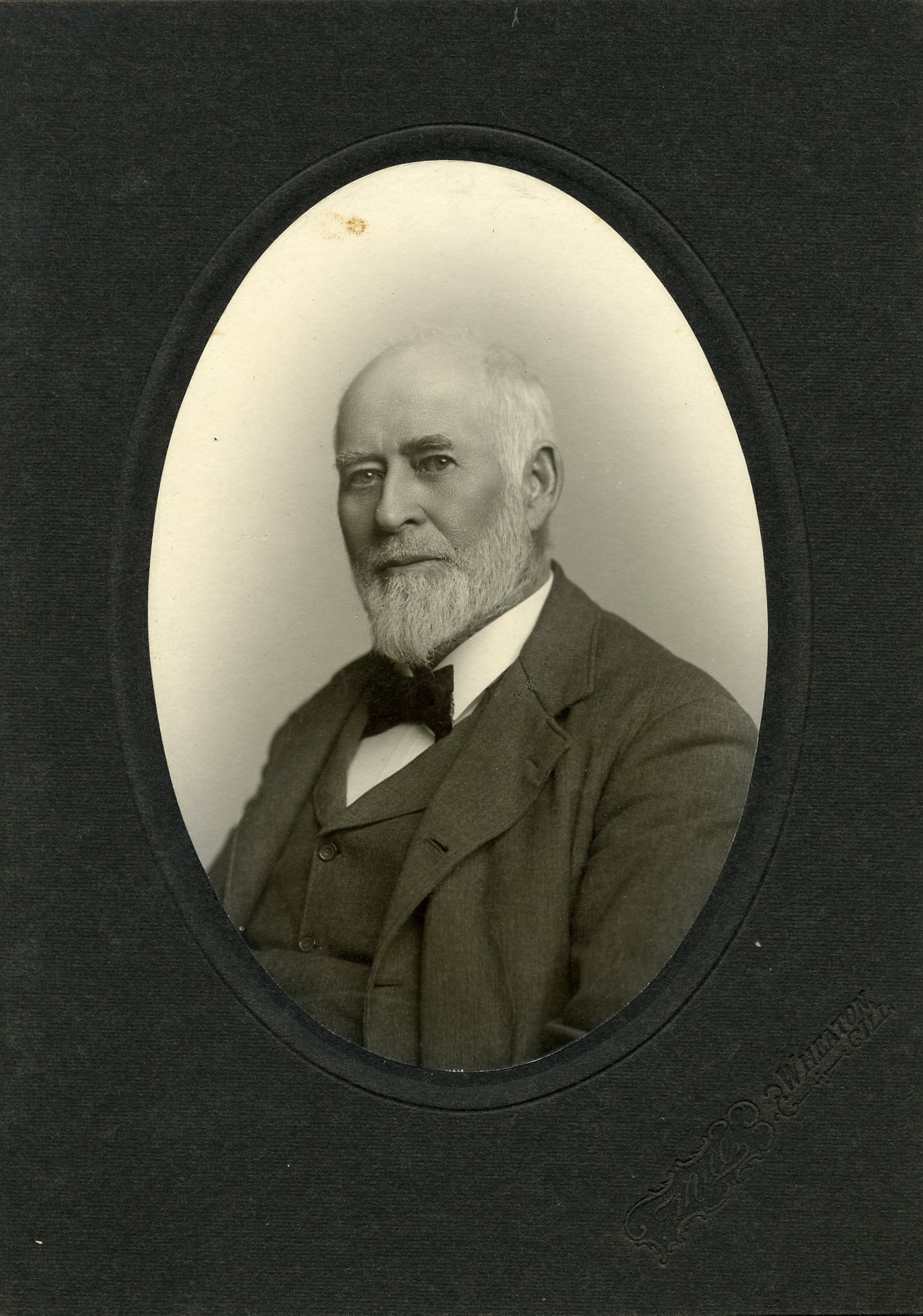
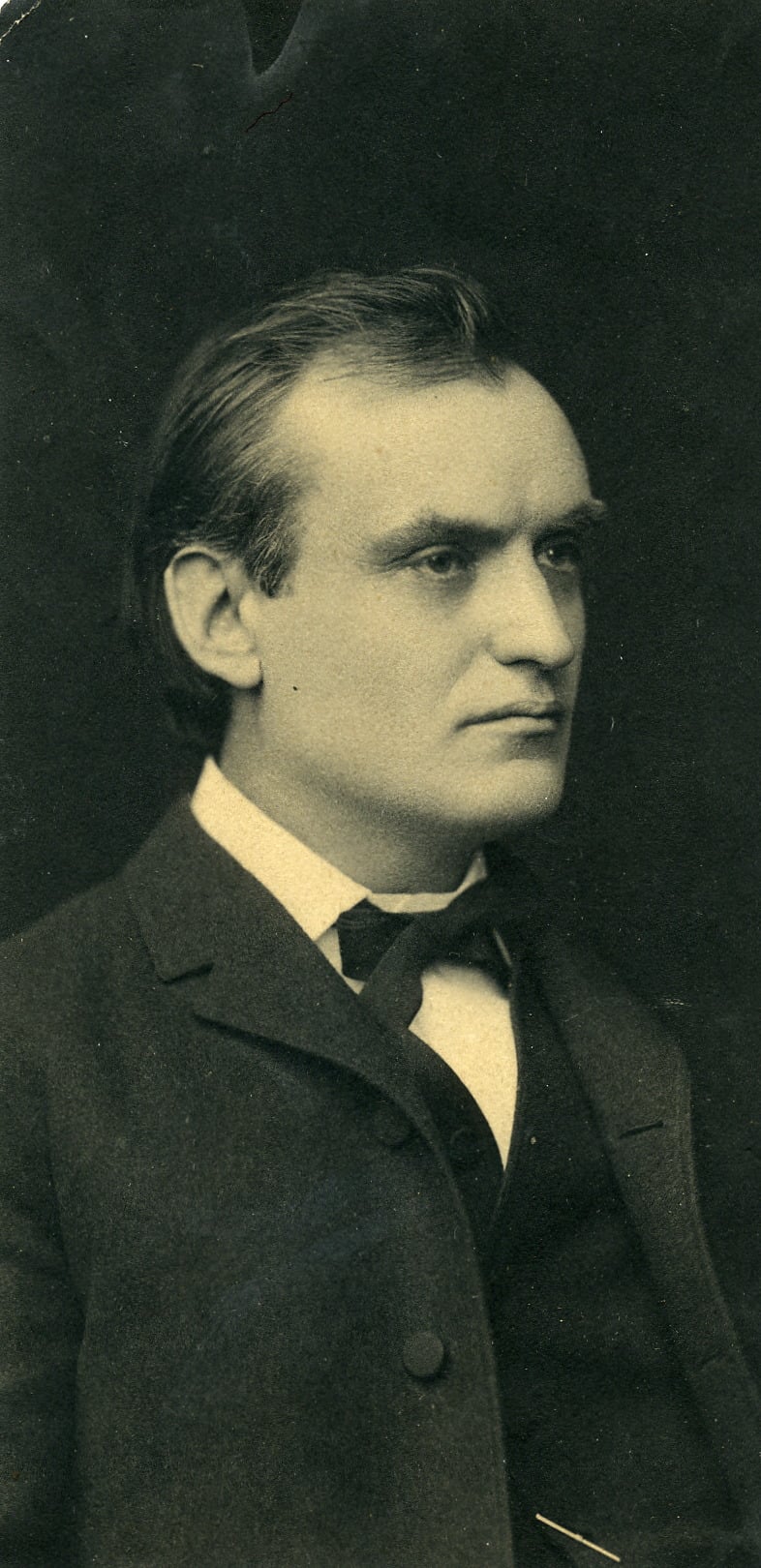
History of the Chicago Wards – Post 7: Isaiah T. Greenacre
By Carol Flynn
Washington Heights, which included the land from Western Avenue east between 95th Street and 107th Street (today’s Beverly), and the unincorporated land north of 95th Street to 87th Street (today’s North Beverly), were annexed to the city of Chicago in 1890, and became part of the 31st ward in 1891.
Isaiah Thomas Greenacre was the first man who lived in Washington Heights to be elected to serve as alderman for the 31st ward. He served for one term, from 1895 to 1897.
It’s appropriate to take a detour from exploring the history of the wards on the Ridge to take a look at Greenacre. He grew up in the community and became thoroughly immersed in its workings. There were likely few people who knew more about the community than he did.
Being an alderman was just one brief accomplishment for Greenacre. This man, a product of this community, had a lasting impact on the entire country.
Isaiah Thomas Greenacre was born in 1863 in Illinois. His father was Isaiah Greenacre and his mother was Lucinda Young Greenacre. The son always went by Isaiah T. or I. T. Greenacre.
The original Isaiah Greenacre, the father, was born in England in 1828 and came to the U.S. in 1852. He and Lucinda Young from Kilkenny, Ireland, born in 1831, married in New York in 1853, and moved to Chicago. On the 1860 U.S. Census, they were listed as living in Chicago ward six, which was centered around Van Buren and Jefferson Streets. Greenacre’s occupation was given as carpenter.
The birth of one child, Isaiah Thomas, was recorded, in Will County in 1863.
On the 1870 U.S. Census, the family is reported as living in Chicago ward 15, which was north of Chicago Avenue and west of the Chicago River. Greenacre also shows up on the census that year in Escanaba, Michigan, living with other carpenters and engineers with the Bushnell family, owners of a “brandy house.” He was perhaps there on a job.
By 1874, the family had moved to the southside closer to the Ridge. That year, the residents voted to incorporate as the Village of Washington Heights, and Greenacre was elected as a member of the Board of Trustees. The area was experiencing substantial growth as people left the city for the suburbs after the Great Chicago Fire in 1871, and the railroads made the area more accessible.
Greenacre usually served as president pro tem of the Board when the president, the Rev. D.S. Heffron of the Bethany Union Church, could not be in attendance. The trustees dealt with all aspects of the new, growing village, including installing sewers and sidewalks; grading and graveling streets; approving new developments; building schools; establishing a police force; determining assessments for improvements; and appropriating funds for salaries and other expenses. One line item was for $150 for the “village calaboose,” the jail.
Issues with the railroads that ran through the area were dealt with, such as removing old tracks so streets could be extended, and cleaning out and covering a well on railroad property and turning it over to the village for use by the residents.
Everyday life was the business of the Board of Trustees. Liquor licenses were granted in the beginning years of the village and there were saloons to regulate. Other issues included everything from the benign such as strawberry festivals at local churches, and residents securing their cows so they did not wander the village streets, to the more sinister such as an increase in home burglaries. Dealing with the throngs of people who came to the community by train on Sundays to picnic and party in the scenic wooded groves of the Ridge was a constant challenge. There were disturbing occurrences, including the accidental shooting and killing of a woman during one July 4th revelry in the local woods.
This was the world in which Isaiah T. Greenacre grew up. By 1884 at the age of 21, he was already involved in politics and practicing law.
The Greenacre parents moved to California in 1892. Isaiah died in 1897, and Lucinda in 1901. Their remains were returned to Chicago for burial in Mount Hope Cemetery on 115th Street.
Next post: The life and career of Isaiah T. Greenacre.
The Ridge Historical Society
The Ridge Connection to the Rose Bowl
By Carol Flynn
On January 1, 1890, the Valley Hunt Club, a private social club in Pasadena, California, held a parade. The purpose was to showcase the wonderful climate and living opportunities in Pasadena while cities in the north – like Chicago and New York – were buried in snow. Many of the residents of Pasadena had relocated from the Midwest and East coast.
The parade featured horse-drawn carriages covered in flowers, followed by foot races, polo matches, and a tug of war in the “town lot.” About 2000 people attended. Because of the abundance of flowers, it was decided to call the parade the “Tournament of Roses.”
The parade became an annual event and grew in size. Marching bands and ostrich races, automobile floats and bronco busting all became part of the festivities. The town lot was renamed “Tournament Park.”
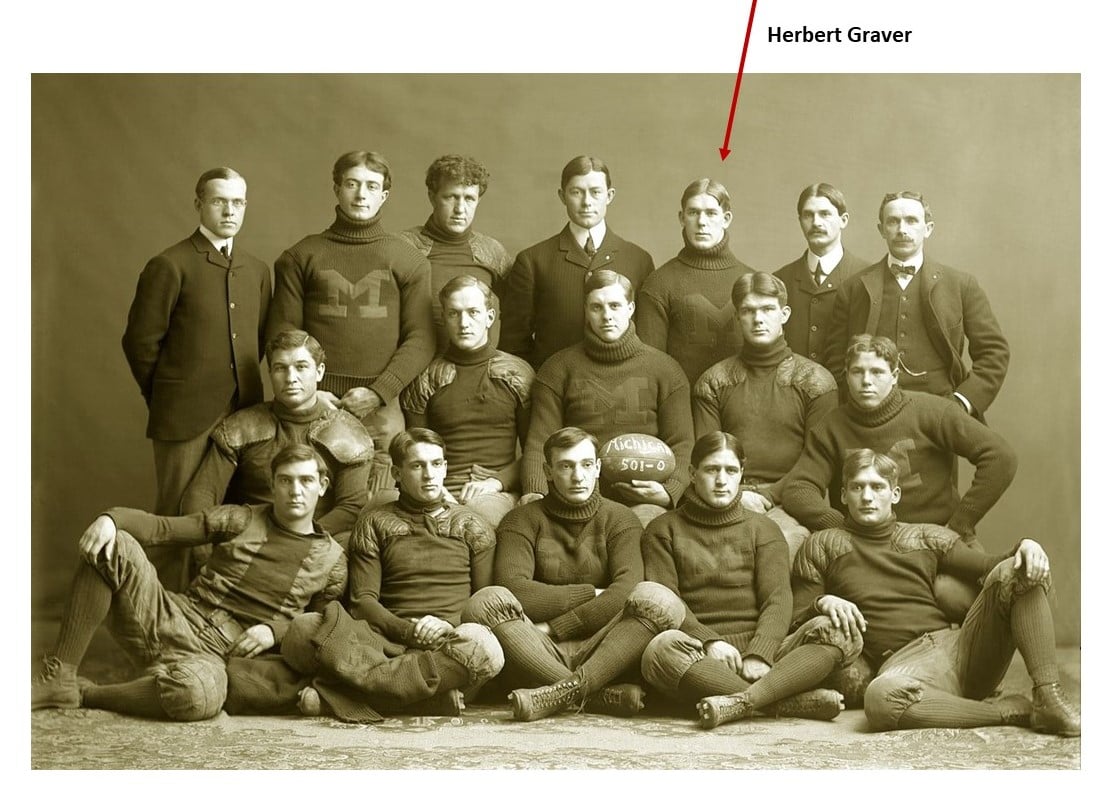
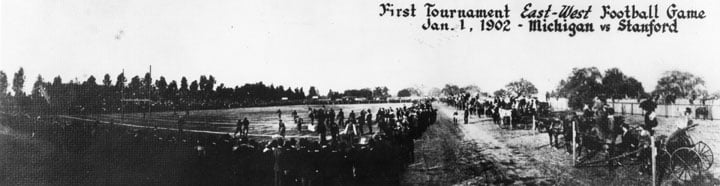
In 1902, to offset the costs of the parade, a special football game was held following the parade. By then, the parade was attracting national attention. The University of Michigan football team was having a stellar year with a record of 11 – 0, scoring a total of 501 – 0 points, and was invited for an all-expenses-paid trip to Pasadena to play against Stanford University of Stanford, California.
The game was billed as the Tournament East-West Football Game. Admission was $.50 to $1.00. About 8,500 people attended the game. Stanford was no match for Michigan and even asked to end the game early. Michigan won 49-0. This was the first Rose Bowl game, the first post-season “bowl” game ever.
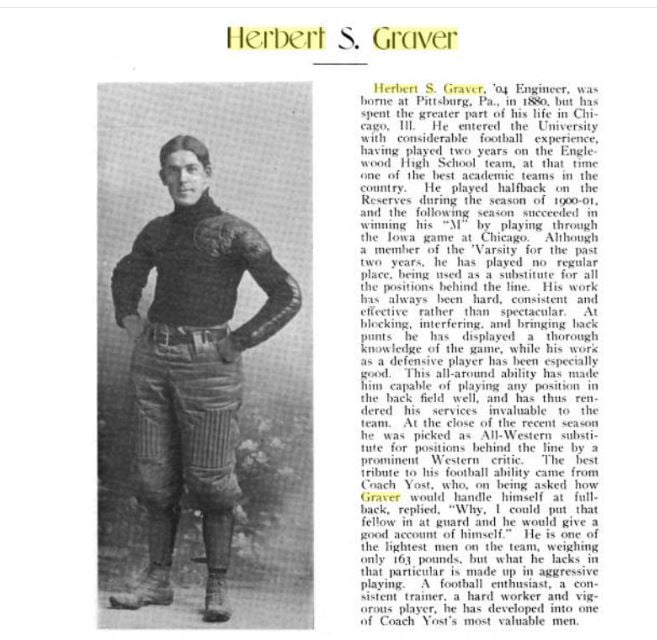
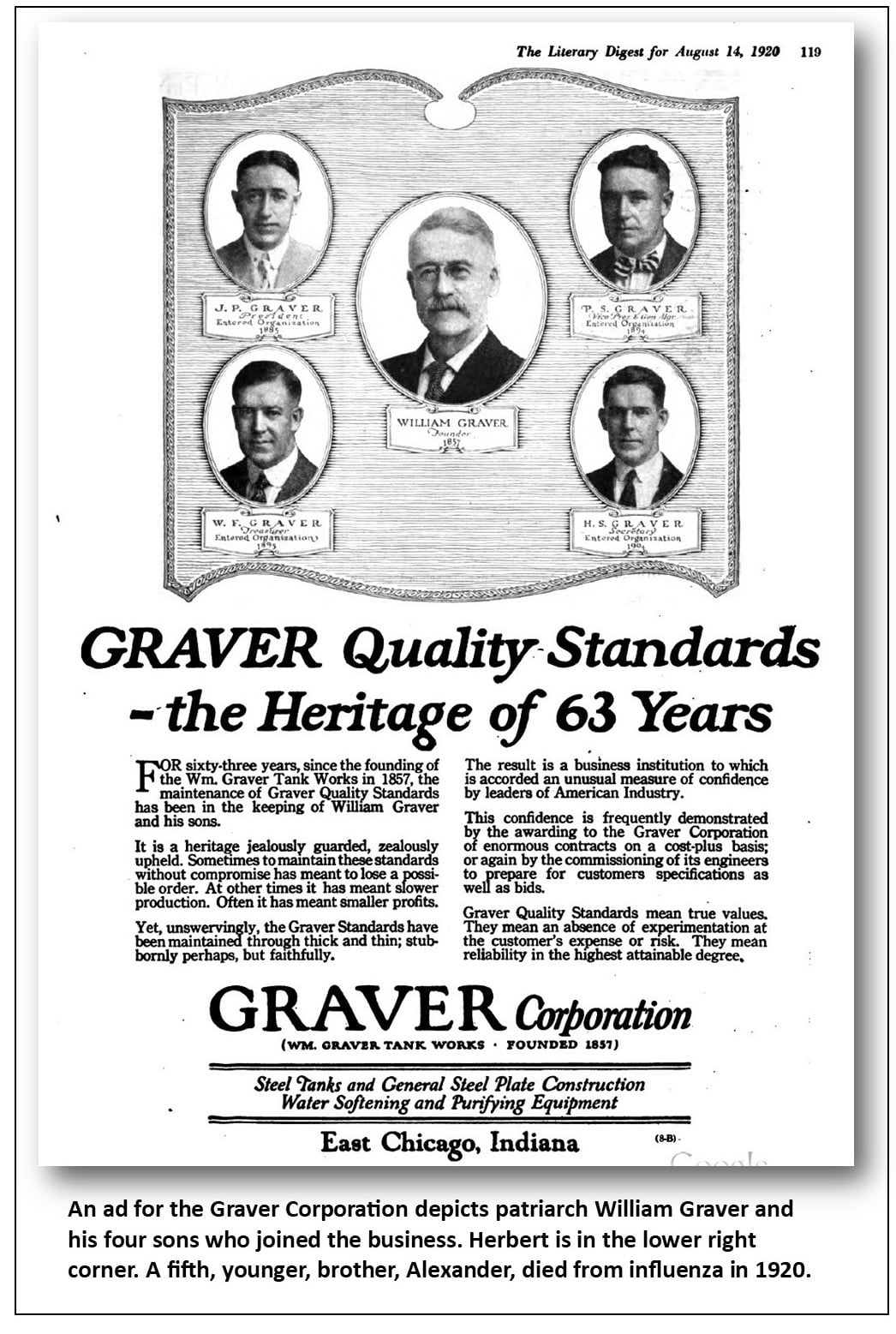
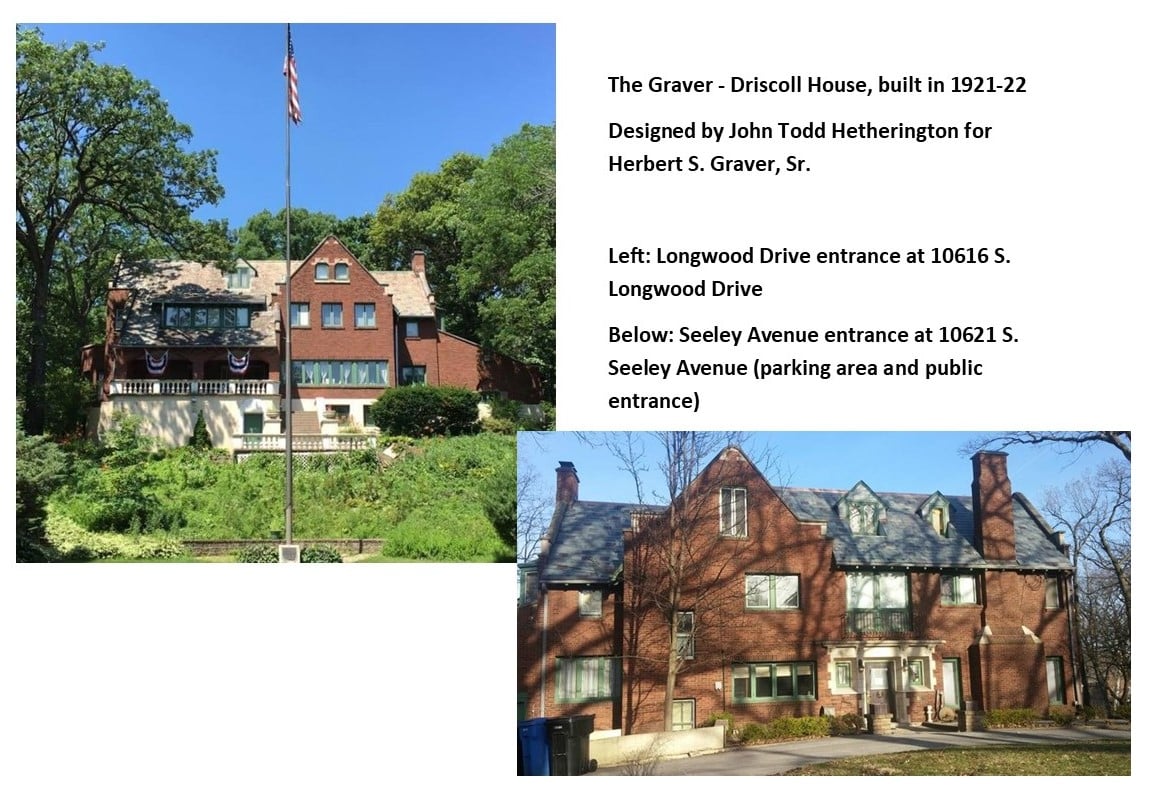
And the connection to the Ridge: On that Michigan team was Herbert Graver, the man who would build the Graver-Driscoll House at 10621 S. Seeley Avenue that is now owned by and serves as headquarters for the Ridge Historical Society.
Herbert Spencer Graver, Sr., was born in 1880 in Pennsylvania, the sixth of seven children of William and Christina Penman Graver. William Graver started the Graver Tank Works in 1858 to craft metal tanks to store oil. The business relocated to East Chicago in the 1880s.
After graduation, Herbert worked for one year as a college coach but then joined the family business. All five Graver sons were employed with the Graver Tank and Manufacturing Company and held officer positions. Herbert served as corporate secretary.
Herbert married Anna T. Thorne in 1910 and they had one son, Herbert S., Jr.
In the early 1900s, the five Graver sons all moved to the Beverly/Morgan Park area. Herbert built his house on the Ridge with entrances on Longwood Drive and Seeley Avenue in 1921-22. The Tudor Revival-style manor house was designed by the noted architect, John Todd Hetherington.
Herbert was a sports celebrity and occasionally made public appearances as one of the original Rose Bowl players. He enjoyed sports his entire life, and in fact, in 1954, he suffered a fatal heart attack while watching wrestling matches at the International Amphitheater. At the time of his death, he was still the sales manager for the family company. He was buried in Mount Hope Cemetery.
The Ridge Historical Society was founded in 1971. The plans for the 100th anniversary of the Graver-Driscoll House and the 50th anniversary of RHS were put on hold last year because of the COVID pandemic. The plan is to celebrate this year so stay tuned for further announcements and more historical information on the Gravers, the house, Hetherington, and RHS.
The Ridge Historical Society
New Year’s Eve, 1921
By Carol Flynn
What was happening on the Ridge one hundred years ago? To answer that question, RHS turned to its old friend, the news correspondent from the Ridge for the Englewood Times back then, Pauline Palmer.
And according to Mrs. Palmer, Mrs. George Gale of 2325 W. 108th Place held a “watch night party on New Year’s Eve.”
A little research revealed that Mrs. Gale was the former Alma Demers, born in Canada in 1878. George Gale was born in Illinois in 1872 and was an inspector at the stockyards.
A little more research revealed that “watching the old year out” was the general theme of New Year events back then, as opposed to welcoming in the New Year as is done today.
The custom was to open the front door at the stroke of midnight so the old year could exit and join all the years of the past, and the “baby new year” could enter and begin its life. The guests would form a circle and sing “Auld Lang Syne.”
Although we don’t know the exact details of the Gales’ New Year’s Eve party in 1921, some clues as to what they might have done can be found in “Novel Entertainment for Every Day in the Year” written by Ellye Howell Glover, published in 1921.
A suggested menu was a “Jack Frost” dinner, composed of raw oysters on ice, cream of corn soup with whipped cream on top, turkey cutlets, mashed potatoes, cauliflower in ramekins, fruit salad in white chrysanthemums, vanilla pudding and cakes rolled in coconut. Obviously, the theme was white food!
A recommended table decoration also included party favors. The top of an evergreen tree (suggested was the top of that year’s Christmas tree) could be turned into a “New Year’s wish tree.” For each guest, a tiny envelope attached to a gilded wishbone could contain a personal good wish from the hostess to the guest, or a suitable quotation. A variation could be little boxes filled with good luck talismans.
After supper, the evening was filled with games and dancing.
There was also “Dennison’s Christmas Book” of 1921 that included ideas for New Year celebrations.
Dennison books were a great source for party planning for several holidays – the company had “Bogie” books for Halloween, also. Every year, the books contained new ideas for party themes (such as “Sailing into the New Year”), decorations, games, and party favors. Of course, the books also served as catalogs for Dennison’s line of products, which included a variety of crepe paper decorations.
Prohibition had started the year before with the passage of the Eighteenth Amendment to the U. S. Constitution which banned the manufacture, transportation, and sale of alcoholic beverages. The consumption of alcohol was never illegal under federal law; the issue would have been procuring it legally.
Happy New Year from the Ridge Historical Society.