Explore the RHS Facebook Archives, a rich repository of local history written by Carol Flynn. For two decades, Carol brought a deeply dedicated voice to public education at RHS. Her role as Facebook administrator through mid-2025 naturally extended her prolific research into meticulously detailed articles, most notably her multi-part historical series posts. Today, Carol continues her local history writing for The Beverly Review and other outlets.
January 2025
The Ridge Historical Society
New Year 1925
By Carol Flynn
Chicago, Chicago, that toddlin’ town.
Chicago, Chicago, I’ll show you around.
Bet your bottom dollar you’ll lose the blues in Chicago, Chicago, the town that Billy Sunday could not shut down.
On State Street, that great street, I just want to say
They do things they don’t do on Broadway. Say!
They have the time, the time of their life.
I saw a man who danced with his wife
In Chicago, Chicago, my home town.
This favorite, “Chicago (That Toddlin’ Town),” was written in 1922 by Fred Fisher. It appears to have been first recorded by the elusive Joseph Samuels and his jazz band in August of 1922.
The song became best known when recorded by Frank Sinatra in 1957, although many people have sung it through the years, from Judy Garland to James Brown to the band Green Day.
The “toddle” was a jazz dance step in the Roaring Twenties. It was popular with college students and “flappers,” those modern young women who disdained the old social conventions, and wore short (that is, knee length) skirts, bobbed their hair, drove automobiles, smoked cigarettes and drank alcohol in public, listened to jazz, and loved to dance.
Music and dancing were favorite social activities, from time immemorial, and this was certainly true for New Year’s events one hundred years ago.
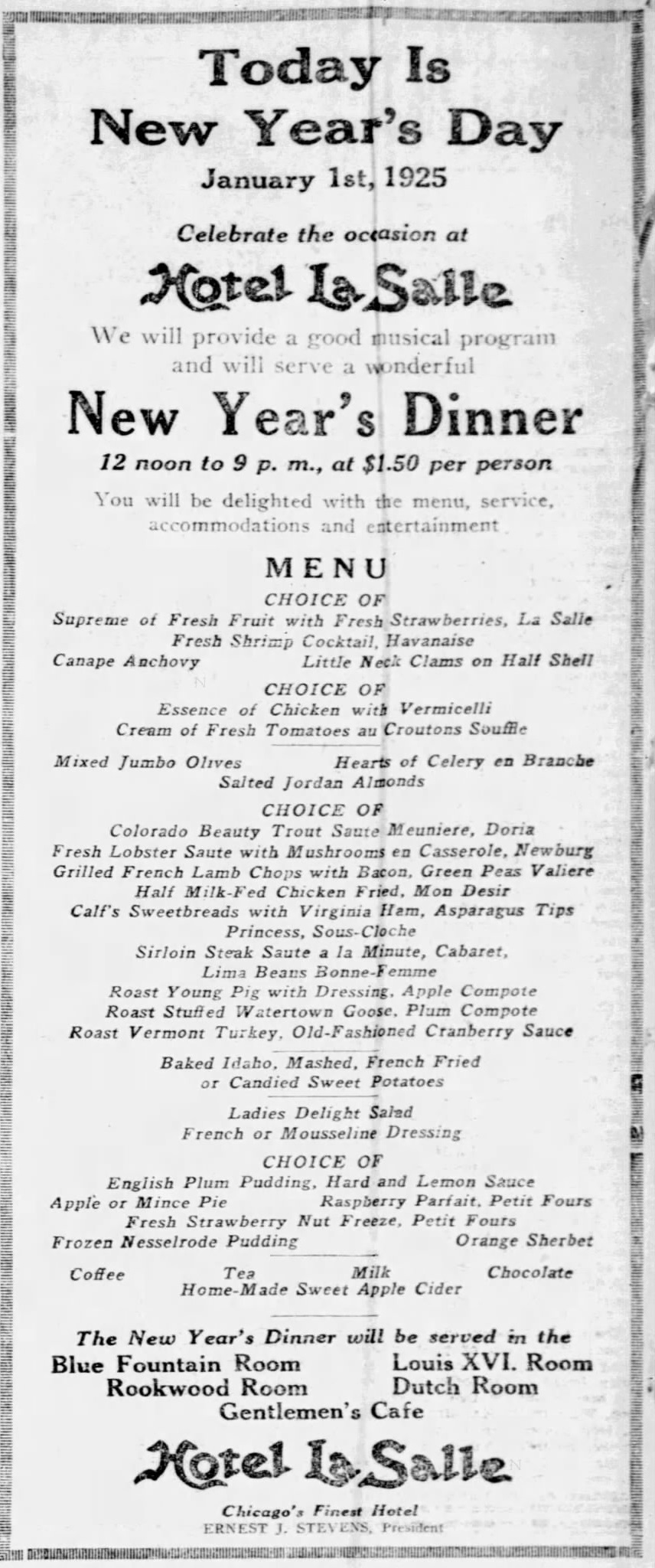
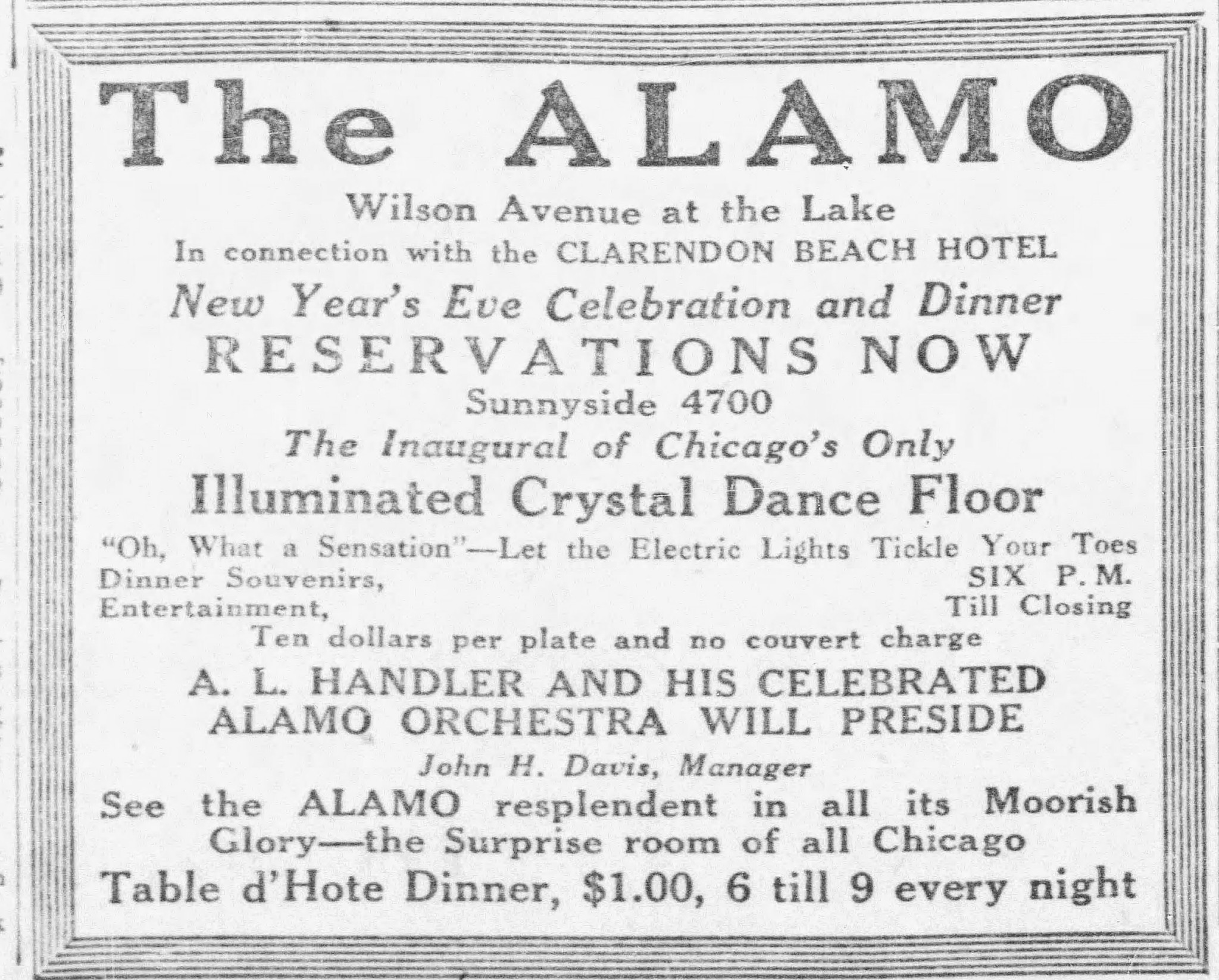
The Chicago hotels and restaurants were completely booked for both New Year’s Eve and New Year’s Day, and many private parties were held, also, at membership clubs and private houses. The parties were called “watch parties,” as in watching the old year exit out the door and the new one enter – at midnight, the doors were thrown open for this to happen.
The general format for a party was an extravagant dinner followed by a live orchestra and dancing. Some games in the evening were also often played – charades and guessing games were popular.
According to a Chicago Tribune newspaper article on December 31, 1924:
“Chicago tonight is going to don its dress suits, silver flasks, and tin horns and step out in search of A.D. 1925 in a spirit of peace and prosperity for the year to come.
“That is the official forecast, based on a canvass last night of hotels, cabarets, and roadhouses, police and federal officials – and bootleggers.”
Yes, bootleggers – Prohibition was in effect in 1924, which meant making, transporting, selling and serving (but not consuming) alcohol were all illegal. People regularly brought in their own alcohol to an event, hence the reference to the silver flasks.
The bootleggers reported that business was better than ever. Scotch was going for $7 per bottle; bourbon for $10; gin for $4. These prices were enough “to make one with a pre-Volstead memory shiver, but cheap enough in modern years.” Champagne, however, was very expensive – “about $1 per bubble.”
At the less well-heeled establishments, moonshine could be had for $1 per quart.
Chief of Police Collins said his men would enforce all liquor laws, but it was a “tough job.” He said they would “see there are no flagrant violations.” The Tribune noted that “handling a flask has never been considered flagrant.”
For New Year’s Eve, 1924, the big event for the social elite was a concert by the Yale Glee, Banjo, and Mandolin Club, in town from the east coast. This was preceded and followed by numerous private parties.
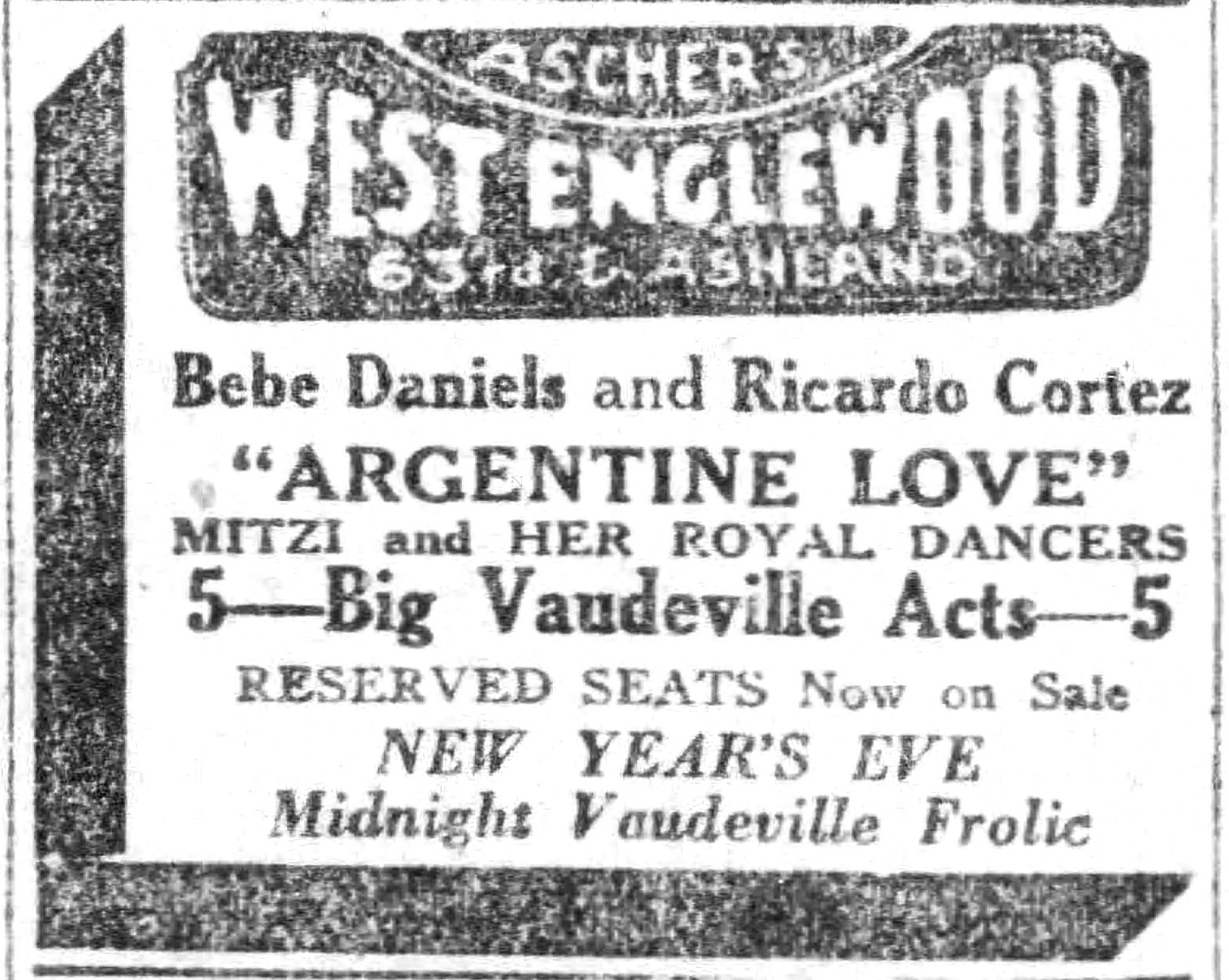
For the less high-brow, there were plenty of burlesque, vaudeville, musical comedy, and cabaret shows scheduled. Taxicabs, which usually made their last runs at midnight, were staying on the streets until 2 a.m.
The people who stayed home for the evening could still have music and dancing, via records played on the family’s gramophone or phonograph, if the family could afford such a machine.
For everyone, though, there was listening to the radio.
The radio stations covered live events, from political and other speeches to football games, and broadcast live orchestras and other entertainment, from the hotels or from the radio station’s studios. The radio stations usually signed off by 10 or 11 p.m.
On December 31, 1924, Chicago Tribune-owned WGN offered dinner music, and a few hours later dance music, from the bands at the Drake and Blackstone Hotels, but ended at 11 p.m.
Three other local stations planned New Year’s programs past midnight, one running until 6 a.m.
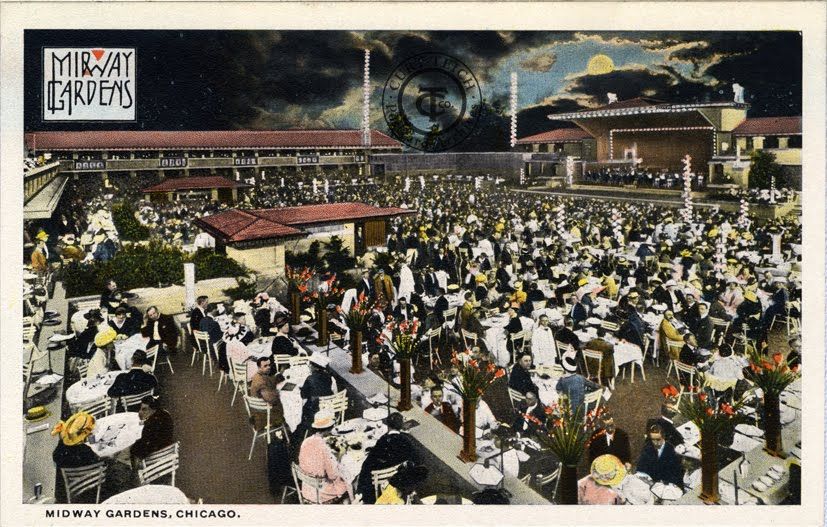
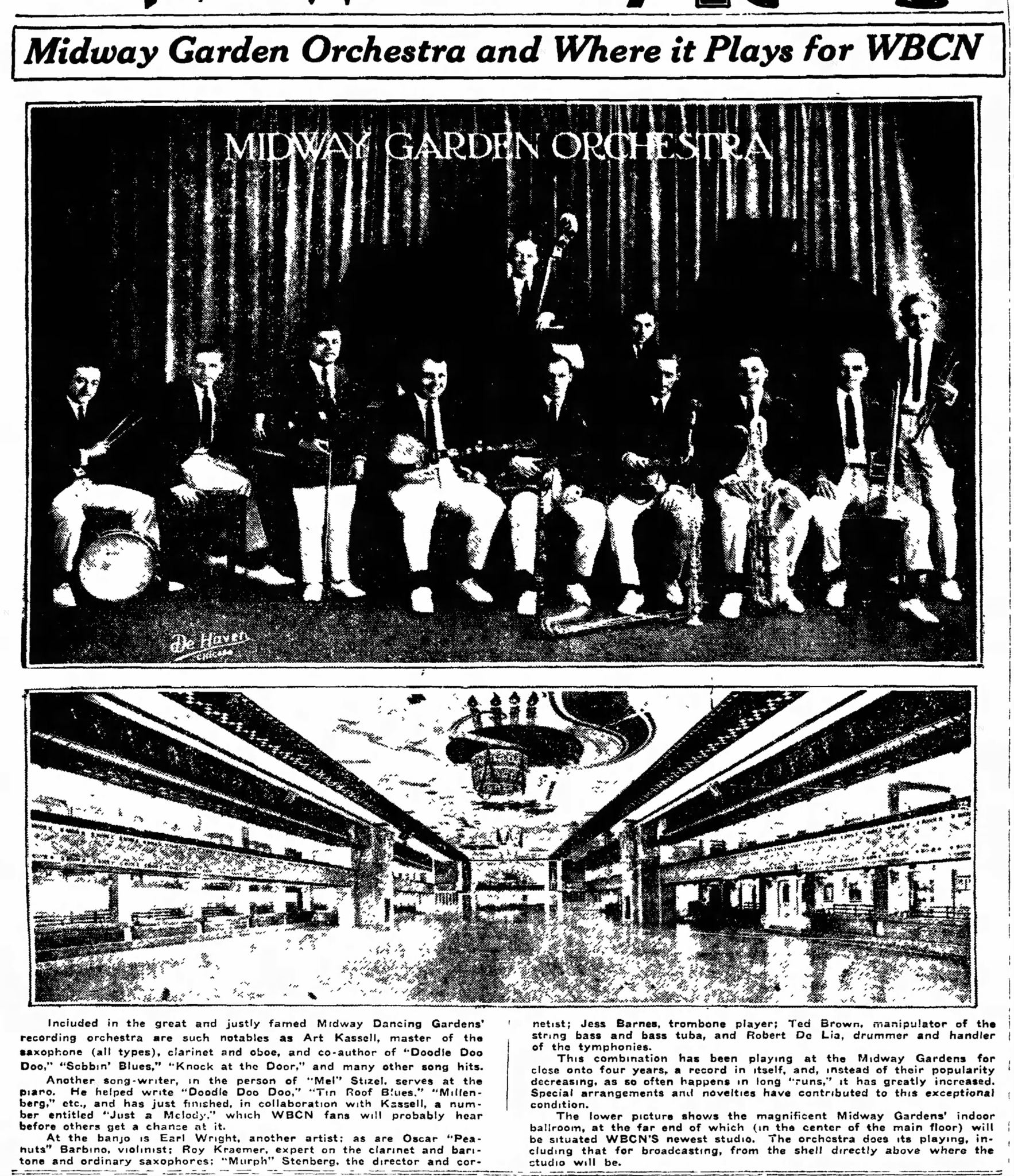
The biggest radio event, however, was taking place on WBCN, the station owned by the Southtown Economist newspaper. The station and the Midway Dancing Gardens had recently signed a deal that the Midway Gardens orchestra would be broadcast live on the radio station six days per week (closed on Mondays), and the inaugural event was scheduled to take place on New Year's Eve.
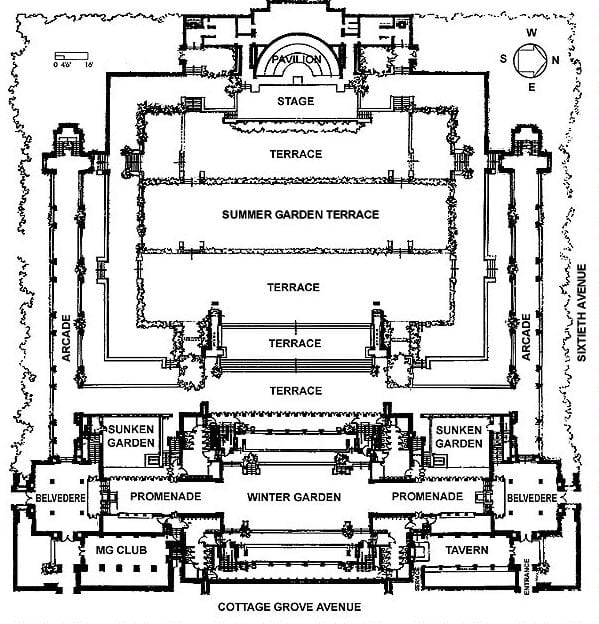
Midway Gardens was an entertainment complex at 60th Street and Cottage Grove Avenue, designed by architect Frank Lloyd Wright, that opened in 1914. It went through several owners before closing permanently and being demolished in 1929.
The facility offered outdoor dining and dancing in the summer and had a smaller indoor “winter garden.” It was considered to have “the largest toddle floor in the world.”
Other names it went by through the years were the Edelweiss Gardens and the Midway Dancing Gardens.
Although very popular with the public, Midway Gardens was never successful from a financial perspective.
In 1924, however, the Midway Dancing Gardens had a superb recording orchestra, and according to rival Tribune, “as a result WBCN listeners are to have dance music equal to any now being broadcast.”
The deal between WBCN and the Midway Dancing Gardens was considered “pioneering” and “highly distinctive” because it was the first time a public ballroom and a radio station had made an agreement on this scale.
On New Year’s Eve, from 10 p.m. to 2 a.m., dance numbers interspersed with specialty numbers were planned to be played continuously by the orchestra, which was in a shell above the dance floor. A microphone was installed suspended from the ceiling, wired into the transmitting equipment of the radio’s operations room at 730 West 65th Street.
This allowed the orchestra to “play for those actually present, and for radio-listeners at the same time.”
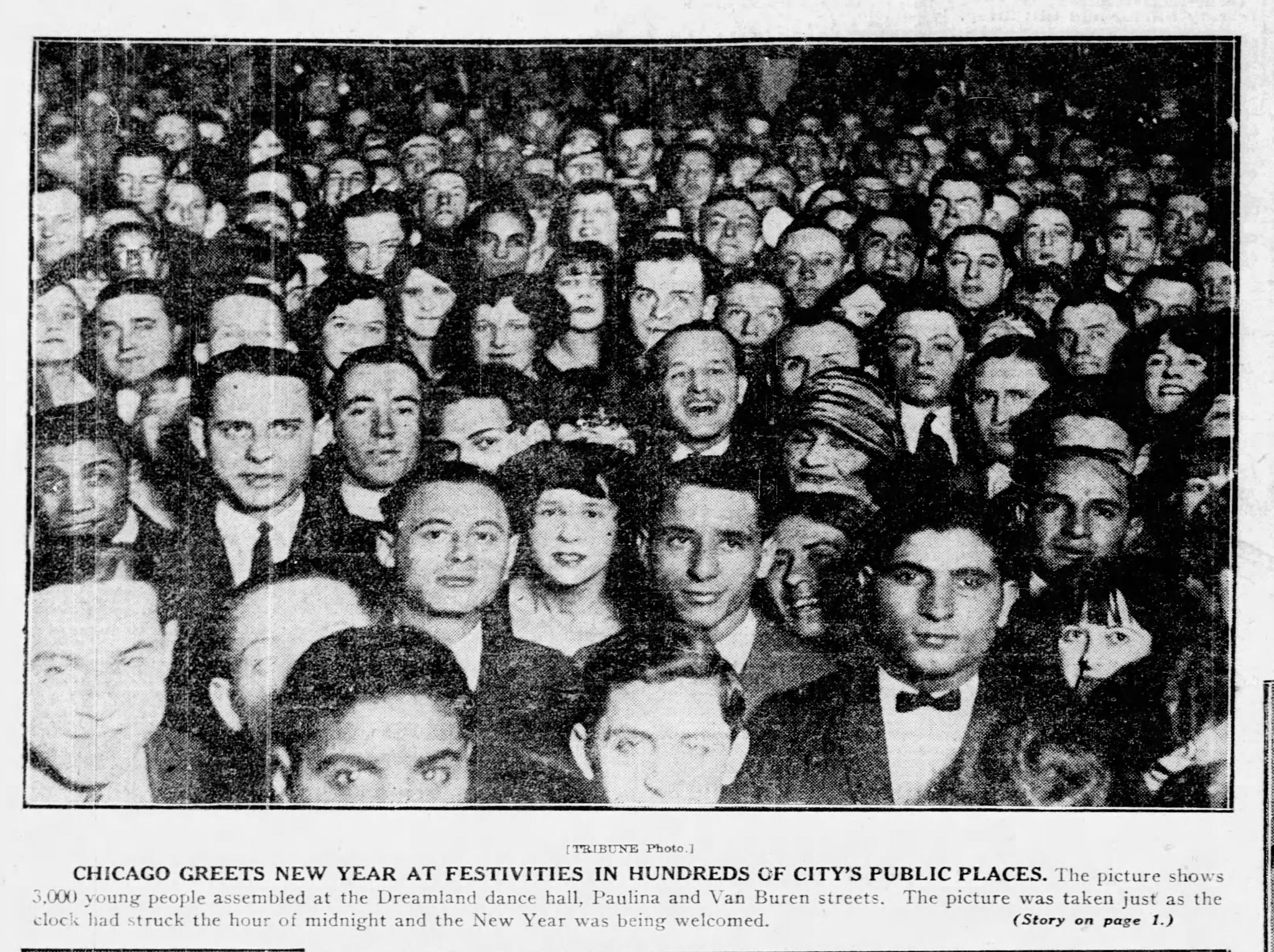
The event was very successful. On January 1, 1925, the Tribune reported that the Midway Dancing Gardens was so crowded in person there was scarcely room to dance.
The people listening from home might have had more space to push furniture out of the way to toddle.
All of the events held around the city did excellently – the hotels and restaurants reported the highest attendance ever. The going rate was $10 per person at the better places, and the Drake Hotel had 3,000 guests.
No attempt was made to conceal the liquor people brought with them – bottles were left in open display on tables and counters. The venues supplied drink set-ups for $1.00 apiece.
The police said the crowds exceeded anything they expected, yet the people were good-natured and there were few disorderly incidents.
The Tribune noted that at the Pershing Palace at 64th Street and Cottage Grove, one of the tables included Archie Benson, the Prohibition enforcement officer. Benson had announced that he would “keep an eye on enforcement measures in the loop,” but here he was among the revelers and their silver flasks.
No arrests were made there, or in the Loop, or at the Midway Dancing Gardens, for liquor.
That was Chicago in 1924-25.
The Ridge Historical Society
Chicago Weather History and the Current U.S. Conditions – Part 1: Fire
By Carol Flynn
Our concern lies with the sections of the country that are experiencing extreme weather conditions that are creating disastrous situations.
All eyes are turned towards the fires spreading through Los Angeles County in California. At the time of this post, at least four separate wildfires, burning on over 5,500 acres, have been identified, named the Palisades, Eaton, Hurst, and Woodley Fires. All are at 0% containment. Two fatalities have been reported, as well as a high number of significant injuries, and over 1,100 structures have been destroyed. Eighty thousand people are under mandatory evacuation orders. Hundreds of thousands of people are without power.
Neighboring Riverside County also has the Tyler Fire burning, reported at 50% containment.
The spread of the fires is a result of very strong Santa Ana winds, with isolated gusts up to 100 miles per hour; ongoing drought conditions; and very low humidity levels. The actual causes of the fires are under investigation.
Not to be tone deaf or insensitive, because the critical story here is the situation in California, but people interested in Chicago history can’t help but see the parallels between the Los Angeles situation and the Great Chicago Fire of 1871.
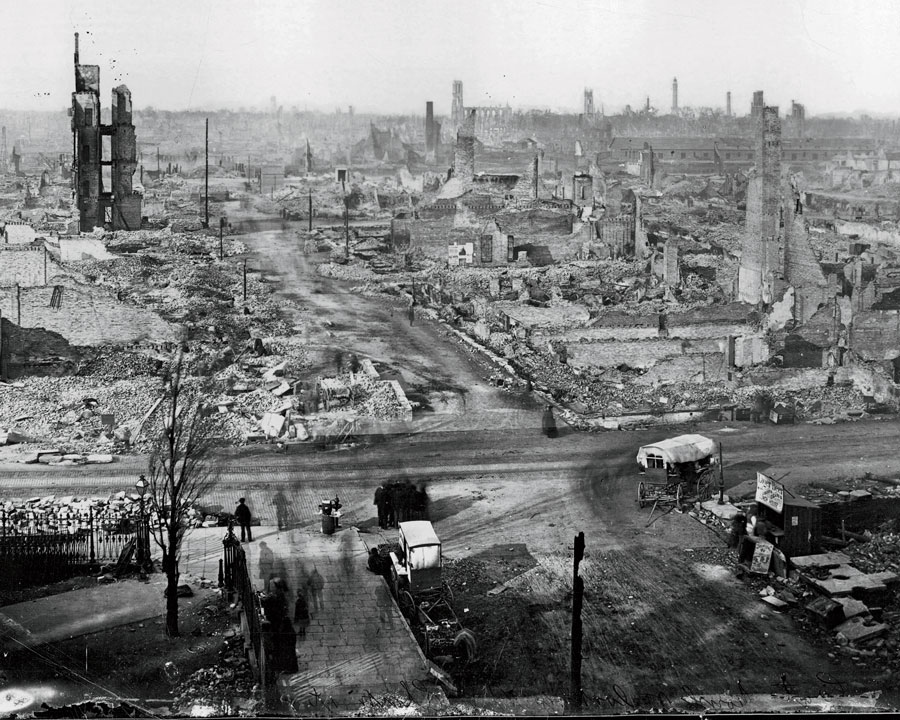
From October 8 to 10, 1871, fire raged through the City of Chicago, ultimately killing an estimated 300 people and leaving more than 100,000 people homeless. Over 17,000 structures in about a 3.3 square-mile area were destroyed.
The fire started around the barn and shed at the O’Leary residence on DeKoven Street. Although the fire was blamed in the media on a cow kicking over a lantern, in reality, the cause of the fire has never been determined.
Like Los Angeles, a long period of hot, dry, windy conditions led to the Chicago fire spreading rapidly.
In Chicago at the time, congested neighborhoods of wooden structures and wooden sidewalks provided plenty of fuel for the fire. The fire twice leapt the Chicago River, destroying the near southwest side, most of downtown, and the near north side. The building housing the city’s waterworks was consumed by flames, destroying the water mains, leaving fire fighters helpless.
The Chicago fire finally started to burn itself out after reaching more sparsely built areas, and then it began to rain late in the evening of October 9th.
People on the Blue Island Ridge, about twelve miles south of the downtown area, watched the Chicago fire light up the night sky. They were no strangers to fire.
One of the issues in Los Angeles is the dry vegetation due to the drought conditions. This is very much like the prairie fires that burned here in autumn-time in years past.
William W. Barnard shared this account in his document, “Tracy Fifty Years Ago,” written in 1894. The Barnards lived at 103rd Street and Longwood Drive, where today stands the CVS drug store.
“Prairie fires were very frequent and much dreaded. I feel that no account of the early days of Tracy would be complete without a prairie fire. In the afternoon of an autumn day of 1845 our family had their first experience with a prairie fire. Grandfather had died within the first few months of their residence here. The eldest son was sick in bed with the ague. Grandmother with her four younger sons and fourteen year old daughter went out to fight the flames. Aunt Mary, who was too small to help, remained at home carrying water to her brother and watching the fire. As she looked to the west and the south she heard the loud roaring and saw the flames running ten to twelve feet high where it reached the tall weeds and extending as far as she could see. Eagerly she watched the family who were fighting the flames. They had nothing with which to plow and they could only set back fires and whip it with wet bags and brush. They worked heroically but were continually obliged to retreat. Nearer and nearer the house it came, but at last when it came to the low grass only a few rods from the door the fighters conquered. It was the custom to plow around the houses and stacks for protection against these fires. Sometimes two circles were plowed and the grass in the space between them burned off, thus an effectual barrier was made. Dr. Eagan, one of the early doctors of Chicago, asked one of the farmers the best way to protect his hay stacks from fire and was told to plow around them and burn between. He followed out the instructions by plowing several times around the stack and then burning between the furroughs and the stack which resulted in his burning up his own hay.”
Unfortunately, natural disasters such as fires, and recovery from them, make up a substantial part of history, and we are bearing witness to this right now. As we continue to monitor the situation occurring in California, Chicagoans will prepare to join any and all efforts to help the people devastated by these wildfires.
Image: The aftermath of the Great Chicago Fire of 1871
The Ridge Historical Society
Houses Designed by Harry Hale Waterman and the People Who Called Them Home: Part 1 – Waterman Begins His Architecture Career
By Carol Flynn
This is a companion series to the current exhibit at the Ridge Historical Society (RHS): “Harry Hale Waterman, Architect: Unique in Any Style.”
Harry Hale Waterman was the most prolific and versatile architect to work in Beverly and Morgan Park. At least 41 buildings in the community have been verified or ascribed to him.
Waterman’s contributions to the community were praised by architecture historian Harold T. Wolff, who served as past Registrar at RHS.
Wolff compiled files on many of the architects, including Waterman, who designed homes and other buildings in the Beverly/Morgan Park community. Wolff wrote that of all the architects, “none played a more significant role in establishing the character of these neighborhoods than Harry Hale Waterman.”
According to Wolff, it was Waterman who designed “imposing and distinguished houses for locations all over the Ridge,” and encouraged others “to spread the elegance [that was at first just] associated with Longwood Drive all over the landscape.”
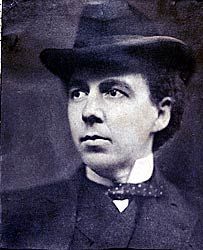
Harry Hale Waterman was born on July 10, 1869, in Rutland, Dane County, Wisconsin, a small rural community. His father was John Adam Waterman, born in 1824, a farmer and cattle broker. His mother was Emily “Emma” Hale Waterman, born in 1838. John and Emma married in 1867 in Minnesota. Harry had one sibling, a sister, Jessie, born six years his junior.
The Waterman and Hale families were originally from the East coast, as were most of the families who moved west as the country expanded, buying land for farming and settling in the fertile Midwest.
Emma was John Waterman’s second wife. His first wife, Mary Kniffen, born in 1834, whom he married in 1855, and their daughter, Alice, died young. Alice died at four months of age in 1859, and Mary died in 1860. Interestingly, this foreshadowed a similar experience that Harry would have in his own life.
The family moved to Chicago when Harry was a young boy, where his father continued as a cattle broker. It’s safe to assume that the thriving stockyards operations making Chicago famous offered employment opportunities.
It is reported that Harry was educated in Chicago public schools, and he attended the Old University of Chicago Preparatory School.
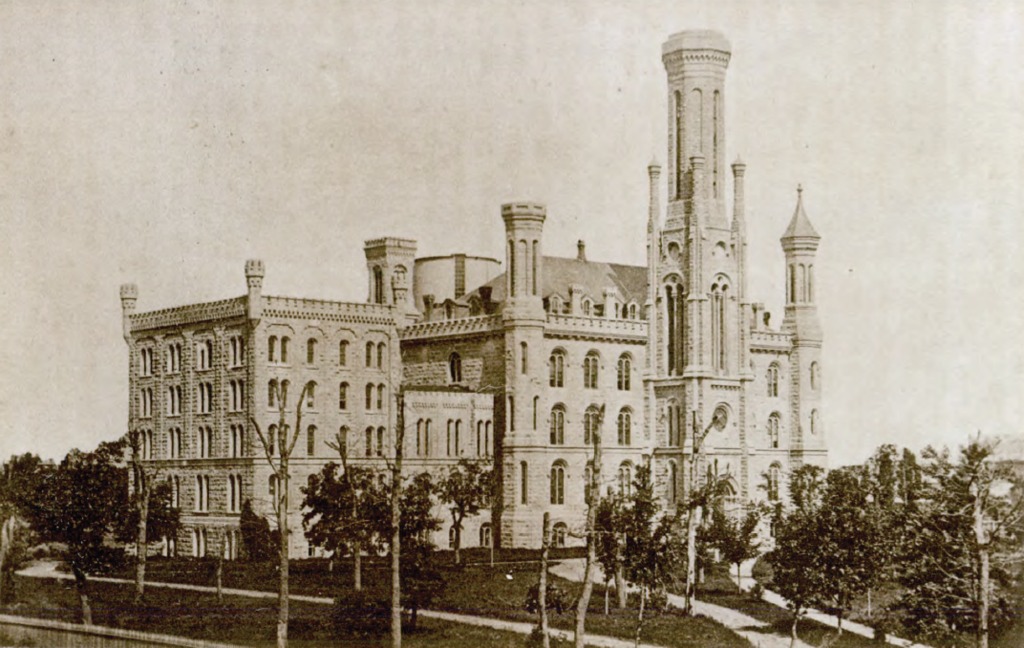
The Old UC was the original university, established in 1856 by Baptist church leaders on land donated by Senator Stephen A. Douglas at 35th Street and Cottage Grove Avenue. This school closed in 1886 for financial reasons and after fire damage, and was replaced with today’s University of Chicago, founded in 1890.
Preparatory schools were the forerunners of today’s high schools. Back then, there was a gap in public education institutions between grammar schools and colleges. For the wealthy, this gap was filled by expensive private secondary schools and private tutors, allowing those students to gain the knowledge to begin college-level courses.
To enable and encourage more young people to go to college, the universities started preparatory schools, which offered classes beyond the basic “three R’s,” geared toward helping students prepare for entry into one of the academic programs at the university. In Morgan Park, for example, the Mount Vernon Military Academy (now Morgan Park Academy) was started as a comprehensive military academy and preparatory school for the University of Chicago.
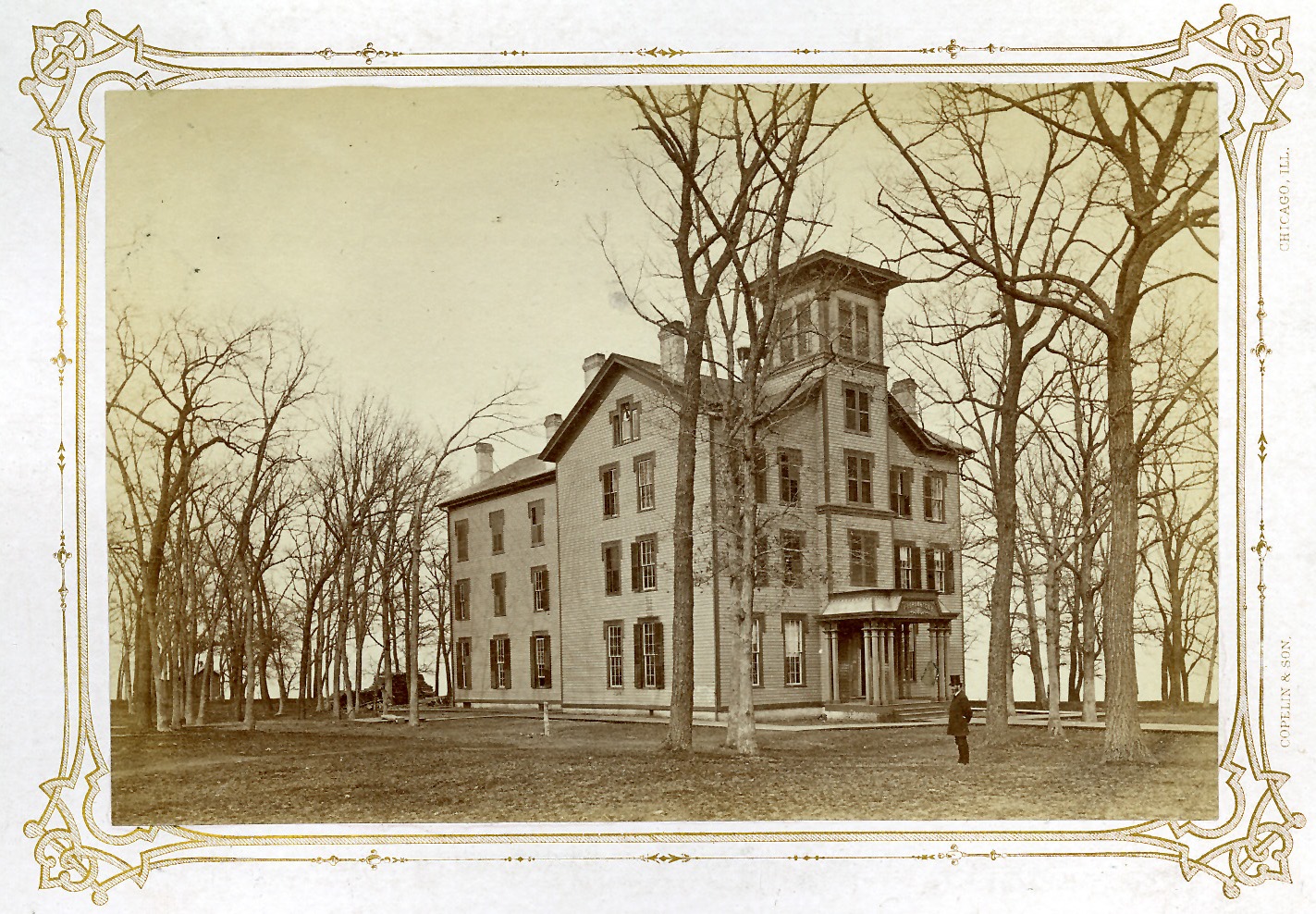
After the Old UC, Harry attended the Northwestern University Preparatory School through the 1887-88 academic year. He was listed as taking selective classes, which means he was not taking classes to qualify to enter a particular college. It does not appear that his formal education went farther than the NU Prep School, a common practice of the day. NU did not have a school of architecture at the time – few universities did.
Architecture was just developing into an academic specialty in the mid-to-late 1800s. Traditionally, designing buildings was considered part of the construction process, connected to such trades as carpentry and stonemasonry. These trades were learned through on-the-job training, apprenticeships, and many years of experience, observation, and networking.
From ancient Roman times on, it was recognized that mathematics, geometry, and engineering were the basics of architecture, along with a knowledge of building materials. Until the late 1800s, those were the types of classes/degree programs enrolled in by most people seeking architecture careers in the U.S. Those studies were followed by entry-level jobs, apprenticeships, and training in the offices of established architects.
In 1857, in the U.S., a group of architects founded the American Institute of Architects (AIA) to “elevate” the profession and to promote the qualifications of its members. The AIA developed policies on the training and credentialing of architects and set standards for ethical behavior and contracting services.
These were all guidelines, as the AIA was, and still is, a voluntary professional membership association, and not a credentialing or licensing body.
France had an architecture academy dating back to 1671 that became part of the famous École des Beaux-Arts in Paris. In the U.S., the AIA did not have the finances to start its own architecture school, but gave support to architecture programs being set up at reputable universities, such as the Massachusetts Institute of Technology (MIT) (1868) and the University of Illinois (1873).
In 1897, Illinois would become the first state to implement a law to license architects, which meant standards were set for the practice of architecture as a profession. Today, architects must be licensed to practice anywhere in the country.
This was the world of architecture when Harry Hale Waterman began his career.
In 1887, the Waterman family, including Harry and Jessie, were living at 3929 S. Vincennes Avenue when a young man named Frank Lloyd Wright, 19 years old, began boarding with them.
Wright had arrived in Chicago from Wisconsin, where he had been a student in civil engineering, to pursue a career in architecture, against his family’s wishes. However, his uncle, the Rev. Jenkin Lloyd-Jones, a Unitarian minister in Chicago, relented, and helped him find lodgings with congregants who lived nearby – the Waterman family. Wright and Harry became acquaintances.
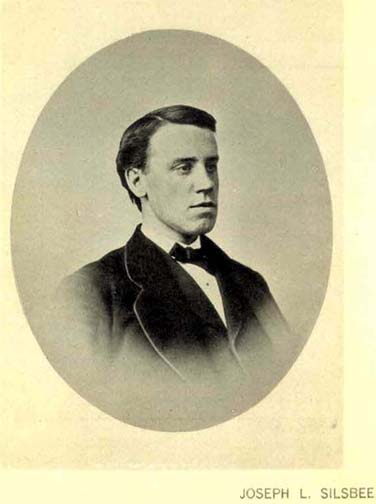
Wright had started as a “tracer,” or draftsman, in the architecture offices of Joseph Lyman Silsbee in January of 1887.
Silsbee, twenty years older than Wright and Harry, was a reputable architect with a practice in the state of New York as well as in Chicago. He had attended MIT, the first architecture school in the country. He was a founder of the Chicago and Illinois chapters of the AIA.
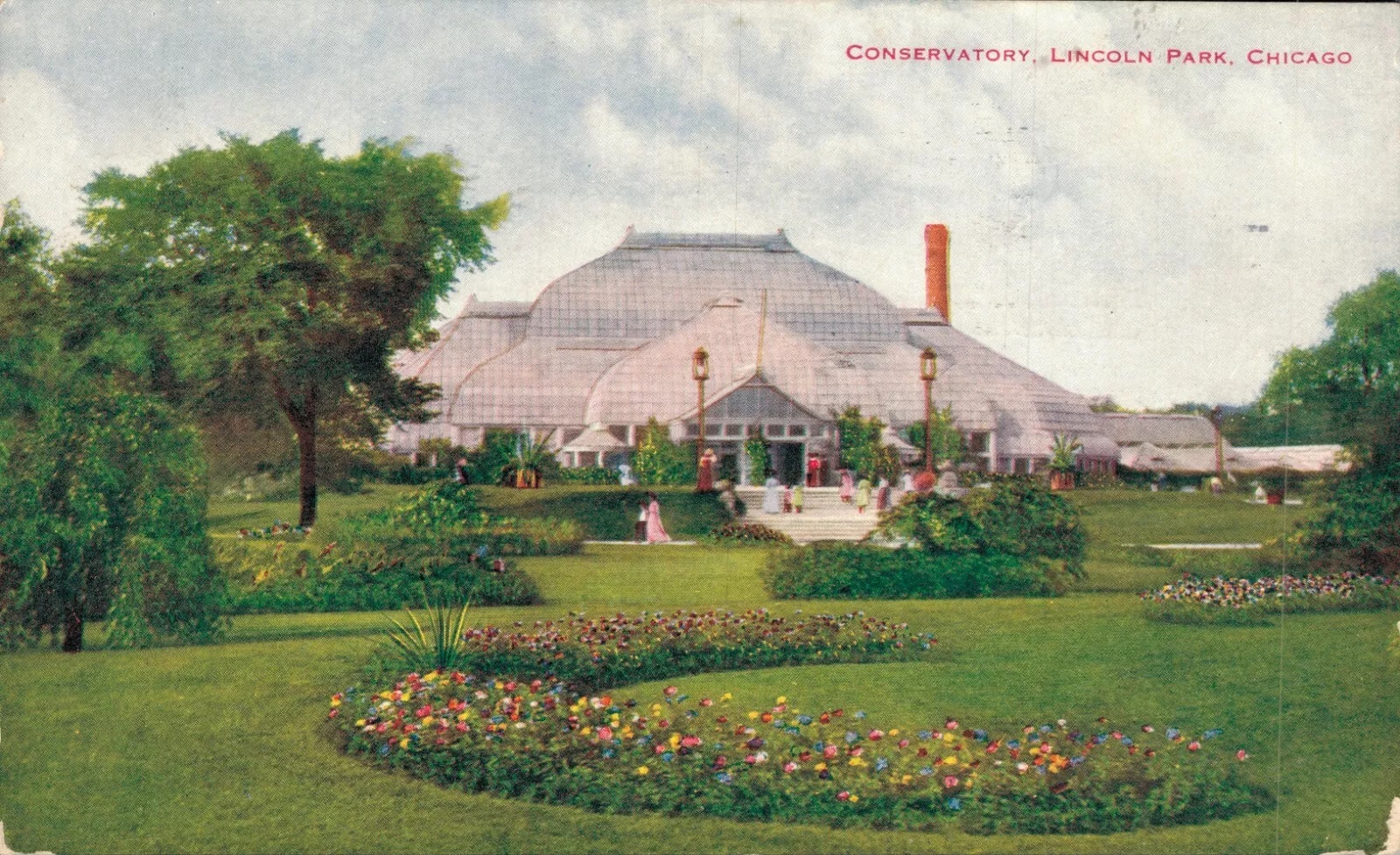
One example of Silsbee’s work in Chicago is the Lincoln Park Conservatory, built between 1890 and 1895, described as “a paradise under glass.”
Harry began employment in Silsbee’s office as a draftsman in 1888, working alongside of Wright. Other young trainees being mentored by Silsbee included George Maher and George Elmslie. Silsbee’s offices developed a reputation as a training ground for talented new architects.
Another young architect in this same orbit was Dwight Heald Perkins, who had worked at the stockyards before being accepted into the architecture program at MIT, and in 1889 began employment with architect Daniel Burnham. Among his many works, Perkins designed the Lion House and Café Brauer in Lincoln Park, as well as many schools in Chicago.
An early believer in “green spaces,” Perkins, along with landscape architect Jens Jensen, often led hiking expeditions to the Blue Island Ridge. He became known as the “Father of the Cook County Forest Preserves.”
These were the architects that were all part of Harry’s circle during his formative years.
1893 was a pivotal year for architecture in Chicago, thanks to the World’s Fair, known as the Columbian Exposition, or the White City. As one of his projects, Silsbee designed the Moving Sidewalk at the Fair, for which he won the Peabody Medal in 1895. Many of the young architects from Silsbee’s office contributed to the Fair.
More on Harry Hale Waterman’s early years with Silsbee and Wright and the 1893 Fair is covered in the RHS exhibit, which is open for free on Sundays and Tuesdays from 1:00 to 4:00 p.m. or by appointment. Additional information will be presented by RHS BOD member and Exhibit Curator Tim Blackburn in a repeat of last month’s program, “Waterman: From the White City to the Ridge,” scheduled tentatively for Friday, March 7. Watch this page for further details.
1893 was also the year that Waterman, at the age of 23, left employment with Silsbee and started his own practice. While the other architects like Wright and Maher established their own styles, which became major parts of the Chicago Prairie Style movement, Waterman worked in many different styles according to his clients’ expectations and other factors.
The next post will conclude Waterman’s bio, covering his three marriages and other interesting details of his personal life; then the series will look at families who used Waterman’s services to design their homes in Beverly and Morgan Park.