Explore the RHS Facebook Archives, a rich repository of local history written by Carol Flynn. For two decades, Carol brought a deeply dedicated voice to public education at RHS. Her role as Facebook administrator through mid-2025 naturally extended her prolific research into meticulously detailed articles, most notably her multi-part historical series posts. Today, Carol continues her local history writing for The Beverly Review and other outlets.
July 2025
The Ridge Historical Society
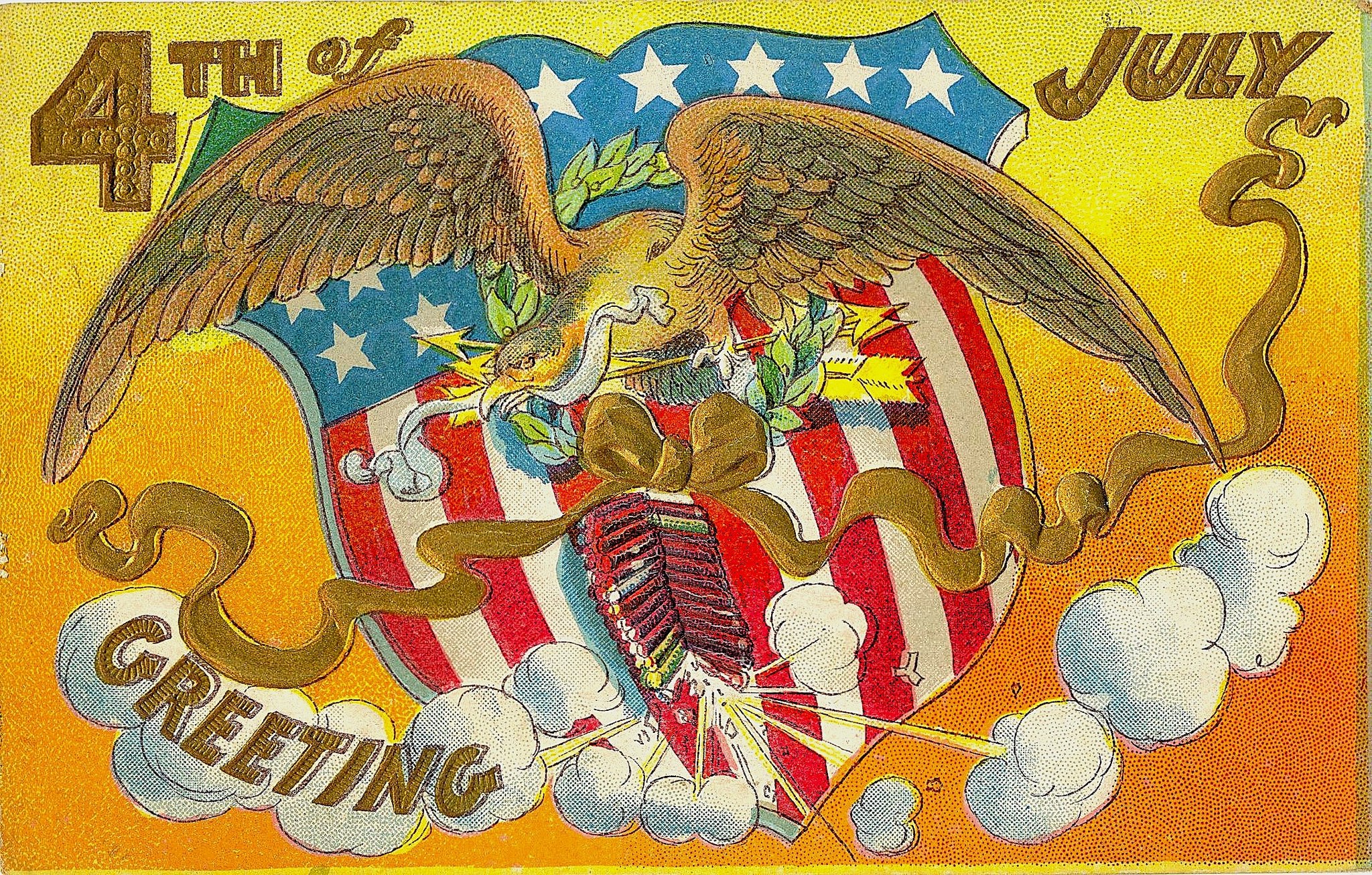
July 4, 1925 – Fireworks
By Carol Flynn
One hundred years ago on the Ridge, the community held a July 4th festival at Ridge Park at 96th Street and Longwood Drive.
Included were sporting competitions, awards for a house-decorating contest, a historical pageant, and family picnics.
The day started early with the “explosion” of a fireworks “bomb” calling people to the festivities. Fireworks also were displayed in the evening.
Fireworks are a significant part of the United States Fourth of July holiday – “the rockets’ red glare, the bombs bursting in air…,” and all that.
However, in Chicago and in Illinois, there are strict regulations on the possession and use of fireworks – which largely go unheeded.
Fireworks have created controversy since the earliest days in Chicago. The issues mainly relate to safety and fire prevention, of course.
As early as the 1860s, there were city ordinances banning the storage and use of fireworks without permits in the city. Following the Great Chicago Fire in 1871, the city increased its efforts to establish and enforce controls, but especially at the time of July 4, the ordinances were largely ignored.
And the members of the Chicago City Council themselves did not always support the ordinances.
In 1883, for example, the City Council lifted the ban on fireworks and shooting off firearms just for the 4th of July. They had given way to the demands of their “friends” who were sellers of fireworks.
The result was numerous deaths and injuries. The Chicago Tribune had taken a stance against lifting the ban for even the one day, and after the holiday, challenged Mayor Carter Harrison, Sr., on the decision, given the damage that occurred.
“I don’t think it would have made any difference. Five thousand policemen could not have prevented them from shooting,” said the mayor. “The Lord takes care of the boys. Some of them may get banged up a little, but they will come out all right. I do not believe in taking away the Fourth of July from them. It is a day that they should commemorate and hold sacred.”
The Tribune reported on the people who “got banged up a little.”
They included Thomas Kelly, a railroad man, who was shot in the abdomen by “a wild pistol shooter” and languished for several days before dying in the hospital.
There was also Charles Heradek, killed by a 13-year-old boy, whose mother told him to put the gun away and keep his mouth shut about what he had done.
Nine-year-old Katie Willard was killed by a bullet that lodged in her spine; young sisters Lizzie and Rosa Younk were “maimed” by a large firework; John Anderson was shot in his hand by his little boy; Thomas Garrity, 18, received a “large ragged wound in the face near the left eye” from a “toy pistol in the hands of a friend.”
A court ruling in 1903 caused cities across the U.S. to look at the fireworks situation with a new seriousness.
A fireworks explosion at an election night event in November 1902 in Madison Square Garden, New York City, resulted in a death and other serious injuries. The city’s aldermen had suspended the ordinance banning fireworks to allow the political parties to hold such events.
The court found that the city could be held liable for the deaths, injuries, and damage. New York City was successfully sued by several parties.
This caused cities to renew their commitments to enforcing bans and requiring permits for fireworks.
By 1925, selling and using fireworks and shooting guns within the Chicago city limits were banned by city ordinances. Fireworks could be used at events by experienced handlers with permits.
In late June 1925, the city vowed to “rigidly enforce” the laws on illegal fireworks. There had already been 14 deaths and two major fires from fireworks explosions leading up to the July 4th holiday.
An 8-year-old boy, Daniel Perry, had died from eating a firecracker. Another woman, Sophia Oxstein, walking down the street carrying her baby, had been hit by a charge from a “toy cannon” built by a 17-year-old neighbor.
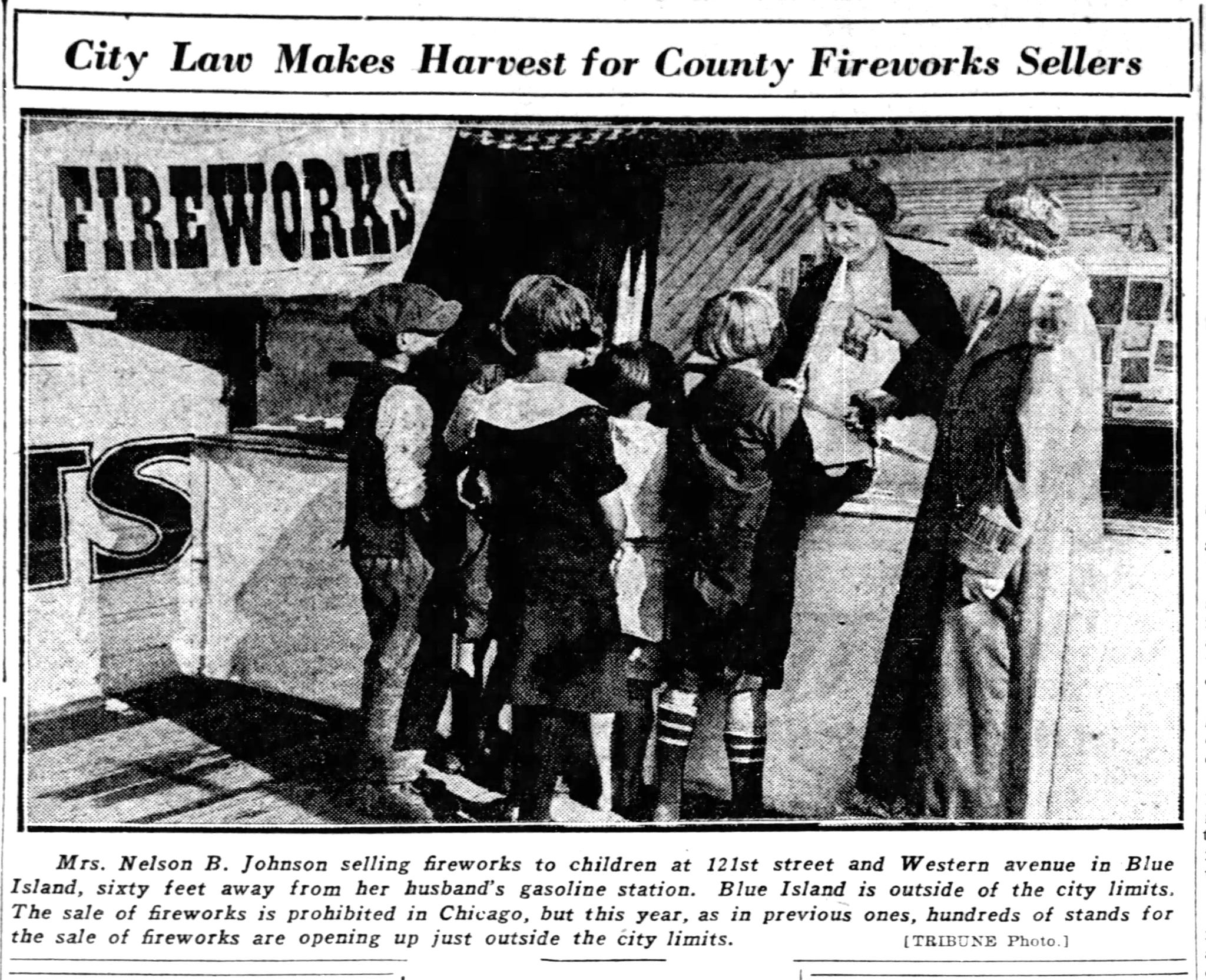
But fireworks could still be legally purchased in the rest of Illinois, and Chicago residents only had to walk across the street into a suburb to find roadside stands.
Ridge residents could cross 119th Street into Blue Island and find a fireworks stand just two blocks away. Chances are they could also find them in Evergreen Park across Western Avenue.
The Chicago Fire Commissioner had contacted 65 nearby municipalities to ask for their help in stopping illegal sales of fireworks, but not all had replied.
The purveyors of illegal fireworks caught in Chicago were given three options: “Put the fireworks in a water barrel, take them outside the city limits, or be arrested.”
On January 1, 1942, Illinois implemented a law to prohibit the sale and use of fireworks within the state. City and county officials would be allowed to grant permits for supervised displays, with a “competent individual” handling the display.
Today, Illinois has one of the most restrictive laws controlling the sale and use of fireworks, and even some of the items the state allows, like sparklers, are prohibited in the City of Chicago. Other states have various restrictions, and a few states have no restrictions at all.
Well, at least Top Notch still earns an honorable mention on a list like this! The writers barely left the North side to consider eating places in Chicago, so typical of an article like this.
https://www.theinfatuation.com/chicago/guides/best-burger-chicago?utm_campaign=cm&utm_medium=paid_social&utm_source=fb&utm_audience=chi&utm_ad_id=6724621588379&utm_content=Facebook_Desktop_Feed&utm_id=6628977098979&utm_term=6724608164979&fbclid=IwY2xjawLYu3NleHRuA2FlbQEwAGFkaWQAAAYiwMvta2JyaWQRMWM4UGprNlpRcFlrYmFHZDIBHl1RTdnI_oFFzFeepcwp4GWBRqPfb2nff4QjtKKYNSZOev_x0djs3y073V-G_aem_Wat6e_BPXnbjMog3IcTwuA
The Ridge Historical Society
Beverly/Morgan Park’s “Forgotten House” – Part 3: More on the Barnard Family
By Carol Flynn
This post brings us back to the “forgotten house” that was rediscovered and identified as the Erastus A. Barnard I House at 1602 West 108th Place in Morgan Park. It was built around 1865, originally stood at the southeast corner of 103rd Street and Longwood Drive, and was moved to its current location in 1924.
In the post for Juneteenth, we covered the early history of the Barnard Family, their relationship to the Wilcox and Morgan Families, and their experiences during the U.S. Civil War.
Now we’ll look more at the Barnard Family.
As the newly formed United States gained additional territory and spread out from the eastern states, many people started moving to what is now the Midwest for the fertile farmland. Chicago became the “western frontier” offering many business opportunities.
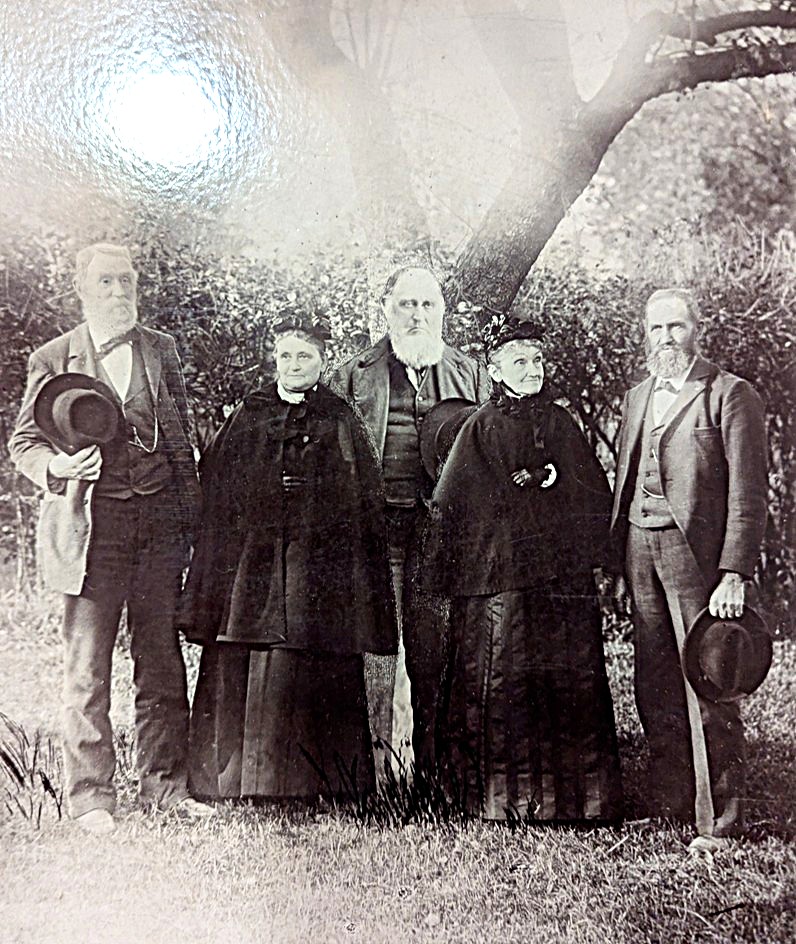
The Barnard Family moved from Massachusetts to Illinois and were in Chicago by 1846. The family included patriarch Dr. William Barnard (1793-1855) and matriarch Alice Emerson Barnard (1787-1880). Alice’s family went back generations; her father, Ralph Emerson, and his brother Daniel Emerson served in the Continental Army during the U.S. Revolutionary War.
The family settled at what today is 47th Street and Vincennes Avenue in Kenwood, just north of Hyde Park.
On the 1850 U.S. Census, the five Barnard children are listed as William, age 29, who was the first to come to Chicago a year or so before the rest of his family; Elizabeth, 27; Daniel, 24; Alice L. (for Lucretia), 21; and Erastus, 17.
The Barnard Family was very well educated. The sons William and Daniel were graduates of Amherst College in Massachusetts.
William moved to the Ridge when he took a job as tutor for the Morgan Family, then opted to take up farming, buying property at 103rd Street and Longwood Drive. The entire area was then known as Washington Heights, and their neighborhood as Tracy; 103rd Street was called Tracy Avenue. William married Miranda Wilcox, and they had four children.
The sisters Elizabeth and Alice L. both became teachers in Chicago. Neither married. Back then, a female teacher would have to give up her career if she married.
Alice L. became one of the first female principals in the Chicago Public School system, and her life and career were covered in an RHS Facebook story a few years ago. The school at 104th Street and S. Charles St., formerly the Washington Heights School, was renamed for Alice in 1892.
Their brother Daniel practiced as a lawyer in Chicago for many years. As Captain Barnard of the U.S. Union Army from the Civil War, he was active in veteran activities. He never married.
Patriarch William died in 1855. After the Great Chicago Fire of 1871, his widow Alice E., son Daniel and daughters Elizabeth and Alice L. moved to the Ridge.
The youngest son Erastus, a teenager when the family came to Chicago, also took up farming. It doesn’t appear he had further formal education in Chicago, but more than likely his education continued at home.
Erastus purchased land from his brother William at the southeast corner of 103rd Street and Longwood Drive. He married Mary Lavinia Wilcox, and some time after Erastus returned from the Civil War in 1865, they built the “forgotten house” to replace their log cabin.
Mary and Erastus had one daughter, Amy. Unfortunately, Amy died at the age of 20 in 1888. Her bereaved parents donated the land at 104th Street and Longwood Drive to the city in 1902 to establish Barnard Park in her honor.
This left William’s children as the only descendants of the Barnard family. William’s children included son William W. (for Wilcox) and daughter Alice S., a teacher, who both recorded family history. Their writings contribute to our knowledge of early life on the Ridge.
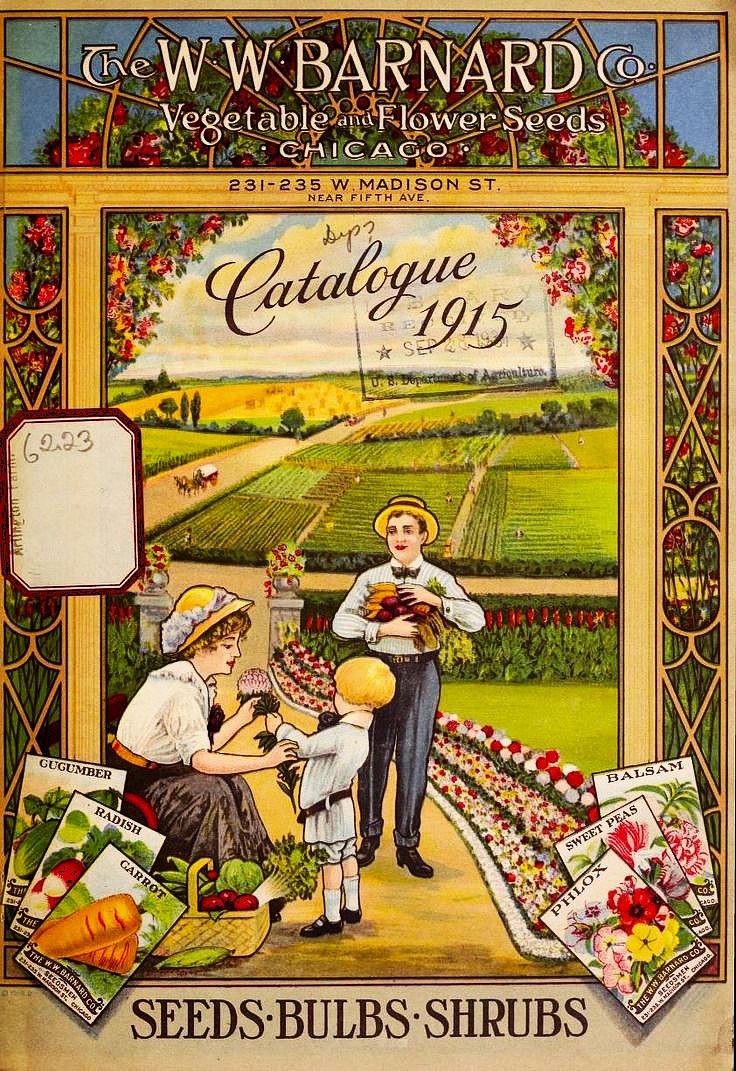
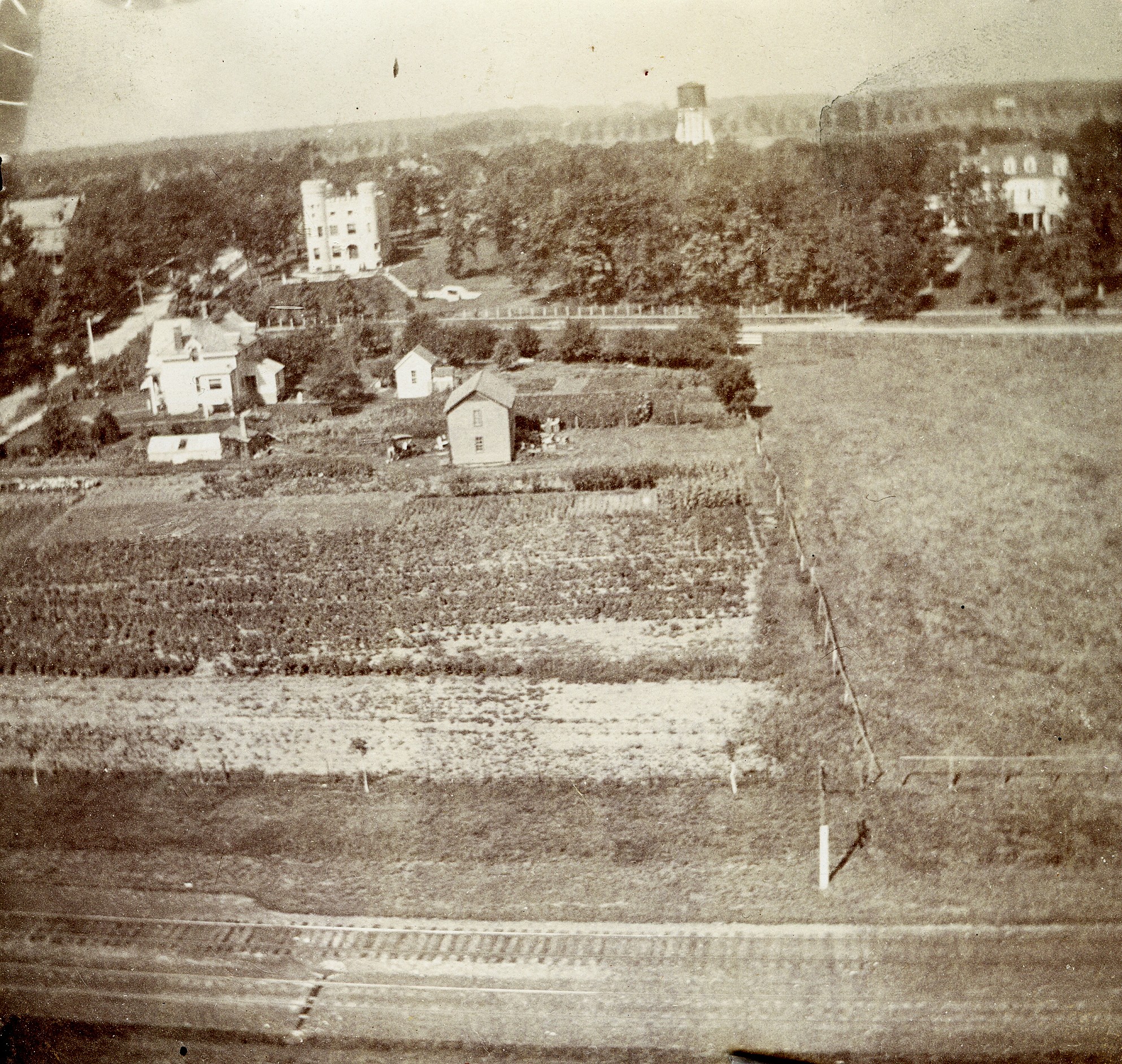
William W. bought the seed company he was working at in 1888 and created his own company, the W.W. Barnard Co., and called himself a “seedman.” He used the family farm at 103rd Street and Longwood Drive to grow mainly flowers for their seeds. The business was considered “one of Chicago’s largest and most progressive seed concerns.”
In addition to vegetable, flower and plant seeds, the company also dealt in poultry supplies, and put on poultry shows at their location at 231-5 W. Madison Street. Along with chickens, geese, ducks, and turkeys, the show featured pigeons, rabbits, and cavies (guinea pigs), with prize birds on display in the front windows. Thousands of people attended the shows.
The Barnard family were very active in civic and social affairs in Washington Heights. They were founders of Bethany Union Church. Their neighbor across the street was Robert Givins, the real estate developer who built the most iconic landmark in the area, the “Castle,” in 1886-7, forty years after the Barnards had already established a presence.
The next post will look at the purchase of the “forgotten house” by the Gorton Family.
Message from the Ridge Historical Society Facebook page administrator Carol Flynn: Effective August 1, 2025, my articles will no longer appear on this RHS Facebook page, and I am turning over the administrator role to the person to-be-determined by RHS.
I am starting a new Facebook page, Beverly – Morgan Park History, and my stories will appear there.
I started this FB page for RHS in 2011 and have thoroughly enjoyed sharing history stories here. I support RHS and its mission, and am happy to have contributed to public education and other RHS initiatives since 2004.
Now the time has come to explore new writing projects and additional topics from local history, some of which may be considered more controversial. I want to preempt any concerns that RHS has responsibility for my content. There have never been any problems so far, and I want to keep it that way. My articles reflect my personal work and thinking on topics, and no one else’s.
Please follow and participate in the new page while you continue to support RHS.
Beverly – Morgan Park History
The new page is active now but I have not posted any stories on it yet. I will start doing so in the next few days. I want to make the transition as clean and clear as possible. Please "Follow" the new page (not just "Like") – to make sure it pops up in your feed, otherwise you'll have to search for it all the time. – Carol Flynn, Administrator
The Ridge Historical Society has decided to take over this Facebook page now rather than waiting until August 1, so this should be my last post here.
Please follow the new page – "Beverly – Morgan Park History" – to continue receiving the history stories about this community.
I still have to finish the series on the "Forgotten House" so I will do that on the new page. The topics will include the Gorton Family who bought the house; the Thirteenth Church of Christ, Scientist, that then bought the land and house; and moving the house to its current location. There will be quite an interesting section on moving houses – something that was once a very common practice.
Here is the link to the new page. See you over there!
– Carol Flynn
https://www.facebook.com/profile.php?id=61578615263233&__cft__[0]=AZWbq691qXYDauJJWlDommFKALGVL2BaK__eLB7vdHPl7iUwbaeYzNOUxCL_6Xr-VvjW8Y7sdtY00q4VgGXdxDnxSyFxH21a791t7gHVgmlyGpd1zmNhfmOEje1J7KeuSwNJX5I-S4KuYTPEkgwPofVSUzRGYL3cj5UoVPAcswd6_A&__tn__=R]-R