
Explore the RHS Facebook Archives, a rich repository of local history written by Carol Flynn. For two decades, Carol brought a deeply dedicated voice to public education at RHS. Her role as Facebook administrator through mid-2025 naturally extended her prolific research into meticulously detailed articles, most notably her multi-part historical series posts. Today, Carol continues her local history writing for The Beverly Review and other outlets.
July 2020
Ridge Historical Society
By Carol Flynn
School Series – Profile 8: Marcus Garvey
This is the eighth profile in our series on people for whom schools on the Ridge are named.
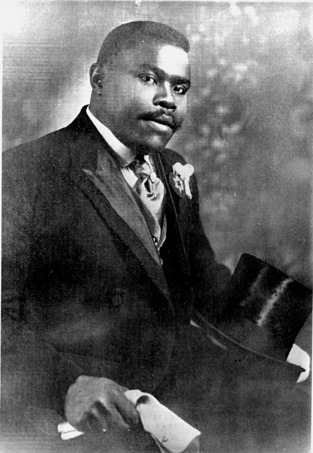
Marcus Mosiah Garvey, Jr. (1887-1940) was a political activist, journalist, and businessman born on the Caribbean island of Jamaica. He lived for over a decade in the United States. Although during his lifetime his viewpoints were considered controversial, with time his encouragement of pride and self-worth for people of African descent influenced African American leaders and movements. Some have called him the “Father of African Nationalism.”
Garvey’s entire history is too involved to cover in a Facebook post. There are many sources of information about him online that readers are encouraged to investigate.
From an early age on, Garvey’s experiences with social and economic hierarchies based on color led him to become an advocate for improving the status of people of African origin. His belief was that the initiative had to come from within the African community itself.
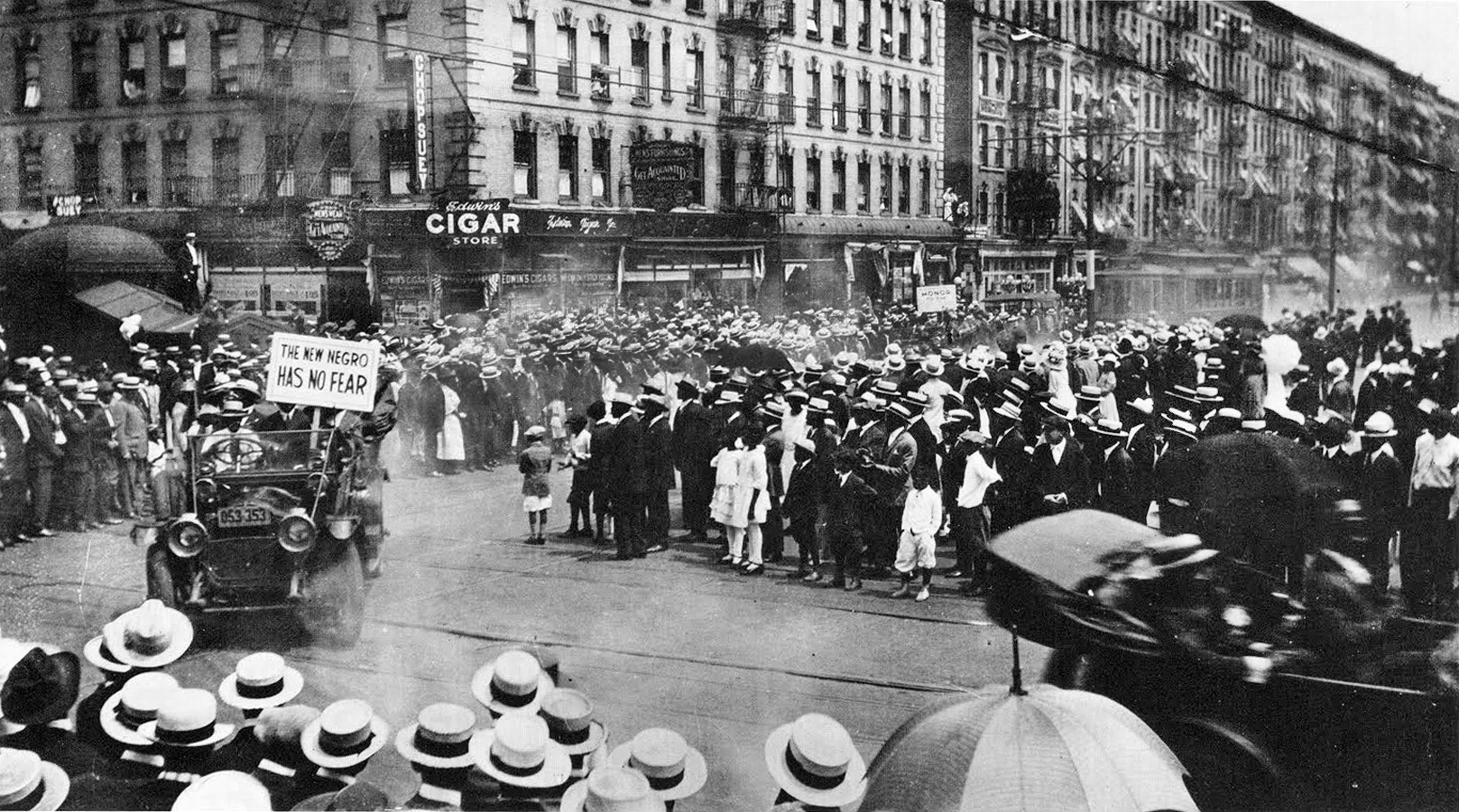
In 1914, Garvey started an organization called the Universal Negro Improvement Association and African Communities League (UNIA). He moved to the U.S. in 1916 and started a UNIA branch in Harlem in New York City. He attracted attention through a campaign of public speaking. A self-taught man, he was an accomplished orator and writer.
Garvey believed strongly in the equality and separation of the races, and in racial purity. He called for ending the European colonial rule in Africa and uniting that continent as one country. He named himself the Provisional President of Africa. Believing that African descendants would never achieve equality in any country ruled by whites, such as the U.S., he encouraged all educated and skilled people of pure African blood to move to Liberia, Africa. He was a capitalist and spoke against socialism. He believed blacks needed to start their own businesses to establish financial independence from whites. He insisted “Negro” be capitalized as a sign of respect and dignity.
Although he established a loyal following, his separatist views were at direct odds with most African American leaders of the day, including W. E. B. DuBois and the National Association for the Advancement of Colored People (NAACP), who were working for integration into American society. They were outraged when Garvey embraced the Ku Klux Klan to advance the segregation of the races. Garvey thanked the Klan for Jim Crow laws because they kept the races apart.
Garvey was outspoken against those who did not agree with him, and they responded in kind. He was derogatory of everyday people of color and he shunned people of mixed races. He made enemies and had many detractors.
In 1919, Garvey started a shipping and passenger company called the Black Star Line with the idea of fostering commerce between Africa and America and facilitating migration to Liberia. Garvey never visited Africa and knew little about life there. Liberia rejected his attempts to establish a settlement.
In 1923, Garvey was convicted of mail fraud for the way he was selling the company’s stock. Losing on appeal, he was sent to prison in 1925 in Atlanta for several years. Upon his release from prison, he was deported to Jamaica. He continued his activism there, again gaining followers and enemies. In 1935 he moved to London, where he died in 1940.
Garvey made one documented trip to Chicago, in October of 1919, and that did not go well. He was arrested for selling stock in the Black Star Line without being registered in the state. In addition, he had an acrimonious relationship with the Chicago Defender, one of the most important and influential African American newspapers in the country.
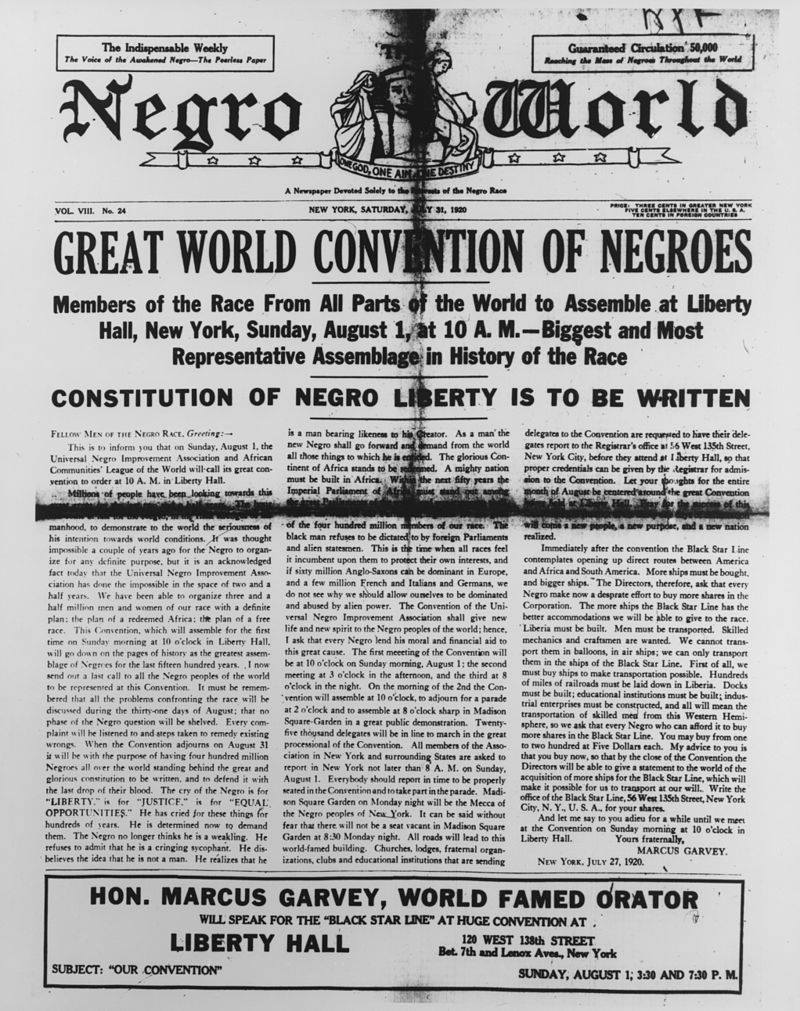
The Chicago Defender and its publisher, Robert Abbott, and Garvey and his newspaper, the Negro World, regularly traded insults and libel suits. The Defender called Garvey a “rabid agitator” and a “deluded megalomaniac;” Garvey labelled the Defender as traitorous to the Negro Race. The Defender showed no sympathy when Garvey was taken to prison in February of 1925.
But then a shift in the Defender’s opinion of Garvey started to occur. In November 1927, the paper called for Garvey’s release from prison, stating he had served long enough for what was really just “idealism and far-fetched dreaming.” The Defender led the campaign to free him, and Garvey was released in December.
Wrote the Defender: “What if his effort to build the Black Star Steamship line was a miserable failure? What if the provisional government of Africa was the wildest dream imaginable? Do these facts remove the one that Marcus Garvey stirred his people as they have never been stirred before? The Defender believes he was well worth the saving.”
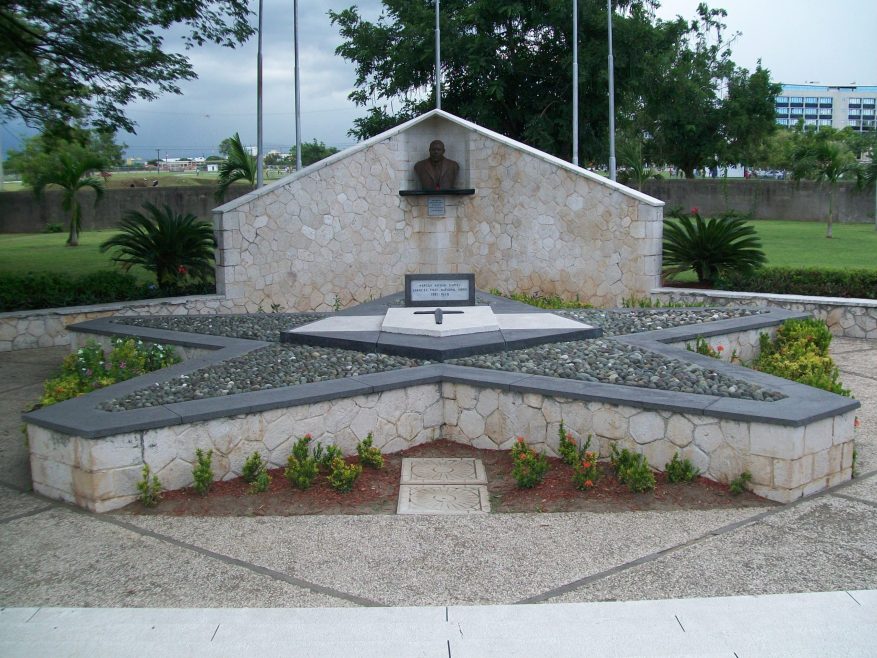
Thus began the focus on the broader implications of Marcus Garvey’s contributions. After his death, his status as an advocate grew. In 1964, his remains were returned to Jamaica and buried with a ceremony worthy of a national hero.
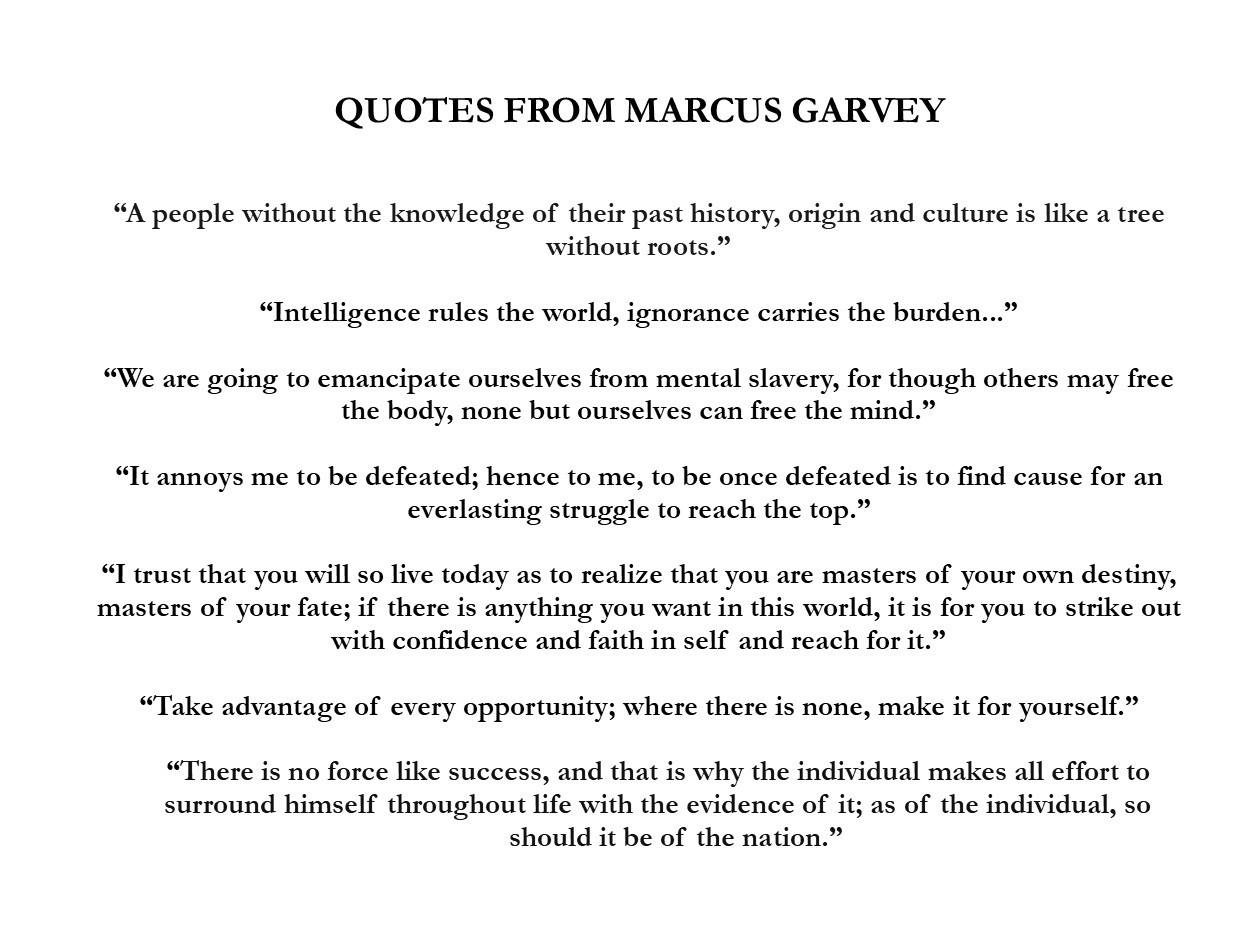
African American and world leaders have acknowledged they were influenced by Garvey. Martin Luther King, Jr., visited his tomb in 1965 and said: "Marcus Garvey was the first man of color to lead and develop a mass movement. He was the first man on a mass scale and level to give millions of Negroes a sense of dignity and destiny, and make the Negro feel he was somebody."
In 1974, it was announced that the new Chicago public school at 10309 S. Morgan Street in Washington Heights would be named for Marcus Garvey. This ended a three-year battle over the name of the school.
The residents of the community the school would serve, primarily African Americans, had been asked to submit potential names, and they submitted several, including Marcus Garvey. All of the names were rejected. This happened twice, and then they decided to rally for Garvey’s name.
The School Board maintained that Garvey was not appropriate because he was a separatist and had been in jail, and this would not be a good example for the children. The community leaders’ response was that they had the right to pick their own heroes. Garvey was the first real global activist for black pride, solidarity, and power, and therefore a worthy model. Naming a school for a person did not mean agreement with all his beliefs. The Chicago Defender supported the community’s choice.
The School Board finally voted narrowly in favor of the name. The Chicago Defender declared this victory a fitting legacy for Marcus Garvey.
Happy Fourth of July from the Ridge Historical Society! Here are some vintage postcards to celebrate!
Ridge Historical Society
Carol Flynn
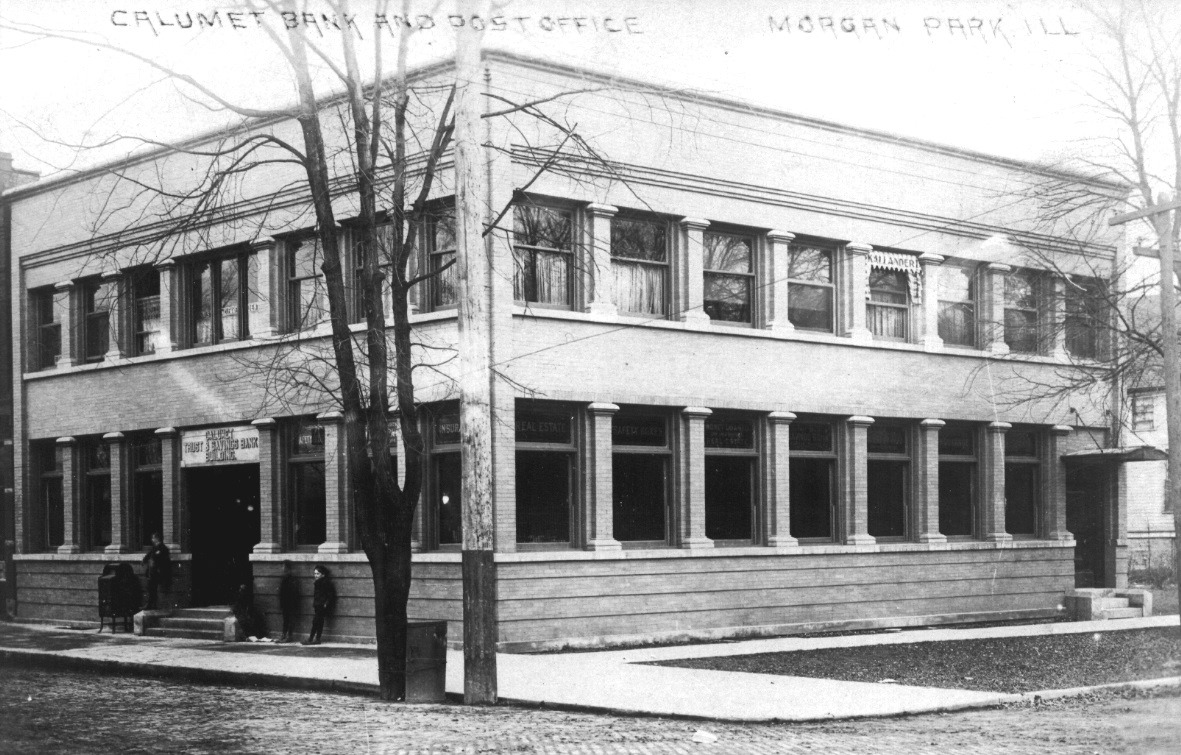
The Calumet Trust and Savings Bank was started in 1904 in Morgan Park with $25,000 in capital stock. The founders were some well-known early leaders of the Village – Ira Price, Henry Clissold, Christian Zeiss, Robert Thompson, Jesse Baldwin, and F.M. Wilder.
The bank shared this building with the Post Office. Do you know where this building is, and who occupies it now?
Ridge Historical Society
By Carol Flynn
School Series – Profile 9: Henry Clissold
This is the ninth profile in our series on people for whom schools on the Ridge are named.
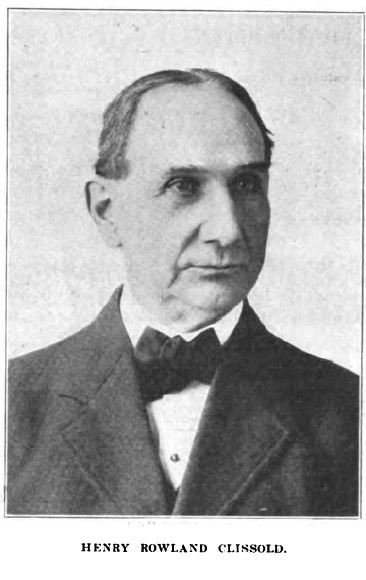
Henry Rowland Clissold (1842-1930) was one of the men who helped shape Morgan Park in its early days. He was a dedicated Baptist layman, and he owned a publishing company that produced a trade journal for the baking industry. Clissold was described as “modest and efficient and helpful,” fitting traits for a man who focused on two basics of American life, prayer and bread.
Clissold was born in England but the family moved to Canada when he was an infant. His father died when he was a child. In 1863, he came to Chicago with his mother, two sisters, and a nephew.
As a teen-ager, Clissold worked in printing facilities. In Chicago, he opened a publishing business which ran until 1879, mostly publishing materials from the Baptist church. He also published reports from the Chicago Relief and Aid Society, formed after the Great Chicago Fire of 1871.
Fortunately, the Clissolds, who lived in the downtown area, all survived the fire.
The Baptist church played a big role in Clissold’s life. He frequently gave sermons, taught classes, and led prayer services in locations throughout the Chicago area. He was involved in many church organizations.
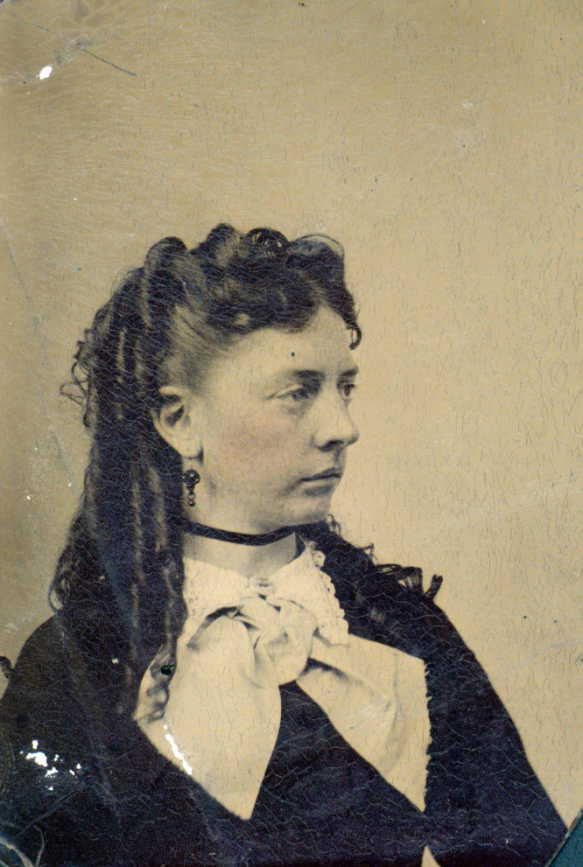
Clissold married Emma Isadora Smith, from a prominent pioneer family in Norwood Park, also a member of the Baptist church, in 1872. They had three sons and two daughters.
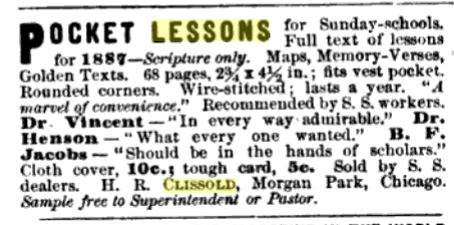
In 1879, Clissold accepted the position of State Sunday School Missionary in charge of all the Sunday school work for the Baptist General Association of Illinois. In addition to being a frequent guest lecturer, he authored class materials. In 1886, he produced “pocket lessons,” cards with Bible verses and church texts. These were popular for many years.
Morgan Park, which was founded as an education, religion, and temperance community, was a fitting place for the Clissolds to settle. Until annexation to the city of Chicago in 1914, the Village of Morgan Park had its own government, taxes, services, and school system.
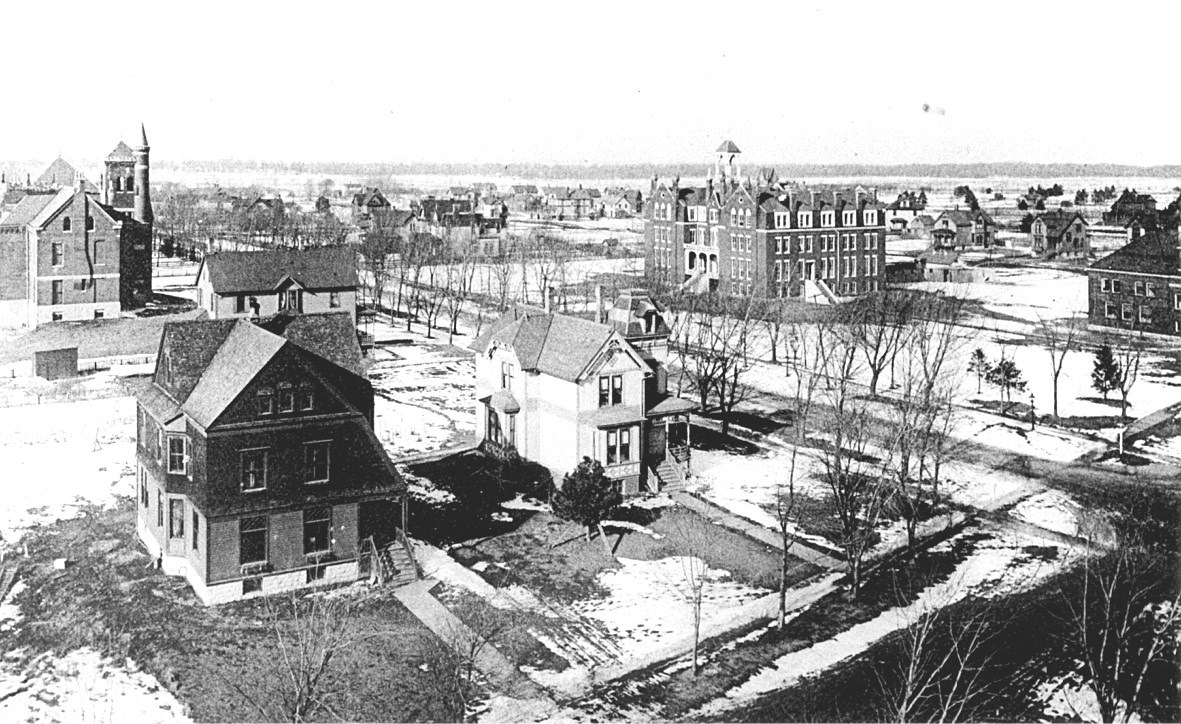
In 1877, the Baptist Union Theological Seminary relocated to Morgan Park. The Seminary was part of an “old” University of Chicago that ended up closing in 1886. The new Seminary building was built on the north side of 111th Street (then Morgan Avenue) at what is now about 2300 west. This was across the street from the Morgan Park Academy, which was founded in 1873 as the Mt. Vernon Military and Classical Academy.
Emma Smith Clissold’s older brother Fred had a law degree from and was a trustee for the old University of Chicago. He was also on the board of trustees for the Seminary.
The Seminary attracted many people to Morgan Park, mostly connected to the Baptist church but other academics as well. One brilliant young man who joined the faculty and lived in Morgan Park from 1879 to 1886 was William Rainey Harper, who at the age of 22 already had a Ph.D. and was an expert in the Hebrew language. He also became a Baptist clergyman while he was at the Seminary.
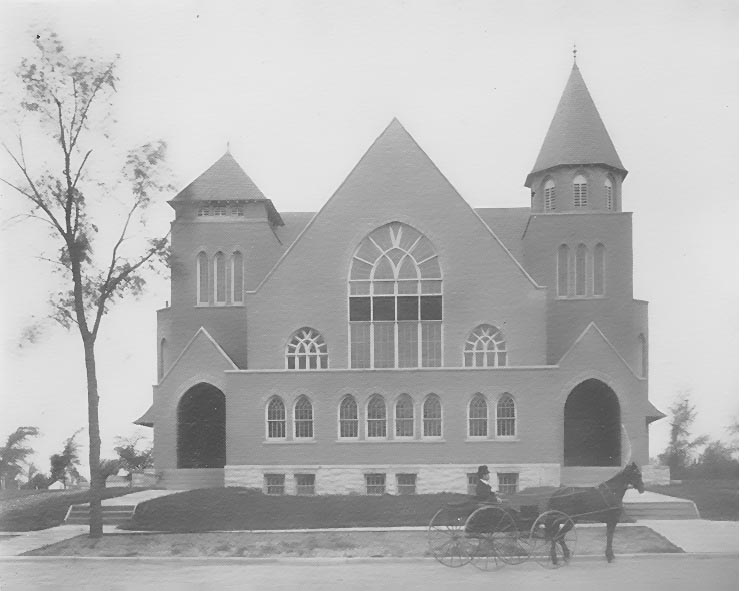
Baptists had been meeting and holding religious services in the community for about five years when the Morgan Park Baptist Church at 110th Street and Bell Avenue was officially established in 1877.
The Clissolds moved to Morgan Park in the early 1880s. Clissold went right to work, serving as clerk of the Village of Morgan Park and teaching Sunday school at the Morgan Park Baptist Church.
Clissold’s biography from “The Book of Chicagoans” states that from 1884 to 1887, he managed Harper’s publication work. During this time Harper rented a storefront in Morgan Park and started the American Publication Society of Hebrew, which published Harper’s educational materials as well as promotional materials for Morgan Park.
In the early 1890s, John D. Rockefeller agreed to fund a new University of Chicago (U of C). Harper was chosen as president and the Baptist Seminary was designated the divinity school for the new university. Morgan Park was considered for the site of the university but Rockefeller preferred Hyde Park. The Seminary left Morgan Park in 1892 to become part of the new U of C. Morgan Park Academy was part of the U of C system as a preparatory school from 1892 until Harper’s death in 1906
.
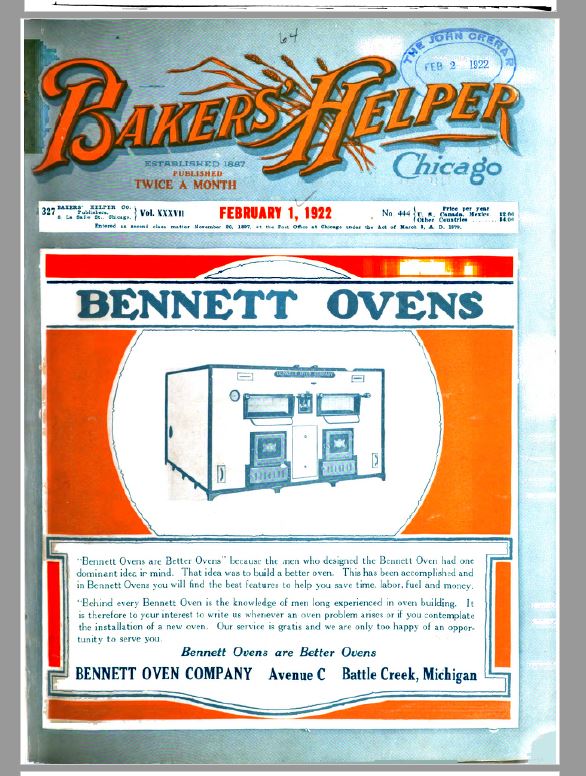
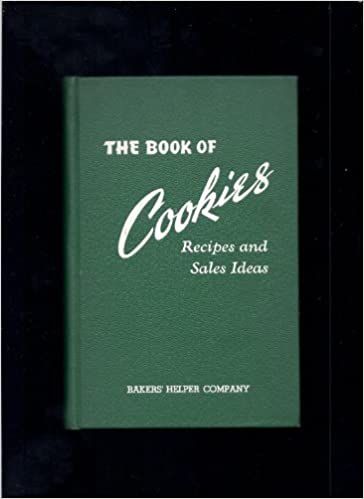
Clissold established a new publishing company in 1887 and started a trade magazine called Bakers’ Helper which focused on news, advice, equipment, and supplies for the baking industry. He became well-known in the trade publishing and baking fields and became an advocate and advisor for both. There were other trade journals in the baking industry, but Bakers’ Helper was the leader for decades. Along with the magazine, Clissold Publishers also produced manuals on baking topics.
In 1897, Clissold helped organize the Master Bakers’ Association of Chicago, which would later become the National Association of Master Bakers. The purpose of this organization was to advance the baking profession through high standards of operations and service. He served as secretary and in other roles for decades and helped organize conventions around the country.
In 1912, when Bakers’ Helper celebrated its 25th year in publication, Clissold’s friends in the industry gathered letters of praise about Clissold to run in the magazine, but Clissold would not publish the letters. His friends went directly to the advertising department and worked out a four-page supplement to the regular edition. Clissold knew nothing of this until he opened a published copy. The entire industry enjoyed this “surprise party.” Wrote the National Baker, another publication, “One of the best things [about this issue of Bakers’ Helper] is an insert voicing the high esteem in which Mr. Clissold is held by his many friends in the trade. It is a well-deserved tribute to the best known man in the American baking trade.”
The American Miller and Processor wrote: “He will keep on preaching the gospel of good bread, clean bakeries and square dealing as a part of his mission. He deserves all the good things said about him in the ‘Appreciation.’”
Clissold was also president of the Chicago Trade Press Association from 1899-1900. He gave testimony concerning second-class postage for trade journals and newspapers to the U.S. Senate Commission to Investigate the Postal Service.
His religious commitments also continued. He served as president of the Illinois Baptist State Convention twice, and president of the Illinois Sunday School Association. He served on the Sunday School Board of the Morgan Park Baptist Church.
In 1904, Clissold and other prominent Morgan Park citizens founded the Calumet Trust and Savings Bank with capital stock of $25,000. They built the building at 111th Street and Longwood Drive now owned by the Beverly Area Planning Association.
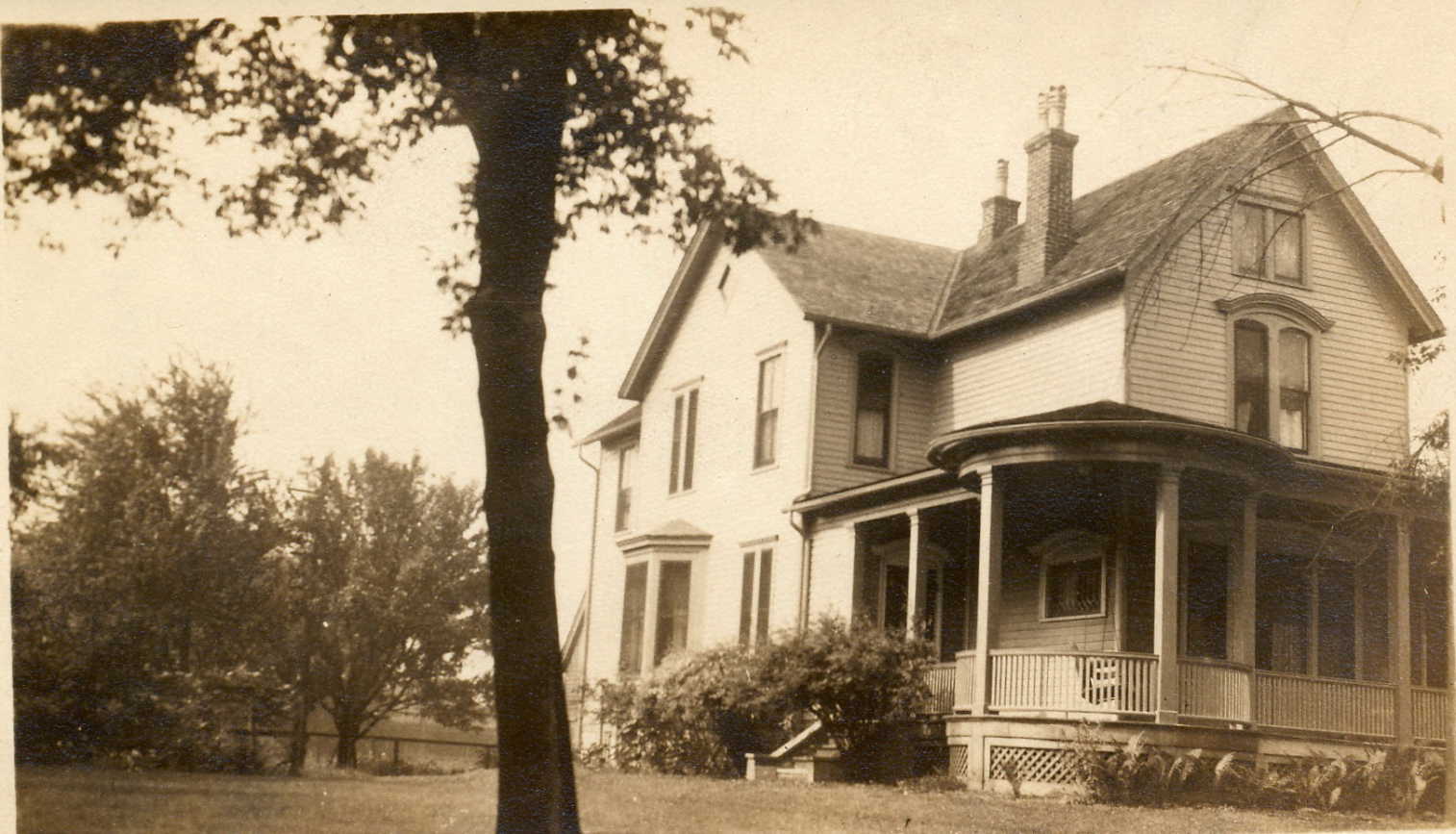
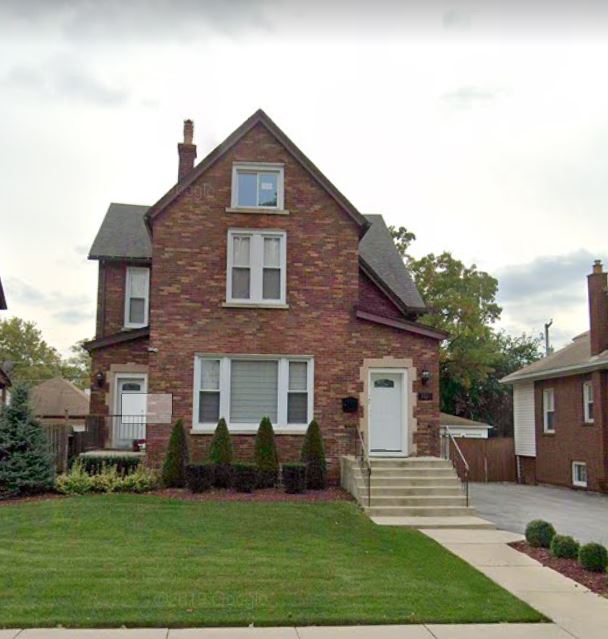
The Clissolds lived in several locations in Morgan Park and two of their houses still stand. One house at 2321 W. 111th Place was originally frame and has been covered with brick. They later owned the brick bungalow at 2117 W. 109th Street.
In addition to being a Village trustee, Clissold sat on the Morgan Park Board of Education, and served as president in 1905-10. He was a member of the Home Rule Association that opposed annexation to Chicago. One of the biggest concerns about annexation was the potential fate of the Morgan Park schools if the city took them over. Annexation was finally approved in 1914.
Henry Clissold died in 1930. The Clissold family plot is in Mount Greenwood Cemetery.
The Arlington and Western Avenue Schools were early structures around 110th Place and Western Avenue. A new school was under construction at 2350 W. 110th Place to replace those old buildings when Clissold died. The Morgan Park community lost no time petitioning to name the new school for Henry R. Clissold. The Chicago Board of Education readily approved.
Commented one of Clissold’s admirers, this was “a good way to honor a good name.”
Ridge Historical Society
By Carol Flynn
School Series – Profile 10: Rudyard Kipling
This is the tenth profile in our series on people for whom schools on the Ridge are named.
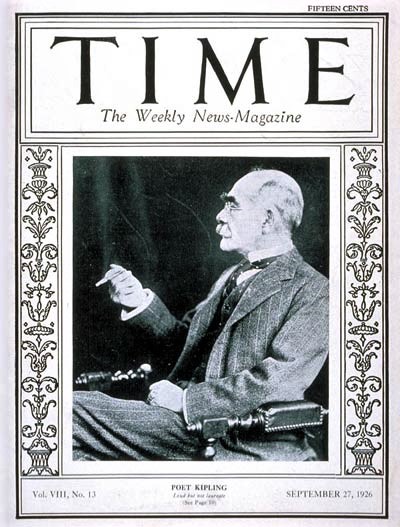
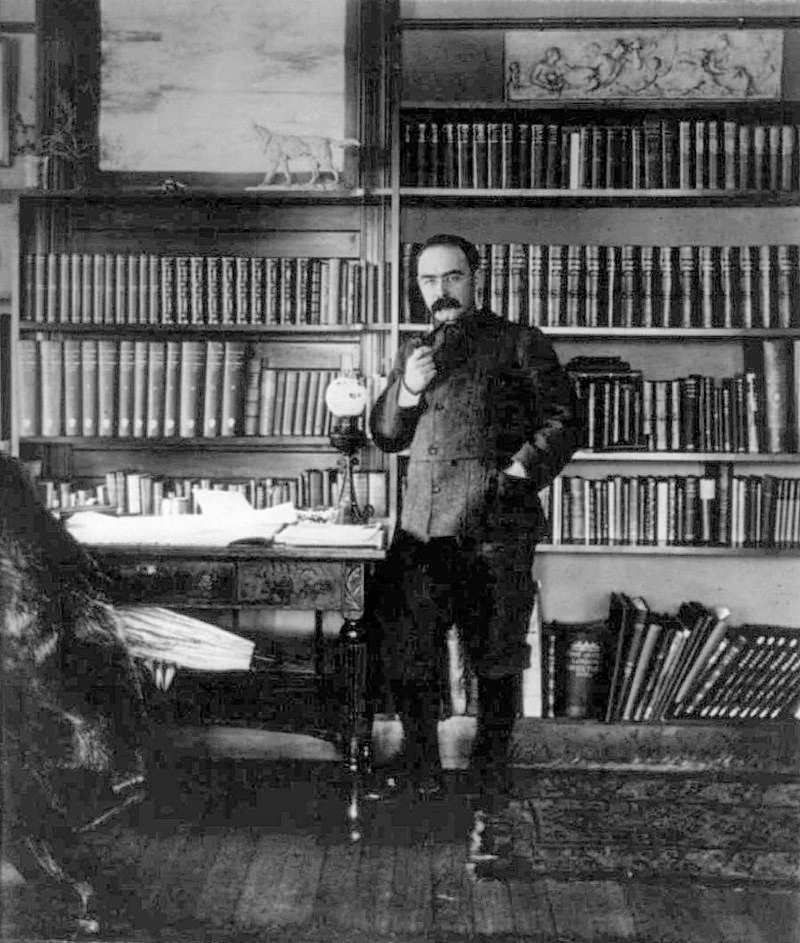
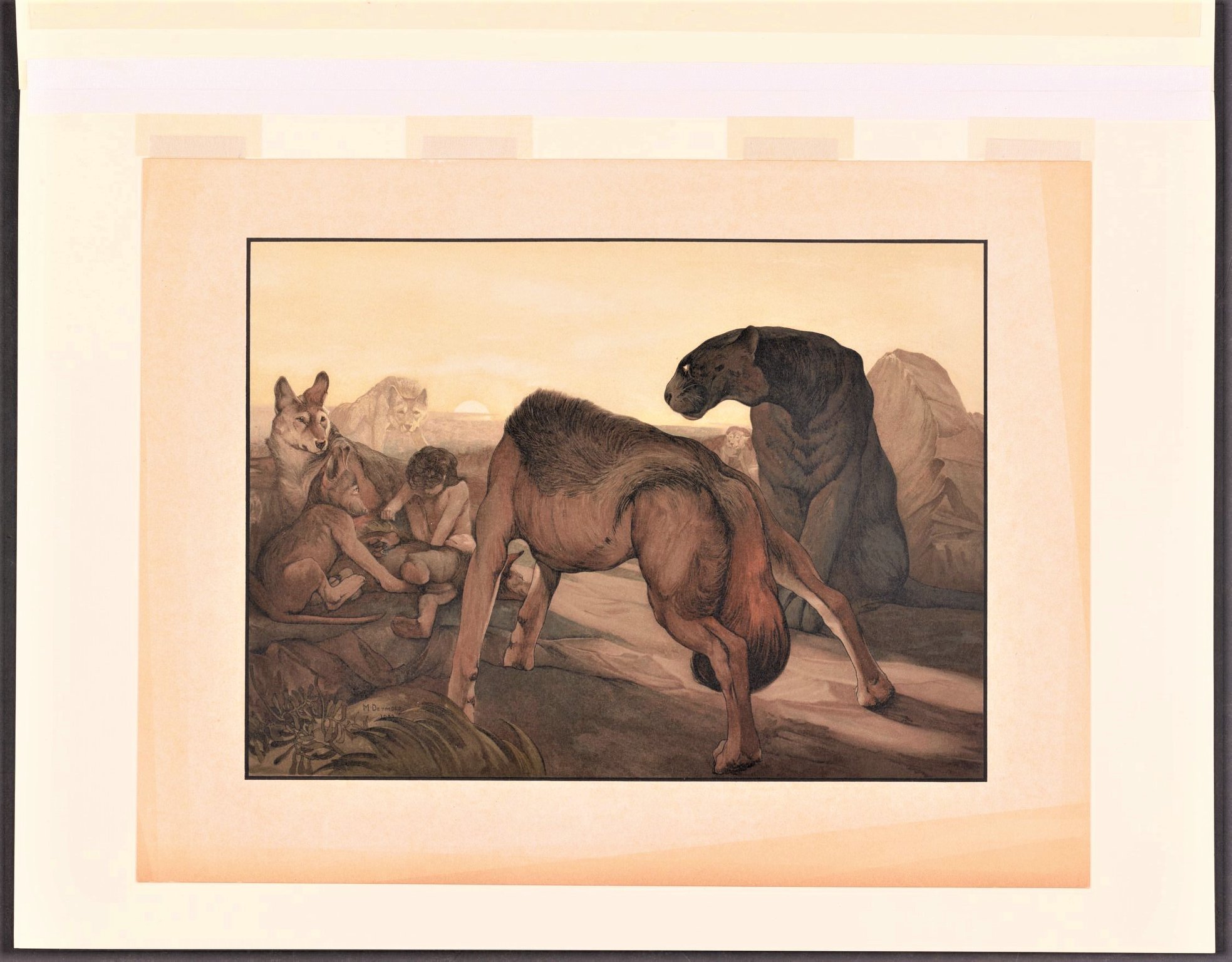
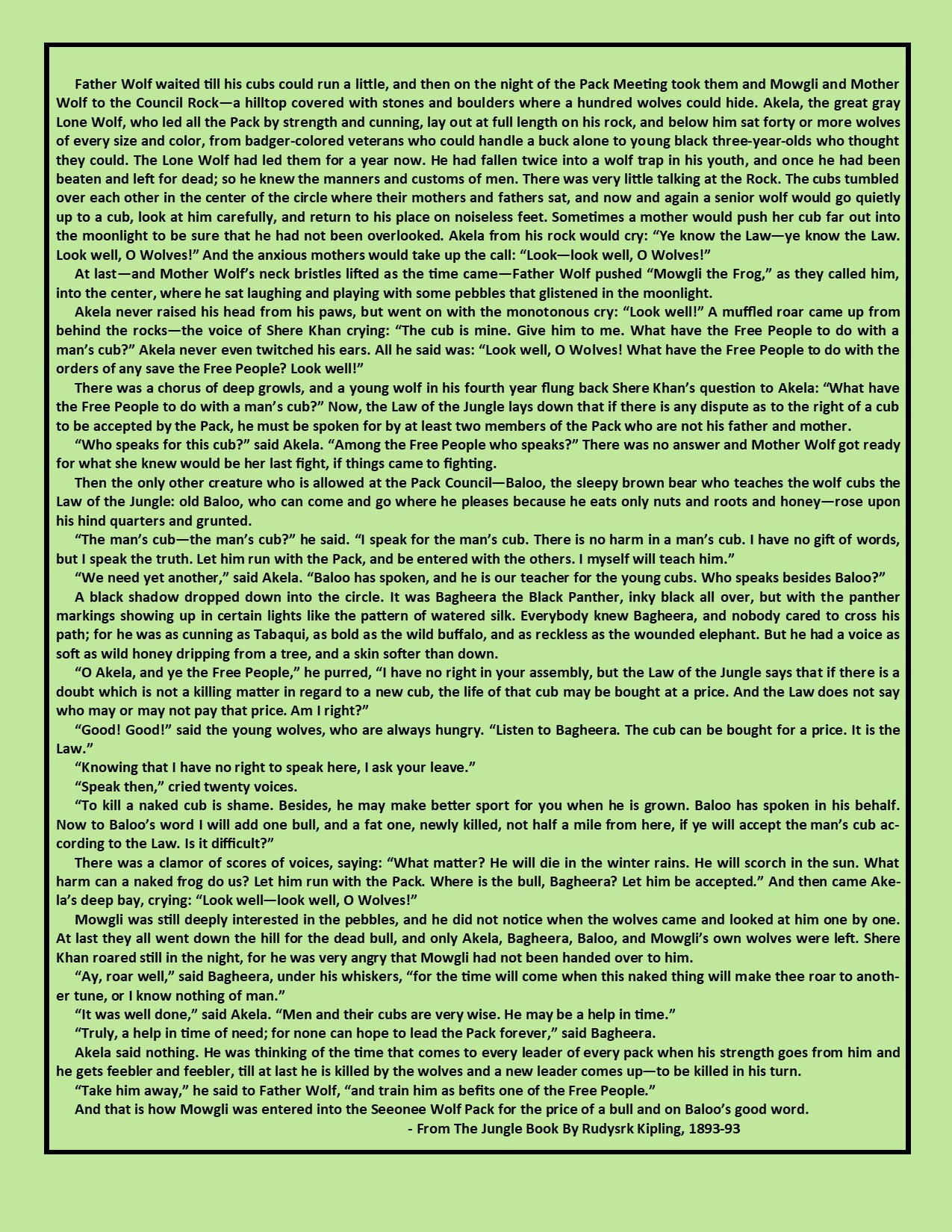
Joseph Rudyard Kipling (1865-1936) was an English author who was born in India. His works included The Jungle Book I and II, Captains Courageous, and Kim, and the poems “Gunga Din” and “Mandalay.” He was especially recognized for his innovation in short stories and children’s books. He was awarded the Nobel Prize in Literature.
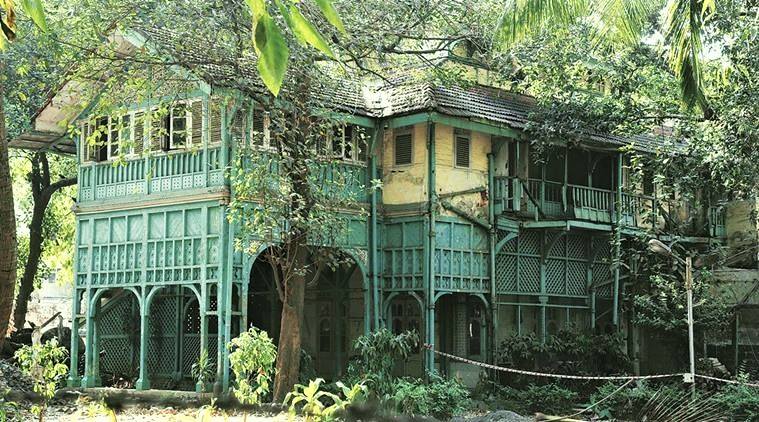
Kipling was born in Bombay during the British Crown rule of India. He came from a family with artistic and political roots. His father was a sculptor and pottery designer, heading art schools in Bombay. His aunt was married to artist Edward Burne-Jones. His cousin Stanley Baldwin was British Prime Minister three times.
From age 5 to 16, Kipling boarded and was schooled in England, then returned to India and his parents. He worked for English newspapers and began to write and publish poetry and short stories, which were very well received internationally.
He left India in 1889, and traveled to Hong Kong and Japan, and then to the United States and Canada where he visited many cities, one of them Chicago.
Wrote Kipling in “American Notes” after this trip: “I have struck a city – a real city – and they call it Chicago. The other places do not count. San Francisco was a pleasure resort as well as a city, and Salt Lake was a phenomenon. This place is the first American city I have encountered. Having seen it, I urgently desire never to see it again. It is inhabited by savages.”
He then described his wanderings in Chicago over a Saturday and Sunday. He started with the Palmer House, “overmuch gilded and mirrored… crammed with people talking about money and spitting everywhere.”
He took to the streets – which were “long and flat and without end.” A cab driver took him on a tour, talking about the progress Chicago had made. Wrote Kipling, “The papers tell their clientele … that the snarling together of telegraph-wires, the heaving up of houses, and the making of money is progress.”
On Sunday, he attended church – “It was a circus really, but that the worshippers did not know.” He heard more about progress: “… that the mere fact of spiking down strips of iron to wood, and getting a steam and iron thing to run along them was progress, that the telephone was progress, and the net-work of wires overhead was progress. They repeated their statements again and again.”
He ended the adventure with a trip to the stockyards where he listened to the hogs squealing and watched them be slaughtered. He was 24 years old at the time of this trip.
Returning to England, Kipling became a prolific and popular author, although some saw his work as propaganda for British imperialistic empire-building. He traveled to Australia, New Zealand, South Africa and back to India.
He married Carrie Balestier, the daughter of his American agent, and they lived in Vermont from 1892 to 1896, during which years he wrote The Jungle Book. They then lived in England with annual trips to English Cape Town in South Africa. For three years, he was the rector of St. Andrews University in Scotland.
The death of his daughter at age 6 from pneumonia, while visiting the U.S., spurred him to write more children’s books, for which he became well known. In 1907, he was awarded the Nobel Prize for Literature. The citation said it was "in consideration of the power of observation, originality of imagination, virility of ideas and remarkable talent for narration which characterize the creations of this world-famous author." Kipling was the first English-language recipient of the award, and at 41, the youngest at the time.
Such was his popularity and renown as an author that Kipling influenced world politics. He was always a pro-British Empire conservative, in favor of English colonialism in India and South Africa, and against Ireland Home Rule and Canadian reciprocity with the U.S. He was anti-communism, although his writings were popular in Russia. He was interested in Buddhism.
By all accounts, Kipling loved being a Freemason and received all the degrees. He used this as a plot device in his 1888 novella “The Man Who Would Be King” [which was made into a 1975 movie with Sean Connery and Michael Caine]. But Kipling turned down a knighthood and declined to be considered for Poet Laureate of Great Britain.
He became increasingly anti-German. During World War I, he was critical of the British Army and those who tried to avoid military service. His son John was rejected several times for service due to poor eyesight, so Kipling asked an acquaintance to get him into the Irish Guards. John disappeared in battle in 1915 and his remains were never found during Kipling’s lifetime. According to biographers, Kipling was emotionally devastated by the loss of his son. John’s burial place was finally identified in 2015.
Kipling used the swastika on his early works based on the Indian sun symbol for good luck. When the Nazis came to power and started using the symbol, Kipling ordered it removed from all his works, and warned about the danger the Nazis presented to the English.
During his lifetime, Kipling produced twenty-five collections of short stories, four novels, four autobiographies/speeches, seven military collections, eleven poetry collections, and four travel collections. More than fifty unpublished poems were found after his death.
Kipling’s talent as a writer was praised by other authors including James Joyce, Henry James and T. S. Elliott. Even George Orwell who considered Kipling a “jingo imperialist” conceded he was a “gifted writer.”
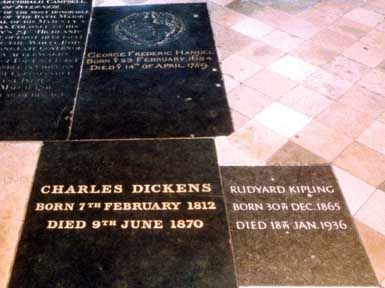
Kipling’s ashes are buried next to Charles Dickens in the Poet’s Corner at Westminster Abbey, London, England.
The Rudyard Kipling School, built as a new Chicago public school at 9351 S. Lowe Avenue, opened in 1961.
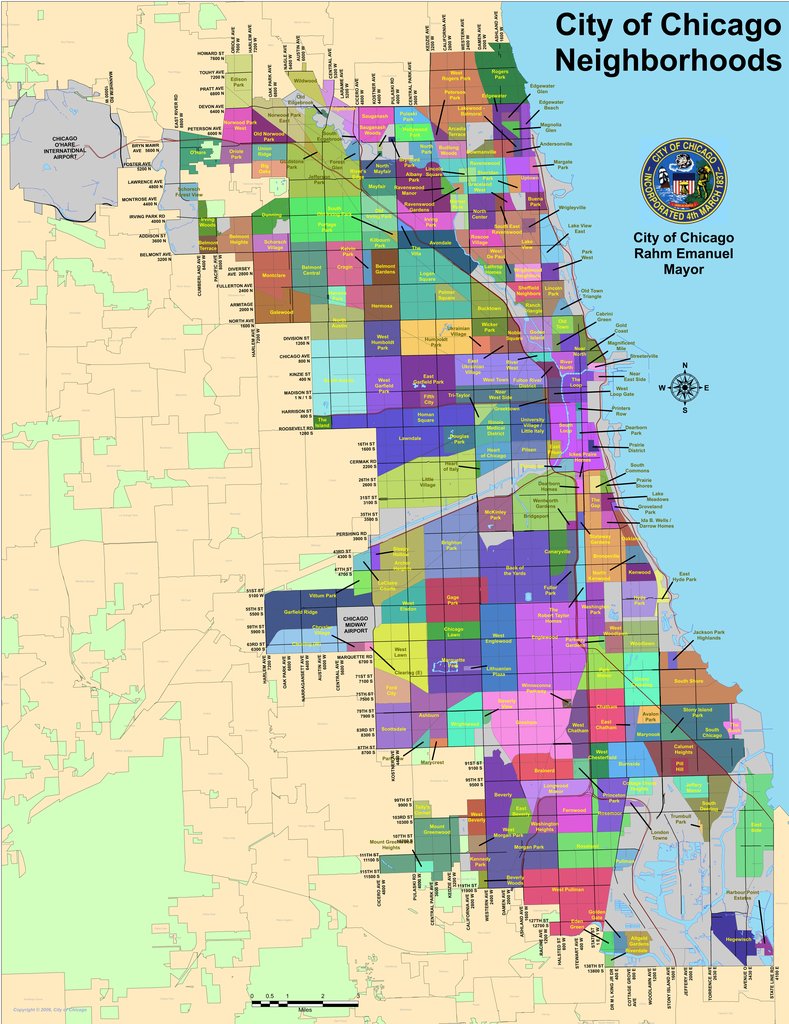
A history discussion is going on in another Facebook page so I am going to share the information I am posting there. The original poster was confused about Chicago wards, neighborhoods, school districts, police districts – they don't match up. The answer is no, they don't because all these systems were developed independently of each other and each system determines its own boundaries. Add in fire districts, postal districts, zip codes, state and federal representative districts, etc., and there are a lot of "boundaries" to keep straight.
On my to-do list is a history of the 19th ward. I'll do that before the next election.
But today I want to share about "neighborhoods." Neighborhood names like Beverly Hills, Morgan Park, Englewood, Ravenswood, Norwood Park, etc., really do not have any "legal" status. They are mostly historical and cultural remnants of villages and towns that were annexed to the city of Chicago through the years. They all have "boundaries" that were legal when they were their own municipalities but that stopped meaning anything when they joined Chicago and the land was assigned to a ward. So today, a "neighborhood" like Morgan Park or Englewood can be in several wards and police districts and school districts, etc. The "neighborhood" has nothing to do with the various districts.
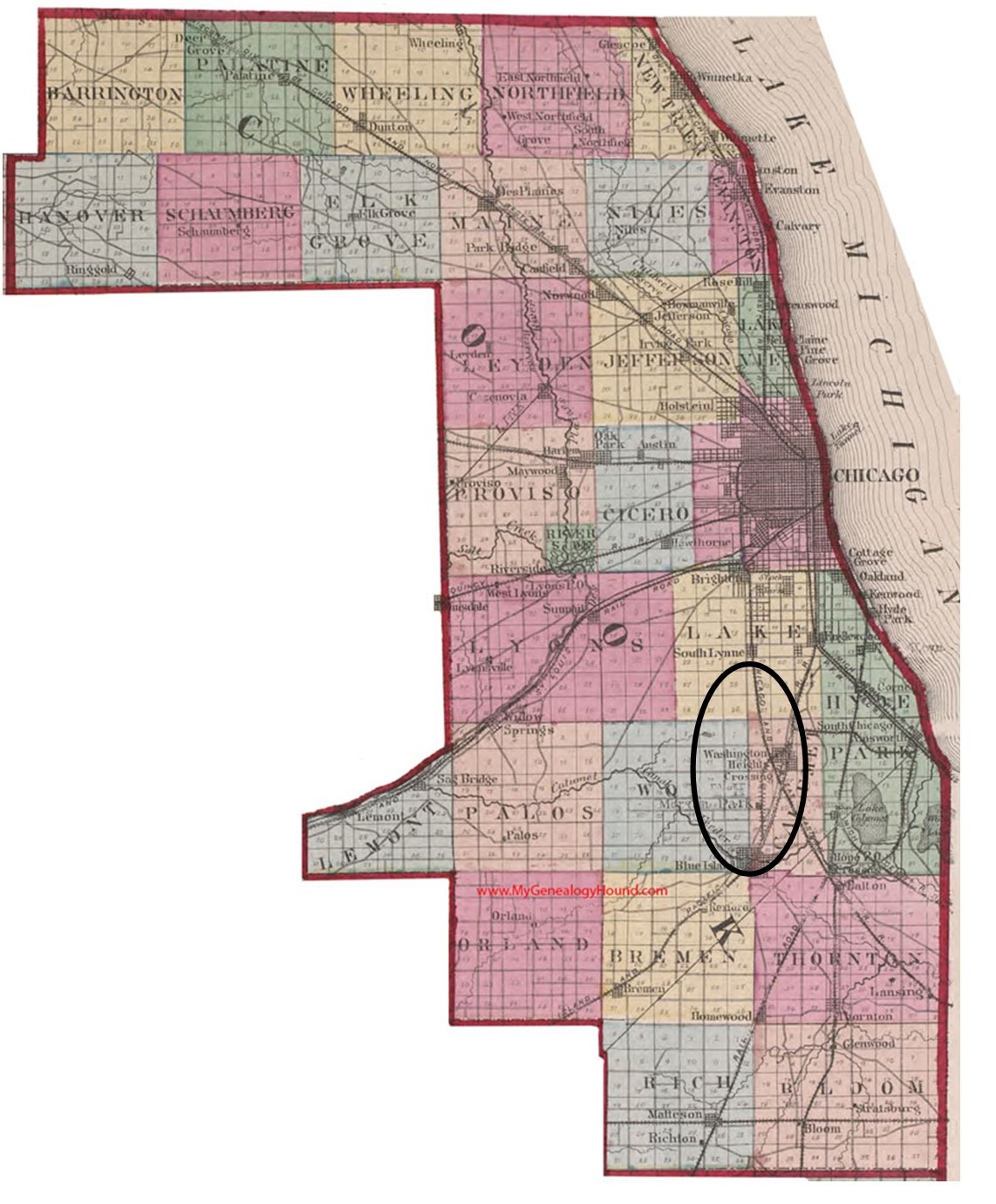
The counties in the state of Illinois were once divided into "townships." Attached is a map of Cook County from 1870, showing the townships. The "Ridge" area is in the circle. Parts were in three townships – Lake, Calumet and Worth. In 1889, all of Lake Township voted to join the city so a big chunk of the northern Ridge became part of the city effective in 1890. Most of today's Beverly was included.
The townships were dissolved in 1902 in Chicago, but they are still used today for taxation purposes. Once dissolved, each municipality was on its own. Morgan Park annexed to the city in 1914, Mount Greenwood in the 1920s. Blue Island and Evergreen Park voted to not annex to the city so that is why the boundaries here on the SW side look the way they do for the city of Chicago.
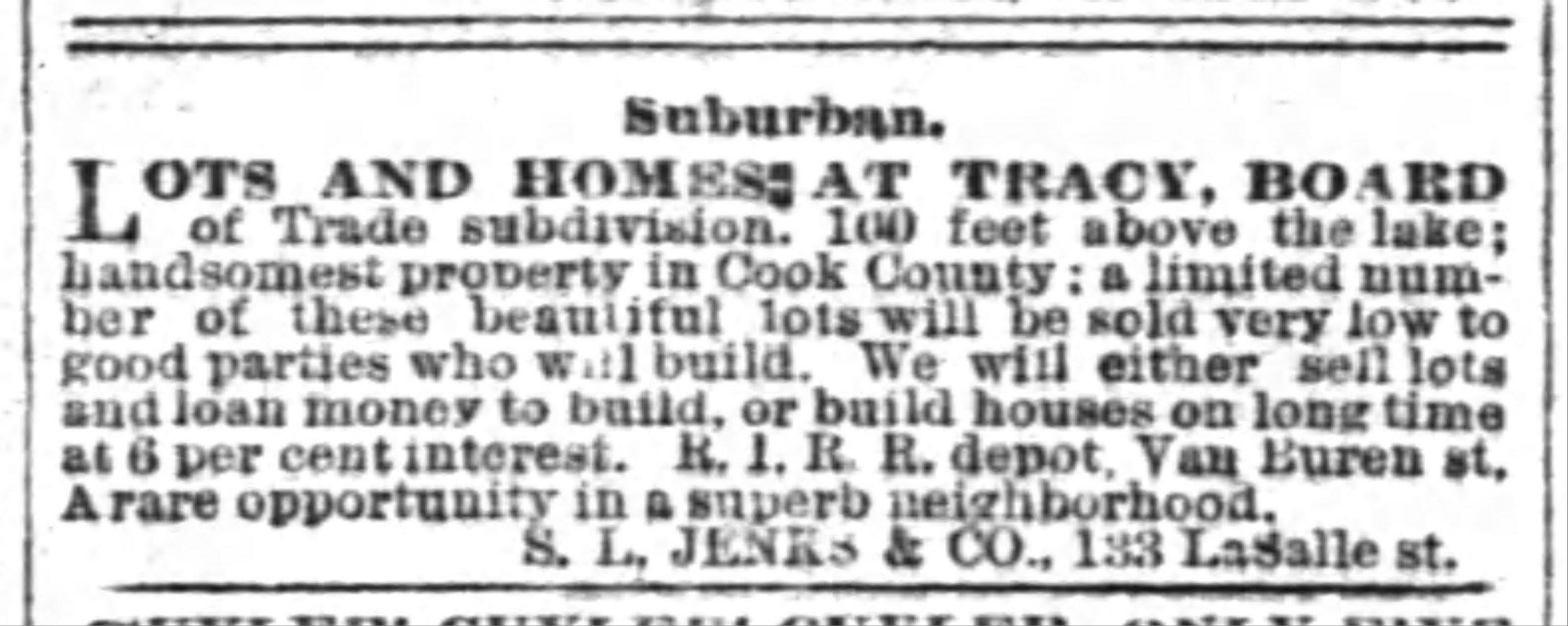
In addition, neighborhoods were, and still are, often divided up further for commercial and real estate purposes. For example, the area round 103rd Street and Longwood Drive was called "Tracy" for a number of years because 103rd Street was originally called Tracy and there was substantial real estate development in the area. An 1885 ad showing this is attached. Last, a current "neighborhood" map of the area from the city is included, with all the little sub-divisions, mainly used for positioning real estate.
We are going to switch up things a little bit. We are starting a series on the history of Dan Ryan Woods, and we will still continue to run the profiles on people for whom public schools on the Ridge are named.
The history of Dan Ryan Woods – Part 1: The woods become part of the forest preserves
By Carol Flynn
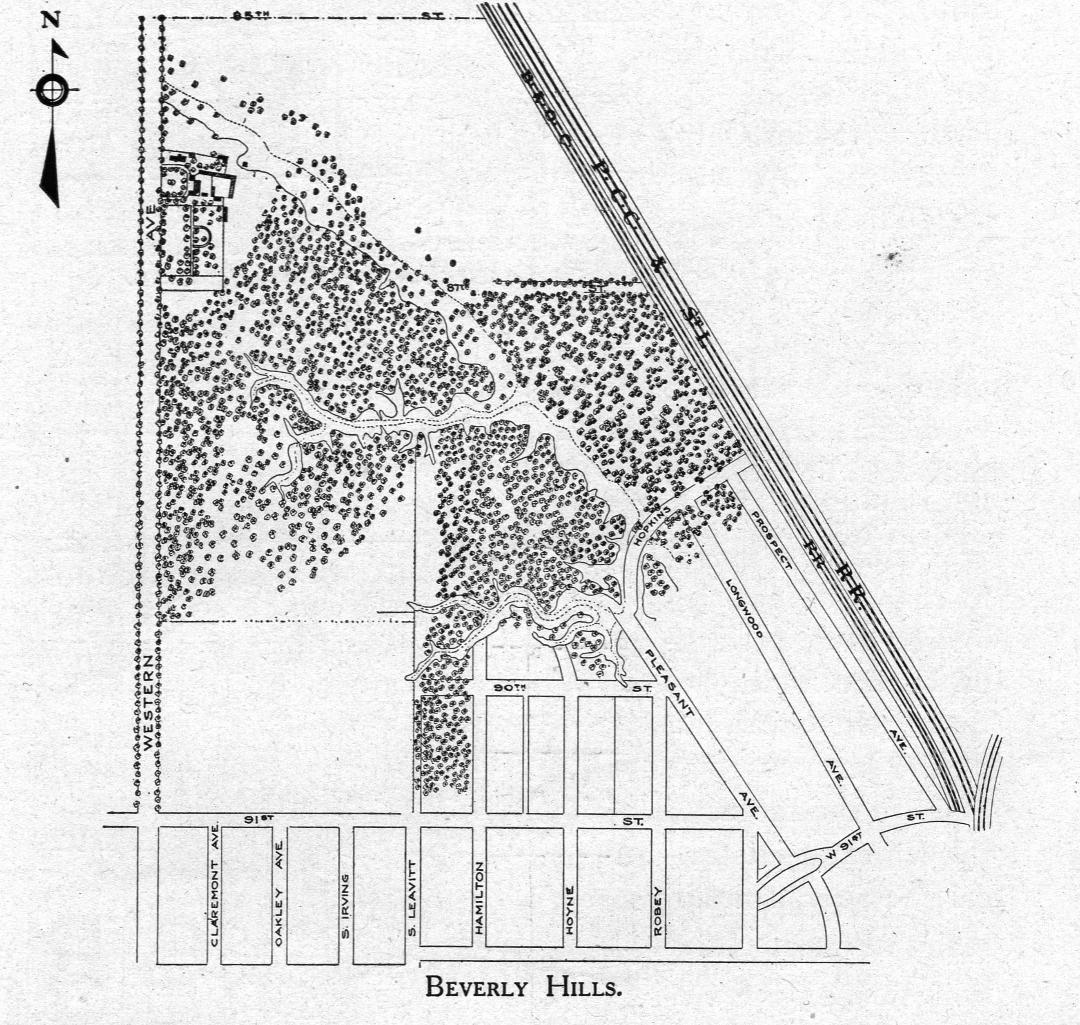
On November 10, 1916, a small article in the Chicago Daily Tribune reported that the Cook County forest preserve board would have a walk through the woods at Beverly Hills that day, with an eye toward purchasing them. That visit surely went well, because in September 1917, for the price of $152,937, the forest preserves district purchased 112.88 acres from the estate of John B. Sherman. The area was roughly bordered by Western Avenue, 83rd Street, the Rock Island railroad tracks and 89th Street.
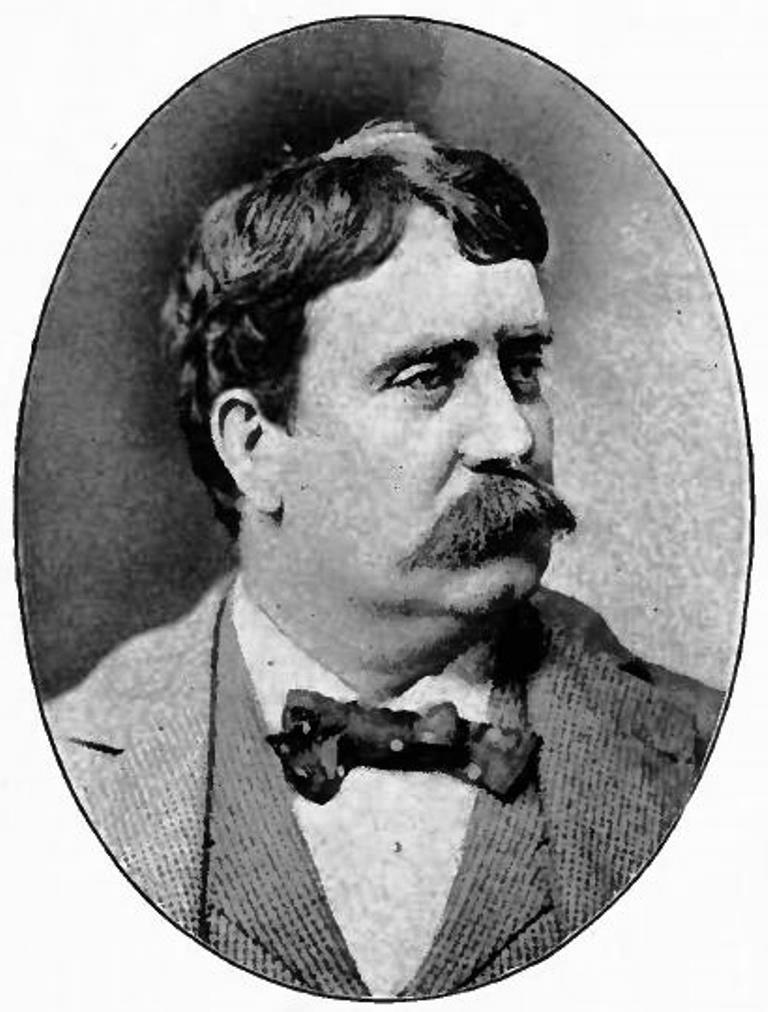
The following year, the Forest Preserves of Cook County (FPPC) issued a report that enthusiastically praised the Beverly Hills Preserve. Peter Reinberg was President of the Cook County Board of Commissioners at the time, and the board also had responsibility for the forest preserves. Daniel Ryan was on the Board and was Chairman of the Finance Committee and Chairman of the Depositories Committee, and a member of the Real Estate, Plan, and Forestry and Improvement Committees.
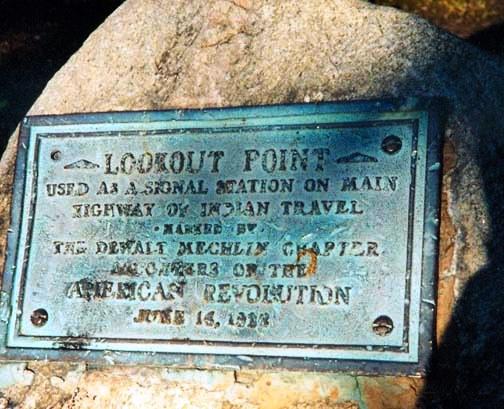
The 1918 report stated that the location had long been recognized as a historical attraction because of the towering bluff “Indian warriors utilized as a look-out and signal station in the days when they were fighting to hold their homes against the invading white men.”
This version of the early history of the land recounted the tale of the signal station atop the “Beverly Bluff” bursting into flame with the bonfires of the Indians, which produced ribbons of smoke that warned tribes for miles around.
Of course, as colorful as this story is, it is largely folklore. Without any doubt the Native Americans knew the northern tip of the landmass the white settlers called the Blue Island. There were Indian villages along the Calumet River at the southern end of the island and settlers found many Indian artifacts around the Ridge. Standing on the bluff, one could see all the way to Fort Dearborn, about 12 miles to the northeast. The fort was located about where the Michigan Avenue bridge is today, where the Chicago River joins with Lake Michigan (333 N. Michigan Ave,).
For some time, white trappers and traders had been following the Vincennes Trail through the prairies and wetlands and oak savannas of the Blue Island Ridge area. This trail was first worn by animals keeping to the high ground, then used by Native Americans. It ran south from Chicago, then east to Vincennes, Indiana.
Settlement of the Blue Island area by white families was gradual. By the time they began to put down roots here in earnest in the 1830s, the Native Americans in this area were almost all gone, due to the federal Indian Removal Act of 1830. The Treaty of Chicago in 1833 led to the final withdrawal of the Potawatomi, Chippewa, and Ottawa tribes from the Lake Michigan area.
Native Americans were still spotted in the area for decades afterwards. Although there was some fear and mistrust of them on the part of some of the white settlers, there were no large scale hostilities reported in the early histories. One early settler wrote about riding his pony as a boy across the prairies with the local Indians.
In 1922, the Dewalt Mechlin Chapter of the Daughters of the American Revolution placed a marker in the woods along the north side of 87th Street to commemorate the Indian lore that earned the bluff the name “Lookout Point.” That marker should still be there. [Note: It has since been reported that this plaque went missing 2-3 years ago. Pictures are all that remain.]
The 1918 report was full of praise for the Beverly woods, stating, “In Beverly Hills, the southern end of Cook County has a real beauty spot. It is a preserve only 126 acres in extent but for its acreage it boasts more spectacular points of interest than any other stretch of forest land in the county. It is an ideal natural park.”
The report also pointed out that the Beverly preserve had the distinction of being the only one accessible to all of Chicago “on a five cent fare.” Visitors could take the Ashland Avenue streetcar to 87th Street and walk west to the Ridge. Another option was to take the Rock Island train from the LaSalle Street station to the Beverly Hills station at 91st Street.
The 1918 report included a map of the woods as they were at the time they became part of the forest preserves. The map includes structures that likely dated back to the days when the land was the Sherman Farm, filled with “splendid herds of stock.”
The next installment will look at the formation of the forest preserves, and the “Sherman Farm at Forest Hill.”
The history of Dan Ryan Woods – Part 2: The forest preserves and Sherman Farm
By Carol Flynn
Picture Chicago as sitting in the bottom of a big shallow bowl, an ancient lake bed. The east side is cut away allowing water to flow out into Lake Michigan. The other sides of the bowl slope upward around the city. Along the sides and on the wide rim of the bowl are forested areas. These forests to the north, west and south became known as the “outer belt.”
As early as the 1860s, Chicagoans were concerned about adequate space for recreation and outdoor activities. By the 1890s, there was a growing commitment to preserve this outer belt of forested lands for recreation and aesthetic purposes. In an 1899 outer belt report, the Blue Island Ridge and its woods were mentioned as one of the areas that should be preserved “for the benefit of the public … and for their own sake and scientific value.” The uniqueness of the geology of the area was fully recognized.
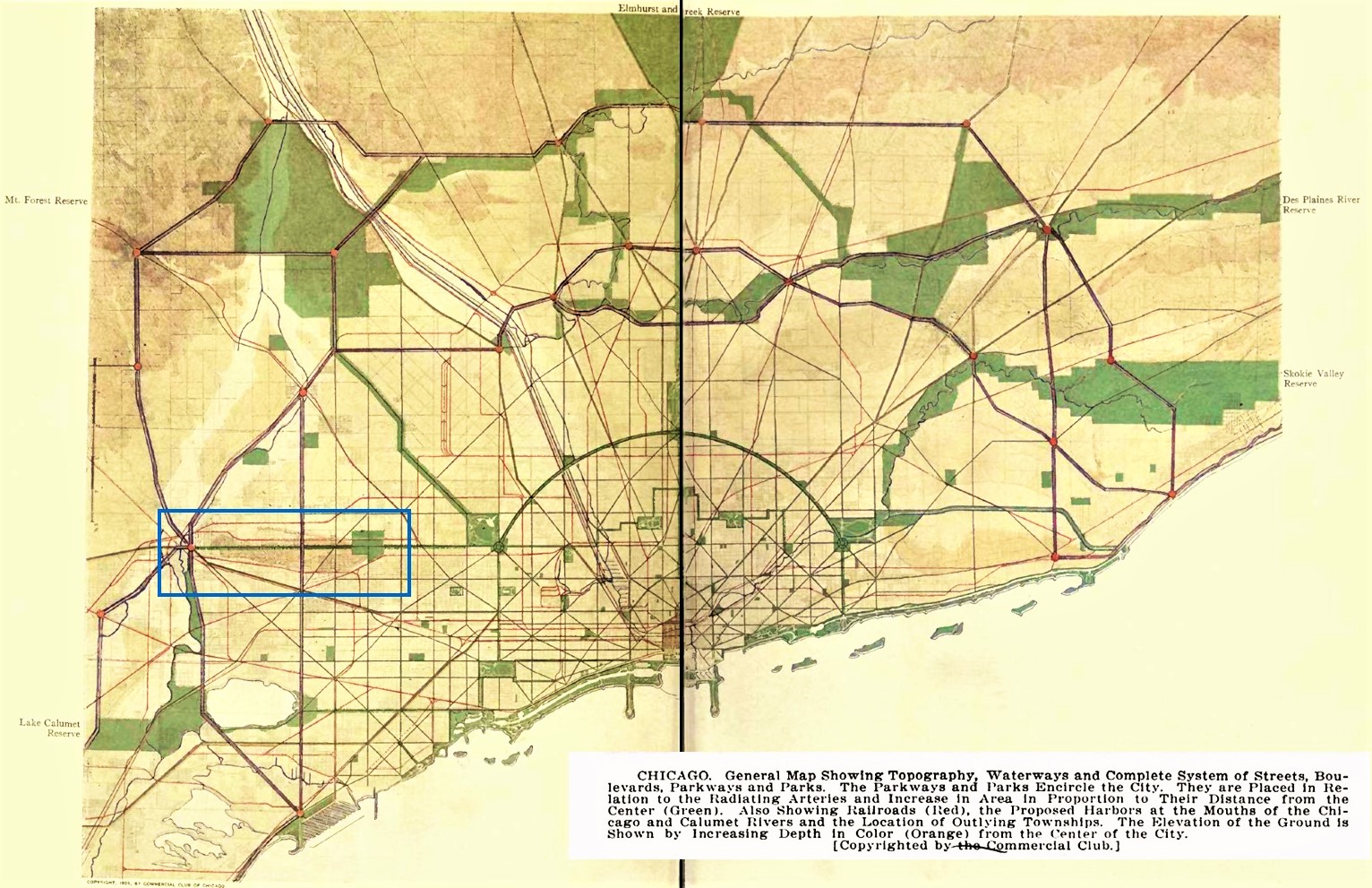
Daniel Burnham, the architect and urban planner who gave Chicago the White City at the 1893 World’s Fair, the Columbian Exposition, worked with city business, civic and government leaders to develop the 1909 Plan for Chicago. This plan called for developing the outer belt into natural preserves as next in importance to developing the lakefront into a system of parks. The plan called for connecting all the parks and preserves with a boulevard system.
Other notable leaders in the forest preserve movement included landscape architect Jens Jensen and architect Dwight D. Perkins, who is called the “father of the forest preserves.” Perkins led Saturday afternoon hiking trips that introduced thousands of Chicagoans to the outer belt. Jensen led tours of prominent politicians to win over votes in the Illinois General Assembly. Because they were accessible by public transportation, the Beverly woods were a popular destination for hikers and for artists, who set up their easels to capture the natural beauty.
The implementation of the plan was overseen by businessman Charles Wacker, who was profiled a few weeks ago because a school in a Ridge community is named for him. He was Chair of the Chicago Plan Commission from 1909 to 1926. Wacker Drive is also named for him.
In 1913, Cook County passed the Forest Preserve District Act that set the mission of the district “to acquire, restore and manage for the purpose of protecting and preserving public open space with its natural wonders, significant prairies, forests, wetlands, rivers, streams, and other landscapes with all of its associated wildlife, in a natural state for the education, pleasure and recreation of the public now and in the future.”
In 1915, the Board of Commissioners of Cook County assumed the role of Board of Forest Preserve Commissioners, an arrangement that continues today. Dan Ryan was the Finance Chair for the county, so he became the same for the preserves. Bonds were issued to raise money to purchase land, and the first tract purchased was the 500-acre Deer Grove in Palatine in 1916.
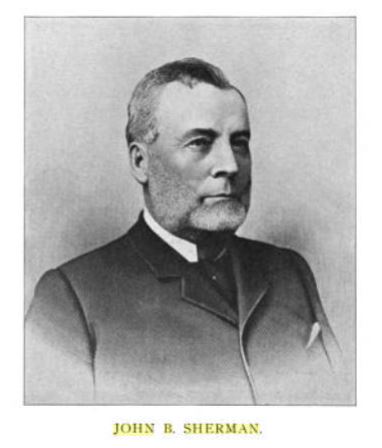
Private land, some of it already turned into farms, was reclaimed for the forest preserves. At the time Cook County purchased the Beverly Hills woods in 1917, it was owned by the estate of John B. Sherman, the founder of the Union Stock Yard and Transit Company. Sherman had purchased the land in 1872 and used it as a vast working farm that was known for decades as the “Sherman Farm at Forest Hill.” Forest Hill was the name for the area around today’s 87th Street and Western Avenue.
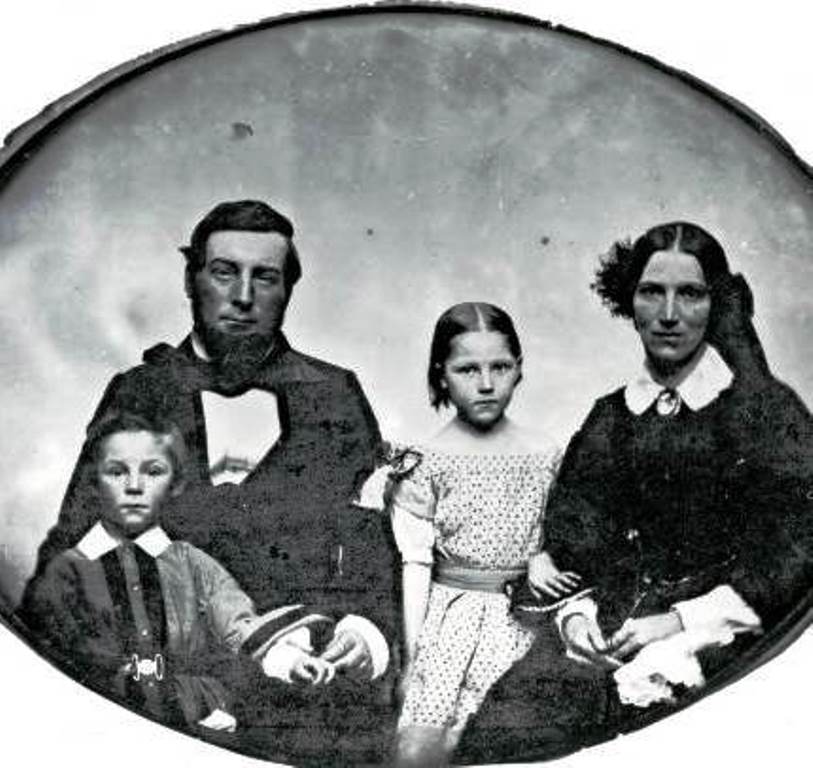
John Brill Sherman (1825-1902) was born in New York and grew up on a farm. In 1849, the Gold Rush led him to California where he made several thousand dollars. On his way back east, he stopped in Illinois and bought farmland. He moved to Chicago and bought up several small stockyards. He convinced the owners of other small operations to consolidate with him, and in 1965, the Union Stock Yard and Transit Company of Chicago was formed.
He was considered a friend of the common working man, establishing a minimum wage of $2 per day, roughly $55-60 today, for laborers in Lake Township where he lived and where the stockyards were located. The average daily wage at the time was about $1.30. Lake Township was not part of the city of Chicago at that time, it was a section of Cook County.
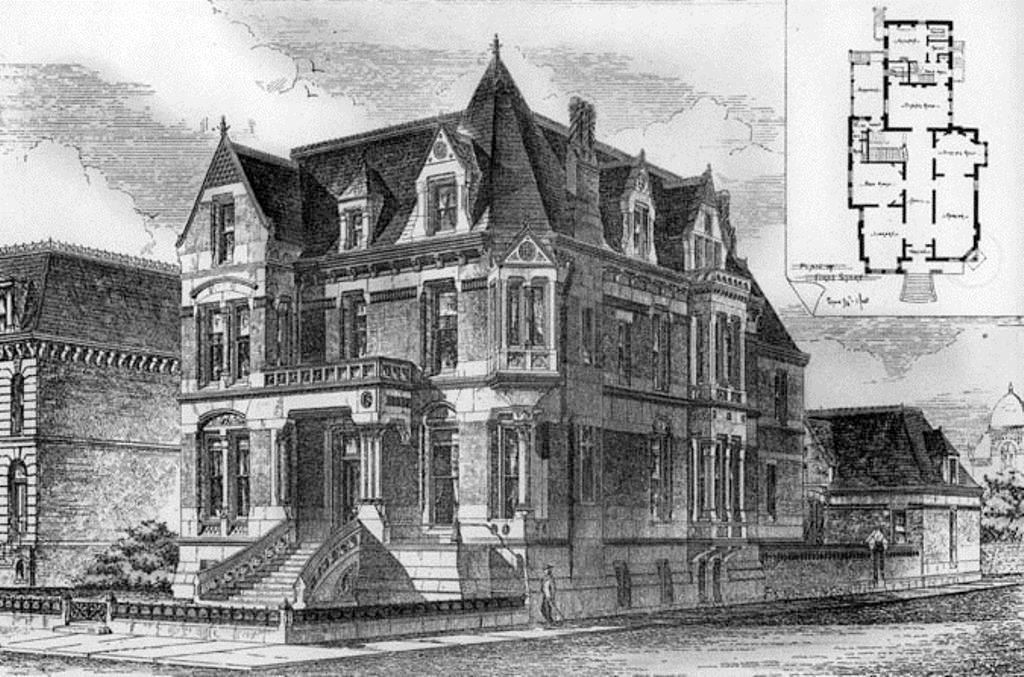
The Sherman family was living on Michigan Avenue when they decided to build a home on fashionable Prairie Avenue. In 1874, Sherman took a chance on a young architect, Daniel Burnham, and his partner, John Root. Burnham and Root designed a house for the Shermans at 2100 S. Prairie Avenue. Neighbors included Marshall Field and George Pullman.
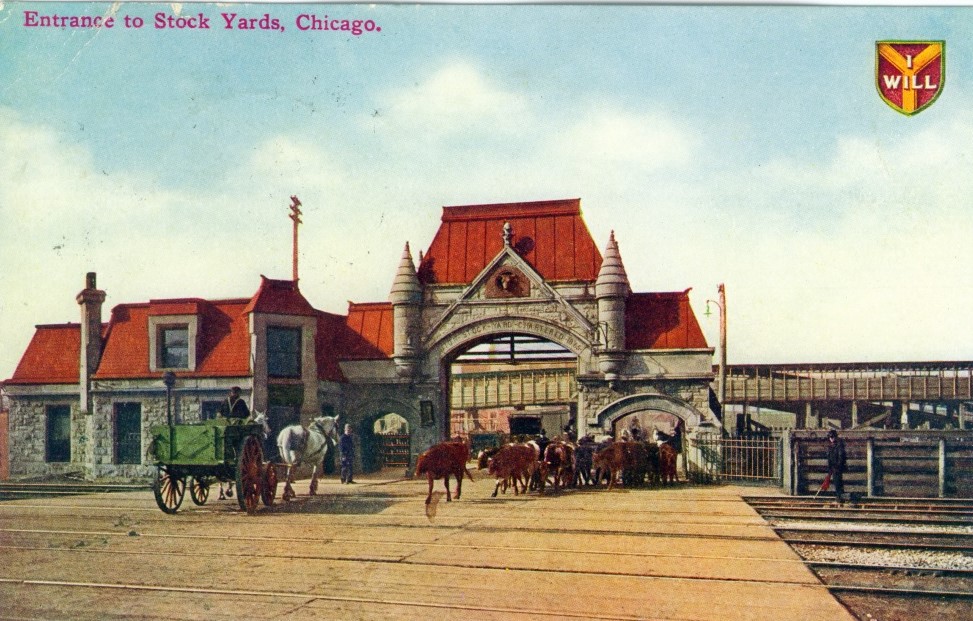
Around this time, the original gate of the Union Stock Yard, which still stands at Exchange Avenue and Peoria Street, was built. The gate is believed to have been designed by John Root and was named a National Historic Landmark in 1981.
When meeting with Burnham about the plans for the house, Sherman often called in his daughter Margaret for her opinion. Margaret and Burnham fell in love and married in 1876. Burnham moved in with his in-laws on Prairie Avenue. Later, Burnham and Margaret moved to Evanston. They had five children.
Sherman was very much opposed to the annexation of Lake Township, which also included most of Beverly, to the city of Chicago. But the residents of the township voted in favor of annexation in 1889, so the Union stockyards became part of Chicago.
Described as a “public-spirited man,” Sherman took particular interest in designing and developing the public park system. For 25 years he was a member of the South Park Commission Board and, although he declined election to other public offices, he agreed to serve as president of that board. The South Park Commission oversaw Jackson Park, Washington Park, and the Midway Plaisance. These sites were selected for the 1893 World’s Fair, and his son-in-law Burnham was selected to oversee the design and construction of the fairgrounds. (Root died from pneumonia in 1891 at the age of 41, during the planning of the Fair.)
Sherman guided the growth of the Chicago stockyards. He was recognized as the ablest manager in this industry in the world. During his lifetime, the Chicago livestock market came to be called one of the greatest wonders of the age and the greatest institution of Chicago.
He became known and respected for his efforts to improve stock. Central to this work was the 640-acre Forest Hill Farm. Sherman owned big stretches of land from 75th and Ashland Avenue west to Western Avenue and south to 95th Street. Around 87th Street, his holdings also included the land west to around California Ave. The Chicago Livestock World, a newspaper he helped found, called this the largest farm within the city of Chicago if not in Cook County.
Next installment: The particulars of the Sherman Farm at Forest Hill.
The history of Dan Ryan Woods – Part 3: The Sherman Farm at Forest Hill
By Carol Flynn
John B. Sherman of the Union Stock Yard and Transit Company purchased the land that is now the Dan Ryan Woods in 1872 and used it as a livestock farm. Railroad tracks were laid to connect the stockyards and the farm. The farm was referred to as Sherman’s “laboratory.”
Prize cattle and hogs were bred there or brought in for breeding. The cattle grazed on the farm’s meadows. Other parts of the farm were used for hay crops, and the section west of Western Ave. and north of 87th Street included an apple orchard.
Sherman won many awards for the size of his livestock. Prize animals were slaughtered, and cuts of meat given to his friends at Christmas and other times. Some of the more famous steers had their heads mounted for display at the stockyards.
Veterinary medicine experiments were also conducted there. In 1888, Sherman allowed some of his healthy cattle to be placed in a pen with cattle from Texas infected with “Texas fever” to see if the disease was contagious. All of Sherman’s cattle became infected. It later was determined the disease was caused by a parasite transferred by cattle ticks, which were eventually eradicated.
Sherman was described as a “venerable gentleman farmer” when at the farm on “a high ridge covered with oak and hickory trees.” He used the farm for social events. One newspaper in 1883 reported that the twelfth annual clam bake of the Union Stock Yard was held at the farm, with over 100 guests. At another time, he offered a night of dog-fighting and chicken-fighting for his guests.
There were a number of stories in the papers through the years about the farm. Wolves in transit to a menagerie escaped and were found in the woods at the Farm. Of course, wolves were once plentiful in the area but the settlers had hunted them all down a half century before. Other stories included a cow stolen from the farm, and the enormous hay crops produced in the fields there.
One curious story from 1902 involved John Andrews, 46, the manager of the farm. A calf had been attacked by a wild dog and developed rabies in 1898, four years before. While helping the calf, Andrews’ hand and arm were scratched. He showed no signs of being infected with rabies at the time, but he had “never been free from the dread that the disease might appear.” Now, four years later, he was bitten by a hog which gave him a “severe shock to his nervous system” and brought on the symptoms he had feared – “barking like a dog, snapping at his attendants, and fearing water.”
It was supposed this was acute hydrophobia, or rabies, that dated back to the incident four years earlier. After two weeks, his physicians pronounced him fully recovered. This was brought to the attention of the medical community as a rare survival from supposed rabies. [Note: Rabies, a viral disease, can actually have an incubation period of over six years. Inflammation of the brain can cause hallucinations and abnormal behavior. Once the symptoms begin, rabies is almost always fatal. If this really was rabies, and not a different illness or a psychosomatic illness, it was indeed a remarkable recovery.]
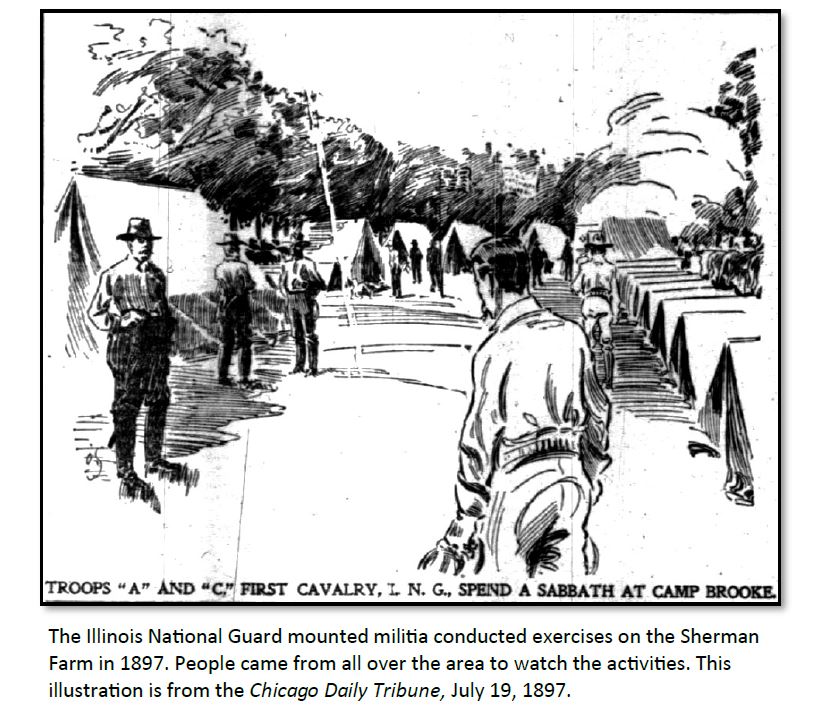
Another story was that in 1897, the mounted militia of the Illinois National Guard set up camp for several days and held maneuvers at 95th and Western. The ground used for drilling was a newly mown meadow of forty acres on the Sherman Farm. It was reported that the public – especially young ladies – enjoyed visiting the camp and watching the events.
Next installment: Murder comes to Sherman’s Farm
The history of Dan Ryan Woods – Part 4: Murder comes to the Sherman Farm at Forest Hill
By Carol Flynn
John B. Sherman’s Farm, which became Dan Ryan Woods, was involved in two murder investigations in the late 1890s. Both murders occurred elsewhere in the city, but the remains of the victims were hidden on the Ridge. Apparently, the seclusion of the area made it appear a perfect spot to do this, but in both cases, the victims were recovered and the murderers brought to justice.
In February 1895, local children found the remains of murder victim Fritz Holzhueter partially buried by brushwood under a tree near 95th Street and Western Avenue. This was outside of Sherman’s property, on the Evergreen Park side of the road. An oil can used in an attempt to burn the body was found a few blocks away on Sherman’s property.
The newspapers reported that the foreman of Sherman’s Farm had seen the man accused of the murder, Nicolas Marzen, in the area the night the body was left, but the foreman was not called to testify at the trial. Marzen was found guilty of the crime and sentenced to 30 years in prison.
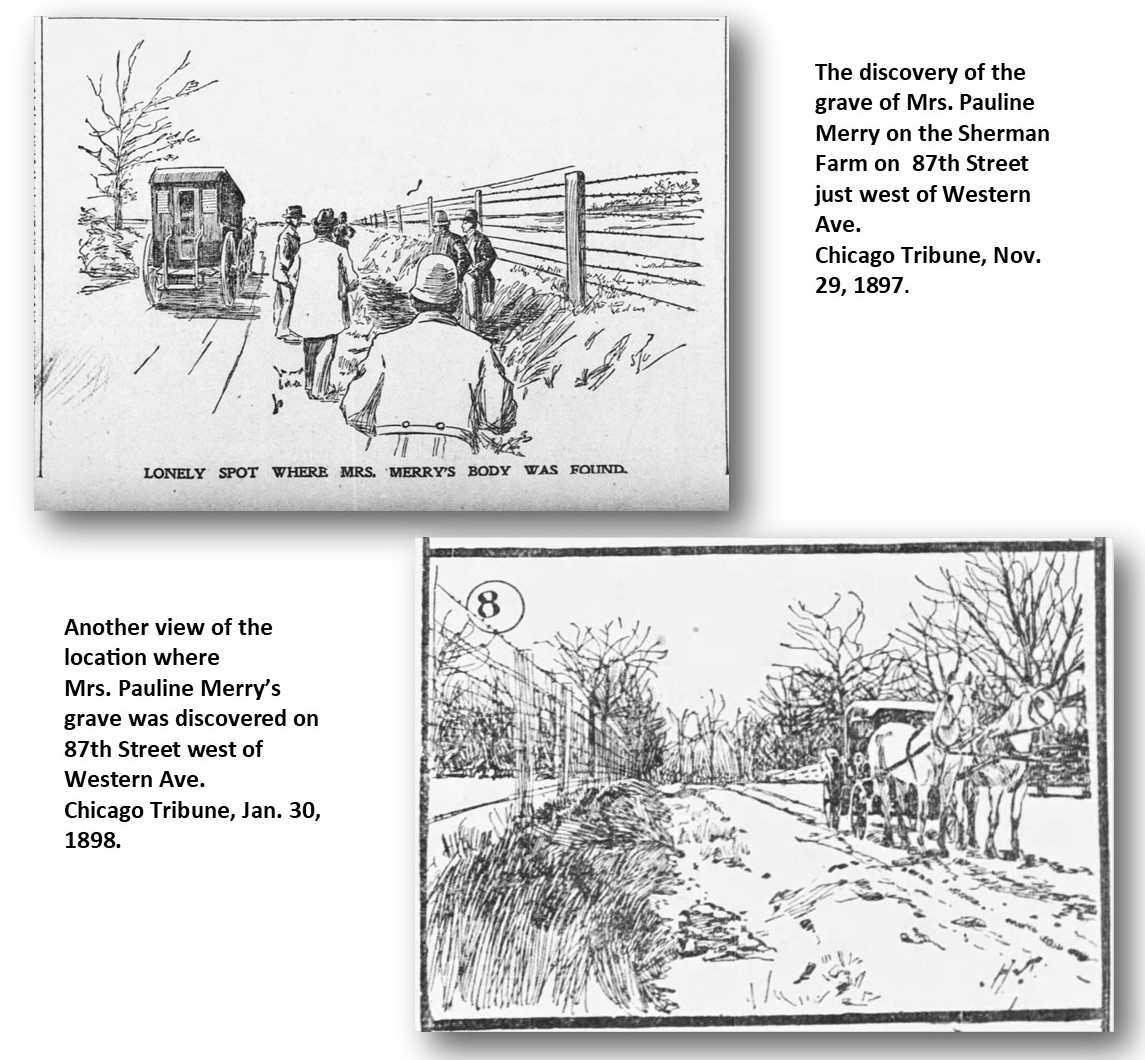
The second murder, of Mrs. Pauline Merry, took place in November 1897. An accomplice who had helped her husband, Christopher Merry, bury her body broke down under questioning and took the police to the site, a shallow grave in a ditch on the north side of 87th Street just west of Western Avenue, next to the Sherman Farm apple orchard. While the police were recovering the body, an employee of the farm came over to the site to inquire as to what was going on. He was told “to take a walk” while the police combed the area for evidence.
Christopher Merry was convicted of the crime and was hanged in April 1898.
The newspapers covered the investigations and trials of both murders in great detail. As with most stories of this nature, this was sensational news. Although the crimes were committed in other parts of the city, attention was given to the places on the Ridge where the victims were found. The Chicago Tribune gave several descriptions of the sites at the time of these incidents.
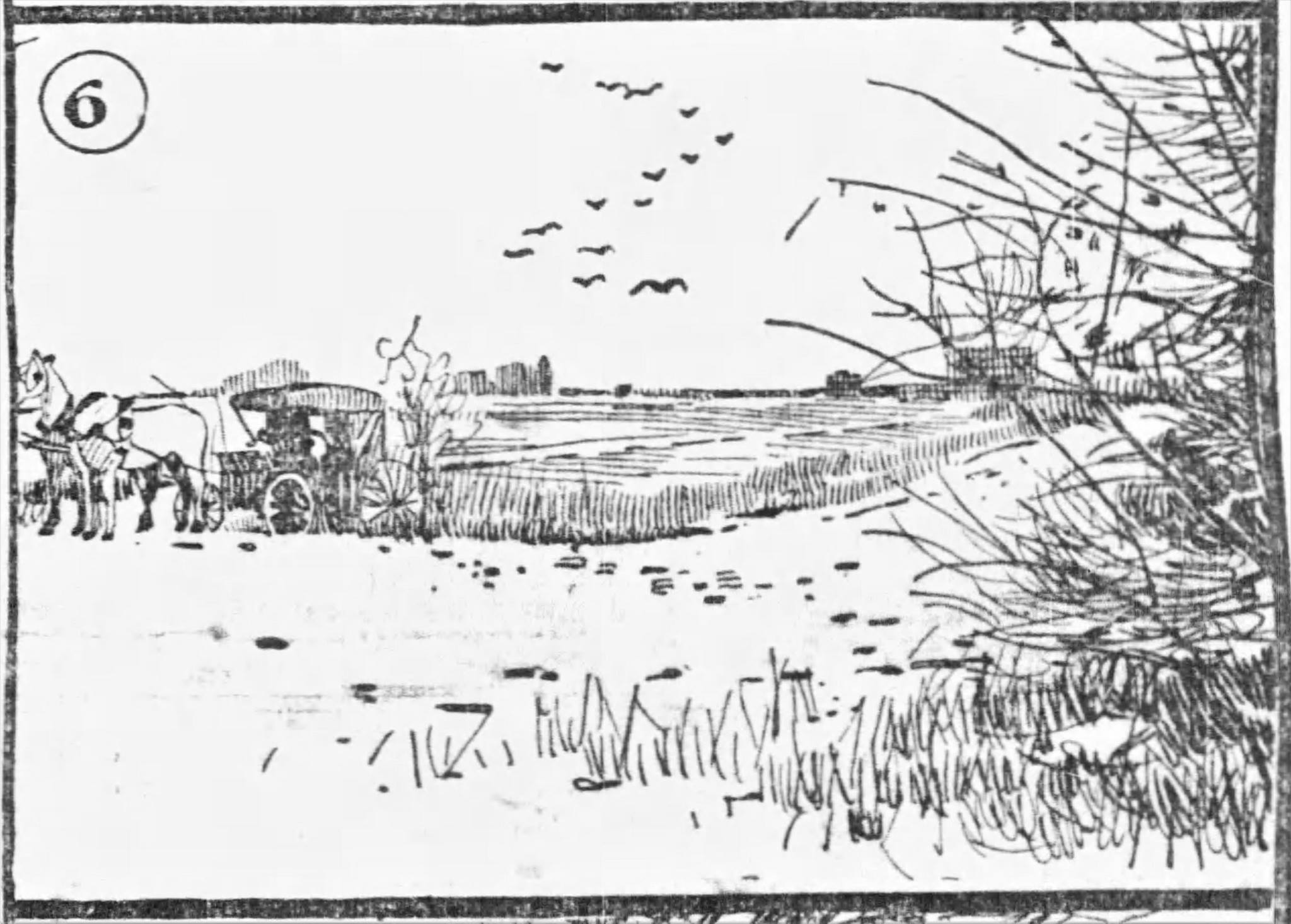
The area along Western Avenue was isolated, still mostly farmland with few houses. Ninety-fifth Street and Western Avenue was described as a “desolate” area with dirt roads bordered by broad ditches with “trees and brushwood everywhere.” There were only two houses close by. One was the summer residence of Dr. John Kellogg and his family, which included Kate Starr Kellogg, the educator for whom the school in North Beverly is named, and her sister, artist Alice Kellogg.
The other residence, at 93rd Street, housed Mrs. Marie Zeder, a widow who kept a roadhouse, and her family. It was two of the Zeder children who discovered Holzhueter’s body hidden behind a hillock covered with a dense cluster of trees.
Likewise with the 87th Street location, there were only two houses near the site. Both were on the Sherman Farm, used as residences for the foreman and his assistants.
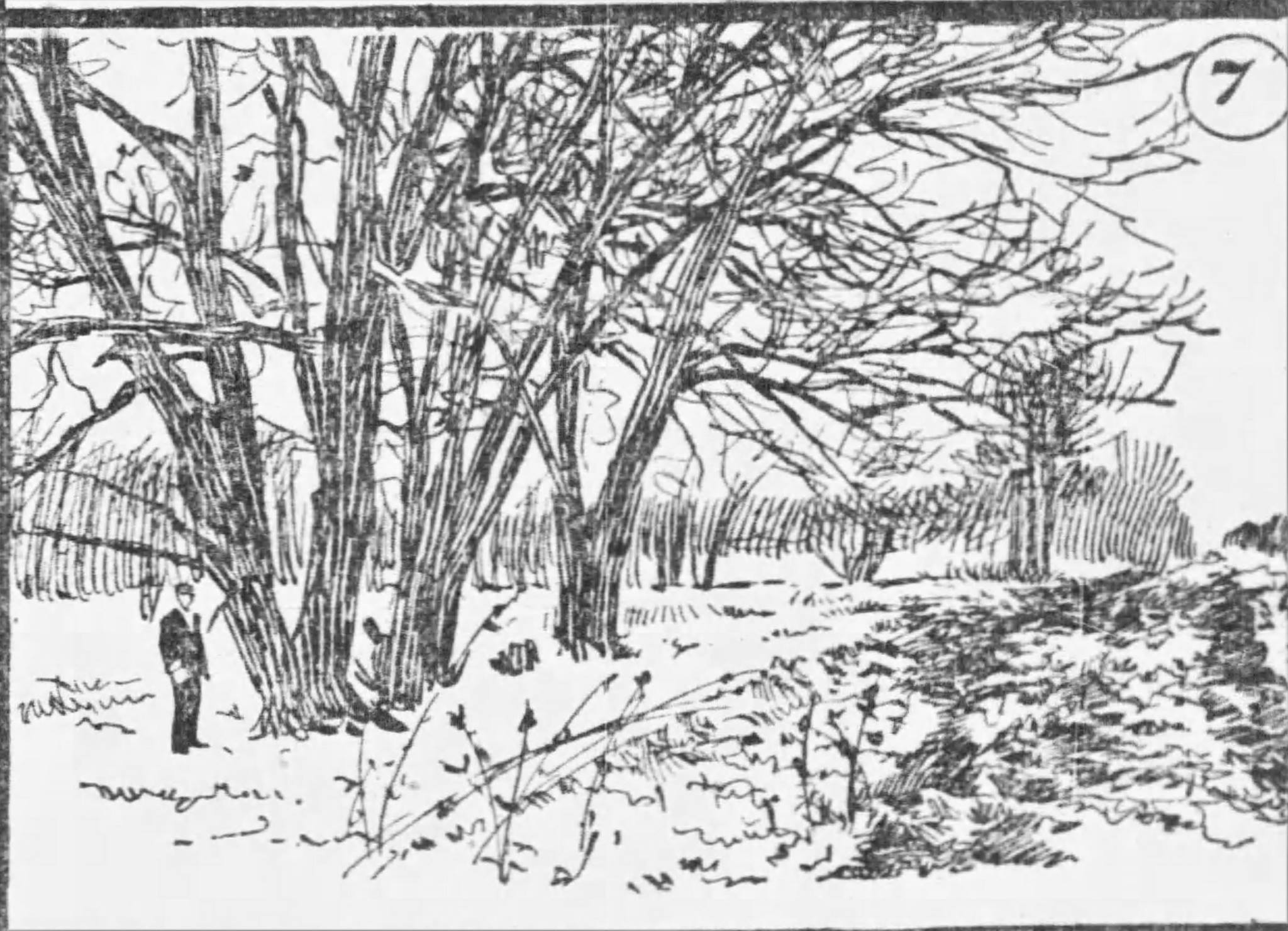
The Chicago Tribune gave several descriptions of that area in November, 1897: “As the [Western Ave] roadway ascends the sharp incline to the top of Forest Hill [at 87th Street], it passes under the broad boughs of the giant trees of that point, reaching the top of Forest Hill with its great spreading trees, and in this season of the year, presenting a weird and desolate appearance.”
The Tribune also reported that the trees, “relics of the primeval forest,” cast a heavy shade on Western Avenue and 87th Street. Deep trenches ran along the sides of 87th Street, which was a rural dirt road, scarred with furrows from wagon wheels.
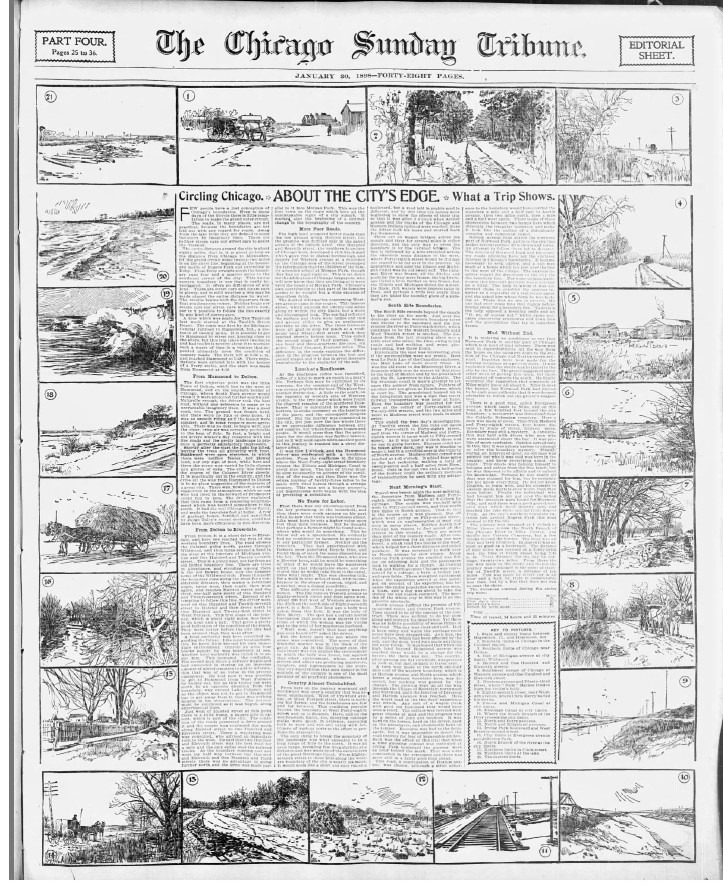
In an article in the Tribune on January 30, 1898, the unnamed author reported on a road trip he and two companions took around the city’s edge, starting from the southeast. They came west along 111th Street, and at Western Avenue, they turned north. The article described Western Avenue as having “a worn and discouraged look. The sun had softened the surface and there were lumps and ruts and greasy slides to give an unpleasant diversity to the drive.”
They were glad to stop for lunch at a roadhouse near 91st Street where they were served coffee “of a kind to mark an epoch in a man’s life.” They noted that most of the places on Western Avenue usually pushed beer. Although not identified in the paper, this could have been the roadhouse owned by Mrs. Zeder.
The author then focused on the locations where the two murder victims had been found. Several drawings depicting the scenes were included with the article. A more positive, wholesome image of the Ridge likely might have been preferred by the local residents, but the murders and the trials were of major interest to the public at the time of the article.
The author did point out that while it was evocative to “comment on the loneliness of the place and the consequent dangers thereof,” the murders had occurred in other places in the city, “where there are houses and people.” Although there was “a certain horrid fascination” with the Western Avenue locations, “the indictment was not against the environment in which the body was found, but against that other environment – the thick of the great city, whose crowded streets and alleys are producing murderers, burglars, and highwaymen by the score.”
The article noted that “the city superstition that sees danger in the solitude of the country is one of the most peculiar of all psychical phenomena.”
The next installment on “the Mystic Forest Preserve” will present a much more favorable image of the area.