
Explore the RHS Facebook Archives, a rich repository of local history written by Carol Flynn. For two decades, Carol brought a deeply dedicated voice to public education at RHS. Her role as Facebook administrator through mid-2025 naturally extended her prolific research into meticulously detailed articles, most notably her multi-part historical series posts. Today, Carol continues her local history writing for The Beverly Review and other outlets.
July 2023
The Ridge Historical Society
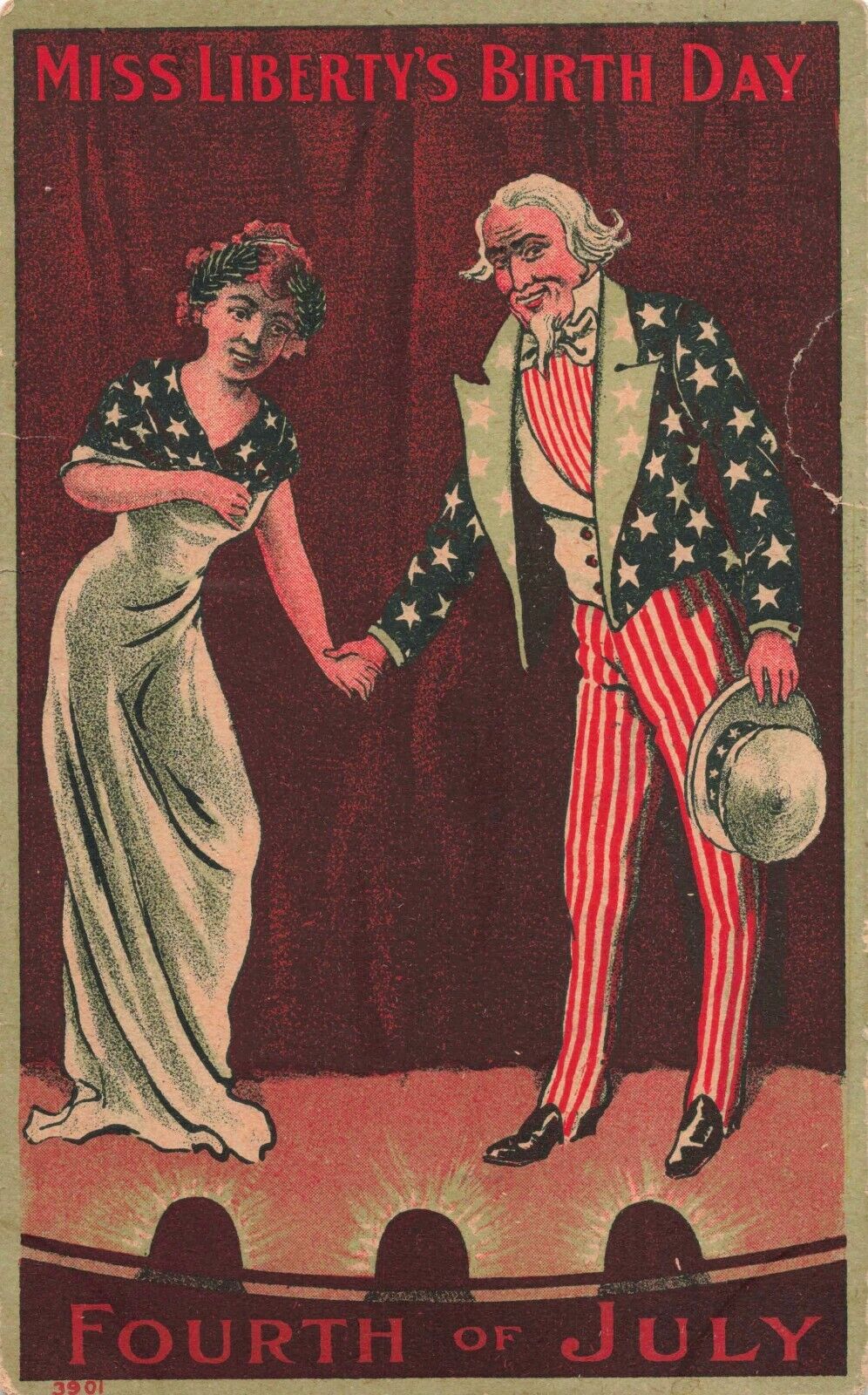
July 4, 1923
By Carol Flynn
Happy Fourth of July!
Here’s what was going on in Beverly/Morgan Park one hundred years ago, according to the local newspapers of the day.
The Fourth of July fell on a Wednesday in 1923. The weather was perfect for a summer day – temperature in the low to mid-70s, and clear with a gentle breeze.
People had parties at their houses all day. They moseyed over to Ridge Park, where community events were held under the sponsorship of the Beverly Hills Post of the American Legion. The residents of the area contributed financially to the events, and did so willingly and generously. Several thousand people visited Ridge Park that day.
The usual events at Ridge Park for the Fourth of July included athletic competitions. For children, girls as well as boys, there were foot races and swimming and diving events. There were bike races for the boys.
For adult men, there were track events, including foot races, broad and high jumps, and team relay races, and swimming and diving competitions. The tennis courts at Ridge Park were very popular, and there was a tennis tournament, with singles and doubles for men. Baseball games between rival community and business-sponsored teams were very popular.
Adult women participated in mixed doubles in tennis. They probably could have scheduled more events for women, but likely the women were too busy in their hostess roles, and dressed in their fine cotton muslin summer frocks, to want to engage in unseemly physical activity.
A band performance and community sing-along, speeches, and fireworks at dusk generally rounded out the Fourth of July on the Ridge.
Other interesting things were going on in the community at the time.
The Ridge Park pool opened on July 2, just in time for the holiday. The lifeguard in charge was Ted Metcalf.
A new golf club was being built at 91st and Western Avenue, which would extend west to California Avenue. This, of course, became the Evergreen Country Club, run by the Ahern family, which lasted until 2010 when it was demolished to make way for the strip mall there now.
Work had just started on the new Catholic church that was being established in Beverly on Longwood Drive. This, of course, became Saint Barnabas Parish.
Mail carrier Elmer Morrison of the Washington Heights postal station was enjoying his annual vacation, and the carriers at other local stations were planning their vacations. The high school boys in the neighborhood were going to work the routes while the men were off. Patrons were asked to have patience if the mail was a “wee bit” late. They were asked to think of their hard-working postmen enjoying a rest, and of the “coming men earning their first big pay of sixty cents an hour.”
One of RHS’s favorite personalities from local history, David Herriott, the past editor of the Morgan Park Post newspaper and the past postmaster of the Morgan Park station, was in the news. He introduced to the Illinois legislature a bill that mandated every automobile in Illinois have a device installed that would limit its speed to twenty-five miles per hour. Herriott had long advocated for automobile safety regulations. The bill did not become law, obviously.
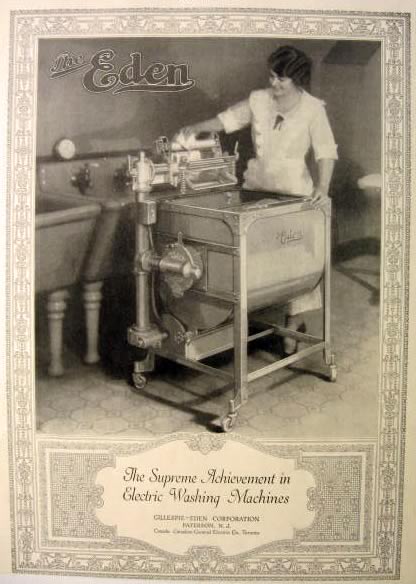
Comforts we take for granted today were new one hundred years ago. Gas mains were just being installed on 103rd Place. It was noted the residents would soon enjoy the “luxury” of cooking with gas.
At the same time, a new “electric house” at 97th Street and Hamilton Avenue was being made ready for public viewing. The goal was to show that electricity was “the cheapest servant” and introduce the growing number of electric appliances to “be a wonderful inspiration to all mothers.” Other communities were also showcasing electric houses, where practically everything in the house was operated by electricity, except the heat, which was gas. In addition to lighting, electric appliances included refrigerators, stoves, vacuum cleaners, toasters, mixers, blenders, coffee percolators, waffle irons, dishwashers, washers, driers, clothes irons, shavers, and radios.
The electrical industry was really taking off in the 1920s, offering boys an “opportunity to learn a profitable and pleasing trade.”
Prohibition was in effect, but alcohol never played much of a role in Ridge affairs anyway. The City of Chicago did not hold any public events for the masses that year, but instead many events went on in local parks, like the ones in Ridge Park. The city fire department discouraged fireworks due to the number of injuries and fires that usually resulted. Fireworks were not allowed to be sold in the city but many of the towns outside the city allowed them to be sold. Sporting events were the most popular way to spend the day – the Hawthorne racetrack saw a “monstrous crowd” on July 4, 1923.
The Ridge Historical Society
Part 12 – The Hofer Sisters and Politics Continued
By Carol Flynn
The Hofer sisters became recognized as international peace workers with the successful visit of Baroness Bertha Von Suttner to the U.S. in 1912. Andrea Hofer Proudfoot stood by the Baroness’s side as her personal manager and secretary. Mari Hofer worked tirelessly behind the scenes, making the arrangements for over 1,200 presentations in sixteen states. Amalie Hofer Jerome also helped.
The Hofer sisters were known for their organizational skills. All were active in the Chicago Woman’s Club. In 1892, Mari, Bertha, Amalie, and Andrea were instrumental in starting the International Kindergarten Union, and all were charter members and served as officers or in other leadership roles.
Through her education programs at the settlement house, Bertha was involved in a number of groups. Amalie and Mari were founding members of the Playground Association of America, which included President Teddy Roosevelt. Amalie was a founder of the Civic Music Association of Chicago. Andrea and Elsa started the League of American Mothers. In 1913, Andrea founded the League for International Amity to continue the suffrage and disarmament education efforts started by the Baroness.
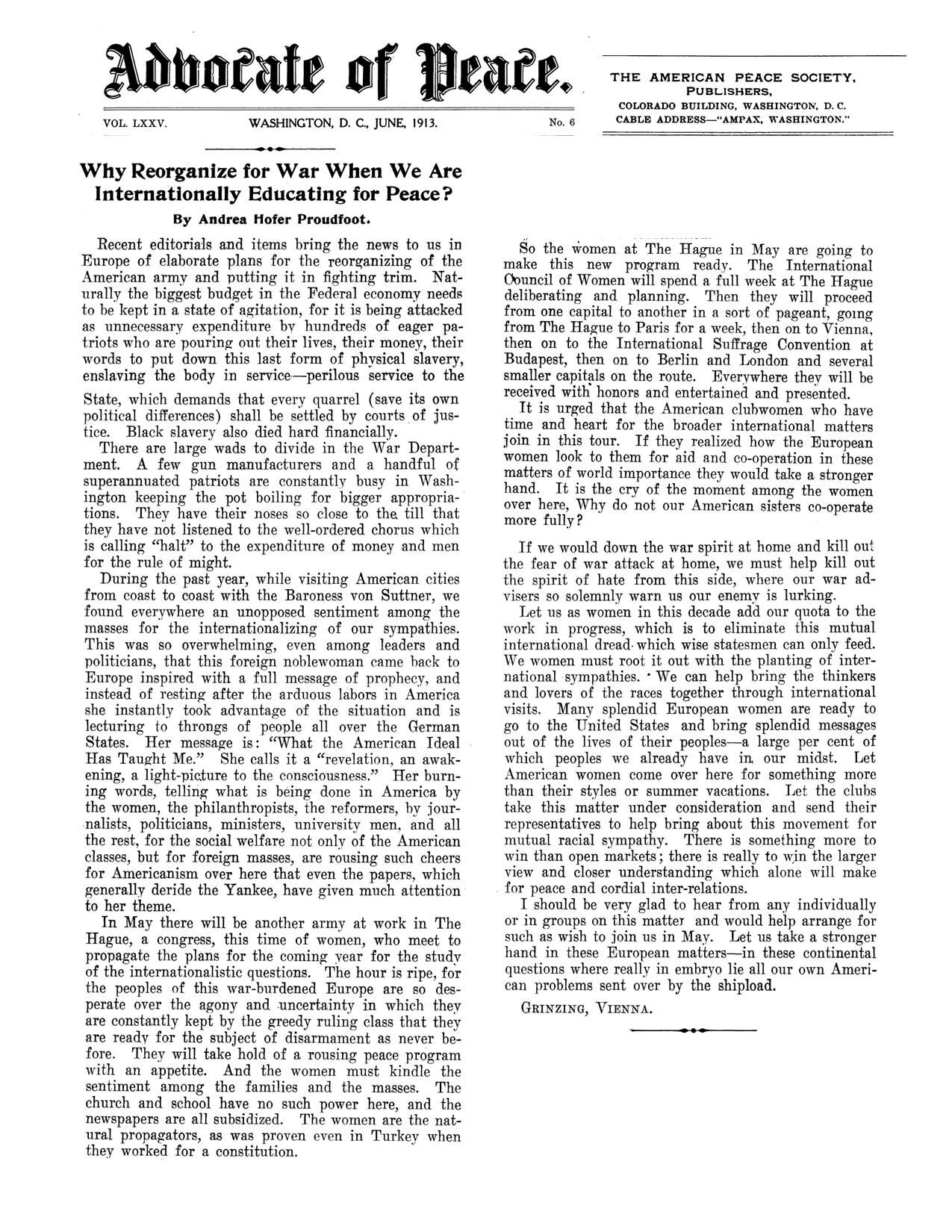
The Hofer sisters were also accomplished writers and speakers. Using Andrea as our continuing example, one of her calls for action in the peace movement is attached to this post. She became a sought-after speaker at international meetings of women. She was prominently featured at the International Council of Women meeting at the Hague in the Netherlands in 1913. The theme adopted by women’s groups throughout this time was: “In time of war prepare for peace; in time of peace prepare for its continuance.”
Andrea lived in Vienna for a few years, where her children went to school. They returned to Chicago when World War I started in 1914.
That year, Mari and Andrea were part of a national undertaking to raise funds for suffrage and peace causes in honor of Belva A. Lockwood. Working with Illinois women’s clubs, a pageant, totally under the direction of Mari, along with dancing and card games, was held at the Hotel LaSalle. The pageant included “dances of the nations,” that is, folk dances, one of Mari’s specialties, performed by young people of various organizations. Members of the Chicago Woman’s Club portrayed the queens of the world, including Queen Elizabeth and Marie Antoinette. They easily met their goal to raise $3,000 to contribute to the total goal of $20,000.
Mrs. Lockwood was the featured guest of the pageant, sitting in the center box. She was a very famous woman whose story has been mostly lost to history. She was active in women’s rights and women’s suffrage, and became one of the first women lawyers in the U.S. She was the first woman to practice before the U.S. Supreme Court. She ran for president in 1884 and 1888 and was the first woman to appear on official ballots. She supported the world peace movement and the temperance movement.
In 1915, Andrea was a leader of the International Conference of Women Workers to Promote Permanent Peace, known as the Women’s Peace Conference, held in San Francisco as part of the World’s Fair. She was joined on the planning committee by fellow Chicagoan Jane Addams. Miss Addams oversaw the programs on Social Service and War, and Andrea oversaw the section on International Amity and War.
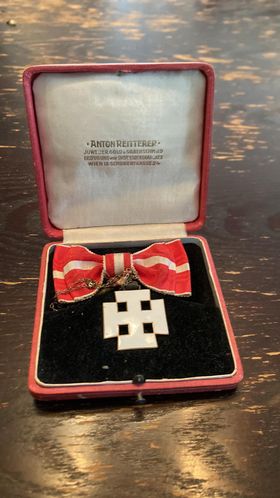
After World War I, Andrea served as Secretary of the American Committee for Vienna Relief in Chicago. She was awarded the “Eiserne Salvator-Medaille” (Iron Salvator Medal) from the City
of Vienna in 1921, and the “Silbernes Ehrenzeichen” (Silver Insignia of Honor) from the Republic of Austria. Andrea’s great-granddaughter shared a picture of one of the medals with RHS.
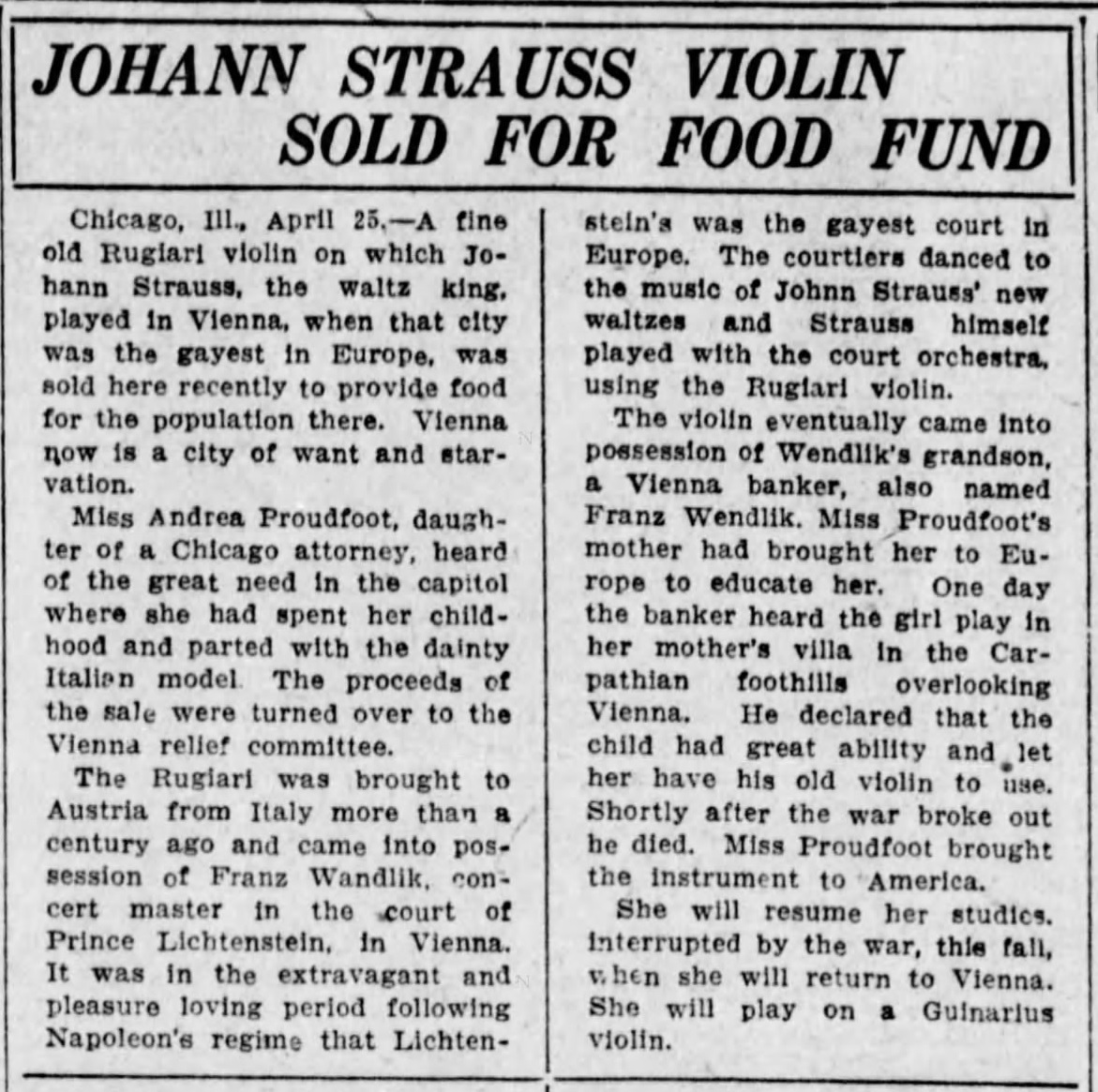
Altruism was passed down to the next generation of Hofer descendants, as evidenced by a 1920 newspaper article about one of Andrea’s daughters donating a valuable violin that she acquired in Vienna for the Vienna relief effort.
In the next post, the later years of the Hofer sisters will be explored.
UPDATE: Wow, there has been a fast response to this post, but I knew people would like this. I talked to Elaine and when she returns from her upcoming vacation, we will plan an open house with Smith Village so people can come in to see this. It will likely be early August, so stay tuned. – Carol Flynn
PS – Elaine Spencer, by the way, lives in Smith Village and is on the Residents Council, if that is the proper name of the organization unit.
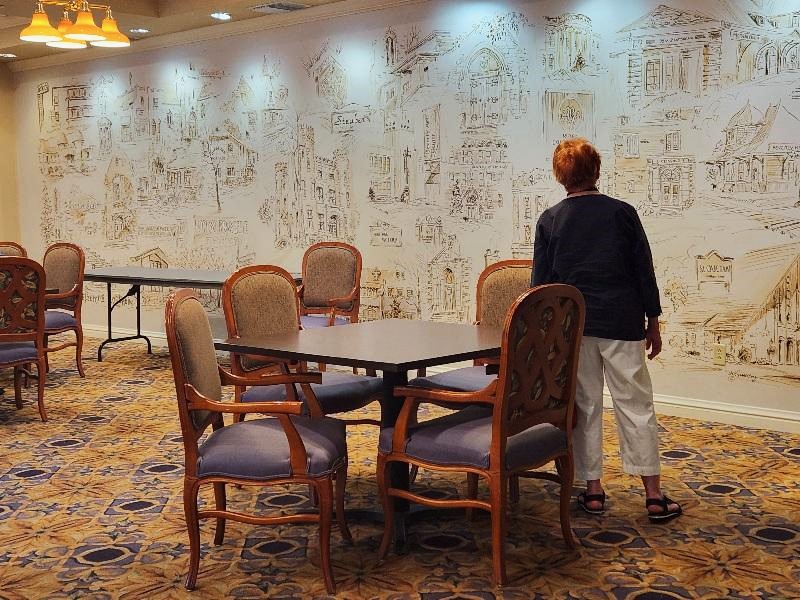
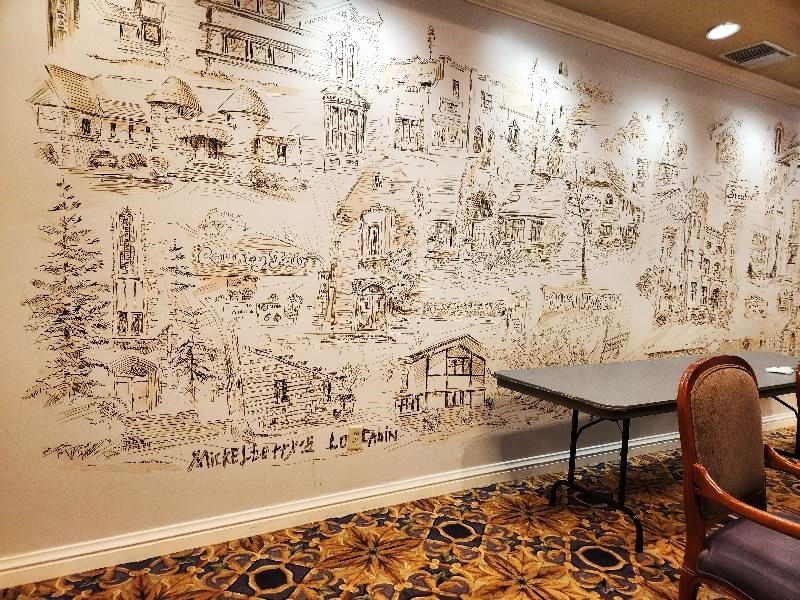
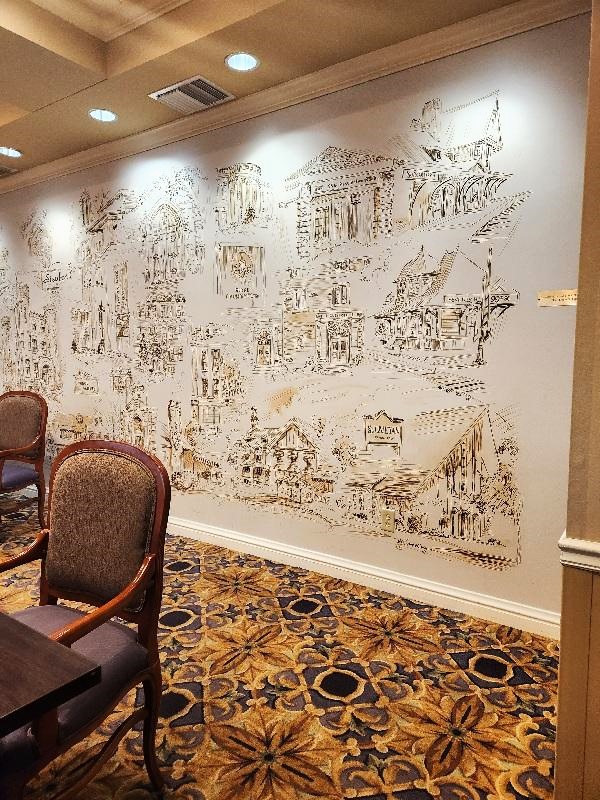
The late Jack Simmerling, artist and historian, and a founding member of the Ridge Historical Society, painted a mural on the wall of one of the dining areas at Smith Village that pretty much summarizes the history of the Beverly and Morgan Park communities.
Elaine Spencer, past President of RHS, and I recently viewed it for the umpteenth time and here are some pictures. (That's Elaine from the back.)
If you've never seen this in person, you should do so.
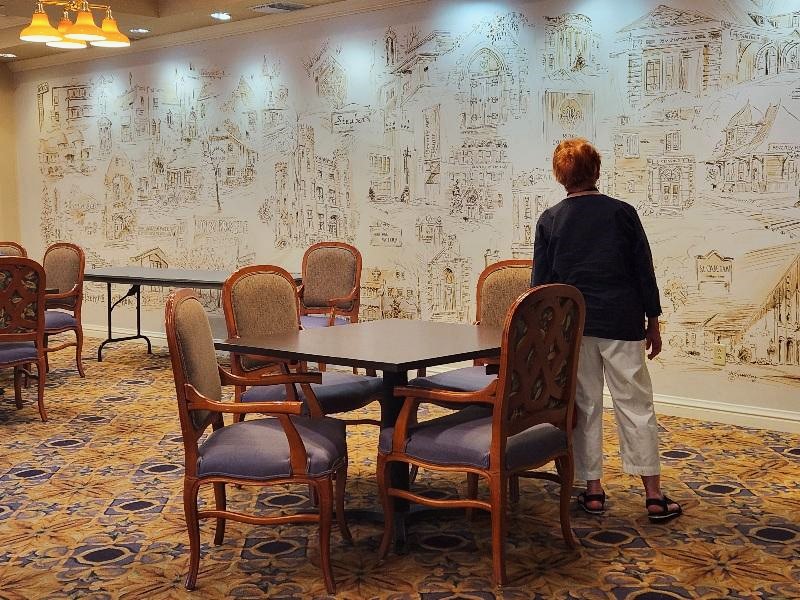
Pop-Up History on the Ridge – View the Jack Simmerling Mural "Life on the Ridge" at Smith Village
Mark your calendars!
The interest in the Jack Simmerling mural, "Life on the Ridge," at Smith Village is leading to the first ever (to my knowledge) Pop-Up History event in the Beverly/Morgan Park community. If this is successful, maybe we'll be able to do others at places not usually open to the public, like some of the churches with great stained-glass windows, etc.
I did not get any feedback that this event would be a scheduling conflict with other events in the neighborhood but if it is, please let me know.
Details:
What: View the Jack Simmerling Mural at Smith Village – "Life on the Ridge"
Date: Wednesday, July 26, 2023
Times: Two showings – 1:30 to 3:00 p.m., and 7:00 – 8:00 p.m.
Address: 2320 West 113th Place, Chicago – come into the main entrance and you will be directed from there.
Hosts for the day: Elaine Spencer, Past RHS President and Smith Village resident, and Carol Flynn, local historian/journalist
Cost: Free, parking on site or on the local side streets
Jack Simmerling’s daughter Meg Simmerling is expected to be our guest for the first session. We look forward to her insights on her father’s work.
Any questions? Message me through Facebook – Carol Flynn.
Note that this is not an official RHS program. Elaine and I are doing this as a pilot test to see if events like this go over with the public. Thank you for your support!
This image is of Elaine Spencer viewing the Jack Simmerling mural at Smith Village.
The "Pop-Up History" event is a go! Please join us – first showing.
Second showing!
The Ridge Historical Society
Part 13 – The Hofer Sisters – Conclusion
By Carol Flynn
By 1920, after having lived on the Ridge for about twenty-five years, the Hofer family had departed from the Beverly area. Some of the sisters stayed in Chicago, and some relocated to other states. They continued active careers for many more years.
Oldest sister Mari Ruef Hofer was recorded as living with her sister Andrea’s family in Hyde Park on the 1920 U.S. Census. By the late 1920s, she had relocated to Santa Monica, California, where her youngest sister Elsa Hofer Schreiber and Elsa’s family lived.
Mari died in 1929 at the age of 71 and was buried in Santa Monica.
The Oakland, California, Tribune noted at the time that Mari had been a faculty member at the University of California, Berkeley and in the summer of 1929 had presented pageants in the university’s Greek theater. She had just started the Greek Art Club of Berkeley.
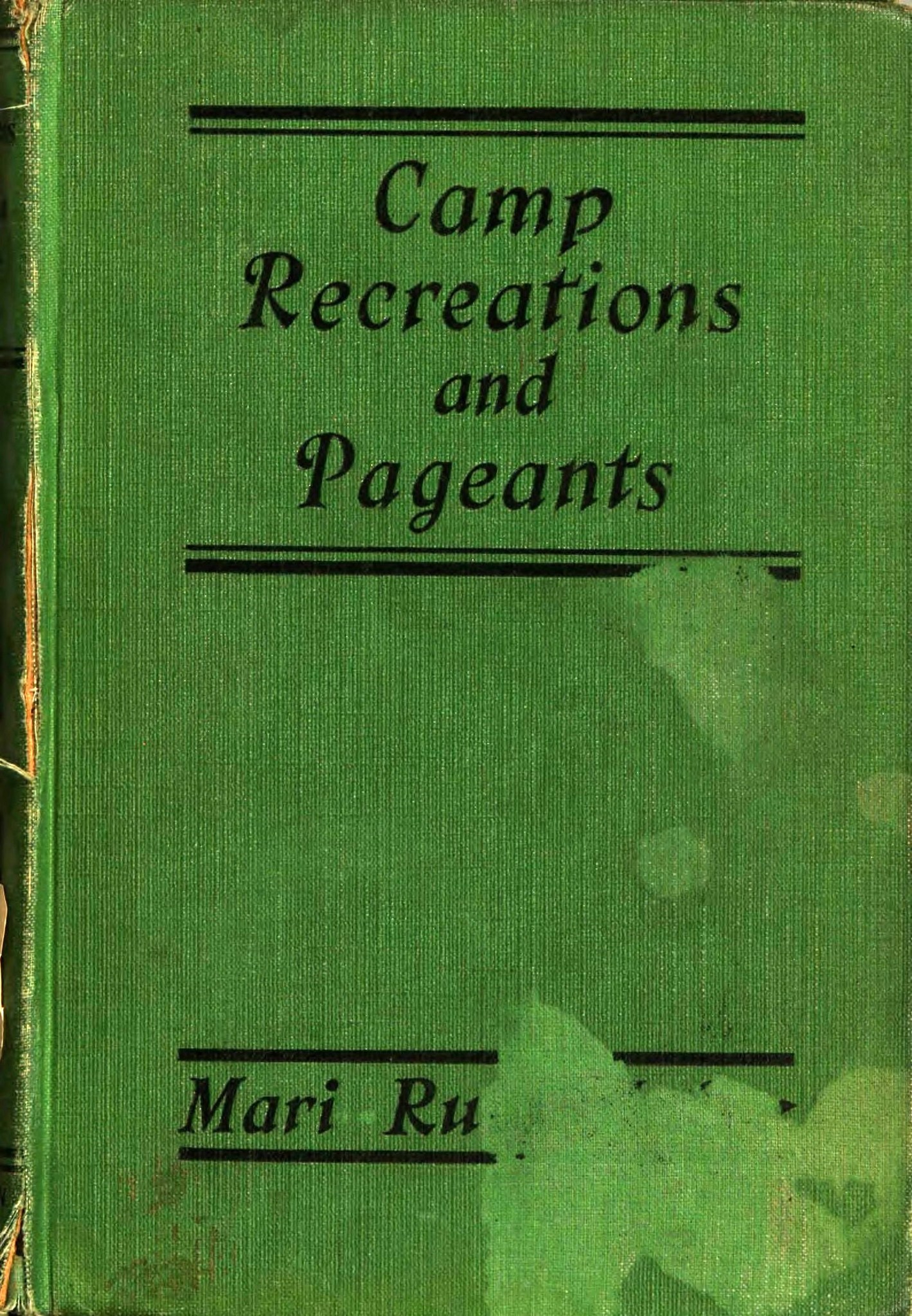
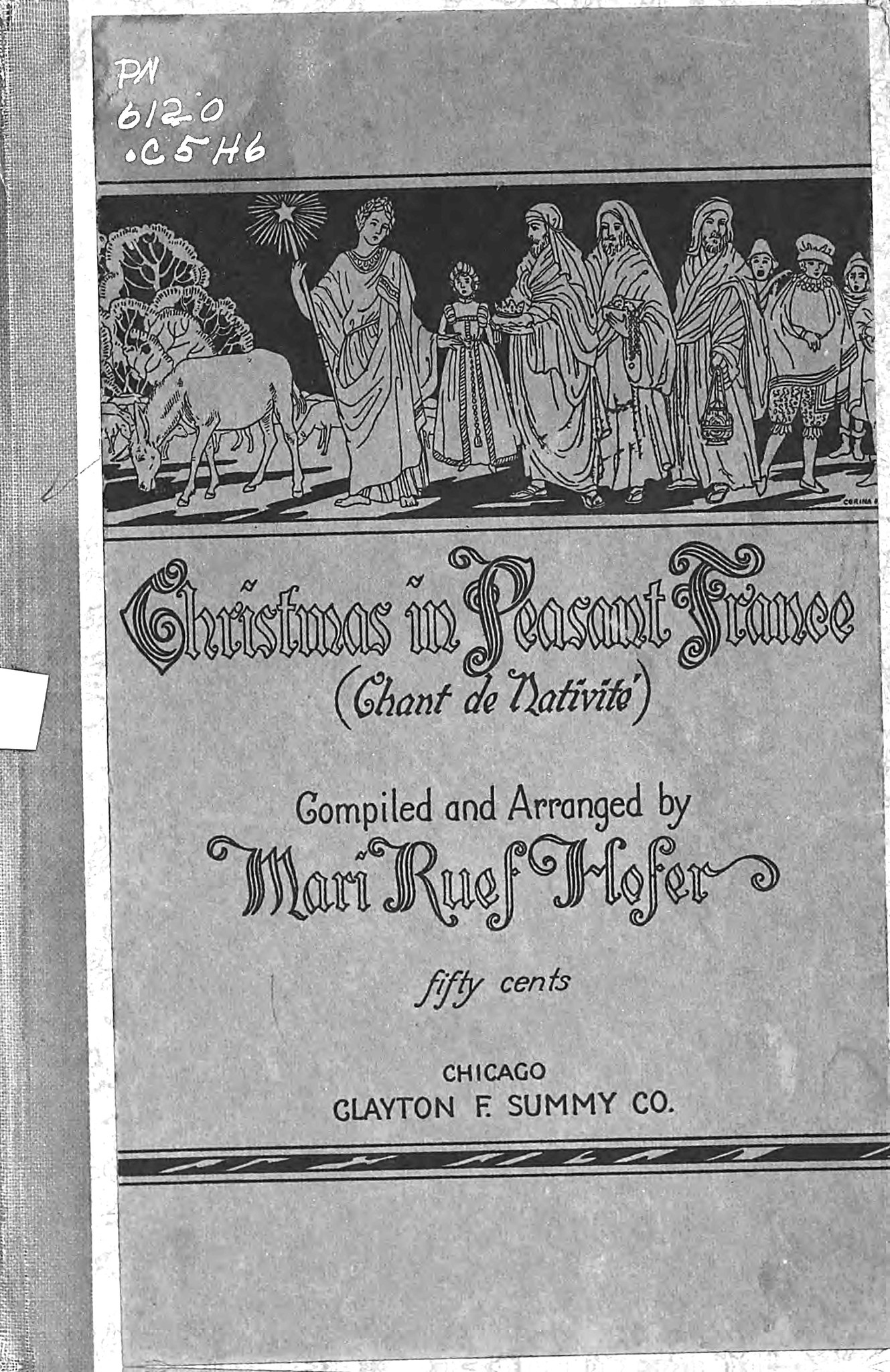
Mari had continued to write and adapt music and folk dances for use in education and recreation programs. In 1926, she published “Christmas in Peasant France,” a Christmas play, and “Festival and Civic Plays from Greek and Roman Tales.” In 1927, she published “Camp Recreations and Pageants.”
Second sister Bertha Hofer Hegner lived in West Chicago, and upon her death in 1937 at the age of 75, was buried in Graceland Cemetery on Chicago’s north side.
Bertha was the President of both the Pestalozzi-Froebel Teachers College and the Columbia College of Expression until her retirement in 1936.
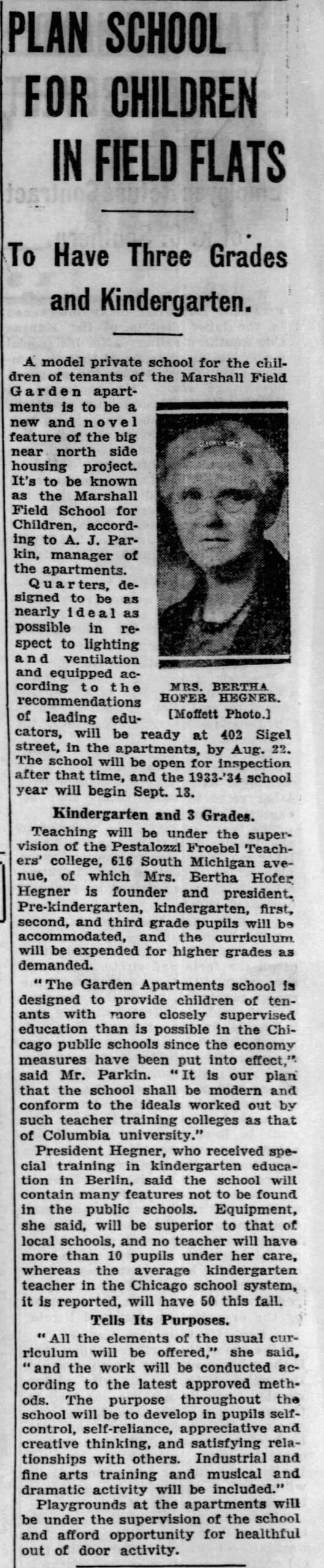
Bertha developed new education programs throughout her career. One of her later accomplishments was detailed in a 1933 Chicago Tribune article which is attached to this post. She developed and administered a kindergarten, grade school, and playground in the Marshall Field Garden Apartments, a housing development directed by Marshall Field III of the department store family to provide affordable housing and to spur development in the surrounding areas. The apartments, located at 1400 North Sedgewick Street in Old Town, are still in use today as subsidized housing.
Amalie Hofer Jerome, the third sister, and her husband Frank, were living in Hyde Park in 1920. After her husband died in 1933, she moved to their summer house in Michigan. She died in 1941 at the age of 78, and was buried in Mount Hope Cemetery on 115th Street on the Ridge, where her husband was also buried. She is the only Hofer sister to be buried on the Ridge.
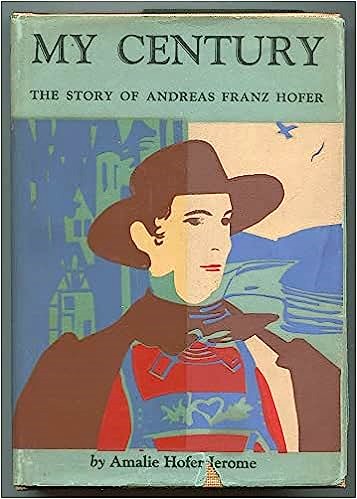
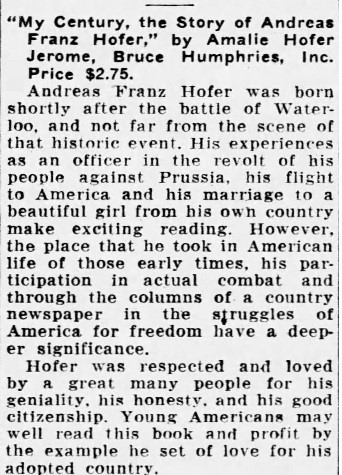
Amalie adapted her father’s diary into a biography, and in 1939 published “My Century – The Story of Andreas Franz Hofer.” The book was reviewed by newspapers around the country. The Shreveport Journal in Louisiana gave a poignant review of the book that is attached to the post.
Andrea Hofer Proudfoot also stayed in Chicago, living in Hyde Park. Later, she and her husband Frederick apparently had homes in both Iowa, where Andrea grew up, and in Chicago. They both died in Chicago and were buried in McGregor, Iowa. Andrea was the last of the Hofer sisters, dying in 1949, at the age of 83.
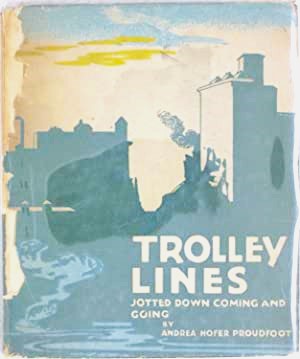
Andrea was always a poet at heart. In 1919, she published a book of poetry called “Trolley Lines, Jotted Down Coming and Going.” It was called “Cubist verse” by Reedy’s Mirror, a literary journal of the day. Cubist writing took its cues from artists like Picasso during the Cubism period of the early 1900s. The objective observation of the external world was replaced by the “stream of consciousness” inner workings of the mind. One review said of Andrea’s work that it was “the new poetry but one can understand it.”
Andrea was president of the Poetry Lovers of America, and a member of the Dill Pickle Club, an unconventional Chicago social club that fostered free speech and good conversation for uninhibited people. “The Pickle” was Chicago’s answer to the “Bohemian” clubs of Greenwich Village in New York City. Andrea was instrumental in raising the money to build a clubhouse for the group on the near north side.
Elsa Hofer Schreiber and her artist husband George and their children moved to the west coast, first to Salem, Oregon, where several of the Hofer brothers lived, and by 1920 they were settled in Santa Monica, California, where George became known in the California arts scene.
Elsa died in 1942 at age 73 while at a daughter’s house in Battle Creek, Michigan. Her death certificate records she was cremated at Graceland Cemetery in Chicago, and burial records report she was buried in Woodlawn Cemetery in Santa Monica.
Elsa had participated in numerous professional activities with her sisters and had run the school she and Andrea started in Beverly, but she was also very home- and family-oriented, a pattern set by her own mother, who lived with Elsa in her final years. Most of the later stories about Elsa revolve around her family.
In 1923, a double wedding took place at the Schreiber house the day after Christmas. Daughter Madelaine and son Armin married their respective fiancés in a gala ceremony with holly and poinsettia as the backdrop, and their brothers and sister in attendance. The following week, at New Year’s, a reception for the newlyweds was held at the Schreiber house.
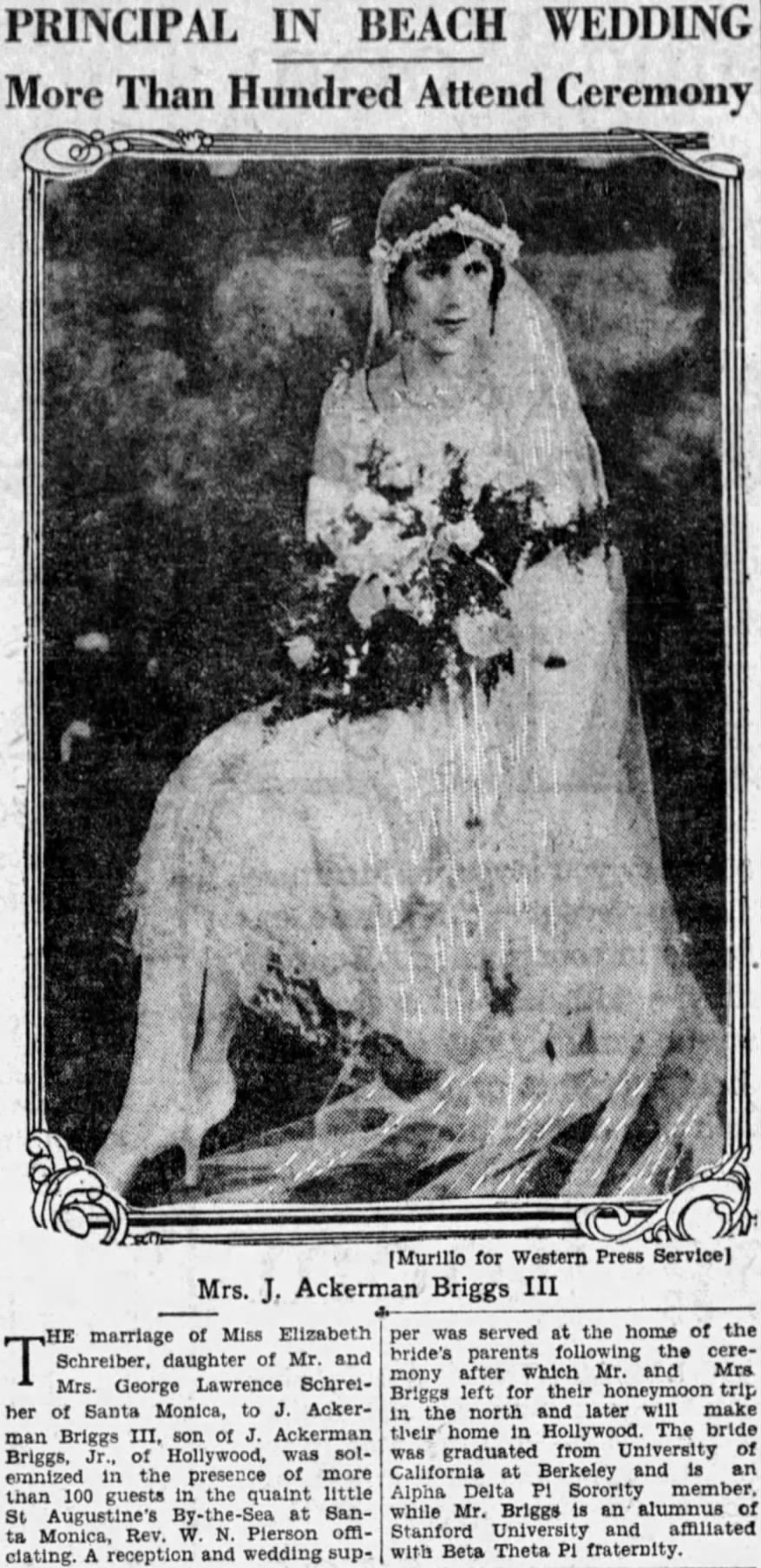
In 1927, daughter Elizabeth was married in Santa Monica. The announcement is attached to this post. As no pictures of Elsa as an adult have been located so far, this picture of her daughter gives a clue as to her possible appearance.
In 1928, tragedy struck Elsa’s family when their youngest child, George L. Schreiber, Jr., died just as he was graduating from the University of California, Berkeley. The cause of death was attributed to ptomaine poisoning.
Father Andreas Franz Xavier Hofer died in 1904 in Beverly and was originally buried in Mount Hope Cemetery in Chicago. Mother Mari Ruef Hofer relocated with youngest daughter Elsa. Mari died in Santa Monica, California, in 1918, and was buried there in Woodlawn Cemetery. Her husband’s remains were relocated from Chicago to that cemetery to be buried with her.
Sons Frank and Andrew were buried in Salem, Oregon, and son Ernest in Portland, Oregon.
This concludes the series on the Hofer family who called Beverly home. Truly, this family personified the spirit of the Progressive Era.
Covered in the @[100063654336223:2048:The Beverly Review], online today and out in print tomorrow, the planned "Pop-Up History" event at Smith Village next week.
I hope people will take advantage of this opportunity to see this interesting mural by the late Jack Simmerling. If this is a success, we will explore other "Pop-Up History" opportunities.
See the details in the link below. A special, one time only opportunity, to view the mural of the community painted by the late Jack Simmerling.
Reminder! FREE one-time showing of the mural of the Beverly/Morgan Park community on Wednesday, July 26. Two times – also 1:30 to 3:00 pm. See the link below for details.