Explore the RHS Facebook Archives, a rich repository of local history written by Carol Flynn. For two decades, Carol brought a deeply dedicated voice to public education at RHS. Her role as Facebook administrator through mid-2025 naturally extended her prolific research into meticulously detailed articles, most notably her multi-part historical series posts. Today, Carol continues her local history writing for The Beverly Review and other outlets.
March 2022
The Ridge Historical Society
Women’s History Month: Real American Girls of the Ridge
By Carol Flynn
As we wrap up March, Women’s History Month, this is a last call to see the current exhibit at the Ridge Historical Society – Real American Girls of the Ridge.
This exhibit started right when the COVID pandemic started, in 2020, and unfortunately, it never got the attention – and visitors – it deserved because RHS, like other historical and cultural institutions, had to close its doors for a long time. And now it has to come down because RHS has to get ready for the big event in May – the Beverly Area Planning Association (BAPA) house walk, which will feature Hetherington-designed homes. More on the Hetherington project will be announced in coming weeks.
Real American Girls on the Ridge takes a historic doll from the American Girl collection and pairs it with a real woman from the history of the Ridge who had a similar life experience.
Five of the original American Girl (AG) dolls and a collection of their furniture, clothes, books, and other items were donated to RHS by a member of the community, Joan Regnier O’Connor. As children, Joan’s daughters became interested in the dolls through their grandmother, a librarian who held tea parties and other events for the dolls and their young owners, to foster reading, history – and fun. Joan wanted to see the dolls used for like purposes and donated them to RHS.
The inventor of the dolls, Pleasant Rowland, lived in the Beverly/Morgan Park community as a young girl. RHS did a post on this several years ago. Her grandparents lived here, and it was through her grandmother that Pleasant became interested in history and antiques. Information on Pleasant is included in the exhibit.
The first five dolls in the series and their Ridge counterparts are:
• Felicity and Abigail Shipman Wilcox (Colonial era)
• Kirsten and Anna Lovisa Larson (Pioneer era)
• Addy and Cornelia “Mother” Reeves (U.S. Civil War Era)
• Samantha and Margaret Gear Lawrence (late Victorian Era)
• Molly and Elaine Spencer (World War II Era).
RHS will summarize the real American Girl stories over the next few days. The exhibit will be up until mid-April and anyone who wants to view it, including school, Scouts, or other groups, can contact RHS through this Facebook page, and arrangements will be made.
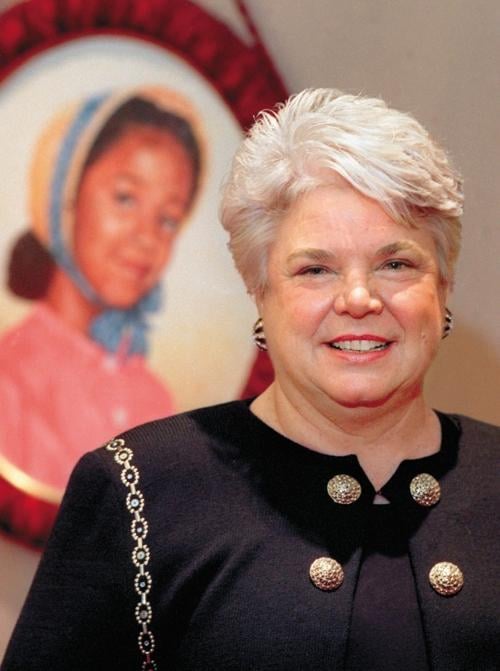
(Photo of Pleasant Rowland)
“Invisible Labors” is a collaborative project to explore the role that women played in the use of the land, as gatherers, farmers, gardeners, and artists, in the history of the Ridge communities of Beverly and Morgan Park. It is one of five projects currently supported by 3Arts, a nonprofit organization that supports Chicago’s women artists, artists of color, and Deaf and disabled artists who work in the performing, teaching, and visual arts. 3Arts includes a built-in match that helps Chicago artists finance new creative work.
“Invisible labors,” curated by Susannah Papish, the Director of boundary, the art project space in Morgan Park, has several components. It started last fall with a garden of native plants and a paper-making exhibition at boundary by artist and educator Melissa Potter, a professor at Columbia College Chicago.
The next component will be a publication featuring the research and writing of the Ridge Historical Society’s experts on local history. With research assistance form RHS Historian Linda Lamberty, RHS researcher/writer Carol Flynn, who develops all the stories that appear on the RHS Facebook page as well as stories for the local newspapers and other sources, will write about the pre-history days of Native Americans and their use of the land; the coming of the white European settlers and their development of the land; and the history of the early community of Black Americans who settled here after the U.S. Civil War. For the record, Carol Flynn is legally disabled.
The publication, which is still in the planning stages, will include artwork and other contributions from Susannah and Melissa, in addition to the written stories.
Susannah Papish has started a fund-raising campaign to offset some of the expenses of the project through this link: https://3arts.org/projects/invisible-labors/
We hope that if you truly support the arts in the Beverly/Morgan Park community, and/or appreciate the historical stories shared by the Ridge Historical Society, that you will consider putting a few dollars towards this project. We will be very grateful for the contributions.
The RHS page will share some of the highlights of the stories in the coming days.
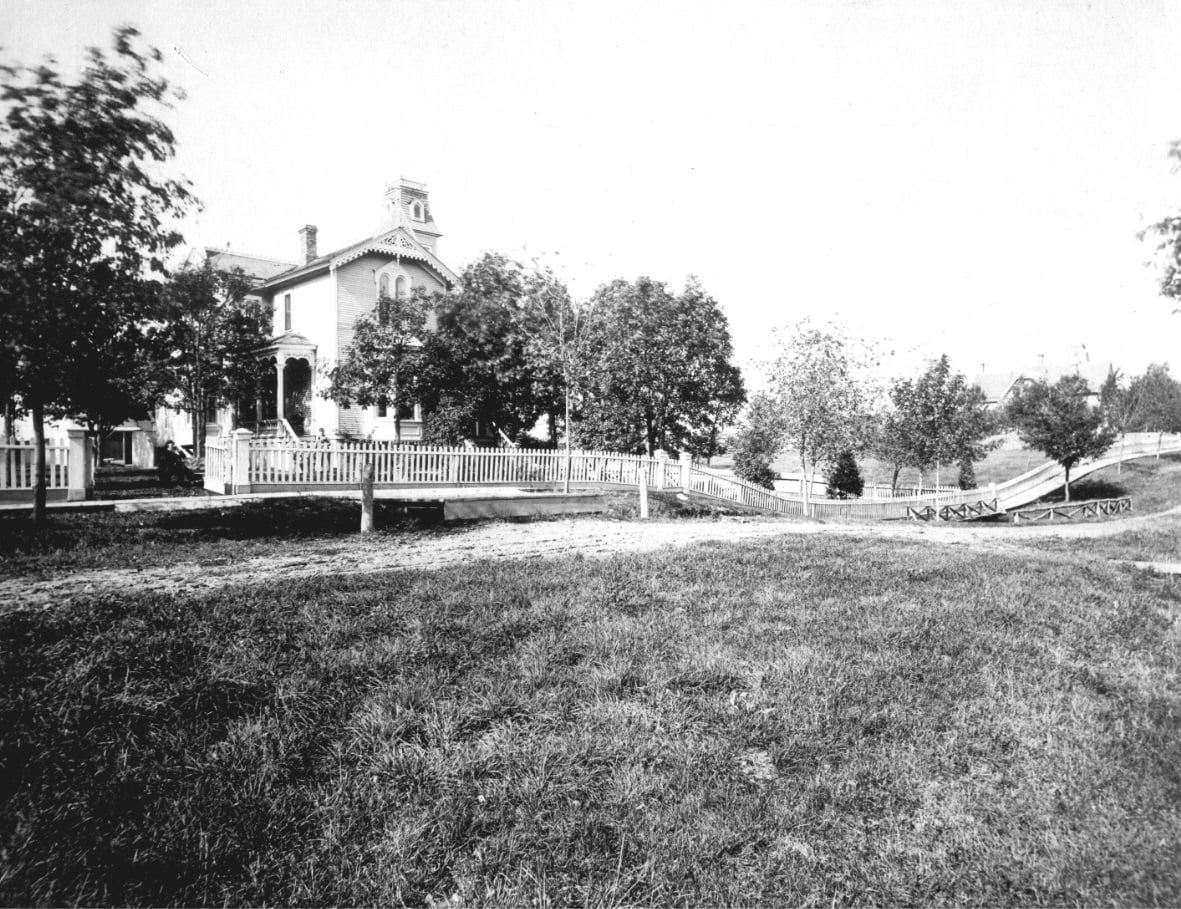
Artist Louise Barwick lived in one of Beverly’s oldest and most charming houses on 103rd and Seeley. She painted beautiful local scenes in water color, as well as made a name for herself in the academic field with geographic modeling techniques. Her story is one that will be told in “Invisible Labors.”
Linda Lamberty, Ridge Historical Society Historian, and Carol Flynn, Ridge Historical Society researcher/writer, are honored to be part of “Invisible Labors,” a collaborative project with Susannah Papish, artist, educator and Director of boundary, the arts project space in Morgan Park; and Melissa Potter, feminist interdisciplinary artist and writer, and Professor at Columbia College Chicago.
“Invisible Labors” began as a project at boundary last year that included Melissa’s garden of native plants and an exhibition of papermaking, an artistic medium at which she excels. This led Susannah to start thinking about how the land was used in the Ridge area before it was just about all claimed by “development.”
Susannah reached out to Linda and Carol from RHS, with whom she worked previously on other projects, and rich discussions started about the history of the land from the time of the Native Americans to the arrival of the European settlers to the Great Migration of African Americans from the Southern United States.
This led to the idea for an artistic publication on the role that women played in the use of the land, as farmers and gardeners, and as artists. Carol will be a primary author with stories about the women of the Ridge and their connections to the land, based on research conducted with Linda. There will be additional writing from Melissa, as well as artwork related to the topic. We’re still thinking about formatting options for the publication.
March is Women’s History Month, so we are announcing this project at this time.
Susannah has put together a description of the project as well as a campaign to raise some funding to help with the cost of developing this project, which can be accessed at the website https://3arts.org/projects/invisible-labors/.
Thank you for your interest in the project. The publication will be out this summer. Please let us know if you have any questions or comments.
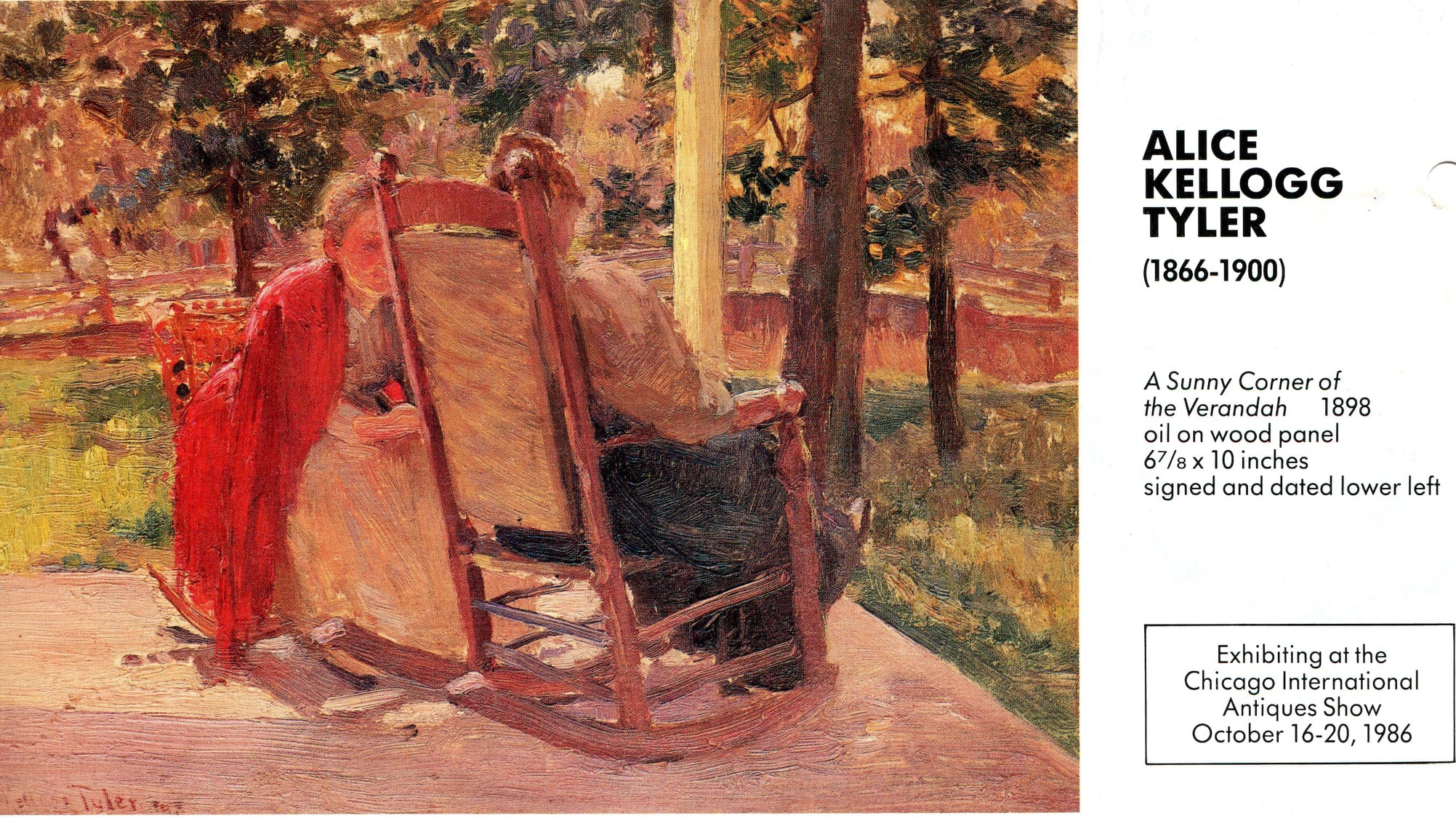
Image is of a painting by Alice Kellogg Tyler of the verandah of their farmhouse on the Ridge.
The Ridge Historical Society
International Women’s Day
By Carol Flynn
Tuesday, March 8, is International Women’s Day, and March is Women’s History Month. The Ridge Historical Society has shared many stories in the past about significant women from the Ridge and their contributions.
One of the favorite heroines of the community is Gertrude Blackwelder and her story really can’t be over-told.
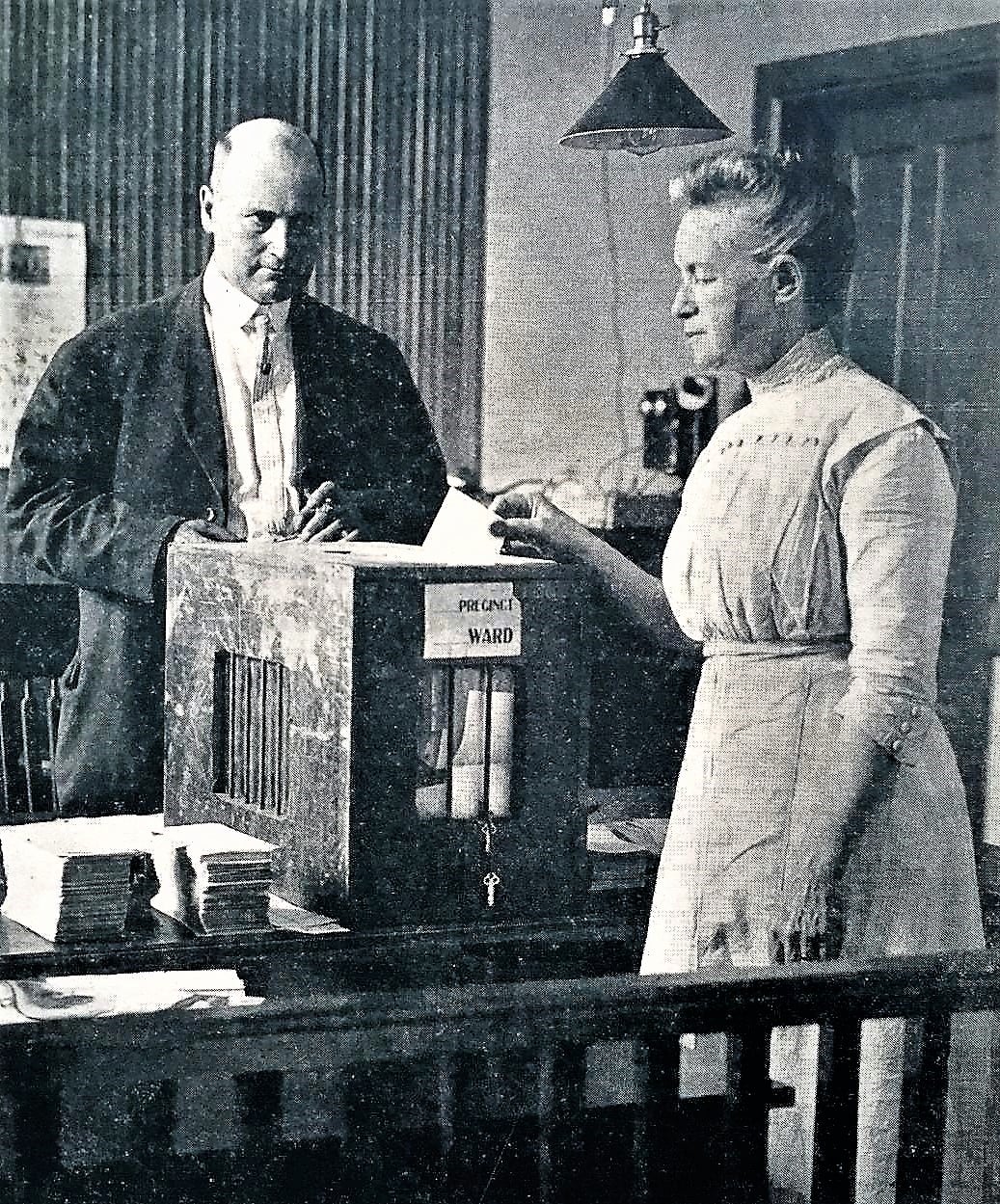
Gertrude Blackwelder made history on Saturday, July 26, 1913, when she cast her ballot in Morgan Park’s special election on building a new high school.
Reported Town Talk, a local paper, “As this was the first opportunity given women of Cook County by virtue of the recently enacted Women’s Suffrage law to vote upon questions other than candidates for school boards, nothing could have been more fitting than that Mrs. I. S. Blackwelder, former president of the Chicago Woman’s Club, and consistent worker for the betterment of women and children, as well as mankind as a whole, should cast the first woman’s vote in Morgan Park and Cook County.”
A photo of Mrs. Blackwelder casting that vote appeared in numerous papers. The Illinois law was the final push that led to the U. S. Constitution’s Nineteenth Amendment in 1919, granting women the right to vote.
The Progressive Era of 1890-1920 was a time of great reform and advancements, particularly in government and social areas. Gertrude Blackwelder embodied the spirit of that Era, working for women’s suffrage and other causes.
Alice Gertrude Boughton was born in 1853 in New York. Her father, a Baptist minister, valued education. In 1869, she joined her sister in Kansas to attend the newly established university there. Following graduation in 1875, she was the first female graduate to be appointed to the faculty and, in 1890, she became the first woman to give a commencement speech. Improving education opportunities for women and other disadvantaged groups became another important cause for Gertrude.
In 1877, Gertrude married Isaac Simeon (I. S.) Blackwelder, and moved to Chicago. Blackwelder (1840-1926) rose to top management in the insurance industry, starting as an adjustor handling claims from the Great Chicago Fire of 1871.
The Blackwelders settled in Morgan Park, where I. S. served as president of the Village Board. Sons Paul and Eliot were born. The family acquired the Ingersoll house at 10910 S. Prospect Ave., adding a Queen Anne-style front to the existing Italianate-style structure.
At that time, the wives of wealthy men did not “work” outside the home. They applied their intelligence, skills, and wealth to projects through volunteer organizations. Gertrude was elected to membership in the prestigious Chicago Woman’s Club (CWC), where she worked alongside Jane Addams of Hull House and Bertha Honore Palmer.
Gertrude’s special interest was vacation schools, summer programs offering nature, arts, music, and outdoor play activities for impoverished city children. For several years, she chaired the Vacation School Board, overseeing schools set up by the Chicago Permanent Vacation School and Playground Committee of Women’s Clubs. This coalition, with 212 delegates representing 50 clubs, worked closely with the Chicago Board of Education. Gertrude wrote several articles on vacation schools for college publications.
Due to her leadership abilities, Gertrude was chosen for higher office in the CWC. She served as Second and then First Vice President, and as President from 1906 to 1908. During those years, issues CWC addressed included children’s healthcare and daycare, the juvenile court system, crimes against children, working rights and conditions for women and children, sanitation and disease prevention in Chicago neighborhoods, pure food laws, and programs for the blind.
Even as an executive officer, Gertrude made time to chair the Story Telling Committee, organizing and conducting story hours at schools, libraries, and recreation centers.
At home, the Blackwelders were involved in “all things Morgan Park.” At the request of local women, Gertrude co-founded the Morgan Park Woman’s Club in 1889. Pre-COVID, this was the oldest women’s club still existing in Chicago.
The Blackwelders supported the annexation of Morgan Park to Chicago, and the building of the high school. Both sat on local school boards, and Gertrude headed the Public School Art League which obtained artwork to decorate the school. A proposal in 1923 to rename the high school for the Blackwelders resulted in naming the auditorium Blackwelder Hall.
Later, the Blackwelders moved to Stanford, California, where son Eliot was a college professor. Gertrude died there in 1938.
“When I entered the University, in January, 1869,” wrote Gertrude in the 1908 Graduate Magazine of the University of Kansas, “Such was my delight at the opportunity for higher education, then largely denied to girls, that no thought of our limitations disturbed the serenity of my youthful mind.”
That attitude prevailed throughout Gertrude Blackwelder’s life: she gave no thought to limitations. Her influence and accomplishments reached far beyond Morgan Park. Women’s History Month is a fitting time to give her recognition.
This photo is of Gertrude Blackwelder casting the first ballot, and it appeared in the Chicago Tribune, July 27, 1913. With her is Henry Heizer, local lawyer who served as Clerk of Election. Some people comment that Heizer looks disapproving, but that was not the case – he was totally supportive of the effort.