Explore the RHS Facebook Archives, a rich repository of local history written by Carol Flynn. For two decades, Carol brought a deeply dedicated voice to public education at RHS. Her role as Facebook administrator through mid-2025 naturally extended her prolific research into meticulously detailed articles, most notably her multi-part historical series posts. Today, Carol continues her local history writing for The Beverly Review and other outlets.
May 2024
The Ridge Historical Society
Lost or Found? – FOUND – Building #2 (Part 2)
By Carol Flynn
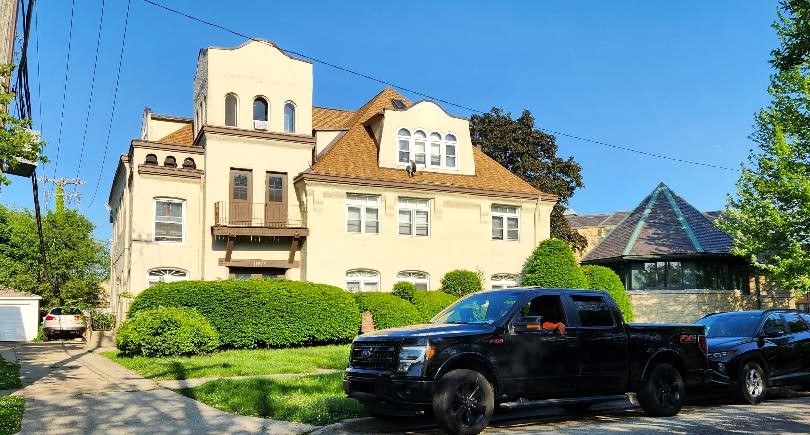
Building #2 in the “Lost or Found?” series was identified as the current Casa del Loma apartment building at 11057-59 S. Hoyne Avenue.
From the last post, the building was constructed as the physics laboratory for the Baptist Theological Seminary in the late 1800s. After that institution closed in 1892 to join with the University of Chicago Divinity School, the building was purchased by the Church of the Mediator, moved across the street to its present location, and used as a parish center.
Eventually the church was enlarged to include a parish center on site, and the old laboratory/parish center was sold to Charles Curtis and Blanche Dunlap Battles, who repurposed the building into modern apartments in 1927.
Charles Curtis Battles (born 9/12/1878) and Blanche Dunlap (born 10/20/1879) were both born in Iowa, and knew each other growing up in Perry, Iowa.
Charles was the son of a well-known and well-liked farmer who was a U.S. Civil War Union Army veteran, and Blanche the daughter of a dry goods merchant who was also the postmaster. Both families were members of the Methodist Episcopal (M.E.) Church. An 1896 newspaper article has Charles and Blanche both listed as guests at a surprise 18th birthday party for a friend. By 1903, Charles and Blanche were married.
Charles was employed as a messenger, or agent, of the United States Express Company, a shipping and delivery company. During World War I, the government urged the consolidation of the numerous express services into one company to aid the war effort. Charles became an employee of the new American Railway Express Co., where he worked his entire adult life. He would have traveled quite a bit in that job.
A newspaper article reported in 1906 that Charles was the first man to arrive in San Francisco with a relief train following the San Francisco earthquake. The day after the natural disaster, he left Chicago in charge of a train full of supplies, accompanied only by a newspaper reporter and a member of the Chicago relief committee.
The paper reported that Charles started with the company as an agent out of Des Moines and was later assigned to Chicago, likely a promotion.
Blanche was known for her drama and music talents, and volunteer work with churches. She had a notable career as a performer, pageant director, drama coach, lecturer, columnist, and critic in the field of religious drama and music.
In 1894, at the age of 15, Blanche won first place in a “declamation contest” in which contestants deliver speeches that have been written and delivered before, usually from a famous source. The subject of her presentation was not mentioned. The prize was a $50 scholarship to the Soper School of Oratory in Chicago. It was stated then that “she possesses genius of a high order, and if her talent is developed will make a bright record.”
Blanche went on to many other accomplishments.
One example of her work was the production at multiple venues of a concert, “The Challenge of the Cross,” in which she starred and directed, and which included singing disciples and angels descending from the balconies.
A review of one of the concerts stated, “Those who attended had nothing but the highest praise for the offering,” and that Mrs. Battles’ “work and personality stamp her as an artist of unusual accomplishment.” At another venue, the reviewer wrote, “So impressive was the visual presentation … that tears fell from the eyes of people. It will always be remembered as a great spiritual uplift to all present.”
Another undertaking she was known for were “ladies’ kitchen bands,” where pots and pans and utensils were adapted into musical instruments. The concerts she arranged got good reviews, not only for the ingenuity of the band members but because they produced good music.
Some of Blanche’s work was as a volunteer, often for church fund raisers, but there were professional endeavors, also. For example, she was a columnist of repute for the “Musicians’ Magazine” published out of Chicago. The assumption is made that at least some of these had to be paying jobs, but curiously, the U.S. Censuses always listed her as not being employed.
In 1910, Charles and Blanche lived at 9907 S. Prospect Avenue and by 1920, they lived at 11336 S. Lothair Avenue.
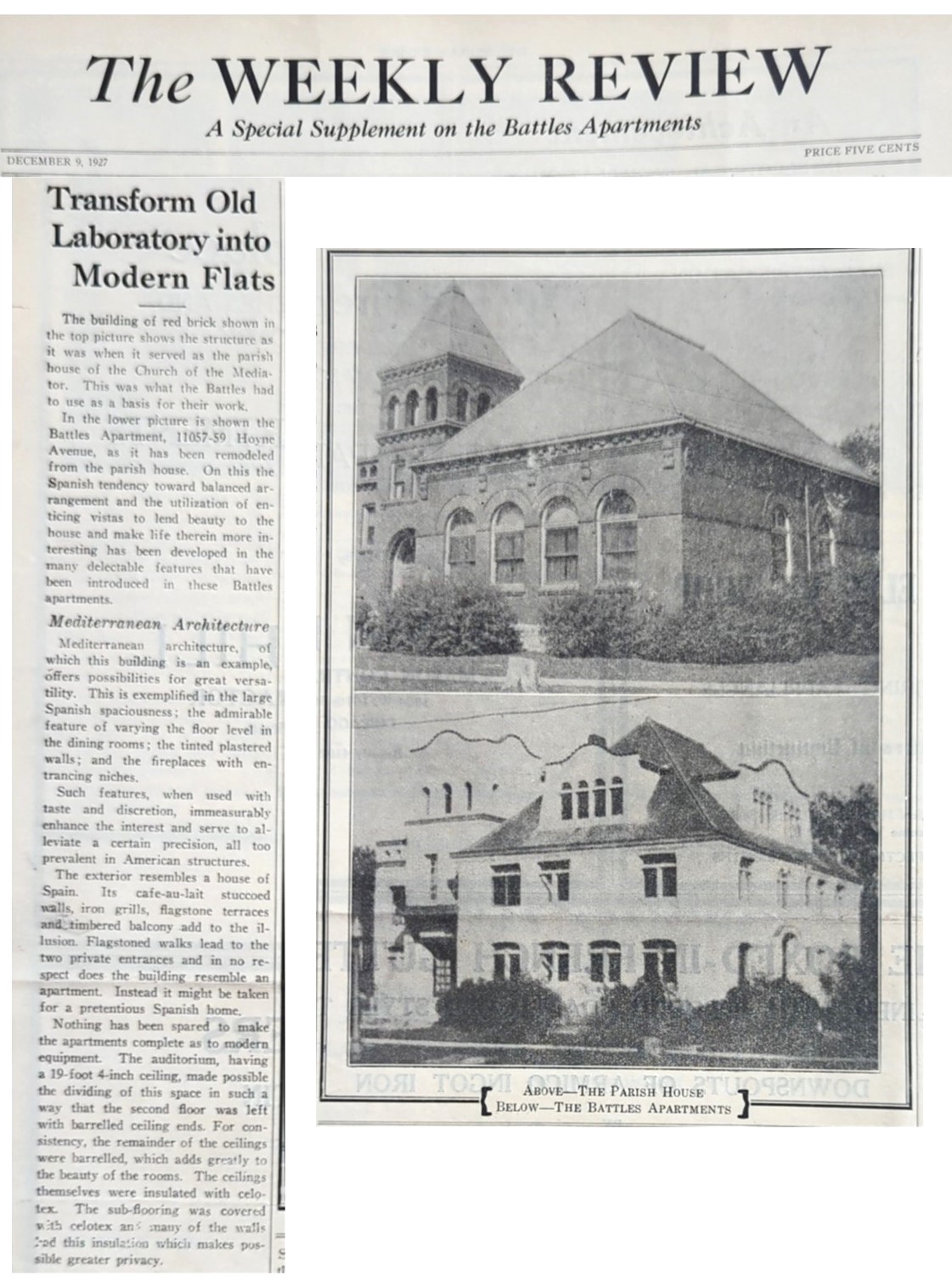
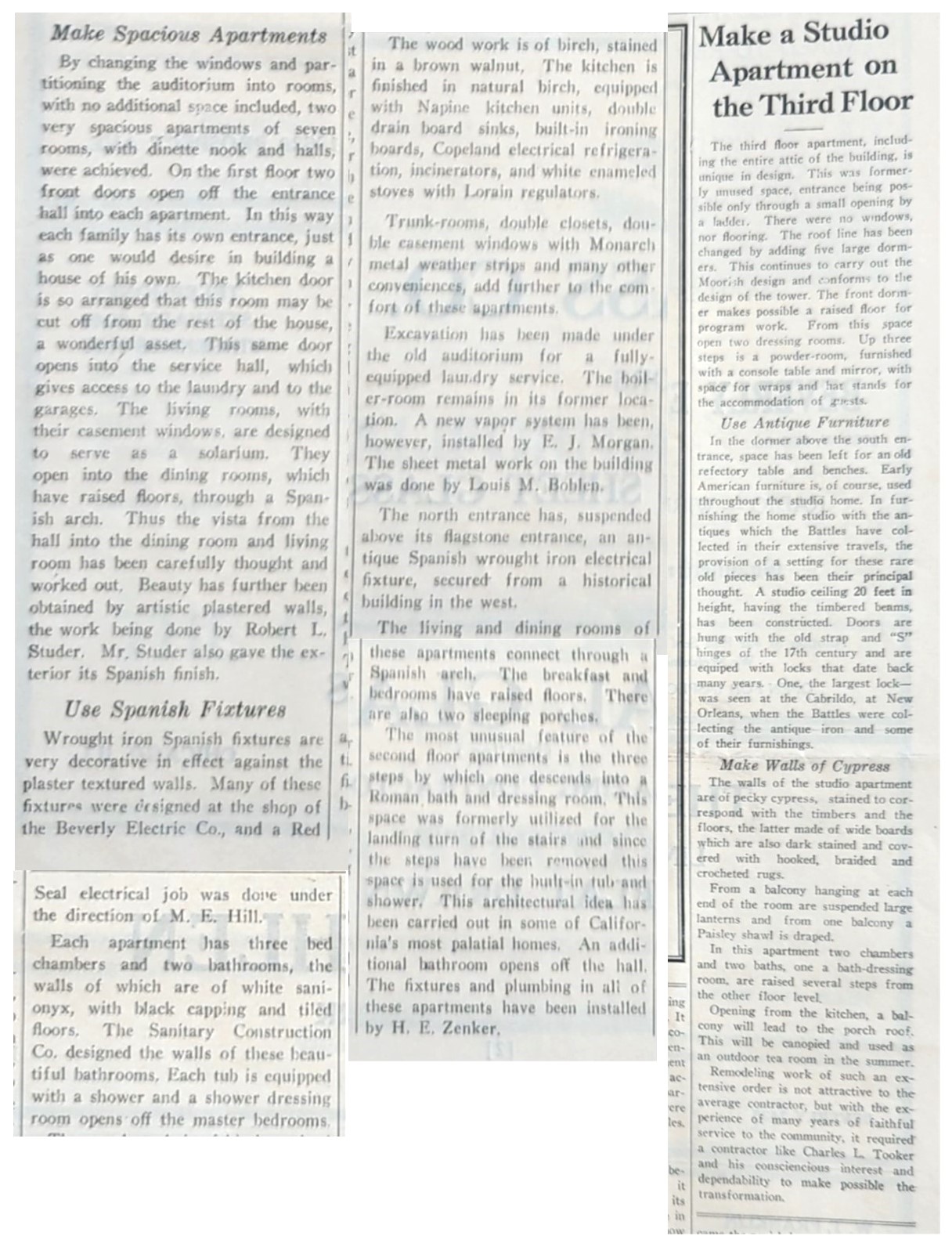
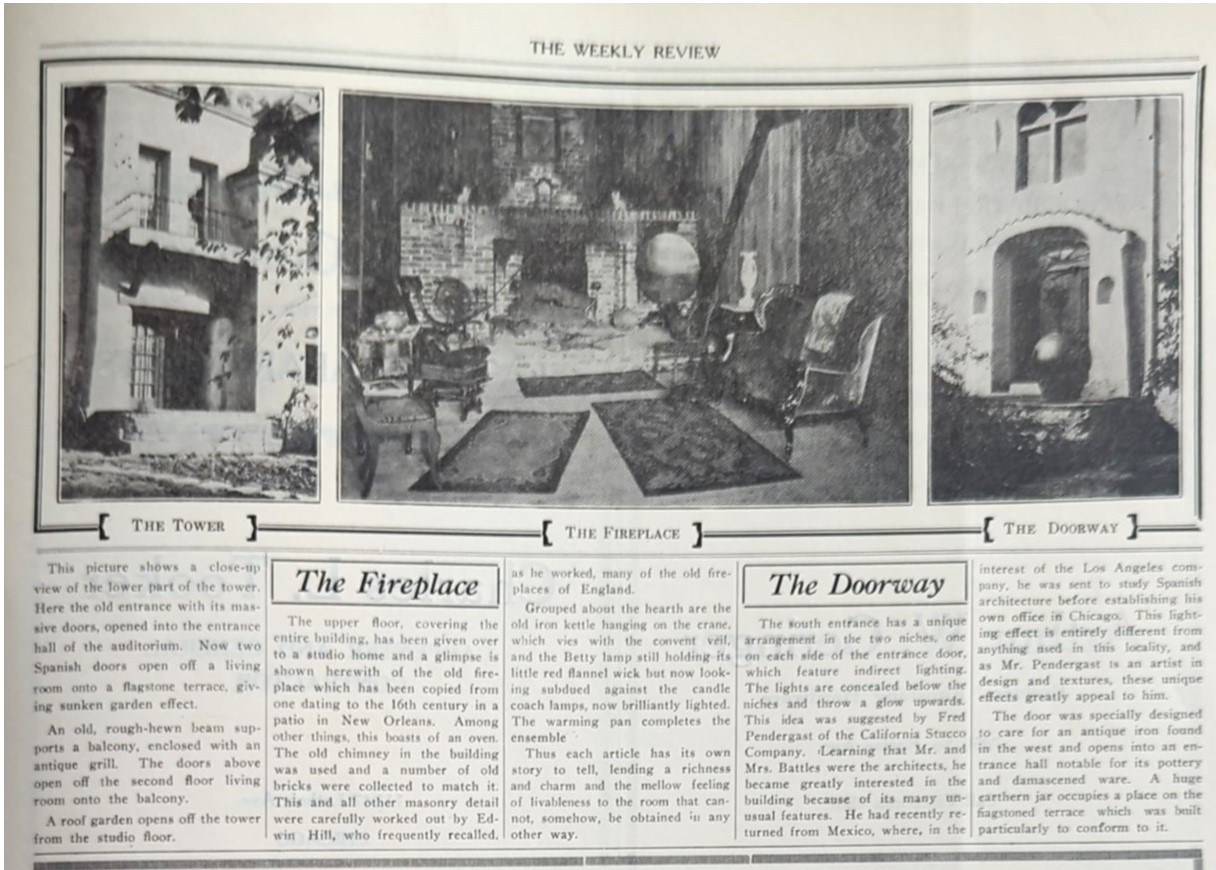
They bought the old parish house, and a special feature in the 1927 Weekly Review, the local newspaper that eventually became the Beverly Review, described its repurposing into the “Battles Apartments.” Those articles are shared here. [This is a quick electronic “cut-and-paste” job in Publisher from the scanned newspaper. Note that the old newspaper is very fragile and faded.]
Charles and Blanche Battles lived in one of the apartments, and Blanche opened her studio on the third floor. She used it for both professional and social purposes. It was full of antiques, which she had collected.
They operated a “tearoom” in the building, which was used by many groups for events and programs, from luncheons to artist exhibits. An event was often followed by a tour of Blanche’s studio to view the antiques. It was a very popular place in the early 1930s.
By 1940, the Battles moved to 1400 Lake Shore Drive, and by 1950, they retired to San Diego, California.
In 1941, it was announced that new residents of Casa del Loma were Dr. Noor R. Beshir and Dr. Nellie A. Beshir. They were chiropractors and used the space as a dwelling, office, and clinic. They lived there for several decades, and their son Alton was a graduate of the Morgan Park Military Academy.
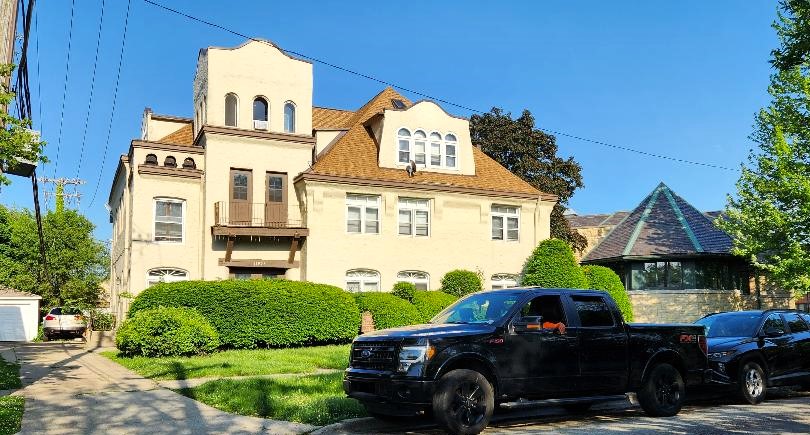
Many other tenants called Casa del Loma home through the years. The building on the hill, with its Spanish facade shining in the sun, contributes to the interesting variety of architecture found in the Beverly/Morgan Park community. It's a good example of repurposing an old building, which possibly would have been demolished otherwise.
The Ridge Historical Society will be closed on Sunday, May 26, 2024, for the Memorial Day week-end.
Let us take time to remember and honor those who have died in military service to the U.S.
Enjoy the Beverly/Morgan Park Memorial Day Parade on Monday, May 27.
The Ridge Historical Society
Lost or Found? – FOUND – Building #2 (Part 1)
By Carol Flynn
A few months ago, the “Lost or Found?” series was started on this Ridge Historical Society (RHS) Facebook page as part of the current exhibit at RHS, “Louise Barwick’s Lost Ridge.”
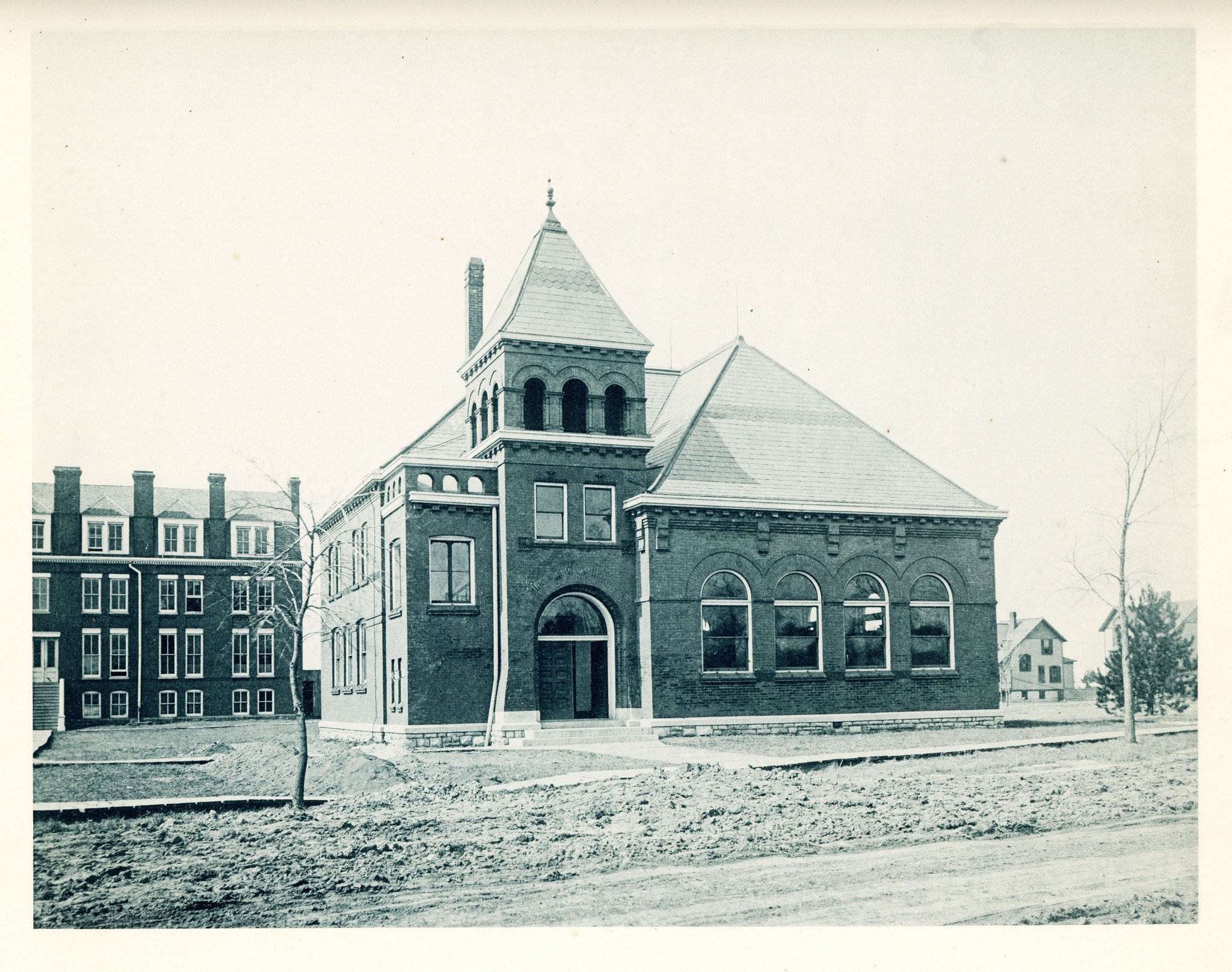
Historical images of buildings in Morgan Park from an 1889 book of photographs are being shared. Some of these buildings still stand but some are gone. Viewers are invited to identify the buildings, and their locations if the buildings still exist.
Several commenters correctly identified the second building in the series as “found,” that is, still here, although it has been moved from its original location and substantially altered from its original look.
The building is known today as “Casa del Loma,” translated as the “House on the Hill.” It is located at 11057-59 S. Hoyne Avenue, just to the north of the Walker Branch of the Chicago Public Library at the northeast corner of 111th Street and Hoyne Avenue.
This building has one of the more interesting histories in the community, with two other “lives” before it was transformed into the Casa. In 1927, the Weekly Review, the local newspaper that eventually became the Beverly Review, published a special supplement on the building, giving its detailed history.
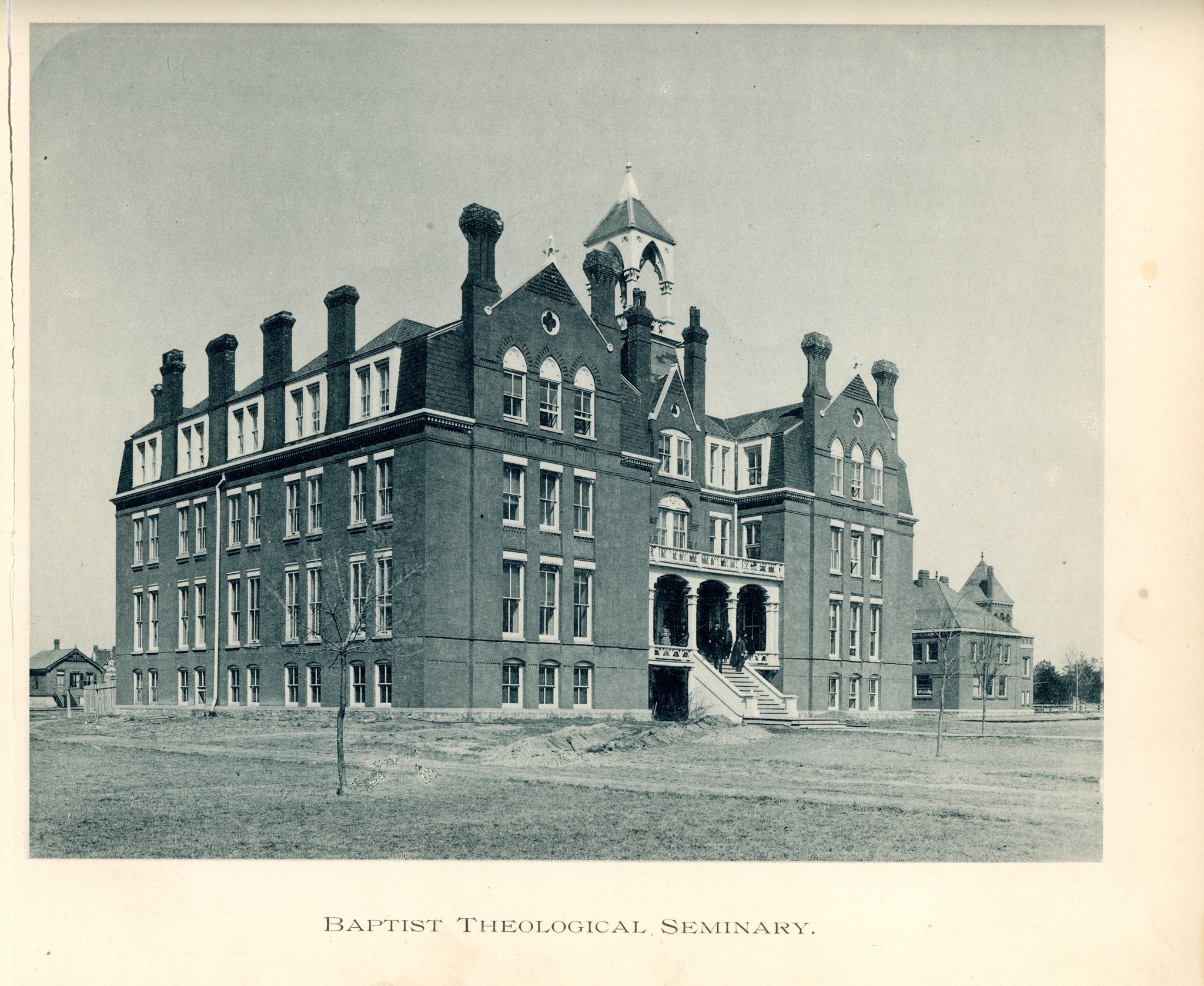
The building was originally built as the physics laboratory for the Baptist Union Theological Seminary. The Seminary was founded in 1865 as part of the “Old” University of Chicago, that is, the first attempt to form an institution of higher learning in the city, started by Illinois Senator Stephen Douglas.
Originally classes were taught in buildings near Douglas’ Oakenwald estate at 35th Street and Cottage Grove. In 1877, a generous offer of free land (five acres) from the Blue Island Land & Building Co. (BILBCo) caused the seminary to relocate to Morgan Park and build its facilities there.
This was part of the BILBCo’s plan to establish Morgan Park as a prestigious religious, education, and temperance community. It was anticipated that additional educational facilities would follow, creating a new University of Chicago. Morgan Park Academy, started as the Mount Vernon Military Academy, and the Chicago Female College, were already established in Morgan Park.
An imposing three-story office and classroom building, now long gone, was built on the site, and in the early 1880s, the “physical laboratory” was built on a corner of the land, on the west side of Hoyne Street across the street from its present location, facing 110th Place, which was called Arlington Avenue back then.
However, the plans for establishing the “new” University of Chicago in Morgan Park never became a reality. The land in Hyde Park was chosen instead, due to another generous gift, this time from the Rockefeller family.
In 1892, the Baptist Theological Seminary became part of the Divinity School of the new University and relocated from Morgan Park. Other institutions used the Morgan Park buildings for a while, but shortly after 1900, the main building was demolished.
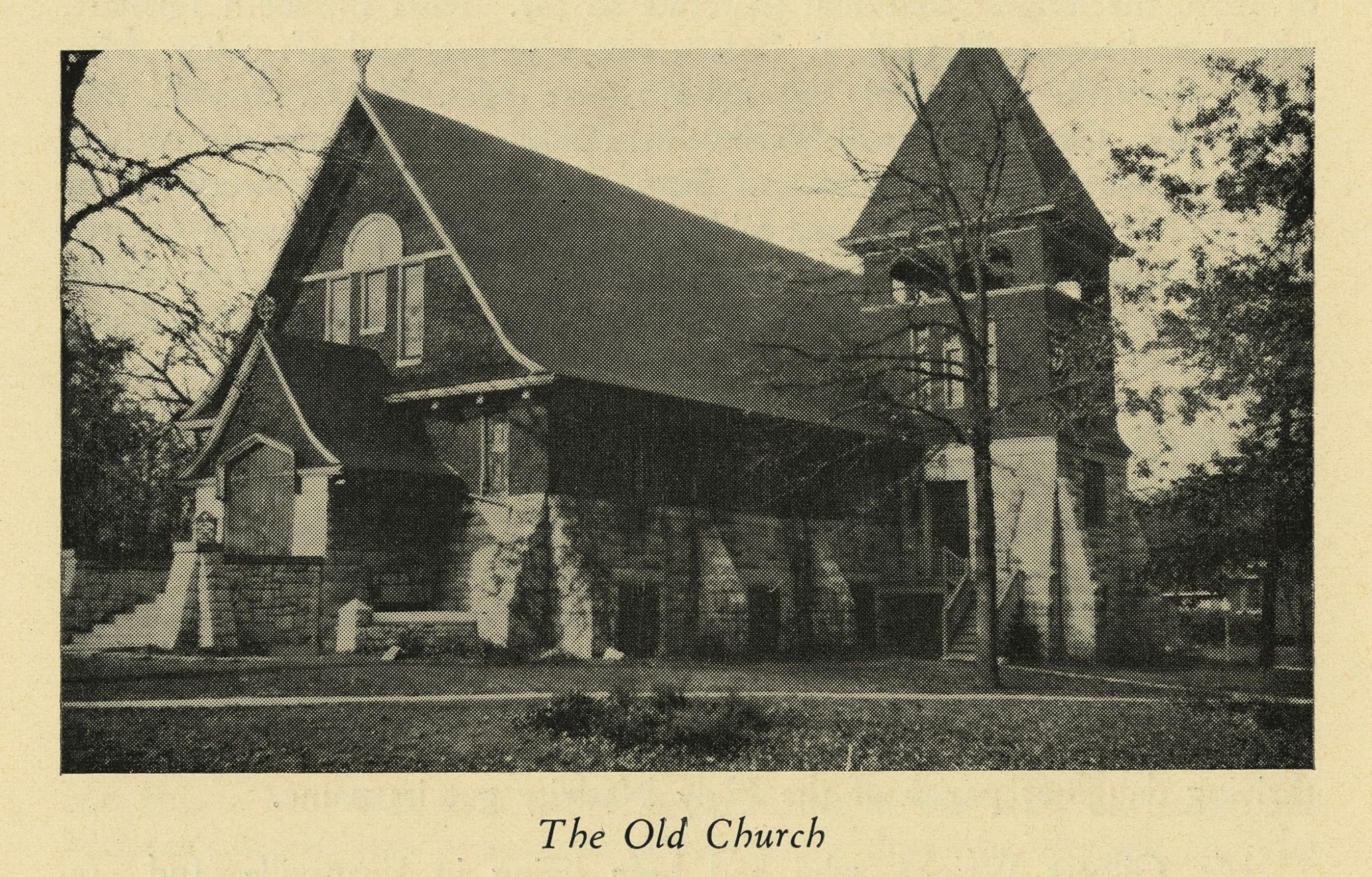
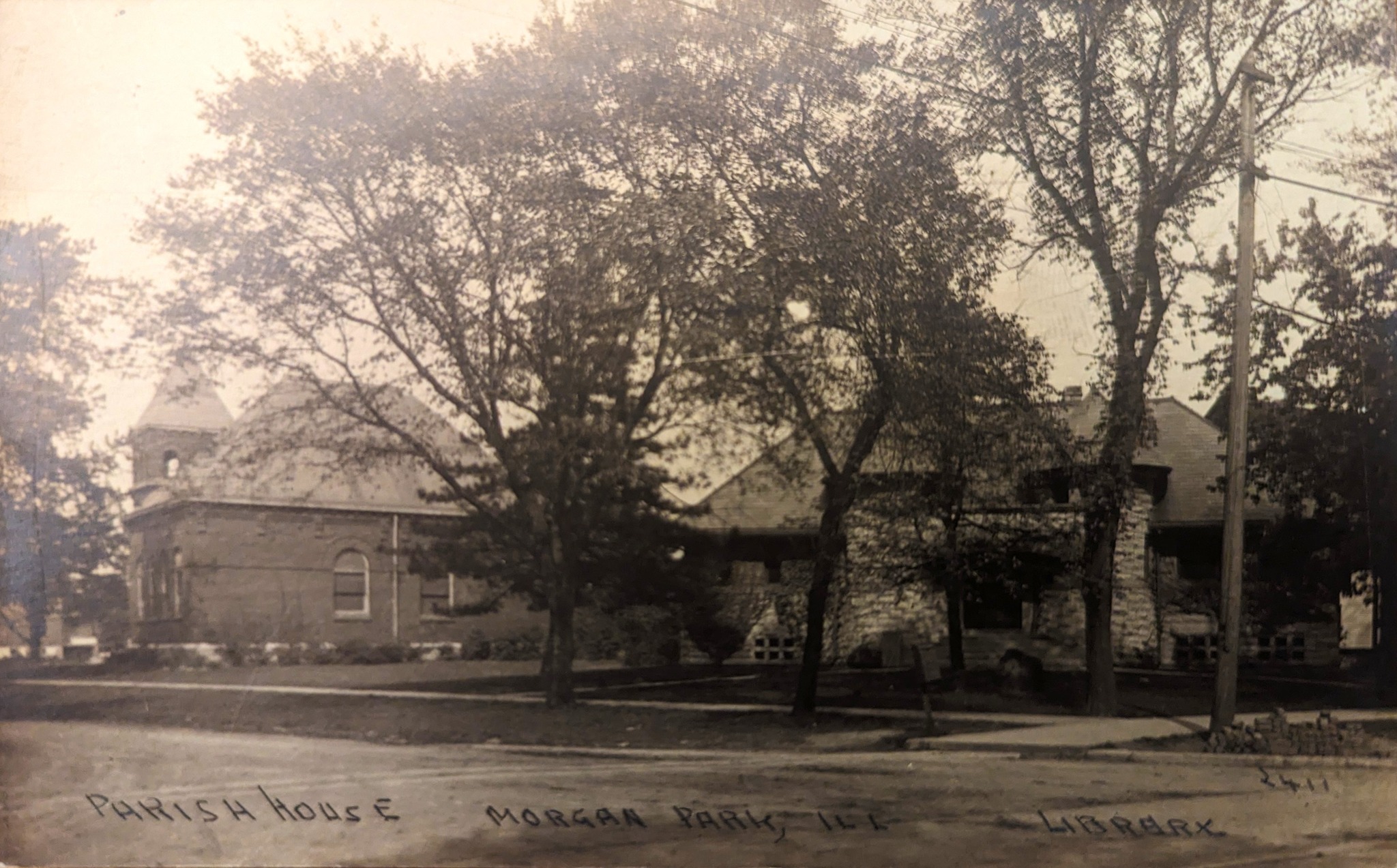
The old laboratory was then purchased by the Church of the Mediator at 10961 S. Hoyne Avenue, and physically moved across the road to its present location.
Buildings were often moved back then, as this was easier than building a new building. The process was to raise the building on to cut logs used as rollers, and have horses pull the house to its new location, where a new foundation had already been dug. This process could take days depending on the distance the building had to be moved, but in this case, it was just across the road.
The Church of the Mediator was a thriving church one hundred years ago, and it still stands but has not been used since the congregation closed its doors in 2007.
The laboratory building became the parish center. It was not used for religious activities but became more of a community center. A dancing school, amateur theatricals, bazaars, and other functions were centered there. The building needed only slight alterations to be used for this new purpose.
Eventually, additions were made to the church itself, allowing the parish to hold events on site, and after about twenty years, the building was no longer needed as the parish center.
It was then sold to Charles Curtis and Blanche Dunlap Battles, who converted it into Casa del Loma, also known as the Battles Apartments.
In the next post, the building’s transition from a physics laboratory/parish house to modern, state-of-the-art apartments in 1927 will be shared.
The RHS exhibit is free and open for viewing on Tuesdays and Sundays from 1:00 to 4:00 p.m., or by appointment. RHS is located at 10621 S. Seeley Avenue in Chicago and may be contacted at 773-881-1675 or ridgehistory@hotmail.com.
The Ridge Historical Society
History and Art This Weekend
By Carol Flynn
I’ve been remiss with sharing stories on this Ridge Historical Society (RHS) Facebook page lately because I’ve been very busy doing research on topics that will lead to interesting new stories.
Tomorrow, May 19th, is the Beverly Area Planning Association (BAPA) Home Tour, where five homes and one facility will be open for touring. I don't know all the houses (it's a surprise!) but I know the historic Hopkinson-Platt House at 108th and Drew Street will be open, and that is not to be missed!
This is one of the best home tours in the city. The tours were actually started many years ago by the local chapter of the Daughters of the American Revolution (D.A.R.), and then RHS ran them for a while, and now BAPA does a superb job with them.
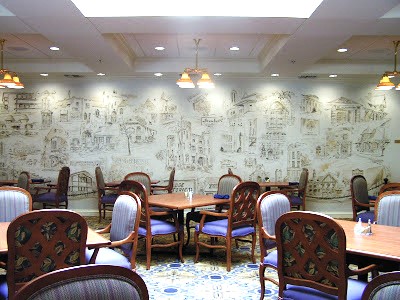
The tour will start at Smith Village Senior Living facility at 113th Place and Western Avenue. This is where people will pick up their packets and have a chance to tour the first-floor common areas. One sight to see is the mural by the late Jack Simmerling called “Life on the Ridge” that covers a wall in one of the dining rooms.
I will be there from 12 to 3 p.m. to discuss the mural and help people identify locations, so please stop by! As one viewer said, “This was like taking a walk through the neighborhood of my youth.” There are current buildings and some that are now gone depicted in the mural.
The other place to visit is the historic Eugene S. Pike House at 91st and Longwood Drive, which the community has adopted for preservation. The Beverly Area Arts Alliance will be holding an outdoor event there, “Arts in the Yard@the Pike House”, with music and art activities, including Robin Power demonstrating ceramics.
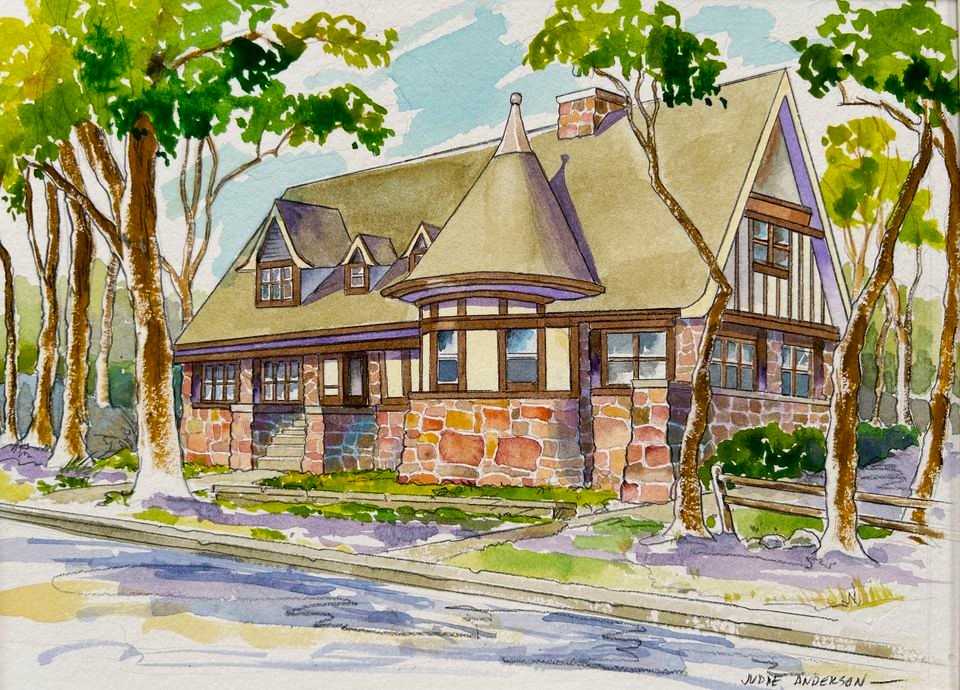
One of the highlights will be a new painting of the Pike House by Beverly artist Judie Anderson. Judie has captured the Pike House in its whimsical, “fairy-tale” persona. The American Institute of Architects once commented about the house that you expect to see Hansel and Gretl come skipping down the path, and Judie’s watercolor brings that to mind. Judie is calling the painting “The Watchman’s Residence,” because that is what it was known and used as by the Forest Preserves of Cook County, which owns the house. Prints will be available for a donation, and Judie will be there to sign them.
Topics coming up next on the RHS Facebook page are many: the return of the 17-year cicadas known as Brood XIII; the next installment in the “Lost and Found” series; more posts on James H. Gately; the 100th anniversaries of Smith Village and St. Barnabas Parish; and stories about the many families who called the Pike House “home” are just a few. Stay tuned.
The Ridge Historical Society
Mother’s Day One Hundred Years Ago
By Carol Flynn
The modern Mother’s Day in the U.S. grew out of the peace movement following the U.S. Civil War. Peace activists Ann Reeves Jarvis and Julia Ward Howe called for a “Mother’s Day for Peace” when mothers collectively would advocate that their children not be sacrificed as soldiers in wars.
When Ann Reeves Jarvis died in 1905, her daughter Anna Jarvis wanted to honor her and all mothers, and started a liturgical service in West Virginia. She proposed a national Mother’s Day, and President Woodrow Wilson declared the first officially recognized Mother’s Day in the U.S. in 1914.
Anna Jarvis always wanted the day to be one of prayer, thanks, honor, and personal reflection, and was opposed to the commercialism that crept into the holiday. She protested at a candy makers convention in 1923 and against the sale of carnations for Mother’s Day in 1925, where she was arrested for disturbing the peace.
At this time on the Ridge and nearby areas, the church influence was still very strong, but the commercialism that would come to own Mother’s Day was in evidence.
The Protestant community spent most of their Sundays in church back in those days, and in 1924, the local churches led the way in recognizing Mother’s Day. Everyone was encouraged to attend services “for mother’s sake.”
Church started with Sunday School and one topic that year was “What We Owe Our Mothers.”
The first service of the day offered sermons on topics like “Mother’s Unfeigned Faith” and “A Mother’s Heart.” Printed copies of the sermon “A Godly Mother” were distributed to the congregants at one church.
Choir programs included “Songs Mother Used to Sing.” Duets and solos included “My Mother’s Bible” and “Wear a Flower for Mother.”
Special christening services for children were held.
After Sunday dinner at home, people returned to church for evening services.
Evening services contained entertainment/educational programs as well as liturgical services. At one church, a large men’s chorus sang Mother’s Day songs, followed by a testimony meeting honoring mothers. Another church gave every mother who attended evening service a rose or a tribute booklet. A third church showed a stereopticon on “A Child and His Mother.”
Other social events also went on, usually on weekdays, not on Sunday, because Sunday was for church. Sororities and other groups gave annual Mother’s Day parties, luncheons, and teas that included music and drama programs. At one event. the local paper reported that “Miss Sadie Minrath danced the ‘frisco’ with Miss Anne Green at the piano.” The “frisco” was a popular contemporary dance, the first one set to jazz music.
At the same time, commercial gifts and services were beginning to take hold in the community, and advertisements were appearing in the newspapers.
Greenhouses and florist shops promoted blooming plants and flowers as good gifts for Mother’s Day. Novelty shops promoted commercially made cards, started by the Hallmark Company, and items like stationery. Candy stores promoted special boxes for the day.
Photography studios promoted their services for portraits. Dance studios promoted dancing lessons.
Frank’s Department Store at 63rd Street and Ashland, a popular shopping spot, used the day to advertise women’s shoes, handbags, gloves, and “dotted voile and tissue gingham dresses, trimmed with lace and organdies,” on sale for $2.98, down from $3.50.
As one advertiser put it, the question wasn’t whether or not to recognize your mother on this day, the question was how to do it.
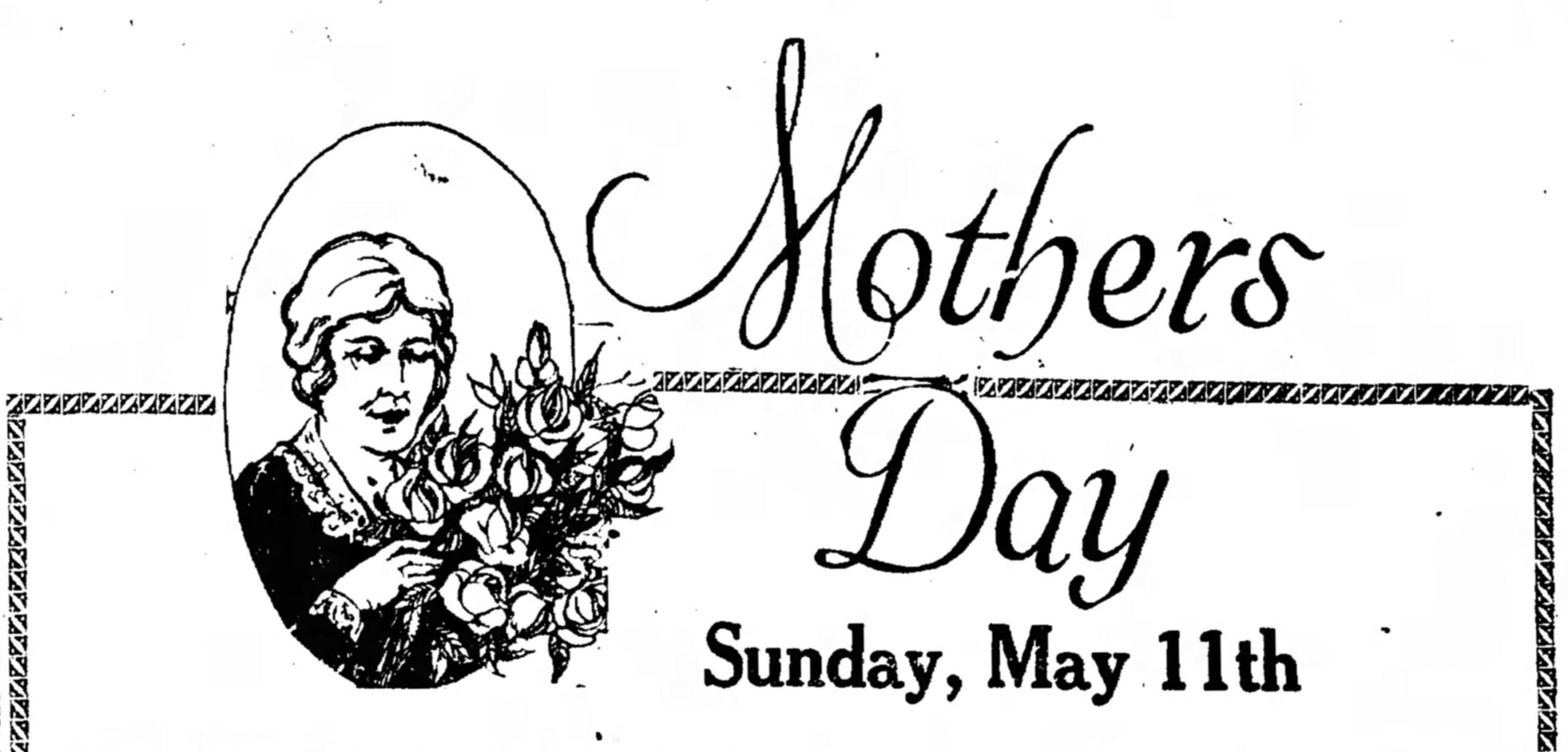
Image from a flower ad, May, 1924.
The Ridge Historical Society
Historical Monterey Avenue
By Carol Flynn
The research requests the Ridge Historical Society receives include questions from the media looking for background information for stories they are covering.
Last week, our fellow fact seekers at the The Beverly Review, the local newspaper, asked us about the history of the vacant land on the south side of Monterey Avenue between Homewood Avenue and the Metra tracks to the west because a new Dunkin coffee and donut shop is planned to be built on the site.
The researchers at RHS (RHS Historian Linda Lamberty, RHS Board member Tim Blackburn, and RHS Facebook Administrator Carol Flynn) were happy to investigate the question. It proved an interesting challenge to find the answers.
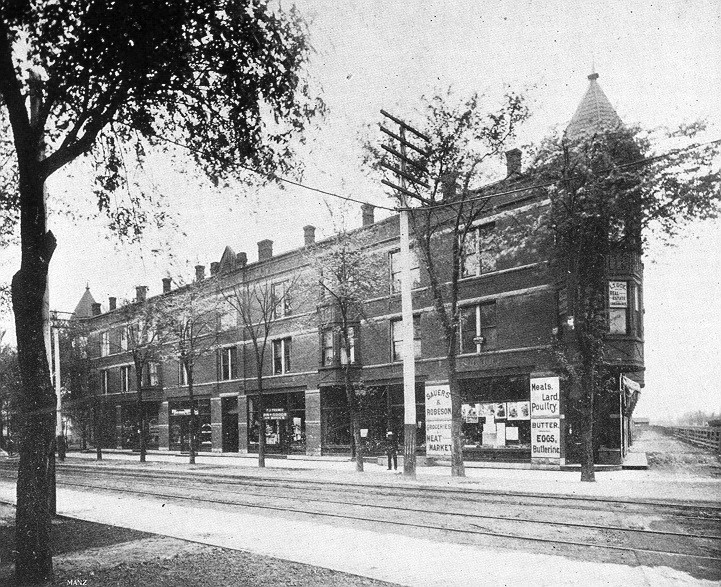
The McCormack Building (attached image from the RHS collection, and note the streetcar tracks in front of the building, running east/west on Morgan Avenue, today's 111th/Monterey) was on that site from 1890 to 1938. This was a three-story building with commercial spaces on the first floor and apartments on the second and third floors. The building had no central heat; each apartment and business had a coal stove.
The McCormack Building was the home for many businesses during its years of operation. Some of the tenants included an early telephone exchange with switchboards and operators, the Morgan Park State Bank, and a Piggly Wiggly store in the 1920s.
Neighborhood shops like the Morgan Park Cash and Carry Grocery, Kordewick’s Meat Market, a bakery, and a shoe shop were also there.
The McCormack Building was replaced by a building that started as a Jewel food store, and later housed the M&R Coffee Depot coffee shop and an electrical appliance contractor. In the 1970s, a group of parents of students at Morgan Park High School (MPHS) opened the Southwest Youth Foundation, a youth center, there.
East of the Jewel building were also an ice cream shop and a dry cleaners.
For many years, the Morgan Park Lumber Co.’s lumber yard extended south behind the buildings on the main street, where apartment buildings now exist. The office for the lumber company was across the alley, right next to the Rock Island tracks to the west.
In the 1960s, this was the location of a coffee shop financed by the Y.M.C.A., run by and very popular with students from MPHS. In fact, RHS’s Linda Lamberty managed the coffee shop kitchen while she was a student at MPHS.
By the 1970s-80s, the commercial area along 111th Street/Monterey Avenue was suffering from “urban blight.” This was a period of transition throughout Chicago. Businesses had moved out and new businesses were not moving in. Buildings were deteriorating. During this time, many of the old buildings along this street, and older frame houses in the area, were demolished.
The land has been vacant for at least 40 years. It is a good location for a Dunkin, right by the 111th Street Metra train station.