
Explore the RHS Facebook Archives, a rich repository of local history written by Carol Flynn. For two decades, Carol brought a deeply dedicated voice to public education at RHS. Her role as Facebook administrator through mid-2025 naturally extended her prolific research into meticulously detailed articles, most notably her multi-part historical series posts. Today, Carol continues her local history writing for The Beverly Review and other outlets.
May 2020
Old street names in Beverly/Morgan Park: A question came into the Ridge Historical Society. In a photo from the 1920s, an Irving Street was mentioned. Where was this?
Answer: Irving was the original name of Bell Avenue in Beverly. Many of the streets in Beverly and Morgan Park had different names before the communities annexed to the City of Chicago. Bell is a good example. In Beverly it was known as Irving and in Morgan Park it was known as Crescent.
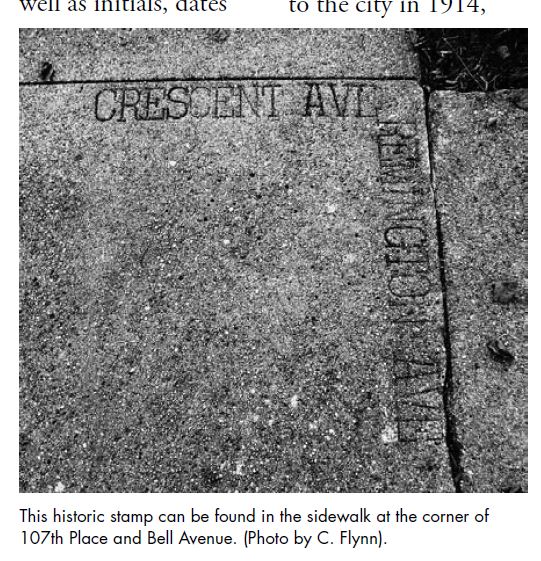
If you look closely, you can still find the old street names stamped into some of the sidewalks. These pictures from past RHS newsletters show two examples. The corner of 107th Place and Bell Avenue has a stamp for Crescent Ave. (Bell) and Remington Ave. (the previous name for 107th Place).
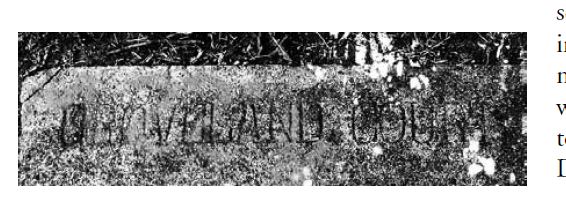
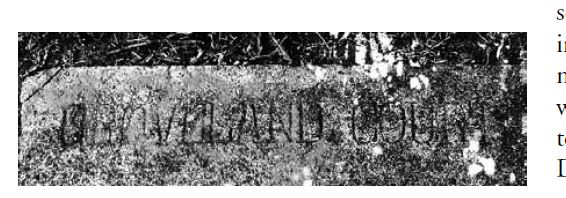
Another stamp is at 108th and Drew Street, for Groveland Court, the pre-annexation name for Drew.
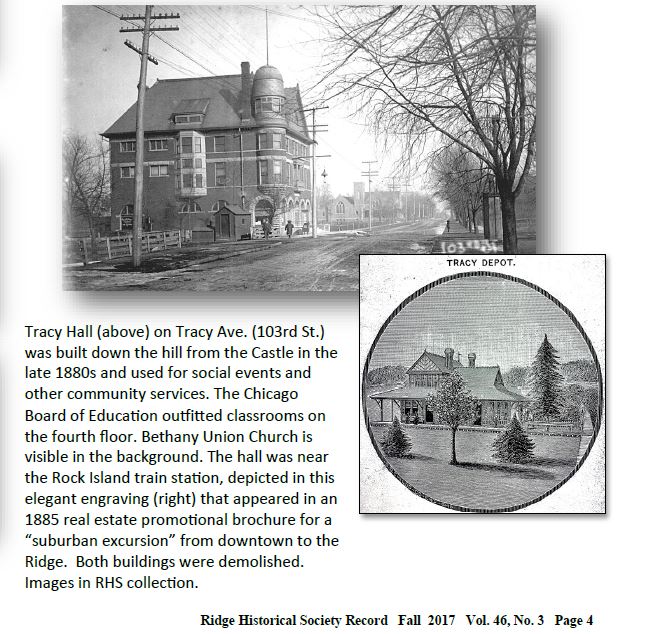
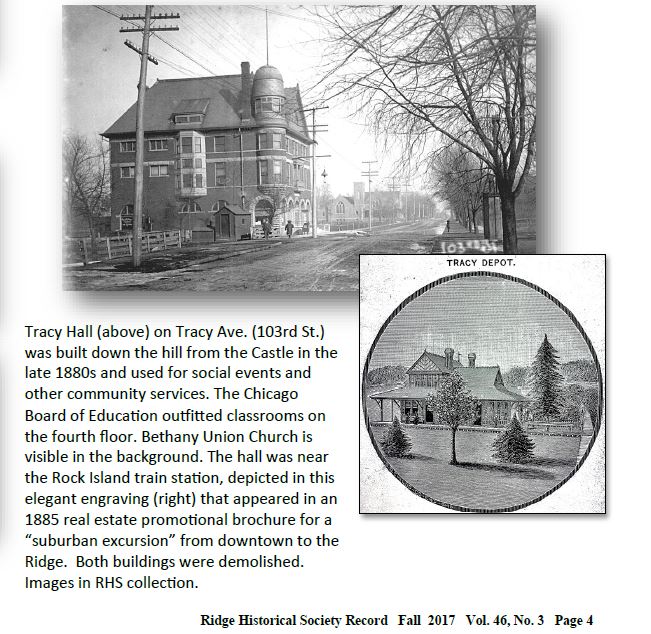
103rd Street was previously known as Tracy Ave., and indeed, the entire area around 103rd and Longwood was known as Tracy before the name Beverly caught on. The train station at 103rd Street was the Tracy stop and there was a famous Tracy Hall right by the tracks, but alas, that is gone now.
Old street names in Beverly/Morgan Park: A question came into the Ridge Historical Society. In a photo from the 1920s, an Irving Street was mentioned. Where was this?
Answer: Irving was the original name of Bell Avenue in Beverly. Many of the streets in Beverly and Morgan Park had different names before the communities annexed to the City of Chicago. Bell is a good example. In Beverly it was known as Irving and in Morgan Park it was known as Crescent.
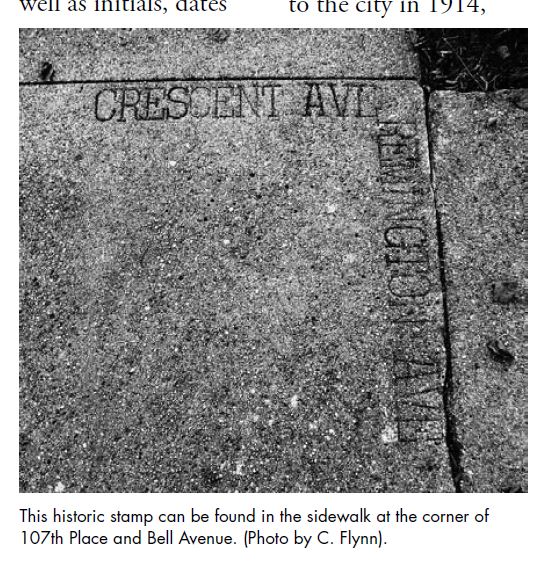
If you look closely, you can still find the old street names stamped into some of the sidewalks. These pictures from past RHS newsletters show two examples. The corner of 107th Place and Bell Avenue has a stamp for Crescent Ave. (Bell) and Remington Ave. (the previous name for 107th Place).
Another stamp is at 108th and Drew Street, for Groveland Court, the pre-annexation name for Drew.
103rd Street was previously known as Tracy Ave., and indeed, the entire area around 103rd and Longwood was known as Tracy before the name Beverly caught on. The train station at 103rd Street was the Tracy stop and there was a famous Tracy Hall right by the tracks, but alas, that is gone now.
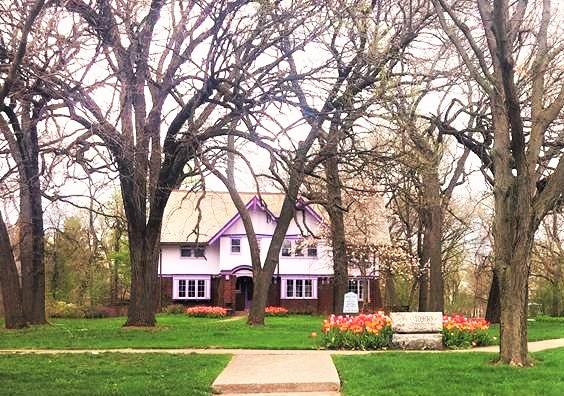


Pretty spring tulips are on view at one of Morgan Park’s historic homes, the Luther S. Dickey, Jr. House, at 10900 S. Prospect Ave.
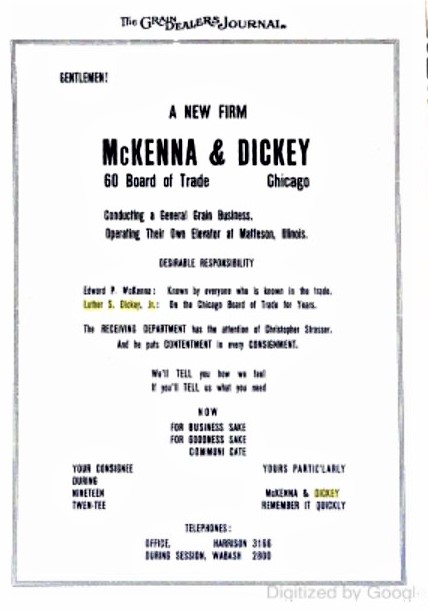
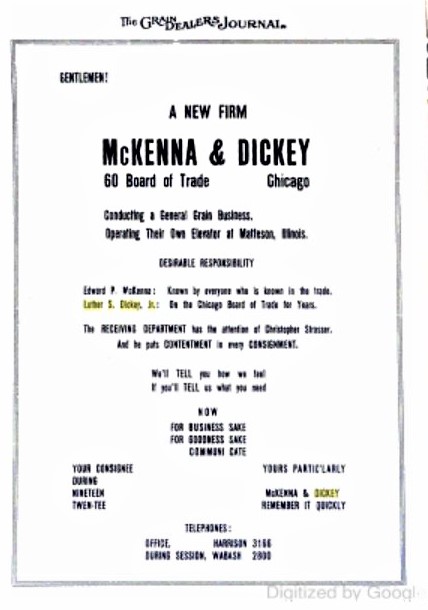
Luther Samuel Dickey, Jr., was a well-known stock broker and grain trader. He was a member of the Chicago Board of Trade and the New York Stock Exchange. He had his own company for years, McKenna and Dickey.
Dickey’s parents were Luther S. and Charlotte Dickey. Dickey, Sr., came to Chicago from Pennsylvania and was a veteran of the U.S. Civil War. He was involved with the Chicago Inter-Ocean newspaper, and upon retirement, authored publications on the history of Pennsylvania regiments in the war. He was also an elected officer with the Calumet-Morgan Park park district. He was active with social and political causes such as labor issues and the rights of the working class.
In 1889, the family made news when Charlotte and the children became “poisoned from eating fermented raspberries.” One daughter, Alice, 9, died. The rest survived.
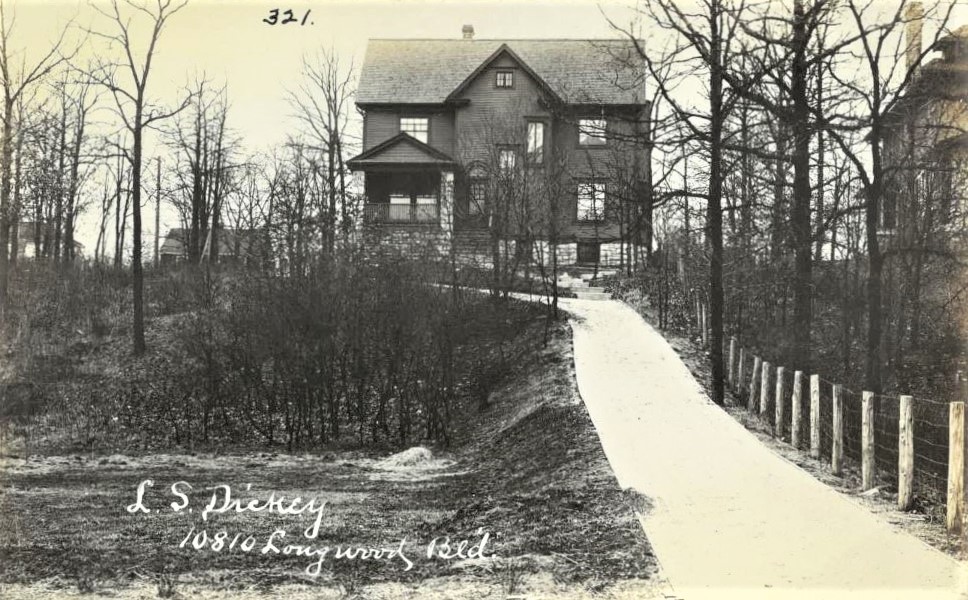
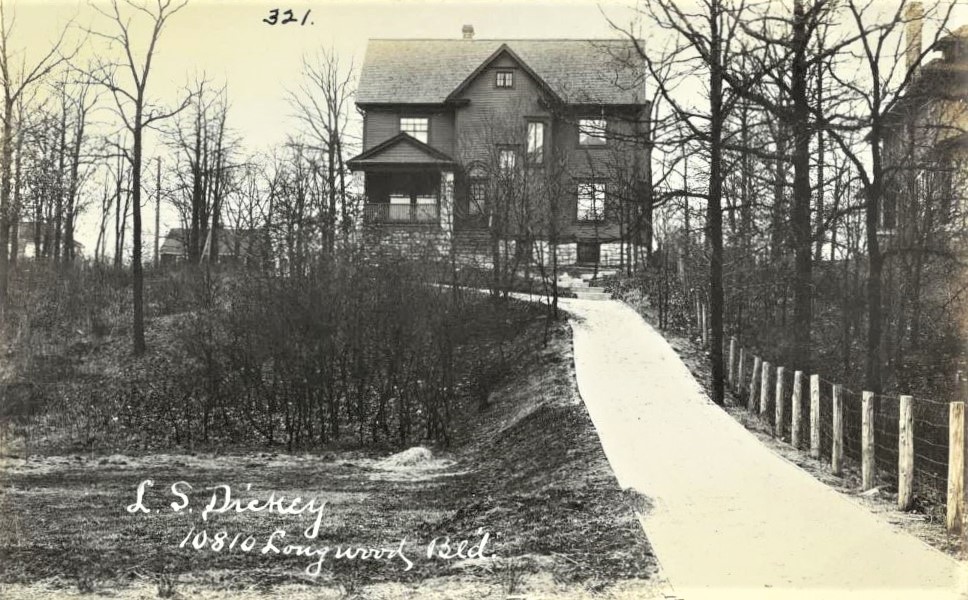
Dickey, Jr., had a first home built by architect George Bannister in 1905 at what is now 10856 S. Longwood Drive. Bannister was the husband of Madame Alla Ripley, the fashion designer and business woman featured in RHS’s exhibit last year, Threads of Imagination. In 1912, that home was sold to Paul Harris, the founder of Rotary International. The house is being restored as a Rotary museum and meeting place.
Dickey, Jr., had the house at 10900 S. Prospect designed by Chatten and Hammond in 1912. The picturesque Arts and Crafts-styled house is set on a lot of several acres of beautiful old oak trees. Design elements include a half-timbered double gable, sloping brick buttresses, and a flanged segmental entry arch. Dickey, his wife Bessie Adele (Robinson) Dickey, and their daughter and two sons made their home there.
Their neighbors were socially and politically prominent Isaac and Gertrude Blackwelder. On July 26, 1913, Bessie Dickey joined Gertrude as one of the first women to vote in Cook County. Her husband, Luther, was president of the annexation association. Annexation of Morgan Park to Chicago was finally approved in 1914. The major issue in the 1913 election was funding for a new high school. The funding was approved, leading to the establishment of Morgan Park High School.
Dickey, Jr., was on the board of the South Shore Country Club and involved in putting on the annual horse show. He was an avid horseman and his steeds won many prizes in competitions.
The Dickeys were members of the Morgan Park Congregational Church. He was also a member of the Union League Club, and active in the Boy Scouts with his sons.
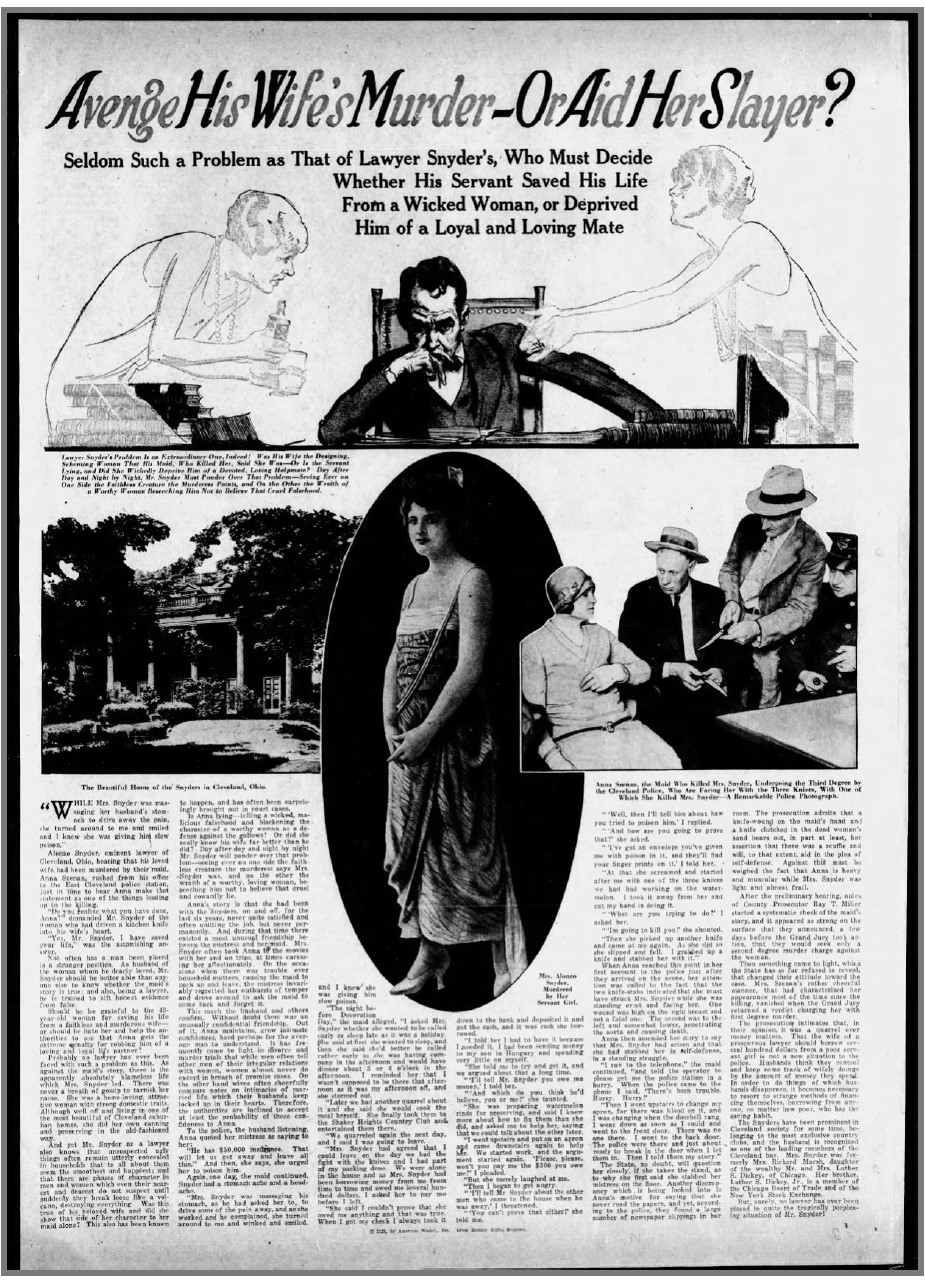
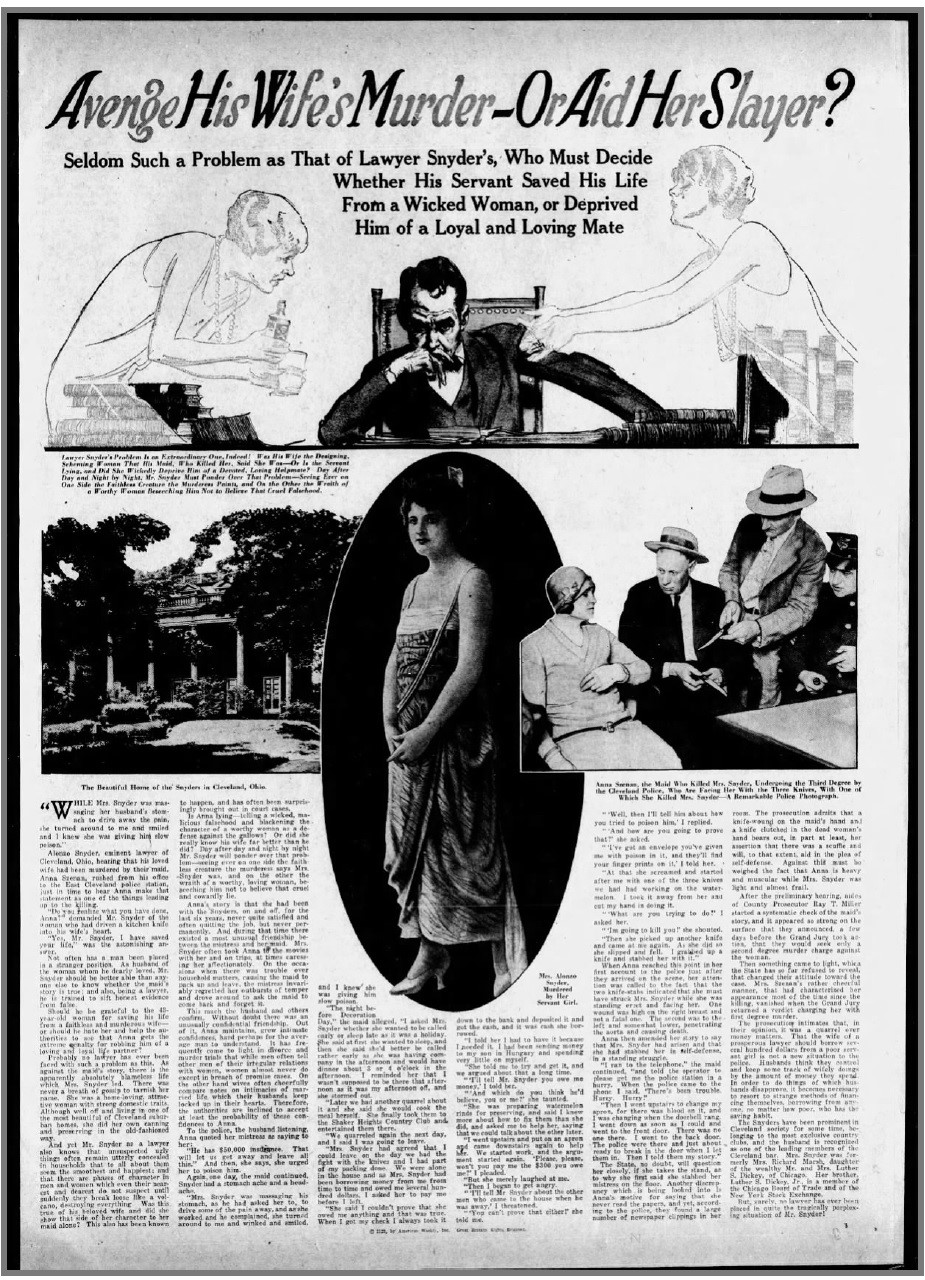
In May of 1929, the Dickey family became victims of tragedy and scandal when Luther, Jr.’s sister, Maude Dora (Dorothy) Snyder, was killed by her maid, Anna Szenan, at the Snyder home in Cleveland. Dorothy, the wife of prominent attorney Alonzo Snyder, was stabbed to death in an altercation over unpaid wages. Dickey, Jr., rushed to Cleveland as soon as he received the news.
Anna Szenan claimed self-defense. The crime and trial received sensational news coverage. Szenan was found guilty of second-degree murder and received a life sentence. She died at the age of 100 still in jail, refusing parole for years because she had nowhere else to go. She had made the prison her home, cleaning the matrons’ quarters, cultivating a petunia garden and keeping a cat.
Tragedy struck again just a few months later. Luther S. Dickey, Jr., contracted diphtheria, an infectious and contagious bacterial disease spread by coughing and sneezing. He died at his home at 10900 S. Prospect on September 15, 1929, at the age of 48. He was buried in Mount Hope Cemetery.
Diphtheria was a major public health issue and homes with diphtheria patients were quarantined. A safe vaccine was developed in 1926 but was not widely used until after 1930.
Bessie remarried to Walter H. Jacobs, a lawyer, in 1935. He died in 1945. Bessie continued living at the Prospect Ave. house until her death at the age of 94 in 1974. She was also buried in Mount Hope Cemetery.
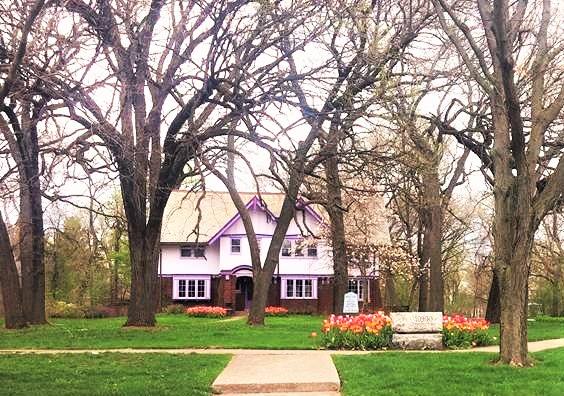


Pretty spring tulips are on view at one of Morgan Park’s historic homes, the Luther S. Dickey, Jr. House, at 10900 S. Prospect Ave.
Luther Samuel Dickey, Jr., was a well-known stock broker and grain trader. He was a member of the Chicago Board of Trade and the New York Stock Exchange. He had his own company for years, McKenna and Dickey.
Dickey’s parents were Luther S. and Charlotte Dickey. Dickey, Sr., came to Chicago from Pennsylvania and was a veteran of the U.S. Civil War. He was involved with the Chicago Inter-Ocean newspaper, and upon retirement, authored publications on the history of Pennsylvania regiments in the war. He was also an elected officer with the Calumet-Morgan Park park district. He was active with social and political causes such as labor issues and the rights of the working class.
In 1889, the family made news when Charlotte and the children became “poisoned from eating fermented raspberries.” One daughter, Alice, 9, died. The rest survived.
Dickey, Jr., had a first home built by architect George Bannister in 1905 at what is now 10856 S. Longwood Drive. Bannister was the husband of Madame Alla Ripley, the fashion designer and business woman featured in RHS’s exhibit last year, Threads of Imagination. In 1912, that home was sold to Paul Harris, the founder of Rotary International. The house is being restored as a Rotary museum and meeting place.
Dickey, Jr., had the house at 10900 S. Prospect designed by Chatten and Hammond in 1912. The picturesque Arts and Crafts-styled house is set on a lot of several acres of beautiful old oak trees. Design elements include a half-timbered double gable, sloping brick buttresses, and a flanged segmental entry arch. Dickey, his wife Bessie Adele (Robinson) Dickey, and their daughter and two sons made their home there.
Their neighbors were socially and politically prominent Isaac and Gertrude Blackwelder. On July 26, 1913, Bessie Dickey joined Gertrude as one of the first women to vote in Cook County. Her husband, Luther, was president of the annexation association. Annexation of Morgan Park to Chicago was finally approved in 1914. The major issue in the 1913 election was funding for a new high school. The funding was approved, leading to the establishment of Morgan Park High School.
Dickey, Jr., was on the board of the South Shore Country Club and involved in putting on the annual horse show. He was an avid horseman and his steeds won many prizes in competitions.
The Dickeys were members of the Morgan Park Congregational Church. He was also a member of the Union League Club, and active in the Boy Scouts with his sons.
In May of 1929, the Dickey family fell victim to tragedy and scandal when Luther, Jr.’s sister, Maude Dora (Dorothy) Snyder, was killed by her maid, Anna Szenan, at the Snyder home in Cleveland. Dorothy, the wife of prominent attorney Alonzo Snyder, was stabbed to death in an altercation over unpaid wages. Dickey, Jr., rushed to Cleveland as soon as he received the news.
Anna Szenan claimed self-defense. The crime and trial received sensational news coverage. Szenan was found guilty of second-degree murder and received a life sentence. She died at the age of 100 still in jail, refusing parole for years because she had nowhere else to go. She had made the prison her home, cleaning the matrons’ quarters, cultivating a petunia garden and keeping a cat.
Tragedy struck again just a few months later. Luther S. Dickey, Jr., contracted diphtheria, an infectious and contagious bacterial disease spread by coughing and sneezing. He died at his home at 10900 S. Prospect on September 15, 1929, at the age of 48. He was buried in Mount Hope Cemetery.
Diphtheria was a major public health issue and homes with diphtheria patients were quarantined. A safe vaccine was developed in 1926 but was not widely used until after 1930.
Bessie remarried to Walter H. Jacobs, a lawyer, in 1935. He died in 1945. Bessie continued living at the Prospect Ave. house until her death at the age of 94 in 1974. She was also buried in Mount Hope Cemetery.
Old street names in Beverly/Morgan Park: A question came into the Ridge Historical Society. In a photo from the 1920s, an Irving Street was mentioned. Where was this?
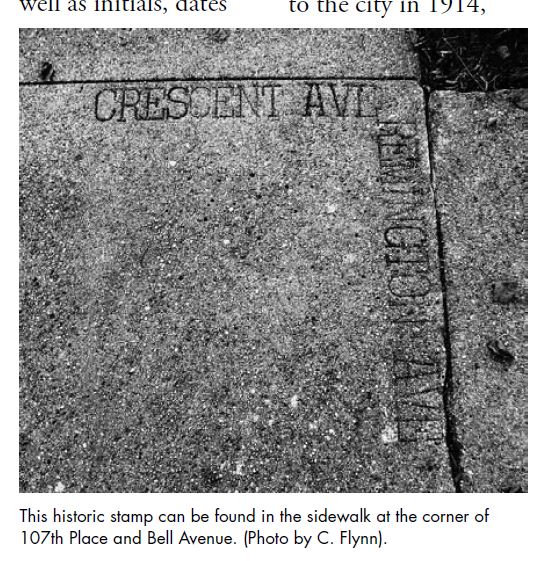
Answer: Irving was the original name of Bell Avenue in Beverly. Many of the streets in Beverly and Morgan Park had different names before the communities annexed to the City of Chicago. Bell is a good example. In Beverly it was known as Irving and in Morgan Park it was known as Crescent.
If you look closely, you can still find the old street names stamped into some of the sidewalks. These pictures from past RHS newsletters show two examples. The corner of 107th Place and Bell Avenue has a stamp for Crescent Ave. (Bell) and Remington Ave. (the previous name for 107th Place).
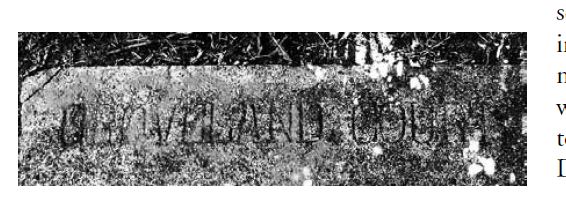
Another stamp is at 108th and Drew Street, for Groveland Court, the pre-annexation name for Drew.
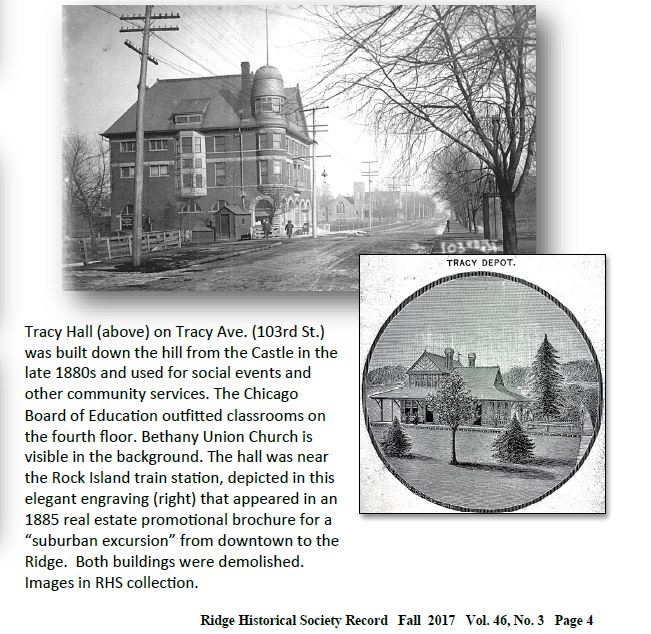
103rd Street was previously known as Tracy Ave., and indeed, the entire area around 103rd and Longwood was known as Tracy before the name Beverly caught on. The train station at 103rd Street was the Tracy stop and there was a famous Tracy Hall right by the tracks, but alas, that is gone now.
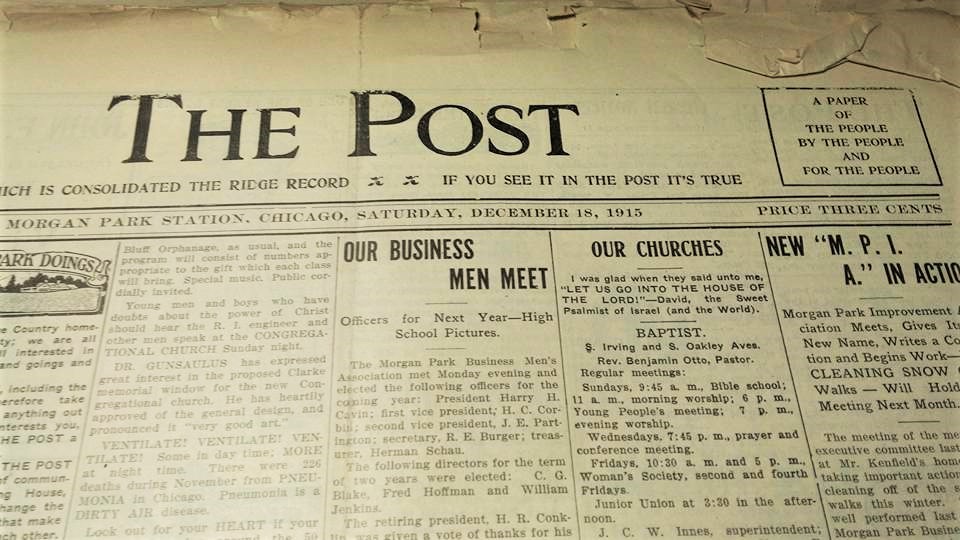
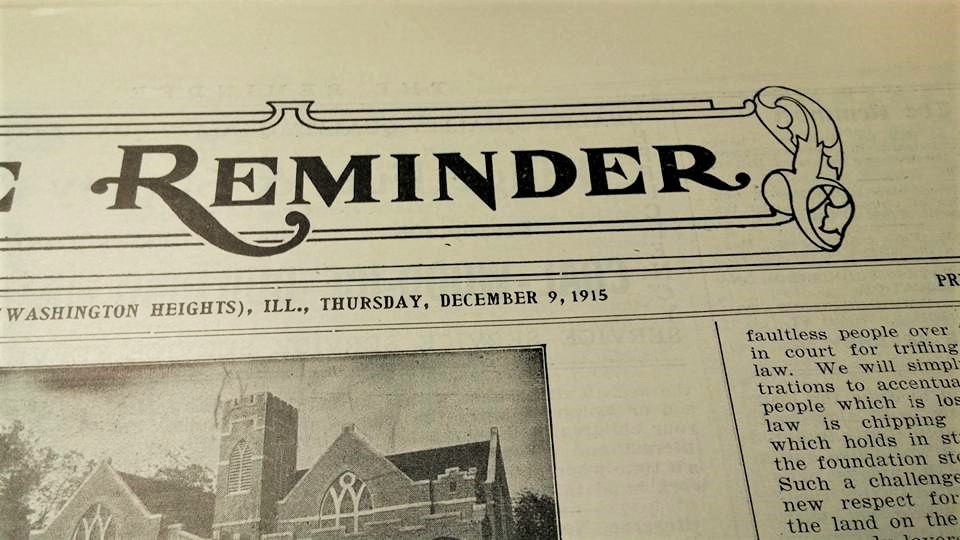
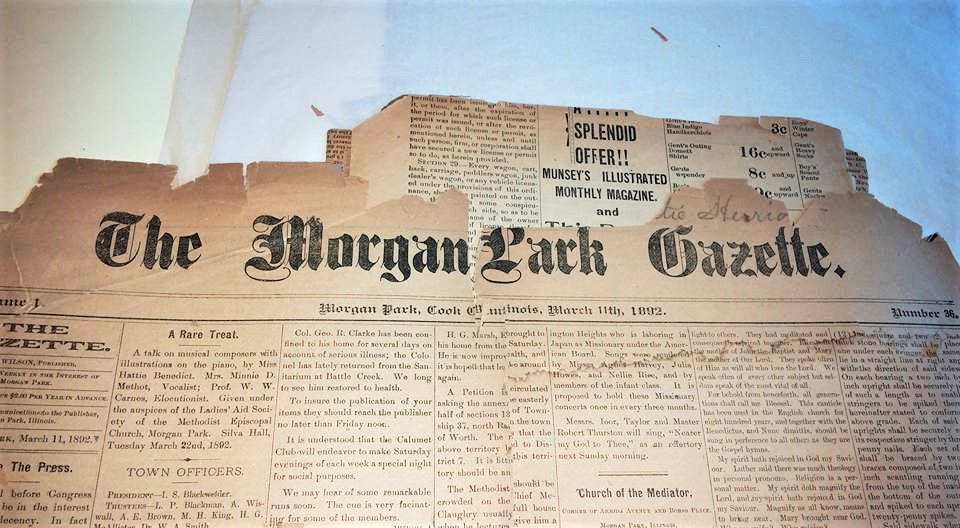
The Ridge Historical Society didn’t miss World Press Day. The United Nations declared May 3 to be World Press Freedom Day in 1991. The purpose is to raise awareness of the importance of freedom of the press and to remind governments of their duty to respect and uphold the right to freedom of expression.
Beverly and Morgan Park had numerous local newspapers and newsletters in the early years. This was long before computers and the Internet, even before radios and telephones and televisions, even before electricity. News spread by word of mouth or by print. There weren’t any other options.
The churches were a major source of news and some of the bulletins were akin to social newsletters. Some newspapers formed around political opinions and specific issues. It wasn’t unusual for a person who disagreed with a newspaper’s stance to start his own publication in opposition. Some papers dealt only with very specific issues, such as annexation of Morgan Park to the City of Chicago. Many of these papers were short-lived.
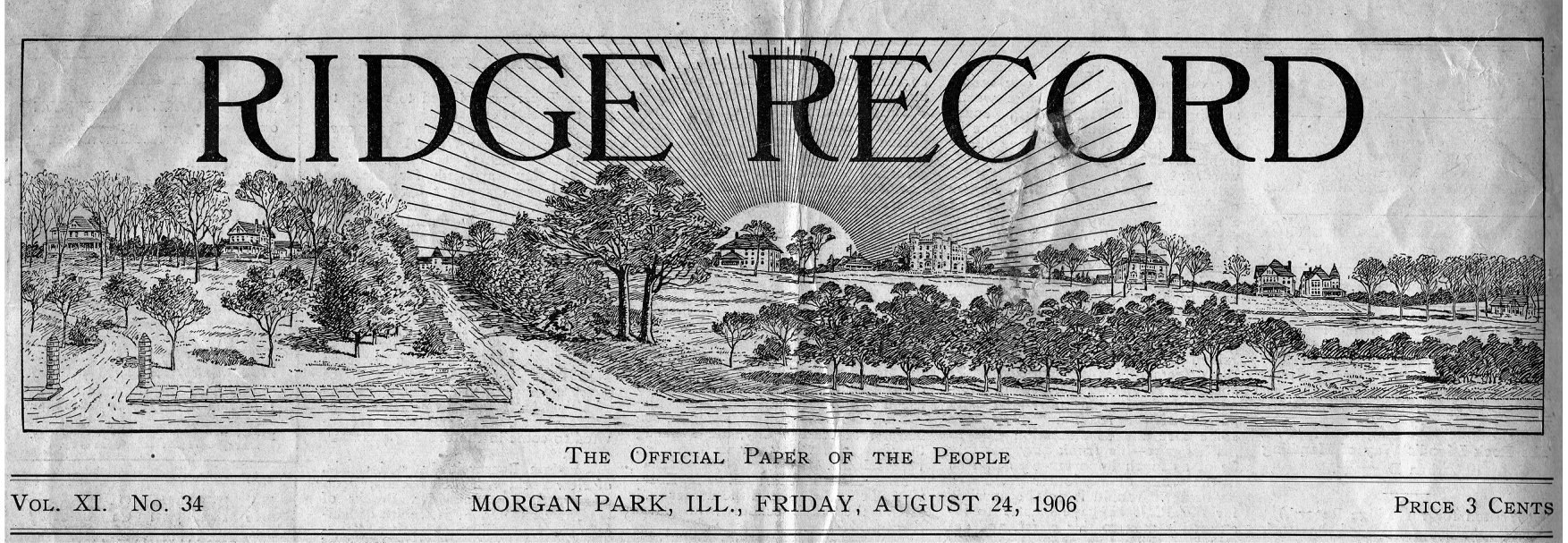
Some of the early papers included the Washington Heights Journal, Fernwood Journal, Morgan Park Standard, Morgan Park Reflector, Morgan Park Post, Morgan Park Gazette, Town Talk, The Review, Ridge Record, Bethany Union Reminder and several Blue Island newspapers that folded into the Suburban Star. The editor of the Morgan Park Reflector started his paper because he did not like the editor of the Morgan Park Standard.
The Beverly Review is the only paper that survived and can trace its roots back to the earliest days of Morgan Park. Three early papers merged to create today’s Beverly Review.
First, David Herriott, the Morgan Park postmaster, founded the Morgan Park Post in 1905. Second, The Review was founded as a church newsletter in 1906, and in 1915, Harry Earnest Stroup turned it into a weekly community newspaper. Third, Town Talk was a little newspaper that had several lives, and in 1913 it was revived by David Oberg who was assistant postmaster under Herriott.
By 1917, Herriott was ready to get out of the newspaper business, and he sold the Post to the Review, and Oberg did likewise with Town Talk. The paper changed its name to the Beverly Review sometime before 1937.
So the Beverly Review goes back to 1905. The Ridge communities have had this newspaper for 115 years. It is truly historic – indeed, amazing – to have a local community newspaper survive this long.
Here are some mastheads from the early newspapers, from the RHS collection. The one for the Ridge Record is charming – we liked it so much we used it for the RHS newsletter for a while.
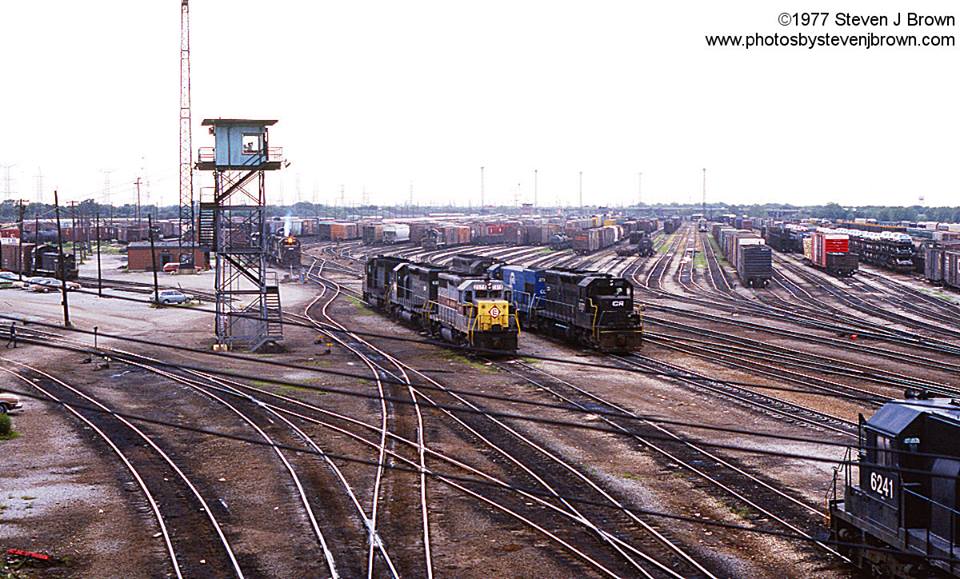
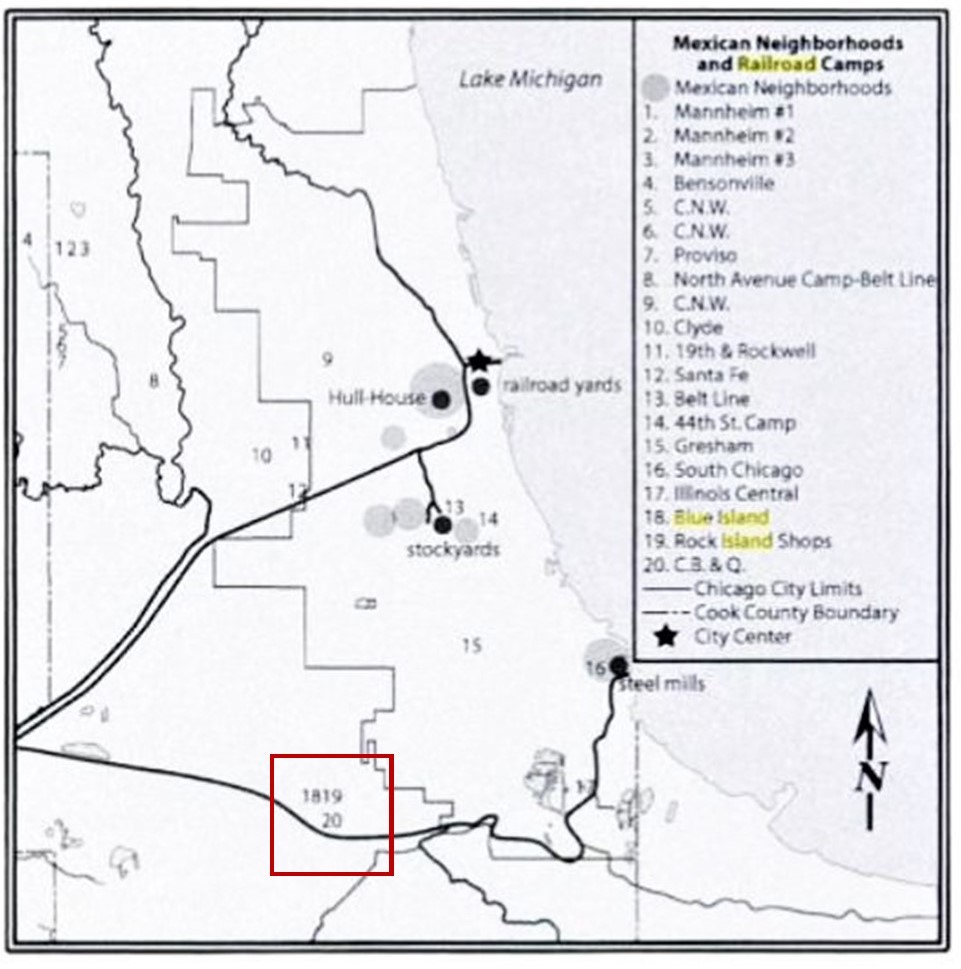
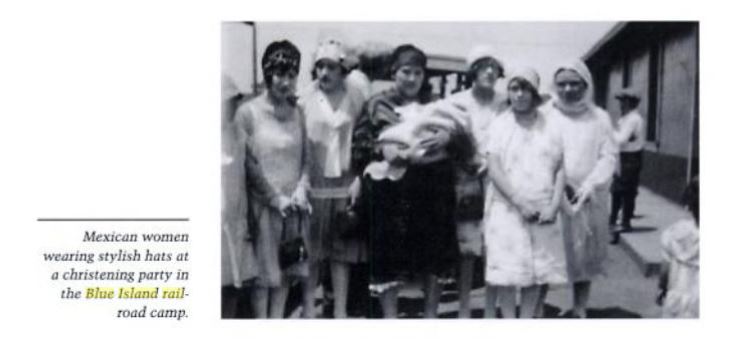
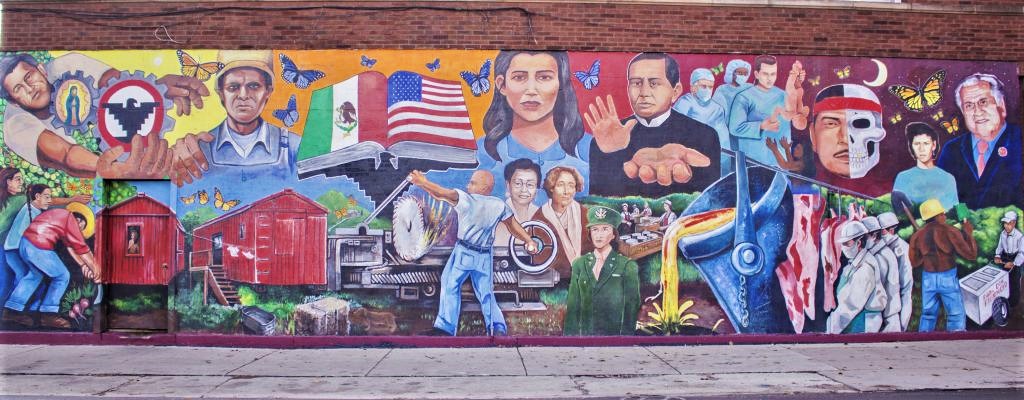
Today the Ridge Historical Society looks at the history of the Mexican community on the Ridge – and those train whistles that can be heard all day and night from trains going into and out of our neighbor to the south, the City of Blue Island, with whom we share the Blue Island Ridge.
Cinco de Mayo, or May 5th, is an annual celebration of Mexican-American culture. The origin of the day is to commemorate the Mexican army’s victory over the French at a battle in 1862. The success of the smaller Mexican army was a morale booster for the Mexicans, even though eventually Mexico City fell to the invaders. With time, the day took on more significance in the U.S. than in Mexico to showcase the traditions and pride of Mexican immigrants. Cinco de Mayo should not be confused with Mexico’s Independence Day, September 16, which is more important in Mexico.
Historically, the Mexican community was not that prevalent in the early days of Beverly/Morgan Park, although it is well represented now. However, Mexicans played a vital role in the development of the City of Blue Island.
Blue Island first developed as a “river city” located on the Calumet River and Stony Creek, and of course the building of the Cal-Sag Channel was very important for commerce. With the coming of the railroads in the mid-1800s, Blue Island became a “railroad hub.”
Many ethnic groups worked on the U. S. railroads – the Chinese, European immigrants, African Americans. But it has long gone unrecognized that over 50% of the tracks in many areas of the country were laid by Mexican workers.
In the early 1900s, the railroad companies sent recruiters into Mexico to entice the people to come to the States to work for the railroads. The recruiters promised nice housing and a high standard of living. The reality for the families that came, however, was very different. They lived in boxcars on the railroad yards, with wooden bunks and no windows, in dangerous conditions, with no running water and no fuel for heat.
The first “railroad camp” in the Chicago area was established in Blue Island in 1917 to house the “traqueros,” or track and maintenance workers, who came here, often with their young families. This was set up around 123rd Street and Winchester Ave. The camp developed the reputation as one of the worst in the country.
With time, as with most immigrant groups, the Mexican workers moved into other jobs and established their own businesses and communities. It is a tribute to this hard-working group of people that they overcame not only the destitute conditions forced upon them but also extreme prejudice to flourish in the country that invited them to move here and became dependent upon them for both the railroad and agriculture industries.
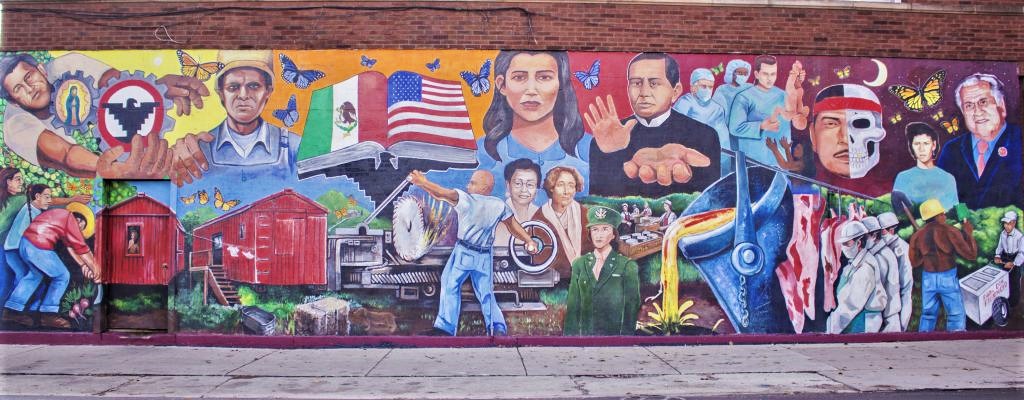
In 1974, the Blue Island city council banned the painting of a mural at 13337 S. Western Ave that depicted the history of Mexican laborers. The city claimed it was against zoning laws for advertising signs. The U.S. District Court found in favor of the mural, stating it portrayed “an idea,” not an advertisement. The mural was completed.
Today, Blue Island’s population is about 50% Hispanic. With time, the mural faded, but it was repainted in 2016 as a community project, a vibrant reminder of the history of the Mexican community on the Ridge.
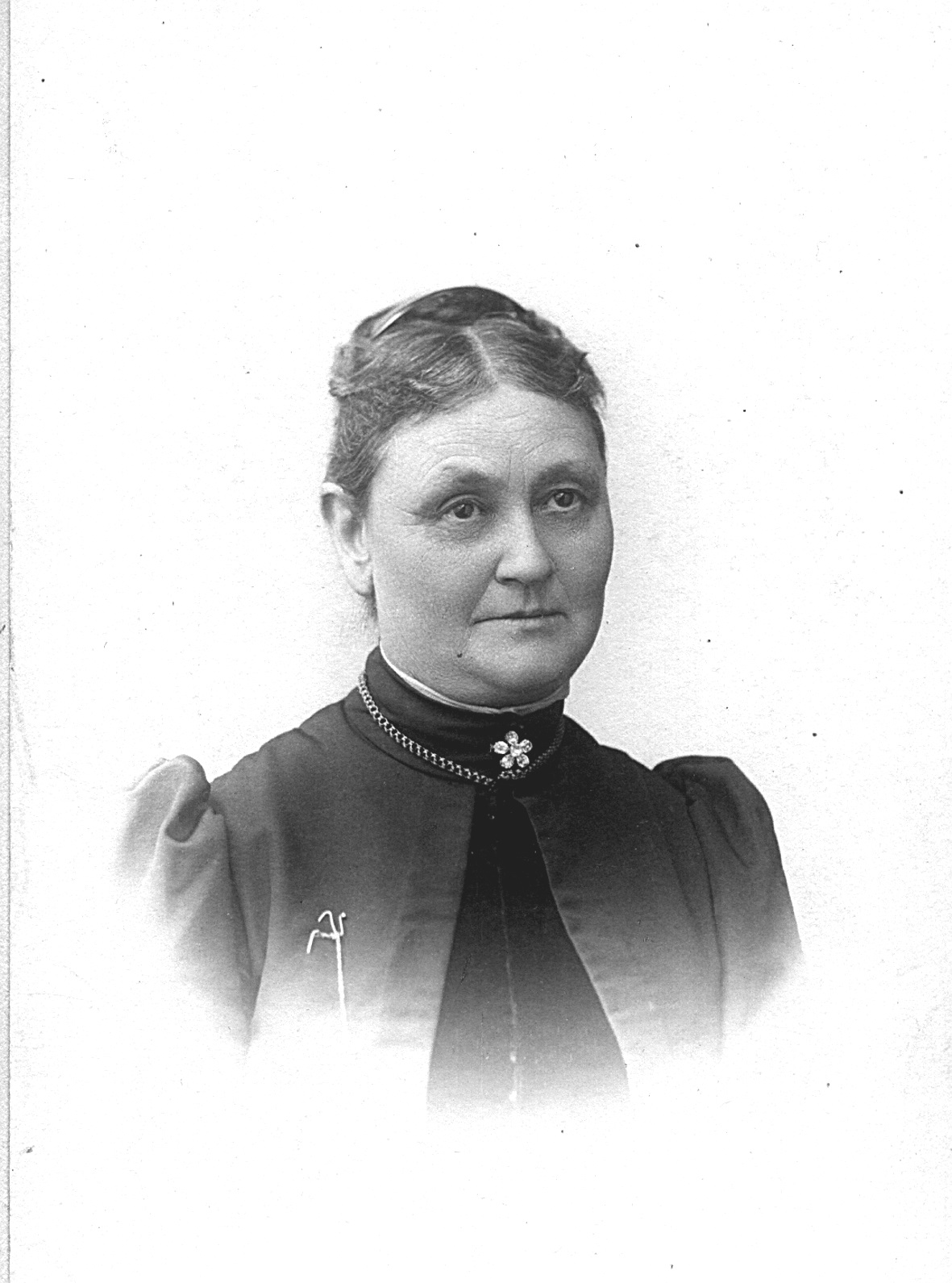
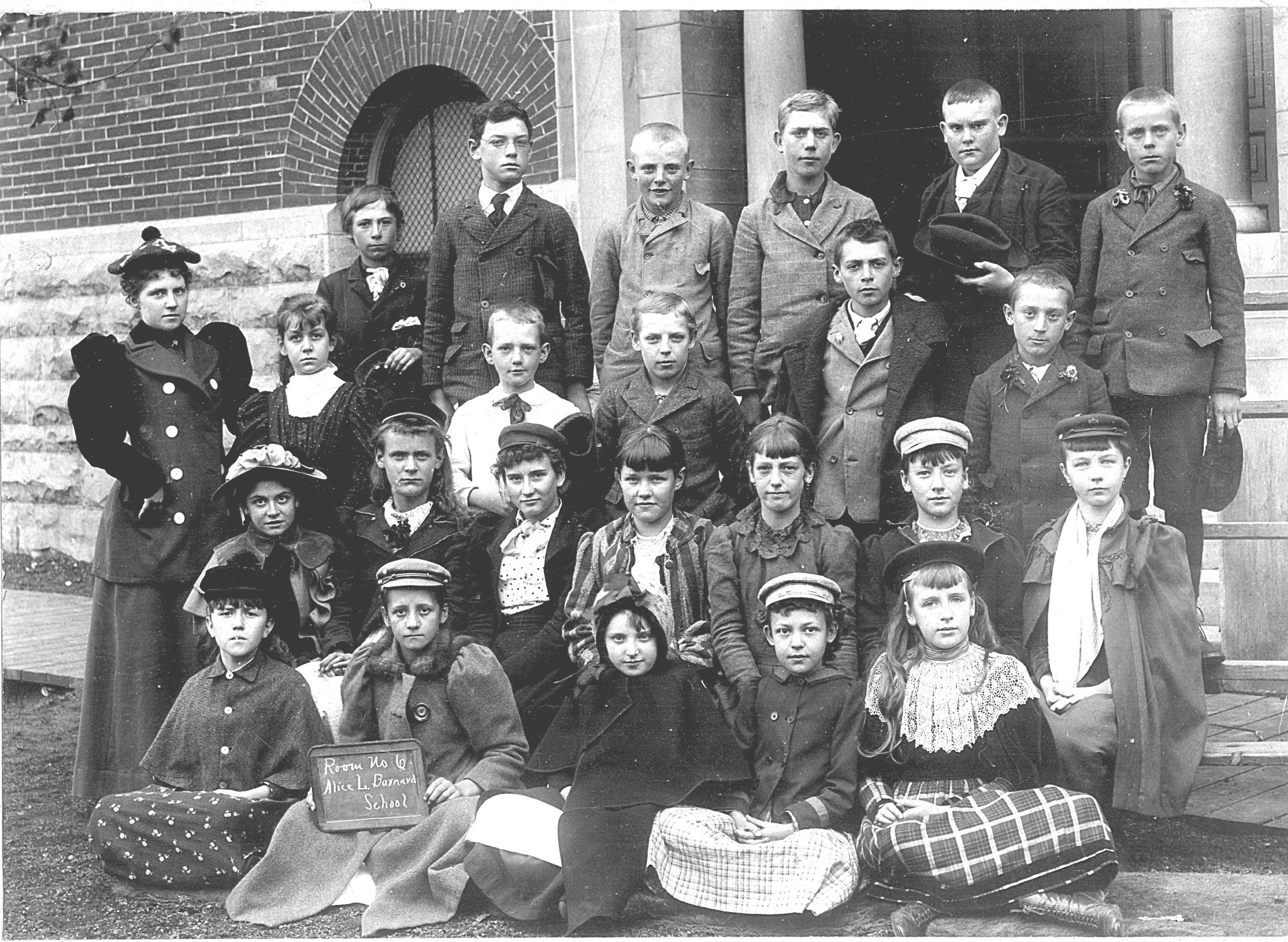
Yesterday, May 5, was National Teacher Appreciation Day, celebrated annually on the Tuesday of the first full week in May. The Ridge communities have had many, many fine teachers through the years. The Ridge Historical Society will share profiles of a few of them.
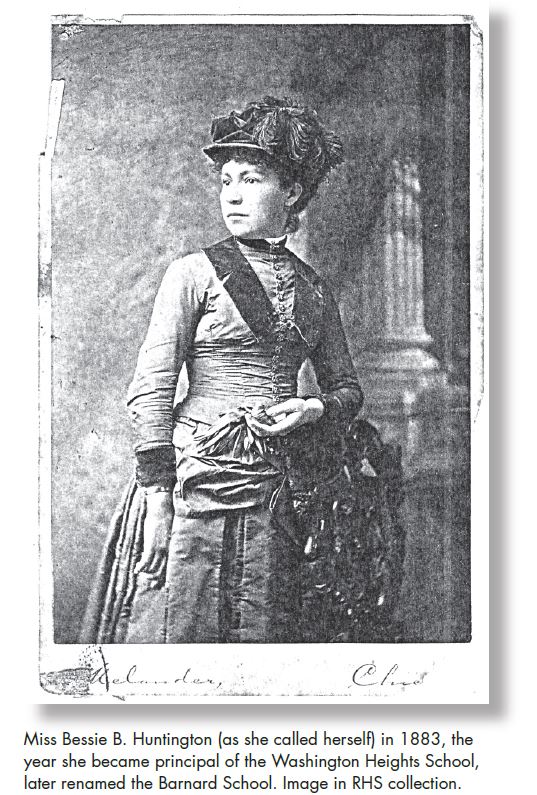
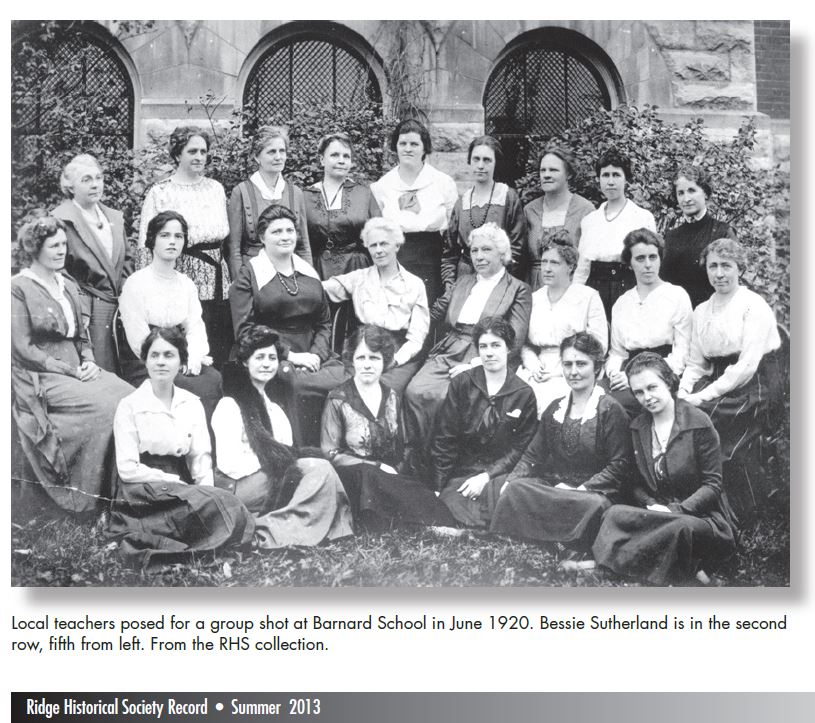
Let’s start with Elizabeth “Bessie” Bingle Huntington Sutherland, a very respected and forward-thinking leader in the education field.
Bessie was born in 1851 on the Ridge. Her parents, Samuel and Maria Robinson Huntington, were part of the earliest Ridge pioneer families. Samuel was a farmer and kept stock, then became involved with the railroads, and served as sheriff of the early settlement that would become the City of Blue Island. Maria was reputed to have been an early teacher in Blue Island, making $1.00 per week for her efforts.
Around 1854, a two-room school house was built in Blue Island, and it is probable that Bessie attended this school as a child. The Cook County Normal School was established in 1867. The name “normal school” was used for teacher preparation programs because they established teaching standards or “norms.” Bessie graduated from this school in 1869. This school eventually evolved into Chicago State University.
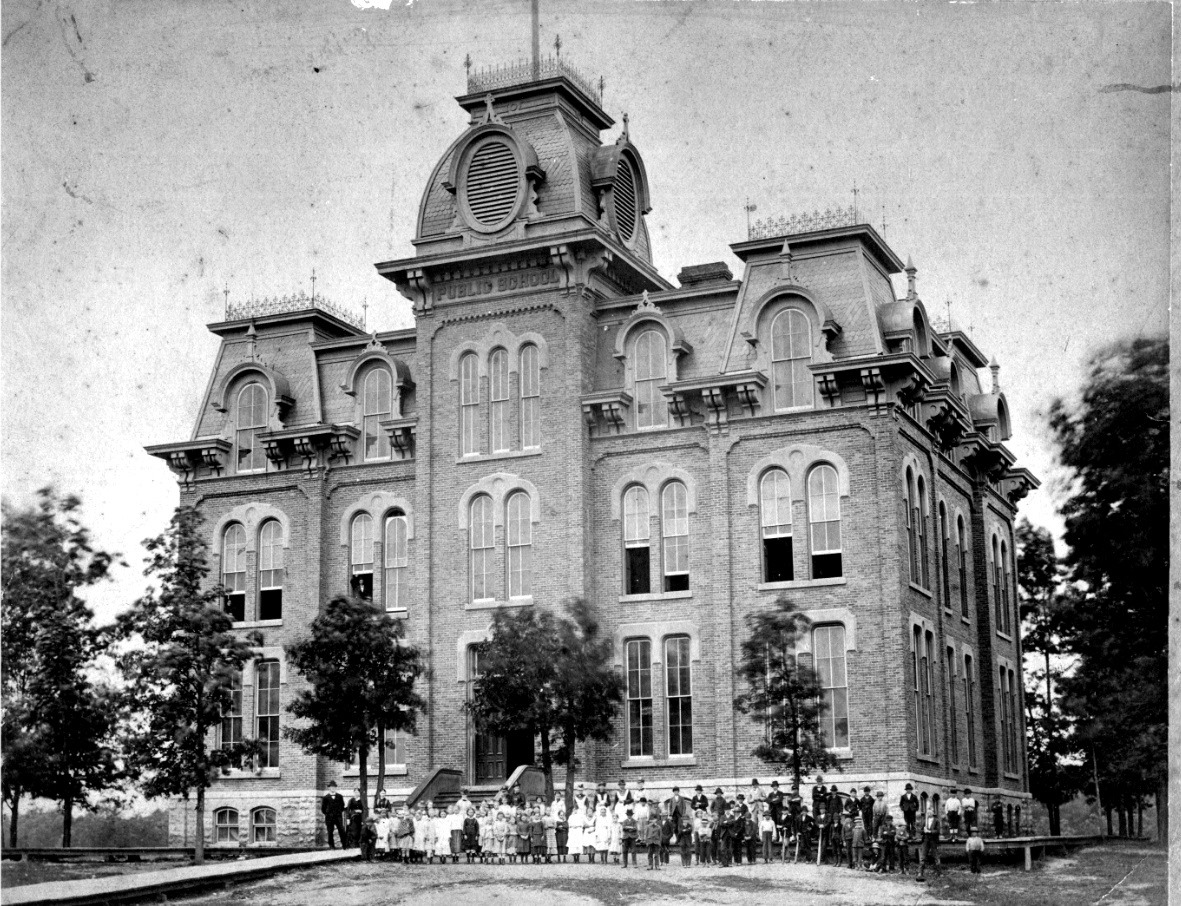
Bessie’s career as a teacher included the Blue Island school and the Hyde Park high school. She took graduate classes at the University of Chicago. The Washington Heights public school started in 1874, and Bessie became principal there in 1883, the first woman to be named a principal in Cook County. In 1893, this school was renamed the Alice L. Barnard School, after another Ridge native who had become the first woman principal of a Chicago school.
Bessie became a teacher during the “Progressive Era,” that time of significant reform in all areas of life. The field of education made great advances during this time, as the philosophy of learning changed from rote memorization to exploration and experimentation. Bessie surely knew two of the movement's leaders in Chicago, Francis W. Parker, who became head of the Cook County Normal School, and John Dewey, who established the University of Chicago Laboratory School.
An anecdote about Bessie illustrates the Progressive educator. While principal at the Barnard School, one day she heard that a camel had escaped from a traveling show and was freely roaming the local woods. She gathered the entire student body and led an impromptu field trip to the woods to observe the camel “in the wild” and share a lesson on animals of the world.
In those years, women teachers were not allowed to marry if they wished to remain employed. Bessie put off marriage to David Sutherland until her 43rd birthday in 1894. Sutherland, 17 years Bessie’s senior, was a real estate developer with considerable property on the south and west sides of Chicago. They made their home at 1638 West 103rd Street. The couple had no children, and David died in 1904.
Bessie served as the principal of Barnard School for almost 40 years. She resigned in 1923, and died in 1924. She was buried in Mt. Greenwood Cemetery. In 1925, the new school built at 101st and Leavitt Sts. was named in her honor.
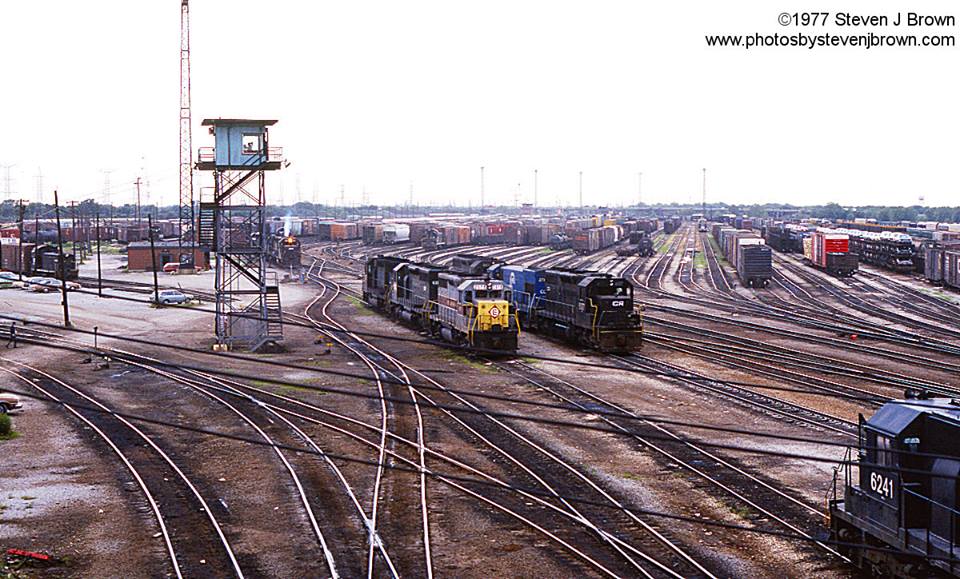
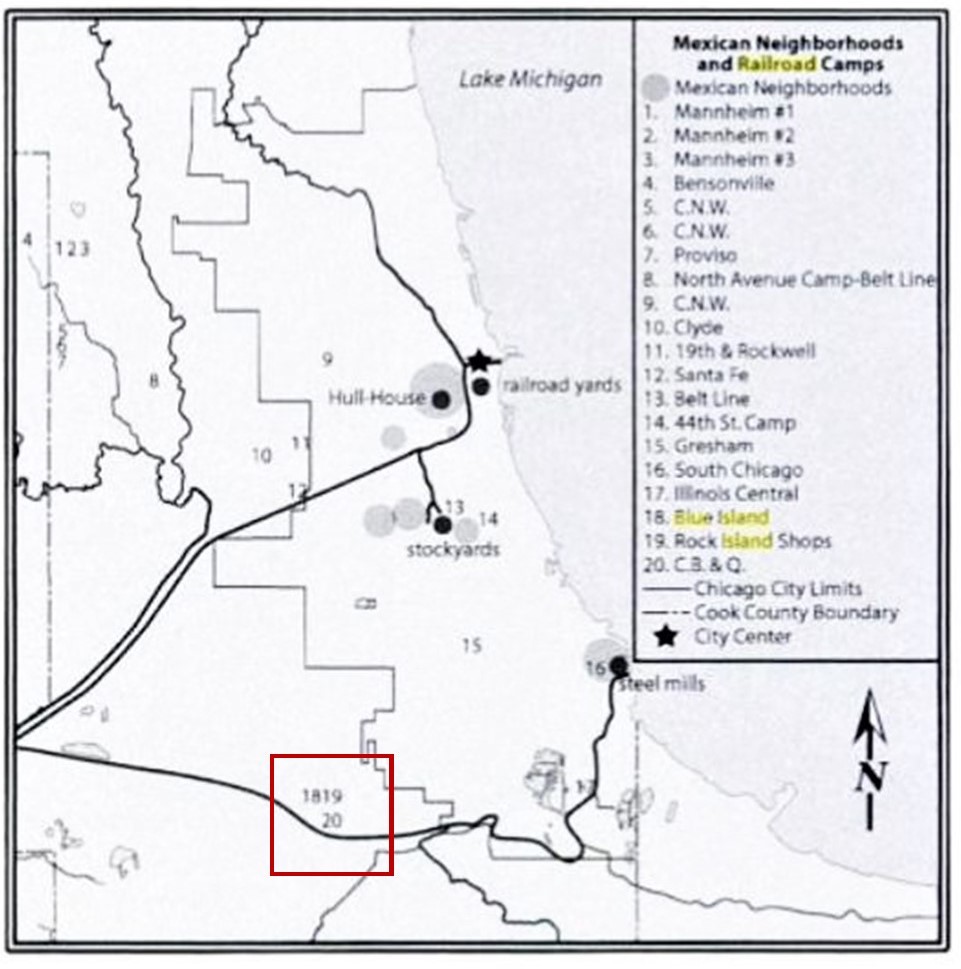
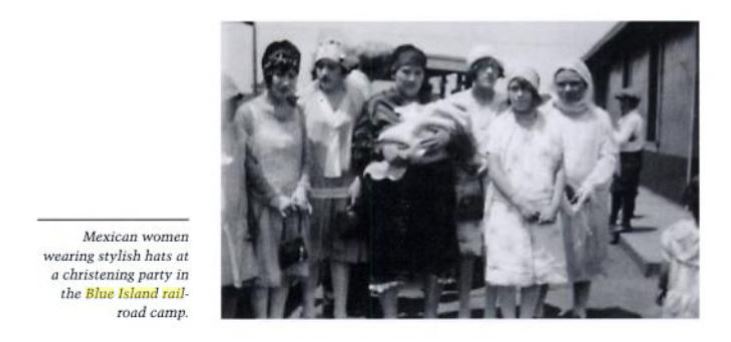
Today the Ridge Historical Society looks at the history of the Mexican community on the Ridge – and those train whistles that can be heard all day and night from trains going into and out of our neighbor to the south, the City of Blue Island, with whom we share the Blue Island Ridge.
Cinco de Mayo, or May 5th, is an annual celebration of Mexican-American culture. The origin of the day is to commemorate the Mexican army’s victory over the French at a battle in 1862. The success of the smaller Mexican army was a morale booster for the Mexicans, even though eventually Mexico City fell to the invaders. With time, the day took on more significance in the U.S. than in Mexico to showcase the traditions and pride of Mexican immigrants. Cinco de Mayo should not be confused with Mexico’s Independence Day, September 16, which is more important in Mexico.
Historically, the Mexican community was not that prevalent in the early days of Beverly/Morgan Park, although it is well represented now. However, Mexicans played a vital role in the development of the City of Blue Island.
Blue Island first developed as a “river city” located on the Calumet River and Stony Creek, and of course the building of the Cal-Sag Channel was very important for commerce. With the coming of the railroads in the mid-1800s, Blue Island became a “railroad hub.”
Many ethnic groups worked on the U. S. railroads – the Chinese, European immigrants, African Americans. But it has long gone unrecognized that over 50% of the tracks in many areas of the country were laid by Mexican workers.
In the early 1900s, the railroad companies sent recruiters into Mexico to entice the people to come to the States to work for the railroads. The recruiters promised nice housing and a high standard of living. The reality for the families that came, however, was very different. They lived in boxcars on the railroad yards, with wooden bunks and no windows, in dangerous conditions, with no running water and no fuel for heat.
The first “railroad camp” in the Chicago area was established in Blue Island in 1917 to house the “traqueros,” or track and maintenance workers, who came here, often with their young families. This was set up around 123rd Street and Winchester Ave. The camp developed the reputation as one of the worst in the country.
With time, as with most immigrant groups, the Mexican workers moved into other jobs and established their own businesses and communities. It is a tribute to this hard-working group of people that they overcame not only the destitute conditions forced upon them but also extreme prejudice to flourish in the country that invited them to move here and became dependent upon them for both the railroad and agriculture industries.
In 1974, the Blue Island city council banned the painting of a mural at 13337 S. Western Ave that depicted the history of Mexican laborers. The city claimed it was against zoning laws for advertising signs. The U.S. District Court found in favor of the mural, stating it portrayed “an idea,” not an advertisement. The mural was completed.
Today, Blue Island’s population is about 50% Hispanic. With time, the mural faded, but it was repainted in 2016 as a community project, a vibrant reminder of the history of the Mexican community on the Ridge.
This is taking us a little further afield than we usually go in a post from the Ridge Historical Society but it is very worth mentioning.
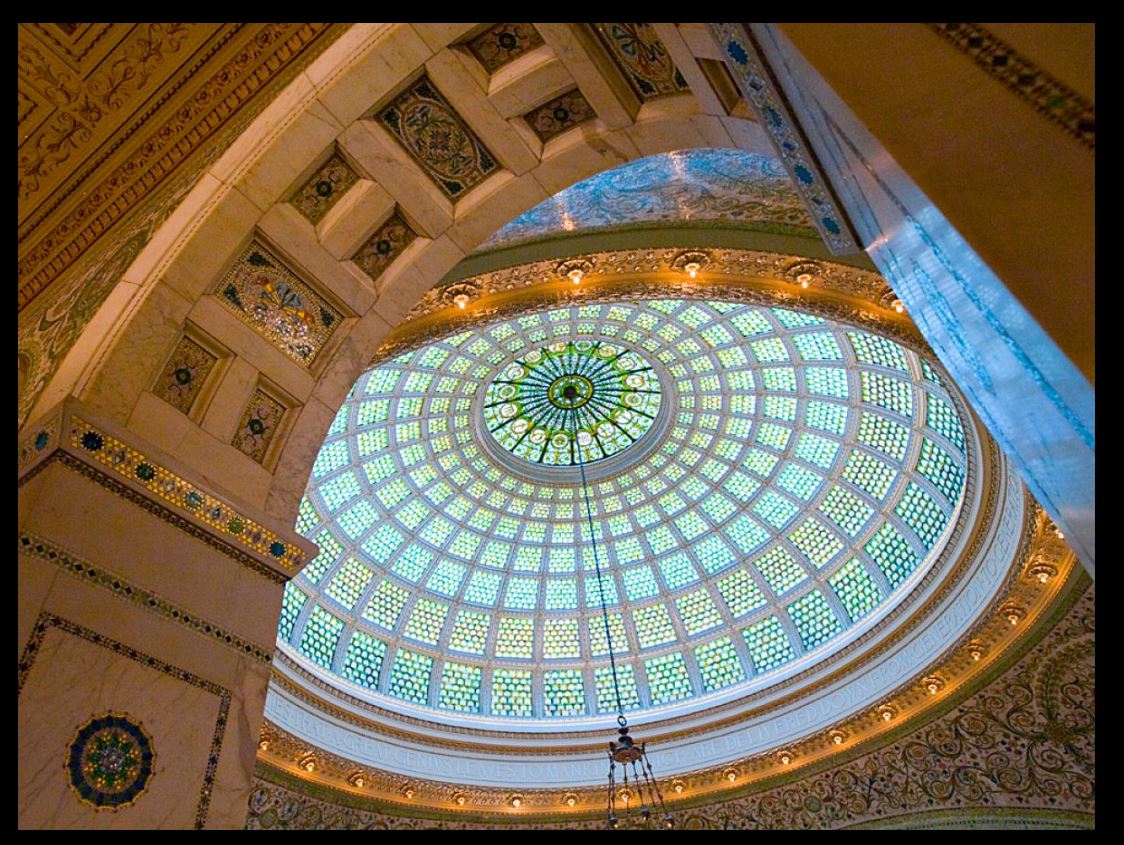
An article from National Geographic features the "Top 10 Ceilings Around the World" and one from Chicago is included – the beautiful Tiffany dome in the Chicago Cultural Center downtown. This spectacular building started as the Chicago Public Library in the late 1800s.
This picture of the dome is by Cathy Melloan, Alamy. The entire article can be found here.
https://www.nationalgeographic.com/travel/top-10/ceilings/?cmpid=org=ngp::mc=social::src=facebook::cmp=editorial::add=fb20200509travel-resurfceilings::rid=&sf233754361=1&fbclid=IwAR17H_JXC5jOT_rbLov4jDnI2JeL9MDXR7cRhEuIqAHIkE6lvkWwHoJ8nKc#/45614.jpg
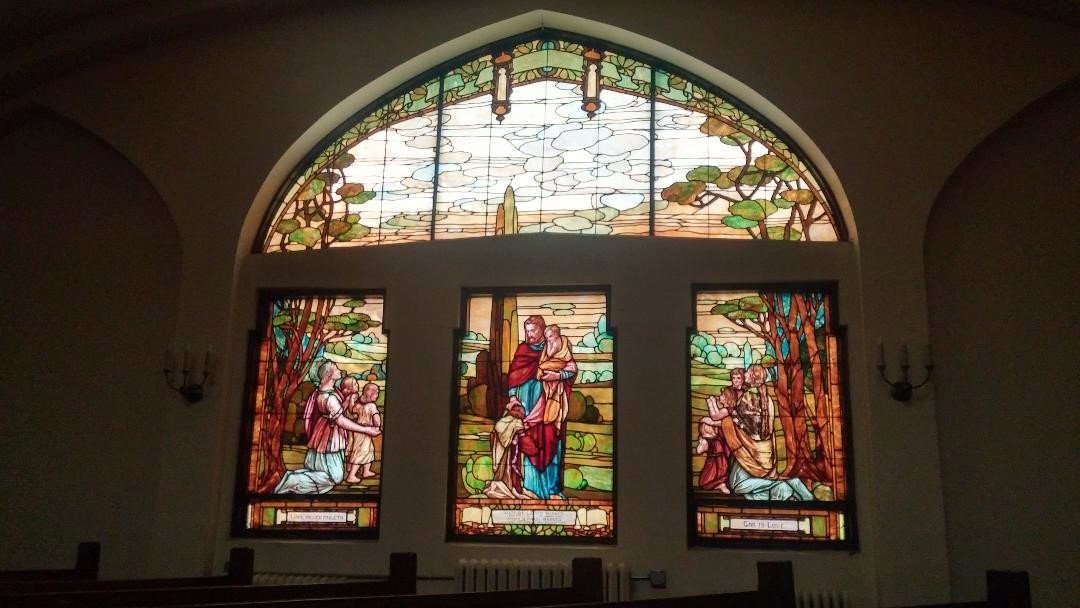
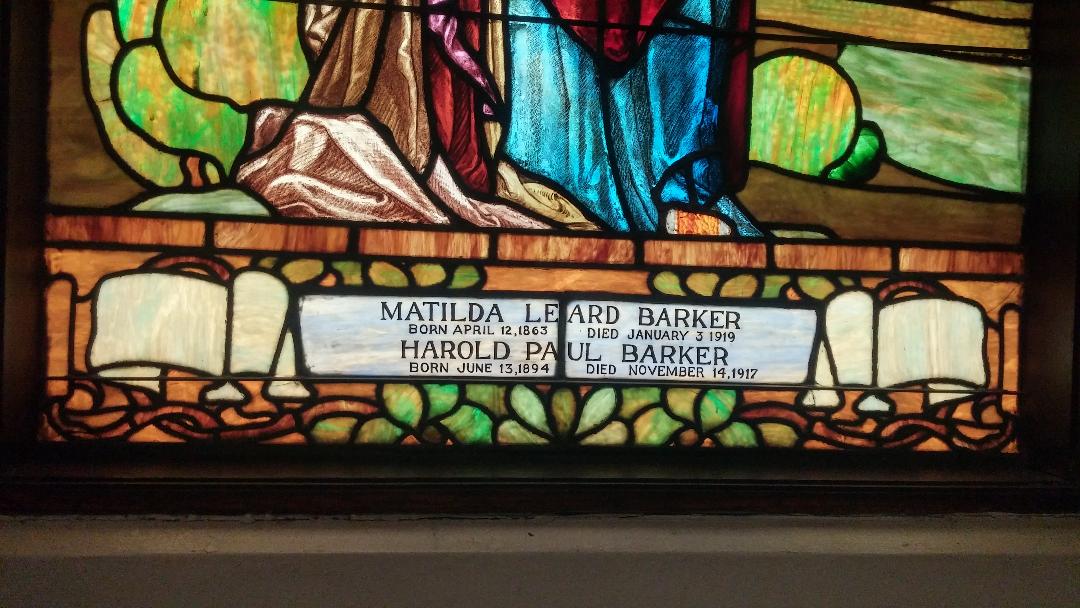
We have some beautiful stained glass in Beverly and Morgan Park, also. One favorite piece is the Barker memorial window in the Morgan Park United Methodist Church at 110th and Longwood Drive.
England J. Barker was a prominent businessman who settled in Morgan Park with his family. His company, UARCO, manufactured business machines. This window was installed when the church was built in 1925. It is in remembrance of Barker's wife Matilda and son Harold. Photos by C. Flynn.
Viewers are welcomed to post pictures of other stained glass examples found on the Ridge.