Explore the RHS Facebook Archives, a rich repository of local history written by Carol Flynn. For two decades, Carol brought a deeply dedicated voice to public education at RHS. Her role as Facebook administrator through mid-2025 naturally extended her prolific research into meticulously detailed articles, most notably her multi-part historical series posts. Today, Carol continues her local history writing for The Beverly Review and other outlets.
November 2020
The Ridge Historical Society
All Saints Day, November 1, 2020
By Carol Flynn
Today is All Saints Day or the Feast of All Saints. The date was set by Pope Gregory III during his pontificate in the years 731-741.
In some churches (Catholic, Lutheran, Anglican, Eastern Orthodox, Oriental Orthodox), anyone who has died and gone to Heaven is considered a saint. Some saints are considered worthy of greater honor because of their exceptional holiness or closeness to God. Some of these saints have individual feast days, but most do not. The Catholic Church has recognized more than 10,000 saints, but some names and stories have been lost to history. And some names were never recorded, such as people who died in groups as martyrs.
The intent of All Saints Day is to recognize all these people, known and unknown.
Some saints are designated as “patron saints” or advocates for places, occupations or crafts, causes, and situations. It is believed that patron saints can intercede on behalf of the needs of their charges.
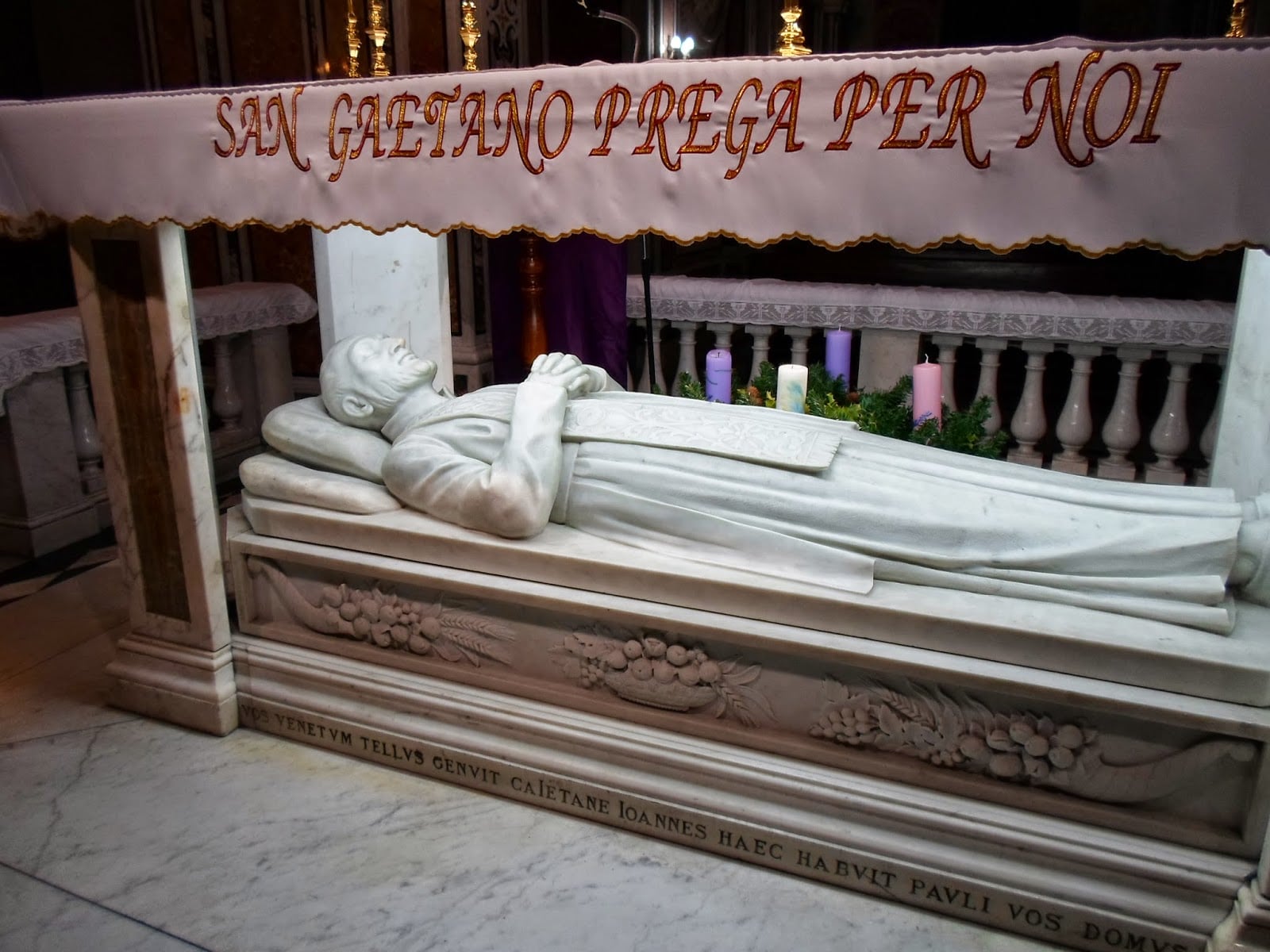
The Ridge communities have several churches named for saints. One saint who is particularly relevant today as people struggle with the realities of the global coronavirus pandemic is St. Cajetan, the patron saint of the unemployed and job seekers.
Since the pandemic started, tens of millions of people have lost their jobs. In March and April of this year, 22 million nonfarm jobs were slashed. Although the situation started to improve in late summer, employment still remains about 11 million jobs below pre-pandemic days, and many temporary layoffs have become permanent. In a study in mid-October, nearly 78 million people reported difficulty in covering usual expenses.
St. Cajetan, Gaetano dei Conti di Thiene (1480-1547), was born into a wealthy, noble family in Venice. He completed a law degree and worked as a diplomat for Pope Julius II. When Julius died, Cajetan resigned and entered the seminary, and was ordained a priest in 1516. He spent the rest of his life tending to the sick and poor, giving up his own worldly goods to help them. He established several hospitals for incurables during the years of the bubonic plague.
Cajetan recognized that people who had lost their livelihoods often became victims of desperation. He believed in the dignity of all people. He helped the unemployed through financial assistance and providing the basic necessities of life. In Naples, he founded a charitable non-profit bank/credit organization to protect the poor from usury, that is, exorbitant rates of interest. Wealthy benefactors donated to his cause and Cajetan took no money for his efforts. The bank provided loans without interest that people secured with personal objects. Job training and employment opportunities were also offered through the bank.
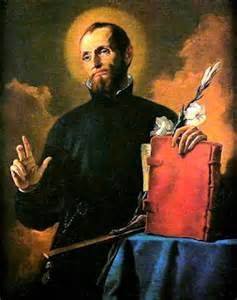
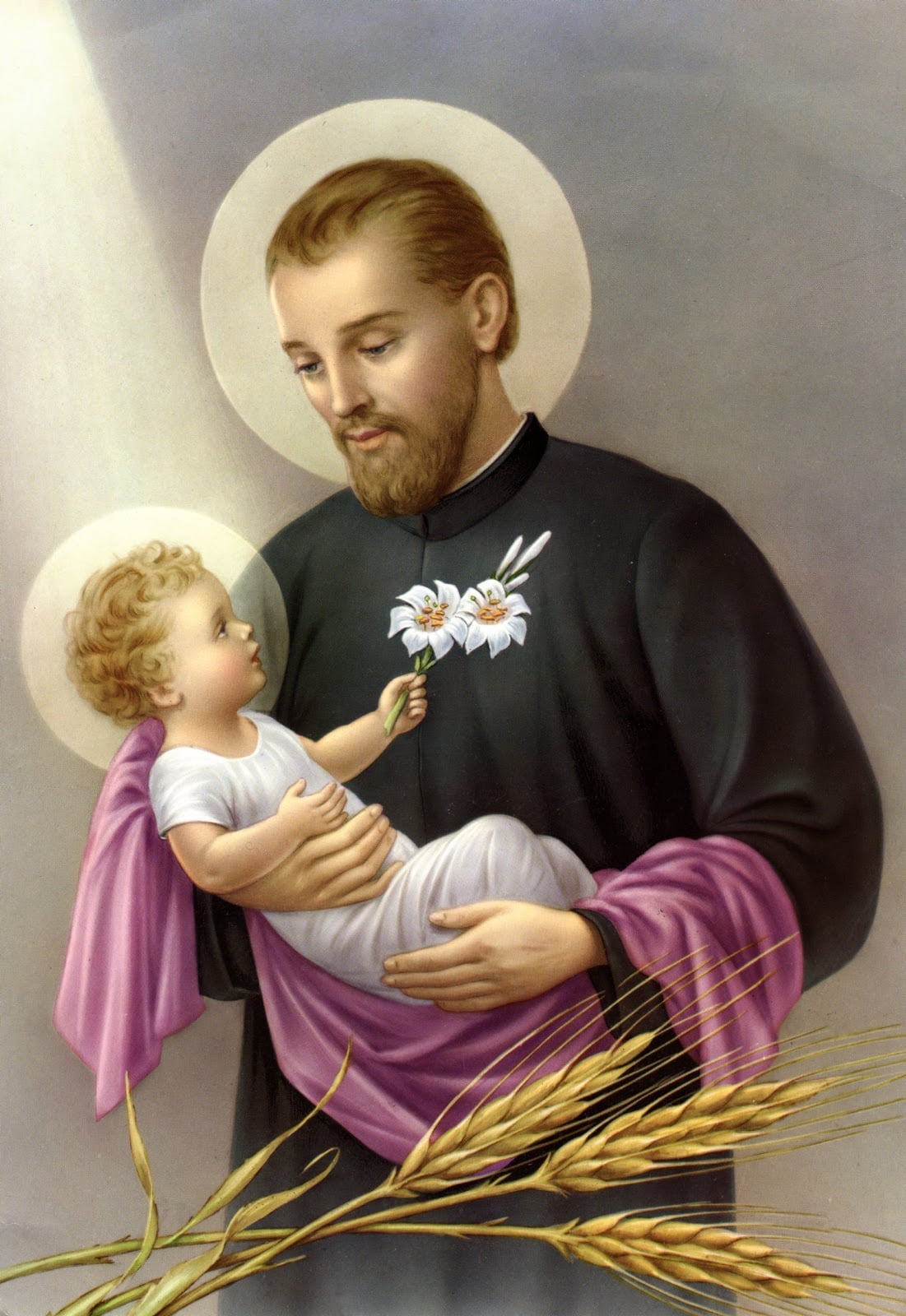
St. Cajetan is also the patron saint of Argentina. There they call him the patron of “Bread and Work.” He is presented two ways in art. One image depicts him with a book, to signify learning, and white lily, which represents Mary. The other presents him holding the infant Jesus. He had a vision in which Mary placed her infant in his arms, which he interpreted as her trust and approval of his work.
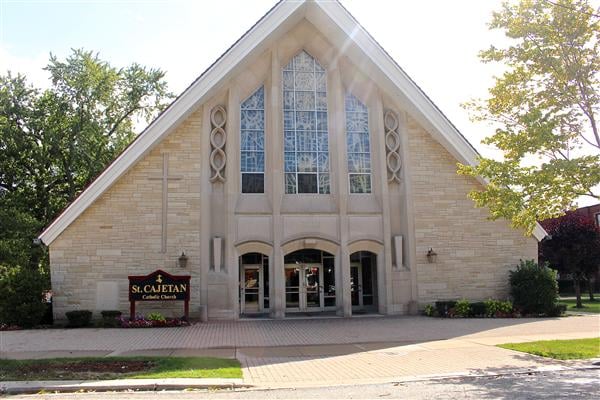
St. Cajetan Parish at 2445 West 112th Street was founded in 1927. It was the first Roman Catholic parish in Morgan Park, and the second Catholic church there, following Sacred Heart, which is a mission church and not a parish. It is the fifth Catholic church in RHS territory, and the fourth parish, following St. Margaret of Scotland (Washington Heights), St. Barnabas (Beverly), and St. Christina (Mount Greenwood). The current St. Cajetan Church was built in 1961-62.
The Ridge Historical Society
The Nineteenth Amendment
By Carol Flynn
It will be a while yet before they can give final results for today’s election, so this seems like a good time to share a story about the Nineteenth Amendment to the U.S. Constitution, which was ratified 100 years ago.
The Nineteenth Amendment states: “The right of citizens of the United States to vote shall not be denied or abridged by the United States or by any State on account of sex.”
The U.S. Congress passed the legislation on June 4, 1919. It took Illinois less than a week to be the first state to ratify the amendment, on June 10, 1919. Thirty-six states were needed to ratify the amendment, and this was reached with Tennessee on August 18, 1920, allowing the country to certify the Nineteenth Amendment as adopted on August 26, 1920. [The last state to ratify the amendment was Mississippi, in 1984. Yes, 1984.]
It was not surprising that Illinois was the first state to ratify the amendment, as it was legislation passed in Illinois in 1913 that was a major turning point in the women’s suffrage movement. In fact, the women of Illinois took the passage of the Nineteenth Amendment somewhat in stride because they had had the right to vote in the U.S. Presidential selection process for years.
Although the issue of women having the right to vote went back to the founding days of the country – the second First Lady Abigail Adams was all for it – the formal beginning of the women’s suffrage movement is considered to be an 1848 women’s rights convention held in Seneca Falls, New York. The group came up with a list of resolutions and the one concerning the right to vote was hotly debated.
It was one of the few men at the meeting, Frederick Douglass, former slave turned statesman, who convinced the women to leave suffrage in their platform.
Douglass wrote, “All that distinguishes man as an intelligent and accountable being, is equally true of woman; and if that government is only just which governs by the free consent of the governed, there can be no reason in the world for denying to woman the exercise of the elective franchise. Our doctrine is
that ‘Right is of no sex.’”
The resistance to women voting was widespread and strong, not just among men but for many women, also. The arguments against it generally related to the “proper” or “natural” role of women in society. The debate continued for seventy years.
But changes occurred in society. There was increased industrialization and urbanization. A fast growth in wealth led to the “Gilded Age,” a veneer which covered a wide range of corruption and social ills. Reform-minded groups called for change, and an atmosphere conducive to women’s suffrage finally emerged.
The period from 1890 to 1920 became known as the Progressive Era. Reforms in government, education, business, even churches and religion, took place. Leadership cut across party lines, and Theodore Roosevelt, Herbert Hoover, and Woodrow Wilson were all progressive.
By 1913 in Illinois, the Progressive Party held the balance of power in the state legislature. Women lawyers of the state’s suffrage association had figured out a way to get limited but significant voting rights for women.
The Electoral College is the process that the Founding Fathers established as a compromise between Congress or the public electing the President. Individuals known as “electors” are chosen by each state and it is the electors who actually choose the President. Each state has the authority to decide how its electors are chosen.
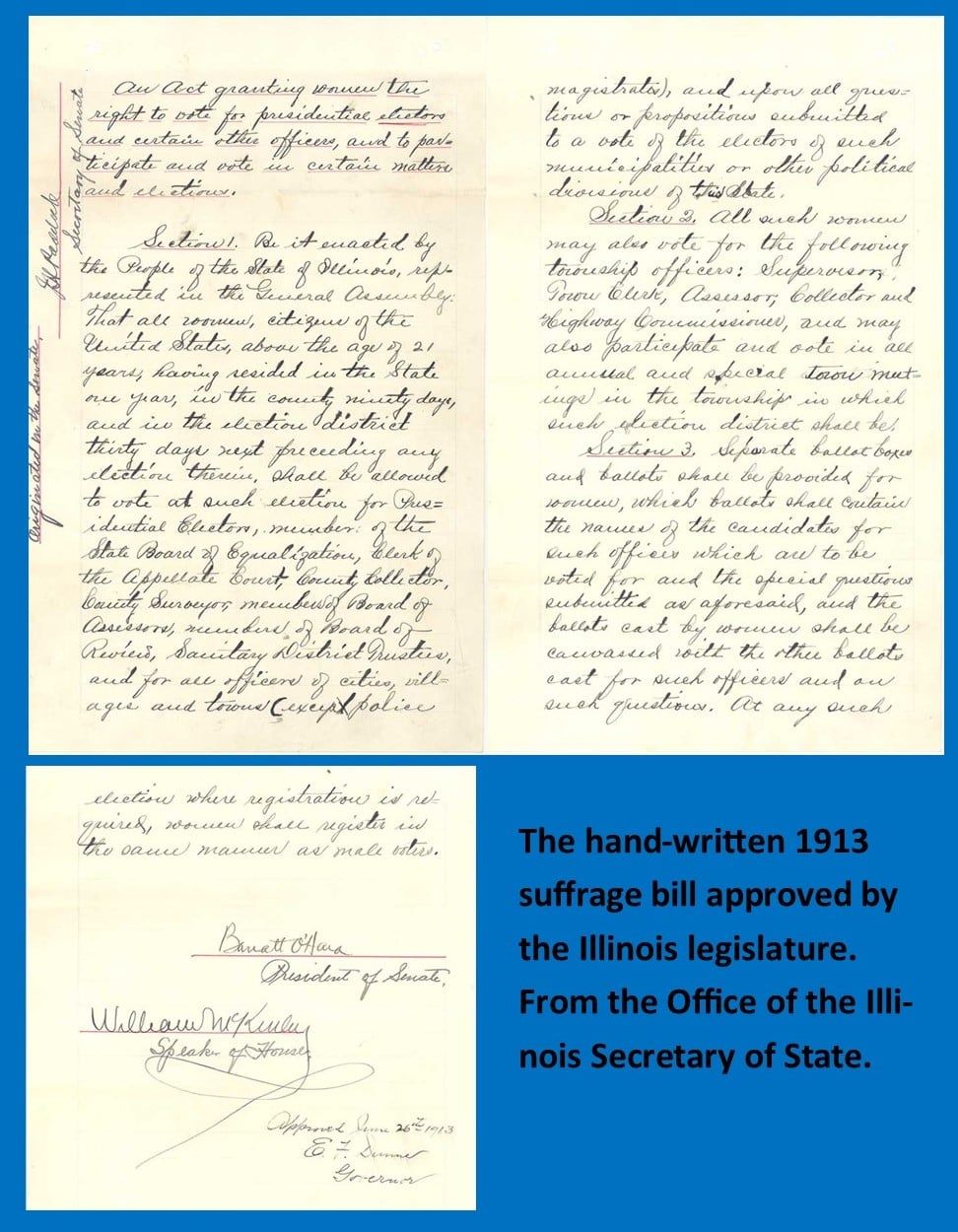
In Illinois, a bill allowing women to vote for the state’s electors was drawn up and introduced to the state legislature.
Every conceivable parliamentary maneuver was used by the opposition to keep the bill from coming up for a vote. Hundreds of men went to Springfield to entreat the Speaker to prevent entry of the bill. The Speaker asked the pro-suffrage lobby for a show of support, and he was immediately flooded with letters, telegrams, and telephone calls. Satisfied that there was public support for the bill, he let it go to vote.
When the time came for the vote, women “captains” went so far as to fetch needed male voters from their homes, and stayed on guard duty at the chamber doors to urge members in favor not to leave before the vote, and to prevent opposition lobbyists from being illegally allowed on the floor.
The bill passed. Illinois women became the first in the country with the right to vote in the process to select the U.S. President.
The opposition brought forth more than fifty legal challenges to have the new law declared unconstitutional, but none were successful. Pro-suffrage sentiment across the nation swelled. At the annual suffrage convention in 1916, a plan was developed state by state to procure voting rights in the presidential election process. Delegates went home and put their plans into motion and had successful results. By 1919, the country finally accepted that women were going to find a way to vote.
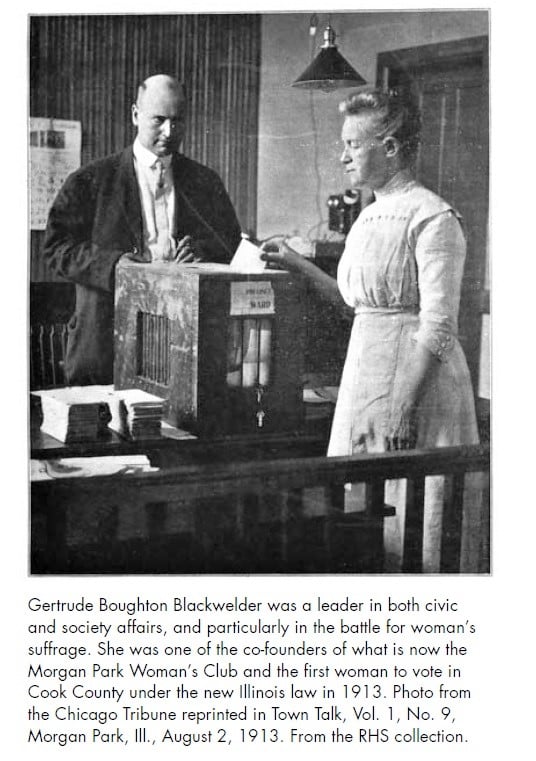
The women of the Ridge were not idle observers of these events, and many were ardent suffragists. They lost no time exercising their new, hard-won right. The other part of the 1913 Illinois bill covered certain aspects of municipal voting. The Illinois bill was passed on June 26, 1913, and on July 26, 1913, the women of Morgan Park voted for a bond issue to fund a high school. They were the first women in Cook County to vote, and the first woman to cast her ballot was Gertrude Blackwelder, former President of the Chicago Woman’s Club and the Chicago Political Equality League.
The InterOcean newspaper carried an article on the event. Many husbands and wives went to vote together for the first time ever. Even progressive David Herriott, the Morgan Park Postmaster and editor/publisher of the Morgan Park Post, was surprised when the women voted in their own names. His wife told him, “Mrs. David Herriott looks well on calling cards, but Janet Herriott has more political significance.” Janet Herriott cast the second female vote.
The event took on the aura of a garden party, according to the newspaper, with the summer frocks and parasols. It turned into a pleasant social afternoon with no problems. The policeman on duty said it was the most civil election he had ever witnessed. The women’s votes were kept separate from the men’s in case they were challenged legally. The only “bribe” in sight were packets of peanuts provided by the school superintendent, John H. Heil.
Just at closing time, a 65-year old woman rushed in still wearing her apron. She had biscuits in the oven at home and was in a hurry. The process was explained to her – she had to select a slip for or against the high school, fold it, and place it in the ballot box.
“For land’s sake,” she said, “it’s that easy and I’ve always respected a man because he knew enough to vote.”
World War I came in 1917, and women took on many non-traditional roles, both as volunteers and as paid employment. They showed they could keep their homes running and also participate in civic affairs. After years of opposing women’s suffrage, President Woodrow Wilson became an advocate. When the Nineteenth Amendment was finally ratified, the Illinois papers took little notice of it. They had been covering women voting for seven years.
Today is Veterans Day, a federal holiday in the USA that honors all who have served in the US Armed Forces (and were not dishonorably discharged). In 1918, the Armistice with Germany went into effect on 11-11 at 11:00 a.m. This set Armistice Day on November 11, with the first one celebrated in 1919.
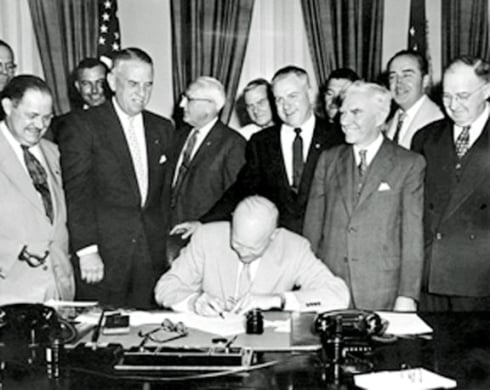
Originally, Armistice Day commemorated the end of World War I, and recognized the veterans of that war. After World War II, it was expanded to celebrate all veterans. In 1954, President Dwight D. Eisenhower signed the bill into law establishing the holiday, and that year, the name of the day was changed to Veterans Day.
Veterans Day is different from Memorial Day, which occurs in May. Memorial Day specifically honors those who died while in military service.
Veterans Day celebrates ALL veterans who served in war or in peacetime. On this day, it is especially appropriate to thank living veterans for their service. Veterans and their families should know about the services and benefits available to them, including health care, disability, education, career assistance, and housing. The website for the U.S. Department of Veteran Affairs is https://www.va.gov/.
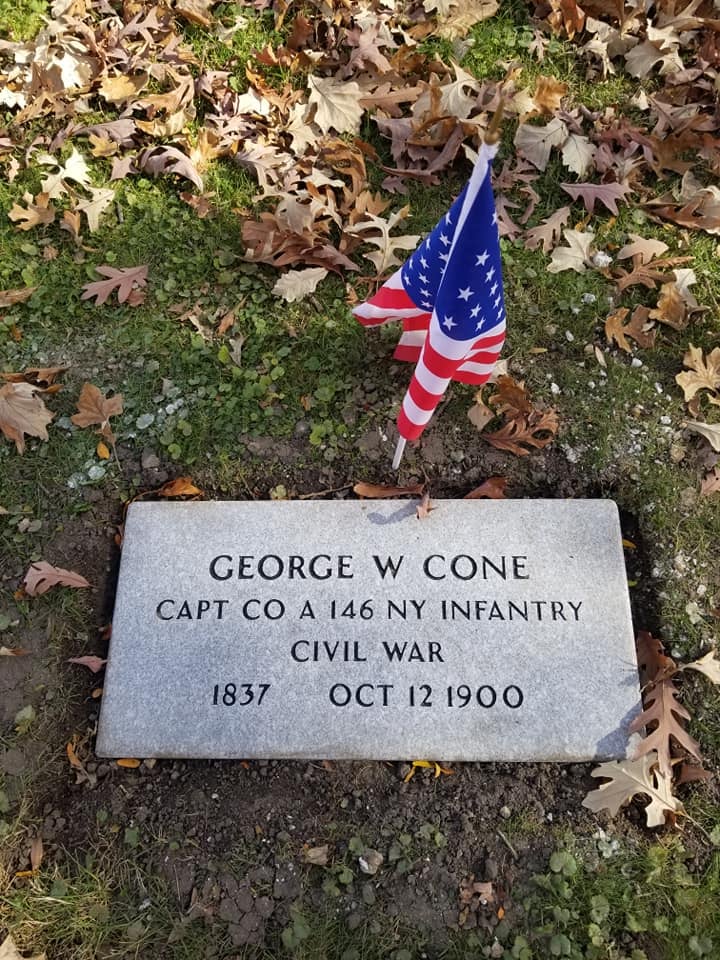
Veterans Day also recognizes all veterans from previous days who are now deceased, no matter when they died. Veterans Affairs services include burial and memorial benefits such as headstones and grave markers. One way to honor a deceased veteran is to make sure that he or she does not lie forgotten in an unmarked grave. Family members or their representatives can apply for grave markers for a deceased veteran at no cost for the marker, although the cemetery may charge a “setting” fee.
Examples of veteran grave markers on the Ridge can be viewed at Mount Greenwood Cemetery on 111th Street. The staff at this cemetery has worked for over a decade to identify veterans in unmarked graves and procure markers for the graves. Just recently, working with the organization Sons of Union Veterans of the Civil War, more markers were installed for Civil War veterans. An example of a marker is attached.
For more information on VA burials and memorial benefits, visit https://www.va.gov/burials-memorials/.
The Ridge Historical Society thanks and salutes all those who have served in the U.S. Armed Forces throughout the country’s history.
More for Veterans Day:
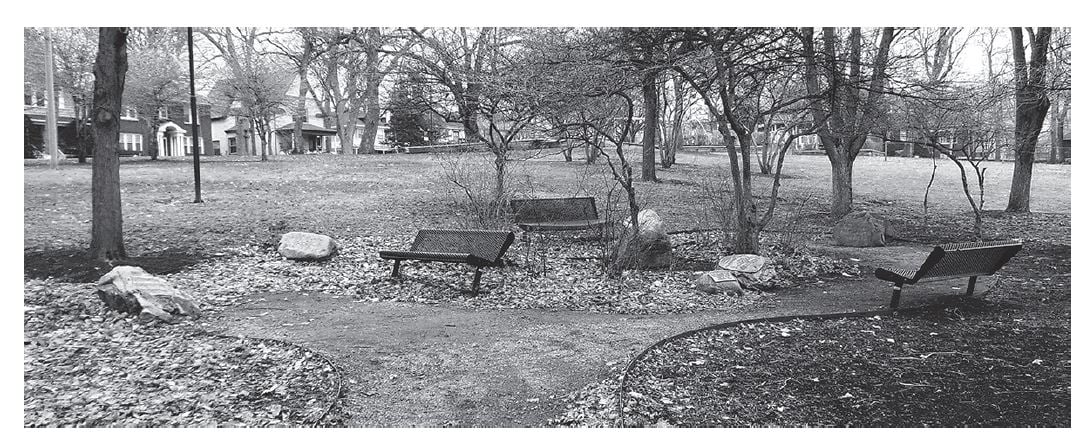
Ridge Park at 96th Street and Longwood Drive includes memorials to those who served in various wars. In the early 1990s, the park district grouped these together in a single area. The monuments recognize the Revolutionary War, the Civil War, the Spanish American War, World War II and Operation Desert Shield/Operation Desert Storm. Photo by C. Flynn, RHS newsletter.
Contributed to RHS.
Note to followers of the Ridge Historical Society Facebook posts: I pulled the series on the artist Henry Arthur Elkins. I have loads of information on him and I need to organize it better before I share it. I will get back to Mr. Elkins soon.
Next up: The real story of the pilgrims and the first Thanksgiving dinner.
– Carol Flynn
Ridge Historical Society
The First Thanksgiving Feast
By Carol Flynn
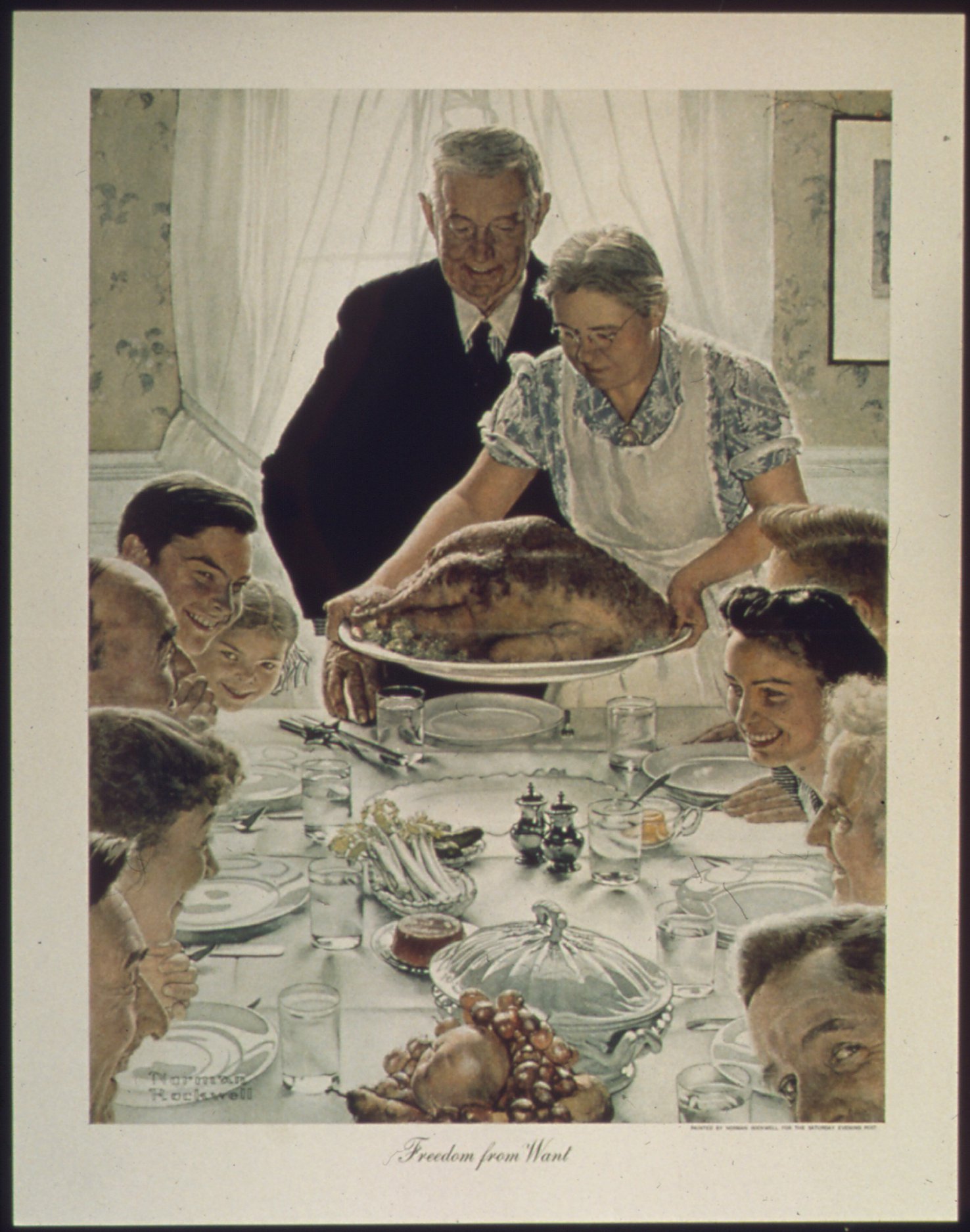
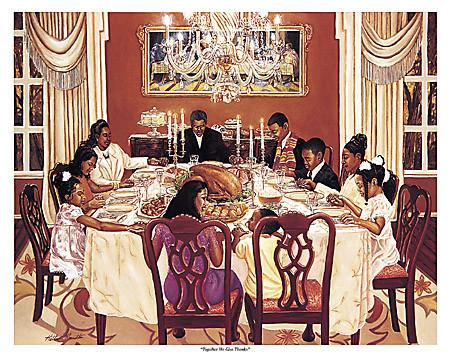
Thanksgiving Day is a uniquely American holiday. More so than any other holiday, it is associated with a certain traditional menu, including roast turkey, stuffing, mashed and sweet potatoes, cranberry sauce, and pumpkin pie. But the menu for the first celebration recorded four centuries ago was very different than the one we enjoy today.
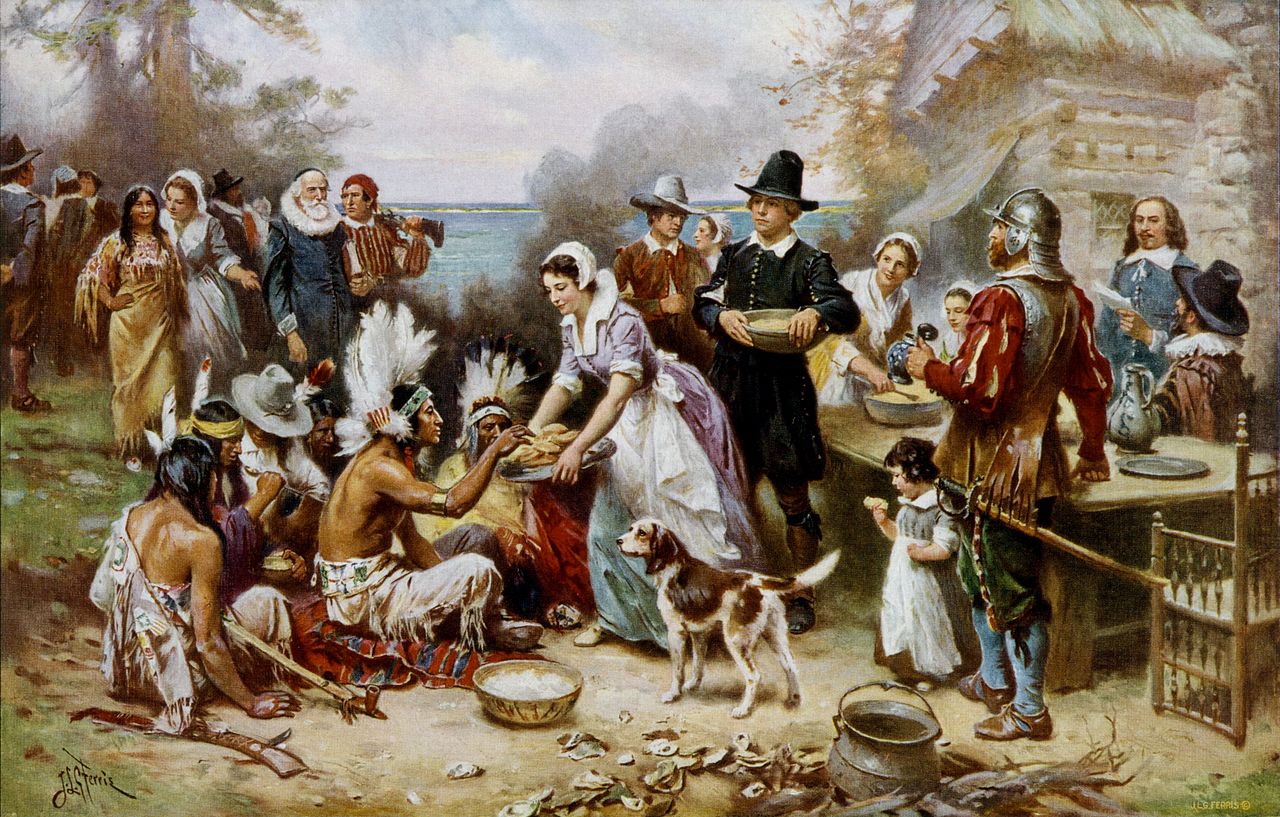
The first “Thanksgiving” celebration occurred in 1621 in Plymouth, Massachusetts, as a harvest feast. The celebrants were the English Protestants called Puritans, known affectionately in American history as the “Pilgrims,” who had split from the Church of England and come to the New World on the ship called the Mayflower; other Englishmen such as the crew who also came on the ship; and the Wampanoag people, the Native American tribe that had lived in the area for over 12,000 years.
Note that there was already a colony of settlers in Jamestown, Virginia, dating to 1607. Most likely they also held harvest feasts, but the Plymouth celebration is the one for which detailed records exist, hence it is considered the first Thanksgiving.
The Pilgrims intended to go farther south than Massachusetts. Delays caused them to not leave England until September, and they arrived in America in November. Bad weather forced them to land where they did and remain there for the winter. They were not at all prepared for the freezing cold and snow they encountered in the New World, which had a much harsher climate than that of England. The one hundred settlers and fifty crew members stayed on the ship in Plymouth harbor that first winter. Many of them, weakened by the trip and suffering from scurvy from lack of Vitamin C, and some already suffering from tuberculosis, came down with pneumonia. About half of them died on the ship, most without ever setting foot in their new country.
They were finally able to come ashore and build huts in March 1621. They were greeted by the Wampanoag people. The Wampanoag showed the Pilgrims how to fish and hunt in the area, and how to cultivate the native food plants and gather fruit.
As far as what was available for a harvest feast that fall, many items we take for granted now were not available then. There were no sweet or white potatoes. It would be another hundred years before potatoes came up to North America from South America. The Pilgrims had not yet planted wheat fields so there were no pies and no bread. The sugar rations they brought with them had quickly been depleted on the journey over, so there were no jellies or sweet desserts. They brought no large livestock with them on the Mayflower, only chickens, and a few pigs and goats, so there were no dairy products except maybe goats’ milk. No ovens had been constructed yet for baking, so all cooking was done over open fires.
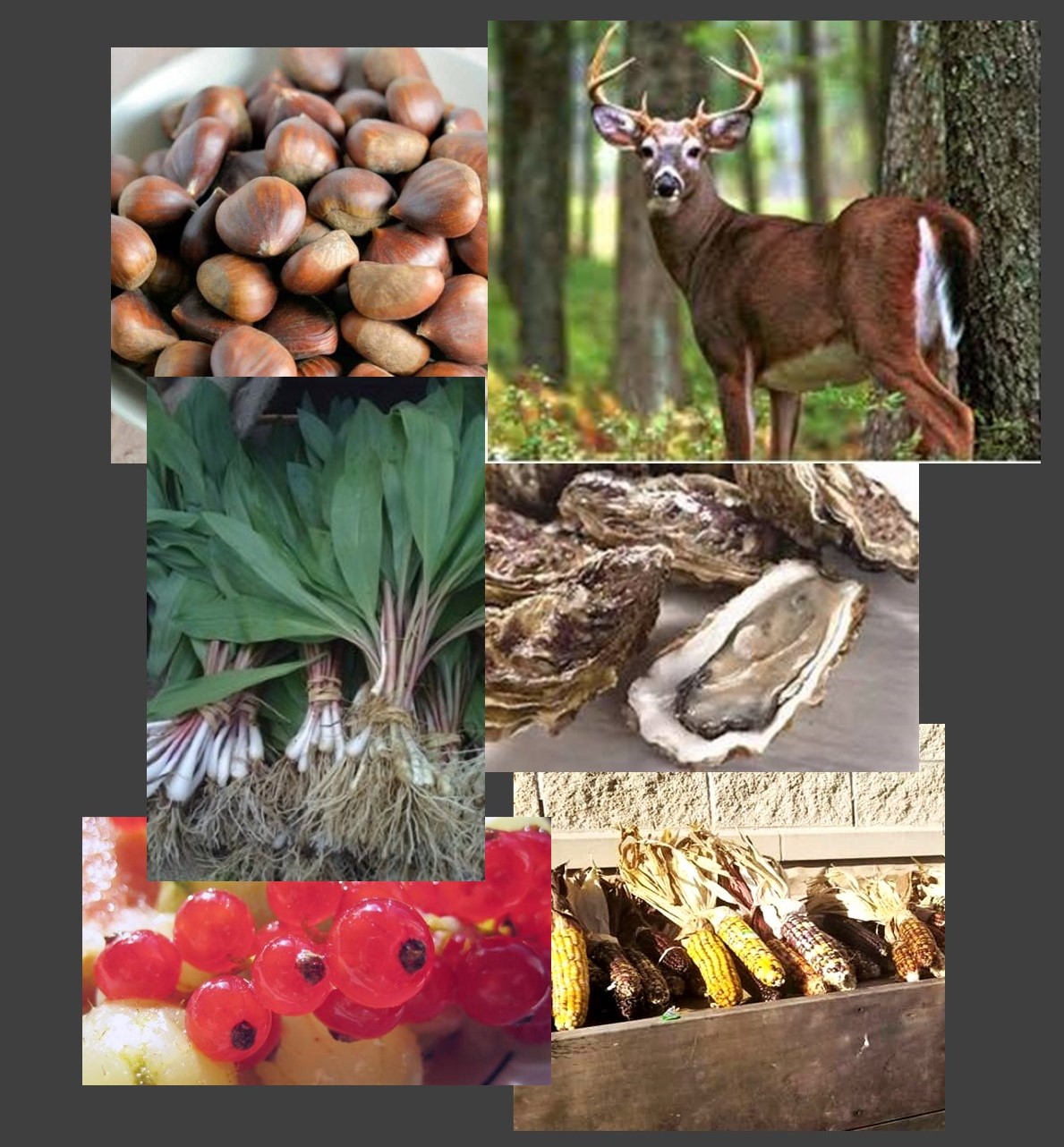
A journal kept by Puritan William Bradford reported the colonists went fowl hunting for this harvest feast. Duck, geese, swans, and turkeys were all plentiful. The Wampanoag guests brought a gift of five deer to the celebration, so venison, probably some roasted and some served in a hearty stew, was without a doubt on the menu. Historians also believe that seafood was a major component of the feast, this being New England by the coast. Mussels, lobster, bass, clams, and oysters were readily available. The first Thanksgiving was very heavy on animal protein.
The vegetables the Wampanoag cultivated at the time included corn, pumpkins, squash, turnips, garlic, onions, beans, carrots, lettuce, spinach, and cabbage. The pumpkins were roasted. Fruits available for gathering included blueberries, plums, grapes, and gooseberries. Cranberries were there but it was another fifty years before there were reports of boiling them with sugar to make a jelly.
Flint corn, the multi-colored “Indian corn,” was plentiful at the first harvest. Most likely, the corn was ground into cornmeal, which was boiled and pounded into a thick corn mush or porridge. This was called Indian pudding, a take on the English fondness for “hasty pudding.” Later this dish was sweetened with molasses, made from sugar cane brought up from the Caribbean islands.
Herbs, and nuts like chestnuts, walnuts, and beechnuts, were plentiful from the forests. Along with onion, these would have been used for stuffing the fowl and flavoring dishes.
The celebration itself was a three-day event, with feasting, ball games, singing, and dancing. “Grace” was likely said before meals, but it was several years later that an official prayer service was added to the annual harvest celebration to give thanks for rain after a two-month drought.
Within a few years, the Pilgrims planted wheat and other crops. Other settlers came, bringing dairy cows and honeybees. Eventually, the diet of the settlers expanded.
Fast forward to 1827, and Sarah Josepha Hale, the editor of the popular Godey’s Lady’s Book, began advocating for a national Thanksgiving Day. She petitioned thirteen presidents until finally, Abraham Lincoln made the declaration in 1863 as a way to help unite the country in the midst of the Civil War.
For decades, Hale published Thanksgiving recipes and menus in her magazine. She also published a number of cookbooks. She championed mashed potato dishes, which were considered exotic in the mid-1800s.
A typical cookbook of 1870 recommended the following menu for Thanksgiving dinner: Oyster soup, cod with egg sauce, lobster salad, roast turkey with cranberry sauce, mixed pickles, mangoes, pickled peaches, coleslaw and celery, boiled ham, chicken pie, jelly, browned mashed potatoes, tomatoes, boiled onions, canned corn, sweet potatoes, and roasted broccoli. Mince and pumpkin pies, apple tarts, and Indian pudding were the desserts. Apples, nuts, and raisins were for snacking.
By the early 1900s, the basic fare was set – turkey, stuffing, mashed and sweet potatoes, gravy, cranberry sauce, and pumpkin pie. Most families have favorite dishes they add to the table, and of course there are many regional, ethnic, and individual variations. The menu is forever evolving – green bean casserole was invented in 1955 by the Campbell Soup Company to promote the use of its cream of mushroom soup and has become a Thanksgiving standard.
Studies have shown that Thanksgiving dinner is the largest eating event in the U.S. People eat more on Thanksgiving than any other day of the year. And then there are always the leftovers … turkey sandwiches, turkey tetrazzini, turkey chili…. Happy Thanksgiving!
For more information on the history of Thanksgiving, visit smithsonian.com, nationalgeographic.com, history.com, and other history websites.
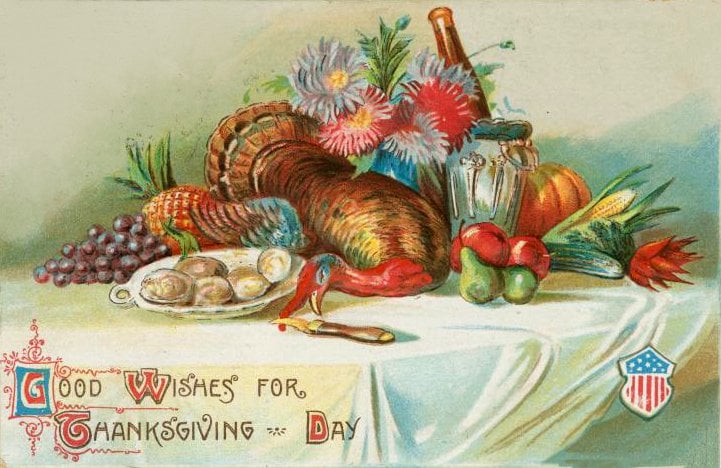
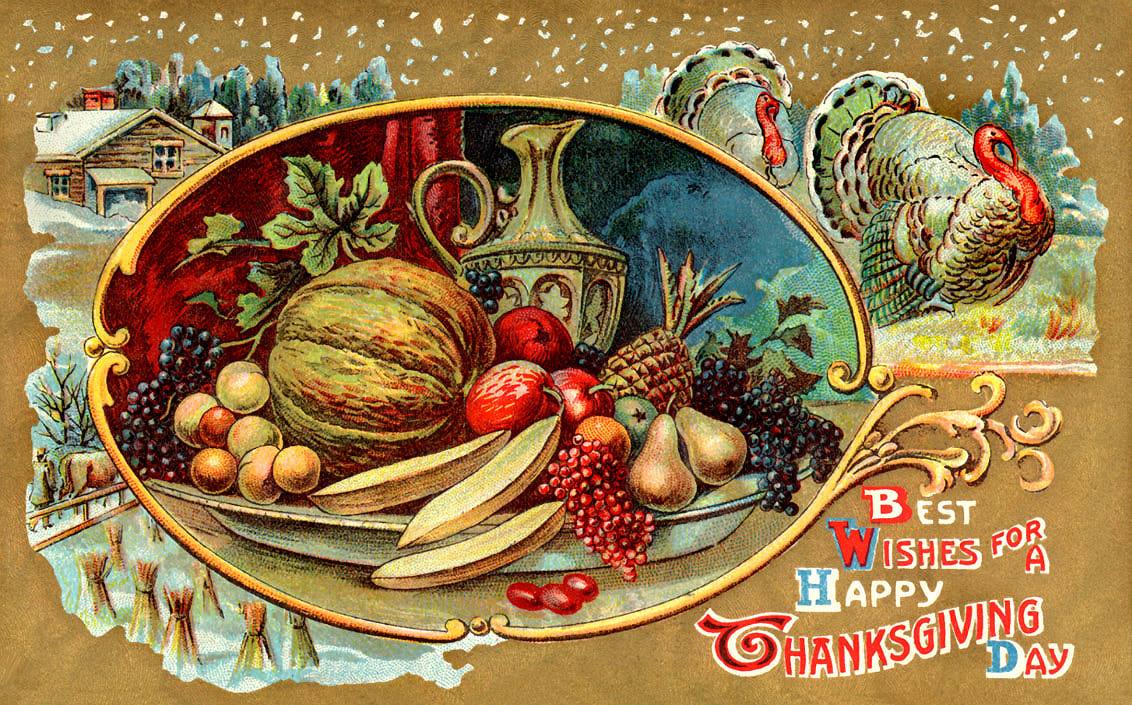
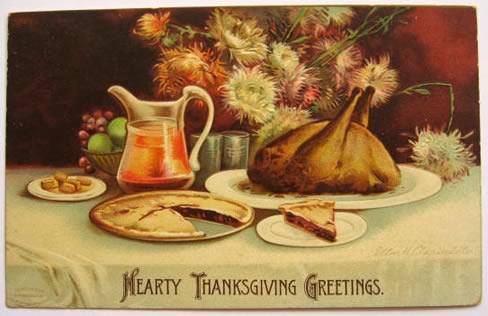
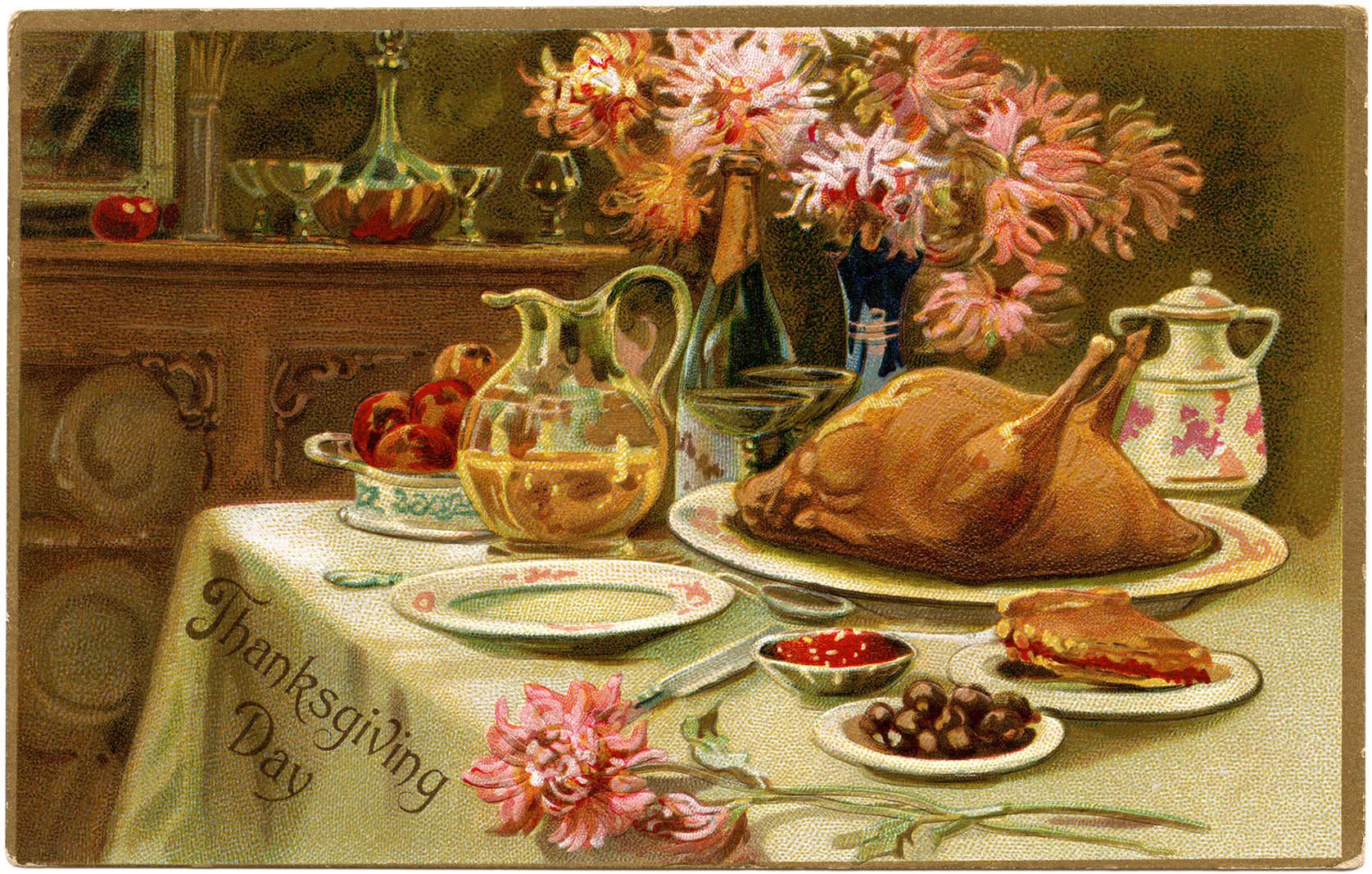
Happy Thanksgiving! Here are some vintage postcards. Since the day is mainly devoted to eating, they all feature feasts.