
Explore the RHS Facebook Archives, a rich repository of local history written by Carol Flynn. For two decades, Carol brought a deeply dedicated voice to public education at RHS. Her role as Facebook administrator through mid-2025 naturally extended her prolific research into meticulously detailed articles, most notably her multi-part historical series posts. Today, Carol continues her local history writing for The Beverly Review and other outlets.
November 2021
Ridge Historical Society
Halloween – October 31, 3021: The “Tombstone House”
By Carol Flynn
It’s Halloween, so it is a good day to look at the macabre in the neighborhood. This isn’t a ghost story – in fact, it’s pretty much the opposite, a “debunking” story. But it also illustrates that true history can be as interesting – and strange – as legends.
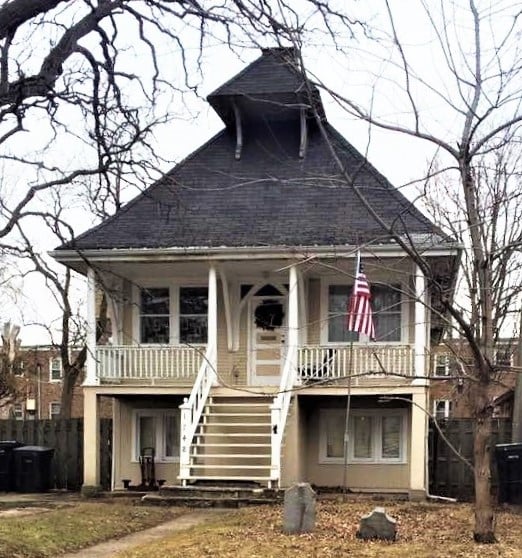
The Ridge Historical Society (RHS) is regularly asked about the tombstones that are on the front lawn of a house in the 1700 block of West 96th Street. Are they real? Yes. Are people buried there? Not very likely. Was that a cemetery? No. How did the tombstones get there? That’s a good question and the answer remains elusive.
Here is the information RHS has gathered to date. Let’s start with the house. The house was actually originally a church.
St. Paul’s Bible Church at 94th and Winchester started as a Sunday school in the Longwood train station at 95th Street, then the congregation used a tent. One of the founders of the church was William Merchant Richardson French, the first executive director of the Art Institute of Chicago, whose historic house still stands in north Beverly.
In 1893, the congregation built a small wooden church. This wooden church was replaced by a stone church in 1902-3. The wooden church was moved and became a private home on 96th Street.
Moving houses was not uncommon in the past. They were placed on rollers and dragged to the new location by horses. It could take days to move a house but it was easier than building a new one.
Now, the tombstones. The names on them are Johan Sandtner, d. 1914; and Barbara Sandtner, b. 1859 d. 1915. RHS researchers located death and burial records for these people. These markers belonged to a couple that is buried in St. Mary’s Cemetery at 87th Street and Pulaski Road. Their names are recorded as John and Barbara Santner. John died at 4313 Lake Park on March 9, 1914, and Barbara died at 5836 Princeton on May 11, 1915.
It was not unusual to have multiple spellings of names in the past. Sometimes people changed their names to be more Anglicized. One conjecture is that the tombstones were replaced to correct or change the names from Sandtner to Santner, and from Johan to John. Then the old gravestones were discarded.
What is still the question is exactly how the tombstones wound up in front of the relocated church-turned-house on 96th Street. They’ve been there for decades. In the 1980s, the owner or resident of the house told the RHS Historian that he placed the markers there, but he would not say where he got them originally.
A few years ago, another person reported to RHS that he was told by the man there that the tombstones were found in the basement of the house when he moved in, and he put them out in front. The man at the house said that perhaps there had been a graveyard there with the church.
That seems very unlikely because there is no documentation that that building was ever a church at that address, only a private residence. If St. Paul’s had a graveyard, it would have been at the church site a few blocks to the north.
So are people buried on 96th Street? Well, the Santners are not, and there is no record of any kind of cemetery ever being there. THAT much can be confirmed.
The Ridge Historical Society
Daylight Savings Time
By Carol Flynn
Daylight savings time (DST) ends tonight – technically, at 2:00 a.m. on Sunday, November 7, 2021. Clocks should be turned back to 1:00 a.m. to gain an hour (“Spring forward, Fall back”).
DST is not part of nature’s plan – it is a manmade contrivance, and the artificiality starts in the Spring when an extra hour of daylight is added. Winter time is actually “standard time.”
The idea of adjusting time to coincide with the changing amount of available sunlight due to the rotation of the Earth goes back to ancient times. The Romans used water clocks that had different scales for different months. Daylight was always divided into 12 hours, but the hours varied in length from 75 minutes in the summer to 44 minutes in the winter.
Benjamin Franklin wrote a satirical letter to a Parisian newspaper in 1784 when he was Ambassador to France that indirectly touched on DST. He reported how surprised he was to discover the sun shining at 6:00 a.m. one day when he was accidentally awakened. He, like most people, did not rise until noon and go to bed until 3 or 4:00 a.m. He commented on how much candle wax and lamp oil could be saved if people adjusted their schedules to the sun’s schedule.
Instead, people adjusted the sun’s schedule to their own.
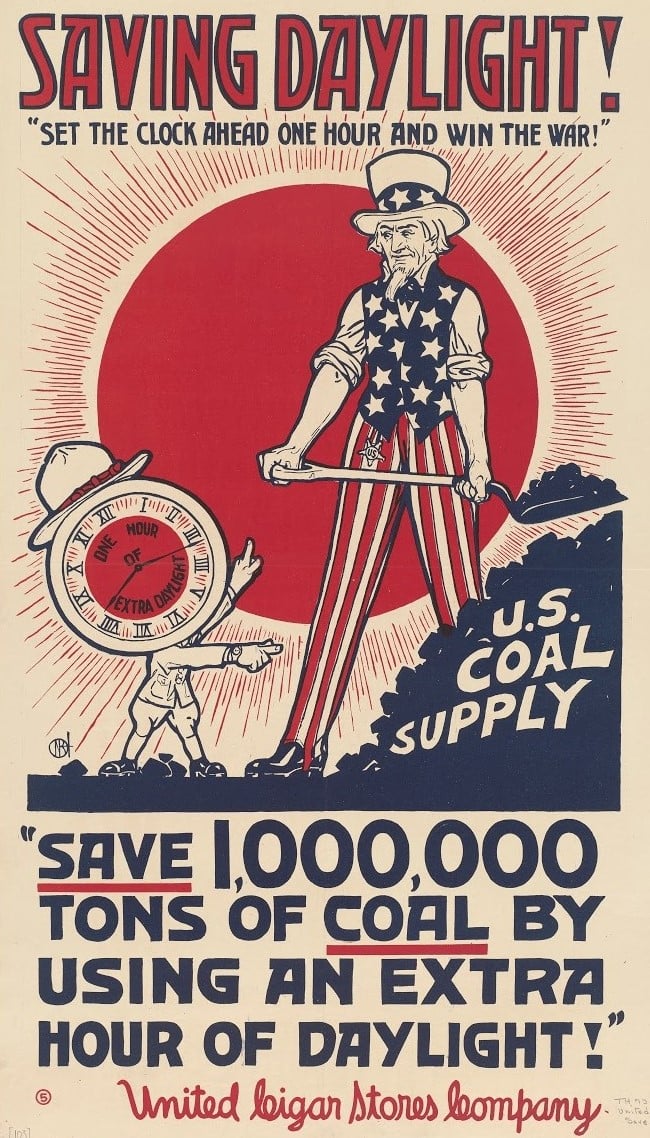
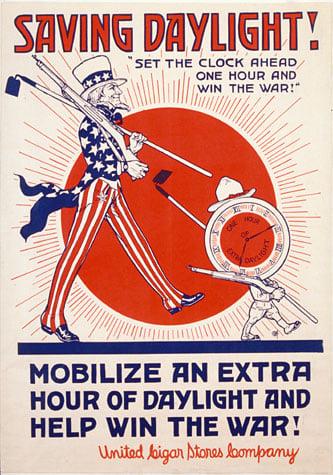
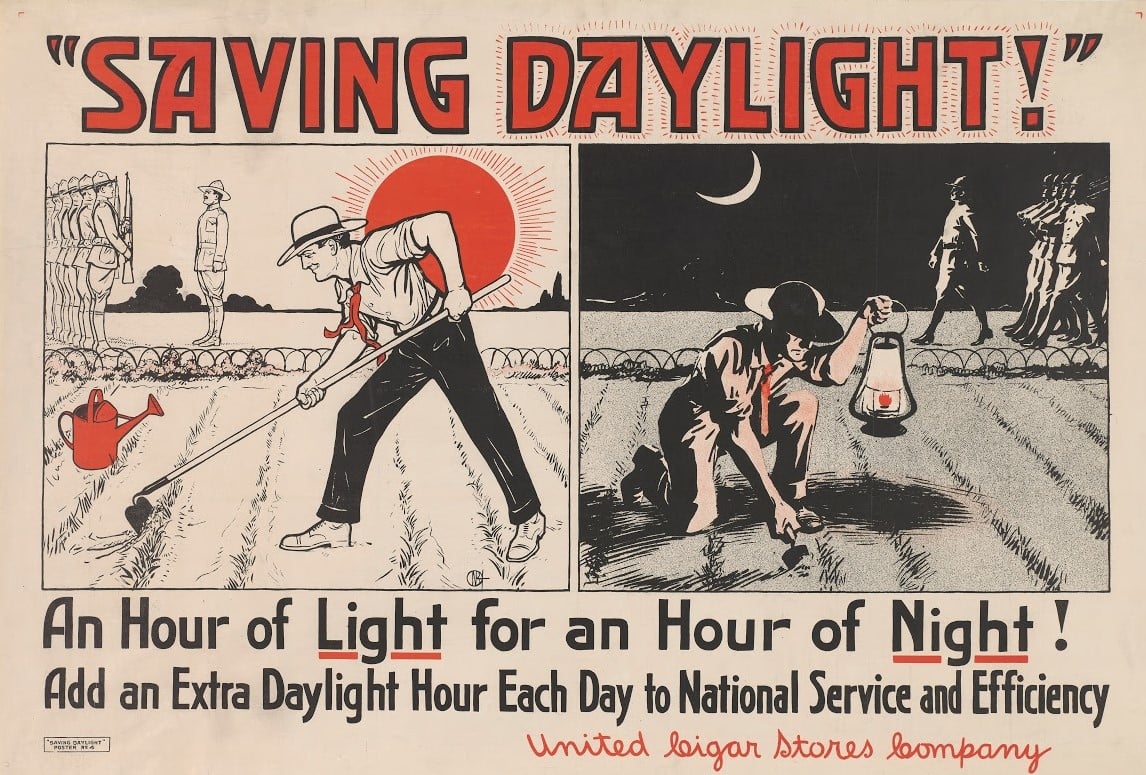
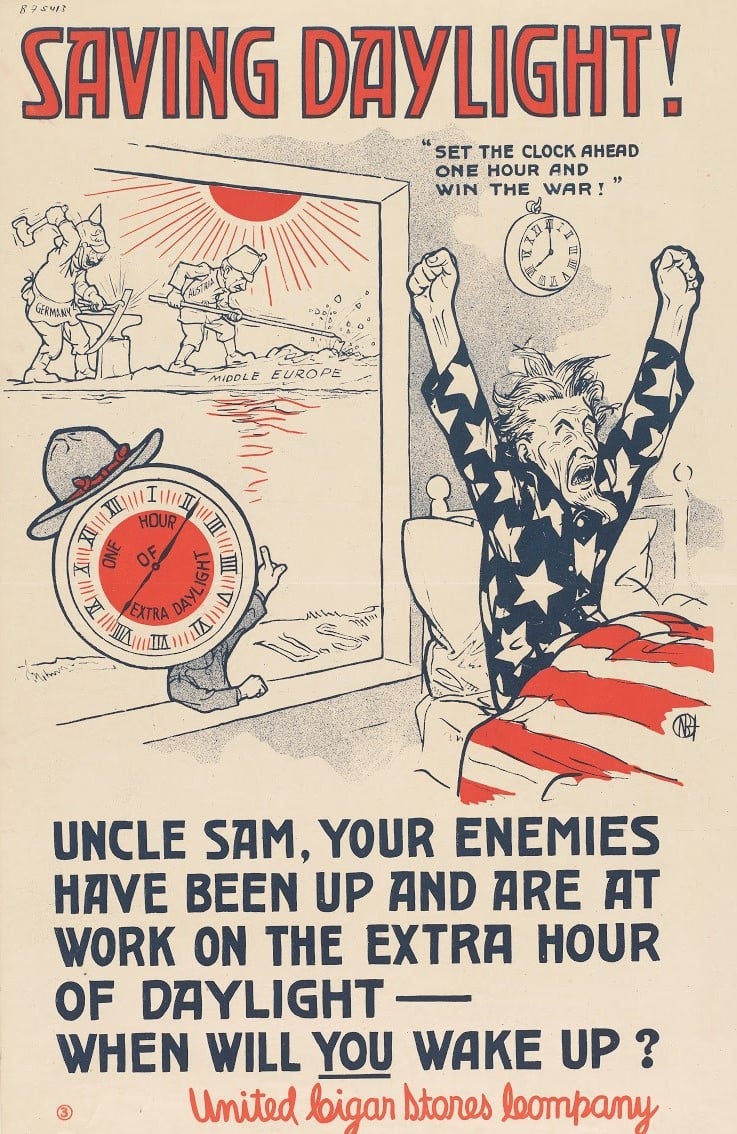
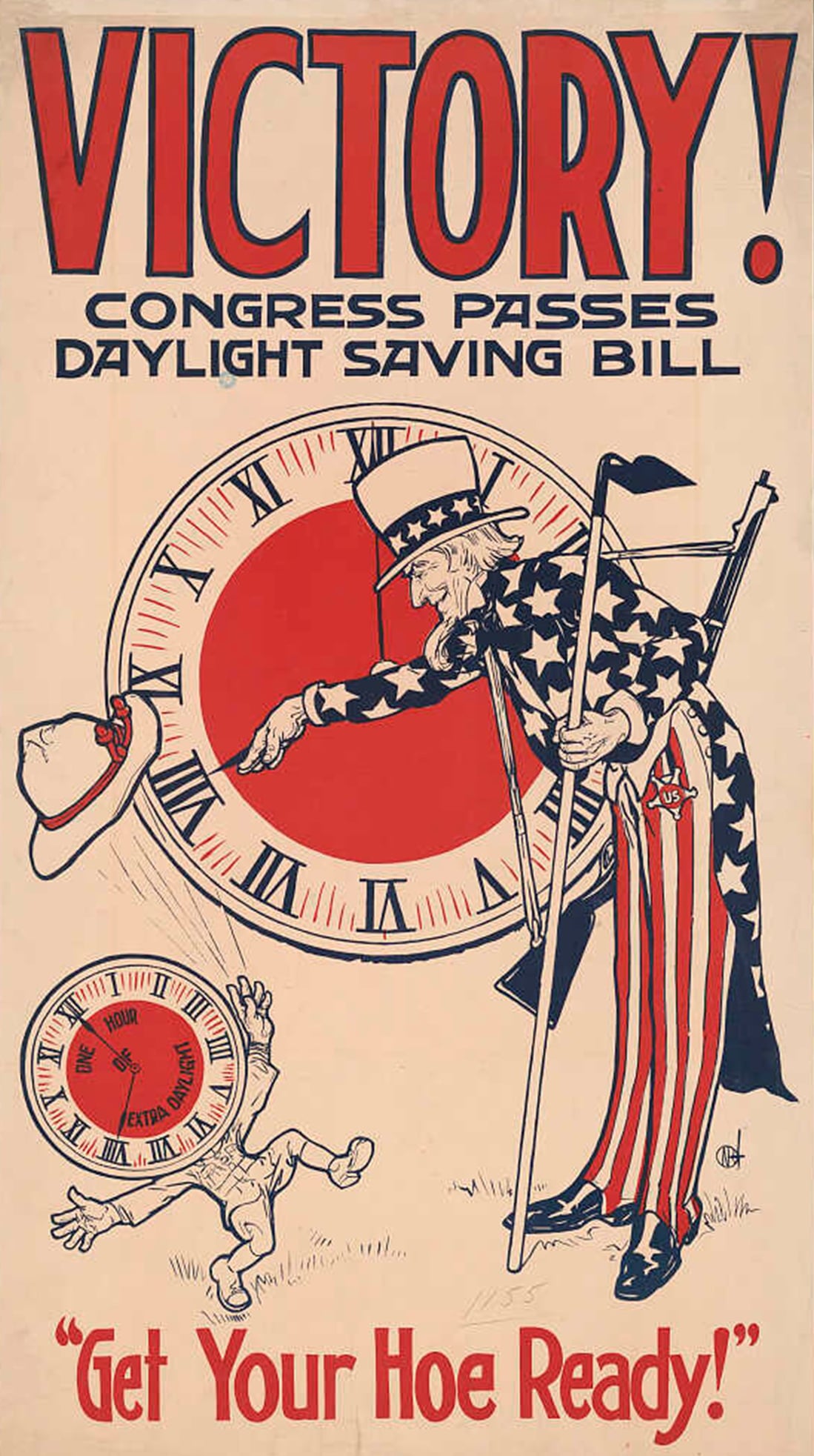
Although there was some experimentation with DST in other countries, it was the German Empire and Austria-Hungary that began the first national DST system in 1916 during World War I to conserve coal. Britain and its allies soon followed. The United States began DST in 1918.
In the years after the war, DST was discontinued in many countries, then restarted again. It was popular again during World War II, and came strongly into use in the 1970s with the renewed emphasis on conserving energy.
In the U.S., DST has been in use since 1918, with changes during the years to arrive at the schedule we use now. There is no uniform system throughout the world; there are even variations within the U.S.
Although the initial emphasis was on saving fuel, there are other outcomes of DST. The “plus column” includes increased economic activity like shopping during the extra daylight time, more outdoor recreation and leisure activities, and even some reduction in crime. Retail stores and the golfing and gardening industries are examples of pro-DST supporters.
The “minus column” includes the disruption in human circadian rhythms affecting sleep and other patterns, an increase in car accidents with the return to standard time, and a loss for indoor entertainment activities. More gas is used for cars during the additional daylight. Movie theaters and the T.V. and cable industry, and indoor dining and recreation places prefer standard time. Farmers don’t care for DST because cows don’t watch the clock to adjust their milking patterns. And of course, there is always confusion when the clocks are changed.
Public health officials recommend the best option would be to return to year-round standard time. However, many supporters want to change to permanent daylight savings time.
It takes an act of Congress to make any changes to the schedule. States cannot implement permanent DST. They can opt out of DST, but they cannot opt out of standard time.
The Ridge Historical Society
History of the Chicago Wards – Post 3: Annexation of Washington Heights to Chicago
By Carol Flynn
The villages and towns around the City of Chicago, the “suburbs,” generally annexed to improve services, especially water and sewers. In addition, police and fire departments, schools, libraries, and other public services were expensive for small communities to maintain on their own.
The suburbs began to see real growth in the 1870s. The Great Chicago Fire of 1871 displaced a lot of city residents and broke up old neighborhood associations. Businesses encroached on the remaining residential neighborhoods to reestablish themselves. Moving outside of the city offered homeowners the advantages of cheaper homes and less congestion. For those who lost everything in the fire, it was a chance to start over, away from the conditions and constant reminders of the trauma they had experienced.
According to the Chicago Tribune in 1873, one of the hottest suburban areas for speculation and growth was Washington Heights and Morgan Park on the Blue Island Ridge. Land prices in the area had doubled in the past year.
Even before the Fire, the Washington Heights area was being lauded in the Tribune. In 1869, the paper wrote that “among the many suburban places …, there is none more attractive than the new one … called Washington Heights.” The article mentioned the “high and beautiful wooded land, which commands a fine view of the city and Lake Michigan.” It also mentioned the work that was in progress by the Blue Island Land and Building Company, the construction of “beautiful, wide avenues” and the laying out of five- and ten-acre lots, that would be marketed in the coming year as Morgan Park.
In 1870, the “dummy line” bringing the Rock Island Railroad west to Washington Heights was established. This played a major role in increasing accessibility to the area, allowing for the rapid growth that began in the 1870s. Not just homes for the wealthy and middle-class were being built; laborers bought up small lots along the railroad lines and built cottages.
The largest annexation to the City of Chicago occurred in 1889 when 125 square miles of territory was added to the city. This included all of Hyde Park Township and Lake Township on the south side, and Jefferson Township and Lake View Township on the north side. New wards were formed, bringing the total for the city to thirty-four wards.
This annexation almost brought the city to the boundaries of the Village of Washington Heights, which included today’s Beverly area, and Morgan Park.
The residents of Washington Heights were mostly in favor of annexation to the city. The major issue for the village was dealing with sewage, and the sewer system of the city, which then ended at Halsted Street, could be extended west.
Prominent people such as Robert Givins, real estate developer and builder of the Castle at 103rd Street and Longwood Drive, and William Barnard, owner of the largest tract of land in the community, petitioned in favor of annexation. There were reports of some initial resistance, although minor, from some of the older farmers in the area.
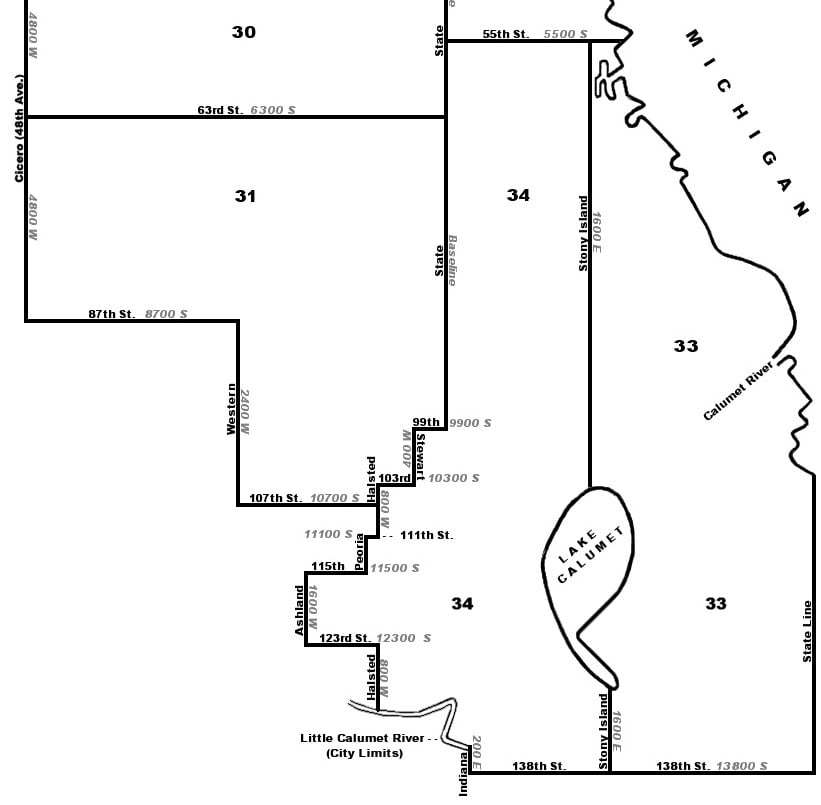
There was one snag in annexing Washington Heights, however. A three-square-mile stretch of land from 87th Street to 95th Street west of State Street, which included today’s North Beverly and Dan Ryan Woods, was not incorporated as part of any municipality, including the City of Chicago or the Village of Washington Heights. This land lay between the city and the village, and due to the way the annexation laws were written, prevented annexation because the land would not be continuous. The City of Chicago took legislative action under an old law to annex this parcel to the city in April of 1890, opening the way for a vote to annex the Village of Washington Heights.
In November of 1890, the voters of both the city and the village approved the annexation of Washington Heights to Chicago.
The annexation of the small town of Fernwood to the east of Washington Heights was also on the ballot, and although the city voters approved it, the Fernwood voters did not. However, the following year, Fernwood voters did approve annexation.
It was assumed by just about everyone that the annexation of Washington Heights meant that Morgan Park would follow within a year or two. However, annexation to the city became a real political issue for Morgan Park, and the decision to annex was not agreed upon for another twenty-four years.
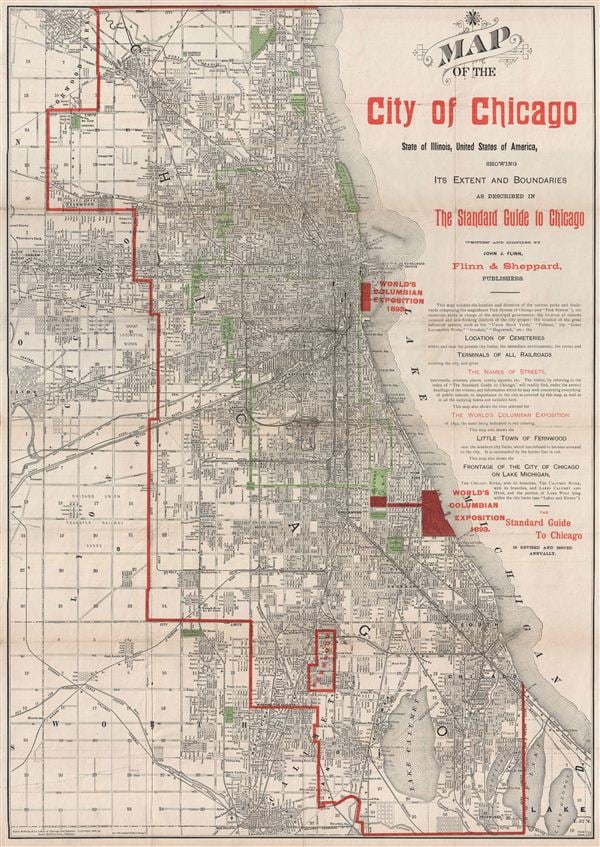
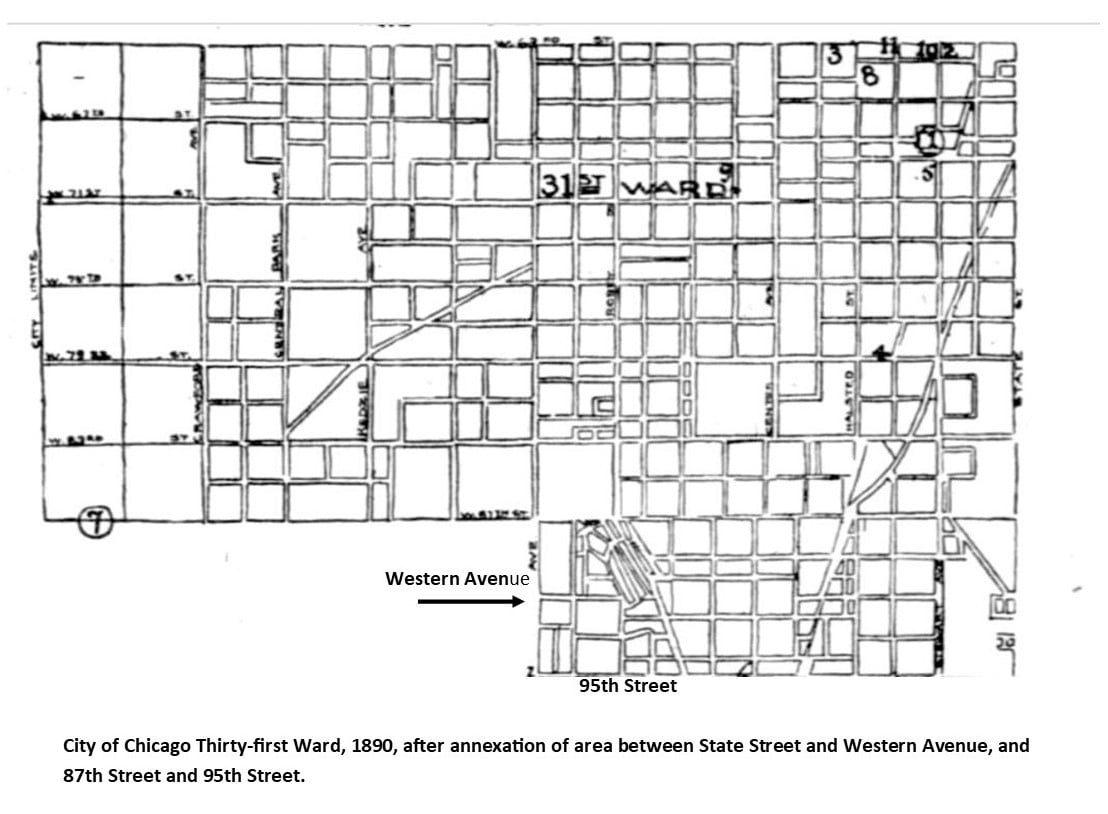
This 1890 map of Chicago includes the new territory of Washington Heights. A bigger version of it can be accessed through Google.
Next post: Assigning Washington Heights to the Ward System
The Ridge Historical Society
Happy Thanksgiving
By Carol Flynn
Hoping to help reunite a country torn by war, Thanksgiving became a fixed holiday under President Abraham Lincoln in 1863.
There is a lot of information out there about early harvest and thanksgiving celebrations on American soil by the European colonists, but generally, when we think about the event that influenced today’s celebration, we’re looking at the celebration that occurred in 1621 in Plymouth, Massachusetts, as a harvest feast. The celebrants were the English Protestants called Puritans, known in American history as the “Pilgrims,” who had split from the Church of England and come to the New World on the ship called the Mayflower; other Englishmen such as the crew who also came on the ship; and the Wampanoag people, the Native American tribe that had lived in the area for over 12,000 years.
Note that there was already a colony of settlers in Jamestown, Virginia, dating to 1607. Most likely they also held harvest feasts, but the Plymouth celebration is the one for which detailed records exist.
The Pilgrims intended to go farther south than Massachusetts. Delays caused them to not leave England until September, and they arrived in America in November. Bad weather forced them to land where they did and remain there for the winter. They were not at all prepared for the freezing cold and snow they encountered in the New World, which had a much harsher climate than that of England. The one hundred settlers and fifty crew members stayed on the ship in Plymouth harbor that first winter. Many of them, weakened by the trip and suffering from scurvy from lack of Vitamin C, and some already suffering from tuberculosis, came down with pneumonia. About half of them died on the ship, most without ever setting foot in their new country.
They were finally able to come ashore and build huts in March 1621. They were greeted by the Wampanoag people. Early relations between the Native Americans and the European settlers were cordial. The Wampanoag showed the Pilgrims how to fish and hunt in the area, and how to cultivate the native food plants and gather fruit. Without the generosity and hospitality of the Native Americans, the settlers had a much poorer chance of surviving.
As far as what was available for a harvest feast that fall, many items we take for granted now were not available then. There were no sweet or white potatoes. It would be another hundred years before potatoes came up to North America from South America. The Pilgrims had not yet planted wheat fields so there were no pies and no bread. The sugar rations they brought with them had quickly been depleted on the journey over, so there were no jellies or sweet desserts. They brought no large livestock with them on the Mayflower, only chickens, and a few pigs and goats, so there were no dairy products except maybe goats’ milk. No ovens had been constructed yet for baking, so all cooking was done over open fires.
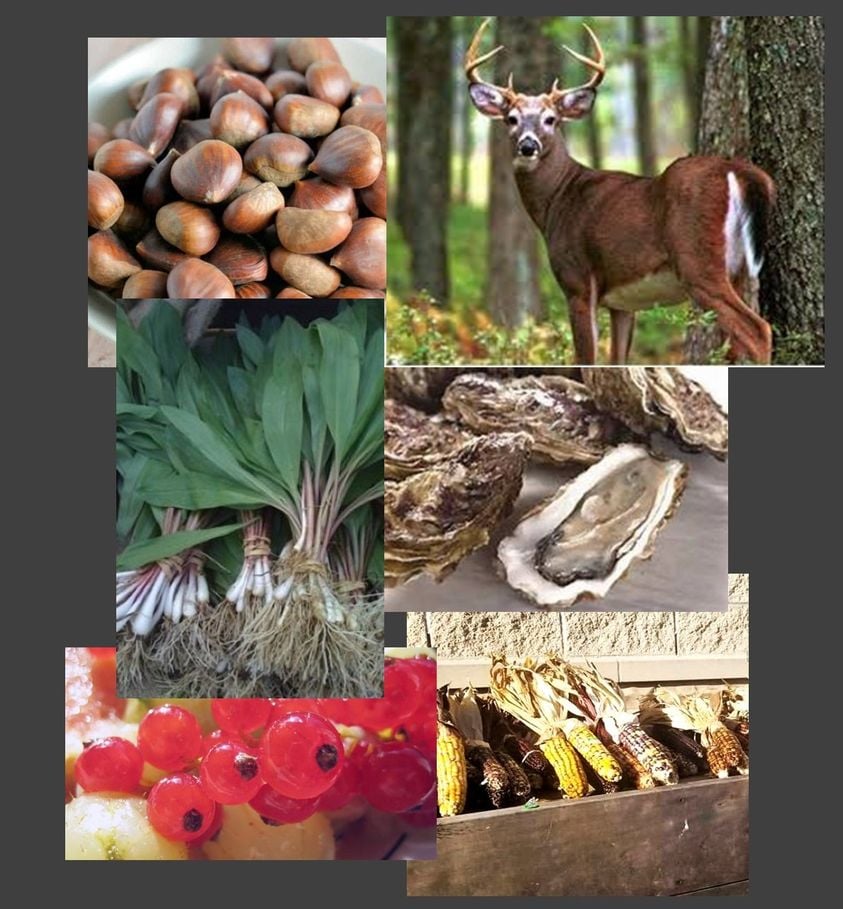
A journal kept by Puritan William Bradford reported the colonists went fowl hunting for this harvest feast. Duck, geese, swans, and turkeys were all plentiful. The Wampanoag guests brought a gift of five deer to the celebration, so venison, probably some roasted and some served in a hearty stew, was without doubt on the menu. Historians also believe that seafood was a major component of the feast, this being New England by the coast. Mussels, lobster, bass, clams, and oysters were readily available. The first Thanksgiving was very heavy on animal protein.
The vegetables the Wampanoag cultivated at the time included corn, pumpkins, squash, turnips, garlic, onions, beans, carrots, lettuce, spinach, and cabbage. The pumpkins were roasted. Fruits available for gathering included blueberries, plums, grapes, and gooseberries. Cranberries were there but it was another fifty years before there were reports of boiling them with sugar to make a jelly.
Flint corn, the multi-colored “Indian corn,” was plentiful at the first harvest. Most likely, the corn was ground into cornmeal, which was boiled and pounded into a thick corn mush or porridge. This was called Indian pudding, a take on the English fondness for “hasty pudding.” Later this dish was sweetened with molasses, made from sugar cane brought up from the Caribbean islands.
Herbs, and nuts like chestnuts, walnuts, and beechnuts, were plentiful from the forests. Along with onion, these would have been used for stuffing the fowl and flavoring dishes.
The celebration itself was a three-day event, with feasting, ball games, singing, and dancing. “Grace” was likely said before meals, but it was several years later that an official prayer service was added to the annual harvest celebration to give thanks for rain after a two-month drought.
Within a few years, the Pilgrims planted wheat and other crops. Other settlers came, bringing dairy cows and honeybees. But it is the native foods that make the day what it is – pumpkins, white and sweet potatoes, corn, cranberries. At least 60% of the food crops grown throughout the world today originated with the Indigenous People of the Americas. And of course, turkeys are native only to the Americas.
The Ridge Historical Society
History of the Chicago Wards – Post 4 REVISED: North Beverly Joins the Chicago Ward Structure
By Carol Flynn
In 1890, three parcels of land were annexed to the City of Chicago, forever changing the Ridge communities.
First, the unincorporated area between 87th Street and 95th Street, and between State Street and Western Avenue, which includes today’s North Beverly, was annexed.
This annexation included local communities whose names were on the stops along the Rock Island railroad line (now the Metra line) – Beverly Hills (91st Street) and Longwood (95th Street). Also included was a section of Englewood and the Brainerd neighborhood to the east. These communities were identified as “flourishing new suburbs” by the Chicago Tribune.
A new state law passed in 1889 allowed for incorporated areas and the cities with which they wanted to annex to hold elections on the issue. However, unincorporated areas still fell under the jurisdiction of the previous law referred to as the “James P. Root annexation law,” which allowed areas to annex by petitioning the city. A petition had to be signed by three-fourths of the legal voters and property owners representing two-thirds of the community’s value.
The voters and property owners of Beverly Hills,
Longwood, and the communities to the east, petitioned the Chicago city council to annex this territory, and the Judiciary Committee signed off on this petition, in April 1890. The city council then passed an ordinance to make the annexation official in May of 1890.
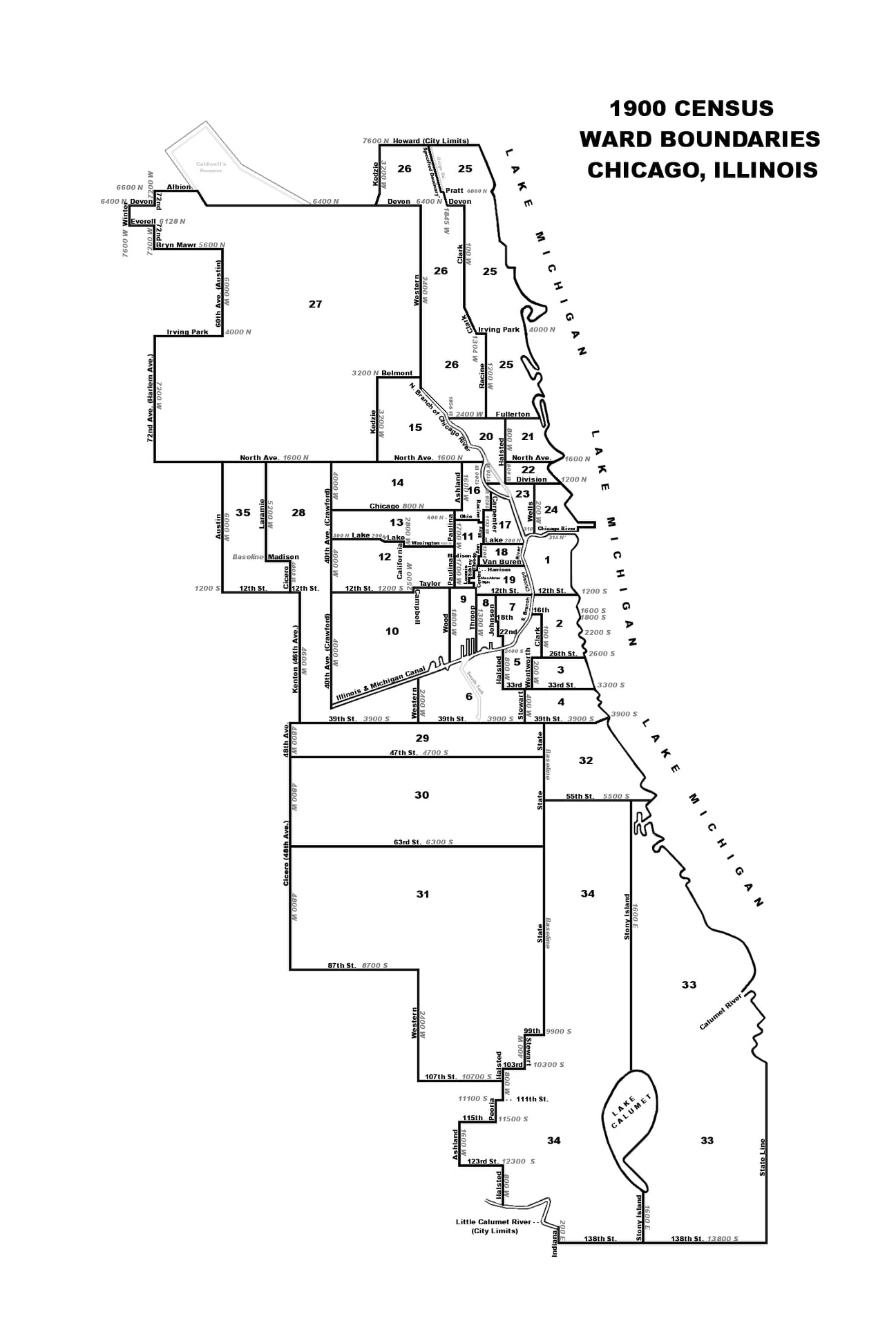
The Chicago city council assigned this land to the existing thirty-first ward, which had just been established the year before when 125 square miles of land was added to the city. The wards were reconfigured, and new ones were added at that time, bringing the total number of wards from twenty-four to thirty-four.
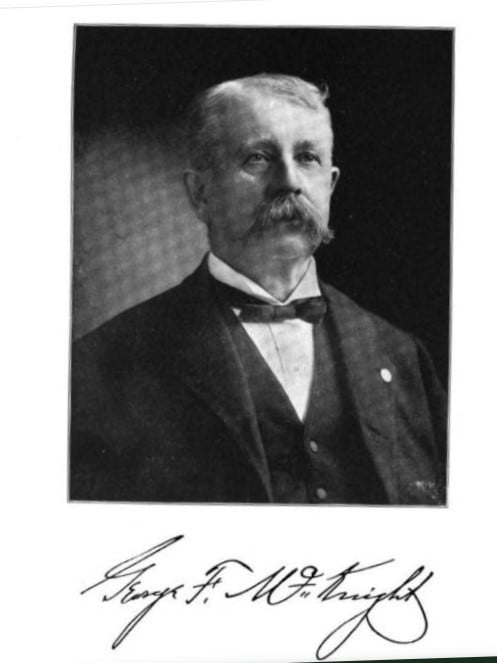
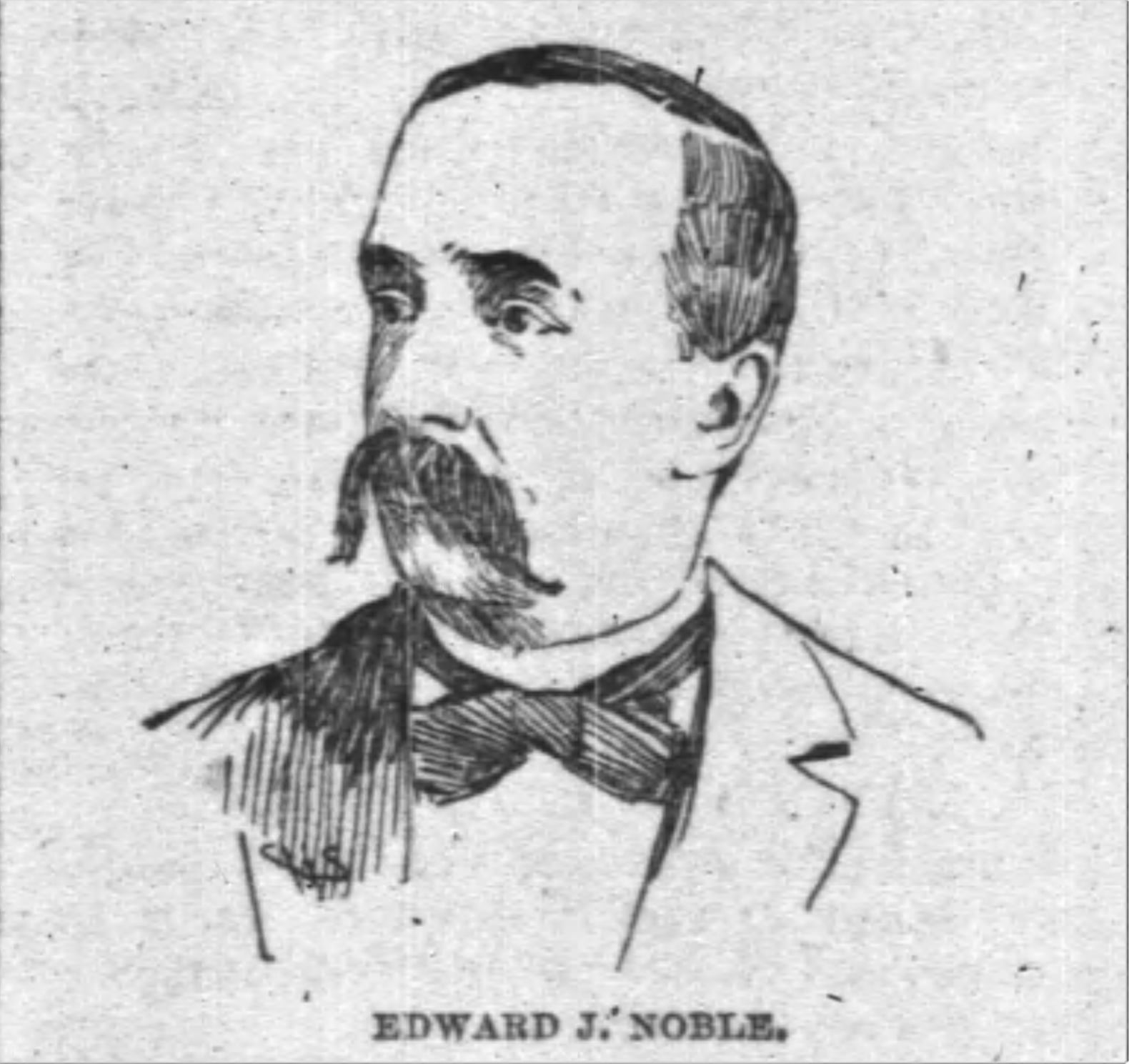
The two aldermen of the thirty-first ward became the first aldermen for the Ridge communities. They were Captain George F. McKnight and Edwin J. Noble. Both had just been elected the previous year when the ward was established.
Noble was a grain merchant and stock trader. He came to Chicago in 1876 from Pennsylvania, entered the grain business, and became a member of the Chicago Board of Trade. He was then appointed by the governor as chief grain inspector for the State of Illinois.
McKnight came to Chicago in 1869 from Buffalo, New York, after serving in the U.S. Army during the Civil War. He had a wide background in business and founded the Lake Gas Company in Chicago. He was appointed by the governor to the Board of Equalization which dealt with property tax appeals.
It was believed that the annexation of this land would open the door immediately for Washington Heights and Morgan Park to follow suit. This did happen with Washington Heights but not with Morgan Park.
The other two areas annexed to the City of Chicago by election in 1890 were the incorporated areas of Washington Heights and West Roseland. The official vote was entered into the Cook County records on November 21, 1890.
The next step was for the Chicago city council to pass an ordinance recognizing the annexation and adding the land to the ward system.
Next post: Washington Heights joins the ward system of Chicago
The Ridge Historical Society
History of the Chicago Wards – Post 5: Washington Heights Joins the Chicago Ward Structure
By Carol Flynn
In November of 1890, the annexation of the Village of Washington Heights to the City of Chicago became official. At the same time, the Village of West Roseland to the southeast of Washington Heights was also annexed.
The next step was for the Chicago city council to pass an ordinance approving the annexation and adding the land to the ward system.
In 1889, with the annexation of 125 square miles of land into the city, the wards had been reconfigured and new ones created. The total number of wards had increased from twenty-four to thirty-four. When the area now known as North Beverly between 87th Street and 95th Street was annexed earlier in 1890, it was added to the thirty-first ward.
The determination of wards and their boundaries was a constant battle between the Democrats and Republicans on the city council to influence the election of aldermen according to political party affiliation. In 1890, Mayor DeWitt Clinton Cregier and the majority of the city council were Democrats, but that had gone back and forth through the early history of the city.
By 1890, Cregier was the fifteenth Democratic mayor. There had been five Whig mayors, and after this party merged to create the Republican Party in the 1850s, nine more Republican mayors. There had been five mayors with other or no political party affiliations.
It was generally assumed that Washington Heights would become its own ward – the thirty-fifth ward – when it was annexed. This new ward might also include West Roseland, or that area would be incorporated into an existing ward.
However, Washington Heights was strongly Republican, and establishing it as a new ward would almost certainly result in the election of two new Republican aldermen, something the Democrats did not want. Mayor Cregier was in favor of adding Washington Heights and West Roseland to existing wards.
An ordinance was drafted calling for the creation of a new ward for Washington Heights, and submitted to the Judiciary Committee of the city council. At the same time, two other ordinances were also submitted, calling for Washington Heights to be assigned to the thirty-first ward, and West Roseland to the thirty-fourth ward.
Establishing the new ward was a contentious issue in the city council. One alderman was quoted as saying about the ordinance before the Judiciary Committee, “It will sleep the sleep that knows no waking.” This proved so. That ordinance died in committee, and the ordinances to assign the areas to existing wards were presented to the city council, and approved.
Washington Heights became part of the thirty-first ward on February 25, 1891. West Roseland became part of the thirty-fourth ward.
Election precincts had already been established in the interim. In addition to the regularly scheduled voter registration day for the entire city, a second day was arranged for the new Chicago residents to register to vote. The annual aldermanic election was scheduled for the first Tuesday in April.
The two aldermen of the thirty-first ward were Captain George F. McKnight and Edwin J. Noble. Both had just been elected the previous year when the ward was established. Both were Republicans and ran unopposed.
As reported in Post 4, Noble was a grain merchant and stock trader on the Chicago Board of Trade. McKnight had a wide background in business and founded the Lake Gas Company in Chicago.
On the city council, Noble was a member of the Licenses, Streets and Alleys South, and Elections committees. McKnight sat on the Wharfing Privileges, Local Assessments, and Health and County Relations committees.
Each new ward had elected two aldermen in 1890, and to fit the positions into the election cycle, one was elected for a two-year term, and the other for a one-year term. McKnight was elected for one-year, so he was up for re-election in 1891, but he decided not to run for a second term.
The first election as residents of Chicago that the Washington Heights/Beverly voters participated in was to elect a new alderman to replace McKnight. The regular Republican “machine,” and that term was used back then for both parties, nominated Edwin A. Plowman for the position. Plowman was chief of the abstracts department of the Cook County Recorder’s office. He had sought the alderman position in 1889 but lost the nomination to McKnight.
However, a faction of Republicans in the ward nominated A. C. Clarke, an insurance adjustor, known for taking stances that differed from the official Republican stances. Clarke insisted he was the official nominee from the Republican Party. Despite some very heated debates, the Republican party leadership prevailed, and Plowman was listed on the ballot as the Republican candidate. Clarke ran as an Independent. They were joined on the ballot by nominees from the Democratic and Socialist parties.
Plowman won the election, becoming the new alderman for the thirty-first ward, and he served for one term. The position of mayor was also on the ballot that year, and Cregier lost to the Republican candidate Hempstead Washburne.
Noble was elected several more times, and served as alderman for the thirty-first ward until 1896.
Next: The Thirty-first Ward up to 1914