
Explore the RHS Facebook Archives, a rich repository of local history written by Carol Flynn. For two decades, Carol brought a deeply dedicated voice to public education at RHS. Her role as Facebook administrator through mid-2025 naturally extended her prolific research into meticulously detailed articles, most notably her multi-part historical series posts. Today, Carol continues her local history writing for The Beverly Review and other outlets.
October 2022
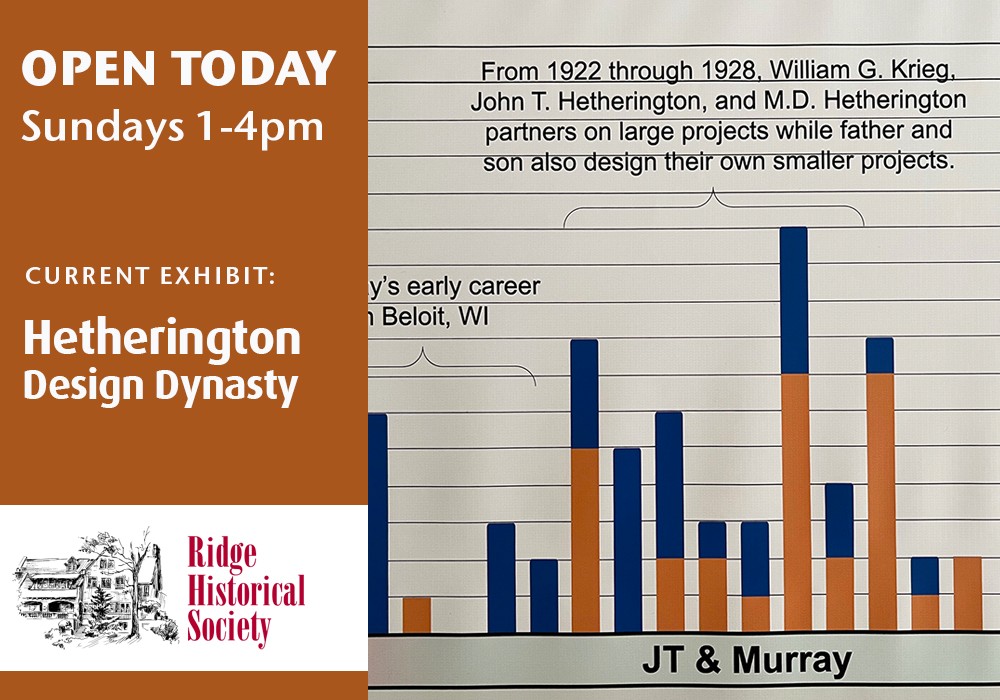
The Ridge Historical Society at 10621 S. Seeley Avenue is open today from 1 to 4 p.m., free of charge.
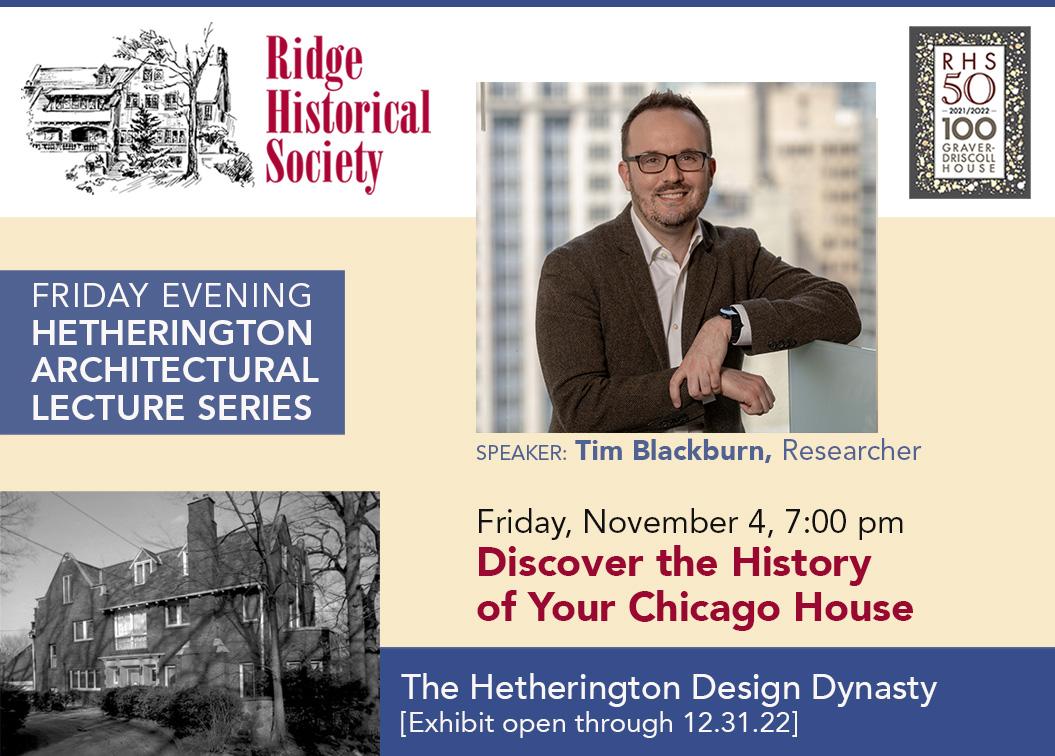
Reminder! For those of you who are interested in researching your house's history, sign up NOW for the November 4 program at the Ridge Historical Society (RHS). This is a popular topic and is filling up quickly.
The Friday Evening Hetherington Architectural Lecture Series will lead off on November 4th at 7:00 p.m. with “Discover the History of Your Chicago House,” presented by RHS researcher Tim Blackburn. Attendees will learn how to research their pre-1955 homes located within the city limits to learn about the architecture, construction, owners, and inhabitants through the years. Public records such as building permits and Sanborn maps will be discussed, as well as research methods to learn about local history.
Blackburn is a member of the RHS Historic Buildings Committee and assists members of the community with research on their homes and local history questions. He has completed extensive research on his own Hetherington-designed home and many other homes in the area, and was a major contributor to the current exhibit, including designing, photographing, and installing the Google Earth Tour of the “Hetheringtons on the Ridge.” He works in technology as a Vice President for a global marketing and data company.
The programs will be held at RHS, 10621 South Seeley Avenue. The cost for each program is $10 for RHS members and $15 for non-members. A reception will follow each program. Parking is on Seeley Avenue. Entrance to the house is wheel-chair accessible but the restroom facilities are not.
Register through Eventbrite at: https://www.eventbrite.com/e/hetherington-architectural-lecture-series-tickets-443264575277https://www.eventbrite.com/e/hetherington-architectural-lecture-series-tickets-443264575277
For questions, contact RHS at 773-881-1675 or ridgehistory@hotmail.com.
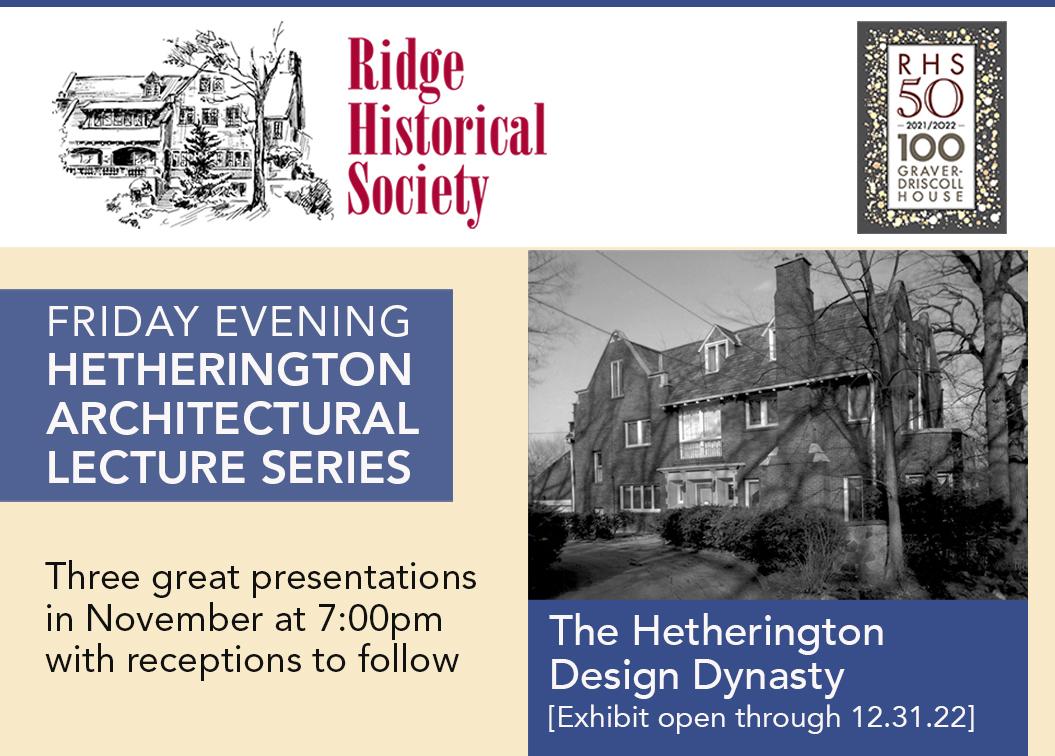
The Ridge Historical Society will offer a series of educational programs on Friday evenings in November as part of the current exhibit on architect John Todd Hetherington and his descendants.
The Friday Evening Hetherington Architectural Lecture Series will lead off on November 4th at 7:00 p.m. with “Discover the History of Your Chicago House,” presented by RHS researcher Tim Blackburn. Attendees will learn how to research their pre-1955 homes located within the city limits to learn about the architecture, construction, owners, and inhabitants through the years. Public records such as building permits and Sanborn maps will be discussed, as well as research methods to learn about local history.
Tim Blackburn is a member of the RHS Historic Buildings Committee and assists members of the community with research on their homes and local history questions. He has completed extensive research on his own Hetherington-designed home and many other homes in the area, and was a major contributor to the current exhibit, including designing, photographing, and installing the Google Earth Tour of the “Hetheringtons on the Ridge.” He works in technology as a Vice President for a global marketing and data company.
This first event is sure to fill up because many people in this community are interested in the history of their houses. Those who wish to secure a spot are advised to make a reservation – see the information below.
The second program, on November 11th at 7:00 p.m., will feature photographer Mati Maldre presenting “Photographing Architecture and a View Camera Demonstration.” Using his Deardorff 4×5/5×7 view camera, Maldre blends architectural photographic documentation with interpretive expression to create appreciation and understanding of our man-made environment. His work is both science and art.
On November 18th at 7:00 pm, the final program, “John Todd Hetherington: From Lake Forest to Geneva,” will be presented by Michael Lambert, architect, historian, and preservationist. Hetherington’s career has been long overlooked. He was architect to some of Chicago’s most prominent residents, and designed some of the first estate homes in Lake Forest, Illinois. He was commissioned to design three homes that initiated the transformation of Geneva’s Batavia Road neighborhood.
The programs will be held at RHS, 10621 South Seeley Avenue. The cost for each program is $10 for RHS members and $15 for non-members. A reception will follow each program. Parking is on Seeley Avenue. Entrance to the house is wheel-chair accessible but the restroom facilities are not.
Reservations are advised, and can be made through Eventbrite at https://www.eventbrite.com/e/hetherington-architectural-lecture-series-tickets-443264575277.
For questions, contact RHS at 773-881-1675 or ridgehistory@hotmail.com.
The Ridge Historical Society
Halloween on the Ridge – Part 2: Halloween Customs One Hundred Years Ago
By Carol Flynn
The first post covered the origin of Halloween as a Celtic custom brought over to the U.S. by the Irish immigrants in the 1800s.
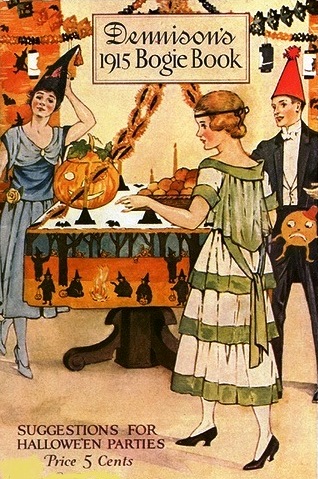
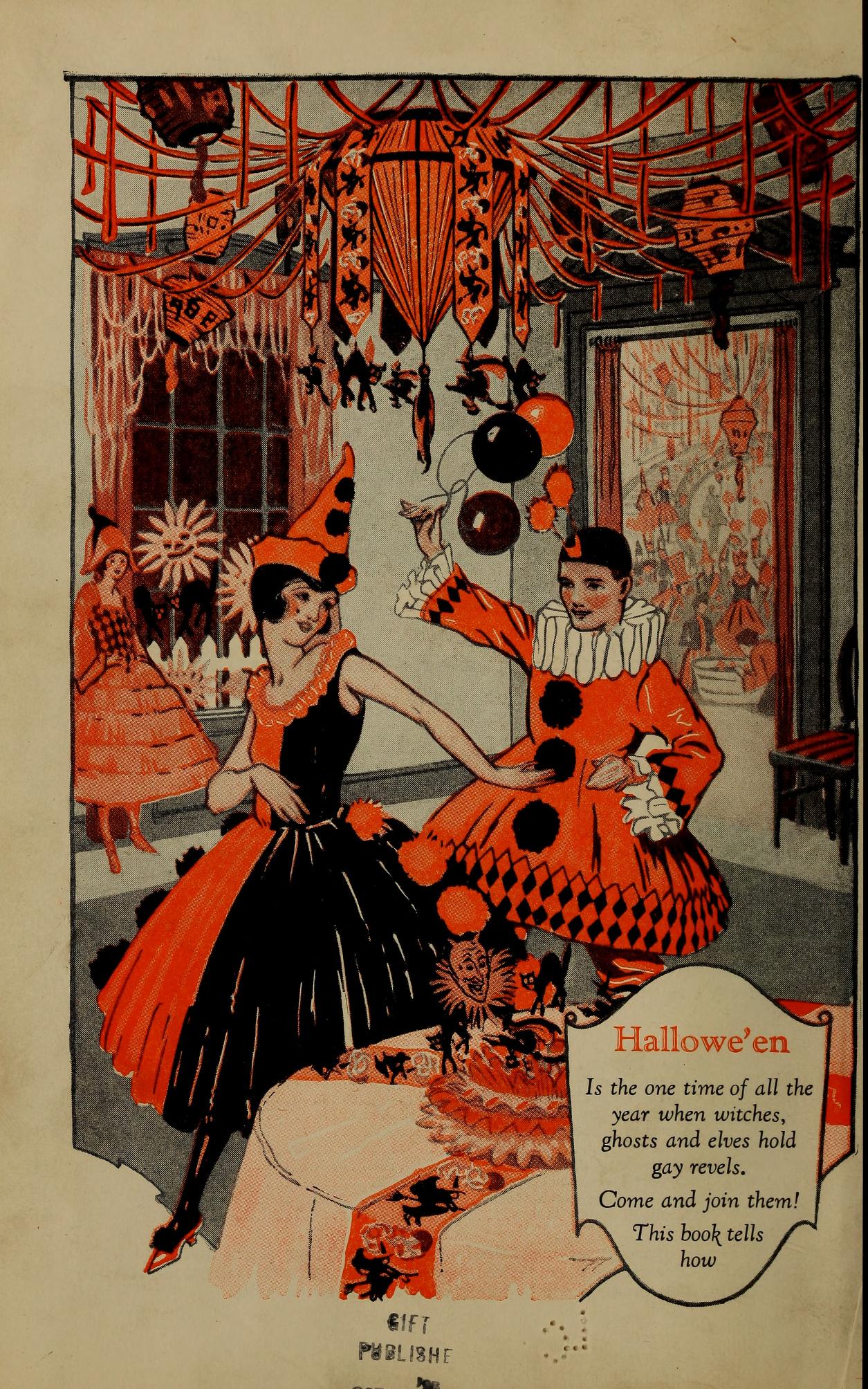
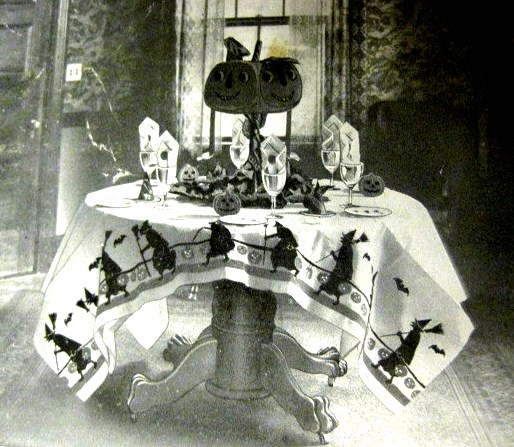
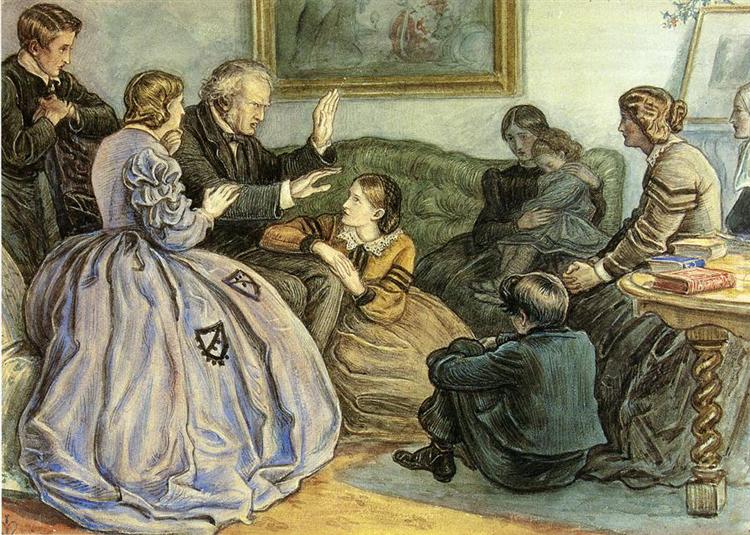
By 1900, Halloween had lost most of its superstitious and religious overtones, and parties were the most common way to celebrate the day. My great-grandparents hosted a Halloween party at their house on 110th and Homewood Avenue in 1915. This is what a party might have looked like back then.
Prior to 1900, decorations relied on natural items. The Irish Americans adapted their customs to use the native plants they found in the U.S., like corn stalks, to symbolize the harvest. Jack-o-lanterns were still customary, but now they were made from native pumpkins. One Irishman who moved to the States about twenty years ago commented that it was much easier to carve pumpkins than to carve turnips.
In the early 1900s, several companies, notably Dennison Manufacturing Company, began making paper products such as heavy cardboard die cuts; paper plates, cups, and napkins; crepe paper streamers, and the like.
Decorations became much more sophisticated and commercial. Dennison published “Halloween Bogie” books from 1909 through 1934 that were catalogs that also included ideas, illustrations and instructions for decorations and parties.
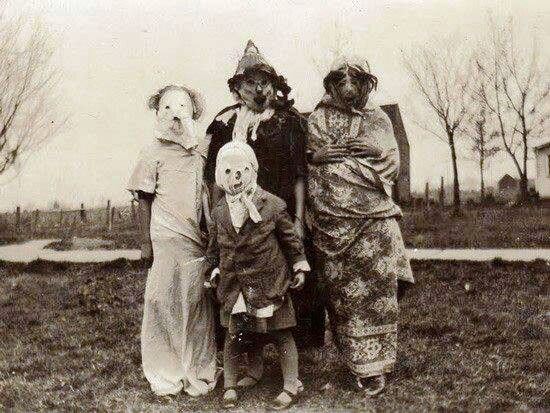
Costumes were mostly still homemade affairs, although there were some costume companies, but their goods were expensive. The costumes presented in the Bogie books were sophisticated but many photos from the early 1900s show homemade costumes that were, quite frankly, creepy, by today’s standards.
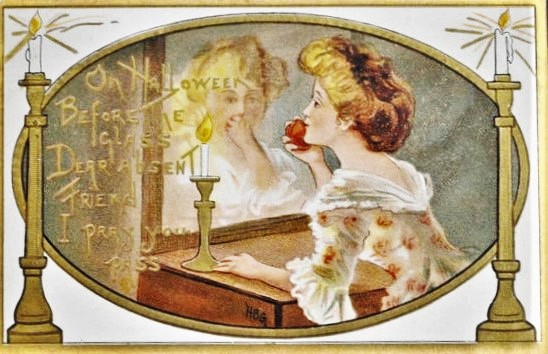
In addition to some of the traditional games like bobbing for apples, fortune telling and other divination games were popular. Variations of a “mirror test” were mentioned often in articles of the day. One version called for a girl to sit before a mirror at midnight on Halloween, combing her hair and eating an apple, in order to see the face of her true love reflected in the glass.
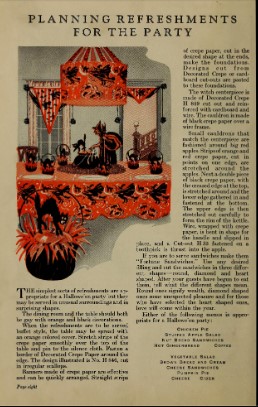
Food suggestions included a sit-down supper with items like cream of celery soup, brown bread sandwiches and Waldorf salad, to a buffet including a variety of finger sandwiches (cucumber, salmon, jelly), stuffed celery, and orange sherbet. Gingerbread was popular in any form – cookies, cake with marshmallow frosting.
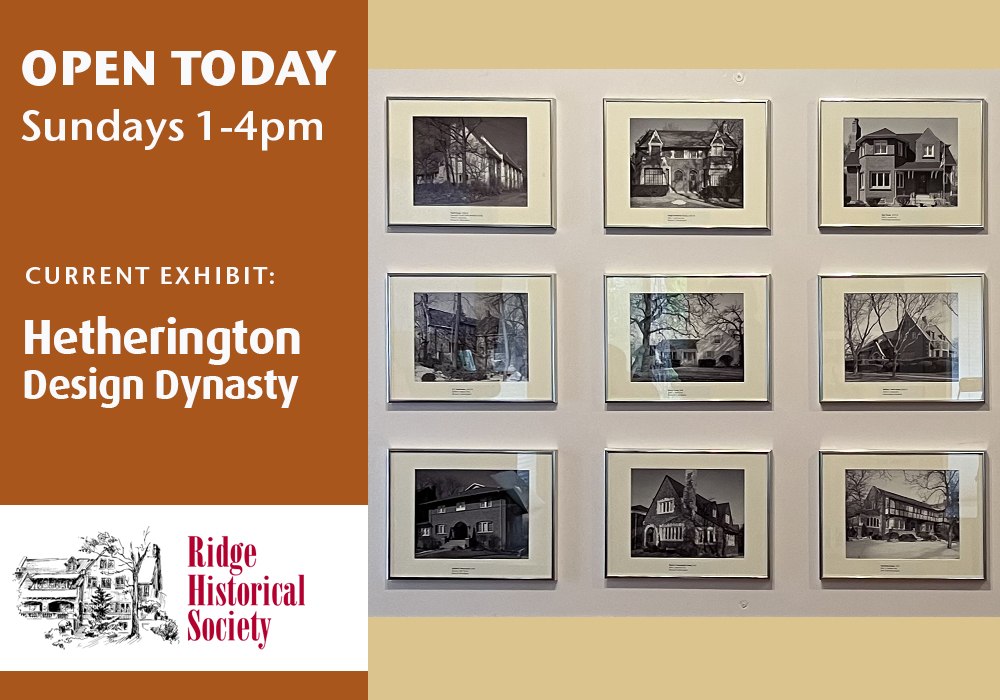
The Ridge Historical society will be open today from 1:00 to 4:00 p.m., free admission, address is 10621 S. Seeley Avenue.
The current exhibit is Hetherington Design Dynasty, featuring the work of architect John Todd Hetherington and his descendants. Also featured is the artwork of Mildred Lyon Hetherington, who married John Todd's son Murrary. Mildred was known for her portraits and illustrations of children's publications.
The Ridge Historical Society
Halloween on the Ridge – Part 1
By Carol Flynn
A 19th Ward friend recently posted pictures of people in hand-made, grotesque Halloween costumes, the kind they wore in the early 1900s. This led to questions about how Halloween was celebrated back then, and I promised to share some history on the topic.
I rarely write in the first-person narrative style, but this story started with a personal discovery. Seven years ago, I was researching for a historical topic to write about for Halloween. As I looked through the Morgan Park Post newspapers from the early 1900s, I found the usual entries about school groups having parties and the like, but nothing was catching my fancy.
Then I found this announcement in the November 6, 1915, Post: “Mr. and Mrs. Thos. Cummings entertained at a Hallowe’en party last Saturday evening at their home on Homewood Ave.“
My “A-ha!” moment had arrived. Thomas and Johanna Cummings were my great grandparents. They lived on Homewood Avenue just north of the 111th Street train station, but their house was demolished in the 1960s for one of the “modern” apartments now there.
So great-grandpa and great-grandma had a Halloween party more than one hundred years ago. That got me to wondering – what would Halloween have been like back then? Who was invited? (Surely my grandparents were there, they had lived in a cottage on 108th Street and Longwood Drive, although my mother wouldn’t be born for a few more years.) What did they serve for refreshments? What was the entertainment?
I started looking into this, and wrote an article for the Beverly Area Planning Association’s Villager newspaper, so some of this appeared in print before.
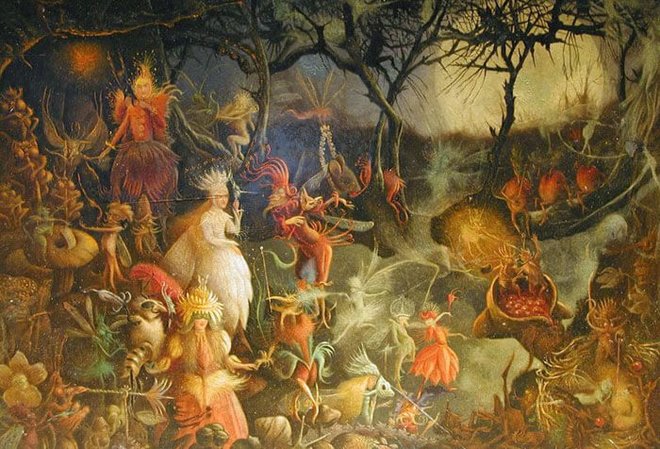
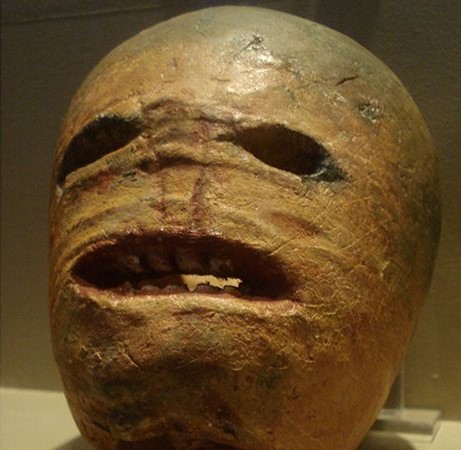
Halloween was an Irish invention, going back thousands of years, to pagan harvest festivals in Ireland and other Celtic lands. Believing that supernatural beings and ghosts could more easily cross over into the physical world at this time of year, people dressed like demons to escape notice by real demons, and left gifts of food for the fairies in the hope the fairies would not play tricks on them. They placed gourds and turnips carved with grotesque faces, and lit from inside with candles, on windowsills to scare away harmful spirits.
These pagan practices became intertwined with the concepts of Christianity when the Feast of All Souls and the Feast of All Saints were established. The millions of Irish immigrating to the U.S. in the 1800s, including my ancestors, brought a mixture of the old and the new ideas with them.
The British Protestants who were the predominate population of the U.S., and the Ridge up to the 1950s or so, did not celebrate Halloween. In fact, in Victorian England, the time of year for ghost stories was Christmastime, hence the most famous fictional ghost story of all time, A Christmas Carol by Charles Dickens, first published in 1843.
The U.S. citizenry adopted the customs brought over by their new Irish American neighbors, and as usual, adapted them in unique “American” ways.
Halloween lost most of its superstitious and religious overtones in the U.S. by the beginning of the 20th century. By 1915, parties were the most common way to celebrate, and usually included decorations, costumes, games, and refreshments.
Next post: U.S. Halloween customs by 1915.
The Ridge Historical Society
Announcement for Upcoming Programs
As part of the Hetherington Design Dynasty Exhibit, a series of in-person programs will be offered at RHS, located at 10621 S. Seeley Avenue in Chicago.
Friday Evening Hetherington
Architectural Lecture Series
$10/members, $15/non-members for each lecture
Reservations are recommended
A reception will follow each lecture.
Friday, November 4, 7:00 pm
Tim Blackburn, Researcher, “Discover the History of Your Chicago House”
You will learn how to research the history of your Chicago home, including the architecture, construction, inhabitants, and owners. You’ll develop research methods that will help you gain a new understanding and appreciation for your home’s history. The research methods covered will be useful for anyone researching a building older than 1955 in Chicago. You’ll learn about building permits, local history, Chicago street renumbering, Sanborn maps, and more.
Friday, November 11, 7:00 pm
Mati Maldre, Photographer, “Photographing Architecture and a View Camera Demonstration”
In my architectural photographic documentation, I strive to blend fundamental documentation and the interpretive expression that reveals new appreciation and understanding of our man-made environment. I attempt to couple a firm respect for the subject’s integrity and the architect’s intent with a desire to produce an accurate photographic image with my Deardorff 4×5/5×7 view camera. My photos, like the buildings they represent, are both art and science, both personal and practical.
Friday, November 18, 7:00 pm
Michael Lambert, Architect, Historian, & Preservationist, “John Todd Hetherington: From Lake Forest to Geneva”
With a career long-overlooked, John Todd Hetherington was, at the close of the 19th century, the architect to some of Chicago’s most prominent residents. Hetherington, along with other leading residential and landscape architects of his era, designed some of the first, estate homes in Lake Forest, Illinois. At the dawn of the 20th century (and on the heels of Colonel George Fabyan), longtime friends E. F. Dorton and T. S. Fauntleroy moved from the North Shore to the banks of the Fox River and commissioned Hetherington to design three homes that initiated the transformation of Geneva’s Batavia Road neighborhood.
Register through Eventbrite at: https://www.eventbrite.com/e/hetherington-architectural-lecture-series-tickets-443264575277
For any questions, contact RHS at ridgehistory@hotmail.com or 773/881-1675.
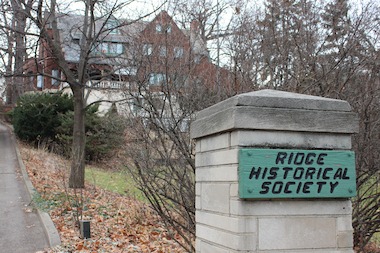
The Ridge Historical Society will be open this Saturday and Sunday, October 15 and 16, as part of Open House Chicago. The address is 10621 S. Seeley Avenue, and the hours are 10 a.m. to 5 p.m. both days.
An RHS theme is that "every house has a history." Today begins the series on the history of the Graver-Driscoll House, RHS headquarters.
The Ridge Historical Society
The History of the Graver-Driscoll House – Part 1: Purchase of the land and its location
By Carol Flynn, research contributors Linda Lamberty, RHS Historian, and Tim Blackburn
The story of the Graver-Driscoll House began on Valentine’s Day, February 14, 1921, the day that Herbert Spencer Graver, 40 years old, and his wife, Anna Thorne Graver, 36, purchased the property at 10616 S. Longwood Drive from Ashleigh C. Halliwell.
The land, located in the William Baker Subdivision, was 100 by 269 feet in size and cost $8,500. Baker was an early owner/developer of the land, which was first put up for public domain sale by the U.S. government in 1834.
Halliwell and his wife, Alice, lived next door to the south at 10628 S. Longwood (originally called Washington) where their large white house, Woodmont, built in 1896, still stands. Halliwell was the president of the Halliwell and Baum Company which produced the Chicago Live Stock World daily newspaper.
Graver’s newly acquired property was located on the eastern side of the Blue Island Ridge. The Blue Island was a moraine, a tall pile of land, or ridge, that formed when a sheet of ice called a glacier pushed along debris (boulders, clay, dirt, sand, and gravel) as the glacier extended into the area from the north during the last ice age about 25,000 years ago.
Later, as the climate warmed, the glacier melted, creating a vast lake that covered much of the Chicago area. Geologists call this prehistoric body of water Lake Chicago. The small moraine, separated from other moraines, rose above the surface of Lake Chicago as an island.
Lake Chicago drained off in stages to create present-day Lake Michigan. At one time, the western shoreline of the lake stopped at Vincennes Avenue on the eastern side of the Blue Island moraine. For thousands of years, waves lapped against that side of the island, eroding the land into a steep bluff. Today, Longwood Drive runs along the base of that bluff.
Eventually, after the water drained off to the east, this isolated moraine rose above the prairie as the highest elevation of land in the Chicago area. The highest spot, historically at 92nd Street and Western Avenue, was almost 100 feet higher than ground level in “downtown” Chicago.
This land mass was visible to the soldiers and others at Fort Dearborn established in 1803 and rebuilt in 1816 by the U.S. government at the mouth of the Chicago River about twelve miles to the northeast. They are attributed with naming the land mass “Blue Island” in the 1820s.
A letter dated February 4, 1834, was printed in one of the newspapers of the day, the Chicago Democrat, explaining how the name originated.
The letter stated: “Nearly south from this town, and twelve miles distant is Blue Island, situated in the midst of an ocean of prairie. The name is peculiarly appropriate. It is a table of land about six miles in length, of an oval form, rising suddenly some 30-40 feet high out of an immense plain that surrounds it on every side. The sides and slopes of the table as well as the table itself is covered with a handsome growth of timber forming a belt surrounding about 4,000 to 5,000 acres of prairie, except a small opening in the south. It is uninhabited and when we visited it we pronounced it a vast vegetable solitude. Blue Island, when viewed from a distance appears an azure mist of vapor, hence… ‘Blue Island.’”
The Gravers turned to architect John Todd Hetherington to design a house for this dramatic location.
The next posts will cover Hetherington and the house, and the history of the Gravers.
Picture: The Graver-Driscoll House is built into the dramatic setting of the steep bluff of the Blue Island Ridge on Longwood Drive.
The Ridge Historical Society
Friday Evening Hetherington Architectural Lecture Series
The second program that will be part of the RHS Friday Evening Hetherington Architectural Lecture Series will be held on Friday, November 11, at 7:00 pm. Featured will be Mati Maldre presenting “Photographing Architecture and a View Camera Demonstration.”
Mati is the chair of the RHS Historic Buildings Committee. He is an Emeritus Professor of Art/Photography at Chicago State University. His photographs have been widely published, collected, and exhibited in significant organizations such as The Art Institute of Chicago and The International Venice Architecture Biennial. He is the co-author and photographer for Walter Burley Griffin in America and The Chicago Bungalow, and his photographs are featured in the publication The Griffins in Australia and India.
Mati owns a historic home in Beverly designed by another famous architect, Walter Burley Griffin. He currently has an online exhibit on Griffin’s architecture at https://www.griffinsociety.org/mati-maldre-exhibition/?fbclid=IwAR0Js0mCsipfSweu-_EKpto2iHsrzesjNovEgXh2qchqhV9YCxMgHEUNkSo
Mati’s statement for the RHS program reads: “In my architectural photographic documentation, I strive to blend fundamental documentation and the interpretive expression that reveals new appreciation and understanding of our man-made environment. I attempt to couple a firm respect for the subject’s integrity and the architect’s intent with a desire to produce an accurate photographic image with my Deardorff 4×5/5×7 view camera. My photos, like the buildings they represent, are both art and science, both personal and practical.”
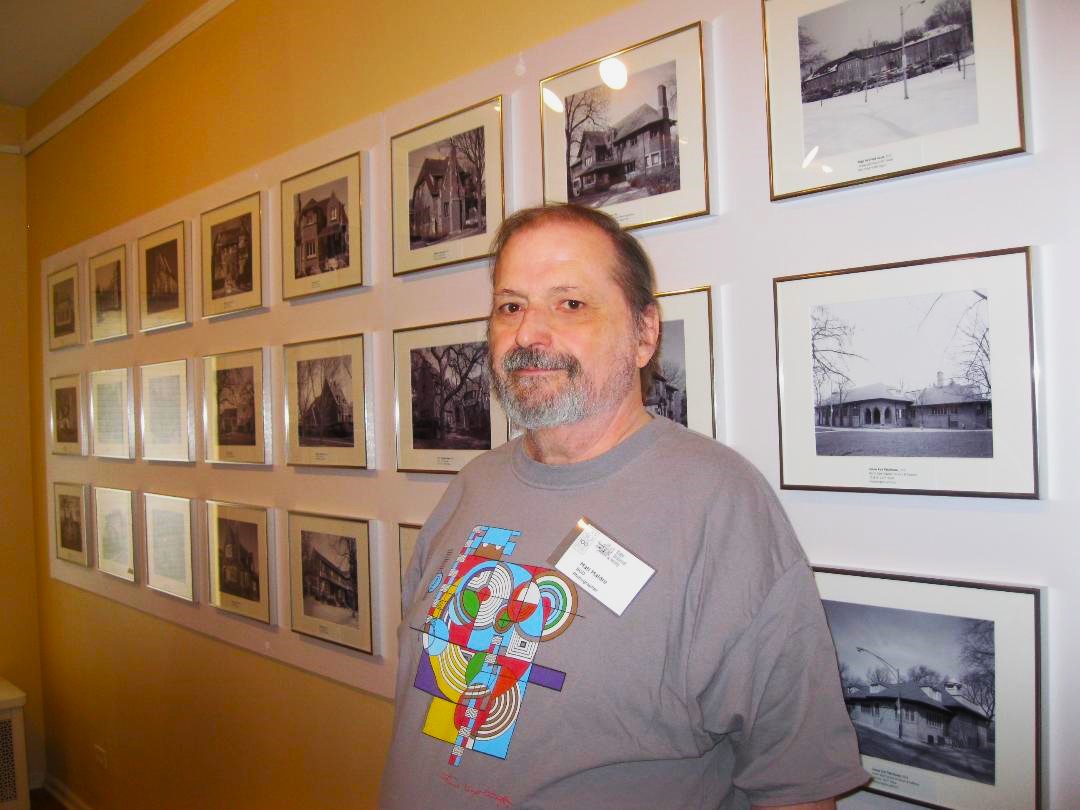
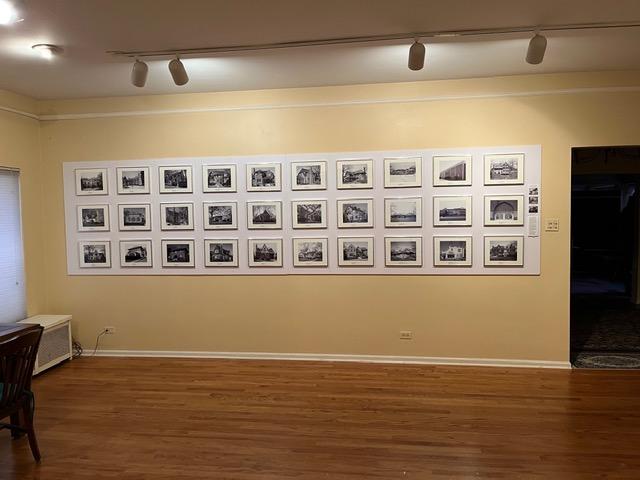
The RHS Friday evening programs in November are part of the Hetherington Design Dynasty exhibit currently being shown at RHS. The exhibit features three generations of architects from the Hetherington family who called Beverly home and designed upwards of one hundred buildings in the community. The exhibit will run through the end of the year. Mati’s photographs of some of the buildings the Hetheringtons designed cover one wall of the exhibit.
The other two programs in the series are:
Friday, November 4, 7:00 p.m., Tim Blackburn, Researcher, “Discover the History of Your Chicago House”
Friday, November 18, 7:00 p.mm, Michael Lambert, Architect, Historian, & Preservationist, “John Todd Hetherington: From Lake Forest to Geneva”
Information on these programs is highlighted in other posts.
The programs will be at RHS in the historic Graver-Driscoll House, located at 10621 S. Seeley Avenue, Chicago. The cost is $10/members, and $15/non-members for each lecture. A reception will follow each lecture.
For now, save the date. The link to register for the program on Eventbrite will be posted in coming days. Reservations are recommended.
The Ridge Historical Society is open right now! Tuesday afternoons from 1 to 4 p.m., free of charge, at 10621 S. Seeley Ave.
Our next event is this week-end, October 15 and 16. We'll be part of Open House Chicago and open both days from 10 am to 5 pm. Visitors will be able to view the current exhibit, Hetherington Design Dynasty, and get an outside tour of the grounds and house.
This week's Beverly Review has an article on the Graver-Driscoll House, owned by RHS and used as our headquarters.
https://www.beverlyreview.net/news/community_news/article_f73c9bc0-497d-11ed-9663-4f8ff3e3a1b9.html