
Explore the RHS Facebook Archives, a rich repository of local history written by Carol Flynn. For two decades, Carol brought a deeply dedicated voice to public education at RHS. Her role as Facebook administrator through mid-2025 naturally extended her prolific research into meticulously detailed articles, most notably her multi-part historical series posts. Today, Carol continues her local history writing for The Beverly Review and other outlets.
September 2024
The Beverly Area Arts Alliance's annual Beverly Art Walk is about community, and yesterday's 11th Art Walk proved once again that the Alliance has done so much to revitalize the "modern" Beverly/Morgan Park.
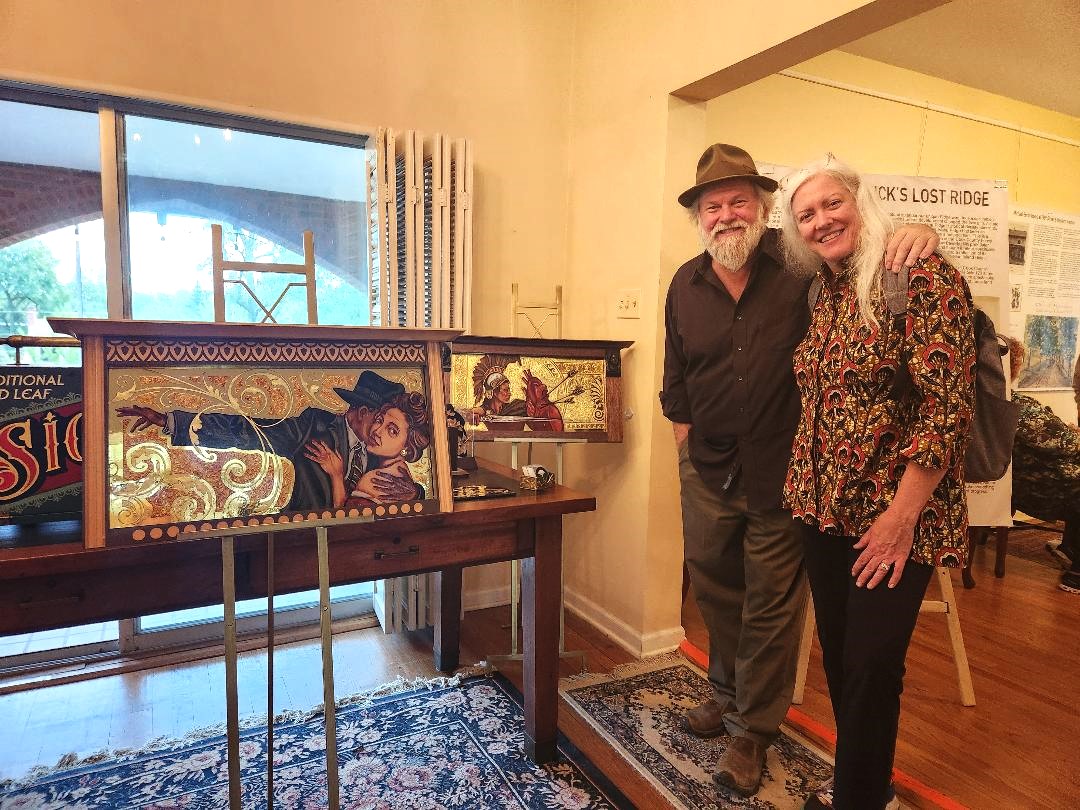
Events went on all over the neighborhood, and the Ridge Historical Society (RHS) was fortunate to have glass artist Sean Michael Felix "assigned" to us by Alliance leader Sal Campbell.
Sal always does a great job of matching artists with venues, and this is a perfect example – an artist who uses old-world processes to create beautiful images on glass, using etching, paints, gold leaf and other techniques, matched up with the one place in the community you are able, even encouraged, to be "old school" and think about the past!
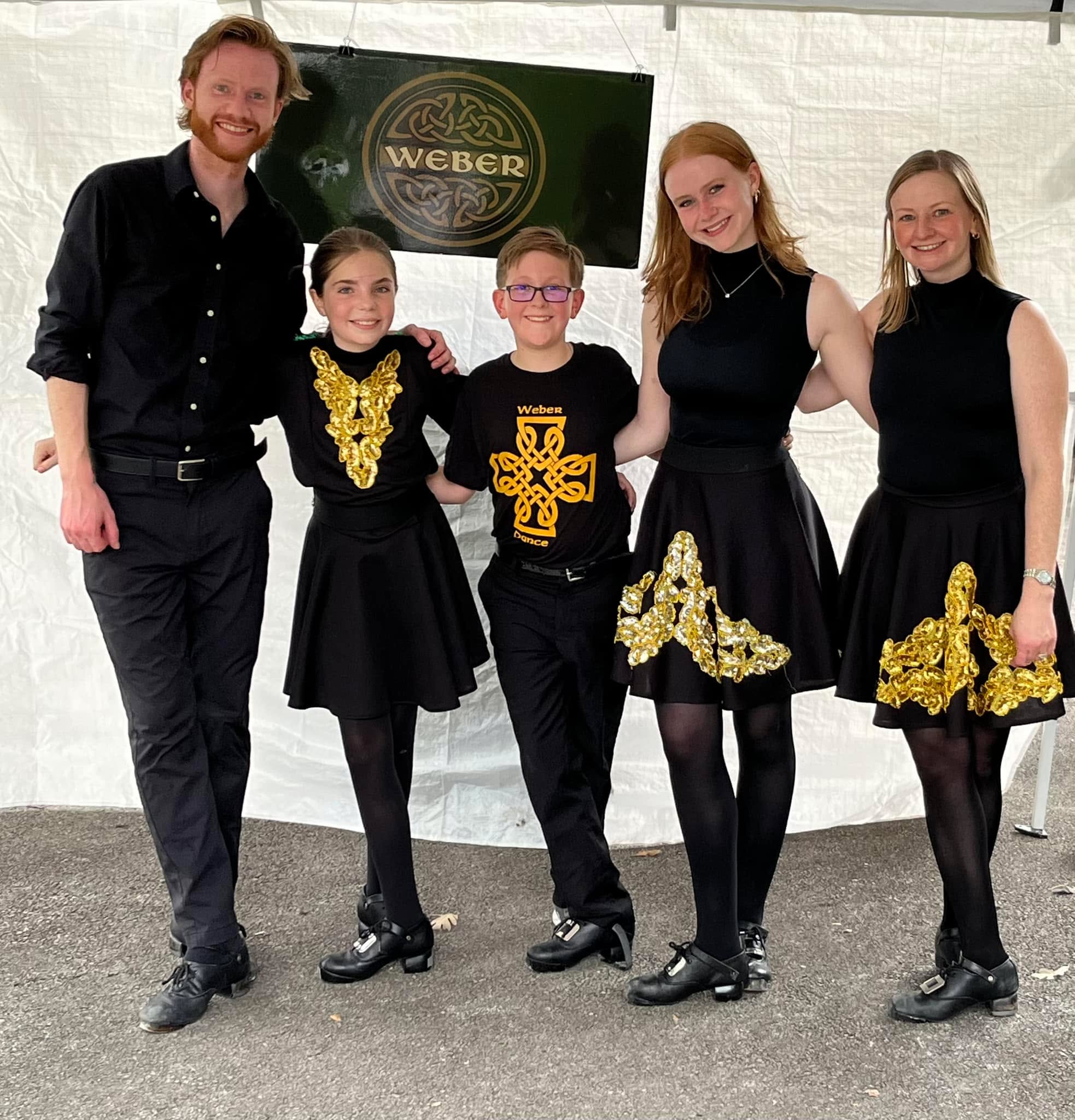
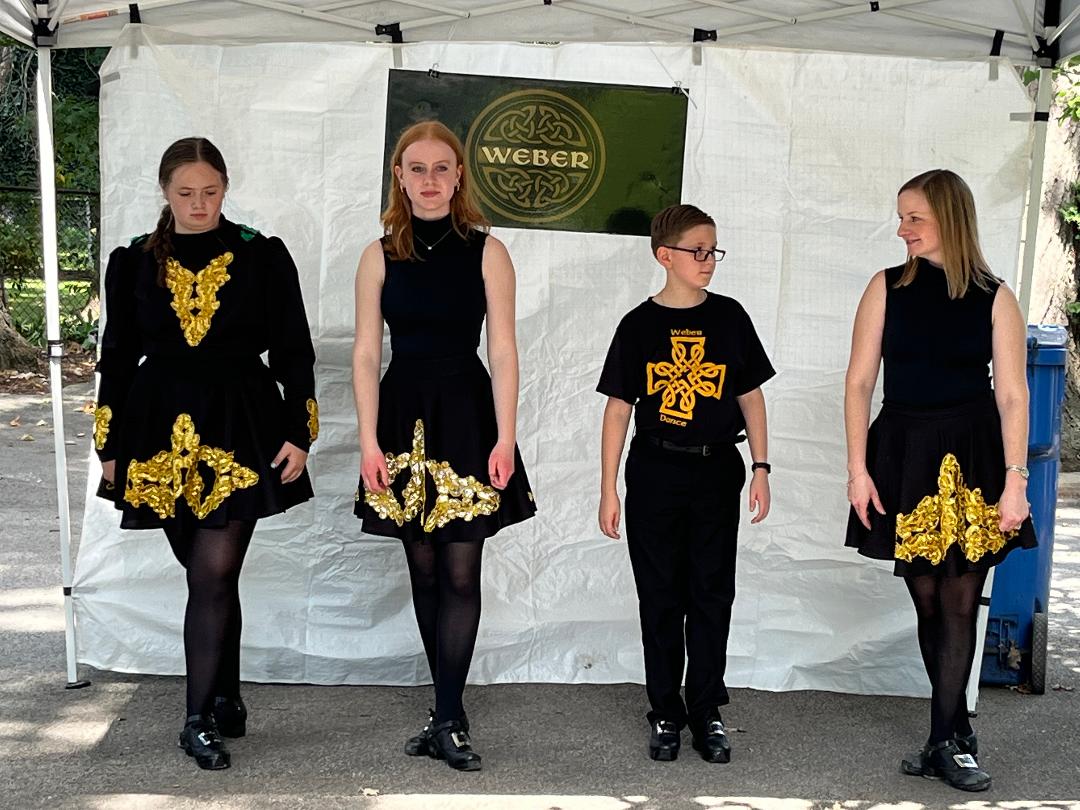
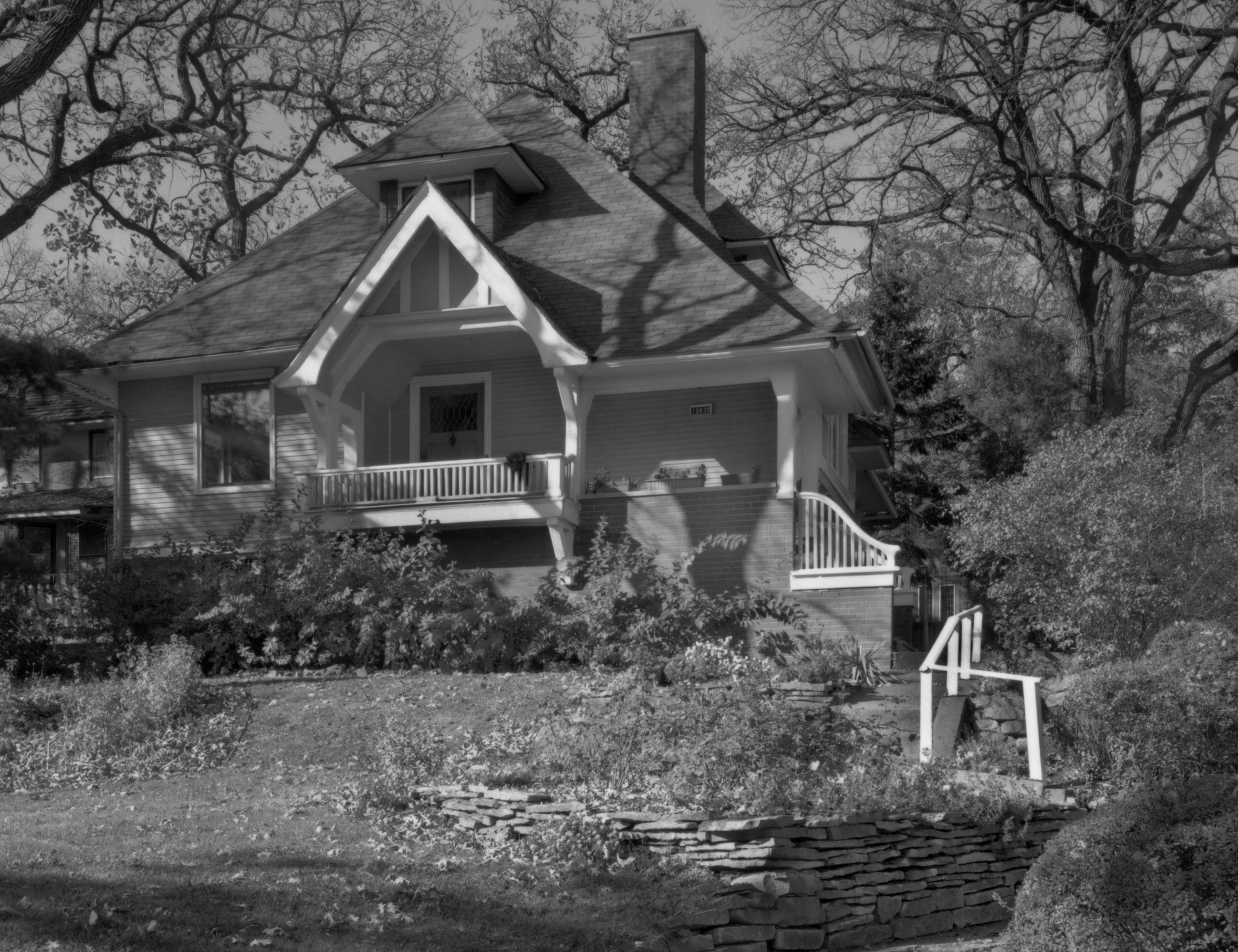
RHS also had its own Mati Maldre, photographer and RHS Board member, with a display of his award-winning architectural photos of buildings in the community designed by architect H. H. Waterman. The day was rounded out with entertainment by Weber Irish Dance company, a South Side Irish institution for 60 years!
Plus, a new term has entered the community's lexicon – several people said yesterday they were out and about "art walking." That's how language evolves.
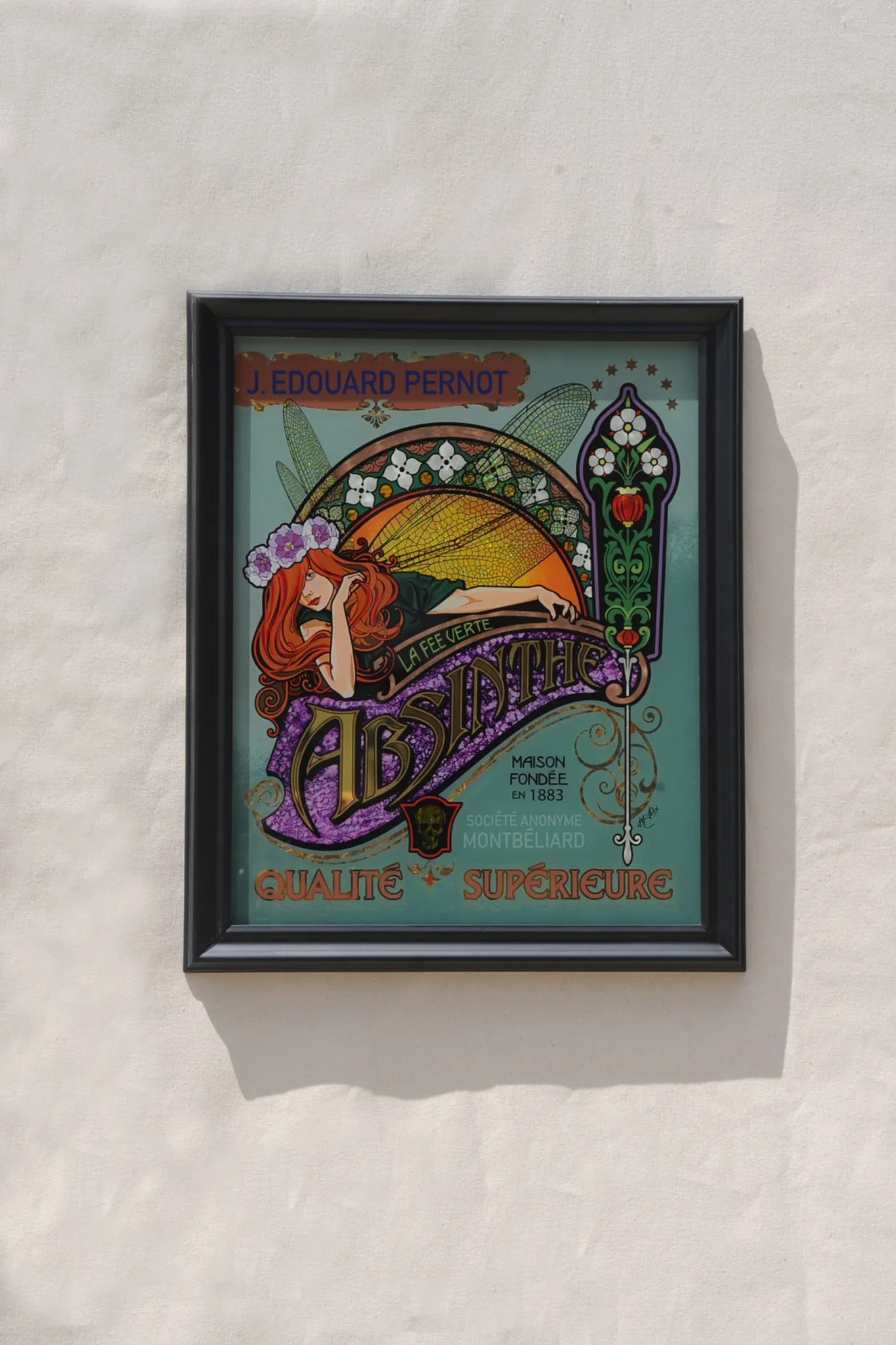
Here is a picture of Sean and Sal together yesterday at RHS, with just some of Sean's wonderful work.
Now RHS is on to preparation of the new exhibit, "Harry Hale Waterman, Architect: Unique in Any Style," which will premiere for Open House Chicago on October 19 – 20.
The Ridge Historical Society
More on the Beverly Art Walk – Irish Dancers
By Carol Flynn
Tomorrow, Saturday, September 28th, will be the Beverly Art Walk. The Ridge Historical Society (RHS) has a spectacular day planned for the public – it will be entertaining and informative, with a true "historical" flavor that will not be captured anywhere else!
In the previous post, the artists who will be at RHS from 12 p.m. to 5 p.m. were introduced – Photographer Mati Maldre, and glass artist Sean Michael Felix.
Dancing and musical acts will also go on all around the neighborhood, but the only place visitors will be able to experience traditional Irish dancing will be at RHS.
The Weber Irish Dance company will appear at RHS from 1:30 p.m. to 3:30 p.m., with regular, short performances every 10 minutes.
Weber Irish Dance has been a South Side Chicago presence for 60 years. Many people associate Irish dancing with St. Patrick's Day, but folk customs from all cultures should be shared and celebrated throughout the year.
RHS thanks Weber Irish Dance for participating in our event!
RHS is located at 10621 S. Seeley Avenue. Park on Seeley and walk up the driveway to the house.
The Ridge Historical Society
Beverly Art Walk on Saturday
By Carol Flynn
Everyone is gearing up for the 11th Beverly Art Walk on Saturday, Sept. 28, 2024! Events will be set up all around Beverly and Morgan Park.
The Ridge Historical Society will be open from 12 noon to 5 p.m. that day, and featured will be:
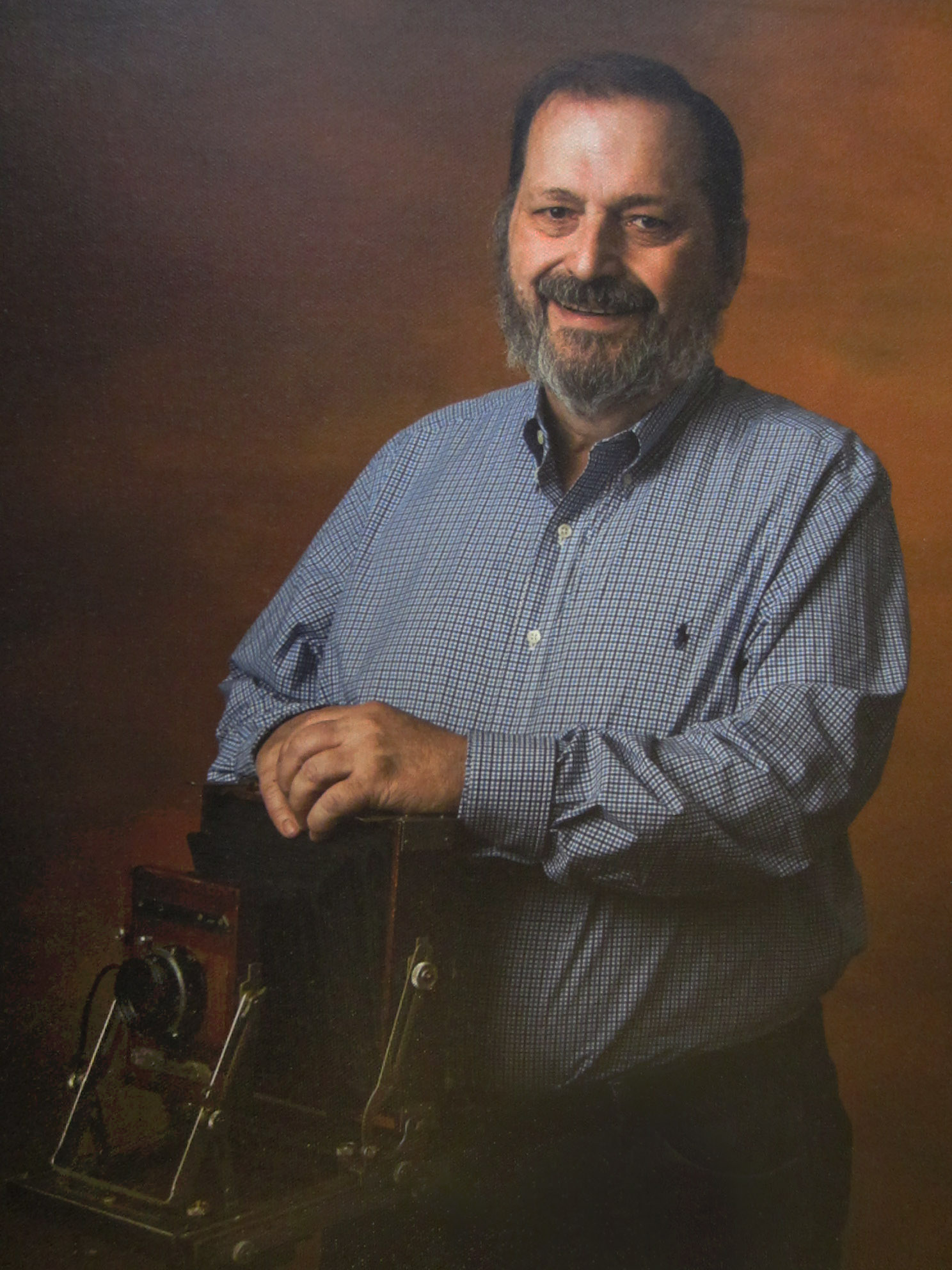
– Photographer Mati Maldre's collection of photographs of houses and buildings designed by architect H. H. Waterman. Mati will be there in person to demonstrate his Deardorff 4×5/5×7 view camera, which he used to take these photos.
Mati said, "The large format 4×5, 5×7 or 8×10 view cameras are the professional standard for architectural photography because of the clarity of image afforded by the use of large positive transparencies or negatives, utilizing less magnification when printing."
He would know – Mati is a retired Professor of Art/Photography from Chicago State University and has an extensive and impressive bio. He taught photography at the Beverly Arts Center for 35 years. He is on the RHS Board of Directors and chairs the Historic Buildings Committee.
This is an introduction to the new exhibit that RHS is mounting, "Harry Hale Waterman, Architect: Unique in Any Style," which will open for Open House Chicago on October 19 and 20.
In the meantime, visitors can also still catch the current exhibit, "Louise Barwick's Lost Ridge," which shows lovely water color paintings by Miss Barwick, an art teacher in the neighborhood, from around 1900.
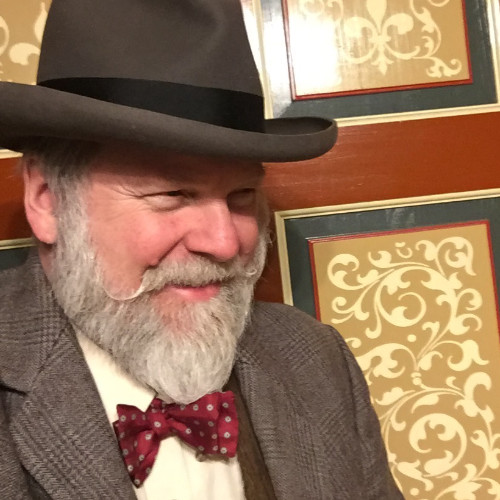
– Also at RHS for the Beverly Art Walk will be glass artist Sean Michael Felix, the owner of Illumination Art & Design in Humboldt Park.
Felix creates unique hand crafted architectural art glass, glass signs, and stained glass using 19th century techniques. For the Beverly Art Walk he will exhibit samples of his beautiful decorative work and demonstrate the nearly lost art of applying gold leaf to glass the way it was done by artisans in the Victorian Era.
RHS is located at 10621 S. Seeley Ave., in Chicago, and may be contacted at 773-881-1675 or ridgehistory@hotmail.com.
The Ridge Historical Society
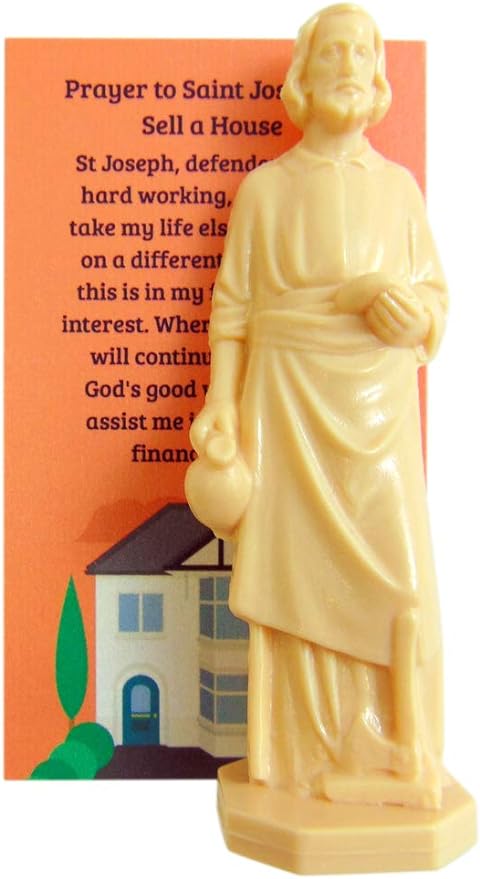
St. Joseph Statues
By Carol Flynn
A homeowner in North Beverly recently told the story that when they first bought their home about 20 years ago, he was digging in the garden and came across what he first thought was a piece of bone but turned out to be a statue, buried upside down.
He was a little startled by the discovery, but many people reading this probably recognized at once that this was a statue of St. Joseph. It’s common practice for homeowners to bury a statue of St. Joseph to aid them in selling their houses.
Where this custom started is not known with any certainty, but sometimes it is attributed to St. Teresa of Avila, a nun who lived in the 1500s. St. Teresa has having difficulty finding land for a new convent, so she and the other nuns buried medals of St Joseph to ask for his help. Soon, the perfect spot became available to them.
St. Joseph, of course, was the humble carpenter who took on the role of marrying Mary, the mother of Jesus, and becoming stepfather to Jesus, creating the Holy Family. He protected and provided for them and found new homes for them when needed.
He is the patron saint of families, fathers, workers, carpenters, emigrants, travelers, and house hunters.
Starting in the 1990s, it became a trend to bury a St. Joseph statue when trying to sell a house. There are no set rules for where and how to bury the statue. Front yard, back yard. By the road, by the for-sale sign, near a flower bed, three feet from the back of the house. Facing outward in the direction you want to move, facing the house, upside down, lying down face up. Wrapped in cloth or plastic or not.
Shoppers used to be able to go into religious goods shops and find an entire section with St. Joseph statues for sale. Most of those shops are gone, but the statues are readily available on Amazon now and go for around $7 for a basic while plastic statue.
Real estate agents used to buy the statues in bulk and give them to their clients to bury.
There are many testimonials from people who claim they were having a difficult time selling their house, then they planted a St. Joseph statue, and the house sold immediately.
This practice started with Catholics and spread to everyone. For the record, though, the Catholic Church does not condone this “superstition.” It’s advised that people pray to St. Joseph to ask for his help, and if a statue is to be involved, it should be kept in a place of honor in the house as a reminder to do this.
If a homeowner decides to bury a statue of St Joseph as a house-selling strategy, it is advised the statue be removed once the house is sold. Otherwise, the house will be resold and resold….
The homeowners who found the statue in North Beverly tossed it away, and they have lived there now for about 20 years.
But this does make one wonder … how many statues of St. Joseph are buried on the Ridge?
The Ridge Historical Society
Driscoll Family Visit
By Carol Flynn
The Ridge Historical Society (RHS) loves visits from the Ridge’s “historic families.”
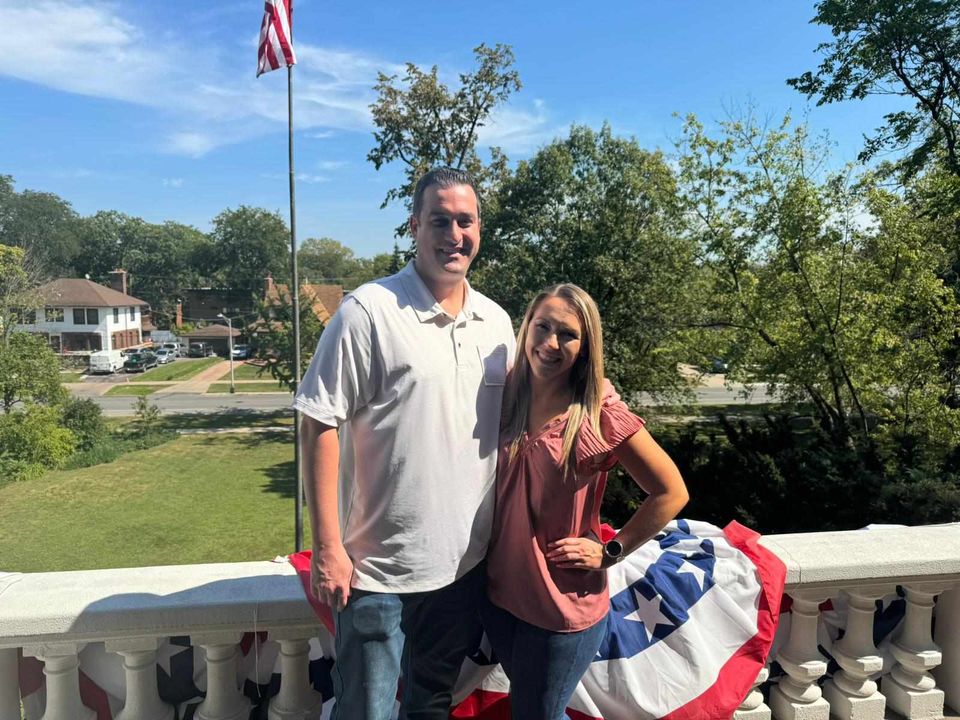
Last Friday, RHS welcomed Michael Driscoll and his girlfriend Tara Moran. RHS is located in the historic Graver-Driscoll House, and Michael is the grandson of James Driscoll, who donated the house to RHS in 1973.
Tara and Michael live in Orlando, Florida, and planned a visit to see her family in Chicago. Michael had told Tara that his grandfather was the Driscoll of the Graver-Driscoll House, and that he, Michael, had spent some time as a child in Chicago.
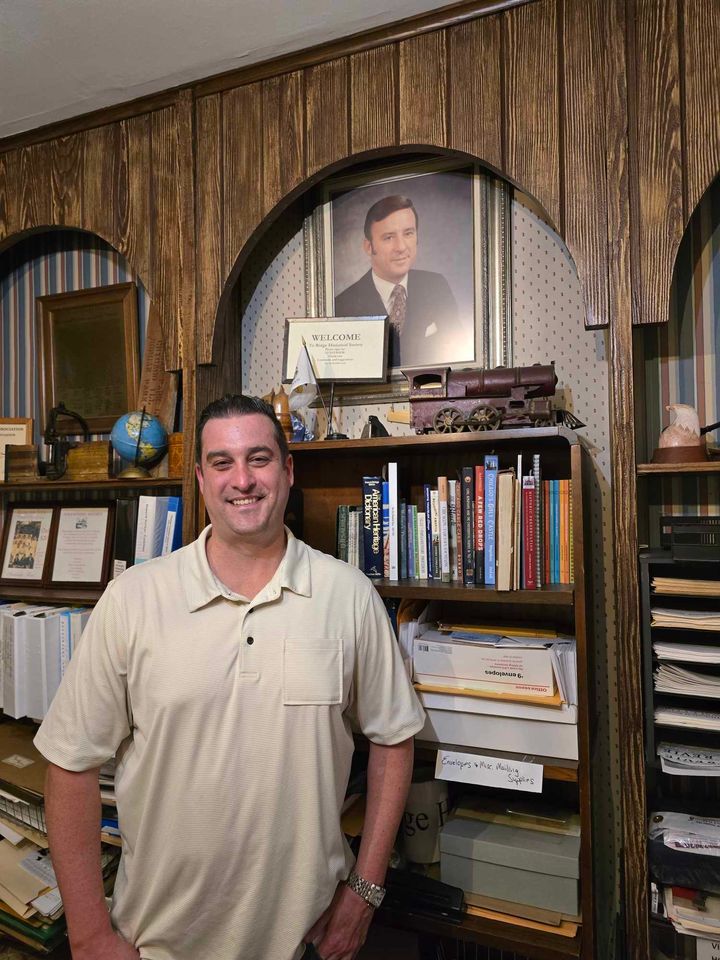
Tara asked RHS if she could arrange a visit to the house as a surprise for Michael. RHS was happy to oblige, and here are pictures of Michael and Tara at the house.
Perhaps the most important part of RHS’s history is acquiring the Graver House from James Driscoll.
In 1971, residents of Beverly and Morgan Park got together to discuss forming a historical society and museum, and the Ridge Historical Society, or RHS, was born.
Of course, a critical part of forming RHS was finding a place to house the museum and collection that was planned.
In 1972, Justin O’Toole was the President of the Standard Bank and the chairman of the RHS finance committee. Also on the board of the bank was James Driscoll, an electrical contractor, who announced he was selling his house at 10621 S. Seeley Avenue and moving his family to Florida.
O’Toole suggested to Driscoll that instead of selling the house, he donate it to RHS for the remaining mortgage, which was around $10,000. The house was valued at $150,000. Driscoll turned the Graver House over to RHS in January of 1973.
James Driscoll was born in 1930 in Chicago and served in the U.S. Marine Corps. He joined IBEW Local 134 in Chicago and established Driscoll Electric, which specialized in institutional and commercial projects, steel mills, and water treatment plants. Three generations of the family were part of the organization.
When James Driscoll died in Florida in 2008, it was noted that he shared “amusing perspectives on life with a wickedly Irish sense of humor.” He was described as a “visionary who lived life on his own terms and faced success and adversity with grace and dignity.” His remains were returned to Chicago and he is buried in St. Mary's Cemetery at 87th Street and Pulaski Road.
Michael’s and Tara’s visit reminds RHS and all of the Ridge of the very generous gift that James Driscoll gave to the community.
RHS is located at 10621 S. Seeley Ave., in Chicago. It is open to the public on Tuesdays and Sundays from 1 p.m. to 4 p.m. or by appointment. Contact at 773/881-1675 or ridgehistory@hotmail.com.
The Ridge History Society
Moving on from Barwick to Waterman
By Carol Flynn
Every fall, the Ridge Historical Society (RHS) looks forward to participating in the Beverly Art Walk and Open House Chicago. These events offer wonderful opportunities to present new exhibits showcasing the fascinating history of Beverly and Morgan Park to much wider audiences.
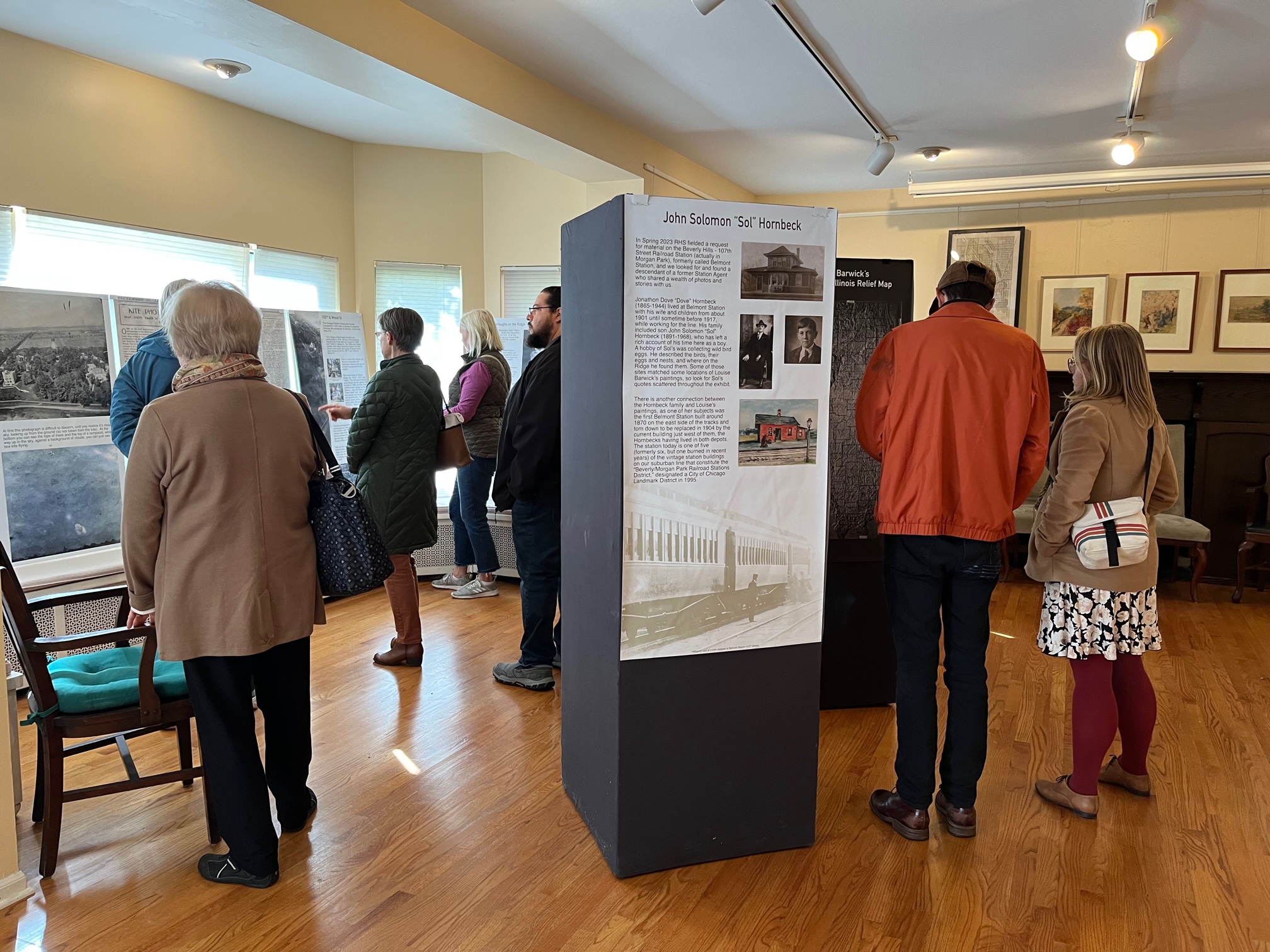
This post is a last call for viewing the current exhibit, “Louise Barwick’s Lost Ridge,” and the sub-exhibit, “Lost and Found.”
This current exhibit focuses on life on the Ridge from 1893 to 1905 as seen through the watercolor paintings of Louise Barwick, an artist and educator who lived on the Ridge. Another component of the exhibit includes aerial photography of Beverly taken by cameras attached to kites in 1899. A third component features historic images of buildings in Morgan Park taken in 1889, some of which remain and some of which are gone.
The exhibit may be viewed on Tuesdays and Sundays from 1:00 p.m. to 4:00 p.m. or by appointment. This exhibit will be phased out after Tuesday, September 24.
The first part of a new exhibit on architect Harry Hale Waterman, titled “Harry Hale Waterman, Architect: Unique in Any Style,” will then begin with the Beverly Area Art Walk on Saturday, September 28th, from 12 noon to 5:00 p.m.
Photographer and RHS Board member Mati Maldre will exhibit more than 20 photos he has taken of Beverly/Morgan Park buildings designed by Waterman.
Waterman (1869-1948) was a contemporary, indeed a good acquaintance, of Frank Lloyd Wright. But while Wright concentrated his work on the one style he became so well known for, the Prairie Style, Waterman designed in many different styles, putting his unique “spin” or interpretation on each. He designed dozens of houses and other buildings in Beverly and Morgan Park around 1900.
Mati Maldre is a retired Professor of Art/Photography from Chicago State University (CSU). He initiated the photography program and taught at CSU, as well as the Beverly Art Center for 35 years.
During this year’s Beverly Art Walk, Maldre will discuss the process of taking professional architectural photographs using his wooden Deardorff camera and demonstrate how view cameras operate and why they create such detailed and sharp photographs.
Also at RHS for the Beverly Art Walk on September 28 will be glass artist Sean Michael Felix, the owner of Illumination Art & Design in Humboldt Park.
Felix creates unique hand crafted architectural art glass, glass signs, and stained glass using 19th century techniques. For the Beverly Art Walk he will exhibit samples of his beautiful decorative work and demonstrate the nearly lost art of applying gold leaf to glass the way it was done by artisans in the Victorian Era.
RHS is located at 10621 S. Seeley Ave., in Chicago, and may be contacted at 773-881-1675 or ridgehistory@hotmail.com.
The complete Waterman exhibit will open in October in time for Open House Chicago on the weekend of October 19th and 20th.
Stay tuned to this page for an upcoming Facebook series on Waterman and his structures on the Ridge.
The Ridge Historical Society
Labor Day on the Ridge 100 Years Ago
By Carol Flynn
One hundred years ago, Labor Day occurred on Monday, September 1st.
It was a lovely day – in the mid-70s, partly cloudy, gentle shifting winds: a perfect day to wrap up the summer.
Throughout the Chicagoland area, the holiday was celebrated with activities. The mosquitos were particularly bad that year, especially in the forest preserves, but that did not stop thousands of people from going to the preserves for picnics and sporting events.
The Beverly Preserve at 87th Street and Western Avenue was one of the most popular of the forest preserves because it was the only one accessible by public transportation. Streetcars brought people as far as 87th Street and Ashland Ave., and they walked the rest of the way; or the Rock Island Railroad dropped them off at the 91st Street station, right outside of the forest preserve.
Around 1900, for about a decade, Morgan Park held large “Morgan Park Day” festivals on Labor Day.
In 1923 and 1924, a different kind of program went on, a “chautauqua.”
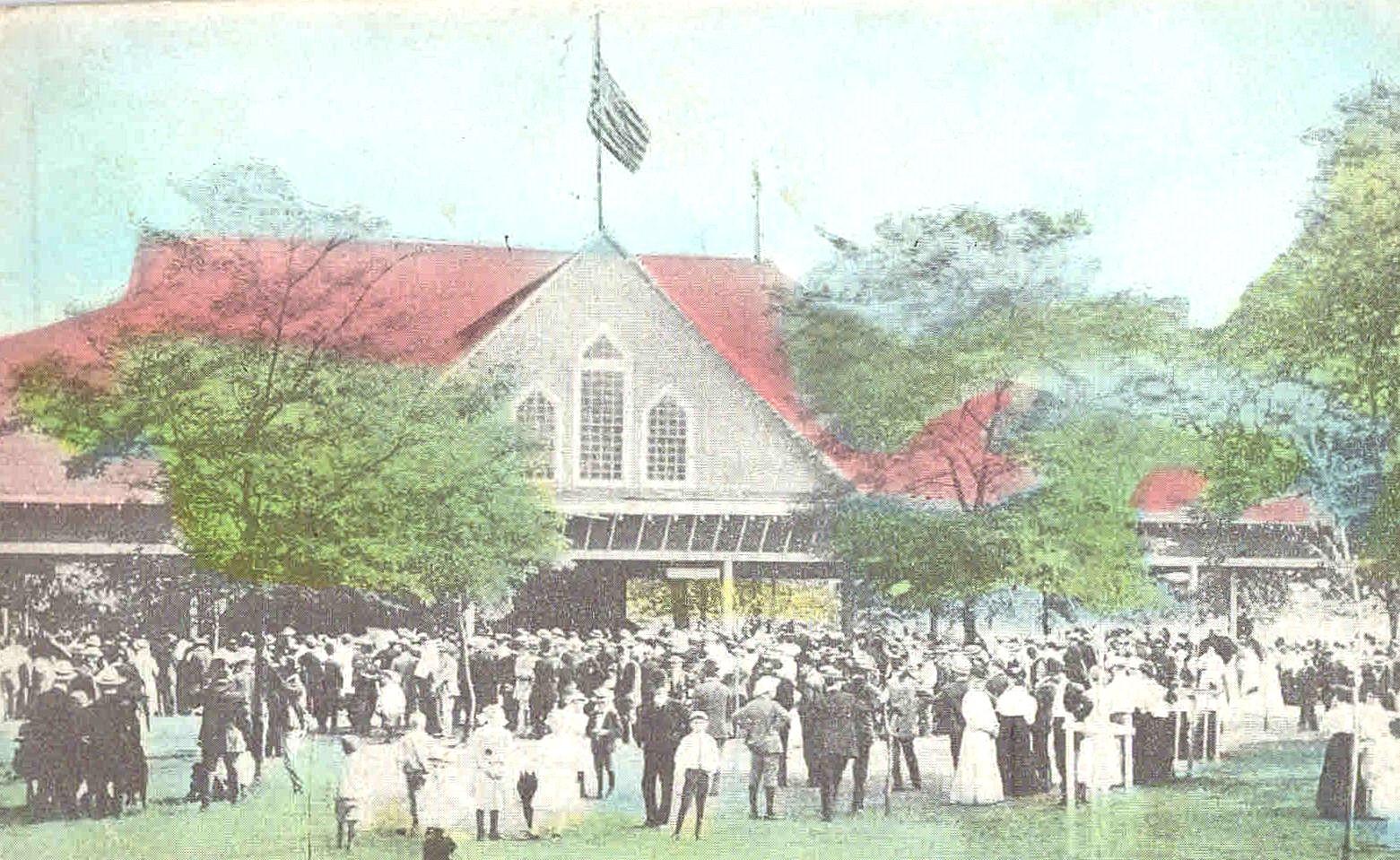
“Chautauqua” was an adult education and social movement of the late 1800s to the mid-1920s. The movement started in 1874 with an adult summer school for Sunday School teachers at an outside campsite on Chautauqua Lake in New York. That program started with Bible studies, but the idea spread to other schools and sites that started offering programs in many different topics.
Schools, and then communities and private organizers started offering chautauquas, as the programs became known, to the general public. The programs were usually a multi-day event, and featured a variety of speeches and educational talks, along with musical acts, dancers, art events, and other entertainment.
In Beverly/Morgan Park, the chautauqua that was offered from August 23 to September 3, 1924, was produced by the concert management firm of Stroup and Phillips, and was held on Hoyne Avenue from 110th to 111th Streets.
Roy Phillips, who lived in Morgan Park and had been the editor of the Weekly Review and Blue Island Sun Standard newspapers, had gone into the business with Harry Stroup in March of 1923. They represented a wide range of musical artists.
We don’t know the programs, speakers, or performers that Phillips presented that year, but one strong possibility was a performer introduced as the Indian princess “Watahwaso, a daughter of the Penobscot tribe of Indians,” that he featured at other programs.
Watahwaso appeared in costume and related “interesting Indian legends and sang beautiful songs of her own and other tribes.”
Another performer that Phillips promoted that year who likely performed in Morgan Park was James Goddard, a bass baritone of the Chicago Opera Company. He was described as “a great big he-man, strong as Hercules and handsome as Adonis,” with “a wonderful voice of great purity and strength.”
Chautauquas were very popular throughout the U.S. This image is from one held in Ohio.