Explore the RHS Facebook Archives, a rich repository of local history written by Carol Flynn. For two decades, Carol brought a deeply dedicated voice to public education at RHS. Her role as Facebook administrator through mid-2025 naturally extended her prolific research into meticulously detailed articles, most notably her multi-part historical series posts. Today, Carol continues her local history writing for The Beverly Review and other outlets.
Black History Month
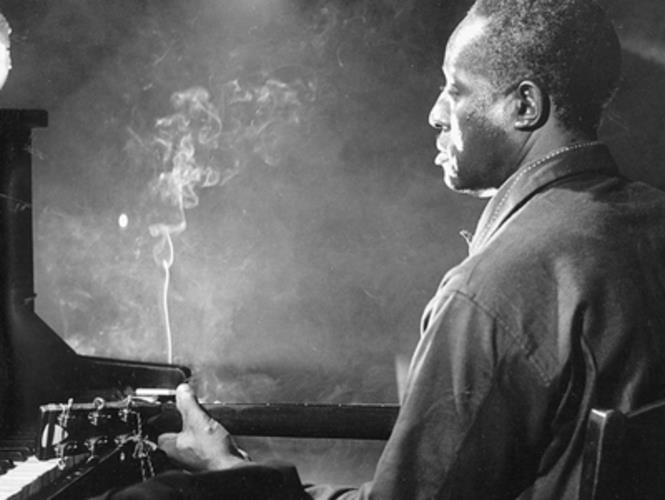
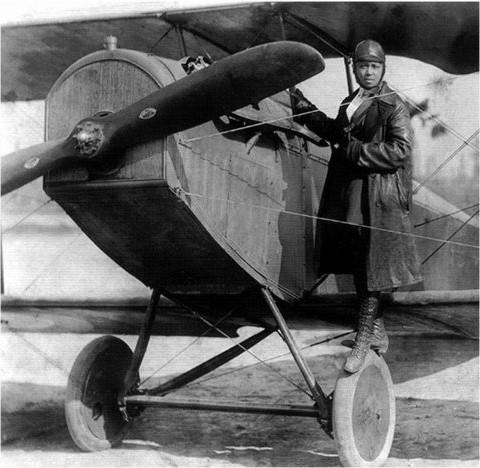
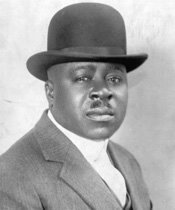
In celebration of Black History Month: The Ridge area includes one of Chicagoland’s most historic African American cemeteries, Lincoln Cemetery at 12300 S. Kedzie Avenue.
By the early 1900s, the growing population and the encroachment of segregationist ‘Jim Crow’ laws from the South had made it increasingly difficult for blacks to find burial plots in white cemeteries. So as many ethnic groups were doing, African Americans established their own cemeteries. In 1911, a group of black undertakers approached the owners of Oak Hill Cemetery on Kedzie Avenue, established in 1902 for Swedish families, to ask if some of their unused land could be opened to African Americans. The request was agreed to and Lincoln Cemetery was founded.
This is the final resting place for notable musicians and other personalities associated with blues music, including Big Bill Broonzy, Mathis James ‘Jimmy’ Reed, Jack L. Cooper, Lillian ‘Lil’ Hardin Armstrong, and several others.
A number of men connected to the Negro Baseball Leagues are buried there.
Bessie Coleman (1892-1926), the first woman of African-American descent and the first woman of Native American descent to earn a pilot’s license, is buried there. She was a successful air show pilot but died in a crash while testing a new plane.
Robert Sengstacke Abbott (1870 – 1940), lawyer and newspaper publisher, is buried there. He founded The Chicago Defender in 1905 and started the Bud Billiken Parade and Picnic in 1929.
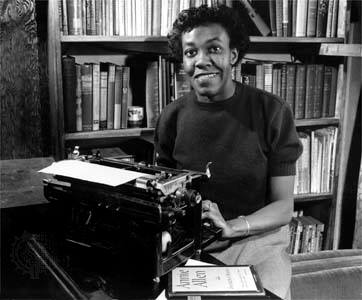
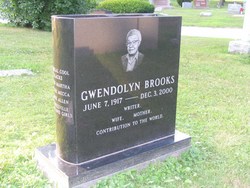
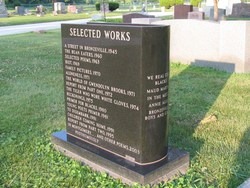
The most famous person buried in Lincoln Cemetery is the poet Gwendolyn Brooks (1917 – 2000). She won the Pulitzer Prize for Poetry in 1950 and was appointed Poet Laureate of Illinois in 1968 and Poet Laureate Consultant in Poetry to the Library of Congress in 1985. Her tombstone is a marble book.
Pictures: Gwendolyn Brooks, and the grave of Ms. Brooks; Big Bill Broonzy, Bessie Coleman, Robert S. Abbott.
February is Black History Month. Few people realize that Morgan Park is home to one of Chicago's pioneer black communities, dating back to the 1880s.
The earliest days of Morgan Park included a small settlement of African Americans, some of whom were former slaves and others descended from Southern slave families, who migrated north after the Civil War. They settled east of Vincennes Ave., near the main line of the Rock Island railroad. Families continued to settle there, and by 1920, almost 12% of Morgan Park residents were black.
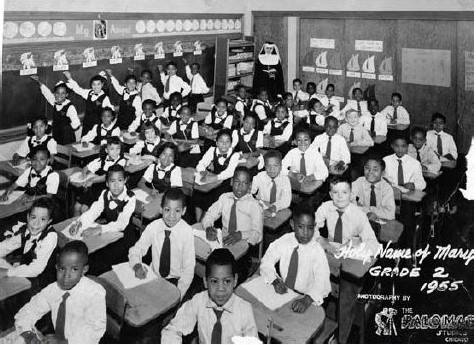
They established their own churches, beginning with Beth Eden in 1891, and in 1940, the Catholic parish of Holy Name of Mary was formed. Public institutions such as Morgan Park High School (built in 1916) and the Walker Branch Library (founded in 1890) were always integrated.
Interstate 57, built during the 1960s, isolated the original black settlement. At the same time, racial integration throughout the Morgan Park area was increasing.
About ten years ago, under the direction of the late Sue Delves, the Ridge Historical Society worked extensively with members of this community to preserve their history through pictures, other documents and recorded interviews. Many of the participants were third and fourth generation residents. This information is part of the RHS collection.
This photo of second grade at Holy Name of Mary School is from 1955.