Explore the RHS Facebook Archives, a rich repository of local history written by Carol Flynn. For two decades, Carol brought a deeply dedicated voice to public education at RHS. Her role as Facebook administrator through mid-2025 naturally extended her prolific research into meticulously detailed articles, most notably her multi-part historical series posts. Today, Carol continues her local history writing for The Beverly Review and other outlets.
Chicago Public Schools Profiles (2020)
The Ridge Historical Society
Carol Flynn
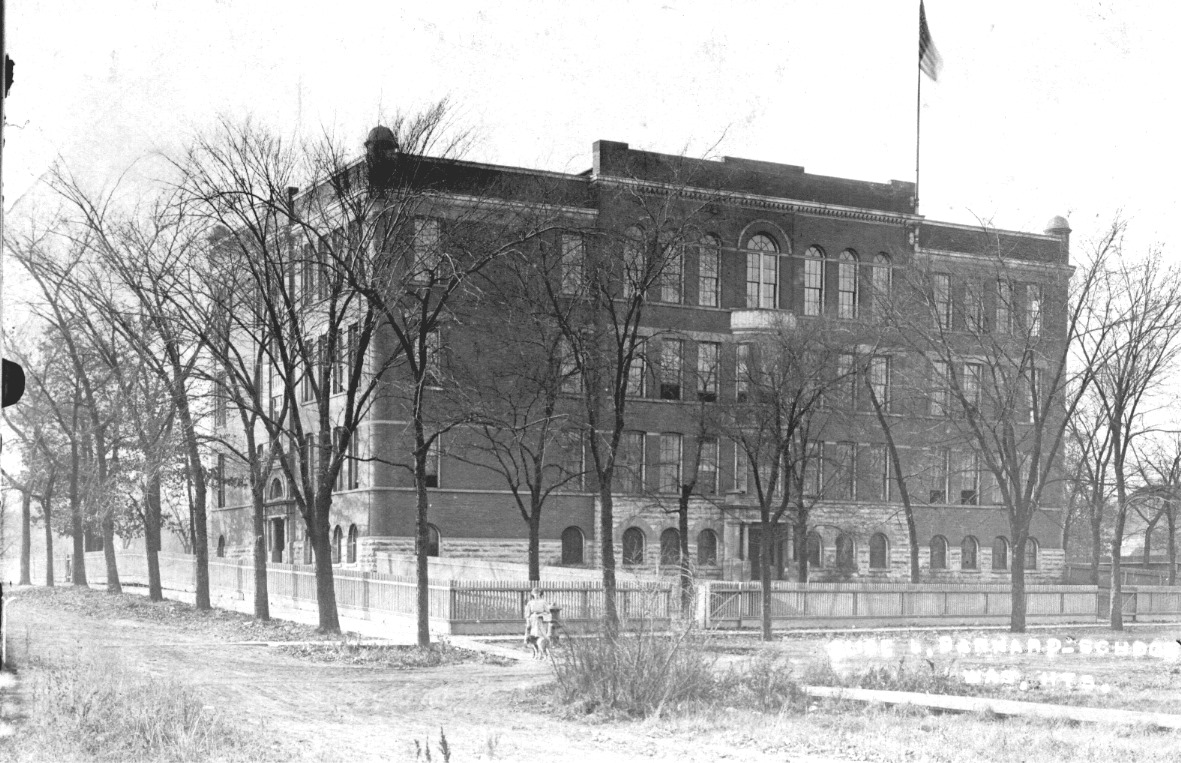
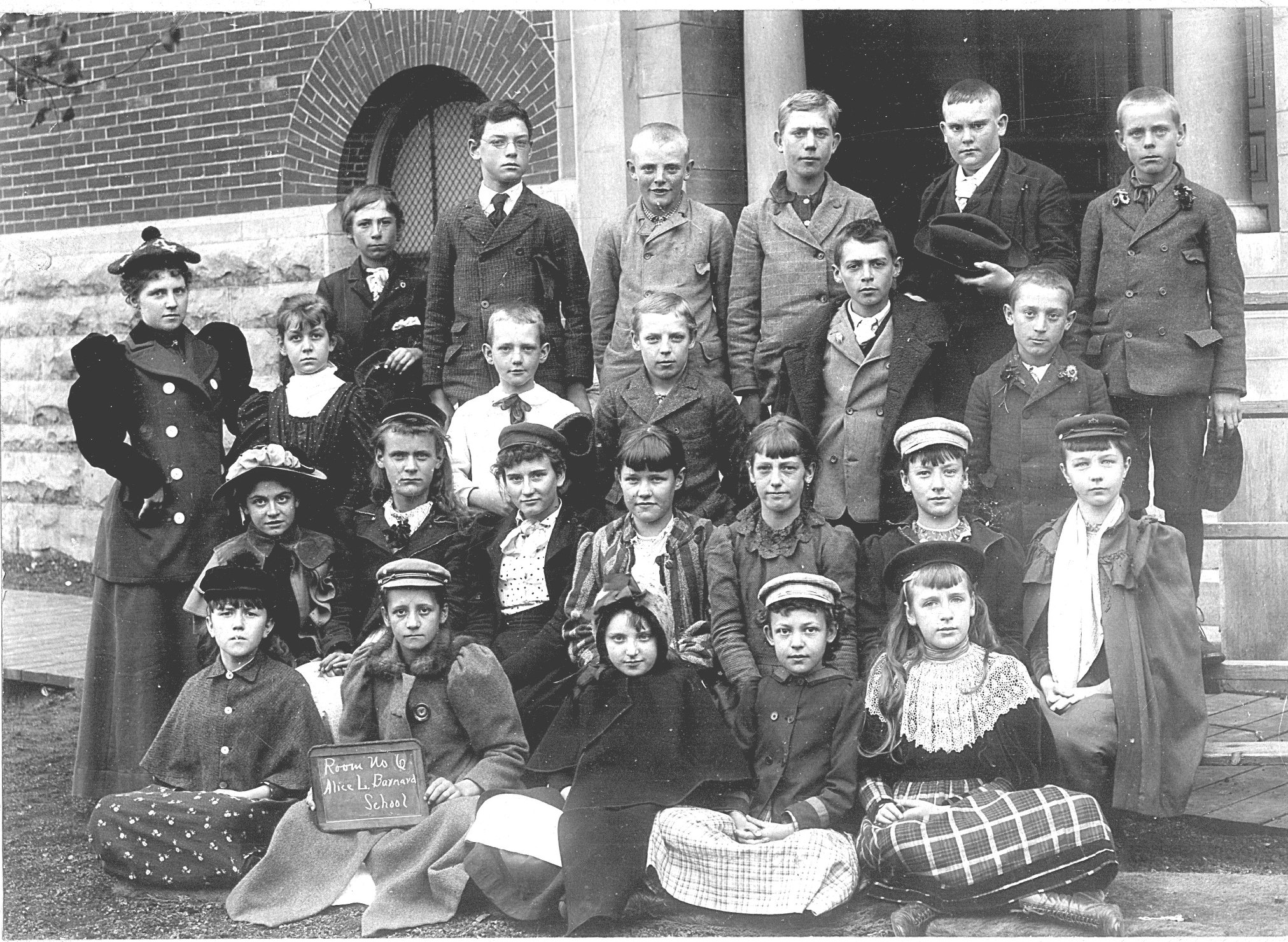
School Series – Profile 1: Alice L. Barnard
It is graduation time, and while the emphasis is on the graduates at this time, recognition is also due the teachers who encouraged the students along their paths of exploration and discovery. “Teachers” is used in a broad sense here to include professional educators as well as other role models and advisors who made lasting impressions.
There are dozens of Chicago public schools in Beverly, Morgan Park, Washington Heights and Mount Greenwood. Nineteen of them are named for individuals who made contributions to education and other important fields. This series will look at those people.
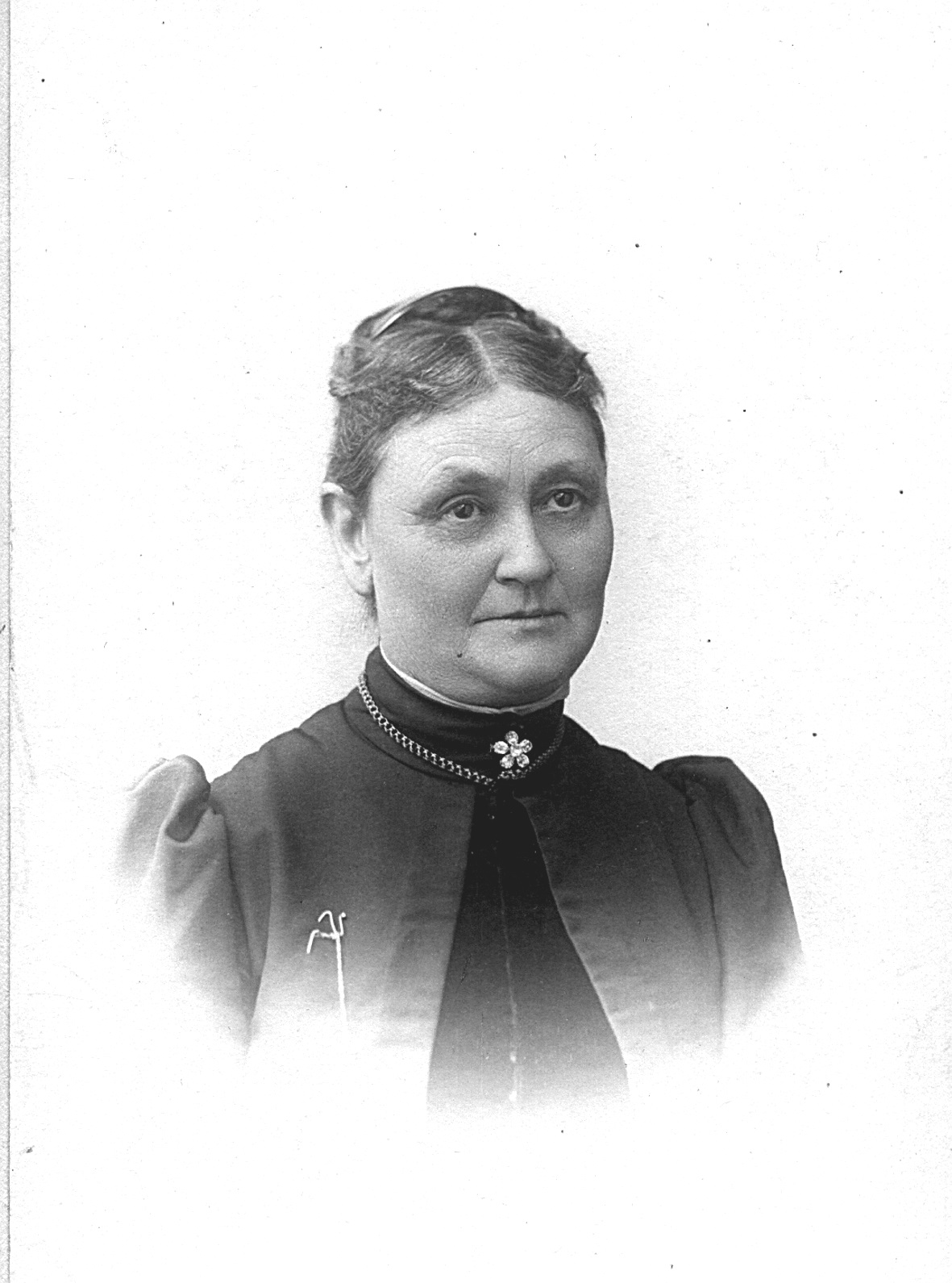
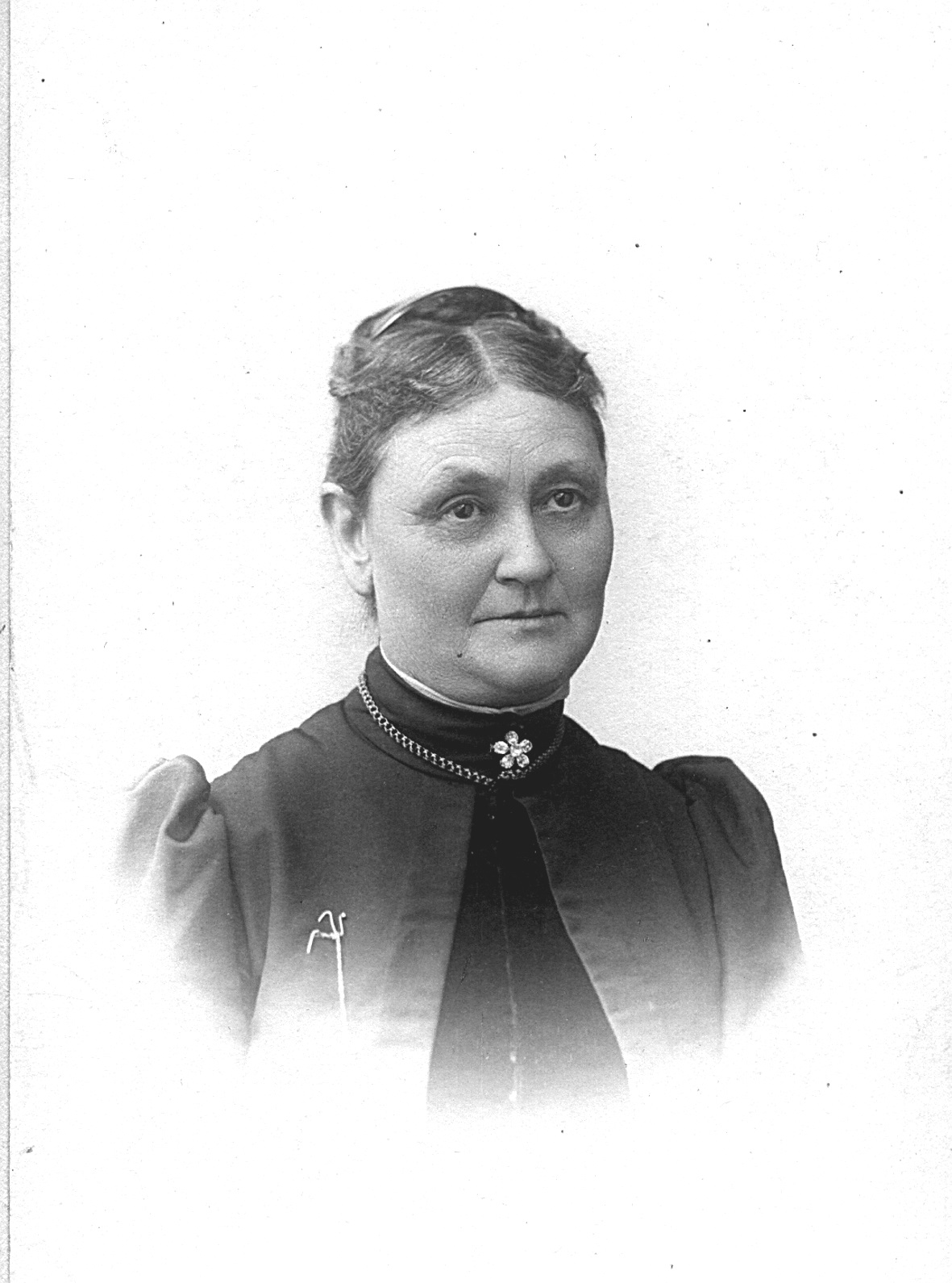
A good place to start is with Alice Lucretia Barnard (1829 – 1908) whose namesake school is at 10354 S. Charles St., because it was education that brought the Barnard family to the Blue Island Ridge in 1846 in the first place.
Alice’s brother was William Barnard, a graduate of Amherst University in Massachusetts. Deciding to seek new opportunities in the West, he made it as far as Chicago, where he had a chance encounter with Thomas Morgan, the wealthy Englishman who bought thousands of acres of land on top of and surrounding the Ridge and gave his family’s name to Morgan Park. Morgan talked William into taking a job as tutor for Morgan’s children. William moved to the Ridge, and other family members soon followed.
Alice was educated in Massachusetts and later she attended Mount Holyoke Seminary which she left after two years because there was “little independence in thought.” She was an early “progressive” teacher, believing in “the opportunity to study from life” and not just the memorization of facts. She advocated for better education opportunities for women and was disappointed she could not study chemistry and other sciences in a laboratory.
Alice began her teaching career at age 17 in Chicago in a one-room schoolhouse. After a few years, she found herself at the Dearborn School, at Madison and Dearborn. At the time of the U.S. Civil War, she angered some school officials by writing a paper favoring the rights of children of color in school. The teachers and children marched in a procession to the Court House to view President Lincoln’s body lying in state after his assassination in April 1865. She met past President Gen. Ulysses Grant when he visited Chicago in 1879.
When offered the position of principal at the school in 1867, she declined because she would have been paid a lower salary than men in the same position. This was considered rank insubordination and the head of the education board called for her to be fired, but wiser heads prevailed and she took the job of head assistant instead.
She had the support of “Long John” Wentworth, the very powerful past mayor of Chicago, U.S. Congressman, and newspaper editor. A few years later, in 1871, she was named principal, one of the first women in the city to receive an appointment, and she was paid the same rate as the men. But that position was short-lived. The Dearborn School site was destroyed in the Great Chicago Fire in October 1871.
She was principal of Harrison School for a year, then in 1873 moved to Jones School as Head Assistant, at 12th Street and Wabash where a new school building had just opened. That school was destroyed by fire the following year and rebuilt in 1875. In 1876, when the principal resigned, the teachers petitioned to have her appointed to the position. She became principal of the school, where she stayed until retirement. That school is now Jones College Prep.
Alice never married; back then women teachers were usually required to give up outside employment if they married. She invested her money independently in real estate.
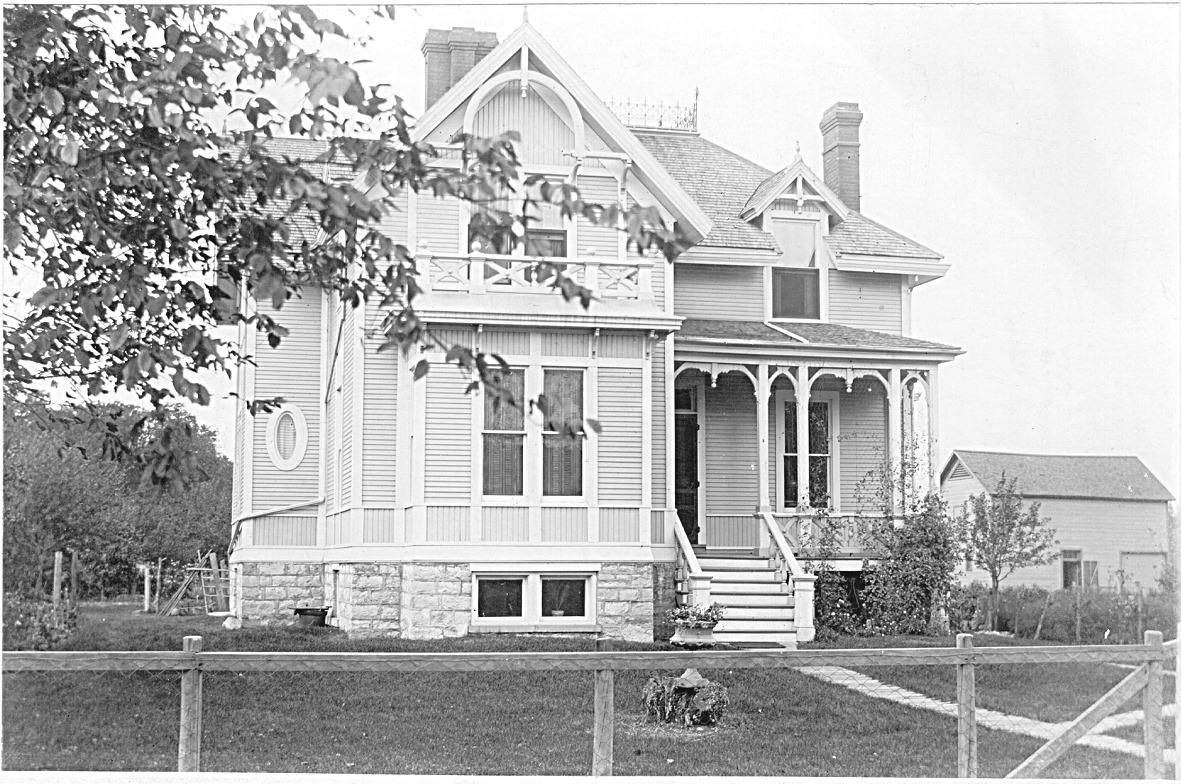
She was a member of Bethany Union Church, and also the First Presbyterian Church. She lived with her sisters and brothers in a charming house at 103rd St. and Longwood Drive, across from Givins’ Castle, and cultivated flowers. She entertained her students there, and she regularly decorated the classrooms at Jones with fresh bouquets. Her nephew later started a seed farm there. Today a CVS drug store is on that site.
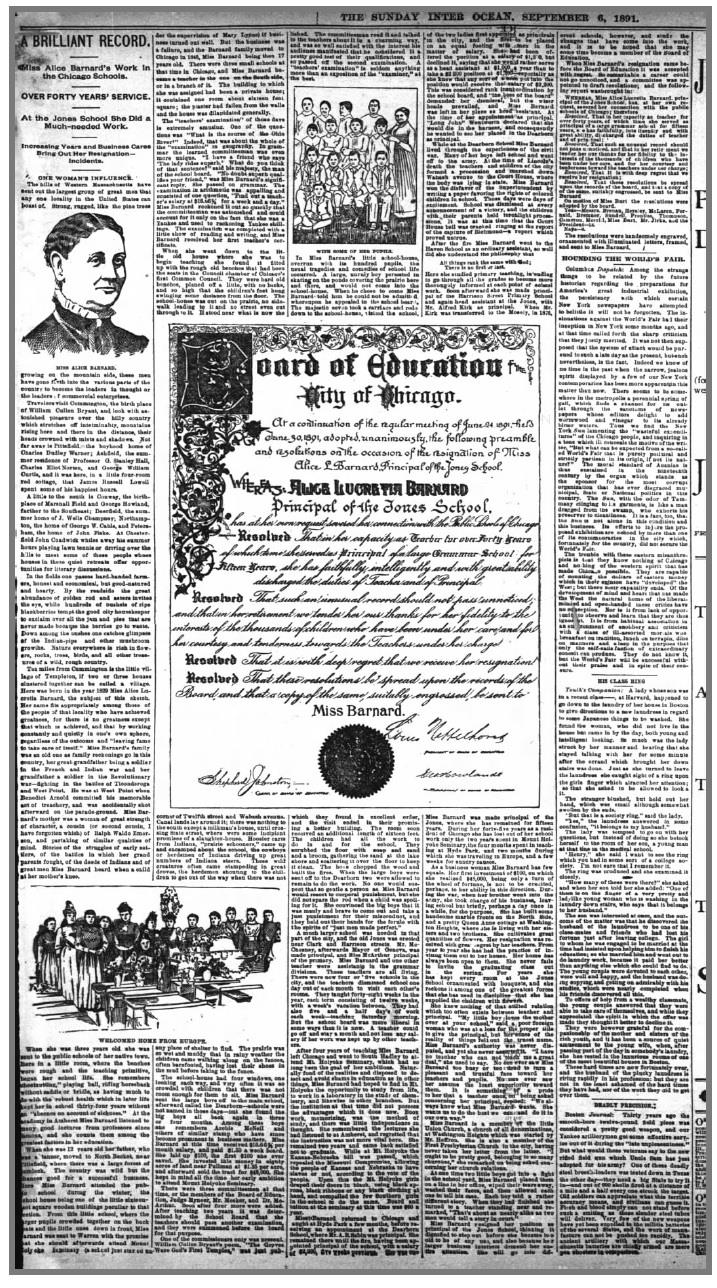
Alice received considerable newspaper coverage in her lifetime – she was a celebrity in Chicago. The Inter Ocean ran a full page story about her in 1891 when she retired. It was hoped she would become a member of the Board of Education but that did not happen. Perhaps she was content to live in Washington Heights, the name for the area before "Beverly Hills" became popular, and tend her peonies.
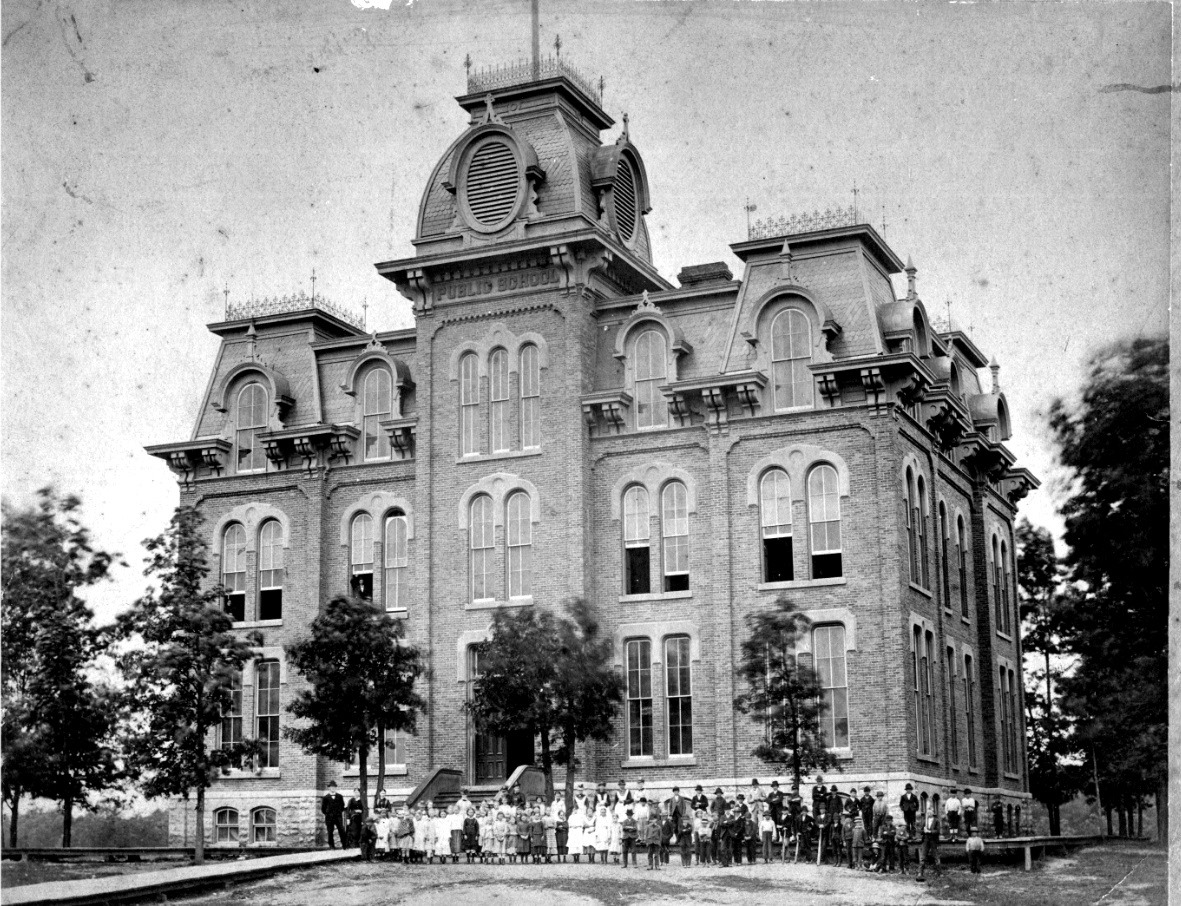
In 1890, the Washington Heights School was severely damaged by fire. It was closed for a few years while it was rebuilt, and in 1892 the school reopened, now named for Alice L. Barnard. Such an honor is usually awarded after a person’s death, but Alice was still very much alive.
When she fell ill in 1908, it was covered in the Chicago papers. Alice was described by the Chicago Tribune as “one of the best known teachers in Chicago.” Upon her death, many tributes were given to her. She was laid to rest in Mount Greenwood Cemetery.
Yesterday, May 5, was National Teacher Appreciation Day, celebrated annually on the Tuesday of the first full week in May. The Ridge communities have had many, many fine teachers through the years. The Ridge Historical Society will share profiles of a few of them.
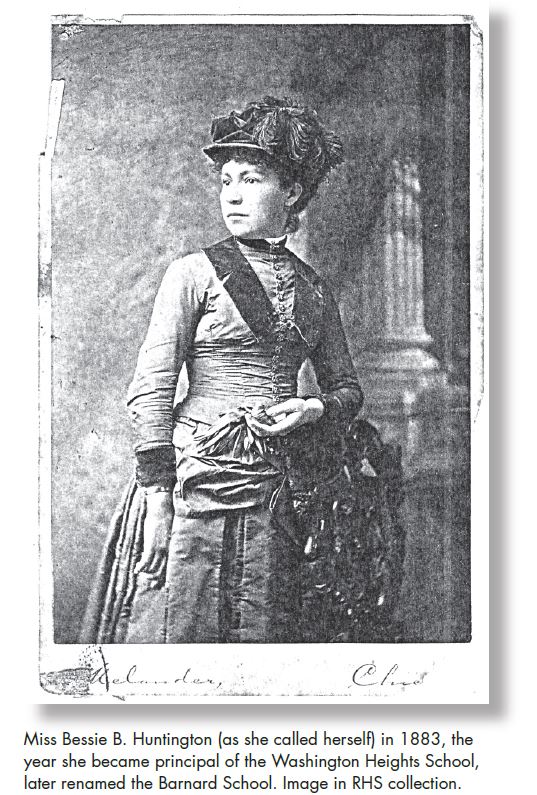
Let’s start with Elizabeth “Bessie” Bingle Huntington Sutherland, a very respected and forward-thinking leader in the education field.
Bessie was born in 1851 on the Ridge. Her parents, Samuel and Maria Robinson Huntington, were part of the earliest Ridge pioneer families. Samuel was a farmer and kept stock, then became involved with the railroads, and served as sheriff of the early settlement that would become the City of Blue Island. Maria was reputed to have been an early teacher in Blue Island, making $1.00 per week for her efforts.
Around 1854, a two-room school house was built in Blue Island, and it is probable that Bessie attended this school as a child. The Cook County Normal School was established in 1867. The name “normal school” was used for teacher preparation programs because they established teaching standards or “norms.” Bessie graduated from this school in 1869. This school eventually evolved into Chicago State University.
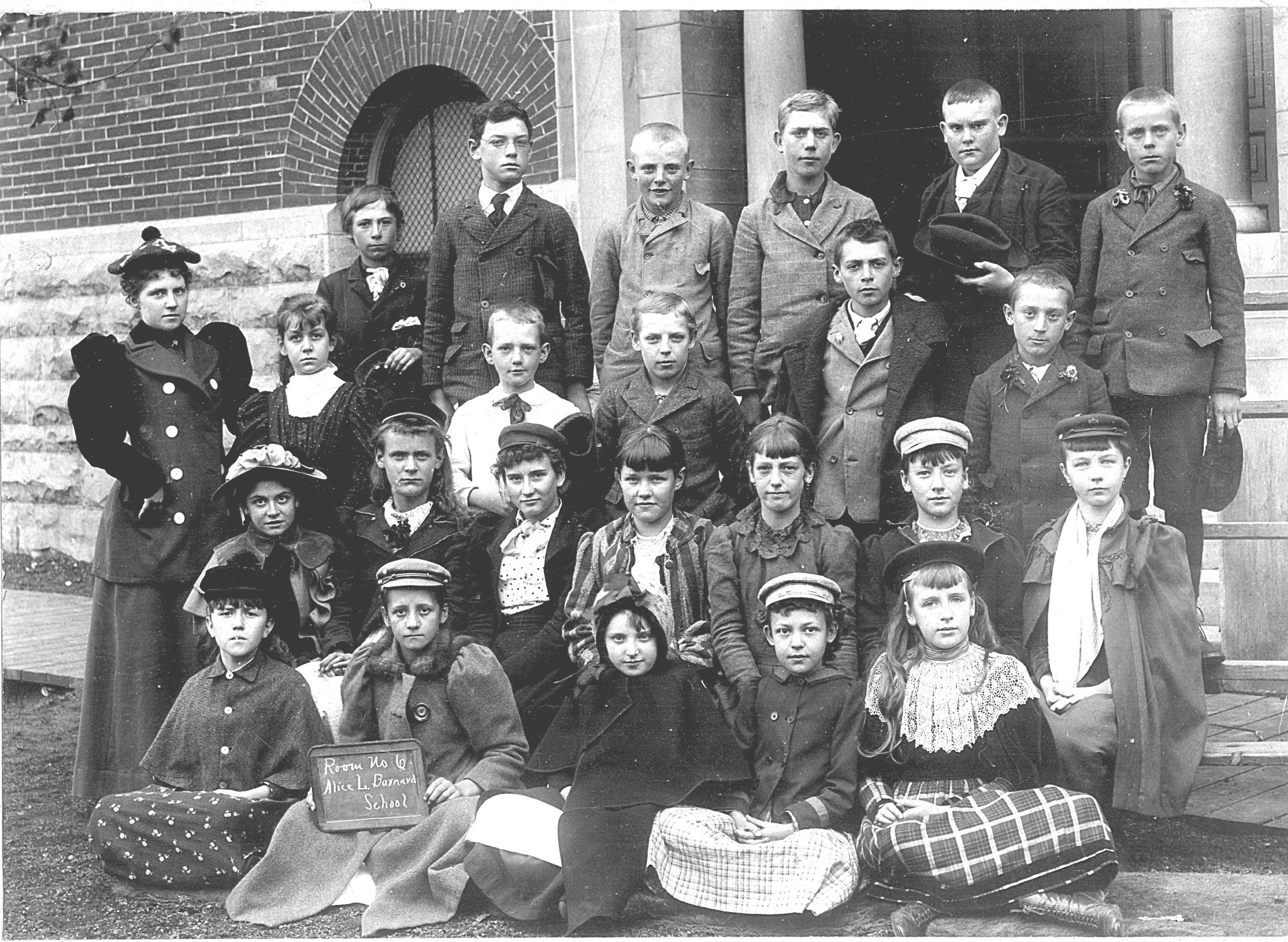
Bessie’s career as a teacher included the Blue Island school and the Hyde Park high school. She took graduate classes at the University of Chicago. The Washington Heights public school started in 1874, and Bessie became principal there in 1883, the first woman to be named a principal in Cook County. In 1893, this school was renamed the Alice L. Barnard School, after another Ridge native who had become the first woman principal of a Chicago school.
Bessie became a teacher during the “Progressive Era,” that time of significant reform in all areas of life. The field of education made great advances during this time, as the philosophy of learning changed from rote memorization to exploration and experimentation. Bessie surely knew two of the movement's leaders in Chicago, Francis W. Parker, who became head of the Cook County Normal School, and John Dewey, who established the University of Chicago Laboratory School.
An anecdote about Bessie illustrates the Progressive educator. While principal at the Barnard School, one day she heard that a camel had escaped from a traveling show and was freely roaming the local woods. She gathered the entire student body and led an impromptu field trip to the woods to observe the camel “in the wild” and share a lesson on animals of the world.
In those years, women teachers were not allowed to marry if they wished to remain employed. Bessie put off marriage to David Sutherland until her 43rd birthday in 1894. Sutherland, 17 years Bessie’s senior, was a real estate developer with considerable property on the south and west sides of Chicago. They made their home at 1638 West 103rd Street. The couple had no children, and David died in 1904.
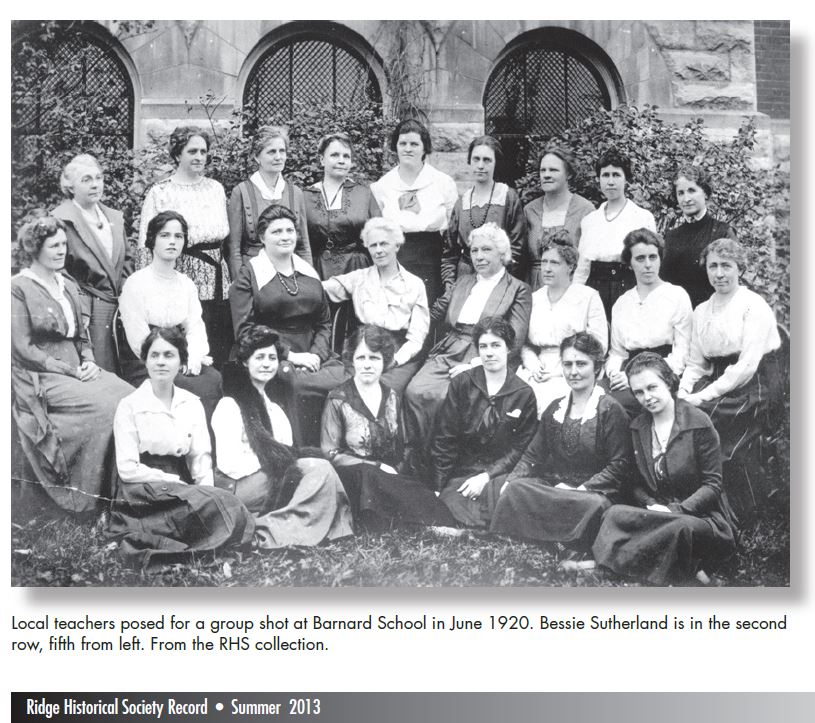
Bessie served as the principal of Barnard School for almost 40 years. She resigned in 1923, and died in 1924. She was buried in Mt. Greenwood Cemetery. In 1925, the new school built at 101st and Leavitt Sts. was named in her honor.