
Explore the RHS Facebook Archives, a rich repository of local history written by Carol Flynn. For two decades, Carol brought a deeply dedicated voice to public education at RHS. Her role as Facebook administrator through mid-2025 naturally extended her prolific research into meticulously detailed articles, most notably her multi-part historical series posts. Today, Carol continues her local history writing for The Beverly Review and other outlets.
Local Architecture
From the Ridge Historical Society: The Chicago Tribune has an article today about a charming historic building in Lincoln Park now destined for demolition. Every time this happens, we lose a little piece of history.
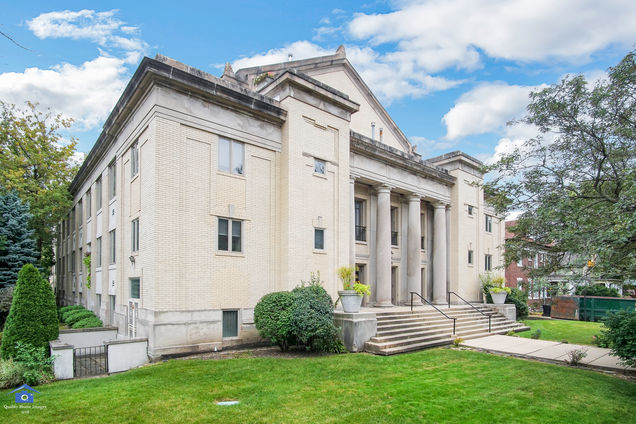
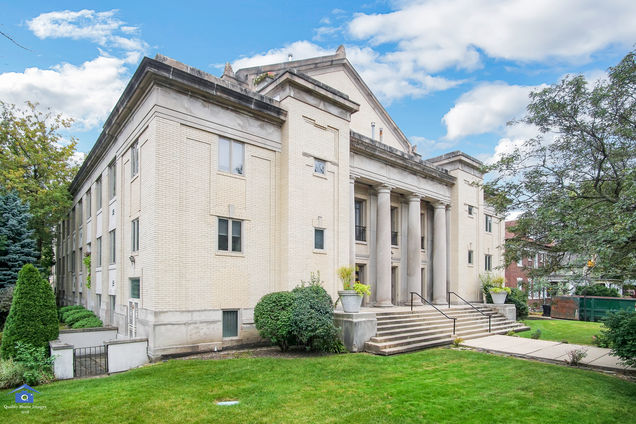
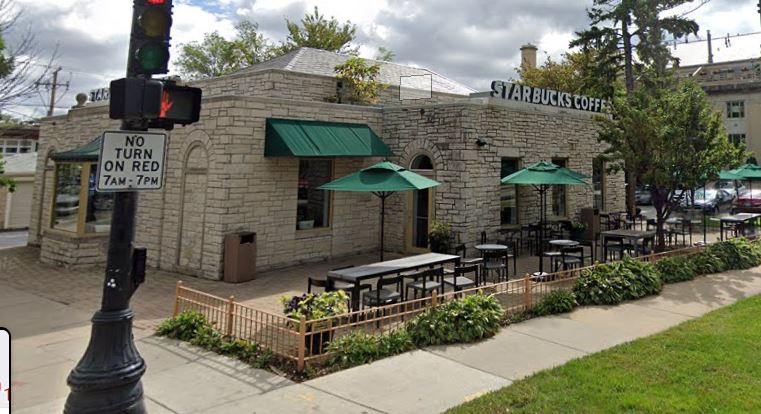
Many historic buildings in Beverly/Morgan Park fell to the wrecking ball over the years, but there is one example of "adaptive reuse" we can point to with pride – the saving of the Christian Science church and reading room on 103rd and Longwood Drive.
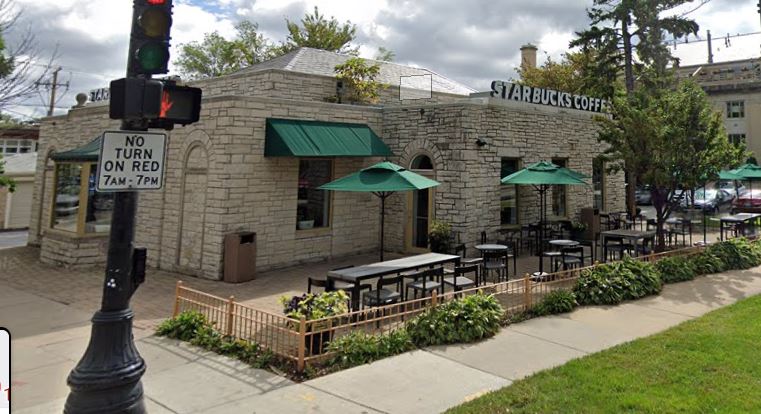
The Thirteenth Church of Christ, Scientist, was founded in Beverly in 1914. The congregation built an impressive neoclassical building in 1916. In 1940, the Reading Room was built on the corner just north of the church. Christian Science Reading Rooms are bookstores and quiet places for study and prayer.
The congregation dwindled with time, and by the late 1980s, the church was barely being used. A creative solution for repurposing the church was suggested: converting the interior into condo units. In 1992, the Bell Tower Loft Condominiums went on the market. The external façade of the building was preserved.
The congregation continued the Reading Room for over another decade, remodeling it to also use as a church. In 2006, the building was sold, and now there is a Starbucks coffee shop on site. The interior was remodeled but the exterior retains the original look.
This is the Tribune article about the building closing in Lincoln Park: https://www.chicagotribune.com/columns/mary-schmich/ct-met-schmich-dairy-teardown-20200513-ay6x45og3bejlgme3zjeertmbu-story.html?fbclid=IwAR2MS9KYKEfjy0K6WtReXFgapl8iQy6bG0AGZzpA2ksMhhQMHqtBnd2QM_4
The attached pictures are of the church-turned-condos and the reading room-turned-coffee shop at 103rd and Longwood Drive.
From the Ridge Historical Society: The Chicago Tribune has an article today about a charming historic building in Lincoln Park now destined for demolition. Every time this happens, we lose a little piece of history.
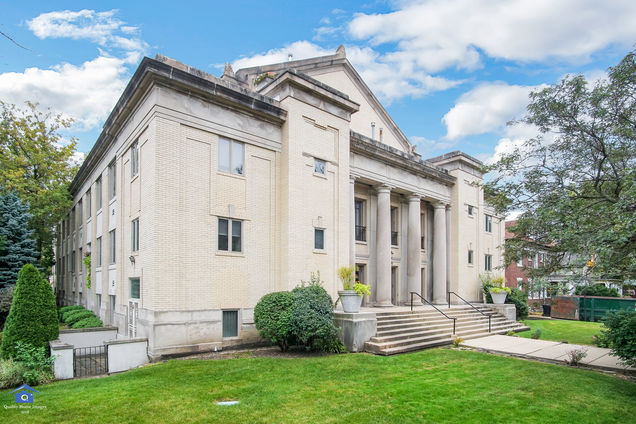
Many historic buildings in Beverly/Morgan Park fell to the wrecking ball over the years, but there is one example of "adaptive reuse" we can point to with pride – the saving of the Christian Science church and reading room on 103rd and Longwood Drive.
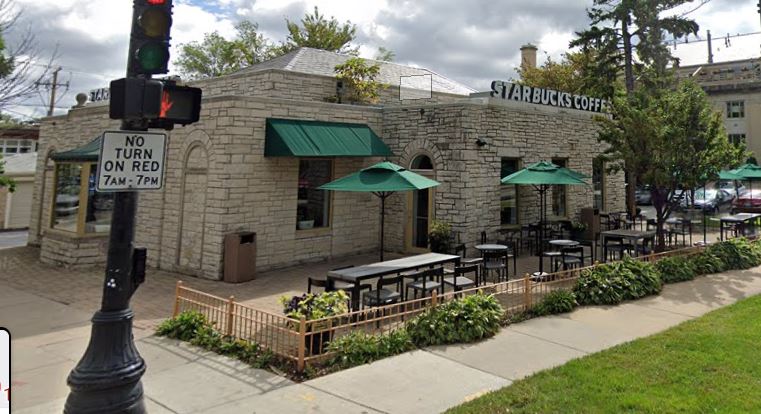
The Thirteenth Church of Christ, Scientist, was founded in Beverly in 1914. The congregation built an impressive neoclassical building in 1916. In 1940, the Reading Room was built on the corner just north of the church. Christian Science Reading Rooms are bookstores and quiet places for study and prayer.
The congregation dwindled with time, and by the late 1980s, the church was barely being used. A creative solution for repurposing the church was suggested: converting the interior into condo units. In 1992, the Bell Tower Loft Condominiums went on the market. The external façade of the building was preserved.
The congregation continued the Reading Room for over another decade, remodeling it to also use as a church. In 2006, the building was sold, and now there is a Starbucks coffee shop on site. The interior was remodeled but the exterior retains the original look.
This is the Tribune article about the building closing in Lincoln Park: https://www.chicagotribune.com/columns/mary-schmich/ct-met-schmich-dairy-teardown-20200513-ay6x45og3bejlgme3zjeertmbu-story.html?fbclid=IwAR2MS9KYKEfjy0K6WtReXFgapl8iQy6bG0AGZzpA2ksMhhQMHqtBnd2QM_4
The attached pictures are of the church-turned-condos and the reading room-turned-coffee shop at 103rd and Longwood Drive.
From the Ridge Historical Society: The Chicago Tribune has an article today about a charming historic building in Lincoln Park now destined for demolition. Every time this happens, we lose a little piece of history.
Many historic buildings in Beverly/Morgan Park fell to the wrecking ball over the years, but there is one example of "adaptive reuse" we can point to with pride – the saving of the Christian Science church and reading room on 103rd and Longwood Drive.
The Thirteenth Church of Christ, Scientist, was founded in Beverly in 1914. The congregation built an impressive neoclassical building in 1916. In 1940, the Reading Room was built on the corner just north of the church. Christian Science Reading Rooms are bookstores and quiet places for study and prayer.
The congregation dwindled with time, and by the late 1980s, the church was barely being used. A creative solution for repurposing the church was suggested: converting the interior into condo units. In 1992, the Bell Tower Loft Condominiums went on the market. The external façade of the building was preserved.
The congregation continued the Reading Room for over another decade, remodeling it to also use as a church. In 2006, the building was sold, and now there is a Starbucks coffee shop on site. The interior was remodeled but the exterior retains the original look.
This is the Tribune article about the building closing in Lincoln Park: https://www.chicagotribune.com/columns/mary-schmich/ct-met-schmich-dairy-teardown-20200513-ay6x45og3bejlgme3zjeertmbu-story.html?fbclid=IwAR2MS9KYKEfjy0K6WtReXFgapl8iQy6bG0AGZzpA2ksMhhQMHqtBnd2QM_4
The attached pictures are of the church-turned-condos and the reading room-turned-coffee shop at 103rd and Longwood Drive.
This is taking us a little further afield than we usually go in a post from the Ridge Historical Society but it is very worth mentioning.
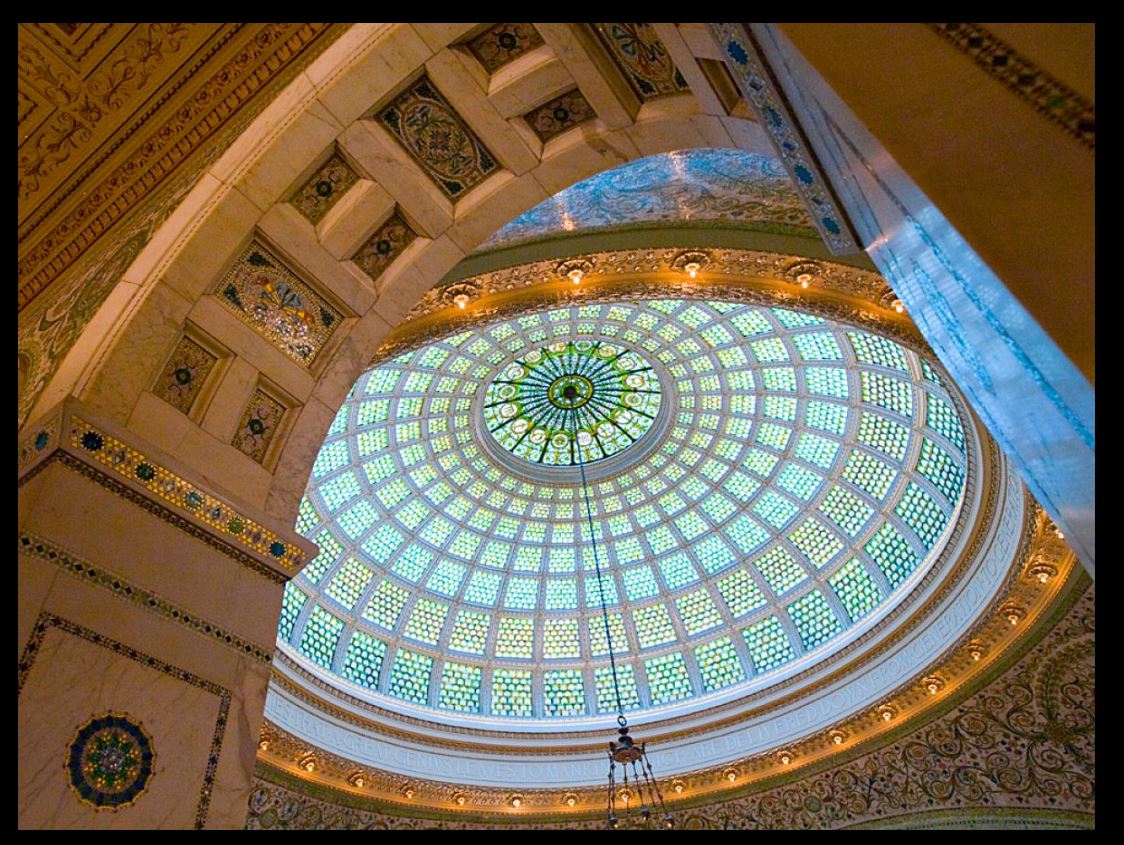
An article from National Geographic features the "Top 10 Ceilings Around the World" and one from Chicago is included – the beautiful Tiffany dome in the Chicago Cultural Center downtown. This spectacular building started as the Chicago Public Library in the late 1800s.
This picture of the dome is by Cathy Melloan, Alamy. The entire article can be found here.
https://www.nationalgeographic.com/travel/top-10/ceilings/?cmpid=org=ngp::mc=social::src=facebook::cmp=editorial::add=fb20200509travel-resurfceilings::rid=&sf233754361=1&fbclid=IwAR17H_JXC5jOT_rbLov4jDnI2JeL9MDXR7cRhEuIqAHIkE6lvkWwHoJ8nKc#/45614.jpg
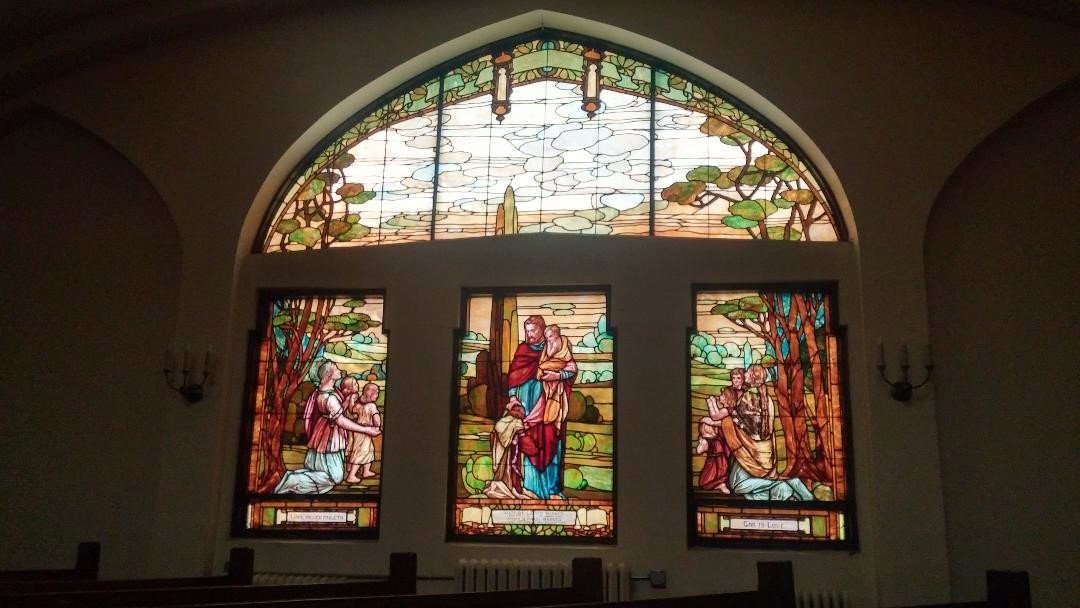
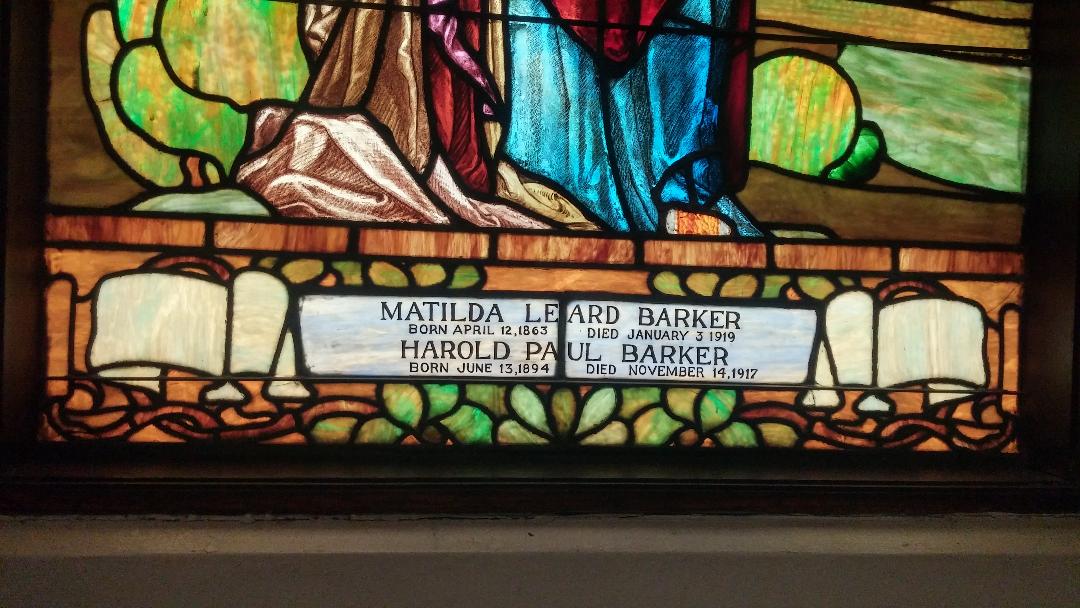
We have some beautiful stained glass in Beverly and Morgan Park, also. One favorite piece is the Barker memorial window in the Morgan Park United Methodist Church at 110th and Longwood Drive.
England J. Barker was a prominent businessman who settled in Morgan Park with his family. His company, UARCO, manufactured business machines. This window was installed when the church was built in 1925. It is in remembrance of Barker's wife Matilda and son Harold. Photos by C. Flynn.
Viewers are welcomed to post pictures of other stained glass examples found on the Ridge.
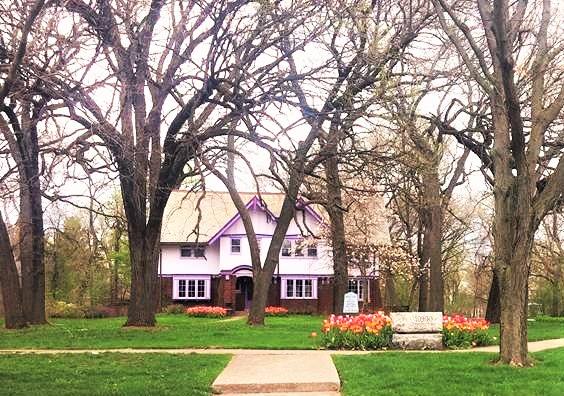

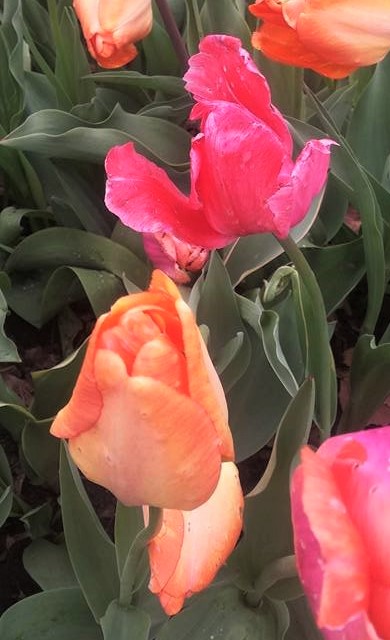
Pretty spring tulips are on view at one of Morgan Park’s historic homes, the Luther S. Dickey, Jr. House, at 10900 S. Prospect Ave.
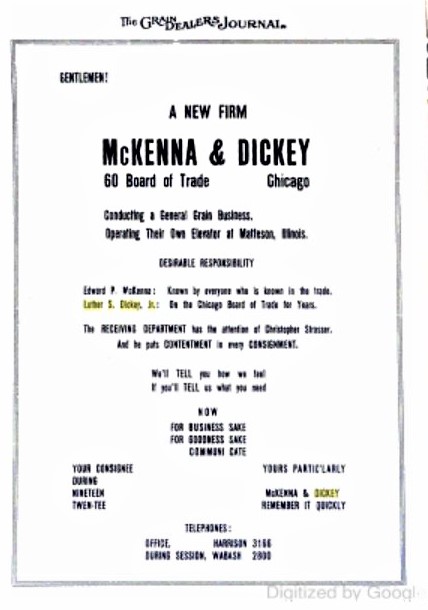
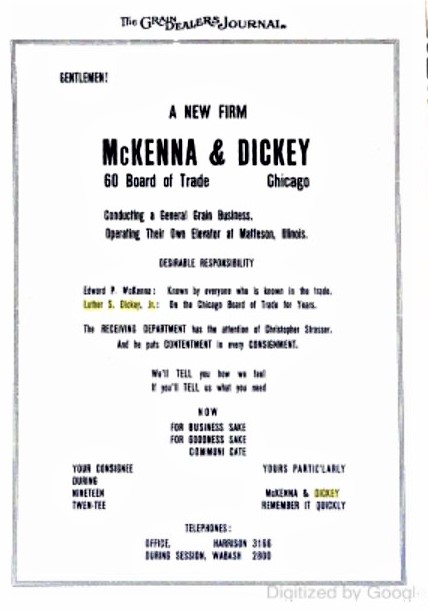
Luther Samuel Dickey, Jr., was a well-known stock broker and grain trader. He was a member of the Chicago Board of Trade and the New York Stock Exchange. He had his own company for years, McKenna and Dickey.
Dickey’s parents were Luther S. and Charlotte Dickey. Dickey, Sr., came to Chicago from Pennsylvania and was a veteran of the U.S. Civil War. He was involved with the Chicago Inter-Ocean newspaper, and upon retirement, authored publications on the history of Pennsylvania regiments in the war. He was also an elected officer with the Calumet-Morgan Park park district. He was active with social and political causes such as labor issues and the rights of the working class.
In 1889, the family made news when Charlotte and the children became “poisoned from eating fermented raspberries.” One daughter, Alice, 9, died. The rest survived.
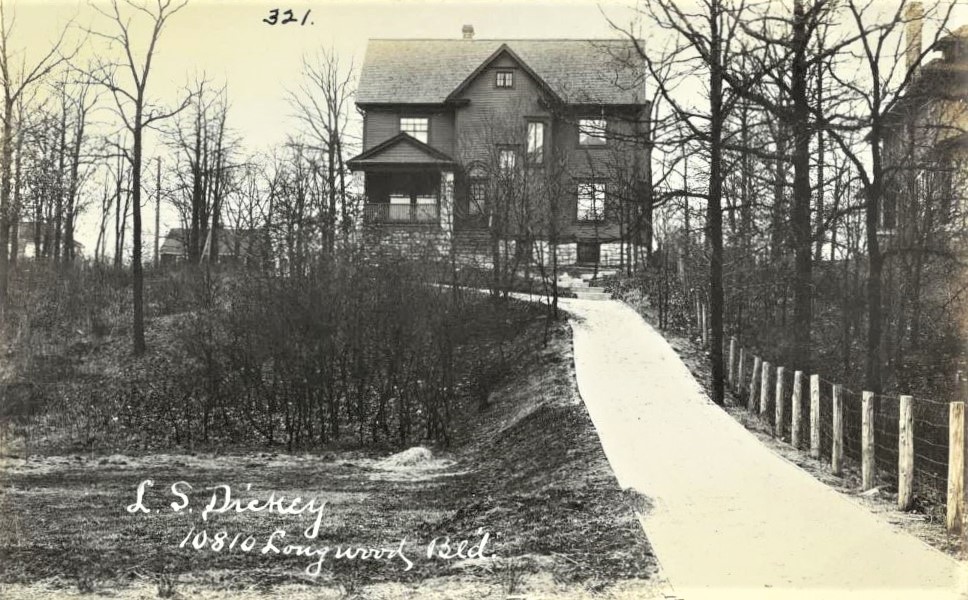
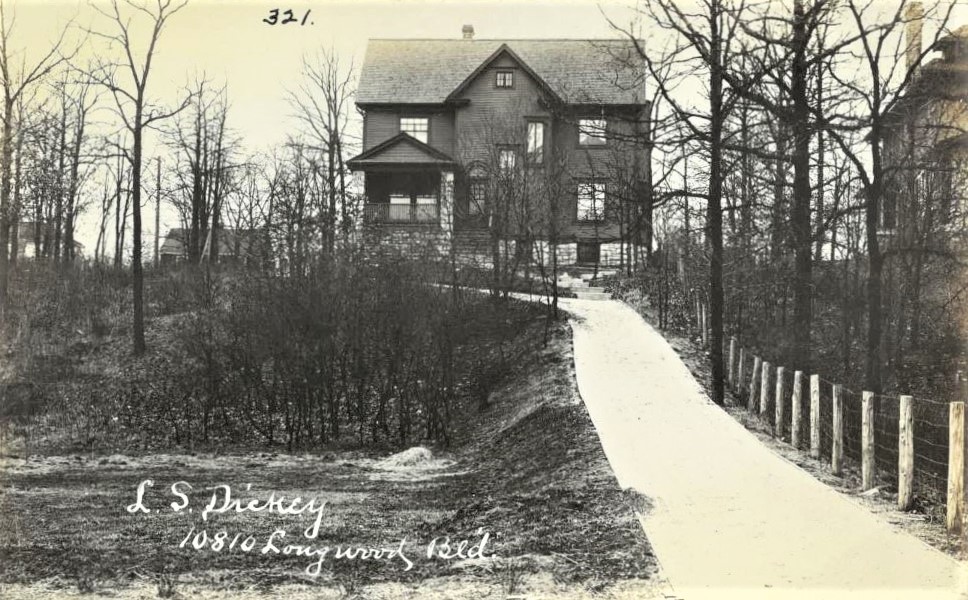
Dickey, Jr., had a first home built by architect George Bannister in 1905 at what is now 10856 S. Longwood Drive. Bannister was the husband of Madame Alla Ripley, the fashion designer and business woman featured in RHS’s exhibit last year, Threads of Imagination. In 1912, that home was sold to Paul Harris, the founder of Rotary International. The house is being restored as a Rotary museum and meeting place.
Dickey, Jr., had the house at 10900 S. Prospect designed by Chatten and Hammond in 1912. The picturesque Arts and Crafts-styled house is set on a lot of several acres of beautiful old oak trees. Design elements include a half-timbered double gable, sloping brick buttresses, and a flanged segmental entry arch. Dickey, his wife Bessie Adele (Robinson) Dickey, and their daughter and two sons made their home there.
Their neighbors were socially and politically prominent Isaac and Gertrude Blackwelder. On July 26, 1913, Bessie Dickey joined Gertrude as one of the first women to vote in Cook County. Her husband, Luther, was president of the annexation association. Annexation of Morgan Park to Chicago was finally approved in 1914. The major issue in the 1913 election was funding for a new high school. The funding was approved, leading to the establishment of Morgan Park High School.
Dickey, Jr., was on the board of the South Shore Country Club and involved in putting on the annual horse show. He was an avid horseman and his steeds won many prizes in competitions.
The Dickeys were members of the Morgan Park Congregational Church. He was also a member of the Union League Club, and active in the Boy Scouts with his sons.
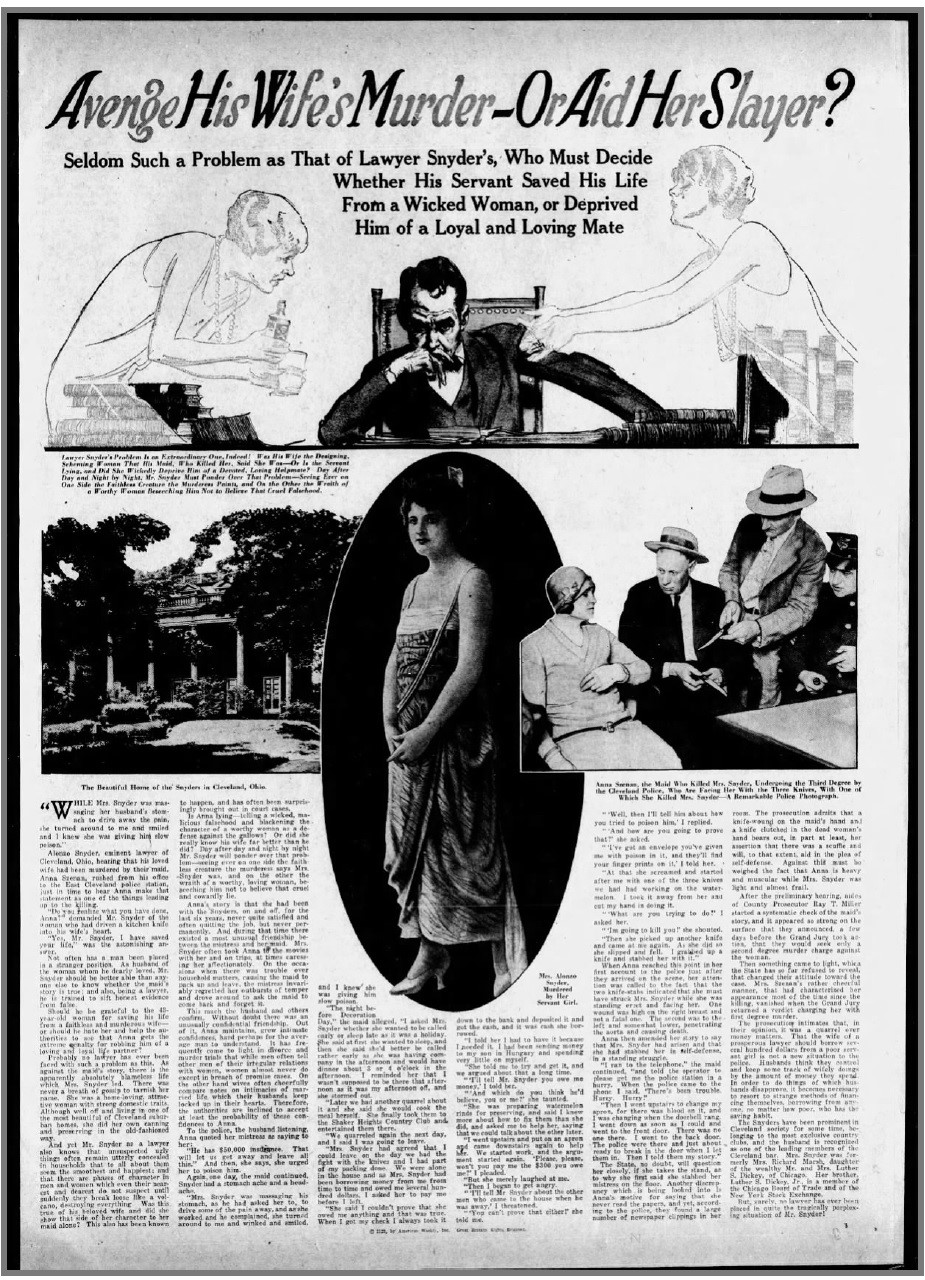
In May of 1929, the Dickey family fell victim to tragedy and scandal when Luther, Jr.’s sister, Maude Dora (Dorothy) Snyder, was killed by her maid, Anna Szenan, at the Snyder home in Cleveland. Dorothy, the wife of prominent attorney Alonzo Snyder, was stabbed to death in an altercation over unpaid wages. Dickey, Jr., rushed to Cleveland as soon as he received the news.
Anna Szenan claimed self-defense. The crime and trial received sensational news coverage. Szenan was found guilty of second-degree murder and received a life sentence. She died at the age of 100 still in jail, refusing parole for years because she had nowhere else to go. She had made the prison her home, cleaning the matrons’ quarters, cultivating a petunia garden and keeping a cat.
Tragedy struck again just a few months later. Luther S. Dickey, Jr., contracted diphtheria, an infectious and contagious bacterial disease spread by coughing and sneezing. He died at his home at 10900 S. Prospect on September 15, 1929, at the age of 48. He was buried in Mount Hope Cemetery.
Diphtheria was a major public health issue and homes with diphtheria patients were quarantined. A safe vaccine was developed in 1926 but was not widely used until after 1930.
Bessie remarried to Walter H. Jacobs, a lawyer, in 1935. He died in 1945. Bessie continued living at the Prospect Ave. house until her death at the age of 94 in 1974. She was also buried in Mount Hope Cemetery.
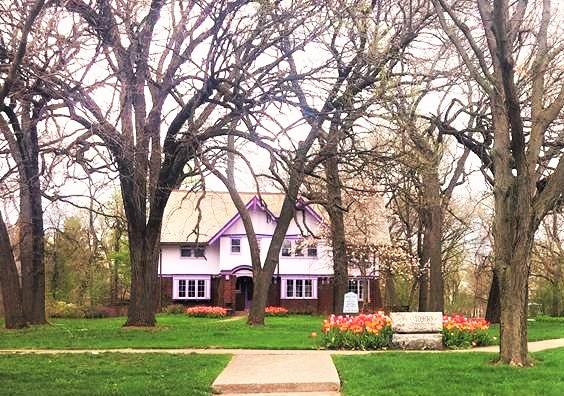

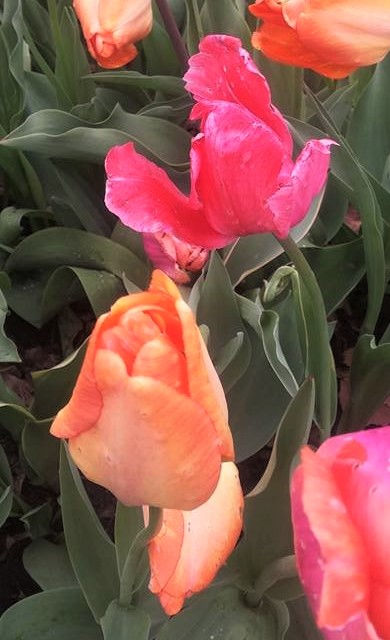
Pretty spring tulips are on view at one of Morgan Park’s historic homes, the Luther S. Dickey, Jr. House, at 10900 S. Prospect Ave.
Luther Samuel Dickey, Jr., was a well-known stock broker and grain trader. He was a member of the Chicago Board of Trade and the New York Stock Exchange. He had his own company for years, McKenna and Dickey.
Dickey’s parents were Luther S. and Charlotte Dickey. Dickey, Sr., came to Chicago from Pennsylvania and was a veteran of the U.S. Civil War. He was involved with the Chicago Inter-Ocean newspaper, and upon retirement, authored publications on the history of Pennsylvania regiments in the war. He was also an elected officer with the Calumet-Morgan Park park district. He was active with social and political causes such as labor issues and the rights of the working class.
In 1889, the family made news when Charlotte and the children became “poisoned from eating fermented raspberries.” One daughter, Alice, 9, died. The rest survived.
Dickey, Jr., had a first home built by architect George Bannister in 1905 at what is now 10856 S. Longwood Drive. Bannister was the husband of Madame Alla Ripley, the fashion designer and business woman featured in RHS’s exhibit last year, Threads of Imagination. In 1912, that home was sold to Paul Harris, the founder of Rotary International. The house is being restored as a Rotary museum and meeting place.
Dickey, Jr., had the house at 10900 S. Prospect designed by Chatten and Hammond in 1912. The picturesque Arts and Crafts-styled house is set on a lot of several acres of beautiful old oak trees. Design elements include a half-timbered double gable, sloping brick buttresses, and a flanged segmental entry arch. Dickey, his wife Bessie Adele (Robinson) Dickey, and their daughter and two sons made their home there.
Their neighbors were socially and politically prominent Isaac and Gertrude Blackwelder. On July 26, 1913, Bessie Dickey joined Gertrude as one of the first women to vote in Cook County. Her husband, Luther, was president of the annexation association. Annexation of Morgan Park to Chicago was finally approved in 1914. The major issue in the 1913 election was funding for a new high school. The funding was approved, leading to the establishment of Morgan Park High School.
Dickey, Jr., was on the board of the South Shore Country Club and involved in putting on the annual horse show. He was an avid horseman and his steeds won many prizes in competitions.
The Dickeys were members of the Morgan Park Congregational Church. He was also a member of the Union League Club, and active in the Boy Scouts with his sons.
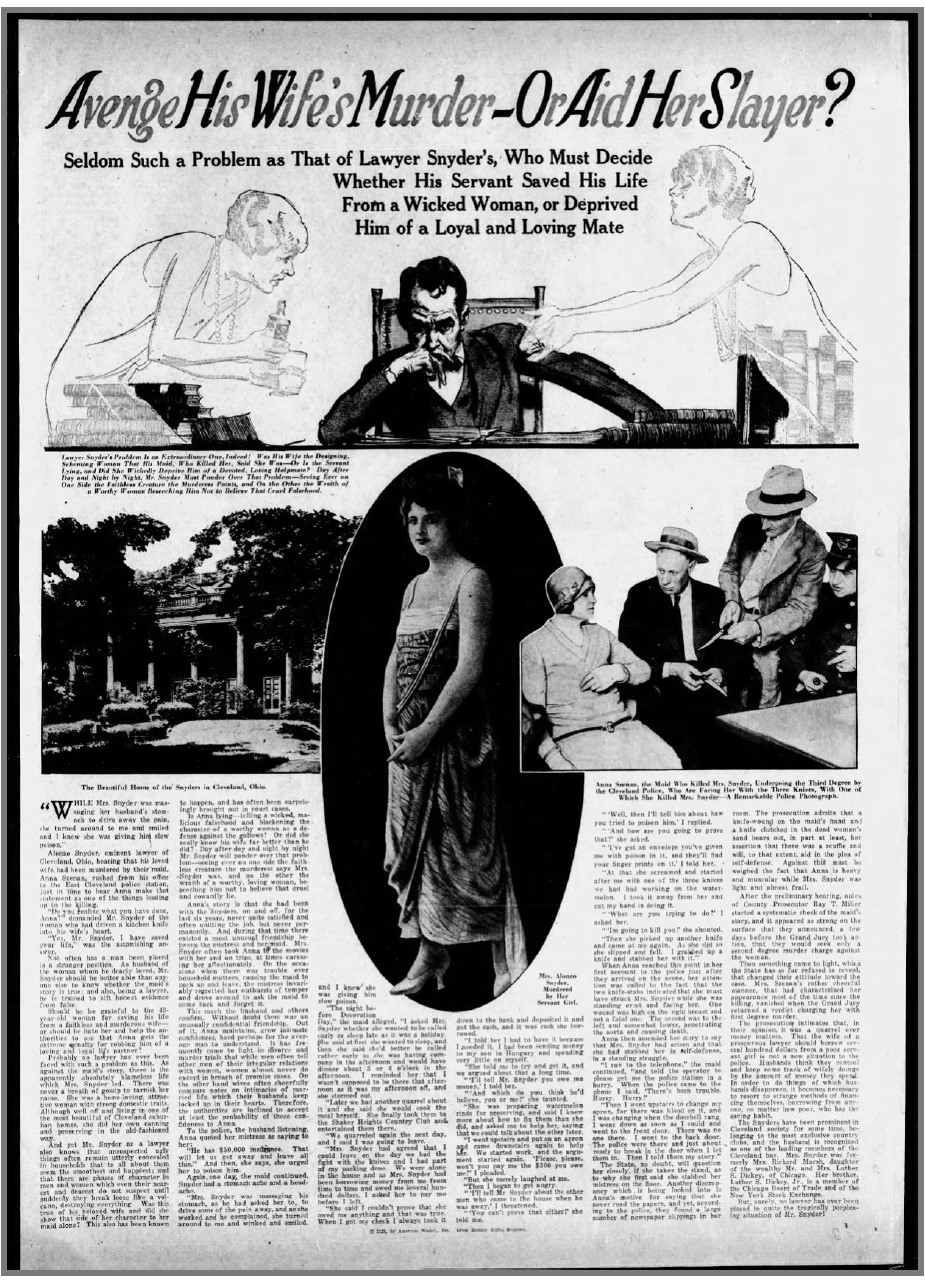
In May of 1929, the Dickey family became victims of tragedy and scandal when Luther, Jr.’s sister, Maude Dora (Dorothy) Snyder, was killed by her maid, Anna Szenan, at the Snyder home in Cleveland. Dorothy, the wife of prominent attorney Alonzo Snyder, was stabbed to death in an altercation over unpaid wages. Dickey, Jr., rushed to Cleveland as soon as he received the news.
Anna Szenan claimed self-defense. The crime and trial received sensational news coverage. Szenan was found guilty of second-degree murder and received a life sentence. She died at the age of 100 still in jail, refusing parole for years because she had nowhere else to go. She had made the prison her home, cleaning the matrons’ quarters, cultivating a petunia garden and keeping a cat.
Tragedy struck again just a few months later. Luther S. Dickey, Jr., contracted diphtheria, an infectious and contagious bacterial disease spread by coughing and sneezing. He died at his home at 10900 S. Prospect on September 15, 1929, at the age of 48. He was buried in Mount Hope Cemetery.
Diphtheria was a major public health issue and homes with diphtheria patients were quarantined. A safe vaccine was developed in 1926 but was not widely used until after 1930.
Bessie remarried to Walter H. Jacobs, a lawyer, in 1935. He died in 1945. Bessie continued living at the Prospect Ave. house until her death at the age of 94 in 1974. She was also buried in Mount Hope Cemetery.
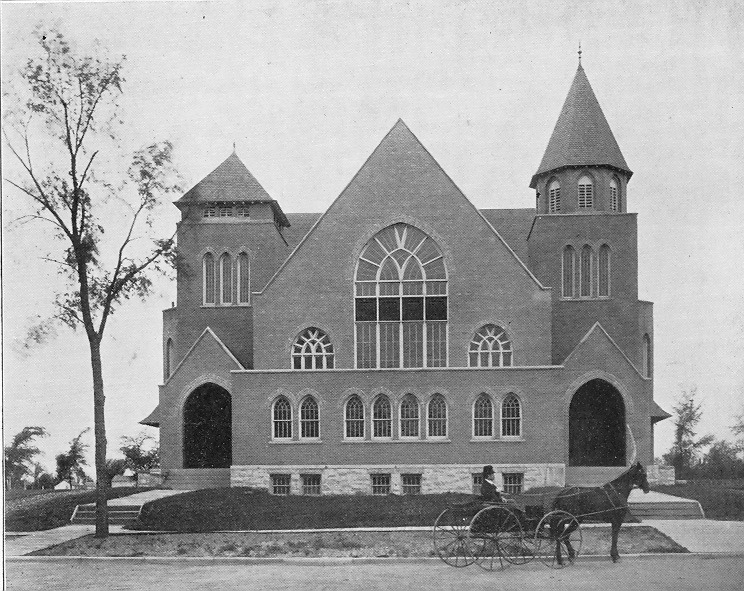
A follow-up comment to the post started on the Open Outcry page about the history of the Morgan Park Baptist Church at 110th and Bell. Here is a wonderful old picture of that church from when it was first built. Note the horse and buggy. From the Ridge Historical Society collection.
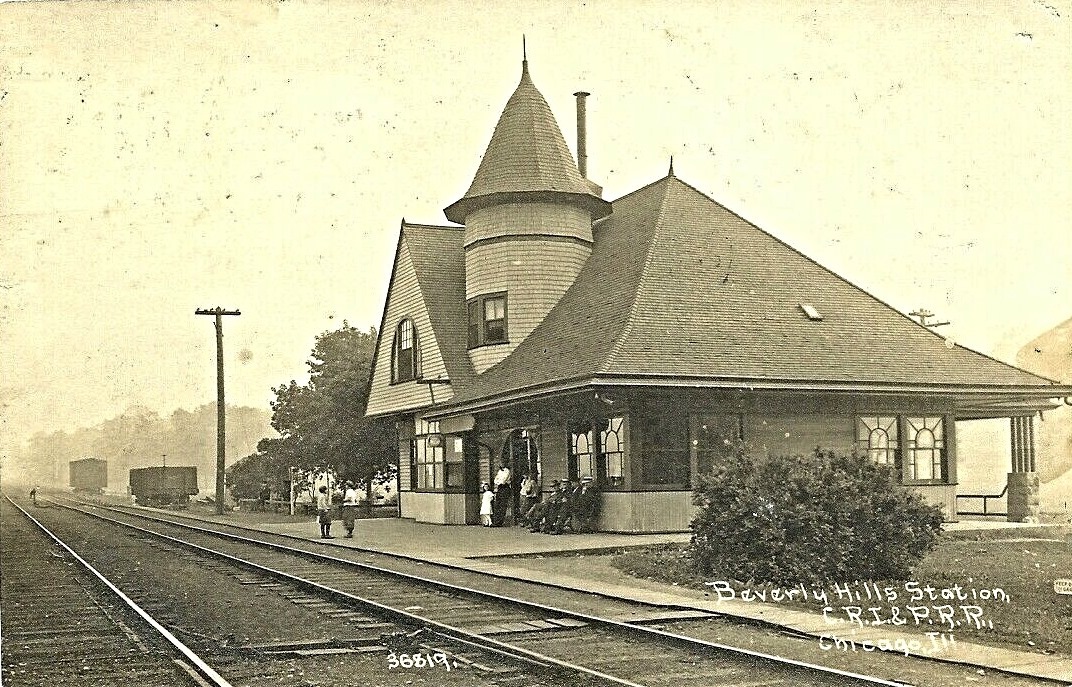
This postcard was submitted to the RHS page with the question of which stop was this?
Answer: The 91st Street stop was originally called Beverly Hills. This is along the Metra line and this charming station still stands. It was built ca. 1889 by architects Charnley and Evans in the Queen Anne style.
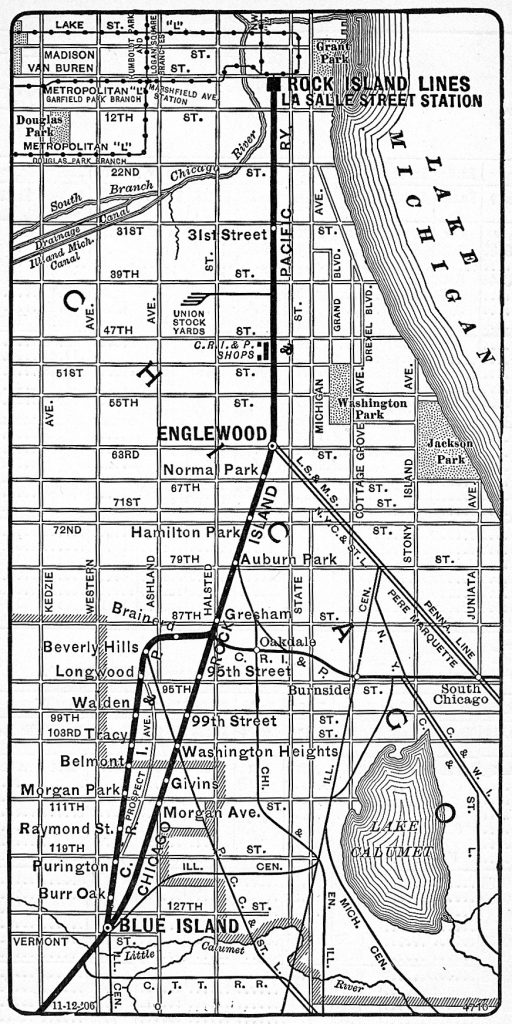
The original train line runs to the east of Beverly/Morgan Park. In the 1870s, and expanded later, a branch of this line was extended west to the developing Ridge. The stations along the line were named:
Beverly Hills (91st), Longwood (95th), Walden (99th), Tracy (103rd), Belmont (107th), Morgan Park (111th), and Raymond (115th). The 103rd and 115th Sts. stations are now gone. The others comprise the Beverly/Morgan Park Railroad Stations District, an official historic landmark district in the City of Chicago. This is considered a "thematic" district because the buildings are connected by purpose, not by location.
The stations were designed to go along with the architecture of the houses being built on the Ridge, and replaced original frame stations. The stations are rare survivors of once-common commuter stations and are an important link in the historical development of the community.
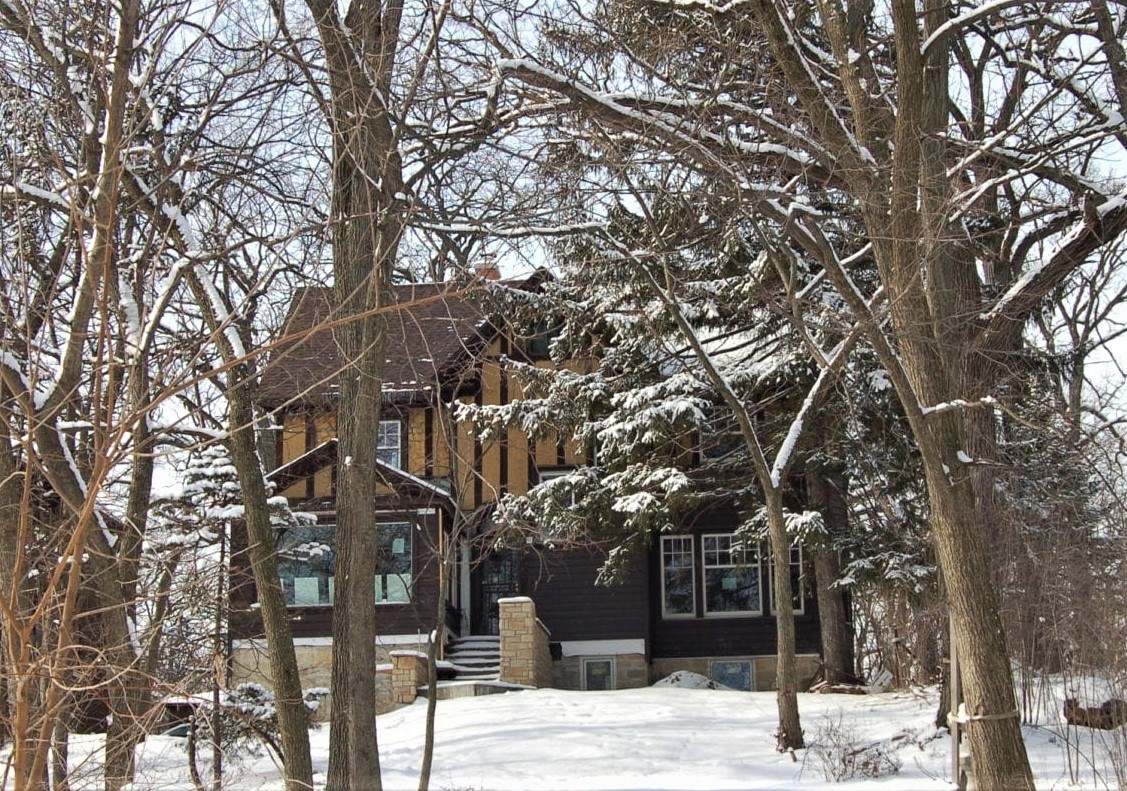
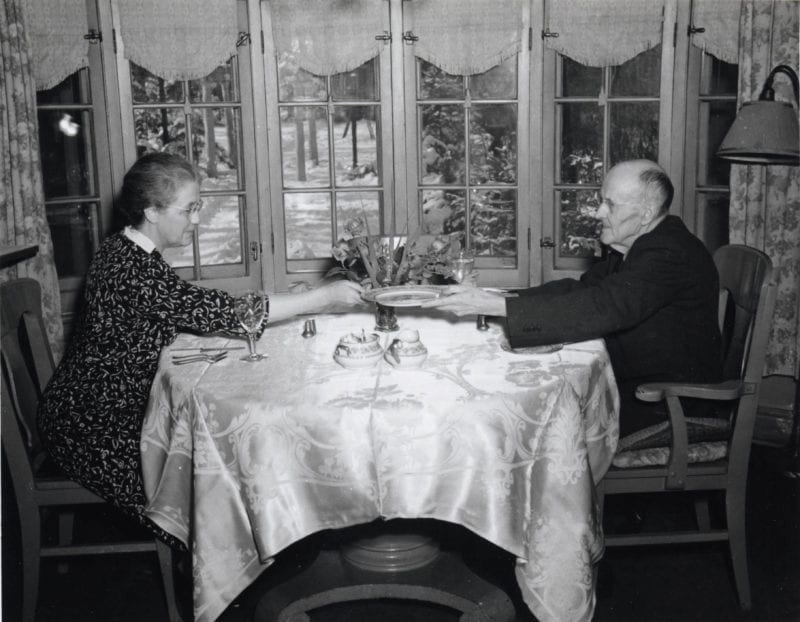
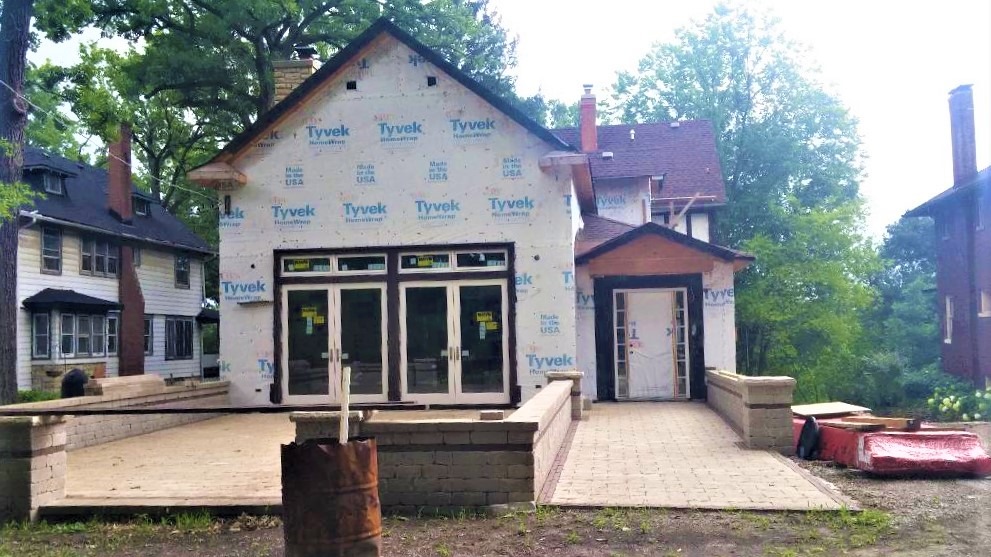
A comprehensive article on the history and restoration of the "Rotary House" at 10856 S. Longwood Drive will be in this week's annual "Good News" supplement to the Beverly Review. Watch for it tomorrow (Tuesday, Aug. 12) on-line and Wednesday (Aug. 13) in print when the newspaper comes out. The story will also be more detailed eventually on the RHS website, which is undergoing a major overhaul.
This house was the home of the founder of Rotary International, Paul Harris, and his wife Jean, from 1912 until Paul's death in 1947. Paul and Jean Harris may well be the most historically significant people from a global perspective to ever call the Ridge home.
Harris founded Rotary in 1905 when he got together with three friends for friendship and business interests. They named their club "Rotary" because the meeting locations rotated among the members.
Today Rotary International has over 1.2 million members in over 200 countries. It is the world's first recognized service club.
The mission and values of Rotary stem from the inspirational vision of Paul Harris and much of the Rotary planning went on at the Longwood Drive house. The house is a very important part of both Rotary and Ridge history.
The house was built in 1905 for Luther S. Dickey, Jr., a grain merchant and prominent Morgan Park citizen. The architect was George Bannister, from Beverly. The accurate name of the house would be the Dickey-Harris House, but it is popularly known as the Rotary House or as the Harris Home, as the Rotary calls it. The original address was 10810 Longwood Drive but this changed to 10856 when Morgan Park annexed to Chicago in 1914.
Paul Harris fell in love with the Ridge when he came here to hike with the Prairie Club. He married Jean in 1910 and they bought the house in 1912 and called it "Comely Bank." They entertained thousands of guests from around the world at that house. The house became a place of pilgrimage for Rotary members.
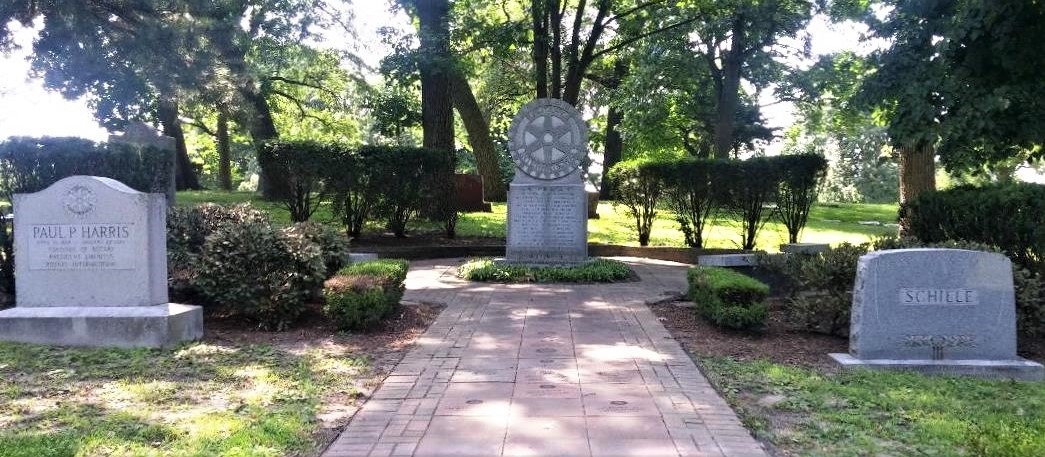
Around the corner at 2028 W. 110th Street lived another Rotary founder, Silvester Schiele. A path was worn between their back doors. Upon their deaths in the 1940s, Harris and Schiele were both buried at the Rotary grave site in Mt. Hope Cemetery on 115th Street.
Rotary International formed the Paul and Jean Harris Home Foundation to buy the house in 2005. They have been raising funds to restore it. Two years ago they started the restoration and hope to finish this year.
The house is being restored to its 1940s status as a museum. A new meeting facility has been added to the back of the house. The grounds will be restored next.
The Ridge owes a big thank you to Rotary for preserving this historically important property. It is expected the house will be open for the Chicago Architecture Foundation's Open House Chicago on Oct. 19-20.
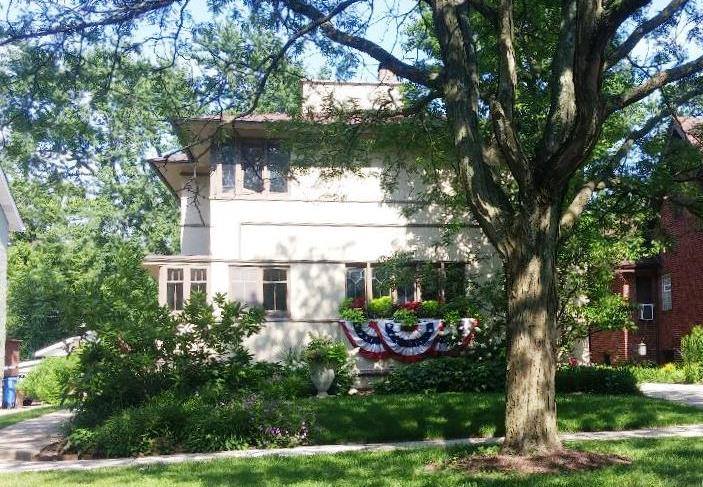
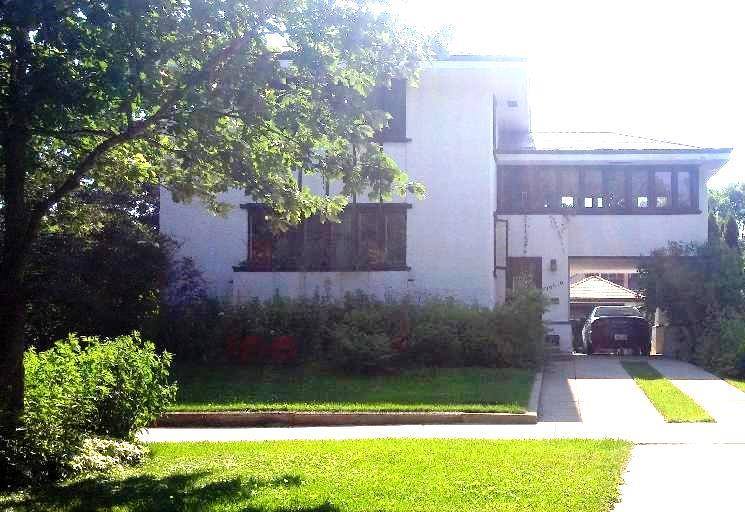
Just today, UNESCO, the United Nations Educational, Scientific and Cultural Organization, announced that it added eight of architect Frank Lloyd Wright's buildings to the UNESCO World Heritage List, elevating them to the same status as the Pyramids and the Statue of Liberty. Two of the buildings are right here in the Chicago area – the Robie House in Hyde Park, Chicago, and the Unity Temple in Oak Park.
The UNESCO inscription included: “These buildings reflect the ‘organic architecture’ developed by Wright, which includes an open plan, a blurring of the boundaries between exterior and interior and the unprecedented use of materials such as steel and concrete. Each of these buildings offers innovative solutions to the needs for housing, worship, work or leisure.”
Although his personal life and business behavior were controversial, Wright (1867 – 1959) was called the greatest American architect of all time by the American Institute of Architects in 1991.
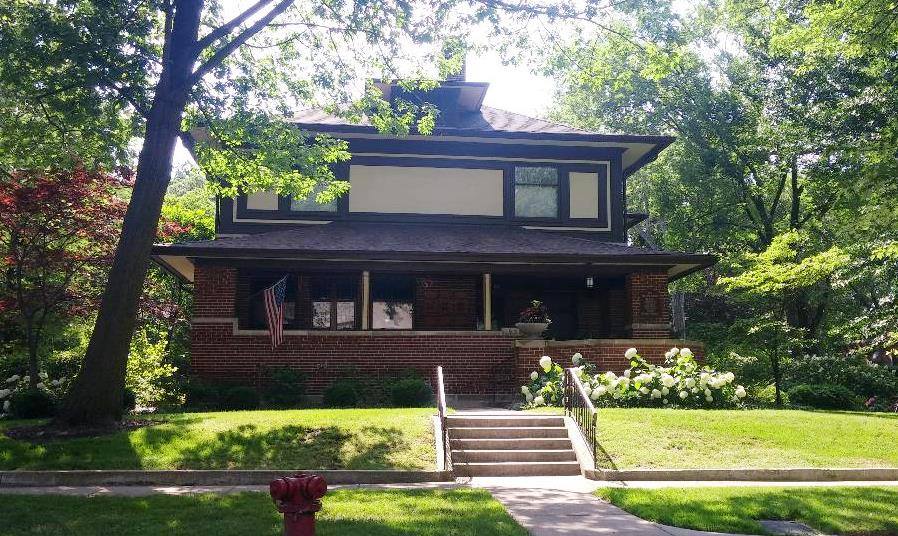
The Ridge boasts four Frank Lloyd Wright residences. First is the William and Jesse Adams House at 9326 S. Pleasant Ave. Built in 1900, the style was not consistent with other houses Wright was designing at the time, leading some scholars to speculate that William Adams, who served as the contractor for some of Wright’s other houses, may have designed the house himself. Wright’s name is printed on one of the original drawings and at the very least, the house’s widely overhanging roofs suggest Wright’s influence.
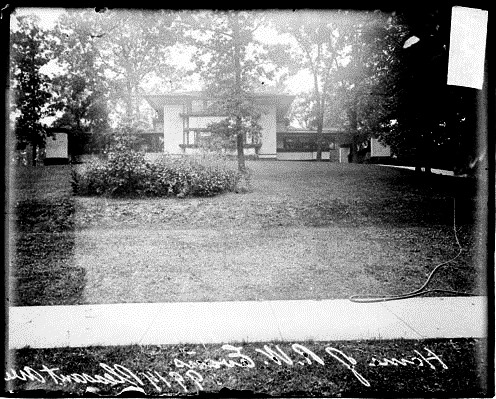
In 1908, the Raymond W. Evans House was built at 9914 S. Longwood Drive. Wright designed this house in his “Prairie Style,” that is, to complement the native Midwestern landscape. The style is characterized by horizontal lines, low-pitched roofs, overhanging eaves, and rows of windows. The long, low lines of the Evans house blend in well with its setting on the hill. The house is based on plans that Wright called “Fireproof Houses for $5000” that used concrete and steel. The plans for the Evans House were expanded to include an extra wing for servants, an enclosed porch and a covered driveway. The house was originally covered with stucco; a later owner added the stone veneer.
Then there are the two American System-Built Houses, the H. Howard Hyde House at 10541 S. Hoyne, and the Guy C. Smith House at 10410 S. Hoyne. These were built from plans developed by Wright in 1916 for affordable middle-class housing using pre-cut lumber but built on-site by certified contractors. Originally, an entire sub-division of these homes was planned – it was to be called “Ridge Homes” – but World War I intervened, bringing a shortage of building materials.
Although listed in many sources, all of these houses are private residences and should be respected as such.