
Explore the RHS Facebook Archives, a rich repository of local history written by Carol Flynn. For two decades, Carol brought a deeply dedicated voice to public education at RHS. Her role as Facebook administrator through mid-2025 naturally extended her prolific research into meticulously detailed articles, most notably her multi-part historical series posts. Today, Carol continues her local history writing for The Beverly Review and other outlets.
Local Architecture
Ridge Historical Society
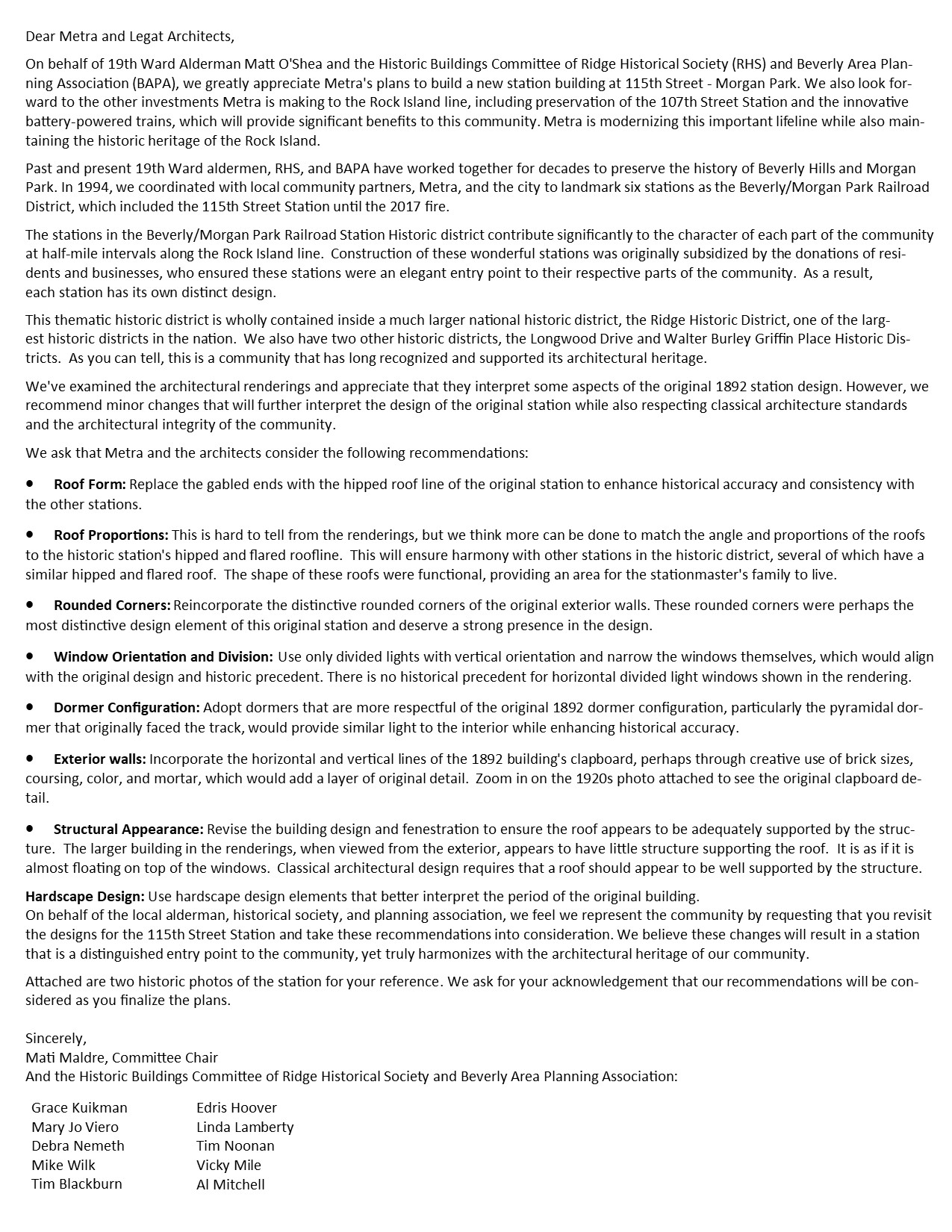
Letter to Metra about 115th Street Station
By Carol Flynn
Metra, the state agency that runs the Rock Island commuter line through Beverly and Morgan Park, recently announced projects for the Rock Island stations along the Beverly line.
The major project that has prompted concern in the community relates to the 115th Street station.
Metra announced it has earmarked $8.69 million for a multi-year plan that includes a new plaza and sidewalks, parking lot resurfacing, accessibility improvements, new lighting, bicycle parking, and landscaping improvements. The funding includes any environmental analyses required by law and will address stormwater management needs.
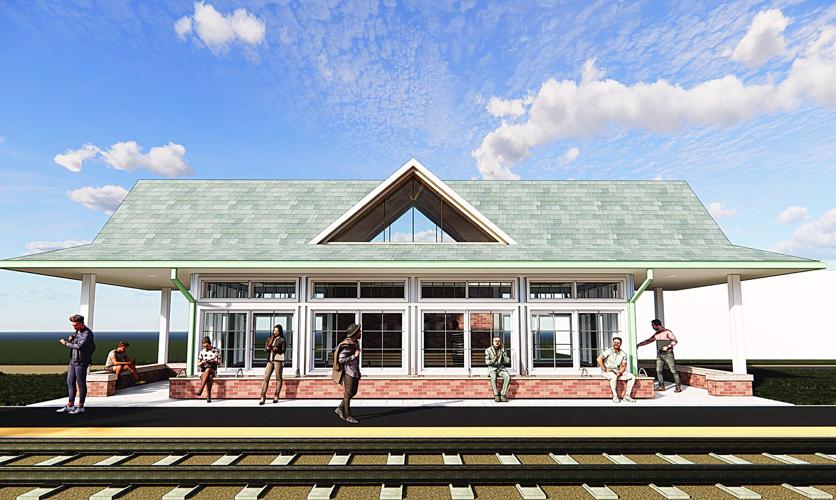
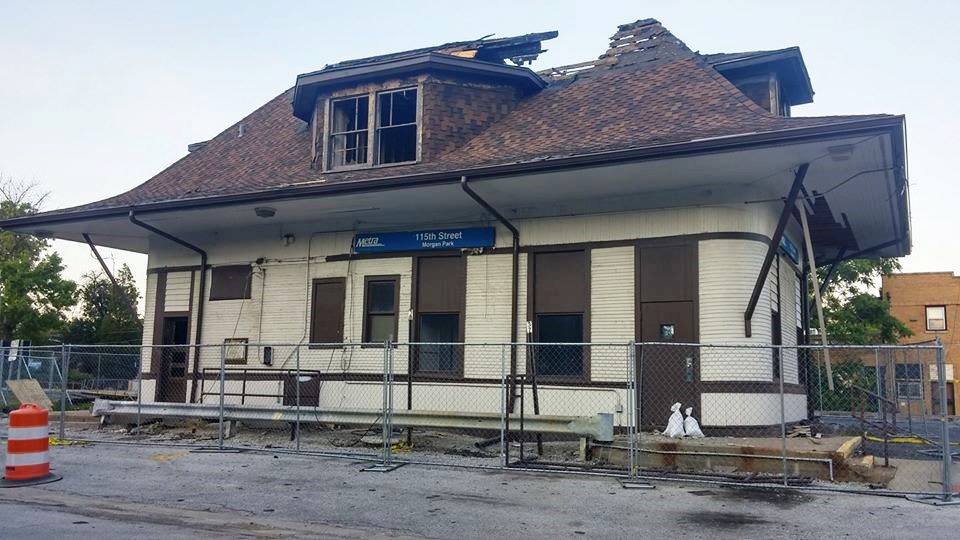
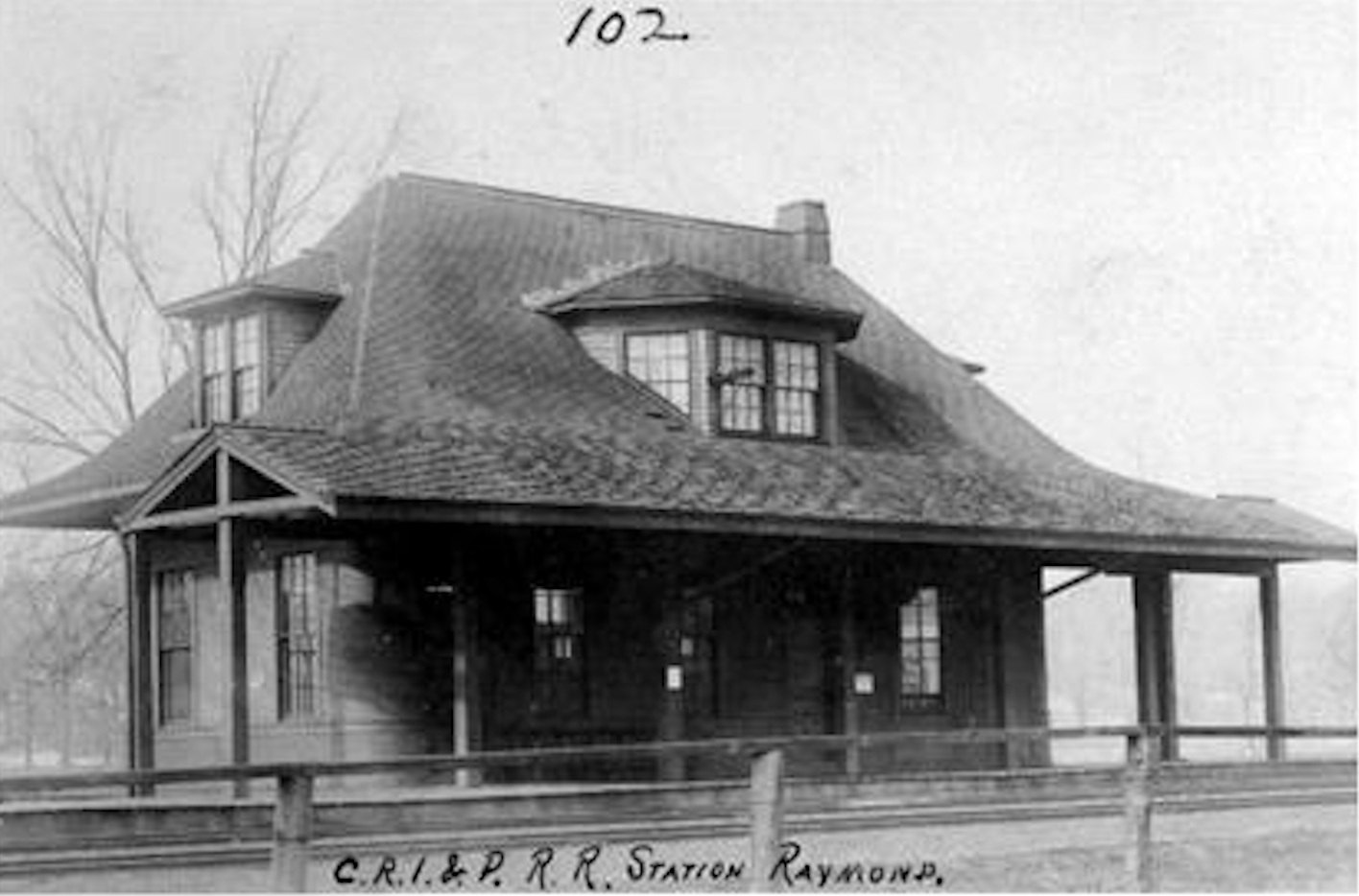
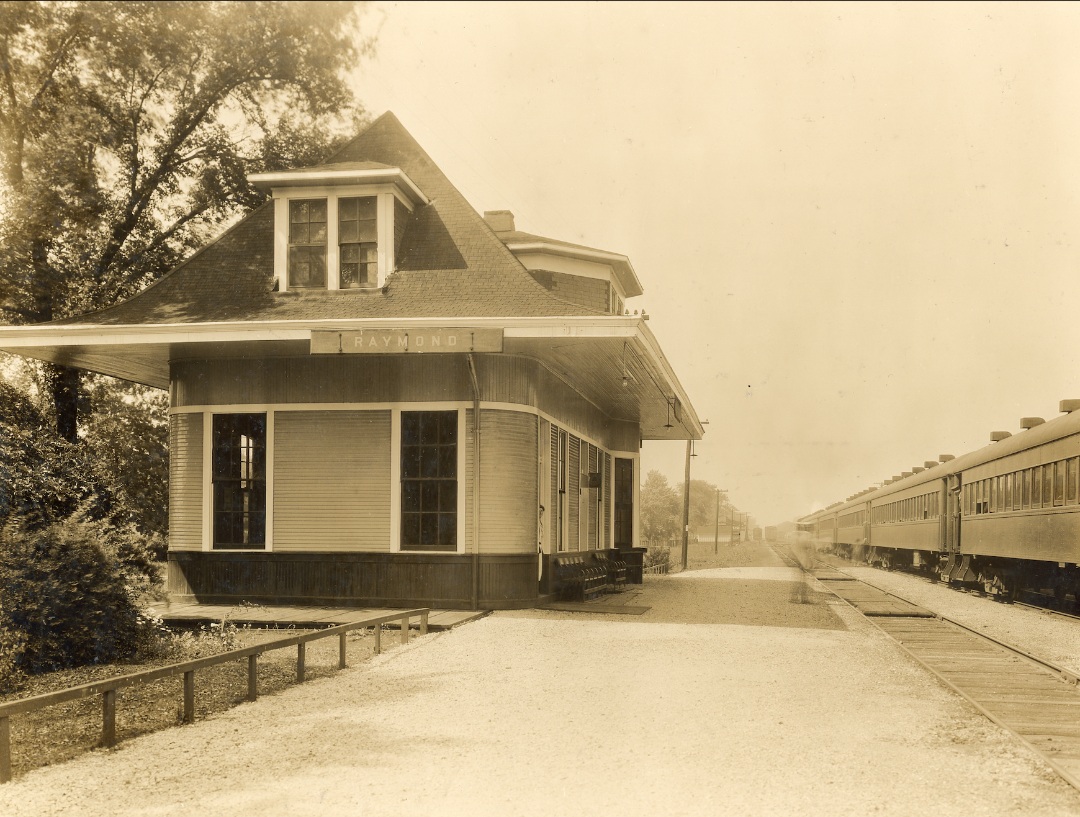
Most significant, the plan includes building a new warming shelter to replace the historic station built in 1892 that was destroyed by fire in 2017.
An illustration of the proposed shelter from Legat Architects was shared publicly at the time of the announcement.
The design of the structure raised concern among members of the Ridge Historical Society (RHS) Historic Buildings Committee (HBC). This prompted them to write a response to Metra, detailing the committee’s concerns and recommendations.
The letter was supported by 19th ward alderman Matt O’Shea, and was signed onto by the Beverly Area Planning Association.
The letter to Metra is attached to this post.
To better understand the situation and the letter, here is background Information.
The reason the design is of concern to RHS is that the train stations are historic buildings, and their look is very important for preserving the visual cohesiveness of the neighborhoods around them and reinforcing the unique historic identity of the Beverly/Morgan Park community. The Historic Buildings Committee feels the proposed structure could be better designed from a historic perspective.
The Metra Rock Island railroad commuter line has always been more than just a convenient means of transportation to downtown Chicago, it is a vital part of the history, tradition, and culture of Beverly, Morgan Park, and Mount Greenwood.
The Chicago and Rock Island Railroad, the original branch to the east of the Beverly branch, running between Chicago and Joliet, began in 1852, and by 1866 had expanded into the Chicago, Rock Island, and Pacific Railroad (CRI&P) connecting Chicago to Denver and Houston.
In 1869-70, the men who owned and operated the CRI&P formed the Blue Island Land and Building Company and bought most of Thomas Morgan’s original estate north of the city of Blue Island.
They built a new branch of their railroad west along 99th Street from the original line to this new land, then south to merge with the original line in Blue Island, creating the route used today.
The land was developed into Beverly and Morgan Park, creating “railroad suburbs” along the commuter line that allowed people to live in the idyllic countryside and easily travel to downtown for jobs, business, shopping, and social and cultural events.
In 1889, the commuter line was extended north to 91st Street.
The train stations along the route, designed to fit in architecturally with the community, became hubs for local business and society and influenced the placement of parks, public buildings, and residences.
In the early 1980s, the state of Illinois took over the line from the declining railroad company through the newly formed Regional Transportation Authority (RTA). Metra is a division of the RTA.
The train stations that mark the stops along the Rock Island commuter line from 91st Street to 115th Street were designated the Beverly/Morgan Park Railroad Stations District by the Commission on Chicago Landmarks in 1995. They are also included in the national Ridge Historic District.
The six stations in the original Chicago landmarks district at 91st, 95th, 99th, 107th, 111th, and 115th Streets created a “thematic-style” landmarks district, with the buildings connected to each other by common purpose, not by geographic closeness.
The stations were built between 1889 and 1945, and, according to Commission staff, “are rare survivors of a once common nineteenth century building type.” They share the scale, materials, and architecture style of nearby buildings, making them “strong visual features” in the community.
The station at 103rd Street was not included in the original landmarks district because it was built in 1967, replacing an 1890 building.
In 2017, the station at 115th Street, built in 1892, was demolished following irreparable fire damage, so that station became another loss to the landmarks district.
At the time the115th Street station was badly damaged by fire in 2017, it was no longer in use for ticket sales and was only occasionally open in winter as a warming house.
The replacement structure is not required by law to meet any historic standards, so Metra’s intent to honor the community’s history is voluntary.
The letter to Metra details several areas that need change.
The concerns and recommendations stated in the letter relate to the roof form and proportions, the loss of rounded corners that were distinctive to the original building, the window orientation and division, the dormer configuration, the lines of the exterior walls, and the lack of a strong structural appearance.
The committee recommended that hardscape design elements be used that better interpret the historic time period of the original building.
Several early pictures of the 1892 building were included with the letter to Metra.
Call to Action
RHS preservationists have raised a call to action, and encourage commuters, residents, and other interested parties to submit public comments on the proposed design to Metra. Please send email comments to the Metra Board at metraboard@metrarr.com.
Another option is to use the Metra "contact us" form at:
https://metra.com/contact-us
Metra also announced other projects along that line as follows:
– 95th Street – Beautification landscape work
– 99th Street – Accessibility and state of good repair improvements
– 101st Street – Crossing replacement
– 103rd Street – Beautification landscape work
– 111th Street – Accessibility and state of good repair improvements
These improvements may include ramps, handrails, curbs and gutters, parking lots, pavement markings, signage, retaining walls, canopy alterations, and other alterations required to meet accessibility criteria.
In 2024, Metra announced that the historic station at 107th Street would undergo rehab, but did not set a date for that project or provide other details. That structure was built in 1908, and any changes to it would have to meet landmarks criteria.
Metra announced the work on the 115th Street station would begin in 2025.
According to Tim Blackburn, RHS Board member and member of the Historic Buildings Committee, the new 115th Street Station was unveiled and approved with no public debate or feedback at the Metra board meeting on February 19, 2025. Given that Metra plans to start construction in 2025, the committee members knew they needed to act fast to influence changes to the design.
Although the project page for the 115th Street Station reports that Metra will use "distinctive architectural elements and materials that are appropriate for the historic neighborhood," the committee members feel the current plans do not achieve that goal.
Any questions about this should be sent directly to the RHS Historic Buildings Committee at ridgehistory@hotmail.com or 773/881-1675.
And please feel free to share this with any groups that may be interested. Thank you!
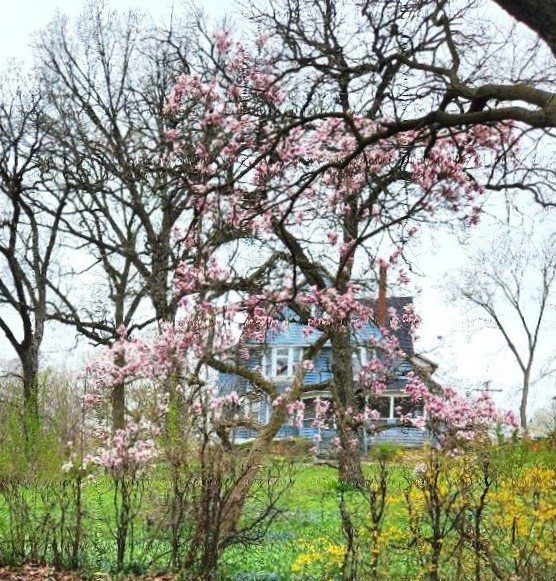
Happy Easter from the Ridge Historical Society.
RHS will be closed tomorrow, Easter Sunday, April 20, 2025.
Some lovely springtime views can be found around Beverly and Morgan Park. This is the Reuben P. Layton House at 10324 Longwood Drive, glimpsed through magnolia, forsythia, and Siberian squill.
Siberian squill and forsythia were introduced into the U.S. by English settlers, and both became popular for gardens in the late 1800s.
Magnolias traveled in the opposite direction – the magnolias native to the southern U.S. were introduced into England and Europe by returning explorers and traders.
Edited: There are daffodils here, too – also introduced into the U.S. In fact, most of the gardens we build are full of plants not native to the U.S. They come from tropical areas so they only last through the summer, or they have been hybridized to withstand our northern climate. Too many people still think of our native prairie plants as "weeds."
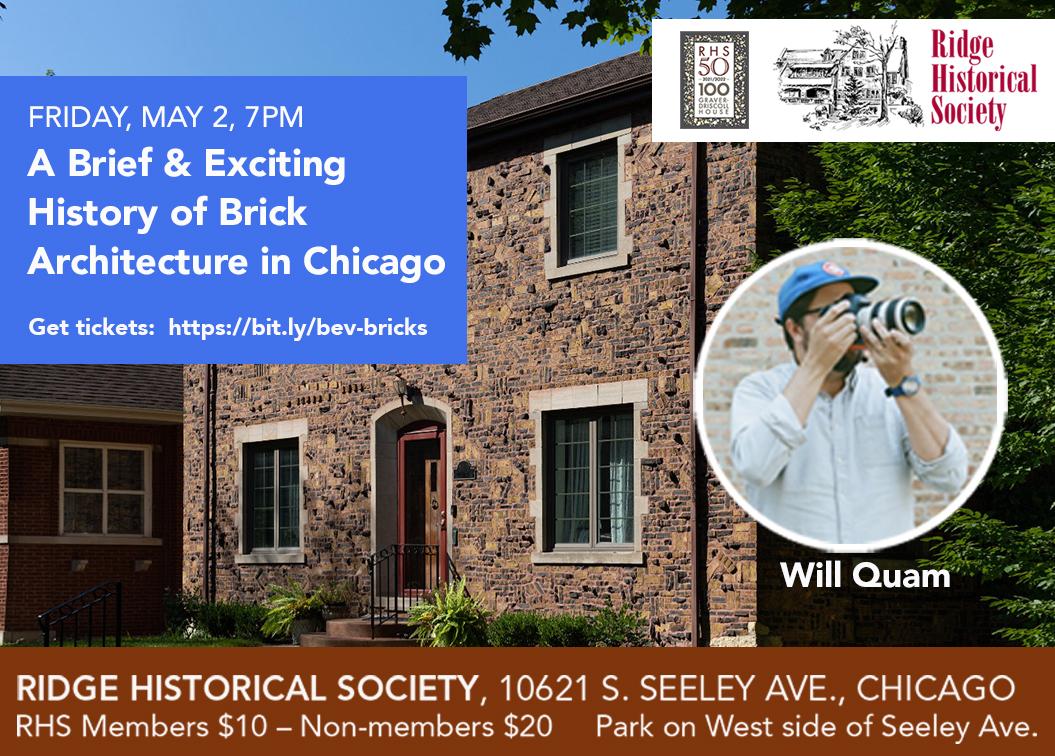
Friday, May 2, at 7:00p.m.
A Brief & Exciting History of Brick Architecture in Chicago
Brick is an ever-changing material that has defined Chicago and its architecture. Learn the trends and fashions through Chicago's brick history: Homegrown common bricks, imported red bricks, wild colors, textures, and terra cottas of the 1910s-30s, Miesian modern bricks and more. You'll discover the technology and architectural innovations that can be found across Beverly, Morgan Park, and Chicago, written into its brick. This presentation will be accompanied by dozens of Will Quam's photos of buildings and their details.
About the presenter: Will Quam is an architecture historian and photographer. He has been called "Chicago's premiere brick expert" by Geoffrey Baer, and his photography and passion for Chicago's brick history have been featured on Block Club Chicago, WTTW, The Chicago Tribune, WGN and more. His architecture tours were named some of Chicago's best by Curbed and the Chicago Reader. His book on this history of brick architecture in Chicago, Fire and Clay, will be published by the University of Chicago Press in 2026. Learn more at www.brickofchicago.com
Members: $10 | Non-members: $20 | Students under 18: $5
Ridge Historical Society
10621 S. Seeley Ave., Chicago, IL 60643
Get tickets online: https://bit.ly/bev-bricks
RSVP: ridgehistory@hotmail.com 773.881.1675
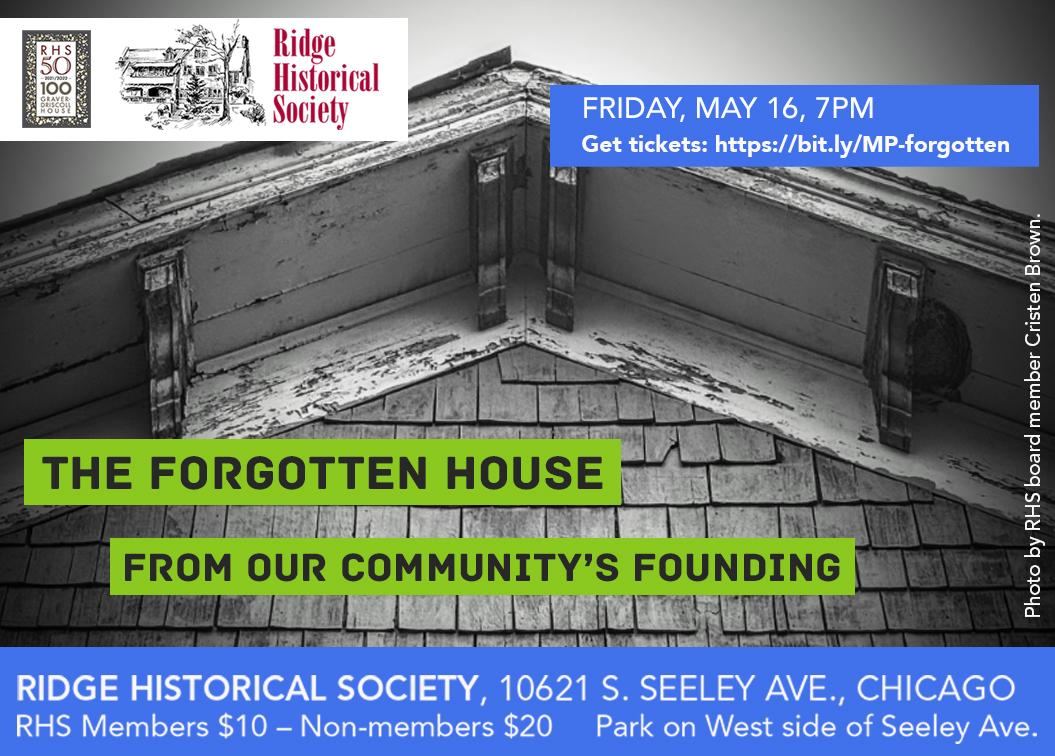
The Forgotten House
from Our Community’s Founding
Friday, May 16, at 7:00p.m.
The Forgotten House
from Our Community’s Founding
While on a run in August 2024, RHS board member Tim Blackburn jogged past a house in Morgan Park that he instantly knew was one of the earliest remaining homes in the Beverly Hills and Morgan Park area. His initial research determined the house had been moved to its current location, but discovering where it was moved from and its history turned out to be a 'needle in a haystack' investigation.
In this program, Tim will guide you through his journey to uncover the important origins of the house, built by one of the community’s earliest settler families just a few years after they aided Black freedom seekers nearby. Given the current condition of the house, this is a history you'll want to learn before it is possibly lost to time. Ridge Historical Society hopes that by educating about the history of this house, its legacy may be preserved.
Ridge Historical Society
10621 S. Seeley Ave., Chicago, IL 60643
Members: $10 | Non-members: $20 | Students under 18: $5
Get tickets online: https://bit.ly/MP-forgotten
RSVP: ridgehistory@hotmail.com 773.881.1675
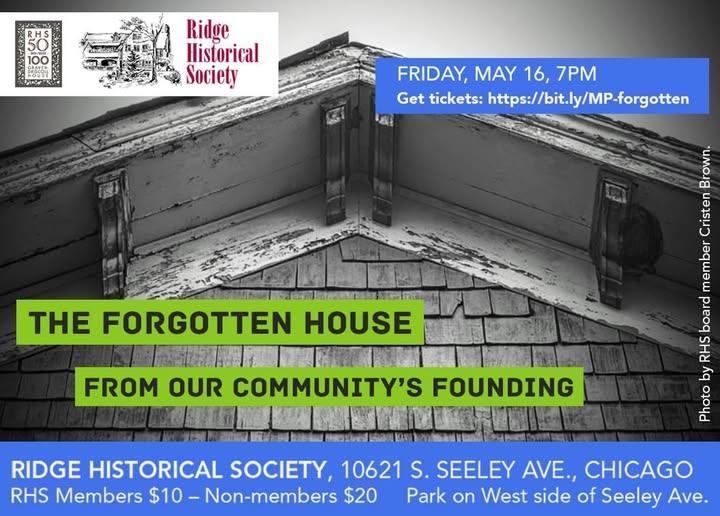
THIS IS GOING TO BE A VERY INTERESTING PROGRAM AND THERE ARE SEATS LEFT FOR FRIDAY NIGHT.
Yes, using all caps is "shouting," and that is what I am doing to call attention to this program.
Nestled away on a side street in Morgan Park is an old, old house, boarded up, holes in the roof. You can tell it was once a great house, and RHS researcher Tim Blackburn realized that and got curious about its background.
Tim researched the house and discovered an amazing history.
Now the question is, can it be saved? These kinds of discoveries and questions are part of the very foundation of the community.
– Carol Flynn, RHS Facebook Administrator
The Forgotten House from Our Community’s Founding
Friday, May 16, at 7:00p.m.
The Forgotten House from Our Community’s Founding
While on a run in August 2024, RHS board member Tim Blackburn jogged past a house in Morgan Park that he instantly knew was one of the earliest remaining homes in the Beverly Hills and Morgan Park area. His initial research determined the house had been moved to its current location, but discovering where it was moved from and its history turned out to be a 'needle in a haystack' investigation.
In this program, Tim will guide you through his journey to uncover the important origins of the house, built by one of the community’s earliest settler families just a few years after they aided Black freedom seekers nearby. Given the current condition of the house, this is a history you'll want to learn before it is possibly lost to time. Ridge Historical Society hopes that by educating about the history of this house, its legacy may be preserved.
Ridge Historical Society
10621 S. Seeley Ave., Chicago, IL 60643
Members: $10 | Non-members: $20 | Students under 18: $5
Get tickets online: https://bit.ly/MP-forgotten
RSVP: ridgehistory@hotmail.com 773.881.1675
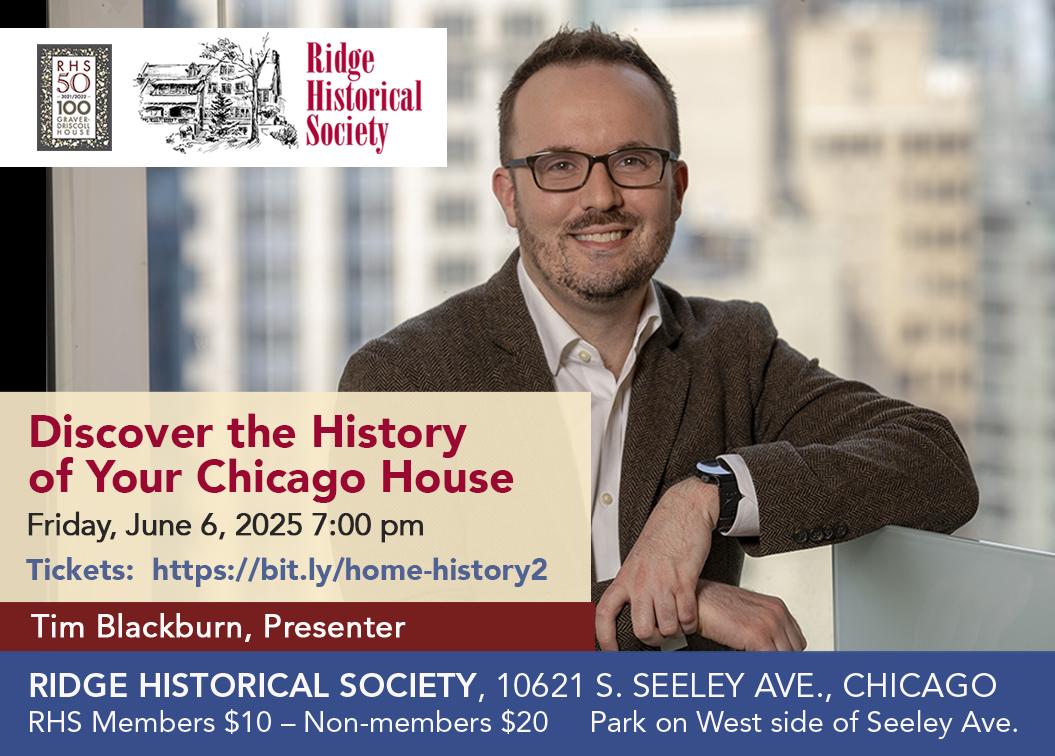
Friday, June 6, at 7:00 p.m.
Discover the History of your Chicago House
– Tim Blackburn, Researcher
Ridge Historical Society is repeating this very popular event. You will learn how to research the history of your Chicago home, including the architecture, construction, inhabitants, and owners.
You’ll receive a workbook and develop research methods that will help you gain a new understanding and appreciation for your home’s history. Tim will cover the research methods covered will be useful for anyone researching a building older than 1955 in Chicago. You’ll learn about building permits, local history, Chicago street renumbering, Sanborn maps, and more.
The Ridge Communities of Beverly Hills, Morgan Park, Washington Heights and Mount Greenwood have an incredible collection of homes and housing styles – many with a rich history.
Members: $10 | Non-members: $20 | Students under 18: $5 (Cash or Check at the door)
Ridge Historical Society
10621 S. Seeley Ave., Chicago, IL 60643
Get tickets online: https://bit.ly/home-history2
RSVP: ridgehistory@hotmail.com 773.881.1675
The program on the "Forgotten House" will be repeated at the Walker Branch Library on Saturday, June 28th, from 2:00 – 3:00 p.m.
Tim Blackburn will present his research that rediscovered the identity of the Erastus A. Barnard I House, built ca. 1865, one of the oldest houses in the community.
The Walker Branch Library is located at 11071 S. Hoyne Avenue. Admission to this library program is free.
Here is the link to the program details:
https://chipublib.bibliocommons.com/events/683a0ba4b354fd280022f257
Join us Tue. Aug 19 at Ridge Park Fieldhouse – 9625 S. Longwood Dr. for a vital conversation about protecting our community's architectural heritage! 🏛️
BAPA and RHS invite you to an essential discussion on preserving the diverse historic architecture that makes our neighborhoods unique.
What you'll discover:
– Insights into our landmark districts from RHS Board Member Tim Blackburn
– Practical strategies for maintaining our area's distinctive character
– Expert perspectives from preservation agency representatives
– Answers to your questions about protecting our built heritage
This is your chance to learn how we can safeguard the beautiful, historic spaces we call home for future generations.
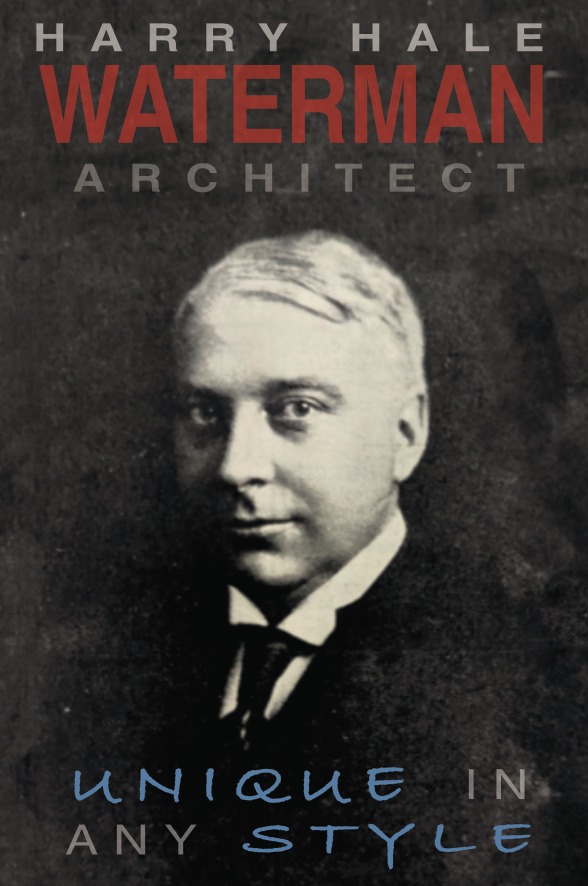
Today is the final day to experience "Harry Hale Waterman: Unique in every Style" at the Ridge Historical Society. Come see this fascinating exhibit before it's gone!
Join us today (9/28) from 1-4 PM at 10621 S. Seeley Avenue. Admission is free.
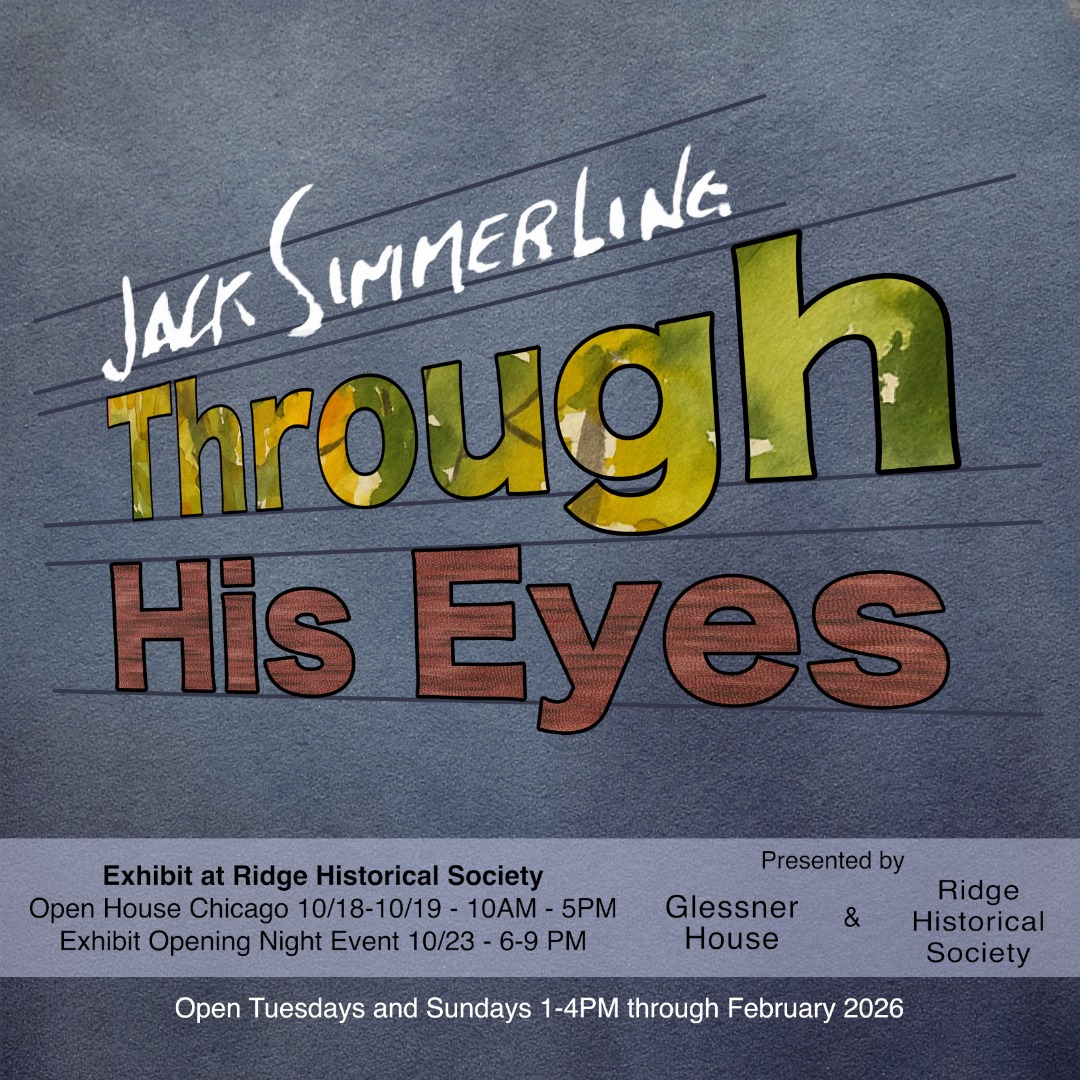
Jack Simmerling: Through His Eyes
An exhibit at Ridge Historical Society in partnership with Glessner House
Step into the world of Jack Simmerling (1935-2013), a beloved Chicago artist, historian, and preservationist whose life's work was dedicated to capturing the soul of the city's architecture. As a teenager, Simmerling documented and painted the vanishing grandeur and ruin of the Victorian-era residences on Prairie Avenue, salvaging what he could from them as they were demolished.
The exhibit “Jack Simmerling: Through His Eyes” at Ridge Historical Society traces his development from those early Prairie Avenue days through to some of the last drawings of his own neighborhood, Beverly Hills – Morgan Park, where he opened The Heritage Gallery in 1959. The exhibit was produced in partnership with Glessner House and includes many Prairie Avenue artworks and artifacts from its Jack Simmerling Collection.
Simmerling believed that "much of what's most beautiful about architecture is in the details." This exhibit reflects that idea, allowing visitors to see the architecture in his own community. His drawings and watercolors of homes, churches, and architectural vignettes of the community help visitors see Beverly Hills – Morgan Park through the artist's eyes.
"Jack Simmerling: Through His Eyes" opens to the public on October 18, 2025, at Ridge Historical Society, 10621 S. Seeley Ave, Chicago, IL. Don't miss this unique opportunity to experience Chicago's architectural heritage through the remarkable vision of Jack Simmerling.
Special Opening Hours:
Open House Chicago (October 18-19, 2025): 10 AM – 5 PM
Exhibit Opening Night Event (Thursday, October 23, 2025): 6 PM – 9 PM
Regular Exhibit Hours (through February 2026):
Tuesdays and Sundays: 1 PM – 4 PM