
Explore the RHS Facebook Archives, a rich repository of local history written by Carol Flynn. For two decades, Carol brought a deeply dedicated voice to public education at RHS. Her role as Facebook administrator through mid-2025 naturally extended her prolific research into meticulously detailed articles, most notably her multi-part historical series posts. Today, Carol continues her local history writing for The Beverly Review and other outlets.
Local History
It is our responsibility as a community to keep our history alive. You can help too!
Do you have any information about your home or your family that you would like to share with RHS? We are looking for any photographs or documents that would help us create a living resource for the history of the Ridge community.
If you have any information, contact Ridge Historical Society at 773-881-1675 or ridgehistory@hotmail.com
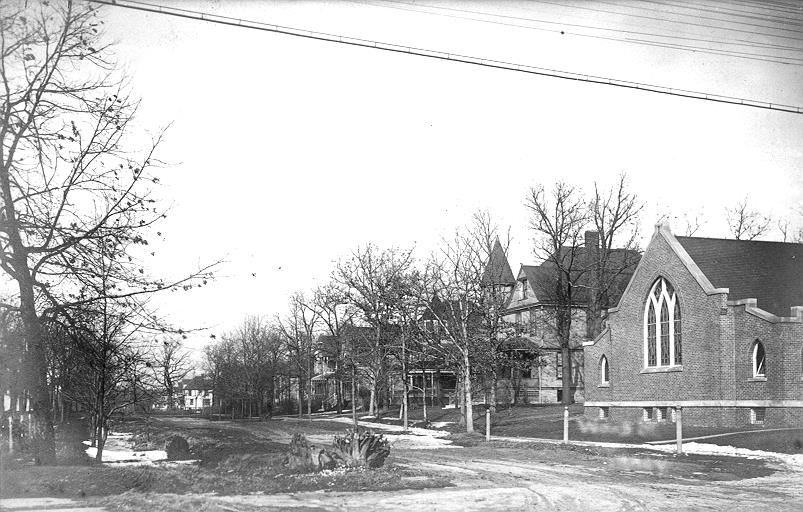
Photograph: an early view of the corner of 103rd and Wood St. On the right is the original construction of Bethany Union Church, followed by the beautiful Queen Anne homes that line the street.
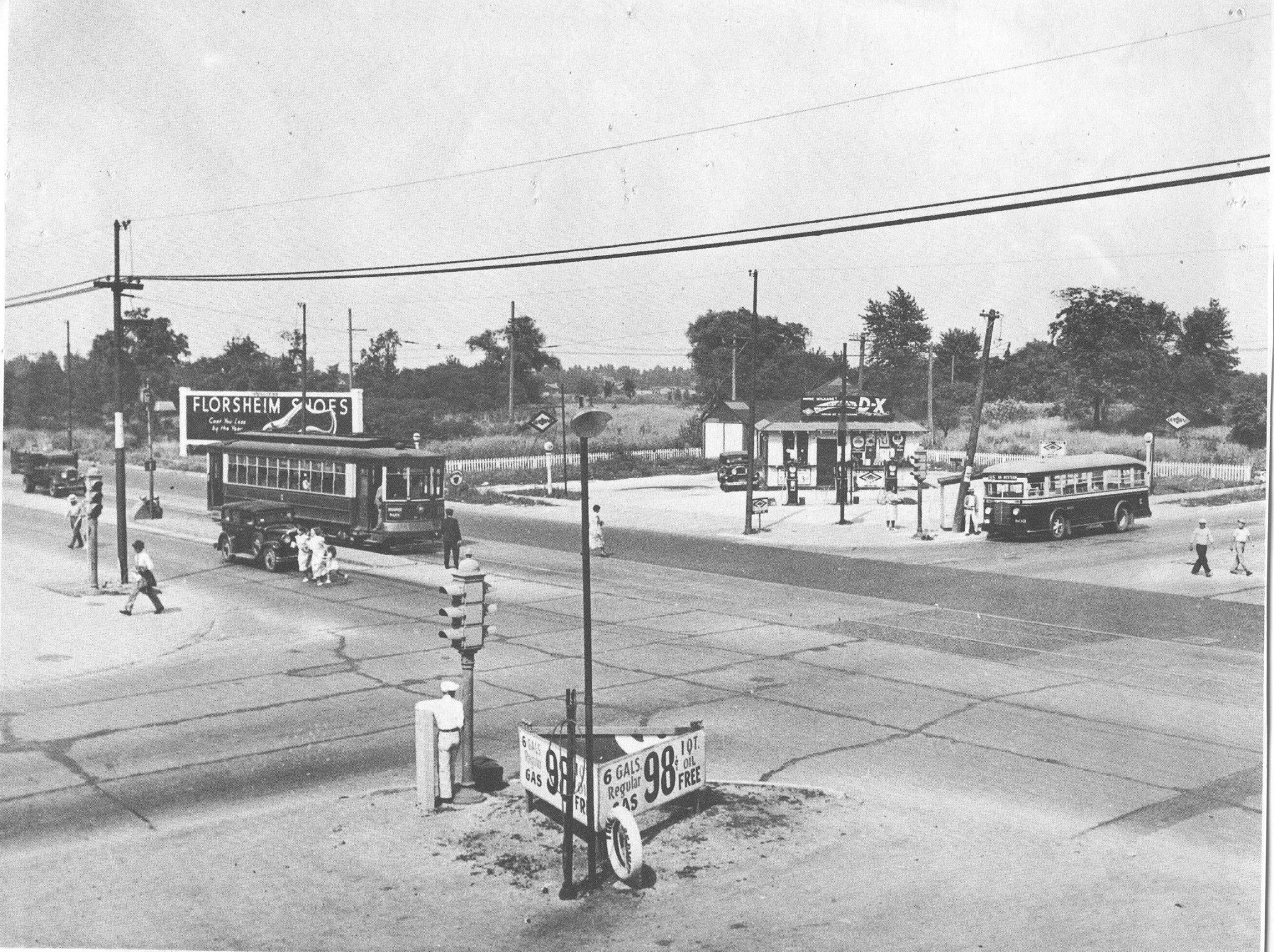
Here is a #FlashbackFriday from our digital archive. Can anyone name what street corner this is?
One of the duties of a legitimate history organization like the Ridge Historical Society is to investigate and either verify or "debunk" local myths and legends to maintain historical accuracy. It's not always easy to get to the truth, and it can be dismaying and downright upsetting to the public to find out something they have believed for years is just not accurate.
Case in point for Morgan Park: The widespread belief that the Hopkinson-Platt House on 108th and Drew was a stop on the Underground Railroad. As we finish up Black History Month, let's take a look at this local urban myth, which someone referred to on an RHS post last week.
The Underground Railroad was a network of safe stops where escaping slaves could find refuge and help as they made their way north to freedom. The locations were passed along by word of mouth and secret symbols.
The Blue Island Land and Building Co. began platting and selling the land bordered by today's Western Ave., Ashland Ave., 107th St., and 119th St., in 1869, after the U.S. Civil War ended. William Hopkinson purchased that land at 108th and Drew and built that house in 1871, too late for the Underground Railroad.
The Platts owned the house in later years. What appears to have happened is that a man investigating an ancestor's escape to freedom using the Underground Railroad told Mrs. Platt that the ancestor's journal described a house with windows like the ones on the Hopkinson-Platt House. From this, Ms. Platt drew the conclusion this was the house. But the dates just do not confirm this.
There are oral histories that confirm that escaping slaves passed through Beverly/Morgan Park and hid in barns. And there are several verified Underground Railroad stops on the South Side. But, unfortunately, the Platt House was not one of them.
So what about the "hidden room?" Well, it could have been a storage area, or changes could have been made to the house at any time along the way. It could have been used in any number of ways. Prohibition?
Does this lessen the historical significance of the house? Not at all. It is one of the earliest structures in Morgan Park, and has a fascinating history. Its nearly three acres of never-developed land make it a prime spot to study for potential significance to the Native Americans who lived in the area.
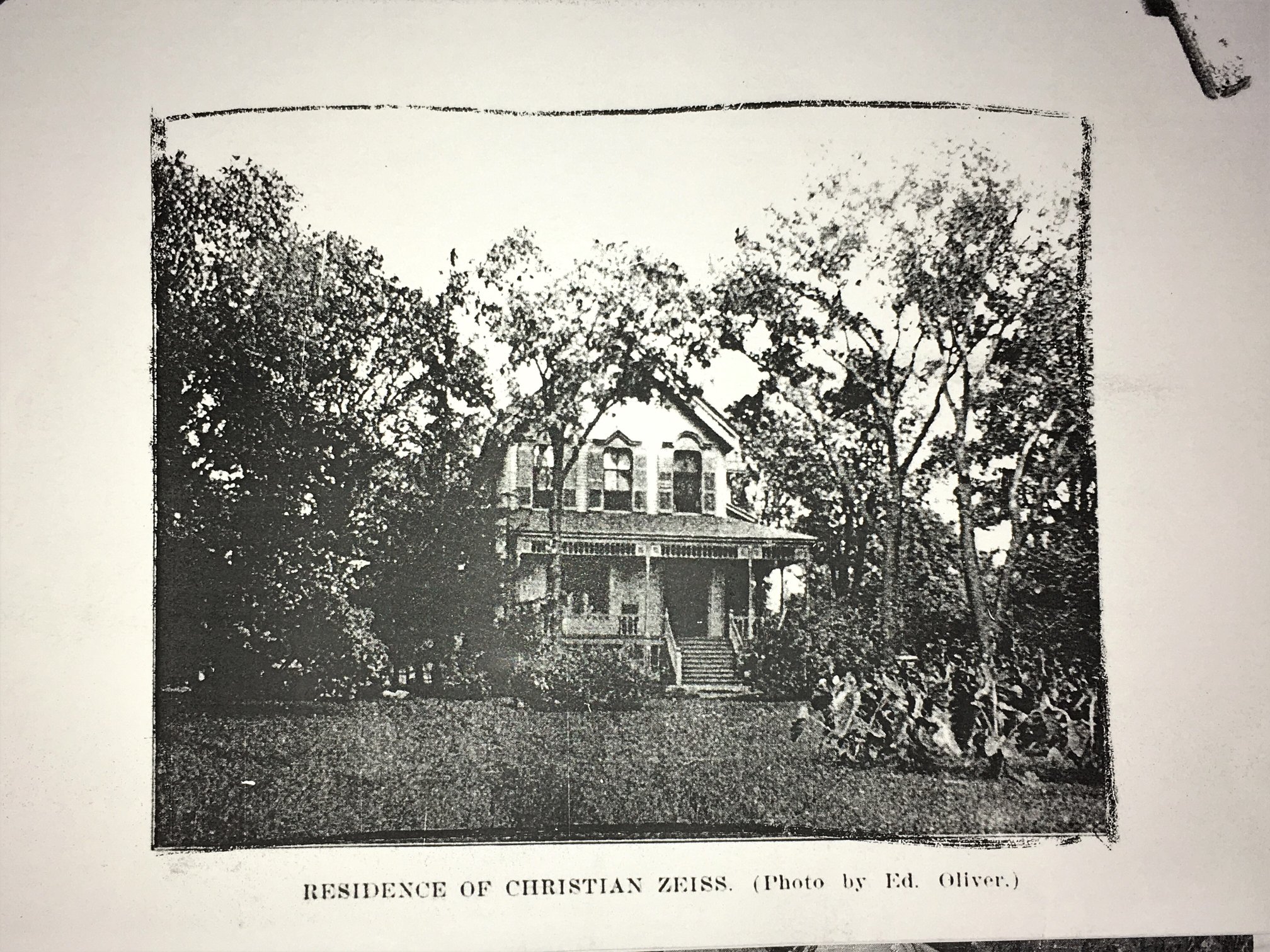
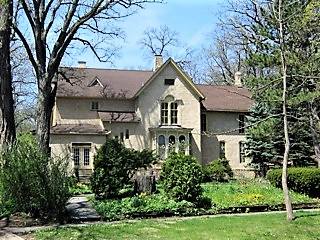
Two pictures here show, first, the house in its early years, then owned by Christian Zeiss, when the front entrance faced Prospect Ave. As land around the house was sold off, the house was remodeled to create the entrance on the Drew Ave. side, which is shown in the second photo, the way the house looks now.
– Carol Flynn, RHS Communications @ridgehistoricalsociety
In addition to Women's History Month and Irish American Heritage Month, March is also National Nutrition Month. This is a very busy month!
When you think of good nutrition, fresh healthy fruits and vegetables come to mind. It might be surprising that not that long ago, the Ridge area was full of farms growing and selling produce locally.
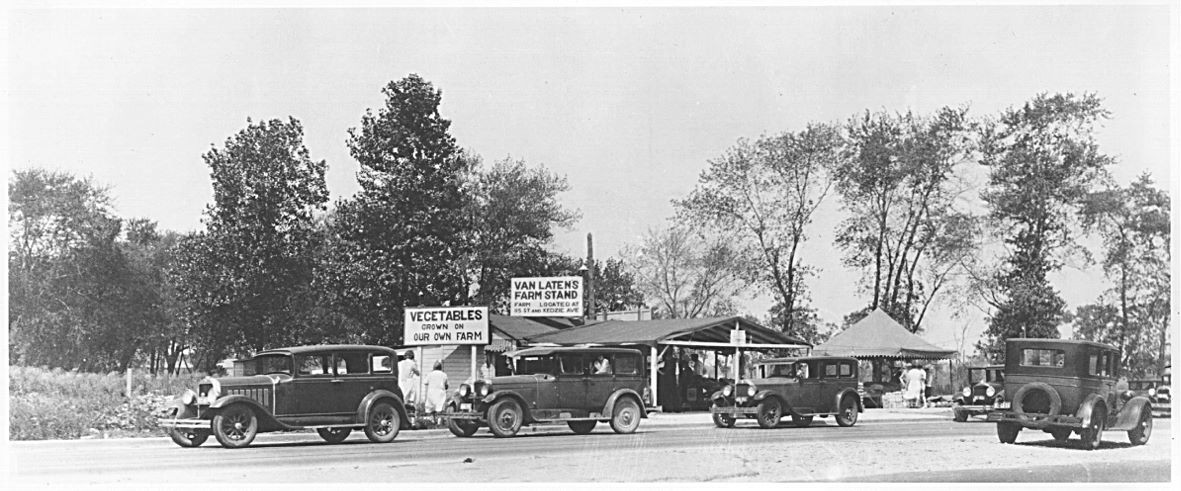
For 55 years, the Van Laten farm stand was a fixture at 101st and Western Avenue.
The Van Latens came from the Netherlands in the late 1800s. They settled in Chicago and started a poultry farm. They eventually rented many acres of land in the area, including around 115th and Western, the area now built up as Merrionette Park, and the strip mall at 115th and Kedzie. That was farmland up until the 1950s.
The Van Latens were part of the "last working farm in Chicago" that was on the grounds now housing the Chicago High School for Agricultural Sciences.
Other farmers on the land included the Martens, Aggens and Langlands. This is a very interesting story – the founding and building of that high school in the 1970s-1980s – and we will cover it another day.
Author Therese Ragen remembered walking up to Van Laten's stand, where they would pick out "fresh tomatoes and lettuce and corn on the cob, and carrots and peaches and plums. Mrs. Van Laten would take her pencil out from behind her ear, adding up the prices in a column on a paper bag." They would pay for the goods and leave their address and the Van Latens would later deliver the produce to their home.
This picture from the Ridge Historical Society archives is of the Van Laten farm stand on Western Ave.
This is how it happens. History was made today in Chicago and on the Ridge. The first African American gay woman was elected as Mayor.
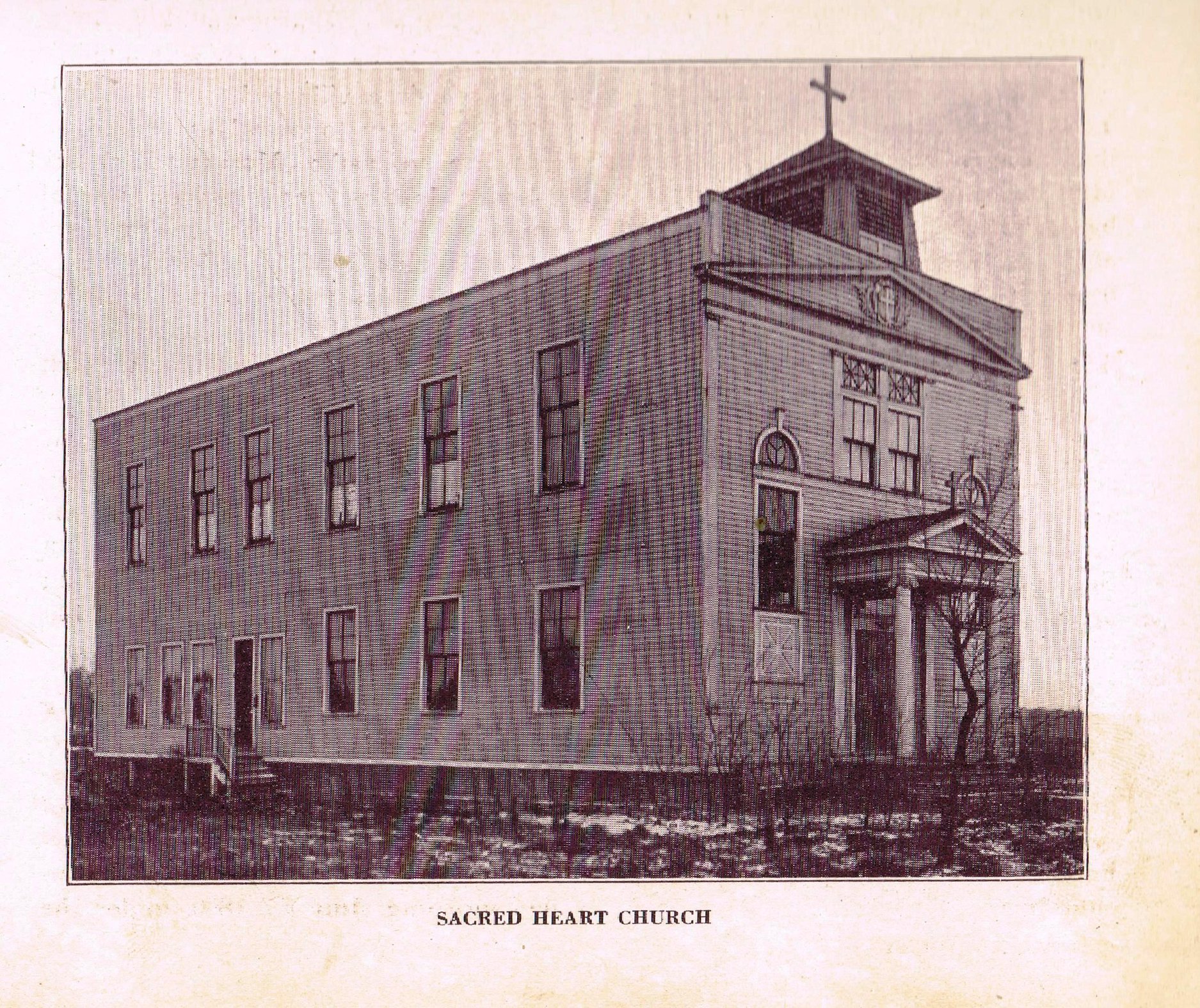
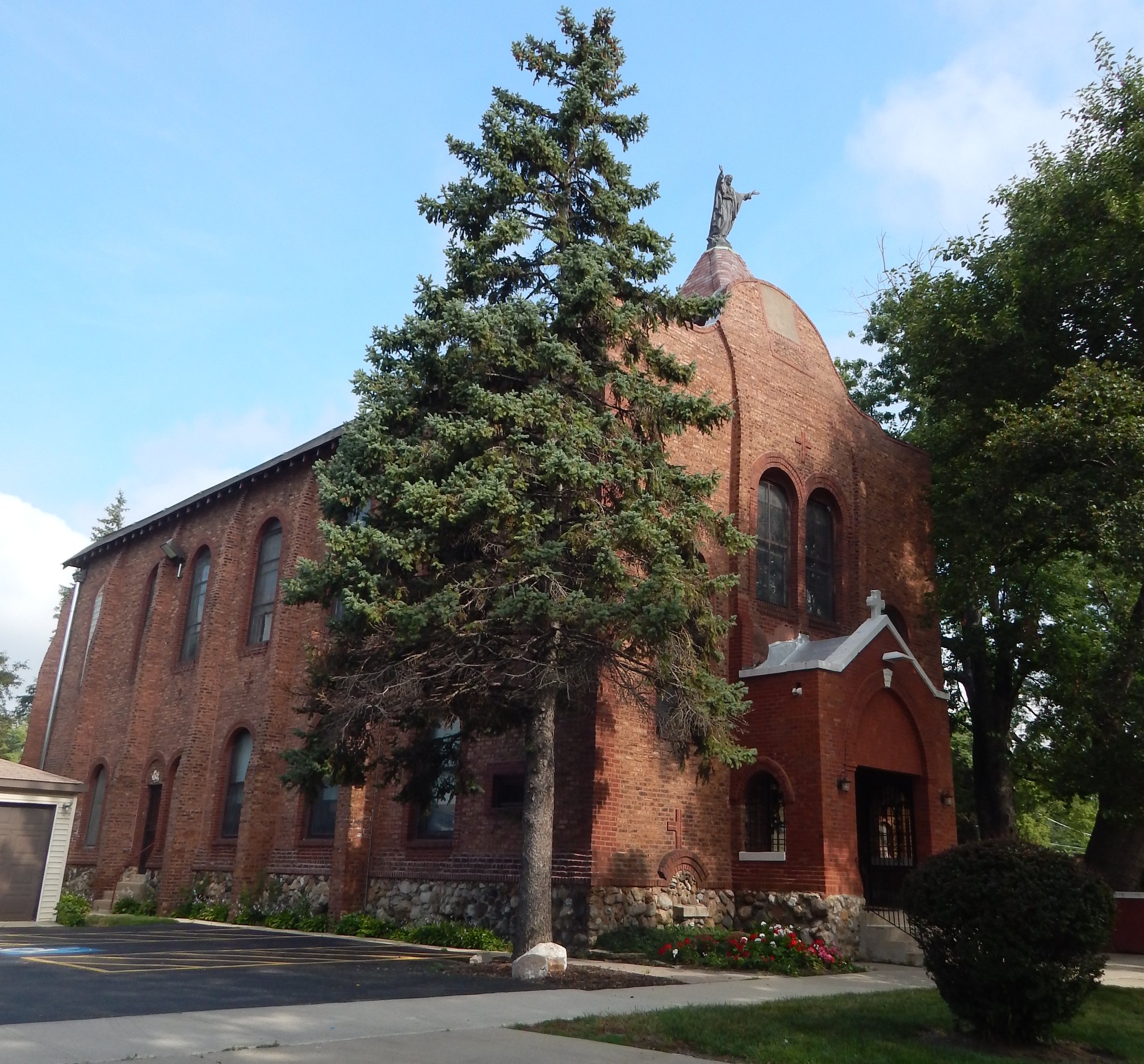
The unfortunate fire in Notre Dame Cathedral got me thinking about the "French connection" to the Blue Island Ridge. We had an early group of settlers here, and their legacy to the community is also a church – the historic and charming Sacred Heart Church at 11652 S. Church St.
Sacred Heart was originally founded in Alsip in 1892. After another unfortunate fire, the church moved to its current location to be closer to the Purington Brick Yards at 119th and Vincennes, where many of the French people worked. The current church was built in 1904-5 and originally appeared as a wooden frame church, built on posts in a swamp. The church was established as a “national church” which meant it would serve a particular nationality, not a defined geographic area. The story goes that the workers hid bricks in their clothing and brought them over from the brick yard, one or two at a time, and in 1922, the present brick facade was added. The church as it stands now is actually the old frame church clad with this "donated" brick.
Father Raymond DeNorus, a missionary priest born in France, became pastor in 1912. From all accounts, he was a very charismatic man. He loved a good time, yet he was a man deeply devoted to his faith. He dispensed medicine, holy water and blessings from his side door. Numerous miracle cures were reported to have taken place over the years. Crutches, canes and braces left abandoned at the church were hung on the side walls. Services at the church drew large crowds and it became a place for pilgrimages. During this time the church became known as the Shrine of the Sacred Heart, a shrine being a special place of devotion that attracts travelers from afar. Fr. DeNorus retired in 1935. With time, most of the French families moved on and were replaced by German and Irish workers.
In 1979, the Archdiocese of Chicago under John Cardinal Cody decided to close and demolish Sacred Heart, citing as its main reasons a shortage of priests and the expense of construction needed to correct building code violations. Members of the congregation rallied to restore and preserve the church. The church was closed from 1979-1982. But then Cardinal Cody died, and the new Archbishop, Joseph Bernardin, agreed to review the matter. He reopened the church and celebrated Mass there in 1983. The church was reestablished as a "mission church" operating as part of the Holy Name of Mary Parish in Morgan Park.
The devotion to the Sacred Heart of Jesus originated in France in the late 1600s when a nun, Saint Margaret Mary Alacoque, claimed that during a series of apparitions, Jesus promised certain blessings to those who practiced devotion to his Sacred Heart. The Vatican’s position is that the manifestation and promises are true. So the name Sacred Heart was very fitting for a French mission church.
[NOTE: Amendment to this story: The wife of the man from the Sacred Heart congregation who originally told me the story of the bricks posted this: "The brick masons were given permission to take the bricks that were used to line the ovens as those bricks were marked with black spots and therefore not fit to sell." Thank you for sharing more interesting local folklore with us! – Carol Flynn, RHS Communications]
Picture 1 is the original church ca. 1913 before the brick facade was added. The side door at which Fr. DeNorus greeted visitors is visible. Photo from the RHS newspaper archives.
Picture 2 is the church today covered with the Purington bricks. Photo by C. Flynn.
We are starting a "Group" page for people to share stories, photos, questions and answers about the history of the Beverly Hills, Morgan Park, Mt. Greenwood, and Washington Heights communities of Chicago. Please join us! Click on the new page here and send us a request to join. You will be added within a day.
New post on our "interactive" group page – Beverly/Morgan Park/Washington Heights History. Check it out! Join the Group so you can post your own stories on the history of the Ridge communities!
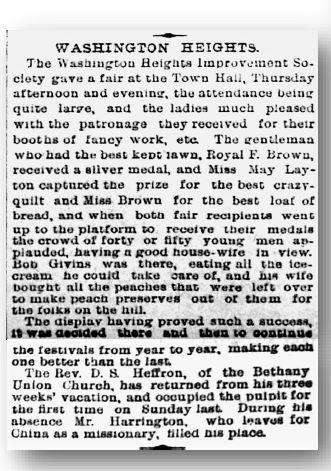
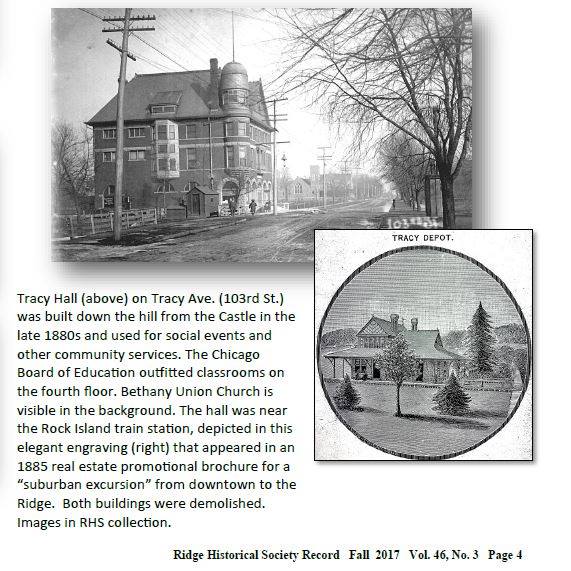
Here's a little article from The Inter Ocean from summer of 1886 giving news of a "fest" in Washington Heights, which included the area we know as Beverly now. The town hall referred to in the article is likely Tracy Hall. Bob Givins is, of course, the builder of the Castle at 103rd St. and Longwood Drive. The newspapers loved Bob Givins; he was a real Chicago personality back in his day.
Today is National Hot Dog Day, established by the National Hot Dog and Sausage Council. It’s a marketing ploy, although it’s hard to believe that hot dogs need marketing. They are considered one of the “all-American” foods and, by one estimate; Americans eat 20 billion hot dogs each year.
The origin of hot dogs is obscure but most likely they grew out of the pork sausages developed in Frankfort, Germany, in the 1200s, which were commonly called “frankfurters.” Then they travelled to Vienna, Austria, in the 1600s, where beef was added to the mixture and these were known as “wieners.” They came to the USA with German immigrants in the 1800s.
Who first put them on a bun is disputed. One claim is that this happened at the 1893 World’s Fair in Chicago, and we’ll go with that for this post since we are in Chicago. (Other claims are Coney Island in New York as early as the 1860s; St. Louis, MO, street vendors in the 1880s; and the St. Louis World Fair in 1904.)
Also not known with certainty is how they got the name “hot dog.” The term “dog” was used for sausage going back to the 1800s because in Germany some sausage makers did use dog meat in sausage. Another theory is that they were called this after the little German dachshunds. And they were served hot. By 1900, “hot dog” and “red hot” were in common usage.
Hot dogs became firmly and forever entrenched in American culture when they became associated with America’s “pastime” – baseball. Today, they are a critical part of “Chicago street cuisine.”
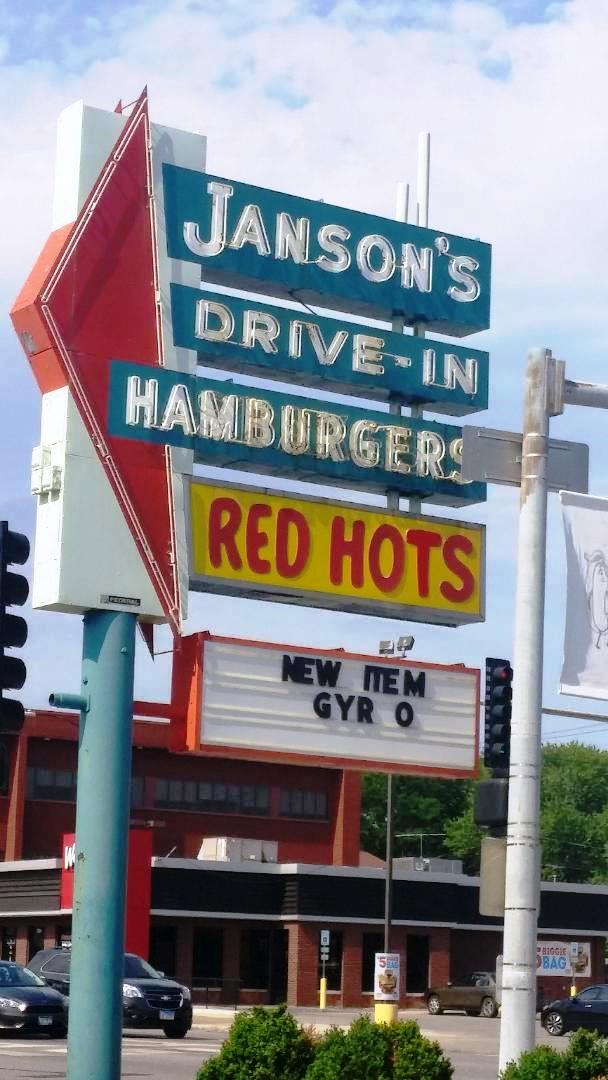
And what better place to enjoy a hot dog on the Ridge than the historic Janson’s Drive-In at 9900 S. Western Ave.? The Beverly Review ran an announcement for the opening of this new “fast-food drive-in” restaurant in 1960. The house specialty, a banana milkshake, cost 50 cents.
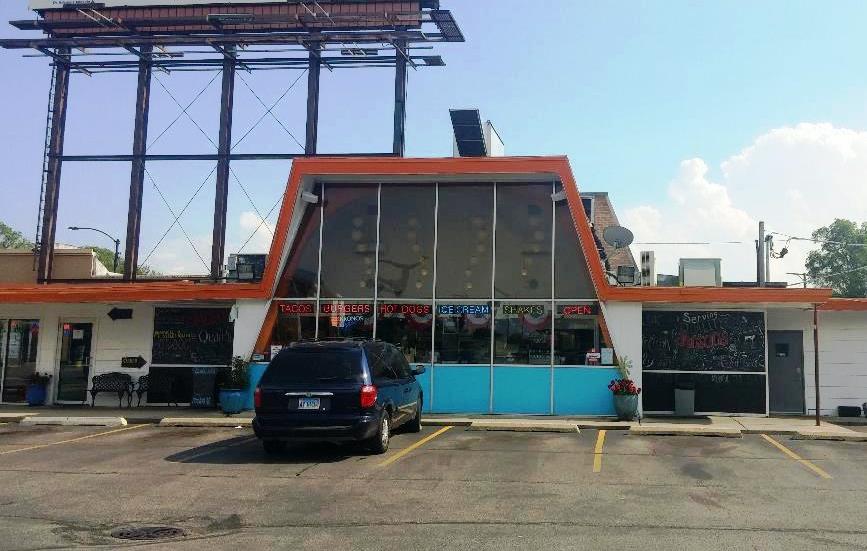
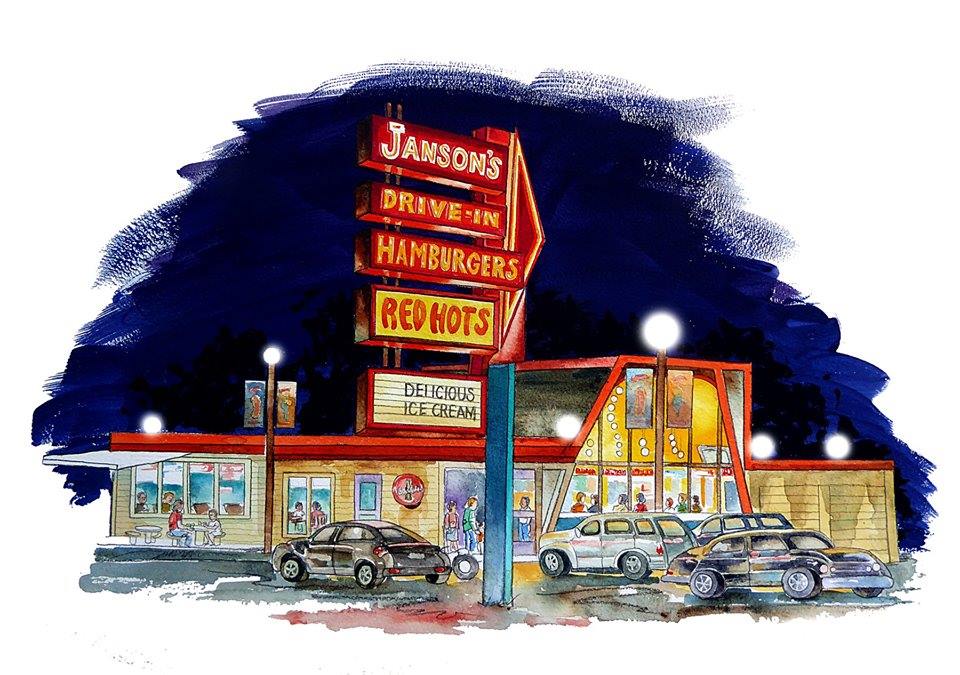
Janson’s remains a true drive-in today, with no indoor seating in its distinctive A-frame building with the orange roof line. The neon sign still lights up the night sky. Bright, flashing neon signs reached their peak in the 1950s–1960s, then began to decline due to the expense of production. Janson’s frequently shows up today on lists of “roadside attractions,” places worth stopping to visit.
Janson’s made television history when it appeared in the TV series Crime Story starring the late Dennis Farina, Chicago police officer turned actor. The opening scene of the first episode was filmed at Janson’s with Del Shannon’s song “Runaway” playing in the background. The clip can be viewed on YouTube; just enter “crime story opening scene.”
These photos of Janson’s are from today, taken by C. Flynn. The water color painting is the creation of Beverly resident and artist Judie Anderson.