
Explore the RHS Facebook Archives, a rich repository of local history written by Carol Flynn. For two decades, Carol brought a deeply dedicated voice to public education at RHS. Her role as Facebook administrator through mid-2025 naturally extended her prolific research into meticulously detailed articles, most notably her multi-part historical series posts. Today, Carol continues her local history writing for The Beverly Review and other outlets.
Local History
Morgan Park Days
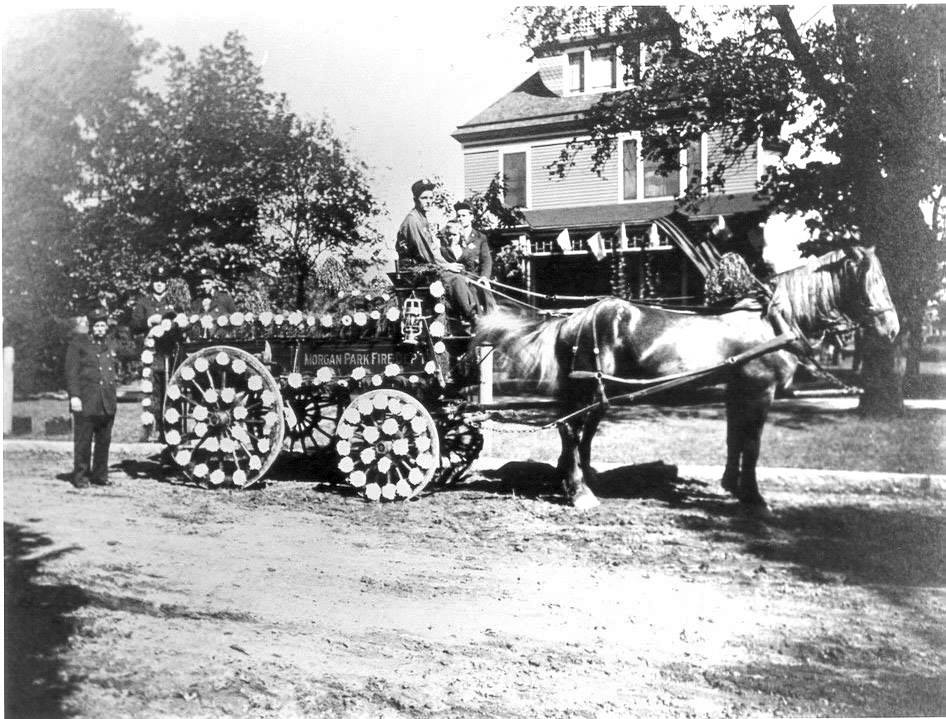
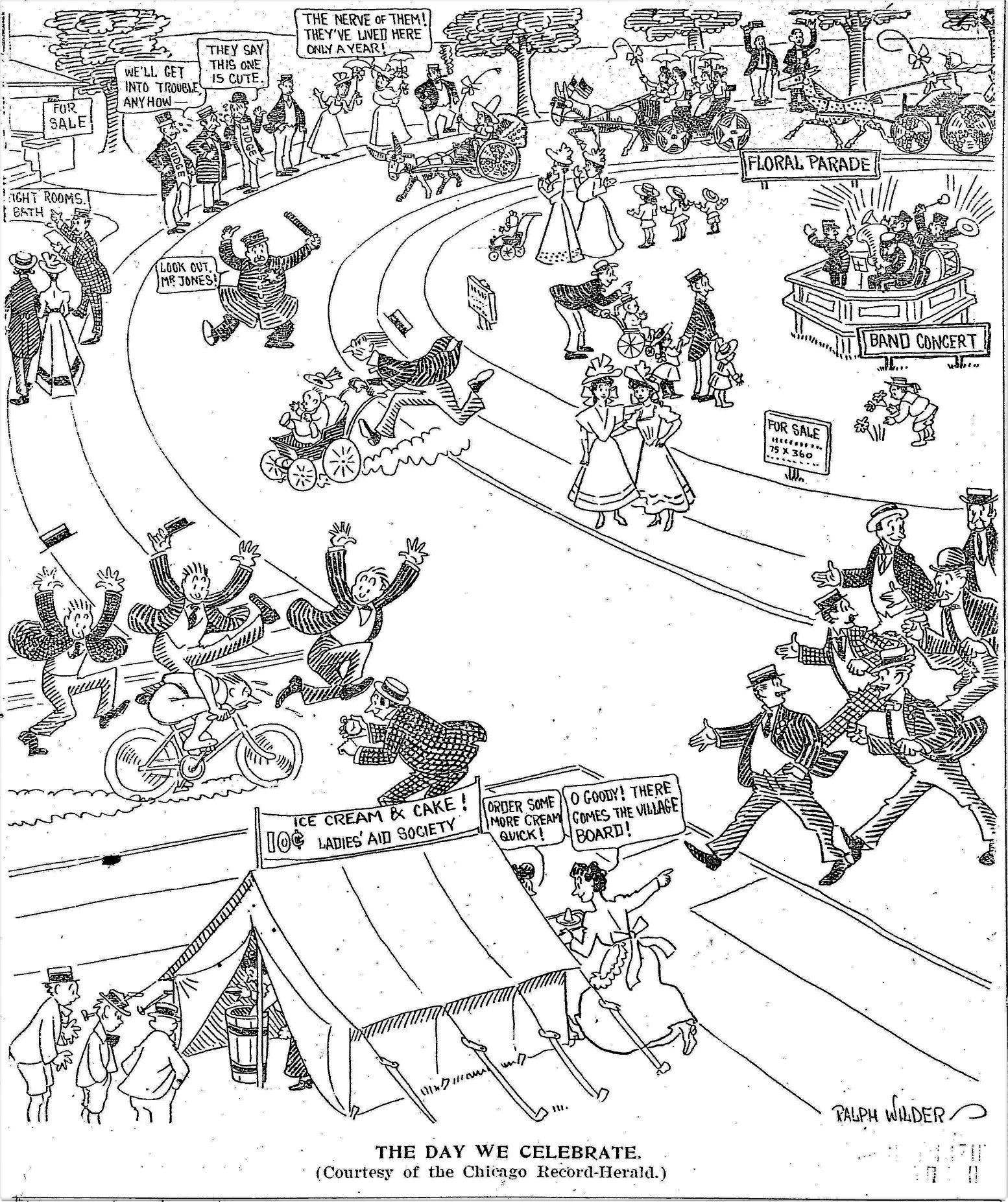
The summer is almost over – Labor Day will be here in just a few days. Labor Day was a special time for Morgan Park in the early 1900s – it was the day devoted to “Morgan Park Day” celebrations.
In September 1900, fourteen years before annexing to the City of Chicago, the Village of Morgan Park held its first-ever public holiday to simply celebrate the village as a community. Stores closed, children were let out of school, and the village’s marching band paraded around town. The people gathered to listen to speeches and sip lemonade.
At that 1900 event, it was suggested that Morgan Park have one day each year devoted solely to the village, where the people “could meet on common ground, their only creed being universal brotherhood.” This led to an event known as Morgan Park Day that was held annually on Labor Day for over a decade.
Morgan Park Days, the first of which was held in 1901, were chock full of activities. Athletic competitions under the direction of the Morgan Park Athletic Club were held on the grounds of the Morgan Park Academy. The entire village decorated houses and outdoor areas. Parades featured carriages and floats adorned with floral displays.
Afternoons were for bands, concerts and speeches. The public forum was considered a very important part of the day. Evenings were reserved for concerts, dinners, dancing, and social time.
The peak year for Morgan Park Days was 1908, and what a grand event that was. The planners encouraged residents to invite their friends and relatives from all over to come for the day. House parties were held throughout the village. The village of 5,000 residents expected 10,000 visitors; over 20,000 showed up.
The churches were in charge of refreshments. Booths were set up to sell peanuts, popcorn, crackerjack, pork and beans, chop suey, pop, lemonade and orange cider, coffee, doughnuts and milk, candy, pies, fruit, sandwiches and red-hots. Other booths sold postcards and souvenirs. Adults strolled around with decorated canes and children were supplied with red balloons. Adults and children alike waved pennants and banners.
The athletic events and contests were numerous. The parade was the longest ever, stretching for two miles. Evening entertainment included a chorus of 50 members. Leading up to the day, public practice sessions were held so residents would be ready to sing along.
No mentions of Morgan Park Day are found in the city papers after 1911. The village annexed to the City of Chicago in 1914. On Labor Day 1917, events focused on honoring the men joining the “new national army” as the country had joined the World War I efforts in April of that year.
A more complete article on Morgan Park Days appears in the summer issue of the RHS newsletter which recently was sent to members. If you are not a member of RHS, please consider joining.
The Ridge Historical Society was saddened to learn of the death of William A. Sandstrom, 92, one of our long-time leaders. Bill was a past president and treasurer and a Director Emeritus. He was also very active with the Kiwanis of SW Chicago and a leader at Bethany Union Church. He was a veteran of World War II and employed with the Environmental Protection Agency for many years. Our sincerest sympathy is extended to Bill's wife, Marie, and his children and grandchildren. Visitation Friday 3-8 p.m. at Donnellan Funeral Home 10525 S. Western Ave. Chicago. Visitation Saturday from 10 a.m. until time of Service 11 a.m at Bethany Union Church 1750 West 103rd. Street.
The Ridge Connection to Chance the Snapper
Remember “six degrees of separation” – that idea that all people are six, or fewer, connections away from each other?
How does the Ridge connect to Chance the Snapper, that alligator that lived in the Humboldt Park lagoon for a while, until he was captured last week and sent to a reptile facility in Florida to live out his life in comfort and safety?
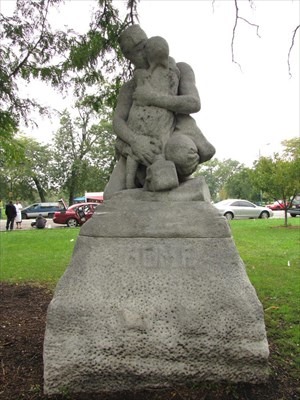
Our connection comes through public art. Humboldt Park is the site of a famous sculpture called “Home” by Charles Mulligan. The sculpture depicts a miner hugging his small daughter.
The Mulligan family lived in Fernwood, the community just east of Washington Heights. Later descendants of the family lived in Beverly and Morgan Park. And the final resting place for Charles Mulligan is Mt. Greenwood Cemetery, 2900 W. 111th Street.
Mulligan was born in 1866 in Riverdale, County Tyrone, Ireland. In 1881, he, his parents and his seven brothers and sisters immigrated to the United States in search of better opportunities. They settled in the South Side of Chicago where the father took a job building passenger railroad cars for Pullman.
Young Charles Mulligan also got a job at Pullman, carving marble into wash basins for the passenger cars. At night, he studied art. During breaks, he practiced modeling in clay and carving small objects from scrap pieces of marble. One day, the famous sculptor Lorado Taft was visiting the Pullman plant and noticed Mulligan and his work. He was impressed by the boy’s rough talent and invited Mulligan to study under his mentorship. (Talk about being in the right place at the right time!)
Mulligan became a student of Taft’s at the Art Institute of Chicago and also spent time in Paris at the L’Ecole des Beaux Arts. He became a naturalized citizen of the U.S. in 1888. He married Maggie Isabella Ely and they had six children; three died in infancy, and three sons survived to adulthood.
Mulligan had a distinguished career as an artist. In 1893, Taft made him foreman of his workshop for the Chicago World’s Fair. After Taft’s resignation, Mulligan became the head of the department of sculpture of the Art Institute. Mulligan was one of the founders of the Palette and Chisel Club, and he was a member of prominent organizations such as the Chicago Society of Artists (CSA), Cliff Dwellers, and the Irish Fellowship Club.
Regrettably, Mulligan’s life was cut short by pancreatic cancer. He died in March 1916 and was buried in Mt. Greenwood Cemetery, along with other family members.
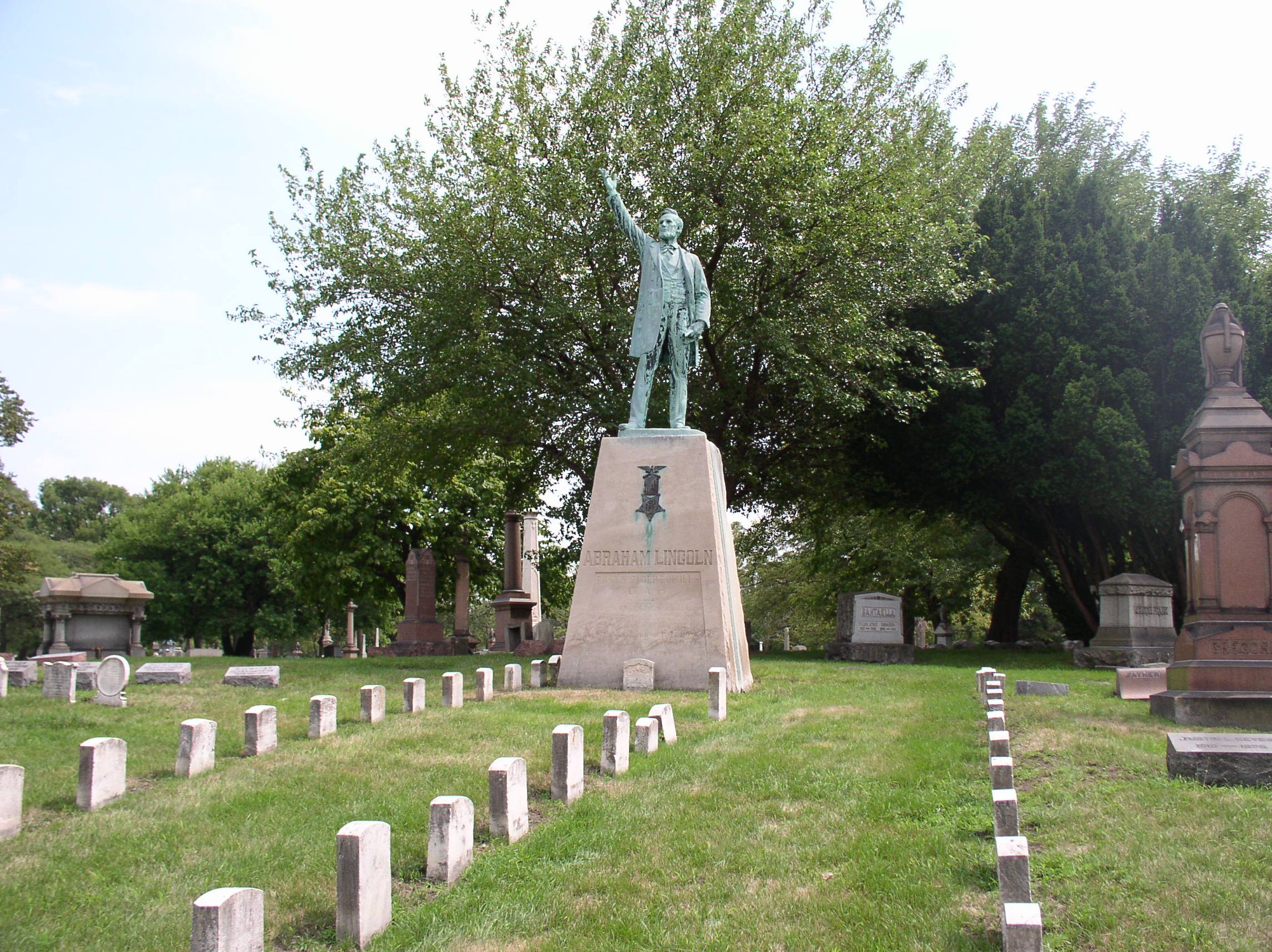
Mulligan left behind a rich legacy of existing sculptures throughout the country. Examples include his two architectural groupings that adorn the front entrance of the Illinois Supreme Court Building in Springfield. He also created three statues for the Illinois State Memorial in Vicksburg National Military Park in Mississippi, a U.S. Civil War site – President Lincoln, General Grant and Richard Yates, Illinois Governor during the Civil War. A third example is his statue of “Lincoln the Orator” at Oak Woods Cemetery at Cottage Grove Ave. and East 67th Street in Chicago.
Of particular interest to the history of Chicago are his sculptures in the Chicago Park Boulevard System Historic District. This system is about 26 miles in length and includes eight parks connected by 19 boulevards and six squares.
Chicago’s park and boulevard system began in 1869, but it was during landscape architect’s Jens Jensen’s tenure with the West Park Commission that Mulligan’s sculptures were added. Mulligan was one of Jensen’s favorite sculptors. Jenson and Mulligan are considered major contributors to the Progressive Era’s “Chicago beautiful” movement.
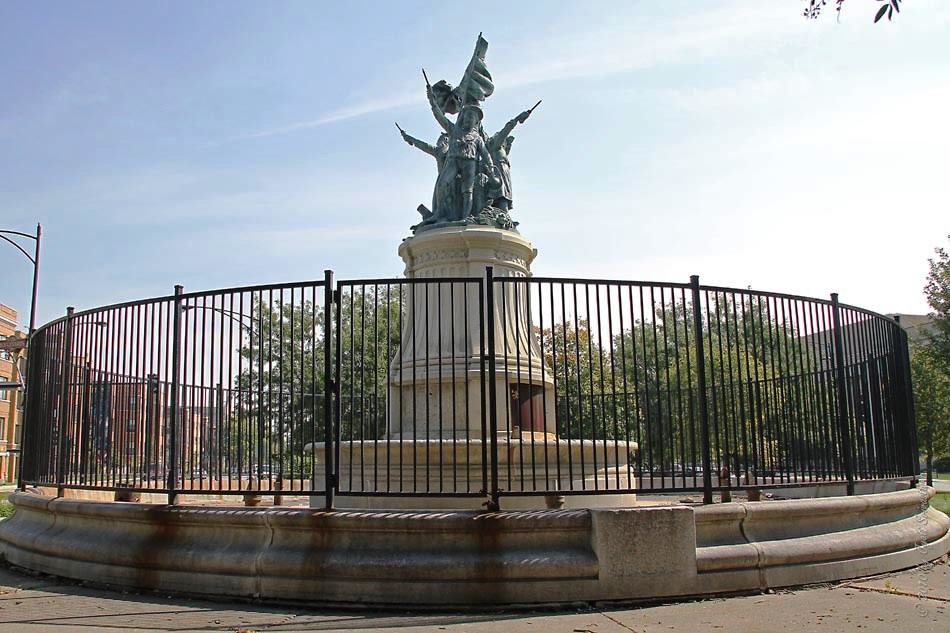
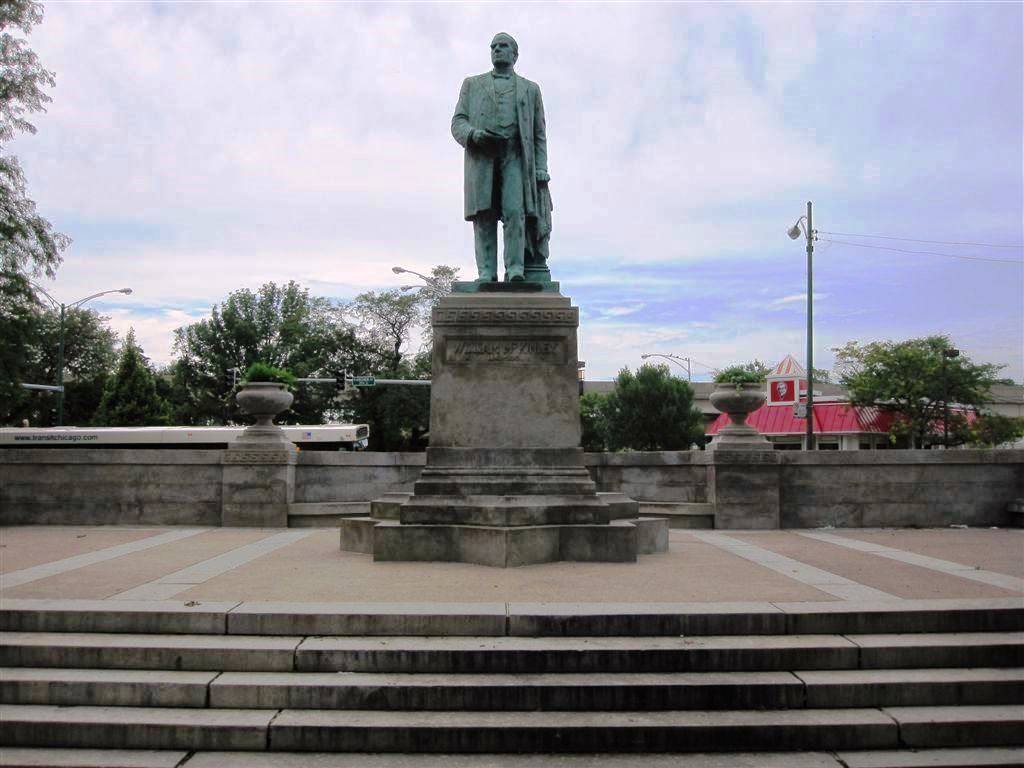
Mulligan installed artwork in four locations. First was Independence Square Fountain (dedicated in 1902), also known as Fourth of July Fountain, located at the intersection of West Douglas and South Independence boulevards. Next came the William McKinley monument installed in 1905 at the intersection of Western and Archer Avenues. This is the closest sculpture to the Ridge communities and memorializes the president assassinated in 1901.
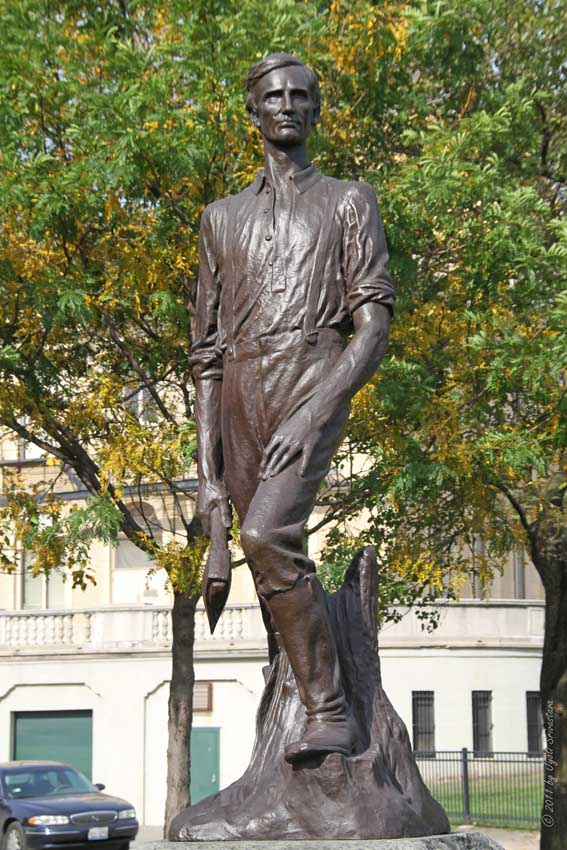
Then there was Home (installed 1911) in Humboldt Park, and Lincoln the Railsplitter (installed 1911) in Garfield Park. These statues particularly convey the sense of humanism that Mulligan is known for in his works.
Upon his death, Mulligan was eulogized by Taft and others at memorial services at the Art Institute, University of Chicago, and other places.
“I have a memory of a little vocational school [I] attempted in Pullman soon after I came to Chicago – evening classes in drawing and modeling. The response was slight, the experiment brief, but we found Charlie Mulligan,” said Taft. “Soon after, he came to my studio for work and study. The studio rang with his hearty laugh; his enthusiasm was contagious. A strange thing happened to me; he gave me a courage and a confidence that I had lacked before. From morning till night his hammer strokes ran clear and joyous.”
“He made me acquainted too with the lives and the thoughts of the working people as no one else has ever done. I heard of their long hours and their pitiful pay; of their amusements and their aspirations, and was taught a great sympathy which has tinged my life,” continued Taft.
Taft concluded: “Oh, the many good things that that ardent soul brought into our lives! And to think that we shall not hear that rich voice again, nor feel the hearty grip of those strong hands – the thought is incredible.”
There is no monument, no marker at all, on Charles Mulligan’s grave at Mt. Greenwood Cemetery. His public works are the testimony to his artistic accomplishments.
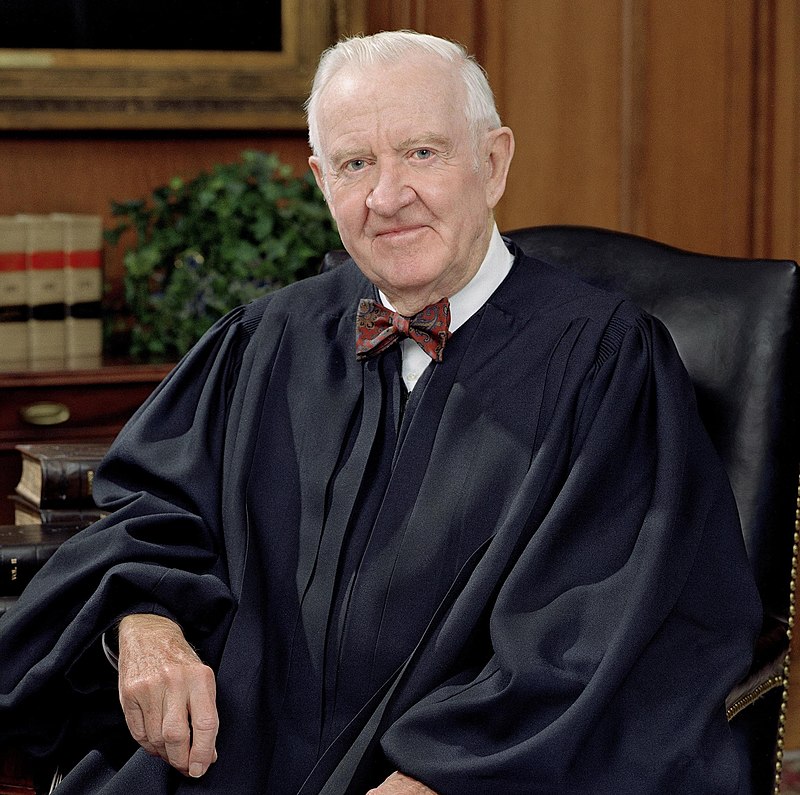
Justice John Paul Stevens (1920-2019) died this week in Florida, at the age of 99. He served on the U.S. Supreme Court from 1975 to 2010.
Justice Stevens was from Chicago. He was born in Hyde Park and educated in University of Chicago schools. After serving in the Navy during World War II, he earned his law degree from Northwestern University School of Law. He was one of the founders of the law firm Rothschild, Stevens and Barry. This firm still exists today as Rothschild, Barry and Myers.
In 1970, Stevens was appointed to the U.S. Court of Appeals for the Seventh Circuit by President Nixon. President Gerald Ford nominated him as an associate justice of the Supreme Court in 1975. He was confirmed 98-0 by the Senate.
Stevens is often presented as shifting from conservative to liberal views during his years on the U.S. Supreme Court. But those who knew him, and he himself, said political ideology was not the issue. He studied cases carefully so that he could apply the law the way it was intended. He was always considered an independent thinker.
Justice Stevens and his wife Elizabeth Jane (Shereen) lived in North Beverly for many years. They had three daughters and one son who attended Christ the King School. They were members of the Beverly Country Club. He and Elizabeth divorced and he married Maryan Mulholland Simon in 1979. His son, one daughter and both wives preceded him in death.
Justice Stevens is part of our local history. We are looking for people who remember Justice Stevens from his years in Beverly. If you can recommend anyone who would be willing to share with us, please send us a message.
Today is National Hot Dog Day, established by the National Hot Dog and Sausage Council. It’s a marketing ploy, although it’s hard to believe that hot dogs need marketing. They are considered one of the “all-American” foods and, by one estimate; Americans eat 20 billion hot dogs each year.
The origin of hot dogs is obscure but most likely they grew out of the pork sausages developed in Frankfort, Germany, in the 1200s, which were commonly called “frankfurters.” Then they travelled to Vienna, Austria, in the 1600s, where beef was added to the mixture and these were known as “wieners.” They came to the USA with German immigrants in the 1800s.
Who first put them on a bun is disputed. One claim is that this happened at the 1893 World’s Fair in Chicago, and we’ll go with that for this post since we are in Chicago. (Other claims are Coney Island in New York as early as the 1860s; St. Louis, MO, street vendors in the 1880s; and the St. Louis World Fair in 1904.)
Also not known with certainty is how they got the name “hot dog.” The term “dog” was used for sausage going back to the 1800s because in Germany some sausage makers did use dog meat in sausage. Another theory is that they were called this after the little German dachshunds. And they were served hot. By 1900, “hot dog” and “red hot” were in common usage.
Hot dogs became firmly and forever entrenched in American culture when they became associated with America’s “pastime” – baseball. Today, they are a critical part of “Chicago street cuisine.”
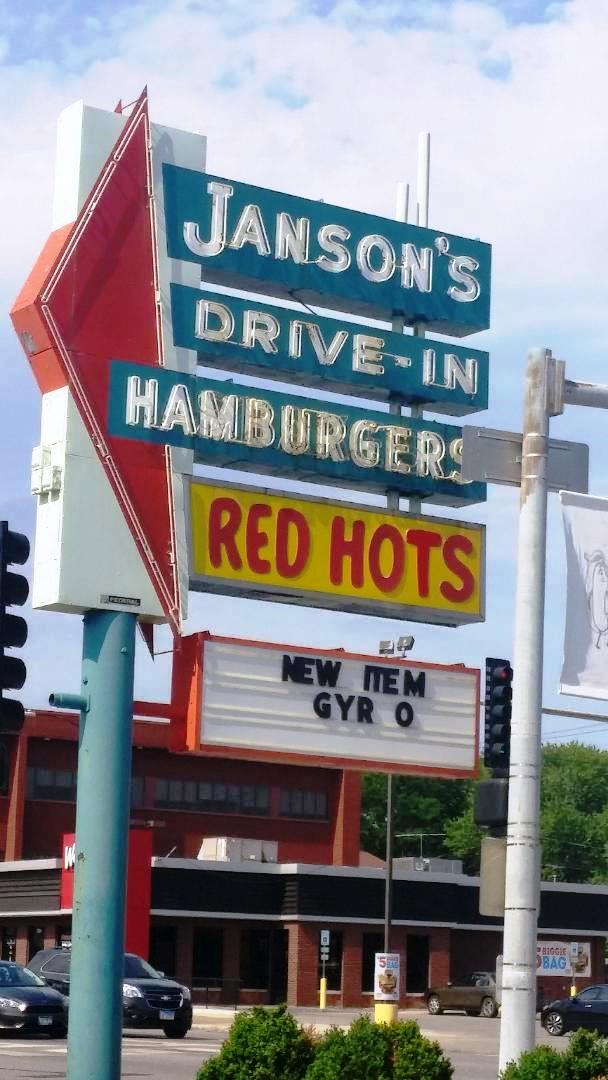
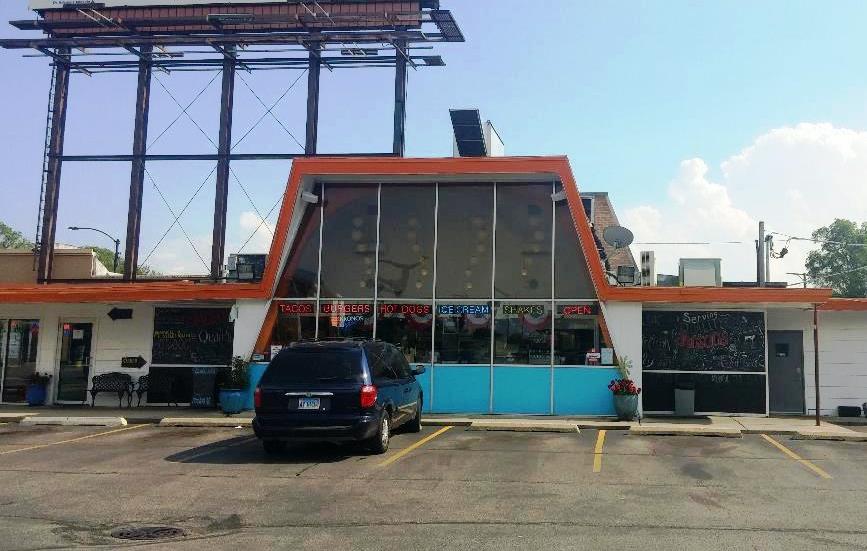
And what better place to enjoy a hot dog on the Ridge than the historic Janson’s Drive-In at 9900 S. Western Ave.? The Beverly Review ran an announcement for the opening of this new “fast-food drive-in” restaurant in 1960. The house specialty, a banana milkshake, cost 50 cents.
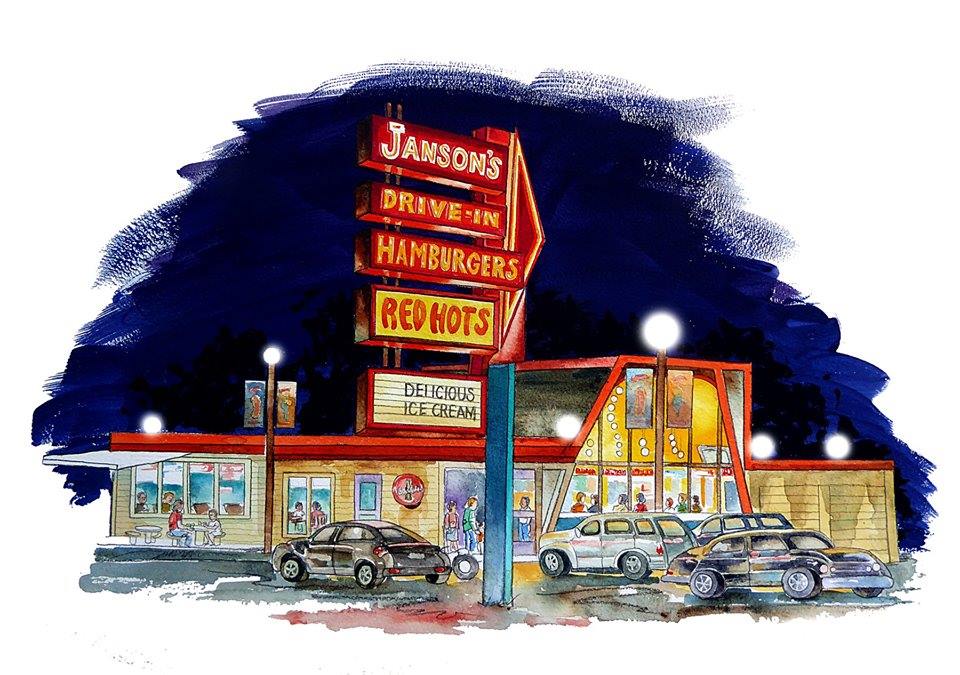
Janson’s remains a true drive-in today, with no indoor seating in its distinctive A-frame building with the orange roof line. The neon sign still lights up the night sky. Bright, flashing neon signs reached their peak in the 1950s–1960s, then began to decline due to the expense of production. Janson’s frequently shows up today on lists of “roadside attractions,” places worth stopping to visit.
Janson’s made television history when it appeared in the TV series Crime Story starring the late Dennis Farina, Chicago police officer turned actor. The opening scene of the first episode was filmed at Janson’s with Del Shannon’s song “Runaway” playing in the background. The clip can be viewed on YouTube; just enter “crime story opening scene.”
These photos of Janson’s are from today, taken by C. Flynn. The water color painting is the creation of Beverly resident and artist Judie Anderson.
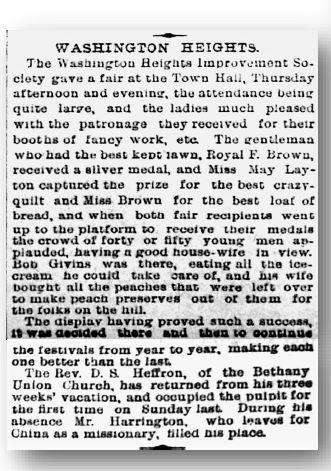
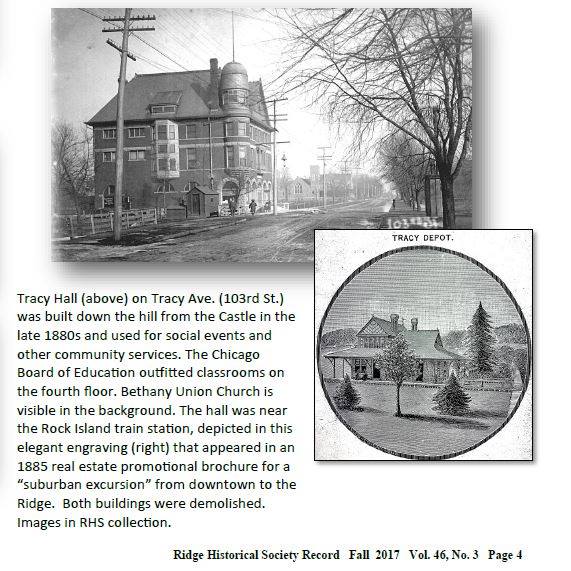
Here's a little article from The Inter Ocean from summer of 1886 giving news of a "fest" in Washington Heights, which included the area we know as Beverly now. The town hall referred to in the article is likely Tracy Hall. Bob Givins is, of course, the builder of the Castle at 103rd St. and Longwood Drive. The newspapers loved Bob Givins; he was a real Chicago personality back in his day.
New post on our "interactive" group page – Beverly/Morgan Park/Washington Heights History. Check it out! Join the Group so you can post your own stories on the history of the Ridge communities!
We are starting a "Group" page for people to share stories, photos, questions and answers about the history of the Beverly Hills, Morgan Park, Mt. Greenwood, and Washington Heights communities of Chicago. Please join us! Click on the new page here and send us a request to join. You will be added within a day.
The unfortunate fire in Notre Dame Cathedral got me thinking about the "French connection" to the Blue Island Ridge. We had an early group of settlers here, and their legacy to the community is also a church – the historic and charming Sacred Heart Church at 11652 S. Church St.
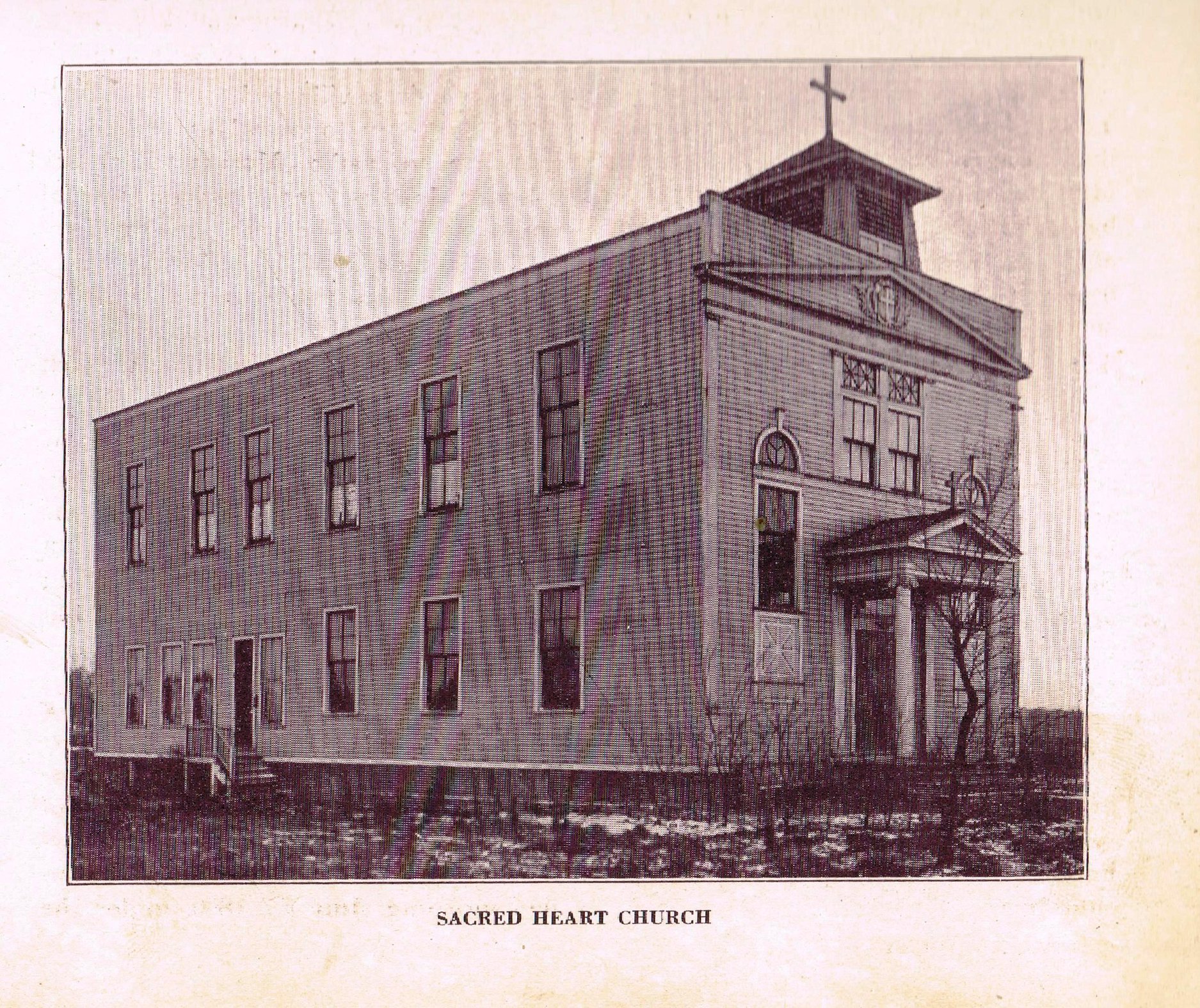
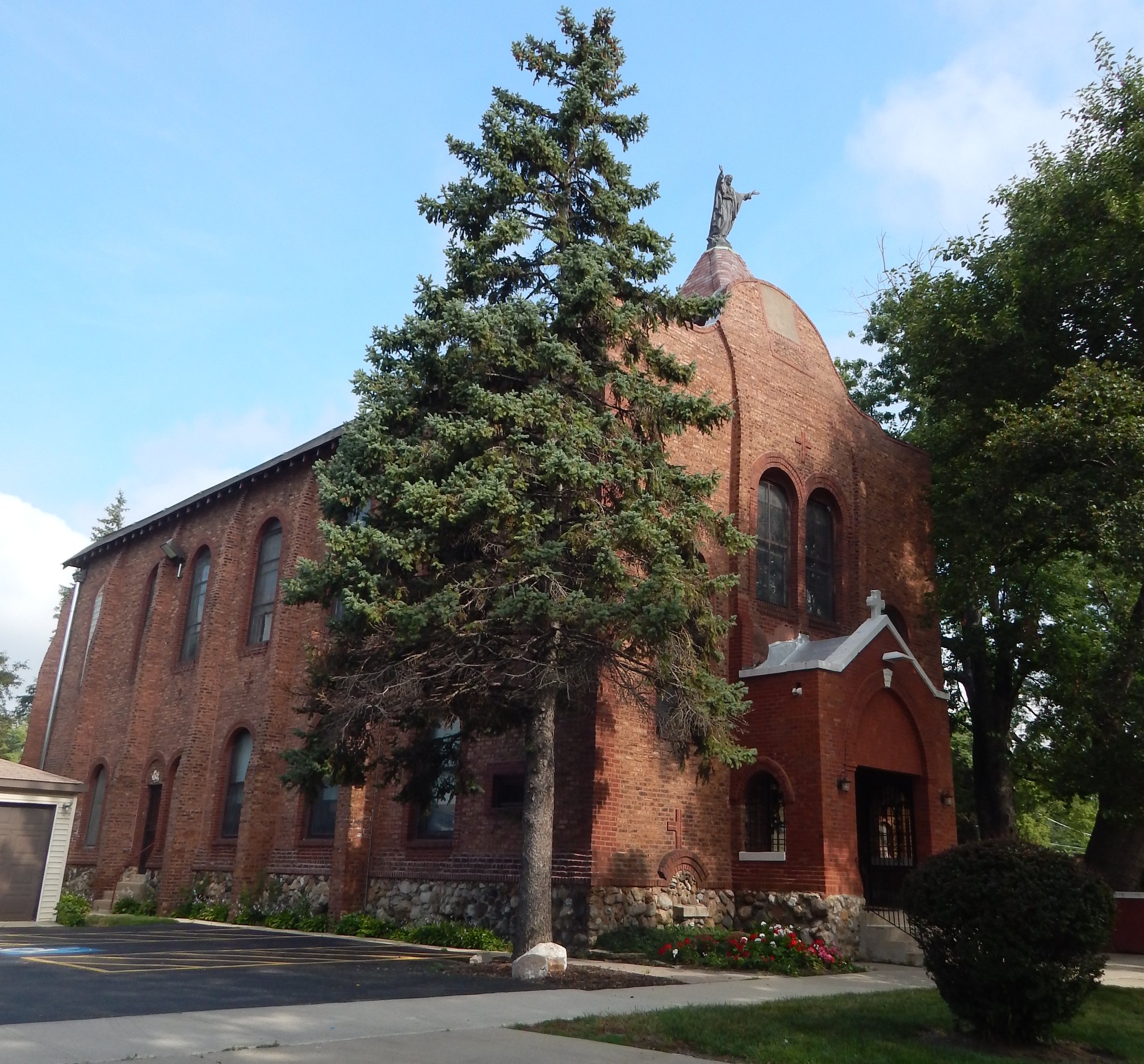
Sacred Heart was originally founded in Alsip in 1892. After another unfortunate fire, the church moved to its current location to be closer to the Purington Brick Yards at 119th and Vincennes, where many of the French people worked. The current church was built in 1904-5 and originally appeared as a wooden frame church, built on posts in a swamp. The church was established as a “national church” which meant it would serve a particular nationality, not a defined geographic area. The story goes that the workers hid bricks in their clothing and brought them over from the brick yard, one or two at a time, and in 1922, the present brick facade was added. The church as it stands now is actually the old frame church clad with this "donated" brick.
Father Raymond DeNorus, a missionary priest born in France, became pastor in 1912. From all accounts, he was a very charismatic man. He loved a good time, yet he was a man deeply devoted to his faith. He dispensed medicine, holy water and blessings from his side door. Numerous miracle cures were reported to have taken place over the years. Crutches, canes and braces left abandoned at the church were hung on the side walls. Services at the church drew large crowds and it became a place for pilgrimages. During this time the church became known as the Shrine of the Sacred Heart, a shrine being a special place of devotion that attracts travelers from afar. Fr. DeNorus retired in 1935. With time, most of the French families moved on and were replaced by German and Irish workers.
In 1979, the Archdiocese of Chicago under John Cardinal Cody decided to close and demolish Sacred Heart, citing as its main reasons a shortage of priests and the expense of construction needed to correct building code violations. Members of the congregation rallied to restore and preserve the church. The church was closed from 1979-1982. But then Cardinal Cody died, and the new Archbishop, Joseph Bernardin, agreed to review the matter. He reopened the church and celebrated Mass there in 1983. The church was reestablished as a "mission church" operating as part of the Holy Name of Mary Parish in Morgan Park.
The devotion to the Sacred Heart of Jesus originated in France in the late 1600s when a nun, Saint Margaret Mary Alacoque, claimed that during a series of apparitions, Jesus promised certain blessings to those who practiced devotion to his Sacred Heart. The Vatican’s position is that the manifestation and promises are true. So the name Sacred Heart was very fitting for a French mission church.
[NOTE: Amendment to this story: The wife of the man from the Sacred Heart congregation who originally told me the story of the bricks posted this: "The brick masons were given permission to take the bricks that were used to line the ovens as those bricks were marked with black spots and therefore not fit to sell." Thank you for sharing more interesting local folklore with us! – Carol Flynn, RHS Communications]
Picture 1 is the original church ca. 1913 before the brick facade was added. The side door at which Fr. DeNorus greeted visitors is visible. Photo from the RHS newspaper archives.
Picture 2 is the church today covered with the Purington bricks. Photo by C. Flynn.
This is how it happens. History was made today in Chicago and on the Ridge. The first African American gay woman was elected as Mayor.