
Explore the RHS Facebook Archives, a rich repository of local history written by Carol Flynn. For two decades, Carol brought a deeply dedicated voice to public education at RHS. Her role as Facebook administrator through mid-2025 naturally extended her prolific research into meticulously detailed articles, most notably her multi-part historical series posts. Today, Carol continues her local history writing for The Beverly Review and other outlets.
Local History
“Morgan Park Woman’s Club: 135 Years of Community Service.”
Women’s history is the community’s history. They are involved in every aspect of life where they live, often working behind the scenes.
It’s time their story was told.
This year marks the 135th anniversary of the Morgan Park Woman’s Club (MPWC).
A special event is planned for this weekend: “Morgan Park Woman’s Club: 135 Years of Community Service.” A reception and program will be held on Sunday, November 17, 2024, in the Smith Village community hall, 2320 W. 113th Place, from 2 to 4 p.m. Admission is free, there is parking, and the place is accessible.
MPWC has had a very important role in the community, impacting everything from the village’s annexation to the city of Chicago to its architecture to its schools to its parks.
A slide presentation connecting the Club’s history to that of the community will be shown by Carol Flynn, researcher/writer for the Ridge Historical Society.
There will be a display of items from the Club’s artifacts. Refreshments will be served.
Another "seizing the educable moment" post.
The Southeast Chicago Historical Society, which many people from the Ridge follow, has this post today:
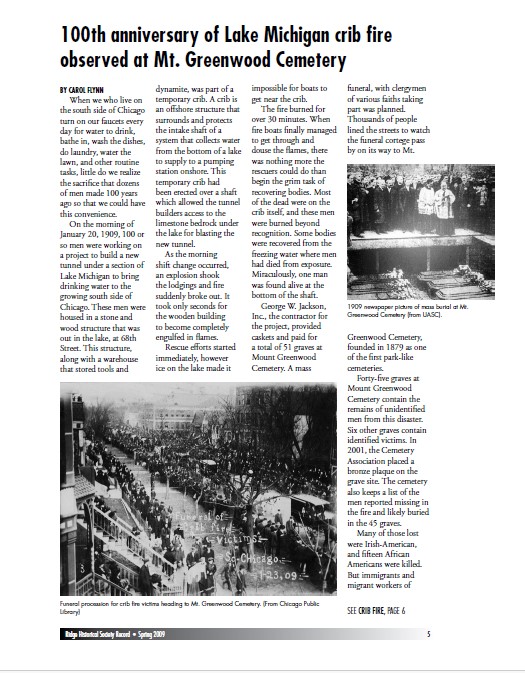
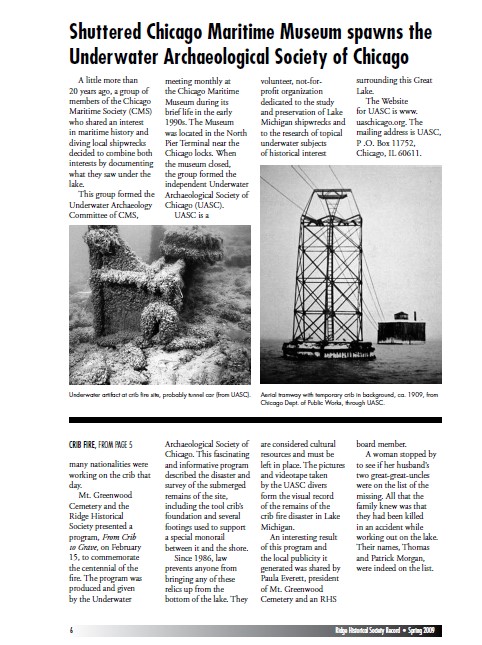
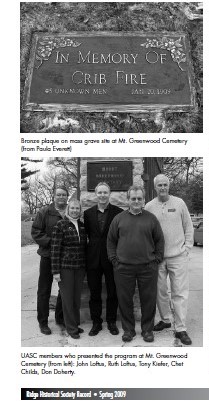
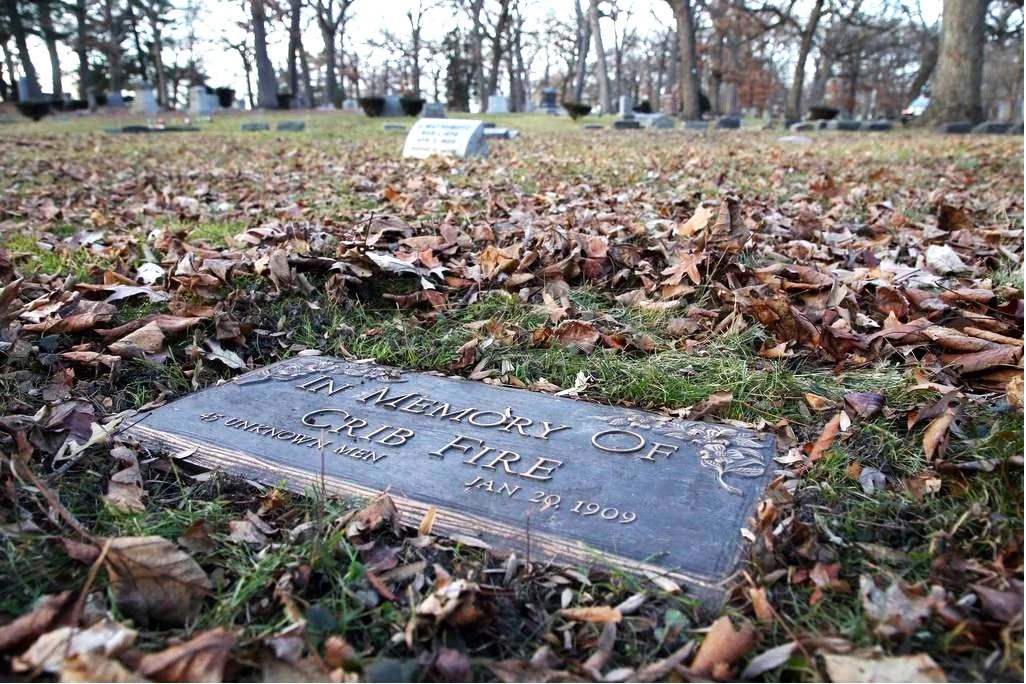
"I picked up a few photos this morning from an estate sale in Indiana. Does anyone know anything about crib fire victims from 1909?"
The answer to that is YES, RHS knows all about that incredibly horrible tragedy.
Here is the 2009 RHS newsletter article on that topic. The victims are buried in Mt. Greenwood Cemetery.
Ridge Historical Society
Mount Olivet Cemetery
By Carol Flynn
Allhallowtide is a three-day Christian tradition (or a “triduum”) consisting of All Saints’ Eve (Halloween) on October 31st, All Saints’ Day (All Hallows) on November 1st, and All Souls’ Day on November 2nd. The word “hallow” means holy or saintly, and used as a noun, is synonymous with “saint.”
This is a time to remember and honor the dead, and countries and cultures have varied ways to do this.
Perhaps best known is “Day of the Dead” celebrated primarily in Mexico and by people of Mexican heritage. Cemetery visits/picnics, featuring the departed’s favorite foods, are one of the customs.
In Ireland, Catholic parishes declare “Cemetery Sundays,” when graves are cleaned up, decorated, and blessed.
In the U.S., the Catholic Church has declared the first Sunday in November as “Cemetery Sunday,” and encourages people of all backgrounds to visit the graves of their loved ones on that day. In Chicago, 18 Catholic cemeteries will hold a “Cemetery Sunday Rosary and Prayer Service” at 2:00 p.m. on November 3rd.
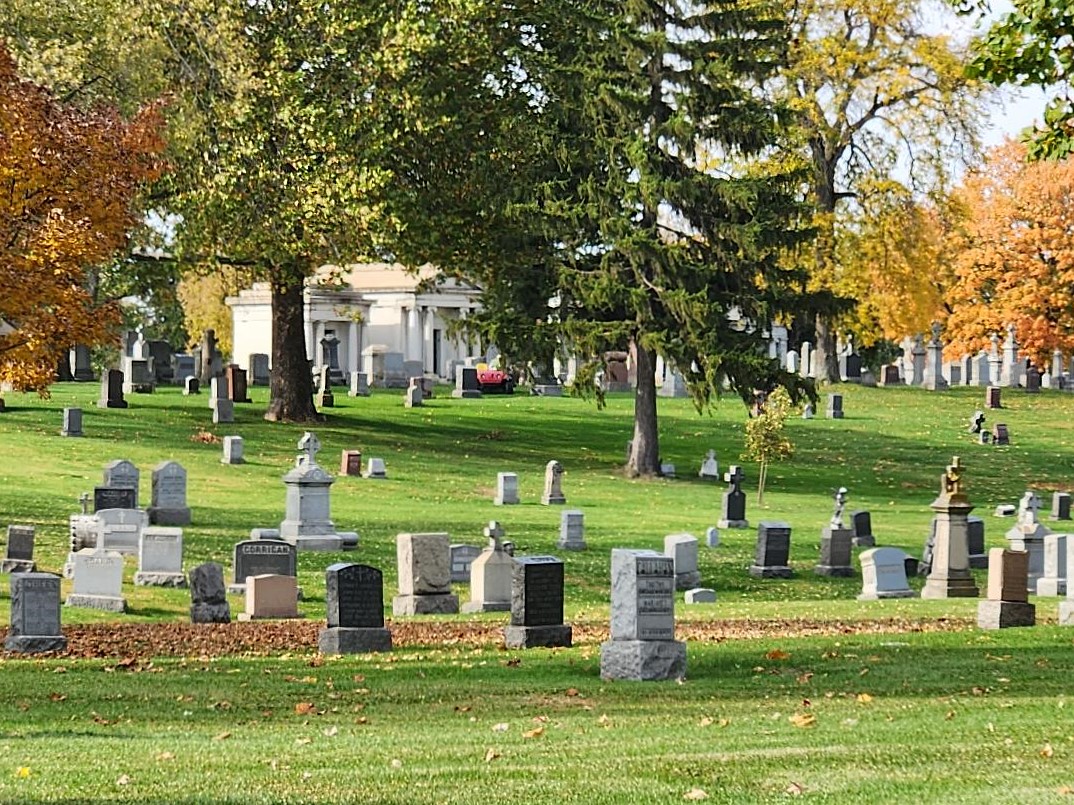
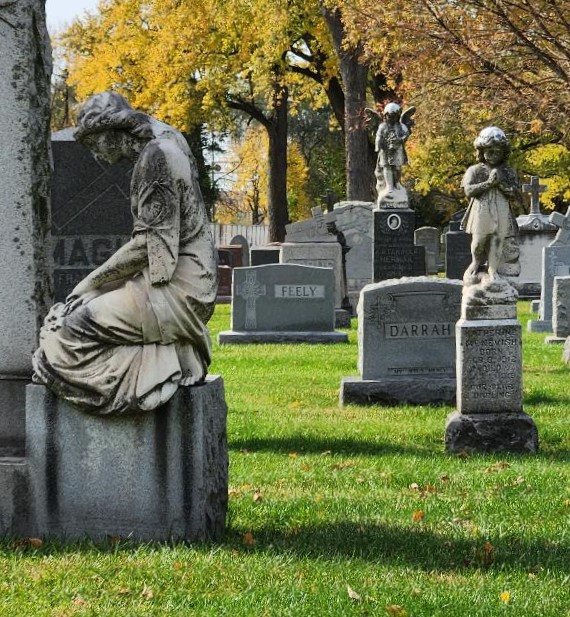
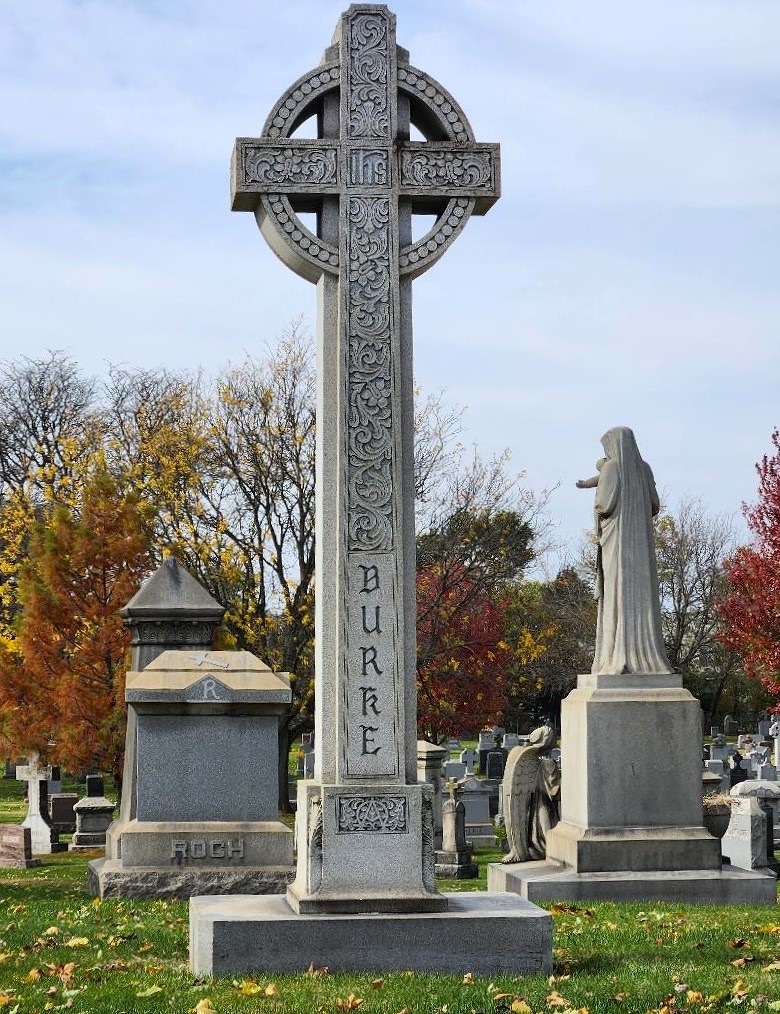
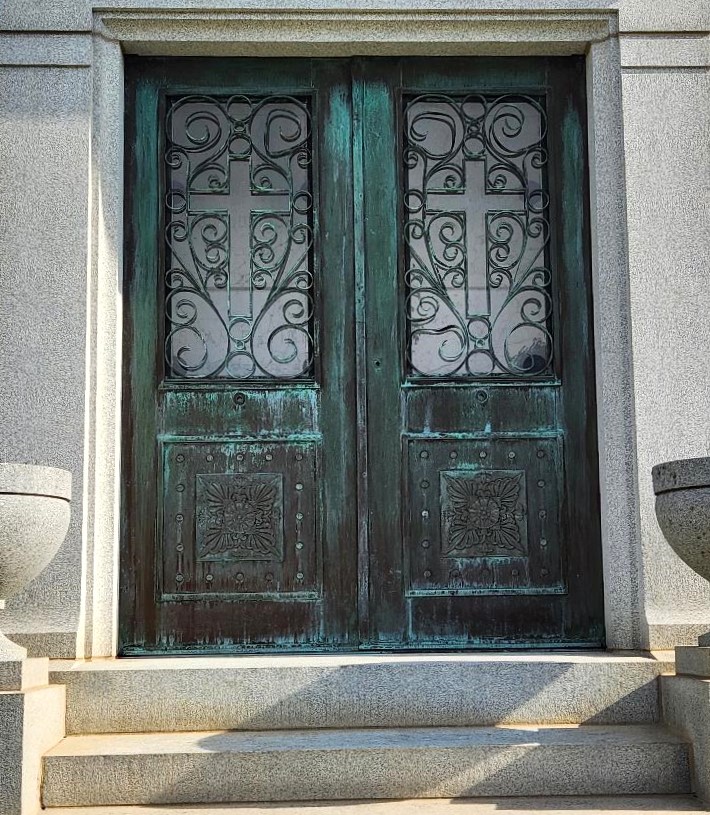
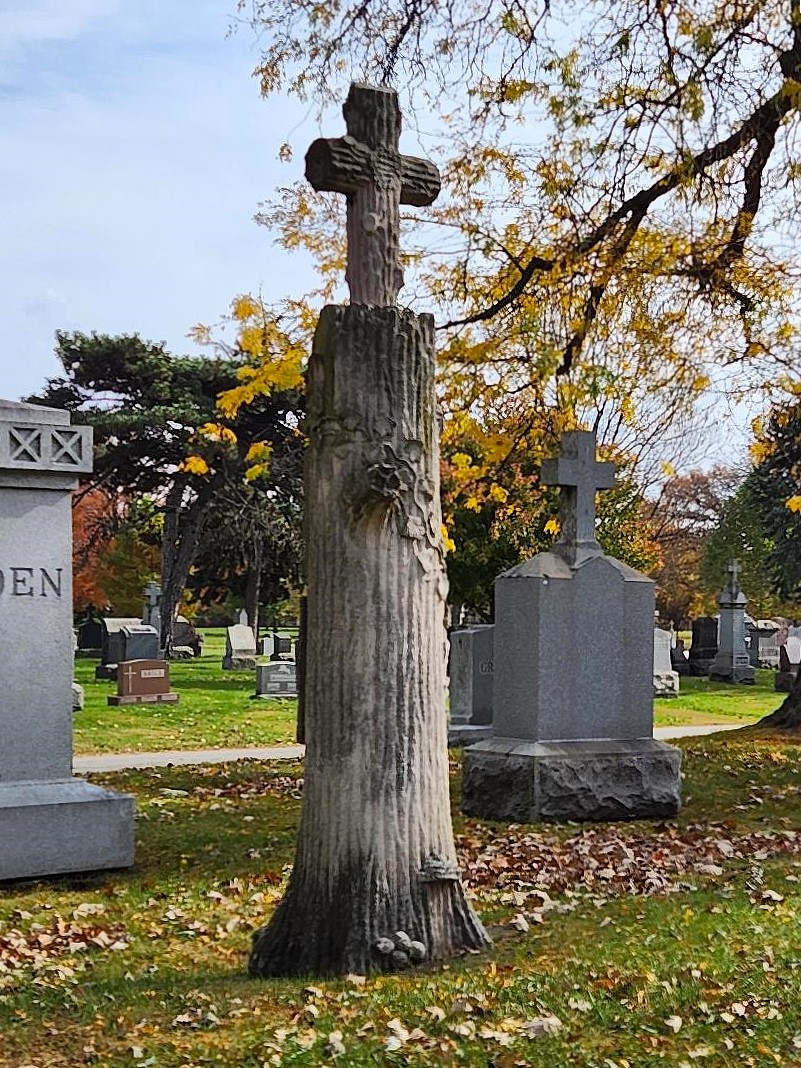
On the Ridge, Mount Olivet Cemetery on 111th Street will be one of the participating cemeteries. This post looks at this historic cemetery.
Mount Olivet Cemetery was founded in 1884. It was the first Catholic Cemetery on the south side of Chicago. Before this cemetery was established, the closest Catholic Cemetery was Calvary Cemetery in Evanston, established in 1859. Many early south side Catholic families have members buried in both Calvary and Mount Olivet.
According to an article in the Inter Ocean newspaper on July 29, 1885, more than 15,000 people came to the Ridge to attend the dedication of Mount Olivet Cemetery by Chicago Archbishop Patrick Feehan.
The paper stated of the new cemetery’s location: “A wide ridge runs gracefully through the land, and gently slopes on either side to prairie. It is naturally of very attractive appearance, and it has been improved by driveways. The property was formerly known as the Mt. Greenwood picnic grounds, and it was purchased for $44,000.”
The land had been purchased the previous October, and Horace William Shaver Cleveland, a famous landscape artist, was hired to lay out and “ornament” the grounds. Some of Cleveland’s other projects included an expansion of Graceland Cemetery on the north side, building the Chicago Park system after the Great Chicago Fire of 1871, and many fine private residences. He had personal and working relationships with people like Dwight Perkins, a relative through marriage, the architect who became the “father of the Forest Preserves of Cook County;” William Merchant Richardson French, the civil engineer and landscape artist who became the first executive director of the Art Institute of Chicago and later lived in Beverly; and Frederick Law Olmsted, “the father of landscape architecture.”
Mount Olivet Cemetery was one of the first cemeteries to become full, prompting the Archdiocese to buy additional land to the east of the original cemetery. This created the unique situation of the backyards of houses on Fairfield Avenue opening on to the cemetery grounds.
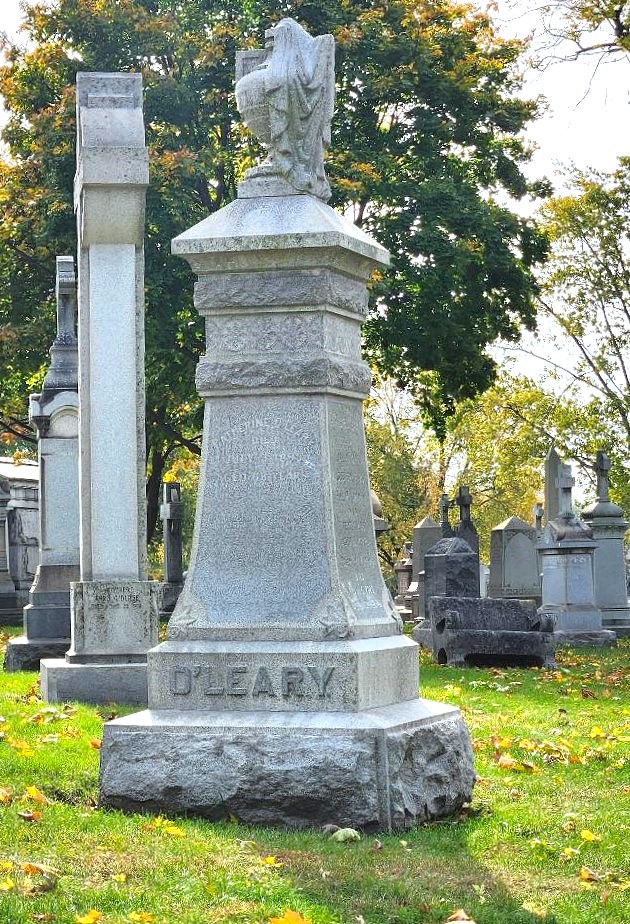
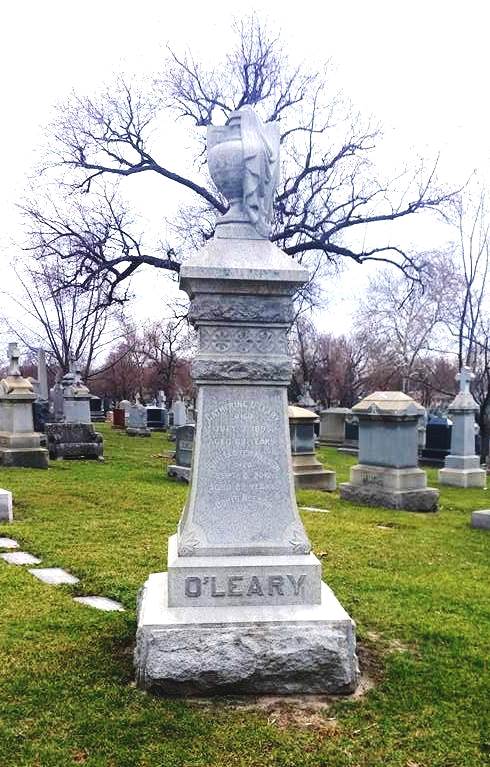
Some famous Chicagoans are buried in Mt. Olivet Cemetery, including Mrs. Catherine O’Leary, whose cow did not kick over a lantern to start the Chicago Fire, with her husband Patrick and son James (“Big Jim”), a famous gambler.
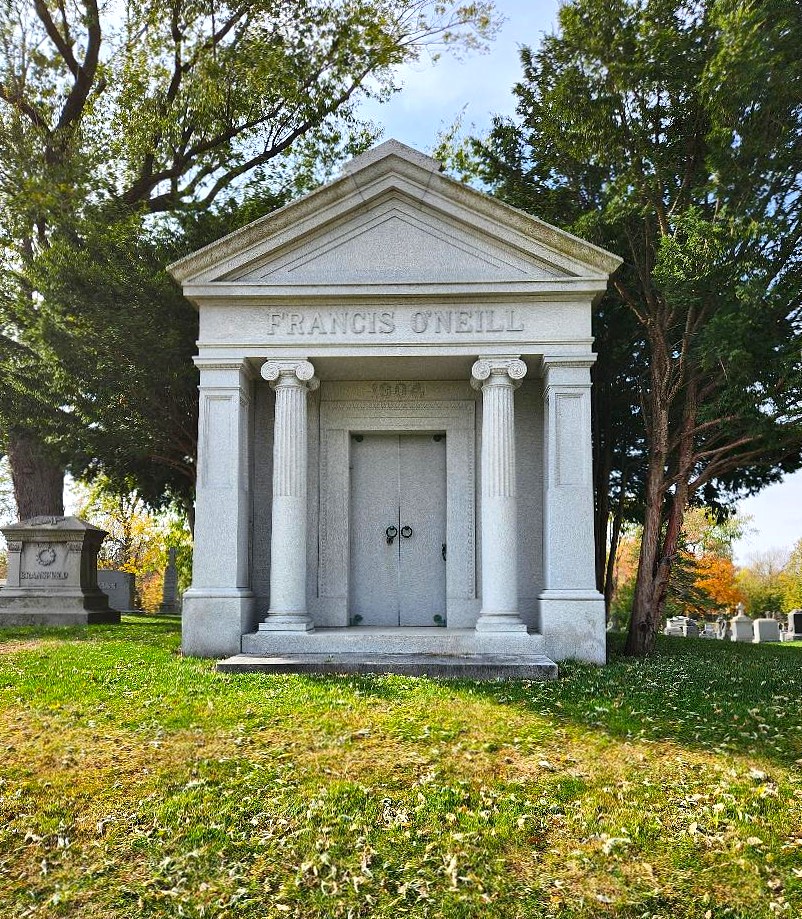
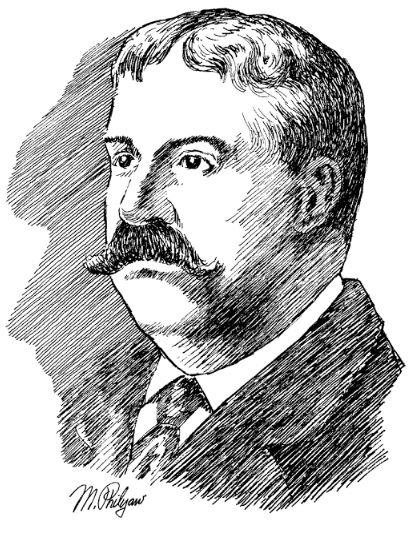
Chicago Police Chief Francis O’Neill, the “man who saved Irish music,” is also buried in Mt. Olivet Cemetery. Known for his absolute integrity and honesty, O'Neill and Big Jim O'Leary were antagonists during their years together in Chicago.
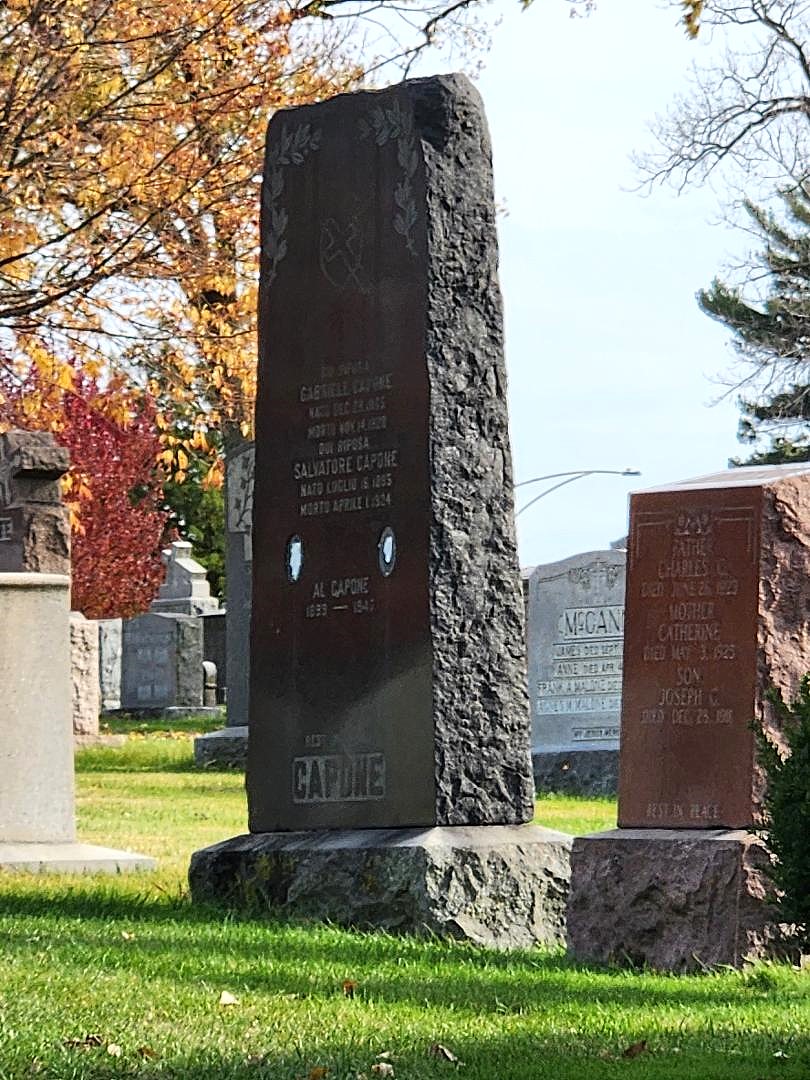
Mt. Olivet was the original burial site for Al Capone, until his remains, and those of his father and brother, were relocated to Mt. Carmel Cemetery in Hillside.
Other people known on the Ridge buried in Mount Olivet include Daniel Ryan, Sr., for whom the local forest preserve is named; the Ahern Family, including golf pro Anna May “Babe” Ahern, who, with her brothers, owned and operated the Evergreen Country Club; and James Gately, the founder and manager of Gately’s Peoples Store, who lived in Beverly.
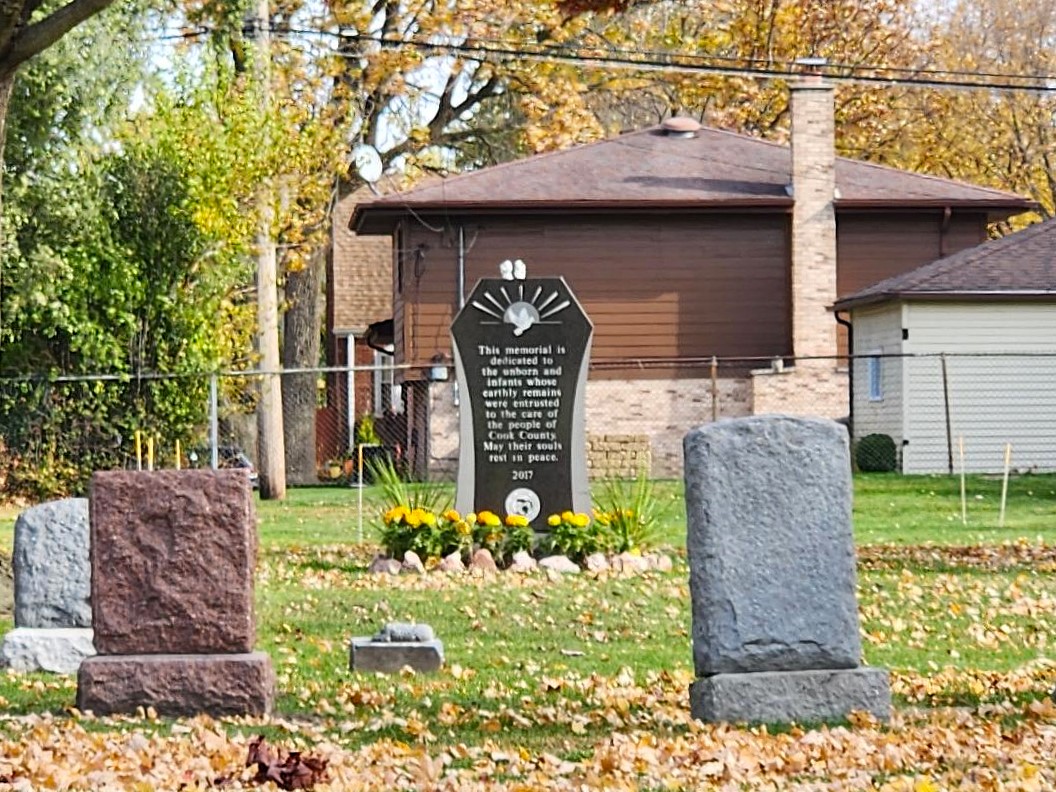
Mt. Olivet Cemetery is also the burial place for the unidentified and indigent dead of Cook County. Since 2012, when the Archdiocese started working with the county to provide these services, there have been 5,300 burials.
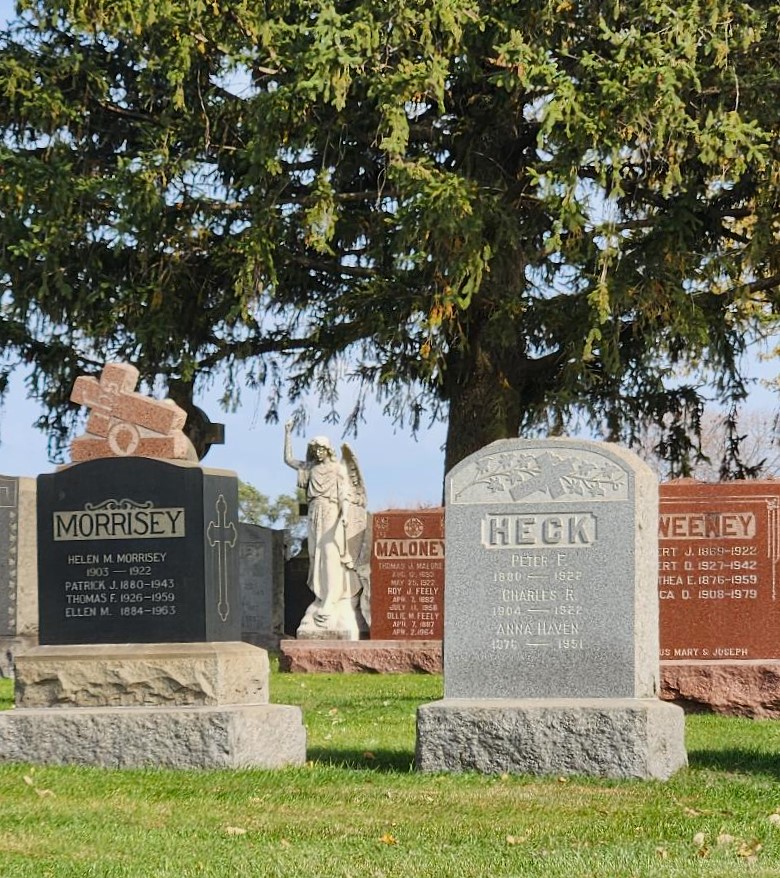
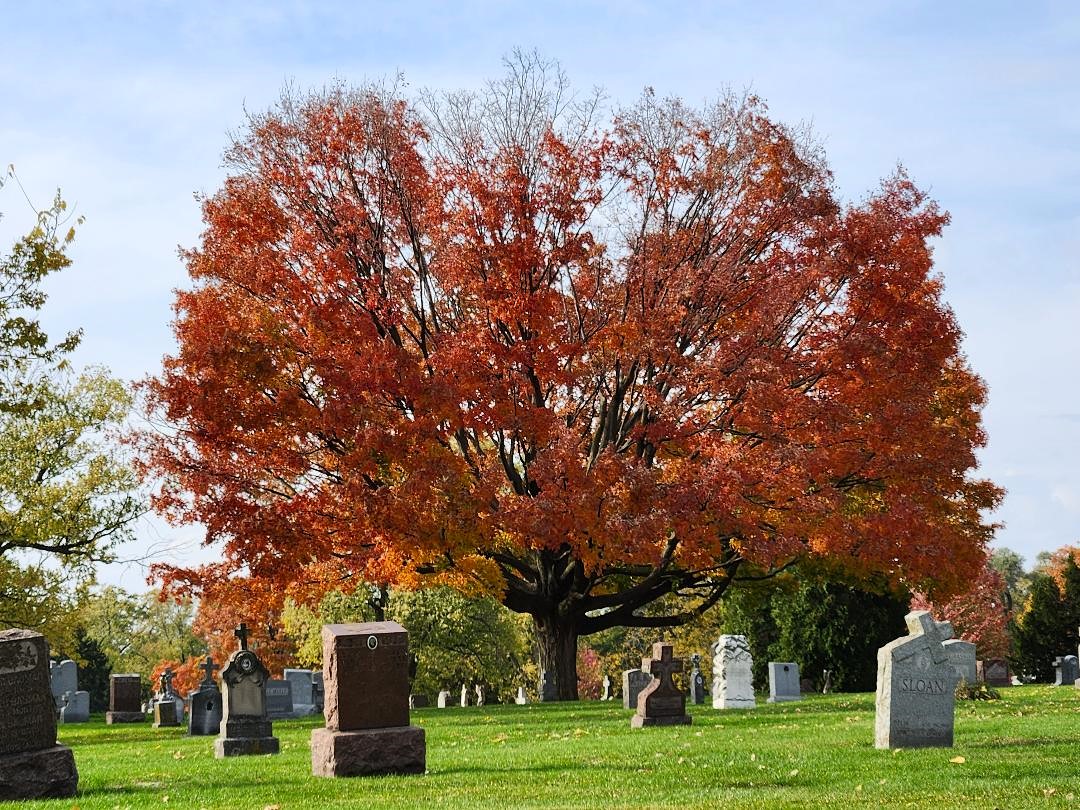
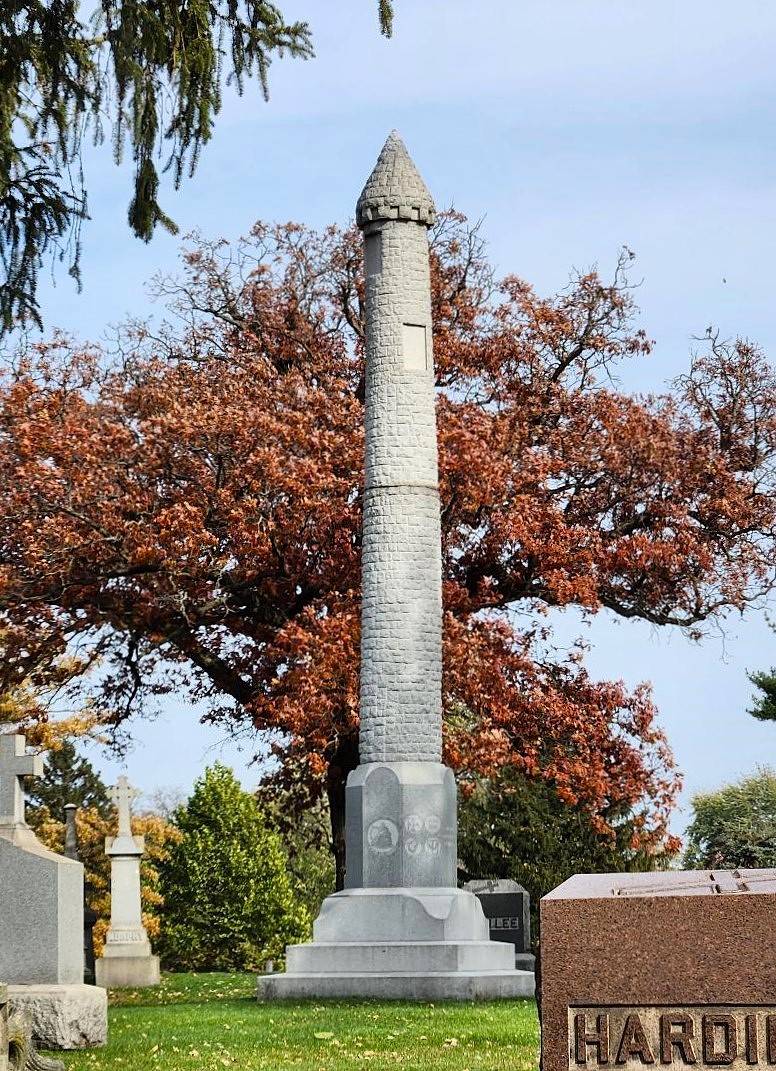
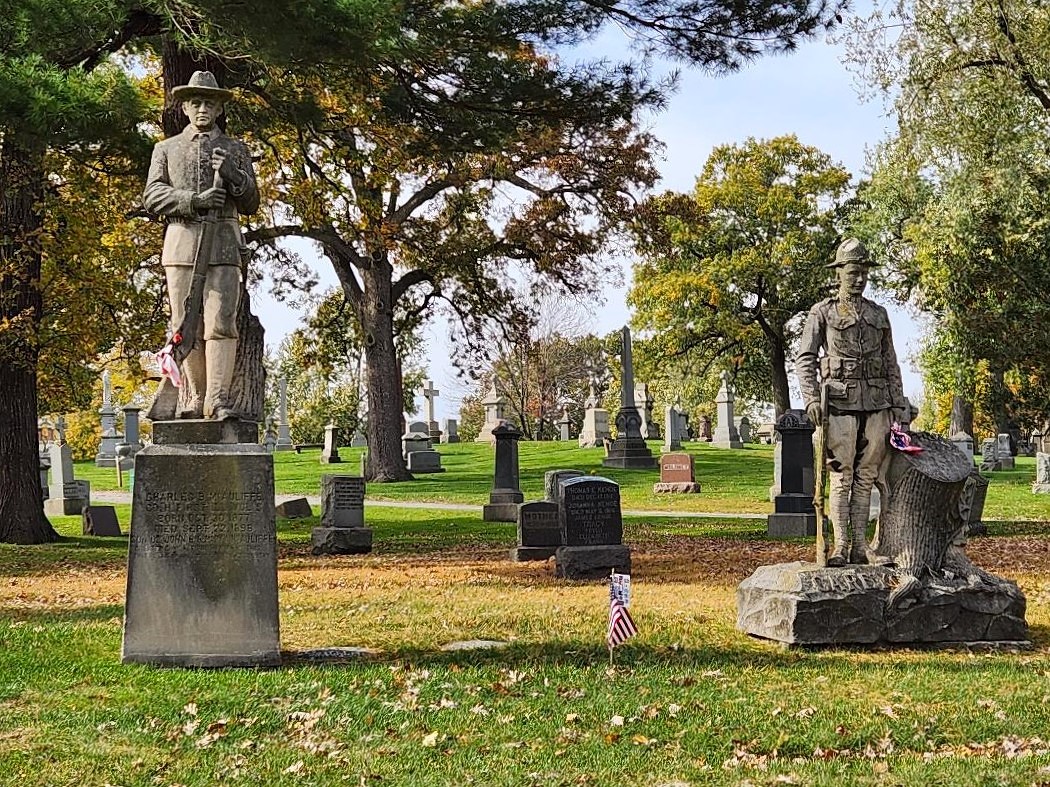
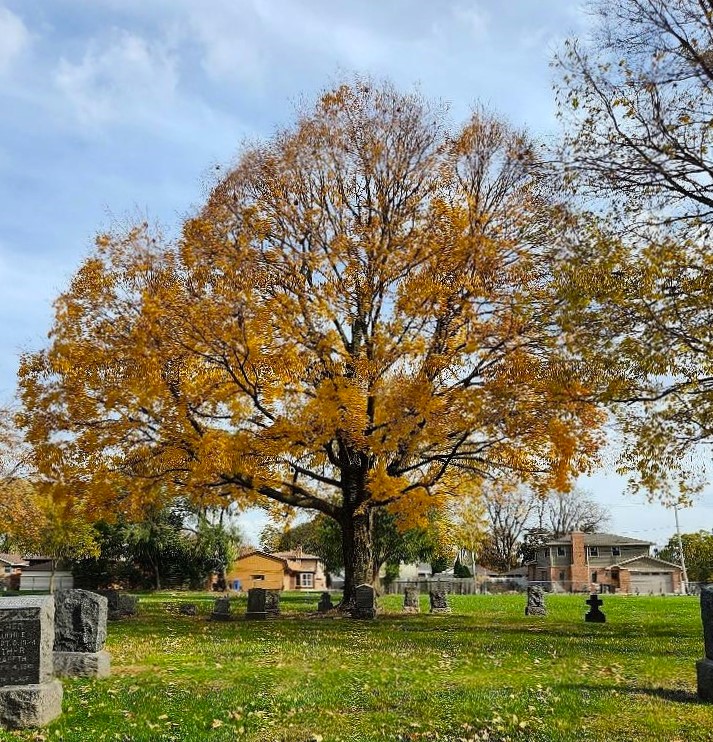
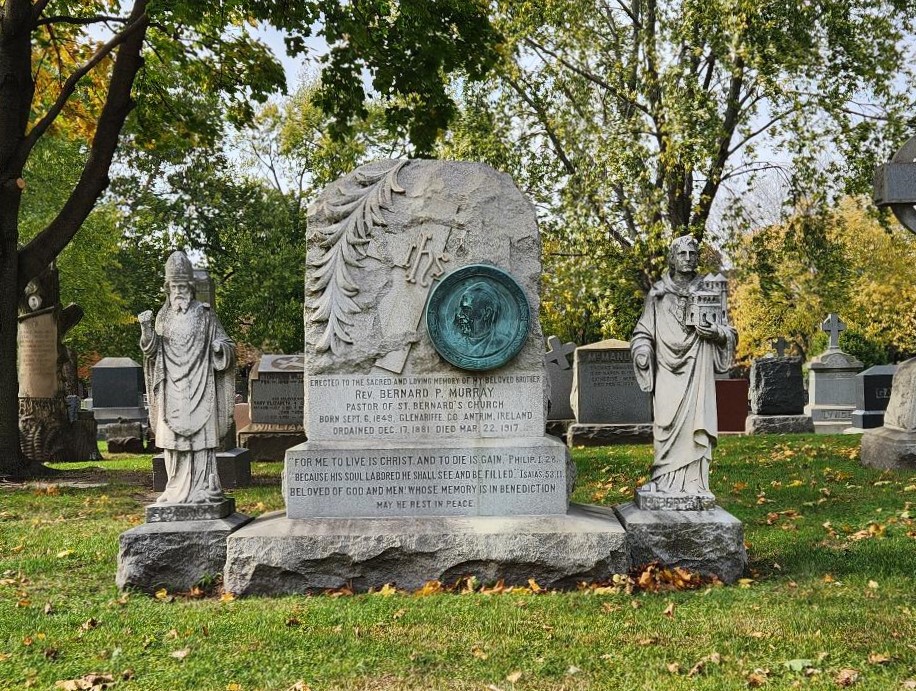
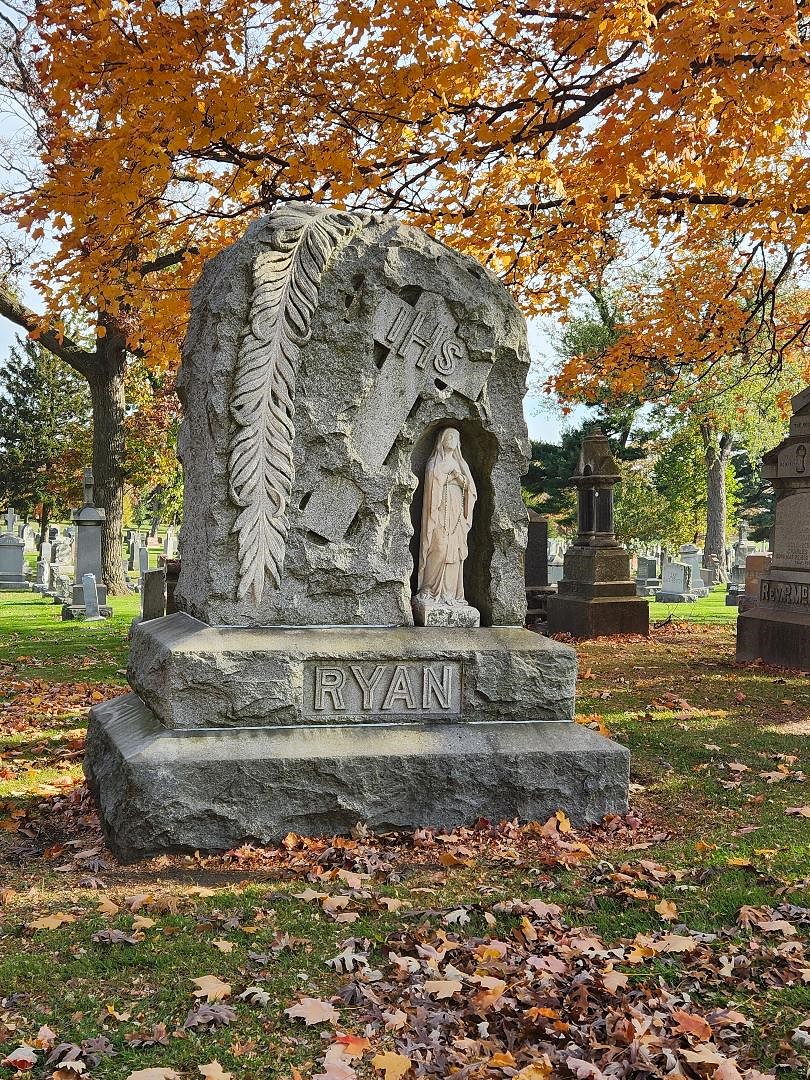
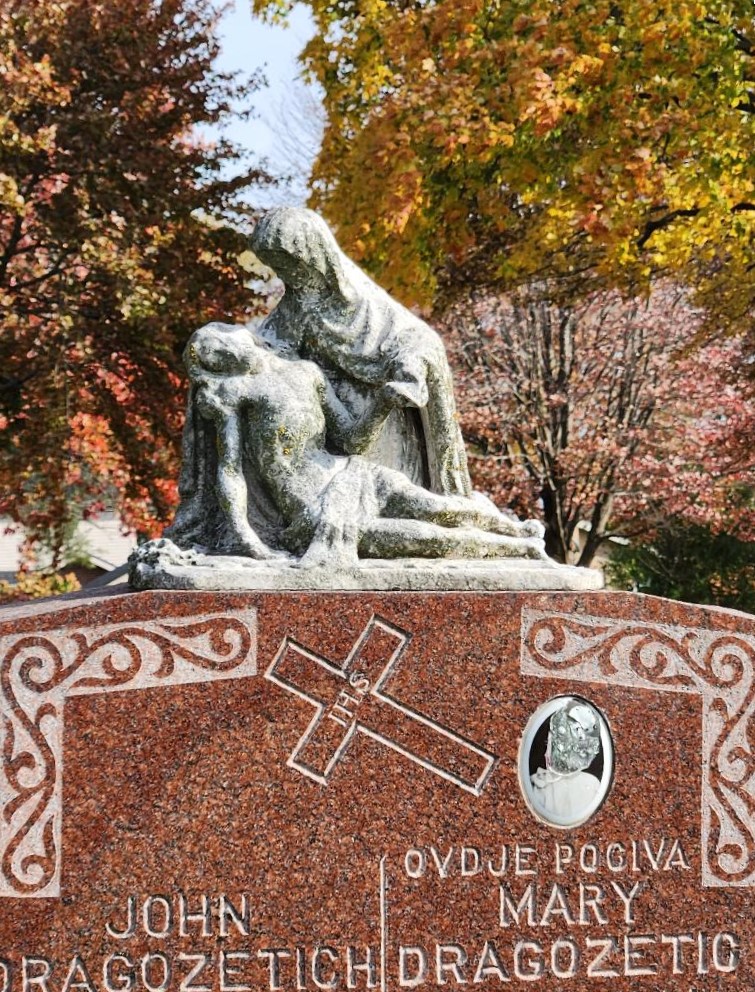
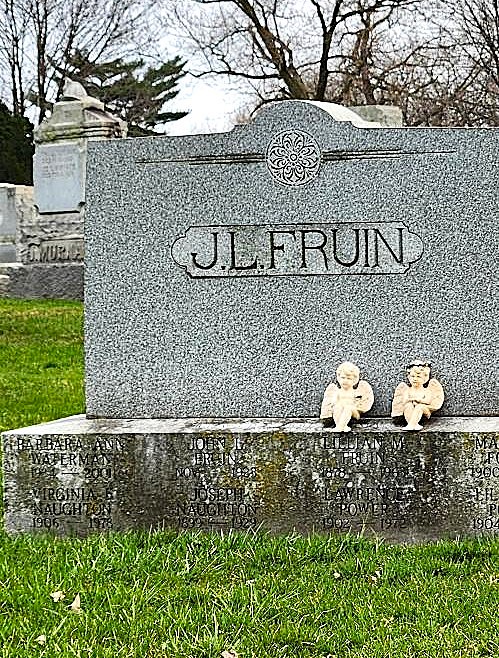
A picturesque cemetery with interesting funerary art, the following pictures were taken during a ride through Mount Olivet Cemetery on a recent autumn afternoon.
Photos by C. Flynn.
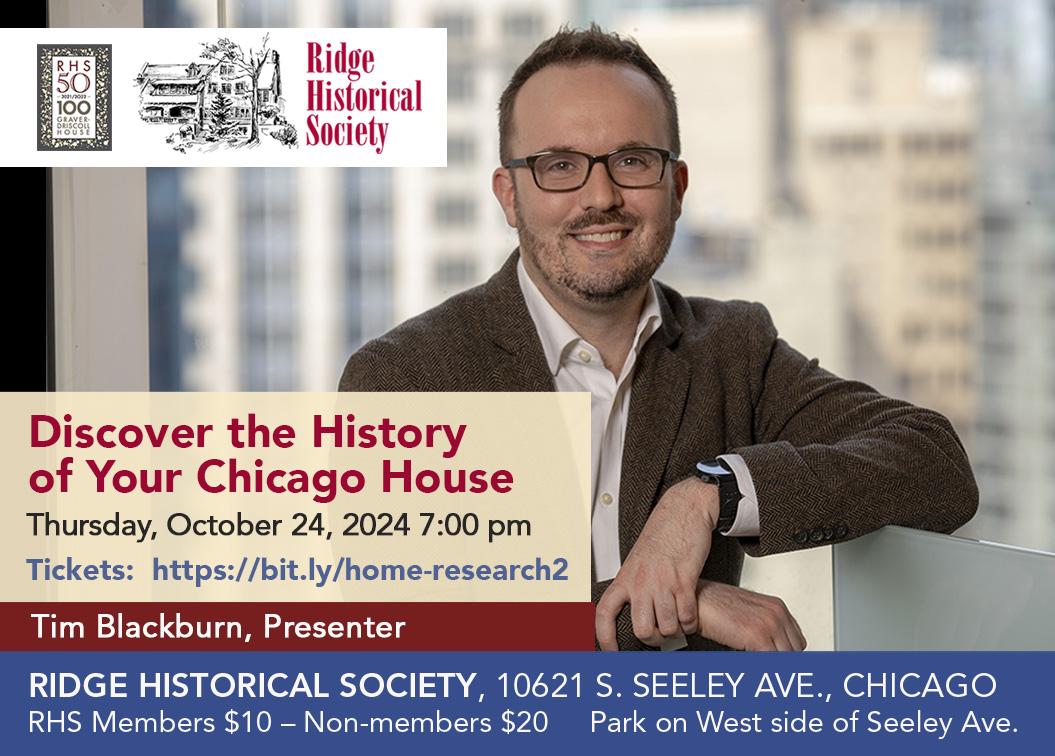
Back by popular demand, RHS Board member and house history guru Tim Blackburn will explain how to research the history of a Chicago house using a multitude of available resources.
The Ridge Historical Society
The Great Chicago Fire and the Ridge
By Carol Flynn
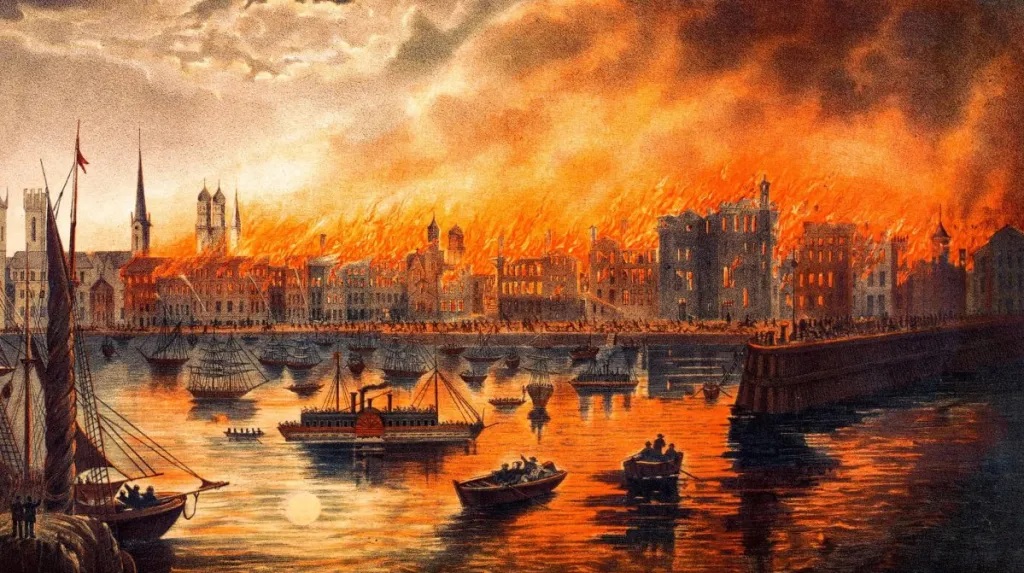
Today, October 8, is the anniversary of the beginning of the Great Chicago Fire in 1871. The fire burned until October 10 when rain finally squelched the flames.
The Great Chicago Fire had a profound effect on all the areas around the city, and the Blue Island Ridge was no exception.
In 1871, the Blue Island was still a distant suburb from the City of Chicago, and development was in the early stages.
A large part of the Morgan estate had been bought by a group of investors known as the Blue Island Land and Building Co. (BILBCo) in 1868 – 69. These men were also owners and investors in the railroads, and in 1870 had expanded the commuter railroad line west along today’s 99th Street, creating the Rock Island line, today’s Metra. This made the area much more accessible.
North of 107th Street was known as Washington Heights and plots of land were being sold. BILBCO was planning a new village south of that to be called Morgan Park.
On that October 8th night, the tip of the Ridge in today’s Dan Ryan Woods at 87th Street and Western Avenue offered a one-of-a-kind vantage point for the local residents to watch the vivid colors of the fire lighting up the northeast sky.
Jack Simmerling, the late artist who grew up on the Ridge, remembered his grandmother telling him how she watched the fire while sitting on the stoop of their family’s house on Vincennes Avenue.
Another story related to a man named Michael Smith, who came to Chicago after the U.S. Civil War and entered the hotel business, owning the National Hotel at Wells and Randolph. In 1869, he divested himself of those interests, purchased 40 acres of land just northwest of today’s 111th Street and Western Avenue, moved to the Ridge and started an orchard of apple and pear trees.
In 1871, Mr. Smith watched the sky over Chicago as all his former holdings went up in flames.
The biggest effect of the fire occurred after the fire, as people left their old neighborhoods and started to move to the suburbs. This led to a major building boom for idyllic places like the Blue Island Ridge.
The Barnard family first came to the Ridge in 1844. At the time of the fire, some of the family was living on Ontario Street, and were forced to flee, throwing their possessions out of windows and grabbing what they could as they ran down the street.
They escaped to the Ridge, and built a new home at the northeast corner of 103rd and Longwood, where the CVS is now, and the flower seed farm they started joined their other holdings in the area.
One unfortunate outcome of the fire was the destruction of loads of records and archives. The Morgan family lost all of their belongings stored in the city.
Right after the fire, pioneer families formed the Old Settlers’ Society, which started to recreate records of the past. People connected to the Ridge participated in this effort.
Out of the ashes of the Great Chicago Fire grew a new Chicago, one of “skyscrapers” and exciting new architecture. Many of the influential men from this period became connected to the Ridge.
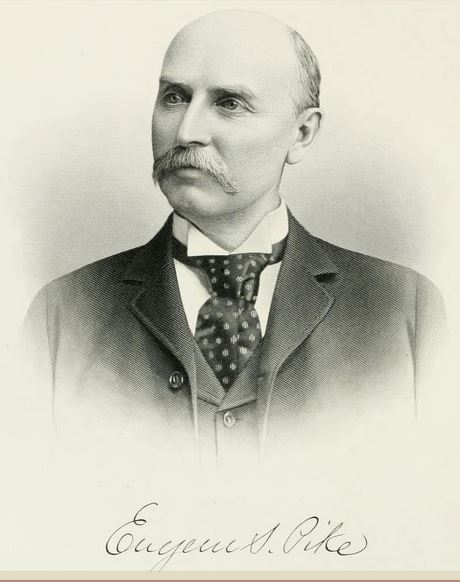
Just one example was Eugene S. Pike, the real estate developer who built major new buildings downtown. His primary residence was on Prairie Avenue, and he bought land in North Beverly for development. Some of the land he kept for himself, where he grew nursery plants for landscaping, and that land became part of the Forest Preserve District of Cook County.
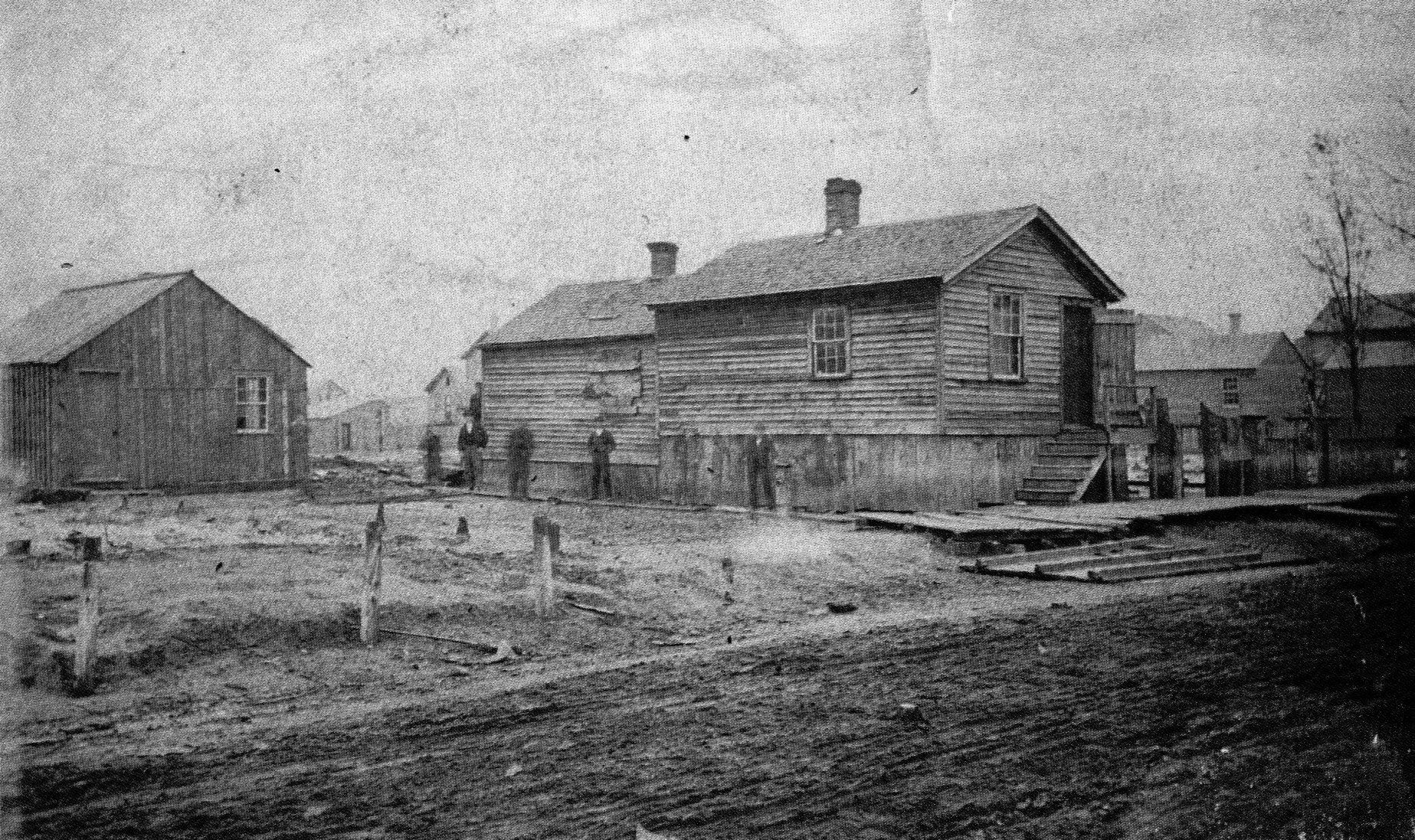
The gardener’s cottage Pike had built there, designed by architect Harry Hale Waterman, is today’s Eugene S. Pike House, undergoing restoration into a community cultural center.
Of course, today, the most famous connection of the Ridge to the Great Chicago Fire is the gravesite of Mrs. Catherine O’Leary in Mount Olivet Cemetery on 111th Street.
Chicago folklore for years claimed that the fire originated from Mrs. O’Leary’s cow kicking over a lantern. Years later, newspaper reporters admitted they made that up.
Although the fire did start in the O’Leary barn, the cows were settled for the night and Mrs. O'Leary was in bed nursing an injured ankle at the time.
The exact cause of the fire was never determined. Theories included a stray spark from men smoking in the alley; the neighbors going into the barn with a lantern to get milk for “oyster stew,” an alcoholic punch they were making for a party; and even arson from a milk business competitor. Other theories included spontaneous combustion and a comet flying through the cosmos.
Big Jim O'Leary, the son, became a famous Chicago gambler. The people loved him – he was honest; he always paid off the bets people made at his (illegal) establishments. He was involved in gambling operations along 111th Street in the early days of Mt. Greenwood.
Big Jim was the nemesis of the famous Irish police chief, Francis O’Neill. Big Jim bought the grave sites in Mt Olivet and is buried there with his parents, right down the way from the mausoleum of Chief O’Neill.
Thanks to Linda Lamberty, past RHS Historian, for some of this information.
The Ridge Historical Society
Living History: Brick Streets of Yesteryear
By Carol Flynn
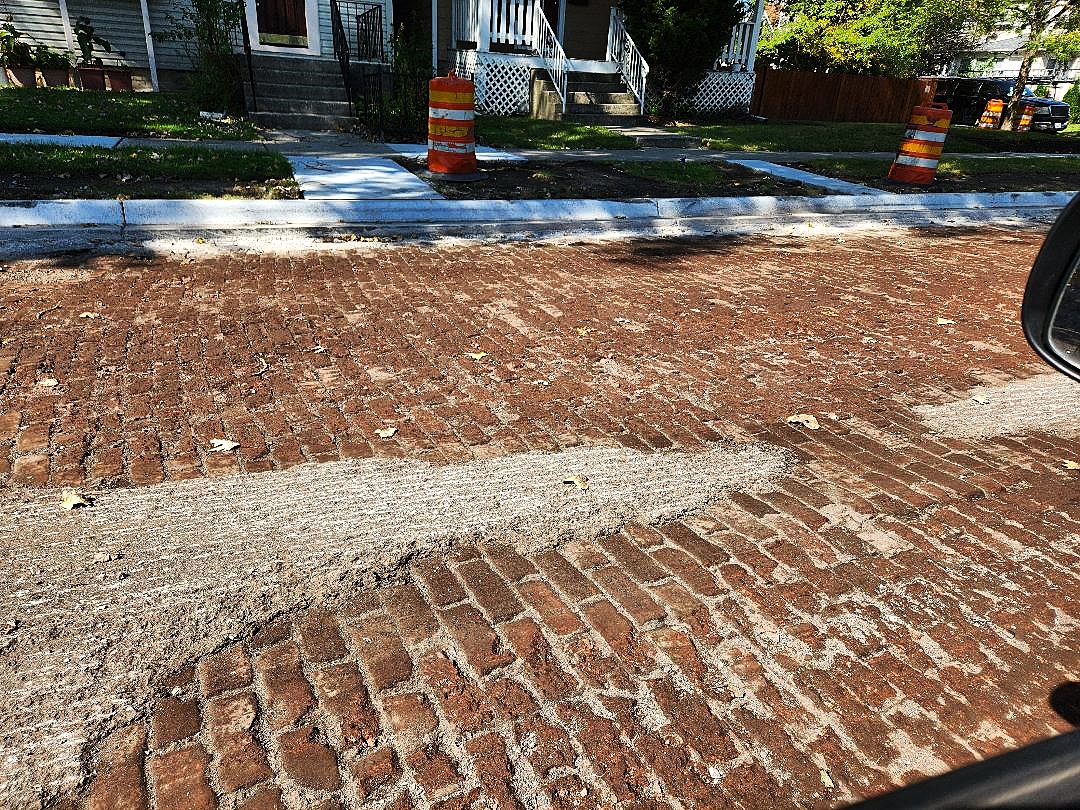
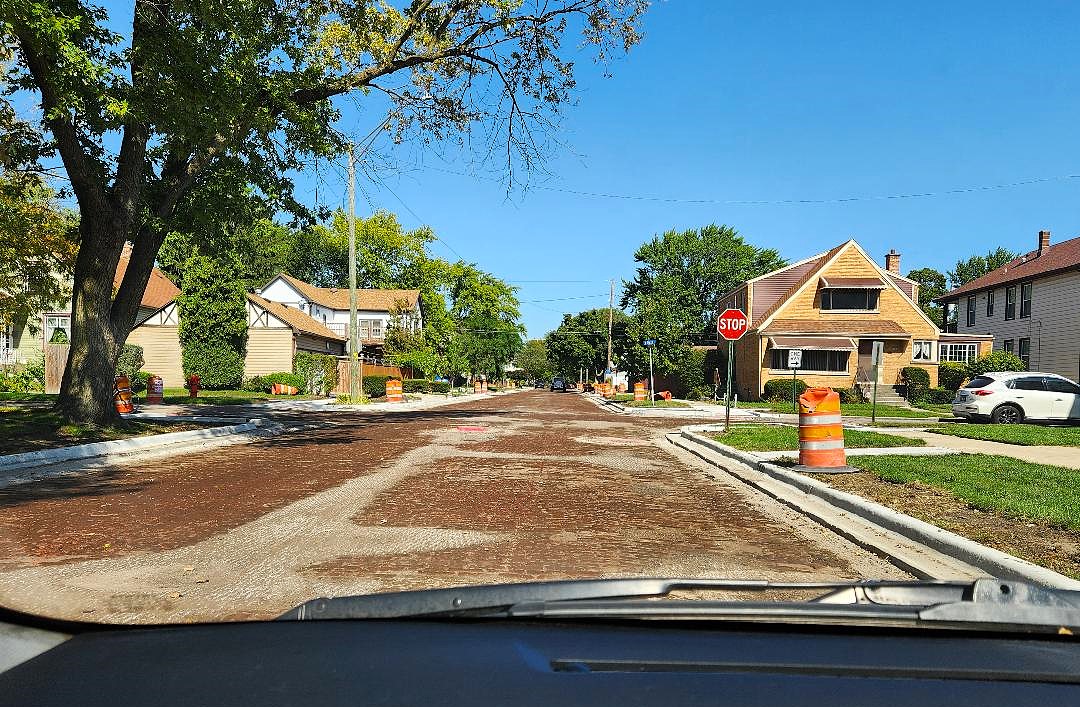
"Seizing the educable moment:" For a wonderful opportunity to see what the brick streets were like, back in the late 1800s – early 1900s, visit our neighbor to the south, the City of Blue Island.
Blue Island, in its continuing efforts for revitalization, which are proving to be very successful, is redoing streets, curbs, and sidewalks.
Right now, Greenwood Avenue, which is one block west of Western Avenue, between 123rd and 127th Streets, has been excavated down to the original brick street. Here are some views of the street.
In the next few days, the streets will be covered with concrete and blacktop, so if you want to see the old streets, do it now.
There are several isolated blocks of brick streets in Morgan Park, on 110th Place, but not a half mile stretch like this.
According to Preservation Chicago: "Originally, Chicago streets were packed dirt, which turned to thick mud when wet and were a constant source of frustration for
early Chicagoans. Dirt roads were initially paved with inexpensive wooden planks and later with wooden blocks; however, this
practice was largely phased out after the Chicago Fire of 1871. Between the 1880s and the 1910s, brick pavers were widely
used throughout Chicago’s highly traveled streets, as they were much stronger, highly durable, fire-proof, and remained functional when wet or snow-covered. These new brick paved streets proved up to the challenge of the wear and tear from steel
rimmed wagon wheels of pre-automobile street traffic.
Chicago’s street pavers were typically fired-clay bricks made from the tough clay abundant under the prairie grass."
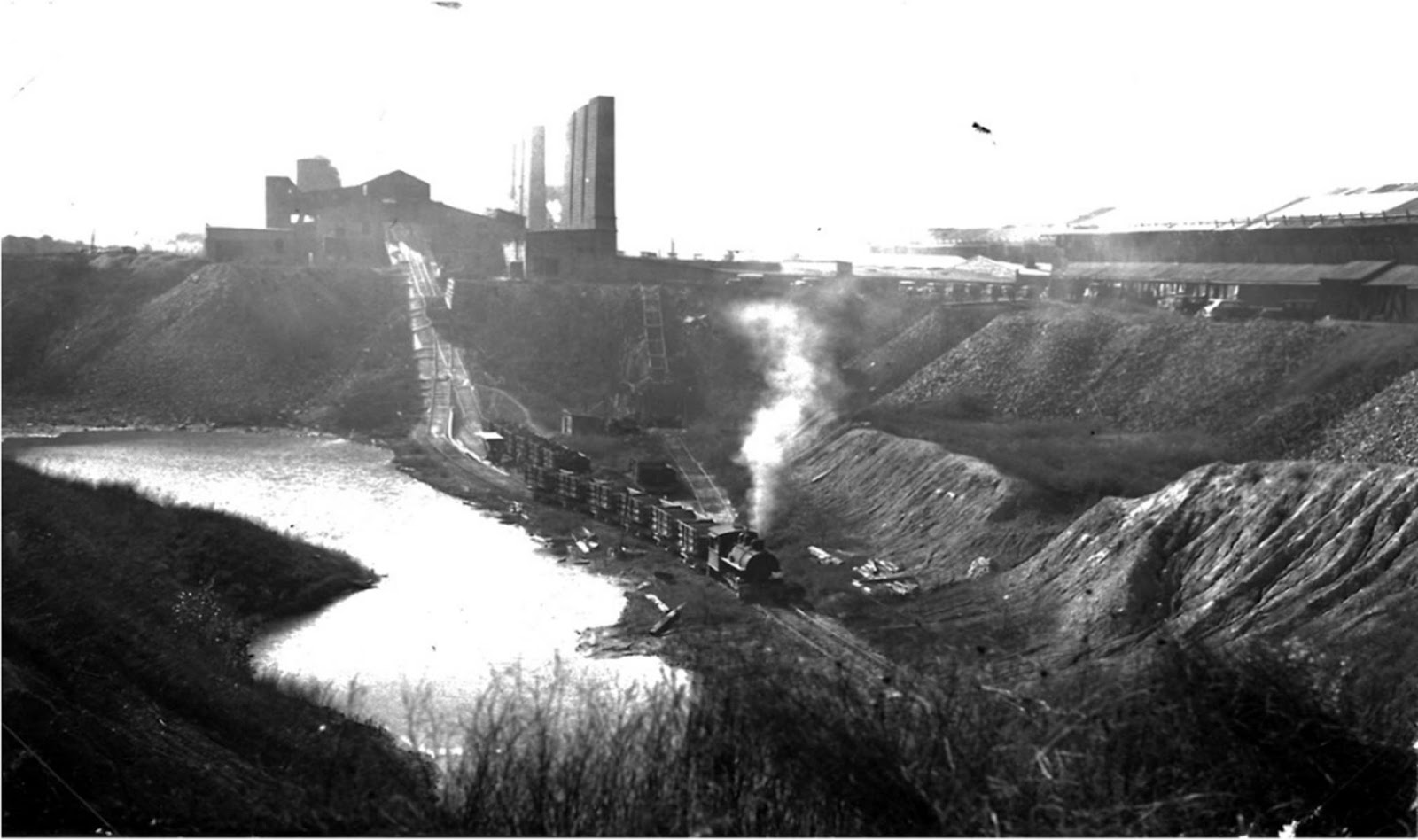
There were massive clay deposits around Blue Island, and brick making was an early industry here. From a history of Blue Island:
"After it was discovered in the early 1850s that rich deposits of clay surrounded the ridge, Blue Island became the center of a significant brick-making industry that lasted for over a century. In the early years, these efforts were small, with the bricks being made by hand and the turnout created mostly for local use, but by 1886 the Illinois Pressed Brick Company (organized in 1884) was employing about 80 men and using “steam power and the most approved machinery”, which allowed them to produce 50,000 bricks per day.] By 1900, the Clifton Brickyard alone—which had opened in 1883 under the name of Purington at the far northeast corner of the village was producing 150,000,000 bricks a year. In 1886, the Chicago architectural firm of Adler and Sullivan designed a large complex for the Wahl Brothers brickyard (the main building of which was 250 by 350 feet on the west side of the Grand Trunk tracks between 119th and 123rd streets. These buildings had been demolished by 1935, and all of Blue Island’s brickyards were re-purposed by the latter part of the mid-20th century. The larger ones for a while become landfills, and the Wahl Brothers location is now the site of the Meadows Golf Club."
There are still families in the area that worked at the brick yards. They are welcome to share their stories and pictures here.
The Ridge Historical Society
Labor Day on the Ridge 100 Years Ago
By Carol Flynn
One hundred years ago, Labor Day occurred on Monday, September 1st.
It was a lovely day – in the mid-70s, partly cloudy, gentle shifting winds: a perfect day to wrap up the summer.
Throughout the Chicagoland area, the holiday was celebrated with activities. The mosquitos were particularly bad that year, especially in the forest preserves, but that did not stop thousands of people from going to the preserves for picnics and sporting events.
The Beverly Preserve at 87th Street and Western Avenue was one of the most popular of the forest preserves because it was the only one accessible by public transportation. Streetcars brought people as far as 87th Street and Ashland Ave., and they walked the rest of the way; or the Rock Island Railroad dropped them off at the 91st Street station, right outside of the forest preserve.
Around 1900, for about a decade, Morgan Park held large “Morgan Park Day” festivals on Labor Day.
In 1923 and 1924, a different kind of program went on, a “chautauqua.”
“Chautauqua” was an adult education and social movement of the late 1800s to the mid-1920s. The movement started in 1874 with an adult summer school for Sunday School teachers at an outside campsite on Chautauqua Lake in New York. That program started with Bible studies, but the idea spread to other schools and sites that started offering programs in many different topics.
Schools, and then communities and private organizers started offering chautauquas, as the programs became known, to the general public. The programs were usually a multi-day event, and featured a variety of speeches and educational talks, along with musical acts, dancers, art events, and other entertainment.
In Beverly/Morgan Park, the chautauqua that was offered from August 23 to September 3, 1924, was produced by the concert management firm of Stroup and Phillips, and was held on Hoyne Avenue from 110th to 111th Streets.
Roy Phillips, who lived in Morgan Park and had been the editor of the Weekly Review and Blue Island Sun Standard newspapers, had gone into the business with Harry Stroup in March of 1923. They represented a wide range of musical artists.
We don’t know the programs, speakers, or performers that Phillips presented that year, but one strong possibility was a performer introduced as the Indian princess “Watahwaso, a daughter of the Penobscot tribe of Indians,” that he featured at other programs.
Watahwaso appeared in costume and related “interesting Indian legends and sang beautiful songs of her own and other tribes.”
Another performer that Phillips promoted that year who likely performed in Morgan Park was James Goddard, a bass baritone of the Chicago Opera Company. He was described as “a great big he-man, strong as Hercules and handsome as Adonis,” with “a wonderful voice of great purity and strength.”
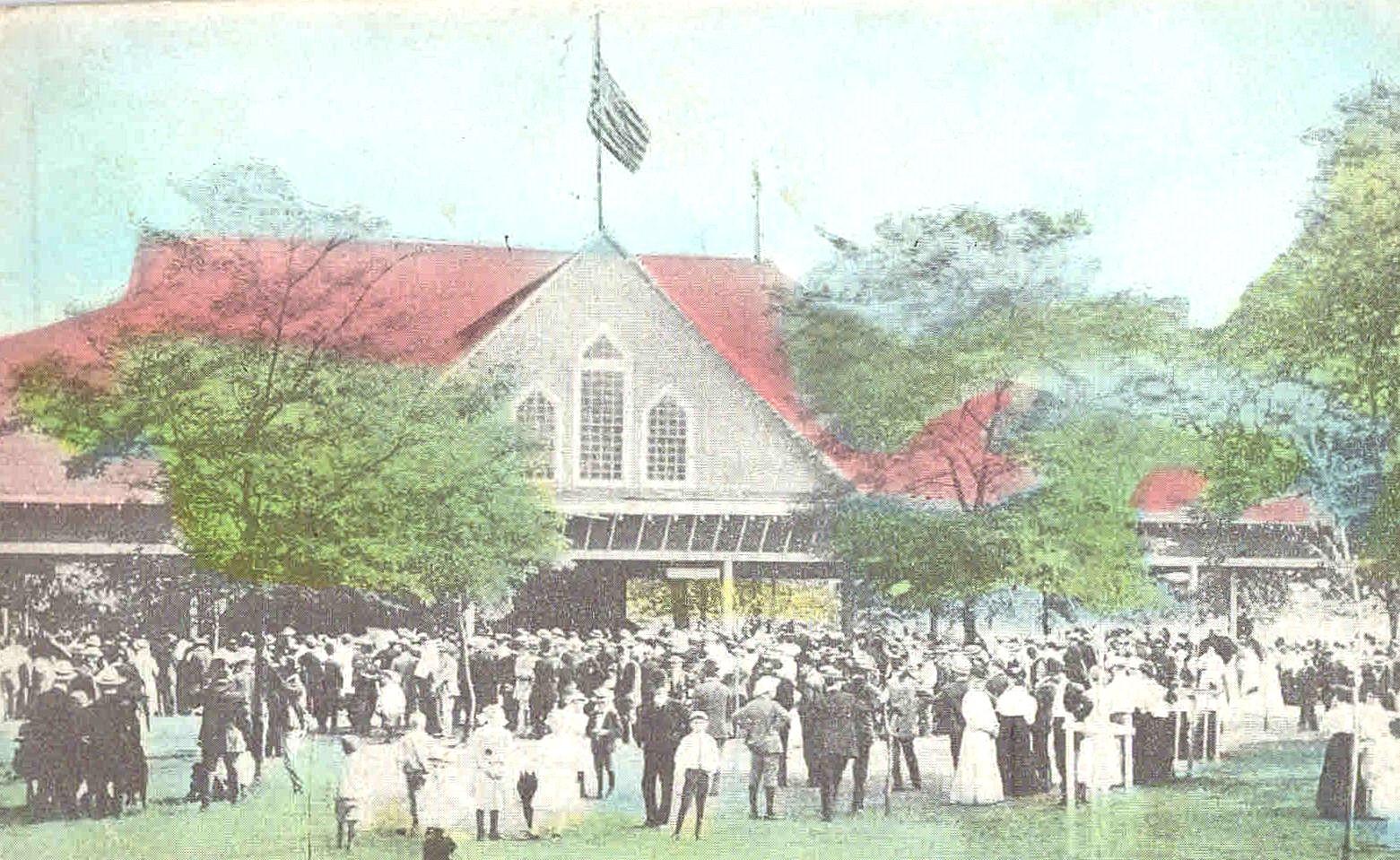
Chautauquas were very popular throughout the U.S. This image is from one held in Ohio.
Ridge Historical Society
National Dog Day – August 26, 2024
By Carol Flynn
National Dog Day occurs annually on August 26 as a world-wide event to bring attention to all breeds of dogs and the importance of dogs in our lives.
Started 20 years ago by an animal welfare advocate, the day also calls attention to the many dogs that need to be rescued and adopted each year.
Of course, there are many stories related to dogs in the Ridge communities’ history. One favorite story, however, directly relates to rescue and adoption.
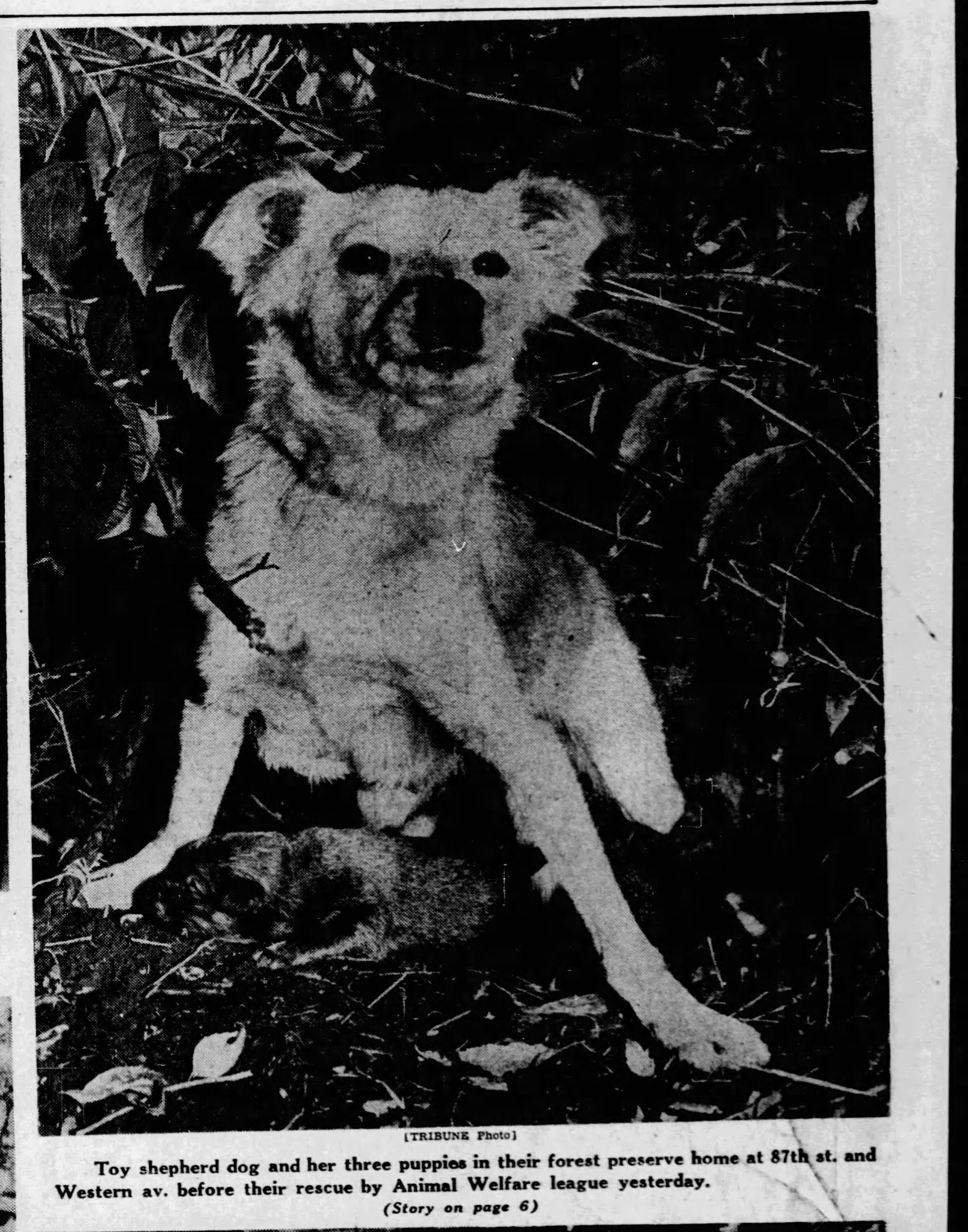
In the summer of 1945, a small dog described as a “brown toy shepherd” started to be noticed living in Dan Ryan Woods. It was assumed she had been dumped there because many people abandon animals of all kinds in the forest preserves. The animals rarely survive a Chicago winter.
The little dog was elusive with people. She would allow them to get just so close before she scampered away. She was often seen hunting for rabbits and warily searching picnic grounds for half-eaten sandwiches.
She began to be known as “the wild dog of Ryans Woods” but the children in the neighborhood called her Dollie, and eventually the adults started calling her that, also.
In October, as the weather cooled, the neighbors started leaving food out for Dollie at the edge of the woods. Mrs. Northrup, who lived at 8957 S. Oakley Ave., an active charity and “club” woman in the community, determined to capture Dollie and find her a good home.
That proved more difficult than expected. Talking softly to Dollie and offering tasty tidbits of food still brought Mrs. Northrup no closer than 10 to 15 feet from the dog.
Mrs. Northrup called in the Illinois Citizens’ Animal Welfare League, who sent experienced field agent Allen Glisch over to the woods.
While Mrs. Northrup distracted Dollie, Glisch managed to get a leash around the dog’s neck. Little Dollie, still shy, didn’t fight them; she wagged her tail when Mrs. Northrup and Glisch approached her and petted her.
When they started leading her out of the woods, however, Dollie hesitated to go. Instead, she led them to a nearby brush heap. There, in a leaf-lined den that she had dug, they found three puppies, about a week old whose eyes had not yet opened, fast asleep.
Dollie whined and danced around proudly as Glisch gathered the puppies in his arms, and she happily followed him as her puppies were carried over to Mrs. Northrup’s home.
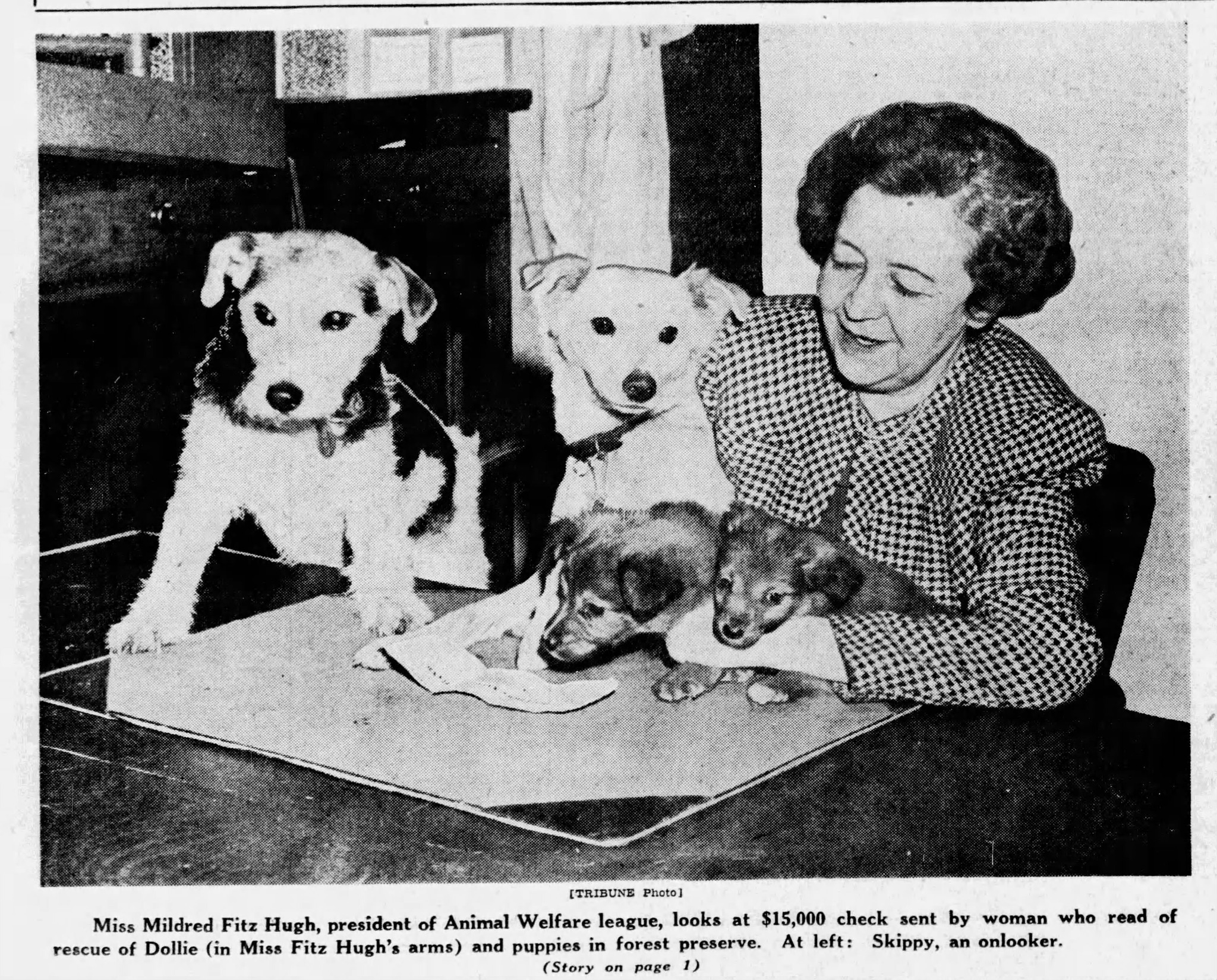
Dollie became a bit of a media sensation, attracting the attention of the Chicago Tribune. In California, Marguerite Doe Ravenscroft, a wealthy socialite and philanthropist who strongly supported humane efforts and was the honorary chairman of the local animal welfare league, saw the article, and in December, sent a check for $15,000 to the Illinois organization to help build a new shelter in Chicago.
Dollie, her puppies, Mildred Fitz Hugh, the founder and president of the Illinois chapter, and Skippy, a terrier mix who got in on the act, posed for a picture with the check that appeared in the Chicago Tribune.
Fitz Hugh, also a wealthy socialite and the grandniece of Mayor Carter Harrison, announced in February of 1946 that the money was used to purchase two buildings at 3138-3140 Walton Street, for a new shelter. There was already a shelter at 6224 S. Wabash Ave.
What became of Dollie and her puppies wasn’t reported in the newspaper, but given their star qualities, and their downright adorableness, it’s probably safe to assume that they found “forever” homes.
Happy Fourth of July from the Ridge Historical Society
By Carol Flynn
The Ridge 100 Years Ago
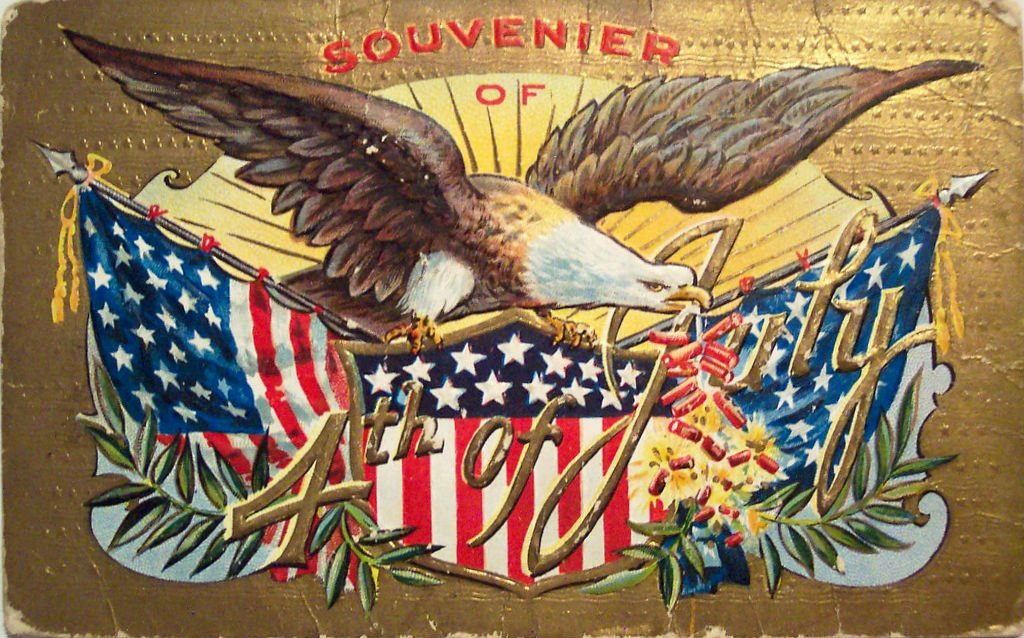
As this year’s Fourth of July activities wrap up, let’s look back at the holiday 100 years ago. The Ridge communities were known for their festive celebrations.
On June 27, 1924, Sullivan’s Englewood Times, a south side Chicago newspaper, reported that “big doings” were being planned for the annual community Fourth of July event to be held in Ridge Park.
“The community has a reputation to provide a good time and it surely will be a successful day if balmy summer weather prevails,” stated the paper.
The Boy Scouts assisted the Beverly Hills Post of the American Legion in going house-to-house to help the event’s finance committee raise funds.
A busy day from 9:30 a.m. to 10 p.m. was planned. A “delightful time” was promised, with pink lemonade, dancing, a public speaker, athletic and swimming events, baseball, a band concert, and “booths galore.” Not to be forgotten was the “beautiful” fireworks display scheduled for the evening.
“The park is big and a spirit of welcoming” would be extended to everyone, promised the event planners.
The weather did cooperate that day. July 4th fell on a Friday in 1924. It was a clear day, but cool, in the low- to mid-sixty degrees. That proved to be fine with the community, and the event proved to be everything promised.
“The Ridge’s Community Fourth was one of the best ever. The whole town was there from Morgan Park to Beverly and 91st st., not counting the visitors from other places,” wrote the paper the following week, on July 11, 1924.
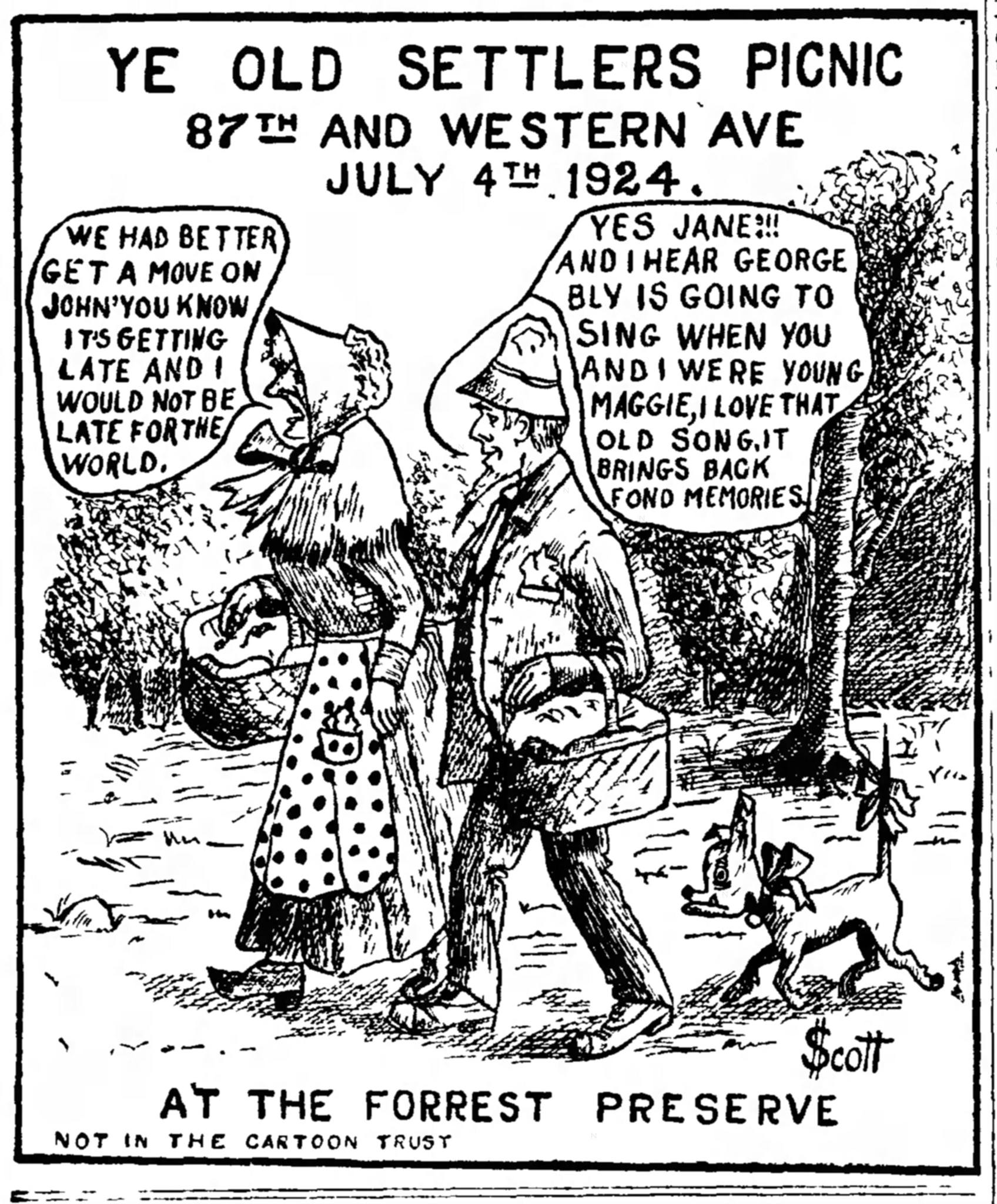
About a mile to the north, in the Beverly Woods (now Dan Ryan Woods) at 87th Street and Western Avenue, another group also held a big Fourth of July event in 1924.
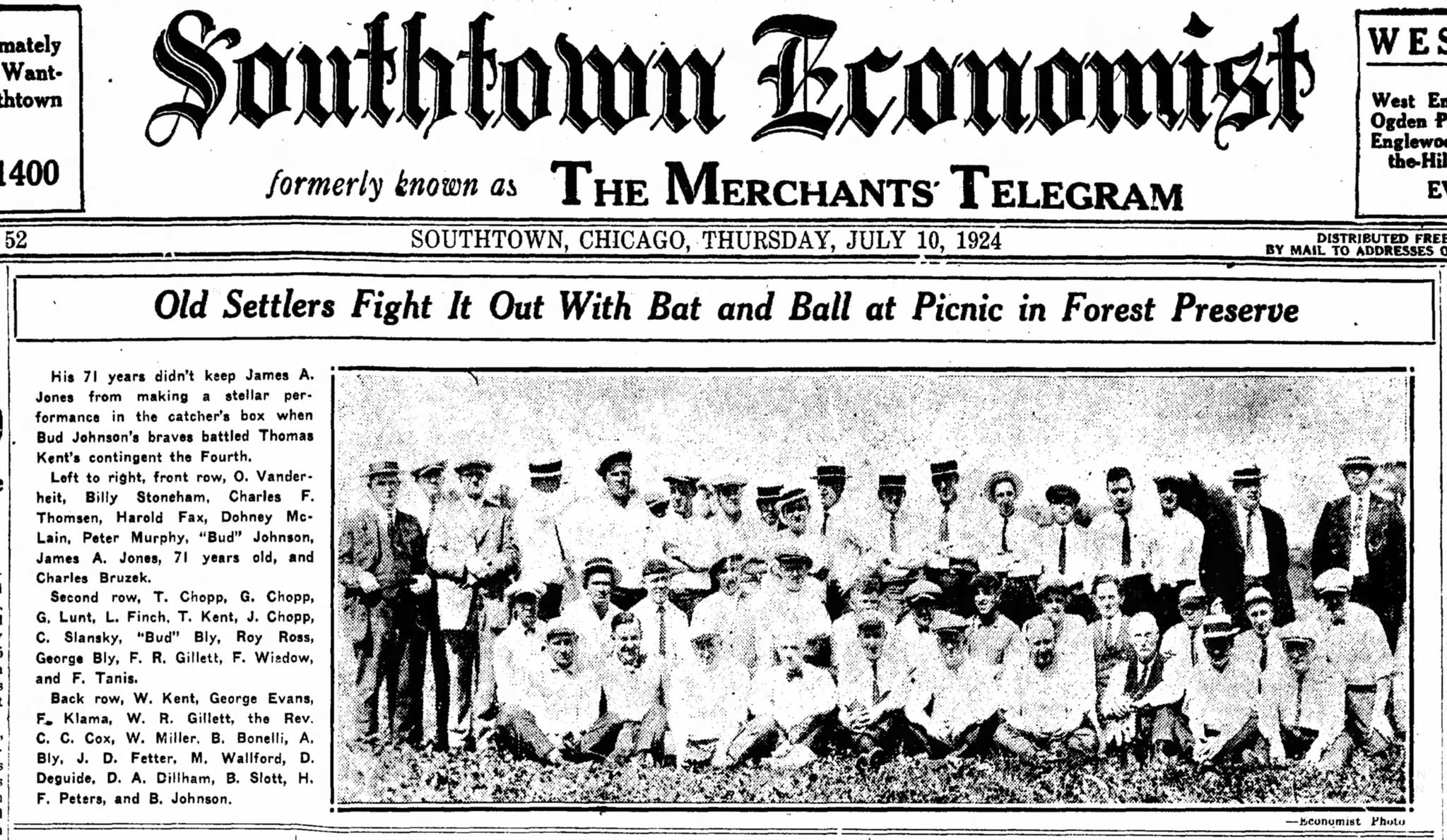
According to the Southtown Economist, another southside paper that had previously been known as The Merchants Telegram, the Englewood Old Settlers Association invited their community to join them for a day of picnicking, music, and games.
“Old settlers,” or “pioneer,” societies were once very popular. People who had lived in a community for a specified amount of time got together to share stories and memories. Today, in some ways, the “nostalgia” pages of Facebook fill some of this function, although there is no comparison to getting together in person for reminiscing.
A person had to have lived in Englewood for at least 20 years to qualify for membership in the Englewood Old Settlers Association. The membership of the club numbered 600 in 1924.
For the Fourth of July outing, the attendees gathered at 63rd Street and Ashland Avenue at 10:00 a.m. Transportation to the woods would be by automobile, something still new and exciting for many people. Anyone who needed a ride would be able to find one.
The newspaper reported, “In striking contrast to the days when lanterns furnished their only illumination to guide them to neighborhood gatherings, automobiles will carry the Old Settlers to their picnic.”
The cars were decorated with flags, and horns were provided to create noise for the procession.
The day was filled with activities. Charles S. Deneen, the past Governor of Illinois, gave a speech in the morning. (The next year Deneen would become the U.S. Senator from Illinois.)
A piano had been brought along, and next, the attendees, some in wheelchairs, sang patriotic and old time songs.
A five-inning baseball game was played by two teams of Old Settlers. The oldest player was 71 years old. The prize of a straw hat went to the first man to hit a home run, which happened in the third inning and was the only home run in the game.
Additional competitions went on, with prizes supplied by the local businessmen.
For men, there was horseshoe pitching. Women’s events included wood sawing and nail driving.
There were potato races and sack races, races for “fat men” and “fat ladies,” and for married men and married women. There were also races for boys and girls.
A prize was awarded for the best decorated auto.
Tables and chairs were brought over to the woods for people to set up their “basket” lunches and dinners. Ice cream, pop, and peanuts were sold.
Later in the day there was dancing.
About 2,000 people attended and the event was deemed a social and financial success.
The paper reported that moving pictures of various events would be taken. Those movies may still exist somewhere and would be wonderful to watch.
Because July fourth was on a Friday, many businesses also gave their employees Saturday off. It was the norm back then for people to work a half day on Saturday in addition to full days Monday through Friday. The average work week was 50 hours.
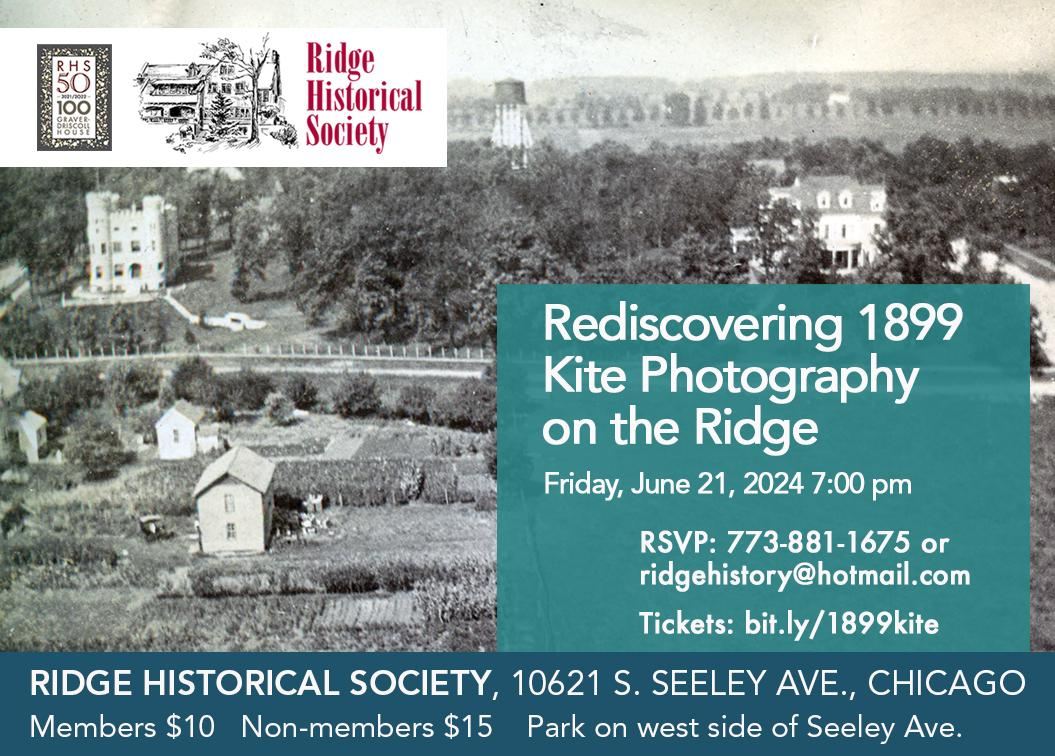
Ridge Historical Society recently discovered a stunning online collection of aerial kite photography that shows expansive views of portions of Beverly Hills, Washington Heights, and Morgan Park in 1899. After 125 years of development from a rural community to urban environment, the locations of most of the photos were unrecognizable.
In this program, RHS board member Tim Blackburn and Historian Linda Lamberty will present how they resolved the locations of the photos and discuss the community’s development that is visible in the aerial photos. Topics include the history of Bethany Union Church, evolution of Chicago Bridge & Iron Company, development of a farm into a small subdivision of Walter Burley Griffin homes, and how greenhouses dotted the local landscape. A future program will focus on recreating these aerial photos via drone photography.
Please note that the Graver-Driscoll House where RHS is located is not air conditioned or handicapped accessible. Parking is on the street on Seeley Avenue, then walk down the driveway to the entrance of the building.
10621 S. Seeley Avenue, Chicago. Friday, June 21, 7:00 p.m.
Members $10, non-members $15.
Limited Capacity. Please RSVP or buy tickets soon.
RSVP with the number attending at 773-881-1675 or ridgehistory@hotmai.com
Get tickets today at bit.ly/1899kite