
Explore the RHS Facebook Archives, a rich repository of local history written by Carol Flynn. For two decades, Carol brought a deeply dedicated voice to public education at RHS. Her role as Facebook administrator through mid-2025 naturally extended her prolific research into meticulously detailed articles, most notably her multi-part historical series posts. Today, Carol continues her local history writing for The Beverly Review and other outlets.
Local History
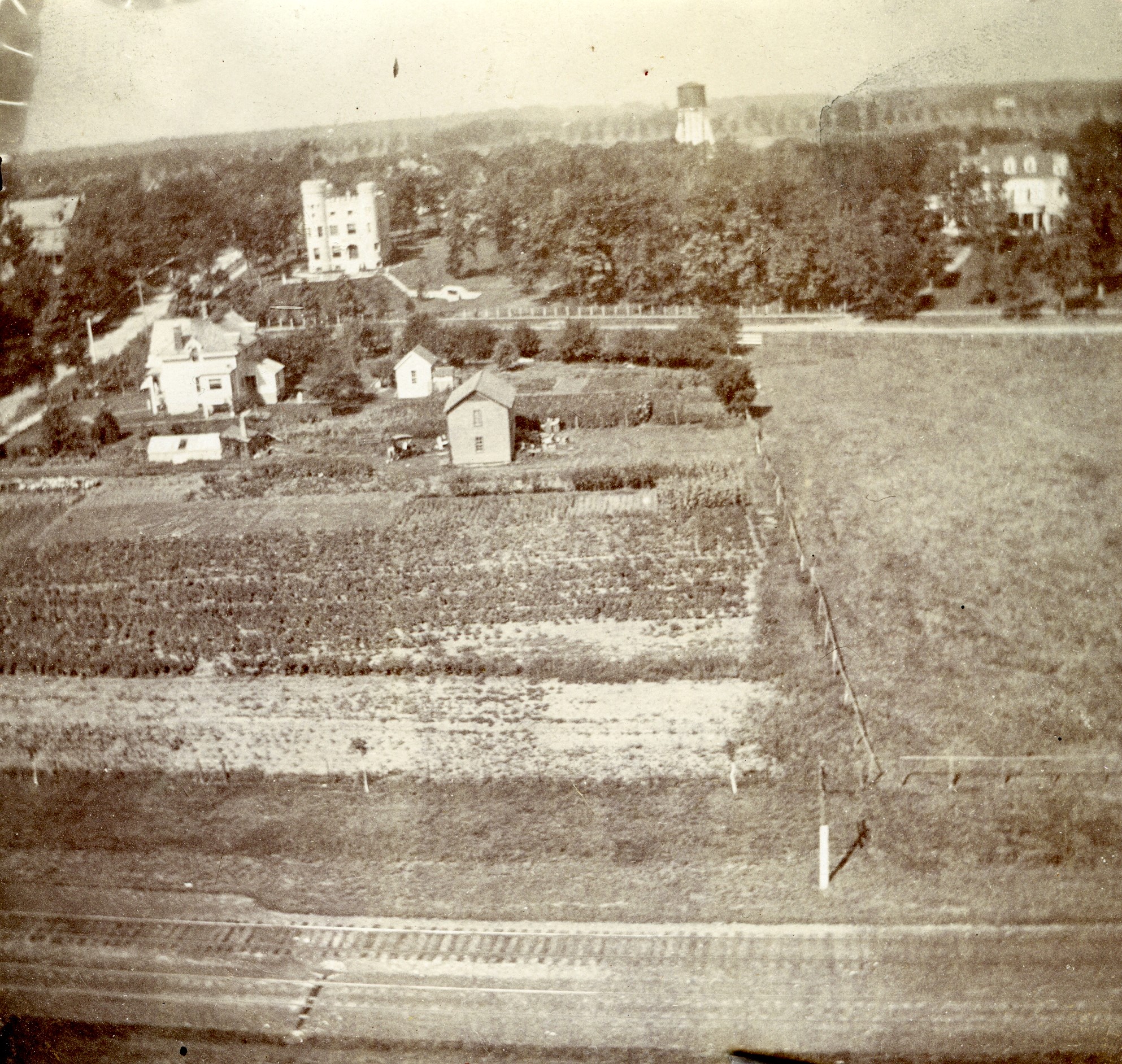
The Ridge Historical Society is open today, Tuesday, December 12, from 1:00 p.m. to 4:00 p.m., and people may stop by to see the current exhibit “Louise Barwick’s Lost Ridge” for free.
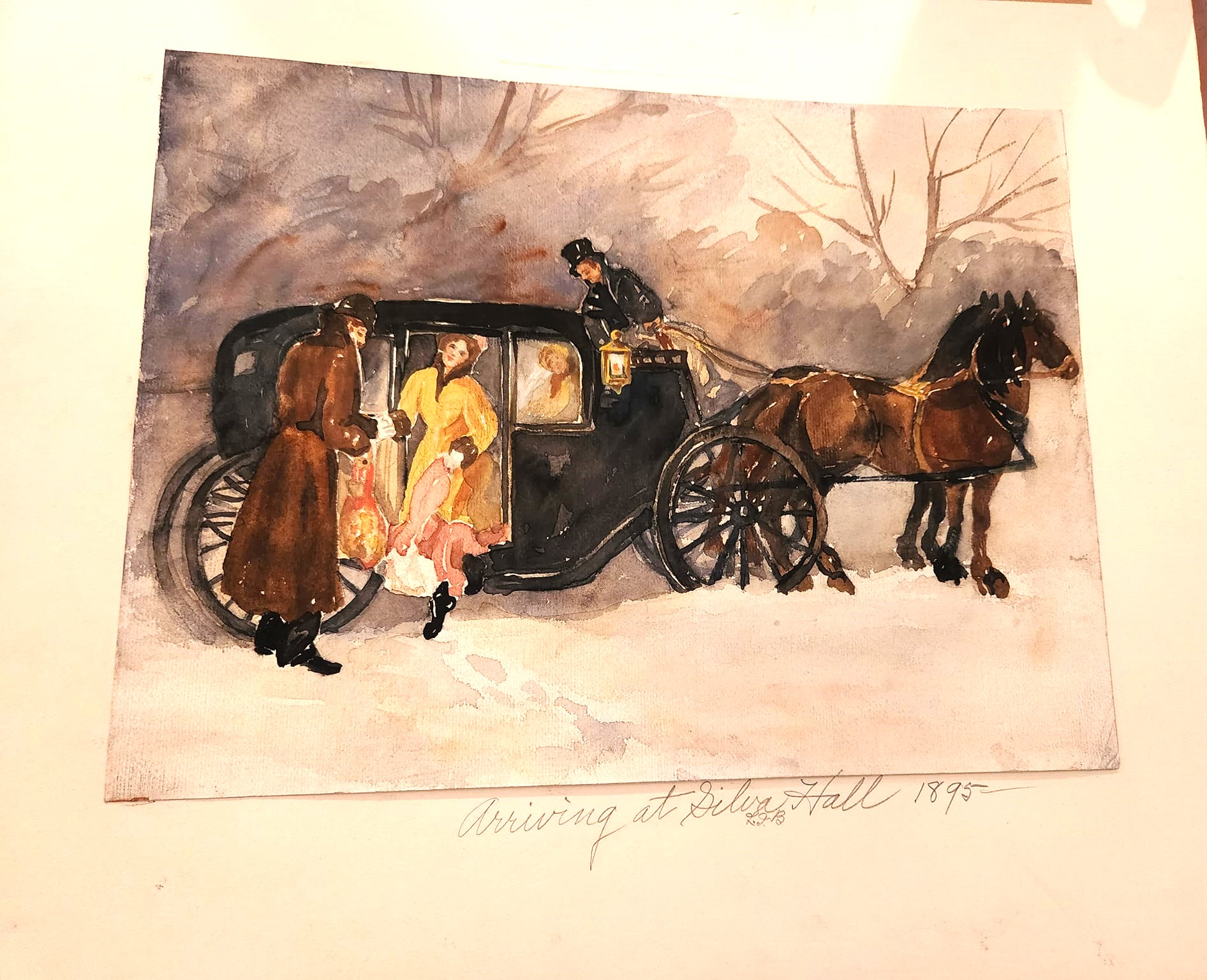
This exhibit gives fascinating glimpses into how the community appeared around 1900, through the watercolor paintings of Miss Barwick, an educator and artist.
Also included in the exhibit is aerial photography of the Ridge taken from a camera attached to a kite from the same time period.
This is one of the iconic aerial shots.
Do you recognize the location?
Tomorrow’s post will describe in detail what is viewed here.
If you can’t wait that long, go over to RHS today. RHS is located at 10621 S. Seeley Avenue, Chicago.
Robert Heffron Murray, Kite and Aerial Photography Experiments, 1899
Tomorrow is clean-up day at the PIKE HOUSE!
Details are in the attached Patch article. Thank you, Patch and editor Lorraine Swanson for the coverage!
https://patch.com/illinois/beverly-mtgreenwood/volunteers-needed-fall-clean-saturday-eugene-s-pike-house?utm_term=article-slot-1&utm_source=newsletter-daily&utm_medium=email&utm_campaign=newsletter&user_email=746a8077f303b55eeca8959339fdbbedc6c3a0a6819429e815ae3ffc647bc238
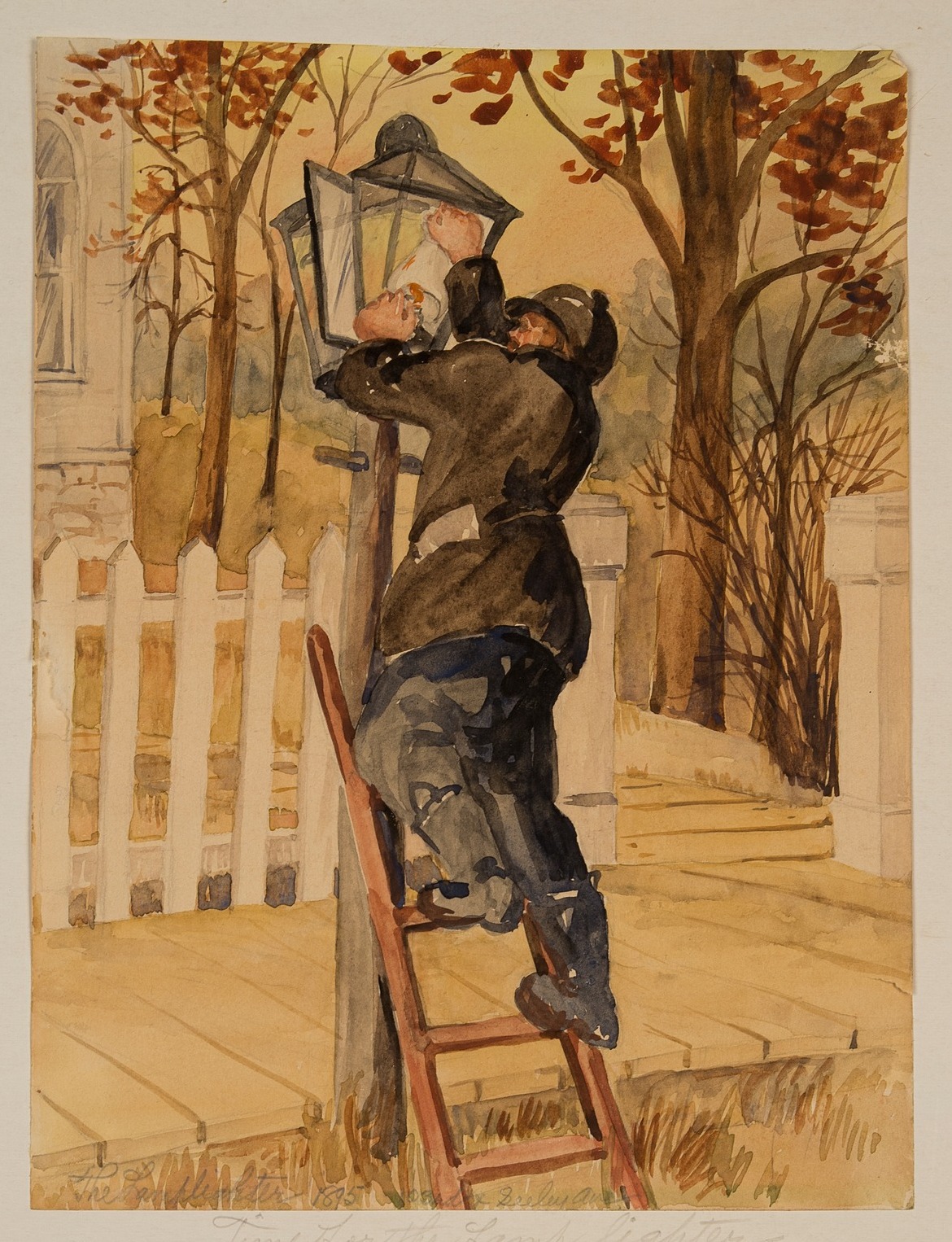
The current exhibit at the Ridge Historical Society (RHS) offers glimpses into how the Beverly Hills and Morgan Park neighborhoods appeared over 100 years ago, through the watercolor paintings of artist Louise Barwick and other media.
Today the street lights come on automatically thanks to electrical wiring, but just envision how once the lamplighter rode his bicycle around the neighborhood, lighting the gas lamps by hand.
This painting is “Lamplighter” painted in 1895.
The scene occurred on Belmont Avenue (now Seeley) south of 103rd Street. The partial view is of the house at 10330 Seeley, where the Barwick family lived.
The caption for the painting: The lamp lighter rode on his bicycle, carrying his short ladder and the gaslight taper.
Here are a few comments on the current Ridge Historical Society exhibit, “Louise Barwick’s Lost Ridge”:
Linda Lamberty, RHS Historian and Exhibit Co-Curator:
“It’s a visual experience …. I’m hoping people will sit with their coffee in the morning, looking out on their yards, and try to picture it the way it once was – and the way it was so loved by people in the community. We LOVE this neighborhood today, but 100+ years ago our predecessors loved a vastly different landscape just as much. This place is just uniquely special and has always been cherished.”
M.M., college educator, exhibit visitor:
“I have enjoyed lingering & lingering over the panels from the Louise Barwick exhibit; I can't stop gazing at them & rereading them, over & over.
“The relationship between the text and the images that the viewer's imagination feels enraptured by, is really an education unto itself. I love the experience of flowing back and forth, between the words and the visuals. It triggers the exhilaration of REAL learning."
“Louise Barwick’s Lost Ridge” is open to the public on Tuesday and Sunday afternoons from 1:00 to 4:00 p.m. or by appointment (call 773/881-1675 or email ridgehistory@hotmail.com). Admission is free. RHS is located at 10621 S. Seeley Avenue in Chicago.
The Ridge Historical Society
Bessie Sutherland
By Carol Flynn
Happy Belated Birthday to Bessie Sutherland, the namesake of the Elizabeth H. Sutherland Elementary School at 10015 S. Leavitt Street in Beverly, Chicago.
Bessie was born as Elizabeth Bingle Huntington in Blue Island on September 27, 1851. Her father, Samuel D. Huntington, farmed and raised livestock, was involved in the railroads, and was Constable and Sheriff for a number of years.
Her mother, Maria Robinson Huntington, was possibly the first schoolteacher on the Ridge. In 1842, at the age of 14, Maria was making $1 per week to teach school. No record of any school earlier than that has been found.
Bessie graduated from the Cook County Normal School in 1869. “Normal” schools trained teachers in the “norms” of education standards of the day. That school evolved into Chicago State University.
She taught in Blue Island, Hyde Park, and Washington Heights. She took additional coursework at the University of Chicago. Along the way, she moved north on the Ridge to 107th Street and Prospect Avenue.
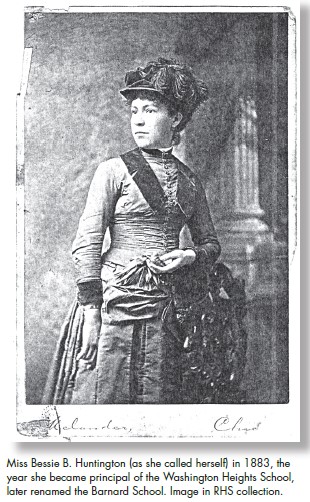
In 1883, she was named Principal of the Washington Heights School. This was before Washington Heights was annexed to the City of Chicago in 1890. She was the first woman to be named principal of a Cook County school. The school was renamed the Alice L. Barnard School in the 1890s in honor of another pioneering Ridge educator. Alice was the one of the first women to be named a principal of a Chicago public school.
Bessie was a Progressive Era educator and a suffragist. That period was marked by great reforms in all areas. Education saw a major shift from learning by lecture and memorization to learning by doing and experimentation.
One example of Bessie as an educator illustrated the new thinking. When she learned that a camel had escaped from a traveling show and was roaming freely in the local woods, she rounded up the entire school body and took them on an impromptu field trip to observe the animal in a natural setting.
Back then, women teachers were not allowed to marry and keep their jobs. Bessie put off marriage to her “intended,” David Sutherland, until her 43rd birthday in 1894. David, seventeen years her senior, was in real estate with considerable holdings on the south and west sides of Chicago.
David died in 1904, and Bessie continued with Barnard School until she retired in 1923. She died in 1924 and was buried in Mount Greenwood Cemetery. In 1925, the new school built at 100th and Leavitt Streets was named in Bessie’s honor.
RHS Historian Linda Lamberty is related to Bessie Sutherland. In 1974, a 96-year-old mutual cousin of Linda’s and Bessie’s told Linda that Bessie was “a truly wonderful person.” This cousin had known Bessie personally. According to Linda, Bessie was “one of the rare stalwart women” who forged paths for other women.
The August Villager, the community newspaper put out by the Beverly Area Planning Association, includes an article by Linda Lamberty, Ridge Historical Society Historian, introducing the upcoming RHS exhibit, "Louise Barwick's Lost Ridge."
The exhibit will officially open to the public the day of the @[672585269479476:69:Beverly Art Walk], Saturday, September 23, 2023.
Along with the exhibit, RHS will run a series on Miss Barwick and her remembrances of her times on Facebook. So look for this in September!
The Old Water Tower by Louise Barwick, 1893. Located, in the artist’s own words, “200 feet north of 103rd Street between Hoyne and Seeley,” the water tower was constructed circa 1888 as part of a much-needed water system that included a windmill. The then modern achievement became redundant when the area was annexed to Chicago in 1890, when water and other utilities began being supplied by the City.
Pop-Up History on the Ridge – View the Jack Simmerling Mural "Life on the Ridge" at Smith Village
Mark your calendars!
The interest in the Jack Simmerling mural, "Life on the Ridge," at Smith Village is leading to the first ever (to my knowledge) Pop-Up History event in the Beverly/Morgan Park community. If this is successful, maybe we'll be able to do others at places not usually open to the public, like some of the churches with great stained-glass windows, etc.
I did not get any feedback that this event would be a scheduling conflict with other events in the neighborhood but if it is, please let me know.
Details:
What: View the Jack Simmerling Mural at Smith Village – "Life on the Ridge"
Date: Wednesday, July 26, 2023
Times: Two showings – 1:30 to 3:00 p.m., and 7:00 – 8:00 p.m.
Address: 2320 West 113th Place, Chicago – come into the main entrance and you will be directed from there.
Hosts for the day: Elaine Spencer, Past RHS President and Smith Village resident, and Carol Flynn, local historian/journalist
Cost: Free, parking on site or on the local side streets
Jack Simmerling’s daughter Meg Simmerling is expected to be our guest for the first session. We look forward to her insights on her father’s work.
Any questions? Message me through Facebook – Carol Flynn.
Note that this is not an official RHS program. Elaine and I are doing this as a pilot test to see if events like this go over with the public. Thank you for your support!
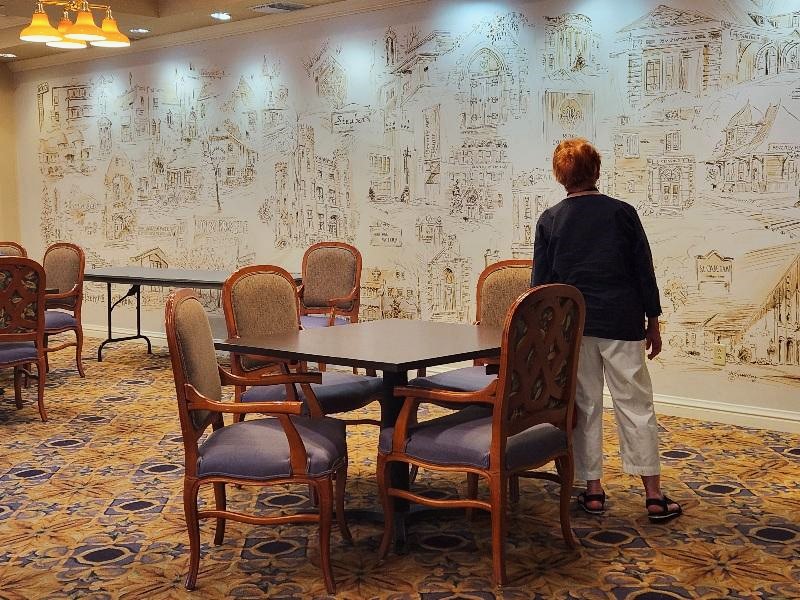
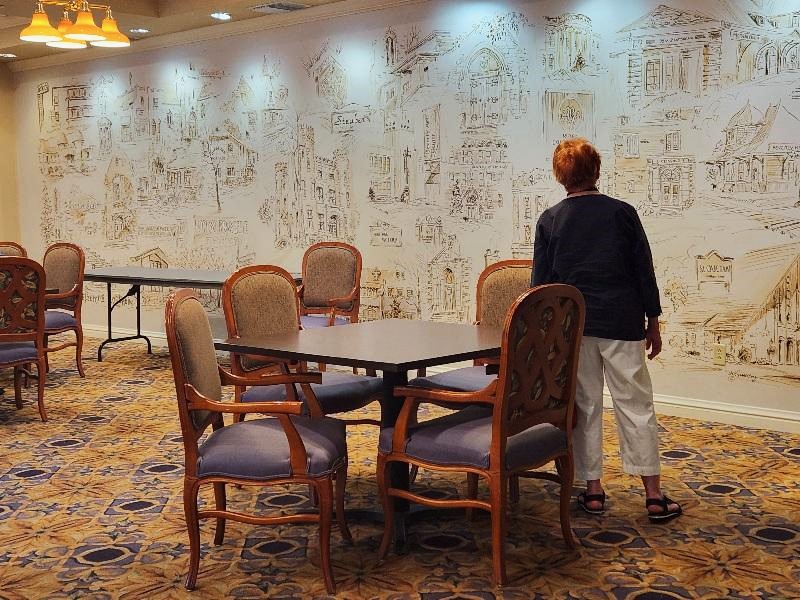
This image is of Elaine Spencer viewing the Jack Simmerling mural at Smith Village.
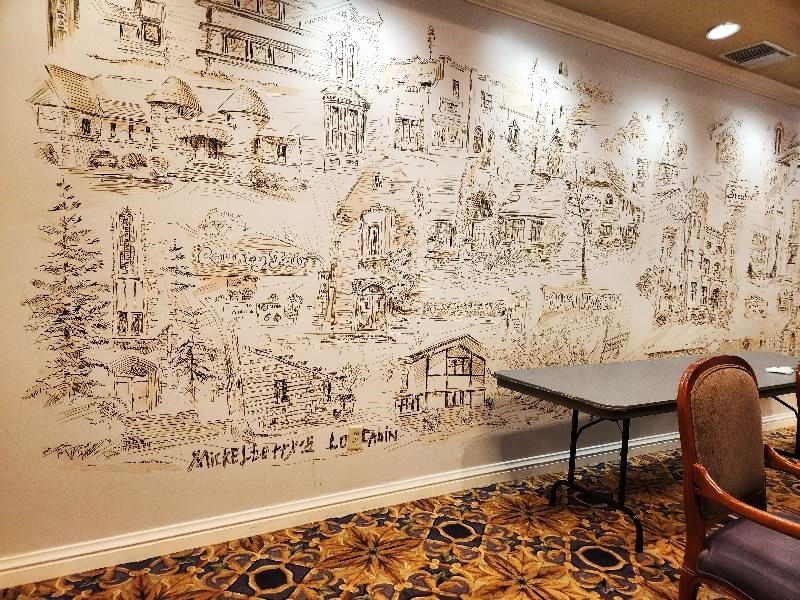
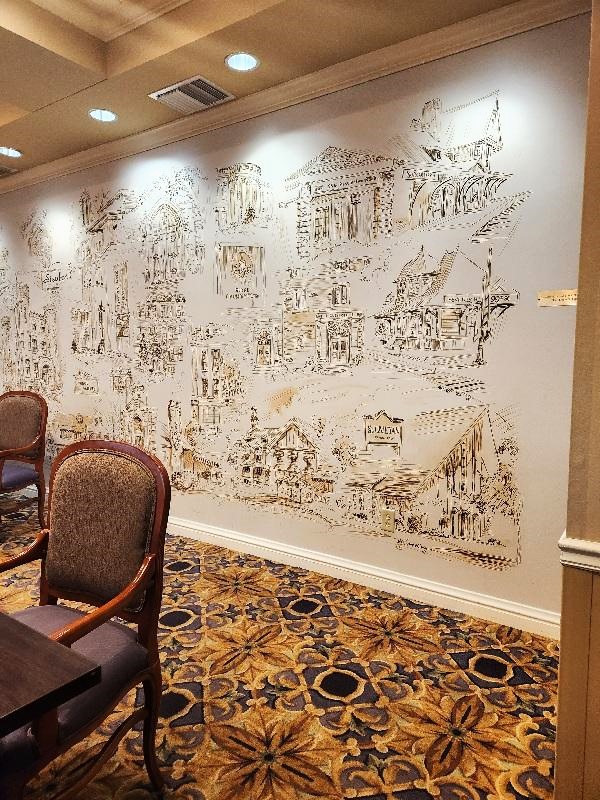
UPDATE: Wow, there has been a fast response to this post, but I knew people would like this. I talked to Elaine and when she returns from her upcoming vacation, we will plan an open house with Smith Village so people can come in to see this. It will likely be early August, so stay tuned. – Carol Flynn
PS – Elaine Spencer, by the way, lives in Smith Village and is on the Residents Council, if that is the proper name of the organization unit.
The late Jack Simmerling, artist and historian, and a founding member of the Ridge Historical Society, painted a mural on the wall of one of the dining areas at Smith Village that pretty much summarizes the history of the Beverly and Morgan Park communities.
Elaine Spencer, past President of RHS, and I recently viewed it for the umpteenth time and here are some pictures. (That's Elaine from the back.)
If you've never seen this in person, you should do so.
Here's a good primer on the topic of selling and serving alcohol on the east side of Western Avenue in the 19th Ward.
The Illinois Liquor Control Act of 1934, which followed the repeal of Prohibition, sets forth the law for establishing dry sections by election precinct, and the City of Chicago Board of Election Commissioners Guidelines for Local Option Referenda sets forth the process for establishing (and repealing) dry sections in the city.
This is done on a precinct-by-precinct basis, and only the people who live in the precinct that will be affected are allowed to vote on the issue.
Many people would like to see more restaurants serving alcohol located east of Western, however, the people living in that section have consistently voted "no" to alcohol for almost 90 years.
Frankly, a better way politically to deal with this issue would be, rather than trying to change the law in general in any given precinct, to find a party interested in developing a specific property into a restaurant and to work through a process to allow a liquor license for that venue, as was done with the Barraco's on 95th Street, which took over the building that was the former library, and before that, a funeral parlor. No other property was affected by that decision and the neighbors impacted by the decision approved the sale of alcohol at that location.
BAPA History: The “Wet/Dry” Issue
Ridge Historical Society (RHS) Helps with Research Projects
One or two people have mentioned an art project called “Invisible Labors” to RHS. We are aware of this project and were involved in its early stages.
This project is one case study from many on how the historians at RHS help people with research projects. RHS has been doing this for fifty years.
The number one research request we get is from homeowners for the history of their houses.
We get involved in many other research projects, also. In recent years, we helped everyone from a local church developing a Land Acknowledgement Statement to an eighth-grade student developing a presentation on Prohibition.
Our research on the Pike House led to Landmarks Illinois awarding it “endangered status.”
We even found the owner of a wedding ring that went missing decades ago. That story made the national news.
Last year, the artists involved in the Invisible Labors project contacted RHS for ideas and information on the history of land usage by women in the Ridge area. We discussed many topics with them, including women farmers and gardeners, Victory gardens at wartime, early women landscaping architects who lived in the area, artists who drew inspiration from the land, and more. We supplied extensive research material to them.
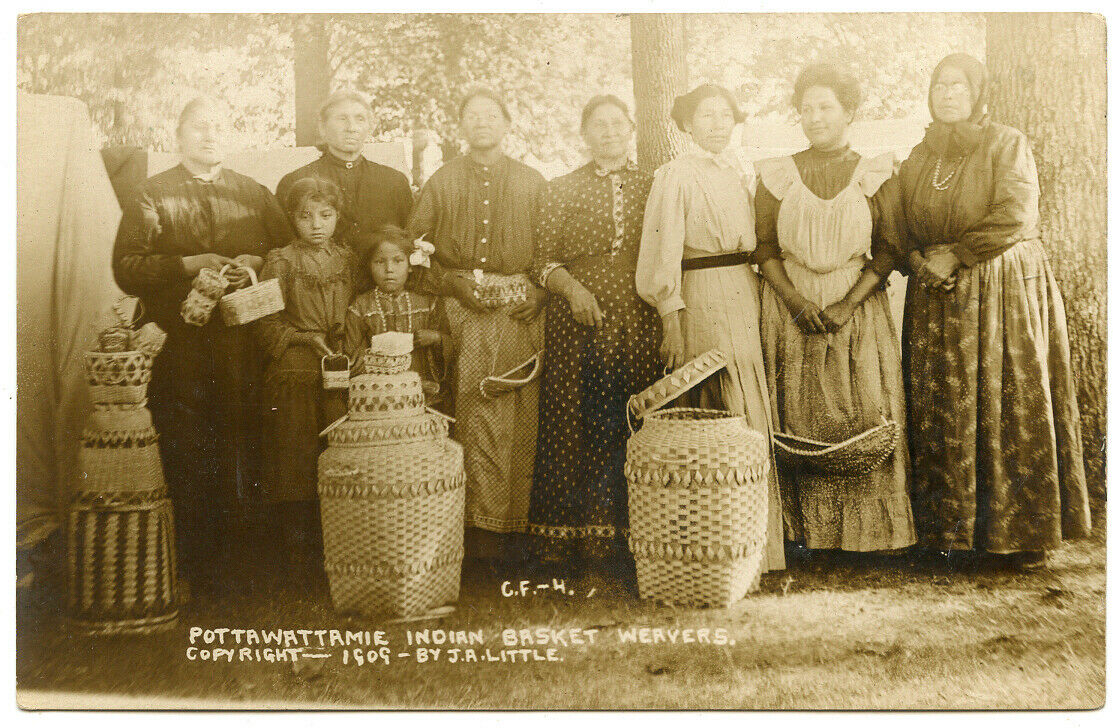
We introduced them to the Native Americans who lived on the Ridge, the Potawatomi people who lived off the land and today still make baskets from black ash trees. RHS researcher/writer Carol Flynn’s series on the Native Americans on the Ridge appeared on Facebook and in the Beverly Review.
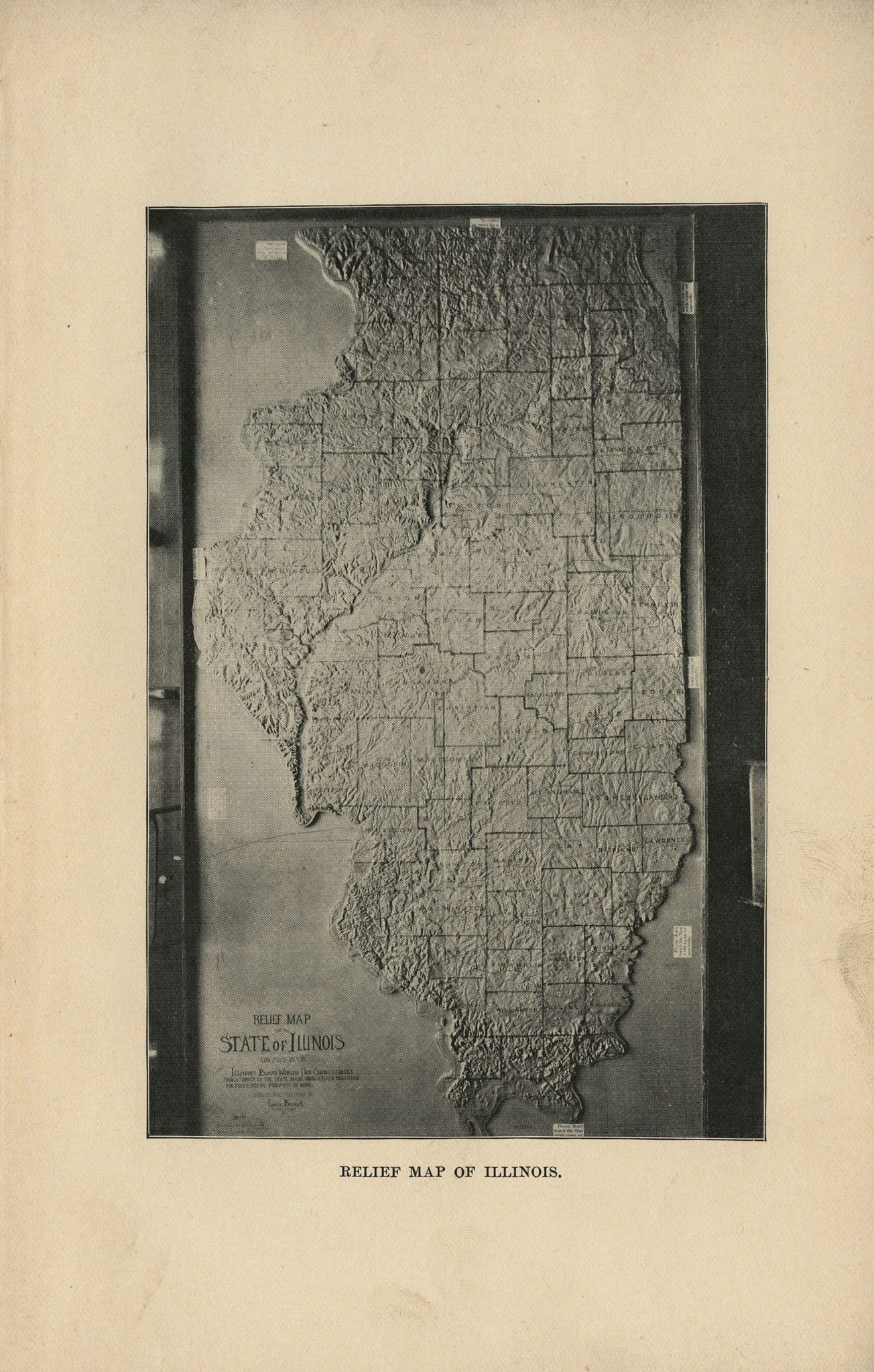
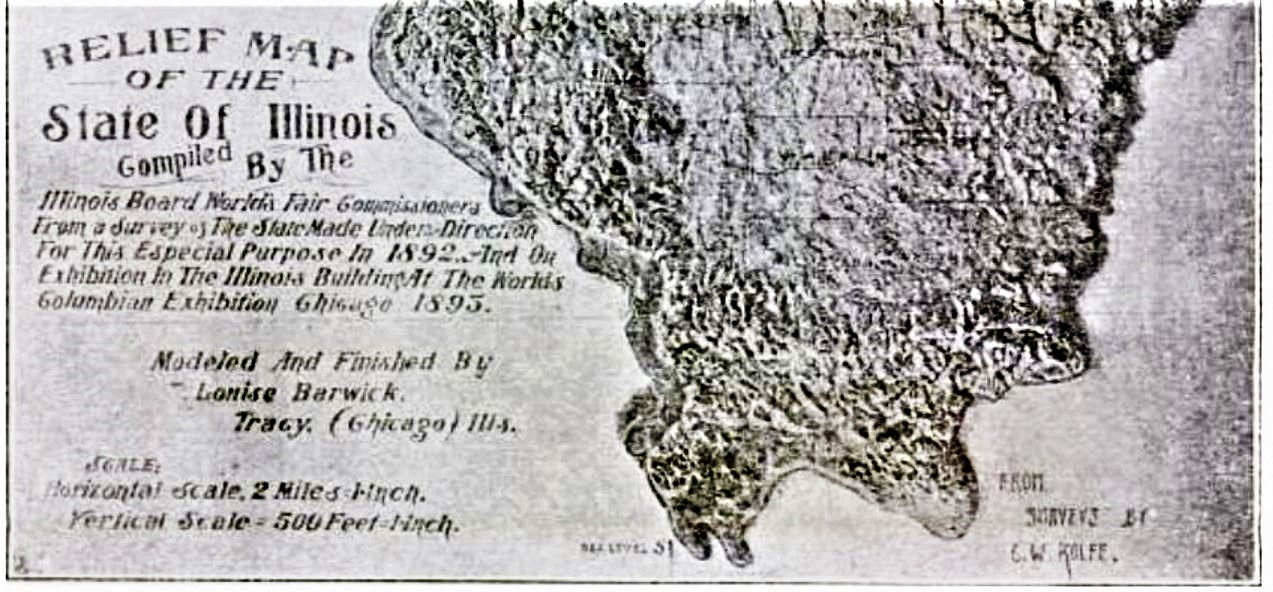
We introduced them to artist Louise Barwick, who lived on the Ridge and painted many watercolors of local scenes. Miss Barwick’s biggest accomplishment was a giant relief map of Illinois displayed at the 1893 World’s Fair, which unfortunately has been lost to time, but a picture of it exists. RHS published a lengthy piece on Louise Barwick in 2015. RHS has a large collection of Miss Barwick’s paintings which we have exhibited several times and will show again for this year’s Beverly Art Walk.
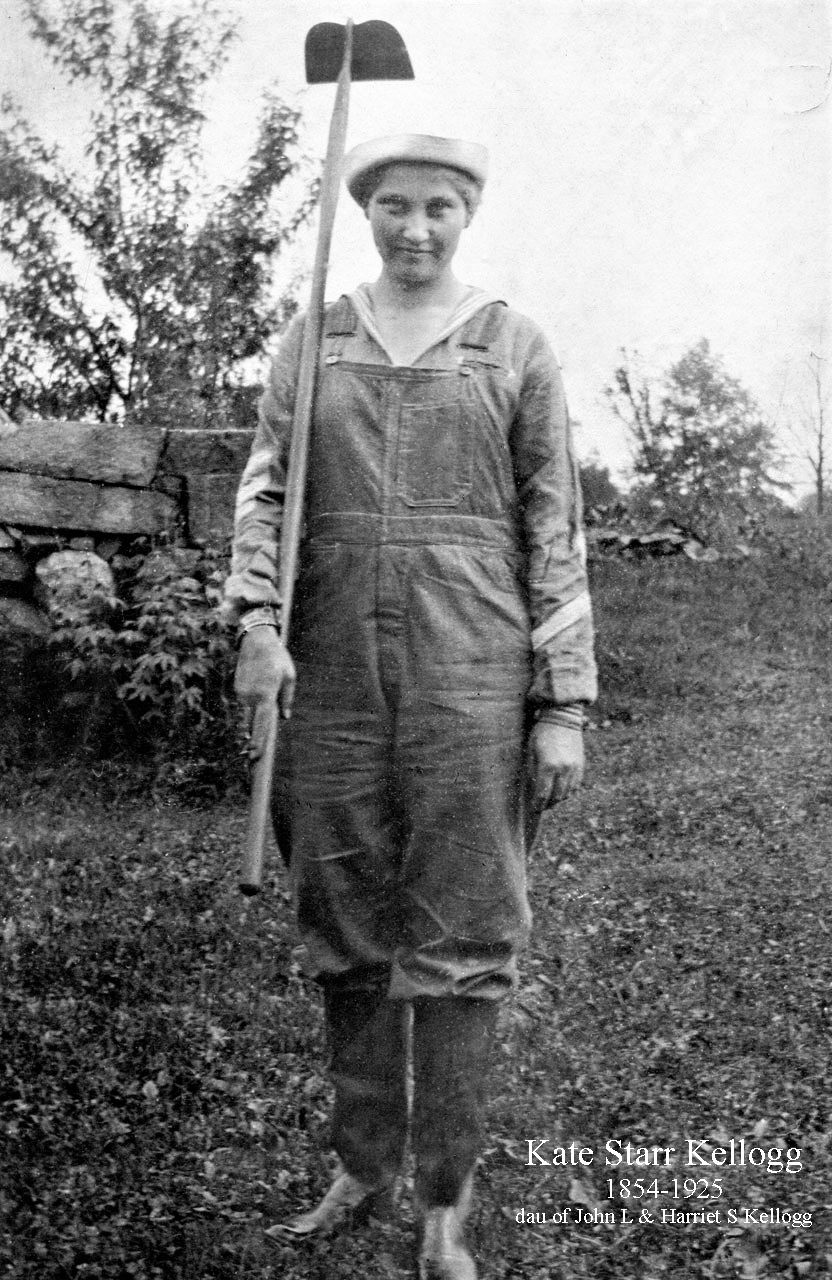
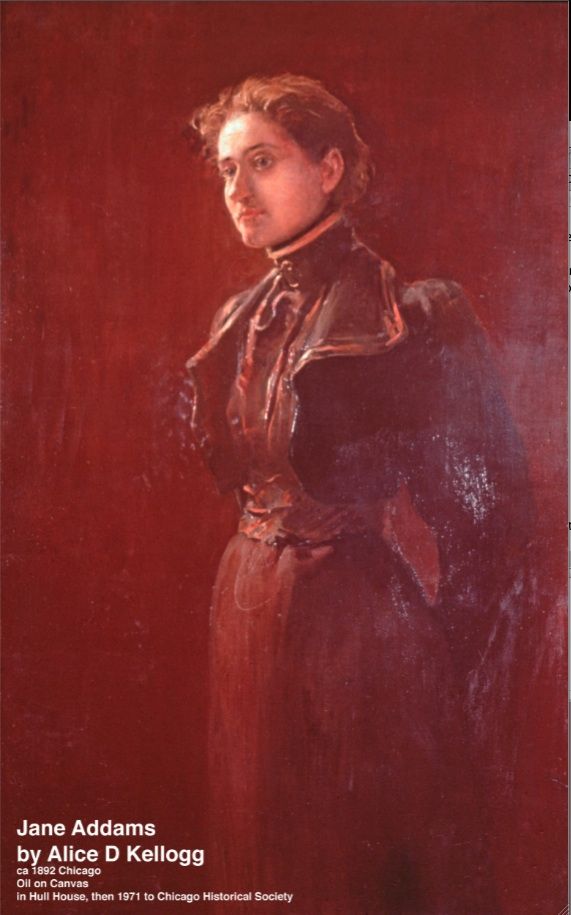
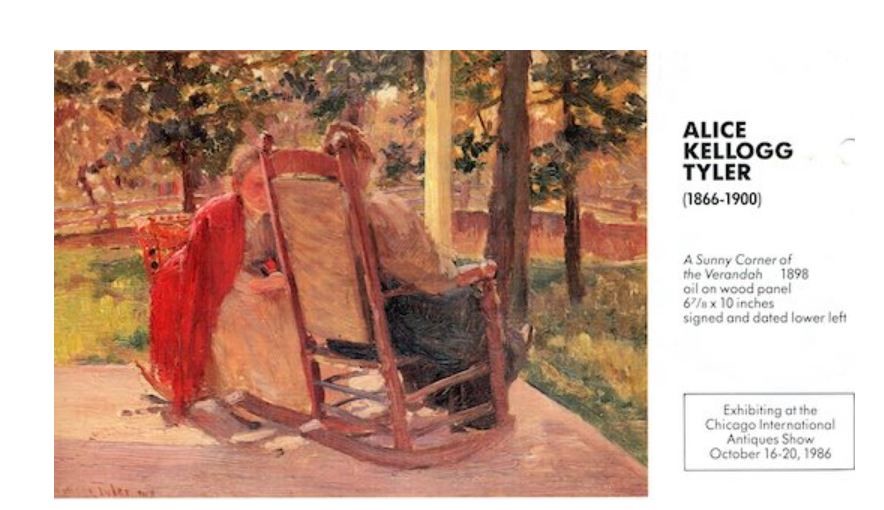
We introduced them to Kate Starr Kellogg and her sister Alice Kellogg Tyler. These women did not live in Beverly; their father owned the land where Little Company of Mary Hospital in Evergreen Park is now located, and the family farmed there. Kate was an educator; Kellogg School in North Beverly is named for her, although she did not teach in any schools connected to the Ridge. There is extensive research information available on Kate Starr Kellogg. Alice was the artist in the family. Material on the Kellogg sisters was published in the past as part of the RHS Facebook series on people for whom schools on the Ridge are named.
The Native American basket makers, Louise Barwick, and the Kellogg sisters appear to be the final topics of this project. We’re happy to see a project come to fruition, although we have not reviewed the final text or seen the final product so we cannot comment on it.
Anyone wanting help with research can contact RHS through our Facebook page or through regular email or phone (ridgehistory@hotmail.com; 773/881-1675).
Sharing this video from another post – Chicago, 1914, taken from a blimp.