
Explore the RHS Facebook Archives, a rich repository of local history written by Carol Flynn. For two decades, Carol brought a deeply dedicated voice to public education at RHS. Her role as Facebook administrator through mid-2025 naturally extended her prolific research into meticulously detailed articles, most notably her multi-part historical series posts. Today, Carol continues her local history writing for The Beverly Review and other outlets.
Local History
The Ridge Historical Society
Just a little research project …. the kind we love.
By Carol Flynn
An unfortunate gentleman reported he lost his wedding ring in the snow over the week-end and is trying hard to find it.
This prompted Sarah Batka to post that she found a wedding ring about 6-8 years ago while gardening at her house on Artesian Ave. There were initials and a date inside the ring. But she had no luck in finding the owner. She held onto the ring.
Clare Duggan tagged me at the Ridge Historical Society, wondering if we could help find the person to whom that ring belonged. I said sure, this is the kind of research project we love, let’s see what we can find.
So Linda Lamberty, RHS Historian, and I got on this Sunday night. We started with our usual sources – government and building records, newspaper archives, genealogy sites, etc. And we found the likely owner of the ring. She was the granddaughter of the couple who had lived in the house at one time. She now lives in San Antonio, Texas.
The woman was on Facebook, and around 2:30 a.m., I sent an enthusiastic if somewhat disjointed message to her. Was this ring by chance hers?
She replied later Monday morning – it was hers! She lost it 50 years ago in the snow at her grandmother's house! She was amazed that it had been found all these years later. We got together by phone and had a teary-eyed conversation.
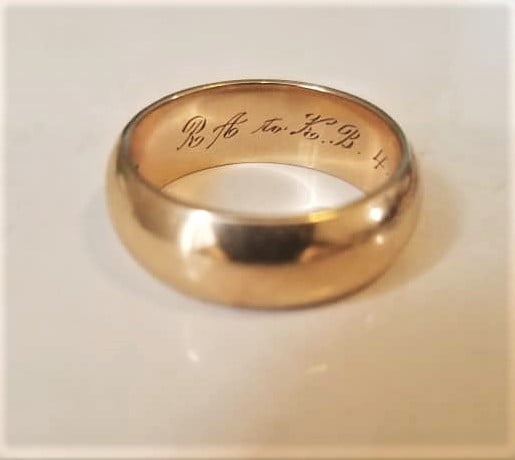
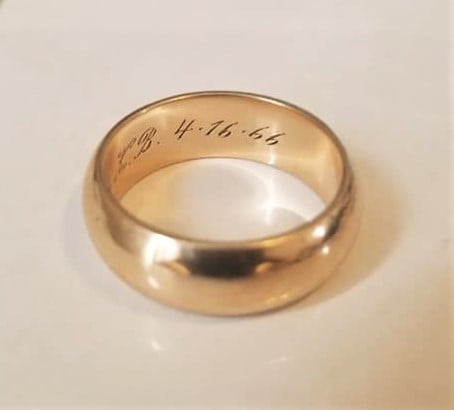
The ring belongs to Karen Berk Autenrieth, who married Robert Autenrieth on April 16, 1966. The inscription inside the ring reads “R.A. to K. B. 4-16-66.” It’s a beautiful ring – heavy gold, and in surprisingly good condition for being in the dirt for 50 years – a little scratched up, but not bad at all. Pictures of the ring and inscription are attached.
I now have THE RING in my possession, and it is my duty to get it to San Antonio before February 14, when Karen’s family is gathering, and want to witness her open the package with the ring in it. I have a new appreciation for Frodo Baggins. I'll be nervous until I know it arrives there safely. (I’m feeling like maybe I should drive down there in person to deliver the ring – and crash the party ….)
We’d love to have Karen and Sarah share their parts of the story.
And to the gentleman who lost his ring this week-end: We hope you find it – it has to be there. Don’t give up hope! Maybe we can stage a “walk the grid” community search party when the snow melts.
@Sarah Batka, @Karen Autenrieth
Chicago got some snow from last night into today – about 3.5 inches in the Beverly/Morgan Park/Mount Greenwood area. Not bad by Chicago standards.
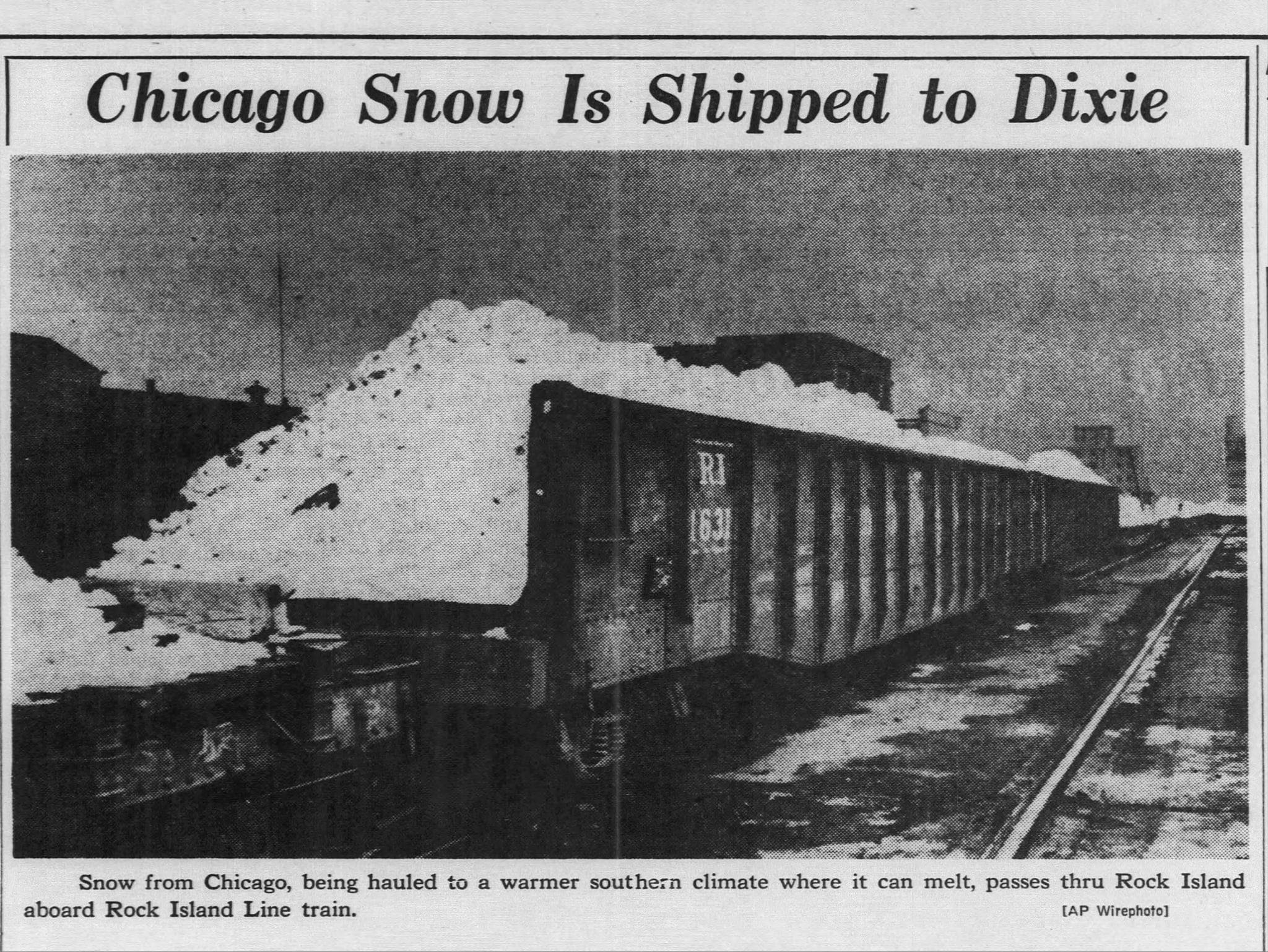
But this same date – January 26-27 – in 1967 saw the greatest snowfall in one storm in Chicago's history – a whopping 23 inches incapacitated the city for days. It was a full-blown blizzard with gusting winds up to 50 miles per hour creating drifts of 15 feet.
RHS does not have any good pictures of that blizzard from the community so if anyone would like to share pictures – and stories – that would be great. One woman shared the story that she went into labor and no cars could get through so her family had to take her by sled over to Little Company of Mary Hospital.
Chicago had so much snow, they actually loaded it onto railroad cars and sent it down south to melt. This photo is from the Chicago Tribune, February 11, 1967.
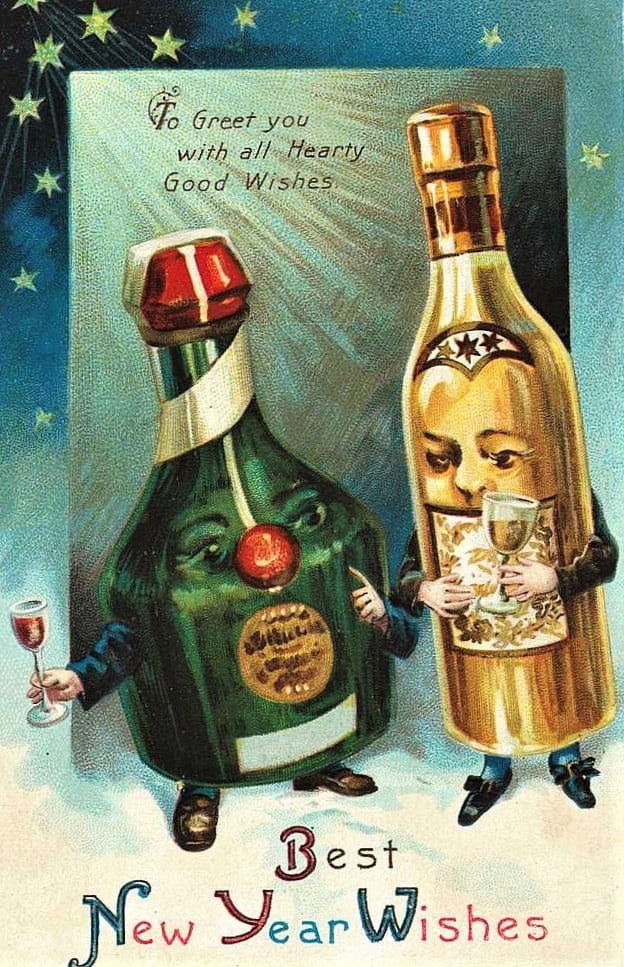
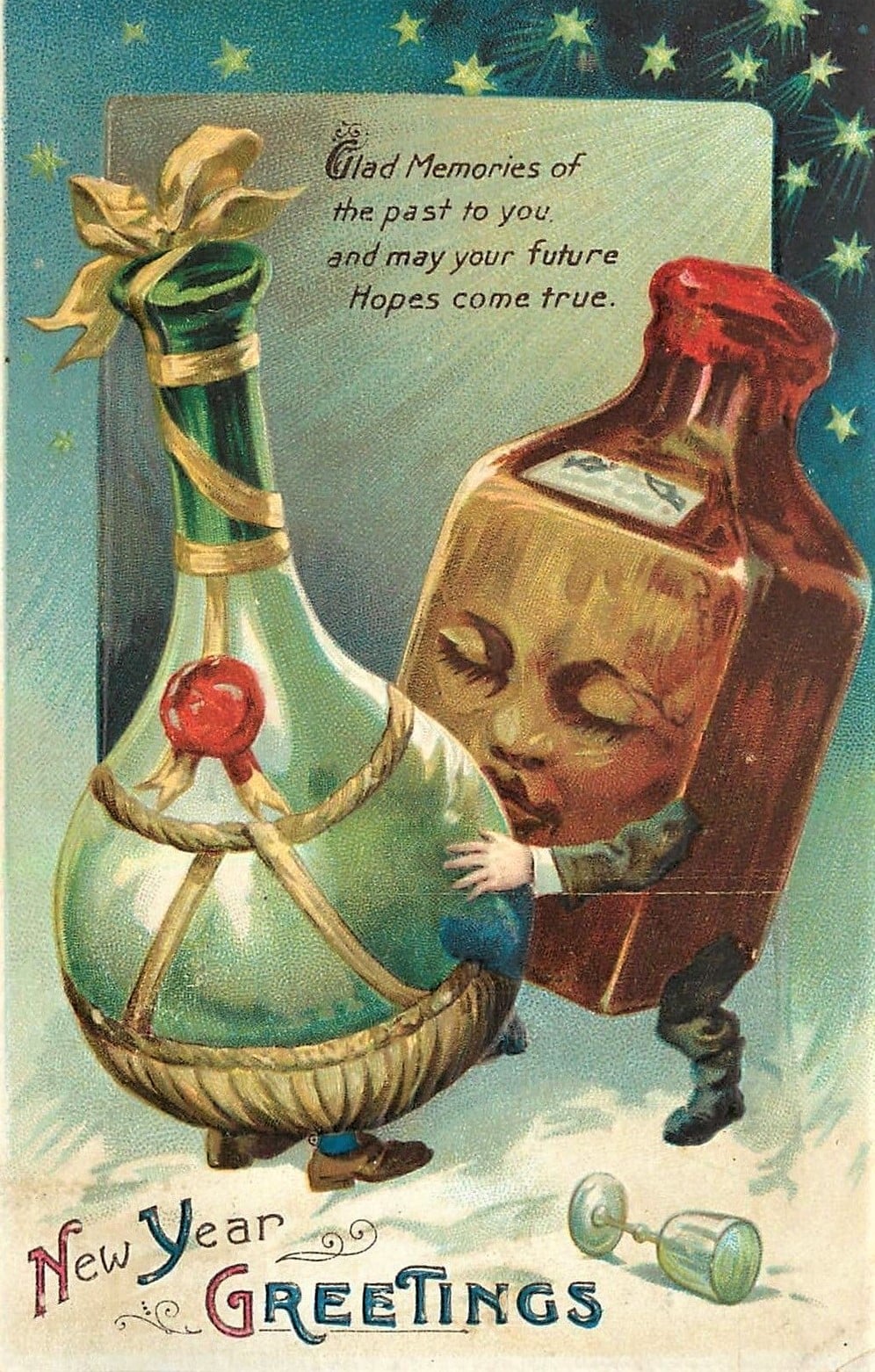
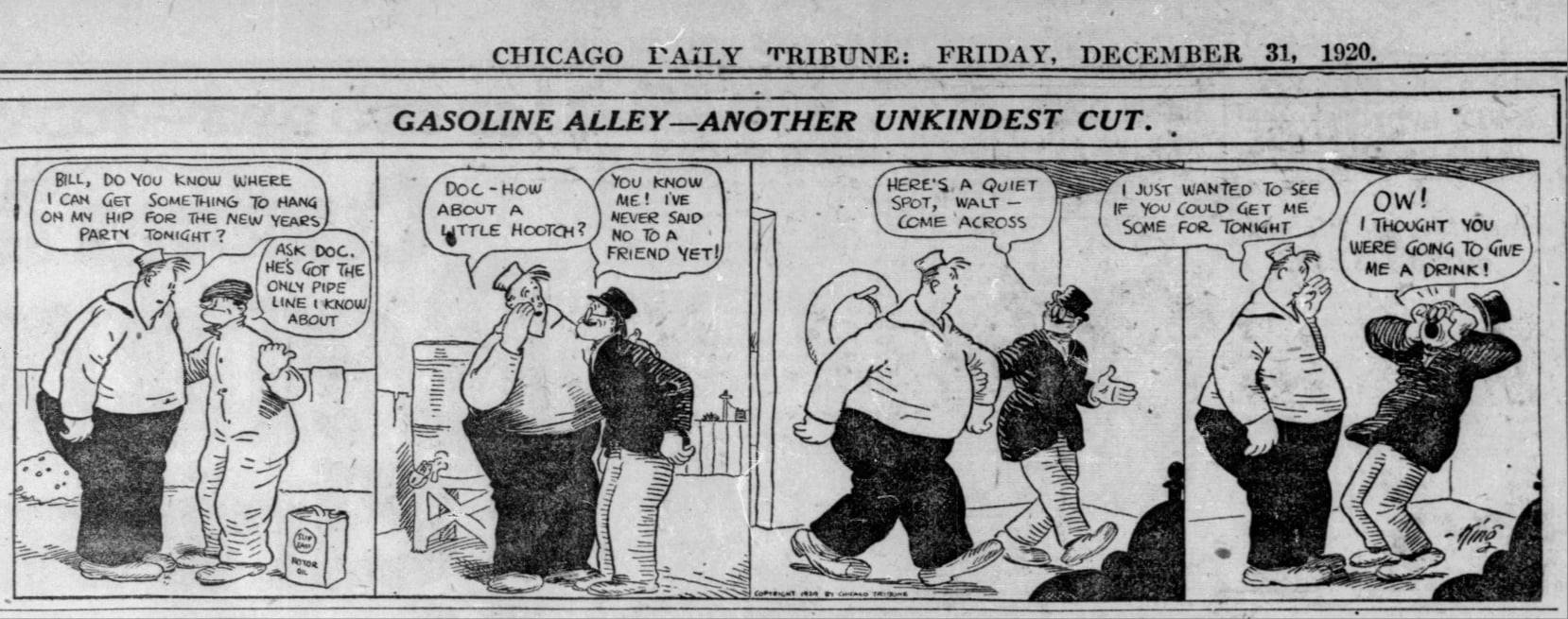
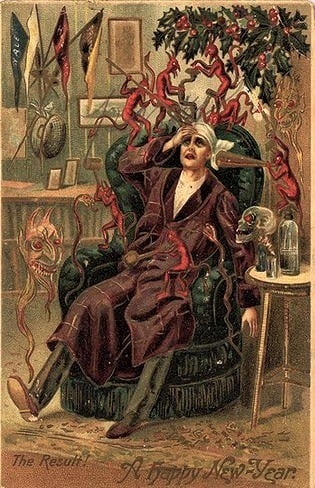
New Year 1921
By Carol Flynn
New Year’s Eve in 1920 was a momentous occasion. It was the first New Year’s Eve following the implementation of Prohibition.
The Eighteenth Amendment to the United States Constitution was ratified in January 1919 and became effective in January of 1920. It stated that “the manufacture, sale, or transportation of intoxicating liquors … is hereby prohibited.”
The Volstead Act, or National Prohibition Act, accompanied the 18th amendment and covered its implementation. It was named for Andrew Volstead, Chairman of the House Judiciary Committee.
In the federal law, consumption of alcohol and private ownership of alcohol were not banned, and the use of wine in religious ceremonies and alcohol for medicinal and research purposes was allowed. States could set their own laws, but Illinois used the federal version.
As New Year’s Eve approached, the Federal Prohibition Commissioner, John F. Kramer, stated there would be no “tilting” of the Volstead Act. He warned that federal agents throughout the country “were prepared to halt any attempt to turn the celebration of the New Year into an orgy of imbibition” like what occurred before Prohibition.
Chicago hotel, restaurant, and cabaret owners hoped that an exception would be made for that one night, that the “dry” agents would not “chaperone” their establishments. But that did not happen.
According to the Chicago Tribune in December 1920, Frank D. Richardson, Chicago’s “dry chief,” made it clear to the hotels that would host most of the parties that “Chicago hotels must obey the law.”
Richardson said, “Every hotel, from the largest to the most exclusive to the smaller family hotels will have its quota of dry agents assigned to check the
tendency toward law violation.”
As it turned out, Chicagoans for the most part behaved themselves. On January 1, 1921, the Tribune reported that the crowds in the loop were smaller that year, and although noisy, “there was an absence of the bibbling boisterousness of other days” – and little for the police to do.
Some of the restaurants and cabarets, of course, circumvented the rules. There were a few raids on places where alcohol was being sold, and arrests were made. The paper noted the evening was not entirely dry, “though more arid than any of its predecessors in memory.”
“Hip liquor,” or flasks that patrons carried secretly, were “winked at” in most of the restaurants but incidents of intoxication were infrequent. One manager noted that people were having as good a time without liquor as with it. For one thing, they spent more time on the dance floor.
But most of the party-goers made it an early night, and the crowds thinned out by 1:00 a.m.
One Tribune reporter lamented that in “restaurants where in former years the celebration found light, music, wine and hilarity only the ghosts of the former days walked, danced, and dined.”
He found it a “dreary tour” through the neighborhoods of “darkened doors of the cafes of yesteryear.” He called it the “indications of a new age.”
Prohibition was repealed in 1933. It proved to be impossible to enforce, and there were economic drawbacks mostly in the loss of tax revenue from the sale of alcohol. The health and social outcomes of Prohibition are mixed. Drinking did decrease and some medical conditions like liver cirrhosis declined. However, crime and violence due to illegal operations increased.
When Prohibition was repealed at the federal level, it was left up to states and local governments to restrict or ban alcohol. One of Chicago’s best examples of a “dry” community that chose to stay that way is our own Beverly/Morgan Park area. Morgan Park was founded as a temperance community. Efforts have been made through the years to reverse this “dryness” but to date, the residents have voted to ban the sale of alcohol east of Western Avenue. There are a few exceptions where addresses hold a liquor license.
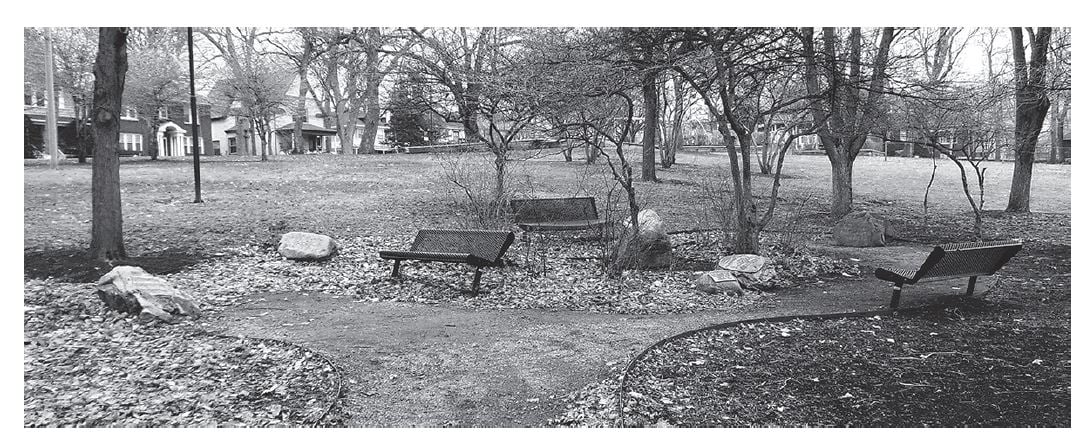
More for Veterans Day:
Ridge Park at 96th Street and Longwood Drive includes memorials to those who served in various wars. In the early 1990s, the park district grouped these together in a single area. The monuments recognize the Revolutionary War, the Civil War, the Spanish American War, World War II and Operation Desert Shield/Operation Desert Storm. Photo by C. Flynn, RHS newsletter.
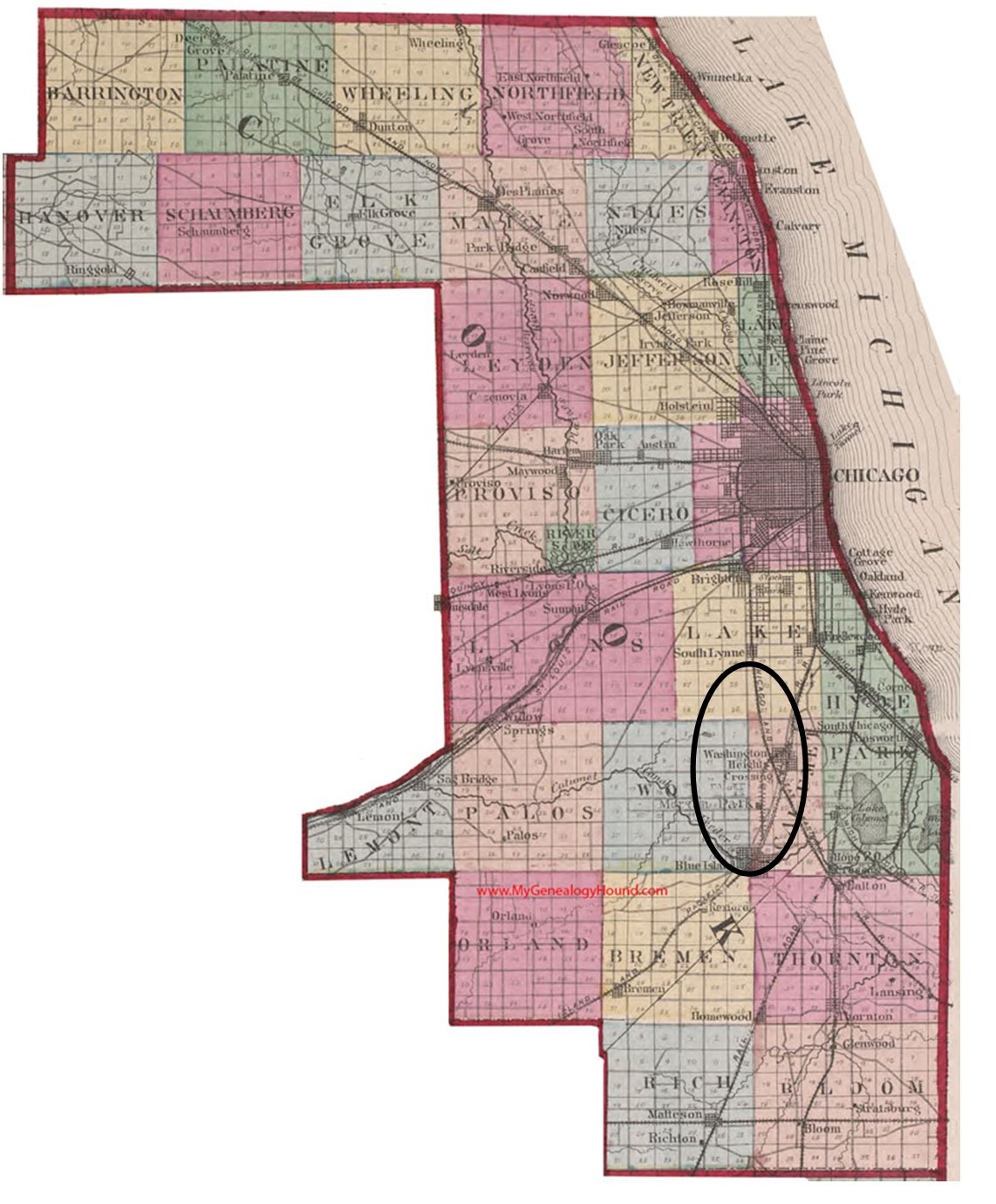
A history discussion is going on in another Facebook page so I am going to share the information I am posting there. The original poster was confused about Chicago wards, neighborhoods, school districts, police districts – they don't match up. The answer is no, they don't because all these systems were developed independently of each other and each system determines its own boundaries. Add in fire districts, postal districts, zip codes, state and federal representative districts, etc., and there are a lot of "boundaries" to keep straight.
On my to-do list is a history of the 19th ward. I'll do that before the next election.
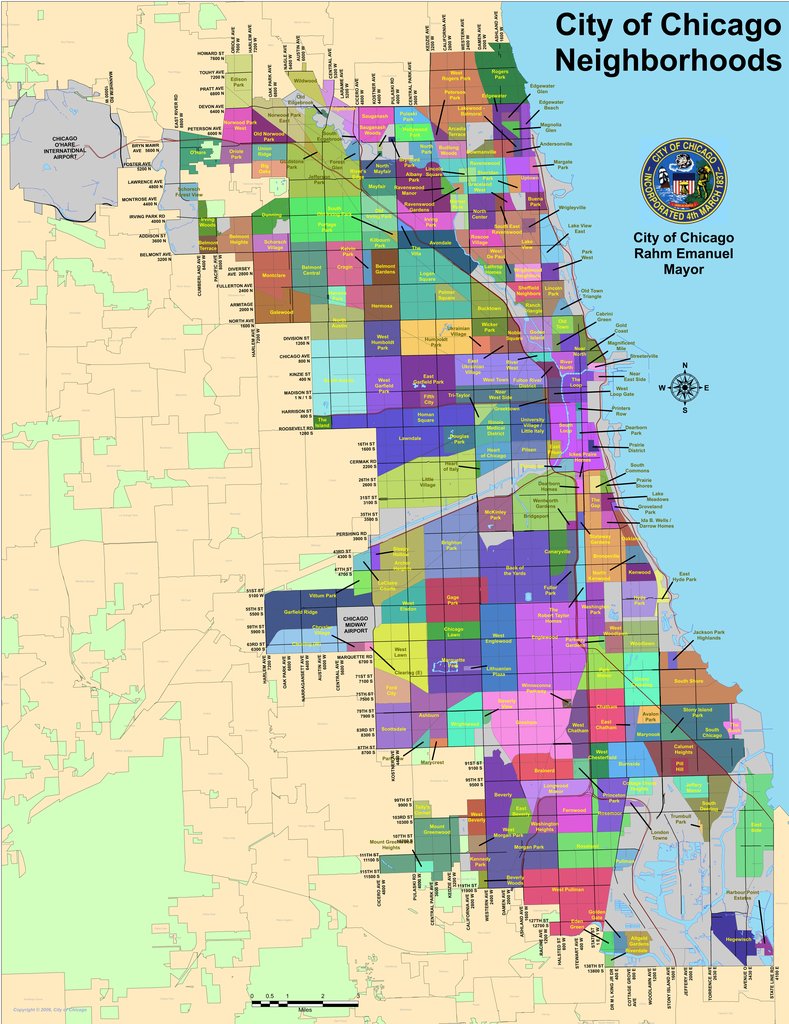
But today I want to share about "neighborhoods." Neighborhood names like Beverly Hills, Morgan Park, Englewood, Ravenswood, Norwood Park, etc., really do not have any "legal" status. They are mostly historical and cultural remnants of villages and towns that were annexed to the city of Chicago through the years. They all have "boundaries" that were legal when they were their own municipalities but that stopped meaning anything when they joined Chicago and the land was assigned to a ward. So today, a "neighborhood" like Morgan Park or Englewood can be in several wards and police districts and school districts, etc. The "neighborhood" has nothing to do with the various districts.
The counties in the state of Illinois were once divided into "townships." Attached is a map of Cook County from 1870, showing the townships. The "Ridge" area is in the circle. Parts were in three townships – Lake, Calumet and Worth. In 1889, all of Lake Township voted to join the city so a big chunk of the northern Ridge became part of the city effective in 1890. Most of today's Beverly was included.
The townships were dissolved in 1902 in Chicago, but they are still used today for taxation purposes. Once dissolved, each municipality was on its own. Morgan Park annexed to the city in 1914, Mount Greenwood in the 1920s. Blue Island and Evergreen Park voted to not annex to the city so that is why the boundaries here on the SW side look the way they do for the city of Chicago.
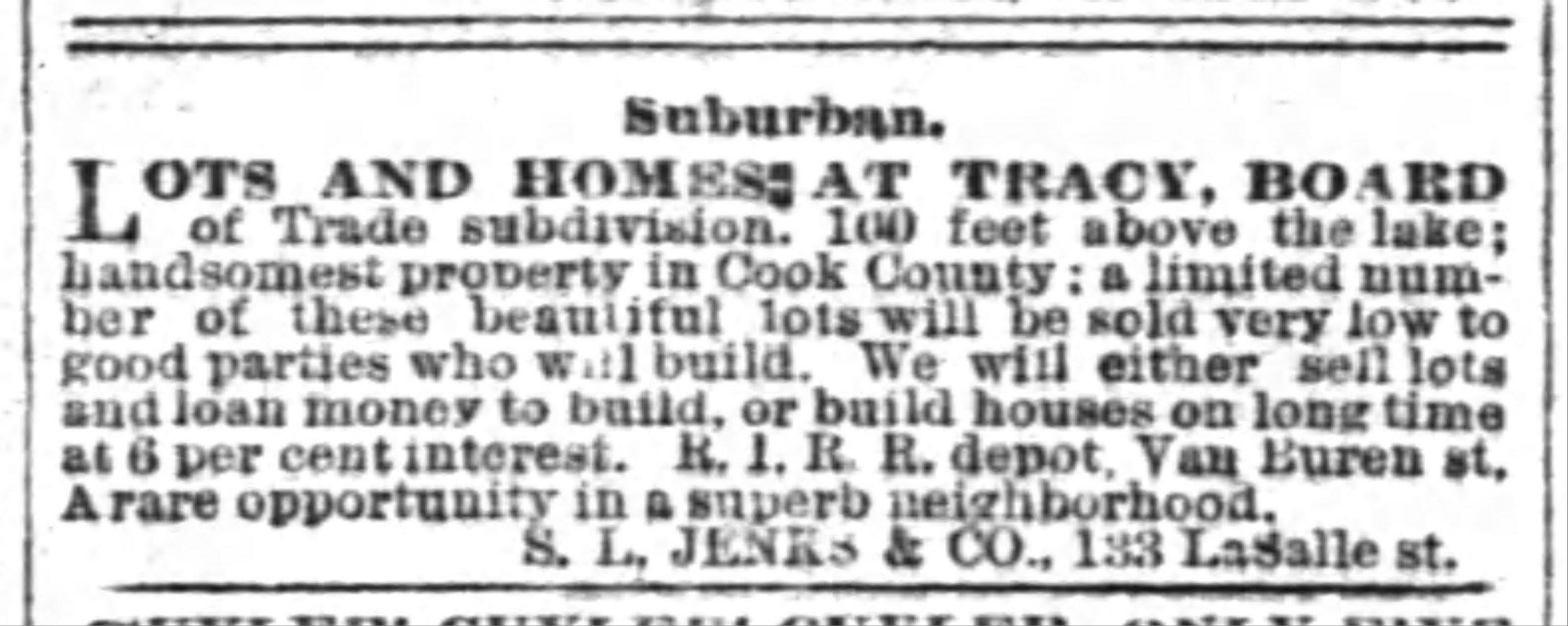
In addition, neighborhoods were, and still are, often divided up further for commercial and real estate purposes. For example, the area round 103rd Street and Longwood Drive was called "Tracy" for a number of years because 103rd Street was originally called Tracy and there was substantial real estate development in the area. An 1885 ad showing this is attached. Last, a current "neighborhood" map of the area from the city is included, with all the little sub-divisions, mainly used for positioning real estate.
Ridge Historical Society
Good-bye to “my” World War II veterans
By Carol Flynn
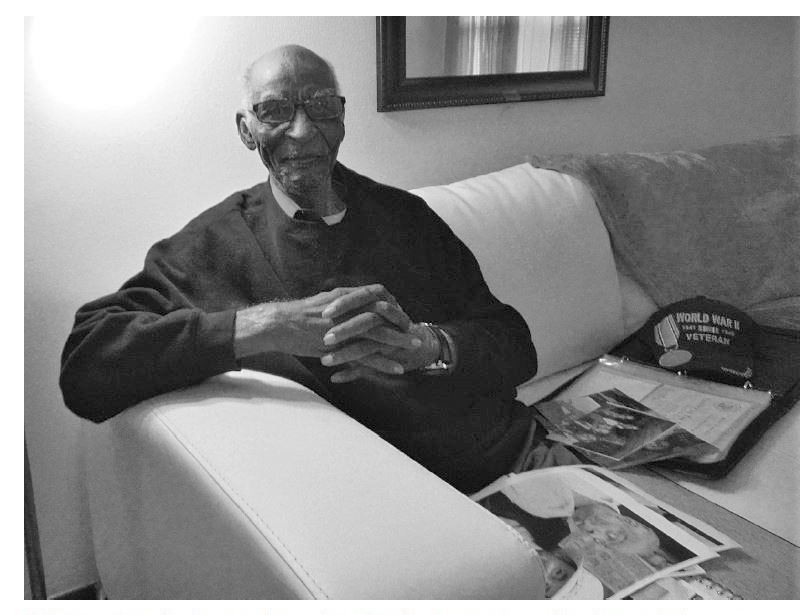
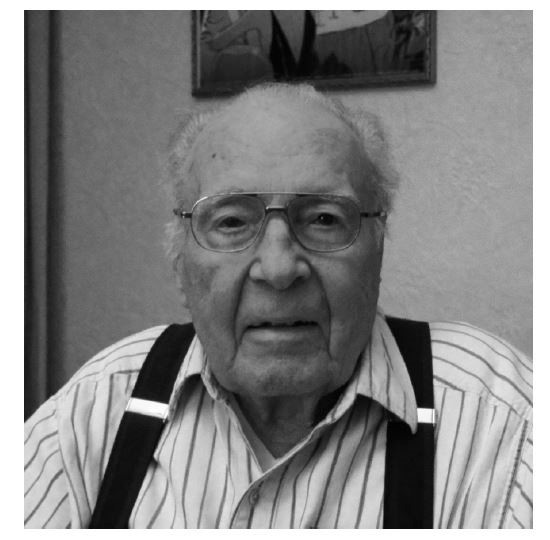
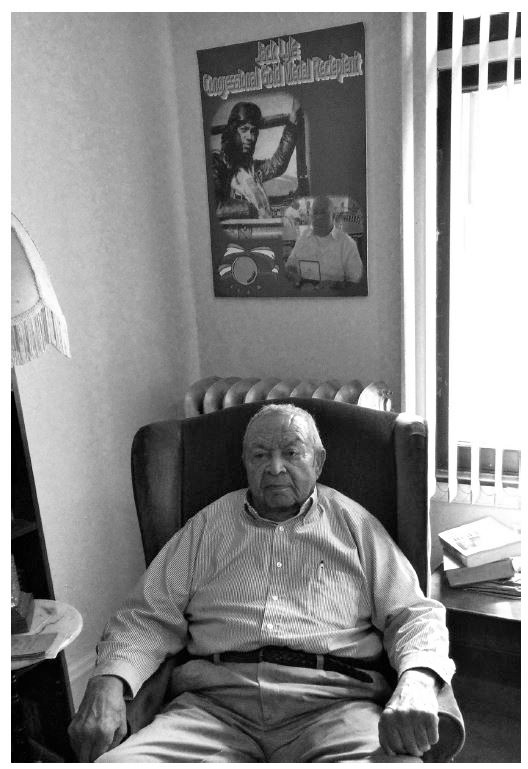
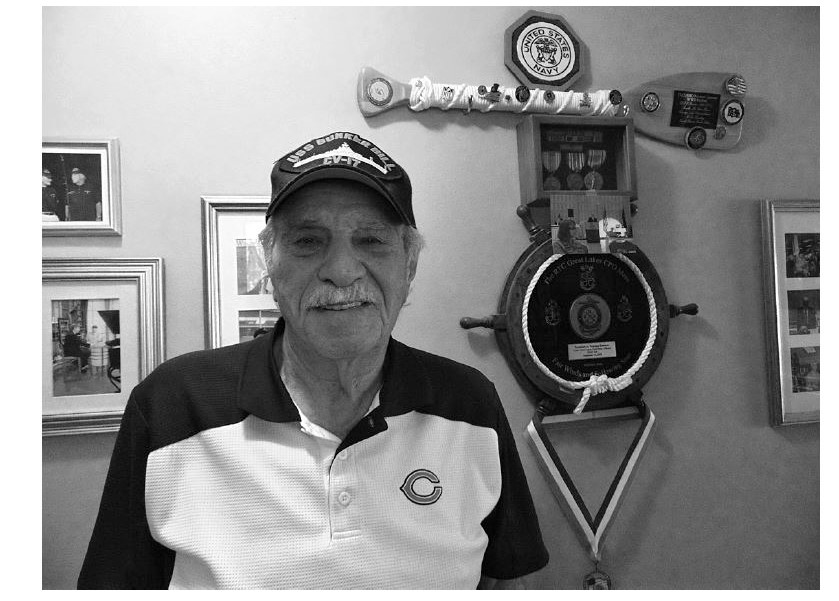
Five years ago, I had the honor and privilege of interviewing four World War II veterans for a Memorial Day feature for the Beverly Area Planning Association Villager and for the Ridge Historical Society newsletter. These men had been invited to be the Grand Marshals for the annual parade. Although they were in their late 80s and 90s, they welcomed me into their homes, and shared their stories and pictures with me. Each of the visits is a cherished memory.
Since that time, one by one they have passed away. The last of them, Norm Lasman, will be laid to rest this week. I would like to briefly recap their stories in tribute.
World War II lasted from 1939 to 1945, although the events leading to the conflict started well before that, and the aftermath lasted long after. Globally, this war was the most widespread and deadliest in history. Over thirty countries and at least 100 million people were involved, with an estimated 25 million deaths. Sixteen million Americans served, with over 400,000 fatalities.
Frederick Pennix was a young husband and father when we was drafted into the U. S. Army infantry. His units were segregated because of race. Pennix was with an anti-aircraft artillery quartermaster company that was shipped to Iwo Jima in March 1945. In the midst of some of the fiercest and bloodiest fighting in the Pacific, his company unloaded ships and delivered supplies, including ammunition, throughout the war zone. The war ended that Fall. Returning home, Pennix had a distinguished career in law enforcement that lasted 60 years.
Bill Sandstrom was accepted into the Great Lakes Naval radar training program in 1944. There, he encountered another kind of deadly enemy – scarlet fever. Infectious diseases have always been a major problem during war times, resulting in many deaths. Sandstrom’s life was saved by a new miracle drug – penicillin. By the time he was recovered and trained, the war was ending. He returned home and, making use of the new G.I. Bill, went to college to become a chemical engineer.
Jack Lyle became a Tuskegee Airman with the 332nd Fighter Group of the U. S. Army Air Forces in 1944. These were the first African American aviators in the U.S. armed forces. He flew twenty-six combat missions and shot down a German fighter plane in a dogfight. Returning to Chicago as a first lieutenant, he was refused further training at O’Hare Airport because “there wasn’t a program for colored pilots.” Lyle owned horse stables in Washington Park and was a police officer with the park district, and ran a tree business for 32 years.
Norm Lasman served in the U.S. Navy from 1942 to 1946. In 1945, his ship, the USS Bunker Hill, was struck by two Japanese kamikaze (suicide) planes, putting the ship out of commission and injuring and killing hundreds of the crew. Lasman, below deck, was overcome by carbon monoxide from the resulting fires. He came to on deck – he had been rescued, the only survivor from the engine room. He had no memory of the incident and did not speak of it for many years. The book Danger’s Hour, by Maxwell Taylor Kennedy, the son of Robert F. Kennedy, recounts the story of the attack. Lasman and Kennedy became friends. Lasman was part of the building of Evergreen Plaza, where he managed a Pador’s clothing store for many years.
Although these four men came from different backgrounds, and had different war time experiences, they had one thing in common – none of them considered himself any kind of a hero.
They were young men put in situations not under their control – they did what they had to do. None of them romanticized the war; there was nothing "glamorous" about it any way. They were in horrifying situations – a bombed ship, aerial combat, a deadly disease, a bloody battle. They all said the same thing – they got lucky, they survived.
Lasman shared a quote from another World War II veteran: “To be honored is one of the most humbling experiences I have ever had.”
Well, they deserve to be honored. Rest in peace, Norm Lasman. And to all four, thank you.
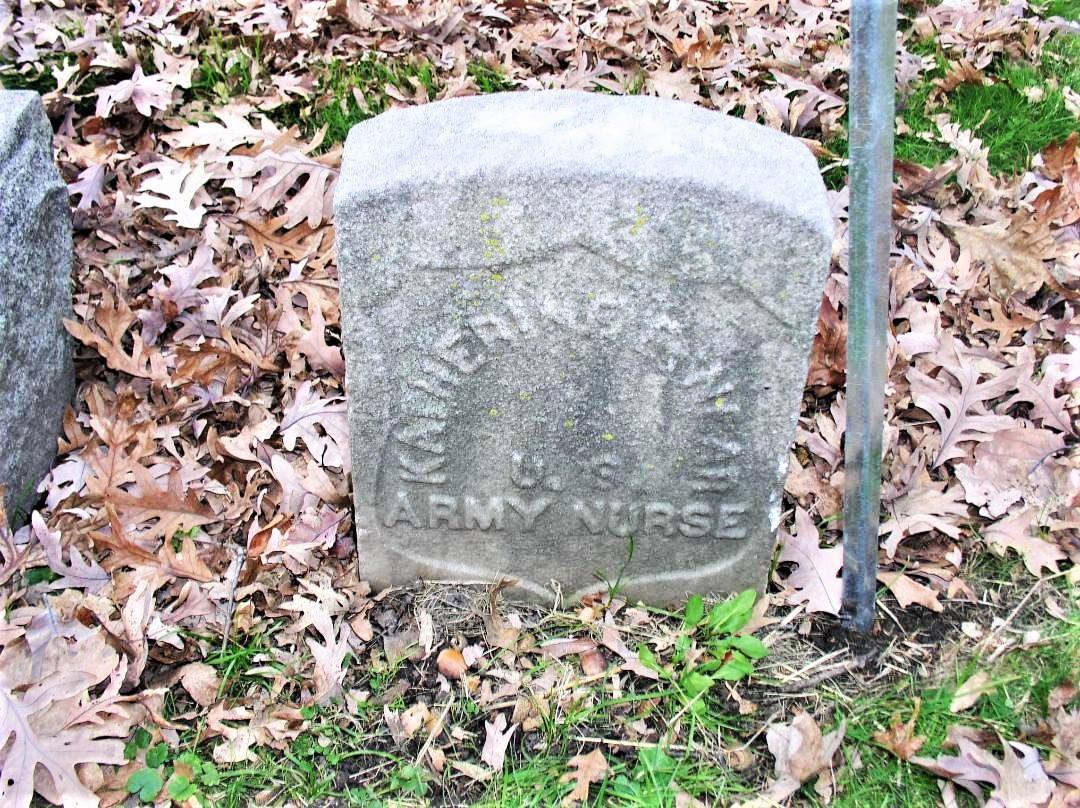
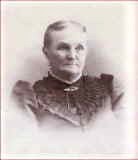
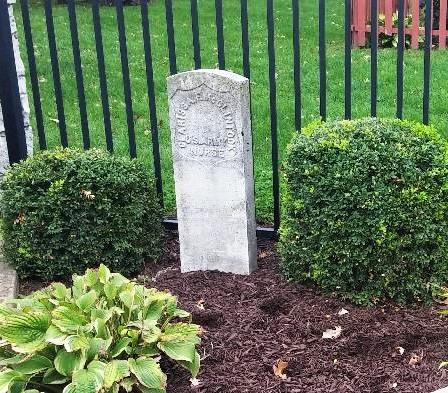
May 6 to 12 was National Nurses Week, and the Ridge Historical Society did not forget about nurses! One recent history story we posted included the role of nurses in caring for patients during the influenza epidemic in 1918. Nurses bravely went into the homes of quarantined patients to help families care for their sick, plus assist with other domestic tasks, risking illness themselves.
We've also been doing research on some of the earliest nurses on the Ridge – those from the U. S. Civil War era.
Nursing as a profession was in its infancy then, and there were no formal nursing education programs. In fact, there were not even many hospitals – only about 150 in the country.
Thousands of women served as nurses during the U. S. Civil War. At first, women were considered too delicate to be able to withstand the conditions of tending to the sick and wounded, but they soon proved themselves through their determination, hard work and sacrifice.
Women started as volunteers, but thanks to the efforts of Clara Barton, a U.S. Army corps of nurses was formed in 1861. They were paid 40 cents per day for their service. (Male nurses were paid many times that, more than $200 per month.)
The nurses who "enlisted" came from many backgrounds: soldiers’ wives who had accompanied their husbands to military camps, local residents from the areas where camps were set up, religious institutions, and relief organizations. Not only did they deal with the injured, they also cared for patients with pneumonia, typhoid, dysentery, and malaria. Two-thirds of the deaths in the Civil War were from disease, not injury.
The graves of two nurses from the Civil War have been found in Ridge cemeteries. Mount Greenwood Cemetery includes the grave of Catherine E. Near. (Her name is spelled as Katherine on the stone; she went by Kate.) She was from Blue Island, and she died in 1908. Her maiden name was Fay. Her brother was Jerome Fay, of Fay's Point in Blue Island.
At the entrance to Memorial Park on 127th Street in Blue Island is a display of old tombstones dating back to the days when the park was the Blue Island Cemetery. One of the stones belonged to Clarissa F. McClintock, U. S. Army Nurse. Her background is being researched.
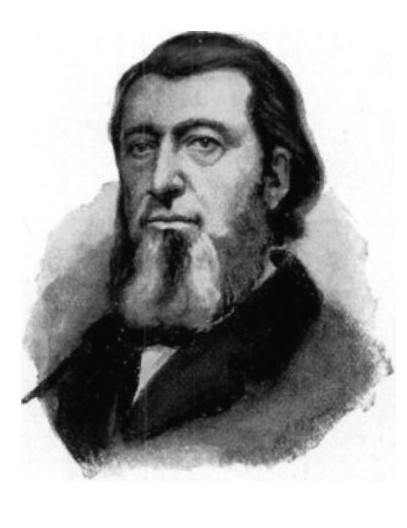
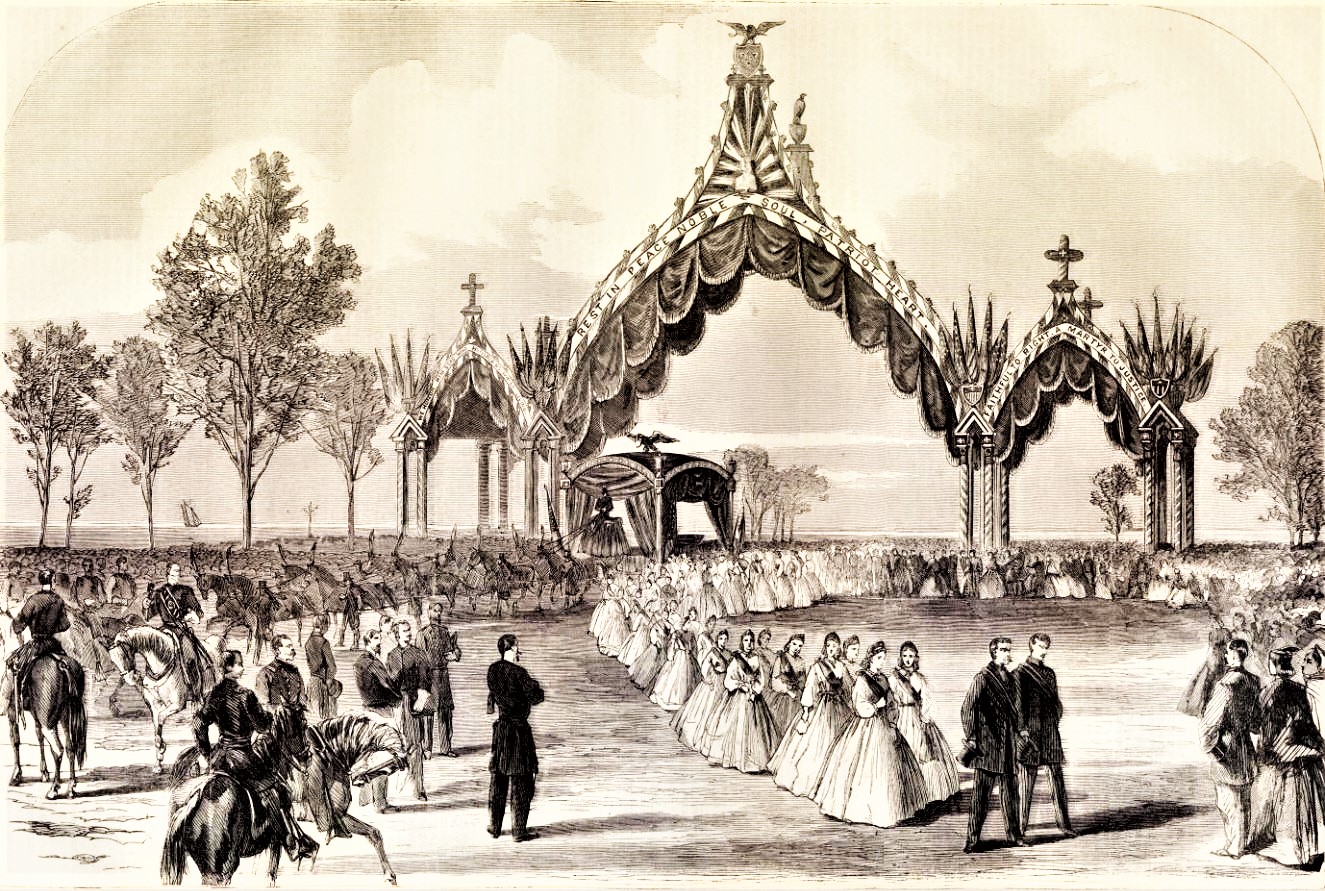
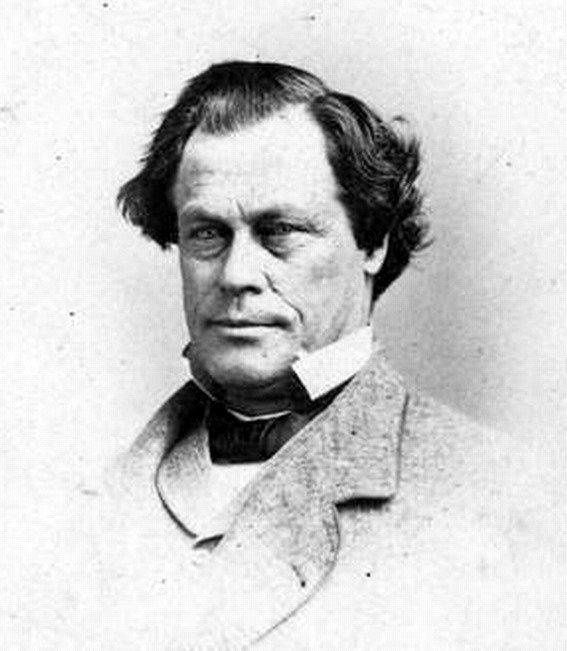
The Ridge Historical Society is wrapping up Presidents Day with a look at some of the connections between Abraham Lincoln and the Ridge.
The Illinois slogan is "Land of Lincoln." Although Lincoln was born in Kentucky in 1809 and spent much of his youth in Indiana, it was in Illinois, where he moved in 1830, that he became a self-taught lawyer practicing out of Springfield, became active in politics, and was elected the 16th President of the United States in 1860. He was assassinated in 1865, and his remains were brought back to Illinois for burial.
Lincoln traveled the legal circuit on his horse, Old Bob. With certainty, he rode through the Ridge on the Vincennes Trail on his many trips to Chicago. He came to Chicago often for legal business, social interaction, and most importantly, politics.
Three of the people from the Ridge that were in Lincoln’s circle were Ebenezer Peck, Austin Wiswall and Charles Ten Broeke. See the accompanying pictures for their connections.
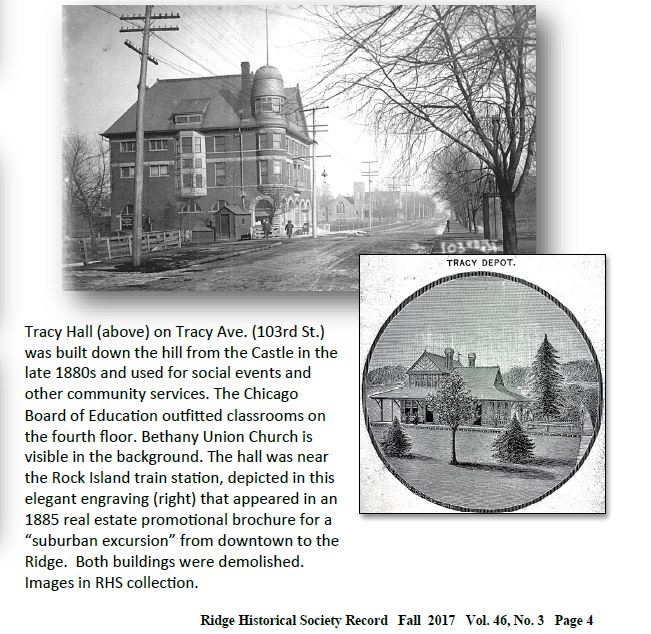
Old street names in Beverly/Morgan Park: A question came into the Ridge Historical Society. In a photo from the 1920s, an Irving Street was mentioned. Where was this?
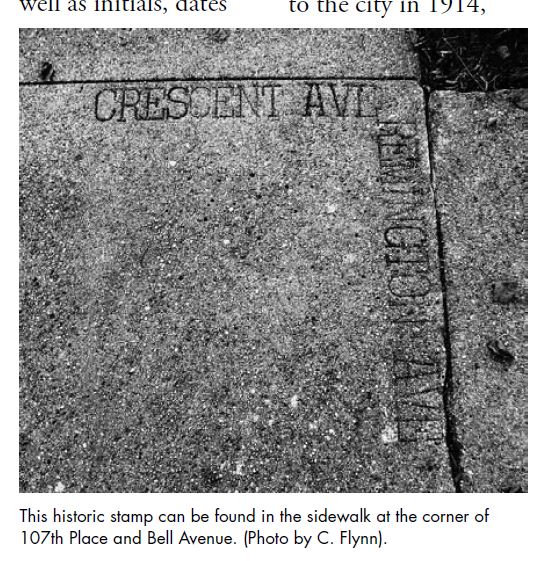
Answer: Irving was the original name of Bell Avenue in Beverly. Many of the streets in Beverly and Morgan Park had different names before the communities annexed to the City of Chicago. Bell is a good example. In Beverly it was known as Irving and in Morgan Park it was known as Crescent.
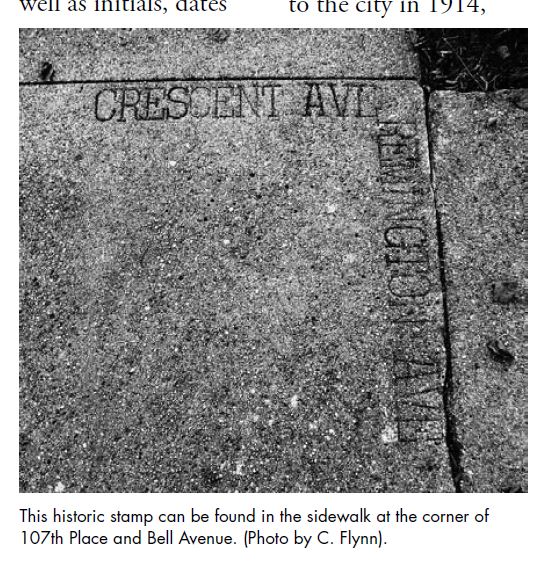
If you look closely, you can still find the old street names stamped into some of the sidewalks. These pictures from past RHS newsletters show two examples. The corner of 107th Place and Bell Avenue has a stamp for Crescent Ave. (Bell) and Remington Ave. (the previous name for 107th Place).
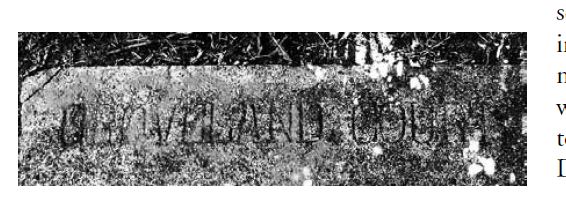
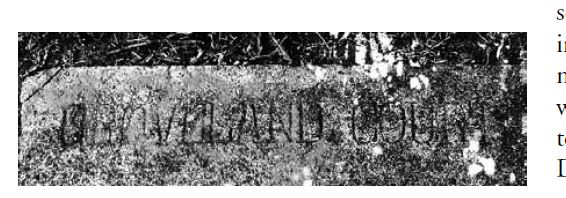
Another stamp is at 108th and Drew Street, for Groveland Court, the pre-annexation name for Drew.
103rd Street was previously known as Tracy Ave., and indeed, the entire area around 103rd and Longwood was known as Tracy before the name Beverly caught on. The train station at 103rd Street was the Tracy stop and there was a famous Tracy Hall right by the tracks, but alas, that is gone now.
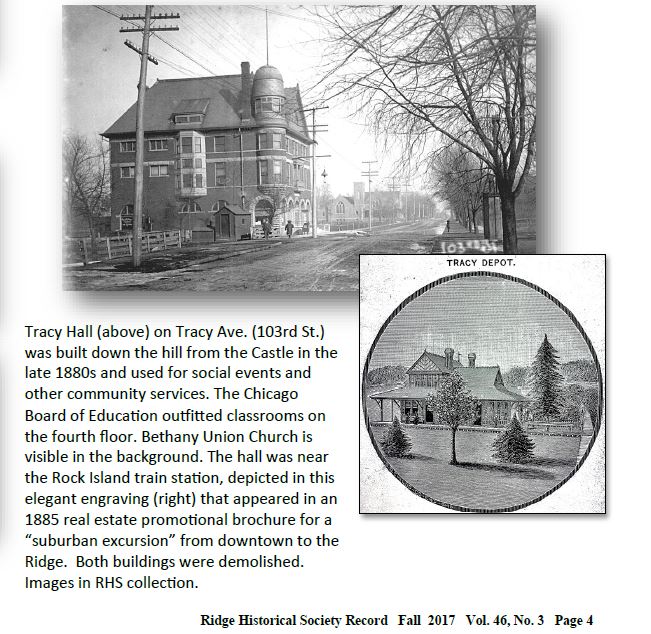
Old street names in Beverly/Morgan Park: A question came into the Ridge Historical Society. In a photo from the 1920s, an Irving Street was mentioned. Where was this?
Answer: Irving was the original name of Bell Avenue in Beverly. Many of the streets in Beverly and Morgan Park had different names before the communities annexed to the City of Chicago. Bell is a good example. In Beverly it was known as Irving and in Morgan Park it was known as Crescent.
If you look closely, you can still find the old street names stamped into some of the sidewalks. These pictures from past RHS newsletters show two examples. The corner of 107th Place and Bell Avenue has a stamp for Crescent Ave. (Bell) and Remington Ave. (the previous name for 107th Place).
Another stamp is at 108th and Drew Street, for Groveland Court, the pre-annexation name for Drew.
103rd Street was previously known as Tracy Ave., and indeed, the entire area around 103rd and Longwood was known as Tracy before the name Beverly caught on. The train station at 103rd Street was the Tracy stop and there was a famous Tracy Hall right by the tracks, but alas, that is gone now.