
Explore the RHS Facebook Archives, a rich repository of local history written by Carol Flynn. For two decades, Carol brought a deeply dedicated voice to public education at RHS. Her role as Facebook administrator through mid-2025 naturally extended her prolific research into meticulously detailed articles, most notably her multi-part historical series posts. Today, Carol continues her local history writing for The Beverly Review and other outlets.
Local History
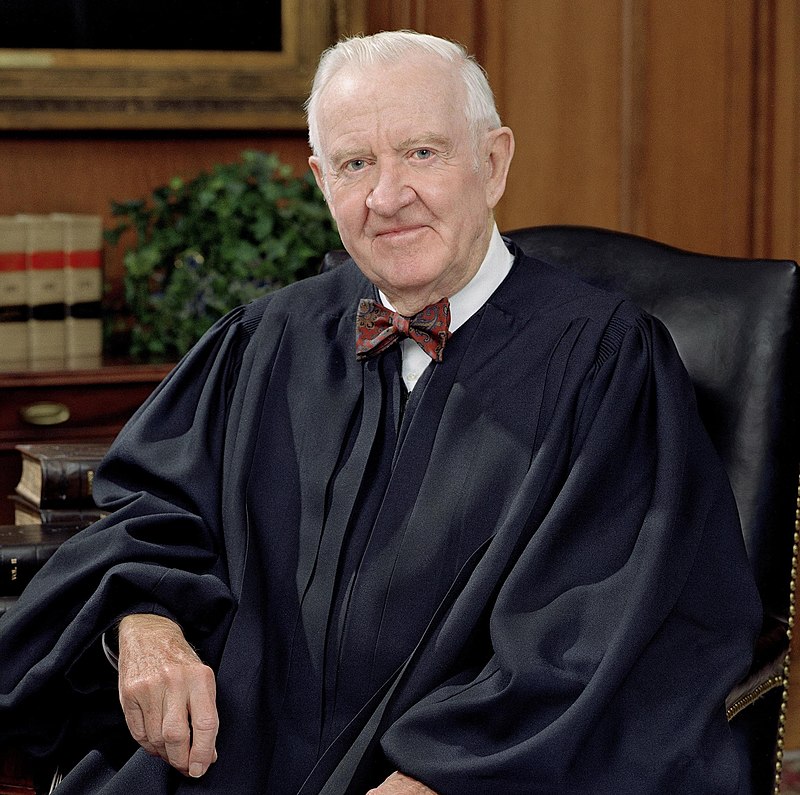
Justice John Paul Stevens (1920-2019) died this week in Florida, at the age of 99. He served on the U.S. Supreme Court from 1975 to 2010.
Justice Stevens was from Chicago. He was born in Hyde Park and educated in University of Chicago schools. After serving in the Navy during World War II, he earned his law degree from Northwestern University School of Law. He was one of the founders of the law firm Rothschild, Stevens and Barry. This firm still exists today as Rothschild, Barry and Myers.
In 1970, Stevens was appointed to the U.S. Court of Appeals for the Seventh Circuit by President Nixon. President Gerald Ford nominated him as an associate justice of the Supreme Court in 1975. He was confirmed 98-0 by the Senate.
Stevens is often presented as shifting from conservative to liberal views during his years on the U.S. Supreme Court. But those who knew him, and he himself, said political ideology was not the issue. He studied cases carefully so that he could apply the law the way it was intended. He was always considered an independent thinker.
Justice Stevens and his wife Elizabeth Jane (Shereen) lived in North Beverly for many years. They had three daughters and one son who attended Christ the King School. They were members of the Beverly Country Club. He and Elizabeth divorced and he married Maryan Mulholland Simon in 1979. His son, one daughter and both wives preceded him in death.
Justice Stevens is part of our local history. We are looking for people who remember Justice Stevens from his years in Beverly. If you can recommend anyone who would be willing to share with us, please send us a message.
The Ridge Connection to Chance the Snapper
Remember “six degrees of separation” – that idea that all people are six, or fewer, connections away from each other?
How does the Ridge connect to Chance the Snapper, that alligator that lived in the Humboldt Park lagoon for a while, until he was captured last week and sent to a reptile facility in Florida to live out his life in comfort and safety?
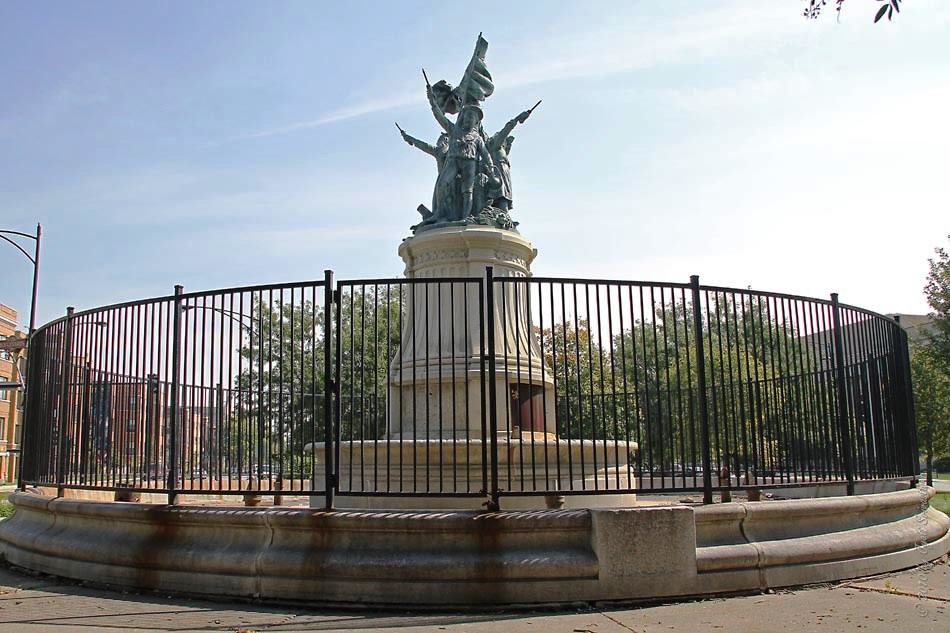
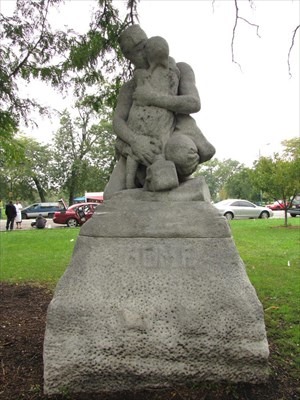
Our connection comes through public art. Humboldt Park is the site of a famous sculpture called “Home” by Charles Mulligan. The sculpture depicts a miner hugging his small daughter.
The Mulligan family lived in Fernwood, the community just east of Washington Heights. Later descendants of the family lived in Beverly and Morgan Park. And the final resting place for Charles Mulligan is Mt. Greenwood Cemetery, 2900 W. 111th Street.
Mulligan was born in 1866 in Riverdale, County Tyrone, Ireland. In 1881, he, his parents and his seven brothers and sisters immigrated to the United States in search of better opportunities. They settled in the South Side of Chicago where the father took a job building passenger railroad cars for Pullman.
Young Charles Mulligan also got a job at Pullman, carving marble into wash basins for the passenger cars. At night, he studied art. During breaks, he practiced modeling in clay and carving small objects from scrap pieces of marble. One day, the famous sculptor Lorado Taft was visiting the Pullman plant and noticed Mulligan and his work. He was impressed by the boy’s rough talent and invited Mulligan to study under his mentorship. (Talk about being in the right place at the right time!)
Mulligan became a student of Taft’s at the Art Institute of Chicago and also spent time in Paris at the L’Ecole des Beaux Arts. He became a naturalized citizen of the U.S. in 1888. He married Maggie Isabella Ely and they had six children; three died in infancy, and three sons survived to adulthood.
Mulligan had a distinguished career as an artist. In 1893, Taft made him foreman of his workshop for the Chicago World’s Fair. After Taft’s resignation, Mulligan became the head of the department of sculpture of the Art Institute. Mulligan was one of the founders of the Palette and Chisel Club, and he was a member of prominent organizations such as the Chicago Society of Artists (CSA), Cliff Dwellers, and the Irish Fellowship Club.
Regrettably, Mulligan’s life was cut short by pancreatic cancer. He died in March 1916 and was buried in Mt. Greenwood Cemetery, along with other family members.
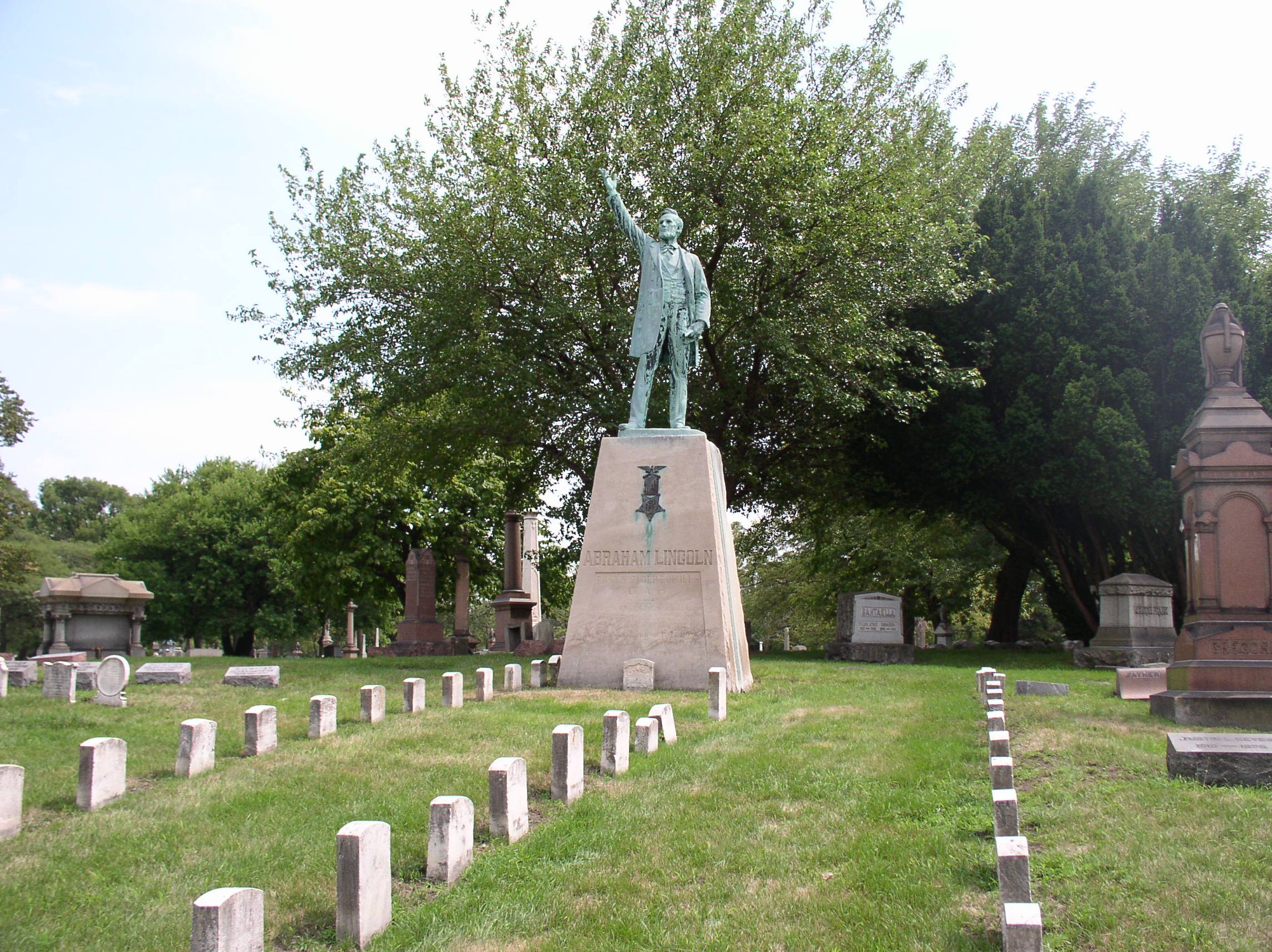
Mulligan left behind a rich legacy of existing sculptures throughout the country. Examples include his two architectural groupings that adorn the front entrance of the Illinois Supreme Court Building in Springfield. He also created three statues for the Illinois State Memorial in Vicksburg National Military Park in Mississippi, a U.S. Civil War site – President Lincoln, General Grant and Richard Yates, Illinois Governor during the Civil War. A third example is his statue of “Lincoln the Orator” at Oak Woods Cemetery at Cottage Grove Ave. and East 67th Street in Chicago.
Of particular interest to the history of Chicago are his sculptures in the Chicago Park Boulevard System Historic District. This system is about 26 miles in length and includes eight parks connected by 19 boulevards and six squares.
Chicago’s park and boulevard system began in 1869, but it was during landscape architect’s Jens Jensen’s tenure with the West Park Commission that Mulligan’s sculptures were added. Mulligan was one of Jensen’s favorite sculptors. Jenson and Mulligan are considered major contributors to the Progressive Era’s “Chicago beautiful” movement.
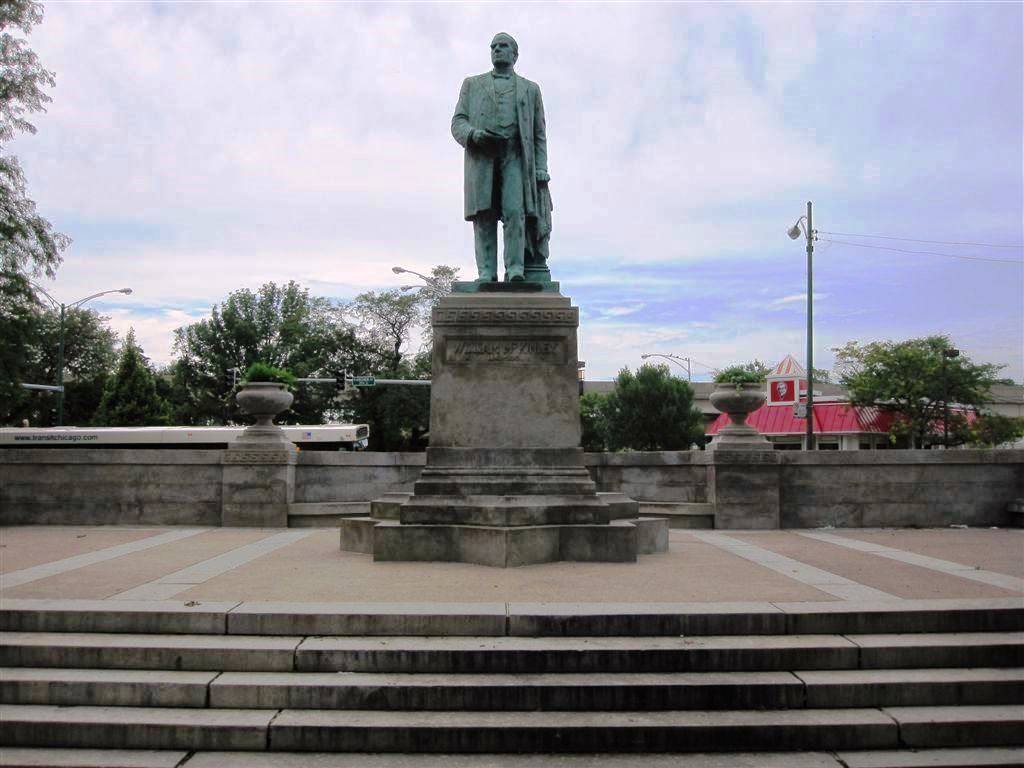
Mulligan installed artwork in four locations. First was Independence Square Fountain (dedicated in 1902), also known as Fourth of July Fountain, located at the intersection of West Douglas and South Independence boulevards. Next came the William McKinley monument installed in 1905 at the intersection of Western and Archer Avenues. This is the closest sculpture to the Ridge communities and memorializes the president assassinated in 1901.
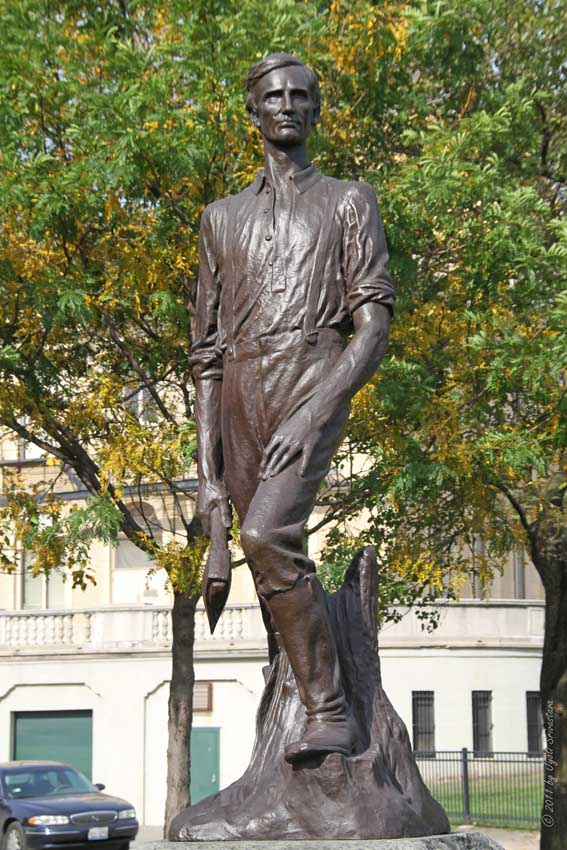
Then there was Home (installed 1911) in Humboldt Park, and Lincoln the Railsplitter (installed 1911) in Garfield Park. These statues particularly convey the sense of humanism that Mulligan is known for in his works.
Upon his death, Mulligan was eulogized by Taft and others at memorial services at the Art Institute, University of Chicago, and other places.
“I have a memory of a little vocational school [I] attempted in Pullman soon after I came to Chicago – evening classes in drawing and modeling. The response was slight, the experiment brief, but we found Charlie Mulligan,” said Taft. “Soon after, he came to my studio for work and study. The studio rang with his hearty laugh; his enthusiasm was contagious. A strange thing happened to me; he gave me a courage and a confidence that I had lacked before. From morning till night his hammer strokes ran clear and joyous.”
“He made me acquainted too with the lives and the thoughts of the working people as no one else has ever done. I heard of their long hours and their pitiful pay; of their amusements and their aspirations, and was taught a great sympathy which has tinged my life,” continued Taft.
Taft concluded: “Oh, the many good things that that ardent soul brought into our lives! And to think that we shall not hear that rich voice again, nor feel the hearty grip of those strong hands – the thought is incredible.”
There is no monument, no marker at all, on Charles Mulligan’s grave at Mt. Greenwood Cemetery. His public works are the testimony to his artistic accomplishments.
The Ridge Historical Society was saddened to learn of the death of William A. Sandstrom, 92, one of our long-time leaders. Bill was a past president and treasurer and a Director Emeritus. He was also very active with the Kiwanis of SW Chicago and a leader at Bethany Union Church. He was a veteran of World War II and employed with the Environmental Protection Agency for many years. Our sincerest sympathy is extended to Bill's wife, Marie, and his children and grandchildren. Visitation Friday 3-8 p.m. at Donnellan Funeral Home 10525 S. Western Ave. Chicago. Visitation Saturday from 10 a.m. until time of Service 11 a.m at Bethany Union Church 1750 West 103rd. Street.
Morgan Park Days
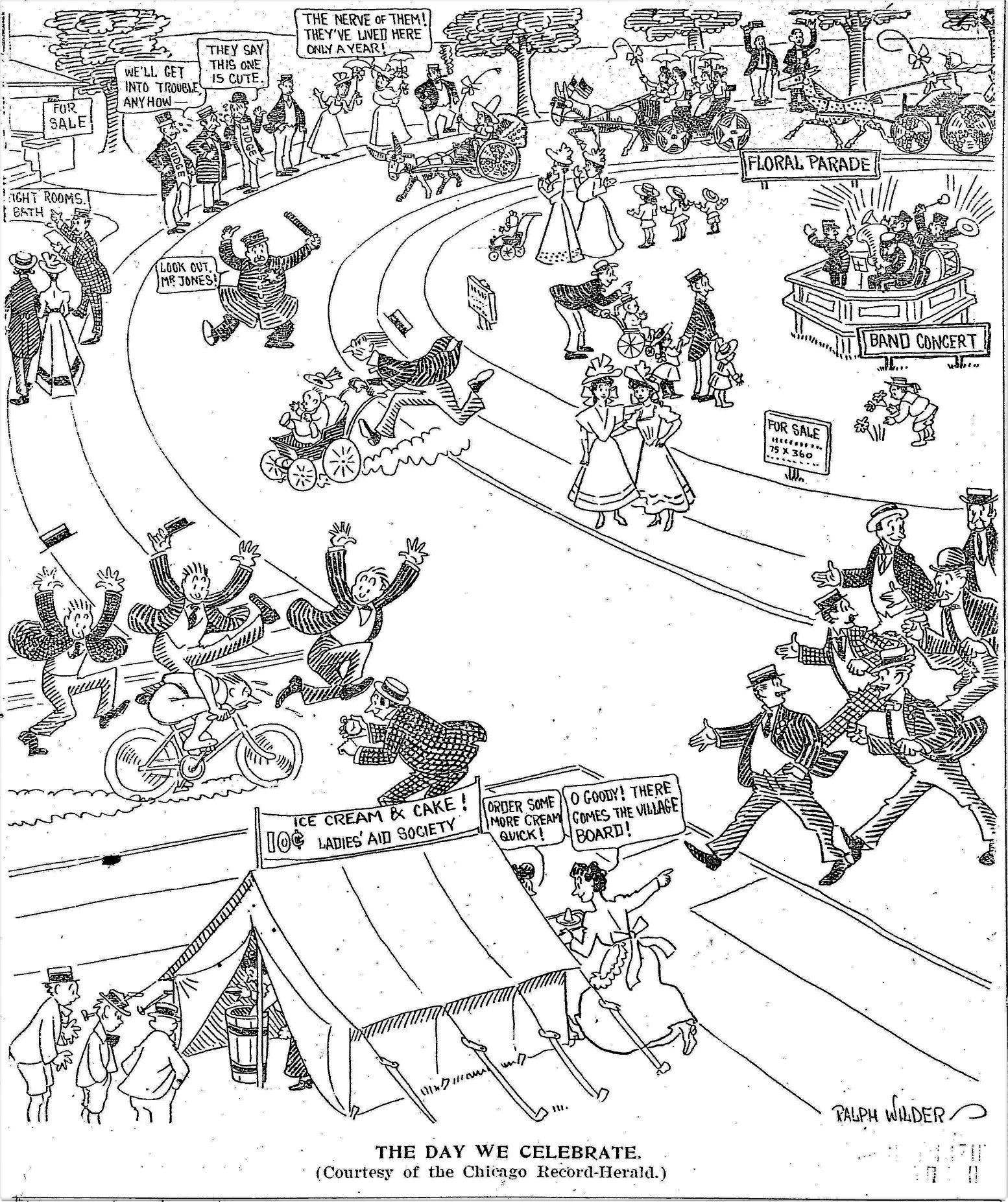
The summer is almost over – Labor Day will be here in just a few days. Labor Day was a special time for Morgan Park in the early 1900s – it was the day devoted to “Morgan Park Day” celebrations.
In September 1900, fourteen years before annexing to the City of Chicago, the Village of Morgan Park held its first-ever public holiday to simply celebrate the village as a community. Stores closed, children were let out of school, and the village’s marching band paraded around town. The people gathered to listen to speeches and sip lemonade.
At that 1900 event, it was suggested that Morgan Park have one day each year devoted solely to the village, where the people “could meet on common ground, their only creed being universal brotherhood.” This led to an event known as Morgan Park Day that was held annually on Labor Day for over a decade.
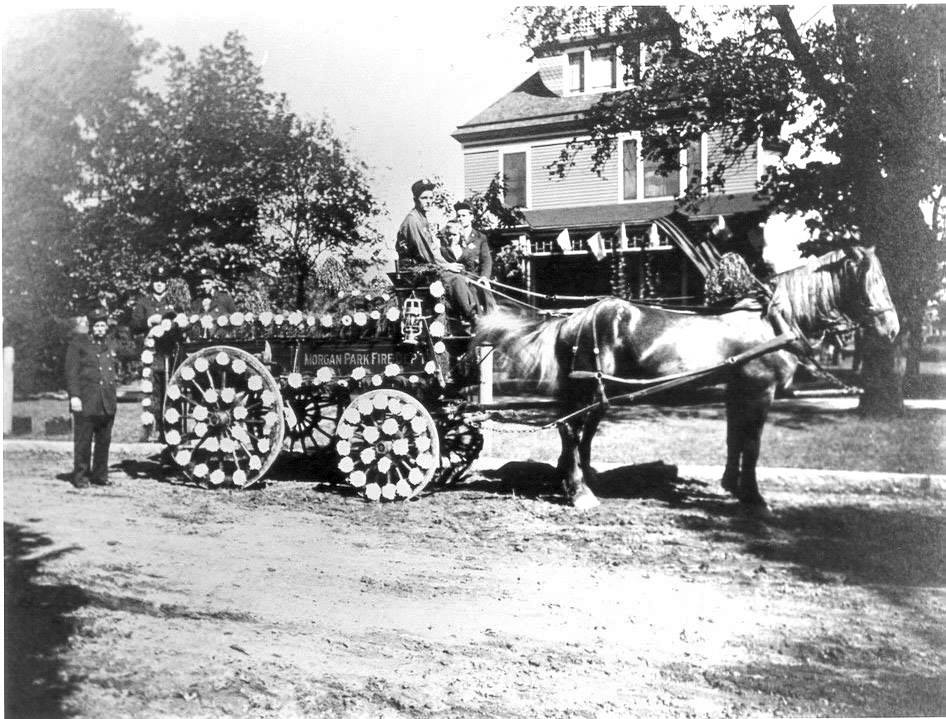
Morgan Park Days, the first of which was held in 1901, were chock full of activities. Athletic competitions under the direction of the Morgan Park Athletic Club were held on the grounds of the Morgan Park Academy. The entire village decorated houses and outdoor areas. Parades featured carriages and floats adorned with floral displays.
Afternoons were for bands, concerts and speeches. The public forum was considered a very important part of the day. Evenings were reserved for concerts, dinners, dancing, and social time.
The peak year for Morgan Park Days was 1908, and what a grand event that was. The planners encouraged residents to invite their friends and relatives from all over to come for the day. House parties were held throughout the village. The village of 5,000 residents expected 10,000 visitors; over 20,000 showed up.
The churches were in charge of refreshments. Booths were set up to sell peanuts, popcorn, crackerjack, pork and beans, chop suey, pop, lemonade and orange cider, coffee, doughnuts and milk, candy, pies, fruit, sandwiches and red-hots. Other booths sold postcards and souvenirs. Adults strolled around with decorated canes and children were supplied with red balloons. Adults and children alike waved pennants and banners.
The athletic events and contests were numerous. The parade was the longest ever, stretching for two miles. Evening entertainment included a chorus of 50 members. Leading up to the day, public practice sessions were held so residents would be ready to sing along.
No mentions of Morgan Park Day are found in the city papers after 1911. The village annexed to the City of Chicago in 1914. On Labor Day 1917, events focused on honoring the men joining the “new national army” as the country had joined the World War I efforts in April of that year.
A more complete article on Morgan Park Days appears in the summer issue of the RHS newsletter which recently was sent to members. If you are not a member of RHS, please consider joining.
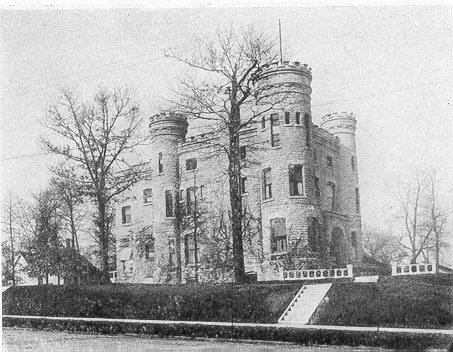
New event! RHS and the Givins Beverly Castle will be hosting an event for Halloween at the Castle – "Folklore and Phantoms" – a look at paranormal activity on the Ridge, presented by RHS researcher/writer Carol Flynn, on Friday evening, October 25. Mark your calendars now – seating is limited so there will have to be reservations and the program will fill up fast. Complete details will follow including reservations information. There will be a nominal charge and all the proceeds will go to the Castle Restoration Fund. Included will be refreshments – beer and wine and appetizers. We'll talk about the Castle ghost stories and many other stories from the Ridge – Carol has collected over 50 stories of paranormal events on the Ridge and has the blog "Ridge Paranormal Happenings" on Patch. We'll have time to let people share their own experiences also. Stay tuned for more information….
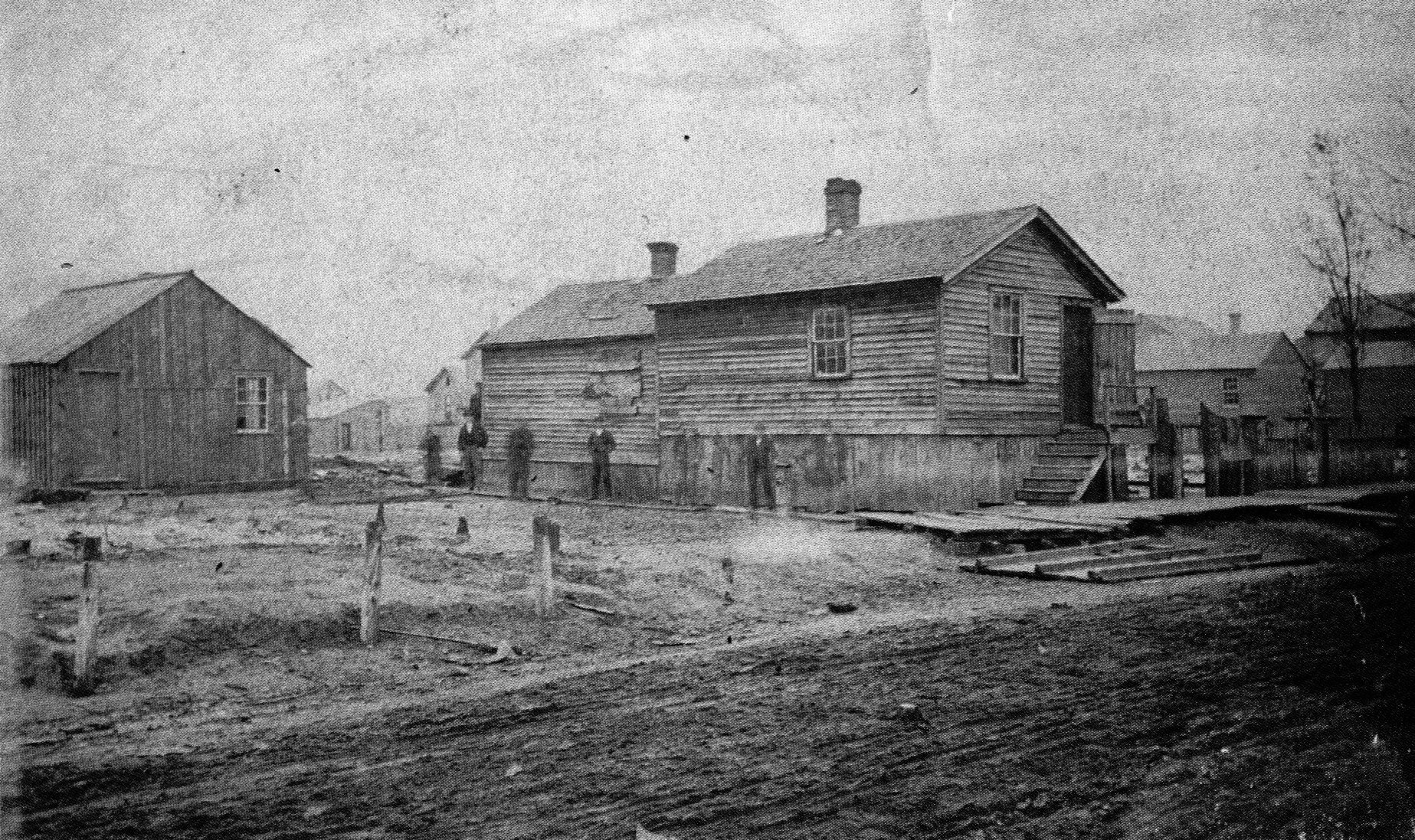
Today is the anniversary of the beginning of the Great Chicago Fire, which started on October 8. 1871. It burned until October 10 when rain finally squelched the flames.
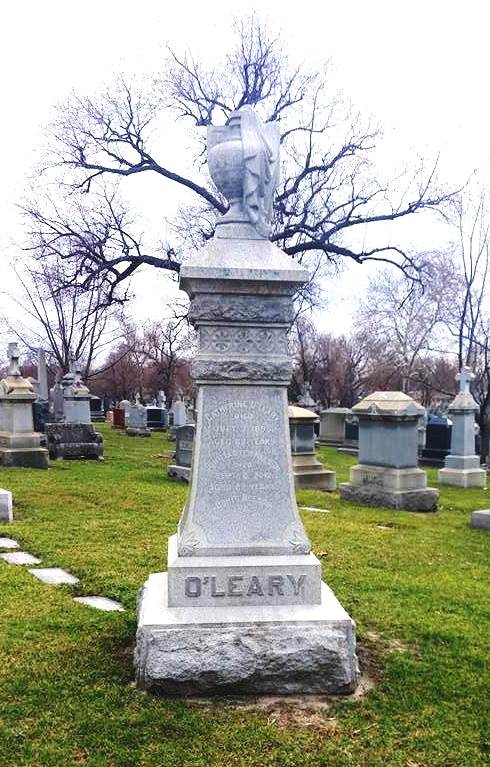
While it is true the fire started in Mrs. O'Leary's barn, it is most certainly not true that she was out there milking her cow at night and the cow kicked over a lantern. The cows were settled for the night and Mrs. O'Leary was in bed nursing an injured ankle when the fire started. The exact cause was never determined – men smoking in the alley, the neighbor going in there to take milk, arson from a competitor – are all theories. So are spontaneous combustion and a comet flying through the cosmos. But the press blamed Mrs. O'Leary and vilified her.
The O'Learys are buried in Mt. Olivet Cemetery on 111th Street here on the Ridge. The O'Leary son became Big Jim O'Leary, a famous Chicago gambler.
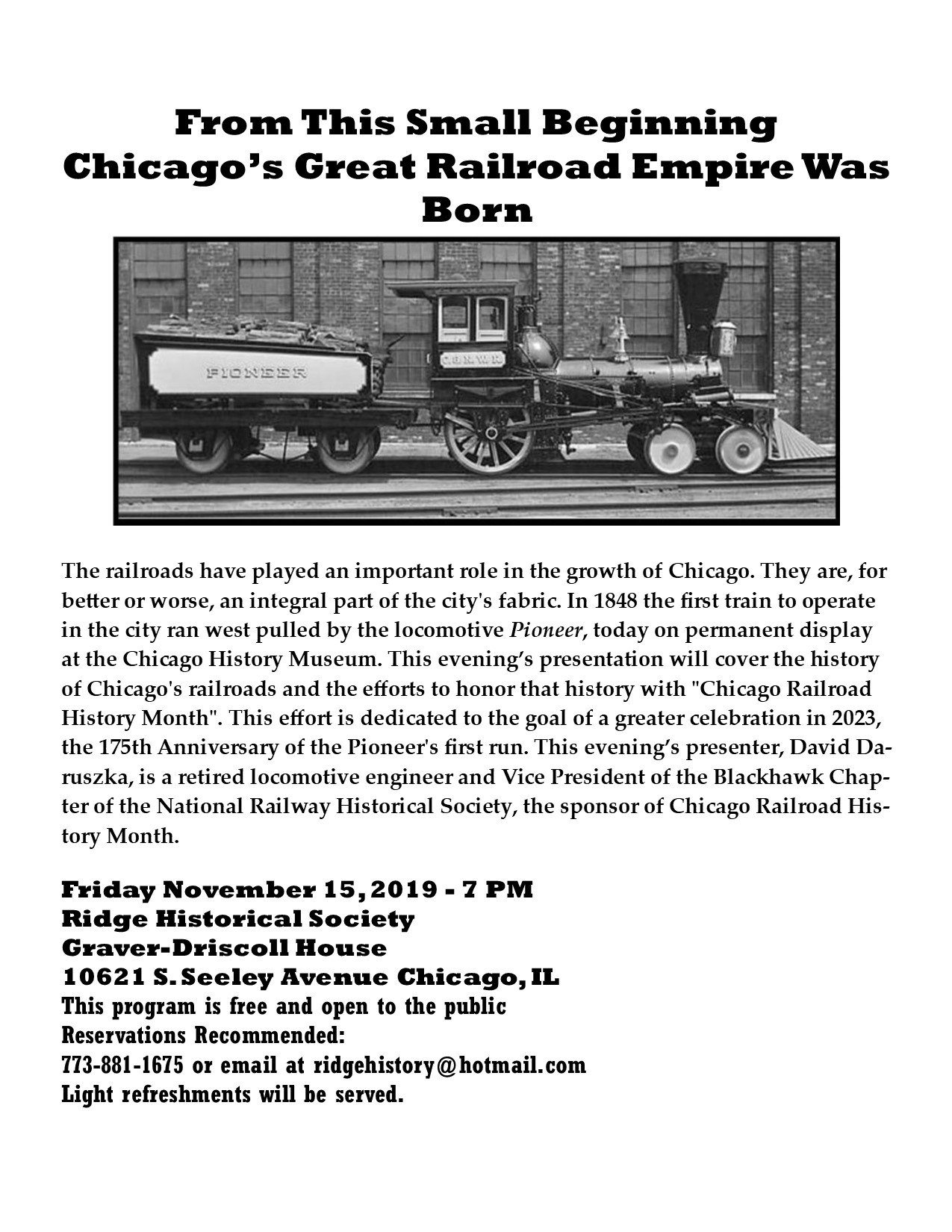
RHS is posting two new events/programs – be sure to add them to your calendar. The first is this one on the history of the railroads in Chicago on Friday, November 15 at 7:00 p.m.
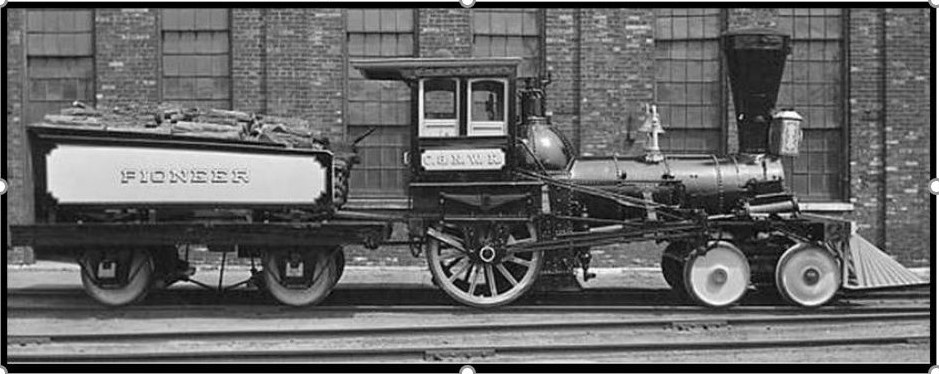
Mark your calendars for the next event – "From This Small Beginning Chicago’s Great Railroad Empire Was Born"
The railroads have played an important role in the growth of Chicago. They are, for better or worse, an integral part of the city's fabric. In 1848 the first train to operate in the city ran west pulled by the locomotive Pioneer, today on permanent display at the Chicago History Museum. This evening’s presentation will cover the history of Chicago's railroads and the efforts to honor that history with "Chicago Railroad History Month". This effort is dedicated to the goal of a greater celebration in 2023, the 175th Anniversary of the Pioneer's first run. This evening’s presenter, David Daruszka, is a retired locomotive engineer and Vice President of the Blackhawk Chapter of the National Railway Historical Society, the sponsor of Chicago Railroad History Month.
Friday November 15, 2019 – 7 PM
Ridge Historical Society
Graver-Driscoll House
10621 S. Seeley Avenue Chicago, IL
This program is free and open to the public
Reservations Recommended:
773-881-1675 or email at ridgehistory@hotmail.com
Light refreshments will be served.
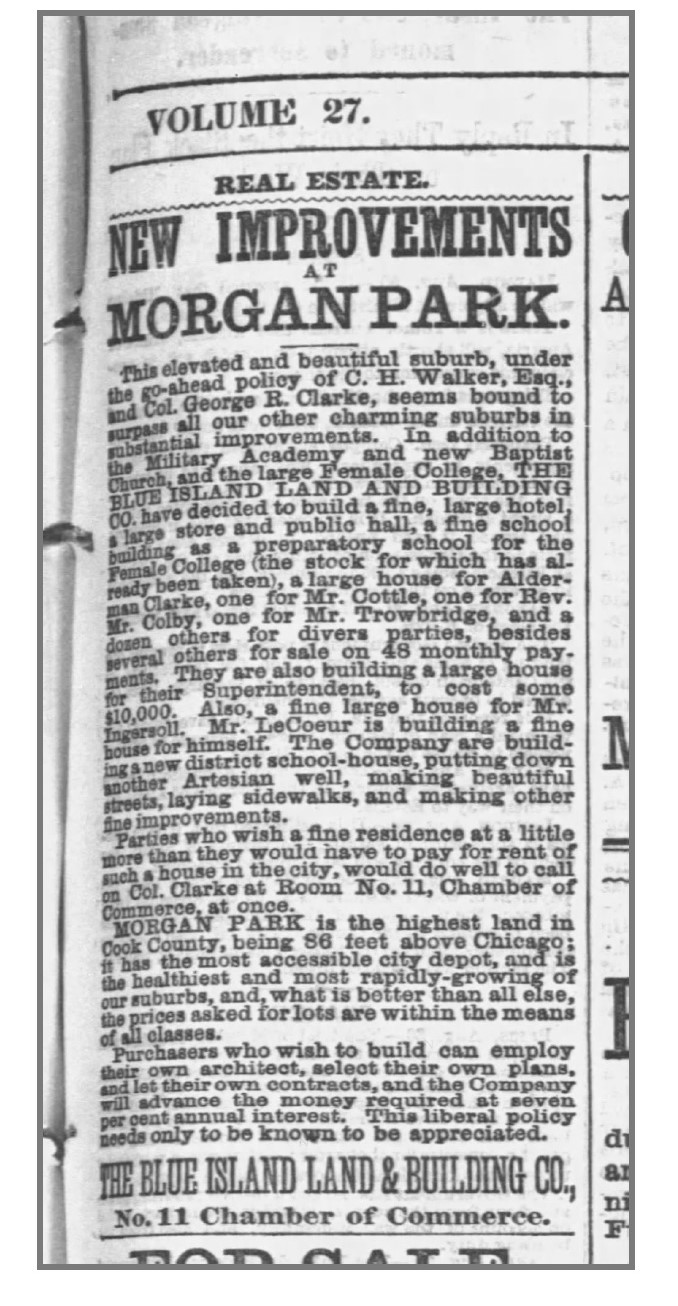
The picture of the Morgan Park Baptist Church triggered interest in the early days of Morgan Park. Morgan Park did not just evolve – it was a "planned" community. The Blue Island Land and Building Company (BILBC) bought much of the land left from the Thomas Morgan estate after the Civil War, after Mrs. Morgan died in 1868.
The BILBC was headed by Col. Clarke, who lived here, and by George Walker, who never lived here but was an investor, who gave MP its first library – the Walker Library on 111th and Hoyne.
The land was laid out to resemble an English village, with winding streets and parks. The Village was founded as an educational, religious and temperance enclave. It was marketed to the public beginning in 1873.
Attached is an ad from the Chicago Tribune from 1873. Note it mentions both Morgan Park Academy and the MP Baptist Church. These were selling points for attracting people here.
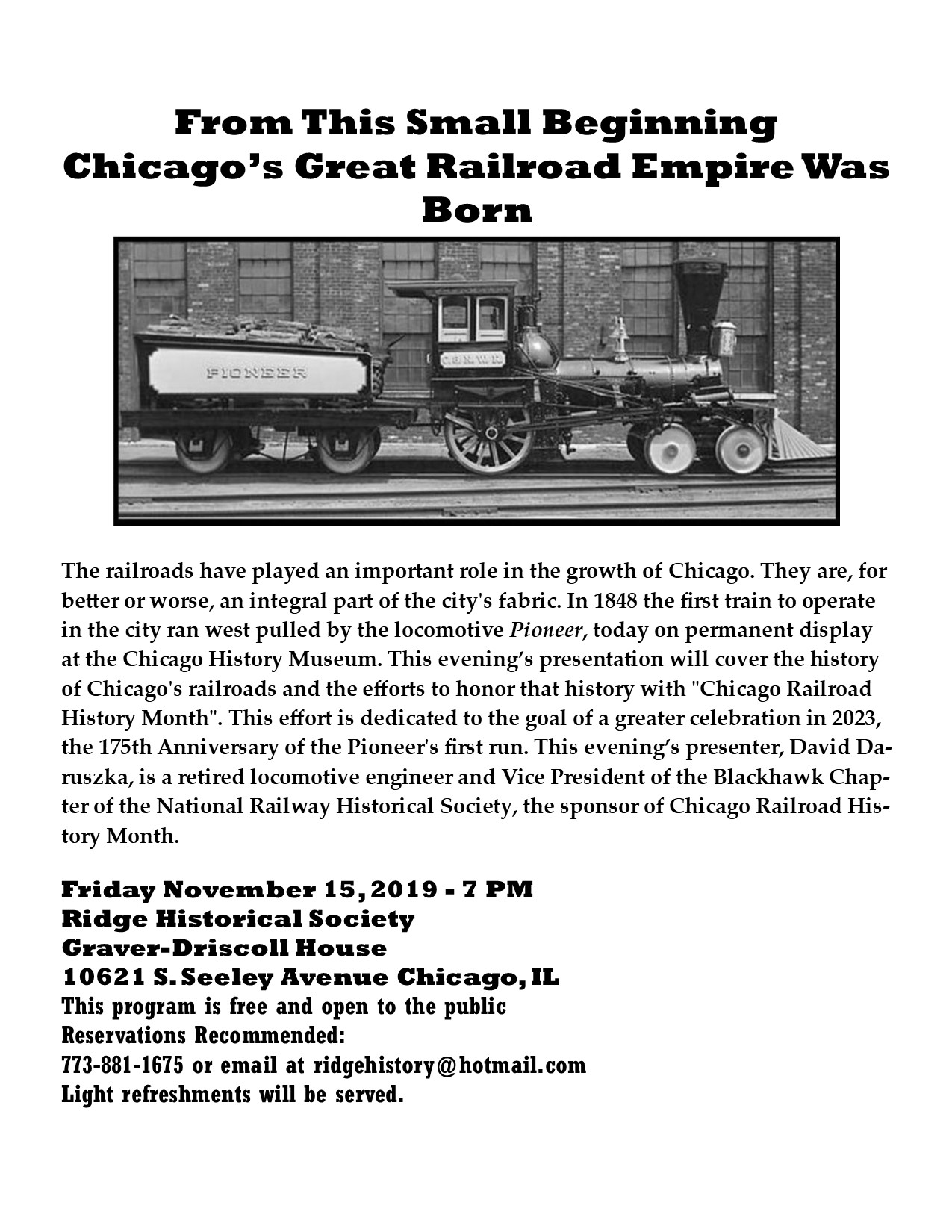
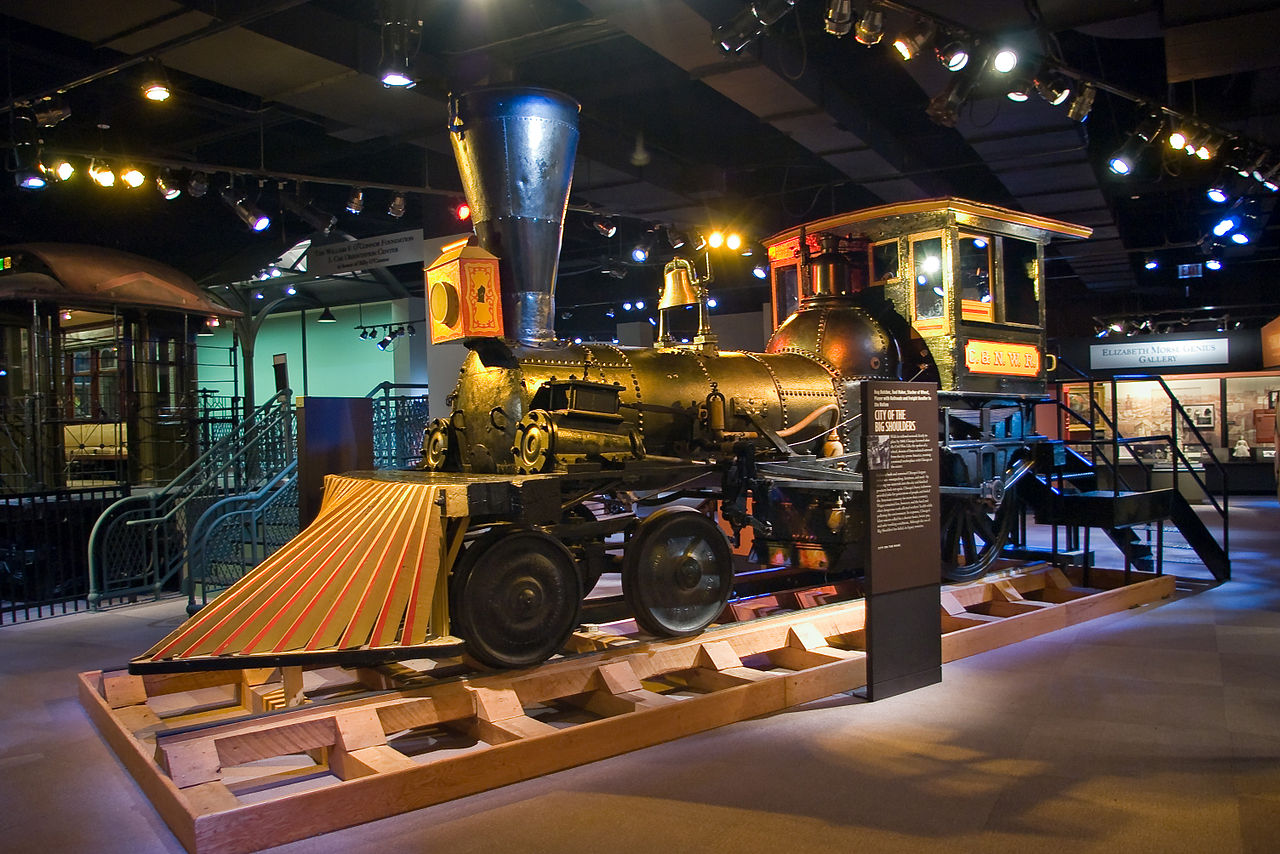
On Friday, November 15, at 7:00 p.m., the Ridge Historical Society will host the program, "From This Small Beginning Chicago's Great Railroad Empire Was Born." That "small beginning" was the Pioneer, the first locomotive to operate in Chicago, in 1848.
Speaker David Daruszka, a retired locomotive engineer and Vice President of the Blackhawk Chapter of the National Railway Historical Society, will be the presenter. The presentation will cover the history of Chicago's railroads and the efforts to honor that history with "Chicago Railroad History Month".
A flier for the program is attached. as well as a picture of the Pioneer at the Chicago History Museum, where it is on permanent display.
Reservations are suggested to give RHS a headcount. Call 773/881-1675 or email ridgehistory@hotmail.com. The program is free.
RHS is located in the historic Graver-Driscoll House at 10621 S. Seeley Ave., Chicago.