Explore the RHS Facebook Archives, a rich repository of local history written by Carol Flynn. For two decades, Carol brought a deeply dedicated voice to public education at RHS. Her role as Facebook administrator through mid-2025 naturally extended her prolific research into meticulously detailed articles, most notably her multi-part historical series posts. Today, Carol continues her local history writing for The Beverly Review and other outlets.
Local History
More for Veterans Day:
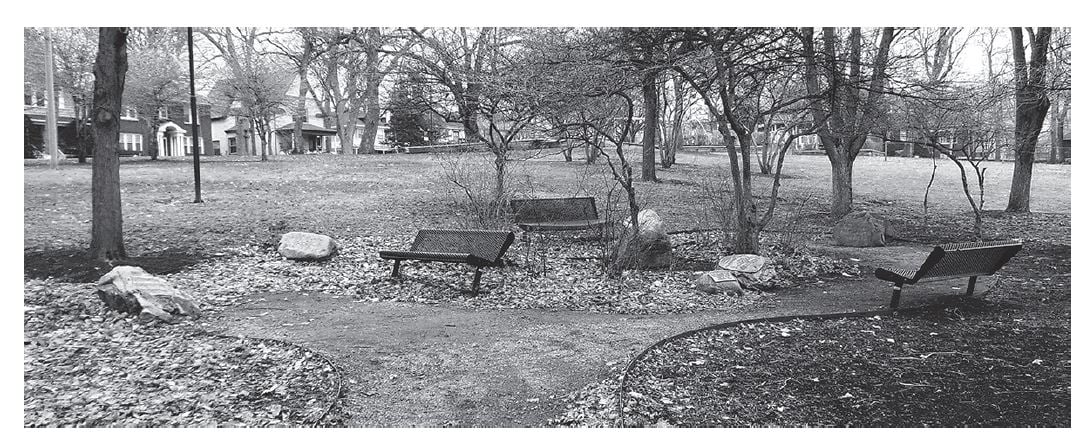
Ridge Park at 96th Street and Longwood Drive includes memorials to those who served in various wars. In the early 1990s, the park district grouped these together in a single area. The monuments recognize the Revolutionary War, the Civil War, the Spanish American War, World War II and Operation Desert Shield/Operation Desert Storm. Photo by C. Flynn, RHS newsletter.
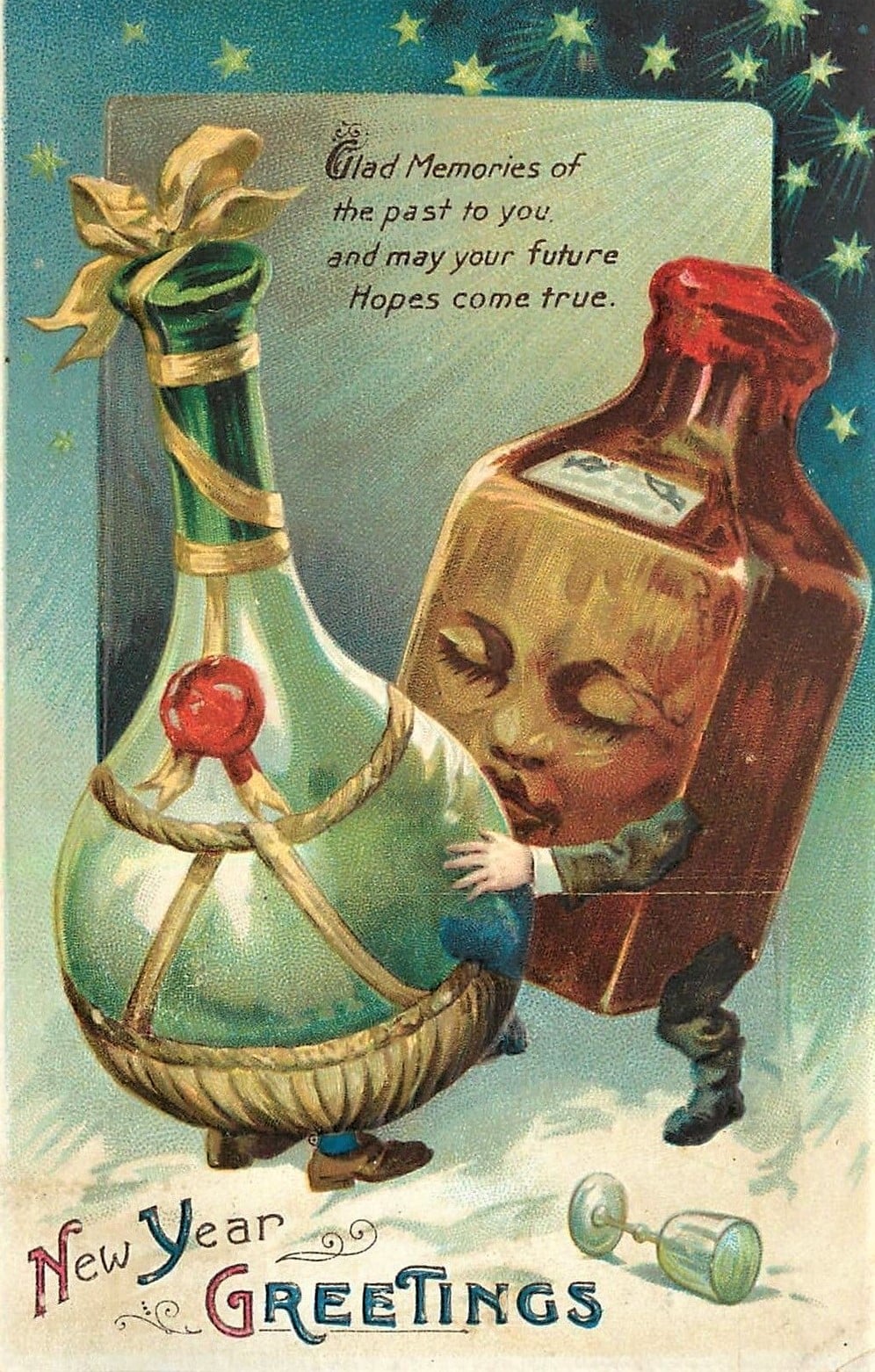
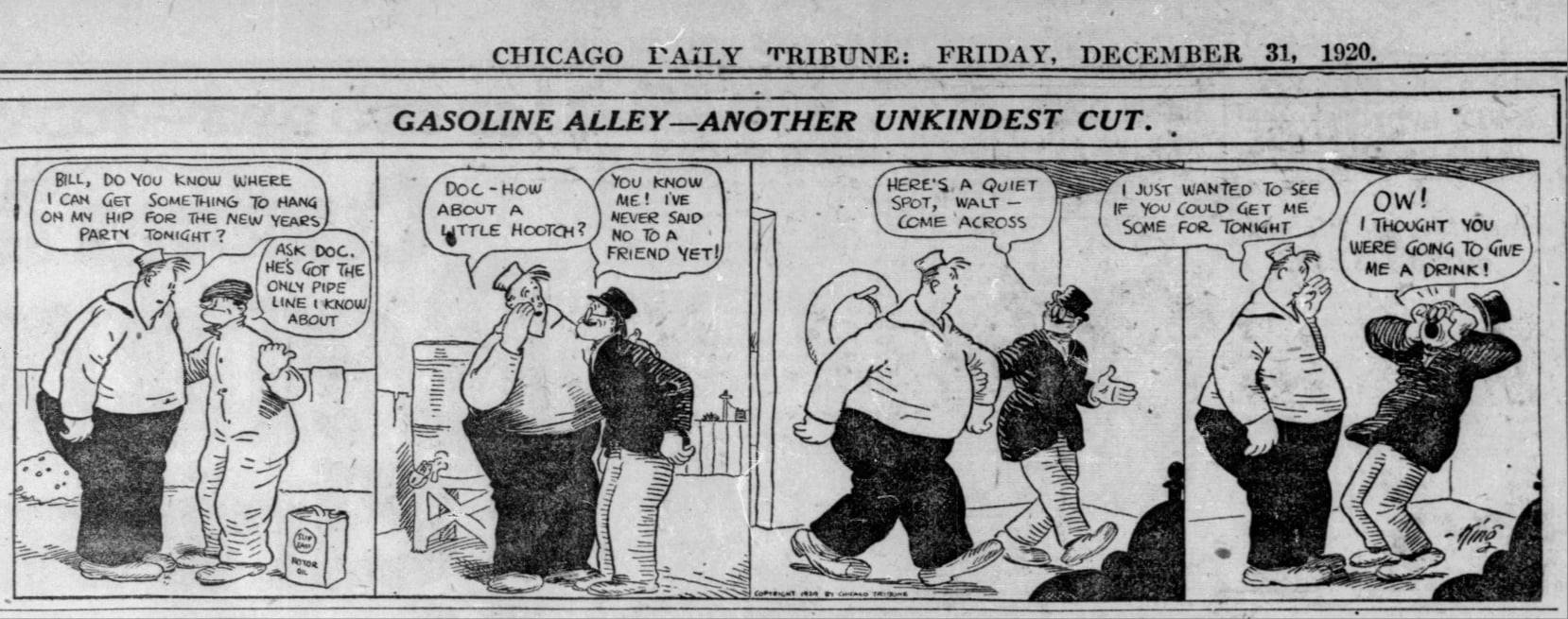
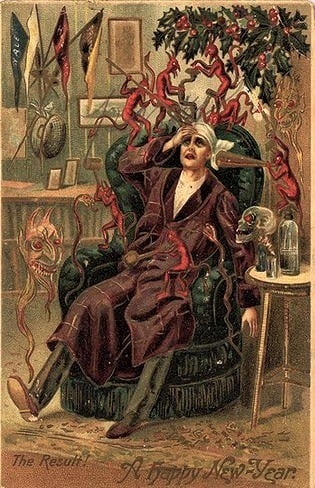
New Year 1921
By Carol Flynn
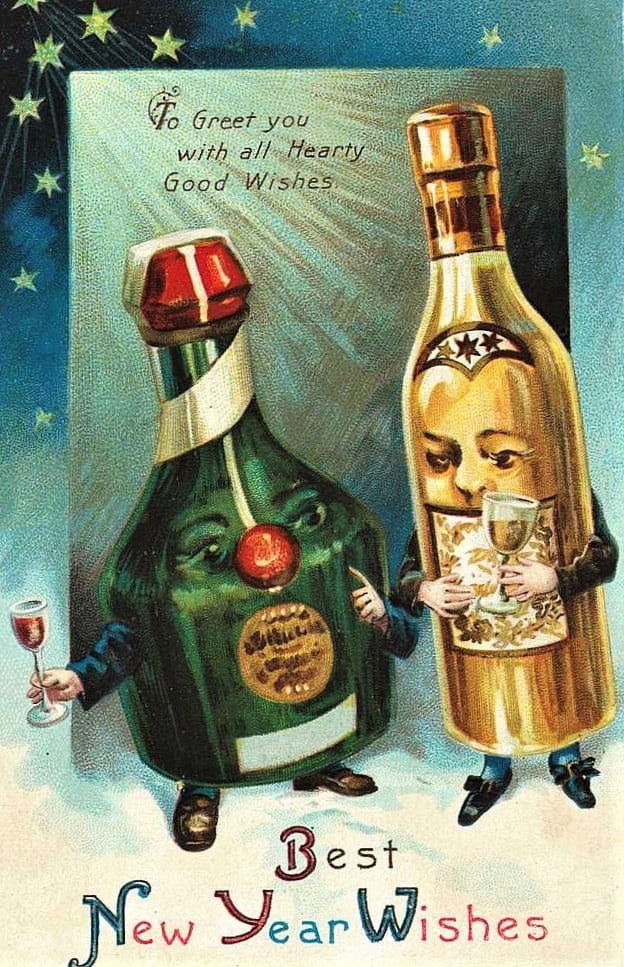
New Year’s Eve in 1920 was a momentous occasion. It was the first New Year’s Eve following the implementation of Prohibition.
The Eighteenth Amendment to the United States Constitution was ratified in January 1919 and became effective in January of 1920. It stated that “the manufacture, sale, or transportation of intoxicating liquors … is hereby prohibited.”
The Volstead Act, or National Prohibition Act, accompanied the 18th amendment and covered its implementation. It was named for Andrew Volstead, Chairman of the House Judiciary Committee.
In the federal law, consumption of alcohol and private ownership of alcohol were not banned, and the use of wine in religious ceremonies and alcohol for medicinal and research purposes was allowed. States could set their own laws, but Illinois used the federal version.
As New Year’s Eve approached, the Federal Prohibition Commissioner, John F. Kramer, stated there would be no “tilting” of the Volstead Act. He warned that federal agents throughout the country “were prepared to halt any attempt to turn the celebration of the New Year into an orgy of imbibition” like what occurred before Prohibition.
Chicago hotel, restaurant, and cabaret owners hoped that an exception would be made for that one night, that the “dry” agents would not “chaperone” their establishments. But that did not happen.
According to the Chicago Tribune in December 1920, Frank D. Richardson, Chicago’s “dry chief,” made it clear to the hotels that would host most of the parties that “Chicago hotels must obey the law.”
Richardson said, “Every hotel, from the largest to the most exclusive to the smaller family hotels will have its quota of dry agents assigned to check the
tendency toward law violation.”
As it turned out, Chicagoans for the most part behaved themselves. On January 1, 1921, the Tribune reported that the crowds in the loop were smaller that year, and although noisy, “there was an absence of the bibbling boisterousness of other days” – and little for the police to do.
Some of the restaurants and cabarets, of course, circumvented the rules. There were a few raids on places where alcohol was being sold, and arrests were made. The paper noted the evening was not entirely dry, “though more arid than any of its predecessors in memory.”
“Hip liquor,” or flasks that patrons carried secretly, were “winked at” in most of the restaurants but incidents of intoxication were infrequent. One manager noted that people were having as good a time without liquor as with it. For one thing, they spent more time on the dance floor.
But most of the party-goers made it an early night, and the crowds thinned out by 1:00 a.m.
One Tribune reporter lamented that in “restaurants where in former years the celebration found light, music, wine and hilarity only the ghosts of the former days walked, danced, and dined.”
He found it a “dreary tour” through the neighborhoods of “darkened doors of the cafes of yesteryear.” He called it the “indications of a new age.”
Prohibition was repealed in 1933. It proved to be impossible to enforce, and there were economic drawbacks mostly in the loss of tax revenue from the sale of alcohol. The health and social outcomes of Prohibition are mixed. Drinking did decrease and some medical conditions like liver cirrhosis declined. However, crime and violence due to illegal operations increased.
When Prohibition was repealed at the federal level, it was left up to states and local governments to restrict or ban alcohol. One of Chicago’s best examples of a “dry” community that chose to stay that way is our own Beverly/Morgan Park area. Morgan Park was founded as a temperance community. Efforts have been made through the years to reverse this “dryness” but to date, the residents have voted to ban the sale of alcohol east of Western Avenue. There are a few exceptions where addresses hold a liquor license.
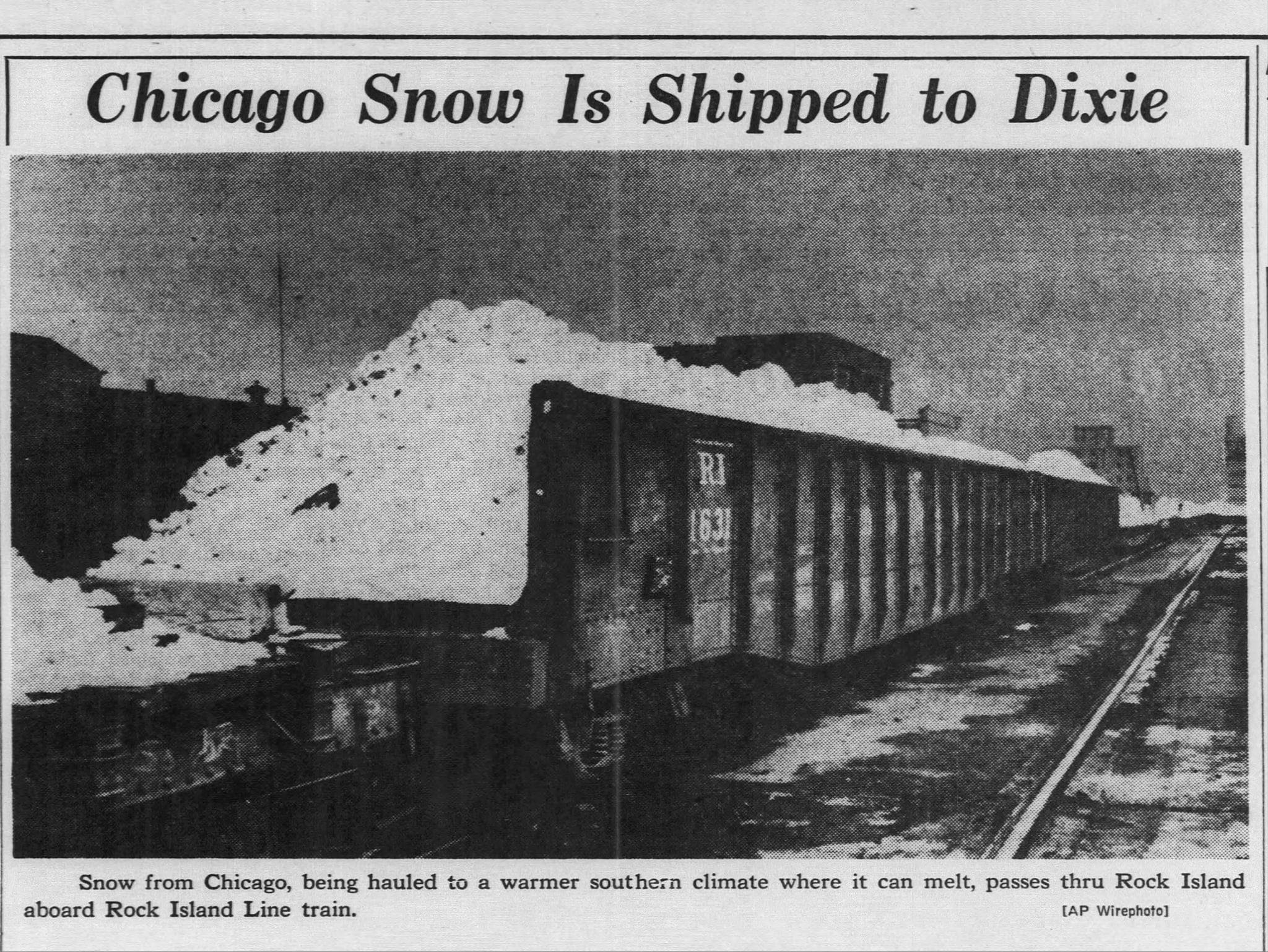
Chicago got some snow from last night into today – about 3.5 inches in the Beverly/Morgan Park/Mount Greenwood area. Not bad by Chicago standards.
But this same date – January 26-27 – in 1967 saw the greatest snowfall in one storm in Chicago's history – a whopping 23 inches incapacitated the city for days. It was a full-blown blizzard with gusting winds up to 50 miles per hour creating drifts of 15 feet.
RHS does not have any good pictures of that blizzard from the community so if anyone would like to share pictures – and stories – that would be great. One woman shared the story that she went into labor and no cars could get through so her family had to take her by sled over to Little Company of Mary Hospital.
Chicago had so much snow, they actually loaded it onto railroad cars and sent it down south to melt. This photo is from the Chicago Tribune, February 11, 1967.
The Ridge Historical Society
Just a little research project …. the kind we love.
By Carol Flynn
An unfortunate gentleman reported he lost his wedding ring in the snow over the week-end and is trying hard to find it.
This prompted Sarah Batka to post that she found a wedding ring about 6-8 years ago while gardening at her house on Artesian Ave. There were initials and a date inside the ring. But she had no luck in finding the owner. She held onto the ring.
Clare Duggan tagged me at the Ridge Historical Society, wondering if we could help find the person to whom that ring belonged. I said sure, this is the kind of research project we love, let’s see what we can find.
So Linda Lamberty, RHS Historian, and I got on this Sunday night. We started with our usual sources – government and building records, newspaper archives, genealogy sites, etc. And we found the likely owner of the ring. She was the granddaughter of the couple who had lived in the house at one time. She now lives in San Antonio, Texas.
The woman was on Facebook, and around 2:30 a.m., I sent an enthusiastic if somewhat disjointed message to her. Was this ring by chance hers?
She replied later Monday morning – it was hers! She lost it 50 years ago in the snow at her grandmother's house! She was amazed that it had been found all these years later. We got together by phone and had a teary-eyed conversation.
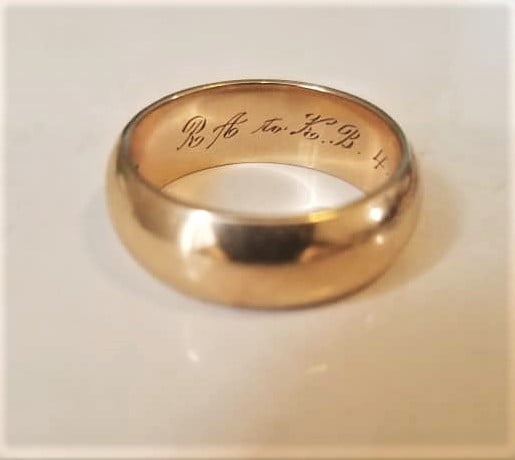
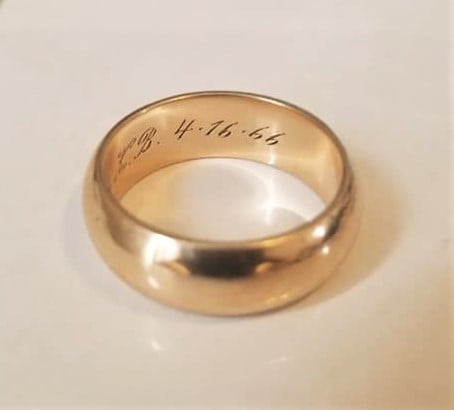
The ring belongs to Karen Berk Autenrieth, who married Robert Autenrieth on April 16, 1966. The inscription inside the ring reads “R.A. to K. B. 4-16-66.” It’s a beautiful ring – heavy gold, and in surprisingly good condition for being in the dirt for 50 years – a little scratched up, but not bad at all. Pictures of the ring and inscription are attached.
I now have THE RING in my possession, and it is my duty to get it to San Antonio before February 14, when Karen’s family is gathering, and want to witness her open the package with the ring in it. I have a new appreciation for Frodo Baggins. I'll be nervous until I know it arrives there safely. (I’m feeling like maybe I should drive down there in person to deliver the ring – and crash the party ….)
We’d love to have Karen and Sarah share their parts of the story.
And to the gentleman who lost his ring this week-end: We hope you find it – it has to be there. Don’t give up hope! Maybe we can stage a “walk the grid” community search party when the snow melts.
@Sarah Batka, @Karen Autenrieth
Ridge Historical Society – For Valentines Day
A Sparrow: Love in a Cottage
By Carol Flynn
According to a Chicago Tribune column from one hundred years ago, here is an old English superstition.
On Valentines Day, the first bird a maiden sees in the morning will determine her future marriage situation. If she sees a goldfinch, she will many a millionaire; if she sees a bluebird, she will live in poverty. If she sees a blackbird, she will marry a clergyman; if she sees a redbreast, she will marry a sailor.
If she sees a flock of doves, she will have good luck.
If she sees a sparrow, she will find love in a cottage. Chances are, in Chicago, and on the Ridge, the first bird a maiden will see is an English sparrow, also called a house sparrow. These birds were brought into the United States by collectors in the mid-1800s and introduced throughout the country. Early city park planners in Chicago released them into Lincoln Park. They are now the most widely distributed birds in the wild.
The Ridge has a vast collection of houses that can be considered “cottages.” There really is no specific definition of a cottage architecturally – in fact, there is a lot of similarity in the definitions for cottage, bungalow, cabin, and like structures.
Some general characteristics of cottages are that they are smaller frame houses, one or 1.5 floors, with dormers and small porches. They are usually thought of in terms of coziness and charm. In the United States, cottages are often associated with vacation properties.
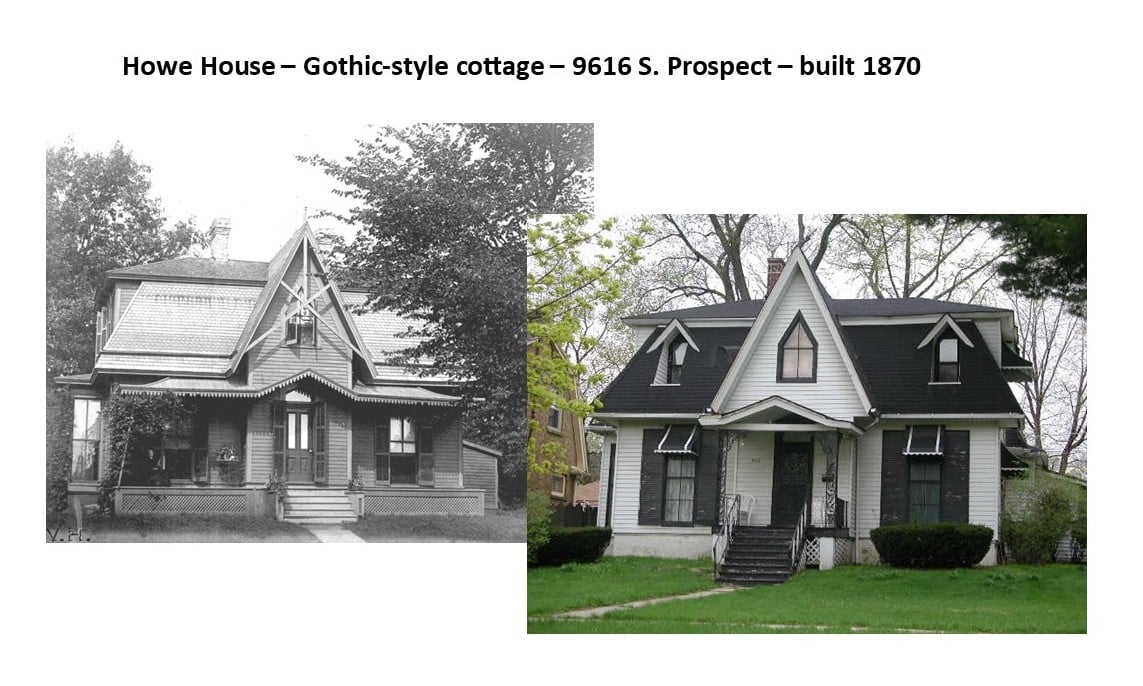
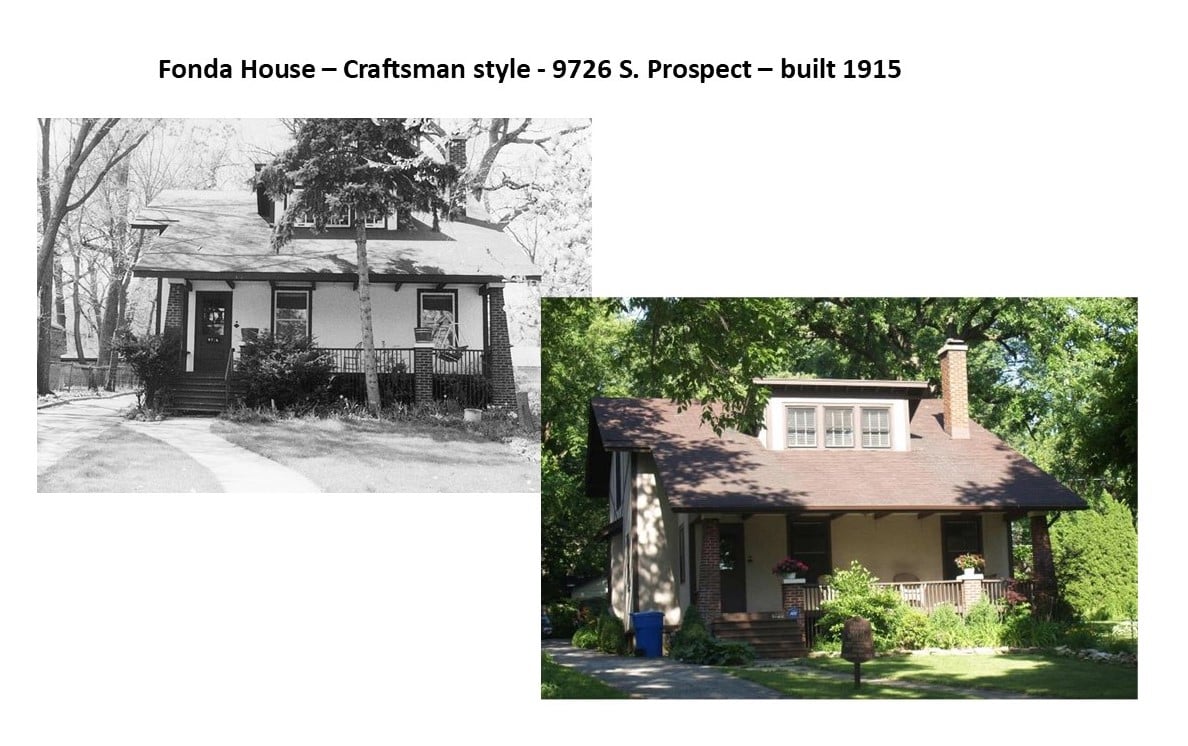
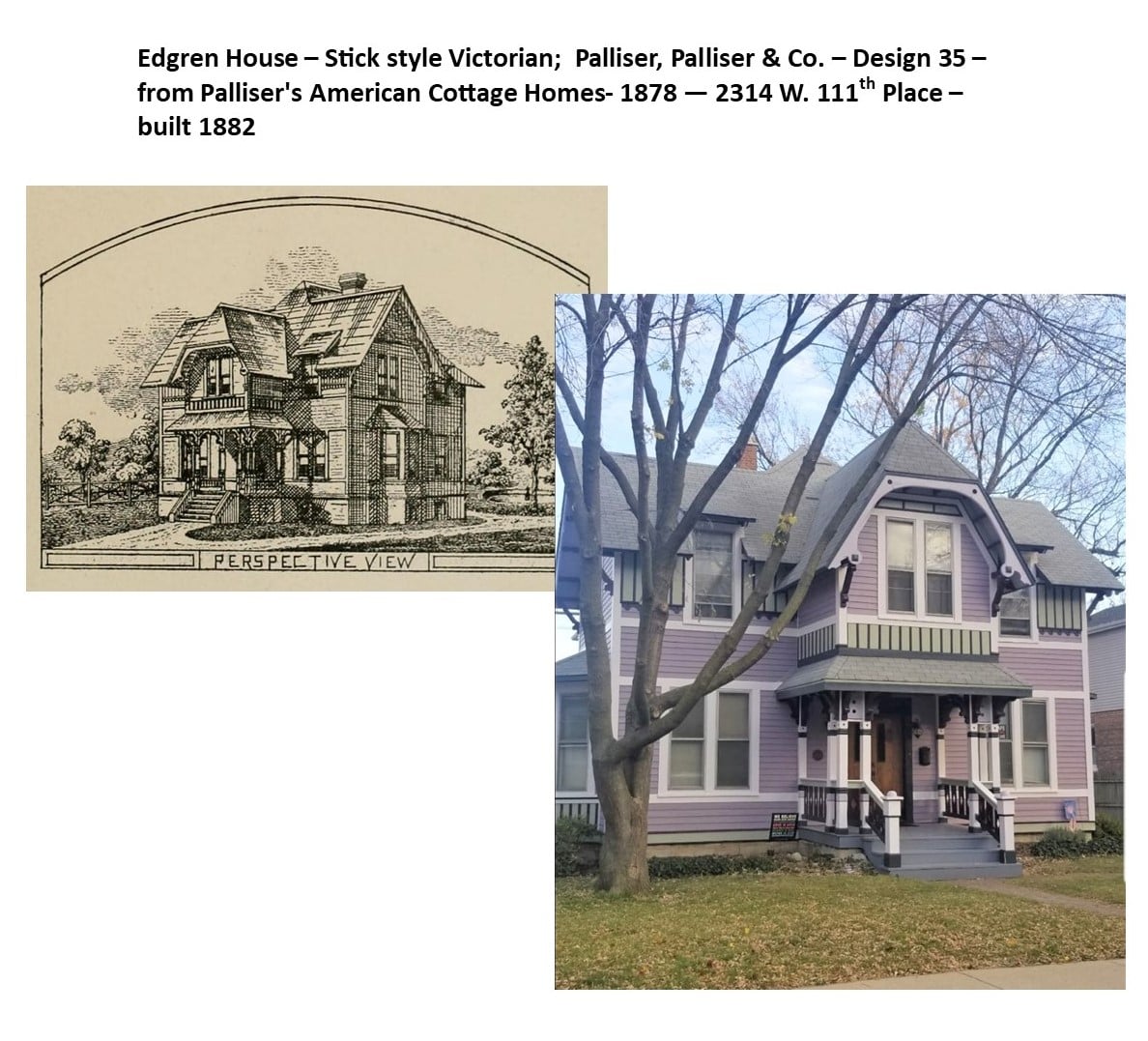
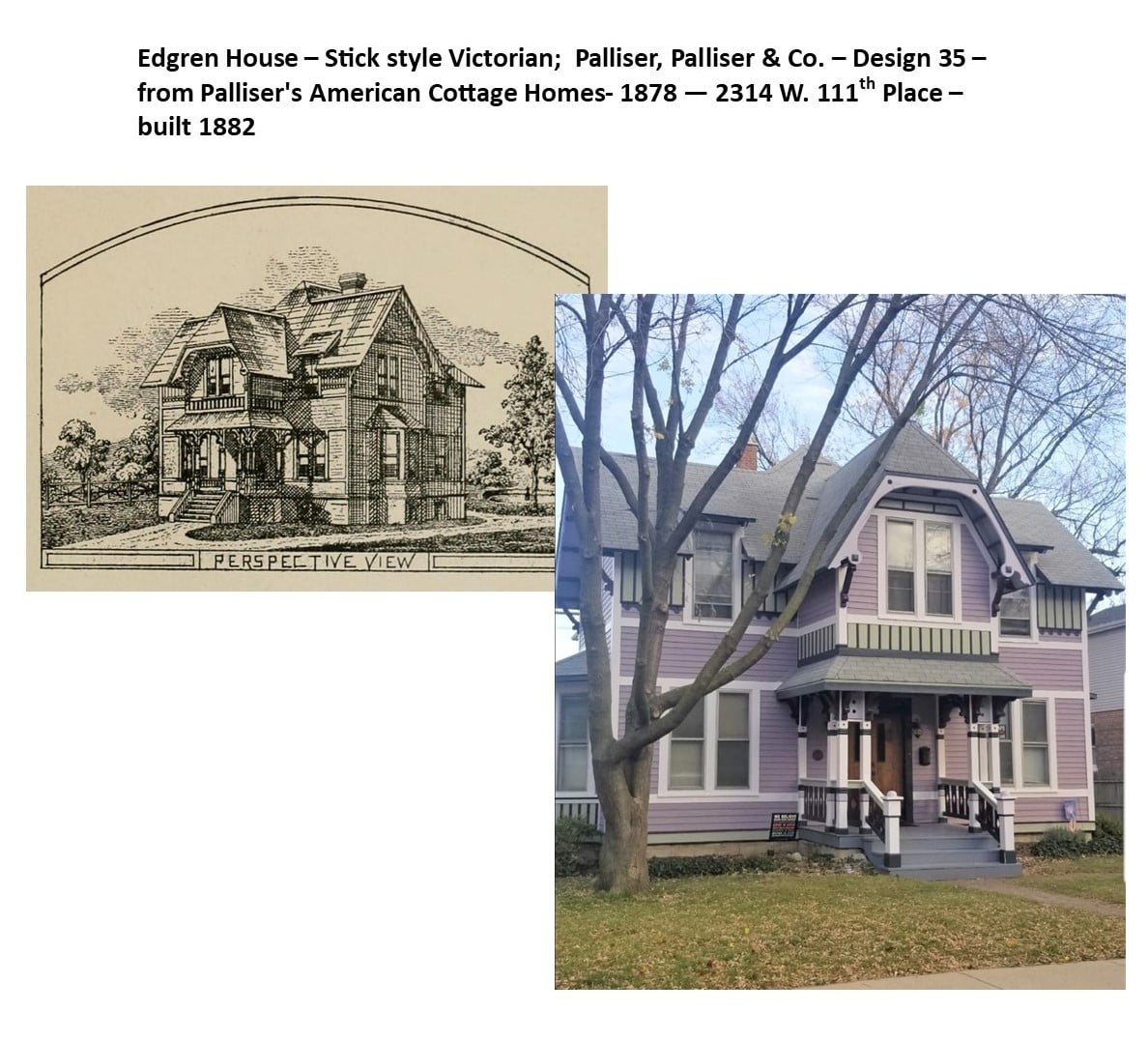
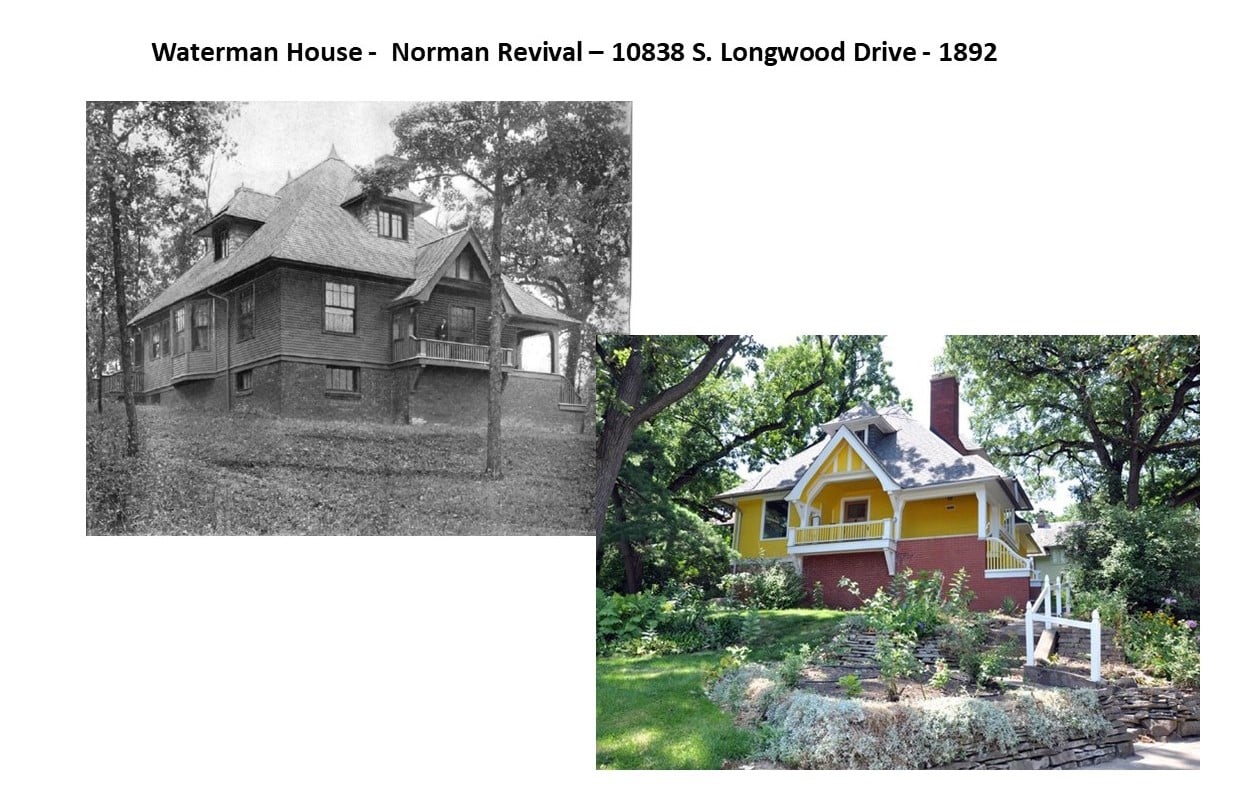
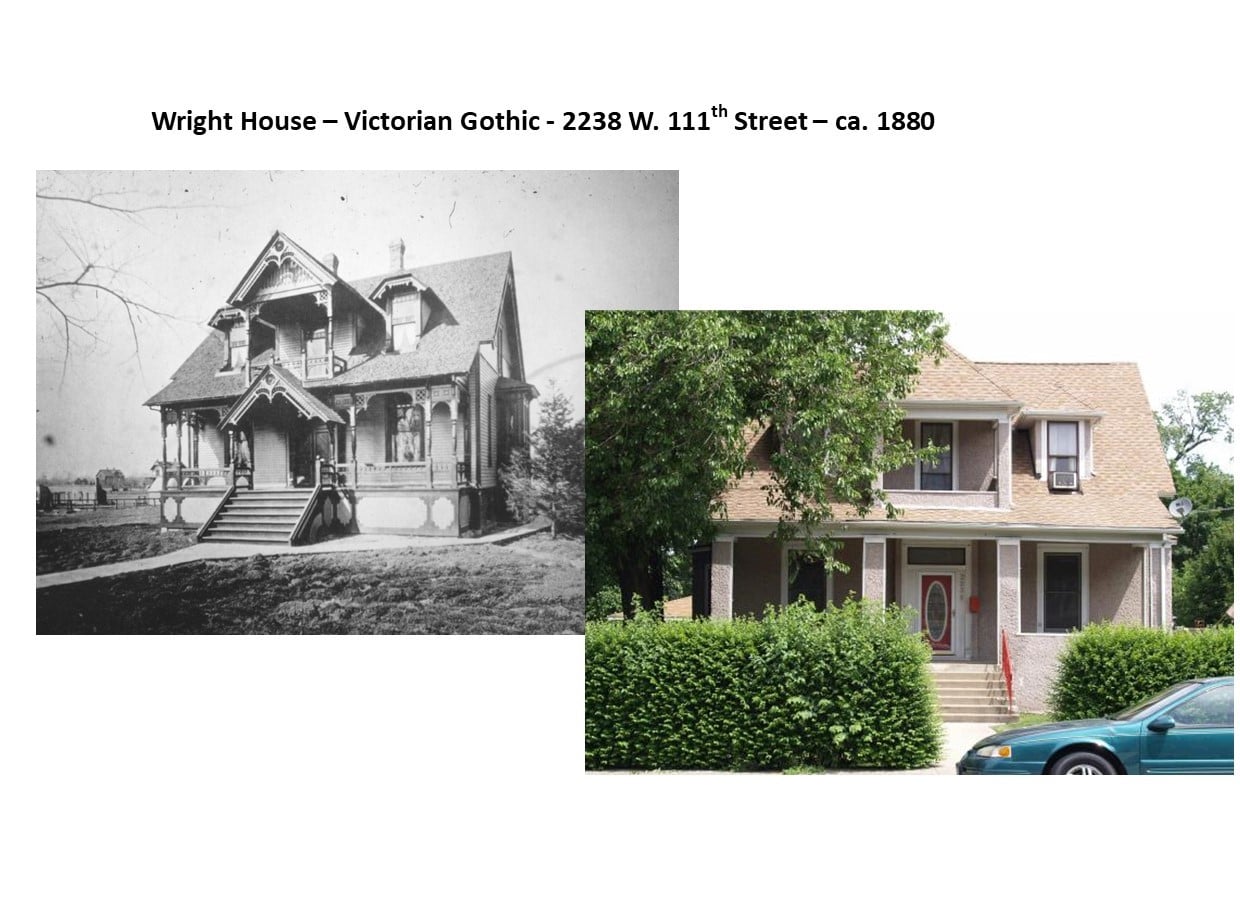
Here are some pictures of well-known cottages in Beverly and Morgan Park displaying a variety of architecture styles. Both the original as well as a more current view of each cottage is shown. Some have been substantially altered but the charm is still there.
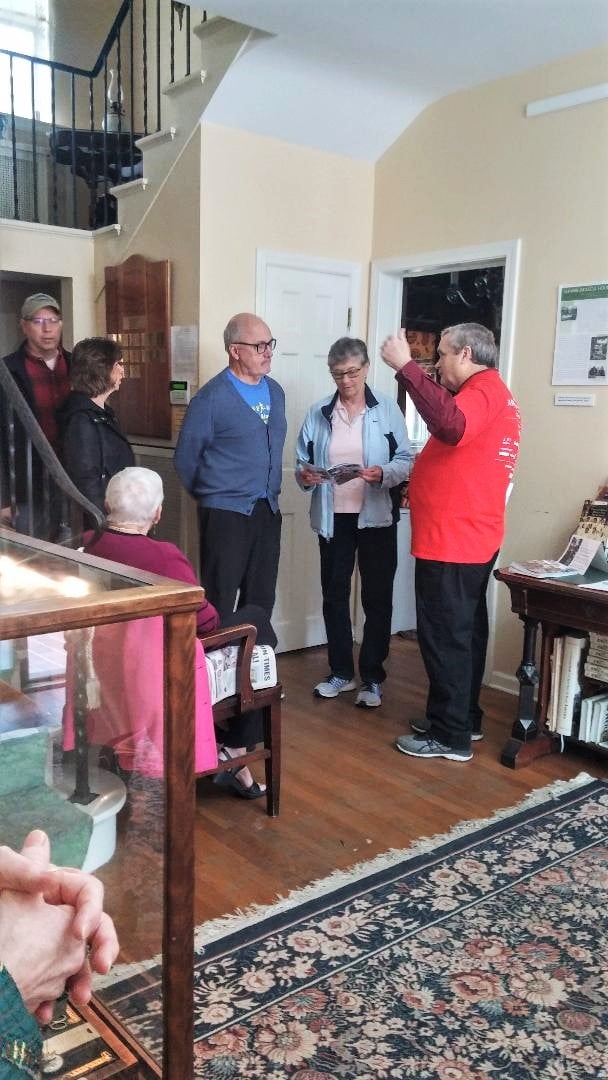
The Ridge Historical Society is saddened to learn of the death of Board member Kevin Bourke. Kevin was a very enthusiastic supporter of RHS and local history and always willing to step up and lend a hand. Here he is at RHS during Open House Chicago (OHC) in September of 2019, greeting guests and discussing RHS, the Graver-Driscoll House, and local history. Kevin is in the red OHC t-shirt.
Here is a link to his obituary. RIP and thank you, Kevin. Our sincerest condolences to his family.
https://www.legacy.com/obituaries/name/kevin-bourke-obituary?pid=197788738
The Ridge Historical Society
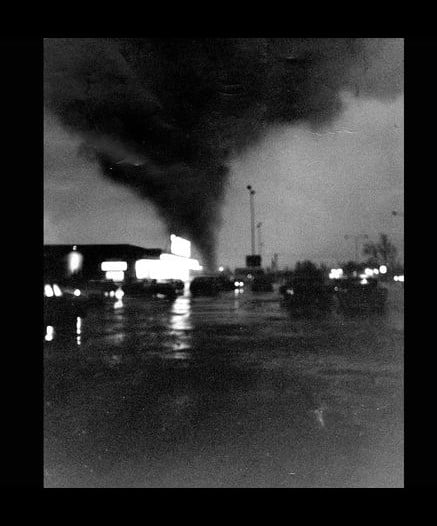
Anniversary of Tornado
By Carol Flynn
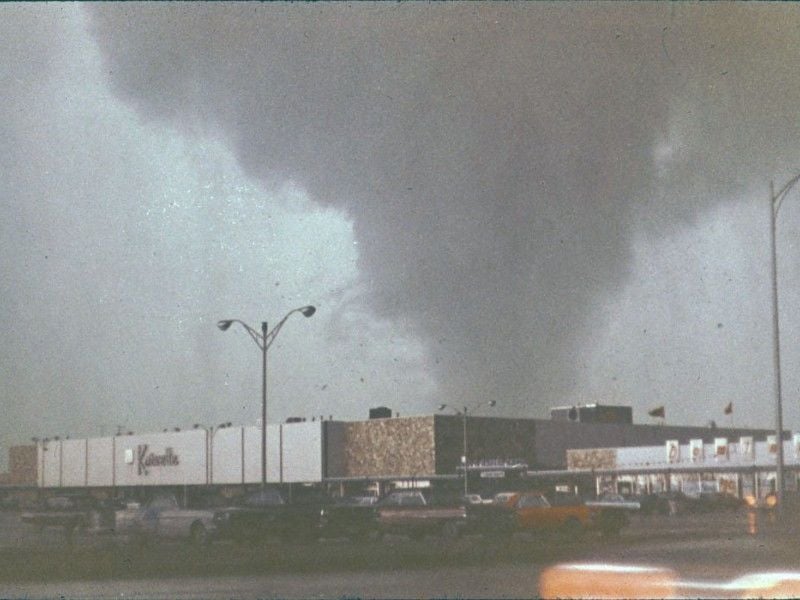
On April 21, 1967, the deadliest tornado in the history of northern Illinois came through the area right at evening rush hour.
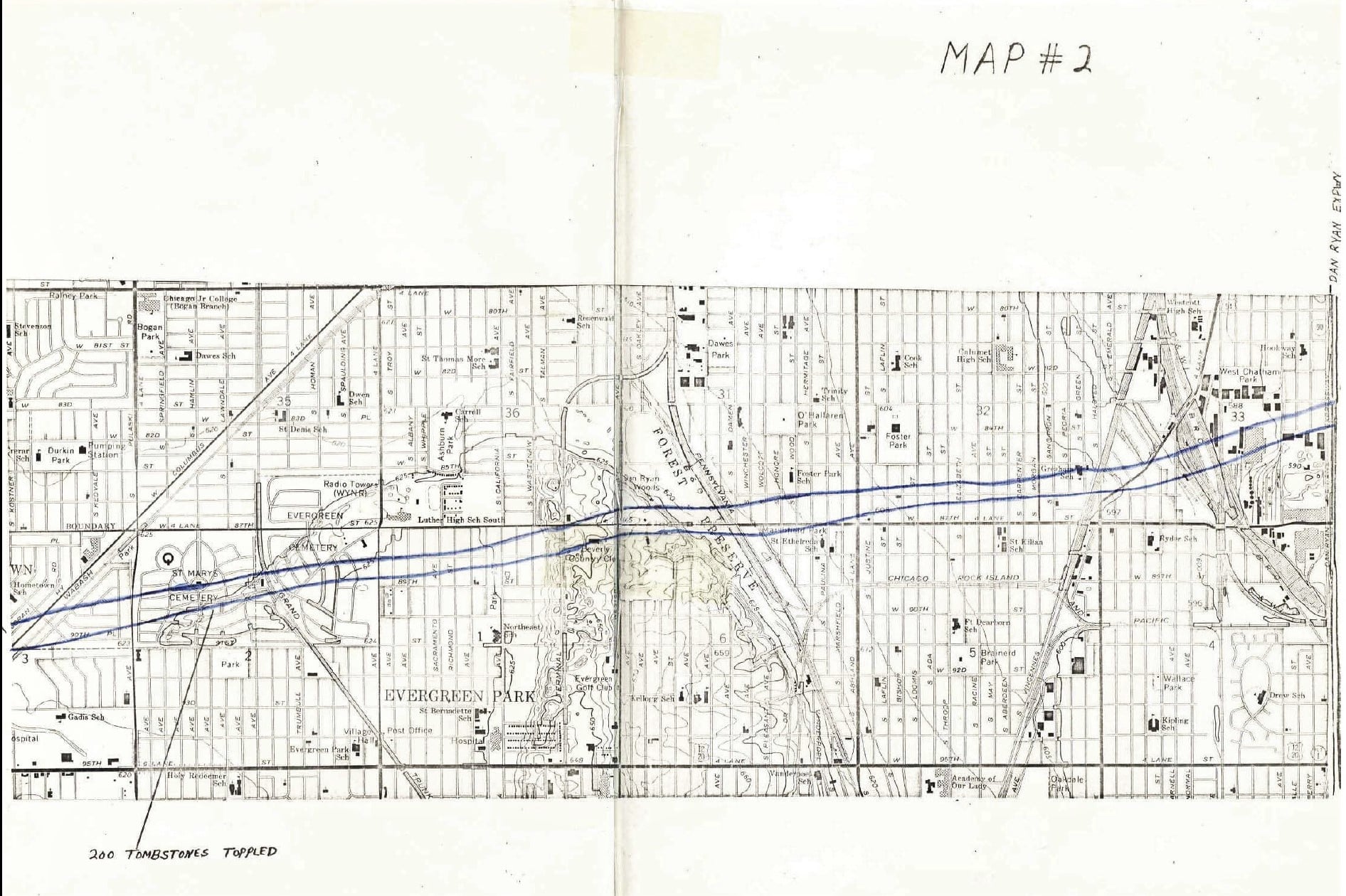
At 5:24 p.m., the twister touched down in Palos Hills by 106th Street and 88th Avenue where Moraine Valley Community College is now, and started moving east-northeast. It reached its maximum size and intensity as it passed through Oak Lawn, Hometown and Evergreen Park.
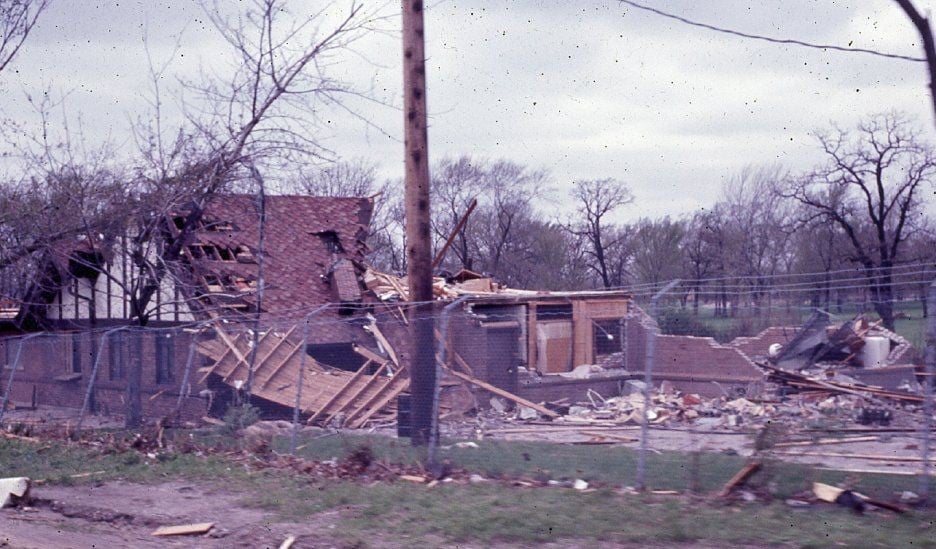
The funnel continued along 87th Street, destroying a building at the Beverly Country Club, and tore through Dan Ryan Woods, uprooting and damaging hundreds of trees.
It continued northeast, weakening, until it moved into the lake as a waterspout at Rainbow Beach around 79th Street.
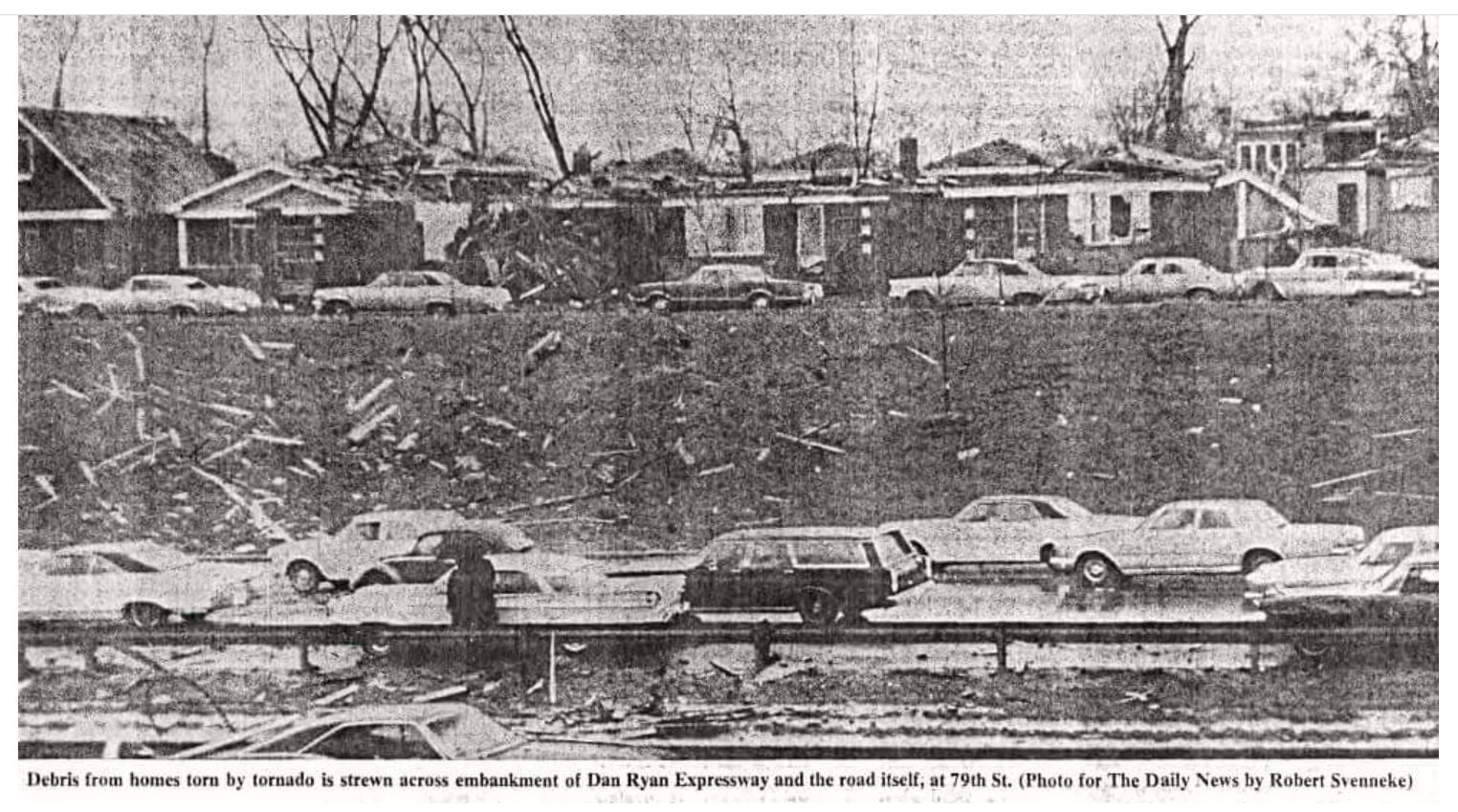
The tornado caused 33 fatalities and over 1,000 injuries, and more than $50 million in property damage. Beverly was largely spared because of the forest preserve’s location. Our sympathies continue to this day to be extended to the communities devasted by this natural disaster.
The Ridge Historical Society
National Jewish American Heritage Month
May 2021
By Carol Flynn
May is a busy month for recognitions – nurses, teachers, and police are all honored during this month.
May is also National Jewish American Heritage Month.
The Ridge was home to a thriving Jewish American community and there was once a Jewish synagogue in North Beverly.
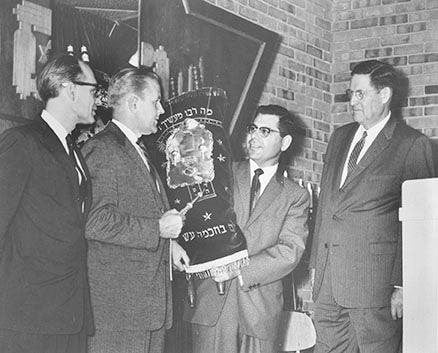
The following is from the RHS newsletter, adapted from “Beth Torah: The Congregation That Held Services in a Castle,” by Errol Magidson, published in Chicago Jewish History, Vol. 38, No. 4, Fall 2014, a publication of the Chicago Jewish Historical Society.
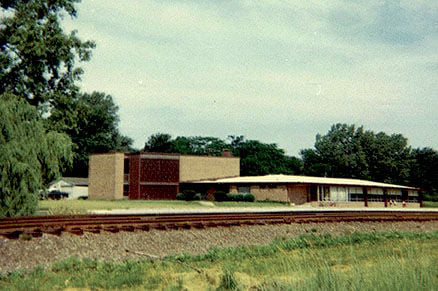
“In 1953, Jews living on the far southwest side of Chicago and nearby suburbs established a Reform congregation which they named Beth Torah, or Temple of Instruction. All but one of the officers lived in the Beverly/Morgan Park community. In their early years, they held services at the [Beverly Unitarian Church in] Givins Beverly Castle, Trinity Methodist Church, and Bethany Union Church, and in members’ homes. Although small, the congregation was active with classes, a youth group, membership and fund drives, and social events like hay rides and fashion shows.
“A major goal of the congregation was to have its own synagogue. Funds were raised, land was purchased at 93rd Street and Vanderpoel Avenue, and a building was constructed.
"Beth Torah Synagogue opened in October 1961. But by 1974, due to an aging membership and a decline in the number of Jewish families in the Beverly area, a number of the Beth Torah congregants opted to affiliate with another congregation in Olympia Fields.
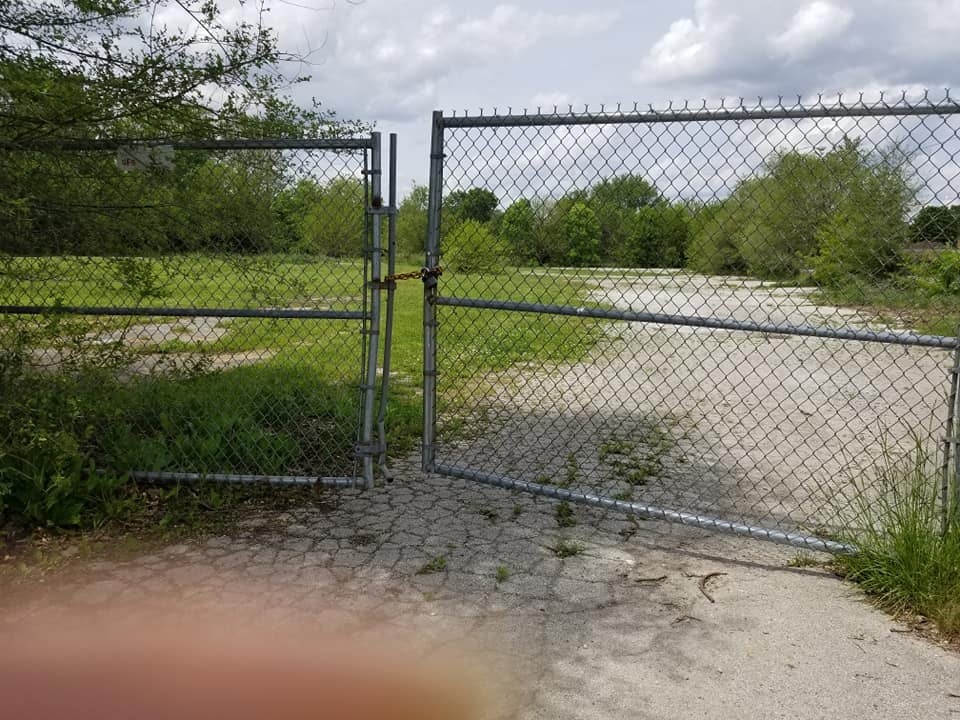
“The Beth Torah Synagogue was purchased by the Chicago Board of Education in 1974 and used for classrooms for a few years. Eventually, the building was torn down but the foundation still remains.”
The weed-choked vacant lot at 93rd Street and Vanderpoel Avenue is all that is left of the synagogue – even vacant lots have interesting histories! There are, of course, Jewish residents on the Ridge, active participants in neighborhood affairs, members of the ever-diverse population that calls this community home.
With thanks to Errol Magidson.
Ridge Historical Society
June 2021
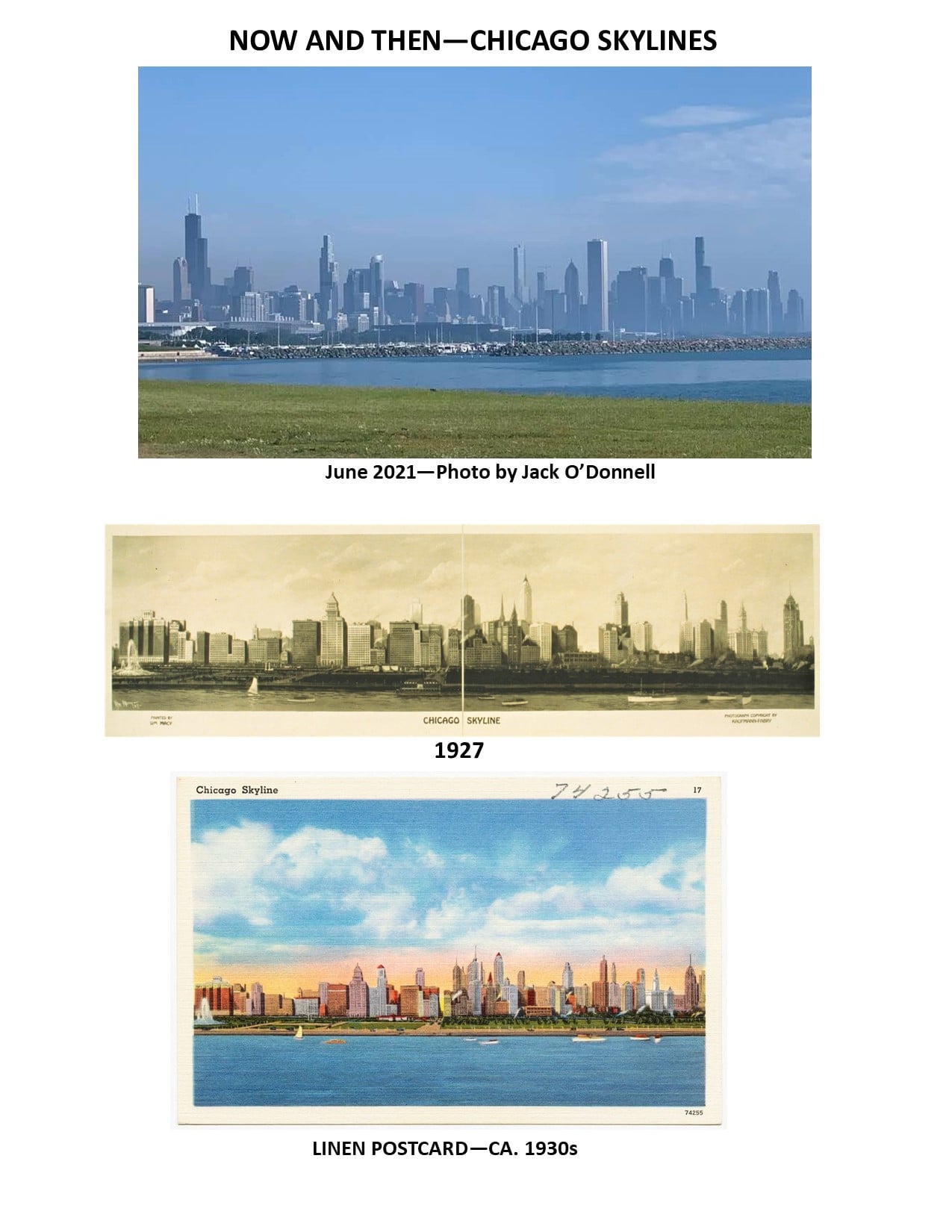
Thank you to Jack ODonnell for the wonderful picture of today's Chicago timeline.
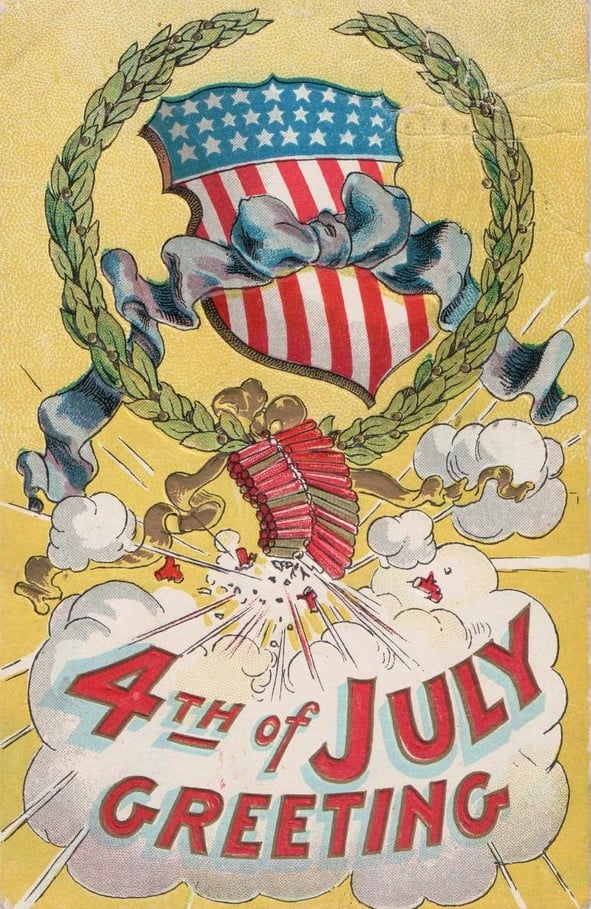
Happy Fourth of July from the Ridge Historical Society!
How did the residents of the Ridge celebrate one hundred years ago? According to the July 8, 1921 Englewood Times newspaper and our intrepid reporter Mrs. Pauline F. Palmer:
“The Ridge enjoyed a corking good Fourth and the field park and swimming pool at 97th Street and Longwood Drive was crowded all day. The baseball games and water sports attracted much attention. Many guests from adjoining suburbs were present and were pleased at the comfortable pleasures enjoyed by all.”
Mrs. Palmer is referring to the original Ridge Park, which was established in 1911 – 12. The architect John Todd Hetherington, who designed many fine homes in Beverly and Morgan Park, was a member of the Ridge Park commissioners. The board persuaded Hetherington to design the park. His creation included a small field house, outdoor swimming pool, running track and sports fields, surrounded by trees, shrubbery, flowers and walks.
In 1929, Hetherington, now in partnership with his son Murray D. Hetherington, designed the current field house, which enclosed the pool, and used the original fieldhouse as the auditorium.
And in case anyone thinks that porch and lawn concerts are anything new, because of the pandemic, that is not so.
Mrs. Palmer also reported that for the holiday one hundred years ago:
“About one hundred guests enjoyed the out-door street dance and sing at 94th Street and Pleasant Avenue, given by Miss Edna Wiggins of 9372 Longwood Drive on Tuesday evening. A four-piece orchestra furnished the music and the young people all enjoyed the novel way in which the party had been planned. Mr. and Mrs. A. B. Christian, 9300 Longwood Drive, and Mrs. Mitchell of Memphis, Tennessee, chaperoned the dance. Refreshments were served.”