
Explore the RHS Facebook Archives, a rich repository of local history written by Carol Flynn. For two decades, Carol brought a deeply dedicated voice to public education at RHS. Her role as Facebook administrator through mid-2025 naturally extended her prolific research into meticulously detailed articles, most notably her multi-part historical series posts. Today, Carol continues her local history writing for The Beverly Review and other outlets.
National Library Week
The Ridge Historical Society
National Library Week
By Carol Flynn
April 23 to 29 is National Library Week, and this year’s theme is “There’s More to the Story.” The theme refers to all of the benefits that libraires offer in addition to books, including programming that brings communities together, lending items like museum passes and musical instruments, helping people enhance their literacy skills, and now, offering technology services.
That theme can be expanded to include that there is always more to the historical stories posted on this Facebook page, also. Here’s some of the stories behind the libraries on the Ridge.
According to “The First Hundred Years – A Story of Blue Island 1835-1935” by John H. Volp, books and magazines were not plentiful in the early days of settlement on the Ridge, the 1840s-50s. Available reading material consisted of the books each family brought along when they settled here, and occasional copies of Chicago newspapers that found their way to the Blue Island.
One scholarly gentleman in the Village of Blue Island, Thomas McClintock, had a large collection of better books on history and travel locations. Known for his philanthropic ways, he readily agreed to permit the loan of his books to the villagers when requested to do so by a village committee.
A system was worked out to allow people to borrow books for a certain number of days at a slight fee, creating Blue Island’s first circulating library. There were about one hundred books available.
In 1854, a new school was built, and a fine library was established, with 800 volumes on history, science, travel, and fiction. The principal, Professor Rodney Welch, saw to it that there was no “trash” in the collection. The collection was available to the villagers.
According to the Blue Island Historical Society, in the 1870s, a formal library was opened in a storefront on Western Avenue.
In 1890, the Current Topics Club, a forerunner of the Blue Island Woman’s Club, raised money to expand the library, and the Blue Island Library Association was chartered. The library had hired a librarian and moved to a larger location, and the collection had grown to 1,600 books, when a fire destroyed the central business district, including the library, in 1896.
All that was left were the 84 books out on loan at the time. Within a week, the library had reopened in a private home, and Blue Islanders contributed books, equipment, and funding to reestablish the library.
In 1897, the voters of Blue Island approved the establishment of a free public library, with a public assessment. The ground floor of the Village Hall was remodeled for use as the library. The large, comfortable reading room became a popular place.
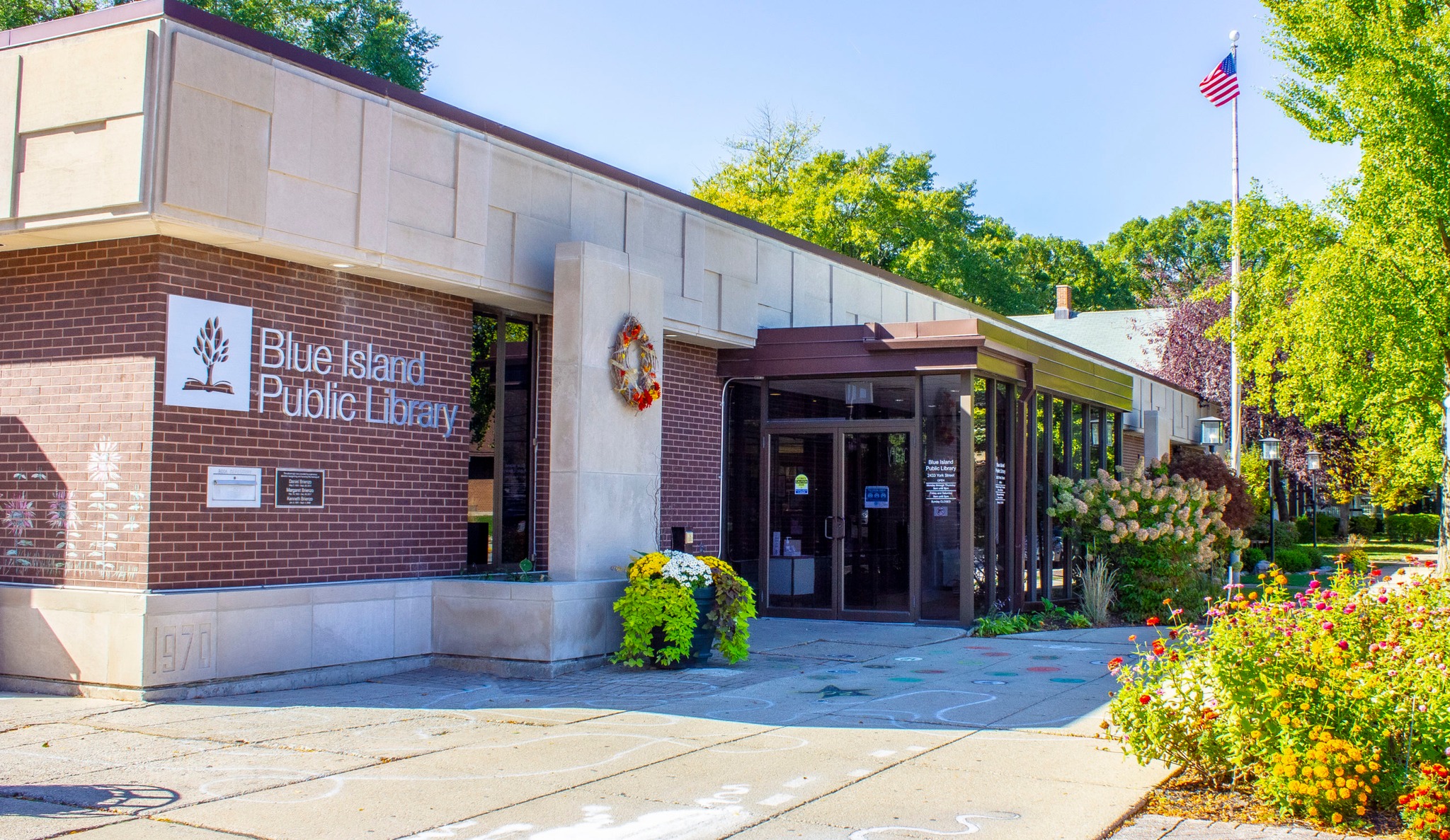
In 1902, the city purchased the property on the south side of York Street from J. P. Young for the site of a new public library. That is the site the Blue Island Public Library sits on today.
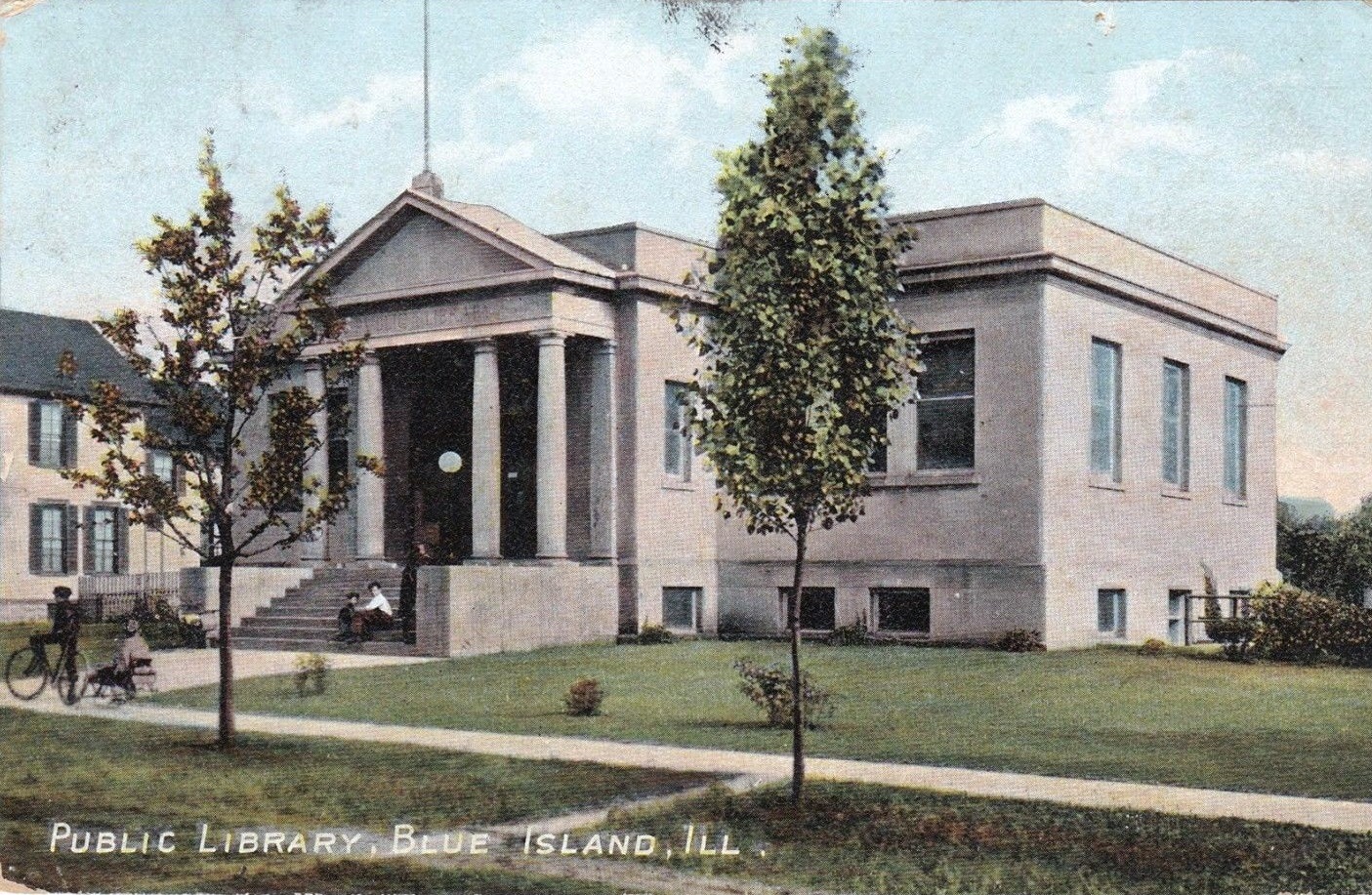
Andrew Carnegie, the wealthy industrialist and philanthropist, was financing the building of public libraries in municipalities that committed land and funding for this purpose. Blue Island accepted his offer to build a grand library of stone with marble accents and oak paneled walls on the York Street site. This building was referred to as the “Carnegie” by Blue Islanders.
This original “classical” library building was replaced by the current “modern” one in 1969.
Next post: The Walker Library is founded in Morgan Park.
The Ridge Historical Society
National Library Week – The Walker Branch Library
By Carol Flynn
April 23 to 29 was National Library Week, and we’re looking at the history of the libraries on the Ridge. The previous post covered the first library on the Ridge, the Blue Island Public Library. This post will look at the Walker Branch Library in Morgan Park.
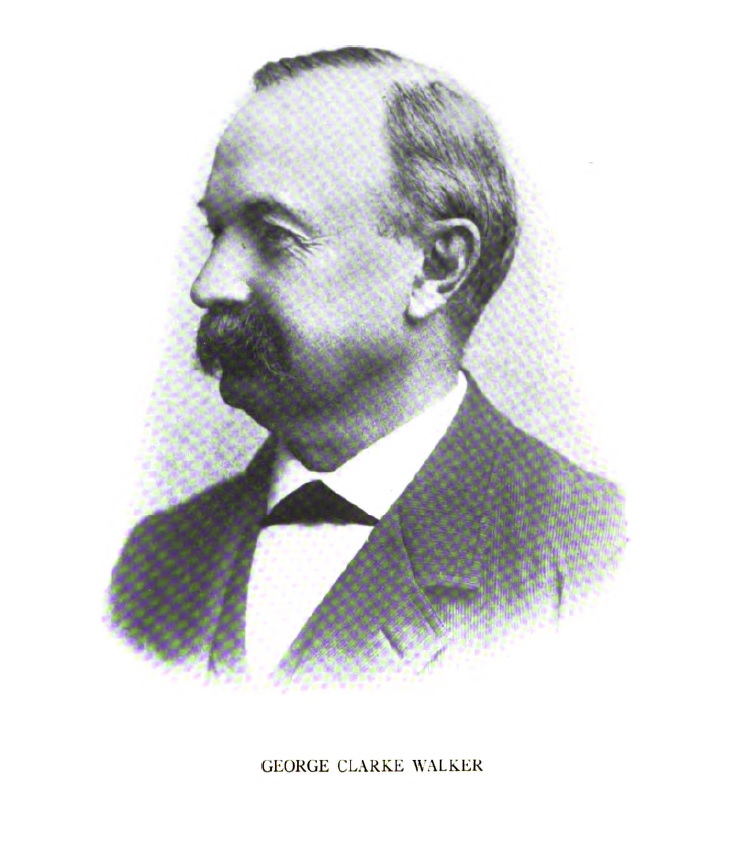
George Clarke Walker (1835 – 1905), a prominent merchant and financier, gave Morgan Park its library.
Walker was born in New York, and came to Chicago at the age of 12. His father rose to prominence in Chicago as a grain merchant who helped establish the Board of Trade, the “old” University of Chicago, and the city’s first railroads. Walker took after his father with his acumen for business and community development. He was a founder of the Chicago Academy of Sciences, the Illinois Humane Society, and the South Park system (which merged into the Chicago Park District).
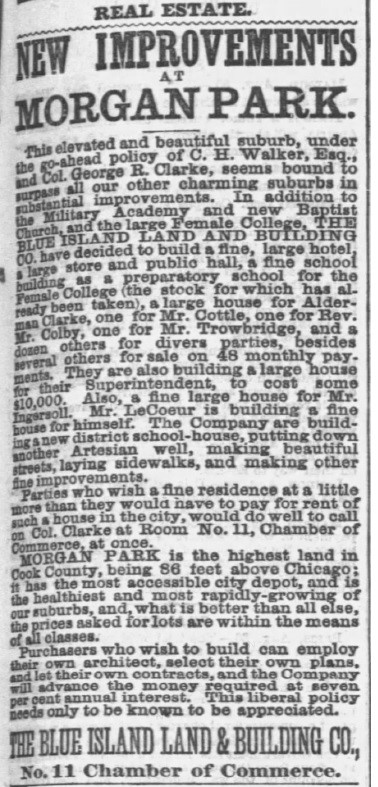
In 1861, Walker organized the Blue Island Land and Building Company (BILBC), which was deemed “one of the great business undertakings of his life” and which “occupied nearly half his life.”
In 1869, BILBC bought much of the land of the original Thomas Morgan estate for development. They planned a community they called “Morgan Park” and hired Englishman Thomas F. Nichols to lay out the land to look like an English village. Beginning in 1873, the development was marketed to the public.
Morgan Park was positioned as an education, religious, and temperance community, and a good library was a necessity. In 1889, the Morgan Park Library Association was formed, headed by three of the leading residents, Isaac S. Blackwelder, Frank P. Silva, and Charles O. Ten Broeke. Other trustees included Dr. William H. German and Austin W. Wiswell. Subscriptions lists, or memberships, were started, and the growing community responded – there were 121 subscriptions within a few months. Many early community libraries were established as private undertakings, financed by membership fees and donations.
Although Walker never lived in Morgan Park, he was heavily invested in the area and supportive of improvements, and was behind the plans for the library. He personally financed the building of the library.
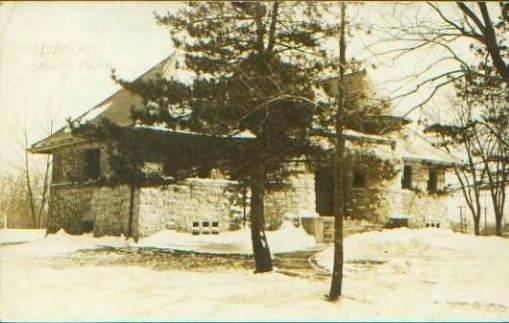
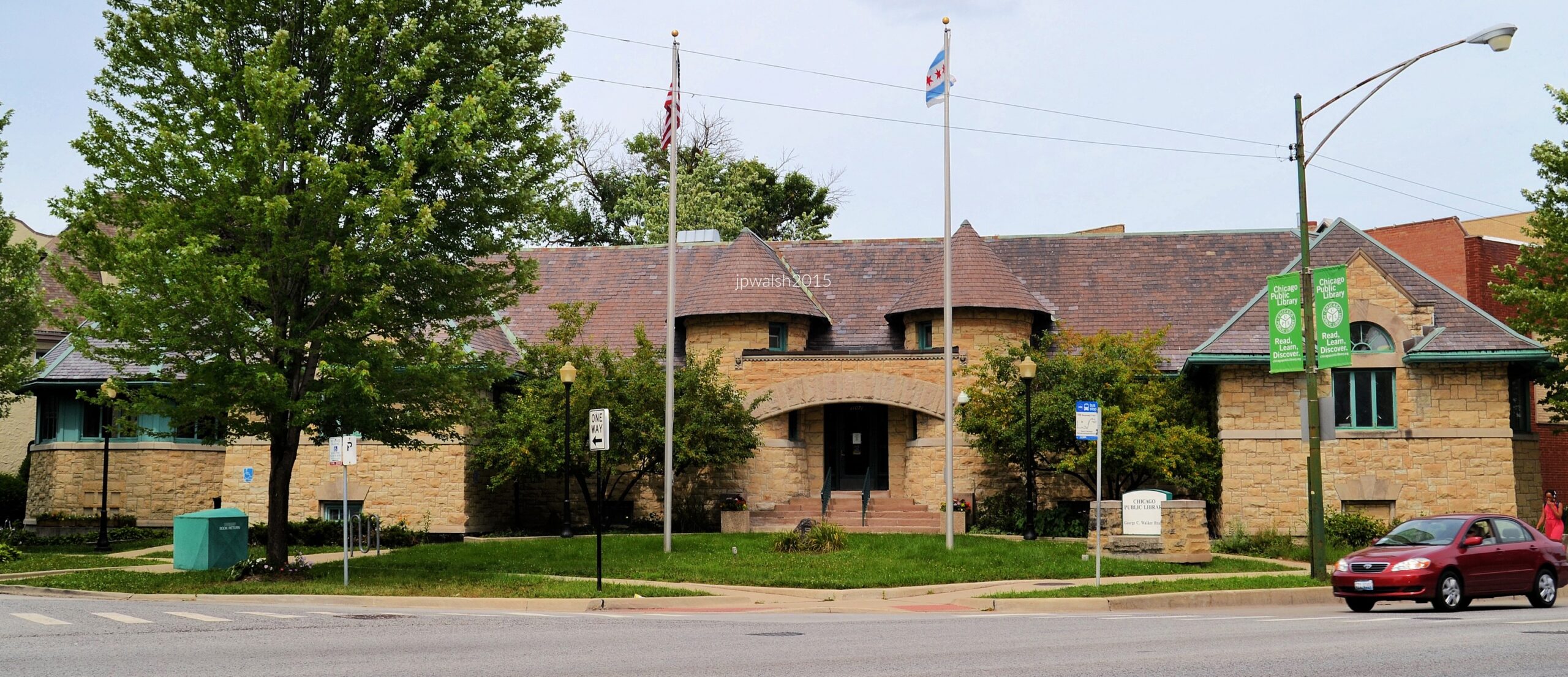
Walker hired architect Charles Sumner Frost to design the plans, and the Romanesque-style structure was built in 1889-90 from limestone quarried in Joliet. The builder was M.E. Baldwin. The building cost Walker about $10,000, quite a sum for the day. Walker also donated the beginnings of the book collection. The library opened on April 22, 1890.
Miss Mills was the first librarian. She was known for her attention to detail and accurate record keeping. The library got off to a good start, with about a thousand visitors in the first six months.
The library became part of the Chicago Public Library (CPL) system when Morgan Park annexed to the City of Chicago in 1914. The original exterior limestone walls are the oldest structure owned by the CPL.
The library facilities were allowed to be used for other purposes. In its very first year, for example, the Presbyterian Association of Morgan Park held its services there. During World War II, the library was used as the headquarters for local defense operations.
The building is a contributing structure to the Ridge Historic District on the National Register of Historic Places. The additions were built in 1929 -1933 and major renovations went on in 1995.
The Walker Branch Library is located at 111th Street and Hoyne Avenue.
The Ridge Historical Society
National Library Week – Mount Greenwood and Beverly Libraries
By Carol Flynn
Wrapping up National Library Week, the other two libraries on the Ridge, Mount Greenwood and Beverly, are much more recent additions.
Mount Greenwood annexed to the City of Chicago in 1927. Its early years were served by the Walker Branch Library in Morgan Park.
The population continued to grow, however, and in 1960, the Chicago Public Library (CPL) opened a sub-branch of a library in a store front in Mount Greenwood that was open for five hours per day.
In 1964, the CPL opened a full branch in a one-story building, a storefront at 10961 S. Kedzie Avenue. At the time, the CPL was finding it more economical to rent and adapt store fronts for libraries than to build new buildings. This branch consisted of reading rooms for adults and children, but no meeting or display rooms were available. The branch was very busy, and offered Saturday story hours and summer reading programs.
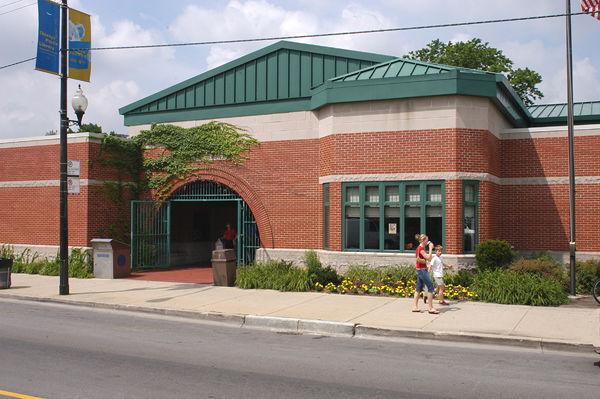
In 1991, Mount Greenwood received a newly built library, the one now in use at 11010 S. Kedzie.
The Beverly Branch Library also started as a storefront library to serve the Beverly and Brainerd areas, replacing a mobile library traveling unit that visited various locations. For instance, on October 22, 1961, the local newspaper announced the mobile library would be stationed at 95th and Charles Streets from 2:00 to 8:00 p.m.
In 1969, the CPL rented a vacant storefront at 2114-16 West 95th Street that was renovated into a library, with 30,000 newly purchased books. When the library finally opened its doors in May of 1970, over 4,000 books and other materials were borrowed in the first three days. In about a decade, the library outgrew this building. The location is now Top Notch Beefburgers.
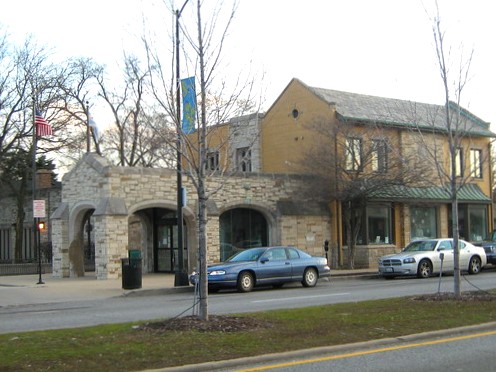
The Beverly library became part of local folklore when it moved into an old funeral parlor in 1981. The CPL secured the existing building at 2121 West 95th Street to renovate into a new Beverly Branch Library. For decades, this building was the Beverly Chapel, then Lain and Son, funeral home. The renovations cost about $1.5 million, and the library opened in the spring of 1981.
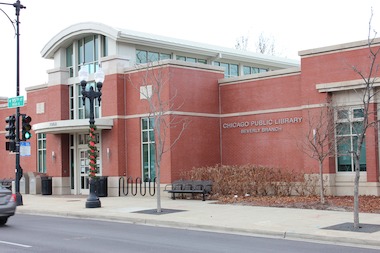
On June 8, 2009, a newly built Beverly Branch Library, the one in use today, opened at 1962 West 95th Street. According to CPL, the branch features environmentally sustainable construction as determined by the Leadership in Energy and Environmental Design (LEED) Green Building Rating System developed by the U.S. Green Building Council.