Explore the RHS Facebook Archives, a rich repository of local history written by Carol Flynn. For two decades, Carol brought a deeply dedicated voice to public education at RHS. Her role as Facebook administrator through mid-2025 naturally extended her prolific research into meticulously detailed articles, most notably her multi-part historical series posts. Today, Carol continues her local history writing for The Beverly Review and other outlets.
Natural History
From Ridge Historical Society
Part IV on the natural history
– Carol Flynn, RHS Communications
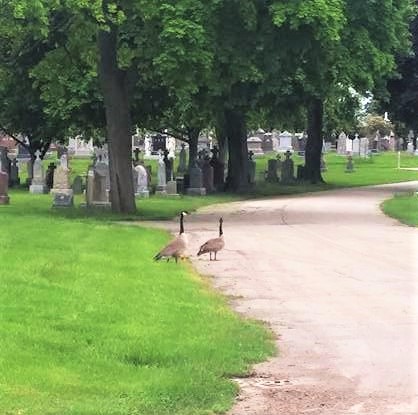
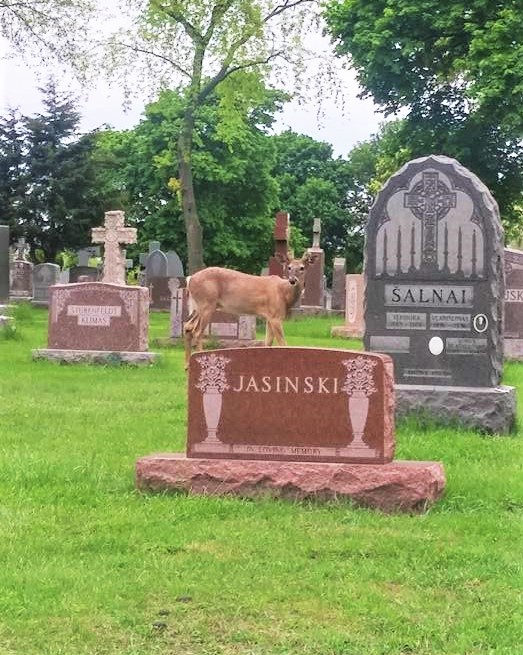
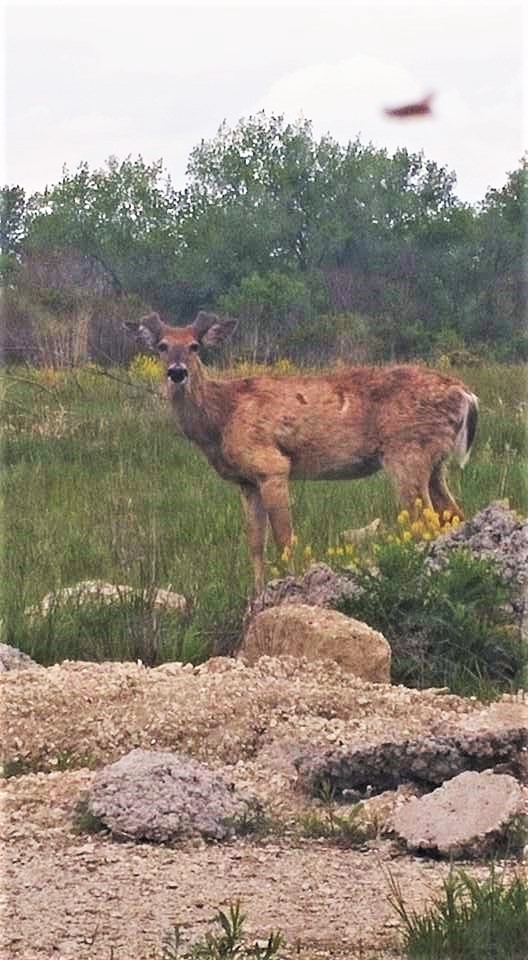
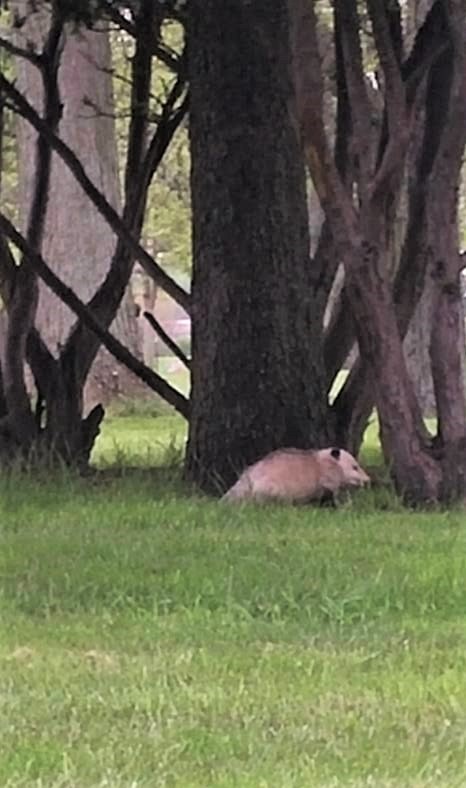
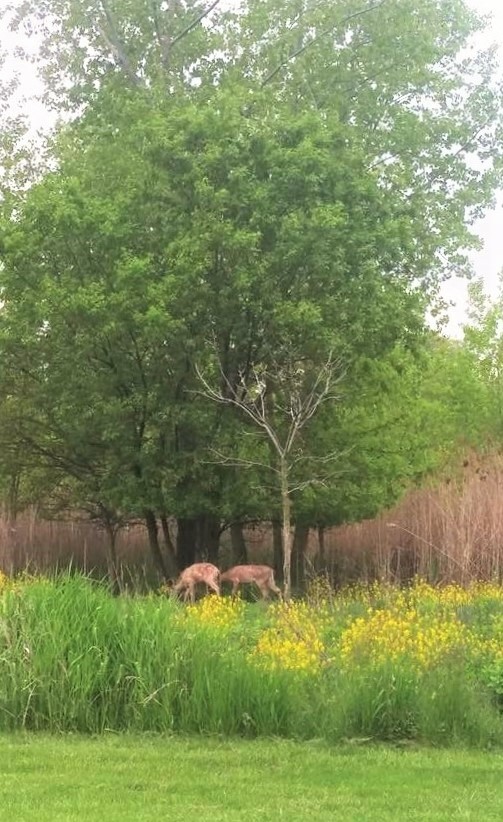
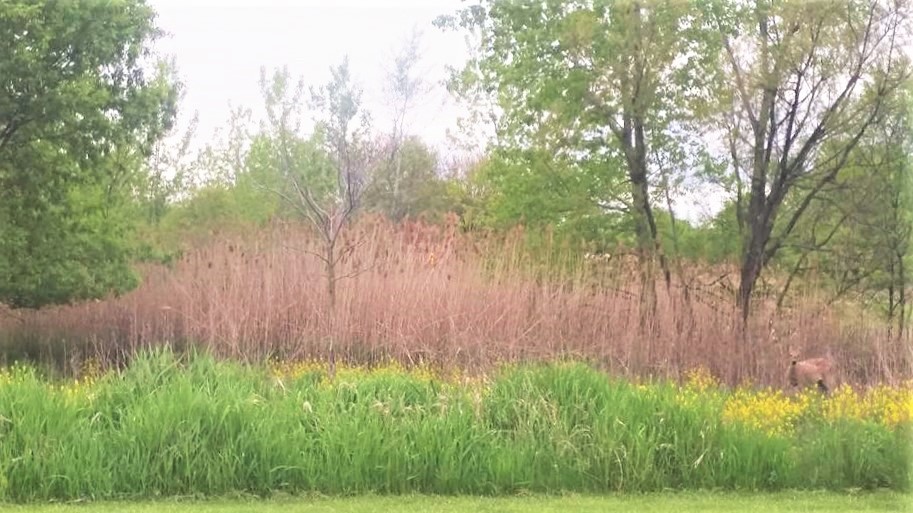
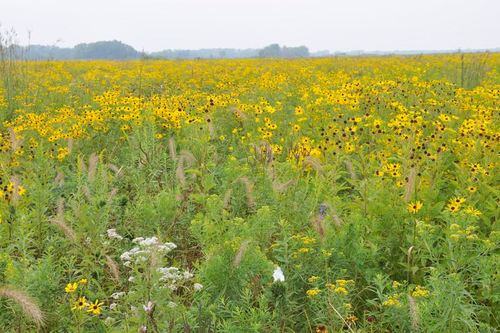
This is a little more about nature and wildlife on the Ridge to go along with this week's earlier posts. Some of the places to view the remnants of the "natural history" of the area are the local cemeteries, and they are home to a variety of wildlife.
This afternoon I drove through one of the cemeteries west of the Ridge on 111th Street and was able to capture these scenes.
From the Ridge Historical Society
Part III on the natural history
– Carol Flynn, RHS Communications
This is a continuation of W.W. Barnard’s history paper, which was a reminiscence written in 1894 of 50 years before, based on the stories he heard from family members.
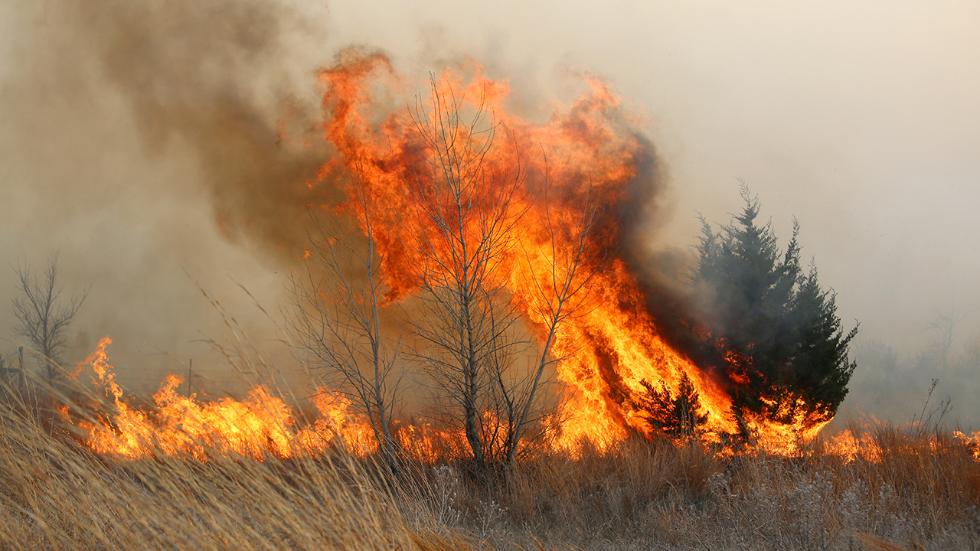
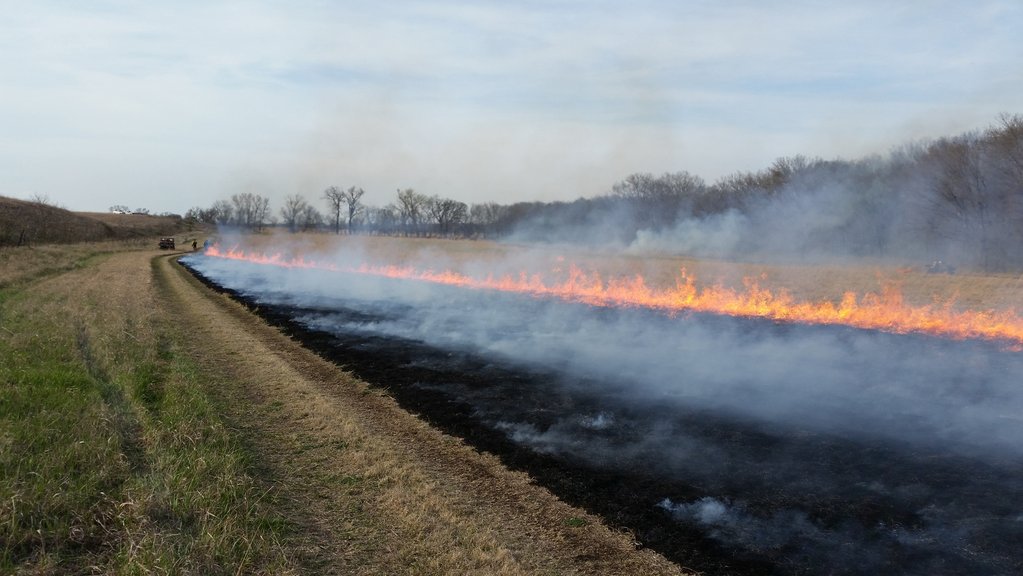
“Prairie fires were very frequent and much dreaded. In the afternoon of an autumn day of 1845 our family had their first experience with a prairie fire. The oldest son was sick in bed with the ague [malaria]. Grandmother with her four younger sons and 14 year old daughter went out to fight the flames, but Mary who was too small to help, remained at home, carrying water to her brother watching the fire. As she looked to the west and south she heard loud roaring and saw flames running 10 to12 feet high where they reached the tall weeds and extending as far as she could see. Eagerly she watched the family who were fighting the flames. They had nothing with which to plow and they could only set backfires and whip it with wet bags and brush. They fought heroically but were continually obliged to retreat. Nearer and nearer the house it came, but at last, when it came to the low grass only a few rods from the door the fighters conquered.”
In explanation, by late summer, the prairie grasses grew as tall as eight to ten feet high, and dried out as their growing cycle ended. This was the “dry season” which saw much less rain.
Fires started by various means, including lightning strikes and sometimes by the sun refracting off glass or metal left by wagons passing through. The Indians used controlled burning to aid in hunting. But many of the fires resulted from settlers’ carelessness or accidents, such as campfires and cooking fires that got out of control, ashes from a pipe, or sparks from a chimney. Once a fire started, it could spread very quickly.
Prairie fires benefit the ecosystem by burning off old growth and allowing renewal, however, they were very dangerous for the people settling in the area.
Barnard further tells us:
“It was the custom to plow around the houses and stacks [of hay] for protection against these fires. Sometimes two circles were plowed and the grass between them burned off, thus an effectual barrier was made. Dr. Egan, one of the early doctors of Chicago, asked one of the farmers the best way to protect his stacks from fire and was told to plow around the stacks and burn between. He followed the instructions by plowing several times around the stacks and then burning between them and the stacks, which resulted in his burning up his own hay.”
Perhaps there is a lesson here – maybe Dr. Egan should have stuck to doctoring and hired someone knowledgeable about the firebreak process to do the burning.
In the earliest years, wildlife was abundant. Deer was the largest prey and wolves the largest predators, although an occasional lynx or panther [cougar] or black bear was spotted that had wandered in from the more remote and wilder Palos area. Prairie chickens, pigeons, quail, rabbits, squirrels, raccoons, etc., kept tables well supplied with game.
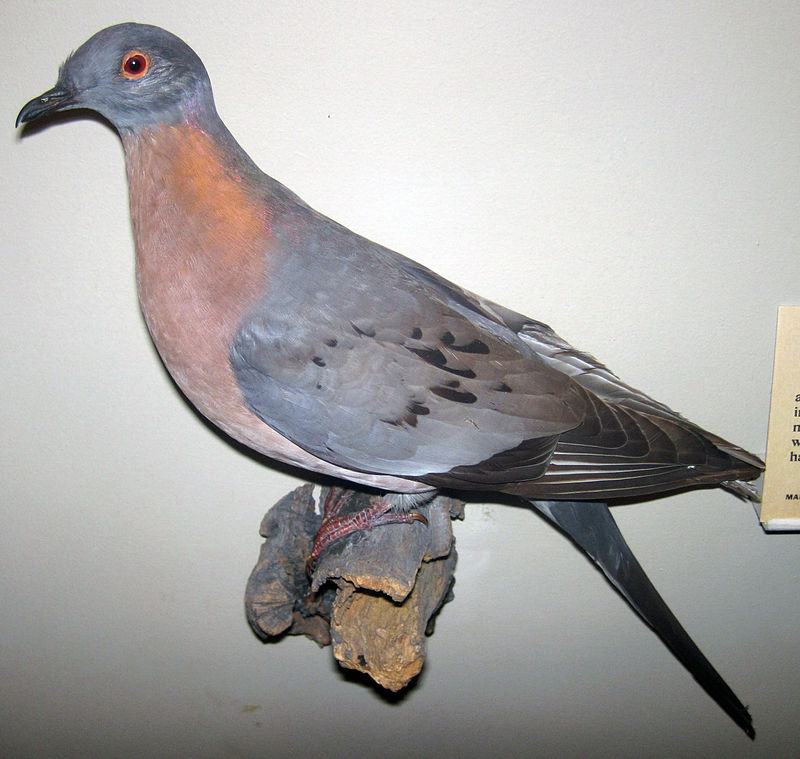
Flocks of millions of passenger pigeons darkened the skies. This was once the most abundant bird in North America. Hunting, and deforestation which resulted in loss of habitat, led to the species becoming totally extinct by the early 1900s. A picture of a mounted passenger pigeon in the Field Museum of Natural History is attached.
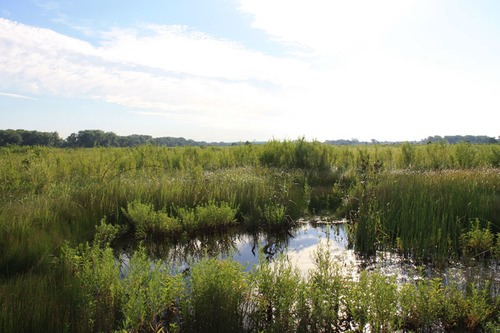
To the south, the Calumet River, and Stony Creek at the tip of the Ridge, had plentiful fish. Beaver, otters, mink and muskrats were abundant in the many sloughs that covered the area but were soon trapped out. Every fall wild rice beds in the sloughs attracted thousands upon thousands of water fowl. The reeds and cattails were taller than men. Hunting in the sloughs was dangerous; it was easy to get lost and mired in the mud. Many years, hunters disappeared.
The “Morgan Boys,” as W.W. Barnard’s uncles always called Thomas Morgan’s sons, kept a pack of greyhounds, which their father had brought over from England on his private ship. They led hunting parties to bring down deer. Hunting parties also chased down the wolves. The women of the pioneer families rode on these hunts, and many of them were better horsemen and shooters than the men.
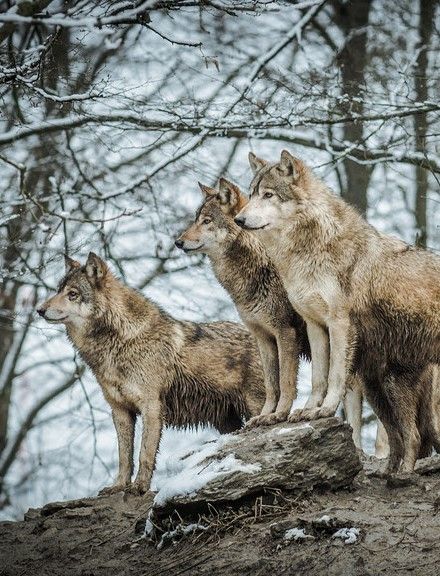
The settlers shared the prairie with the wolves. Barnard wrote, "At night the howl of the wolf filled the air, but this occasioned no alarms." The wolves generally left the humans alone, although there are some stories of hungry wolf packs killing lone humans, especially during winter. Livestock was another matter. Settlers killed off the wolves to protect their valuable cattle. A picture of timber wolves, also called gray wolves, is attached.
Today, a number of foxes are evident in the area. They probably would not have been here much back then, they would have avoided any area dominated by the much larger wolves. The same with coyotes. The eradication of the wolves in the mid-1800s allowed smaller predators to move into the area and take over the wolves’ natural niche.
Located south of Chicago is the Midewin National Tallgrass Prairie, a restoration of 20,000 acres of natural prairie and wetlands. A visit there shows us what the land around the Ridge looked like 150+ years ago when the first settlers moved in.
The next installment will answer some questions that have come in from these posts.
From the Ridge Historical Society:
Part II – On the “natural history” of the area around the Ridge.
Yesterday we talked about the prairie wetlands to the east of the Ridge. Here are a few more descriptive comments from the Barnard family, who settled here in the 1840s:
“On the place just west of our present school house [likely just northeast of 103rd and Vincennes] jointed blue grass and pea vine grew together and were so dense and thickly interlaced that snakes ran along the top of them.
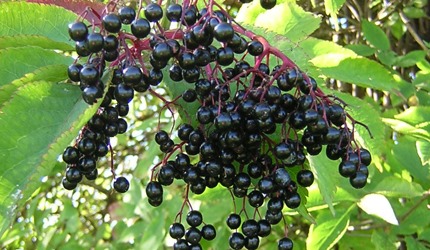
“Where the fires had swept the ground clean of the course growths the more delicate varieties of prairie flowers, phlox, shooting stars, violets, etc., literally covered the earth with varied and beautiful flowers as the grass covers with green, a profusion of bloom of which we have no adequate conception. The orchid family was represented by several varieties of lady slippers, of which great masses showed their pink and white or yellow heads under the trees at the edge of the groves. Wild fruits were abundant. West Pullman was then a huckleberry patch [similar to blueberries, see picture]. Wild strawberries grew thickest on the prairie east of Prospect…. Blackberries were thick on almost all of the ridges. Plums were plenty. Hazelnuts were found, but the hickory trees were too small to bear the abundant supply which we enjoyed in our childhood.”
These descriptions conjure up images of a Garden of Eden, from abundant fruits to snakes.
But there was a dark and dangerous side to paradise, also. Another quote from the same paper:
“Stagnant water and the breaking up of the new soil made prevalent the fever and ague. Many families still talk of all being sick at one time and of retiring to bed with a pitcher of water to quench the thirst which was sure to come and to which no one would be able to administer. Chills every day for a whole year were not infrequent experiences.”
The “ague” was another name for malaria. Stagnant water led to mosquitoes breeding, and mosquitoes can carry plasmodium parasites, which cause malaria. Symptoms are bouts of chills, fever, and sweating. The parasite can live and reproduce in the host body, leading to the cycle repeating for some time. There was no understanding back then that the illness was borne by mosquitoes, no understanding of parasites, and no treatment. It was a common cause of death.
As far as drinking water, the area was noted for Artesian wells – deposits of groundwater from which water flows under natural pressure without pumping. Artesian wells were all around the Chicago area, and the topic is too complex to get into in detail here, but well worth exploring. (Everything about the history of the Chicago region is worth exploring.)
One more entry from the Barnard paper, which mentions one of these wells, describes settlers from Indiana and downstate Illinois travelling the Vincennes Road in their “prairie schooners” or covered wagons, bringing their produce to market in Chicago. Long trains of the wagons passed by the Ridge from morning to evening.
Wrote Barnard: “When night time came, their camp fires glowed in the darkness. Near grandmother’s house where they could enjoy the water from her excellent well was a favorite camping ground, and one of the diversions of the family was to visit the campers in the evening.”
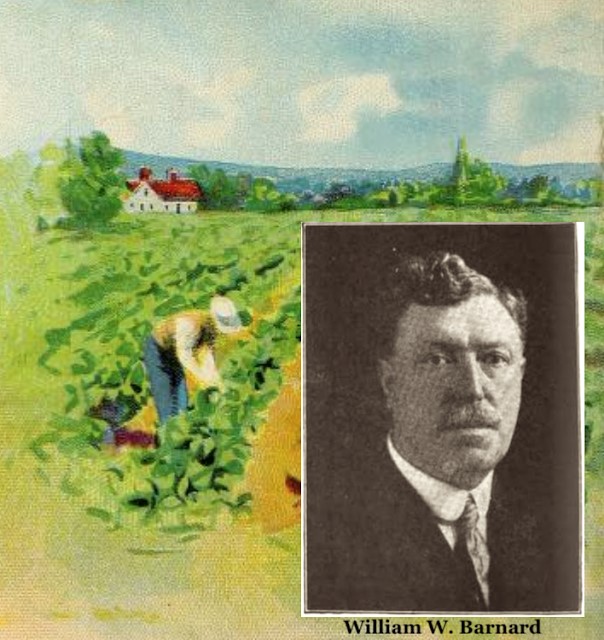
The author of this paper was William Wilcox Barnard (1856-1921). He was third generation on the Ridge.
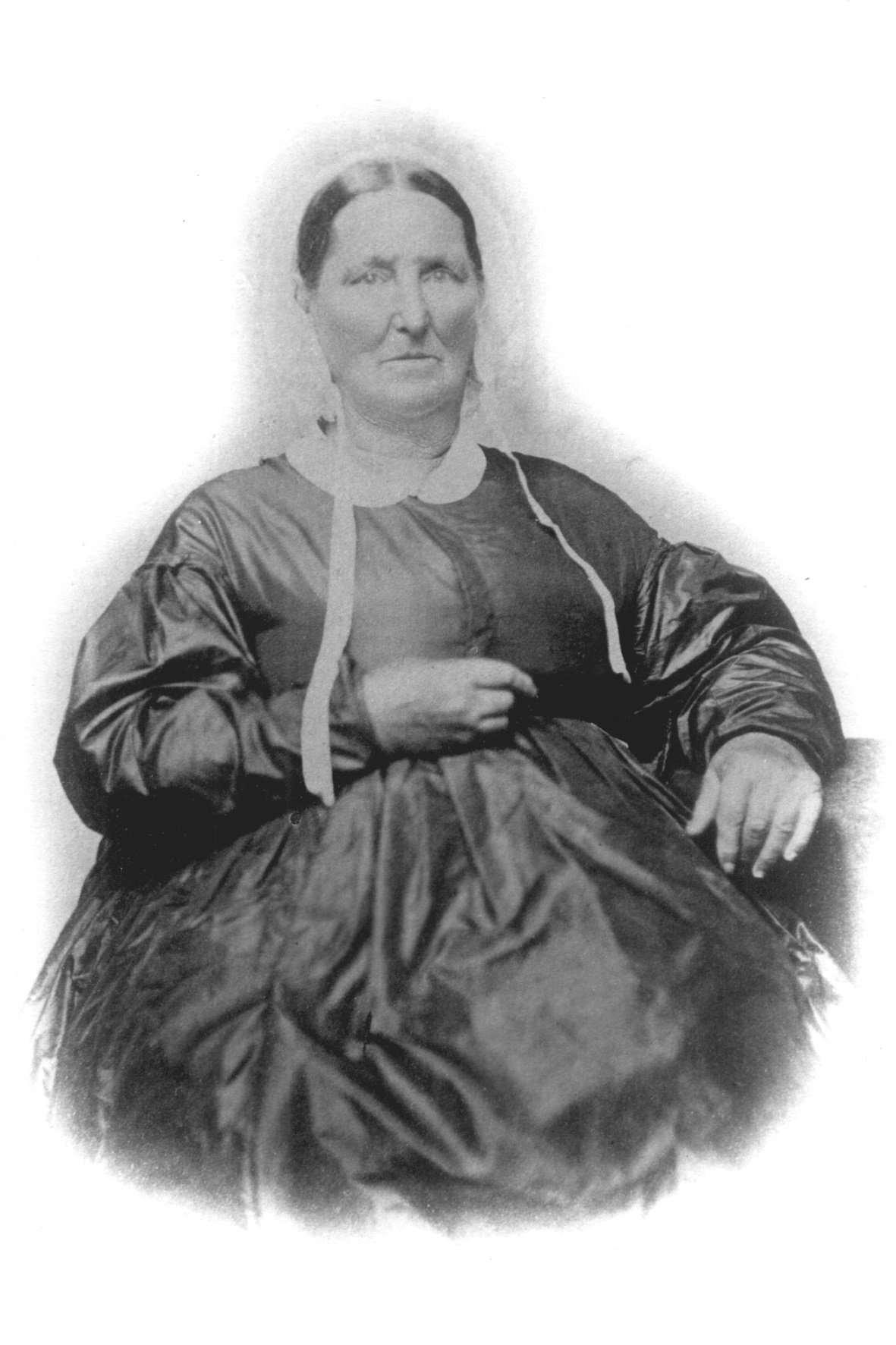
His grandmother was Sarah Lord Wilcox. The Wilcoxes came from New York and took over the Gardner Inn on the Vincennes Road in 1844. It was located about where 100th St. and Beverly Ave. are now. Her daughter Miranda Wilcox married William Barnard, who had come to the Ridge to be the tutor for Thomas Morgan’s children. William and Miranda’s children included William Wilcox, or W.W., as he was known. W.W. started the Barnard Seed Co., which farmed the area around at 103rd and Longwood Drive.
Here are pictures of W.W. and his grandmother, from the RHS collection. By the way, smiling in pictures did not become standard until the 1920s-30s. For us now, the natural response is to say "cheese" as soon as a camera points our way, but that was not an instinctive reaction back then. Some people theorize that it was due to poor teeth or having to hold still for too long for the picture to take, but that was probably not the case. It just wasn't the norm back then.
In Part III, we’ll discuss a few more topics, like prairie fires and wildlife, and then answer some of the questions that have come in from these posts.
– Carol Flynn, RHS Communications