
Explore the RHS Facebook Archives, a rich repository of local history written by Carol Flynn. For two decades, Carol brought a deeply dedicated voice to public education at RHS. Her role as Facebook administrator through mid-2025 naturally extended her prolific research into meticulously detailed articles, most notably her multi-part historical series posts. Today, Carol continues her local history writing for The Beverly Review and other outlets.
Pleasant Thiele Rowland Biography
The new exhibit, “Real American Girls of the Ridge,” opened at the Ridge Historical Society on March 1. This exhibit pairs dolls from the historical collection of the American Girl Dolls with real women connected to the Ridge from the same time period. During March, Women’s History Month, we’ll begin to look at some of these women’s interesting stories.
But first we need to finish the story of the connection between Pleasant Thiele Rowland, the founder of the American Girl Doll line, and the Ridge.
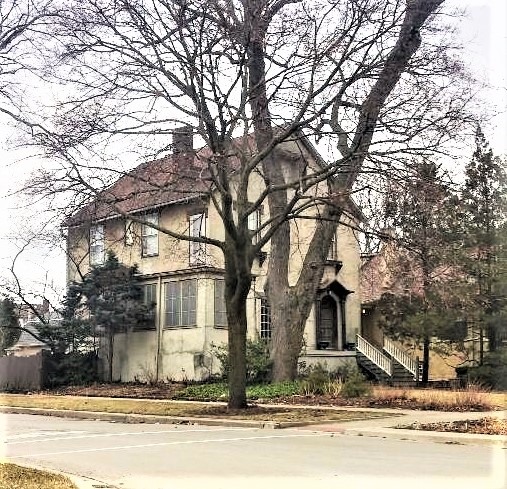
If you scroll through the posts on the RHS Facebook page, you will find the first post about Pleasant, made on February 13. We reported that Pleasant’s paternal grandparents, Edward A. and Maude Thiele, lived for decades at 9556 S. Winchester Ave., and her father, Edward M. Theile, lived there as a teen-ager and young man.
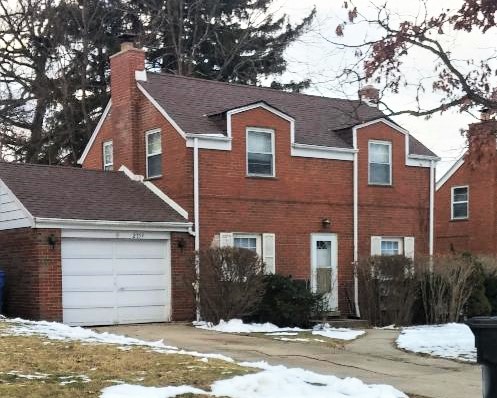
We also reported that Pleasant’s parents, Edward M. (E.M.) and Pleasant “Petty” Theile, moved their young family to the Ridge from 1947 to 1951, residing at 2754 West 108th Street. Pleasant was 10 years old when her father took a job with Leo Burnett Co., Inc., a well-known advertising agency, and the family moved to Bannockburn, Illinois.
There are “clues” as to what young Pleasant’s life was like on the Ridge.
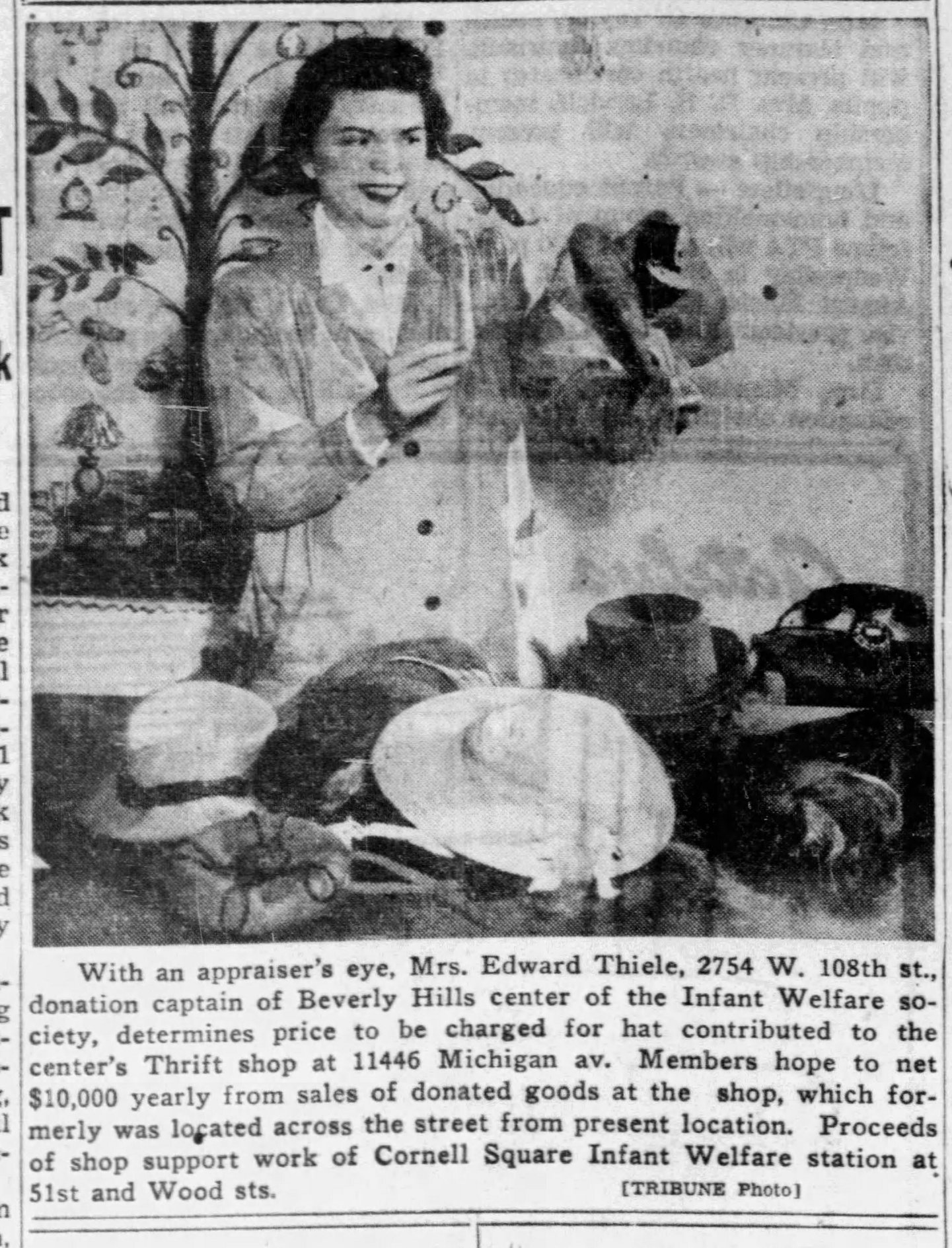
First, her mother appeared in the newspapers for society and charity events. Petty was active with the Infant Welfare Society, a non-governmental volunteer organization founded in 1911 to help low-income women and children. The organization still exists today. For many years, the organization ran thrift shops, including one in Beverly, to raise funds.
One 1948 Chicago Tribune article reports that the Beverly volunteers, including Petty, were restoring used dolls to sell in a thrift shop in Roseland. The group also held annual balls, and Petty was listed as an assistant. A 1951 Chicago Tribune article had Petty assisting with a tea at Mickelberry’s Log Cabin restaurant on 95th Street.
Second, a childhood acquaintance of Pleasant’s shared some remembrances. Her mother was friends with E.M.’s sister, Pleasant’s aunt, Barbara Thiele.
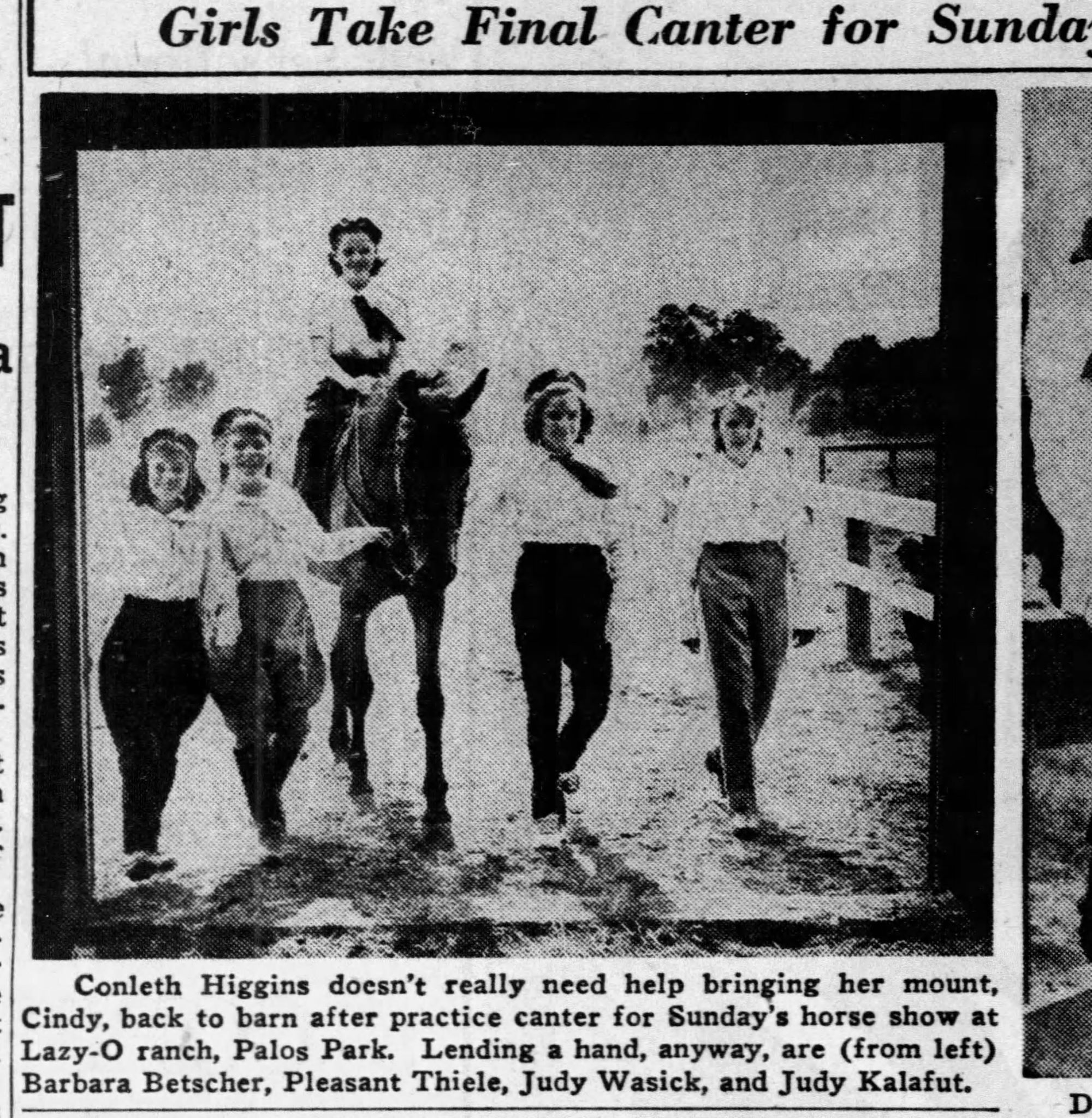
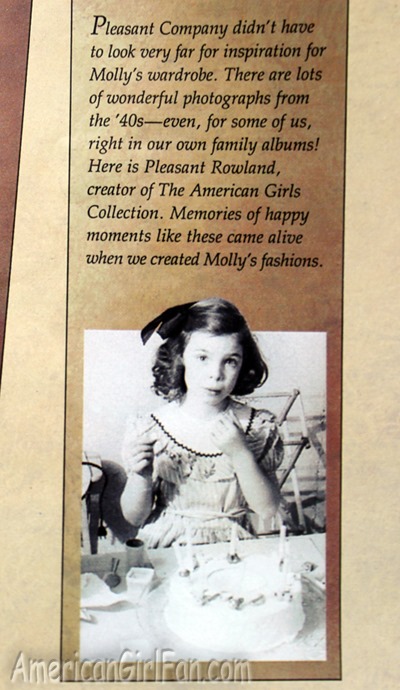
This acquaintance called Pleasant “precocious and fun” and shared with us stories about Pleasant’s birthday parties, at her grandparents’ house and up north. The girls dressed very nicely, embroidered organdy with ruffles in the summer and velvet in the winter. Many photos of children in Beverly were on the Chicago Tribune society page.
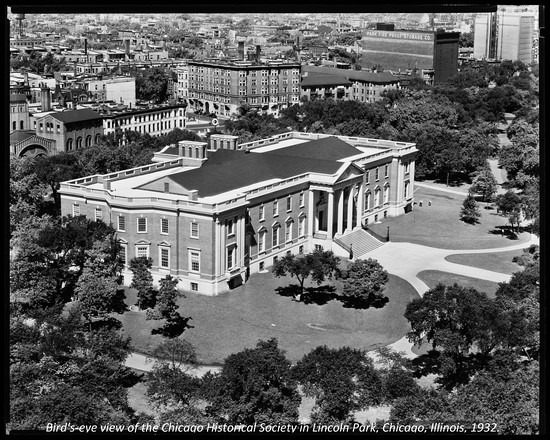
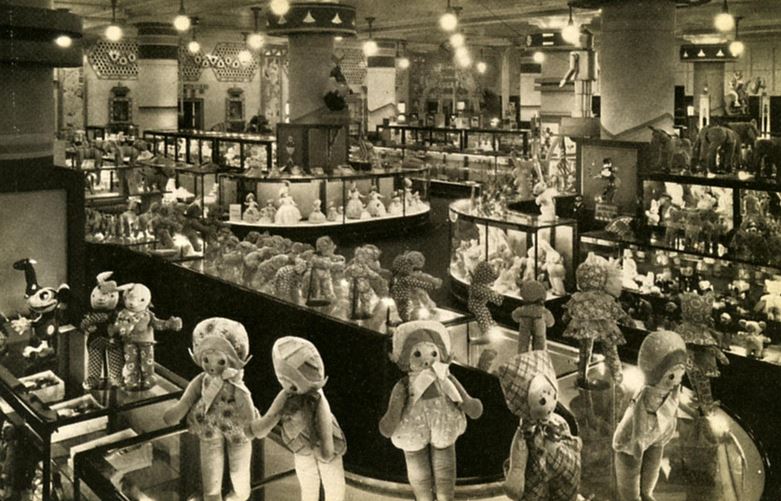
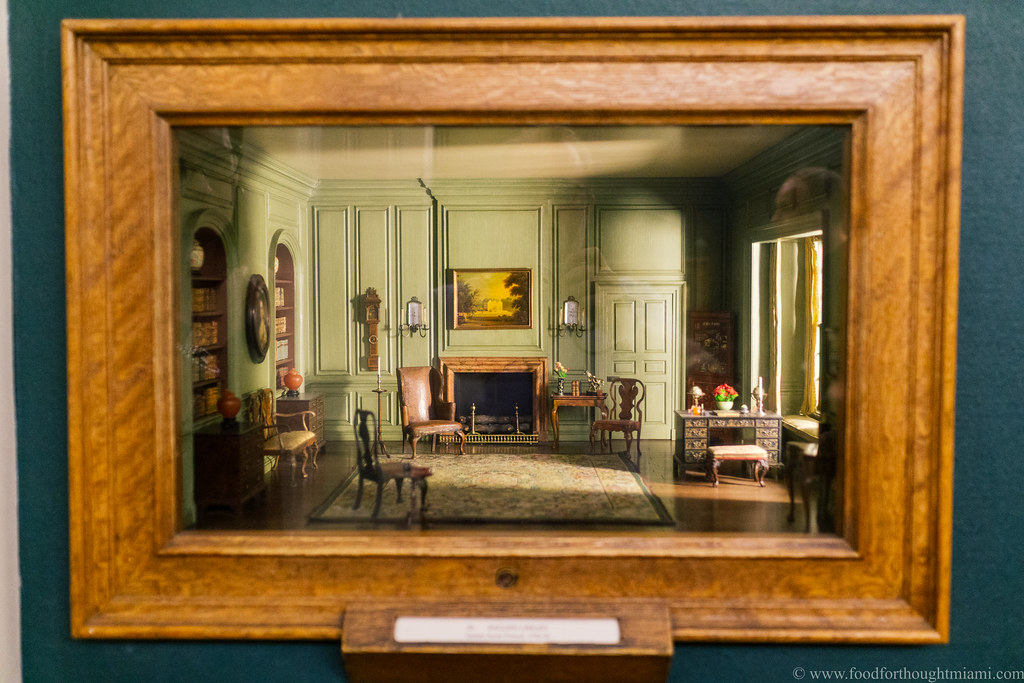
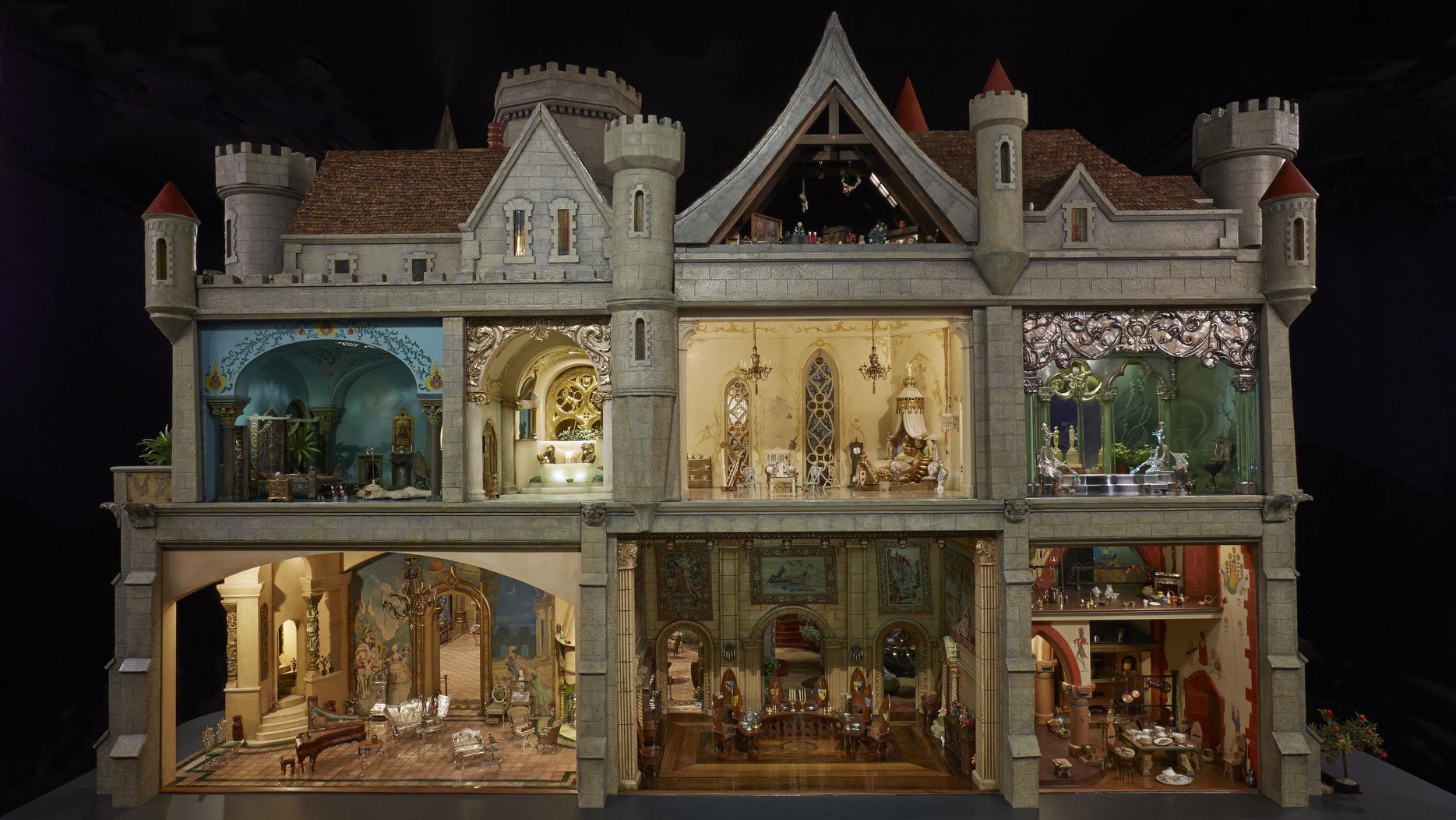
Keeping in mind that T.V.s were just becoming available then, and there were no home computers and smart phones, children relied on books and visits to museums for entertainment and information. This acquaintance remembers the dolls, doll clothes and doll furniture at the Chicago Historical Society, and the miniature Thorne rooms at the Art Institute. There was also the Marshall Field and Co. toy and doll department. Surely we can also add the Colleen Moore Fairy Castle at the Museum of Science and Industry to the list of exhibits that likely influenced Pleasant.
A third influence on Pleasant was her paternal grandmother, Maude Daugherty Thiele.
In 2003, the Wisconsin State Journal newspaper ran an article stating that:
“Pleasant Rowland grew up in Chicago’s Beverly area. At age 10 she moved to north suburban Bannockburn, Ill.
“’My childhood was one of loving to read and of loving to put on plays and act out stories and marshalling the neighborhood to put on the carnival or the Fourth of July parade,’ says Rowland in a rare interview. ‘It was a very active life of the mind.
“’My interest in things old was piqued by my paternal grandmother. She loved to go antiquing, and I would go with her. I began to see the value of old things and other times through her eyes.’”
In the early American Girl catalogs, Pleasant told stories from her youth – learning to crochet from her grandmother, etc. Some of these stories surely were from Beverly.
Pleasant also grew up listening to successful marketing and advertising people, as her father rose to become president of Leo Burnett.
Pleasant graduated from Wells College in 1962. She married Richard Henry Rowland, Jr., from South Carolina. Although the marriage did not last, she kept the Rowland name professionally. She had a career as a teacher, news reporter and anchor, and children’s textbook writer.
She developed two highly regarded reading programs. The first was a comprehensive language arts program. The second was the Superkids Reading Program that is used in thousands of U.S. classrooms.
She married businessman and philanthropist Jerome Frautschi from Madison, Wisconsin in 1977.
In 1986, she founded the Pleasant Company, which began manufacturing the line of 18-inch dolls from different historic eras, with authentic period clothing, furniture and accessories. Very important to the series were the books with stories told from the perspectives of girls eight to eleven-years old.
Pleasant said she was motivated by two things to start the line of dolls. First, a visit to Colonial Williamsburg got her thinking about girls’ stories from various periods in history.
Second, while trying to buy dolls for her nieces, she found the only real options to be Barbie or Cabbage Patch dolls. Both dolls forced girls to assume grown-up roles – fashion model or adoptive mother. She wanted dolls that let girls be girls to play at the appropriate age level.
In 1998, Pleasant Rowland sold the Pleasant Company, now called American Girl, to Mattel, the American multinational toy manufacturing and entertainment company, for $700 million. Today she and her husband continue other business and philanthropic activities.
The Ridge Historical Society has to start over with the post about Pleasant Thiele Rowland’s connection to the Ridge. Ms. Rowland, of course, is the founder/inventor of the American Girl line of dolls. RHS recently received a donation of five of the original historical-time-period dolls that we will be using in a new exhibit premiering for the public on March 1, “Real American Girls of the Ridge,” which will pair the dolls with real women connected to the Ridge from the same time periods.
We reported that Pleasant’s grandparents lived in Beverly and her father spent his teen-age and young adult years here, and that Pleasant spent a lot of time with her paternal grandmother. All this is true.
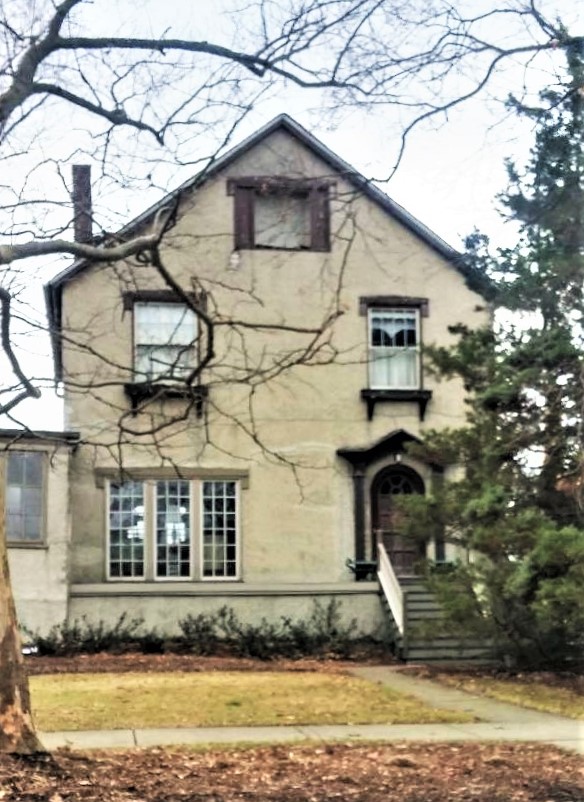
But we have now discovered that Pleasant herself, with her parents of course, lived in West Beverly, from around 1947 to 1951, at 2754 West 108th Street.
This is the story: Edward August and Maude Daugherty Thiele, and their children, Edward Morton, William Harrison and Barbara Claire, moved to 9556 South Winchester Avenue during the 1920s.
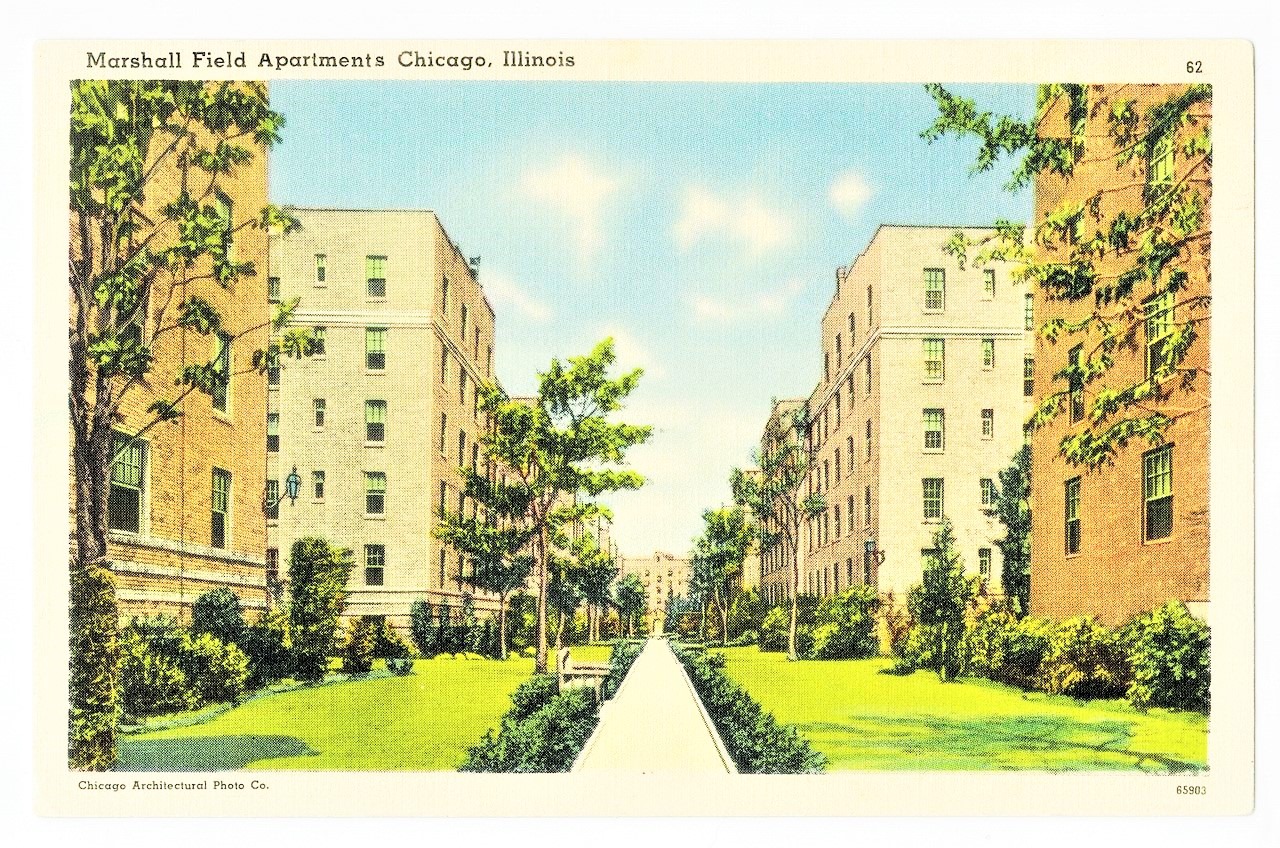
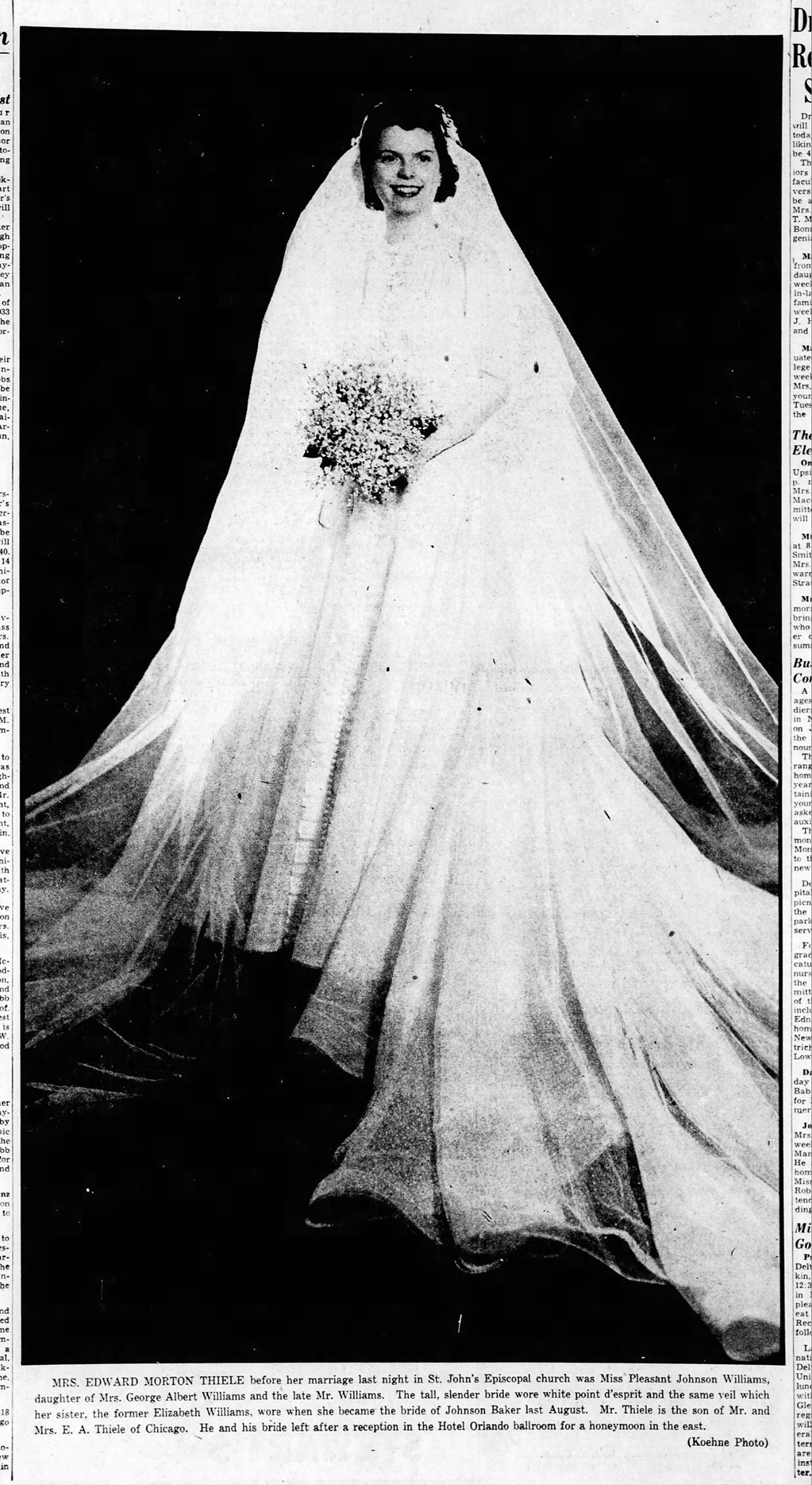
On June 2, 1940, son Edward Morton Thiele, 26, still living on Winchester Ave. with his folks, married Pleasant Johnson Williams of Decatur, Illinois. The new bride, known as “Petty,” was the daughter of Mr. and Mrs. George A. Williams, a socially prominent family in Decatur. We’ll call Edward Morton “E. M.” and his wife “Petty” from now on because the duplicate family names get confusing. The newspaper reported that after a honeymoon in the East, the couple would live in the Marshall Field apartments in Chicago.
On March 8, 1941, E. M. and Petty welcomed their first child, daughter Pleasant Williams Thiele.
In 1942, on his World War II draft registration, E.M. listed his address as 1373 N. Hudson, Chicago, which is part of the Marshall Field Garden Apartments.
In the late 1940s, E.M., Petty and family are listed as living at 2754 West 108th Street. This house was built in 1947 and was put up for sale in 1951.
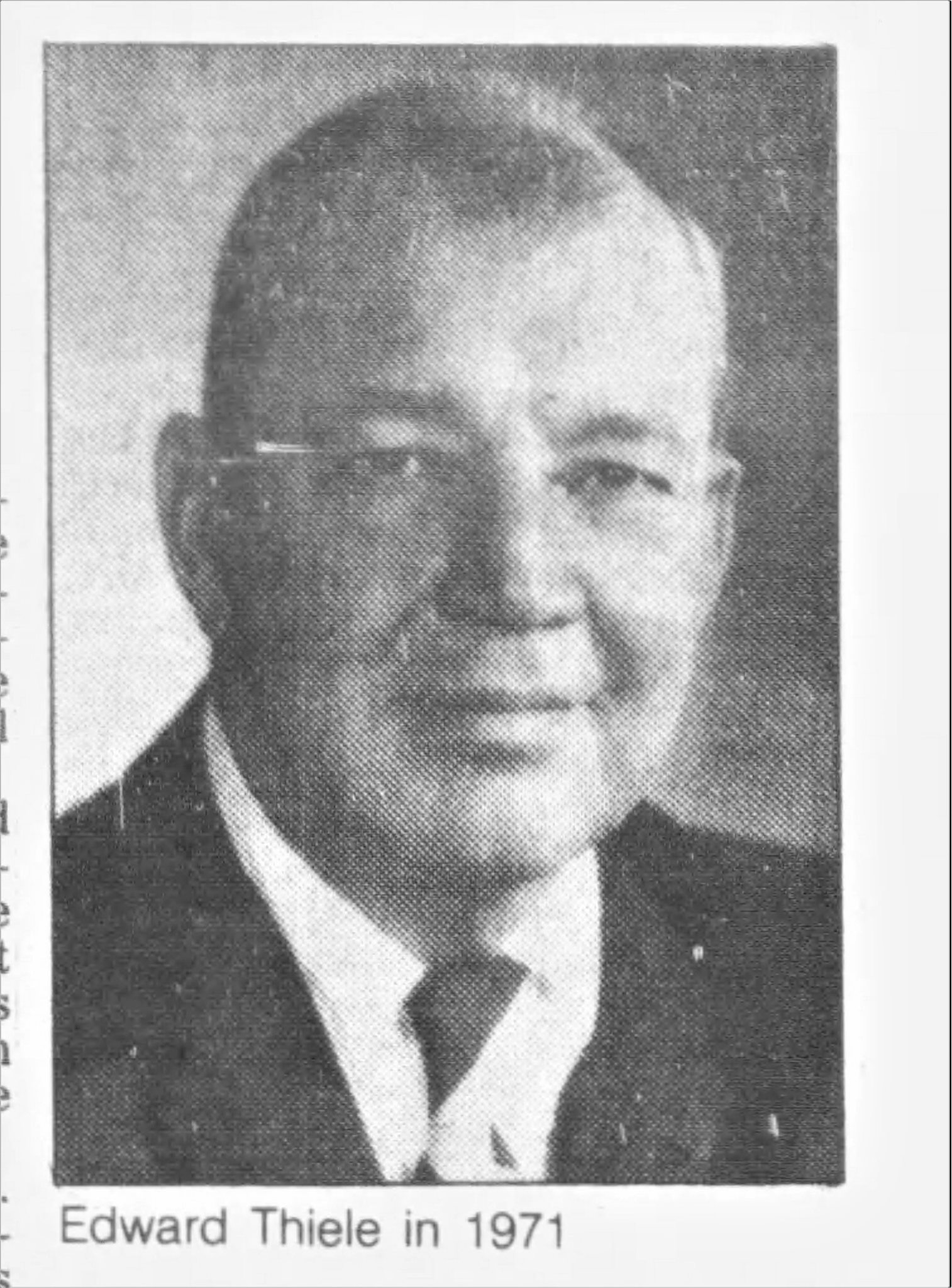
E.M. was a rising star in the advertising industry. He joined the Chicago-based advertising firm Leo Burnet Co., Inc. in 1951 and rose to president 10 years later. Some of the famous marketing campaigns from his era include the Marlborough Man, the Jolly Green Giant, and the slogan, “When you’re out of Schlitz, you’re out of beer.”
In 1951, when daughter Pleasant was 10 years old, E.M., Petty and family moved to the well-to-do far North Shore community of Bannockburn, Illinois. They maintained connections to Beverly through family and friends.
In 1969, Edward August and Maude Thiele sold the Winchester Ave. house and moved to Florida. Edward August, 87, died in 1976. His obituary said he had been vice president and sales manager of Tranter Manufacturing, Inc., which was formerly Kold-Hold Manufacturing Co., with whom he was associated for 25 years. Maude, 96, died in 1986 in Palm Beach.
In 1970, E. M. became vice chairman of Leo Burnet, the position he held until 1974 when he retired. In retirement, E. M. and Petty Thiele shared their time between North Palm Beach, Florida, and a lakeside cottage in Douglas, Michigan. He died in 1982 at the age of 68. Petty died in 2010 at the age of 94.
Please read the captions with the pictures for more of the story.
Next up: Pleasant’s life as a young girl in Beverly.