
Explore the RHS Facebook Archives, a rich repository of local history written by Carol Flynn. For two decades, Carol brought a deeply dedicated voice to public education at RHS. Her role as Facebook administrator through mid-2025 naturally extended her prolific research into meticulously detailed articles, most notably her multi-part historical series posts. Today, Carol continues her local history writing for The Beverly Review and other outlets.
Saving the Eugene S. Pike House
The Ridge Historical Society
Saving the Eugene S. Pike House – Post 1
By Carol Flynn
UPDATE: Landmarks Illinois is reviewing the application.
As the Ridge Historical Society announced on this Facebook page a few weeks ago, RHS, in partnership with the Beverly Area Planning Association (BAPA), applied to Landmarks Illinois on January 10th to have the Eugene S. Pike House added to the List of Most Endangered Historic Places in Illinois 2022.
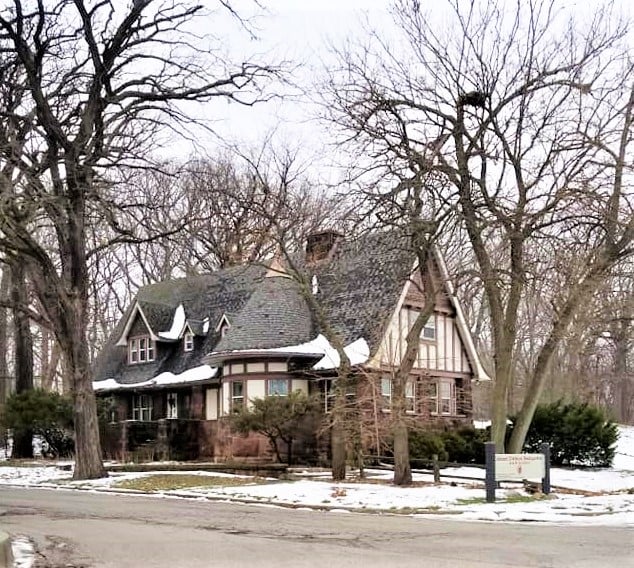
The Pike House is located at 1826 West 91st Street in North Beverly (Chicago, 60643). The house, designed by architect Harry Hale Waterman, was built in 1894 for Pike, a real estate developer and financier.
Since 1921, the house has been the property of the Forest Preserves of Cook County (FPCC). It was used as a superintendent’s office and later as a watchman’s residence.
The house has fallen into severe disrepair and has been vacant for years. In 2018, the FPCC issued a Request for Information (RFI) from organizations potentially interested in adapting the Pike House for reuse. No further information on the Pike House has been announced by the FPCC since that time and the house’s future is uncertain.
The position of RHS is that the Eugene S. Pike House is of historical and architectural importance to the Beverly/Morgan Park community and the City of Chicago and should be preserved and adapted for reuse. The awarding of the designation “Most Endangered Historic Property” by Landmarks Illinois will bring attention to the building’s situation and lead to discussions on its preservation.
Landmarks Illinois is a nonprofit organization founded in 1971 to preserve, protect and promote architectural and historic resources in Illinois through advocacy and education. Since 1995, the Most Endangered List has focused attention on sites threatened by deterioration, lack of maintenance, insufficient funds or inappropriate development and built support for each property’s eventual preservation. The 2022 Endangered List will be announced in April.
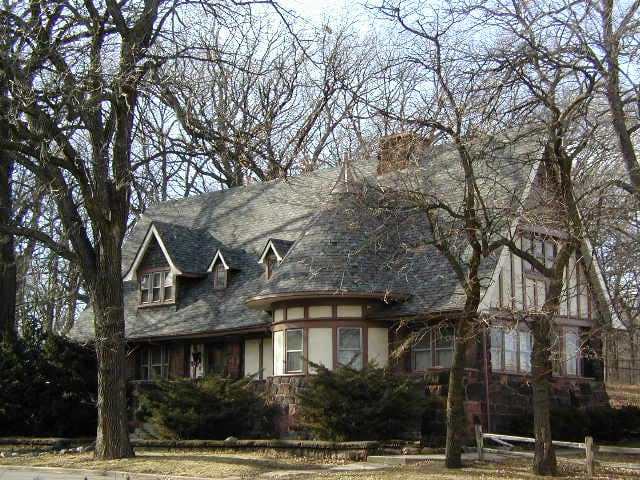
Image: The Eugene S. Pike House, Jan. 2022, photo by C. Flynn.
Ridge Historical Society
Save the Pike House – Post 2: Architectural Significance and Current Condition
By Carol Flynn
The Pike House at 91st Street and Longwood Drive was built in 1894 as part of the private estate of Eugene S. Pike, the real estate developer and financier. Pike’s primary residence was a mansion on the exclusive Prairie Avenue, but he bought land on the Ridge for personal use and to develop lots for sale.
Pike was an avid horticulturist. Before coming to Chicago from Ohio, he established and operated as a business a nursery for fruit and ornamental trees, rose bushes, and grape vines he exported from France. His customer base was largely the Southern states, and unfortunately the business ended with the U.S. Civil War. On the Ridge, he found the perfect place to continue this passion while he developed “skyscrapers” in downtown Chicago and residential/business areas mostly on the southside of the city.
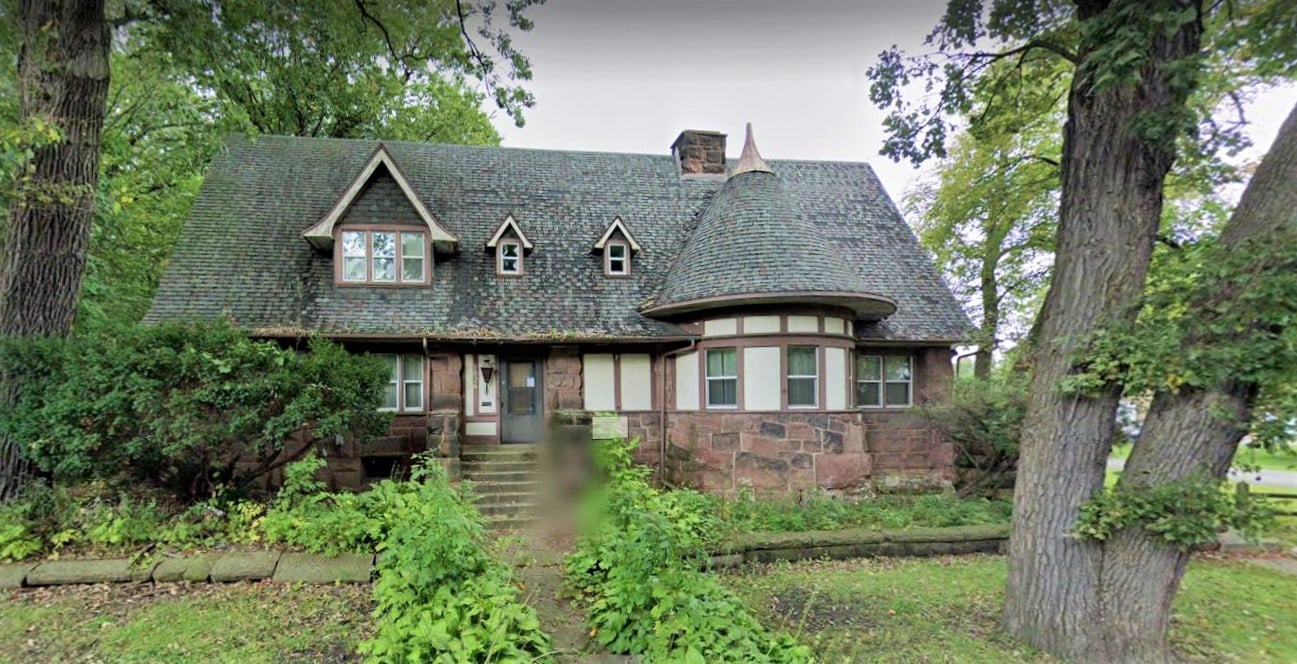
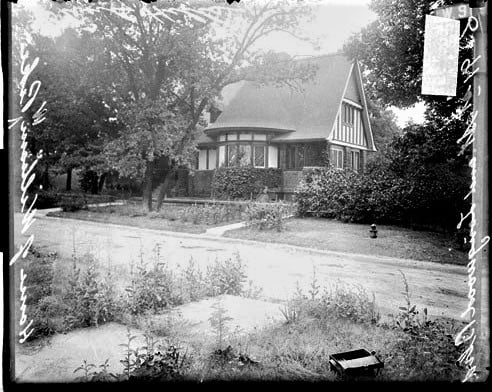
The Pike House was designed as a “gardener’s cottage” by architect Harry Hale Waterman in the Tudor Revival style. The house has a base and lower exterior walls of red sandstone, and upper walls of wood beams and stucco. Architectural elements include a round tower and a steeply pitched roof with tiny dormers with flared ends. The round tower adds a French Norman look to the building.
An important architectural feature of the house is how well it is designed for its setting. The house sits on the edge of the Dan Ryan Woods, a part of the Forest Preserves of Cook County (FPCC). The house blends in with the natural environment of the wooded area so well that the American Institute of Architects stated in its AIA Guide to Chicago (2014), “Expect Hansel and Gretel to come tripping past this house set on the edge of the woods.”
Although the existing building appears as if it were constructed at one time, it was actually completed in two stages. The west side was added sometime between 1898 and 1921, and the entrance was moved from the east side to the center front of the house, repositioning the tower to the right of the entrance.
In 1921, 32 acres of the Pike estate, including the house, were purchased by the FPCC to be added to the existing preserves land that FPCC owned to the north of the Pike estate. According to newspaper accounts, FPCC intended to use the house as a superintendent’s headquarters. The house eventually became known informally as the “Watchman’s Residence” when it was adapted for that use in the 1960s. It was used as a residence during its history, and that will be covered in a later post.
The building is significant to the community for several reasons. It has long been a landmark due to its location on the edge of the forest preserve, engaging the interest and imagination of those who pass by it. The Pike House is designated as a contributing structure for the Ridge Historic District, one of the largest urban historic districts listed on the National Register of Historic Places.
For 100 years, the house has been under the stewardship of the FPCC. In 2017, the FPCC shared a Conversion Feasibility study prepared by Kuklinski and Rappe Architects that includes information on the current condition of the house.
In 1962, the interior of the house was completely gutted to convert it into a “watchman’s residence.” None of the original historic features inside the house, except for a sunporch, remain. The house has been vacant for years and is described in the feasibility study as “in poor condition with masonry issues and a damaged roof.” The plumbing, electrical, and heating systems need replacement.
It is understood that it will take considerable resources to restore this building and adapt it for reuse.
Next post: Architect Harry Hale Waterman
The Ridge Historical Society
Save the Pike House will be on TV
By Carol Flynn
The television program “The American Dream Chicago” will air a segment on the "Save the Pike House" campaign on WGN Channel 9 on Saturday, February 19, at 10:30 a.m.
Beverly resident Meg Mulrenin, who has the realty company Town Realty Chicago, is the host for this segment. This show is a national program designed to highlight local real estate, culture, and lifestyle in neighborhoods across the country. Meg, selected as one of six hosts for the Chicago cast, is an industry professional representing our unique area of Chicago. She got involved in the show “for viewers to see what a special place the Beverly Hills/Morgan Park community is – the stunning homes, the fabulous business owners, the PEOPLE who make this the best place to live.”
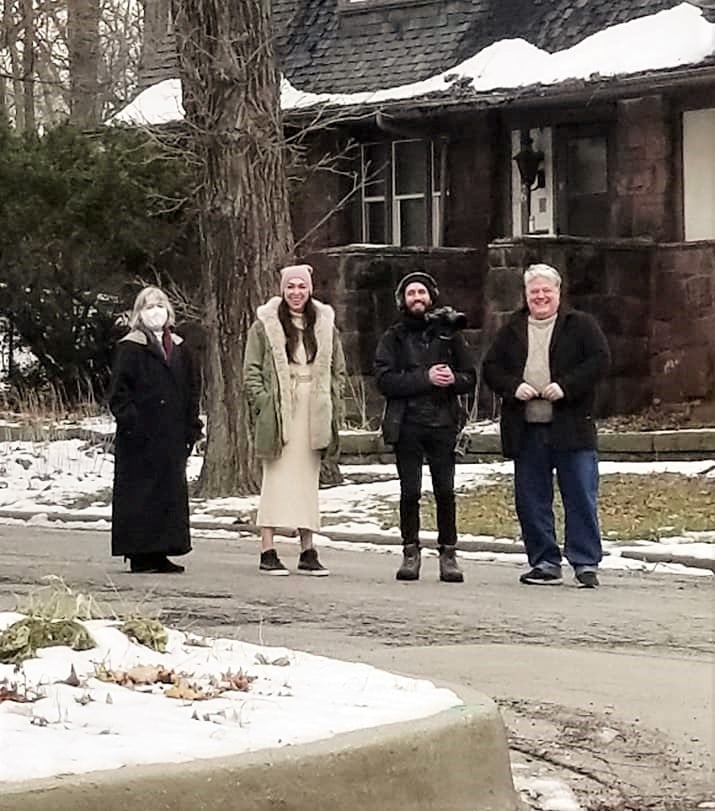
Meg reached out to RHS through our Facebook page, and on an overcast day in January, Meg and cameraman Mat Astacio joined RHS Historian Linda Lamberty and RHS Board member Tim Noonan for a look at the Eugene S. Pike House exterior and a discussion on its current situation.
The Eugene S. Pike House, at the corner of 91st Street and Longwood Drive, was designed by architect Harry Hale Waterman and built for Pike, a real estate developer known for his post-Chicago Fire skyscrapers, in the 1890s. It is a contributing structure to the establishment of the Ridge Historic District listed on the National Register of Historic Places. The house has been part of the Dan Ryan Woods, owned by the Forest Preserves of Cook County, for the past 100 years. It has seriously deteriorated and its future is uncertain.
Hopefully, this national coverage will help bring attention – and positive solutions – to saving this Beverly landmark.
Pictured from left: Linda Lamberty, Meg Mulrenin, Mat Astacio, and Tim Noonan in front of the Pike House. Photo by C. Flynn.
Ridge Historical Society
Breaking News – The Pike House has been awarded “Endangered Status”
By Carol Flynn
April 20, 2022
Today, Landmarks Illinois announced the 2022 Most Endangered Historic Places in Illinois, and the Eugene S. Pike House in Dan Ryan Woods in North Beverly is on the list.
According to Landmarks Illinois, the Most Endangered list is a call to action for historic and culturally significant sites that face serious risk of demolition and/or are suffering significant neglect due to lack of maintenance or insufficient funding for repair.
This is the case with the Pike House, and it was the Ridge Historical Society, working with the Beverly Area Planning Association (BAPA), that submitted the application for Endangered status. The awarding of Endangered status is the culmination of months of work by RHS researchers, writers, and advocates to document the importance of the house to the community and the support for saving the house.
The designation of "Endangered" does not bring any protection with it, but it does call attention to the structure’s situation, and brings with it a commitment to save the house. In this case, that means finding a new purpose and new occupants for the house, which includes coming up with the substantial financial resources needed to restore the house.
The Pike House, at the corner of 91st Street and Longwood Drive, was designed by architect Harry Hale Waterman and built in 1893-94 as a gardener’s cottage on the private estate of Eugene S. Pike.
Pike was a wealthy real estate developer and horticulturist who built several “skyscrapers” downtown as well as residential and business developments in the city. He was a major developer in North Beverly, known for his well-landscaped plots.
The Forest Preserves of Cook County bought the Pike estate in 1921 and added it to the Beverly Woods Preserve, which later was renamed the Dan Ryan Woods. The Pike House was used as a superintendent’s headquarters and watchman’s residence during the 100 years it has been owned by FPCC.
The fairy-tale-like stone, stucco and timber house has been a beloved landmark in Beverly for all this time, but it was allowed to deteriorate badly in recent decades. It has been sitting vacant for years.
This is a major first step in saving the Pike House, but now the real work begins to find new occupants and restore the house. Follow the RHS page for updates on this project.