
Explore the RHS Facebook Archives, a rich repository of local history written by Carol Flynn. For two decades, Carol brought a deeply dedicated voice to public education at RHS. Her role as Facebook administrator through mid-2025 naturally extended her prolific research into meticulously detailed articles, most notably her multi-part historical series posts. Today, Carol continues her local history writing for The Beverly Review and other outlets.
The Paranormal Ridge
The Paranormal Ridge: Part 4 – Why the Ridge has Paranormal Activity
By Carol Flynn
The Blue Island Ridge seems to have a fair amount of paranormal activity going on; so far, over seventy ghost stories have been reported here. It appears that at least four factors come together to support and even encourage this paranormal activity. The four factors are limestone, water, railroad tracks and Native American heritage.
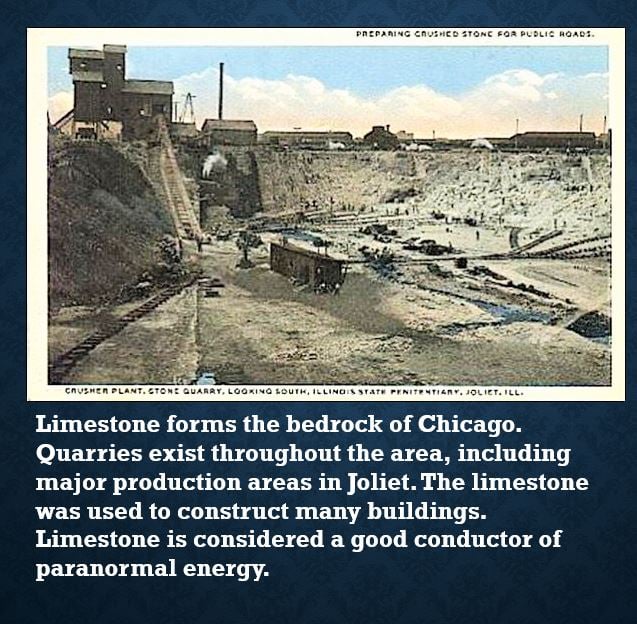
First, the bedrock that Chicago sits on is 400-million-year-old limestone. This limestone base formed from deposits left on coral reefs in the shallow inland seas that covered most of the area. Limestone is considered to have the strong capability to absorb and release electromagnetic and psychic energies.
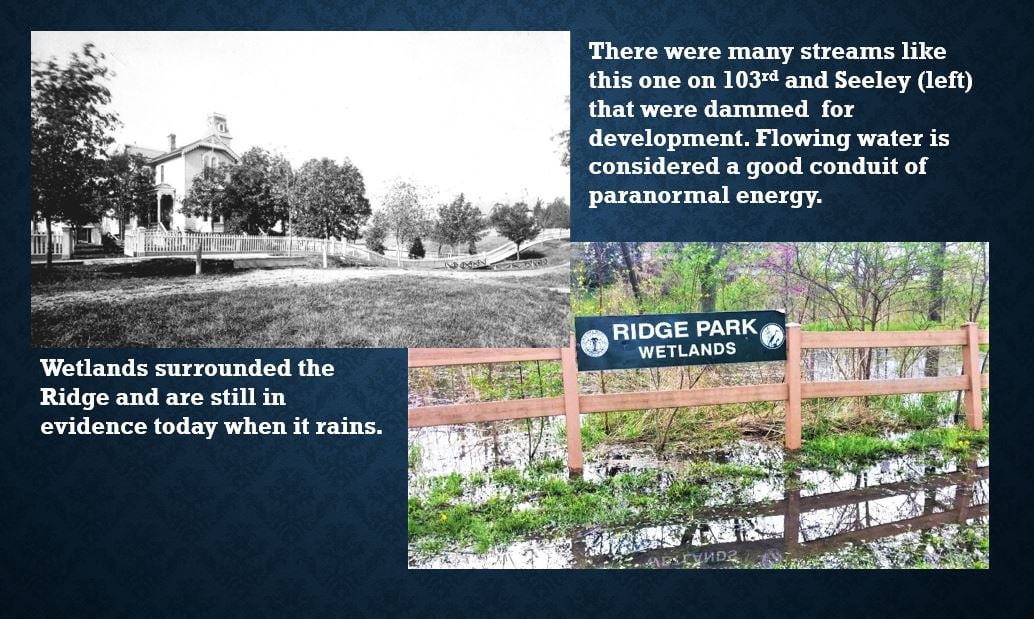
The second factor encouraging paranormal activity is flowing water. Water is considered a great conductor of paranormal energy and there is water all around and under the Ridge. The Ridge has underground streams and wells that were dammed up and built over. The land to the east of the Ridge was originally seasonal wetlands. When it rains, the water drains to the east, flooding lawns and streets and sometimes basements.
Thanks to an article with an interview with Jason and Grant of the original Ghost Hunters TV series, the third factor was identified. Jason and Grant were the Roto-Rooter employees in New Jersey who had the first and the best show on the Sci-Fi channel for exploring the paranormal. They investigated hundreds of sites, and they found over and over three things came together – limestone, water, and railroad tracks.
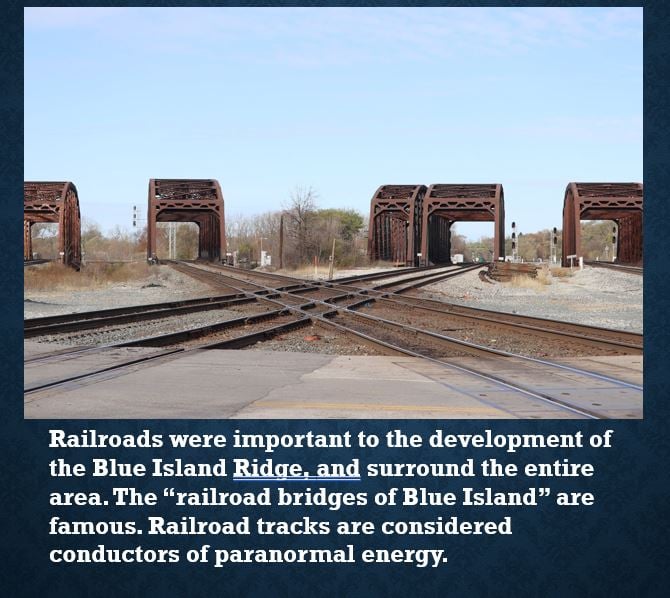
Railroad tracks are all around the Ridge. The railroads have been of major importance to development here. The stations along the Metra line are a Chicago landmark district, and Blue Island was a major railroad hub – it still has that enormous railroad yard. Again, it seems railroad tracks hold and conduct energy.
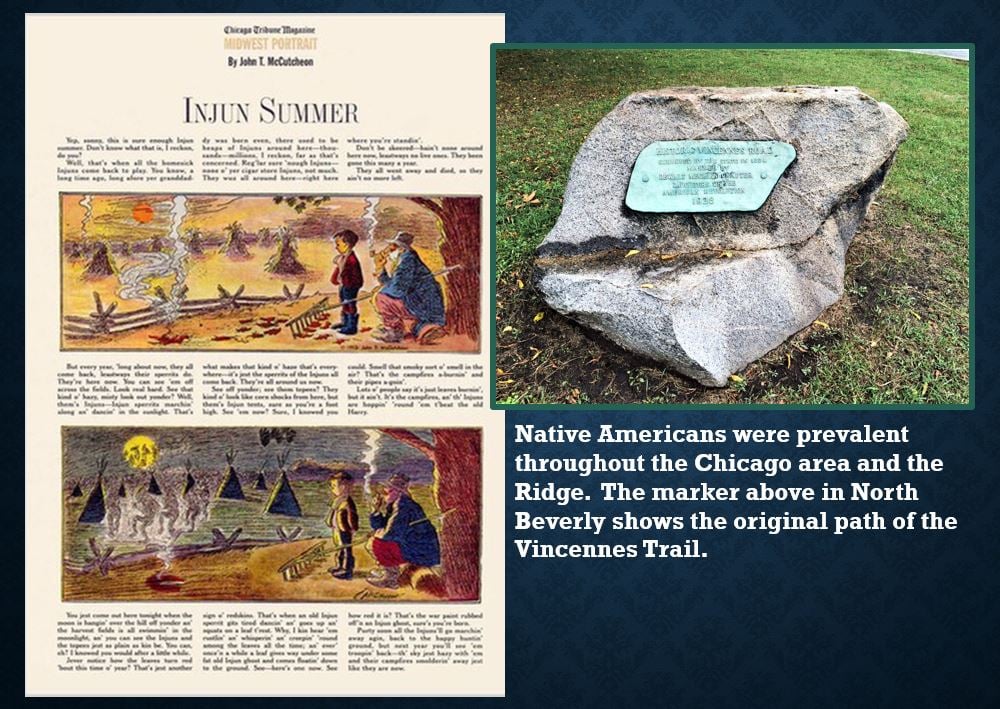
The last factor is the strong historical presence of Native Americans. These were lands for the Pottawatomie tribe, and before that the Illinois tribe. An old Indian trail, the Vincennes Trail, runs through the Ridge. A marker for the original route that ran across the top of the Ridge can be found in North Beverly.
One psychic shared, completely unsolicited, that she can really feel the Native American presence here and at times the veil is so thin that she can sense the phantoms of Indians along the Cal-Sag Channel at night. That waterway was originally the Stony Creek back in the day of the Indians. They lived along the Calumet River and the creek until being removed as a group from the Chicago area in the 1830s. Spirits figure prominently in Native American folklore and beliefs.
A little on the history of ghost stories and Halloween, the signs of possible hauntings, and the factors influencing paranormal events on the Ridge have been covered as background material. The next post will get into the ghost stories surrounding the Givins Beverly Castle.
If you need a break from the news.
The Paranormal Ridge: Part 3 – Signs of a Haunting
By Carol Flynn
As was mentioned in the first post of this series, the reports of ghostly activity go back for thousands of years.
Pliny the Younger, a lawyer, author and magistrate in ancient Rome, described the haunting of a house in Athens by a noisy ghost in the year 50 A.D. The ghost scared everyone away and the house was falling to ruins. Then a man brave man came upon the house, and not afraid, he stayed overnight. He realized the ghost was trying to communicate. He followed the apparition to a spot where it disappeared. Digging up the spot, the man found bones. He gave them a proper burial, and the ghost stopped appearing.
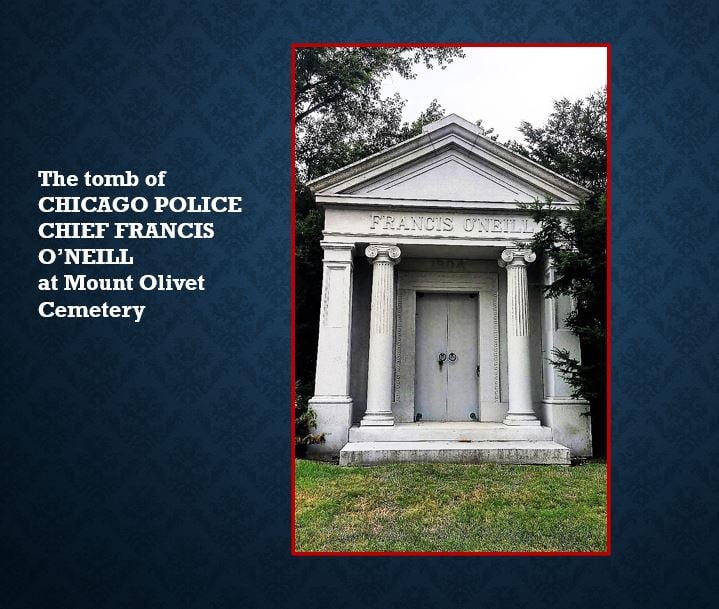
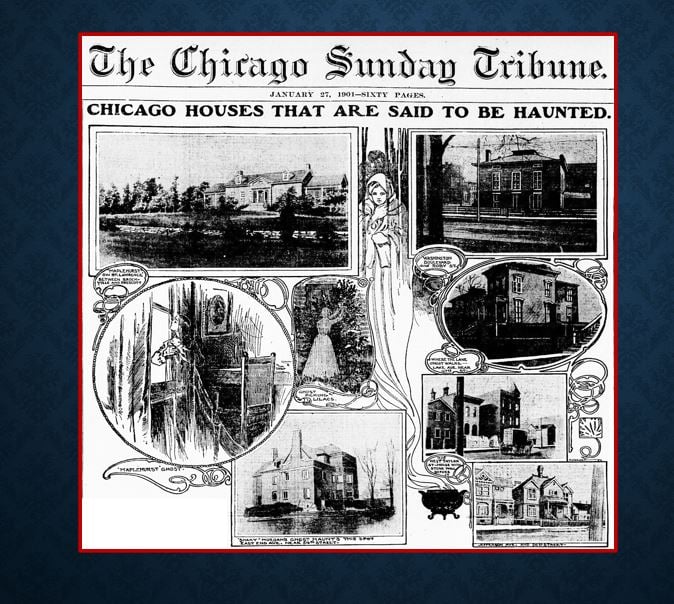
Here in Chicago, there have been haunted houses for over a century. In 1901, the newspapers carried the story of a woman named Mrs. E. A. Stuart who wrote to the Police Chief of Chicago, the famous Francis O’Neill who is buried in Mt. Olivet Cemetery here on the Ridge, to inquire about renting a haunted house she had heard about in the Woodlawn area. She wanted one where the ghosts “must be on hand every night, clank through the corridors in their chains, open and shut doors mysteriously, and shriek murder till sleep is out of the question.” Her intention was to disprove the existence of ghosts.
O’Neill knew the house that interested Mrs. Stuart. It was at 4801 S. Lake Avenue, and had been occupied for many years by John Lane, and it was believed his ghost still lingered there. A well-known lecturer, Mrs. Mary H. Ford, and her family lived in the house after Lane, and complained about nightly visitations from Lane’s spirit.
The Ford family’s first experience with the ghost was when the bathroom door became locked from within. They thought there might be a burglar in there and sent for the police. One of the Ford children suggested it might be Lane, and Mrs. Ford replied that if it were, he might be kind enough to open the door. The door unlocked, and pushing it open, Mrs. Ford saw that there was no one inside the room.
Another time, Mrs. Ford forgot to close the furnace door before going to bed. She did not want to go down to the cellar to do this and she wished that Mr. Lane would close that door. She heard the furnace door close.
The family experienced many other phenomena – loud knocking and pounding that went on all night and orange flames floating through the air. Mrs. Ford’s son, 10 years old, claimed he saw an old man sitting in a corner. His descriptions of the man fit those of Lane. The family became so used to the manifestations they came to think of Lane as one of the family.
Mrs. Stuart decided not to rent the house. O’Neill received letters from other people who were interested in living in the house. That house is no longer standing today.
This was just one example of the many haunted houses that the newspapers carried stories about in the earlier days of Chicago.
The signs of a haunting have remained consistent for thousands of years, from Ancient Greece to early 20th-century Chicago.
These signs are:
1. Feeling of being watched or that someone is near you, when there is no other physical person there.
2. Feeling that someone or something has touched you. Cobwebs, a tug on your sleeve, a tap on the shoulder, feeling like you just bumped into someone, etc.
3. Feeling a cold spot or a temperature drop, or a feeling of dread or discomfort in one certain spot.
4. Lights coming on and off or flickering. Appliances, also.
5. Sounds that when you go to investigate them don’t appear to have a cause. Footsteps, doors knobs being turned or the sound of doors opening or closing, things being dropped, whispers, crashes and bangs.
6. Smells. Cigarette smoke, a certain perfume. The smell of flowers, particularly roses, is associated with a presence, usually a more saintly one.
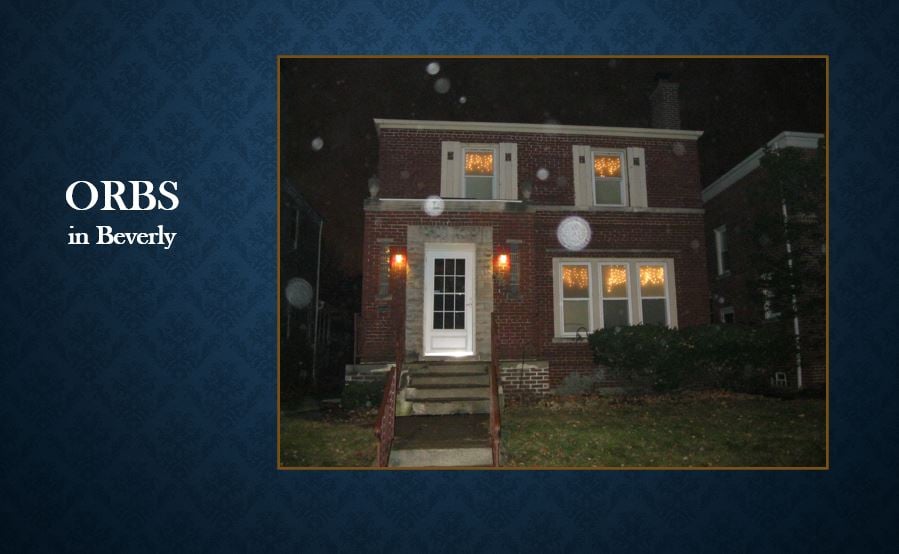
7. Seeing unexplained shadows, or something moving out of the corner of your eye, or sometimes a mist. Then there are orbs, circles of light that may not be visible to the naked eye but sometimes show up in pictures. Of course, some people say orbs are just reflections off of something in the atmosphere or something wrong with the lens of your camera. There is a picture of orbs around a house in Beverly and the person who took this never had this happen in photos taken at other times.
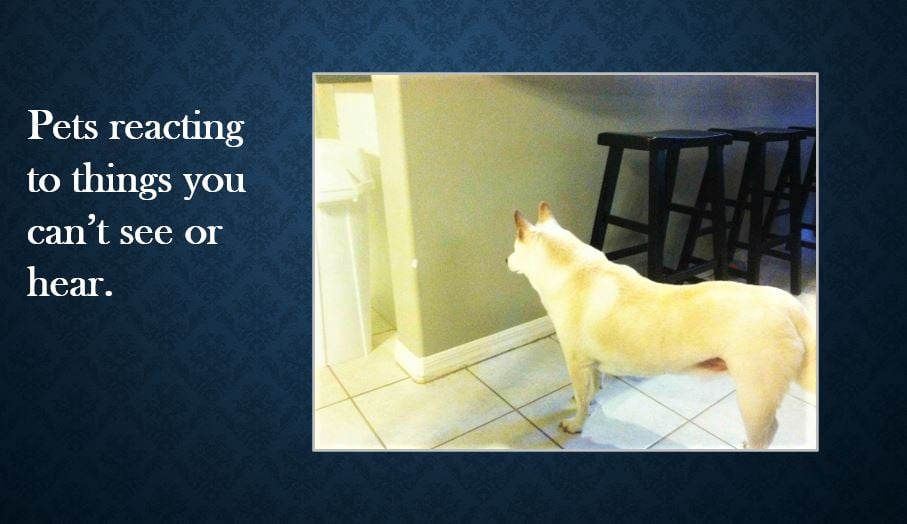
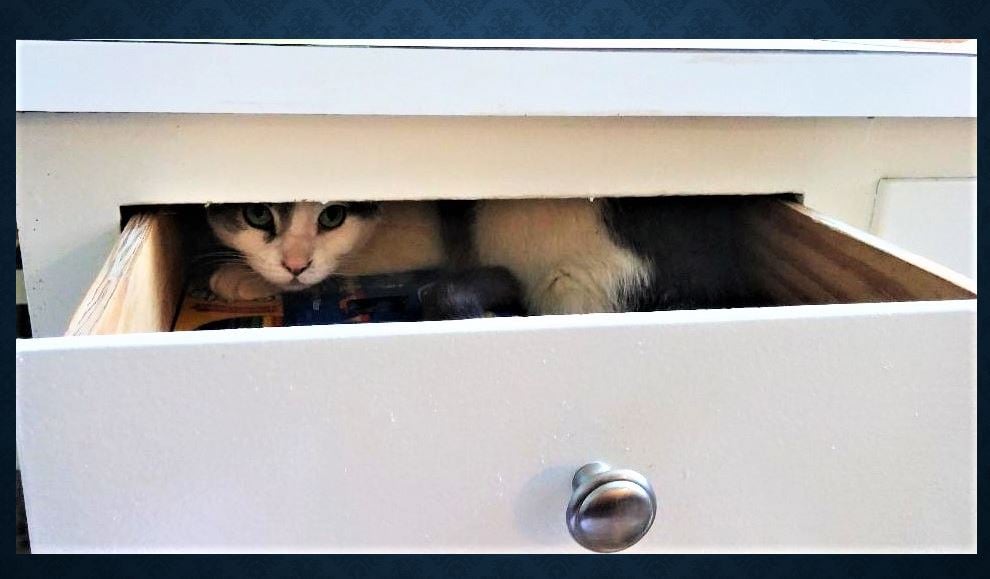
8. Strange behavior from your pets. Dogs barking at things, cats staring at things, that you don’t see. This is a common one – it seems animals are much more receptive to spirits. A photowas posted on the Internet by someone whose dog was staring and barking at one particular spot on the wall.
9. Children are much more open to spirits and often have experiences that adults do not have. Imaginary playmates might be an example of interacting with spirits.
10. Objects moving on their own. Cabinet doors, windows, doors opening and closing. Things falling, breaking. Something found in a place where you know you did not leave it.
11. Seeing an actual apparition of a person, or even an event played out.
In the next post, reasons the Ridge has paranormal occurrences will be explored, then Castle ghosts are coming up after that.
For those who need a little break from current news.
The Paranormal Ridge: Part 2 – The Victorian Era and Ghosts
By Carol Flynn
The Victorians were enthralled with ghosts. Consider fictional ghost stories during the Victorian Era.
Halloween was brought over to the U.S. in the 1800s by descendants of the Celts, the Irish and the Scots. It has since become the time of the year when people really take interest in ghost stories and events.
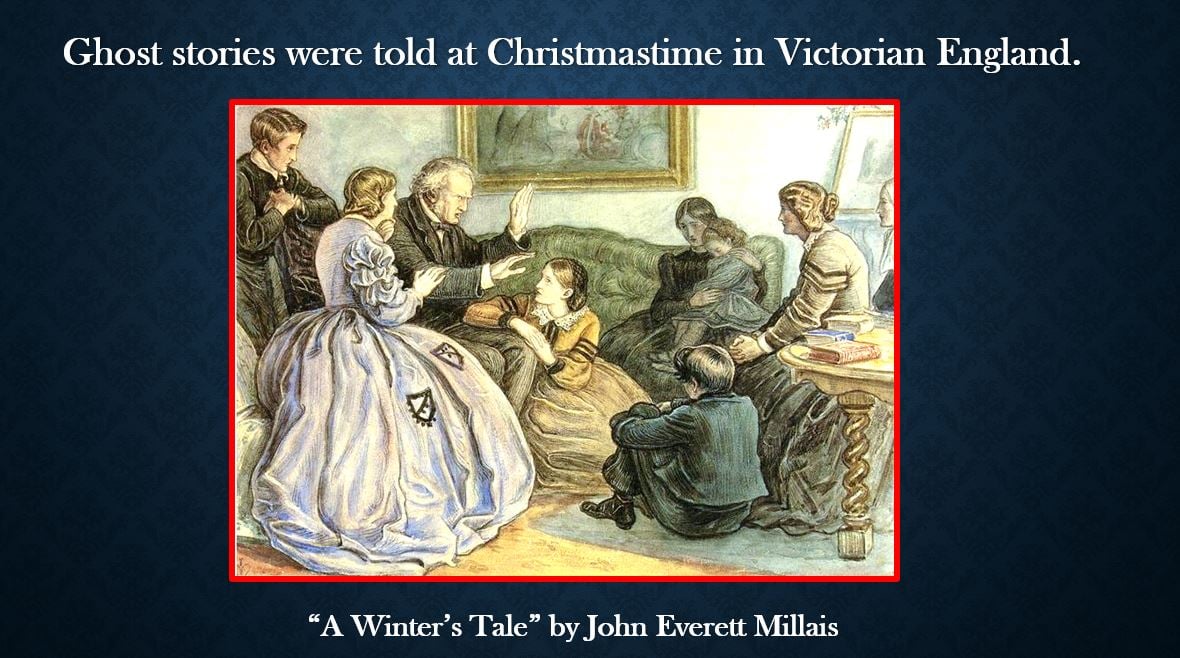
However, the earlier settlement of the U. S. was largely by people from England, and they followed the customs of that country. In England and for the English settlers in the U.S., the traditional time of the year to tell ghost stories was Christmas time.
Ghost stories were very popular in the Victorian era, from the 1830s well into the early 1900s. Some famous ghost and “psychological horror” fiction story writers from this period include Sheridan Le Fanu, M. R. (Montague Rhodes) James, and Algernon Blackwood, whose very names seem perfect for writing ghost stories. There were women writers, also, including Charlotte Riddell and Edith Wharton. They influenced generations of authors who followed them, from H. P. Lovecraft to Anne Rice to Stephen King.
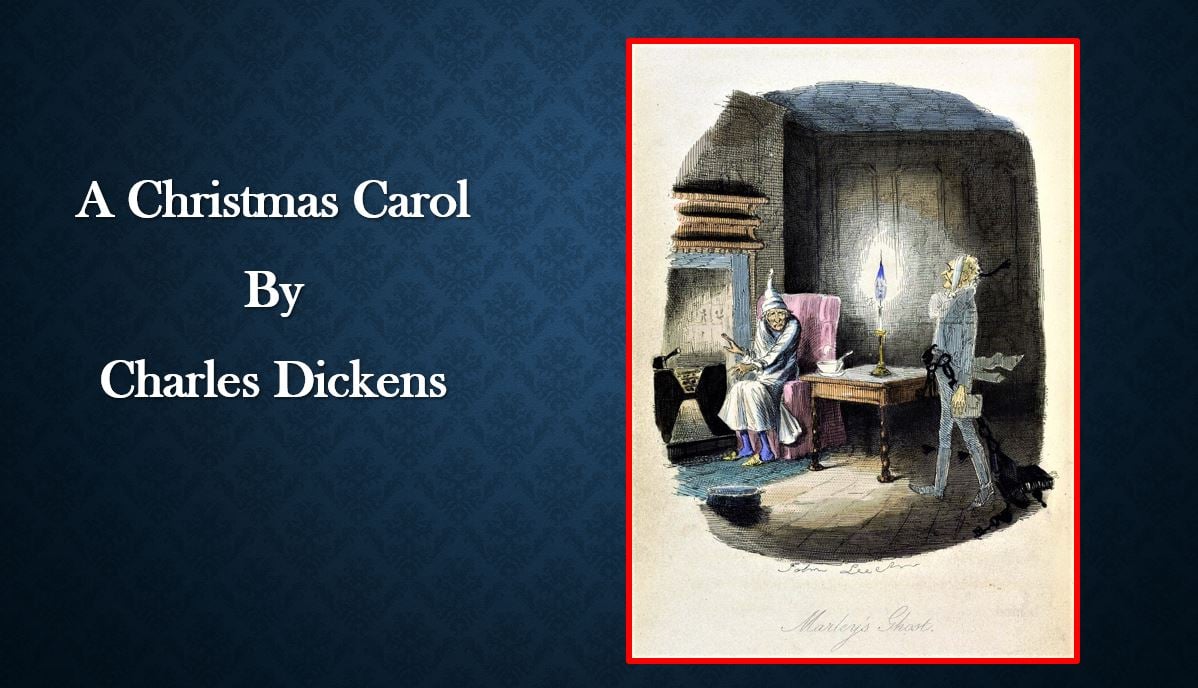
The most famous fiction ghost story of all time is “A Christmas Carol” by Charles Dickens, published in 1843. Its full name is actually “A Christmas Carol. In Prose. Being a Ghost Story of Christmas.”
The plot of this story is well known. Spiteful, miserly Ebenezer Scrooge is nasty to his employees, his relatives, and, well, everyone. He especially hates Christmas. But then one Christmas Eve, he is visited by the ghost of his deceased partner Jacob Marley, and by the ghosts of Christmas Past, Present and Yet to Come. Thanks to the intervention of these spirits, he changes his ways to become a good, generous, caring man.
This story has been adapted over and over for other books and stories, movies and TV shows.
We can easily envision Scrooge’s experience from Dickens’ descriptions. Dickens included many of the signs of a haunting that have been consistent throughout history and that people report to this day.
It all starts when Scrooge sees Marley’s image in common objects he has looked at thousands of times – the door knocker, the fireplace tiles. He feels unsettled, like he is being watched. He checks every corner; he looks under the bed. “Humbug,” he keeps telling himself – this must be his imagination; there are no such things as ghosts.
An old disused servants’ bell on the ceiling begins to ring on its own, followed by a clanking noise from the wine cellar below. The cellar door flies open with a bang. There is a “chilling influence” in the air. At last the phantom of Marley appears in the room. Scrooge can see right through to the back buttons of the ghost’s waistcoat.
Scrooge has a verbal exchange with Marley’s ghost who delivers a message – people who do not create happiness while alive are doomed to wander forever as spirits.
As the ghost begins his exit, the window flies open by itself, and there are confused noises in the air, incoherent sounds of lamentation and regret, sorrow and self-accusation. The ghost floats out through the window and Scrooge feels compelled to look, where he sees the air filled “with phantoms, wandering hither and thither in restless haste, and moaning as they went.” Many had been personally known to Scrooge in their lives and now “the misery with them all was, clearly, that they sought to interfere, for good, in human matters, and had lost the power forever.”
Victorian-era fictional ghost stories were often written not only to entertain and thrill, but to educate and deliver a moral message. “A Christmas Carol” certainly continues to deliver on all counts.
The Victorians were enthralled with ghosts at the same time they were embracing new technology and scientific advancements. The two became intertwined – technology and the spirit world.
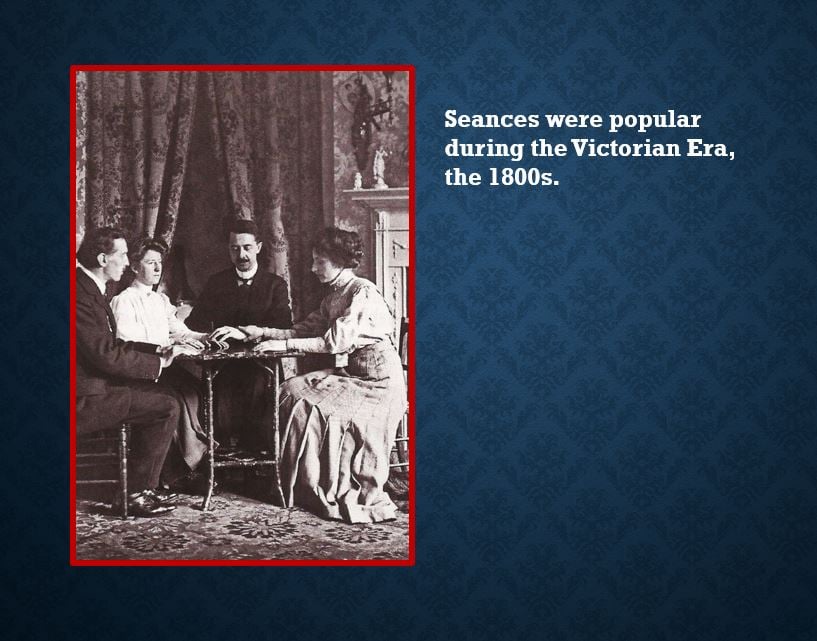
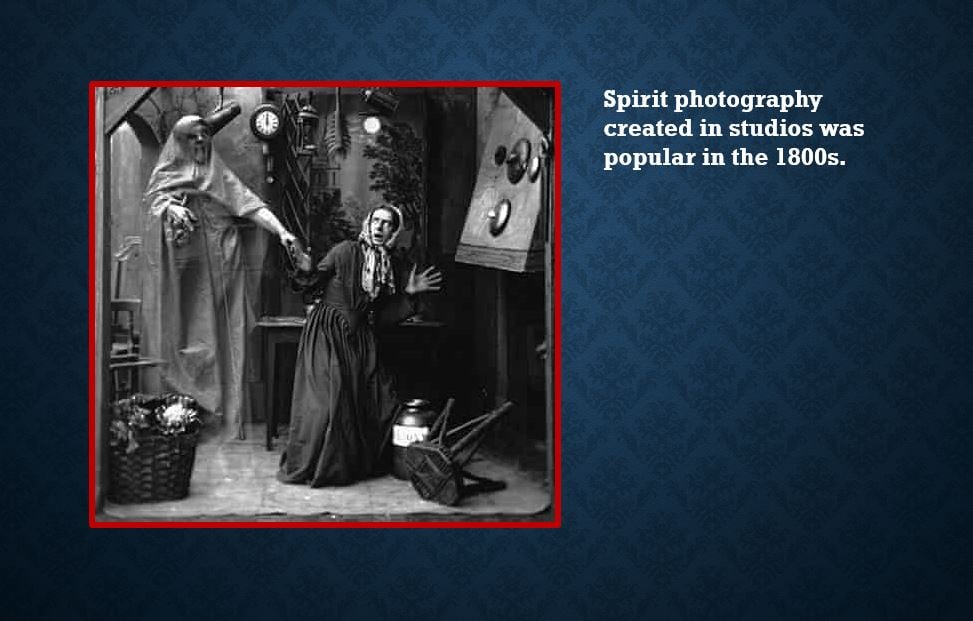
In addition to written ghost stories, seances and “spirit photography” became popular in Victorian times.
People reasoned that if new inventions, like the telephone and telegraph and photography, made it possible to communicate with people thousands of miles away, and record images of anything, then it was also possible to communicate with and record the spirit world.
Seances, in which a human “medium” acted as an intermediary between the living and the dead, were conducted in studios and parlors throughout England and the U.S. The spirits usually communicated by rapping on the tables or walls; moving objects; causing the lights to blink; “spirit writing” in which the medium wrote out the spirit’s message; and even by possessing the body of the medium and speaking through that person. It was reported that Queen Victoria herself participated in seances to communicate with her late husband Prince Albert.
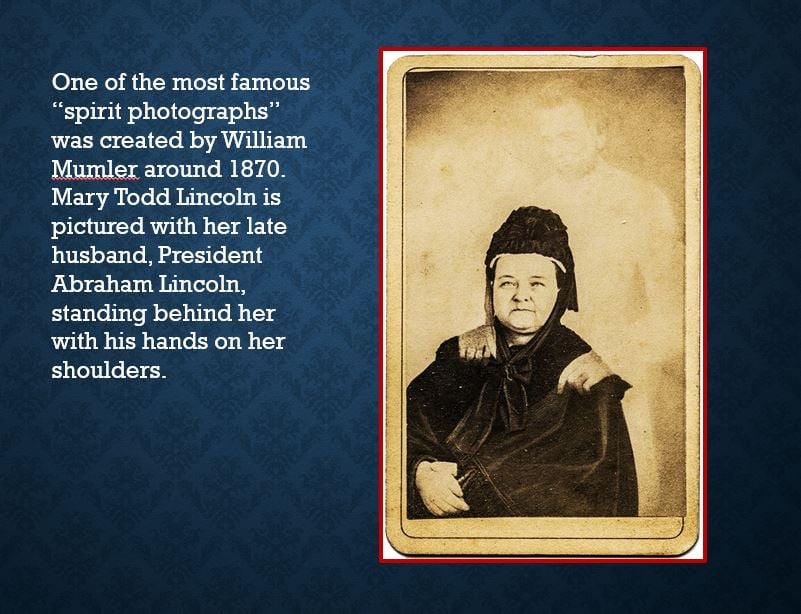
“Spirit photography” captured the images of ghostly presences, often of deceased loved ones interacting with the living. One famous U.S. ghost photographer was William Mumler, who produced a photo of Mary Todd Lincoln with the image of her late husband, President Abraham Lincoln, hovering over her with his hands on her shoulder.
People in the throes of grief were easy victims for charlatan mediums and spirit photographers. Such victims were comforted to think their loved ones were still nearby. Eventually, the skeptics started to outnumber the believers, and some spiritual practitioners were charged with larceny and fraud. Mumler was arrested and put on trial, but the prosecution could not prove how Mumler had created a hoax so he was exonerated. It was after this trial, around 1870, that he created the photo of the Lincolns.
The next post in this series will explore the signs of a haunting, leading up to the ghost stories connected to Givins Beverly Castle.
The Paranormal Ridge: Part 1 – The History of Ghost Stories
By Carol Flynn
Ghost and paranormal stories have been around forever. Every culture and every nationality and every religion have their versions of ghost folklore. Every one, from the Vikings to Tibetan Buddhists.
The intent of this series, as was stated in the previous post, is to share information on the ghost stories connected to Givins Beverly Castle at 103rd and Longwood, which were covered last year in a presentation at the Castle. Some general information on the history of paranormal stories will help put those surrounding the Givins Beverly Castle into perspective.
In Egypt, archaeologists discovered 4,000-year-old pottery fragments with a ghost story recorded on them. In this story, a high priest encountered a restless spirit whose tomb had collapsed.
A tomb was considered not just the final resting place for a person’s physical remains, but the home of his spirit as well, and therefore tombs needed to be maintained like any house would be. While interactions with ghosts were not considered horrifying supernatural occurrences, the living still wanted the dead to stay content so they would not become a nuisance.
In the story, the priest promised to build a new tomb, but the ghost was skeptical because others had promised but failed to do so. Some pieces of the story are missing, but then the priest sent out three men to find a good location for a new tomb. They found one and reported back to the priest. The last shard states the priest declared his intent to build the tomb. No further parts of the story have been discovered but it is assumed the priest kept his promise.
Religious people like saints often reported paranormal experiences – apparitions, dreams, messages from the supernatural.
A personal favorite story is a little piece about St. Paul of the Cross who was born in 1694 in Italy. A series of visions led him to establish the religious order called the Passionists.
Paul claimed that demons in the form of cats often walked across his bed while he was trying to sleep, keeping him awake. Anyone who has cats knows this is the kind of thing cats indeed do.
One cat owner asked a member of the clergy, “My cats walk across the bed all the time when I’m trying to sleep. How did Paul know these weren’t just regular cats?”
The clergyman replied, “How do you know your cats aren’t demons?”
This might off a new perspective for some cat owners.
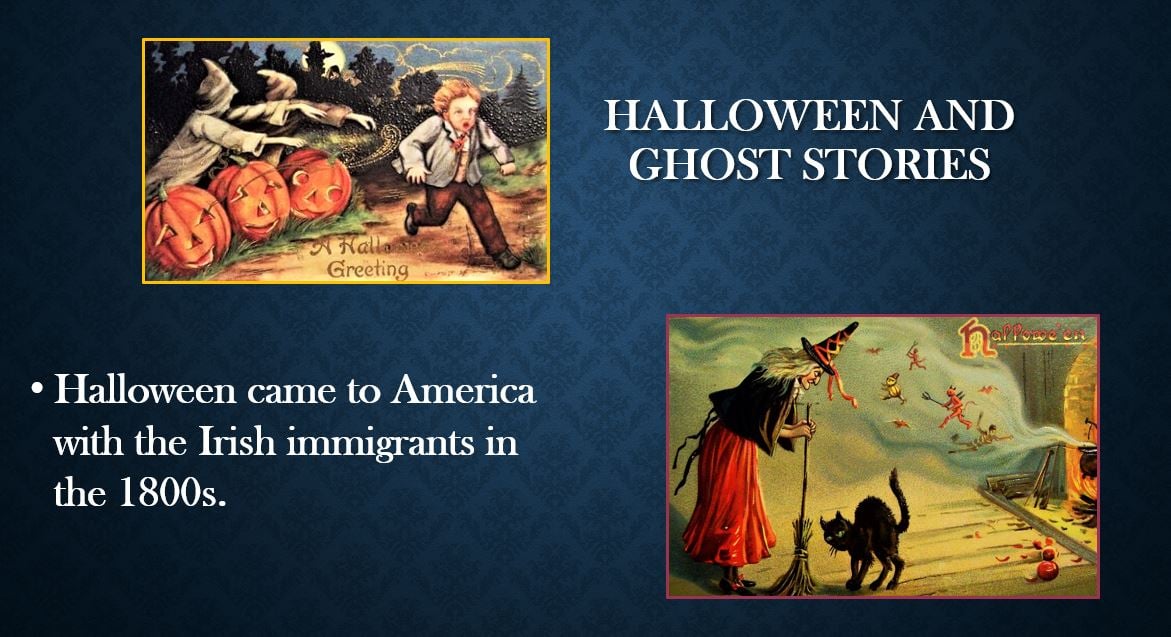
This is the time of the year, Halloween, when imagination turns to ghosts. Halloween is an old Celtic tradition, and it came over to America with the Irish and Scots in the 1800s. Its origins are likely in the Gaelic pagan harvest festival Samhain, Old Irish for “summer’s end.” It was believed this was one of the times of the year, in between the harvest and the coming of winter, when the barrier between the physical and spiritual worlds was thinnest, and it was easier for the spirits of the dead as well as non-human entities like demons and fairies to cross over into the living human world. With time, many of the pagan holidays were adapted to Christianity, and Samhain apparently evolved into All Souls’ Day and All Saints’ Day.
The Celts welcomed the spirits of their deceased loved ones into their homes; they even set places at the dinner table for them.
But the non-human spirits, the demons and the fairies, were another matter. The Celts did things to keep these beings at bay and these became some of our American Halloween traditions.
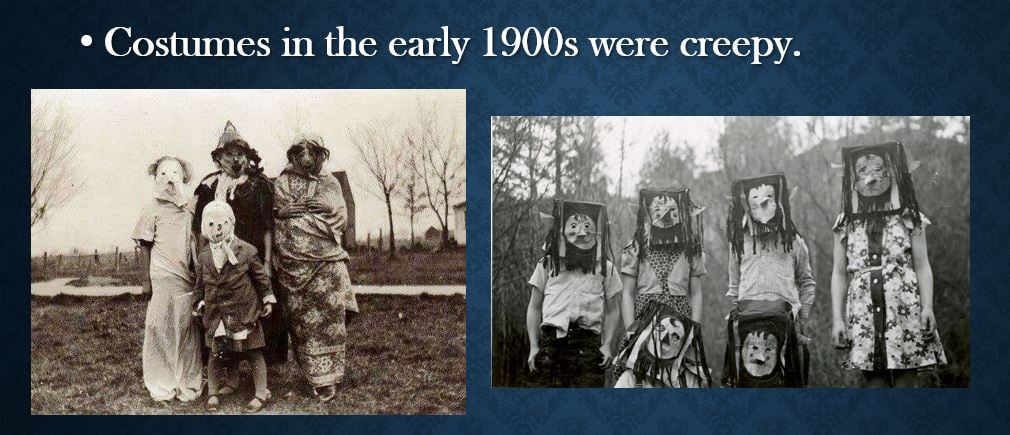
First, the Celts dressed up like frightful demons so the real spirits would be confused and leave them alone. This is where costumes came from. Starting in the 16th century, “mumming” became popular – dressing in costumes and going door to door reciting verses or singing, in exchange for food or offerings on behalf of the spirits. Costumes in the U.S. around 1900 were homemade and “creepy” by today’s standards. They had to be creepy to represent or drive off the spirits. It would be decades before princess and superhero costumes became the norm.
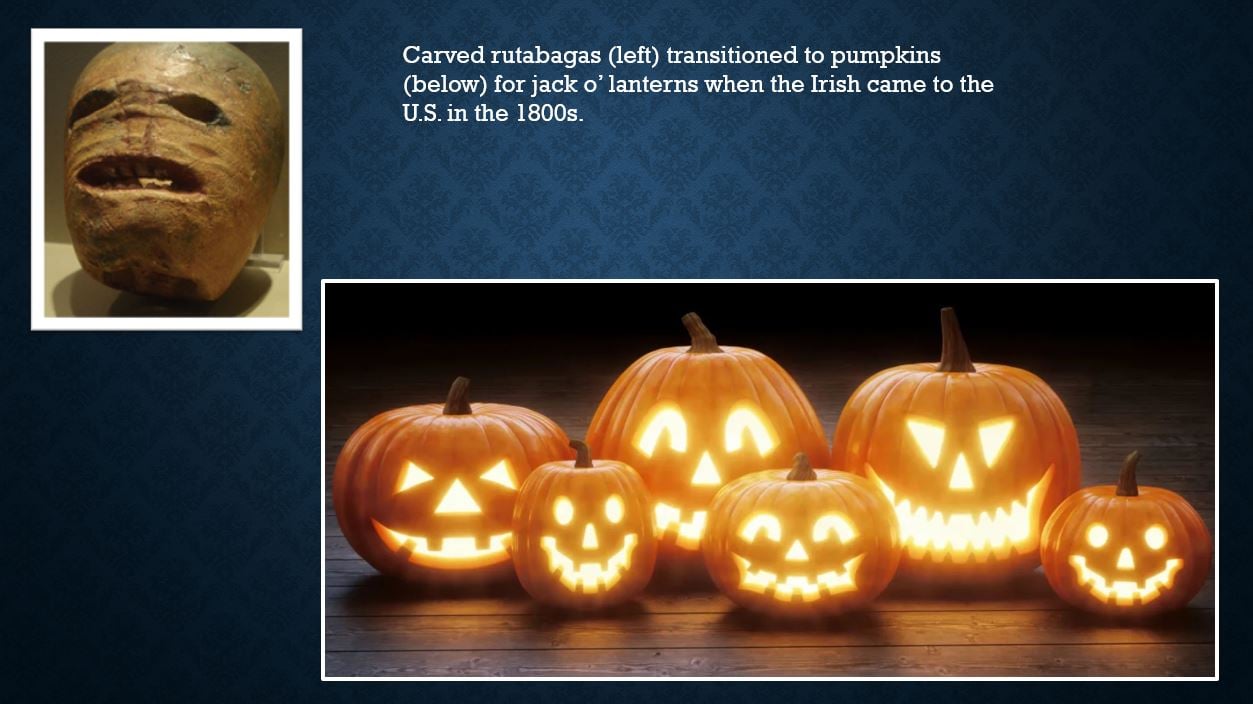
The Celts carved gruesome faces in rutabagas (yellow turnips) and lit them from inside with candles and put them on their stoops or in their windows to scare away spirits. When they got to America, they switched over to pumpkins, a native vegetable that was very plentiful. These are jack o’ lanterns, of course. One Irishman recently new to the U.S. said that he was happy to find that pumpkins are much easier to carve than rutabagas.
The Irish also left out treats of food and beverages so the fairies would not play tricks on them but would instead help them and their farm animals survive through winter. This, plus mumming, led to trick or treating.
A few years ago, a ghost explorer from Chicago was invited to a farm in another state that reportedly is a portal where fairies cross over from their world. As an experiment, they left out a variety of food items to see what the fairies preferred. The favorites were chocolate brownies and Starbucks Frappuccinos. Fairies apparently like sweets.
Fairies are much more common in Ireland and England but sometimes they pop up over here. There is evidence we have visits from the fairy folk here on the Ridge.
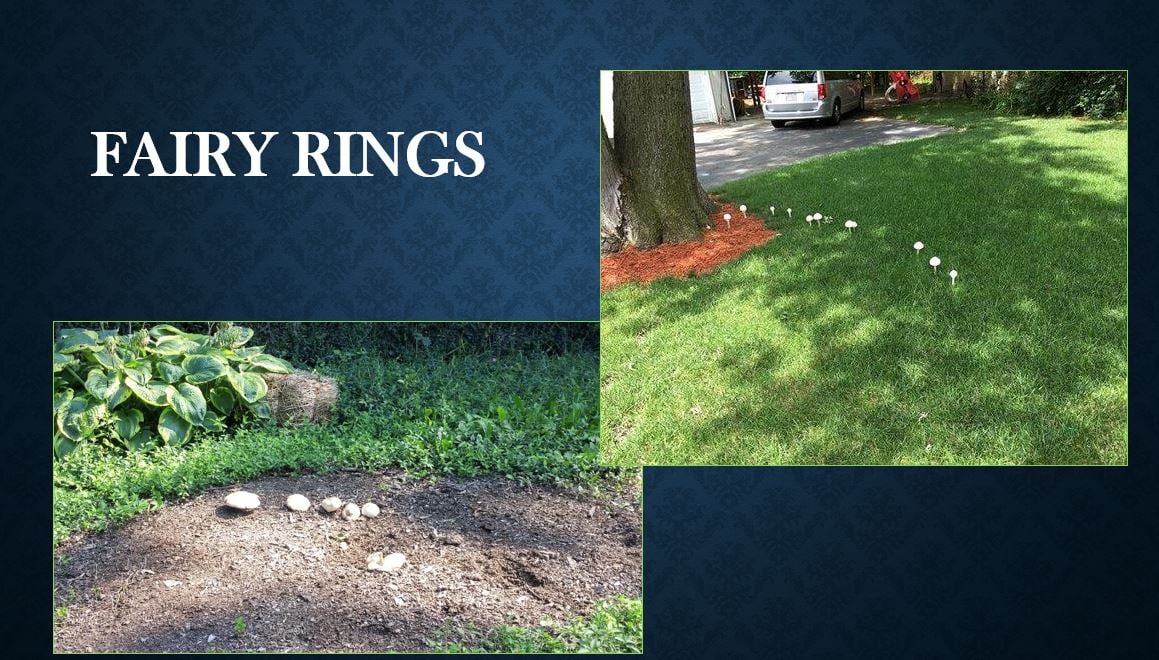
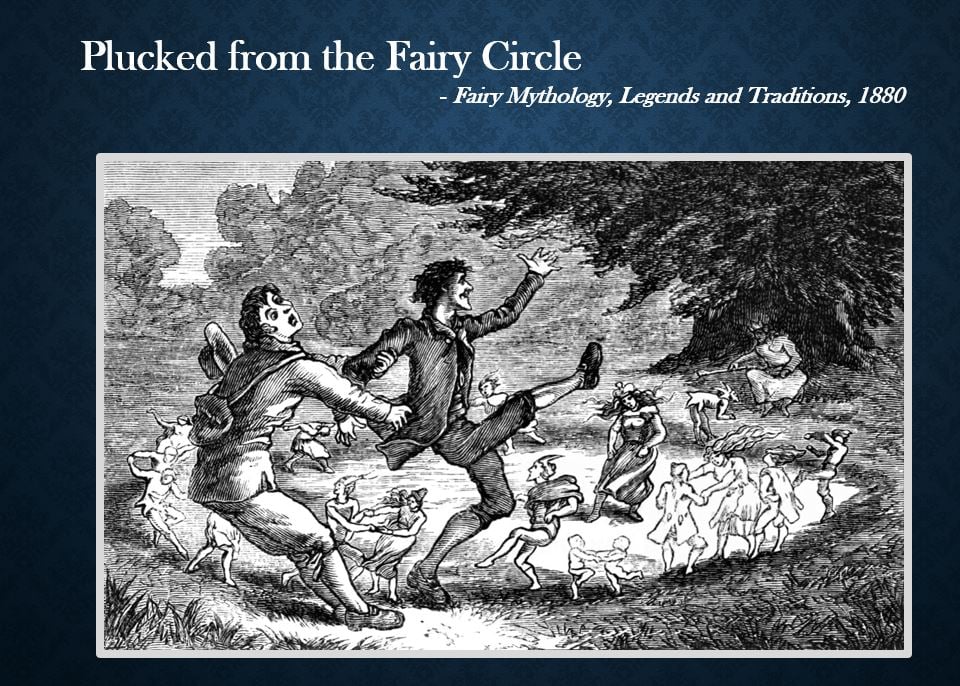
Sightings of “fairy rings” on lawns in the Ridge area are not uncommon. These are mushrooms that grow in an arc or a circle. Sometimes the fungus is underground and displays as a circle of thick or tall grass. There are a lot of superstitions about fairy rings. Folklore says these are made by fairies dancing. Fairies use these rings to trap humans. If a human steps in a fairy ring, he or she may be stuck in the fairy world forever dancing. It is considered bad luck to destroy a fairy ring.
Part 2 will look at the Victorian love for ghost stories.
The Paranormal Ridge
By Carol Flynn
Halloween. It’s that time of the year when our imaginations turn to ghosts and goblins.
As many of you know, in addition to my work researching and writing about local history for the Ridge Historical Society, I also collect local ghost stories and tales of the paranormal. So far I have a good 70 stories from the Ridge and close by – everything from little children ghosts who like to play, to home owners and employees who never left their physical domains, to beloved pets who stayed behind to still be with their owners.
I collect these stories as urban folklore. I record stories that living people have experienced. I am not here to prove or disprove the existence of the spirit world. I am not a “ghost hunter.” In fact, I do not condone harassing and conjuring up the deceased – I think they should be left in peace, they are the souls of our loved ones, and they do not exist to be entertainment for us. I resist all requests to write a haunted guide to the Ridge and to help alleged “ghost hunters” get into private residences. Any stories told to me are kept confidential unless the people have gone public themselves with their stories. I may speak of experiences in general terms, but I NEVER reveal a private name or address without permission.
The last two years I did in-person events about “The Paranormal Ridge.” The first year it was at Open Outcry Brewing Company and we had about 200 people attend – thanks, John Brand. The second year it was at the Givins Beverly Castle, the site of many local stories – thank you, Beverly Unitarian Church. This year, it was going to be at Mount Greenwood Cemetery – a perfect place for such an event – but we are postponing that until we can safely do a group meeting again. We will do that event some time this year, Halloween 2021 at the latest, and my thanks to Paula Everett.
I love to hear from people of the Ridge who have had unusual experiences. If you have a story you would be willing to share with me in complete confidence, please send me a private message or an email to cflynn2013@yahoo.com. I will follow up with an interview.
This year, during October, I will recap my research and presentation about the ghost stories at the Givins Beverly Castle – what people have really reported they experienced and what is myth.
Starting tomorrow, October 1: Part 1 – The history of ghost stories.