Explore the RHS Facebook Archives, a rich repository of local history written by Carol Flynn. For two decades, Carol brought a deeply dedicated voice to public education at RHS. Her role as Facebook administrator through mid-2025 naturally extended her prolific research into meticulously detailed articles, most notably her multi-part historical series posts. Today, Carol continues her local history writing for The Beverly Review and other outlets.
2020
The history of Dan Ryan Woods – Part 19: Odds and ends – some interesting DRW stories
By Carol Flynn
These are just a few of the many stories relating to Dan Ryan Woods (DRW) that make for interesting local history “trivia.”
Tornado
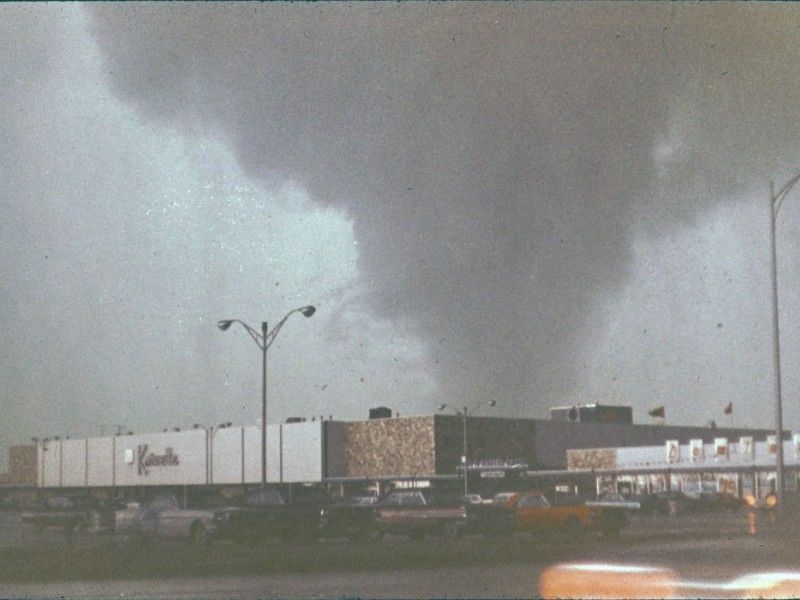
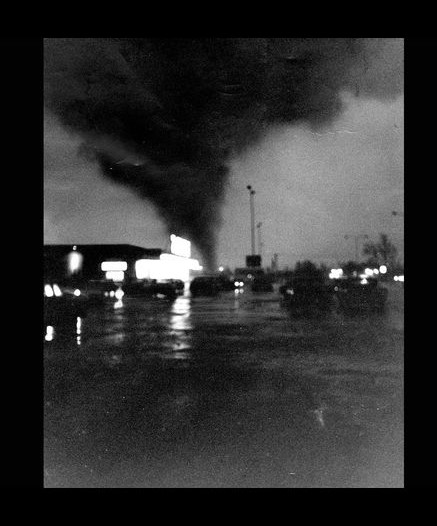
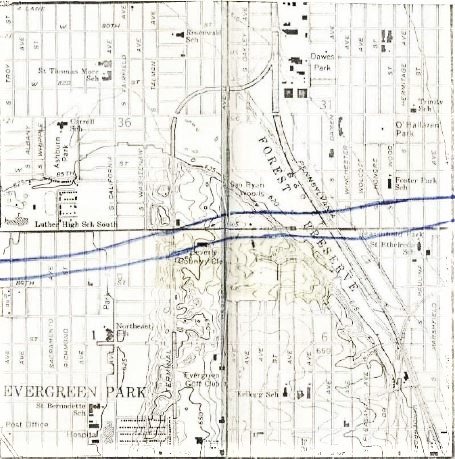
On April 21, 1967, the deadliest tornado in the history of northern Illinois came through the area right at evening rush hour. At 5:24 p.m., the twister touched down in Palos Hills by 106th Street and 88th Avenue where Moraine Valley Community College is now, and started moving east-northeast. It reached its maximum size and intensity as it passed through Oak Lawn, Hometown and Evergreen Park. It continued along 87th Street, destroying a building at the Beverly Country Club, and tore through DRW, uprooting and damaging hundreds of trees. The twister continued northeast, weakening, until it moved into the lake as a waterspout at Rainbow Beach around 79th Street. The tornado caused 33 fatalities and over 1,000 injuries, and more than $50 million in property damage.
Unexplained prank
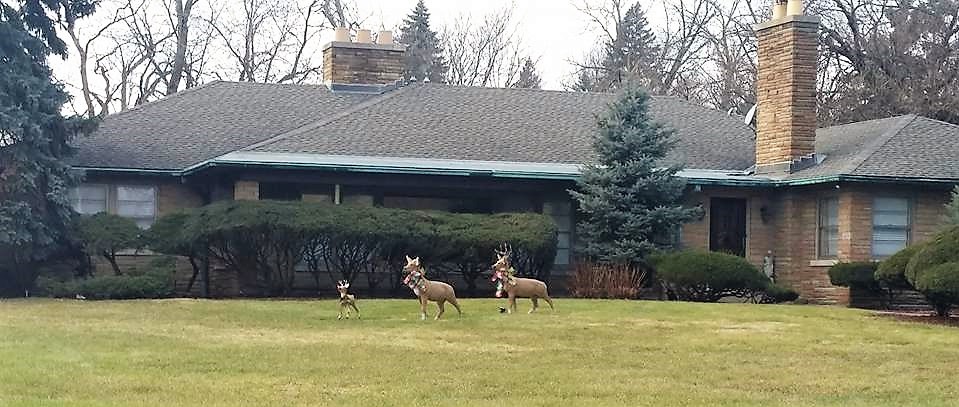
The cast iron deer family outside the home at 119th Street and Bell Avenue is a familiar sight. In 1968, the doe disappeared for several weeks after Halloween. Police on foot patrol found it in the middle of a sidewalk in a residential area blocks away but could not move it because it weighed 450 pounds. Returning with more help, the doe was gone. It turned up in DRW. How the lawn ornament was removed unnoticed in the first place was a matter of conjecture because it was so heavy, and there were no marks on the lawn that it had been dragged; in fact, there was no trace of the theft at all, not even a footprint. The police returned the doe via a police van, and because of this prank, the owners cemented the deer into the ground, where they remained for fifty years. However, it was recently noticed that the fawn is now gone.
Crosstown Expressway
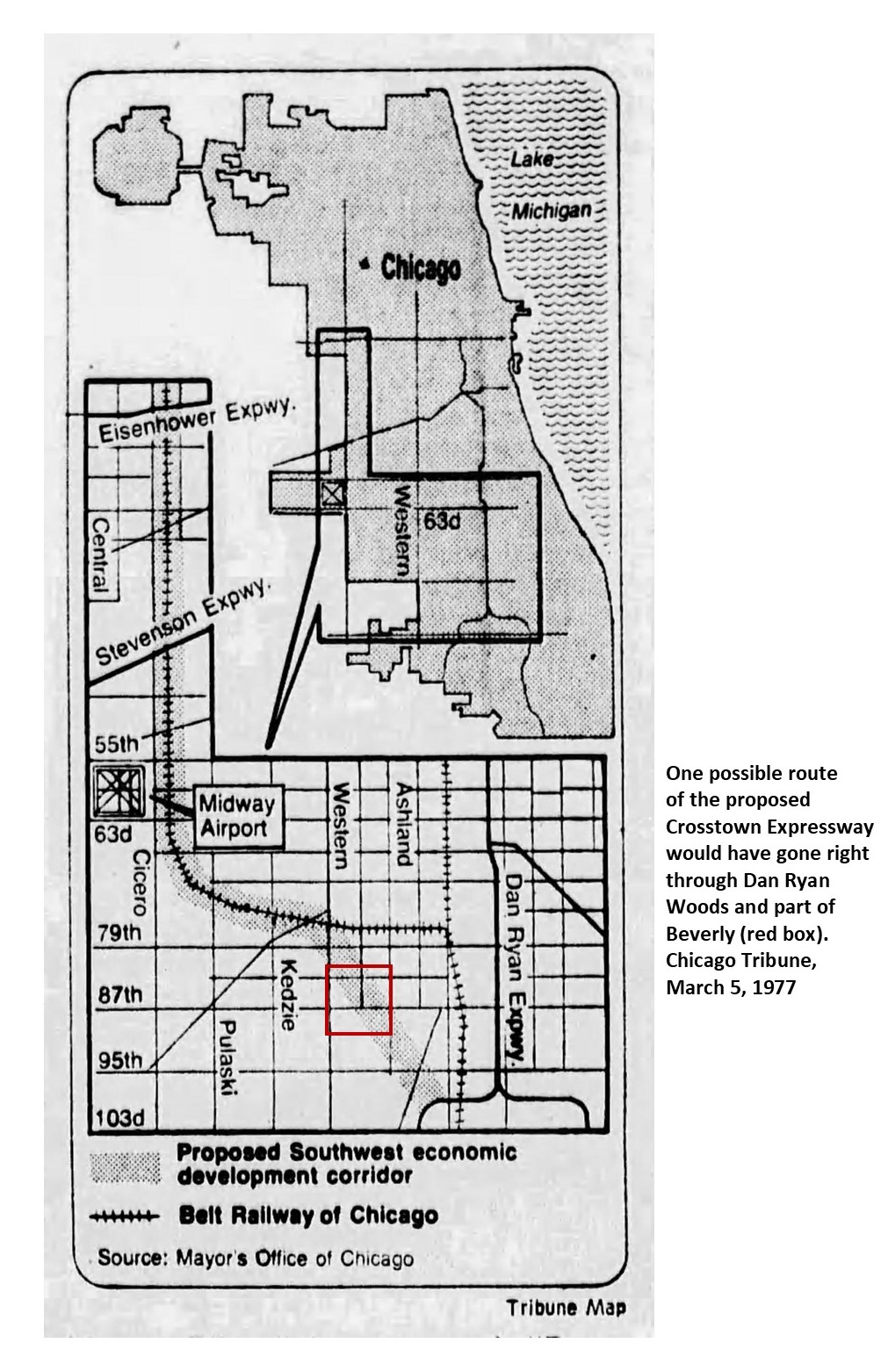
All through the 1960s and 1970s, there was talk of building a “Crosstown Expressway” on the west side of Chicago that would connect the north and south sides. The origins of this plan dated back to Daniel Burnham’s 1909 Plan of Chicago, to divert traffic around the central city. The Crosstown Expressway “corridor” was planned to start at Montrose Avenue where the Kennedy and Eden Expressways connected, and run south along Cicero Avenue, until Midway Airport, where it would veer southeast to connect to the Dan Ryan Expressway. Various routes through the southwest side were considered, including at least one that would have destroyed DRW. Ridge community groups spoke out against any plan that would adversely affect the preserve. The Crosstown Expressway was a political issue and there was only lukewarm public support for the $2 billion project. The plan was abandoned in 1979, although periodically new ideas related to this concept are proposed.
Toys for Tots
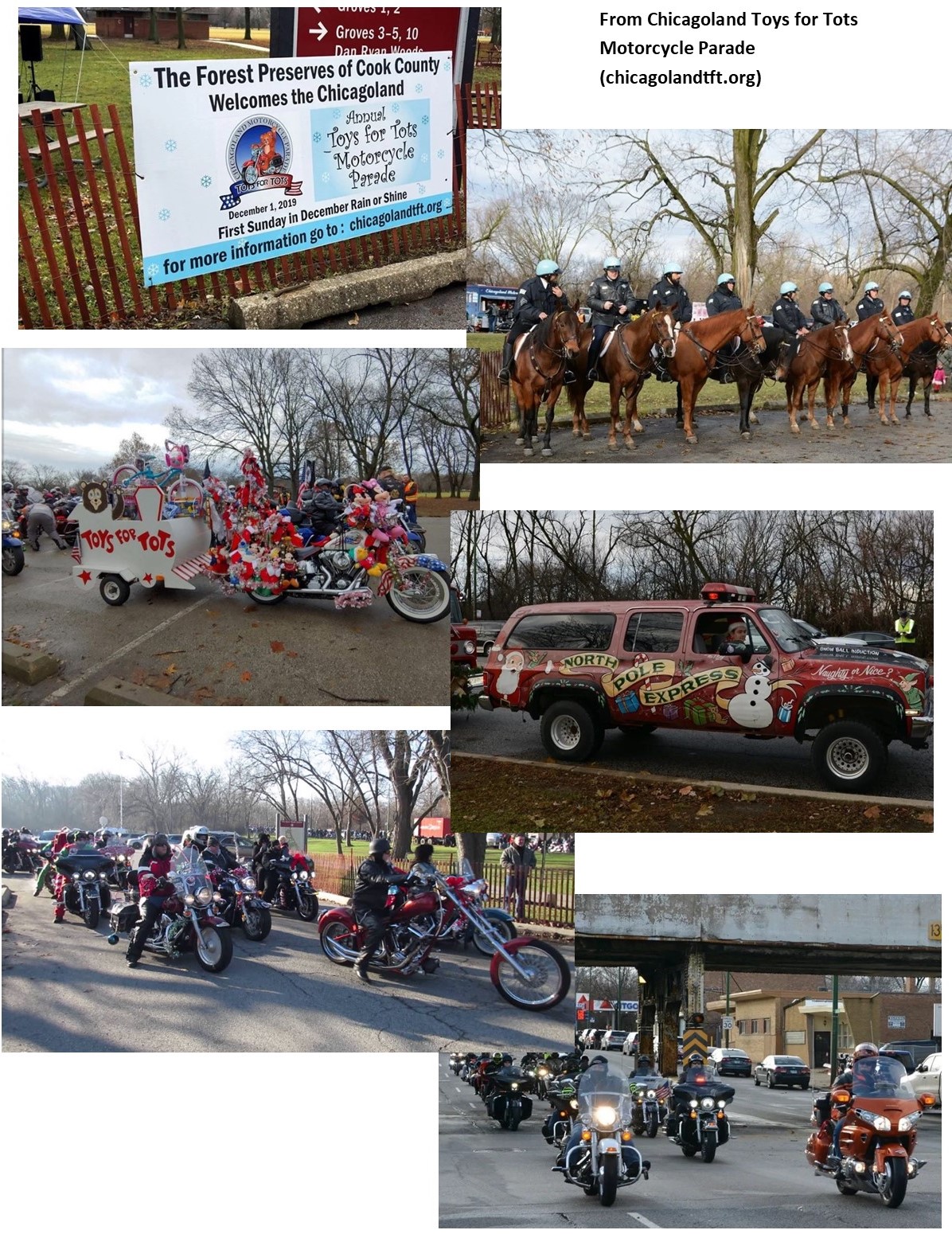
In 1985, DRW became the permanent gathering and starting point for the Chicagoland Toys for Tots Motorcycle Parade, which takes place the first Sunday of December, rain, shine, or blizzard. The purpose of the event is to collect Christmas presents for children. The parade starts at DRW and travels north on Western Avenue to Addison Street. This is the world’s largest motorcycle parade, and in past years attracted as many as 70,000 riders. In recent years, between 20,000 to 30,000 riders have participated annually. The Toys for Tots campaign began in 1947 in Los Angeles through the Marine Corps Reserve and today covers all 50 states and other U.S. possessions. Since that time, close to 300 million toys have been collected for children.
Plane crash
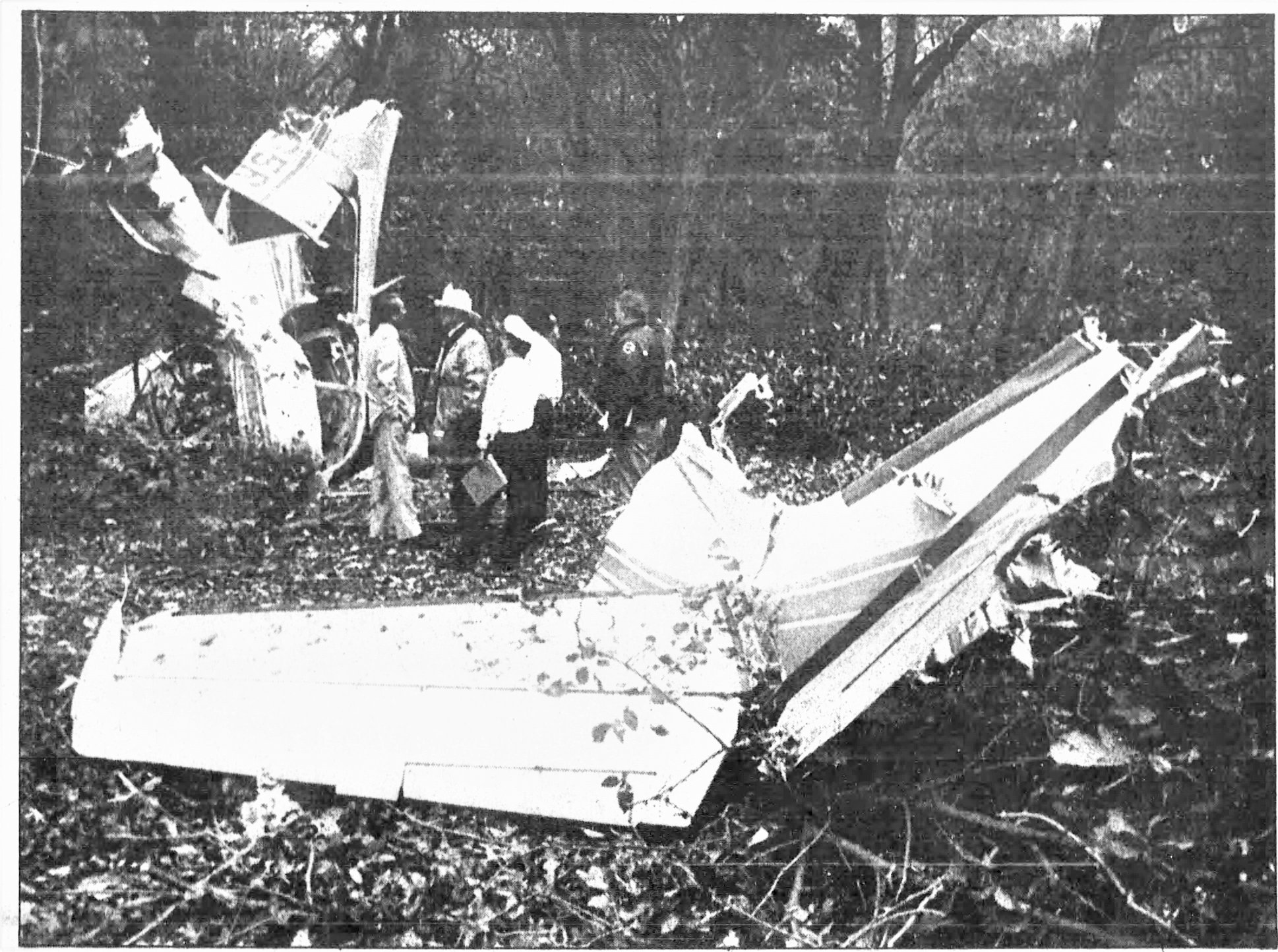
A twin-engine Beechcraft Baron crashed in DRW in 1986. The small plane, carrying three people, was in route from Jefferson, Missouri, to Midway Airport, where the passenger, a deputy sheriff, was to pick up a prisoner who faced burglary charges in Missouri. The plane ran out of fuel in flight and came to rest nose down after clipping the tops of trees for almost 100 yards. DRW staff helped free the deputy sheriff who was trapped in the wreckage; he was taken to Christ Hospital with critical injuries. The pilot and co-pilot received only minor injuries. The pilot was commended for steering the plane away from surrounding residential areas and into DRW. The deputy sheriff survived and lived to age 73, dying in Missouri in 2015 after a long career in law enforcement.
Major Taylor Trail
In 1993, the Forest Preserves of Cook County (FPCC) purchased eight acres of former railroad land to the east of DRW. These tracks had once been part of the Pennsylvania Railroad system. In 1883, special tracks were laid east-west to connect the Union Stockyards to these tracks outside of the Sherman Farm, giving John Sherman a private rail line between his experimental stock farm and the stockyards that he operated. An 1893 “Pennsy” railroad map showed a Forest Hill stop which would have been around 87th Street or so, as well as a Washington Heights stop, which assumedly was the 91st Street station, which this railroad shared with the Rock Island line. The Rock Island line was extended west to this location, and the station was built, in 1889-90. The Rock Island is still in operation as the Metra line.
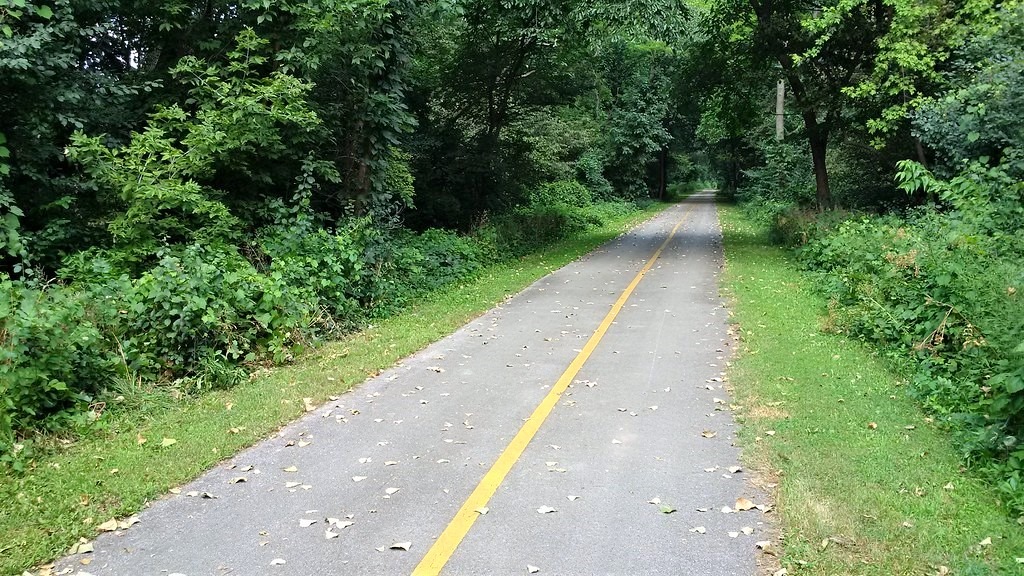
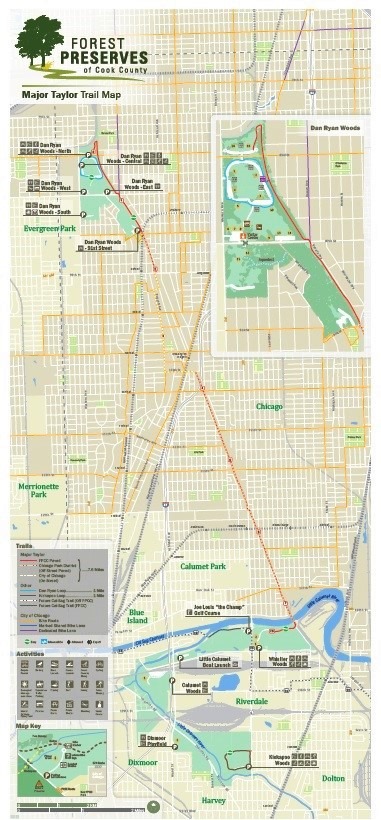
In 1997-98, the former railroad land was paved with a 10-foot wide asphalt bicycle path starting in the DRW parking lot north of 83rd Street, then running south over the old 83rd Street railroad overpass and along the east side of the woods to 94th Street. Later, the path was connected all the way to the Little Calumet River and Whistler Woods to the south.
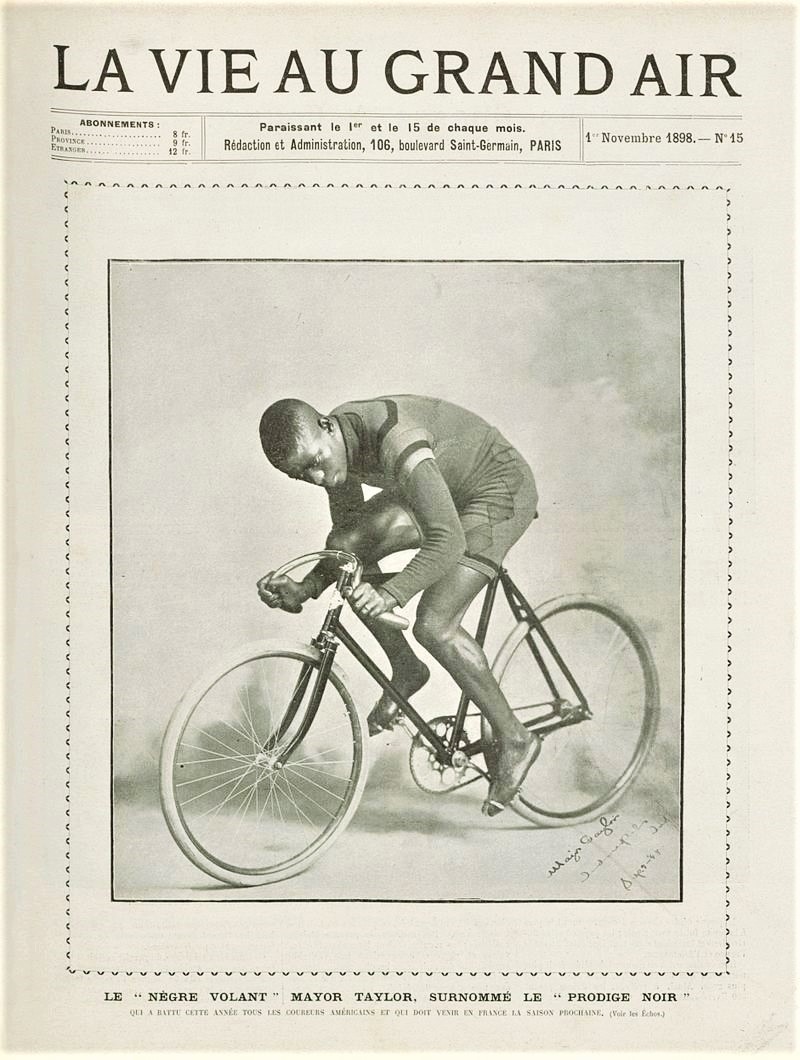
The path was named the Major Taylor Trail in honor of Marshall Walter “Major” Taylor (1878-1932), an African American professional cyclist. He received the nickname “Major” early in his career when he performed as a trick rider wearing a military uniform.
Taylor won hundreds of meets and in 1889-90, he set seven world records. But he was the victim of considerable racism, including being banned from tracks because white cyclists refused to race with him, and being threatened and intimidated, and once choked into unconsciousness by a rival.
Still, Taylor persisted and became the only black athlete to ever win a world championship in cycling. One of his biggest fans was President Theodore Roosevelt. Unfortunately, the Great Depression and unsuccessful investments took their tolls on Taylor’s finances. Retired in Chicago, he died penniless. His legacy was revived in 1982 and he has since received posthumous honors and awards.
Next: The “Lungs” of the City
The history of Dan Ryan Woods – Part 20: The “Lungs” of the City
By Carol Flynn
The history of the land and events that went on in the Forest Preserves of Cook County (FPPC) and Dan Ryan Woods (DRW) have been the focus of most of this series so far. This post will discuss the woods themselves.
Frederick Law Olmsted, the public health proponent and landscape architect, used the term “the lungs of the city” in 1872 to emphasize the importance of public parks as open green spaces where city dwellers could breathe clean air. He was speaking in terms of the prevailing belief of that time that diseases were caused by breathing “bad vapors” and could be avoided and cured by good ventilation and plenty of fresh air. While we know much more now about bacteria and viruses that are the actual causes of diseases, we also know that Olmsted was more correct about the importance of green spaces than he could have imagined, but for other scientific reasons.
A green space like DRW not only benefits the community recreationally and aesthetically, but also ecologically. According to the U.S. Forest Service’s Urban Forest Ecosystem Research Unit and many other sources, it is well documented that trees absorb pollutants such as carbon monoxide and sulfur dioxide and break them down into less harmful substances. Trees also remove carbon dioxide, a potent greenhouse gas that traps heat and contributes to global warming, and through the process of photosynthesis, release oxygen into the air.
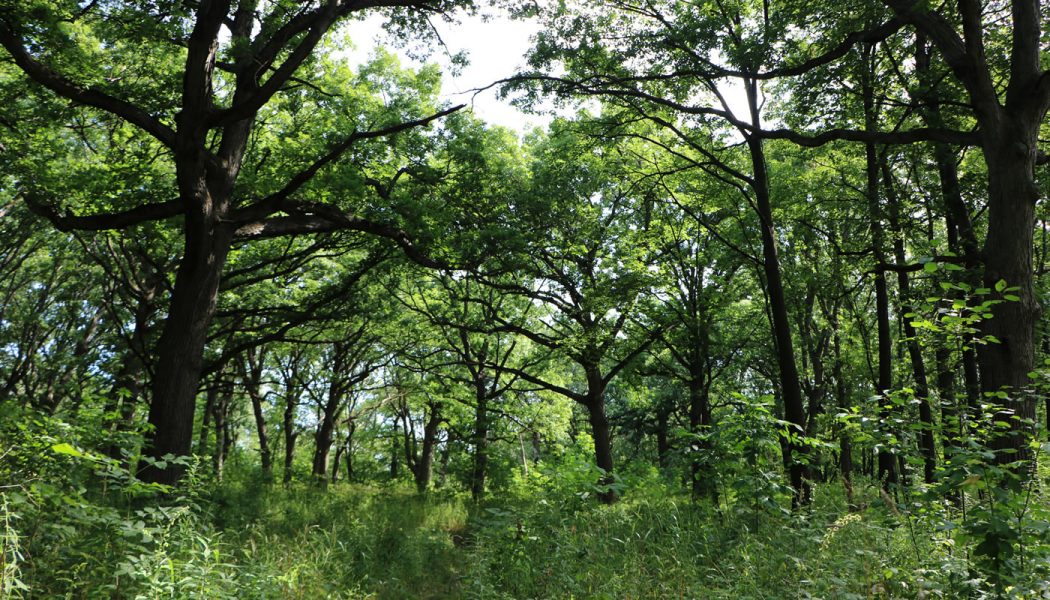
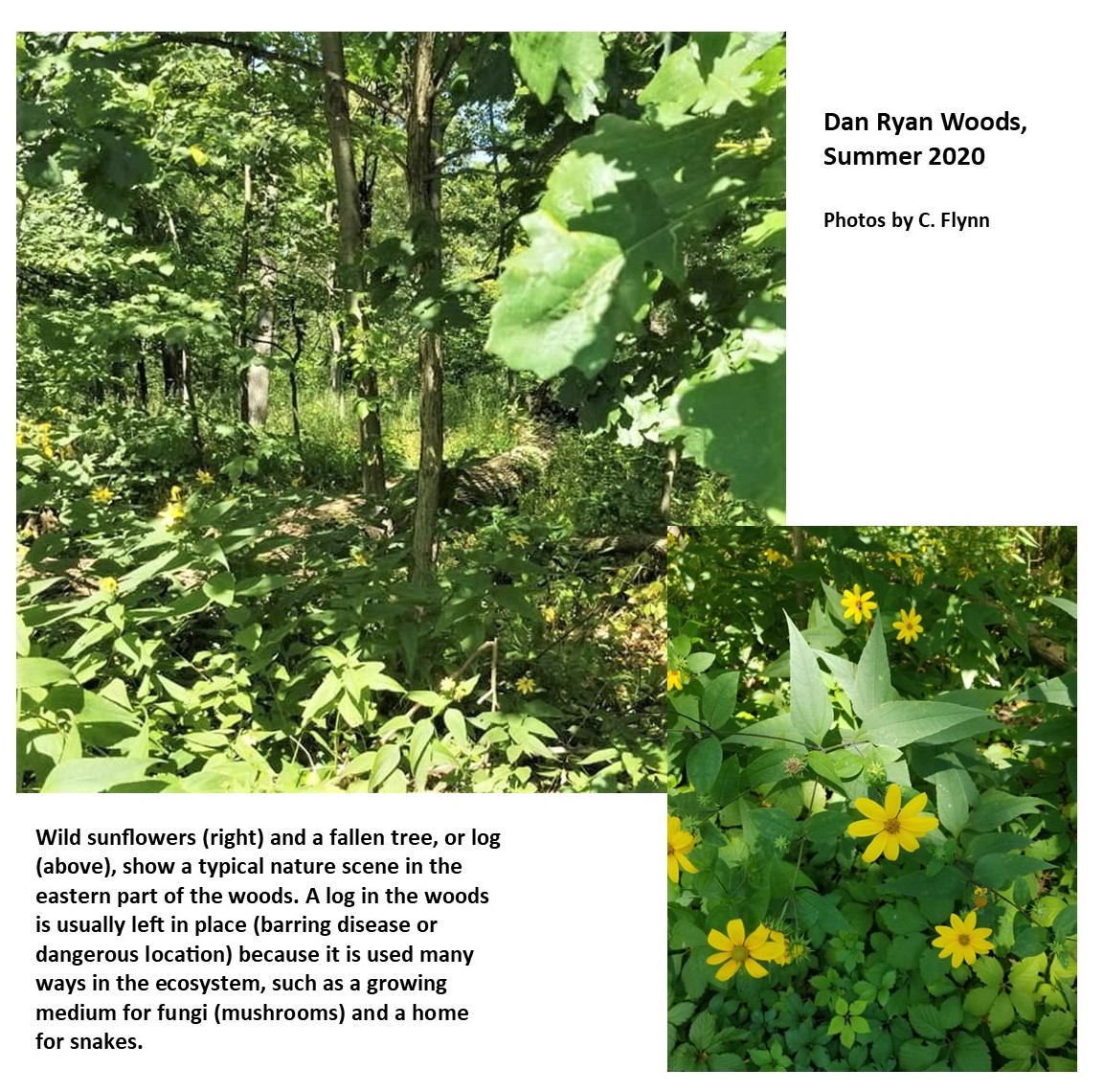
The FPCC describes the top of the Ridge in DRW as an open woodland made up primarily of oak and hickory trees. The trees are spaced far enough apart to allow sunlight to reach the forest floor, where plants such as red trillium, thicket parsley and wild geranium thrive. Open woodlands were one of the predominant ecosystems once found throughout the Chicago area before development.
The east side of the woods, below the Ridge, is described by FPCC as “wet woods” dominated by swamp white oaks, red oaks, and American basswood. Pale-leaved sunflower, fringed loosestrife and many sedges and manna grasses cover the ground below. These are all plants that can withstand flooding, as they receive the run-off of water from the Ridge.
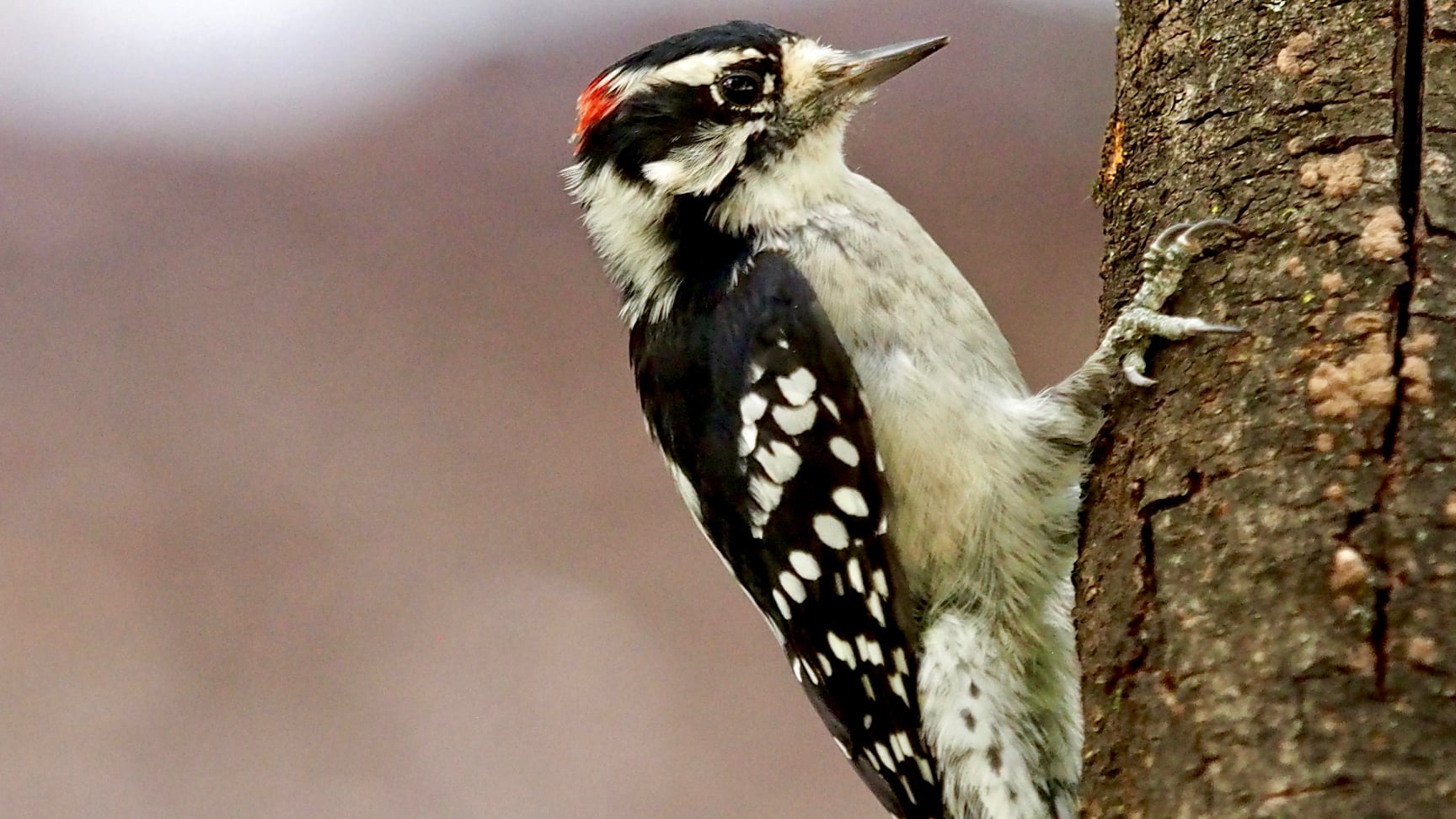
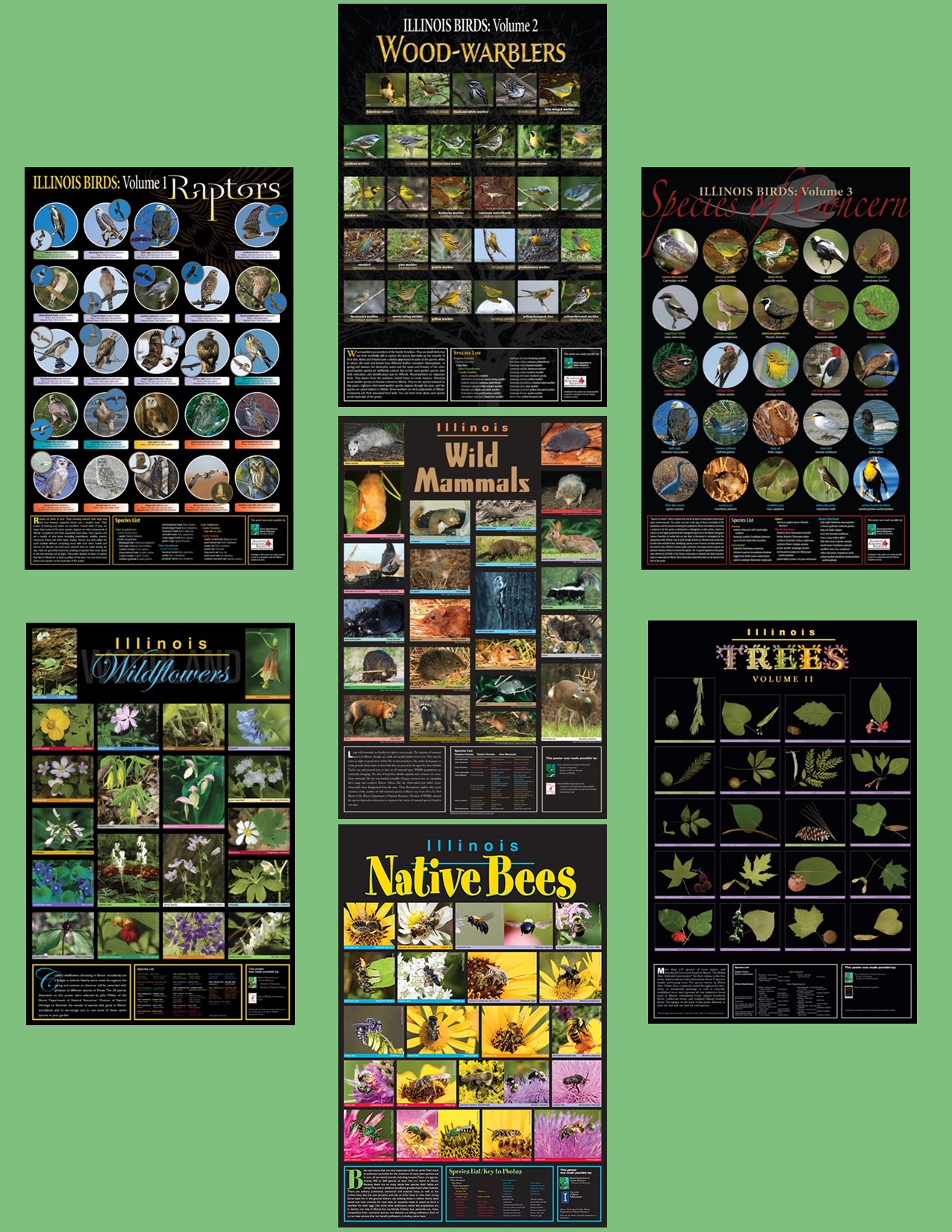
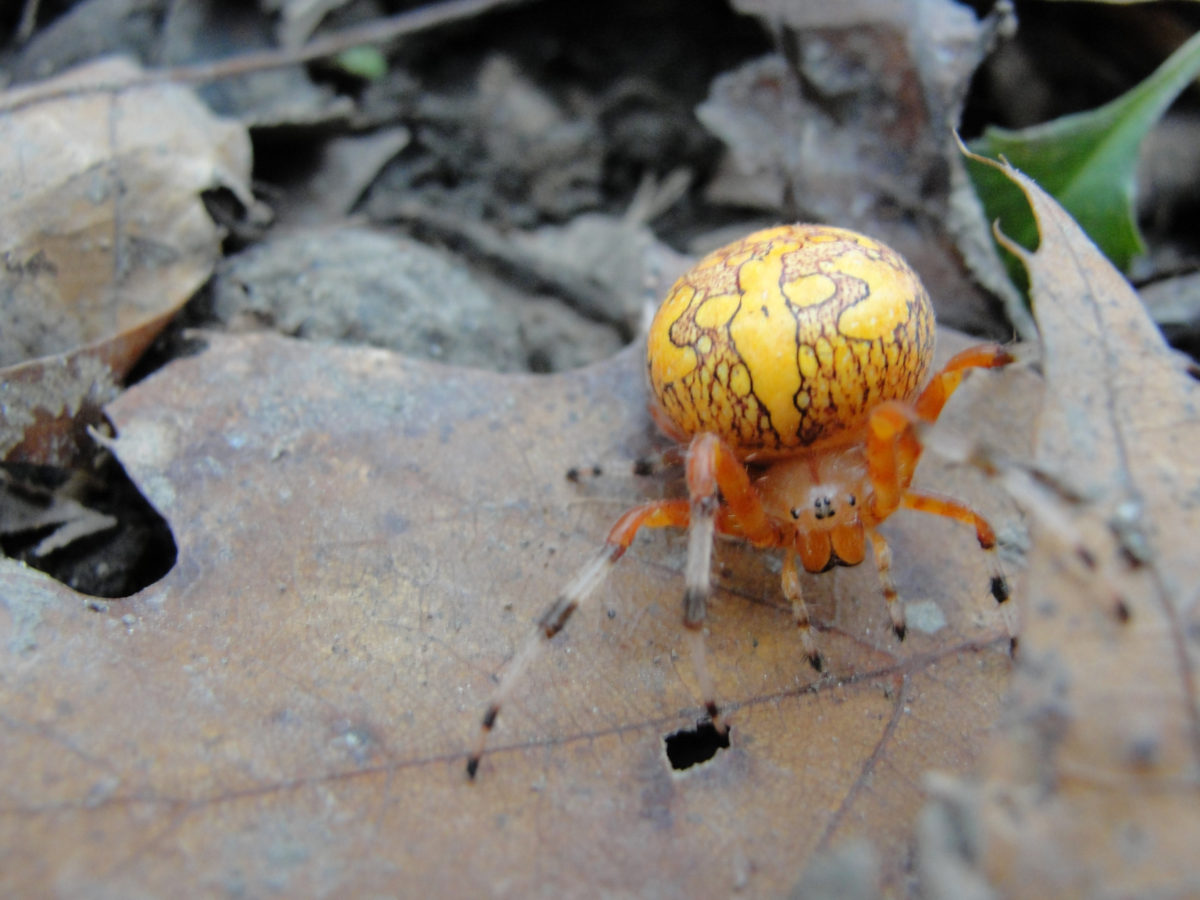
Bird watching is a favorite pastime in DRW and all the preserves. Birds that may be seen in DRW include hawks, owls, woodpeckers, warblers, goldfinches, hummingbirds, and many more. In addition to the wildlife that can be spotted, like birds and rabbits, the forest is teeming with life visitors do not always realize is there: bees, butterflies, spiders, snails, crickets, grasshoppers, earthworms, and many other tiny creatures, and microorganisms too small to be seen by the human eye. Every one of these creatures has an important role in the ecosystem.
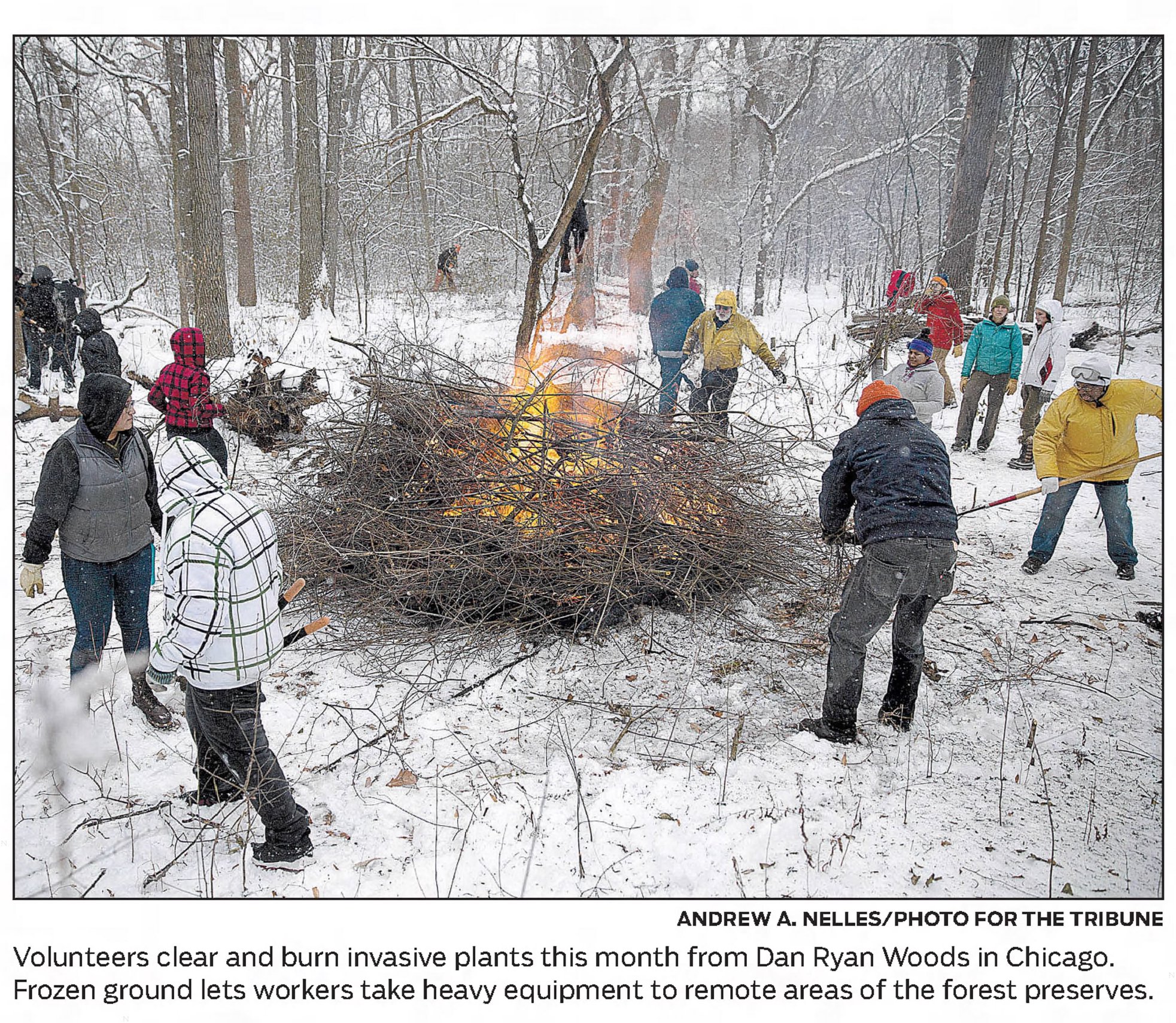
Gone from DRW are the elm trees that once were plentiful around Chicago. The FPCC lost over 100,000 trees due to Dutch Elm Disease, the fungal infection spread by elm bark beetles, after the disease entered the U.S. in the 1950s. In more recent years, DRW has lost hundreds of trees to the emerald ash borer. Dozens of invasive plant species such as buckthorn are also enemies of native ecosystems. Removing invasive plants from DRW and the other preserves is an on-going challenge.
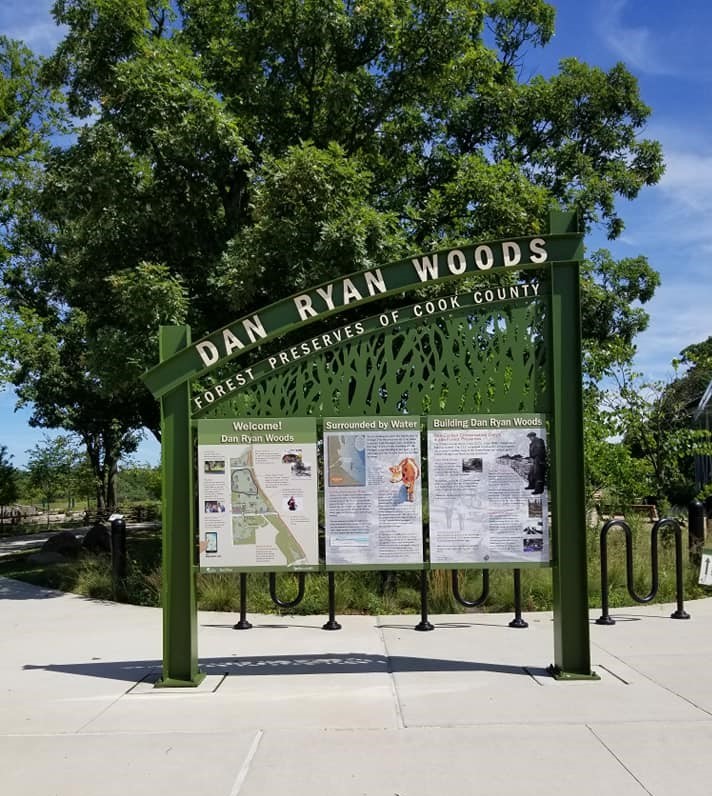
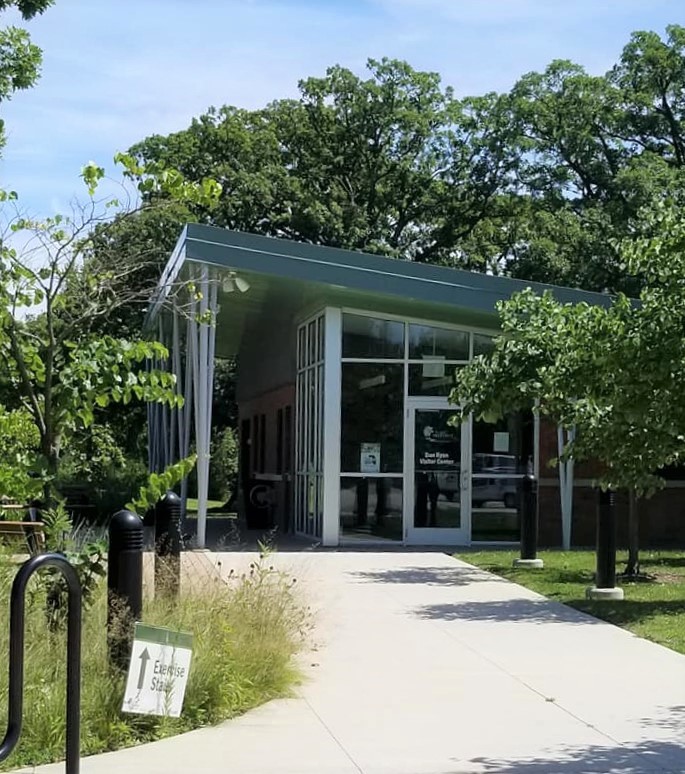
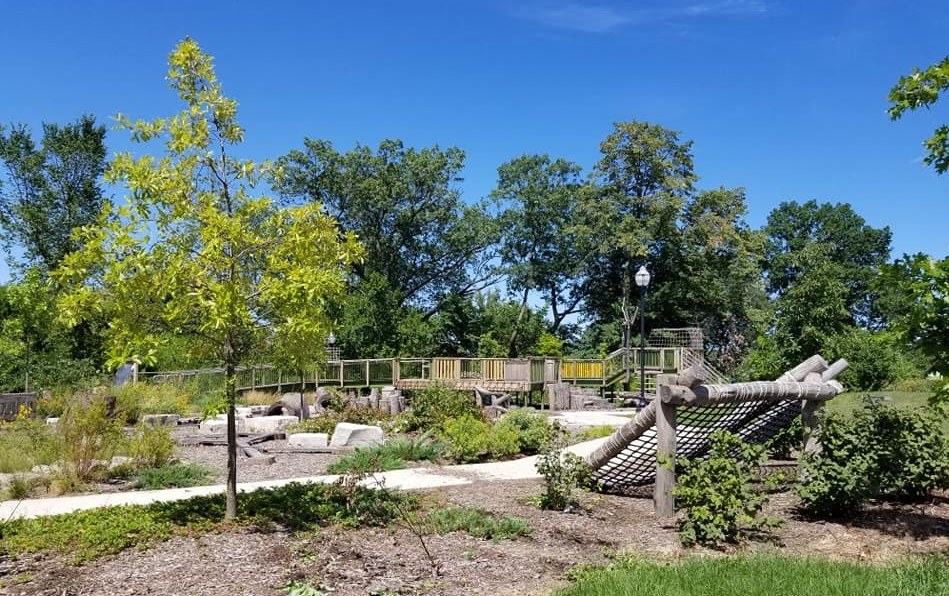
FPCC continues its mission of conservation, education, and recreation. At DRW, some new features were introduced in recent years, including a new visitors’ center and a nature play space with a treehouse walkway. The pavilion, or warming shelter, is available for events, and of course, picnic groves and trails have been available for 100 years.
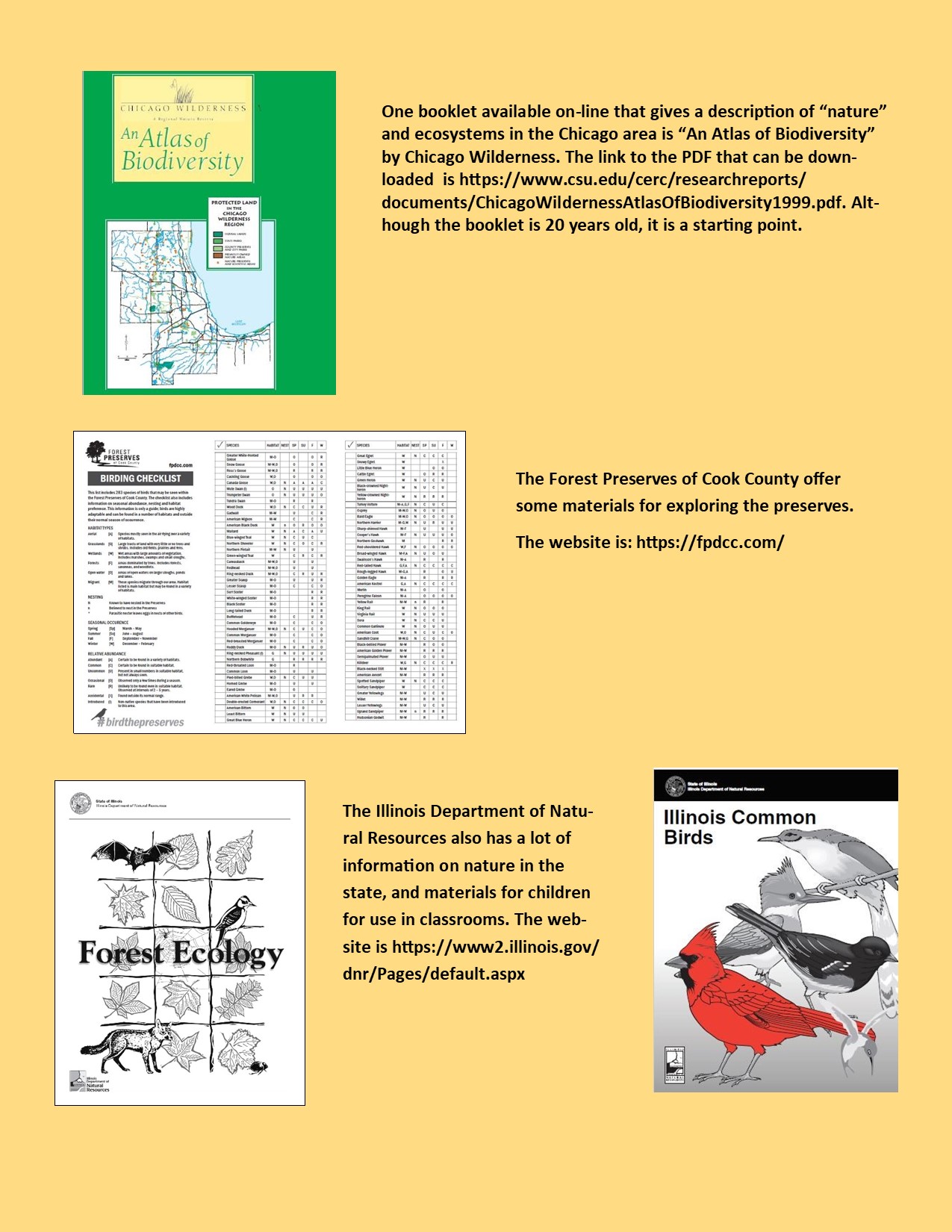
The website for the FPCC, https://fpdcc.com/, shares information on accessing the preserve and can be checked for updates to programs and services affected by the pandemic.
Different volunteer groups work with FPCC on projects. One group is the Friends of the Forest Preserves (FOTFP), founded in 1998 as a grassroots non-profit organization that works to protect, restore, and promote the preserves. FOTFP offers a variety of ways to get involved in the preserves, including restoration projects and photo contests. The website is https://www.fotfp.org/.
Last year FPCC adopted a Land Acknowledgement Statement, which recognizes and shows respect for the past and on-going relationship that Native American tribes share with the land. This is particularly appropriate as the forest preserves are really the only places left where archeological remains of the vast Native American presence in the Chicago area dating back for 13,000 years can still be found undisturbed.
The FPCC Land Acknowledgement Statement dated 2019 is:
“The Forest Preserves of Cook County acknowledges that we are on the ancestral homelands of the Council of Three Fires—the Ojibwa, Ottawa and Potawatomi tribes—and a place of trade with many other tribes, including the Ho-Chunk, Miami, Menominee, Sauk and Meskwaki.
“As a land management agency, we acknowledge that we have played a role in shaping the histories of local Native Americans by acquiring this land. We must also recognize, share and celebrate the history of local Native Americans and their immemorial ties to this land.
“We commit ourselves to developing deeper partnerships that advocate for the progress, dignity and humanity of the many diverse Native Americans who still live and practice their heritage and traditions on this land today.”
This brings us full circle back to the beginning, when the tip of the Ridge was known as “Look Out Point.” The folklore about Indians and the land now known as Dan Ryan Woods might be more fanciful than historic, but acknowledging that the Native Americans were here long before the settlers came is a good way to reinforce Cook County’s stewardship role for the land and its ecosystems, and the duty of county residents and the other users of the preserves to protect them.
Dan Ryan Woods offers a small but significant remnant of the “wild Ridge” that existed before development. Other posts on the RHS Facebook page have discussed the natural history of the area, the oak savannas, the prairies, the wetlands and marshes with their abundant wildlife and native fruit and nut trees that covered the area, through the observations and experiences of the early settlers.
The next and final post on the history of Dan Ryan Woods will discuss a favorite topic related to the earliest days of the ”wild Ridge” – Horse Thief Hollow.
The history of Dan Ryan Woods – Conclusion: Horse Thief Hollow
By Carol Flynn
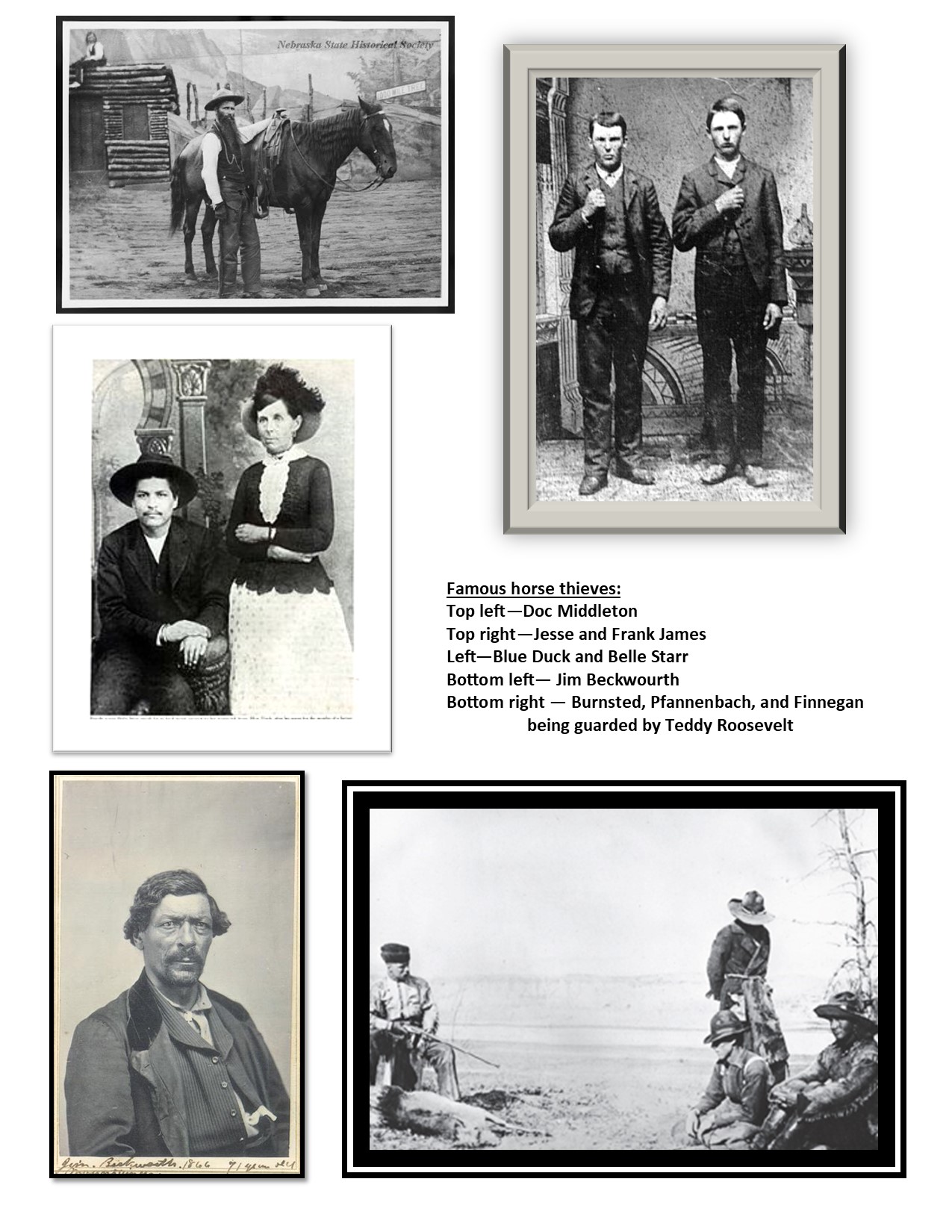
Long before there was a Beverly or a Morgan Park, the Blue Island Ridge was known as Horse Thief Hollow (HTH).
Horse theft was a serious and widespread problem in the U.S. in the mid-1800s. Horses were a valuable commodity. Not only were they the major means of transportation, they were also beasts of burden. Stolen horses were easy to transport “on the hoof.”
A major vigilante movement in the southern states in the 1830s drove horse thieves north. By 1840 northern Illinois was a hotbed of illegal activity. Stolen horses were brought to Chicago for sale from all over the Midwest.
Horse thieves were considered the lowest of the criminal classes. In Illinois and other states, horse theft was made a capital offense. There is no documentation that people were legally executed for horse theft although they did go to jail for the crime. There are, however, many documented stories of vigilantes lynching accused horse thieves. One major problem with this form of “justice” was that vigilantes sometimes hanged the wrong man.
The deep, heavily wooded ravines and gullies with flowing streams that ran through the Ridge provided perfect hide-outs for horse thieves. In 1884, A. T. Andreas wrote in his “History of Cook County” that there was a deep and steep ravine that local farmers observed horse thieves using for “frequent visitations.” Bags of oats and other supplies, hoof prints and an occasional horseshoe were found left behind. The location of this ravine was given as “on the hill on which Morgan Park is situated, and a little south.”
The location of this ravine has been a question for historians. Since the northern boundary of Morgan Park was 107th Street, this ravine had to be south of that street. Two early histories mention ravines that fit the location.
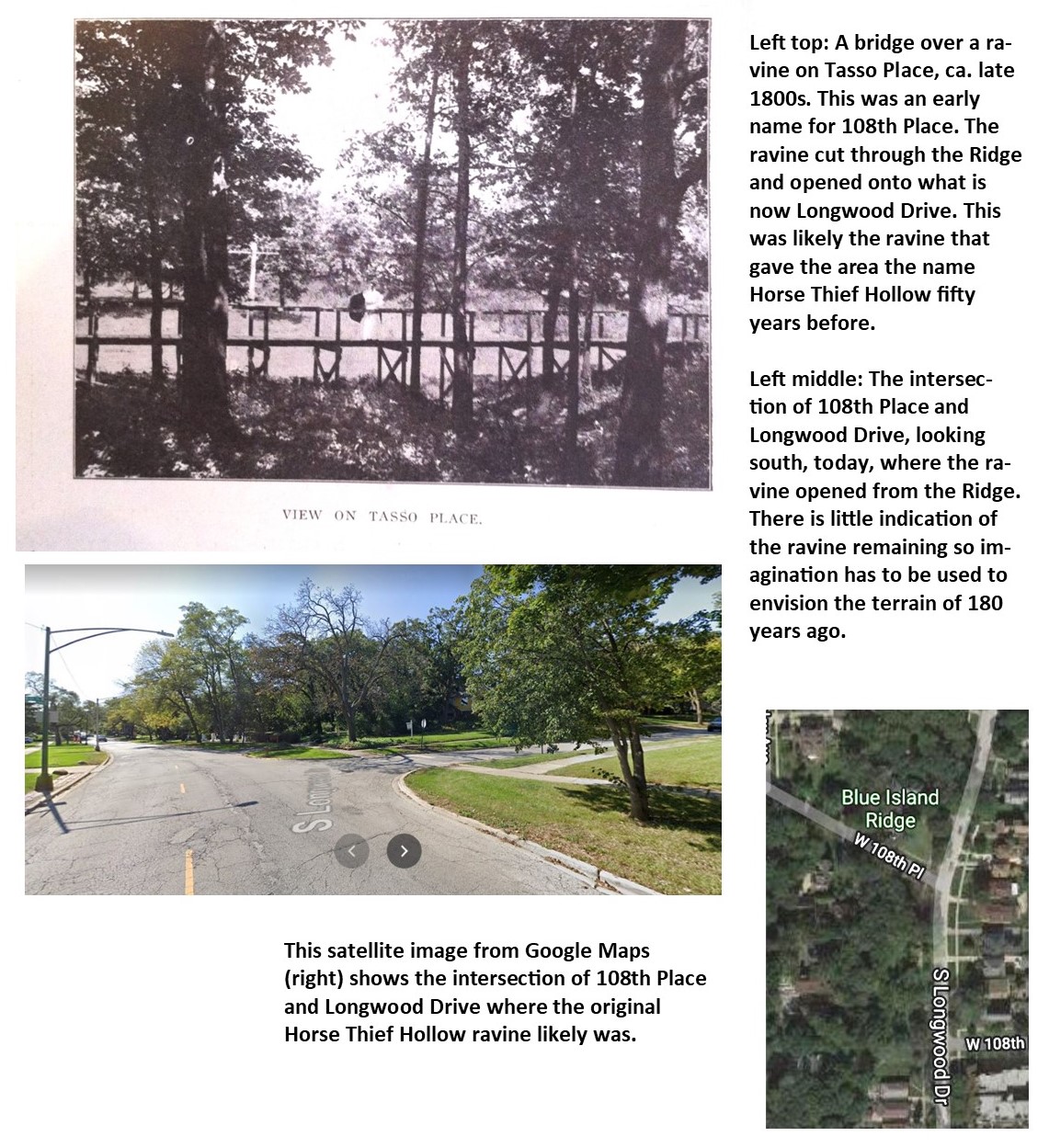
First, William Barnard, one of the earliest settlers on the Ridge, wrote there was a ravine just south of what is now 107th Street that was called Horse Thief Hollow. An early newspaper included a photograph of a bridge over a deep ravine on Tasso Place, an early name for 108th Place. Government Geological Survey maps do show a ravine was there although there is little sign of it today. David Herriott, the postmaster of Morgan Park and publisher/editor of the Morgan Park Post newspaper, who knew local history well, identified 108th Place at Longwood Drive as the site of Horse Thief Hollow. This ravine is likely the spot mentioned by Andreas.
Another ravine was identified by John Volp, a newspaper editor from Blue Island who published a book in 1935 about the first one hundred years of Blue Island and the Ridge. He stated there was a wide ravine or hollow in the Ridge between 115th Street and 119th Street that was used by horse thieves and known as Horse Thief Hollow. This depression also shows up on Survey maps but again, is not really evident today. Just south of that, Volp added, was a very dense stand of trees through which the Vincennes Road passed that was known as “Robber’s Woods.” Farmers returning from selling their produce in Chicago were waylaid there and robbed of their hard-earned profits. It was an area to be shunned.
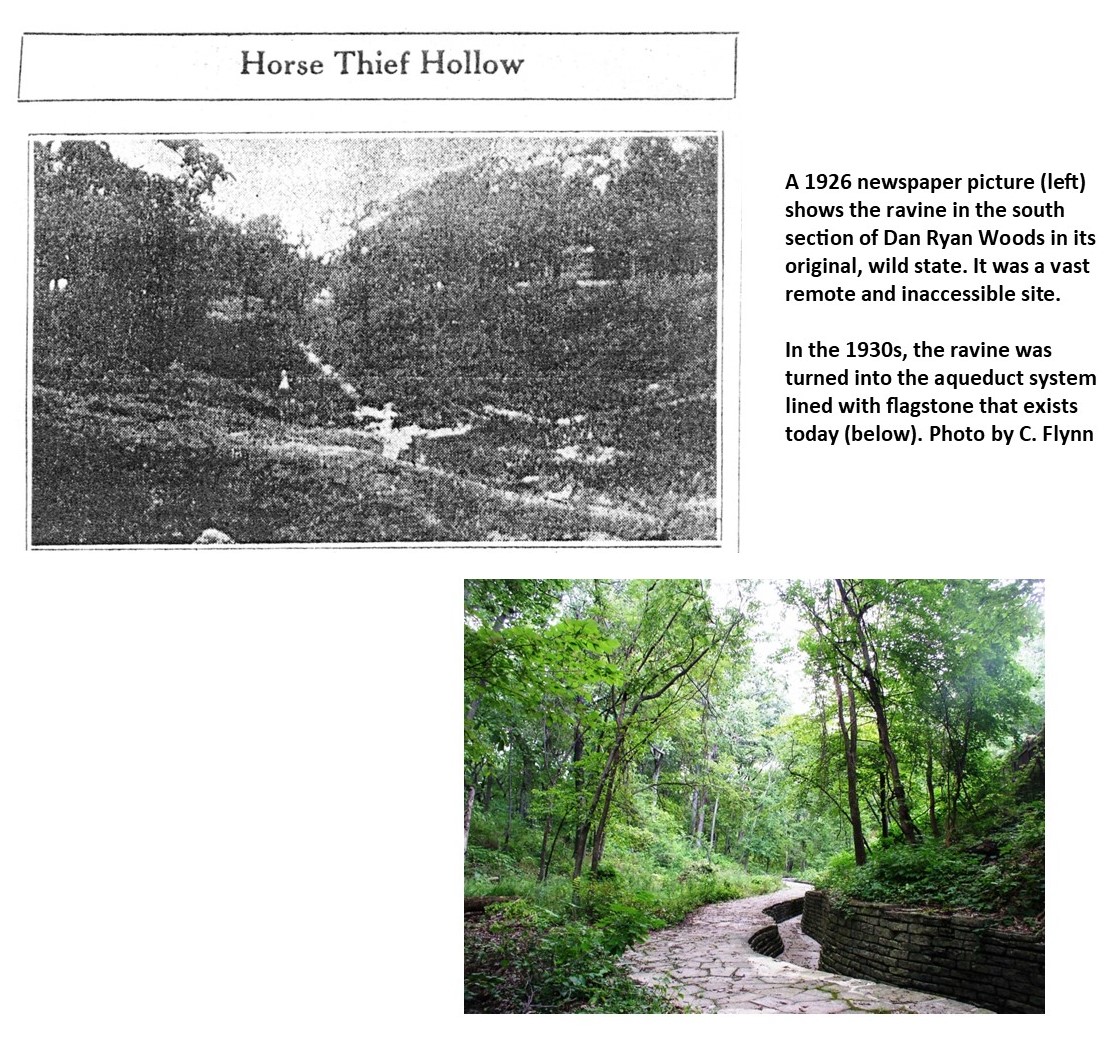
In 1926, another newspaper wrote that the ravine in the south section of Dan Ryan Woods, which became the aqueduct system known today, was a “rendezvous of the biggest gang of horse thieves operating in Illinois.” This was too far north to be considered Morgan Park, and even that article admitted the section was the most “inaccessible portion of the whole tract.” Andreas states the thieves used a buggy to move their equipment and supplies and it is difficult to envision driving a buggy into that location, but horses could have been kept in there.
There are other locations put forth as possibilities, and sometimes it seems that anyone with a dent in his/her backyard thinks that was the original location of Horse Thief Hollow. But it is possible and maybe even probable that through the years multiple locations were used by horse thieves and the ravine referred to by Andreas was just one location.
What happened to the horse thieves is also a question. One story is that the Morgan family called in the state militia in the 1850s to drive out the horse thieves, and there was a shootout on the Ridge in which the horse thieves were killed, or captured and jailed. Another story has some horse thieves hanged and buried on the Ridge, and still another has them coming down with the “ague” or malaria in prison. No verification of any of these stories has been found to date but they make for great urban folklore.
One thing that did happen is that encroaching “civilization” including more formal and organized law and order efforts forced horse thieves and other “Wild West” characters to move their operations farther and farther west until they ran out of territory and people’s tolerance. Andreas reports there were horse thieves on the Ridge as late as 1863. One newspaper reported the horse thieves on the Ridge were never caught and they moved on. This is likely the real story.
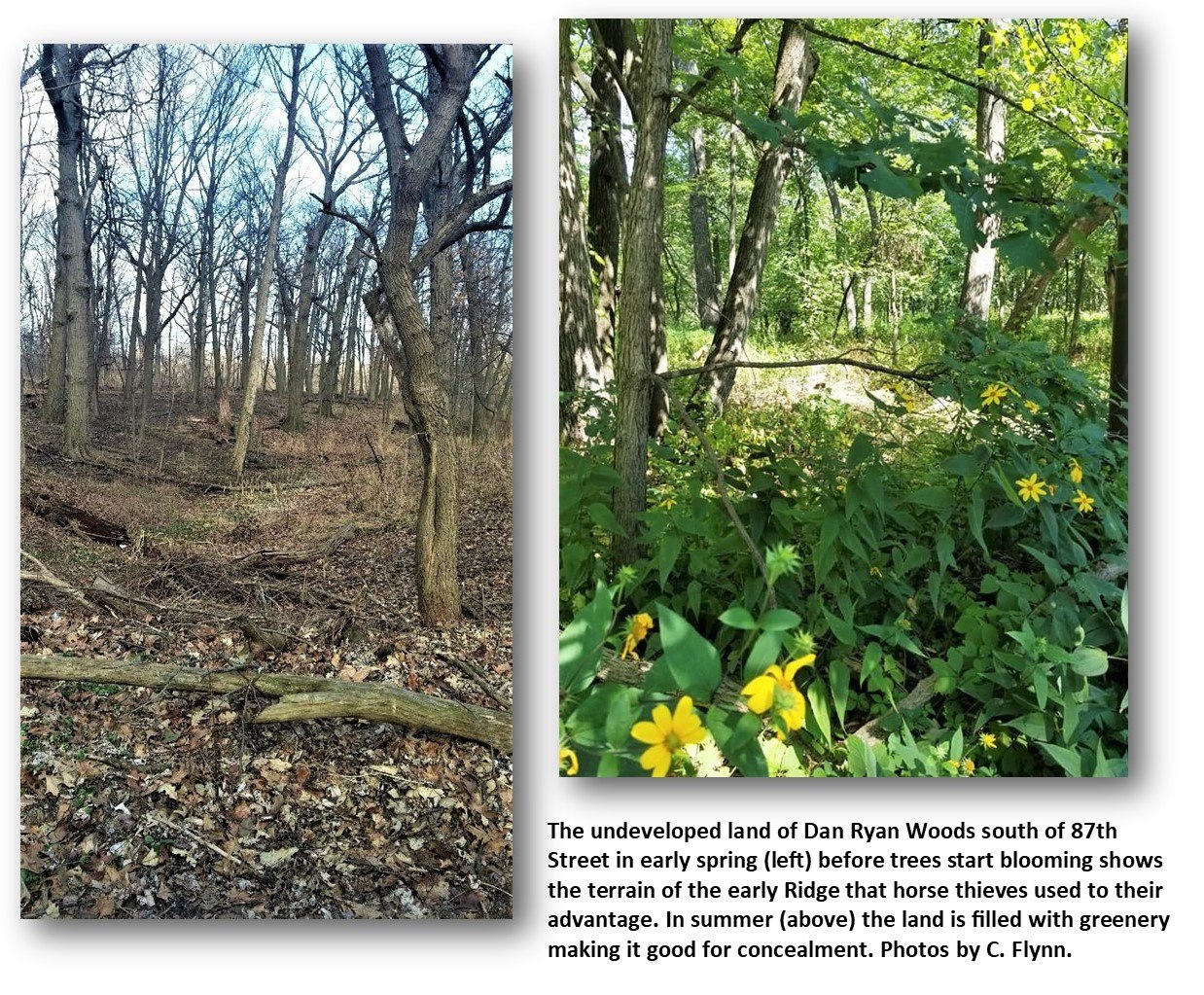
Because so much development has gone on, and the original topography of the land has been altered substantially, today imagination has to be used to picture what the area looked like 180 years ago. The undeveloped land in the south section of Dan Ryan Woods, the last remnant of the “wild Ridge,” does give a good idea of the natural terrain that horse thieves would have found advantageous to their endeavors.
There is a presentation and Power Point program on Horse Thief Hollow available for booking (when it is safe again to meet in groups). Send a message to author/presenter Carol Flynn at cflynn2013@yahoo.com for more information.
This concludes the series on Dan Ryan Woods. Thank you to everyone who followed RHS for the last few months to read these posts. Feedback, sharing of stories, and questions are welcomed. Stay tuned for new topics!
Morgan Park Days – Part I
By Carol Flynn
Labor Day, which will be celebrated on Monday, September 7, has been a federal holiday since 1894. It grew out of the organized labor movement, which arose to protect workers from workplace abuses such as unsafe conditions and child labor as young as 5 years old. Labor Day honors and recognizes the contributions of the workforce, that is, the efforts of the millions of people who get the jobs done, to the development of the U.S. It was celebrated with marches, picnics, and speeches.
Locally, from 1901 to 1911, the day was also celebrated as “Morgan Park Day.”
Morgan Park Day was the idea of the Morgan Park Improvement Association (MPIA), which formed in 1898. Improvement associations grew out of the Progressive movement.
The Progressive Era spanned the 1890s to the 1920s and was a period of activism and reform in just about all areas of life – government, education, industry, finance, medicine, employment practices. Even the study of history became more professional, scholarly and research based. “Progressives” ranged from Republican Theodore Roosevelt to Democrat Woodrow Wilson. Chicago social worker Jane Addams was one of the most influential non-government reformers of this era.
There were many “movements” that came out of the Progressive Era. One was a national grassroots effort for “civic improvement” that focused on issues ranging from enhancing the physical beauty of communities to valuing the contributions of the countless immigrants streaming into the county to exposing government corruption.
The new American League for Civic Improvement (ALCI) said the goal was to “create cleaner, better cities and a higher, nobler city life.” Organizations sprung up all over the country comprised of “people who care.” When the Morgan Park Improvement Association, a member of ALCI, was founded in 1898, it was sixteen years before the Village of Morgan Park would annex to Chicago, and the suburb had its own government, taxes, schools, and public services.
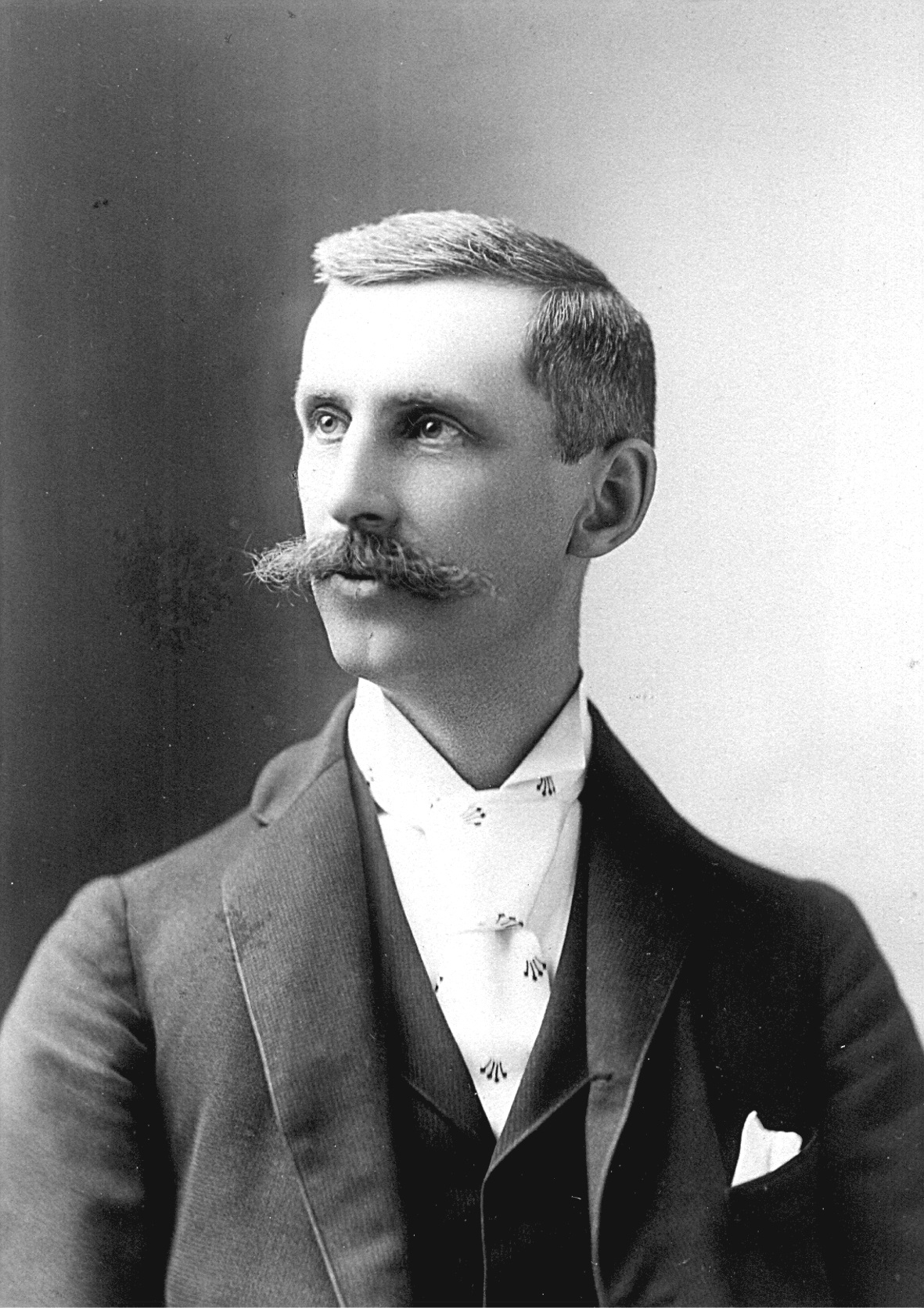
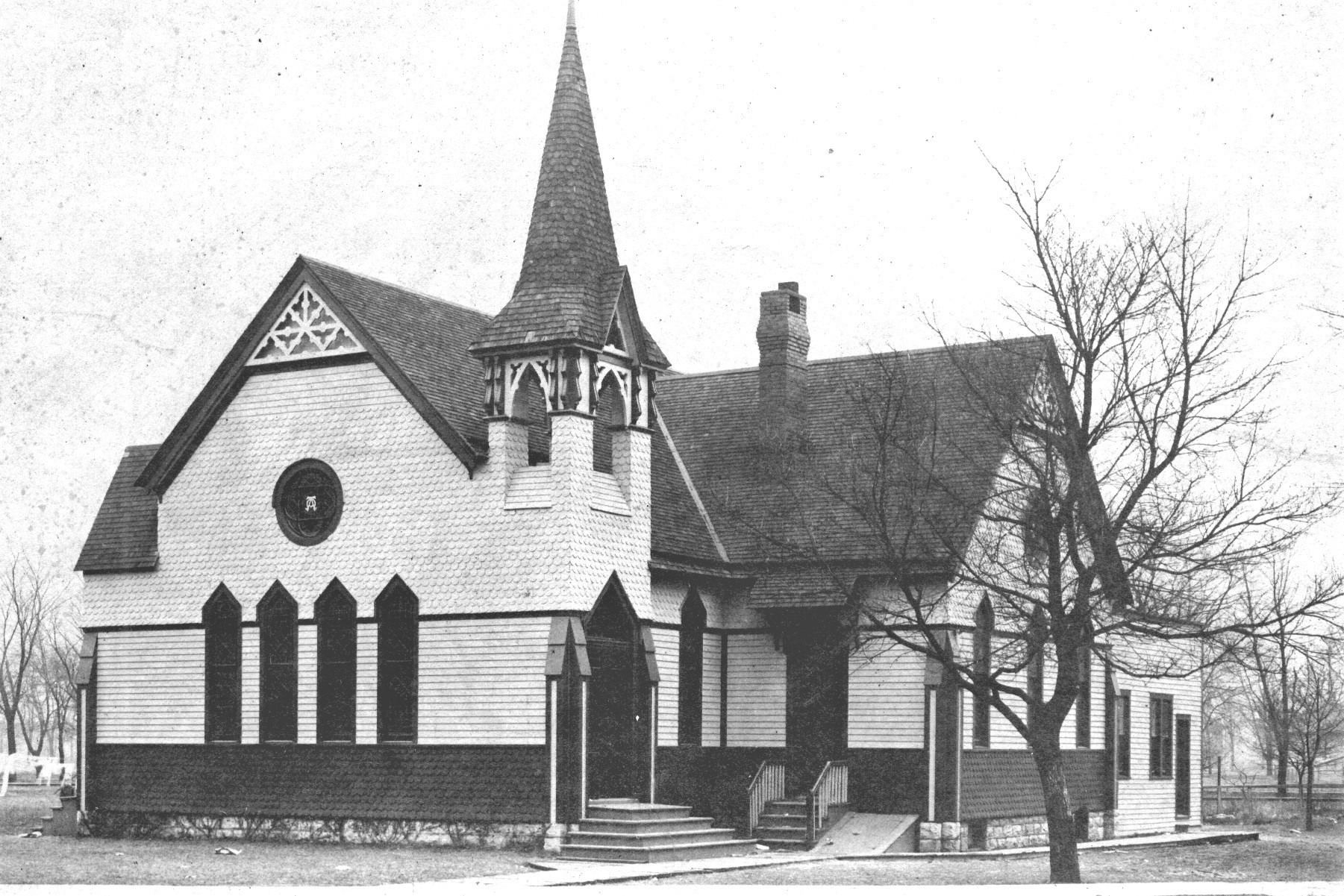
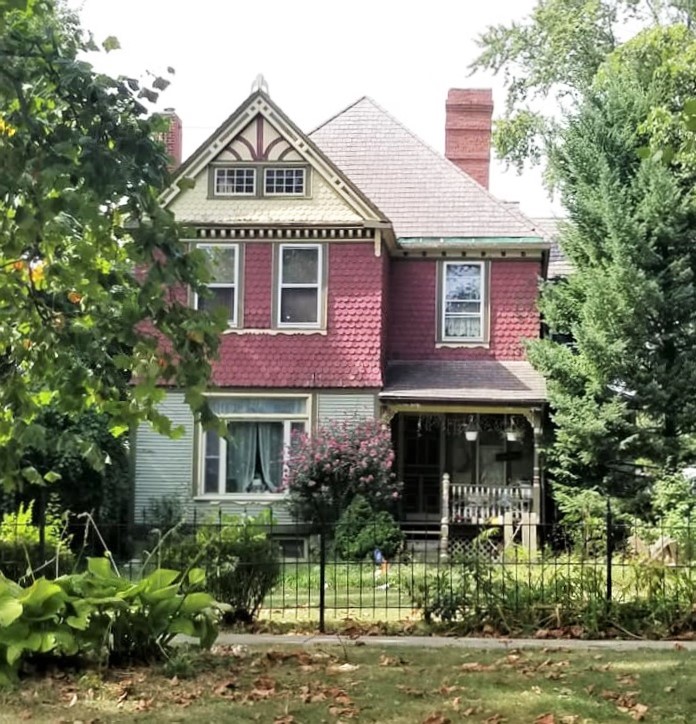
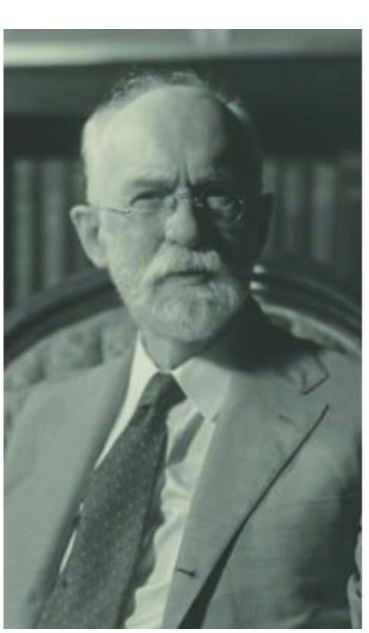
The first president of the MPIA was Dr. William H. German. Dr. German was one of the most highly regarded early citizens of Morgan Park. His 1884 Queen Anne-style home still stands at 10924 S. Prospect Avenue. He was the first physician to set up practice in Morgan Park and there are numerous stories related to his medical practice. He founded the Morgan Park United Methodist Church and built the first church across the street from his own house; later the church/school complex at 110th Place and Longwood Drive was built. He was active in local affairs, serving on the school, library, and park district boards.
The object of the new MPIA was “the beautifying and general improvement” of the town. The Morgan Park Woman’s Club and the women of the town were squarely behind this movement and were the real workers to get things done. And children were a welcomed, indeed a valued, presence in the MPIA, and among the most enthusiastic members. Youngsters were tasked with keeping the sidewalks and public spaces clear of trash, a chore they wholeheartedly accepted.
Next: The first public celebration of Morgan Park.
The Ridge Historical Society
Addendum to the series on Dan Ryan Woods
By Carol Flynn
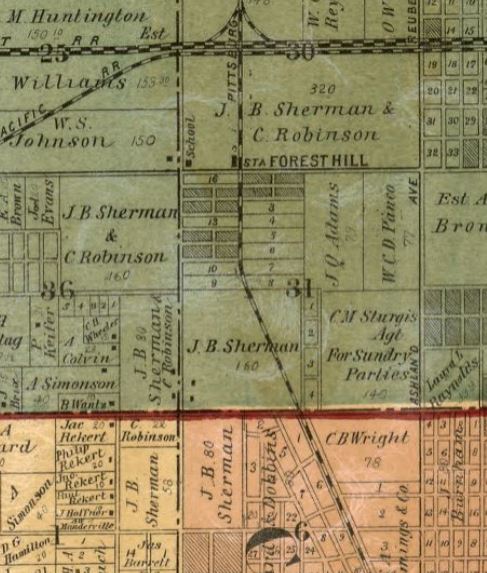
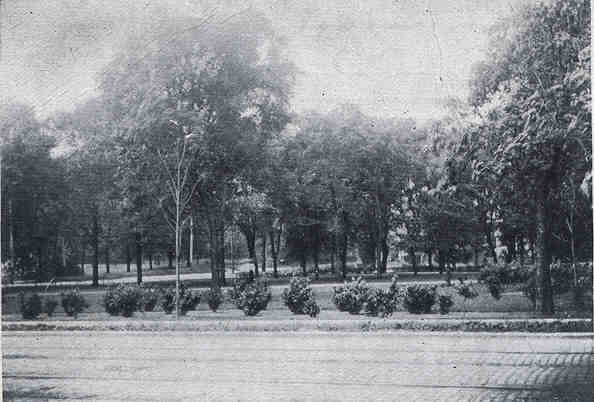
We recently rediscovered this map from 1886 that shows the land ownings of John B. Sherman at the time. This is a small section of it showing the northern part of the Ridge. Note the section around Forest Hill would become the major portion of Dan Ryan Woods. Sherman owned parcels of land around the community, including land that would become the Beverly Country Club. Sherman was the founder of the Union Stockyards.
The map is: Snyder's real estate map of Cook County, Illinois : indexed. Published: Chicago : L.M. Snyder & Co., 1886.
Morgan Park Days – Part 2
By Carol Flynn
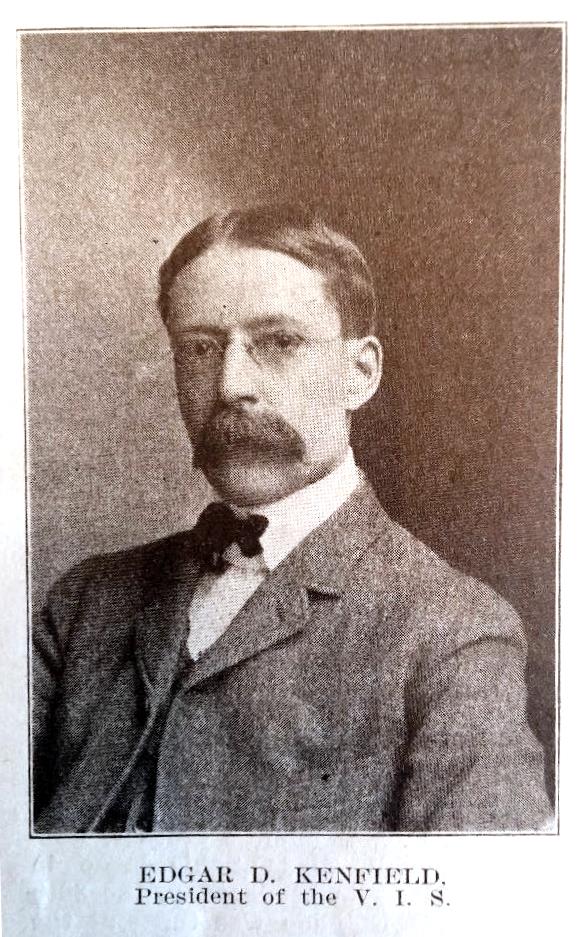
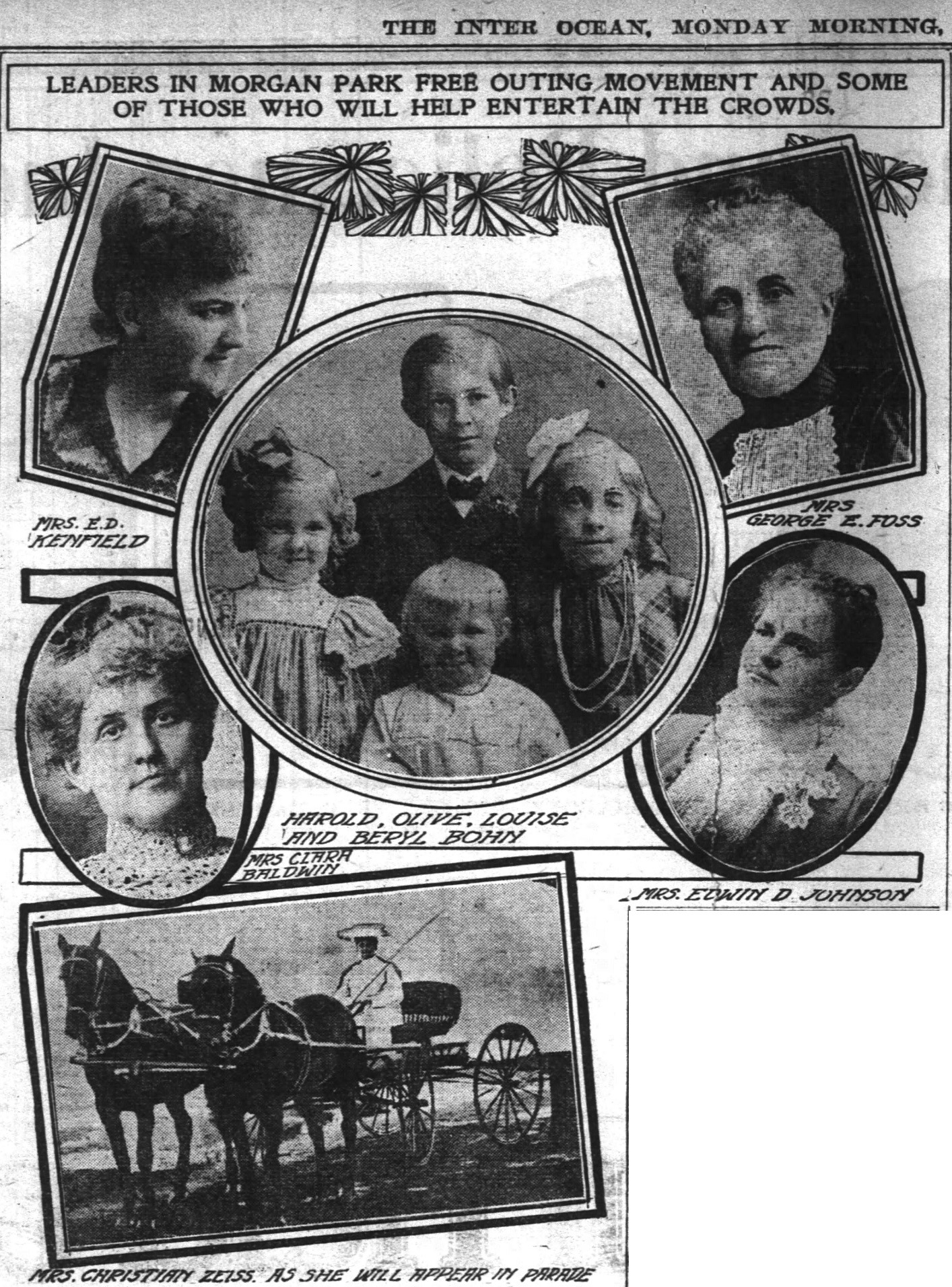
Edgar D. Kenfield became the next president of the Morgan Park Improvement Association (MPIA) in 1900. He was an executive with Eastman and Brothers Company which manufactured and sold perfumed soaps. He lived on Morgan Street, which became 111th Street when Morgan Park annexed to Chicago. His house was near the Walker Library, but is no longer standing.
In August of 1900, the Chicago Tribune reported that MPIA members, “armed with scythes, rakes, and other implements, attacked Canada thistles and other weeds in the park and along the streets.” Some of the most prominent citizens were out there, including Isaac Blackwelder and his son Paul, and Henry Bohn. Blackwelder was an insurance executive living at 10910 S. Prospect Ave., and Bohn was a publisher living at 10980 S. Prospect Ave. Both of their houses are still standing. “After blistering their hands and wrenching their backs a few hours” they called it a day. They intended to plan a “Morgan Park day” at their next meeting. And they did exactly that.
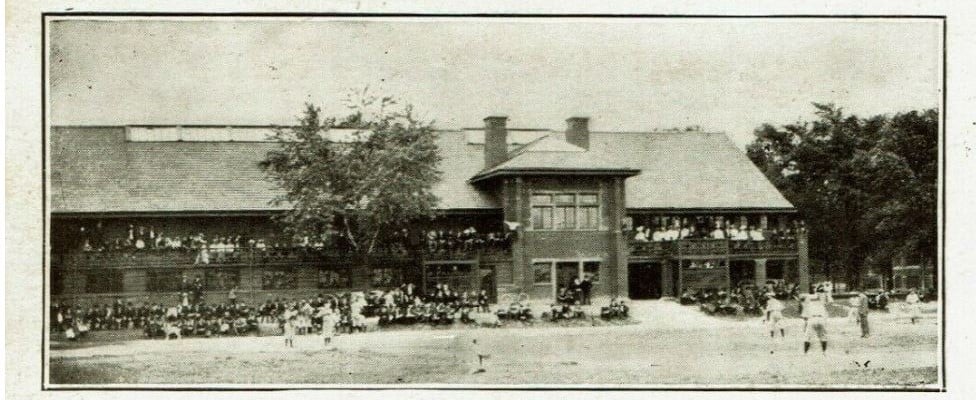
The first official Village of Morgan Park holiday was held on September 15, 1900. The Inter-Ocean newspaper covered the event in detail. The stores closed and the children were given a half-holiday from school. The Morgan Park village band, “with its gold-laced uniforms, marched through the clean and well-shaded streets to a stand erected for it on the sloping hillside near the village park, and played a lively march, to which the villagers kept step.” The children begged their parents for pennies to buy confections at the tables that were set up, while they all wandered under the cherry trees at the “grove” that was at Longwood Drive between 110th and 111th Streets.
The afternoon was allocated to speakers, who all had the theme of the improvement of Morgan Park. One of the most interesting speeches, according to the paper, was that of Mrs. N. O. Freeman of the Morgan Park Woman’s Club, who urged that cherry and apple trees and blackberry bushes be cultivated in unoccupied places so that the children might have fresh fruit.
Mr. Bohn said that Morgan Park should have “one day in the year devoted solely to the village, where the people could meet on common ground, their only creed being universal brotherhood.” Part of the land this first event was held on, at the time called the “common,” would become Depot Park, which would be designed by famous landscape architect Jens Jensen in 1906. It would then be renamed Bohn Park in 1933, the name it has today. Bohn served as president of the Calumet Park District when it formed in 1903. In 1934, Calumet Park District merged with the Chicago Park District.
President Kenfield said, “Our object is to beautify the village, create civic interest, and make happier as well as more ornamental homes.” He listed the successes of the year – the park was beautified; waste paper, garbage and weeds on the streets and in vacant lots were lessened; and unsightly sign-boards had been removed.
Mrs. Frances Copley Seavey said, “A village with the many natural advantages found here should have vines and flowers and trees. And there should be birds and squirrels, and laws and police to protect them.” Frances Copley Seavey was an artist and horticulturalist, and a prolific writer on landscape gardening as part of civic improvement. She lived in the South Shore section of Chicago and was an early user of audio-visual aids, incorporating stereo opticons into her presentations.
Reverend George C. Williams said it was easy to tell where Chicago left off and Morgan Park commenced by the appearance of the streets and the surroundings. The beautifying of the village was a laudable undertaking, and bore a close relationship to theology.
The speeches were interspersed with music by the band and songs by a quartet. At the end of the speeches, the band led the way to tables under the shade trees where “neatly-dressed women” served lemonade.
Morgan Park always aimed to be a model suburb, from its founding in the 1870s. The MPIA worked to establish and promote that image. The Chicago Tribune reported of this event that since the founding of MPIA much had been done to beautify the town. Trees had been planted and other municipal improvements made. The article said “it is intended by the society to make everything in Morgan Park artistic.” The day had been set aside for “jubilation by the residents of the suburb” after a year’s hard work.
Next: Labor Day becomes Morgan Park Day
Morgan Park Days – Part 3
By Carol Flynn
The Morgan Park Improvement Association (MPIA) held its regular meetings in May 1901 at Blake Hall on the Morgan Park Academy (MPA) campus. The public meeting was attended by more than 200 people.
E. D. Kenfield, elected to a second term as President, challenged the residents of the village to make Morgan Park the most beautiful suburb of Chicago. He assured homeowners the value of their real estate would double if they carried out this plan.
Kenfield expressed concern that the churches and schools should improve their grounds. He hoped to have a committee of children in each block to keep the sidewalks and streets clean. He also reported that a man was hired to sprinkle the streets [to keep down dust] and to trim the grass and weeds in vacant lots.
Mrs. Alice Earl Crosman, President of the Morgan Park Woman’s Club, gave some tips for beautifying homes through gardening. Among her nuggets of wisdom were: “Don’t put little beds of flowers all over your yard and make it look as if it had the chickenpox;” and, “Don’t forget the moral side of all your work. The love of flowers is an enemy to sin.”
The attendees discussed putting in cement sidewalks and waste baskets on street corners. They also grappled with the controversial question of building a gas plant in the Village but, as much as they wanted gas service for light and heat, they did not reach a decision on this topic.
MPIA held Morgan Park Day on September 2, Labor Day, on the athletic grounds of the MPA. There were twenty athletic contests including running high jump, hammer throw, pole vault, bicycle races and foot races. Flag exercises were performed by the children of the public schools.
During the day there was choral singing by fifty voices, and music, presumably by the Morgan Park band. No doubt the usual confection and lemonade tables were set up.
The keynote speaker was Professor Charles Zueblin, a controversial sociologist of the University of Chicago, and President of the National League of Improvement Associations, the name of which he changed that year to the American League for Civic Improvement. He spoke on “Public Beauty.” He called for developing a park system for the city and outlying areas, including the rivers, bluffs, and ravines that surrounded much of the city.
Over 2,000 people attended the event. The City of Blue Island had started its own civic group by then and the president of the Blue Island Improvement Association participated in the Morgan Park festivities.
On October 5, a conference was held at the Art Institute of Chicago of all the civic improvement associations in Cook County, attended by 200 people. One of the speakers was Gertrude Blackwelder, a well-known education, art, and women’s rights leader from Morgan Park, who “described the effective and typical efforts of the MPIA.”
The keynote speaker was Dwight E. Perkins who spoke about “municipal engineering” to create planned cities that would have adequate power, transportation, communications, recreation, etc. Perkins was an architect of the Prairie School of design and a reformer, and is considered the founding father of the Cook County forest preserves.
Next: Morgan Park Days take on more significance
Morgan Park Days – Part 4
By Carol Flynn
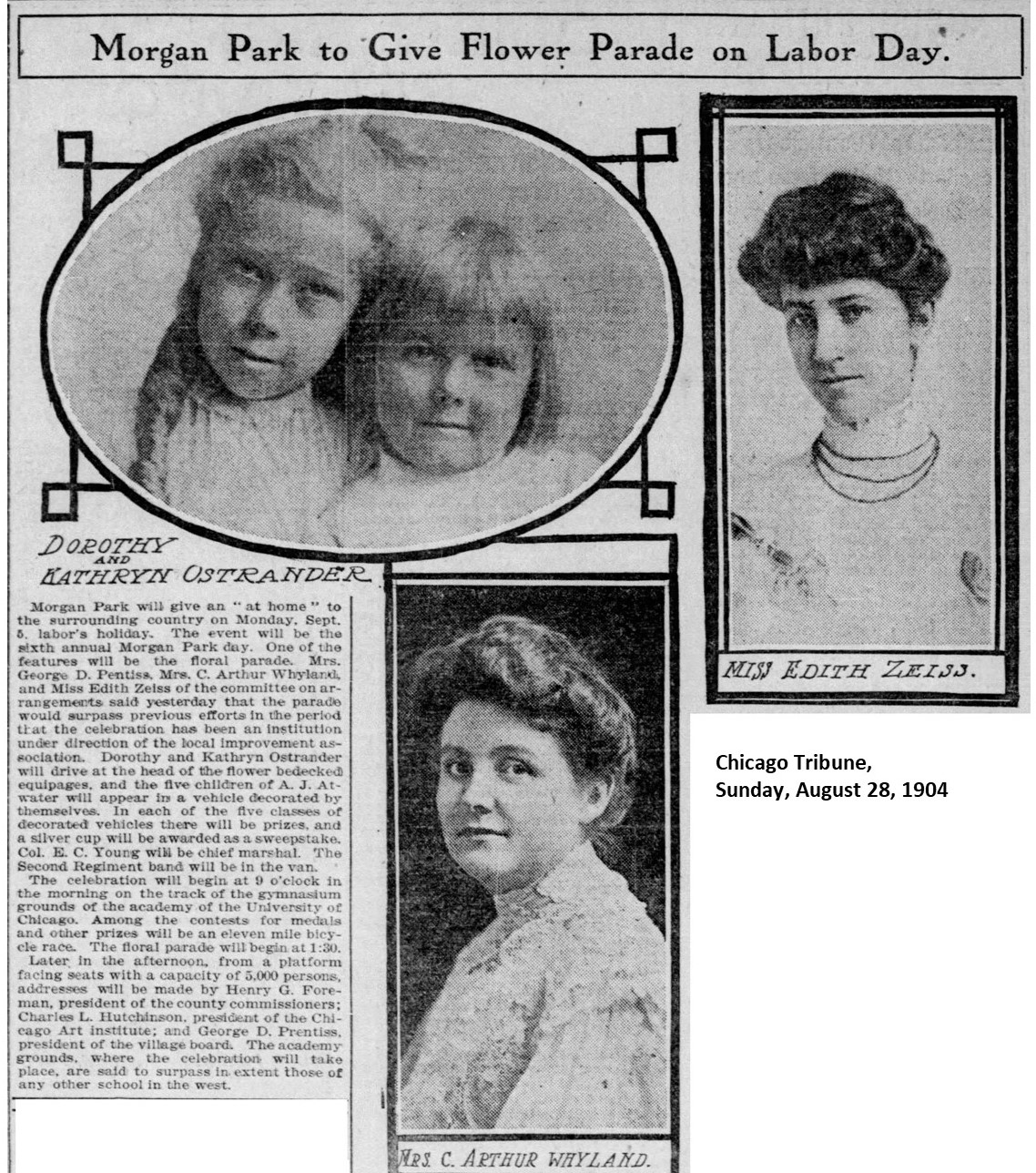
From the first Morgan Park Days in 1900 and 1901, the event grew in size and popularity over the next few years. In 1904, 5000 people attended. Morgan Park residents invited out-of-town guests to spend the day and make house parties out of the event. The official programming ran from 9 a.m. to 9 p.m. and were followed by dances.
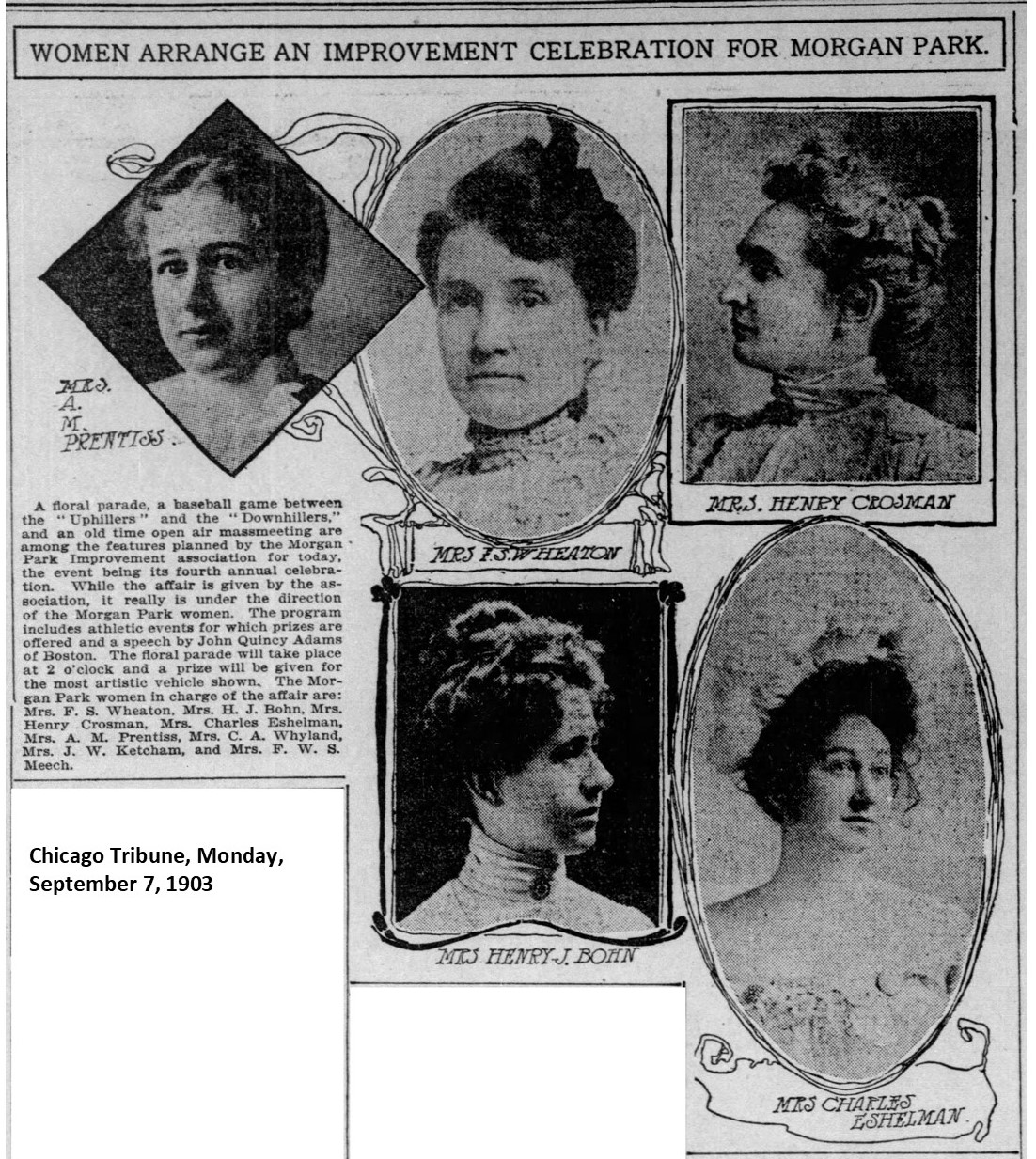
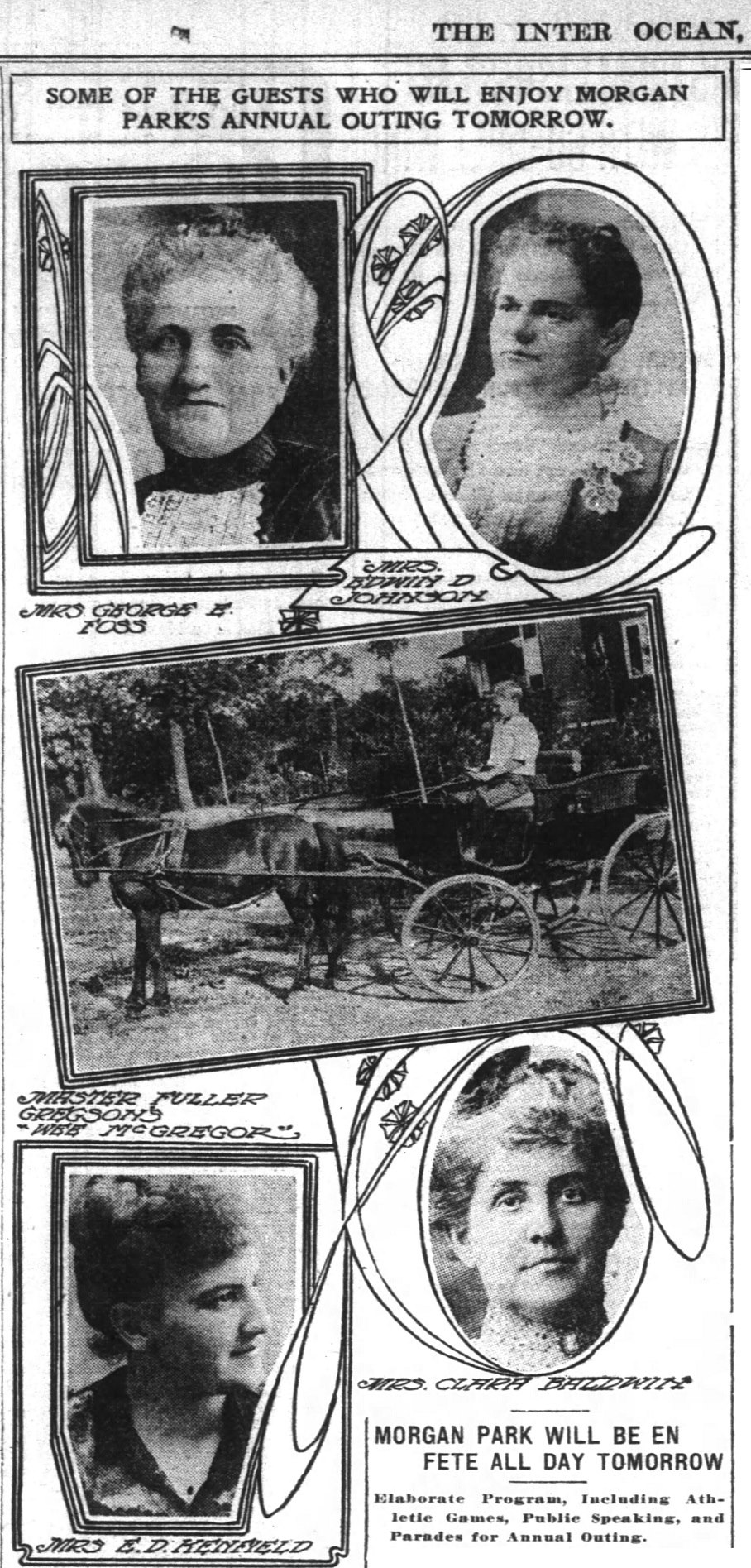
Although the day was attributed to the Morgan Park Improvement Association (MPIA), and chaired by prominent businessmen, it was readily acknowledged that the major part of the work was done by the Morgan Park Woman’s Club. The newspapers carried illustrations and pictures of the women who volunteered their time to make the day a success.
The athletic events held on the grounds of the Morgan Park Academy became significant competitions, attracting the best athletes from all around the Chicago area. Sports included bicycle races as well as track and field events like footraces, hurdles, high jumps, and pole vaults.
Fun events were added for children and adults. In 1905, a relay race was held between the various churches. The Baptists, Methodists, Congregationalists, and Presbyterians participated. According to one newspaper, “the Baptists won easily and the Methodists finished far in the rear.”
Continuing in major importance for Morgan Park Days were the afternoon speeches that concentrated on civic improvement topics. Morgan Park brought in prominent and influential people to be keynote speakers. These speakers included Congressman Henry S. Boutell from Chicago; Dr. John Quincy Adams from Philadelphia (no relation to the U.S. President); Charles L. Hutchinson, president of the Art Institute of Chicago; Henry G. Foremen, president of the Cook County Board; Dwight E. Perkins, architect and city planner; and Judge Orrin N. Carter, who would become chief justice of the Illinois Supreme Court.
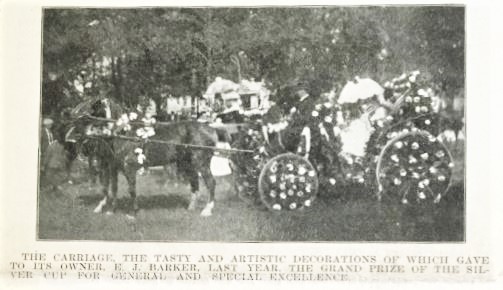
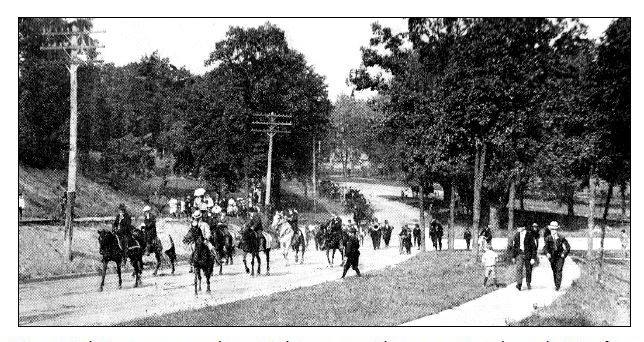
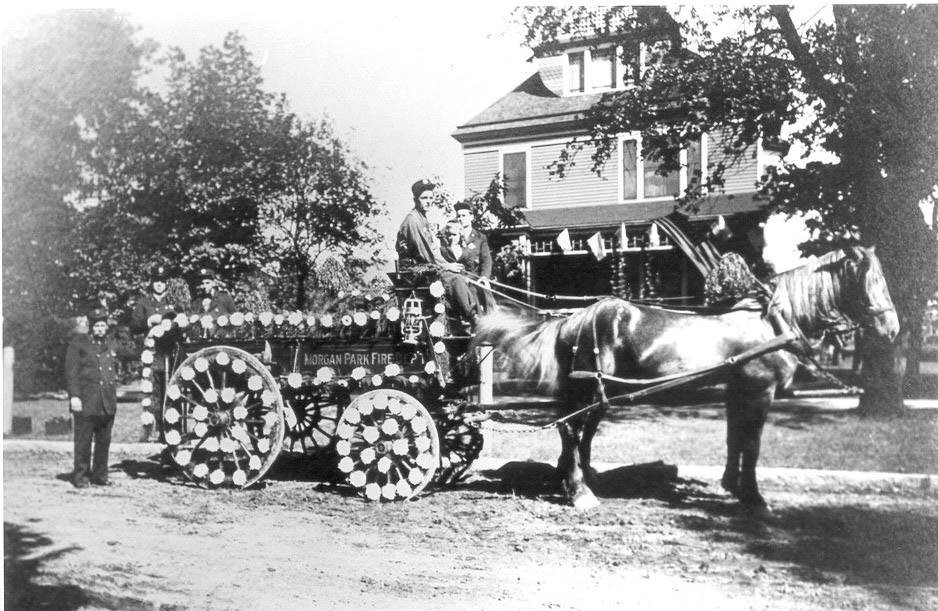
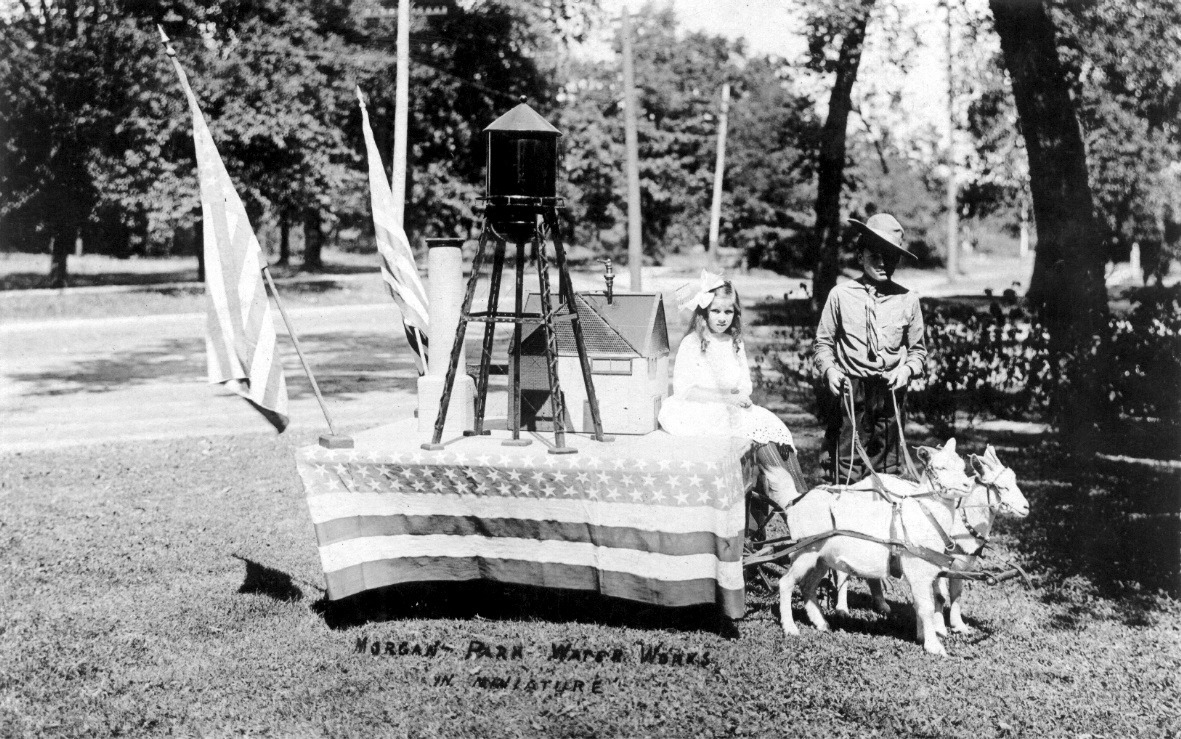
In 1902 or 1903, Morgan Park Day started what probably became its most popular feature for direct participation by the residents of the community – a parade of floral-decorated conveyances pulled by horses, ponies, and donkeys. The parade started at Prospect Park and wound its way through the streets of Morgan Park. Within a few years, over 1000 entries took part in the parade, and one newspaper described the event as: “… floats, pony carts, and carriages all of which were partly concealed beneath huge bouquets of flowers, fancy floral wreaths, and large ornamental horse shoes.” Children loved to participate, decorating their carts drawn by goats and burros.
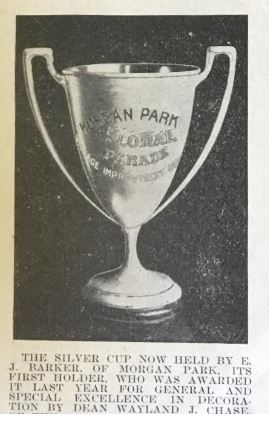
In 1904, the parade had become important enough that a silver loving cup was made to be handed out as the first-place award. The cup was kept by the winner for a year, then passed to the next year’s winner.
The first winner of the cup was England J. Barker, the founder of UARCO, the company that made automatic registers that issued multiple carbon copies of receipts, who lived at 108th and Western Avenue at the time. He would build his house at 107th and Longwood Drive, which became the Beacon School, a few years later. Runners up that first year included other prominent citizens – Austin Wiswall, U.S. Civil War hero and real estate businessman; W. W. Barnard, from one of the first families and the owner of the Barnard seed company at 103rd and Longwood Drive; and William L. Gregson, meat packer and member of the board of trade. One of the judges was William French, executive director of the Art Institute of Chicago, who lived in Beverly.
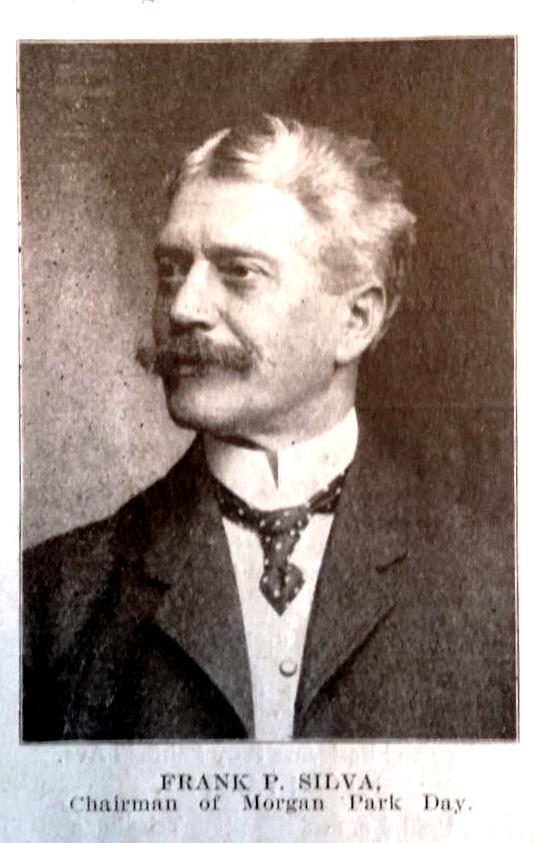
In 1905, the first-place winner was Cornelia Silva, who drove a spider phaeton decorated with purple asters. Cornelia’s husband was Frank Silva, who, with his brother, was very successful in the real estate business. Frank was the chairman for the 1905 Morgan Park Day.
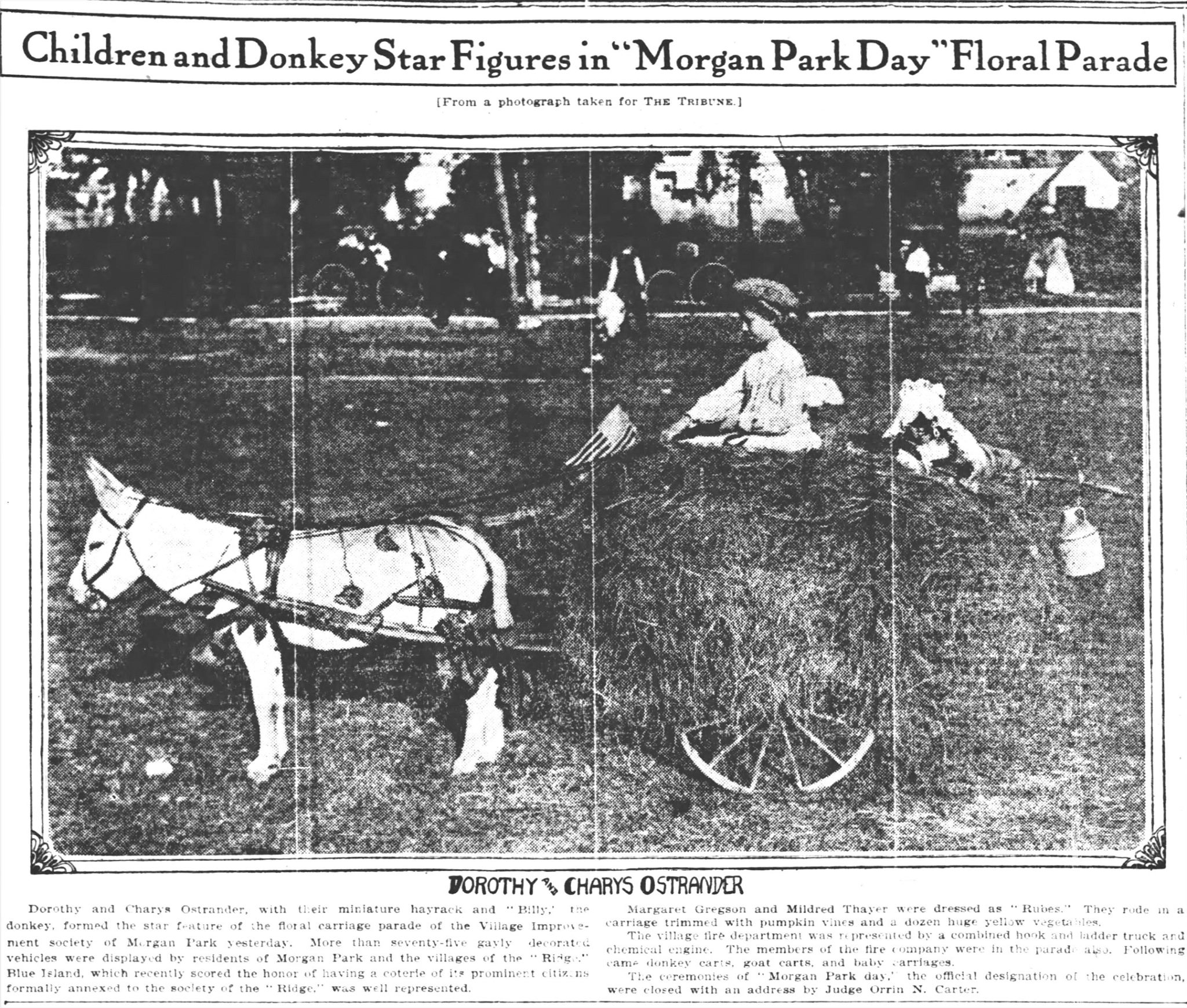
Fuller Gregson, son of William L. Gregson, who lived at 116th and Longwood Drive, took first prize in the pony carriage competition. The Ostrander children took first place in the donkey cart competition, “with a peaceful looking burro that received great applause.” The donkey cart was decorated with pumpkins and pumpkins vines. James H. Ostrander, the father, was an optician who provided eyeglasses for two U.S. Presidents, William McKinley and Theodore Roosevelt.
Food and refreshments were always an important part of any group event. Beginning in 1904, the churches set up tables to sell and serve food all day, and dinner into the evening. It became highly competitive between the churches as to which made the most money from their members’ home cooking.
Entertainment throughout the day and evening came from the local brass band and guest bands, and glee clubs and choral groups. In 1904, the evening offered two dances, one at the new Ridge Park Country Club which had been founded in 1902; and one at the Morgan Park Academy gymnasium sponsored by the Morgan Park Athletic Club.
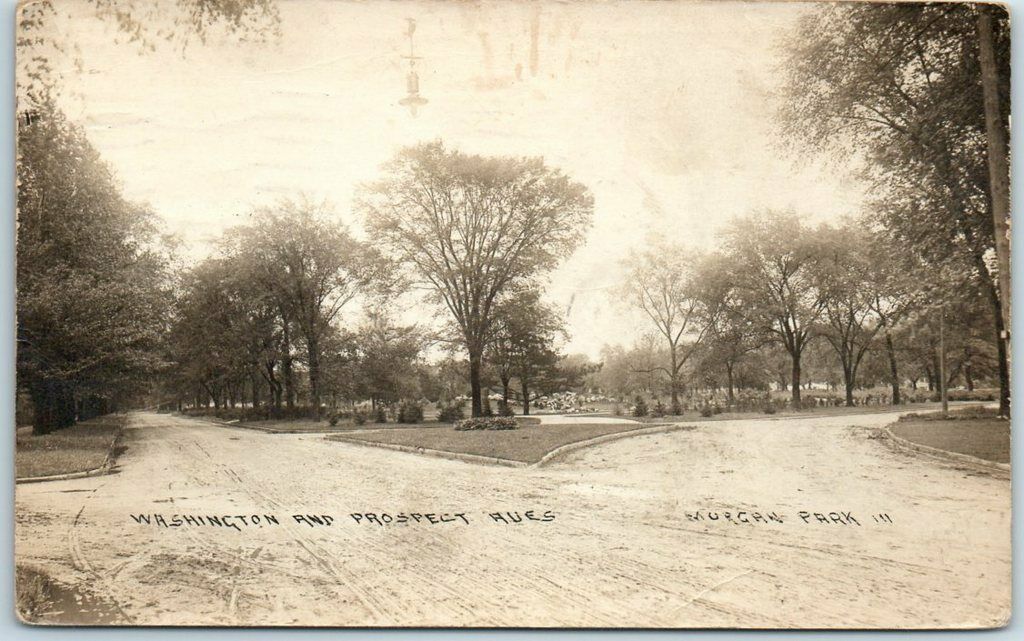
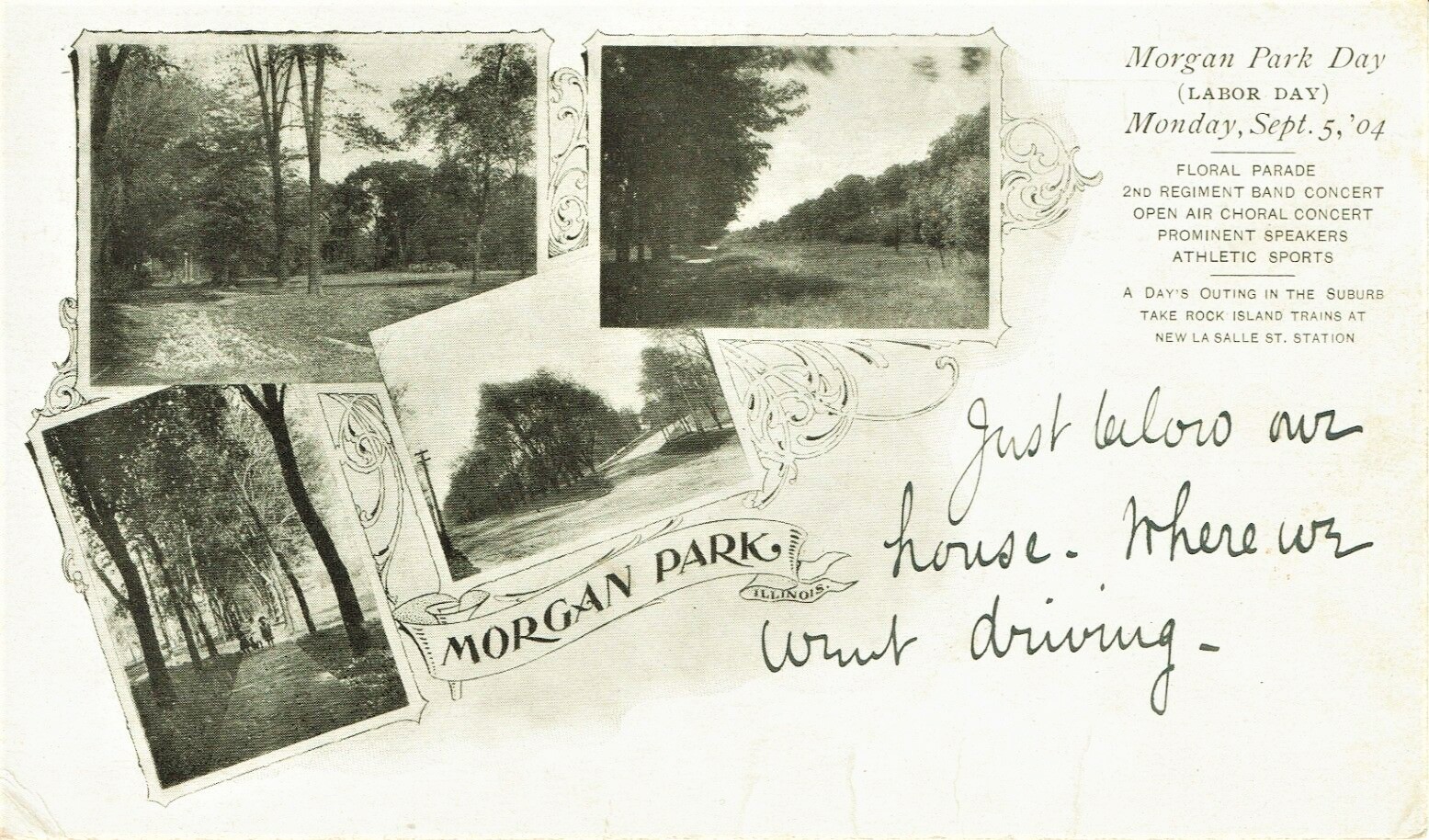
In 1904, souvenir postcards with scenes from Morgan Park were sent out by the thousands as invitations. Special trains ran on the Rock Island line to accommodate the extra crowd.
The funding for Morgan Park Day was raised through volunteer donations, and everything but the food was free. The Chicago Tribune noted that “the promoters assert that [Morgan Park Day] is entirely free from any mercenary aims, the purpose being to bring about, foster, and develop a closer acquaintance with and local pride in the beautifying of the suburb.”
In 1904, magazines and newspapers published as far away as San Francisco declared “Morgan Park one of the most desirable suburban residence districts around Chicago.” This was based on the success of the fifth annual Morgan Park Day which had taken place on Labor Day, September 5.
Enthusiasm for Morgan Park Day started to wan in 1906 and 1907, but then there was a campaign to revive the day, and 1908 saw the best Morgan Park Day ever.
Next: The 1908 Morgan Park Day
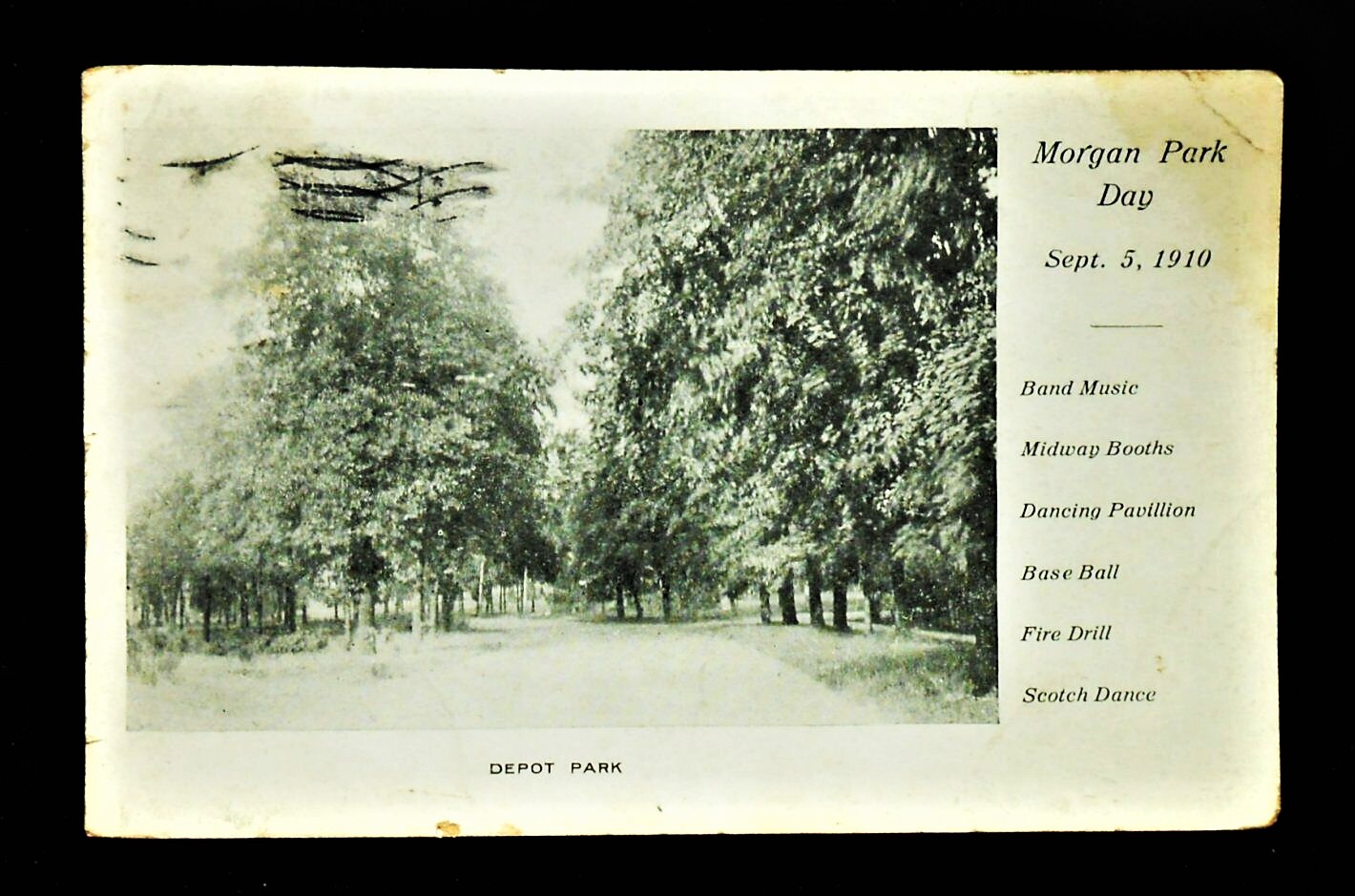
Morgan Park Days – Part 5
By Carol Flynn
The Chicago Tribune wrote on Labor Day, Monday, September 7, 1908: “Morgan Park will pat itself on the back today.” That was the peak year for Morgan Park Days, and what a grand event it was.
David Herriott, the local postmaster, published the Morgan Park Post newspaper from 1905 to 1917. Herriott was a prolific and eloquent writer who gave detailed and accurate accounts of local history. He covered the 1908 Morgan Park Day in great detail.
Herriott wrote that after two years of “innocuous desuetude,” which essentially translates to mean the day had simply run out of steam, the Village struggled with whether to hold the event at all. A group of businessmen came forward to plan, raise money for, and manage the day. They formed the Morgan Park Day Committee (MPDC), independent of the Morgan Park Improvement Association. The committee members who inspired the community to revive the event for a few more years were H. Clay Russell, who was in publishing; England J. Barker (business machines); Charles E. Lackore (undertaker); William. S. Kiskaddon (grocer); Luther S. Dickey (grain merchant); and Franklyn Hobbs (advertising).
Like the other years, the planners encouraged residents to invite their friends and relatives from all over to come for the day, and to decorate all houses, not just those along the parade route. House parties were held throughout the Village. The population of Morgan Park at the time was about 5,000, and 10,000 people were expected to attend. The Chicago Tribune reported that 20,000 people showed up.
Most of the events took place on the Morgan Park Academy grounds. The athletic events and contests were numerous. Footraces, pole vaulting, and broad jumps, as well as bicycle races, were included as in previous years. In addition to the serious events, three-legged races, potato and sack races, and races for burro carts and roller skaters were held. Monetary prizes, which came largely from donations, were awarded to the winners. There were baseball games between Morgan Avenue (111th Street) and Commercial Avenue (Hale Avenue) businessmen, and between the members of several of the churches.
The church women, as always, were in charge of the food. According to the Post, booths were set up to sell “peanuts, popcorn, crackerjack, pork and beans, chop suey, pop, lemonade and orange cider, coffee, doughnuts and milk, candy, pies, fruit, sandwiches and red-hots.”
Other booths sold postcards and souvenirs. Adults strolled around with decorated canes and children with red balloons. Adults and children alike waved pennants and banners.
The parade was the longest ever, stretching for two miles. For the first time, in addition to private carriages, police and fire department wagons, and floats entered by organizations, an invitation was extended to business and industry for floats, and for trade and farm wagons to enter. The Post described the entries as “tandems and singles, roadsters and gigs, autos and cowboys, horses and ponies, drug store floats and grocery store floats.”
That year’s major speech was on “Morgan Park, Past and Present,” delivered by Henry B. Baldwin, a prominent Chicago lawyer who lived in Morgan Park.
Evening entertainment included a chorus of 50 members, led by Edward T. Clissold. Clissold was the son of Henry Clissold (for whom Clissold School is named) and part of the family publishing business, and he was known for his beautiful voice and leadership of fine choral groups. Leading up to the day, public practice sessions were held so residents would be ready to sing along. Musical entertainment was supplied by the 25-member First Calvary Band, I. N. G. (Illinois National Guard), considered “one of the best in the land and worth the money,” which was $200, according to The Post.
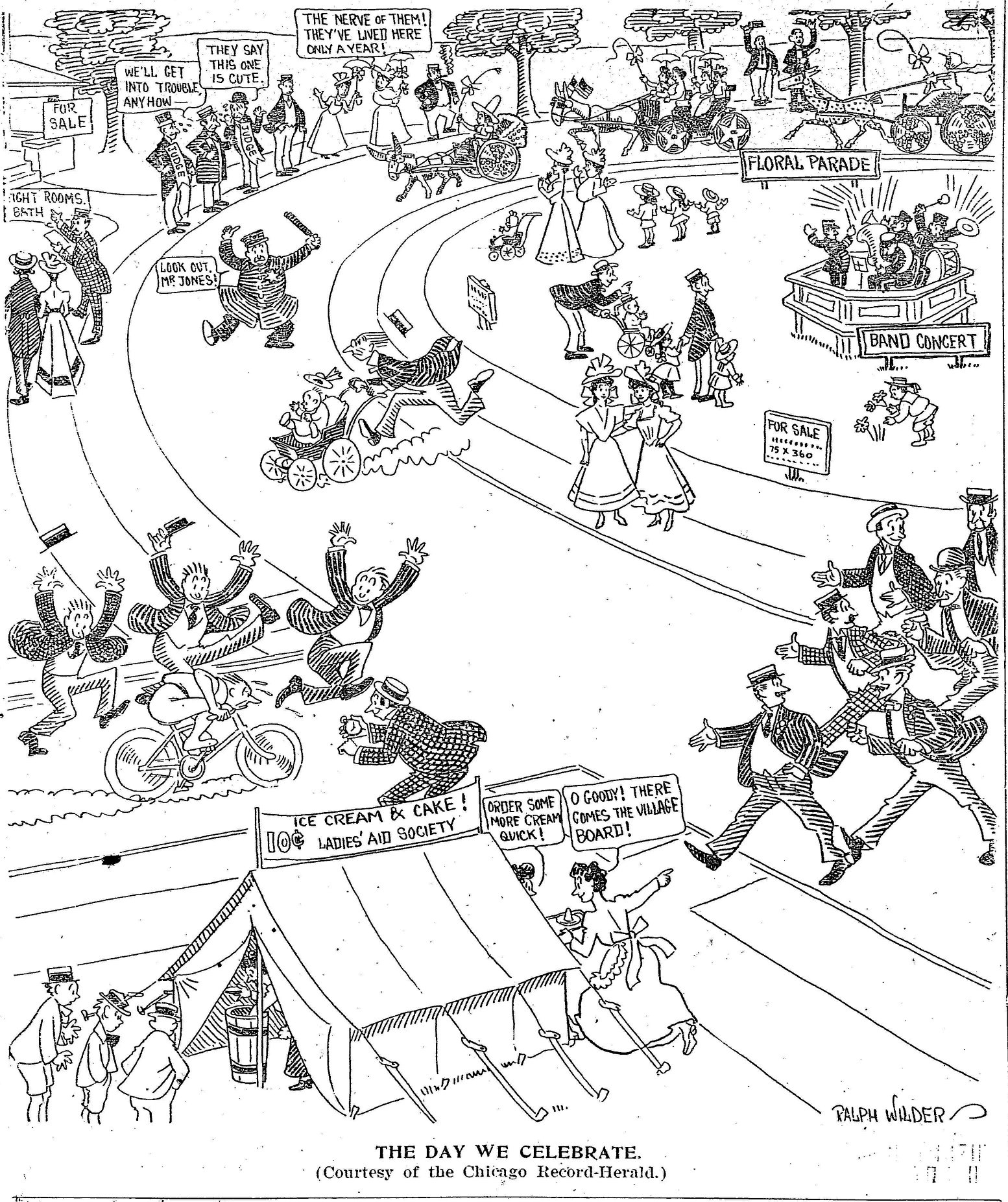
Ralph Wilder, a cartoonist for the Chicago Record-Herald newspaper who lived in the Village, served on the Morgan Park Day publicity committee. A cartoon he drew that captured the spirit of the day was reprinted in the Post. Wrote Herriott, “Ralph Wilder’s cartoon is not at all overdrawn. This is just how we all feel about it, regardless of who, which and what we are. It is our day – the people’s day – ‘of, for and by’ them, with nobody to say them nay.” The cartoon is included in the attachments.
A few weeks before the event, Herriott had written these prophetic words about that year’s Morgan Park Day: “We are not boastful, but all indications point to the fact that the Village of Morgan Park, beautiful as even the Garden of Eden, will on that day give a reason for the faith that is in it. Local patriotism is in the saddle for sure and all that it needs is a fair day, for it already has a clear course.”
It appears the last official Morgan Park Day took place in 1911. The Village actually voted to annex to the City of Chicago that year, but some residents blocked that with legal action. The next vote took place in 1914, and finally went through – Morgan Park became part of Chicago. In 1917, Labor Day events focused on honoring men joining the “new national army,” as the country had joined World War I efforts in April of that year.
Happy Labor Day and Happy Morgan Park Day!
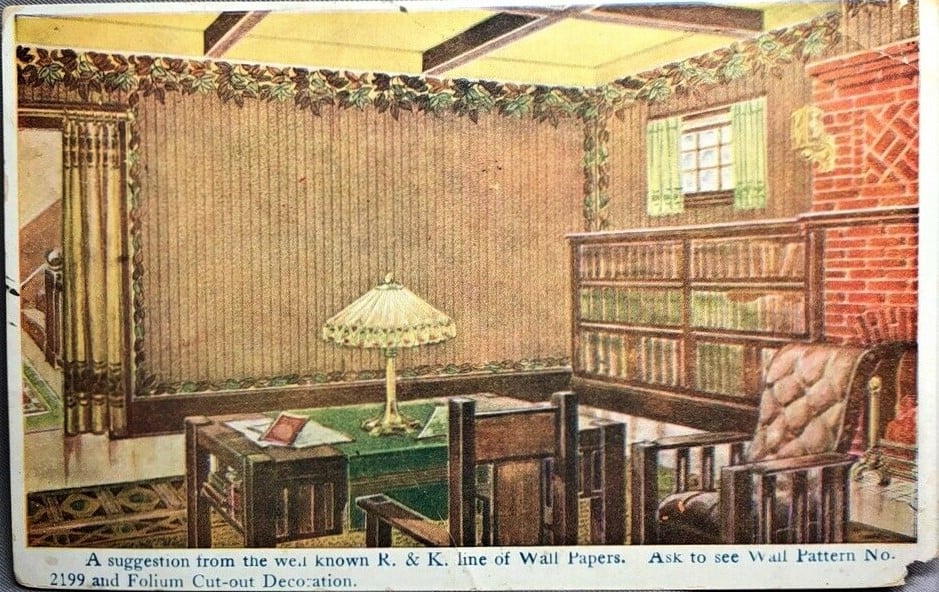
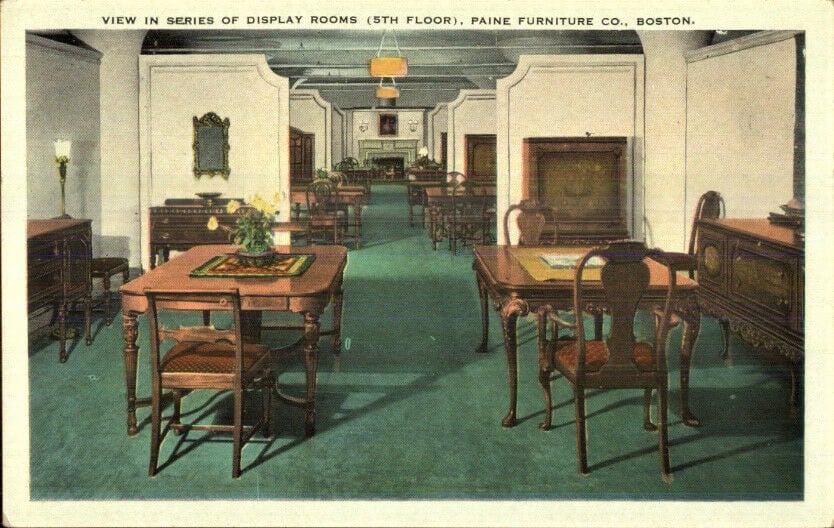
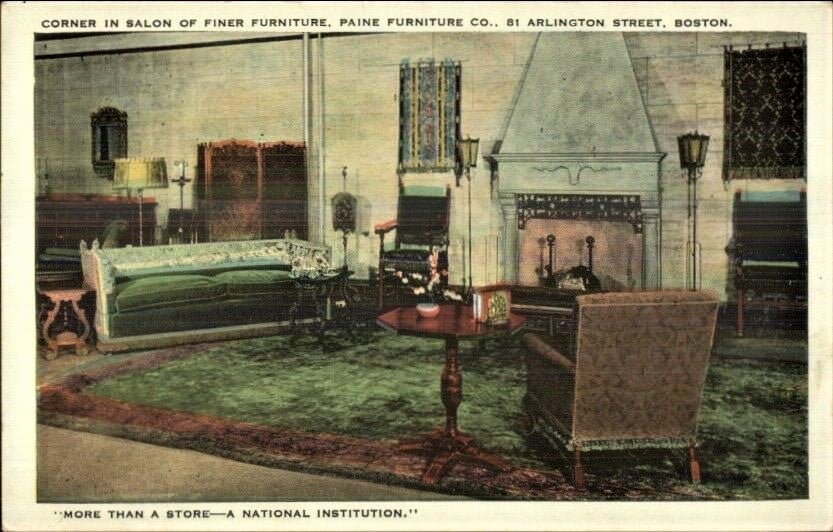
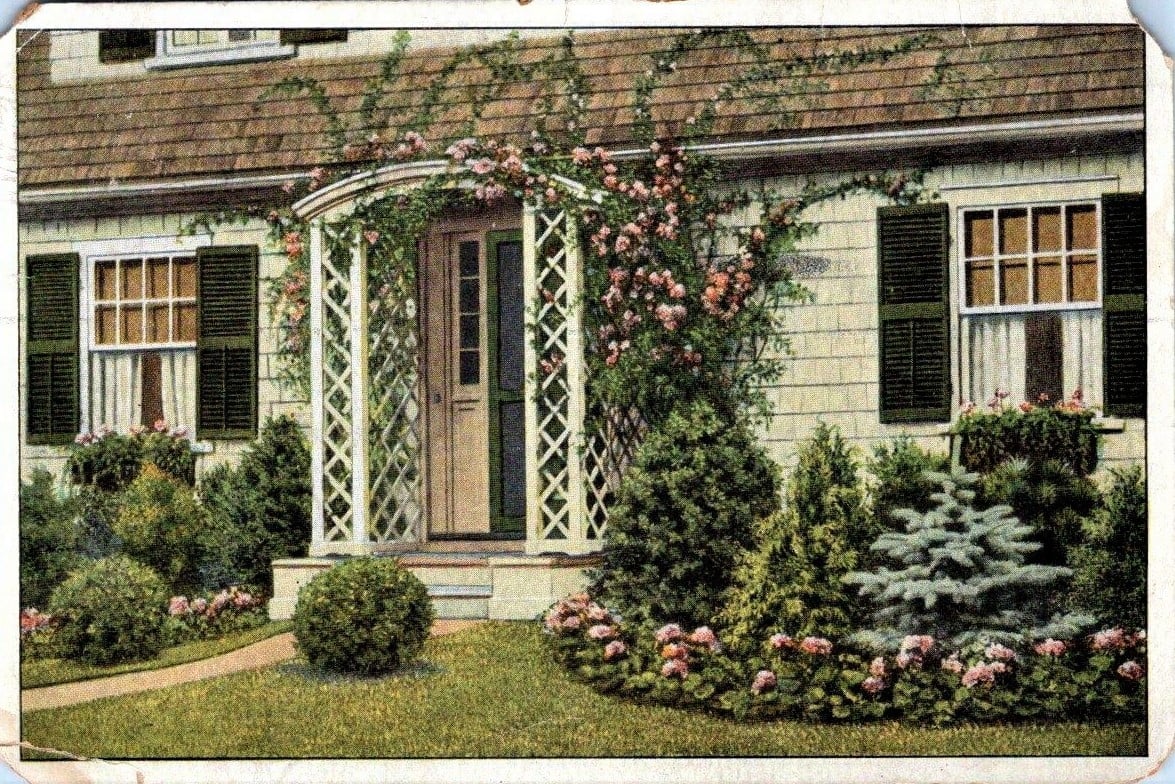
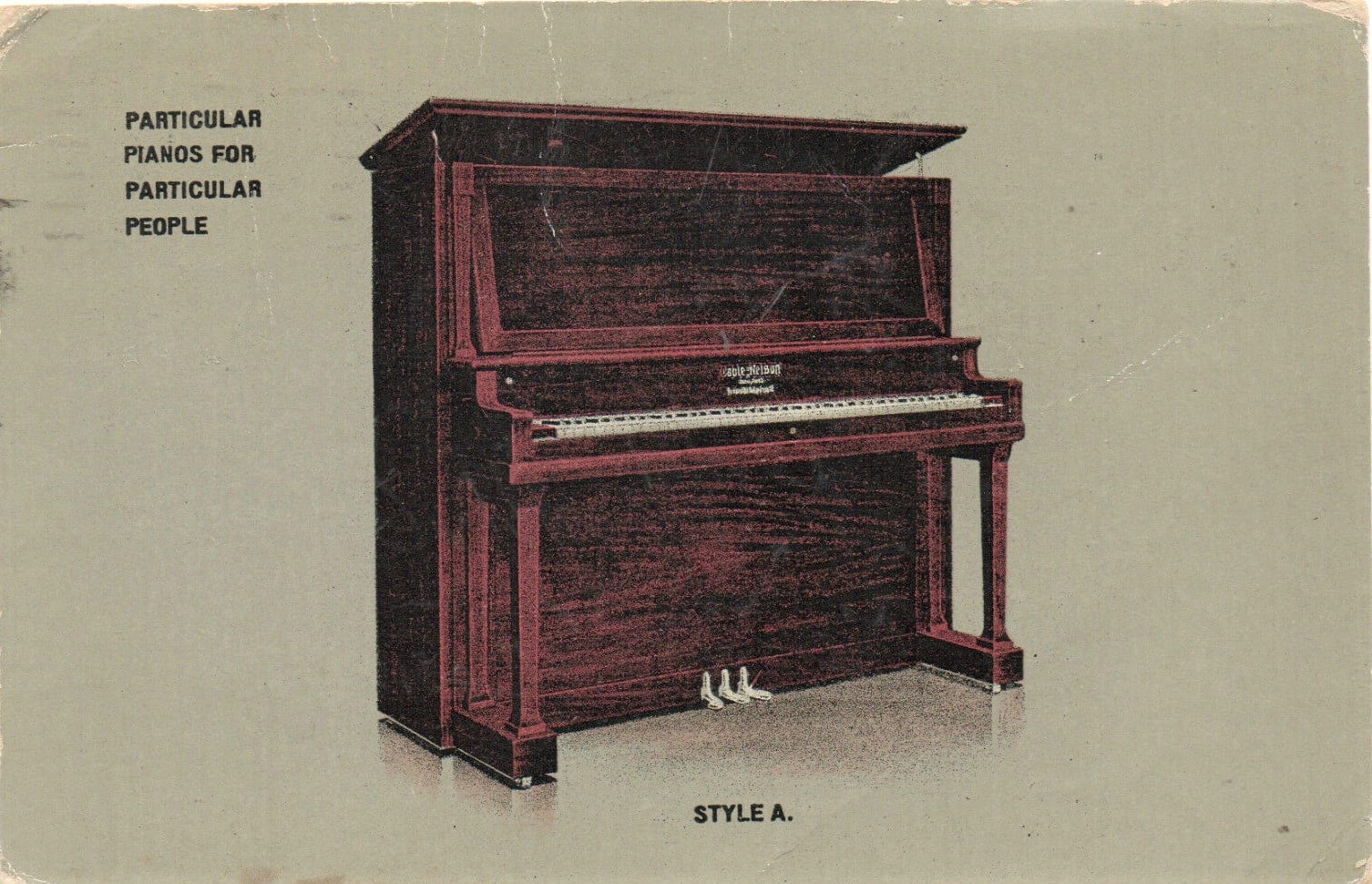
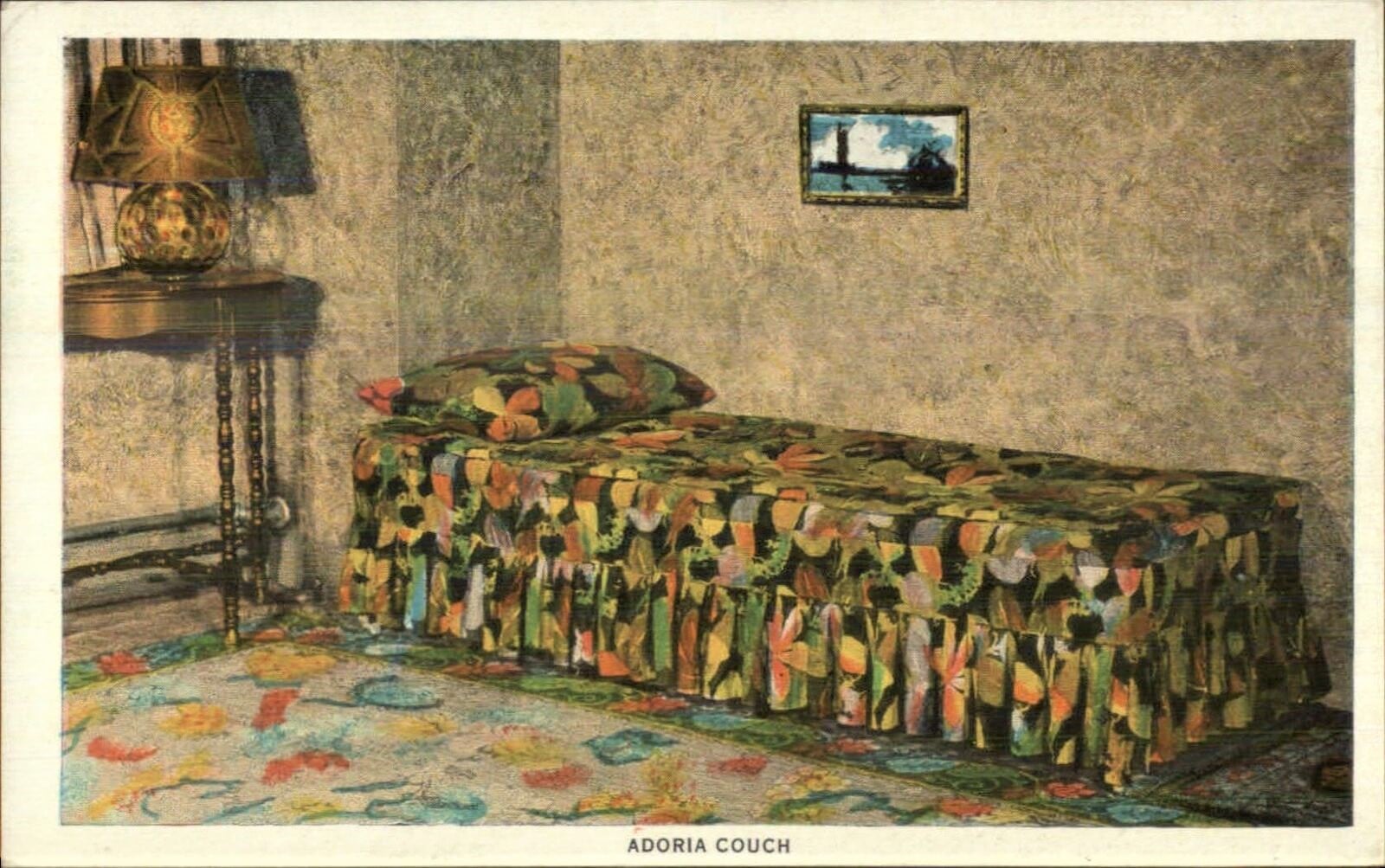
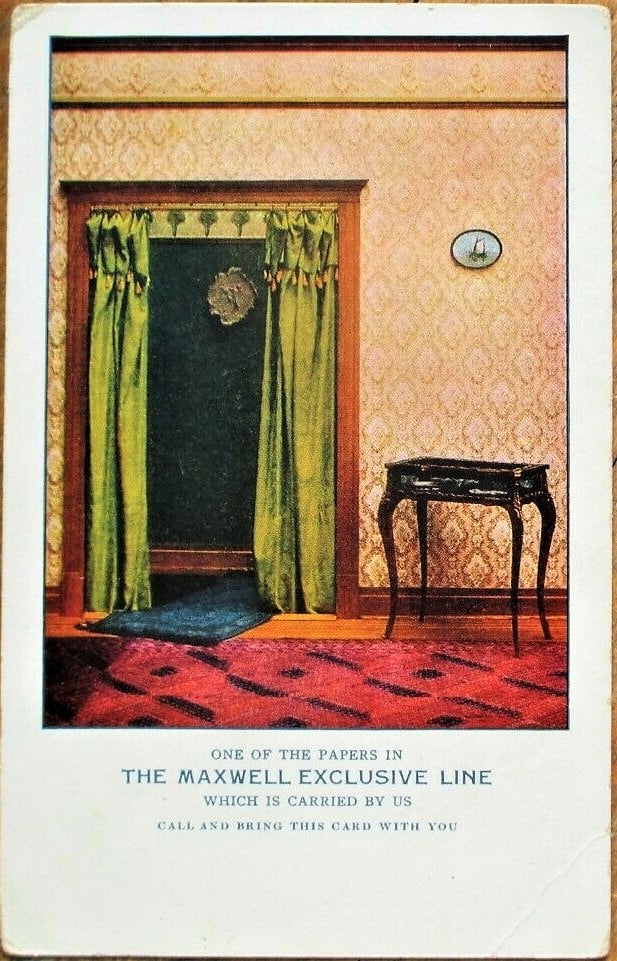
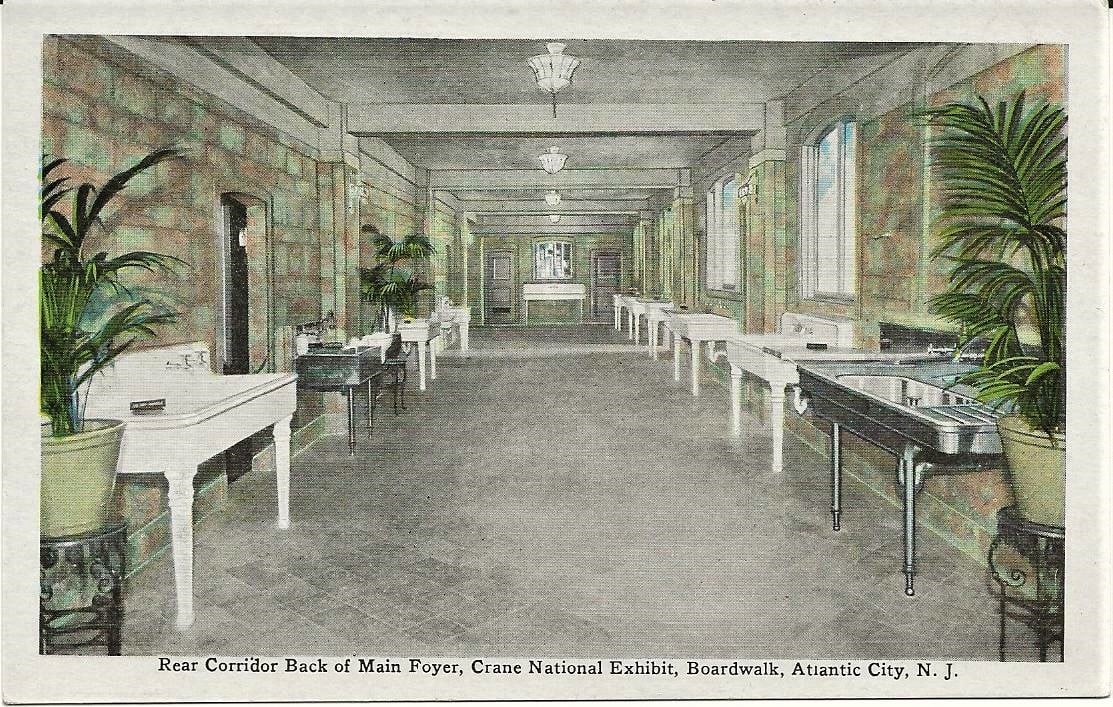
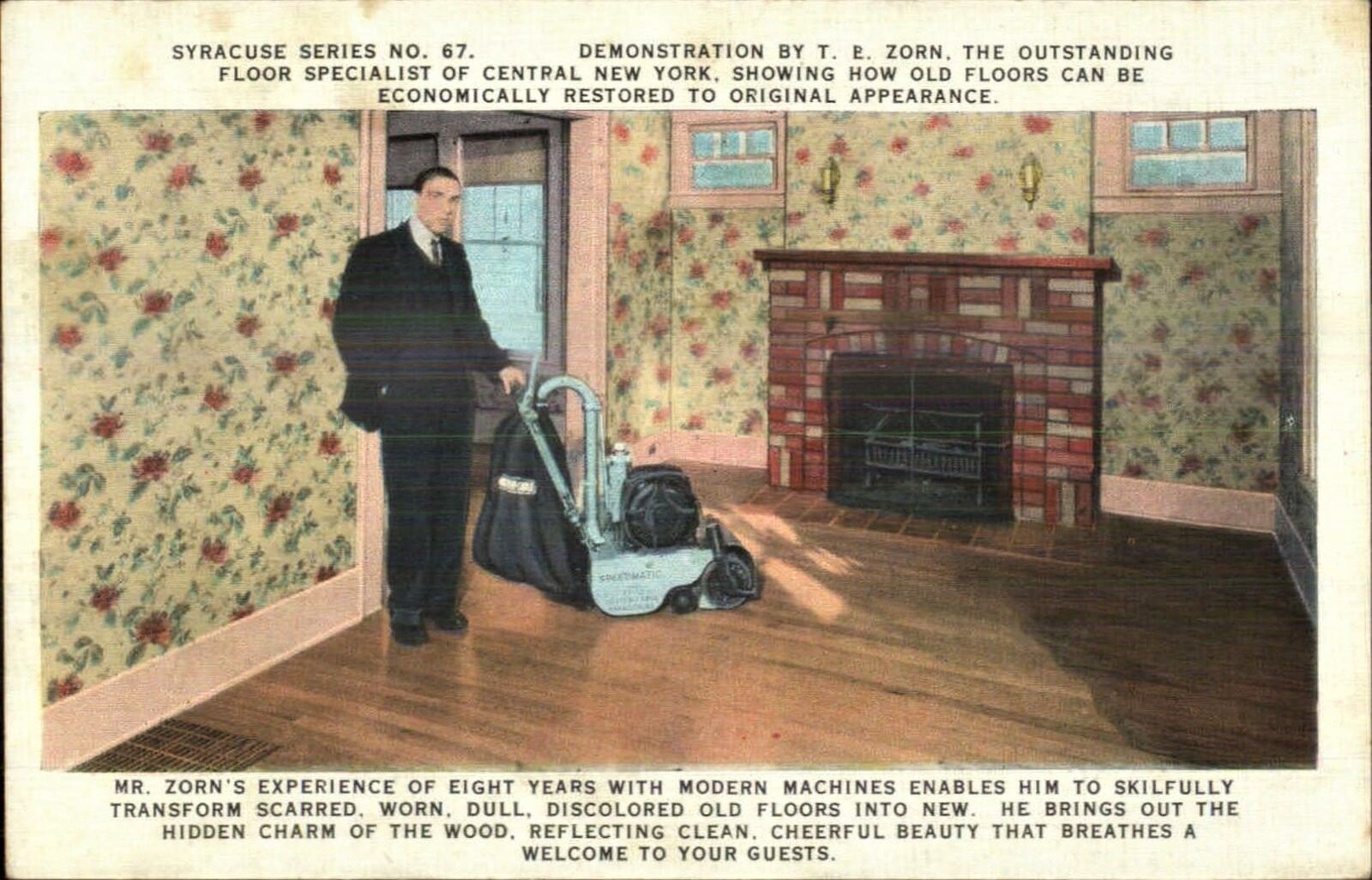
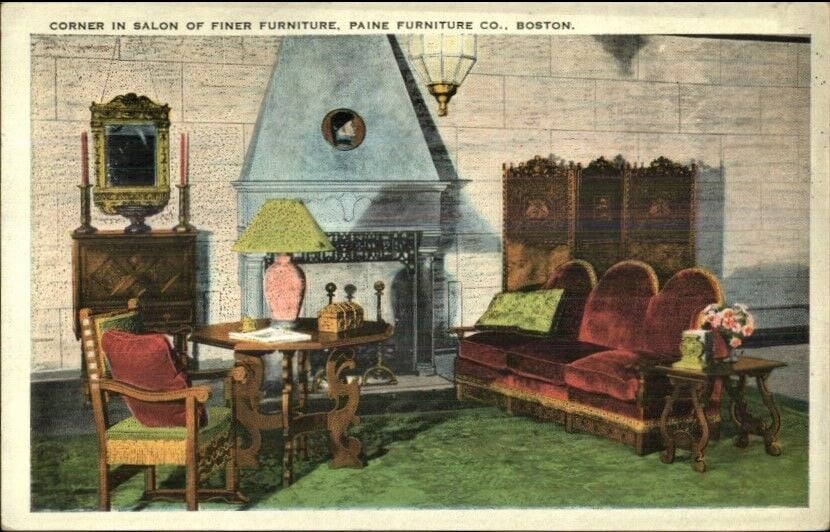
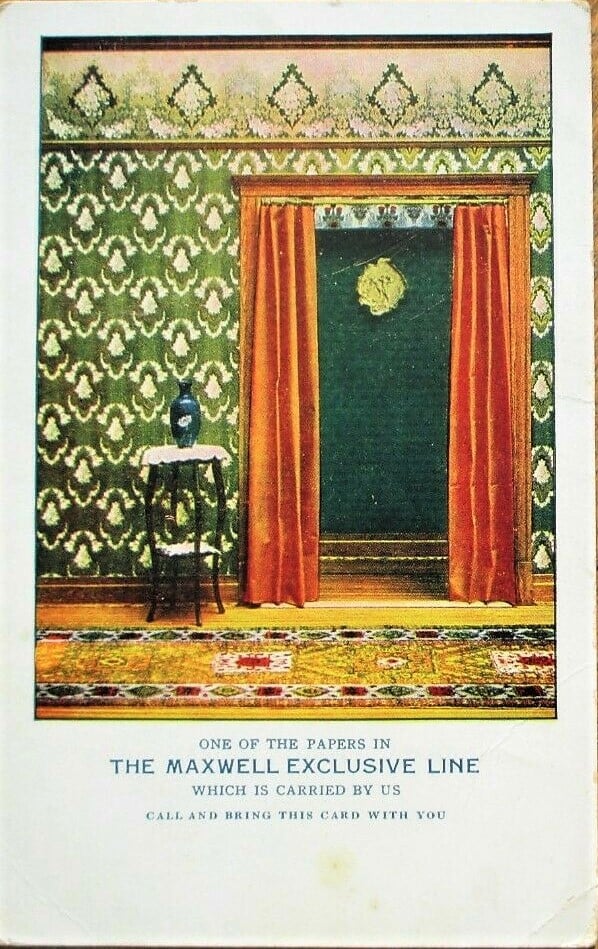
Here's a fun post, motivated by all the people doing home improvement and redecorating projects right now. If it were 1920, one hundred years ago, here are some postcard advertisements that might come your way.
– Carol Flynn