
Explore the RHS Facebook Archives, a rich repository of local history written by Carol Flynn. For two decades, Carol brought a deeply dedicated voice to public education at RHS. Her role as Facebook administrator through mid-2025 naturally extended her prolific research into meticulously detailed articles, most notably her multi-part historical series posts. Today, Carol continues her local history writing for The Beverly Review and other outlets.
2020
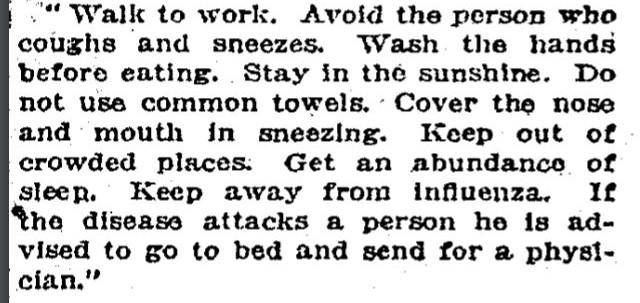
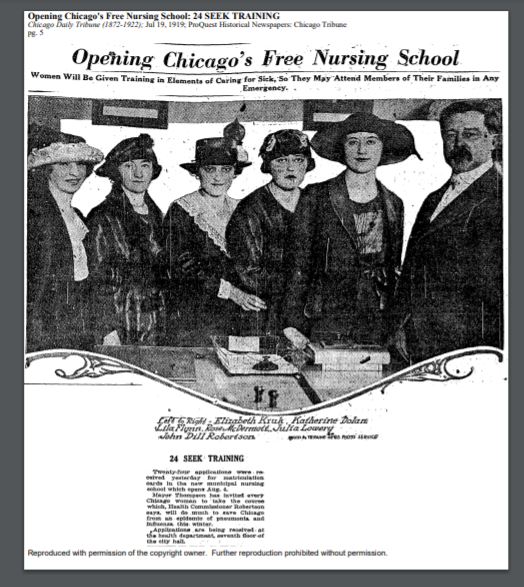
Part 4 – The summer of 1919 finally arrived, bringing a respite to the influenza epidemic in Chicago.
On June 24 the city council lifted the ban on smoking on the el and street cars.
Dr. Evans, the columnist in the Chicago Tribune, was against this – he wrote that the epidemic was not over, no epidemic had lasted less than two years.
Evans wrote that the bacteria, which they thought the flu was, would remain virulent for 5 to 10 years. He commented that safety had been in the precautions that were taken and to let down the guard now could still result in trouble. He mentioned that smallpox was still an issue after many years.
On August 4, 800 women started training as nurses in a new school set up by Dr. Robertson, the public health commissioner. This was an eight-week program to train home and public health nurses. They graduated on September 30th and another class began immediately. A register of the graduates was kept at the health department.
In late August/early September, deaths from influenza began to rise again. People were reminded of flu precautions.
Dr. Evans recommended that people be vaccinated, but he did state that it was now believed influenza was caused by a virus, not by bacteria, and that the vaccine could help reduce the risk of getting pneumonia.
Pollution was becoming a big issue, and it was recognized that smoke pouring into the air was exacerbating lung illnesses such as pneumonia. Armour & Co., the meat packer, was ordered to shut down furnaces that were causing pollution in the city. Over 111 violations had been reported against Armour since 1917, and fifty suits filed against the company.
But 1919 was a much milder year for the flu. In November, there were 178 new cases and 26 deaths compared to 4,177 cases and 1,155 deaths in 1918. For pneumonia, there were 610 new cases and 192 deaths compared to 2,490 cases and 639 deaths in 1918. Bigger concerns in 1919 were measles, chicken pox, mumps, whooping cough, scarlet fever and diphtheria.
Chicago didn’t do as badly with the influenza pandemic as some other cities did. Credit for this was given to the preventive measures and restrictions put in place.
In 1917, the overall mortality rate for the U.S. was 14.2 per 1000 people; this rose to 19.6 in 1918 due to the influenza outbreak. In Chicago, with a population of about 2.5 million people, the 1917 mortality rate of 14.9 per 1000 rose to 17.1 in 1918. Other cities had much higher rates – Baltimore rose to 26.8 and Nashville to 26.4, the highest increases.
The hardest hit population group was adults aged 20 to 49. One thing noted about the flu was that survivors reported complete recovery with very few after effects.
Note that scientists now classify the 1918 influenza, aka the Spanish Flu, as a strain of Influenza A virus subtype H1N1 (A/H1N1). This was an unusually severe and deadly strain of avian influenza, a viral infectious disease. Another H1N1 strain caused the 2009 pandemic. The annual flu vaccine typically gives coverage against several strains of H1N1.
Viruses are the most prevalent biological entity on earth, found in almost all ecosystems. Of the millions of viruses out there, about 5,000 have been described, and of these, at least 220 can infect humans.
Last installment: Some flu-related “good news” stories.
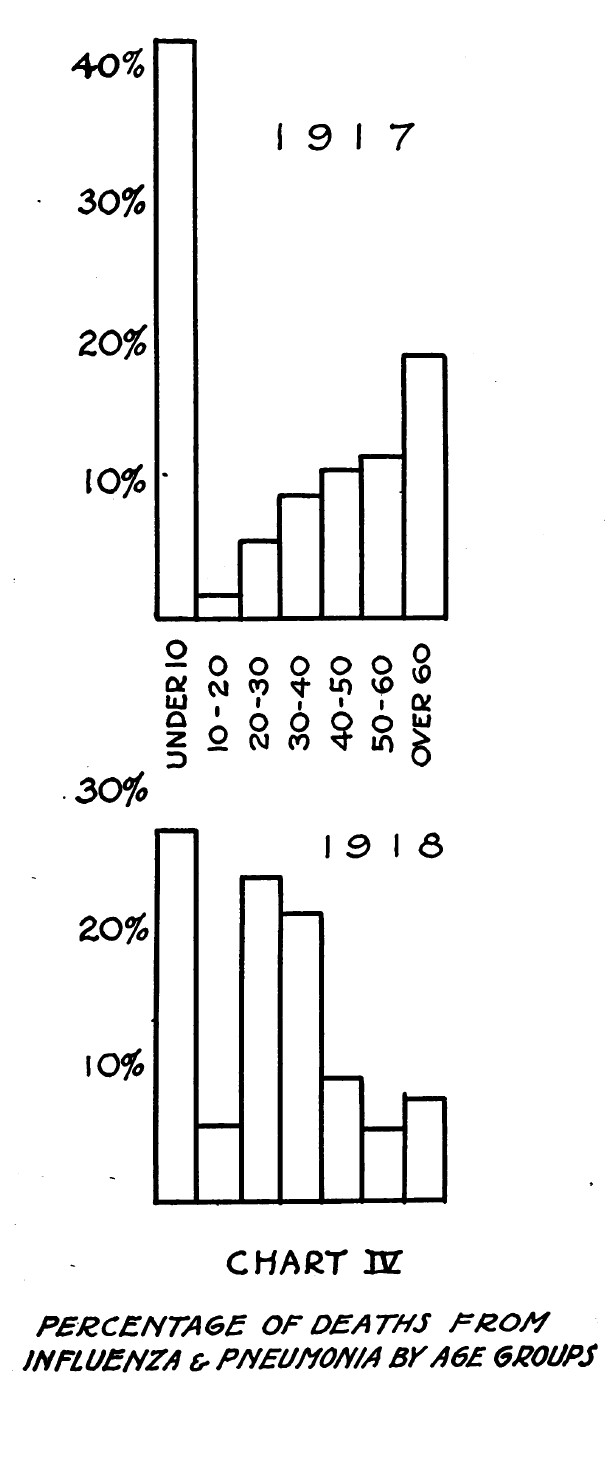
We’ll call this installment Part 4B because this research document is just too good to pass up.
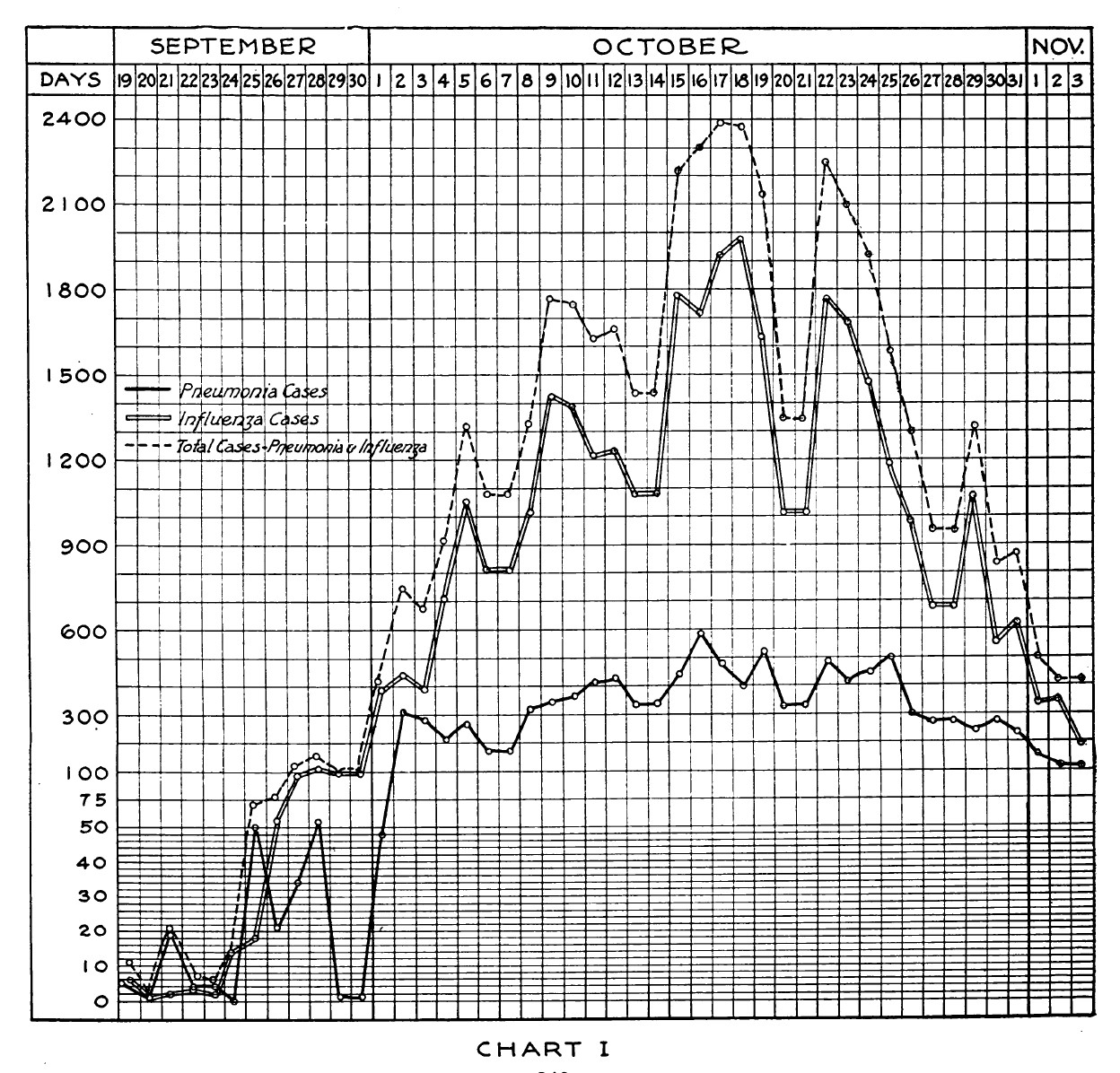
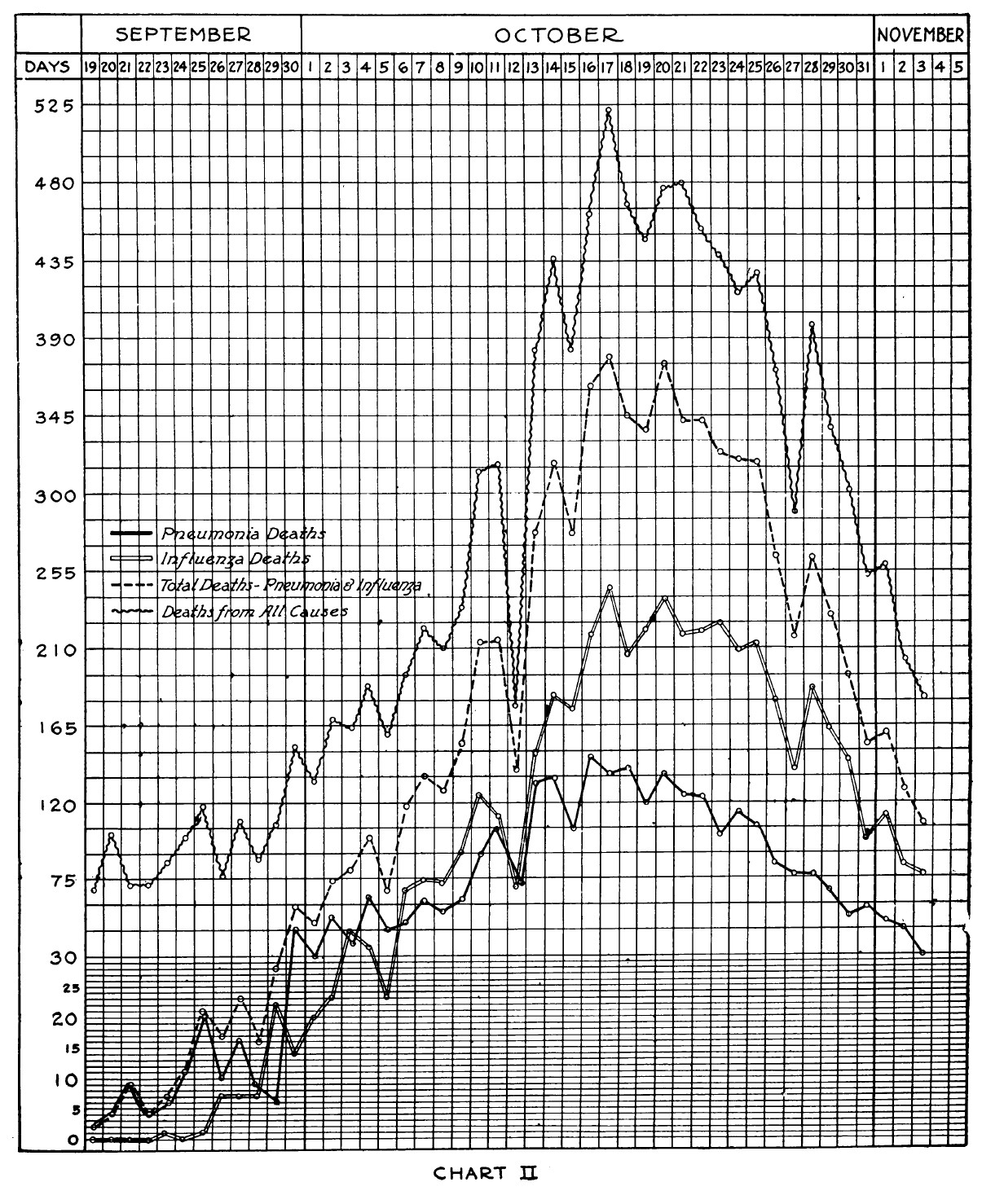
In November 1918, Dr. John Dill Robertson, the Health Commissioner for Chicago, published a “Preliminary Report on the Influenza Epidemic in Chicago” in the American Journal of Public Health.
In this article, he gave statistics about the disease in graphical form for the month before, October 1918, which would prove to be the worse month for the outbreak. Three of those graphs are posted here.
He also gave a chronology of the measures employed to control the epidemic. Some highlights were:
September 17 – Proclaimed influenza a reportable disease [first cases reported in the city]
September 21 – Issued warning to the public about the symptoms and self-quarantine at home
September 26 – Started inspection of schools and students
September 30 – Started daily disinfecting of public transportation cars
October 1 – Started quarantine of influenza patients in hospitals and homes
October 4 – Procured home nurses from Visiting Nurses Association
October 5 – Started warnings about public gatherings (churches, etc.)
October 11 – Procured more home nurses from other organizations
October 12 – Closed public dance halls; prohibited public funerals; added 150 full-time “health officers” to the city payroll; met with leaders of 40 civic organizations to assure cooperation
October 13 – Banned smoking on public transportation cars
October 15 – Closed theaters, skating rinks, night schools and lodge halls
October 17 – Ordered businesses to stagger starting and ending times; announce vaccination program
October 18 – Stopped all non-essential public gatherings
October 19-20 – Reviewed hospitals for available space; stopped all elective surgeries
October 21 – Recruited additional home nurses
October 22 – Received vaccinations and started program
October 23 – Met with laboratories to produce immune human serum
October 29-30 – Began lifting ban on public gatherings
November 4 – Lifted remaining bans on public gatherings
Part 5 – Every cloud has a silver lining
Part 5a – Every cloud has a silver lining
Our final installments about the 1918 influenza pandemic in Chicago is a story about how the lives of real people were affected.
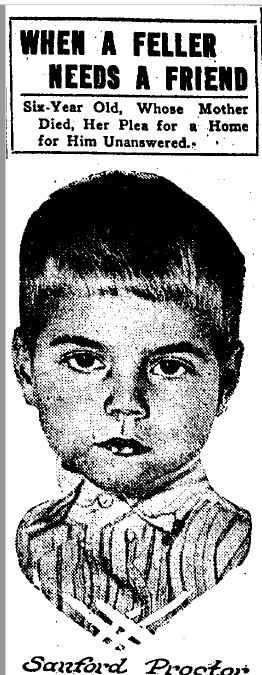
It was October 16, 1918. Mrs. Alice Proctor, 34, was a patient at Mercy Hospital, suffering from influenza. She had moved to the United States from England two years before with her husband and son. Her husband had died, leaving her alone with her son Sanford, now 6. The week before, Alice had been hired as a maid by the George A. Rees family in Hyde Park. The second day on the job, both she and Sanford were put to bed sick at the employer’s house. Alice’s symptoms worsened and she was hospitalized.
Sanford, still at the Rees home, was being treated for double pneumonia following influenza. He had previously suffered from “infantile paralysis,” the term for polio, which had left one leg crippled. He was described as “the most patient and pleasant little fellow in the world.”
Alice knew she was dying. She had no family, and she was worried about what would happen to her little boy. She asked the hospital staff to help her contact the Chicago Daily Tribune. She then asked the newspaper if they could help her find a home for her little boy.
A reporter, never named in the newspaper, consulted a lawyer acquaintance, Charles L. Phillips, who agreed to help. They visited Alice at the hospital and worked out the details whereby she would leave her child and her precious few personal belongings to the family who would adopt Sanford.
“I am glad,” she whispered faintly, “and I can die happy.”
In the next few days, Alice rallied. and it was thought she might survive. But she died on October 19th.
In the meantime, Sanford had been admitted to St. Luke’s Hospital. He asked for his mother. He didn’t understand where she was and why she was not coming to see him. The hospital staff did not tell him she would never return.
The Tribune put out a call for families who might adopt Sanford Proctor. Perhaps a family who had lost a son in the war, suggested the paper, or a couple who had not been blessed with children of their own.
Alice’s employers, Mr. and Mrs. Rees, were fond of Sanford, but they already had three children of their own. They did want the child to convalesce at their home and were concerned that a good family be found for him.
Sanford brightened the ward at St. Luke’s, but he wanted his mother.
“I hope my mamma gets well soon and comes to see me,” Sanford told the reporter. “I like the nurses but I like my mamma better. Will you tell her I am getting well quick so I can see her?’
Offers to adopt the boy poured into the Tribune. People were instructed to put in writing their ability to care for the child.
Responses came from the wealthy who promised very fine homes and from poorer families who promised love. Country folk and city folk and suburban folk responded. Attorneys and farmers responded. The mayor of a city in Michigan responded. People who had lost children and people who had children for Sanford to be a brother to responded. Special pleas came from childless couples and from Gold Star mothers who lost sons in the war. People promised Sanford would receive everything from fresh air, sunshine and fun to church attendance to medical care to a good education.
The Tribune narrowed the possibilities to twenty-four potential families that were being investigated. Sanford improved and was expected to be released from the hospital to the care of the Rees family, where he would meet with prospective new parents.
On November 5th, the reporter wrote that Sanford would be released from the hospital within days, and that he would soon learn that his “mommers,” for whom he asked constantly, was dead and he was an orphan. The choice of new parents had been narrowed down to a select few. And Sanford would receive a bill for $100 for his mother’s funeral and burial.
Next installment: Little Sanford Proctor gets a new home.
REVISED, and then REVISED again
Part 5b. Little Sanford Proctor finds a new home.
Sanford Proctor was a six-year old boy whose mother died of influenza during the 1918 pandemic. Having already lost his father, Sanford was now an orphan. On her deathbed, his mother had contacted the Chicago Daily Tribune to ask for help in finding a home for her son. Scores of people contacted the Tribune with offers to adopt the boy.
On November 16, 1918, the Tribune announced that Sanford had a new home. The doctor who had been treating Sanford at St. Luke’s Hospital had obtained custody of the little boy.
This doctor, whose name was not revealed in the article, had cared for the boy daily, often neglecting his outside practice to do so. Not only was Sanford’s pneumonia on the mend, the doctor also believed that expert care would help his crippled leg.
The doctor and his little patient had become great friends. When the time came for Sanford to be discharged from the hospital, the doctor realized he could not watch Sanford go.
“I can’t think of letting my little companion go into another’s home,” said the doctor. “I have grown attached to him. I can cure his shriveled leg and make a fine young man out of him.”
The article reported that Sanford would be going to a fine city residence and a spacious country home where he could romp and play. The doctor and his wife intended to adopt the boy and give him their family name.
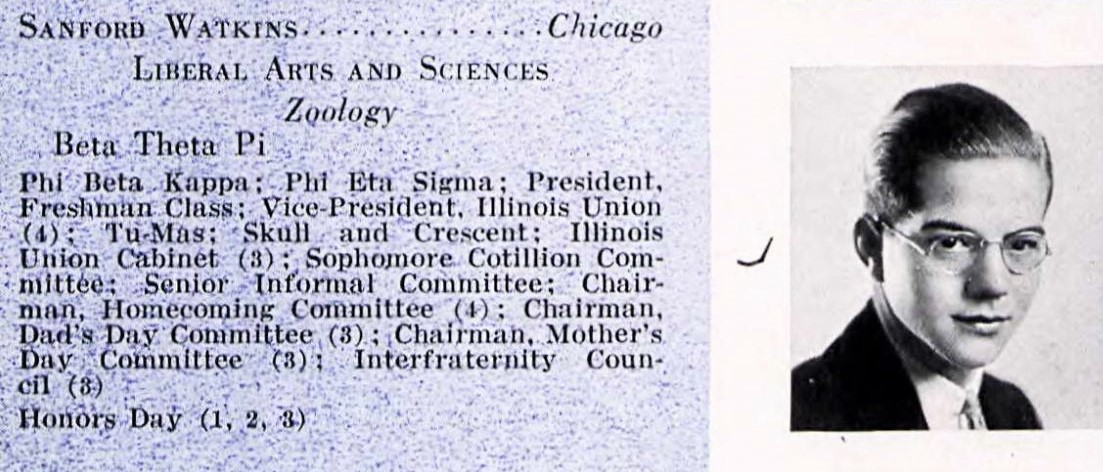
Who was this kind-hearted physician? The story wouldn’t be complete without further research. This happened in 1918, so the assumption was made that Sanford should be in the 1920 U. S. Census under his new name. A search through the census records on Ancestry.com for Sanfords in Chicago in 1920 found him – he was now Sanford Watkins, living at 4943 S. Blackstone Ave., one of the finest addresses in the entire city.
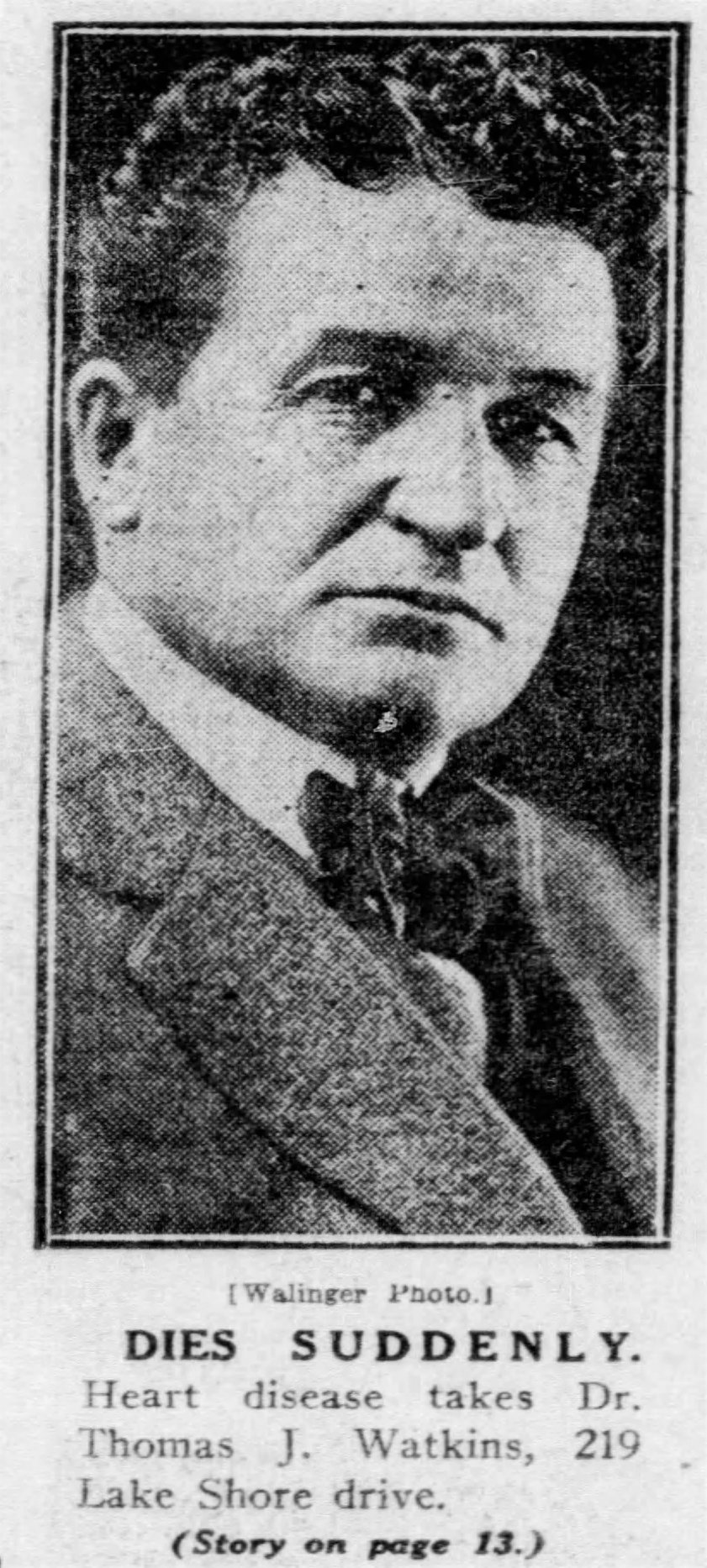
Sanford was adopted by Dr. Thomas James Watkins and his wife Catherine. Dr. Watkins was head of the gynecology department and a professor of medicine at Northwestern University. He was also one of the heads of St. Luke’s Hospital and affiliated with Mercy Hospital. He was a past president of the American Gynecological Society and a presenter and author of renown.
Research also found that Thomas and Catherine Watkins had lost their only child, a seven-year old boy named Carman (Catherine’s maiden name) in 1901. The child was buried at Mt. Hope Cemetery on 115th Street here on the Ridge.
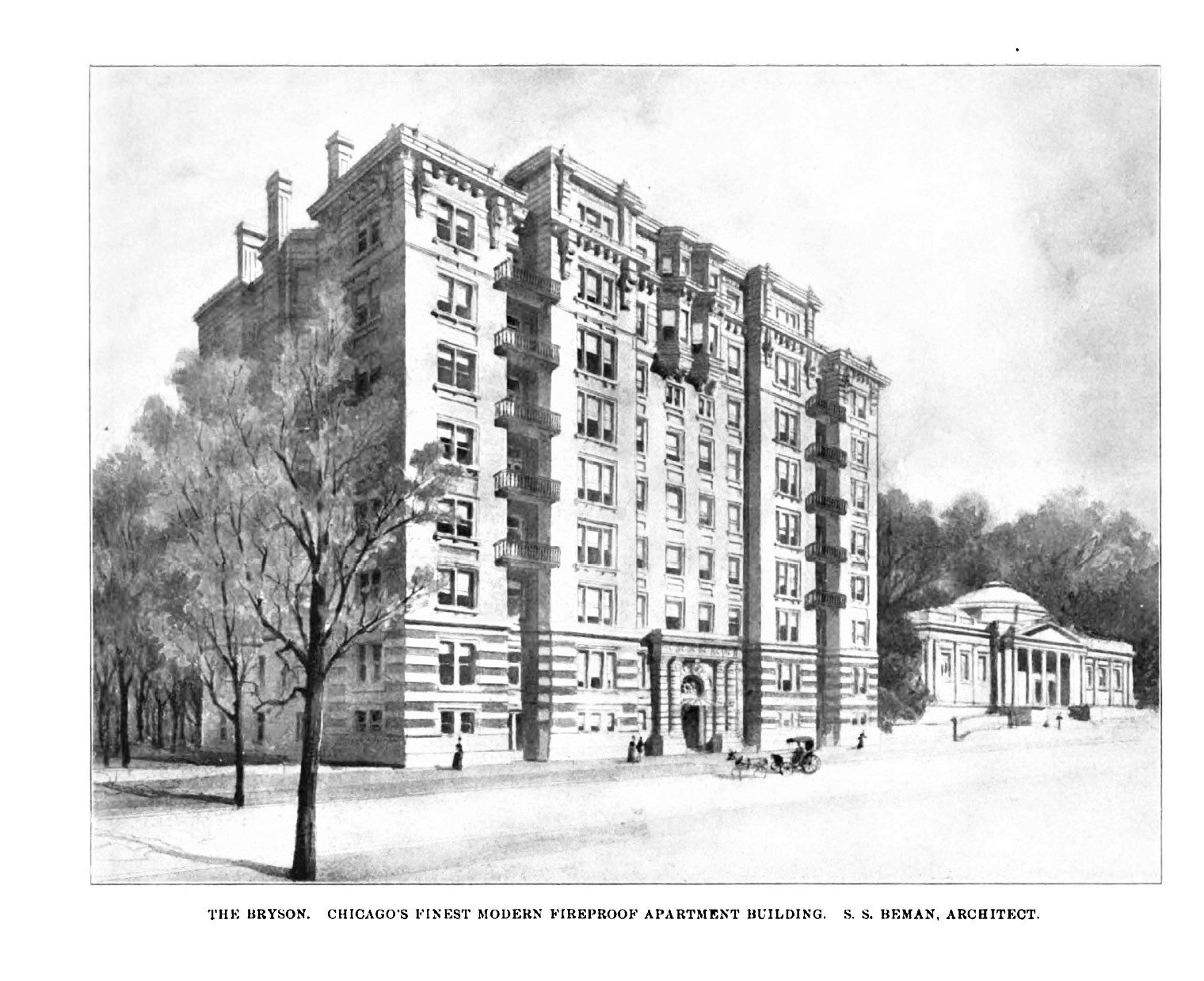
Dr. and Mrs. Watkins and Sanford lived at the Bryson Apartment Building, one of Chicago’s exclusive, grand buildings where the apartments had eleven huge rooms, soaring ceilings and marble entryways. The building, which no longer stands, was sold in 1923 to be turned into a hotel. The Watkins family moved to another fine new apartment building on Chicago’s Gold Coast at 219 East Lake Shore Drive, which today houses multi-million-dollar condos.
Dr. Watkins died of a heart attack at his office in 1925 at the age of 62. His remains were returned to New York where he was from originally. At the time of his adopted father’s death, Sanford, 12, was a student at St. John’s military academy in Wisconsin. Dr. Watkins left a trust fund of $50,000 for Sanford, which would equate to more than $700,000 in 2020.
We found further information on Sanford. In the early 1930s, he was a student at the University of Illinois – Urbana. For a while, he lived in rooms at the South Shore Country Club, where he was an avid golfer.
It appears he spent time in New York in the mid-1930s. He did travel from New York to England and Germany in the early 1930s.
The 1940 census found Sanford, 27, with his wife Barbara and son Thomas James, presumably named for Dr. Watkins, living in Beverly Hills, California. His occupation was listed variously as writer and stenographer.
Barbara was the daughter of Charles Helsell, an executive with the Illinois Central Railroad. The Helsells lived in Flossmoor.
On his 1940 draft registration card, Sanford listed his employer as John Truesdell. Truesdell was a young man in his late 20’s from Ohio who wrote a Hollywood gossip column that was carried by several Midwest newspapers. We’re assuming that Truesdell dictated his material to Sanford who transcribed it for publication.
Alas, though, we are sorry to report that Sanford died in December 1941 in California, at the age of 29, leaving a young widow and baby son. We are researching the death certificate to learn the cause of death.
We found that Barbara remarried in 1957 to John Whit Foster. Barbara died in 2003 in San Diego. Barbara’s and Sanford’s son Thomas James died in 1996. We do not know if he left descendants.
So many stories of individuals from the influenza pandemic of 1918-1919 had sad endings. It was nice to find this one “feel good” story from the 1918 Tribune about the orphan Sanford Proctor. And it looked like life was going well for Sanford for a time. In a twist of fate, just as Sanford never knew his father, his son never knew him.
We’ll do one more post to look at some miscellaneous stories and information about the 1918-1919 influenza pandemic in Chicago.
Updated. Reposted.
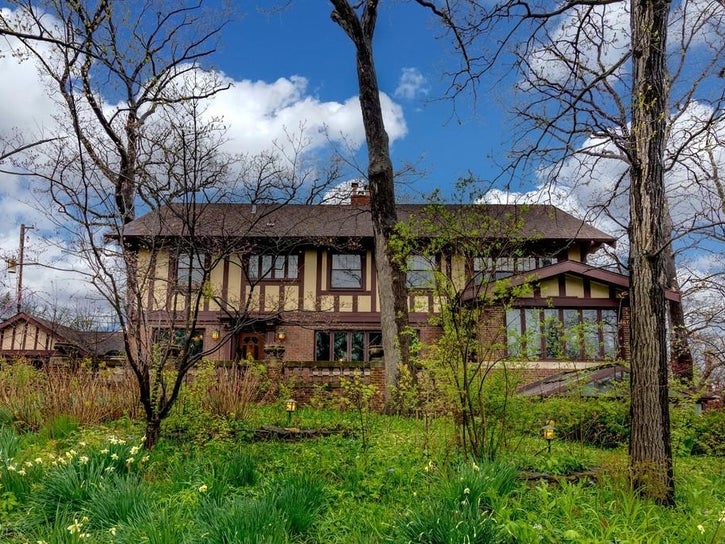
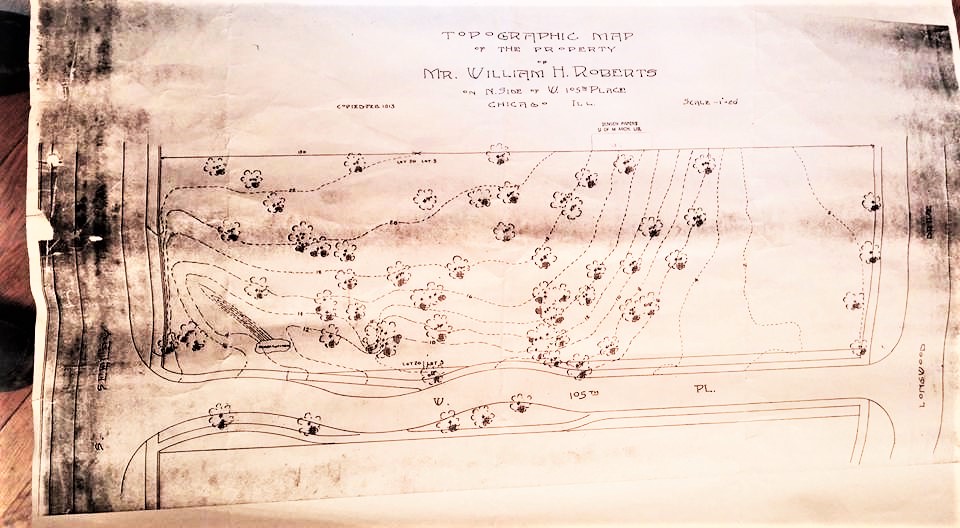
Patch ran a feature by Tim Moran on the house at 10520 S. Longwood Drive. This home, which was built around 1898, is on the market right now for $1.6 million. There are scores of pictures of this beautiful home that can be accessed on the Internet.
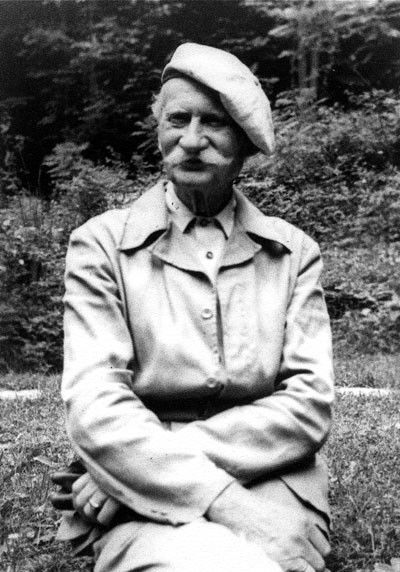
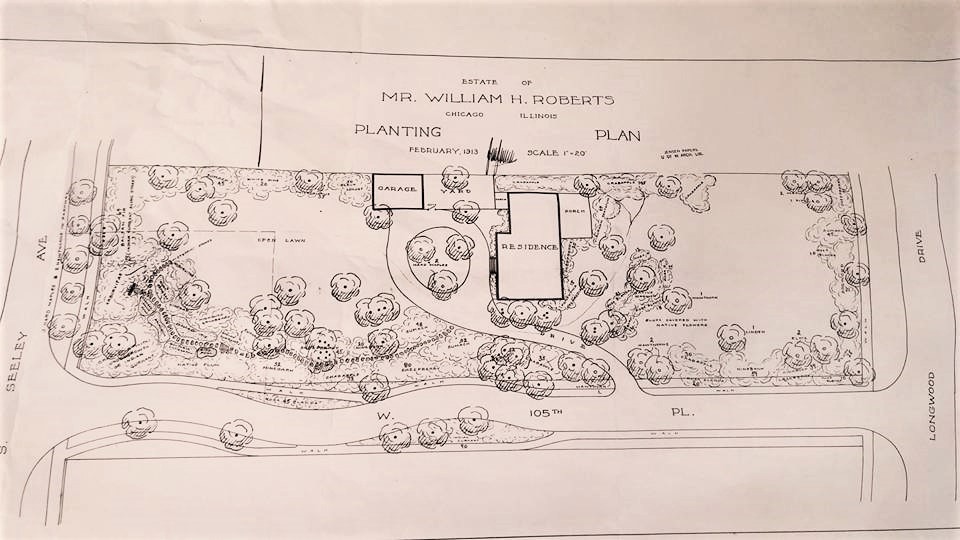
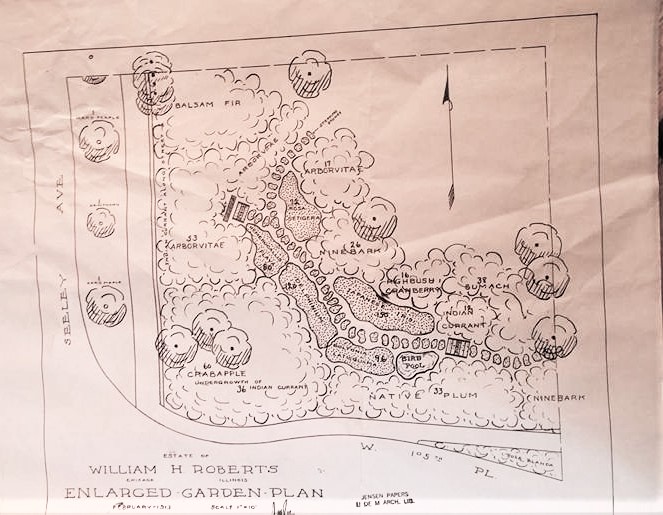
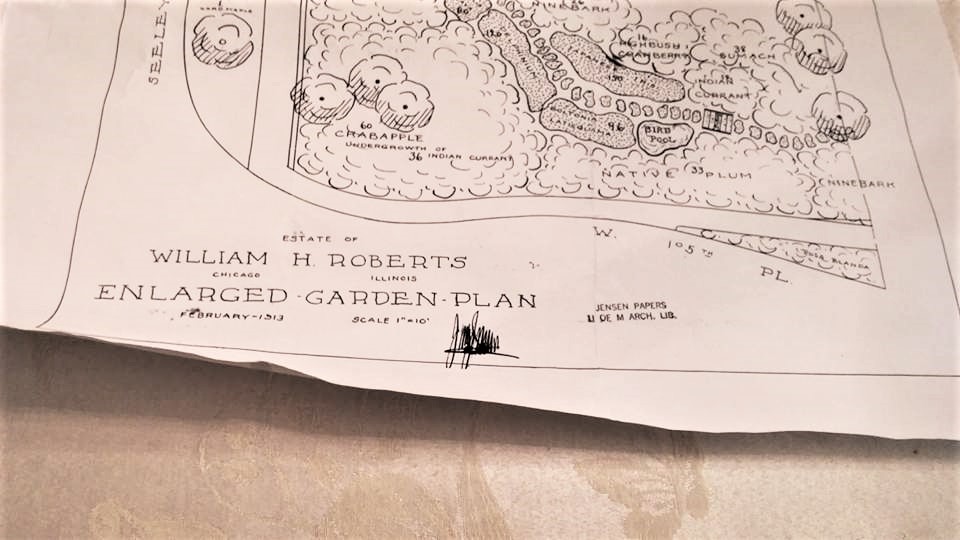
One important historic fact about this estate is that a complete landscaping design was done there in 1913 by Jens Jensen. Jensen (1860-1951) was the foremost landscape architect for the naturalistic or Prairie-style movement. The Ridge Historical Society has copies of the original landscape plans for this house.
The estate, which originally extended to Seeley Avenue on the west, was owned at the time by William Hinman Roberts, an executive with the Continental Casualty Company and the Continental Assurance Company. Roberts retired in 1937 and sold the house, moving to Seattle where he died in 1944.
Jens Jensen was born in Denmark and came to Chicago in the 1880s. He took a job with the park system and eventually became superintendent of the West Park System which included Garfield Park and Douglas Park. He was very instrumental in founding the Forest Preserves of Cook County. He also helped preserve the Indiana Dunes.
His private practice included designing private estates and municipal parks throughout the country. He did numerous projects with Henry Ford. He worked with architects Frank Lloyd Wright, Louis Sullivan, George Maher and Howard Van Doren Shaw.
In addition to the work for Roberts, Jensen did several other projects in Beverly/Morgan Park, including Crescent Park and the Hopkinson-Platt House. He was known to have led hiking groups that came by train from downtown Chicago to visit the wooded Ridge.
The aesthetic of wandering through a natural environment was a key characteristic in Jensen’s work. An ardent conservationist, he used native plants and ecology systems. This is reflected in the gardens he designed for the 10520 S. Longwood Drive estate.
https://patch.com/illinois/beverly-mtgreenwood/most-expensive-home-market-beverly
Part 6: What happened to the Spanish flu, and some things never change
The “Spanish Flu” infected the world’s population from 1917-1920. Then it pretty much just disappeared.
At the time, no one really knew what viruses were. They knew there was something smaller than bacteria that could not be seen even with microscopes. They knew these pathogens could infect, be transmitted between, and cause grave illnesses in humans. They knew viruses needed living cells as hosts unlike bacteria that could be cultured in a nutrient medium. Some illnesses they knew resulted from viruses included rabies, polio and influenza.
1931 saw big breakthroughs. The electron microscope was invented allowing ever smaller sub-microscopic matter to be viewed. Influenza and other viruses were grown in fertilized chicken eggs. This led to the “golden age of virus discovery” which has resulted in where we are now in identifying viruses and treating the illnesses they cause.
In the 1990s, the strain of influenza that caused the 1918 pandemic was extracted from old tissue samples. The virus, kept in secure laboratories with top level clearance for admittance, is used for research. One conjecture as to why the virus “disappeared” from humans is that the structure of the virus mutated, or changed, into a less lethal form.
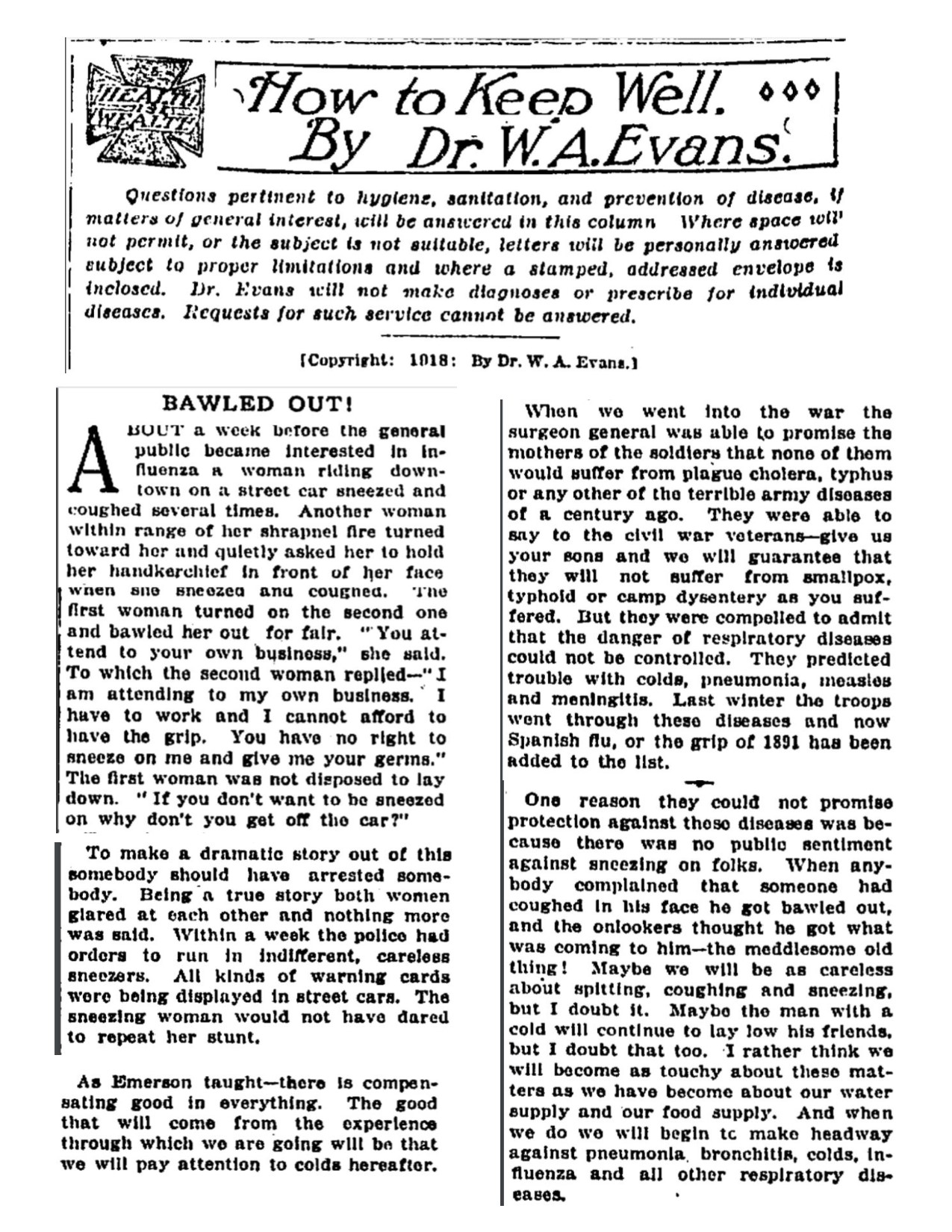
There are many similarities between the 1918 influenza pandemic and the 2020 coronavirus pandemic. Certainly one example is the reaction of some people to taking precautions not to spread the contagion.
This Chicago Daily Tribune article from Dr. Evans is a timely reminder that some attitudes from then are still around today. Some things have not changed – but maybe they will this time.
Chicago Daily Tribune, October 22, 1918
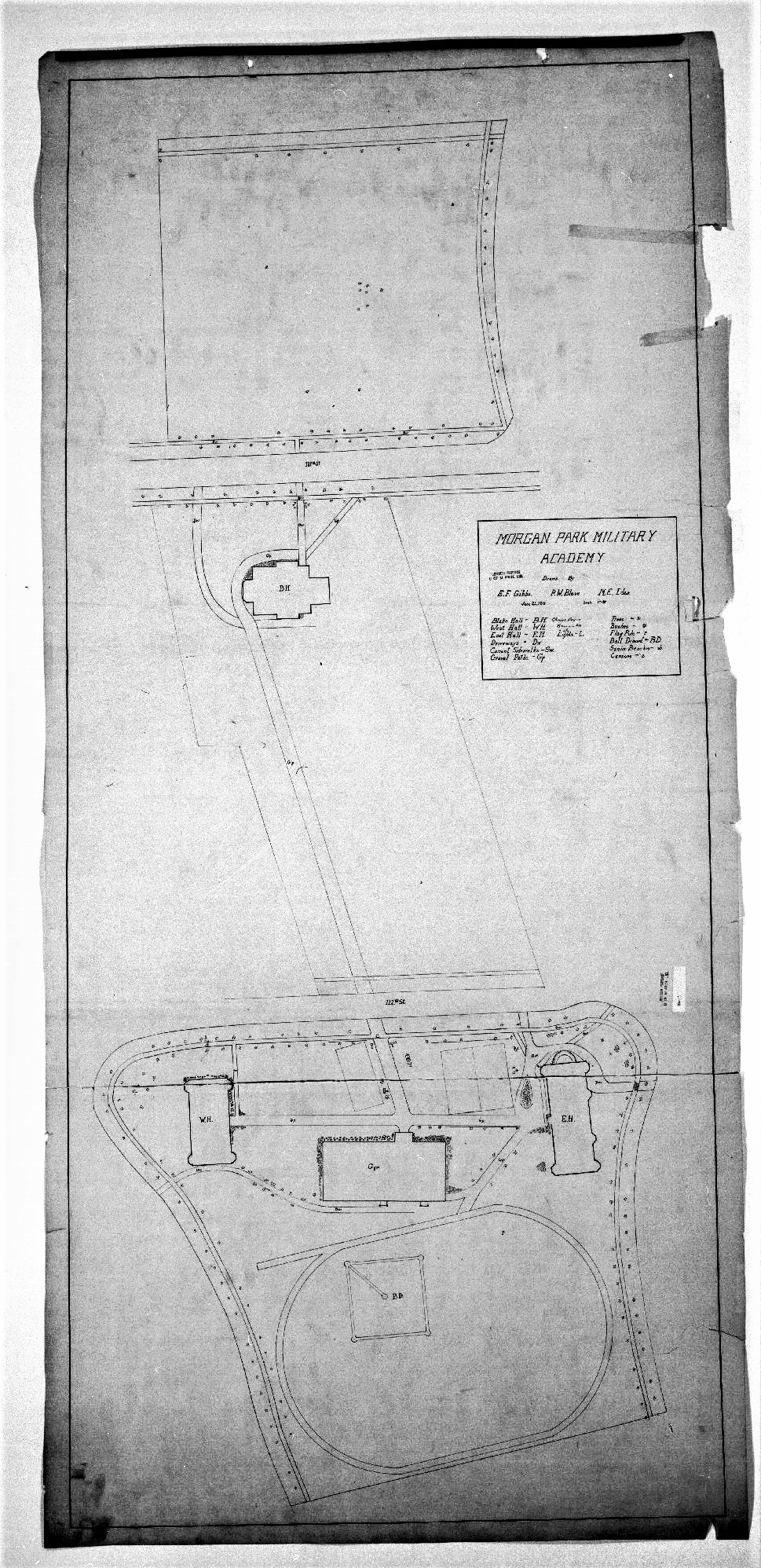
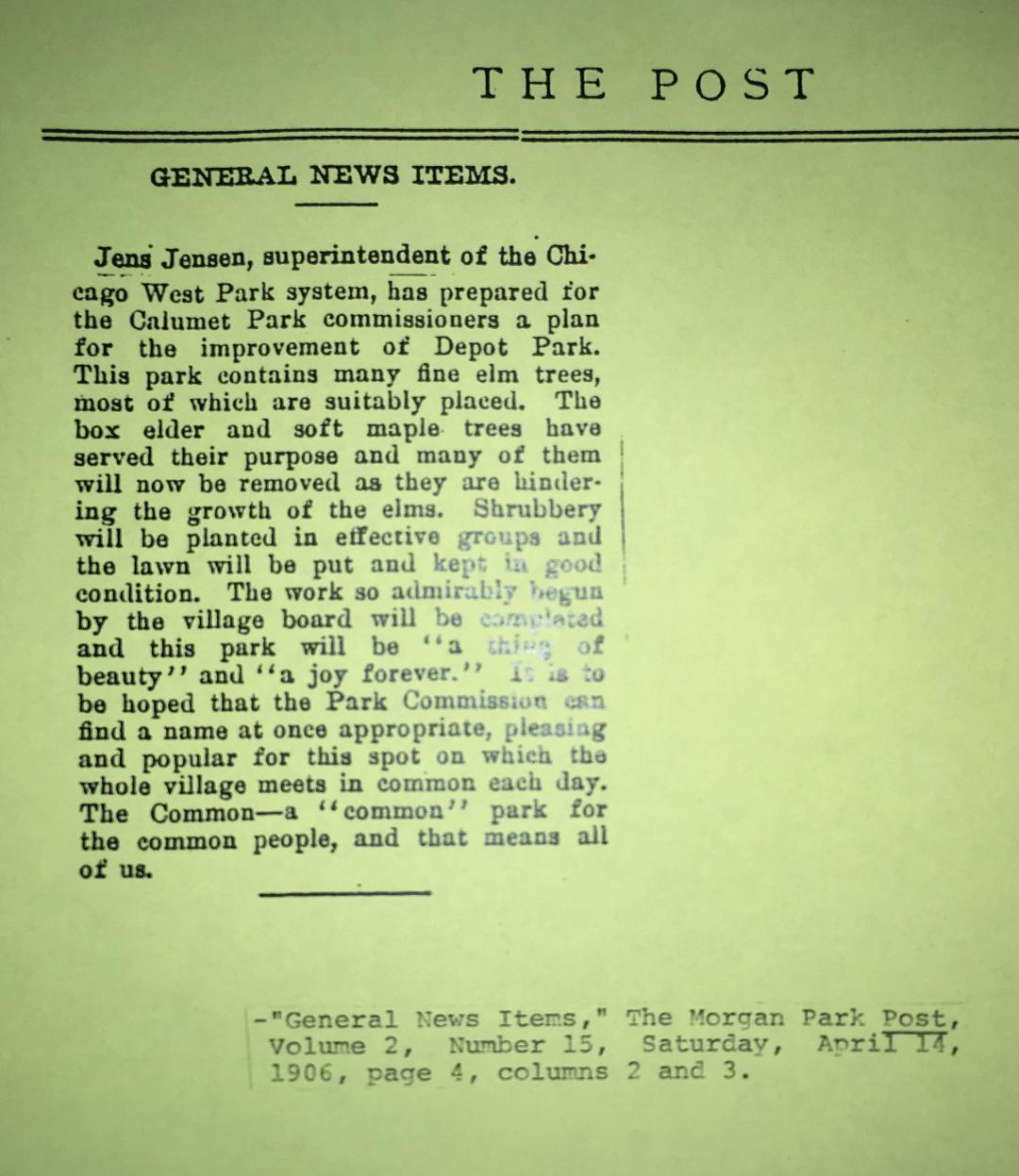
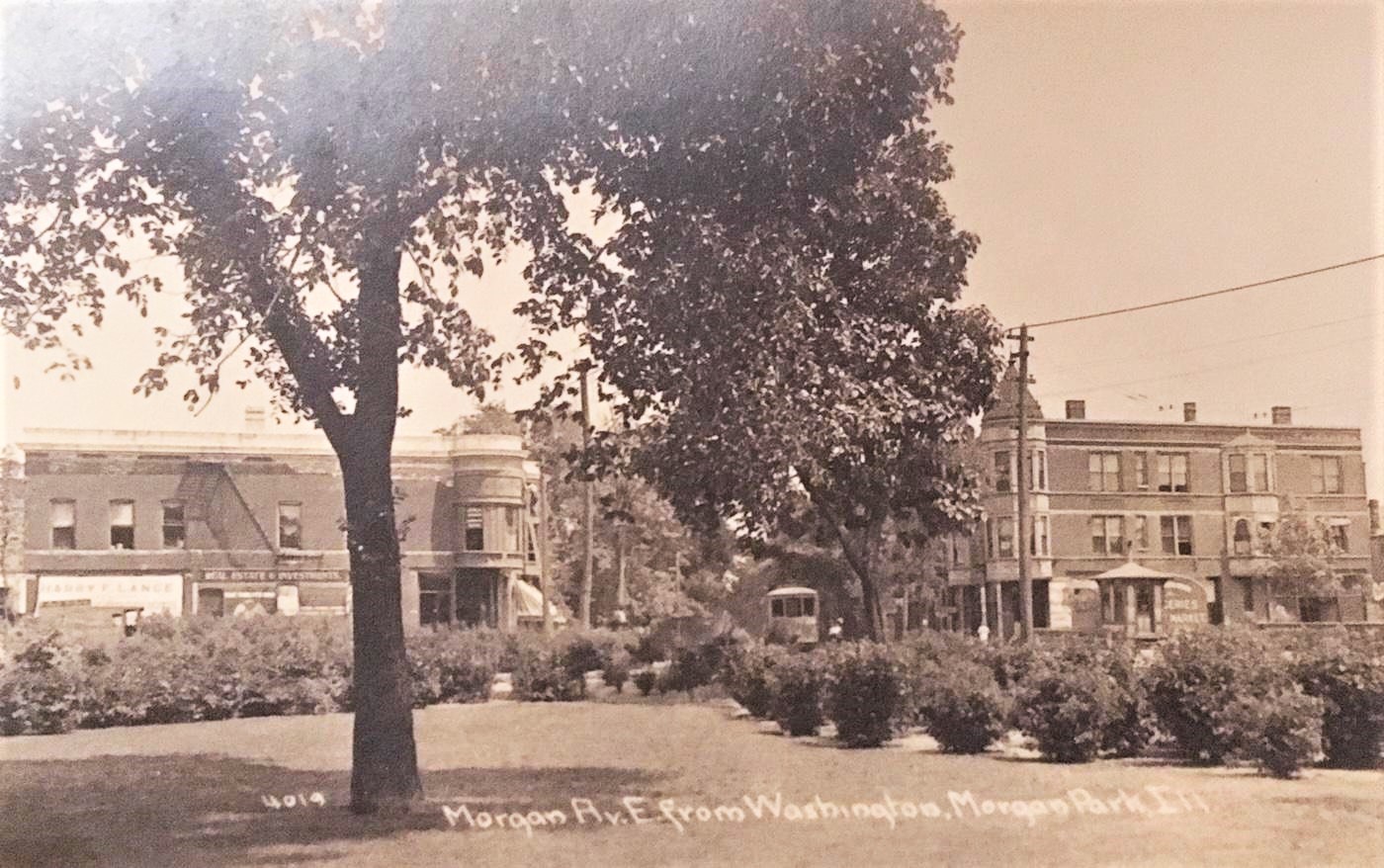
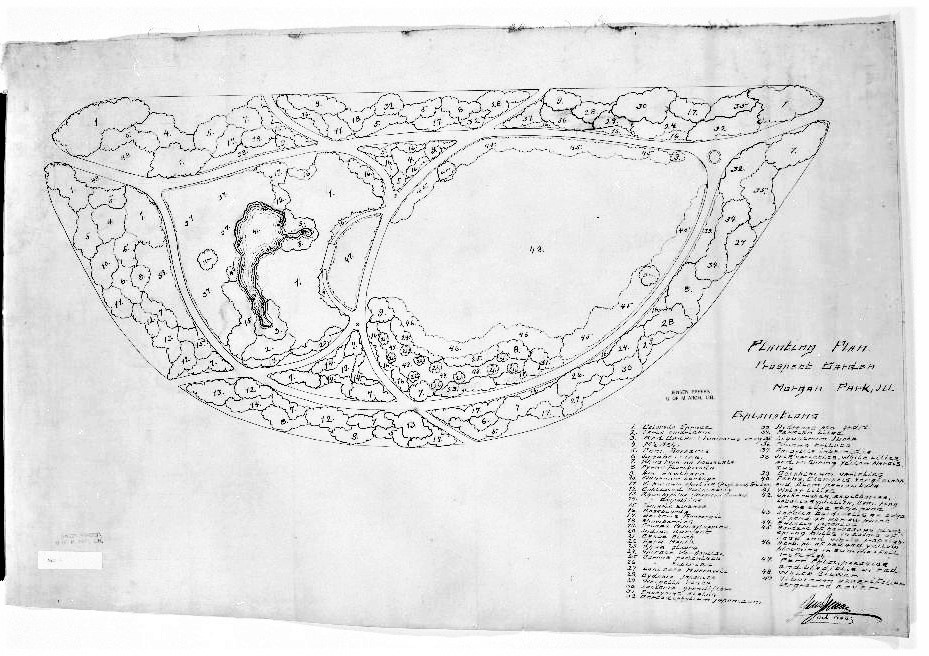
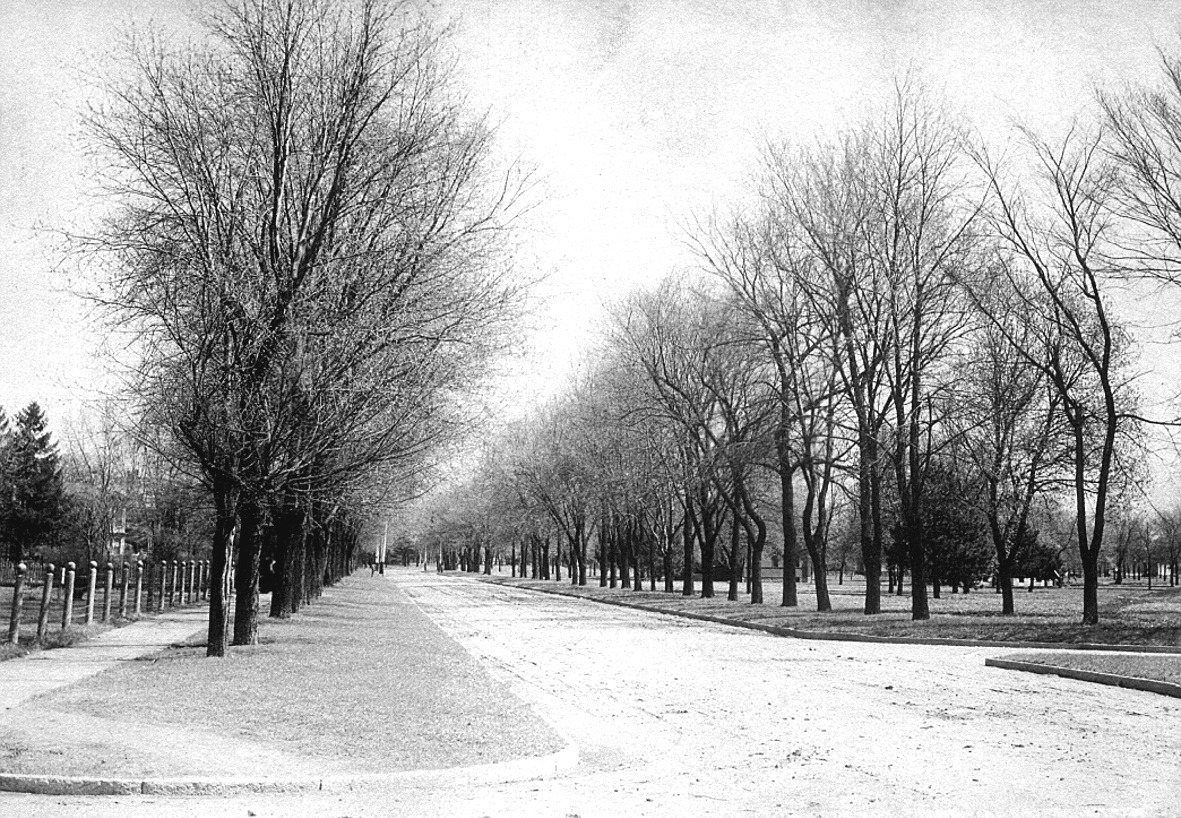
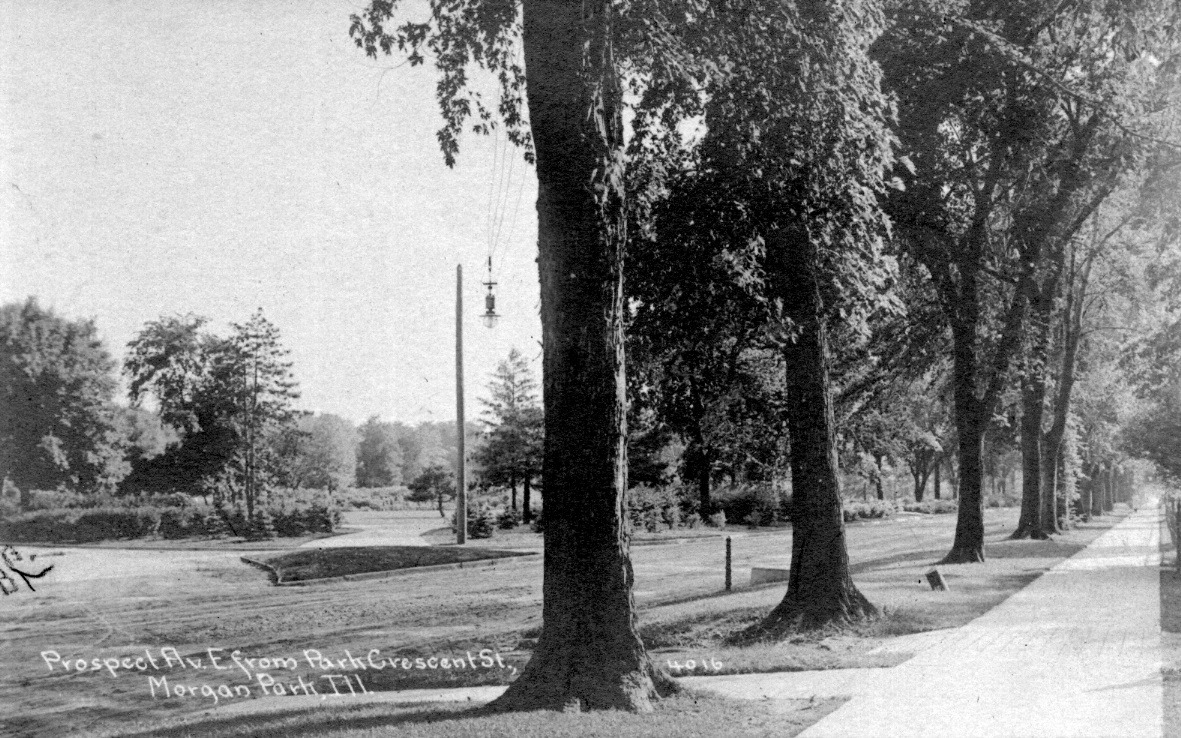
Responses to the post on Jens Jensen and his 1913 landscape plan for the house at 10520 Longwood Drive raised interest in other projects Jensen did on the Ridge.
Documentation shows Jensen did work for three private estates: 10520 (then 10560) Longwood Drive; the Hopkinson-Platt House at 10820 S. Drew St.; and 9900 S. Longwood Drive, the home of Orlando J. Buck.
Jensen and/or associates in his company did plans for two local institutions. In 1918, his company designed plans for the sports grounds around the gym south of 122nd Street for the Morgan Park Academy (attached). In 1924, his associates developed a planting plan for Oakhaven Old People’s Home, which is today’s Smith Village.
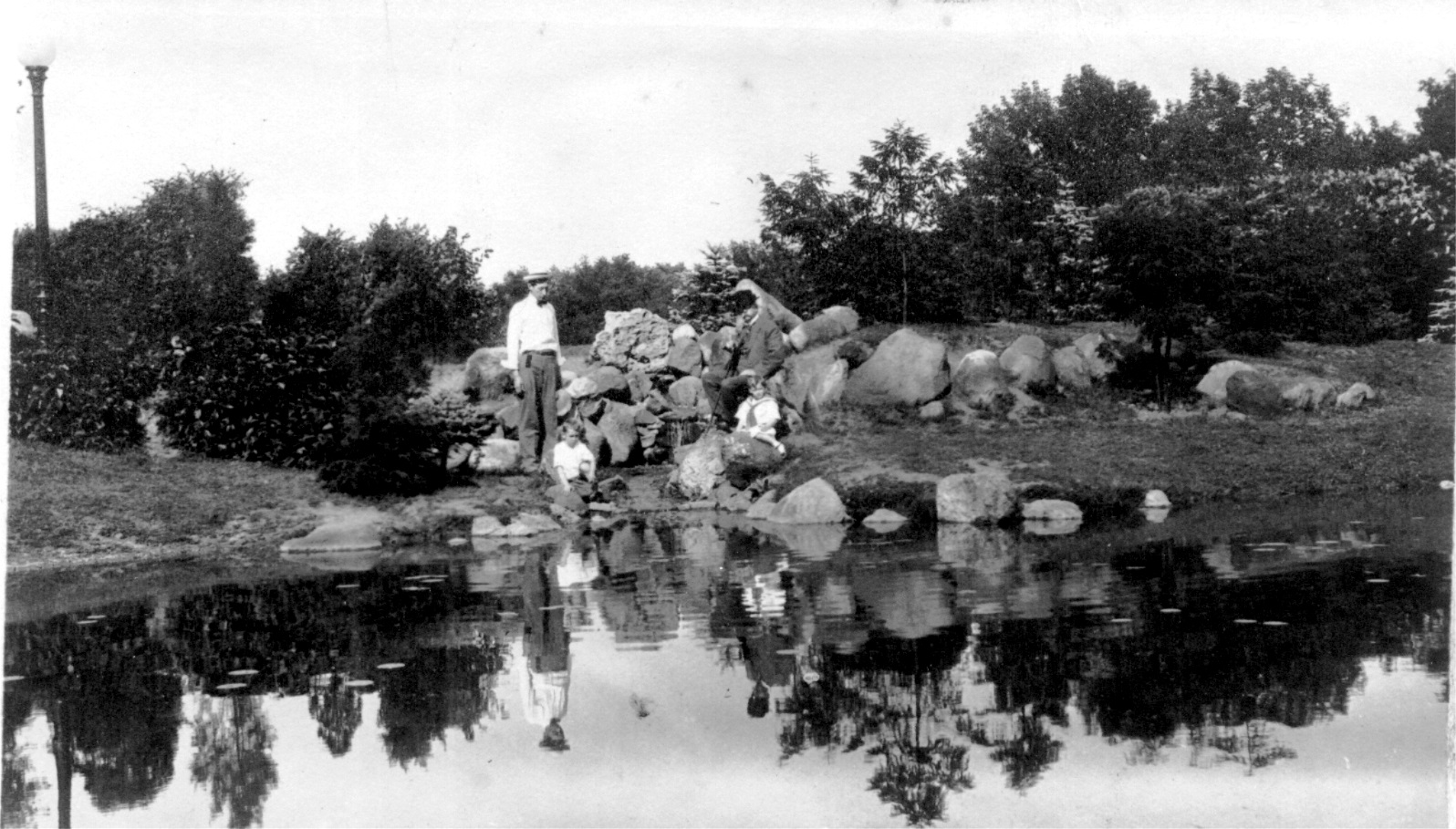
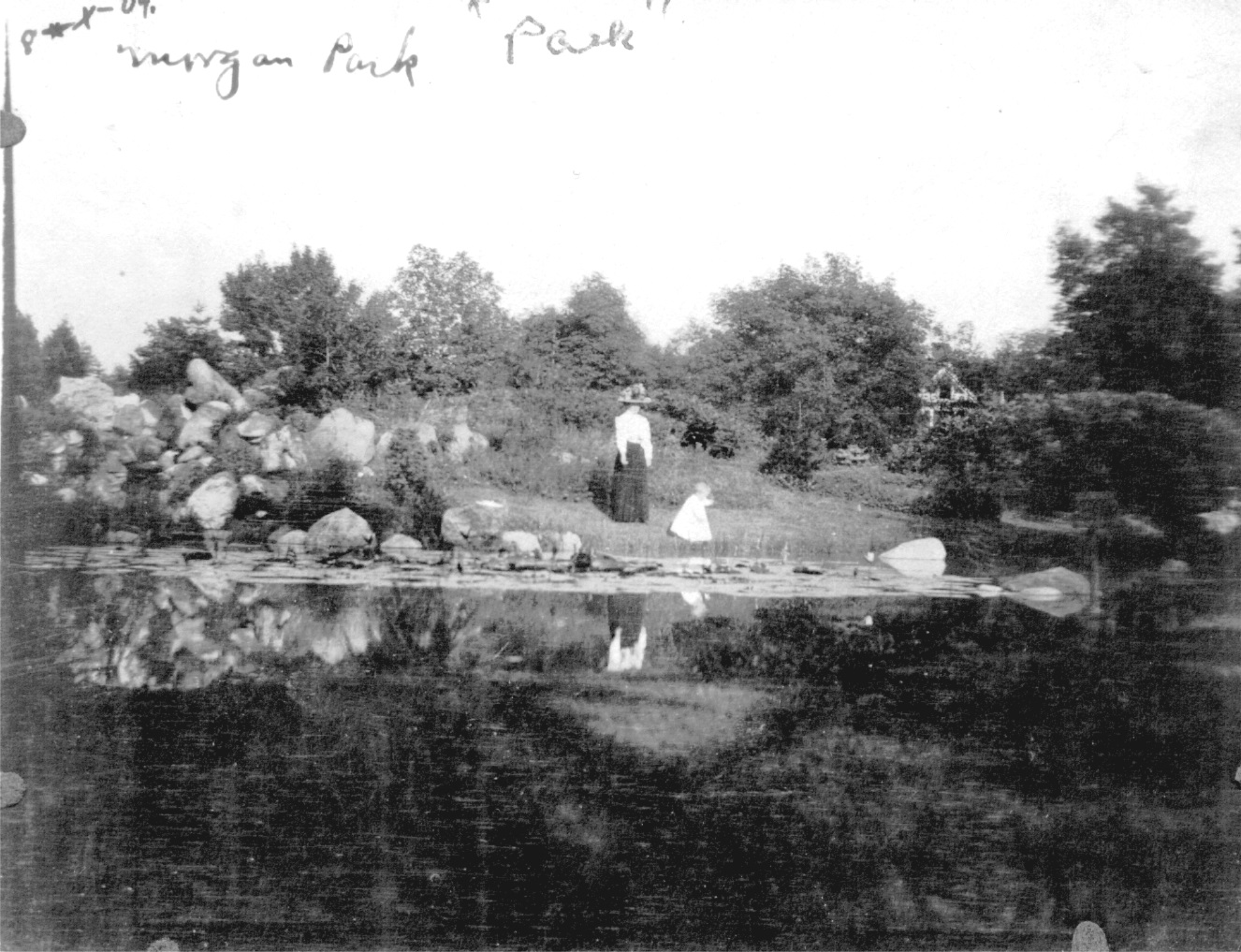
It was his work for Morgan Park’s public parks that benefited “the people.” He planned Crescent Park in 1915. Prior to that, he designed Prospect Gardens Park and Bohn (Depot) Park in 1906.
Jens Jensen immigrated to the United States from Denmark in 1884, after attending agricultural school and serving a mandatory time in the Prussian army. In Chicago, he started as a laborer with Chicago’s West Park Commission and was soon promoted to foreman.
In a famous story, Jensen designed and planted a garden of exotic flowers. When the flowers all died, he went out into the surrounding prairie and gathered native wildflowers, which he transplanted into a corner of Union Park, creating his first “American garden” in 1888.
This became his signature, a natural style with open meadows and horizontal lines bringing the Midwestern prairie into the city. He became the Prairie School landscape architect equivalent of Frank Lloyd Wright, with whom he collaborated.
By 1905 Jensen was the general superintendent of the entire West Park District. His expertise was sought by other communities, and Morgan Park, part of the Calumet Park District, asked for his help in 1906. [All of the parks were consolidated as the Chicago Park District in 1934.]
Jensen designed a plan for Depot Park, which is to the immediate west of the 111th Street Metra train station. An article in the Morgan Park Post (attached) described the project. The park was renamed as Bohn Park in 1933, for Henry J. Bohn, a publisher and first president of the Calumet Park District. Bohn was president when Jensen did his work. A real picture postcard ca. 1910 (attached) gives an idea of the park from that time.
Prospect Gardens Park was a real jewel in its time but Jensen’s plans, and pictures of the features he designed, are all we have left now. The planting plan lists the type of plans and locations. He also designed tennis courts, footpaths and a rock pool.
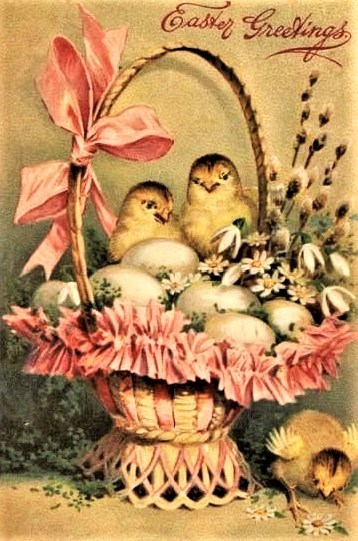
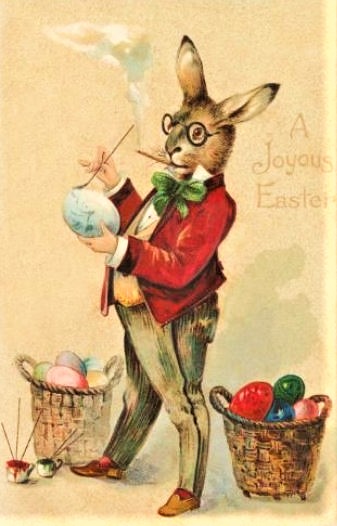
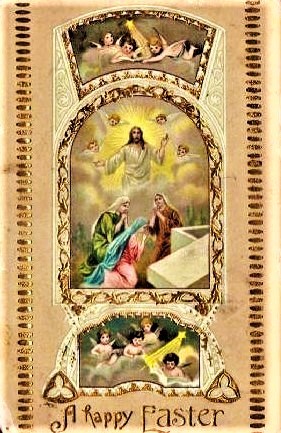
Happy Easter from the Ridge Historical Society with some charming vintage postcards.
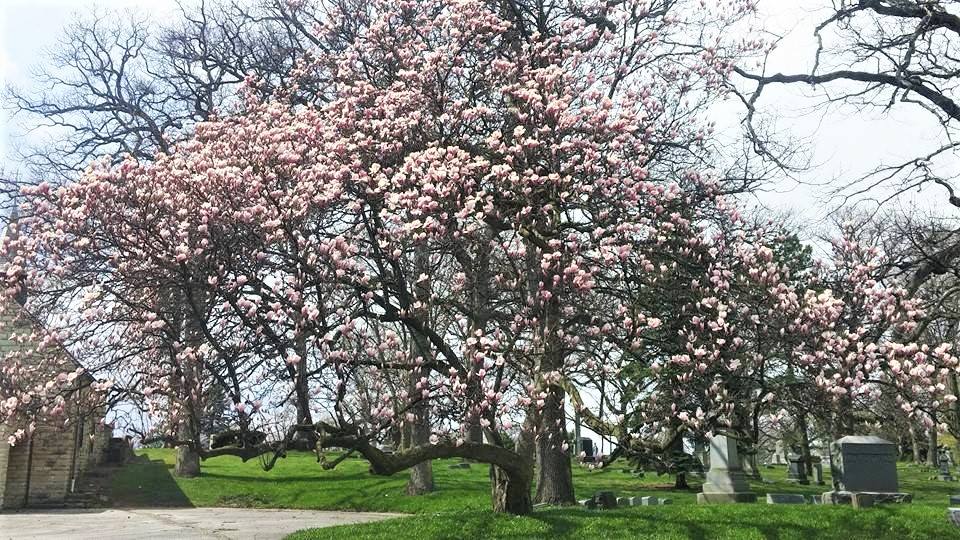
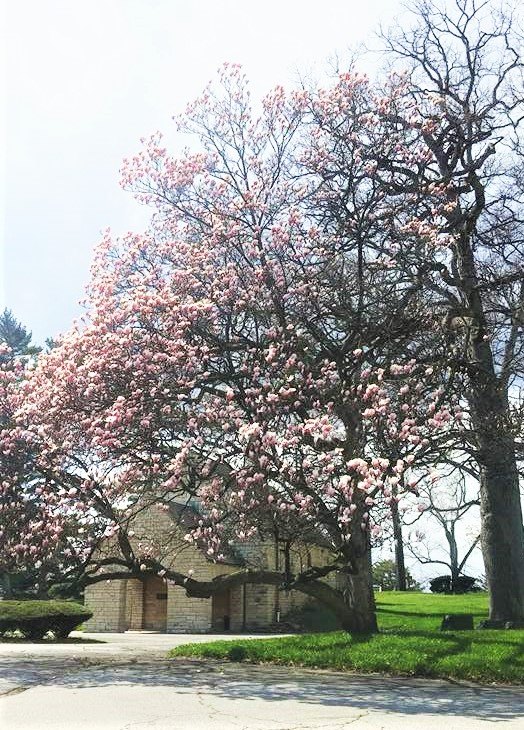

One of the most beautiful magnolia trees on the Ridge is the one in Mount Greenwood Cemetery. It is right inside the gate by the historic chapel. The tree must be a good age to be this big. It's blooming now, even today with snow flurries!


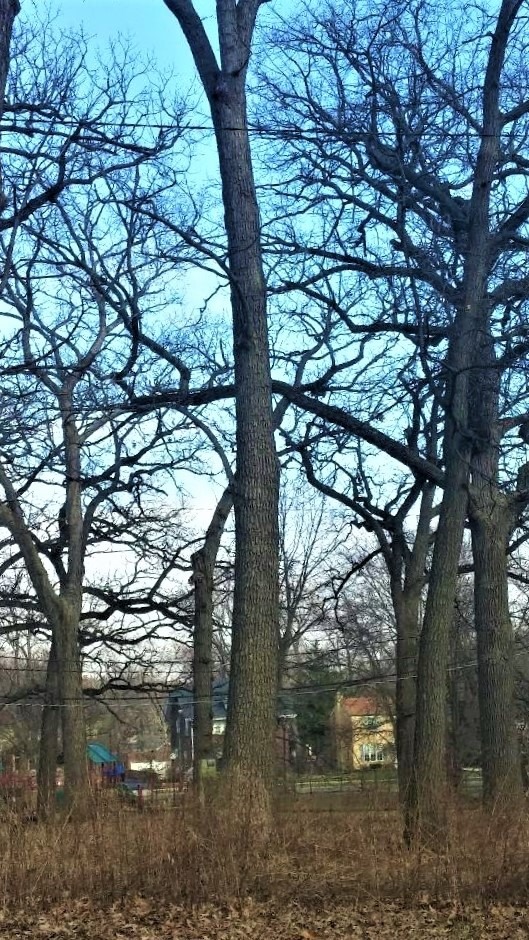
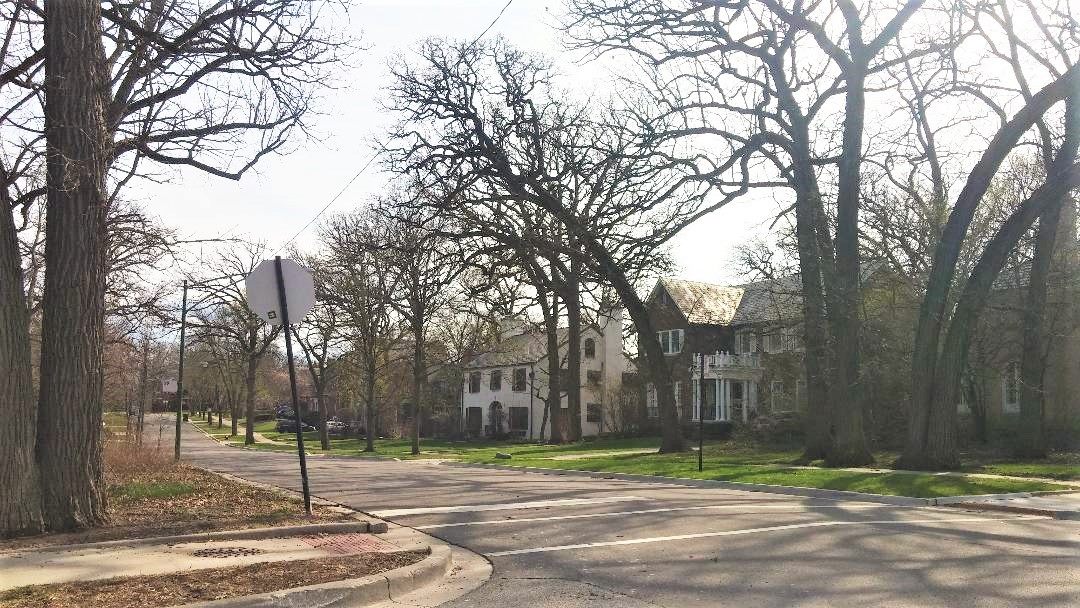
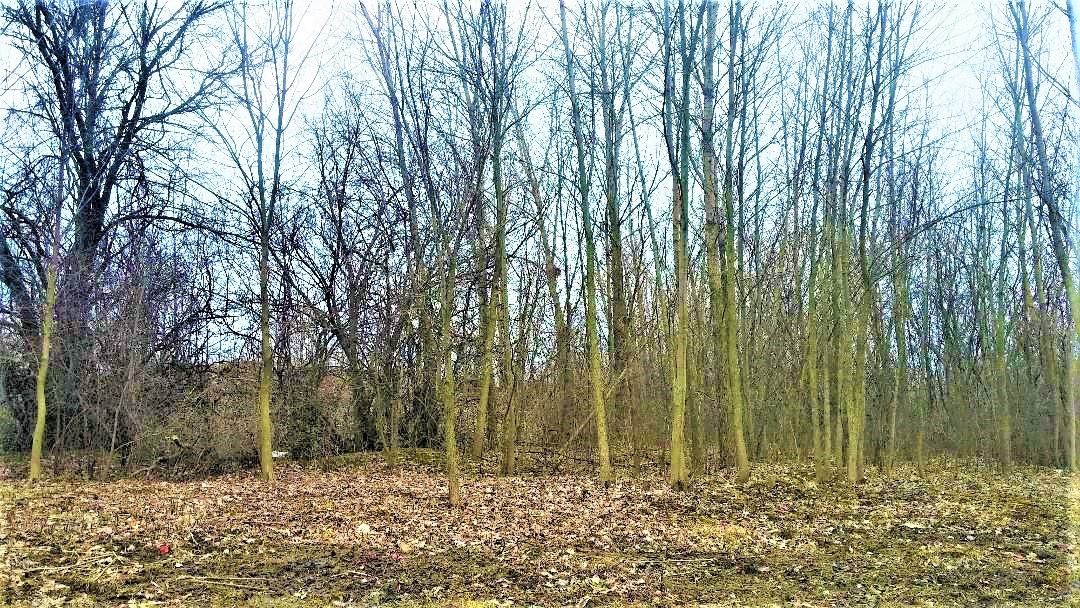
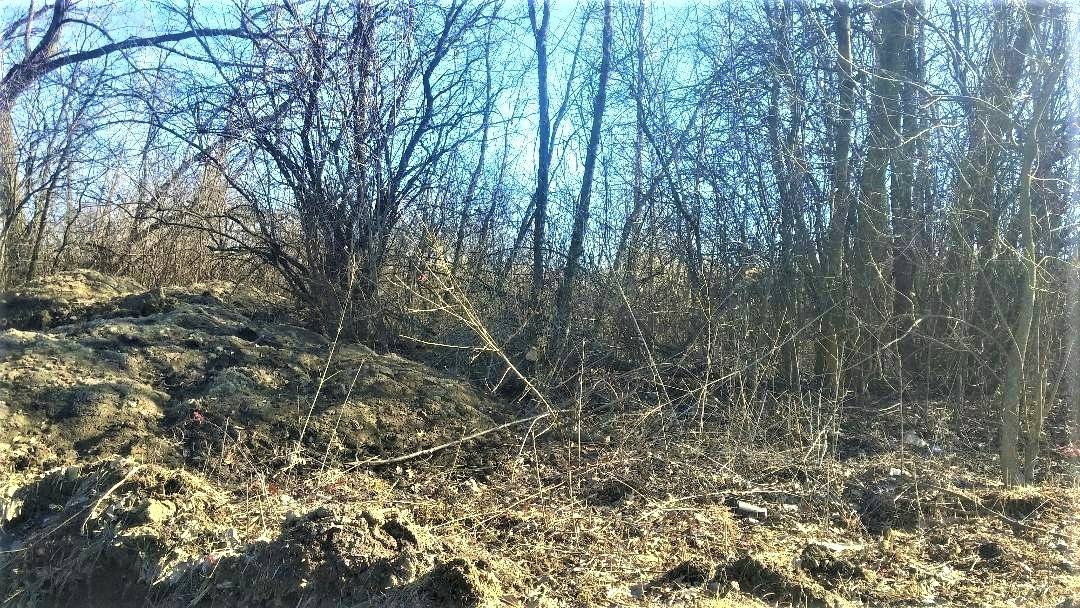
Today, Wednesday, April 22, is Earth Day. Its purpose is to support environmental protection world-wide. It was first celebrated in 1970.
The Blue Island Ridge was once a pristine wilderness. It was described as "a vast vegetable solitude" more than 150 years ago.
Today you can still see glimpses of the "wild Ridge" here and there.
Notable features are:
– Dan Ryan Woods
– Ridge Park Wetlands
– Hurley Park oak savanna
– Ancient sand dunes in Mt. Hope Cemetery