
Explore the RHS Facebook Archives, a rich repository of local history written by Carol Flynn. For two decades, Carol brought a deeply dedicated voice to public education at RHS. Her role as Facebook administrator through mid-2025 naturally extended her prolific research into meticulously detailed articles, most notably her multi-part historical series posts. Today, Carol continues her local history writing for The Beverly Review and other outlets.
2020
This is taking us a little further afield than we usually go in a post from the Ridge Historical Society but it is very worth mentioning.
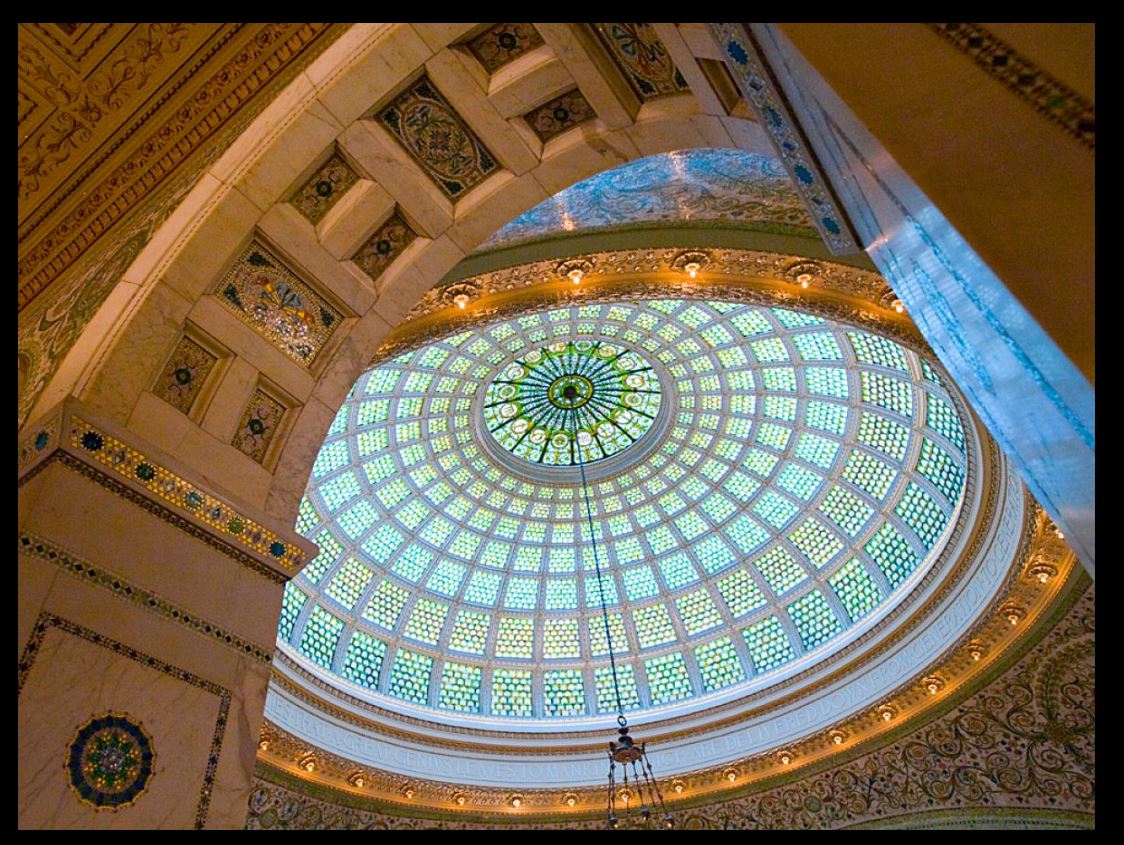
An article from National Geographic features the "Top 10 Ceilings Around the World" and one from Chicago is included – the beautiful Tiffany dome in the Chicago Cultural Center downtown. This spectacular building started as the Chicago Public Library in the late 1800s.
This picture of the dome is by Cathy Melloan, Alamy. The entire article can be found here.
https://www.nationalgeographic.com/travel/top-10/ceilings/?cmpid=org=ngp::mc=social::src=facebook::cmp=editorial::add=fb20200509travel-resurfceilings::rid=&sf233754361=1&fbclid=IwAR17H_JXC5jOT_rbLov4jDnI2JeL9MDXR7cRhEuIqAHIkE6lvkWwHoJ8nKc#/45614.jpg
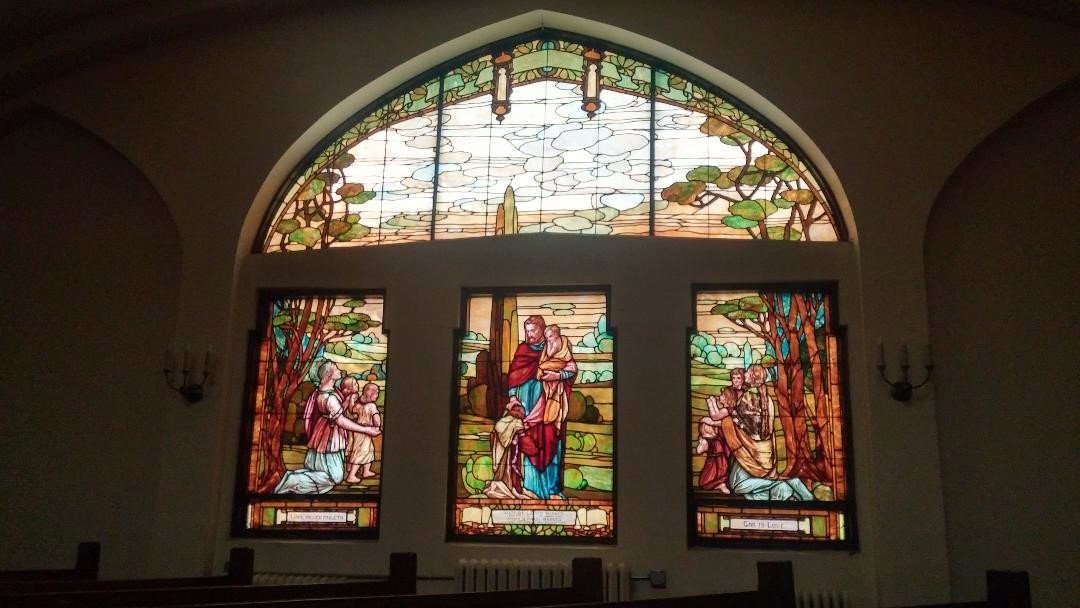
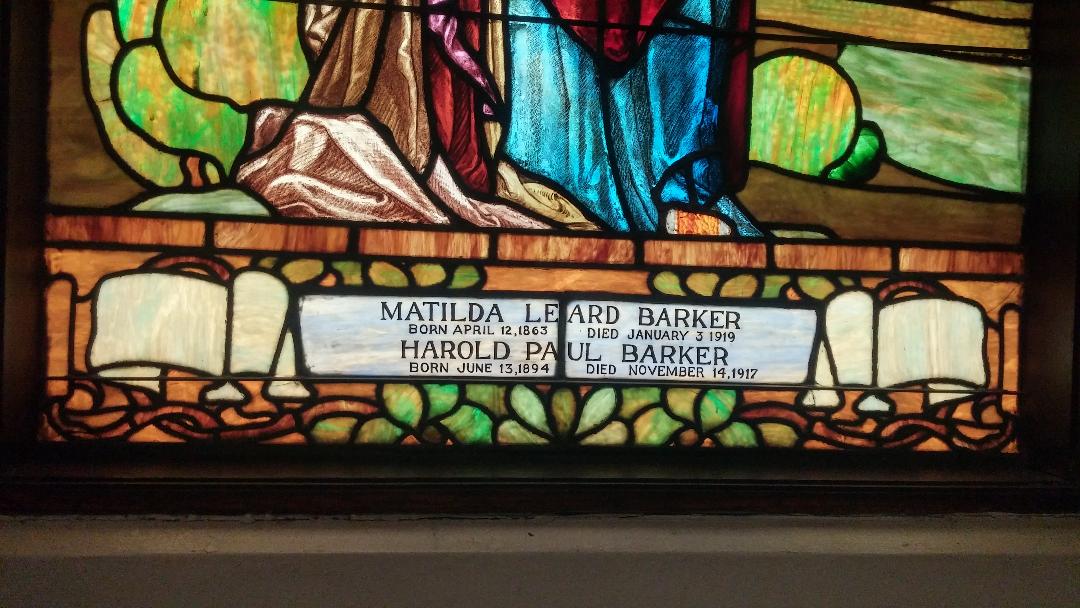
We have some beautiful stained glass in Beverly and Morgan Park, also. One favorite piece is the Barker memorial window in the Morgan Park United Methodist Church at 110th and Longwood Drive.
England J. Barker was a prominent businessman who settled in Morgan Park with his family. His company, UARCO, manufactured business machines. This window was installed when the church was built in 1925. It is in remembrance of Barker's wife Matilda and son Harold. Photos by C. Flynn.
Viewers are welcomed to post pictures of other stained glass examples found on the Ridge.
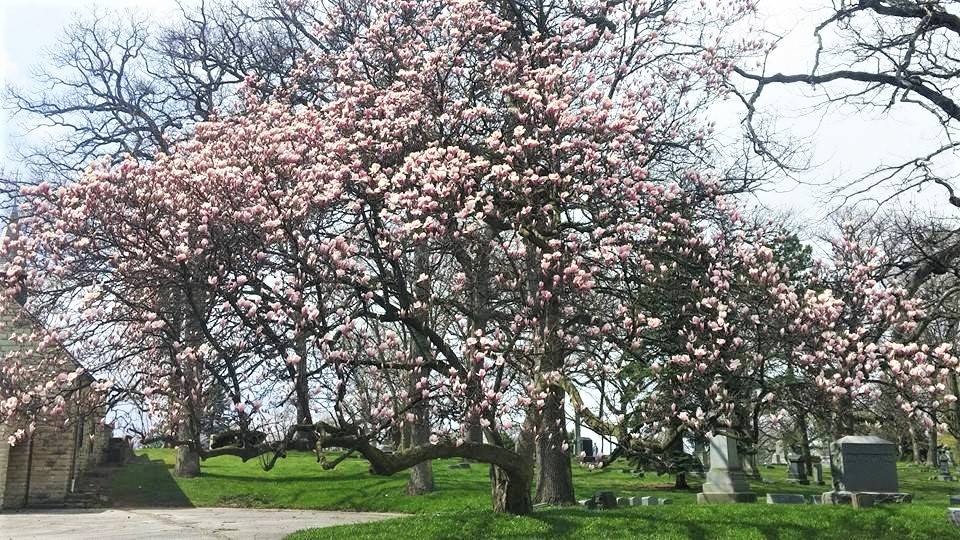
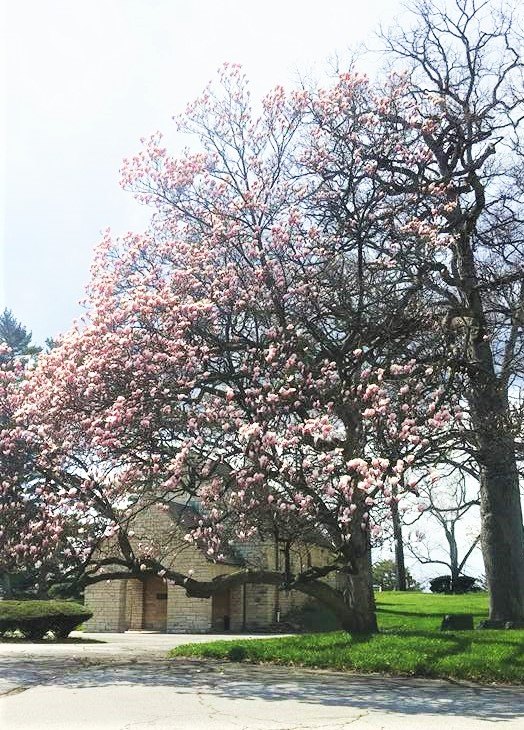
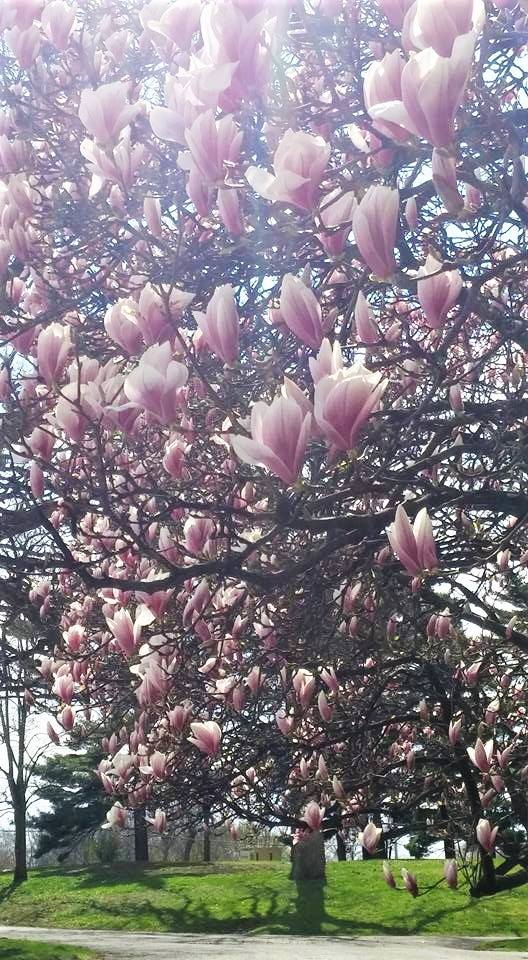
One of the most beautiful magnolia trees on the Ridge is the one in Mount Greenwood Cemetery. It is right inside the gate by the historic chapel. The tree must be a good age to be this big. It's blooming now, even today with snow flurries!

From the Ridge Historical Society
“All that I am, or ever hope to be, I owe to my angel mother.” —Abraham Lincoln
For thousands of years, societies have honored motherhood. The ancient Greeks and Romans paid homage to the mother goddess Cybele. In Rome, she was known as Magna Mater, the Great Mother.
In the United States, modern Mother’s Day actually has its origins in the pacifist movement and concern for Veterans.
Mother’s Day was founded to honor peace activist Ann Jarvis, by her daughter Anna. Jarvis cared for wounded soldiers on both sides during the Civil War. She created Mother’s Day Work Clubs to address public health needs. Her daughter wanted to continue the work her mother started and to honor mothers for all they do.
In 1908, the U.S. Congress rejected the proposal to officially establish Mother’s Day. The men joked they would have to create a “Mother-in-Law’s Day” also. But by 1911, all of the states had adopted the day, and in 1914, President Wilson proclaimed it a national holiday.
Anna Jarvis came to regret she ever came up with the idea when the holiday became excessively commercialized. Hallmark Cards began selling pre-made cards in the early 1920s, and this exploitation of the day for profit infuriated Jarvis. She wanted people to really think about their mothers, to honor their mothers with hand-written testimonials, not to resort to just buying gifts and pre-made cards. She wound up organizing boycotts of Mother’s Day, and was even arrested for disturbing the peace.
Now, the moral of this story is not to stop buying gifts for Mom! It is to sincerely and personally reflect upon her importance in your life, and to acknowledge this to her.
Today Mother's Day is one of the most recognized and celebrated days of the year. It not only honors the mothers of our families; it honors maternal bonds and the influence of mothers in society.
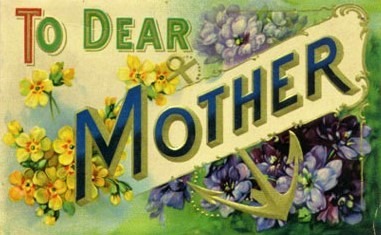
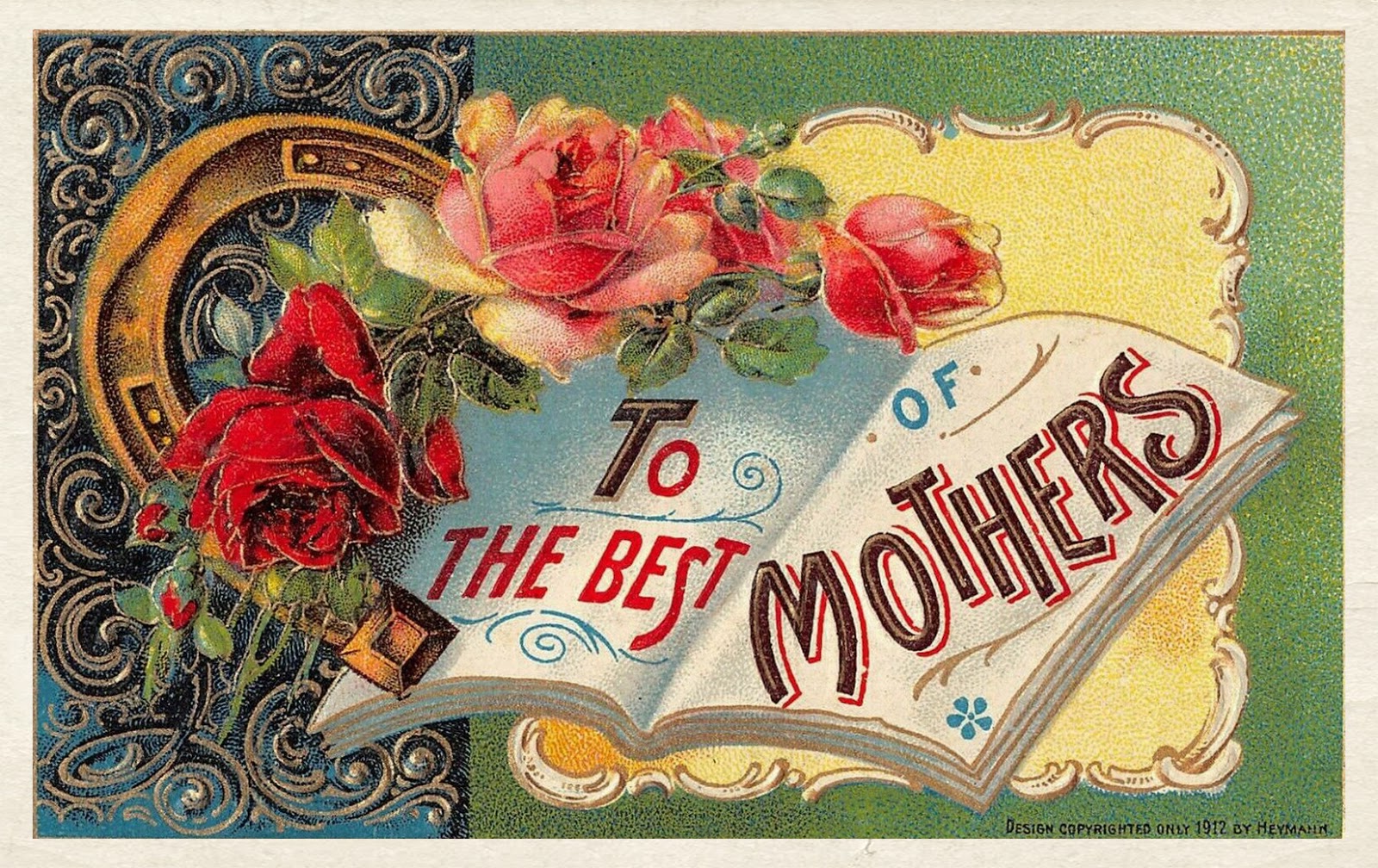
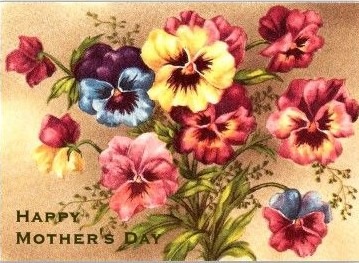
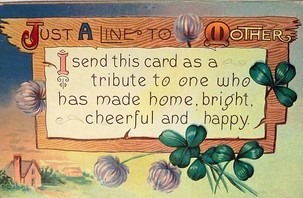
We're sharing some vintage postcards for Mother's Day. The symbol of the anchor is particularly interesting here, not something you often find on a card for a mother. But it is so appropriate – the anchor is a symbol of strength, stability, safety, security. These are certainly the traits associated with motherhood.
Happy Mother's Day!
From the Ridge Historical Society: The Chicago Tribune has an article today about a charming historic building in Lincoln Park now destined for demolition. Every time this happens, we lose a little piece of history.
Many historic buildings in Beverly/Morgan Park fell to the wrecking ball over the years, but there is one example of "adaptive reuse" we can point to with pride – the saving of the Christian Science church and reading room on 103rd and Longwood Drive.
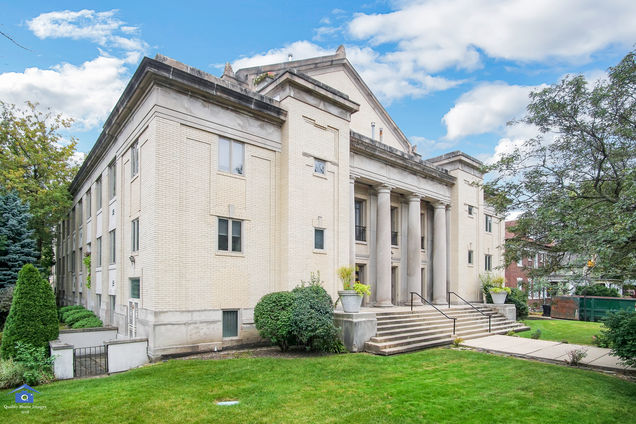
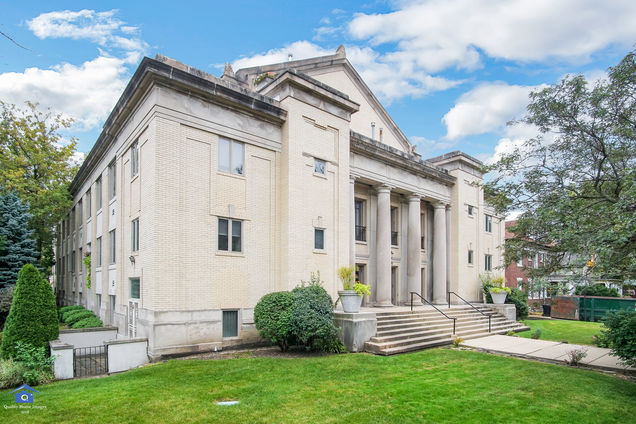
The Thirteenth Church of Christ, Scientist, was founded in Beverly in 1914. The congregation built an impressive neoclassical building in 1916. In 1940, the Reading Room was built on the corner just north of the church. Christian Science Reading Rooms are bookstores and quiet places for study and prayer.
The congregation dwindled with time, and by the late 1980s, the church was barely being used. A creative solution for repurposing the church was suggested: converting the interior into condo units. In 1992, the Bell Tower Loft Condominiums went on the market. The external façade of the building was preserved.
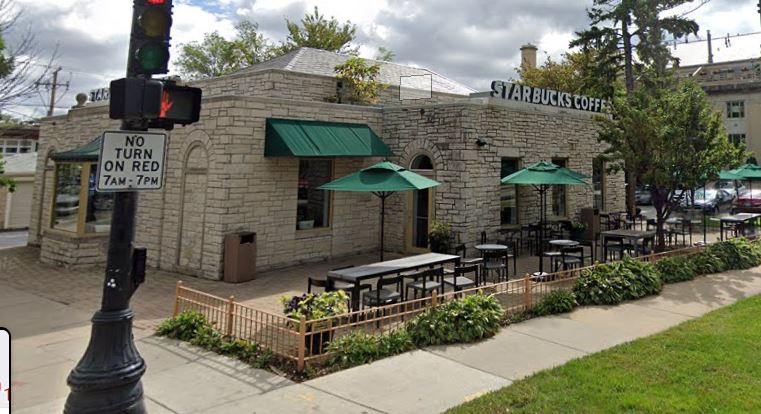
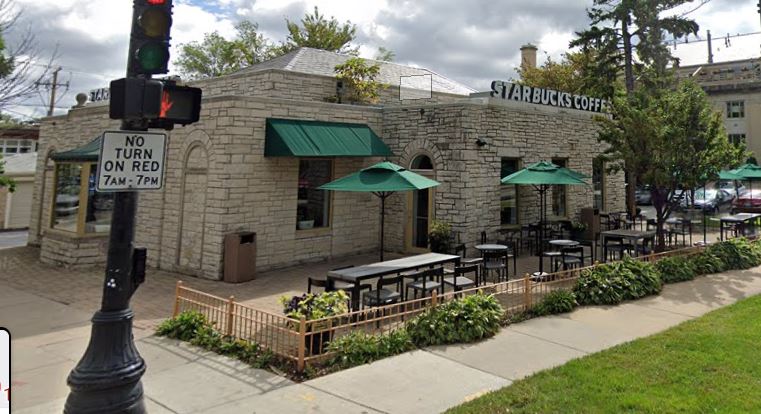
The congregation continued the Reading Room for over another decade, remodeling it to also use as a church. In 2006, the building was sold, and now there is a Starbucks coffee shop on site. The interior was remodeled but the exterior retains the original look.
This is the Tribune article about the building closing in Lincoln Park: https://www.chicagotribune.com/columns/mary-schmich/ct-met-schmich-dairy-teardown-20200513-ay6x45og3bejlgme3zjeertmbu-story.html?fbclid=IwAR2MS9KYKEfjy0K6WtReXFgapl8iQy6bG0AGZzpA2ksMhhQMHqtBnd2QM_4
The attached pictures are of the church-turned-condos and the reading room-turned-coffee shop at 103rd and Longwood Drive.
From the Ridge Historical Society: The Chicago Tribune has an article today about a charming historic building in Lincoln Park now destined for demolition. Every time this happens, we lose a little piece of history.
Many historic buildings in Beverly/Morgan Park fell to the wrecking ball over the years, but there is one example of "adaptive reuse" we can point to with pride – the saving of the Christian Science church and reading room on 103rd and Longwood Drive.
The Thirteenth Church of Christ, Scientist, was founded in Beverly in 1914. The congregation built an impressive neoclassical building in 1916. In 1940, the Reading Room was built on the corner just north of the church. Christian Science Reading Rooms are bookstores and quiet places for study and prayer.
The congregation dwindled with time, and by the late 1980s, the church was barely being used. A creative solution for repurposing the church was suggested: converting the interior into condo units. In 1992, the Bell Tower Loft Condominiums went on the market. The external façade of the building was preserved.
The congregation continued the Reading Room for over another decade, remodeling it to also use as a church. In 2006, the building was sold, and now there is a Starbucks coffee shop on site. The interior was remodeled but the exterior retains the original look.
This is the Tribune article about the building closing in Lincoln Park: https://www.chicagotribune.com/columns/mary-schmich/ct-met-schmich-dairy-teardown-20200513-ay6x45og3bejlgme3zjeertmbu-story.html?fbclid=IwAR2MS9KYKEfjy0K6WtReXFgapl8iQy6bG0AGZzpA2ksMhhQMHqtBnd2QM_4
The attached pictures are of the church-turned-condos and the reading room-turned-coffee shop at 103rd and Longwood Drive.

From the Ridge Historical Society
“All that I am, or ever hope to be, I owe to my angel mother.” —Abraham Lincoln
For thousands of years, societies have honored motherhood. The ancient Greeks and Romans paid homage to the mother goddess Cybele. In Rome, she was known as Magna Mater, the Great Mother.
In the United States, modern Mother’s Day actually has its origins in the pacifist movement and concern for Veterans.
Mother’s Day was founded to honor peace activist Ann Jarvis, by her daughter Anna. Jarvis cared for wounded soldiers on both sides during the Civil War. She created Mother’s Day Work Clubs to address public health needs. Her daughter wanted to continue the work her mother started and to honor mothers for all they do.
In 1908, the U.S. Congress rejected the proposal to officially establish Mother’s Day. The men joked they would have to create a “Mother-in-Law’s Day” also. But by 1911, all of the states had adopted the day, and in 1914, President Wilson proclaimed it a national holiday.
Anna Jarvis came to regret she ever came up with the idea when the holiday became excessively commercialized. Hallmark Cards began selling pre-made cards in the early 1920s, and this exploitation of the day for profit infuriated Jarvis. She wanted people to really think about their mothers, to honor their mothers with hand-written testimonials, not to resort to just buying gifts and pre-made cards. She wound up organizing boycotts of Mother’s Day, and was even arrested for disturbing the peace.
Now, the moral of this story is not to stop buying gifts for Mom! It is to sincerely and personally reflect upon her importance in your life, and to acknowledge this to her.
Today Mother's Day is one of the most recognized and celebrated days of the year. It not only honors the mothers of our families; it honors maternal bonds and the influence of mothers in society.
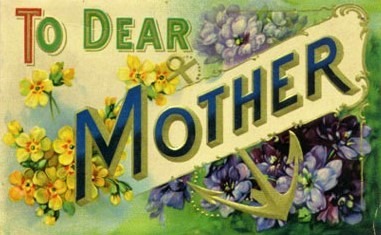
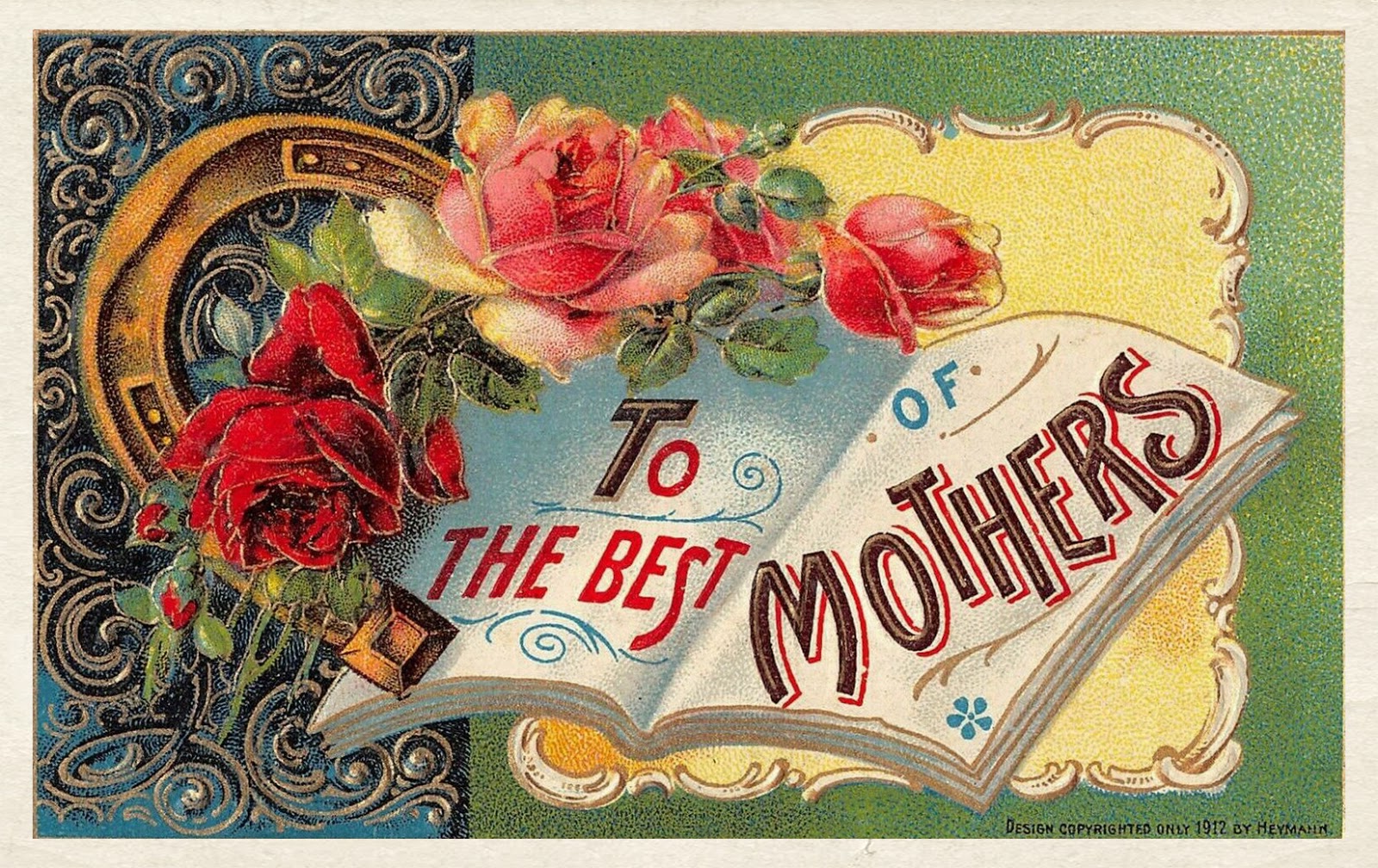
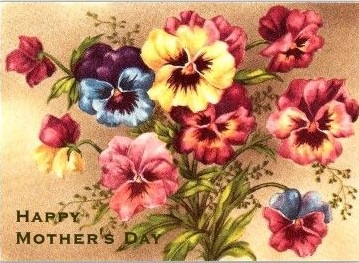
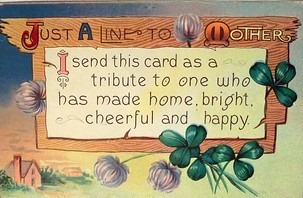
We're sharing some vintage postcards for Mother's Day. The symbol of the anchor is particularly interesting here, not something you often find on a card for a mother. But it is so appropriate – the anchor is a symbol of strength, stability, safety, security. These are certainly the traits associated with motherhood.
Happy Mother's Day!
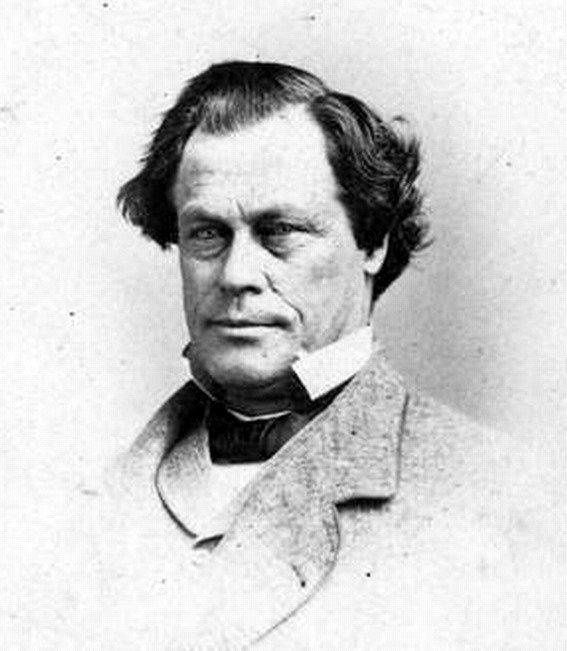
The Ridge Historical Society is wrapping up Presidents Day with a look at some of the connections between Abraham Lincoln and the Ridge.
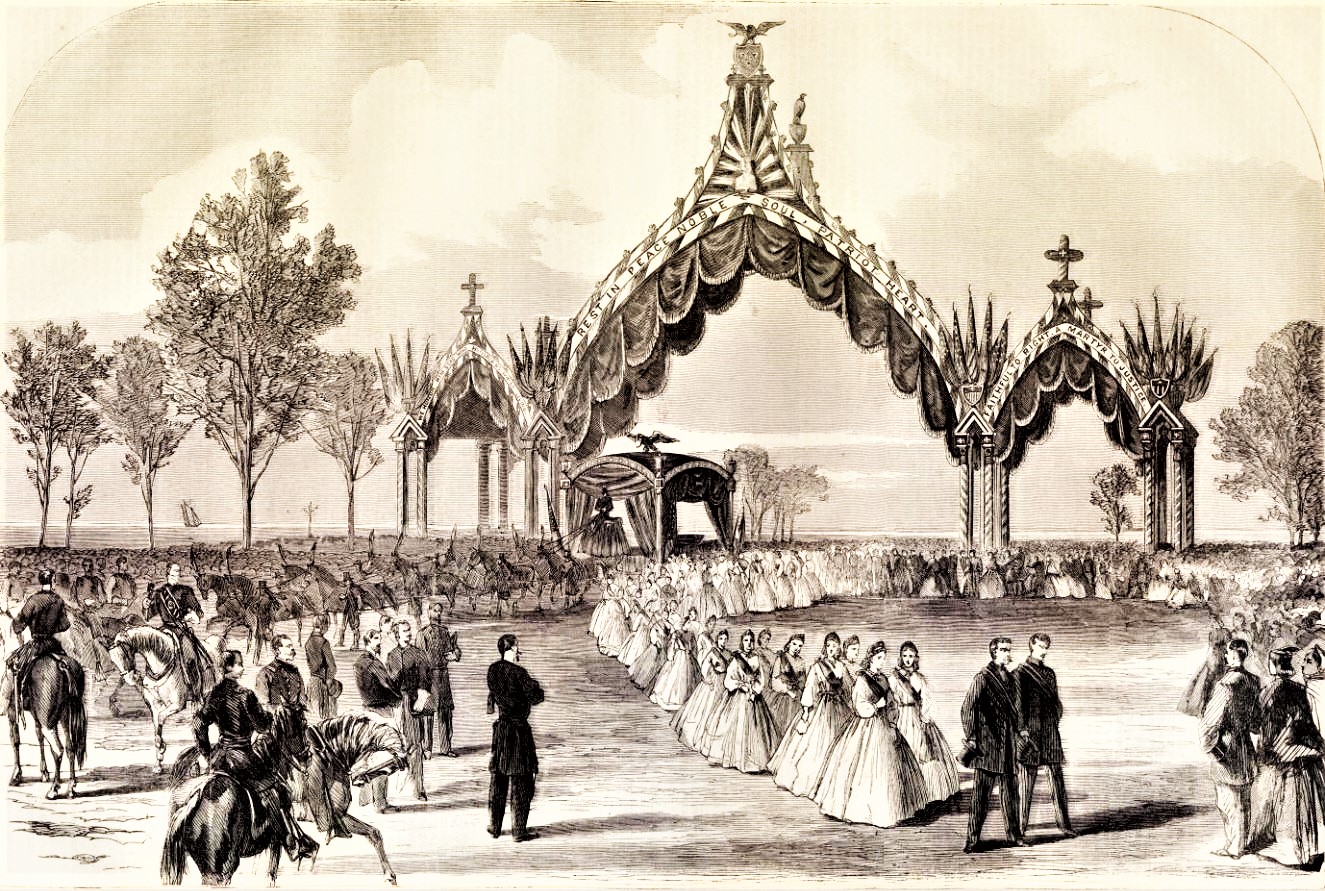
The Illinois slogan is "Land of Lincoln." Although Lincoln was born in Kentucky in 1809 and spent much of his youth in Indiana, it was in Illinois, where he moved in 1830, that he became a self-taught lawyer practicing out of Springfield, became active in politics, and was elected the 16th President of the United States in 1860. He was assassinated in 1865, and his remains were brought back to Illinois for burial.
Lincoln traveled the legal circuit on his horse, Old Bob. With certainty, he rode through the Ridge on the Vincennes Trail on his many trips to Chicago. He came to Chicago often for legal business, social interaction, and most importantly, politics.
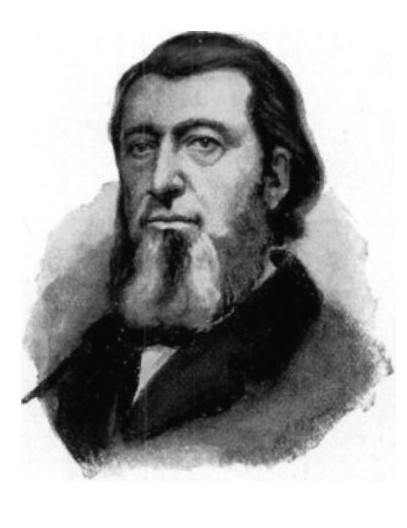
Three of the people from the Ridge that were in Lincoln’s circle were Ebenezer Peck, Austin Wiswall and Charles Ten Broeke. See the accompanying pictures for their connections.
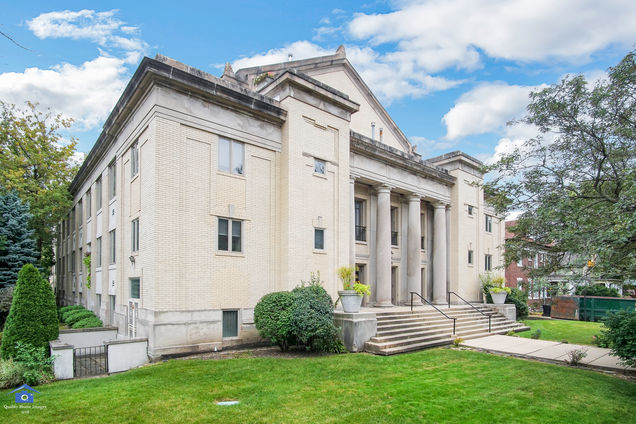
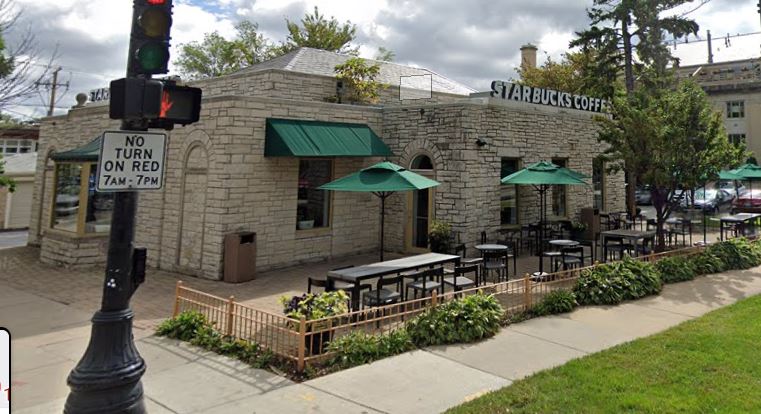
From the Ridge Historical Society: The Chicago Tribune has an article today about a charming historic building in Lincoln Park now destined for demolition. Every time this happens, we lose a little piece of history.
Many historic buildings in Beverly/Morgan Park fell to the wrecking ball over the years, but there is one example of "adaptive reuse" we can point to with pride – the saving of the Christian Science church and reading room on 103rd and Longwood Drive.
The Thirteenth Church of Christ, Scientist, was founded in Beverly in 1914. The congregation built an impressive neoclassical building in 1916. In 1940, the Reading Room was built on the corner just north of the church. Christian Science Reading Rooms are bookstores and quiet places for study and prayer.
The congregation dwindled with time, and by the late 1980s, the church was barely being used. A creative solution for repurposing the church was suggested: converting the interior into condo units. In 1992, the Bell Tower Loft Condominiums went on the market. The external façade of the building was preserved.
The congregation continued the Reading Room for over another decade, remodeling it to also use as a church. In 2006, the building was sold, and now there is a Starbucks coffee shop on site. The interior was remodeled but the exterior retains the original look.
This is the Tribune article about the building closing in Lincoln Park: https://www.chicagotribune.com/columns/mary-schmich/ct-met-schmich-dairy-teardown-20200513-ay6x45og3bejlgme3zjeertmbu-story.html?fbclid=IwAR2MS9KYKEfjy0K6WtReXFgapl8iQy6bG0AGZzpA2ksMhhQMHqtBnd2QM_4
The attached pictures are of the church-turned-condos and the reading room-turned-coffee shop at 103rd and Longwood Drive.
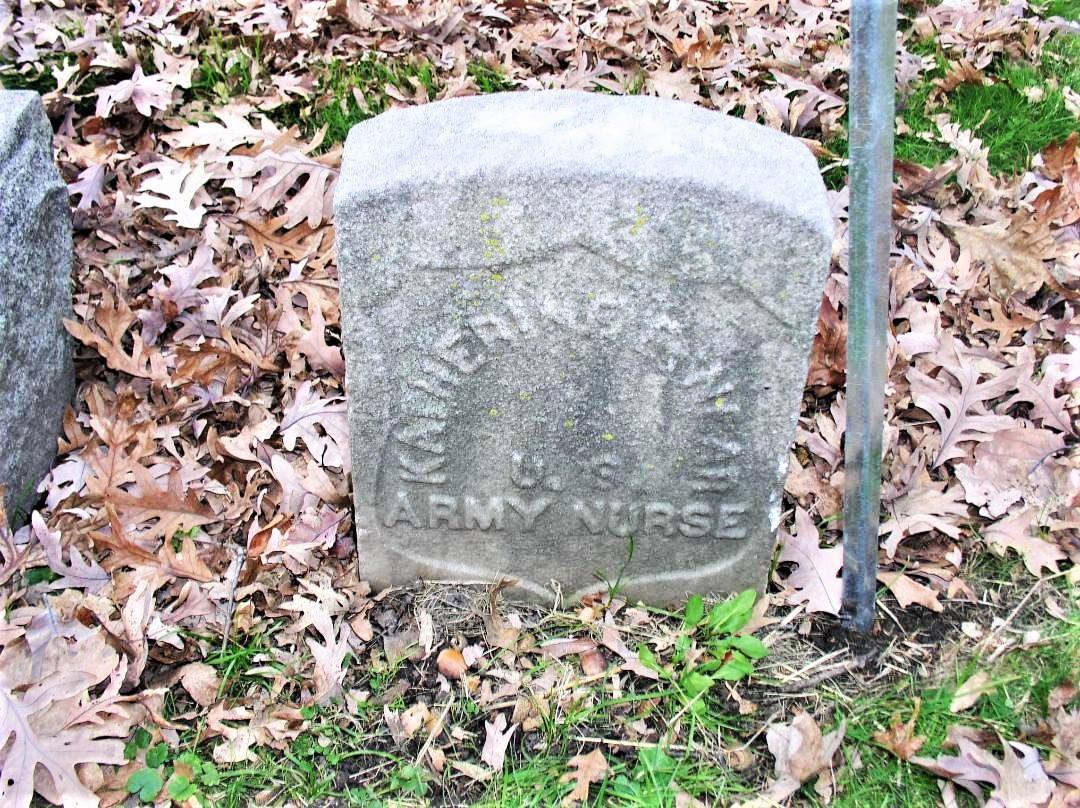
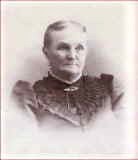
May 6 to 12 was National Nurses Week, and the Ridge Historical Society did not forget about nurses! One recent history story we posted included the role of nurses in caring for patients during the influenza epidemic in 1918. Nurses bravely went into the homes of quarantined patients to help families care for their sick, plus assist with other domestic tasks, risking illness themselves.
We've also been doing research on some of the earliest nurses on the Ridge – those from the U. S. Civil War era.
Nursing as a profession was in its infancy then, and there were no formal nursing education programs. In fact, there were not even many hospitals – only about 150 in the country.
Thousands of women served as nurses during the U. S. Civil War. At first, women were considered too delicate to be able to withstand the conditions of tending to the sick and wounded, but they soon proved themselves through their determination, hard work and sacrifice.
Women started as volunteers, but thanks to the efforts of Clara Barton, a U.S. Army corps of nurses was formed in 1861. They were paid 40 cents per day for their service. (Male nurses were paid many times that, more than $200 per month.)
The nurses who "enlisted" came from many backgrounds: soldiers’ wives who had accompanied their husbands to military camps, local residents from the areas where camps were set up, religious institutions, and relief organizations. Not only did they deal with the injured, they also cared for patients with pneumonia, typhoid, dysentery, and malaria. Two-thirds of the deaths in the Civil War were from disease, not injury.
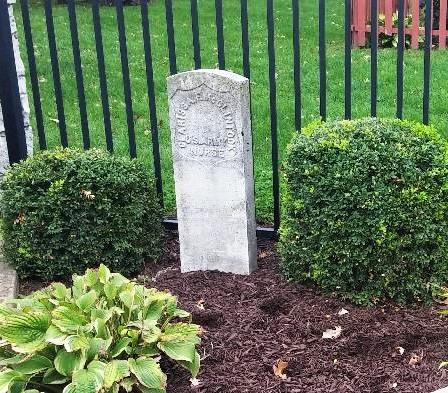
The graves of two nurses from the Civil War have been found in Ridge cemeteries. Mount Greenwood Cemetery includes the grave of Catherine E. Near. (Her name is spelled as Katherine on the stone; she went by Kate.) She was from Blue Island, and she died in 1908. Her maiden name was Fay. Her brother was Jerome Fay, of Fay's Point in Blue Island.
At the entrance to Memorial Park on 127th Street in Blue Island is a display of old tombstones dating back to the days when the park was the Blue Island Cemetery. One of the stones belonged to Clarissa F. McClintock, U. S. Army Nurse. Her background is being researched.
From the Ridge Historical Society: Rain, rain go away. The folks in Beverly want to play … and clean up their flooded basements.
Water comes with the geology of the area. Chicago is built on the bed of an ancient inland sea. Think of Chicago as sitting in a natural basin, sloping up on three sides to the rims of the basin. Lake Michigan is the fourth side. When water is poured into the basin, the basin fills, until it drains off to the lake or it evaporates. Chicago is above sea-level, but not by much, only 575 feet at its lowest point downtown by Lake Michigan. This, of course, is an overly simplistic description of the “water situation” of Chicago and there are many resources available to learn more about this fascinating topic.
Here on the South Side, about 12,000 years ago, an ancient island rose out of prehistoric Lake Chicago, called the Blue Island. The hilly ridge that runs along Longwood Drive was formed by the waves that lapped against the east side of the island. Lake Chicago eventually receded to the east, forming Lake Michigan, leaving behind the table of land known as the Blue Island Ridge or “the Ridge,” which is the highest elevation in the city, about 675 feet.
To the east of the Ridge, before development, the land was a vast system of wetlands and prairies all the way to the lake, punctuated by some forested areas where the land was higher in elevation – some smaller ridges. The animals – deer, wolves – knew by instinct to stick to the higher ground and wore trails into the terrain. The Native Americans used these trails, and then white trappers and traders, and finally settlers. These became the early “roads” – like the Vincennes Trail that ran from Chicago south through the Ridge before turning east into Indiana.
Early histories of the area gave vivid descriptions of what the natural land was like when settlers first arrived. One of the most poetic descriptions came from personal accounts of the Barnard family, which settled on the Ridge in the 1840s.
Here are some excerpts from that writing:
Looking south from what is now 101st and Longwood, “the view between the hill and the ridge where the Dummy Track now runs [today’s Metra line], was a slough in which the waters seldom dried up even in midsummer, and the greater part of the season was difficult to cross. Conclusive of this fact it is stated, a sandhill crane, as late as in the [1860s], built her nest for several years between Uncle Erastus’ house [104th and Wood] and the site of the Tracy depot [103rd and Wood], unmolested. No one would wade out after the eggs. Also, when he fenced his farm, the corner of Wood and Belmont Avenue [107th Street] was left without fencing, the water there being so deep that the cattle would not cross…. This slough was covered with a growth of coarse grass edged by high weeds. The weeds were thickest for two or three rods [a rod is 16.5 U.S. survey feet] just under the bluff, especially where the ravines poured their waters into the lowlands. Here, in autumn, wild artichokes, wild sunflowers, and iron weed waved their yellow flowers high above the heads of the tallest men. The ravine opposite Mr. Hauke’s was known as Horse Thief Hollow. Here horse thieves utilized their friendly shade as a hiding place.”
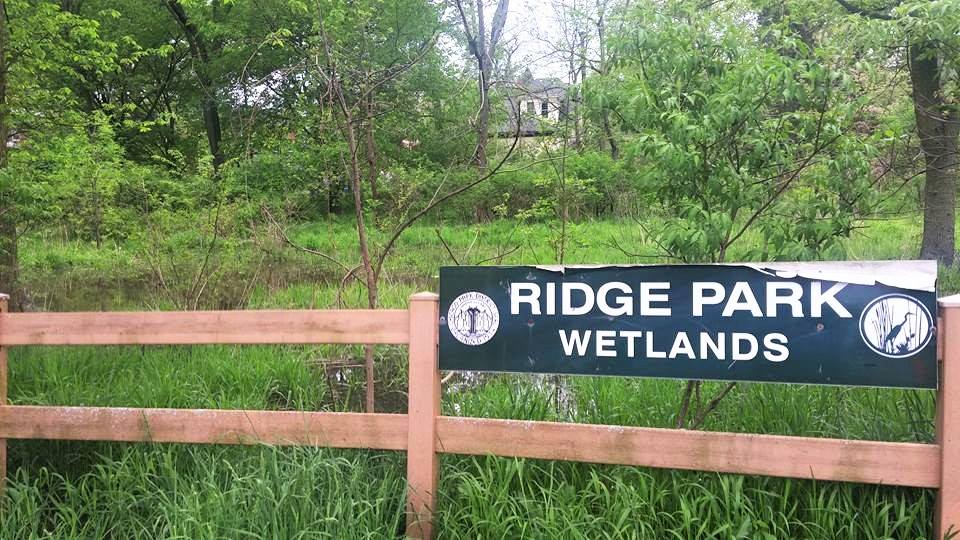
What this is telling us is that about 150 years ago, all that land from Longwood Drive east and south from about 101st Street was a vast slough, or wetland, that never dried up. The prairie and wetlands extended to the north and east of the Ridge also, but were less dramatic. The Ridge Park Wetlands between 95th and 96th Streets just west of the Metra tracks give a tiny inkling of what the area looked like back then. Right now, they are swollen with water from the recent heavy rains.
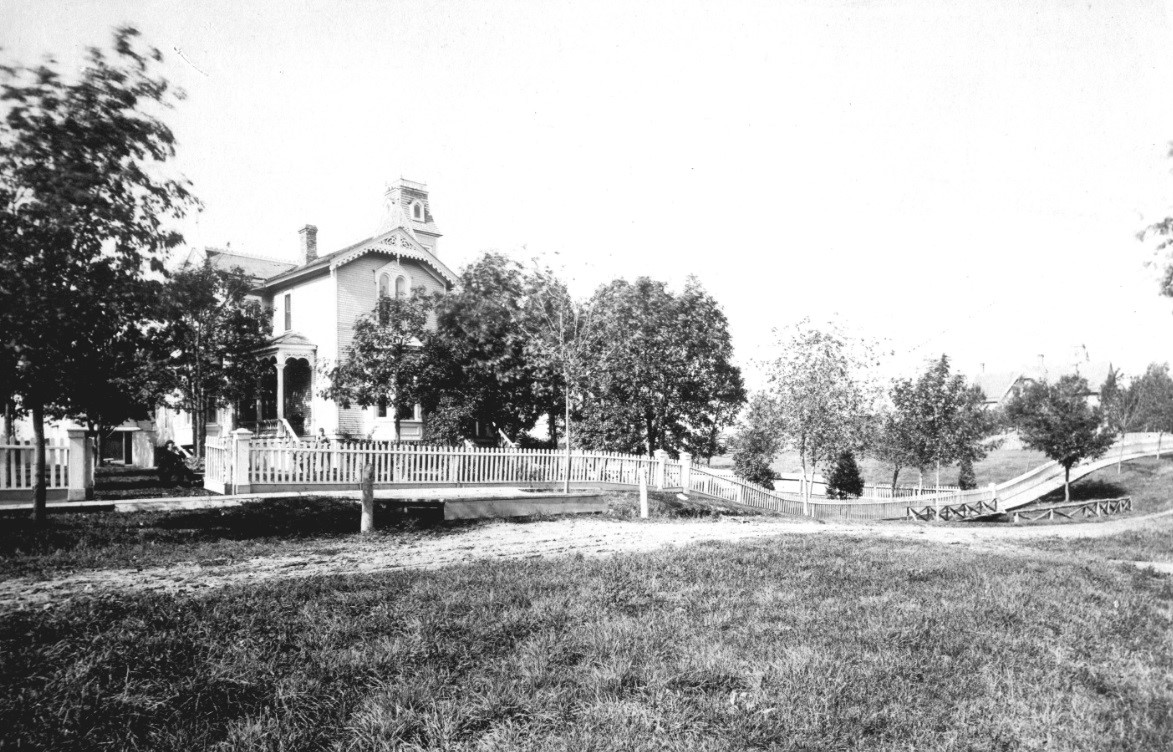
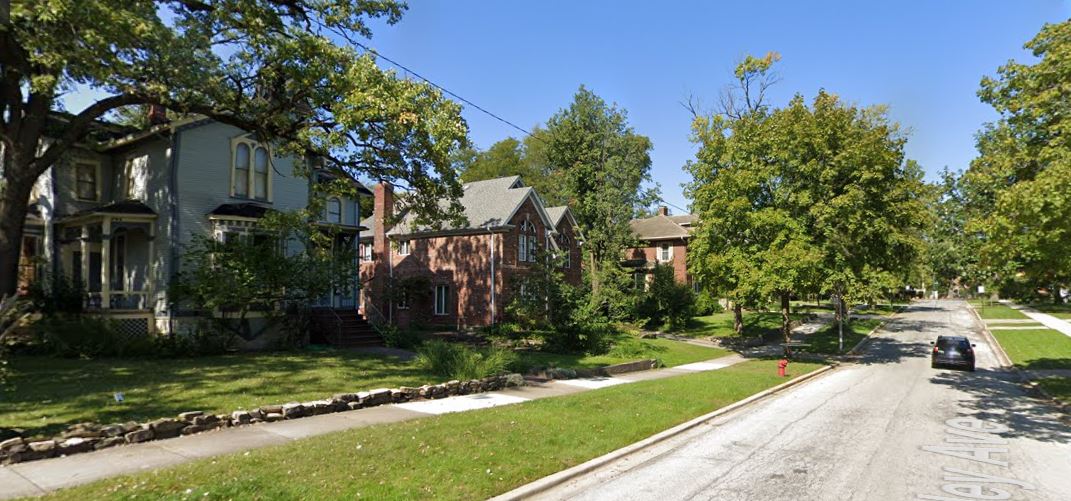
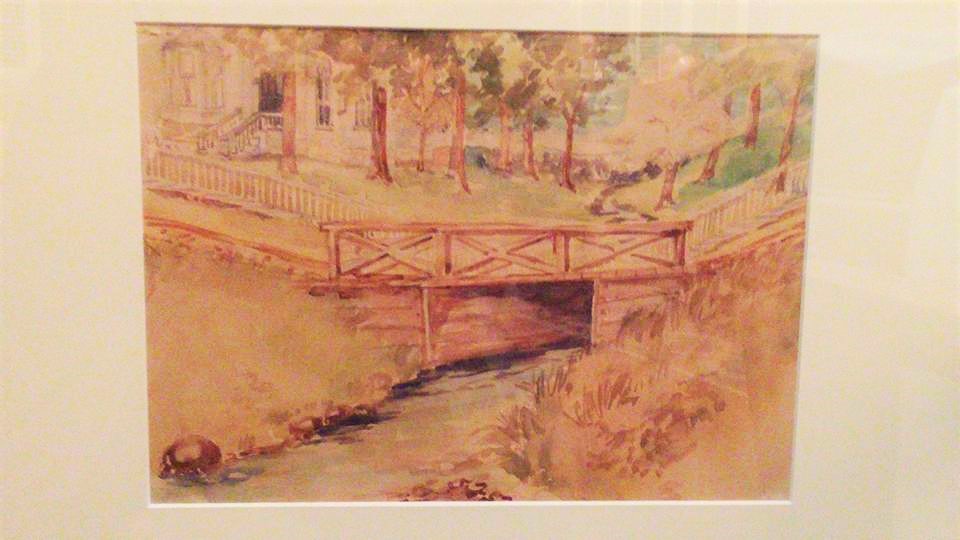
Streams that cut through the Ridge poured their waters into this land to the east. An early photo shows the charming George Chambers House, built in 1874, at 10330 S. Seeley Ave. In the picture, there is a bridge over a substantial stream that flowed down into the wetlands.
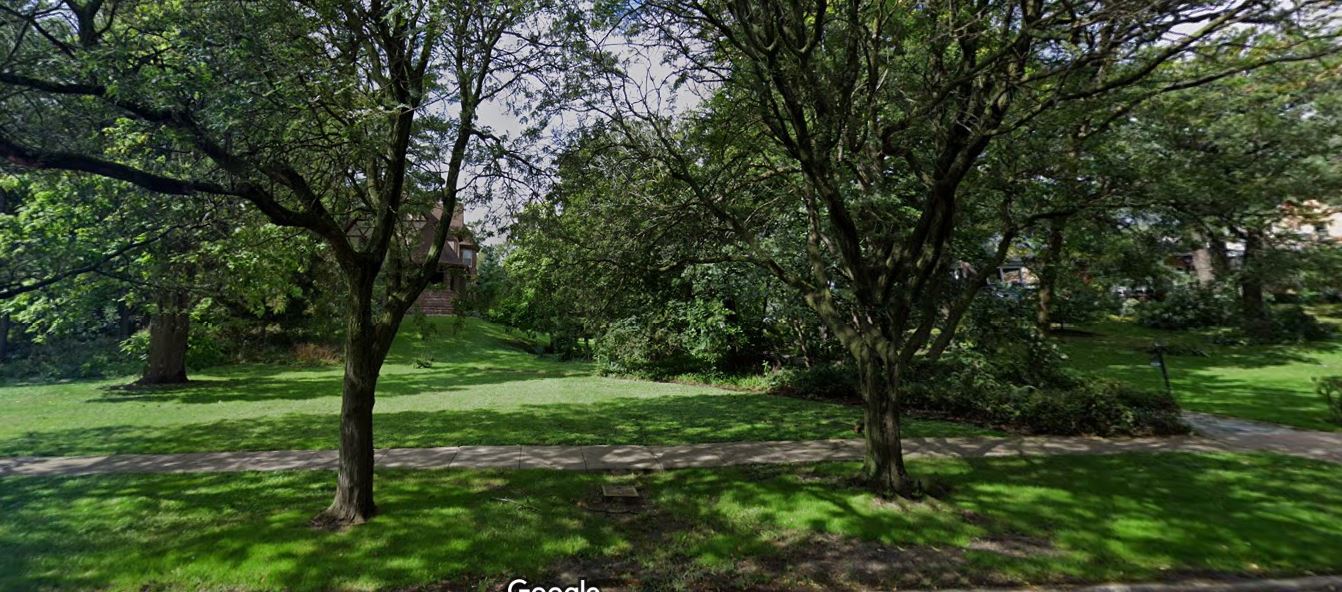
This house still stands, and there is a steep dip in the street where this stream was. You can see this ravine between the houses on Longwood Drive. This stream is likely still there, underground, heading southeast.
Louise Barwick, an artist who lived in that house around 1900, painted a watercolor of that stream and bridge, and the painting is in the RHS collection.
The bottom line of this story: Houses built to the east of the Ridge are built on natural wetlands. With heavy rainfall, this becomes all too evident.
As far as the reference to Horse Thief Hollow, the exact location of Mr. Hauke’s house has not been identified, but it was likely around 108th Place. There was a very deep ravine here, and early histories that identified a certain ravine as the place where evidence of horse thieves hiding out was found are likely referring to this location. The entire area was known as Horse Thief Hollow in the 1830s -1840s, but that is a topic for another day.
Part II will share more of the Barnards’ descriptions of the natural environment of the Ridge areas. Stay tuned.