Explore the RHS Facebook Archives, a rich repository of local history written by Carol Flynn. For two decades, Carol brought a deeply dedicated voice to public education at RHS. Her role as Facebook administrator through mid-2025 naturally extended her prolific research into meticulously detailed articles, most notably her multi-part historical series posts. Today, Carol continues her local history writing for The Beverly Review and other outlets.
2021
Ridge Historical Society
Teacher Appreciation Week – May 3-9, 2021 – Part 2
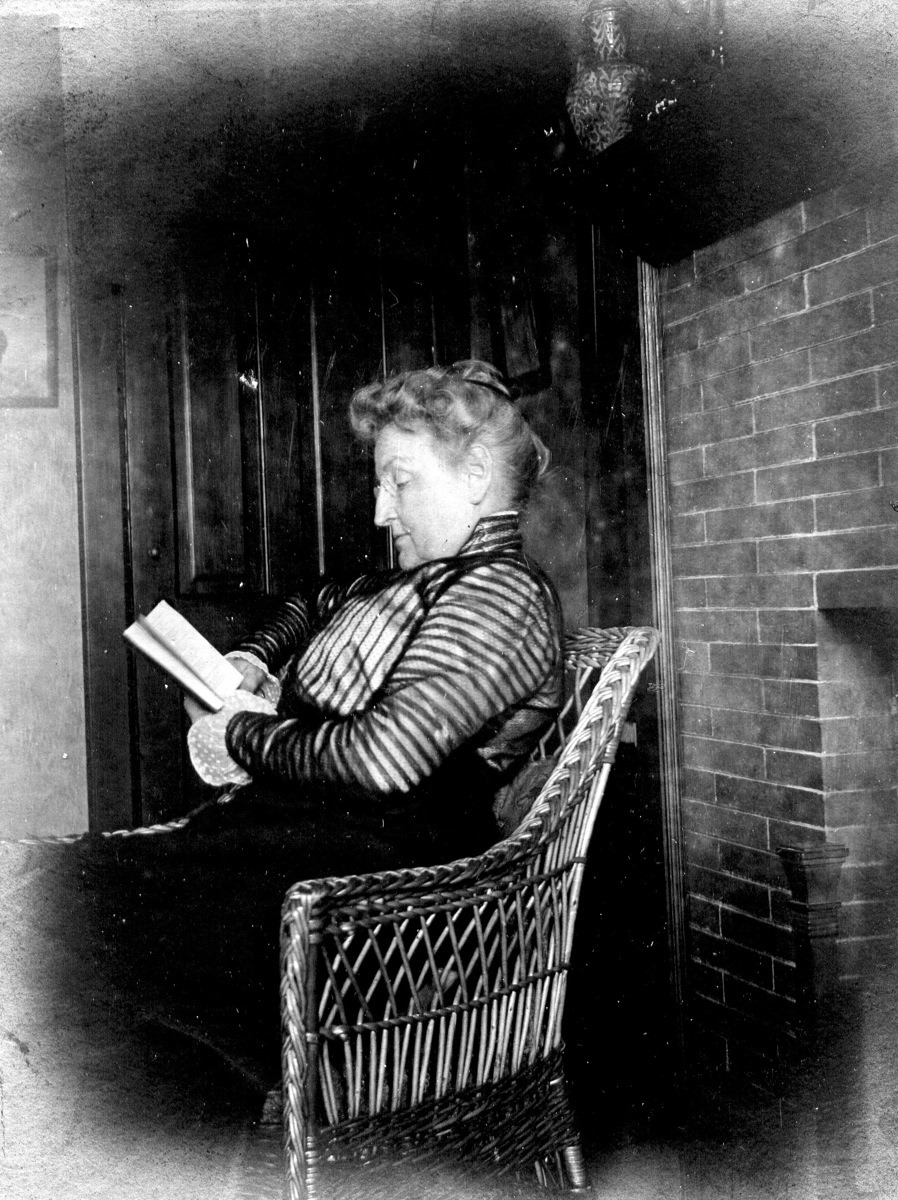
School Series – Profile 11: Kate Starr Kellogg
By Carol Flynn
Kate Starr Kellogg came to Chicago as a young child. She grew up in a “progressive” household thanks to her father, Dr. John Leonard Kellogg, a leading holistic physician of the day.
The Progressive Era, from the late 1800s to World War I, saw a middle-class movement to combat political corruption and the abuses of corporate monopolies. It was a non-partisan effort; Republican President Teddy Roosevelt and Democrat President Woodrow Wilson were both progressives. Non-political reformers like Chicago social worker Jane Addams tackled such issues as the needs of the European immigrants flooding into the country, many of whom did not speak English or have jobs or money. The era was characterized by widespread reform in all areas of life, from politics to business/labor to medicine to religion.
Education was affected down to its core. Up to that time, a good education was still mainly the privilege of the wealthy who could afford private schools. “Public” education was inconsistent, and usually ended for most students after a few years of grammar school, and then they went to work. Progressives advocated for ending abusive child labor practices and establishing more and better public schools.
There was also a philosophical shift in teaching, turning away from rote memorization of facts to learning through experimentation and doing, and incorporating everyday skills into school programs. Developing critical thinking and problem-solving skills, and social responsibility, were important. Chicago was a leader in progressive education practices because of people like John Dewey, a professor at the University of Chicago. Dewey, a philosopher and psychologist as well as an education reformer, was one of the foremost scholars of the early 1900s. He started the Laboratory Schools at the U of C.
When Kate died in 1925 at the age of 71, one obituary stated: “Miss Kellogg was a distinctly Chicago product, born in Chicago, educated in Chicago, and long associated with Chicago schools.”
She was actually born in New York, but the other two points are true.
Kate was educated at a combination of public and private schools. It was mentioned that she did coursework at the Chicago Academy, which was founded in 1867 by renowned botanist and educator Professor Henry Homes Babcock. He was associated with and served as president of the Chicago Academy of Sciences.
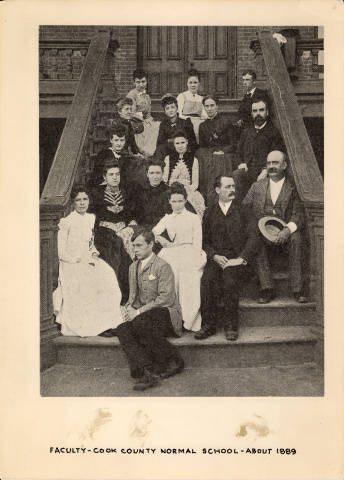
For college, Kate attended the Cook County Normal School, which was started in Blue Island, to become a teacher. They called such schools ”normal” schools because they taught the “norms” or standards for what was required of a teacher. The Normal School was founded in 1867, and in 1883, it came under the direction of Col. Francis W. Parker, another prominent innovator in progressive education. The Cook County Normal School became today’s Chicago State University.
After graduation in 1873 from the Normal School, Kate worked there briefly then became principal assistant at the Springer School in Hyde Park. She made $75 per month.
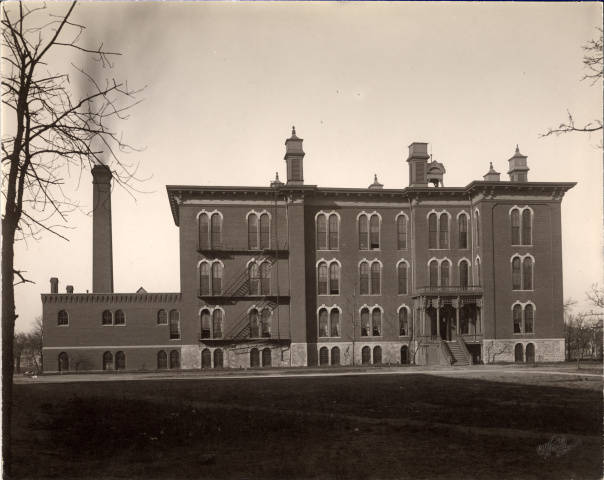
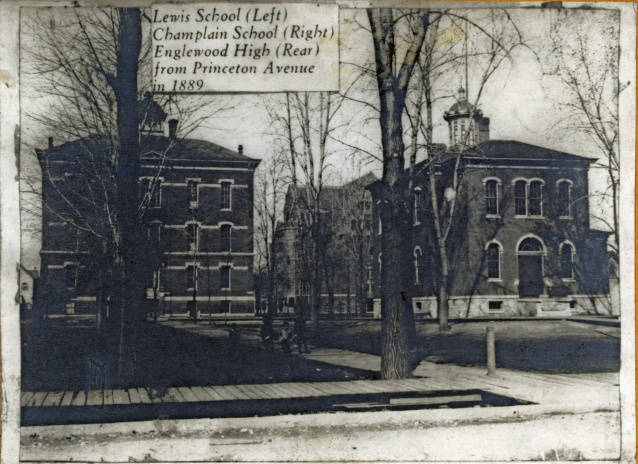
Kate was named principal of the Lewis and Champlain Schools in 1884, next door to each other at 62nd Street and Princeton Avenue in Englewood. Her annual salary was $1,800. She held this position for twenty-two years.
During that time, she worked with Orville Bright, another well-known progressive educator who became superintendent of the district that included Lewis-Champlain, and later superintendent of the Cook County schools. Bright strongly advocated for continuing education, “life-long learning,” for teachers. Mrs. Bright was a founder of the Illinois Parent Teacher Association.
In 1906, Kate became principal of the Parker Practice School, which was the section of the Normal School that planned and oversaw “student teaching” and other practicum experiences. Col. Parker had died a few years before.
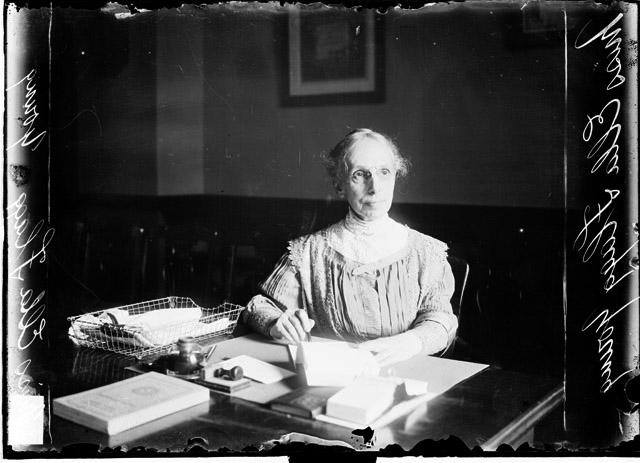
In 1909, she was named superintendent of District 6 for Chicago Public Schools. Her salary was $5000 annually. She was under the direction of Chicago school superintendent Ella Flagg Young, who had studied under John Dewey at the U of C and had received a Ph.D. Young was the first woman named superintendent of a large city school system and also the first woman president of the National Education Association. It goes without saying she advocated progressive education theories and practices.
Kate retired from that position in 1916 due to failing eyesight. She moved back to the family farm in Evergreen Park permanently at that time.
Next post: Some stories from Kate’s years in education.
Ridge Historical Society
Teacher Appreciation Week – May 3-9, 2021 – Part 3
School Series – Profile 11: Kate Starr Kellogg
By Carol Flynn
Kate Starr Kellogg was an educator whose career spanned over 40 years. Obviously, there is no way a Facebook post can cover that much detail, but here are a few documented stories about her that reveal something of her character and philosophy of teaching – and life.
Most of what we know about Kate’s teaching philosophy comes from her twenty-two years as principal of the Lewis-Champlain School in Englewood.
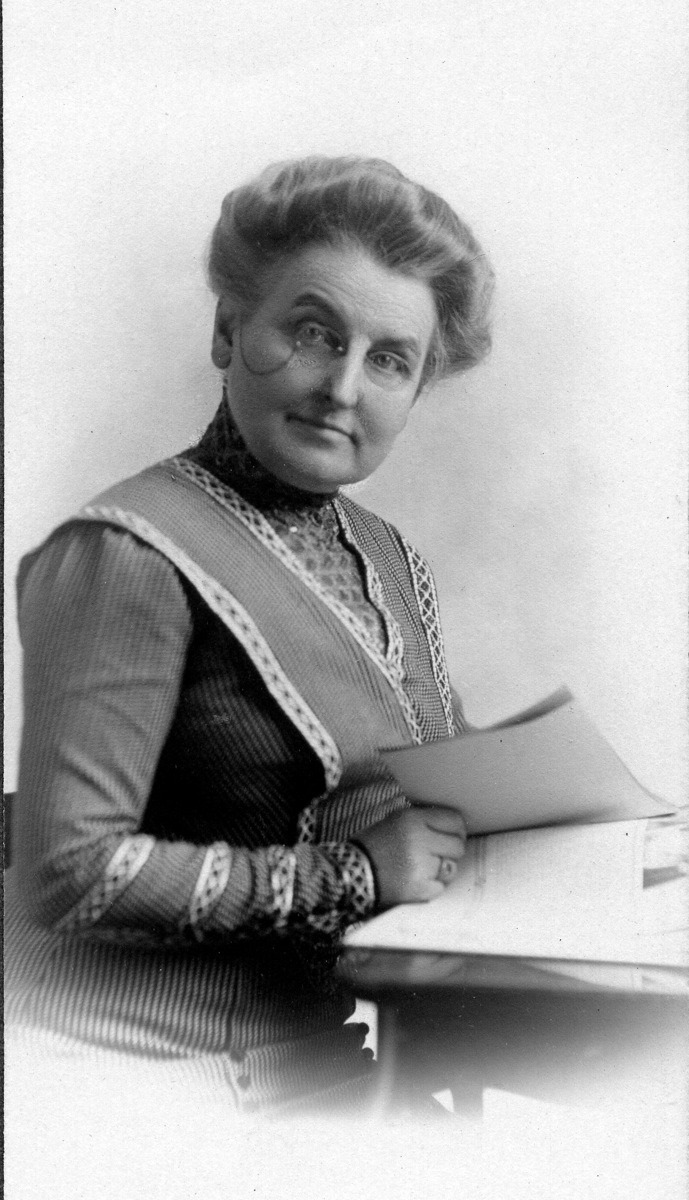
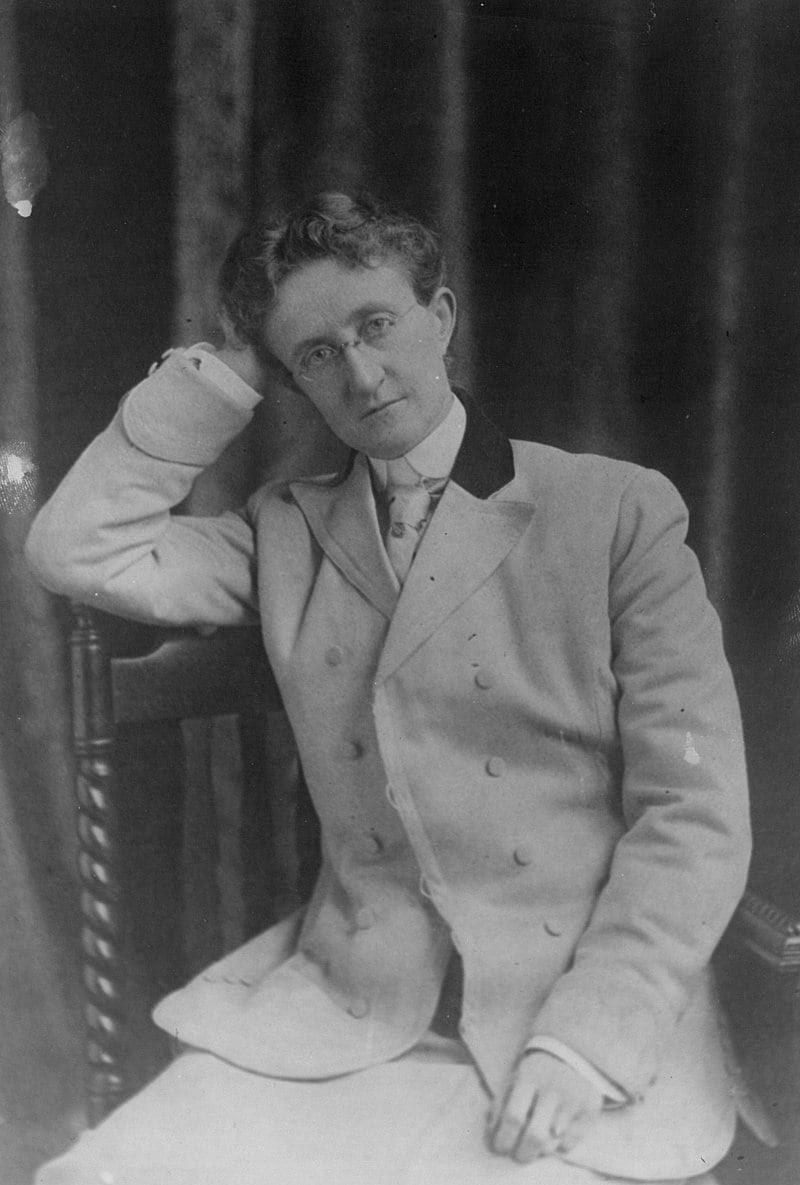
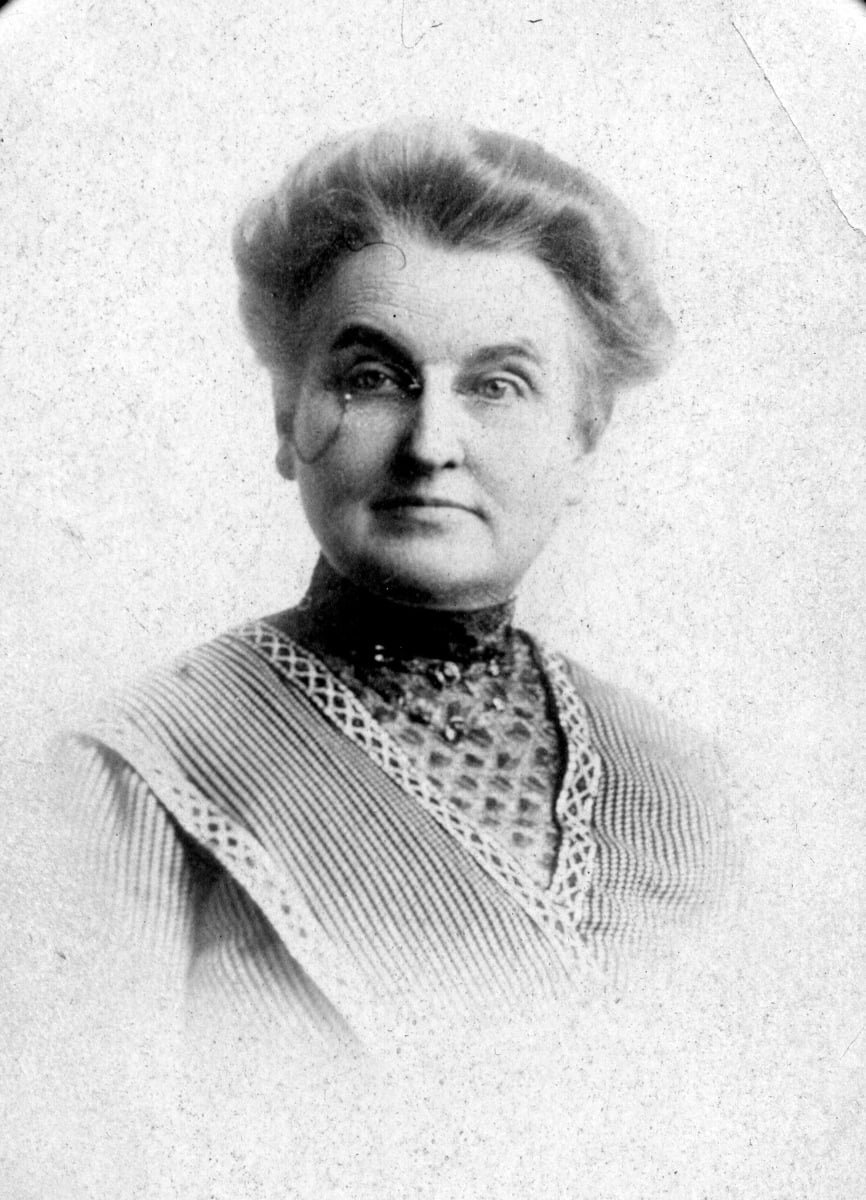
A lot of times, people in early photographs come across as formal and stern, usually because of their poses and lack of smiles. Back then, that was proper photo etiquette. Early cameras and film techniques required sitting still for a period of time, and even once camera technology improved, it was some years before “spontaneous” or “candid” shots, or even smiling, became the norm. So while Kate may come across as stern in her pictures, giving the impression she might have been a “tough” teacher, other information about her shows this was not the case.
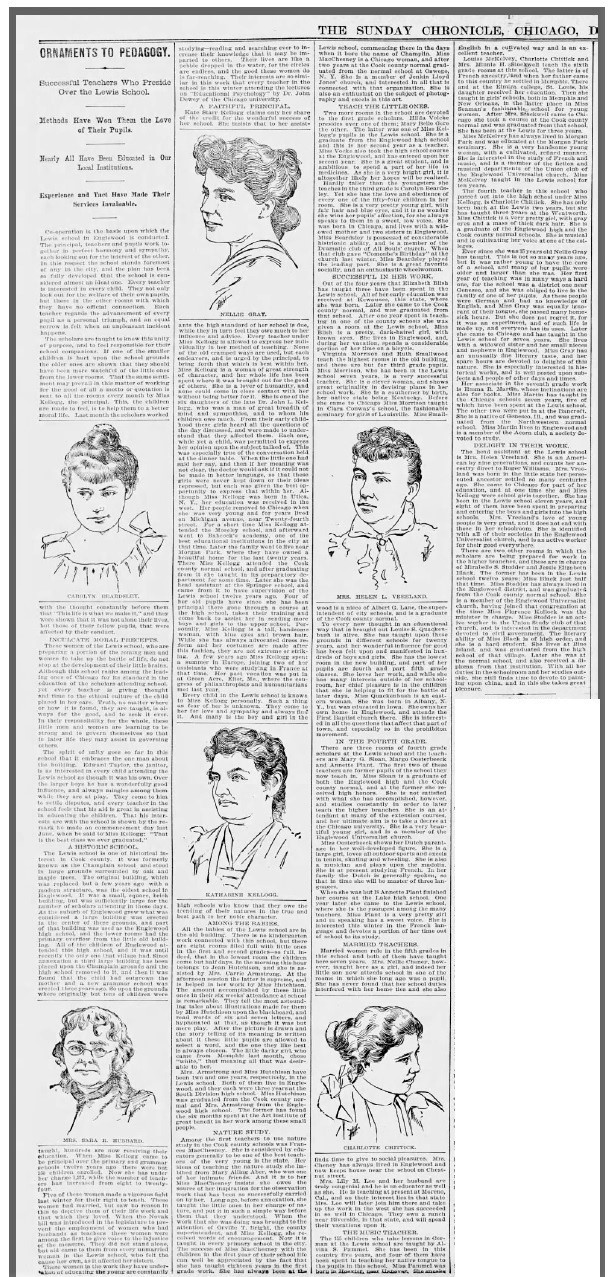
In 1895, the Chicago Chronicle newspaper ran a lengthy article about the teachers – and principal – at Lewis-Champlain. The newspaper stated: “The school stands foremost of any in the city, and the plan has been so fully developed that the school is considered almost an ideal one.”
The “plan” of the school was simple: “Co-operation is the basis upon which the Lewis school in Englewood is conducted. The principal, teachers and pupils work together in perfect harmony and sympathy, each looking out for the interest of the other. … Every teacher is interested in every child.”
The article glowed with praise for Kate as principal. While she humbly gave credit to the fine teachers under her, they said they owed much of their success to her influence and advice.
The article stated: “Miss Kellogg is a woman of great strength of character …. She is a lover of humanity, and none could come in close contact with her without being better for it.
“Every child in the Lewis school is known to Miss Kellogg personally. Such a thing as fear of her in unknown. They come to her for love and sympathy and always find it.”
As would be expected, Kate often wrote papers for and made presentations to professional education groups. She was also a popular member of and speaker at the women’s clubs in Chicago.
In 1901, she wrote a paper for the Northern Illinois Teachers Association that also received coverage by other groups The theme of the conference was “The School and Society” and Kate’s paper was on “Some Concrete Examples.”
Instilling social responsibility in children was an important tenet of progressive education. In this paper, Kate described how Lewis-Champlain approached this through “municipal civics.” Each grade level studied a component of Chicago government and services from many different angles, from how services developed and were administered to how they were paid for, as a way to incorporate many lessons.
For example, the younger grades studied the Chicago Fire Department. Other classes studied smoke “nuisance” or pollution, garbage disposition, and water and sewerage, and they were preparing to study the city’s regulations on trees. One grade studied city construction projects – they redesigned their own schoolyard and then sent a proposal to the Board of Education. Kate noted they also got a lesson in patience waiting for a reply.
They divided the school buildings and grounds into “wards” and the children acted as “aldermen” with duties defined by the “citizen-pupils” themselves.
The innovative plan was well received by educators.
Kate suggested the idea be expanded into the community. She made a presentation to the Englewood Woman’s Club suggesting that boys could develop into better citizens and more informed voters as adults if, as children, they were encouraged to become more aware of their community’s needs by monitoring such activities as garbage collection and smoke nuisances.
The next day, the Inter Ocean newspaper ran a blistering response to Kate’s suggestions.
“Miss Kellogg evidently knows little about boys. And what is more, she is palpably deficient in knowledge of the boy’s father,” wrote the paper.
The paper went on to say fathers didn’t want their sons to be busy bodies, spying on the neighbors. The boys would turn into self-opinionated, self-righteous, self-conceited, meddlesome men. Their fellow schoolboys would be against it, and instead of developing a social conscience, it would earn a boy well-deserved kicks and black eyes.
“The safety of this republic lies in the fact that the average father and mother think most of the boy who is least inclined to win favor by stooping, even as a civic duty, to the garbage-box level,” insisted the paper.
That newspaper writer might not have thought highly of trying to instill social responsibility in children, but without a doubt, his opinion did not deter Kate.
Another interesting article Kate wrote for the American Education magazine in 1906 was titled “Democracy in School Relationships.” She called for allowing children, within reason, to have a say in classroom activities. She believed independent thought should not be stifled, but directed to mutually beneficial activity, with the child understanding the effect his individual behavior was having on his “room society.”
Kate gave as an example a visit she made to one of the classrooms, where the young teacher was under “nervous strain” trying to control her class. Kate suggested a group activity allowing the children to construct or illustrate the story they were learning about. The teacher replied she was afraid if she did that “they would get away” from her.
Kate replied, “They won’t get away from you if you go with them.”
Kate returned to the classroom a half-hour later to check on the situation, and found the children “quietly and happily engaged in cutting and pasting a miniature Fort Dearborn.” They were freely sharing supplies and working together on the model. The teacher gave a sigh of relief and “the joy in the room was reflected in the teacher’s face.”
“I never would have believed it possible. An hour ago I was ready to give up,” said the young teacher.
It’s a good thing she listened to Kate Starr Kellogg.
Next post: Kate Starr Kellogg – Board of Education politics and some personal interests
Ridge Historical Society
Teacher Appreciation Week – May 3-9, 2021 – Part 4
School Series – Profile 11: Kate Starr Kellogg
By Carol Flynn
Kate Starr Kellogg (1854-1925) was an influential educator who lived on the Ridge. We’ve briefly profiled her family and education career in the three previous posts.
Kate’s contributions to the education field went beyond just teaching issues. She also left a lasting impression on political and social issues concerning Chicago’s education system.
First, she supported employing married women as teachers. The Chicago Board of Education policy was that a female teacher who got married automatically lost her job, but married male teachers not only stayed employed, they were preferred. Kate strongly believed that school, home, and society were all inter-connected and reinforced each other. Not only did she believe married women could still have a teaching career, she supported parents having a stronger role in the education process and believed that what children learned in school should be relevant to their homes and social lives. She supported the establishment of parent-teacher associations.
Kate also supported the right of teachers to come together to achieve common goals such as protecting the integrity and standards of the profession and dealing with employment issues – in other words, to unionize. She was an active member of the National Education Association, founded in 1857, and now the largest union in the U.S., representing education professionals and students.
As a founding member of the Chicago Teachers Federation which formed in 1897, Kate personally tackled local issues, including going after corporations that were delinquent in paying their taxes that supported the public schools. The Federation publicly “outed” not only these companies, but their prominent stockholders, some of whom were businessmen claiming praise as “reformers” and philanthropists.
Kate also was a leader in advocating for the formation of a Chicago teachers’ pension system, and sat on the board of trustees for the fund once it was established. She helped wrest away control of the fund from the Board of Education and put it in the hands of the teachers themselves.
In 1909, Ella Flagg Young was named the first woman superintendent of Chicago public schools, the first woman in the U.S. to reach this level in the education field. As expected, her critics and enemies were numerous.
For 3 years, Flagg was unanimously re-elected to her position by the Chicago Board of Education. Then in 1913, without warning, school board directors who were against Young managed to gather enough votes to remove her from the superintendent position. They accused her of mismanagement of funds and making the school system inefficient. They called into question her integrity and competence. Realizing she did not have the support to continue, Young resigned.
Young’s supporters were outraged by the Board’s decision and treatment of Young. Her support was largely concentrated in the powerful women’s clubs of the day but also reached much farther than that – former students, including many men, and parents of current students supported Young. Their call for Young’s reinstatement was supported by Mayor Carter Harrison, Jr., Jane Addams of Hull House, and many other leaders. The teachers of the city strongly supported Young and “hinted” they would strike if she were not reinstated.
A committee was established to write a resolution to have Flagg reinstated. Kate was one of the eight committee members. On Christmas Eve, 1913, the Board of Education voted Young back in as superintendent.
Kate, not surprisingly, was a suffragist, supporting women’s right to vote. It was particularly jarring to teachers, overwhelmingly a female occupation, when it was announced they would be charged an income tax on their earnings, without any representation in any governmental decision-making processes.
Mary Kellogg, Kate’s older sister, and Kate were both members of the Chicago Peace Society. This group was the local branch of the American Peace Society, founded in 1828, to promote good will between nations and the use of arbitration and other peaceful means to settle disputes and avoid armed conflict. There were many prominent members in this association, including past and current mayors and governors of Illinois, judges, clergy and religious leaders, notable women organizers, and professional women such as Jane Addams and Ella Flagg Young.
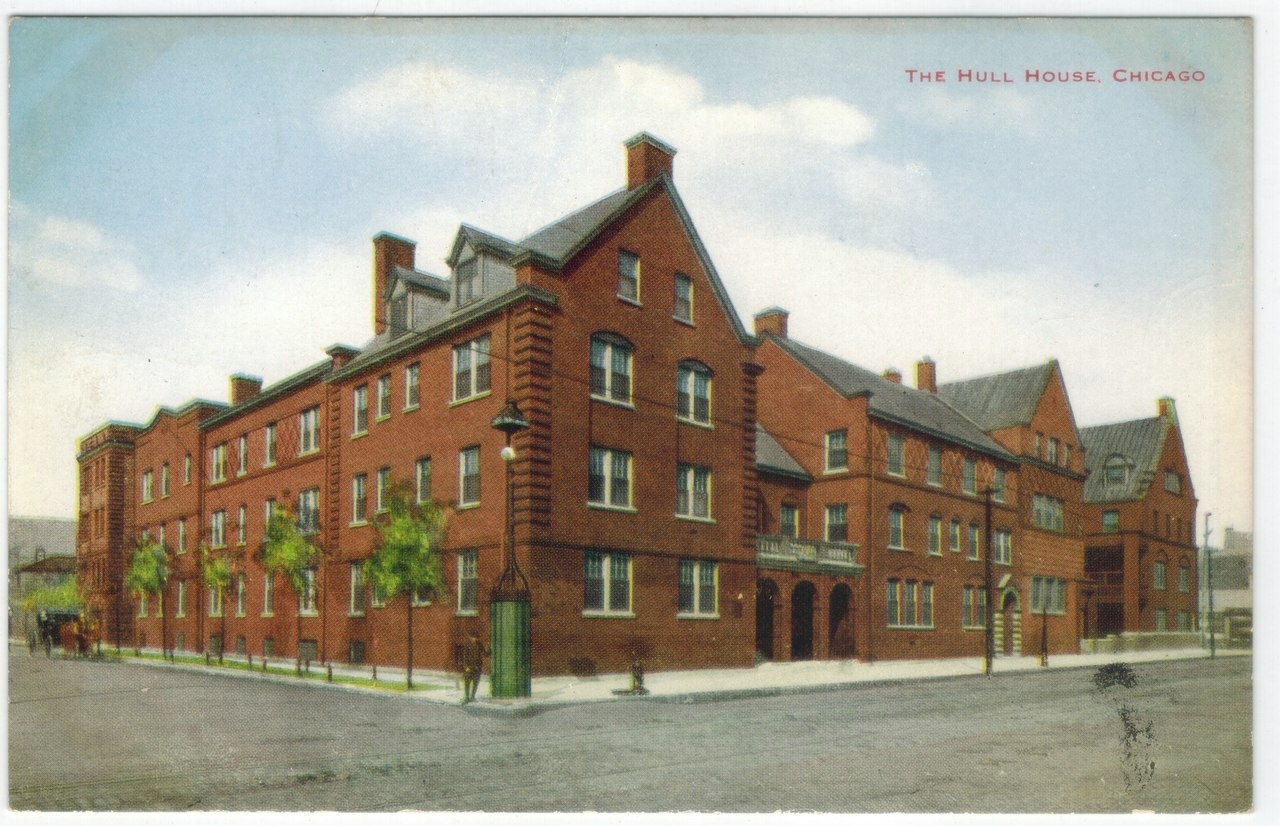
Kate and her sisters had personal as well as professional relationships with leaders such as Addams and Flagg. That friendships would develop between like-minded women is expected. Several Kellogg sisters were involved in Hull House activities, and in an earlier post, we showed the portrait that Alice Kellogg painted of Addams.
They were all involved in various women’s clubs, and the state federation of women’s clubs, as well as professional and reform groups. Other women from the Ridge were also involved, including Gertrude Blackwelder. Kate was a speaker at meetings during Blackwelder’s term as president of the Chicago Woman’s Club, so they obviously knew and respected each other.
Kate had a personal relationship with Dr. Cornelia De Bey, a homeopathic physician from the medical school Kate’s father taught at, and the attending physician for her chronically ill sister, Alice. De Bey, a well-known reformer, suffragist, labor advocate, and pacifist, had been named to the Chicago Board of Education, along with Jane Addams. De Bey worked with Addams’ Hull House community.
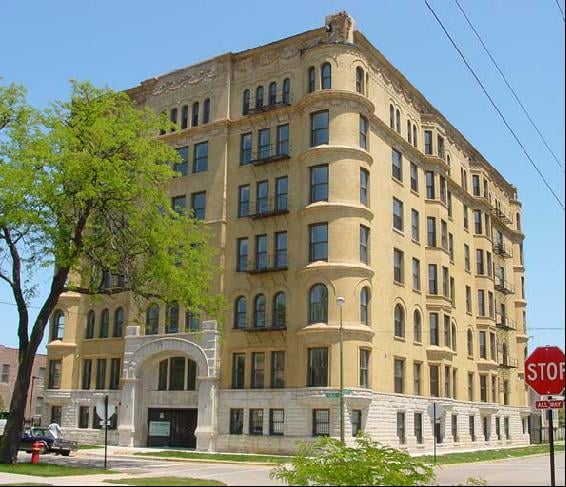
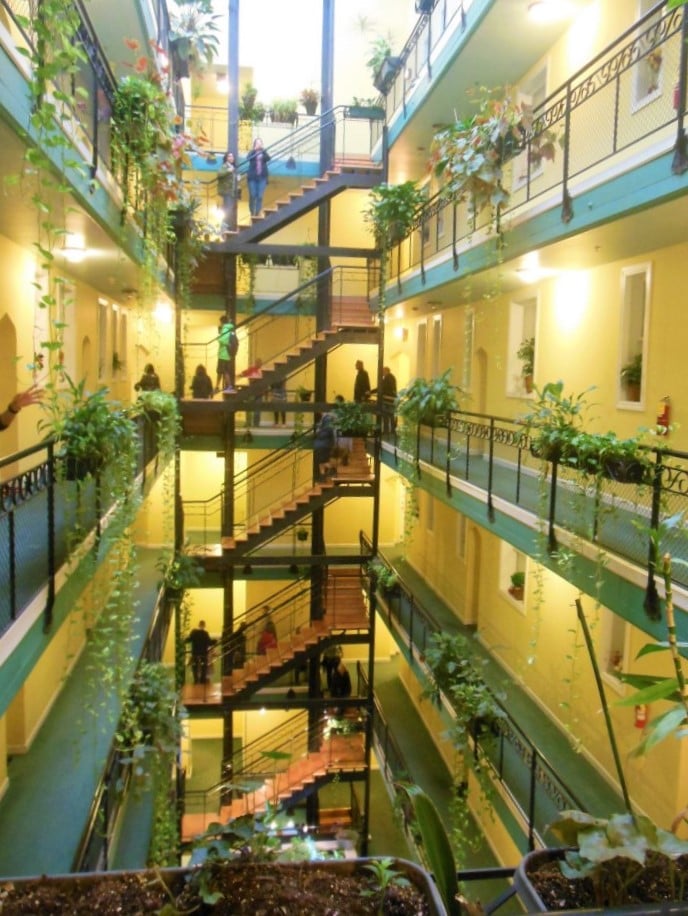
De Bey shared living arrangements with Kate at 6565 S. Yale Avenue. “The Yale Apartments” or “The Yale” was designed by architect John T. Long in 1892 and offered luxury apartments to visitors for the 1893 World’s Fair. Today “The Yale” is a Chicago landmark. (Incidentally, John T. Long also designed the 111th Street Metra train station in Morgan Park, and perhaps the 115th Street station that burned down a few years ago, both Chicago landmarks.)
Next post – Kate Starr Kellogg – some personal interests.
Ridge Historical Society
Teacher Appreciation Week – May 3-9, 2021 – Part 5
School Series – Profile 11: Kate Starr Kellogg
By Carol Flynn
There was more to Kate Starr Kellogg than her life-long commitment to education, as if that wasn’t enough.
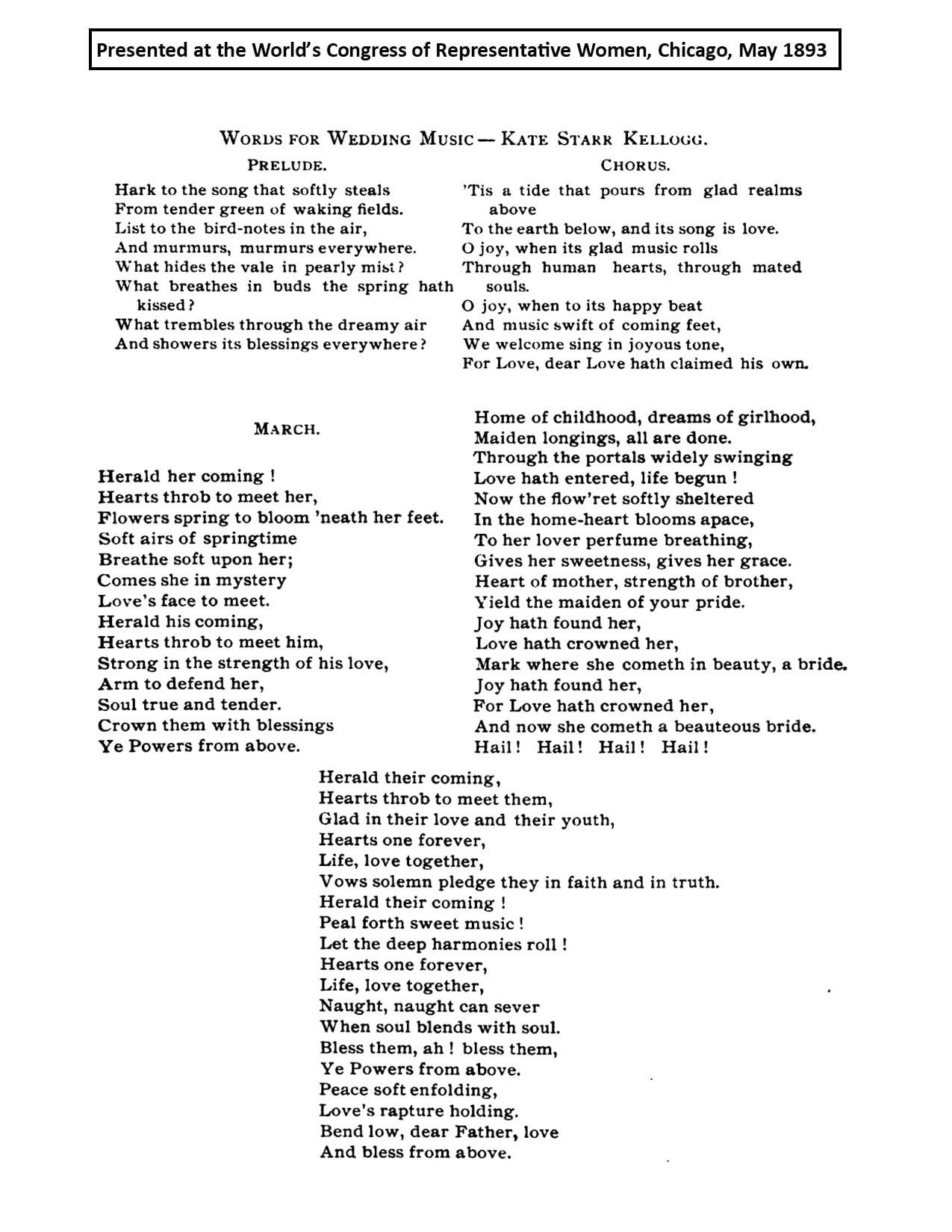
Kate was a poet and song writer. The World’s Congress held a series of events at the time of the Columbian Exposition, the World’s Fair in Chicago. A special World’s Congress of Representative Women of All Lands was formed, and held a week-long meeting in May 1893. The purpose of the event, chaired by Bertha Honore Palmer (Mrs. Potter Palmer), was to present the progress of women in “the great departments of intellectual activity.”
There were talks on education and social reform, but Kate participated in an evening event on music created by women. A song she wrote the lyrics for, “Wedding Music,” with music by Eleanor Smith, was performed by Miss Helen Root and a chorus.
Kate published poetry in other sources, also.
The Kellogg sisters also explored their spiritual sides. Through their father, a holistic physician, they developed interests in metaphysical ideas and practices including spiritualism, the Christian Science writings of Mary Baker Eddy, and the writings of Emanuel Swedenborg.
In 1896, the Cook County Normal School held its annual alumnae reunion and “tree planting exercises.” Following an opening session, the participants marched outside for the planting of a catalpa tree. This was followed by a business meeting, and then a banquet. It was a custom then at most events like this that a series of toasts were made, and each was responded to in kind by someone giving a brief presentation. Kate was one of the responders and her topic was “The Transmigration of Souls.” This concept is related to reincarnation.
In 1901, Kate and her sister Alice were listed as members of All Souls Church, a Unitarian Church connected to Jenkin Lloyd Jones, a well-known Unitarian minister and writer who produced the Unity newsletter.
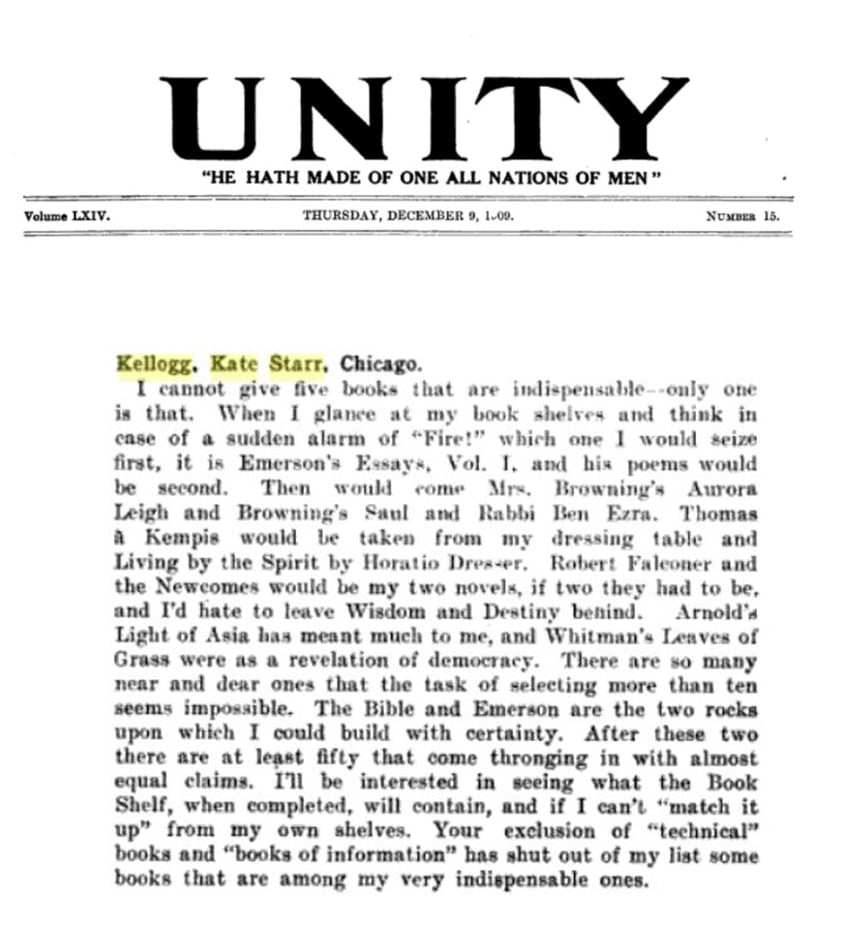
Kate along with other people responded to a 1909 request in the Unity newsletter to identify what books of literature they considered indispensable. Her number one book was Emerson’s Essays, Volume 1, followed by his poems.
One interesting story about Kate appeared in the Brooklyn Daily Eagle newspaper on October 1, 1899, in an article titled “Chicago Stories of Ghosts.” In this New York paper, it was reported that Kate often told a story of the “supernatural” to her “intimate friends.”
According to the article, Kate reported that she was taking an overnight journey on a train, and, although not a superstitious person, was distressed with a presentiment of evil. Suddenly, at the foot of her berth, she saw a shadowy white female figure. The figure remained for several hours and finally vanished. Kate noted the time of this event, and later learned that a dear friend had died that night after a very sudden illness of a few hours’ duration, and on her deathbed the friend had said, “Tell Kate.” Kate made no attempt to explain what had happened other than to say how real the experience had been.
Kate died at the family farm in Evergreen Park in 1925 at the age of 71, and was buried in an unmarked grave in Mount Greenwood Cemetery with her family.
One remembrance of Kate stated: “Those who knew Miss Kellogg will long cherish the memory of her human sympathy, her keen sense of humor, her imagination, and her deep understanding of the youthful mind.”
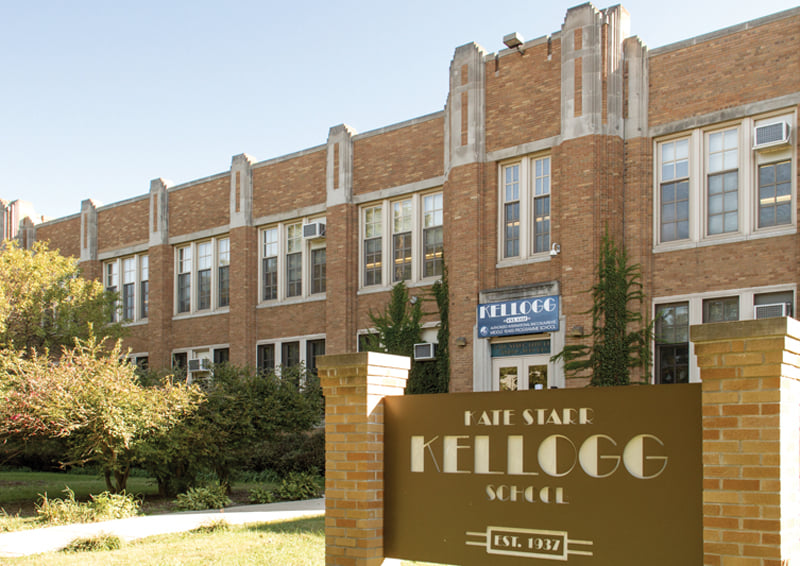
On November 8, 1937, the new Kate Starr Kellogg Elementary School opened its doors at 9241 S. Leavitt Street. The first principal was Jennie S. Jenkinson, who also headed Sutherland School at 10015 S. Leavitt Street. Jennie was notable, too – a local resident, she lived with her parents at 1669 West 104th Place. Her father was Presbyterian minister Rev. Henry S. Jenkinson. Jennie taught at Barnard School before her promotion to principal. She died in 1972 at the age of 91 after a 42-year career as a Chicago educator. Surely Kate Starr Kellogg was a legend and inspiration to her.
This concludes our profile on Kate Starr Kellogg.
Ridge Historical Society
National Police Week: The History of the Morgan Park Police Station – Part 1
By Carol Flynn
May is a busy time for “recognition weeks.” There was nurses’ week and teachers’ week, and May 9 to May 15 is National Police Week.
This seems like a good time to share the interesting story of the Morgan Park police station, now the 22nd District Police Station at 1900 West Monterey Avenue. The community didn’t always have its own police station – in fact, it was a struggle through the years to keep one here.
When the Village of Morgan Park annexed to the City of Chicago in 1914, all of the local services – fire department, police department, water, streets, utilities, schools, library – you name it – came under the control of city departments and regulations.
On Wednesday, April 22, 1914, at 5:40 p.m., Chicago took over Morgan Park and the four police officers employed by the village at that time became members of the Chicago Police Department. Morgan Park soon became part of the 32nd Ward.
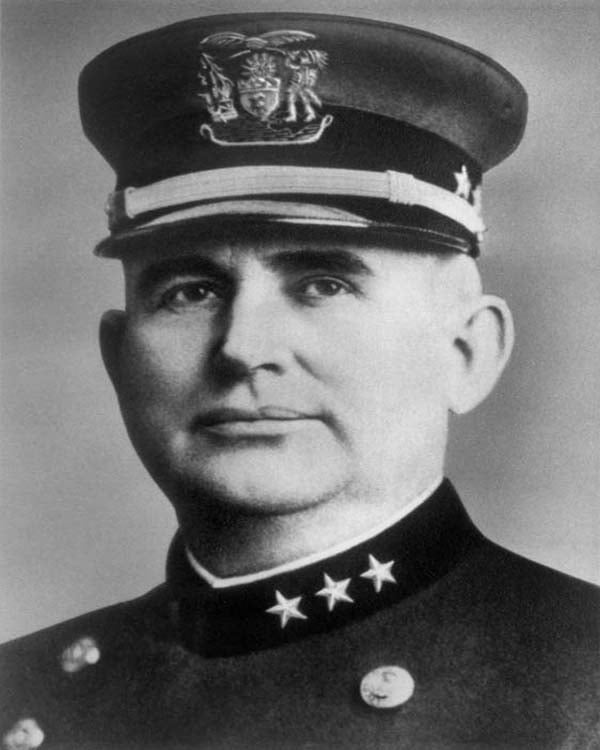
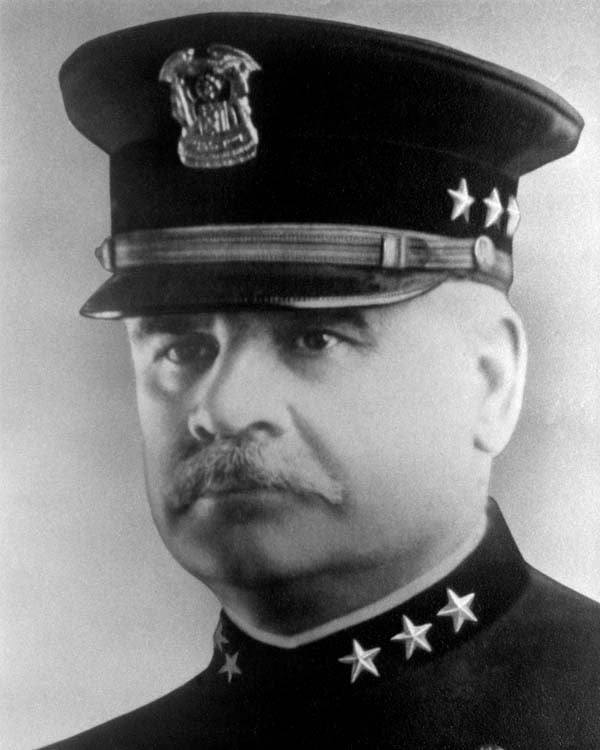
On May 2 of that year, Chicago Police Superintendent James Gleason established a new police station at Morgan Park, and transferred in a lieutenant, a detective sergeant, three sergeants, and seven patrolmen. Lt. John F. Sullivan of the Hyde Park police station was given command. The first criminal complaint the new Morgan Park police station dealt with was an employee theft on May 26, 1914.
In 1916, the Police Superintendent was now Charles Healey, and he created a new police district, the 27th or Gresham, that included Morgan Park. Joseph C. Mullin was promoted from lieutenant to captain to be commander of this new district.
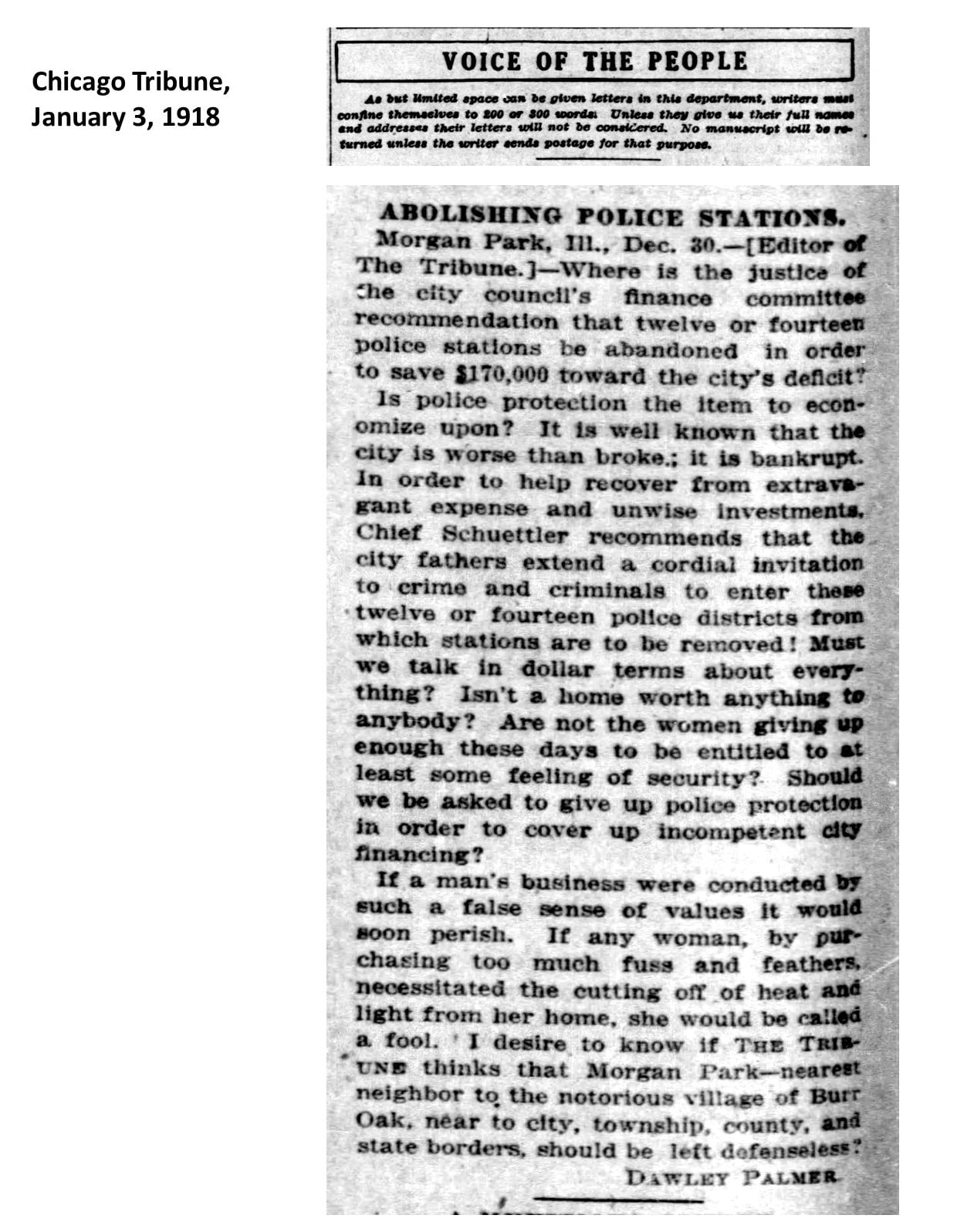
In 1917, there was again a new Police Superintendent, Herman F. Schuettler, an “efficiency expert” who had been acting chief four times. He proposed a reorganization of the police department, reducing the number of police stations from 45 to 22. He claimed that the money saved in administrative costs would be used to put more police officers out on the streets. The city council approved the plan. The Morgan Park station was on the list to close.
The residents of the Morgan Park area were very much against the closing of the station, and held a mass meeting attended by over 500 people to discuss what to do. The leaders of the effort to save the Morgan Park station included Aldermen Albert Fisher and James Rea; the head of the Morgan Park Business Men’s Association (MPBMA), Burten A. Knapp; and other civic organizations like the Morgan Park Improvement Association.
The concern was that the closest stations would be three miles away. A “committee” of 100 people was formed to visit city hall.
A “vigilance committee” was also formed at the time for “protection against criminal invasion.” Three hundred men signed up immediately, and money was raised to buy revolvers for all of them. A shooting range was planned so the men could learn to handle their weapons. It was announced a medal would be given to the first man who captured a criminal.
Schuettler met with fifty representatives of Morgan Park and assured them he would ask the city council finance committee to reconsider the issue. In the meantime, the vigilance committee continued its plans. It was also referred to as the “Home Guard Company” in local papers.
In January, Schuettler announced twelve stations, including Morgan Park, would close. However, he went on furlough after becoming ill, and the position of Superintendent was temporarily filled by John Alcock. Ten stations were closed in January 1918, but Alcock allowed Morgan Park and one other, Deering, to remain open. Deering was determined to be important because the manufacturing of war supplies went on in the district – the U.S. was involved in World War I at the time. But Morgan Park was allowed to remain open due to the pressure put on the mayor, city council, and police chief by the residents of the area and Alderman Fisher.
Then it was announced in February that the Morgan Park station would definitely close. Schuettler returned from his leave but continued to have health issues and was in and out of office during the spring.
The Morgan Park police station was finally closed on April 28, 1918. Adequate police protection in the form of mounted and motorcycle police was pledged, as well as a patrol wagon to be kept at the old station for emergencies.
The residents of the community planned to circulate a petition to reopen the station.
Schuettler died that summer and Alcock became acting superintendent again. Alcock gave a presentation to the people of Morgan Park from the pulpit of the Morgan Park Congregational Church in September of 1918. He told the audience that Jesus Christ couldn’t be chief of police in Chicago without being criticized. He said it was time to begin a larger and more loyal support of good policemen.
However, there were no plans to reopen the Morgan Park police station.
Next post: Morgan Park continues its fight for a police station.
Ridge Historical Society
National Police Week: The History of the Morgan Park Police Station – Part 2
By Carol Flynn
The Morgan Park police station was closed in 1918, four years after it was established when the village annexed to the City of Chicago. Morgan Park was now serviced by District 8 – Precinct 10, referred to as the Kensington station, located at 200 East 115th Street. The District 9 – Precinct 12 station at 8501 South Green Street, referred to as the Gresham station, was the other station that could service the area.
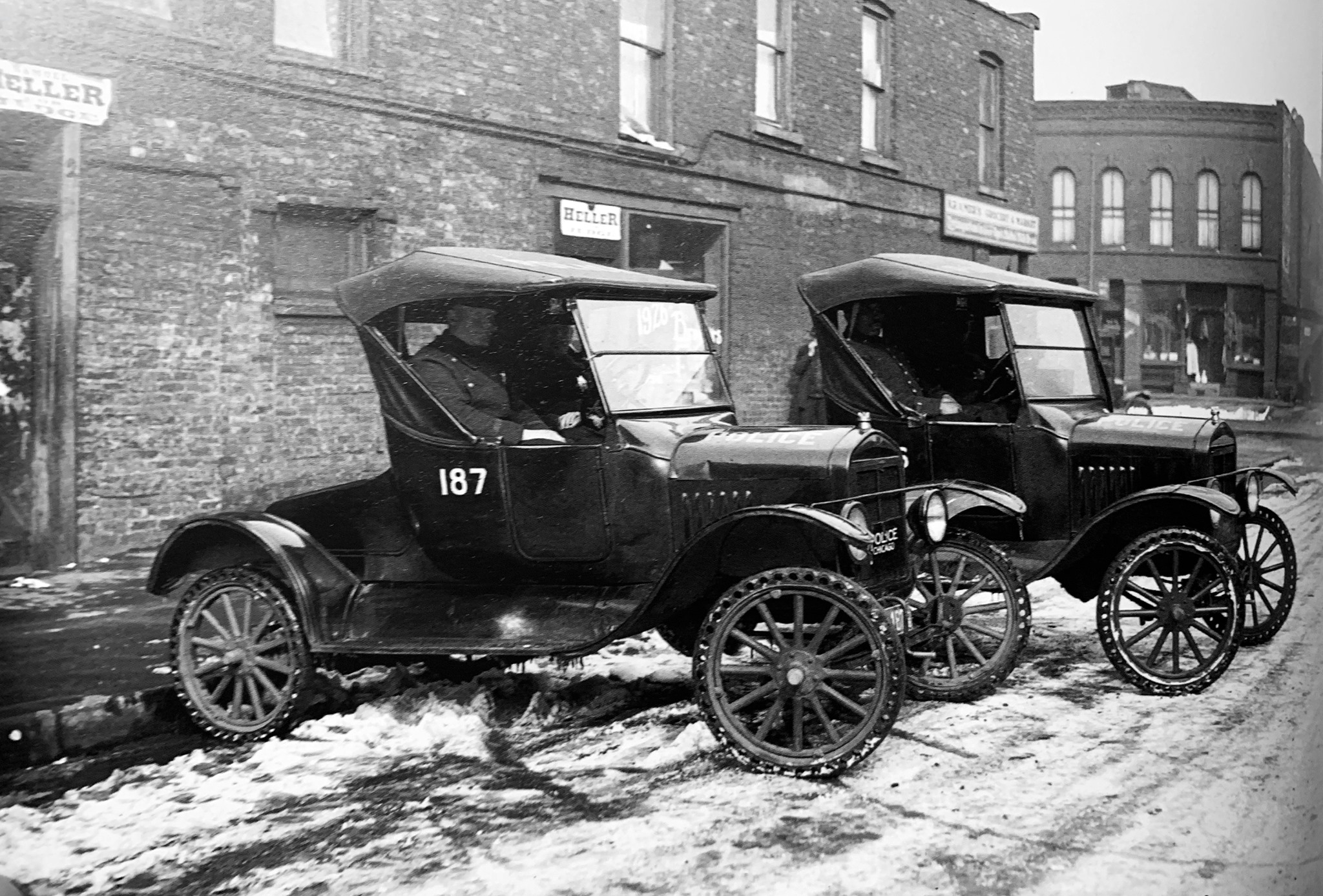
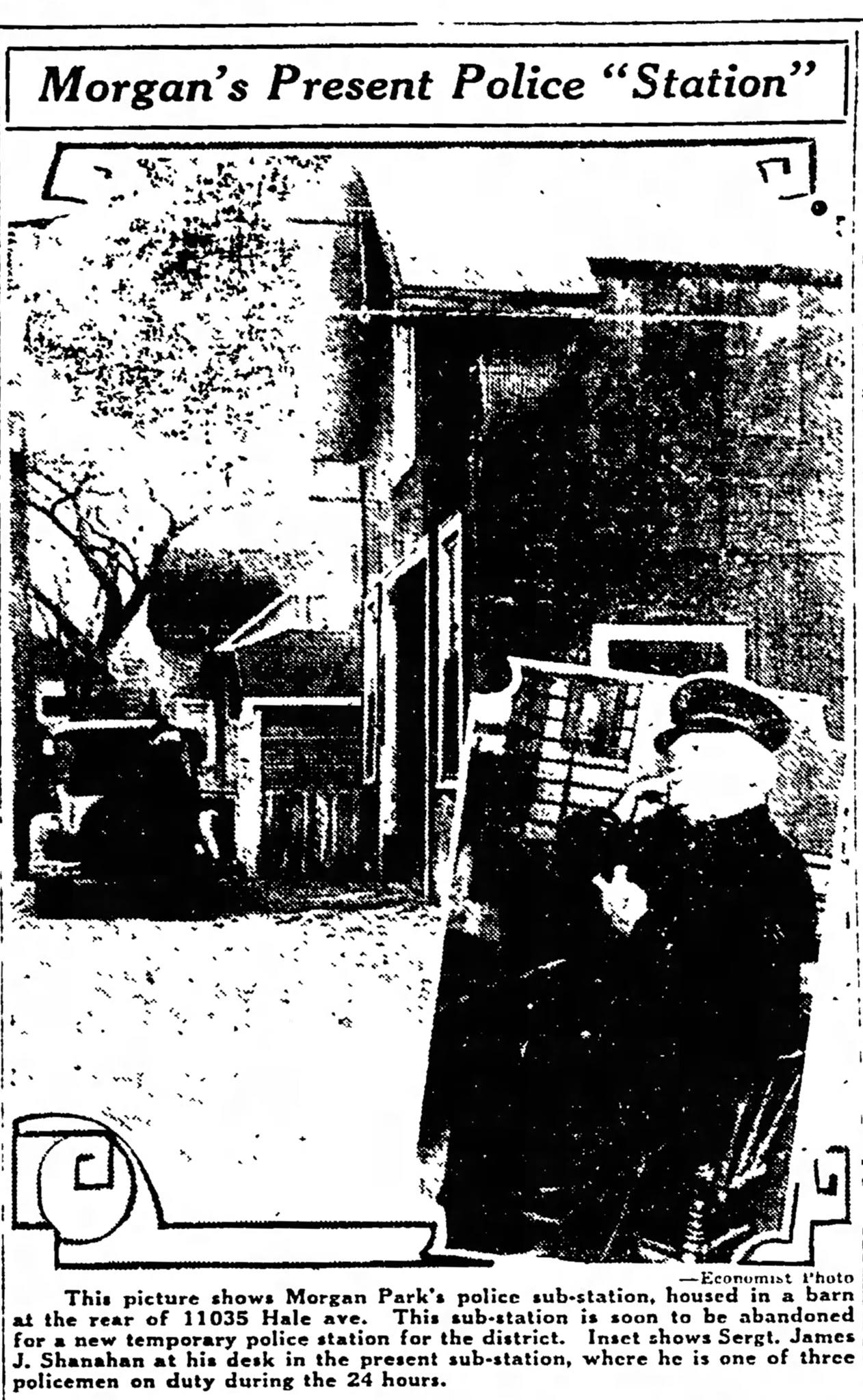
A frame building at 11033 South Hale Avenue was used as a small sub-station after 1918, with a few officers assigned there. The building was behind the storefront originally used as the town hall and was described in the papers as the “old barn in the alley.” One “flivver” squad operated out of the building and other police autos were stored there.
In 1925, the Morgan Park community requested that their area be transferred to the Gresham station as it would be easier and closer. It was also requested that the substation in the barn be moved to the storefront on the property, the old town hall. Concern was expressed it was inconvenient and inappropriate for women to have to walk down a dark alley to get help, especially at night. The transfer to Gresham happened in July 1926, but the relocation of the sub-station did not happen.
By 1927 the Morgan Park community was seriously petitioning the city to establish a new police station there. A series of home robberies and “peeping Toms” at the “scantily protected homes of Beverly Hills” and purse snatches along Vincennes Avenue had led to fear and concern. It was felt it took too long for a response from Kensington or Gresham.
Commissioner of Police Michael Hughes gave assurances that the department would try for a new station and personnel, but this would depend on securing the funding from the city. Hughes reportedly had already asked the city for 8,000 additional men.
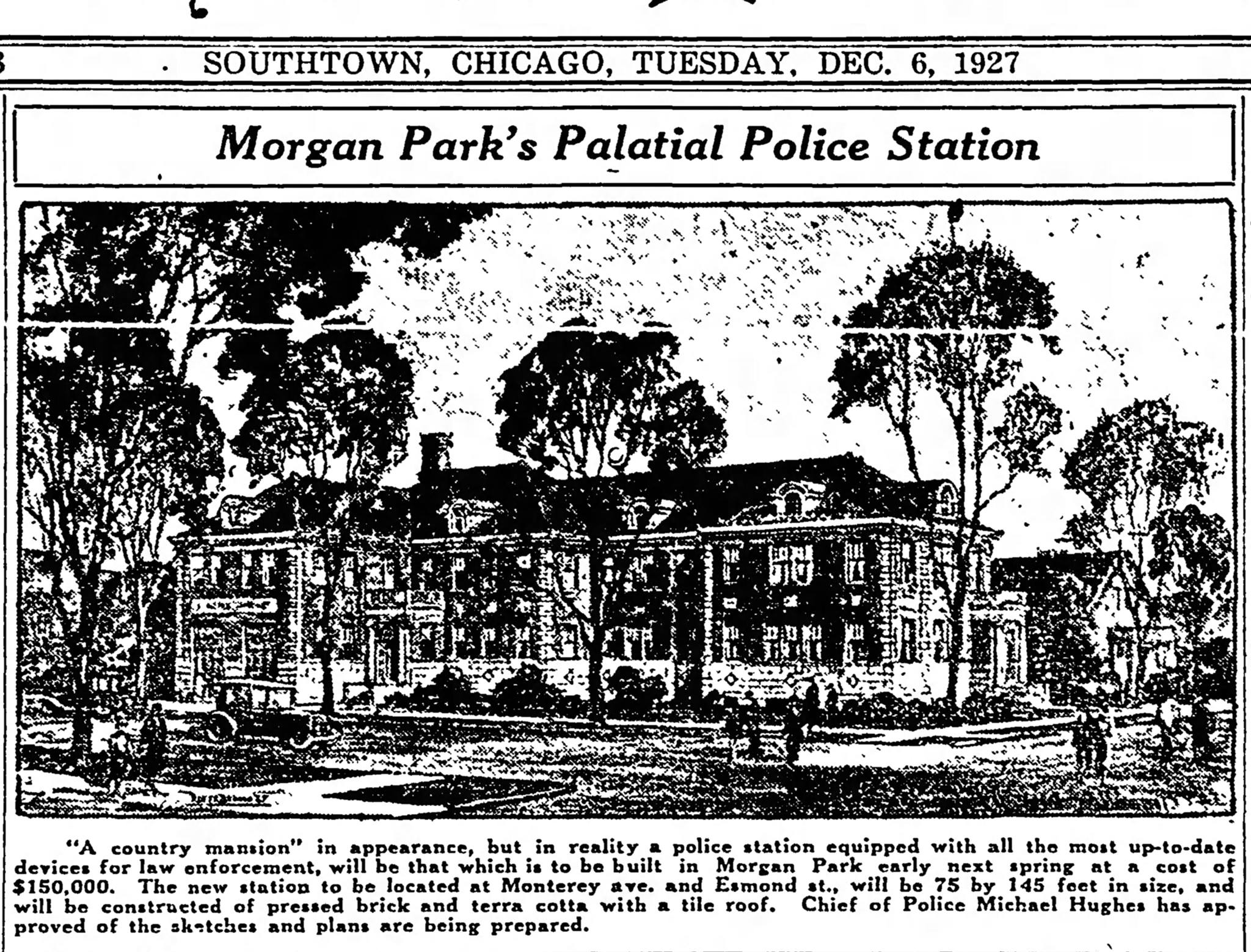
Later that year, it was announced that a state-of-the-art police station would be built at Monterey Avenue and Esmond Street in Morgan Park. The plans showed a brick building with professional landscaping that would include a courtroom, holding cells with showers, a dormitory, a gymnasium, and a garage. Designed by city architect Argyle E. Robinson to fit in with the architecture in the area, Hughes described it as “a beautiful building that would look more like a country mansion than a police station.”
Land was purchased at the northeast corner of Monterey Avenue and Esmond Street for the new station. In early 1928, it was reported that the plans for the new station had been approved by all necessary parties; the money had been set aside from a recent bond issue; bids were received and ready to be reviewed; and the contract would be awarded in time for the new station to be open by October.
This new building was never built. Instead, the funds were diverted to completing the central police station at 11th and State Streets.
Disappointed, in 1929, the citizens of Morgan Park again went back to the Commissioner of Police, now William Russell.
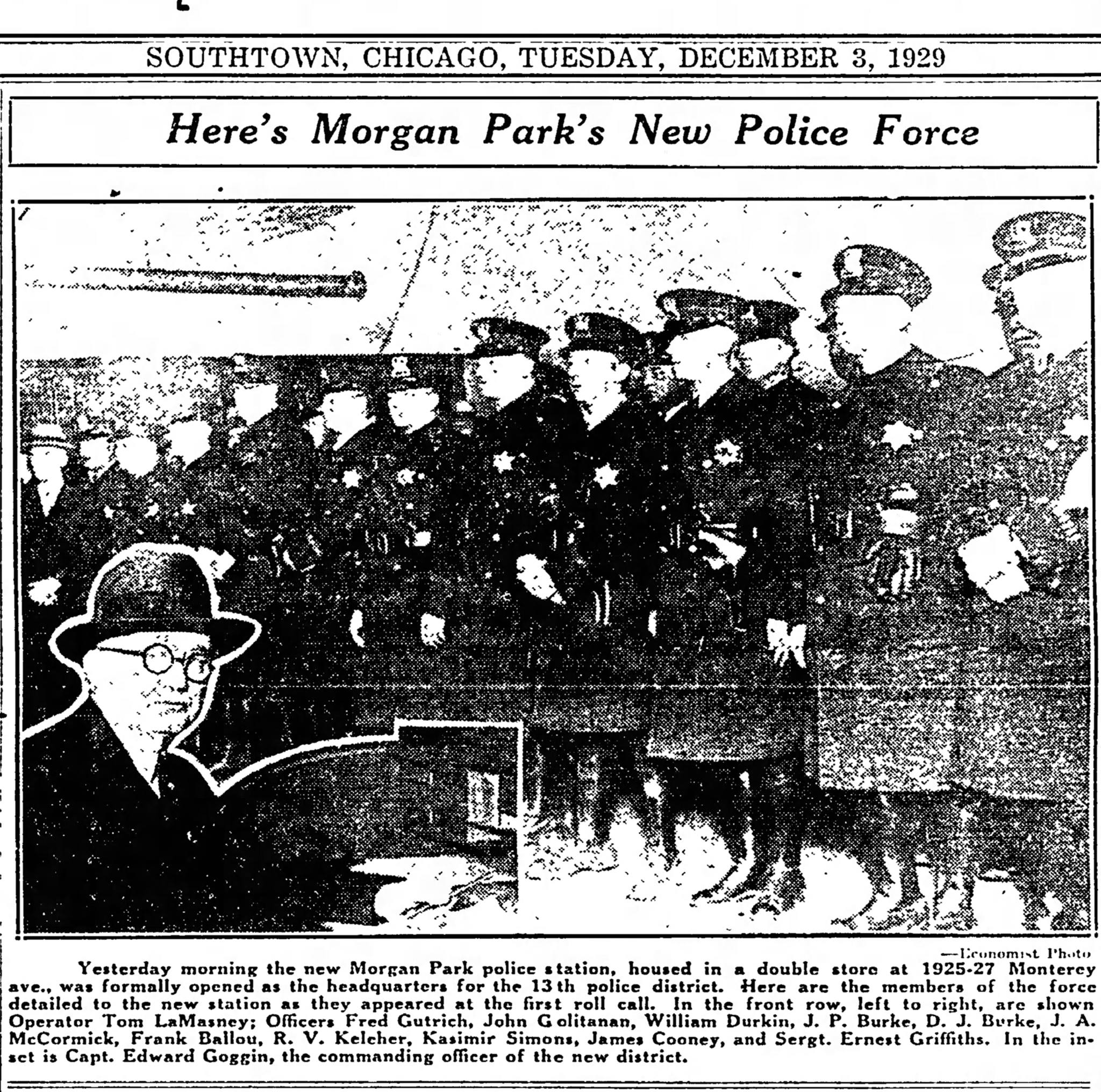
The city agreed to rent a double storefront at 1925-27 Monterey Avenue to use as a new station. The location was considered temporary until the funds could be found to build a new station. The facility was remodeled, telephone lines were installed, and the new 13th District opened on December 2, 1929. The day sergeant from the alley substation became the day sergeant in the new facility.
The boundaries of the new district were Halsted Avenue, 99th Street, and the city limits to the south and west. Mount Greenwood had annexed to the city in 1927 and was included in the new district. There were no holding cells or garage at the facility, so prisoners and wagon calls still had to be handled out of Gresham or Kensington.
The Ridge community welcomed the new police staff with a parade, entertainment, speeches, and a luncheon at Morgan Park High School. Every civic group in the community was represented at the event. The entertainment was provided by a vocalist, a trio of police singers, and the high school band.
In January 1936, it was announced that the city had received over $11 million in grants and loans from the Public Works Administration (PWA). This was a federal program during the Great Depression to supply jobs to unemployed men for construction projects. PWA funds could be used for 45% of the cost of a public building. City architect Paul Gerhardt designed a “standard” police station to be built in several locations, including Morgan Park.
A new cement art deco-style station was finally built in 1936 at 1830 West Monterey Avenue. This one included holding cells and a garage. Morgan Park finally once again had a completely functional police station.
And then in 1961, the unthinkable again happened – the City of Chicago closed the Morgan Park police station.
Next post: Once again Morgan Park seeks to reestablish its police station.
Ridge Historical Society
National Police Week: The History of the Morgan Park Police Station – Part 3
By Carol Flynn
This is the timeline for the Morgan Park police station:
1914 – The Village of Morgan Park annexes to Chicago; a Morgan Park police station is established as part of the Chicago Police Department, incorporating the four officers previously employed by the Village.
1918 – Morgan Park station is discontinued; a small substation continues in a barn.
1928 – A new station is planned but never built.
1929 – A new Morgan Park station opens in a storefront at 1925-27 Monterey Avenue.
1936 – A new station is built at 1830 W. Monterrey Ave.
1961 – The Morgan Park police station is closed once again.
1975 – The Morgan Park police station is reopened at 1830 Monterey Ave.
1983 – The City of Chicago announces plans to close the Morgan Park police station again but the community prevails in keeping the station open.
2004 – The current 22nd District Police Station at 1930 W. Monterey opens.
Throughout its history, the City of Chicago has gone back and forth on the philosophy of a centralized versus a decentralized police station. “Centralized” calls for command and decision-making coming from fewer people at the top levels of the hierarchy, resulting in fewer facilities to maintain with fewer administrative staff. The belief is that less budget spent on administrative costs frees up more for actual officers out on the street. When the pendulum swung toward centralized command, Morgan Park lost its police station and had to rely on services from either Kensington or Gresham.
When the pendulum swung toward “decentralized” policing, that is, command and decision-making are focused in the communities where the services occur, Morgan Park got its police station back. And of course, this being Chicago, the role politics played in deciding where police stations were established – or removed from – can never be discounted.
In 1960, it was announced that the City of Chicago was reorganizing the police department again, consolidating districts and closing some stations. Just as in 1918, the rationale was that less money spent on administration would allow for more police on the street.
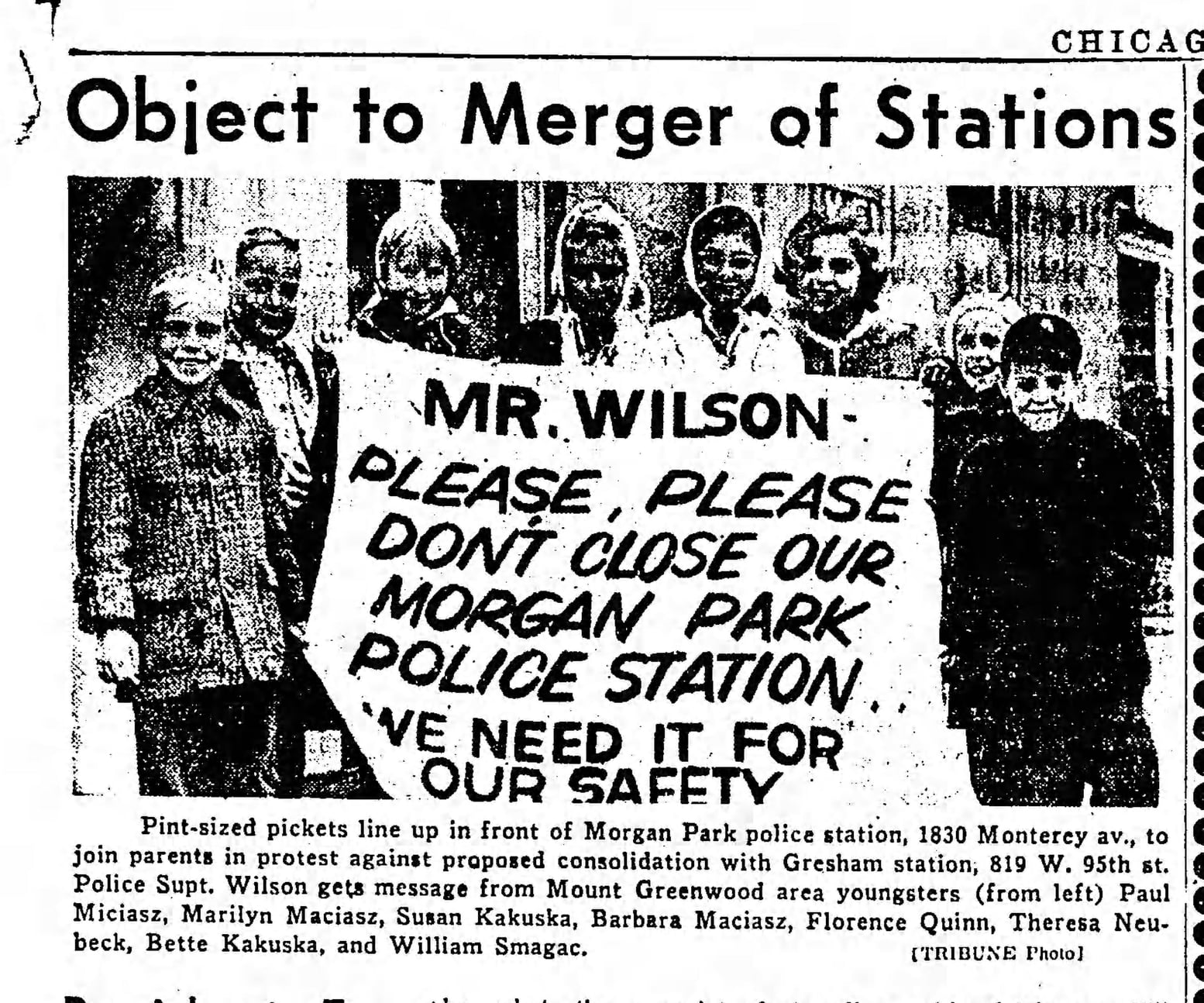
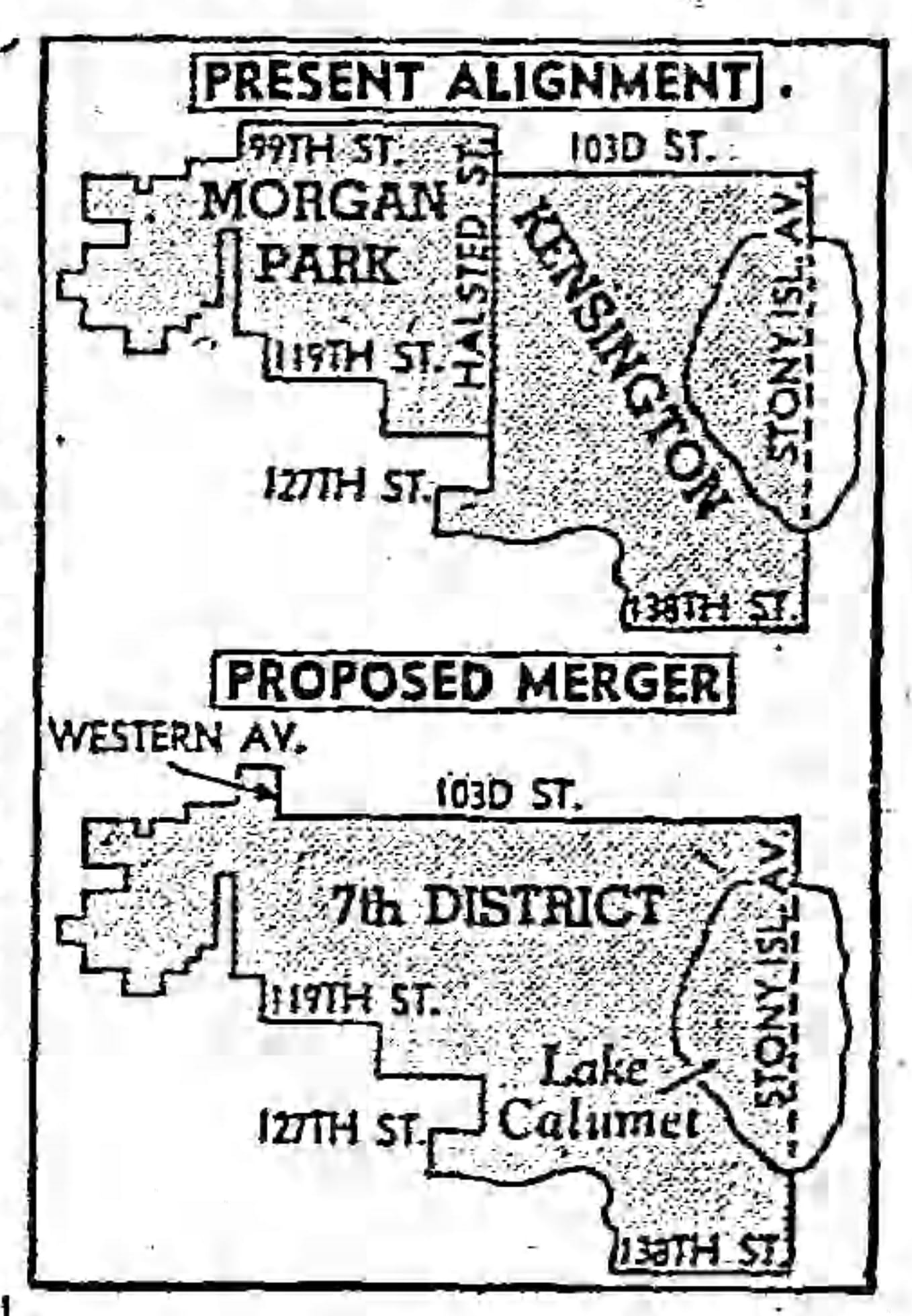
The proposal included combining the 12th and 13th districts and eliminating the Morgan Park station at 1830 West Monterey Avenue. The community, led by the Beverly Area Planning Association (BAPA), strongly opposed this. But appeals to the mayor, city council, and police department went unheard, and the station closed at midnight, December 18, 1961. The Chicago Board of Education took over the old police station.
In the spring of 1975, it was announced that the Morgan Park police station would reopen in the building on Monterey. The current Police Superintendent, James M. Rochford, supported decentralized policing efforts. In the past, the main reason the districts were aligned the way they were was actually due to the technology at the time – the coordination of the telephone exchanges system and the police radio zones. The telephone system was due to be computerized, which would end this system and allow the police department to set boundaries based on community needs rather than telephone lines.
The 22nd Police District opened its doors in March 1975 in the existing building at 1830 Monterey, necessitating the Board of Education to vacate the premises.
The boundaries of the district were the Dan Ryan Woods on the north; the Chicago, Western, and Indiana railroad tracks on the east; and the city limits on the south and west.
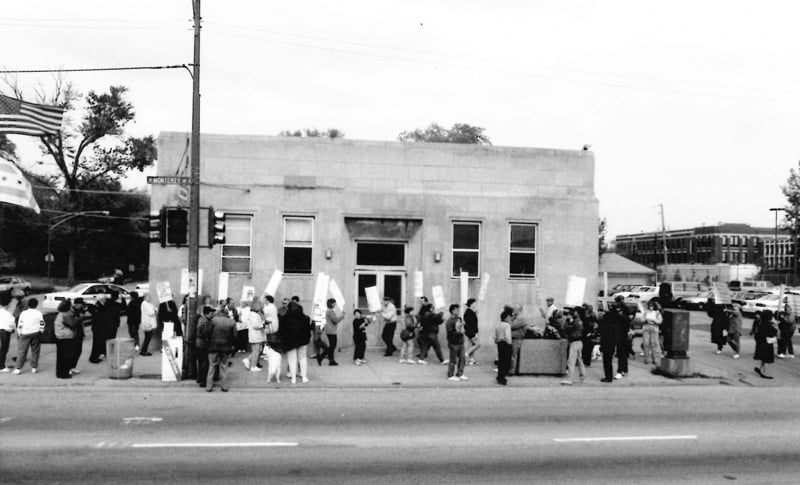
In 1983, it was once again proposed that Morgan Park be one of three stations to close to reduce administrative costs for the city. The community fiercely fought the closing and it did not happen.
In 2000, it was announced that as part of a continuing program to replace aging and outmoded police stations citywide, a new station would be built at 111th and Esmond Streets. The city used its power of eminent domain to acquire some of the property, forcing the removal of some occupied homes. The Edna White Community Garden had to relocate to the land vacated across the street when the old building was torn down.
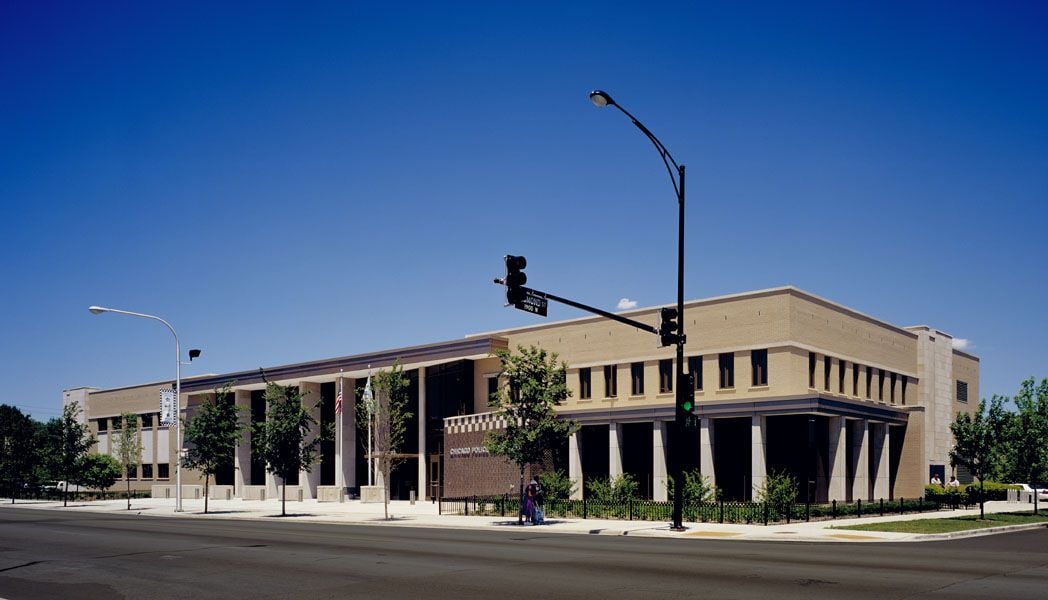
The new facility opened at 1900 West Monterey Avenue in the summer of 2004. Where the old station had no lockers, no private rooms for discussions, no holding cells, no parking lot, and limited technology, the new station not only had lockers, it included a fitness room. It had a community room and private meeting rooms, a lockup, two parking lots, and, most important, high-tech equipment. It was also built to be “green,” using recycled materials and energy-efficient design elements.
The 22nd District has been operating out of this building for seventeen years.
The Ridge Historical Society
National Jewish American Heritage Month
May 2021
By Carol Flynn
May is a busy month for recognitions – nurses, teachers, and police are all honored during this month.
May is also National Jewish American Heritage Month.
The Ridge was home to a thriving Jewish American community and there was once a Jewish synagogue in North Beverly.
The following is from the RHS newsletter, adapted from “Beth Torah: The Congregation That Held Services in a Castle,” by Errol Magidson, published in Chicago Jewish History, Vol. 38, No. 4, Fall 2014, a publication of the Chicago Jewish Historical Society.
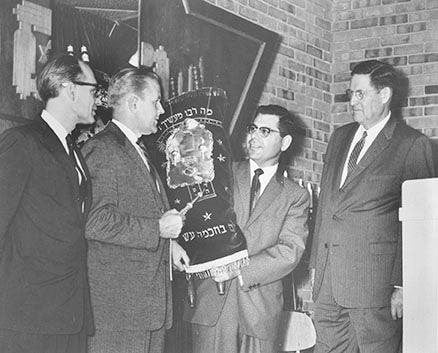
“In 1953, Jews living on the far southwest side of Chicago and nearby suburbs established a Reform congregation which they named Beth Torah, or Temple of Instruction. All but one of the officers lived in the Beverly/Morgan Park community. In their early years, they held services at the [Beverly Unitarian Church in] Givins Beverly Castle, Trinity Methodist Church, and Bethany Union Church, and in members’ homes. Although small, the congregation was active with classes, a youth group, membership and fund drives, and social events like hay rides and fashion shows.
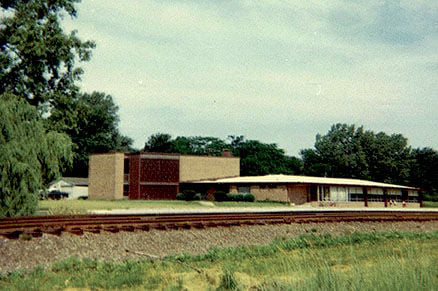
“A major goal of the congregation was to have its own synagogue. Funds were raised, land was purchased at 93rd Street and Vanderpoel Avenue, and a building was constructed.
"Beth Torah Synagogue opened in October 1961. But by 1974, due to an aging membership and a decline in the number of Jewish families in the Beverly area, a number of the Beth Torah congregants opted to affiliate with another congregation in Olympia Fields.
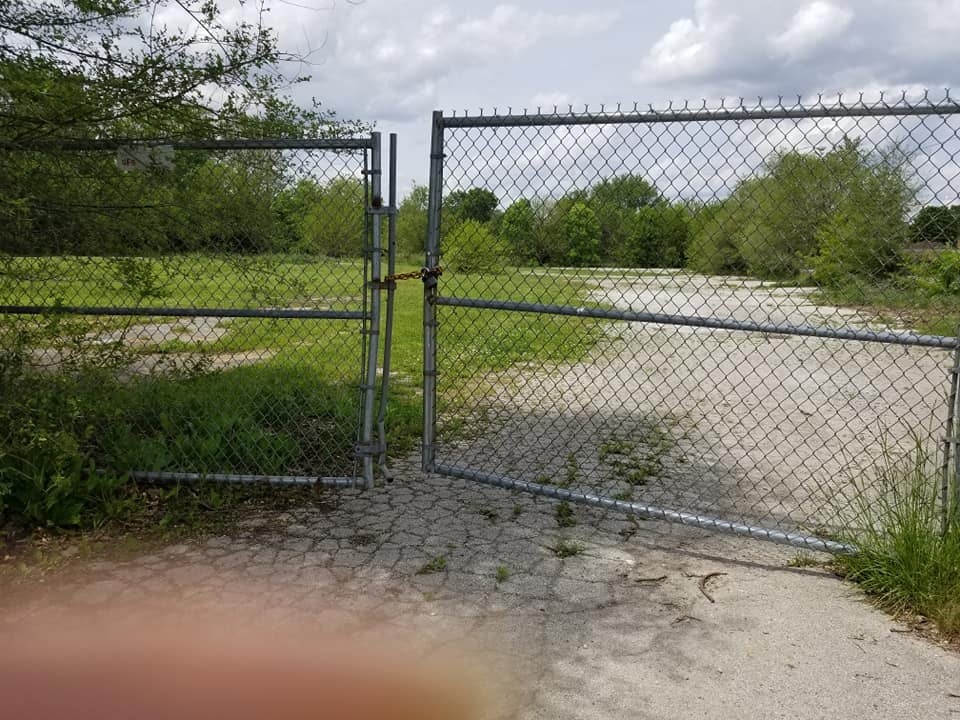
“The Beth Torah Synagogue was purchased by the Chicago Board of Education in 1974 and used for classrooms for a few years. Eventually, the building was torn down but the foundation still remains.”
The weed-choked vacant lot at 93rd Street and Vanderpoel Avenue is all that is left of the synagogue – even vacant lots have interesting histories! There are, of course, Jewish residents on the Ridge, active participants in neighborhood affairs, members of the ever-diverse population that calls this community home.
With thanks to Errol Magidson.
RHS is using Memorial Day to announce our next feature series, which will be on the Native American heritage of the Ridge.
Right now, organizations, universities, churches, businesses, etc., are developing “Land Acknowledgement Statements.” These are declarations that recognize that the land we are using today was the ancestral homelands of Indigenous Peoples who lived here for at least 13,000 years before the European settlers came.
To help with land acknowledgment statements for the Blue Island Ridge, a background paper on the Native American presence on the Ridge has been evolving through research efforts at RHS. This is a fascinating and complex topic. Information will be shared through the Facebook page and other RHS communications and programs as time goes on.
Why start with Memorial Day? For two reasons. First, Native Americans have a long and unrecognized history of service in the U.S. Armed Forces. For many people, the only glimpse they have had into this part of history was through the 2002 movie “Windtalkers” which was based on the real story of Navajo code talkers during World War II. The Navajo language was used to direct artillery operations in the field, and the “code” was never broken by the enemy.
Native Americans serve in the U.S. Armed Forces at a higher rate than any other group. Since the 9/11 terrorist bombing, 19% of Native American men and women have served, compared to an average of 14% for all other groups. This is consistent among the 573 federally recognized Native American tribes.
In interviews, they cite their reasons for enlisting. Of course, the economic factor cannot be ignored – pay, benefits, opportunities. But for many, there is a family heritage, and the time-honored warrior culture of protecting their land, their home, their family, their ideals. Native Americans are not just part of the United States’ past, they are very much the present and future, also.
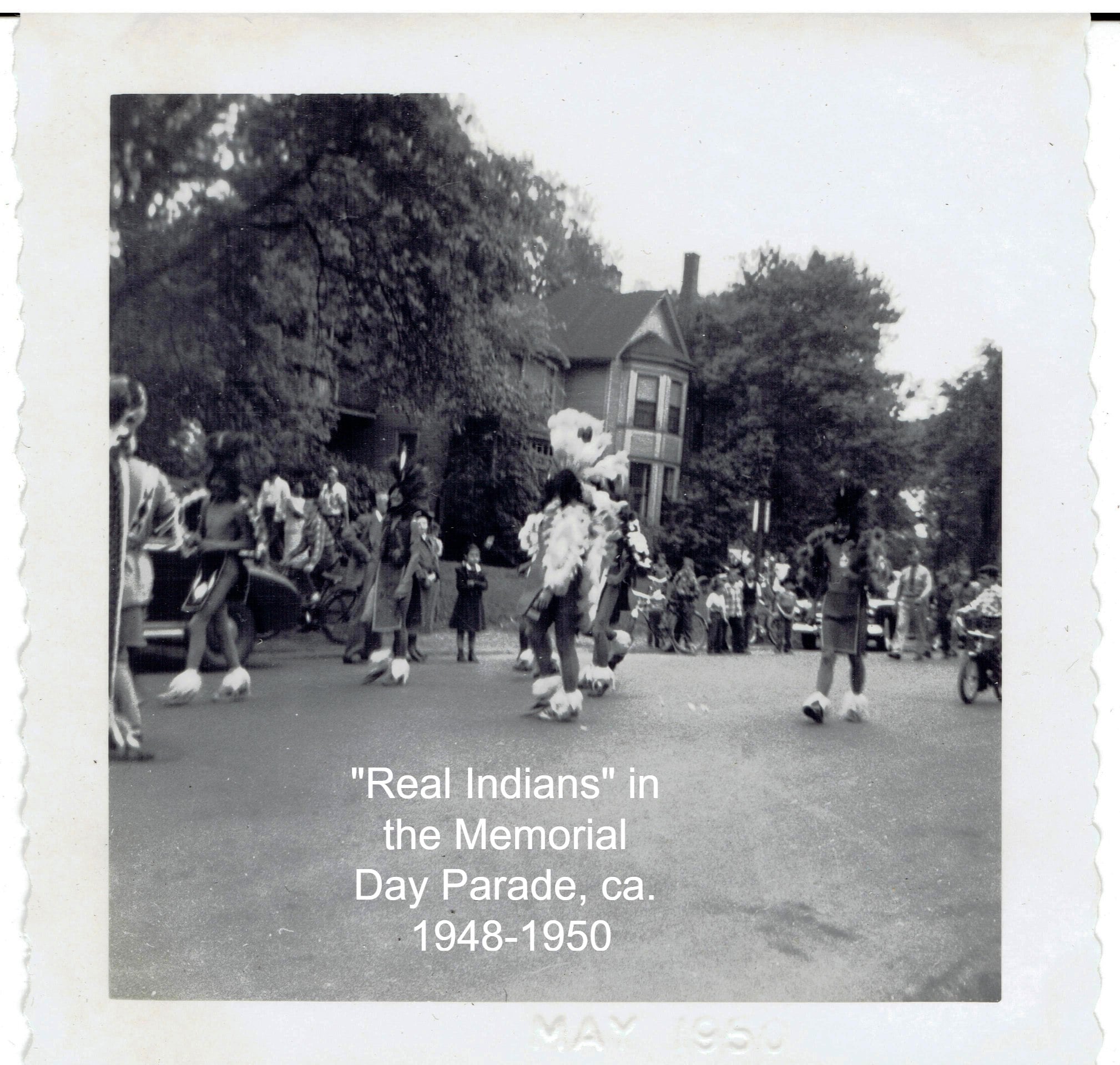
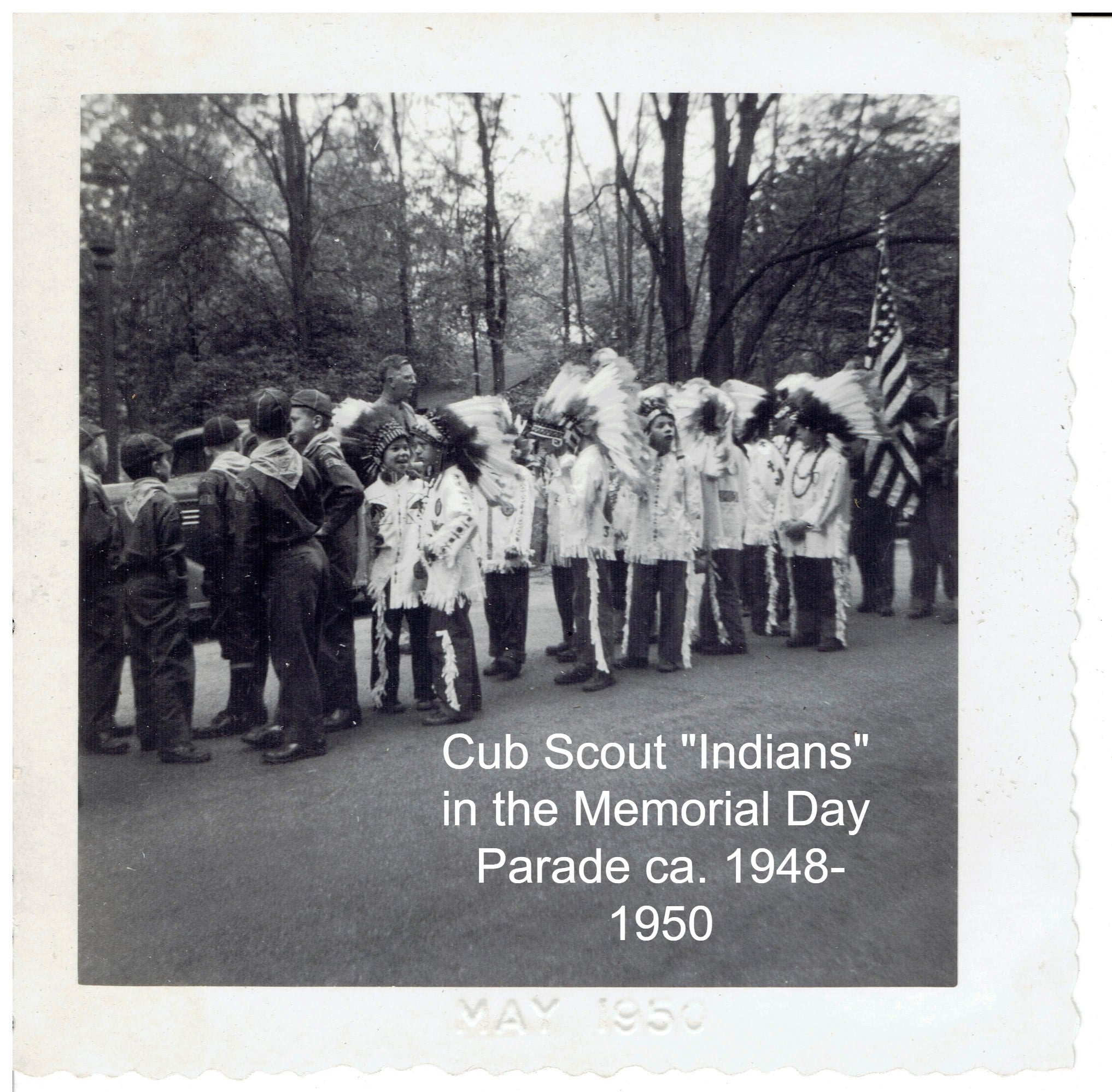
Second, in exploring the history of the Memorial Day Parade, which has gone on in this community for over 100 years even though canceled for 2020-21 because of the COVID pandemic, we came across an intriguing picture, from the scrapbook of the RHS President Elaine Spencer.
Elaine was a student at Morgan Park High School in the late 1940s. She participated in the Memorial Day Parade and a family member took photos. In her scrapbook is a picture from 1948-50 which is labeled “Real Indians” in the parade (shown here).
From all appearances, these do look like Native Americans in ceremonial dress and we continue to investigate their background, through the American Indian Center of Chicago, which opened in 1953, and other means.
At the time, there were only about a thousand Native Americans reported living in Chicago. Right after this, in the 1950s-1960s, there was a government relocation program to move Native Americans to urban areas, and thousands more came here, but that had not happened yet.
It was not unusual for Scouts and other groups, including adults, to take “Indian” names and dress in costumes, and there were marchers reflecting that also. Their look is very different from the “Real Indians.” A picture of a Cub Scout group dressed in their version of "Indian" attire is also shown here.
Stay tuned for the series on Native Americans and the Blue Island Ridge.
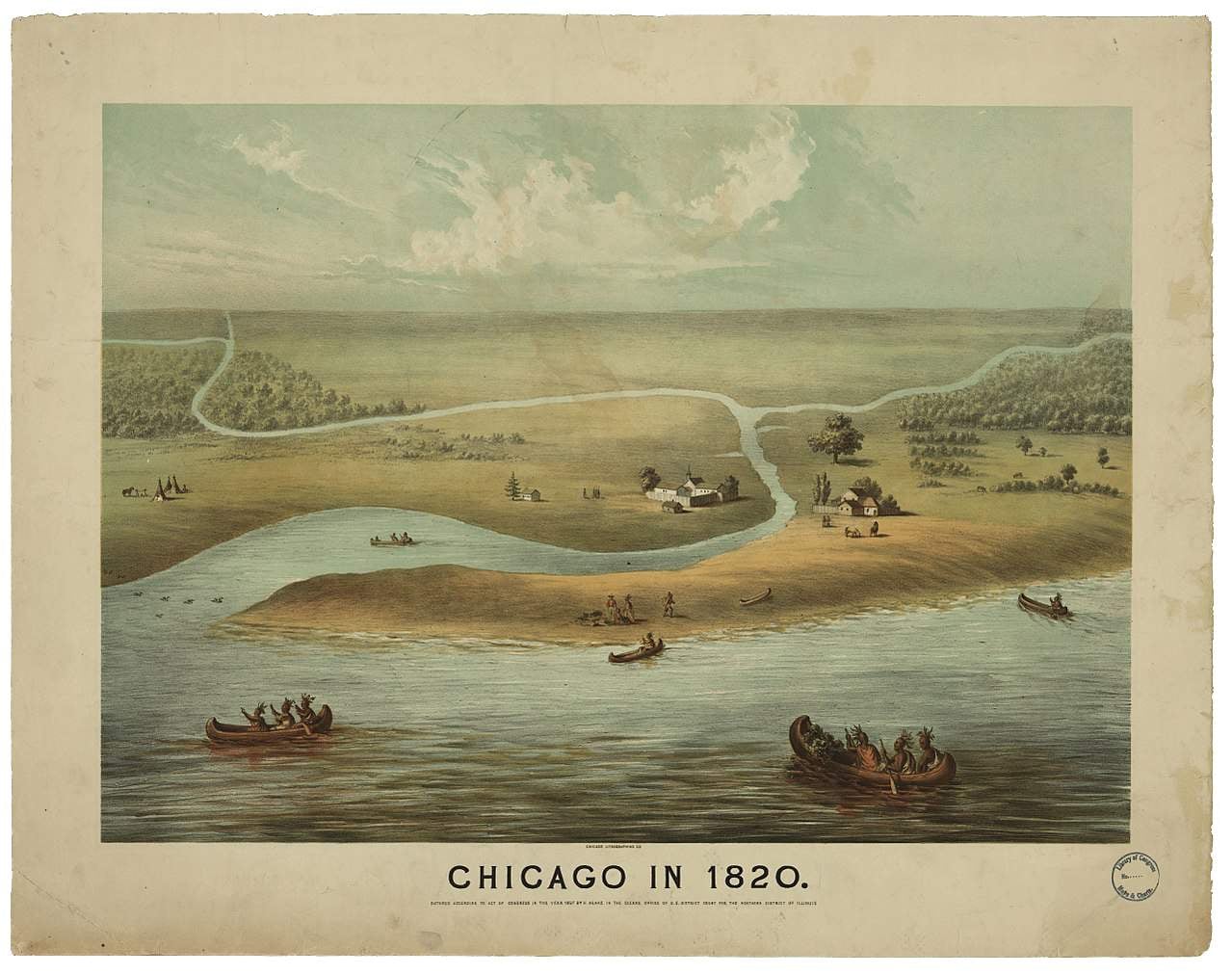
The Ridge Historical Society
Native Americans and the Blue Island Ridge – Part 1: Introduction
By Carol Flynn
This series on Native Americans and the Ridge evolved from research for a background paper being prepared to assist local organizations in developing “land acknowledgment statements.”
It became evident that what started as a “history paper” could not be quickly or easily addressed. The history of Native Americans is very complex and, like all history, not static – viewpoints and “facts” are always changing as new information is found and old information is reinterpreted.
More importantly, Native Americans are not just part of the past – they are very much part of the present and future of this country.
This series will begin the exploration of some topics related to Native Americans in this area and readers are encouraged to seek out additional information and resources.
In recent years, governments, universities, cultural organizations, churches, and other institutions have begun recognizing the Native American heritage of the land through land acknowledgment statements (LAS). These are formal declarations put out in writing that note the organization is located on land that was once the ancestral grounds of Native Americans.
These statements first started being used in Canada in 2015. They are often read aloud at the beginning of an event. In Canada, they are regularly included at events ranging from parliament sessions to ballet performances to National Hockey League games.
Last year, Chicago-area groups began issuing land acknowledgment statements.
The Field Museum of Natural History, not surprisingly, has a website page devoted to the topic. We will make references to that in our posts.
The Forest Preserves of Cook County also has issued a LAS, which includes the northern tip of the Ridge, located in the Dan Ryan Forest Preserve.
A typical LAS begins, “We acknowledge that the [name of organization] resides within the traditional homelands of [name of Indigenous Peoples].” This is usually followed by additional comments supportive of Native Americans.
Land acknowledgment statements have their issues, of course. One logical question after hearing or reading such a statement is what is the relevance to today? How do we make this statement something useful and meaningful to today’s Native Americans?
In April, RHS was contacted by a representative of the Beverly Unitarian Church who was working on a LAS for that organization. Discussions and research led to a Zoom meeting with John Low, Ph.D., J.D., a professor at Ohio State University, who is an enrolled citizen of the Pokagon Band of Potawatomi Indians.
In discussing how to make a LAS meaningful, Dr. Low commented that each organization has to look at its situation and determine how best to do that. We agreed that for a small, local organization like RHS, the obvious role is one of education through written materials, programming, etc., to help the community understand the heritage of Native Americans in this area. We will attempt to do that.
Next post: Part 2: Native Americans and the United States