Explore the RHS Facebook Archives, a rich repository of local history written by Carol Flynn. For two decades, Carol brought a deeply dedicated voice to public education at RHS. Her role as Facebook administrator through mid-2025 naturally extended her prolific research into meticulously detailed articles, most notably her multi-part historical series posts. Today, Carol continues her local history writing for The Beverly Review and other outlets.
2023
The Ridge Historical Society
The New Year in Chicago and on the Ridge 100 Years Ago – Part 2
By Carol Flynn
Yesterday, we posted about New Year’s celebrations one hundred years ago. Despite Prohibition, 1922 turned out to be one of the liveliest New Year’s Eves in Chicago history, largely due to the police turning a blind eye to “the toters of hip liquor,” that is, the many people who imbibed from secreted hip flasks.
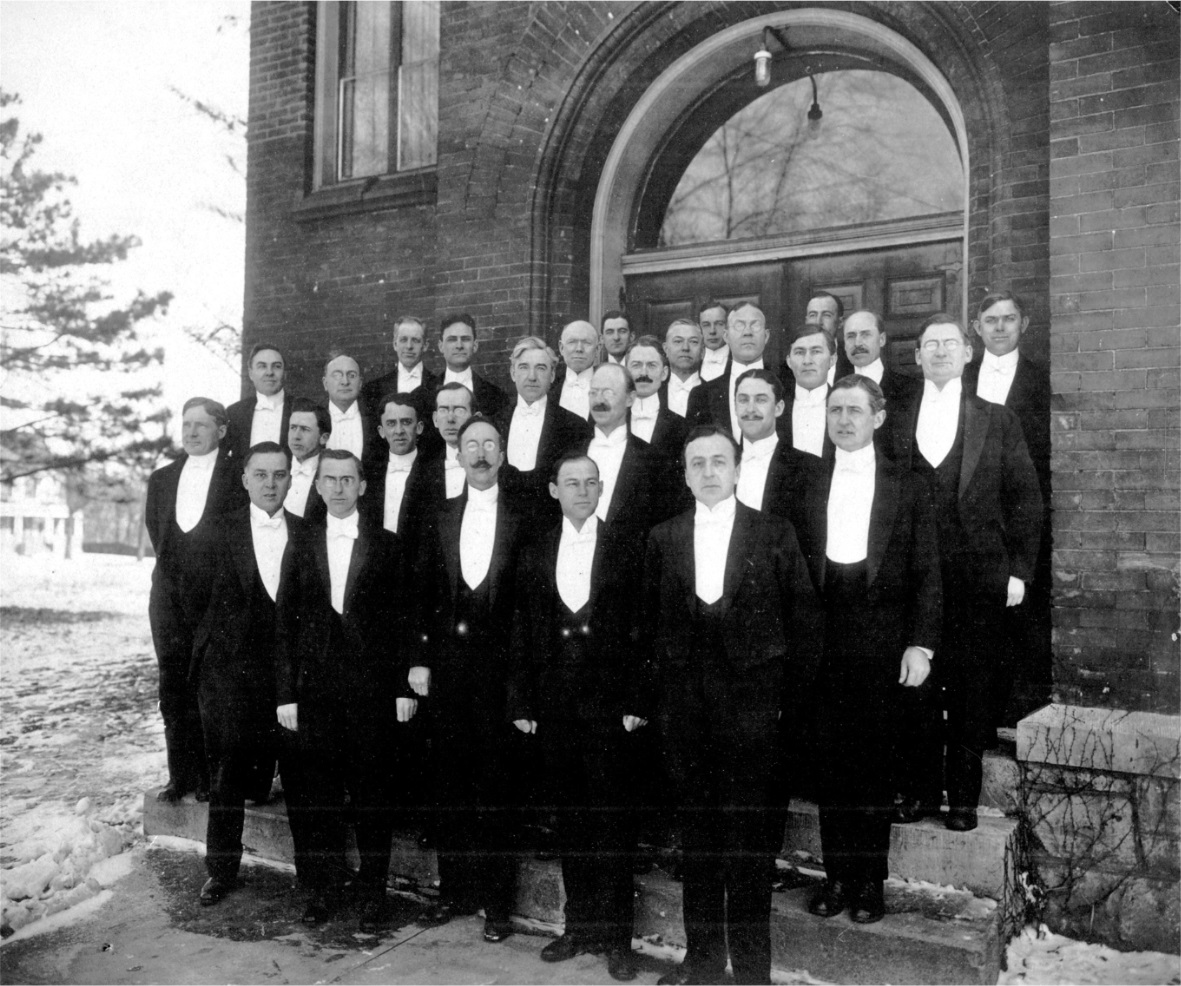
As temperance communities from their earliest days, Beverly and Morgan Park were never known for wild New Year’s parties. In 1922, the local paper reported that between Christmas and the New Year, social events included a “hop” in the Ridge Park field house hosted by the Beverly Hills Post of the American Legion, the annual children’s party given by the Morgan Park Woman’s Club, and a performance of The Messiah by the Euterpean Chorus, a local all-male ensemble, at the Morgan Park M. E. Church. Ridge Park flooded its baseball field, and the young people were having a “glorious time” ice skating.
There were private parties, of course, and whether liquor was served was not reported in society columns. Illegal stills discovered in the neighborhood were reported in the local papers occasionally, albeit rarely.
In January of 1923, the paper reported that Mr. and Mrs. Harry Rickert of 9922 Vincennes Avenue had a watch night party on December 31.
A little RHS sleuthing revealed that Harry John Rickert was born in Illinois in 1884. His mother was from Germany. In 1907, Rickert married Anna M. Rheinberger, a naturalized citizen born in Germany in 1886 who came to the U.S. in 1891. They had one son, Elwood Edward, born in 1908.
On his 1918 World War I draft registration and the 1920 U. S. Census, Rickert’s occupation is listed as a teamster, working for the Stephens and Kay company, hauling grain and coal. A “teamster” back then referred to a person who drove a wagon pulled by horses, mules, or oxen. However, the 1920s saw the real beginning of the trucking industry, and Rickert and his son were mentioned in the paper as going on a motor trip with friends, so Rickert could have been driving a delivery truck by then.
Apparently, Anna liked to entertain, as she is regularly mentioned in the papers as the hostess for events, ranging from fund raisers for hungry children in war-torn Germany to surprise baby showers to luncheons/card parties. She was active with the ladies’ aid group and the sewing circle of the Evangelical Zion Church at 100th Street and Throop Street, and neighborhood social groups like the Just Pals club and the Bunco Matrons.
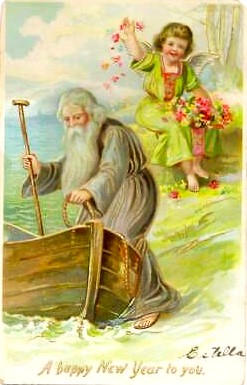
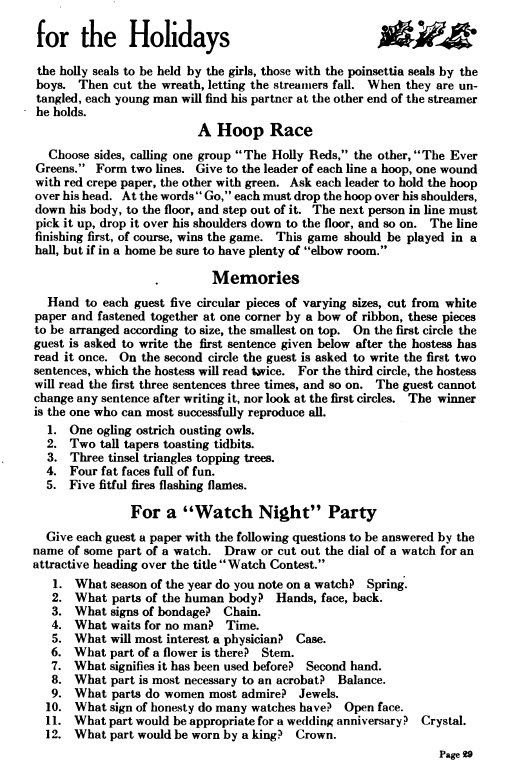
Back then, New Year’s Eve parties were called “watch night parties” because the general theme was “watching the old year out” as opposed to welcoming in the New Year as is done today.
The custom was to open the front door at the stroke of midnight so the old year could exit and join all the years of the past, and the “baby new year” could enter and begin its life. The guests would form a circle and sing “Auld Lang Syne.”
Although we don’t know the details of the Rickerts’ New Year’s Eve party in 1922, some ideas as to what they might have done can be found in entertainment guides from the time.
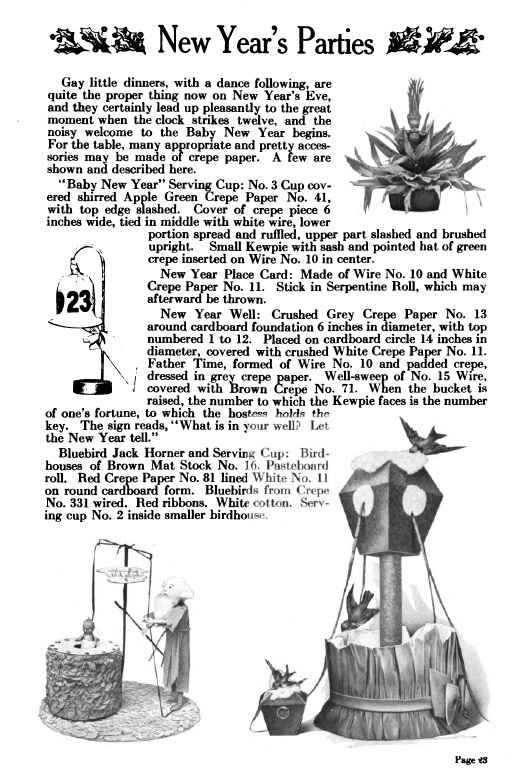
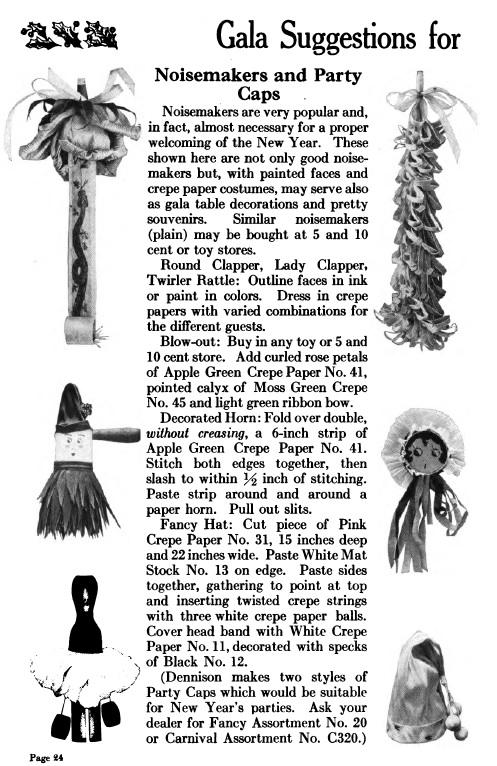
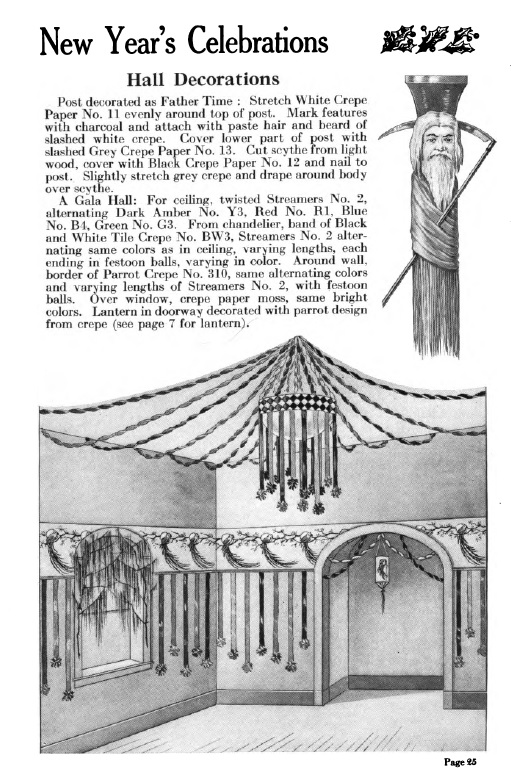
In the early 1900s, party decorations started to become much more sophisticated, as commercial products replaced homemade ones. Several companies, notably Dennison Manufacturing Company, began making products such as heavy cardboard die cuts; paper plates, cups, and napkins; crepe paper streamers, and the like.
Dennison published books that were a combination of party planners and catalogs for their products for holidays such as Christmas, New Year, and Halloween. The pages from the “Dennison’s Christmas Book” of 1921 that included ideas for New Year celebrations are shared here.
We know that the Dennison line was available locally, because in December of 1922, an advertising announcement in the local paper stated: “New Year Favors, Jokes and Novelties. Full line of Dennison goods. Frank Kellner, 443 W. 63rd st.-adv.”
While winter holiday events occupied the attention of the residents of the Ridge, local news also caught the eye.
Two interesting pieces of news were shared that holiday week that became important historically.
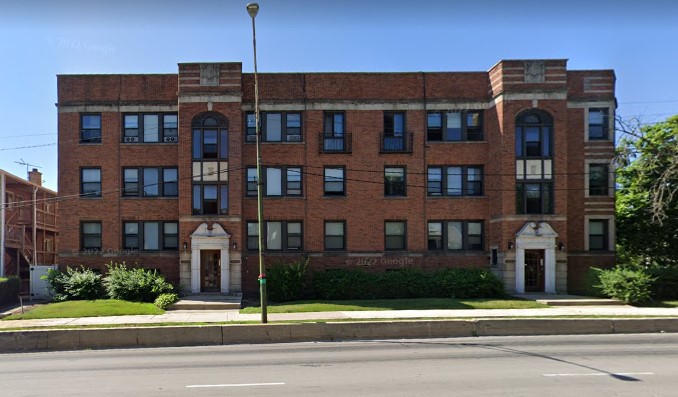
Plans were announced for the first apartment building to be built in Morgan Park at 111th Street and Hoyne Avenue at the cost of $300,000. To be called Ridge View, the building would be three stories of 42 four- and five-room apartments. This was notable because up to this time, Morgan Park was primarily a community of single-family homes. Within a decade or two, local civic groups would begin to oppose the building of additional large apartment buildings in the community.
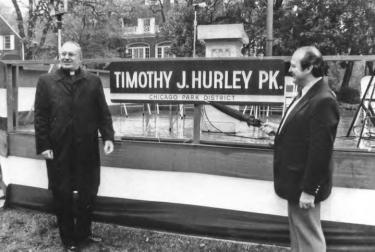
The second news item was that the Catholic Archdiocese of Chicago had purchased the southwest corner of 100th Street and Longwood Drive. The rumor was afloat that a new parish was going to be created with a church and school built on the grounds. This was the beginning of St. Barnabas Parish. At the time it set off a wave of opposition to more Catholics moving into the predominantly Protestant community, resulting in protestors burning a cross on the land, and managing to have the land condemned for use as a public park. Undeterred, founding pastor Father Timothy Hurley moved the location of the new parish a few blocks farther south, and this original land is now Hurley Park.
One more topic being covered in the local papers was that, just like this year, 1923 was the year for the aldermanic election. Candidates and their supporters were busy circulating petitions for inclusion on the ballot. As one newspaper pointed out tongue-in-cheek, we never know how popular or unpopular a man is until we hear the stories from the workers who knocked on the doors for signatures.
Happy New Year from the Ridge Historical Society.
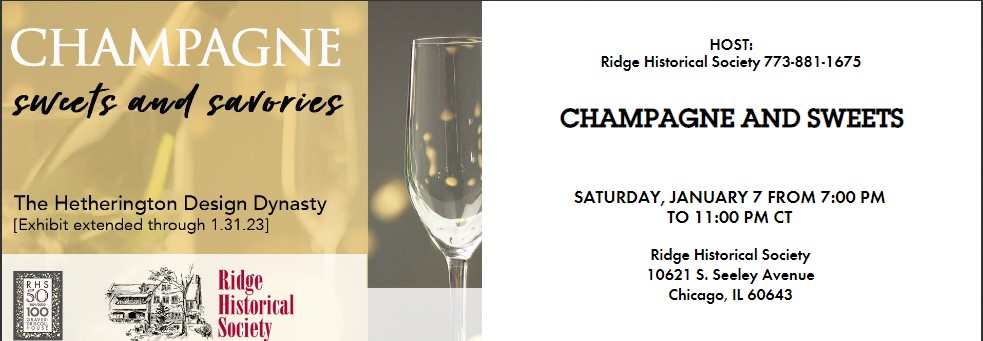
The Christmas holidays are not over yet! The Twelve Days of Christmas go until January 6th.
Wrap up the holiday season at the Ridge Historical Society's Champagne event on Saturday, January 7th.
Information and tickets can be found at: https://www.eventbrite.com/e/champagne-sweets-and-savories-tickets-490496477167
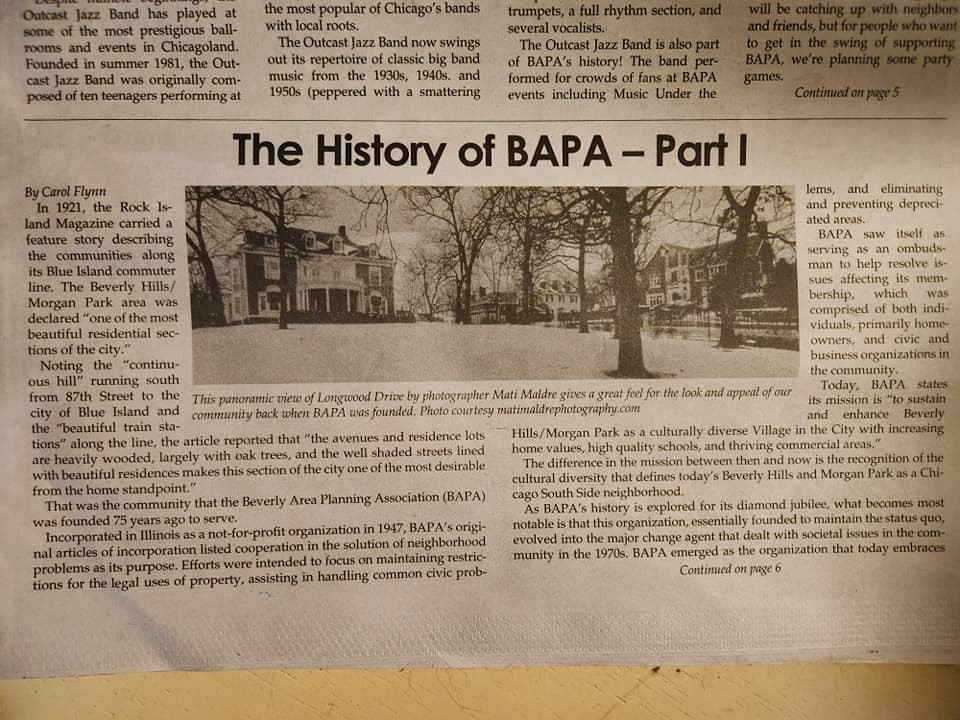
Congratulations to BAPA on its Diamond Jubilee!
The Beverly Area Planning Association (BAPA) is celebrating its 75th anniversary this year. Every house in BAPA's "area" gets a copy of the BAPA Villager every month for free. This month is part 1 of BAPA's history; part 2 will be in February. The articles will probably be on the BAPA website, also.
Thank you to Mati Maldre, photographer and Ridge Historical Society Board member, for the use of his photo to illustrate the article.
Next installment of the series on Native Americans on the Ridge in the Beverly Review newspaper.
https://www.beverlyreview.net/news/community_news/article_9e9f5c56-8b8f-11ed-a825-4b60496ff33d.html
Wrap up the holiday season at the Ridge Historical Society's Champagne event on Saturday, January 7th. There are still tickets available!
Information and tickets can be found at:
https://www.eventbrite.com/e/champagne-sweets-and-savories-tickets-490496477167?fbclid=IwAR1cIeuDDTI3rQ4vXCV2733gcx44sH59be-X8oclYk_hgAi84LQ0-hOudhs
Native Americans invented the game of lacrosse, and it is the oldest organized sport in North America.
The next installment of the series on Native Americans on the Ridge is in this week's Beverly Review.
https://www.beverlyreview.net/news/community_news/article_a9bdc7ce-9109-11ed-9aed-13563de3a087.html
Ridge Historical Society
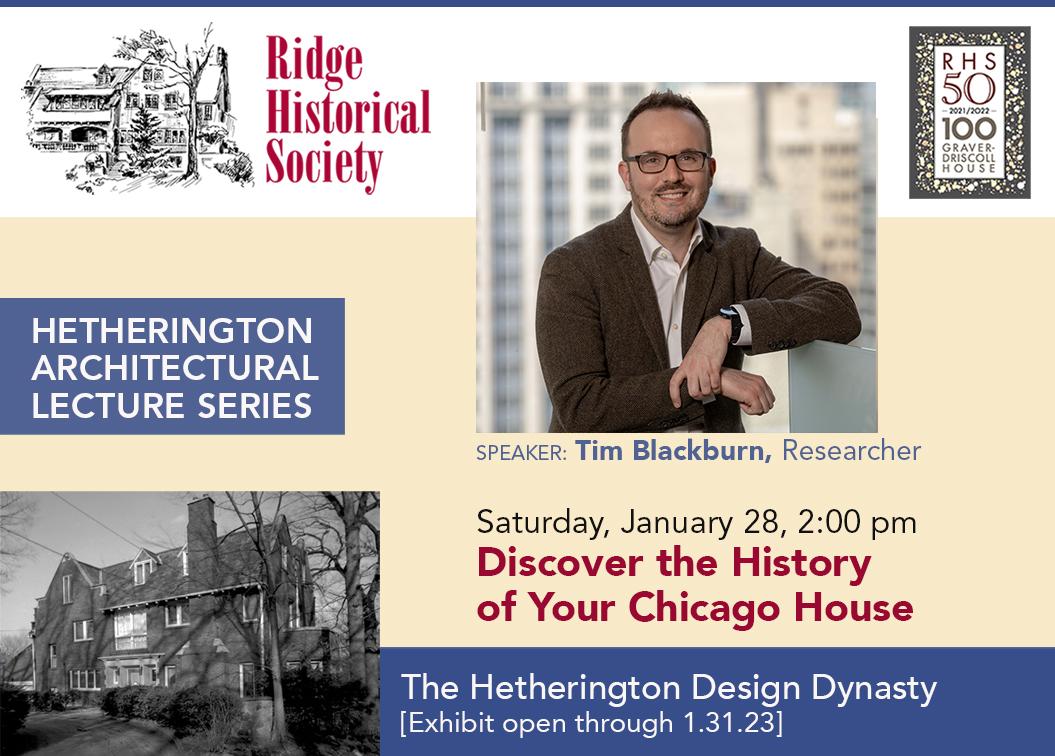
Upcoming Program: “Discover the History of Your Chicago House”
Every house has a history.
Now, back by demand, we are happy to announce a repeat program on researching house histories.
“Discover the History of Your Chicago House” presented by RHS researcher Tim Blackburn will be offered on Saturday, January 28, at 2:00 p.m. The location is the Graver-Driscoll House (RHS headquarters) at 10621 S. Seeley Avenue, Chicago. The cost is $10 for RHS members and $15 for non-members.
The program covers the basics of researching the history of construction and ownership of a house built pre-1955 within the limits of the City of Chicago. Public records such as building permits and Sanborn maps will be discussed, as well as research methods.
Following the program, through the RHS Facebook page, attendees may also join the private research group for house history research administered by Tim. This is just getting off the ground, and will allow people to share their progress, ask questions, and get expert advice in research.
We had to turn people away from the first program due to limited seating capacity, so we urge those interested to register right away to be sure of a seat.
Tickets for the program may be secured through Eventbrite at: https://bit.ly/house_research
The “Hetherington Design Dynasty” exhibit, showcasing the work of three generations of architects and artists in the Hetherington family, has been extended until January 31, 2023, so attendees at this program will also have the opportunity to view this exhibit.
Questions? Contact RHS at ridgehistory@hotmail.com or 773-881-1675.
The Ridge Historical Society
The History of the Graver-Driscoll House – Part 8: The Fenn Family continued
By Carol Flynn
Every house has a history. The story of the Graver-Driscoll House, headquarters for the Ridge Historical Society at 10621 S. Seeley Avenue, is being shared in honor of its centennial. This also serves as a case study for the wealth of information available through research just waiting to be discovered for many old houses.
RHS is repeating the program, “Discover the History of Your Chicago House,” presented by RHS researcher Tim Blackburn, on Saturday, January 28, at 2:00 p.m., at RHS at 10621 S. Seeley Avenue, Chicago. The cost is $10 for RHS members and $15 for non-members. Registration for the program is through the link
https://bit.ly/house_research.
The Graver-Driscoll House, designed by architect John Todd Hetherington, was built in 1921-22 for Herbert Spencer Graver, an executive with his family’s business, the Graver Tank Works.
In 1940, Graver sold the house to John Grant and Grace Harrison Fenn, who were discussed in the last post. J. Grant Fenn, as he was called, was a mechanical engineer involved in the emerging air conditioning industry. Grace was active with hospitality events for soldiers during World War II.
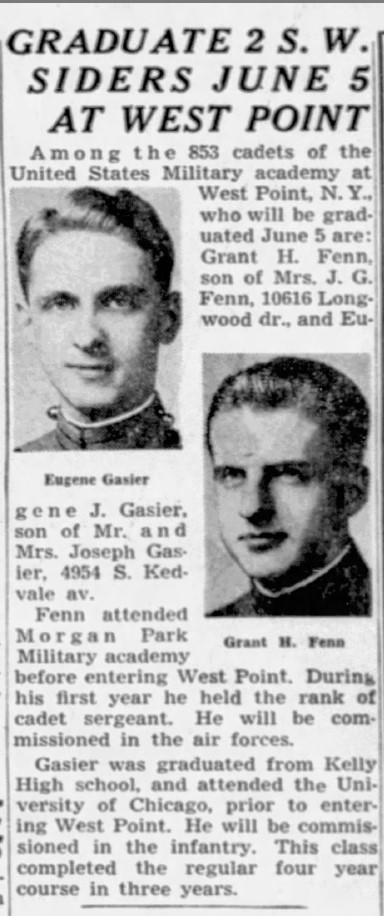
The Fenns had two children, Helen Virginia, born on September 22, 1918, and Grant Harrison, born on May 27, 1924.
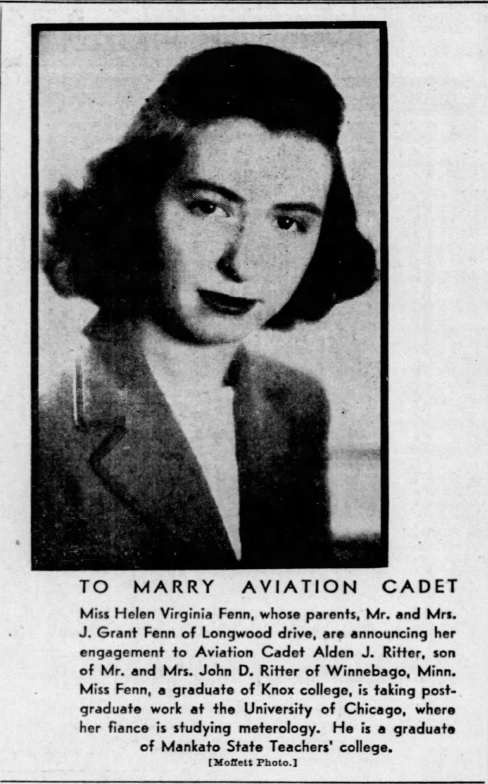
Helen graduated from Morgan Park High School in 1936. She attended Knox College, and went on to post-graduate studies at the University of Chicago, where she met Lt. Alden J. “Buzz” Ritter of Minnesota, an Army Air Corps meteorologist. Both were studying meteorology, and both were pilots.
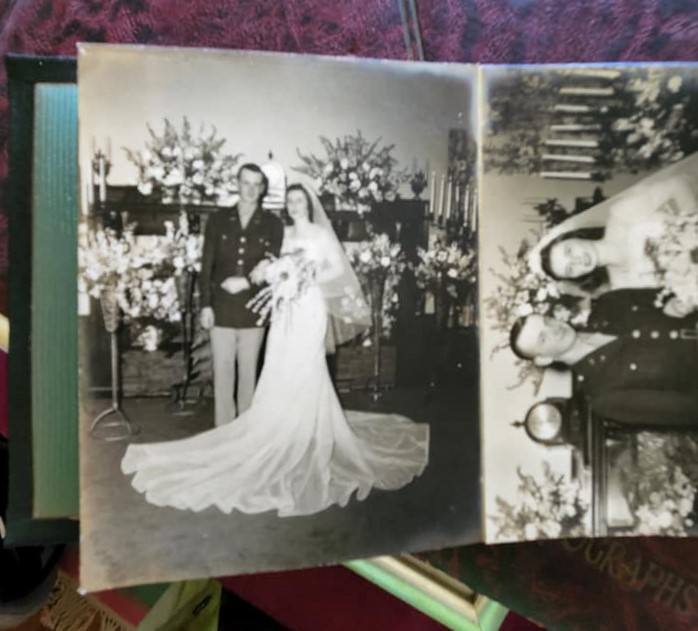
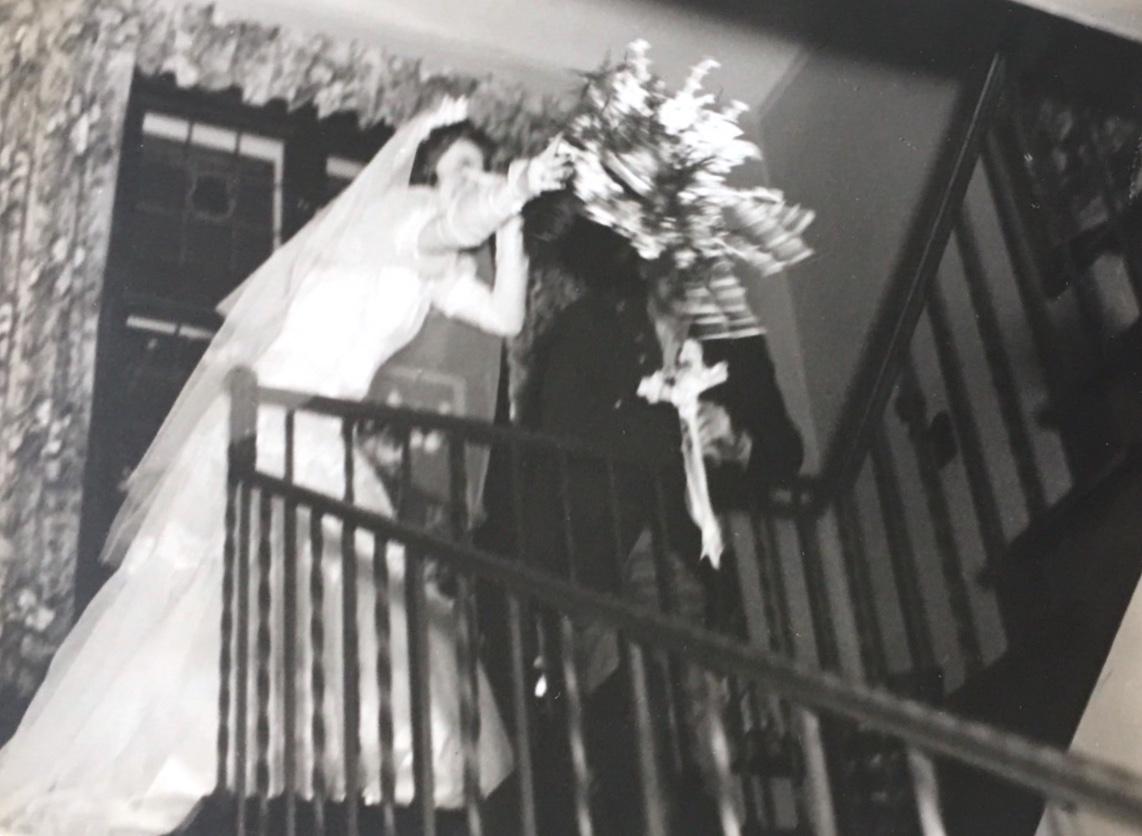
On June 12, 1943, Helen’s and Alden’s wedding was held at the Graver-Driscoll House. Memorabilia and pictures from the wedding and Helen's wedding dress have been donated to RHS by the Ritter family.
Helen and Alden moved to Ohio, where they raised their four children. Alden advanced to the position of Vice President of Engineering with Luxaire, the maker of heating and air conditioning equipment. The Ritters were active socially and enjoyed traveling, and divided their time between Ohio and Florida.
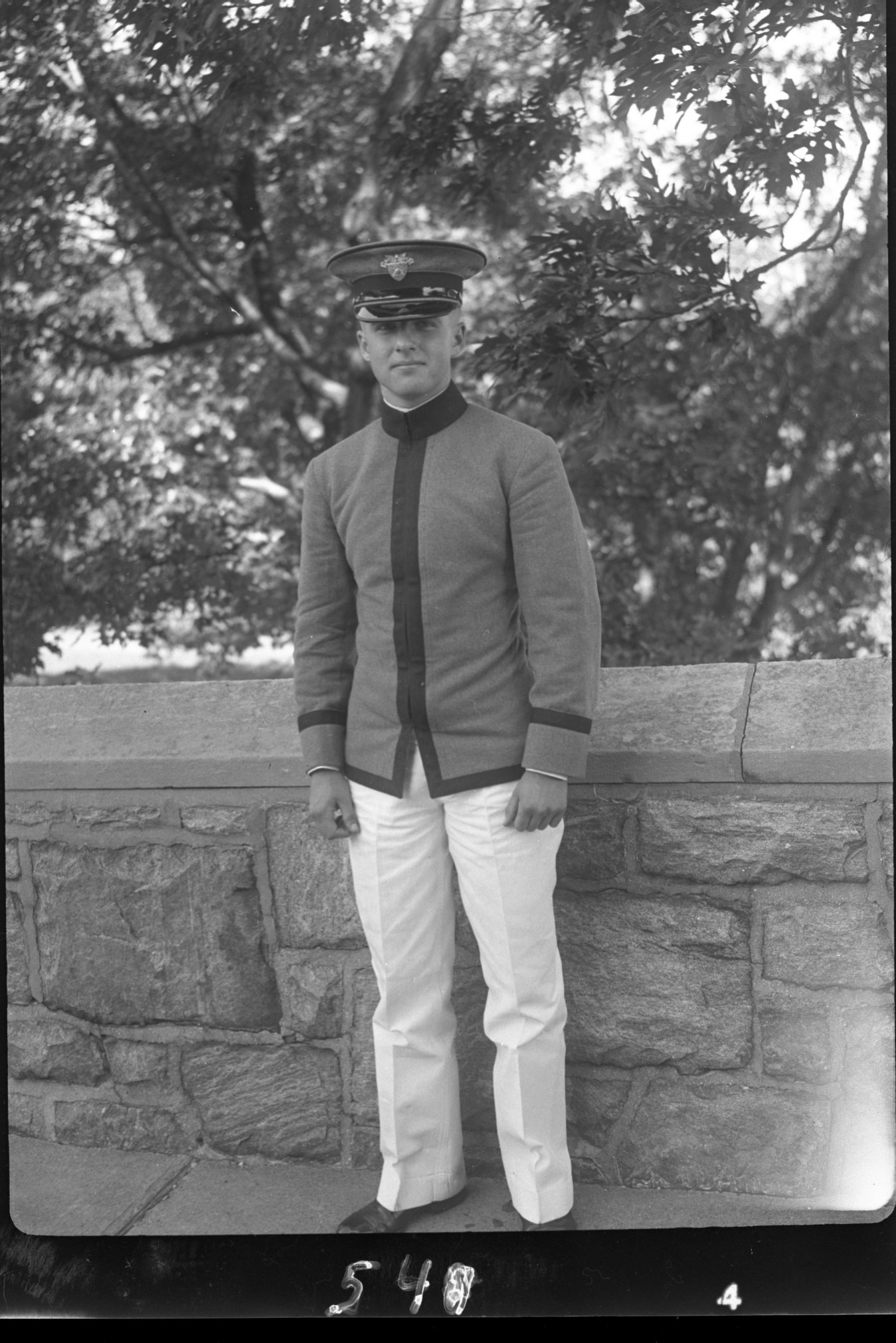
Grant, the Fenn son, graduated from the Morgan Park Military Academy in June of 1942. The day after he received his diploma, he was appointed second lieutenant, infantry, U.S. Army, and started active duty. He went on to graduate from the United States Military Academy, West Point, New York, in 1945 and was commissioned in the U.S. Air Force.
In February of 1945, patriarch J. Grant Fenn died, and was buried in the family plot in Mt. Greenwood Cemetery. Grace Fenn sold the Graver House in 1946 to the Nicholas Cummings family, and moved to an apartment with her sister on 102nd Street and Hale Avenue.
Son Grant embarked on a military career, serving in Italy, and for two years as an assistant attaché in Athens, Greece. He was tragically killed in 1951 when the B-36 bomber he and twenty-two others were flying in crashed in New Mexico. He was 26 years old and left a widow, Raymonde Andrea, whom he had met in France. He was buried in Mount Greenwood Cemetery.
Grace Fenn died in 1988 at the age of 96. Alden died in 2014, aged 94, and Helen died in 2022 at the age of 103. All died in Florida and were returned to Mount Greenwood Cemetery for burial.
Although the Fenn family’s formal connection to the Graver-Driscoll House ended in 1946, Helen Fenn Ritter and her descendants kept a fondness for and interest in the house which continues to today.
In the next post, the Ritter family’s visits to the Graver-Driscoll House and donations of family heirlooms to the Ridge Historical Society will be covered.
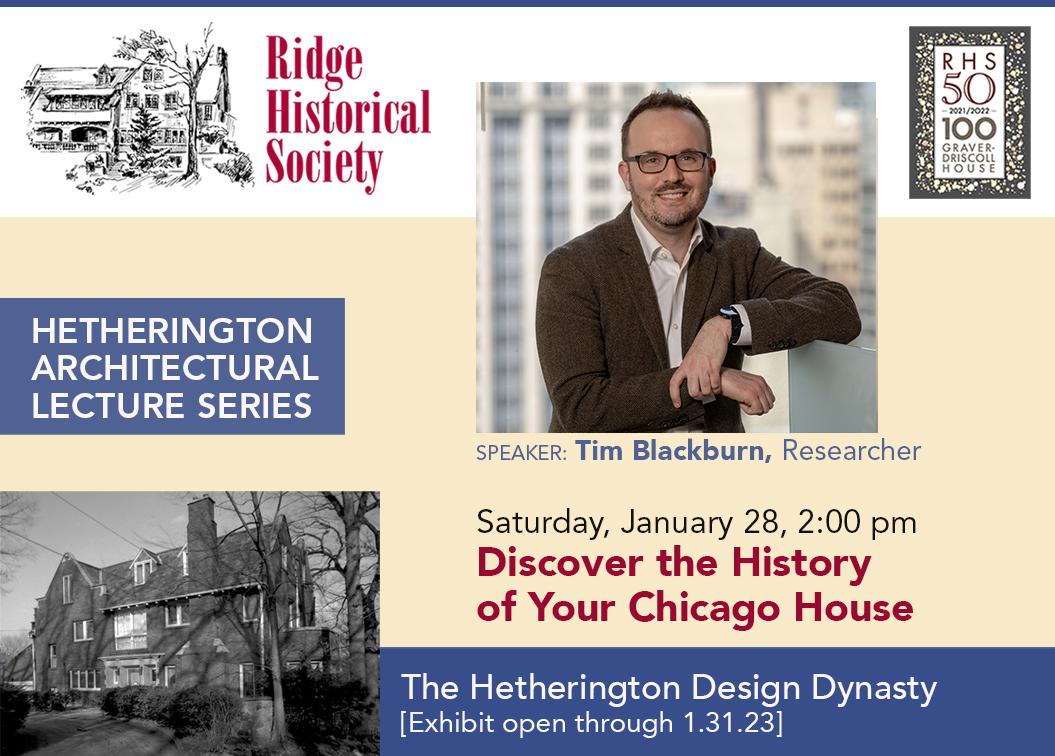
Every house has a history! If you've always wanted to investigate the history of your house, here is the opportunity to learn how to do that.
Ridge Historical Society researcher Tim Blackburn, owner of a historic home in Morgan Park, will present "Discover the History of Your Chicago Home" on Saturday, January 28, at 2:00 p.m. at the Ridge Historical Society, 10621 S. Seeley Avenue, Chicago.
Tim will guide you through the process of locating building permits and other records about the property itself, as well as share research tools to learn about past owners.
Attendees of Tim's programs can then join a private RHS Facebook page for continued discussion and advice on research projects.
The cost of the program is $10 for RHS members and $15 for non-members.
Reservations may be made at: https://bit.ly/house_research.
If you have any questions, please contact RHS at 773/881-1675 or ridgehistory@hotmail.com.
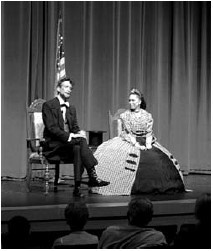
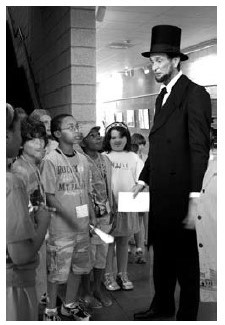
The Ridge Historical Society (RHS) joins in mourning the death of Michael Krebs, the Chicago actor who personified Abraham Lincoln.
Michael and actress Debra Ann Miller portrayed President and Mary Todd Lincoln in dramatic works based on true life stories.
In 2010, RHS brought Michael and Debra Ann to the Beverly Art Center (BAC) for their "Meeting the Lincolns" production. Local school children attended the event. Afterwards, the children were enthralled to meet "Mr. Lincoln" up close and personal.
The two pictures shown here are from that day at the BAC.
They also made several appearances at the Blue Island Historical Society. Michael was always welcomed on the Ridge.