Explore the RHS Facebook Archives, a rich repository of local history written by Carol Flynn. For two decades, Carol brought a deeply dedicated voice to public education at RHS. Her role as Facebook administrator through mid-2025 naturally extended her prolific research into meticulously detailed articles, most notably her multi-part historical series posts. Today, Carol continues her local history writing for The Beverly Review and other outlets.
All Posts
Hooray! It looks like Richard Tito is the 1000th follower of the Ridge Historical Society! Thank you so much. I wish I had a prize for you – maybe we can help you research something! Come forward if you want to and introduce yourself.
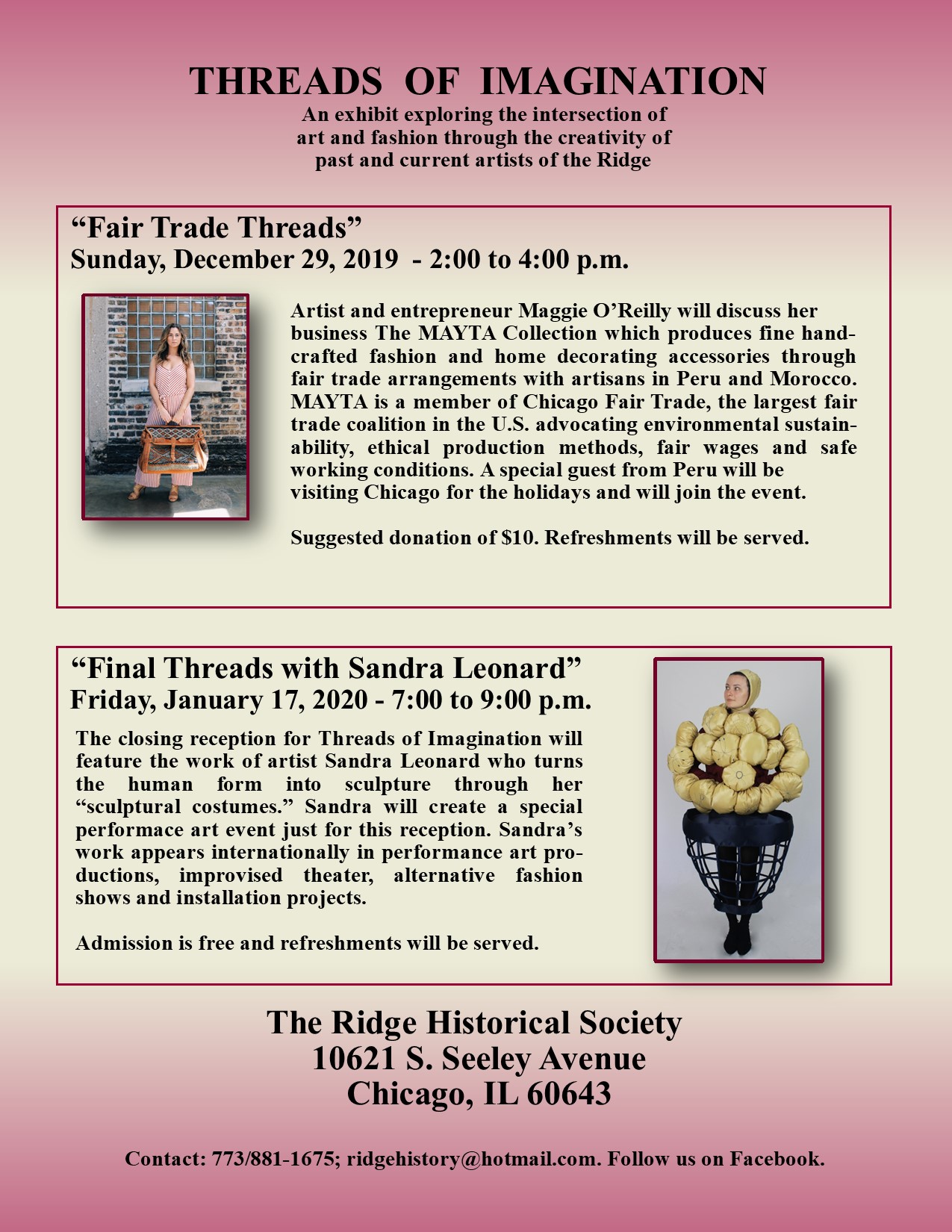
We just added four events to the RHS calendar. The exhibit "Threads of Imagination" will run through Friday, January 17. This exhibit explores the intersection of fashion, art and business through the creative work and careers of five woman artists of the Ridge – the historic Madame Alla Ripley, a famous fashion designer and businesswoman who lived in Beverly in the early 1900s, and four contemporary artists – Maggie O’Reilly, Judie Anderson, Sandra Leonard ad Nicole Burns.
Two events have been added for this exhibit – please see the attached flier.
On Sunday, December 29, 2019, at 2 p.m., at RHS, 10621 S. Seeley Ave., will be "Fair Trade Threads." Beverly artist and entrepreneur Maggie O’Reilly will discuss her business The MAYTA Collection which produces fine handcrafted fashion and home decorating accessories through fair trade arrangements with artisans in Peru and Morocco. MAYTA is a member of Chicago Fair Trade, the largest fair trade coalition in the U.S. advocating environmental sustainability, ethical production methods, fair wages and safe working conditions. A special guest from Peru will be visiting Chicago for the holidays and will join the event. Suggested donation of $10, refreshments will be served.
On Friday, January 17, 2020, at 7 p.m. will be "Final Threads with Sandra Leonard." The closing reception for Threads of Imagination will feature the work of artist Sandra Leonard who turns the human form into sculpture through her “sculptural costumes.” Sandra will create a special performance art event just for this reception. Sandra’s work appears internationally in performance art productions, improvised theater, alternative fashion shows and installation projects. Admission is free and refreshments will be served. This will be the final day of the exhibit.
Saturday, January 4, 2020, at 7 p.m. will be the annual RHS holiday party and fundraiser, “Champagne, Sweets and Savories.” Celebrate the New Year with friends, delicious refreshments and good conversation. Cost is $25 per person.
This will also be an opportunity to view the Threads of Imagination exhibit, which closes in mid-January.
Later in January, on Sunday, January 26, at 2 p.m. will be the program “Speaking of Unmentionables: The Rise and Fall of Ladies’ Underwear. ”
The Ridge and the holidays, part I: The historical connection to the Jewish community
Today, December 21, is the Winter Solstice, the shortest day of the year. Since prehistory, the day has been important in many cultures, observed with festivals and rituals. The day marks the symbolic death and rebirth of the sun.
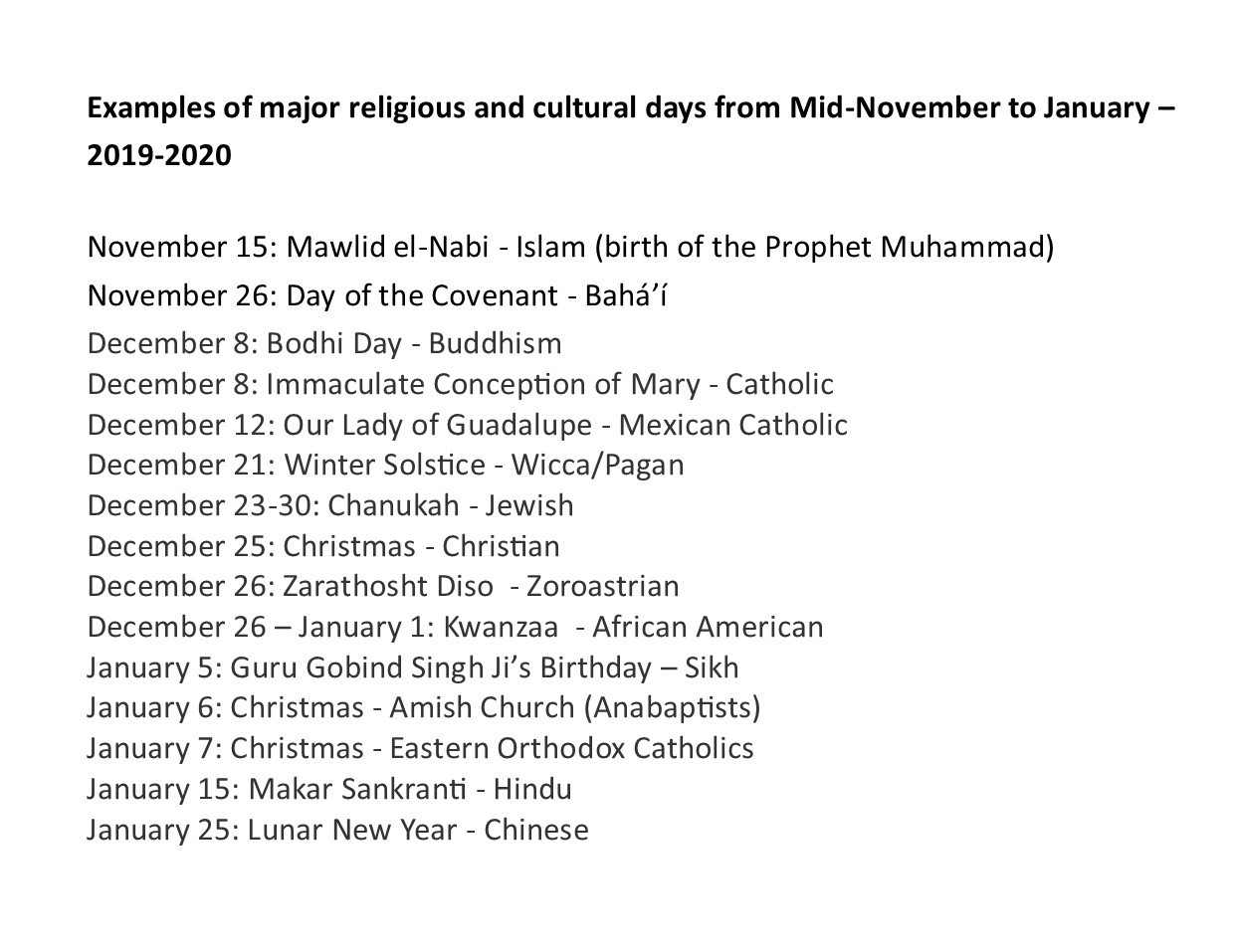
As we celebrate this holiday season, we recognize that many religious and cultural groups, from Buddhists to pagans, have events between November and January.
Attached is a brief list of some of the observances that go on during these months.
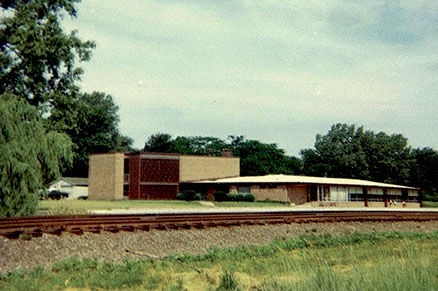
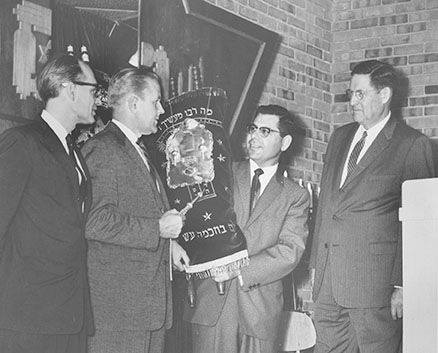
Although since settlement and development started in the 1800s, the Ridge has always been predominantly Christian in population, marked today by many Protestant and Catholic churches, Beverly was also the home of Beth Torah congregation and synagogue.
In 1953, Jews living on the Southwest side of Chicago and suburbs established a Reform congregation they named Beth Torah, or Temple of Instruction. All but one of the officers lived in Beverly/Morgan Park. Although a small group, they were active with classes, a youth group and social events.
In the early years, they held Friday night services in the Beverly Unitarian Church in the Givins Castle, and special events at Trinity United Methodist Church and Bethany Union Church. Beth Torah Sunday School took place at first at 10546 S. Western Ave. (current office of the Beverly Review) and later at Sutherland School. Hebrew classes were held at Bethany Union. In the summers, they held programs in members’ homes
Their goal was to have their own synagogue. Funds were raised, they purchased land at 9200 S. Vanderpoel Ave., and constructed a building. Beth Torah Synagogue opened in October of 1961.
Beth Torah congregation was active in interfaith groups and supported civic organizations like the Beverly Area Planning Association.
By 1974, the congregation was declining and those remaining opted to combine with another group in Olympia Fields. The building at 9200 S. Vanderpoel Ave. was purchased by the Chicago Board of Education and used for classrooms for a few years. Eventually, after years of being vacant, the building was demolished in 1999, but the foundation still remains.
The Jewish festival of Hanukkah begins at sundown on Sunday, December 22, and is observed for eight days and nights. Also known as the Festival of Lights, the event commemorates the Jews reclaiming Jerusalem and rededicating the Temple in 160 B.C. The lighting of the menorah, the lamp stand that has been a symbol of Judaism since ancient times, commemorates the miracle of the oil. Only enough pure oil was found at the Temple to burn for one day, yet the oil burned for eight days until a fresh supply could be prepared.
Happy Hanukkah!
Reference: “Beth Torah: The Congregation That Held Services in a Castle,” by Errol Magidson, published in Chicago Jewish History, Vol. 38, No. 4, Fall 2014, a publication of the Chicago Jewish Historical Society.
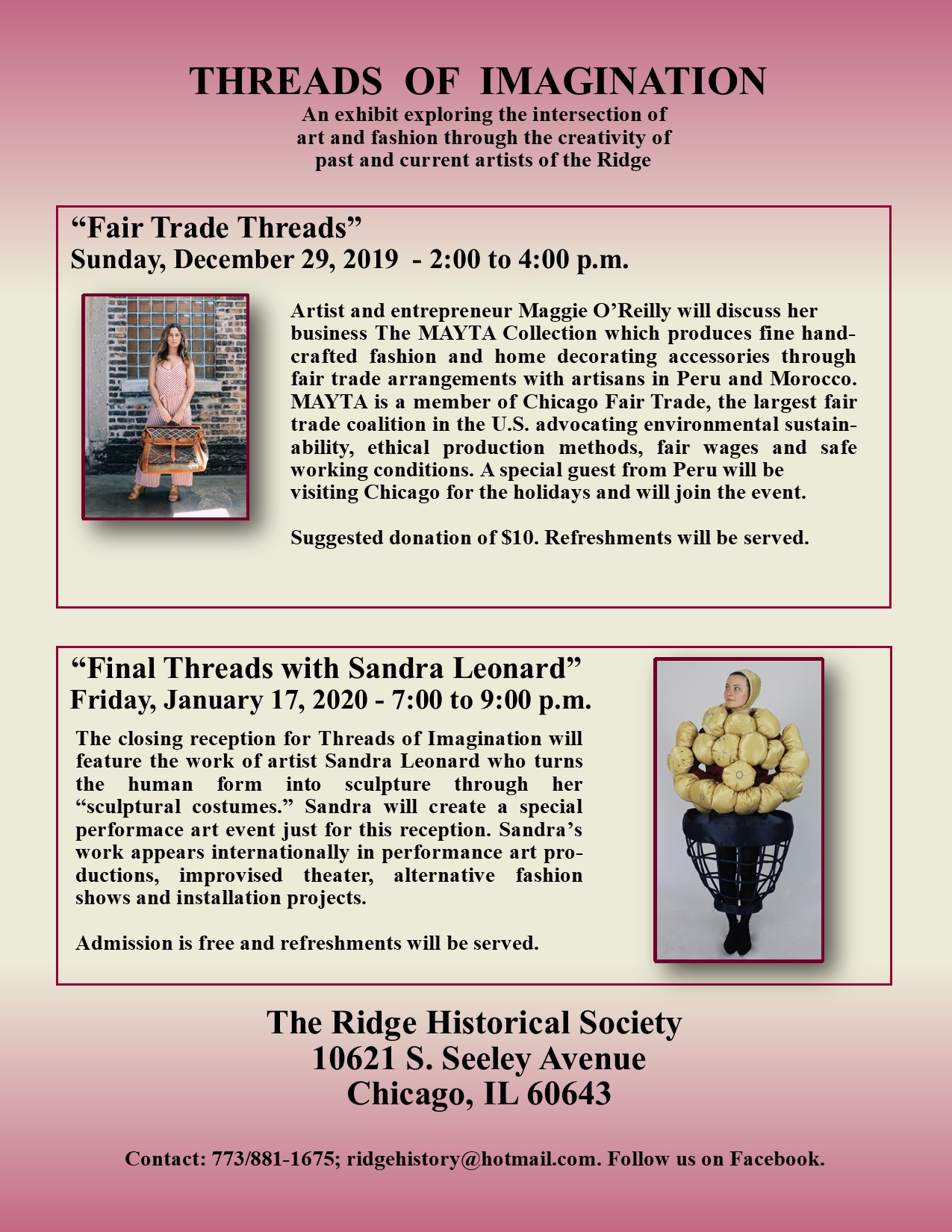
This is one of the most important events of the year – learning about "fair trade" through the efforts of one of our own community members, Maggie O'Reilly and her business The MAYTA Collection. Maggie is a native of the Ridge and is now raising her own family here. She loves travel and other cultures and textiles and color – all of this came together with working with the artisans of Peru and Morocco to produce highest quality personal and home accessories. The goods are truly unbelievable in beauty and quality, and very importantly, are produced with the highest standards of ethical business practices.
Join us at the Ridge Historical Society, 10621 S. Seeley Ave., Chicago, this coming Sunday, Dec. 29, 2019, at 2:00 p.m. for "Fair Trade Threads." There will be a special guest from Peru. Refreshments will be served. Suggested donation of $10. Message RHS through Facebook with any questions.
PS – That's Maggie herself posing with one of the beautiful bags sold through MAYTA.
Merry Christmas from the Ridge Historical Society!
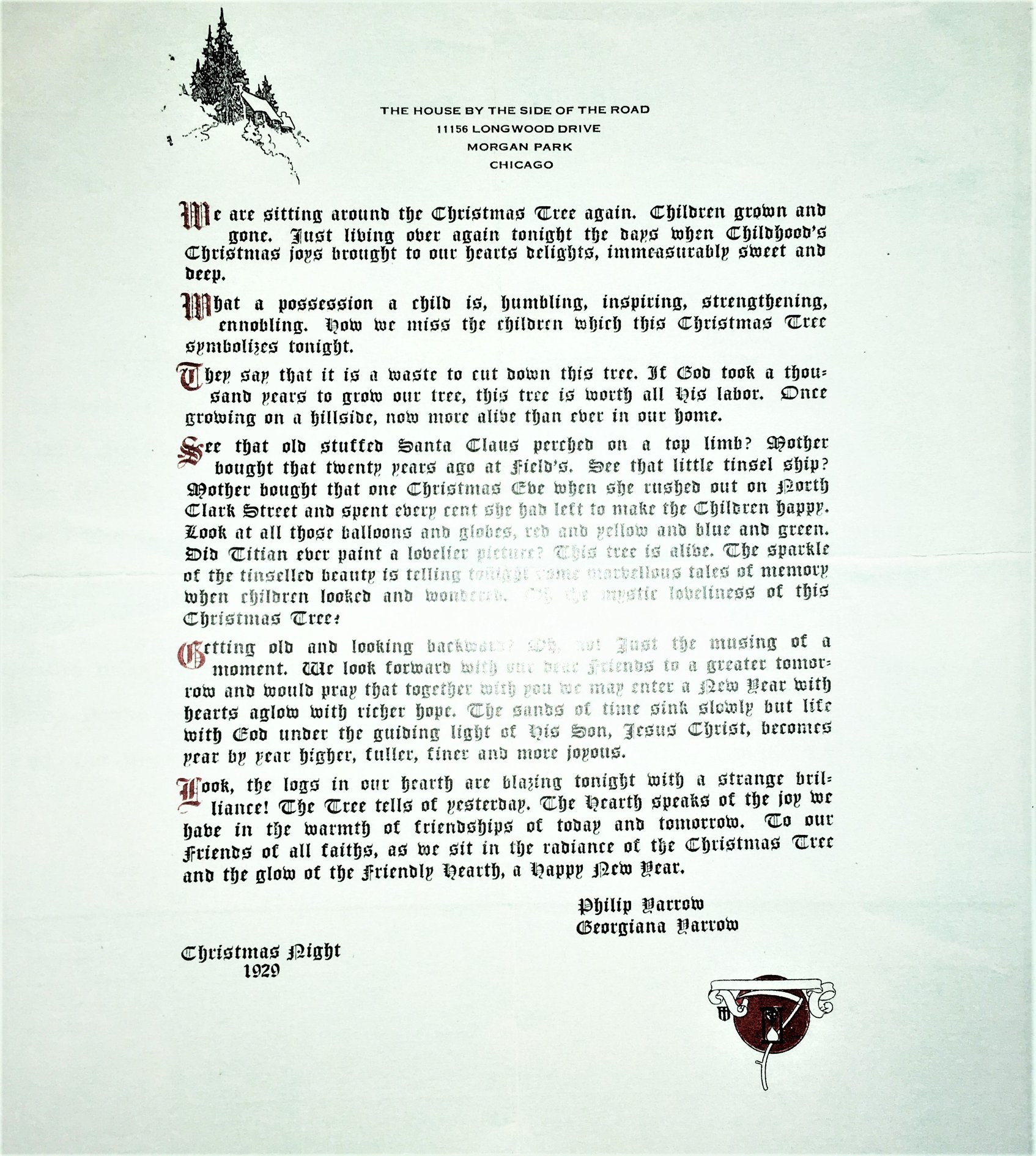
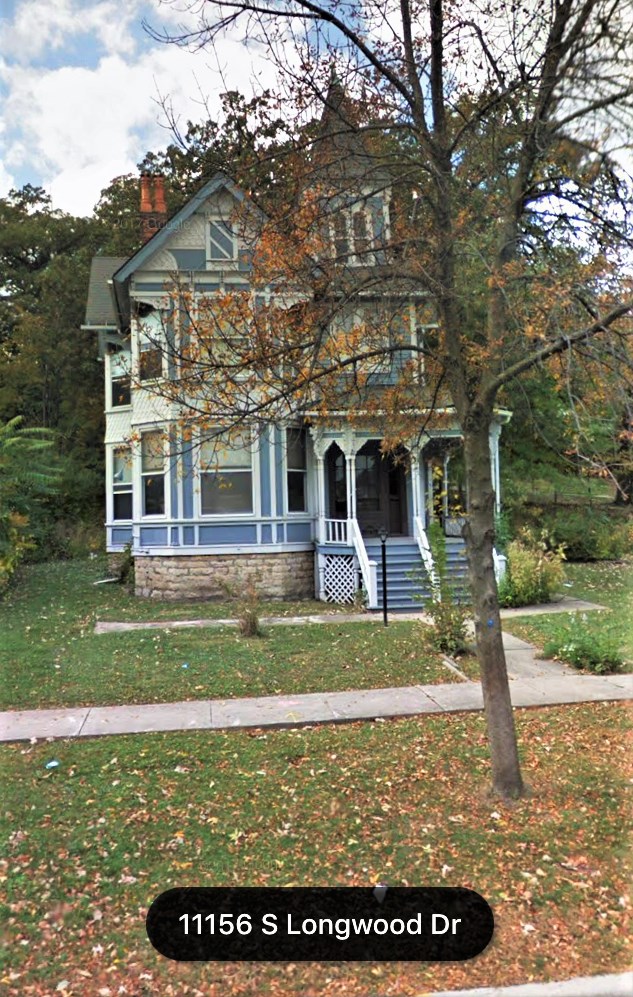
A nice historic Christmas sentiment was discovered by RHS President Elaine Spencer while she was looking through a house file. It was written in 1929 by Philip Yarrow who was the minister for the Morgan Park Congregational Church, and his wife Georgiana. The Yarrows lived in the big Queen Anne-style house probably recognized by most people familiar with Longwood Drive, just south of 111th Street where Lothair splits off to the southwest. Here is a picture of the letter and the house the Yarrows lived in. Linda Lamberty, RHS Historian transcribed the letter as follows:
“We are sitting around the Christmas Tree again. Children grown and gone. Just living over again tonight the days when Childhood’s Christmas joys brought to our hearts’ delights, immeasurably sweet and deep.
What a possession a child is, humbling, inspiring, strengthening, ennobling. Now we miss the children which this Christmas Tree symbolizes tonight.
They say that it is a waste to cut down this tree. If God took a thousand years to grow our tree, this tree is worth all His labor. Once growing on a hillside, now more alive than ever in our home.
See that old stuffed Santa Claus perched on a top limb? Mother bought that twenty years ago at Field’s. See that little tinsel ship? Mother bought that one Christmas Eve when she rushed out on North Clark Street and spent every cent she had left to make the Children happy. Look at all those balloons and globes, red and yellow and blue and green. Did Titian ever paint a lovelier picture? This tree is alive. The sparkle of the tinselled beauty is telling tonight some marvelous tales of memory when children looked and wondered. Oh, the mystic loveliness of this Christmas Tree!
Getting old and looking backward? Oh, no! Just the musing of a moment. We look forward with our dear friends to a greater tomorrow and would pray that together with you we may enter a New Year with hearts aglow with richer hope. The sands of time sink slowly but life with God under the guiding light of his son, Jesus Christ, becomes year by year higher, fuller, finer and more joyous.
Look, the logs in our hearth are blazing tonight with a strange brilliance! The Tree tells of yesterday. The hearth speaks of the joy we have in the warmth of friendships today and tomorrow. To our friends of all faiths, as we sit in the radiance of the Christmas Tree and the glow of the friendly hearth, a Happy New Year.
Philip Yarrow
Georgiana Yarrow
Christmas Night 1929”
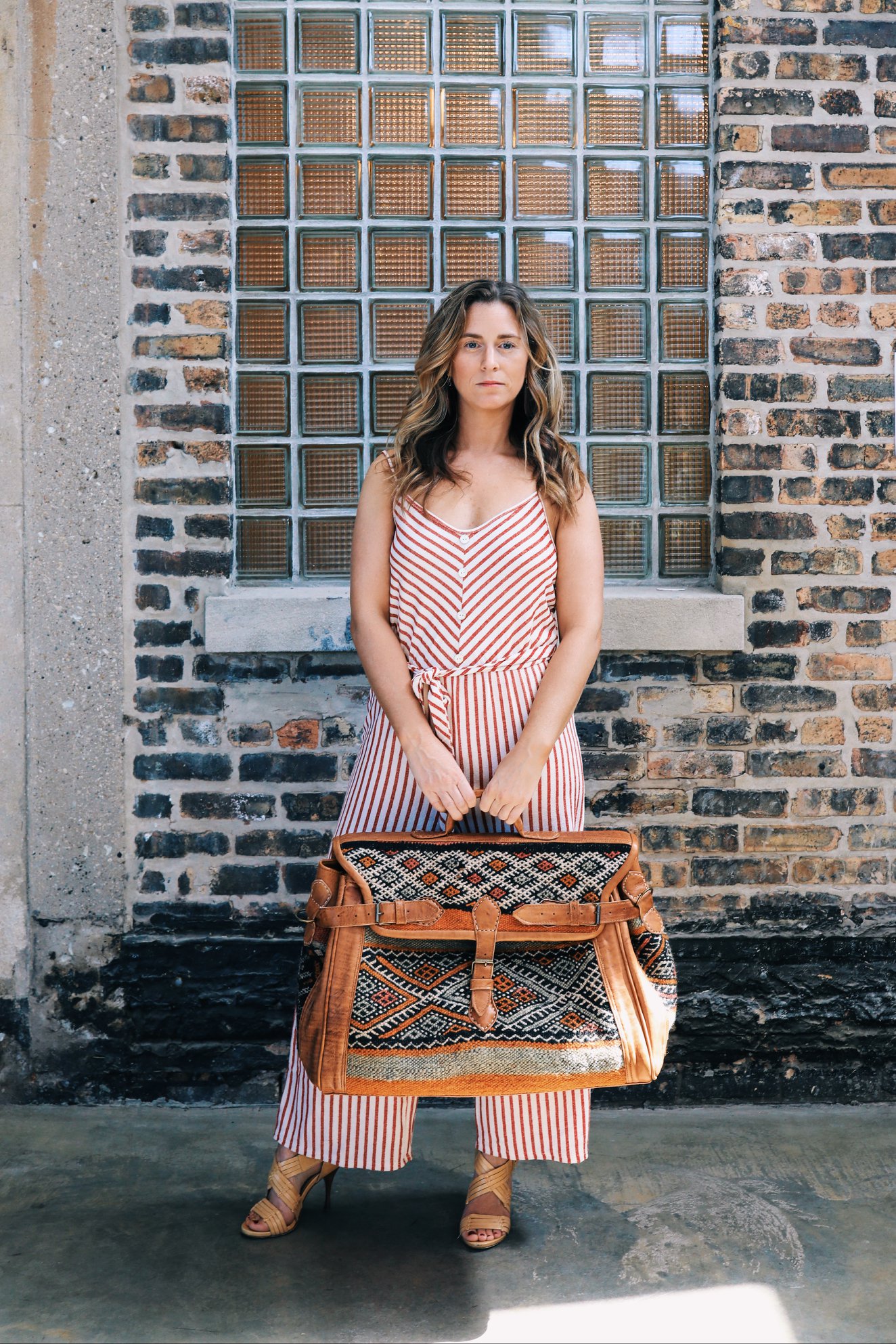

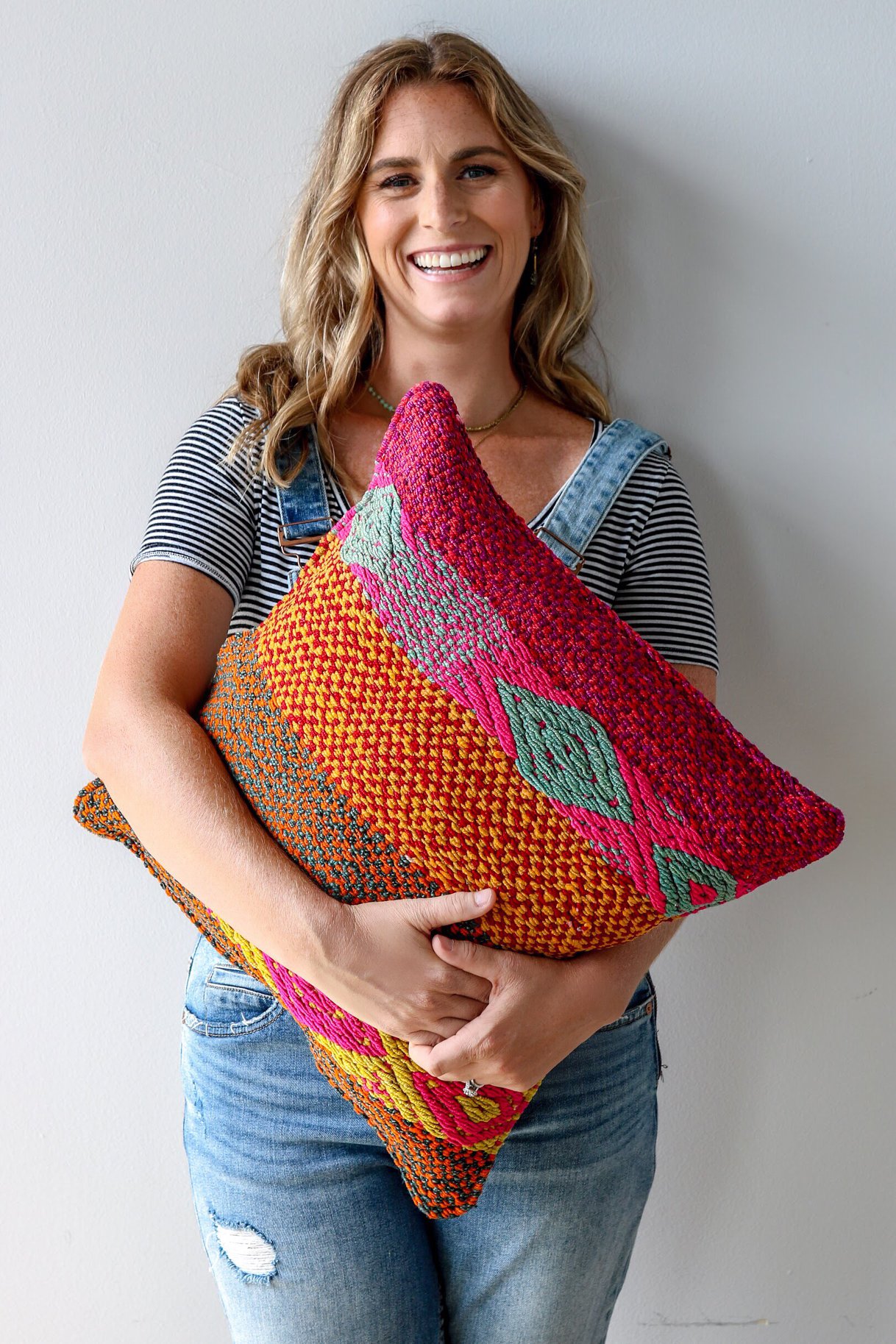
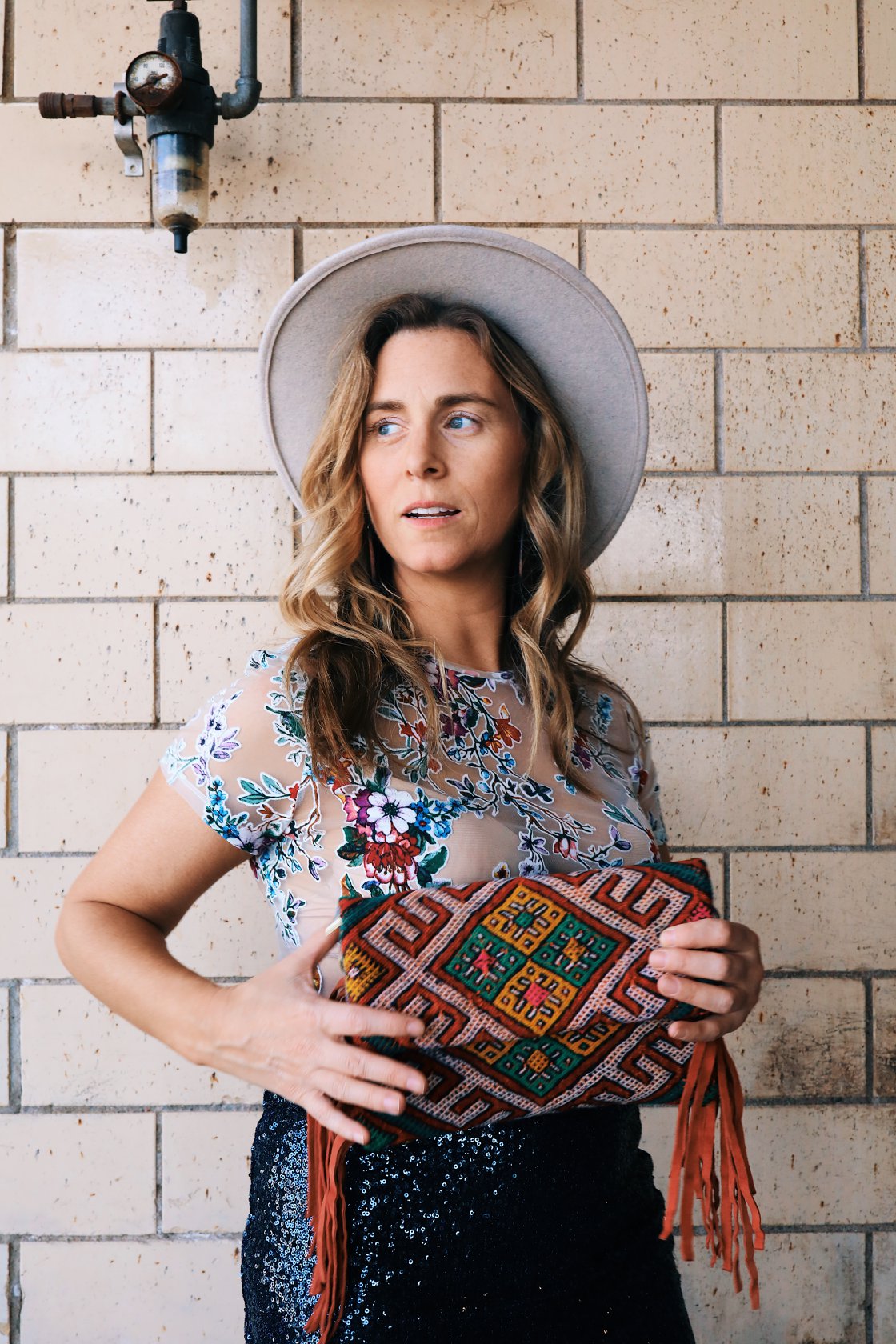
REMINDER!! This is not your typical holiday program. While a good dose of "mindless merriment" is certainly welcomed this time of year, the Ridge Historical Society is also offering the opportunity to keep your intellectual muscles in shape with an interesting and informative program.
"Fair Trade Threads" is a special program that will be given by Beverly artist and entrepreneur Maggie O'Reilly at RHS on Sunday, December 29, 2019, at 2:00 p.m.
As part of the "Threads of Imagination" exhibit, Maggie will share the story of her business, the MAYTA Collection, the provider of beautiful, high-quality hand-made personal fashion and home accessories. These goods are created with native materials by artisans in Peru and Morocco through "fair trade" agreements. "Fair trade" principles include decent wages and working conditions for the artisans, sustainability of their native environment, and ethical production methods. MAYTA is a member of Chicago Fair Trade, the largest fair trade coalition in the U.S.
A special guest from Peru, Vidal Gomez Pando, is visiting Chicago for the holidays and will speak at the event. He will discuss the Quechua, the native artisans who live in the Peruvian Andes Mountains and South American highlands, who create these fine goods.
Items from The MAYTA Collection will be on display and available for purchase.
Refreshments will be served. There is a suggested donation of $10 for the event. RHS is located at 10621 S. Seeley Ave., in Chicago. Send a message through the RHS Facebook page or to cflynn2013@yahoo.com with any questions.
This will also be an opportunity to view the "Threads of Imagination" exhibit, which closes in two weeks. This exhibit explores the intersection of fashion, art and business through the creative work and careers of five woman artists of the Ridge – the historic Madame Alla Ripley, a famous fashion designer and businesswoman who lived in Beverly in the early 1900s, and four contemporary artists – Maggie O’Reilly, Judie Anderson, Sandra Leonard and Nicole Burns.
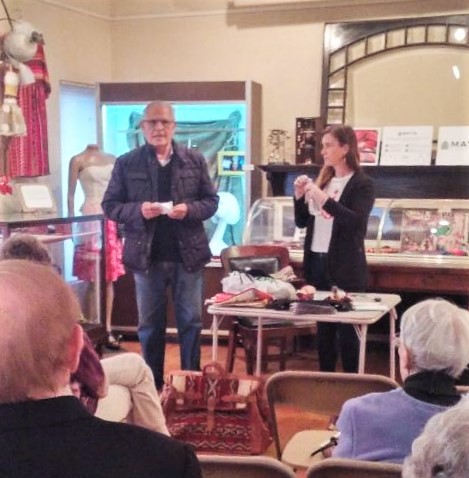


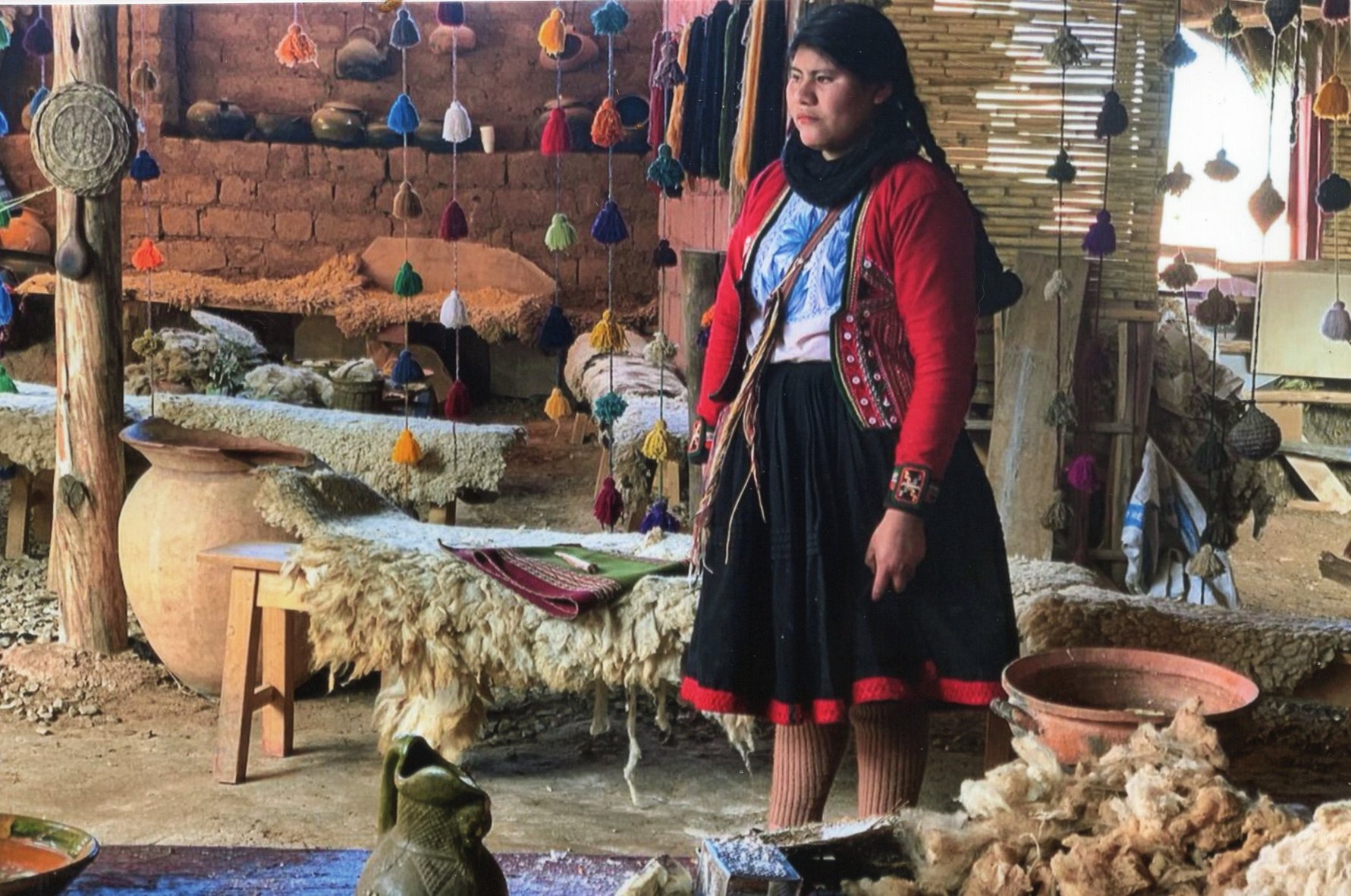
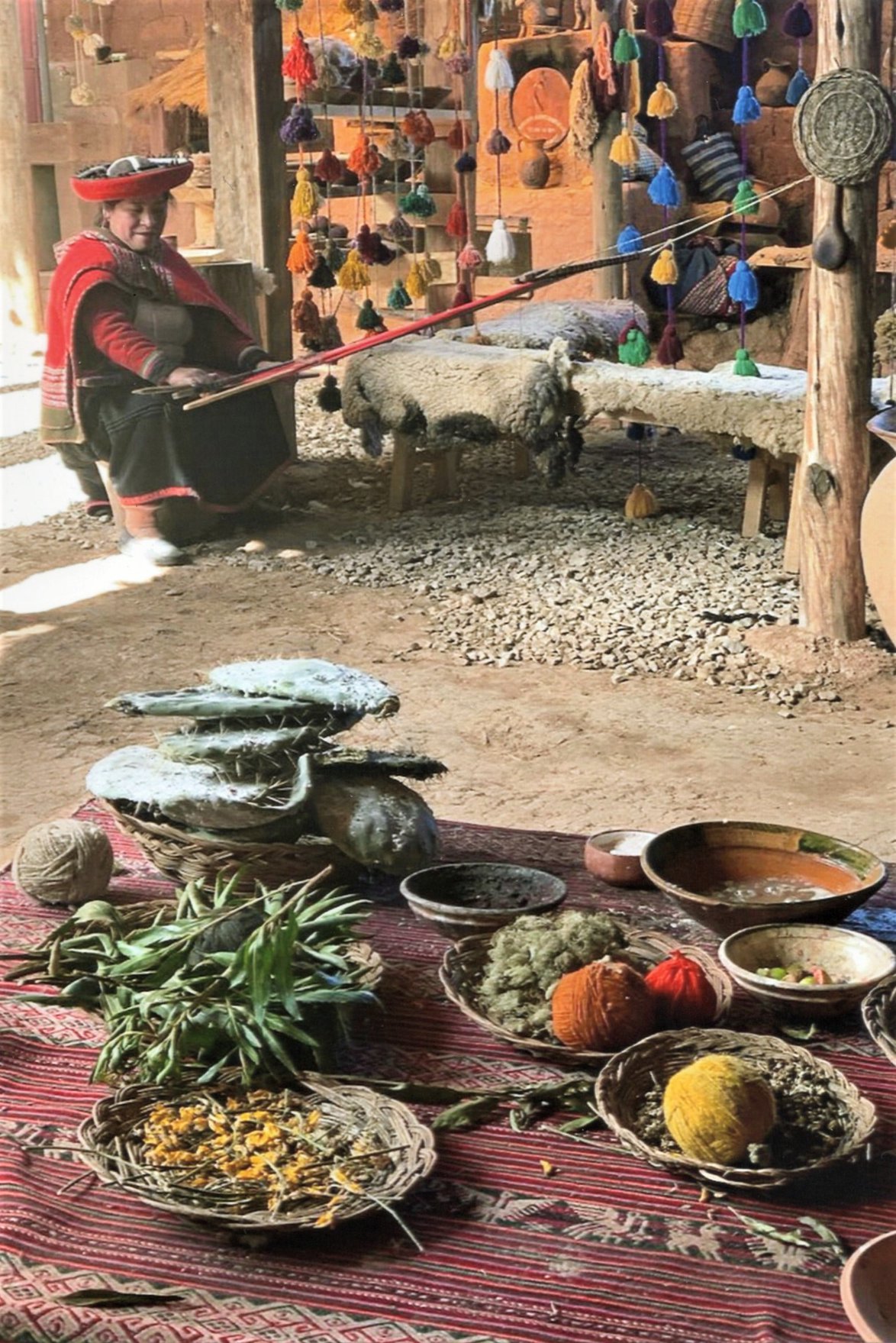
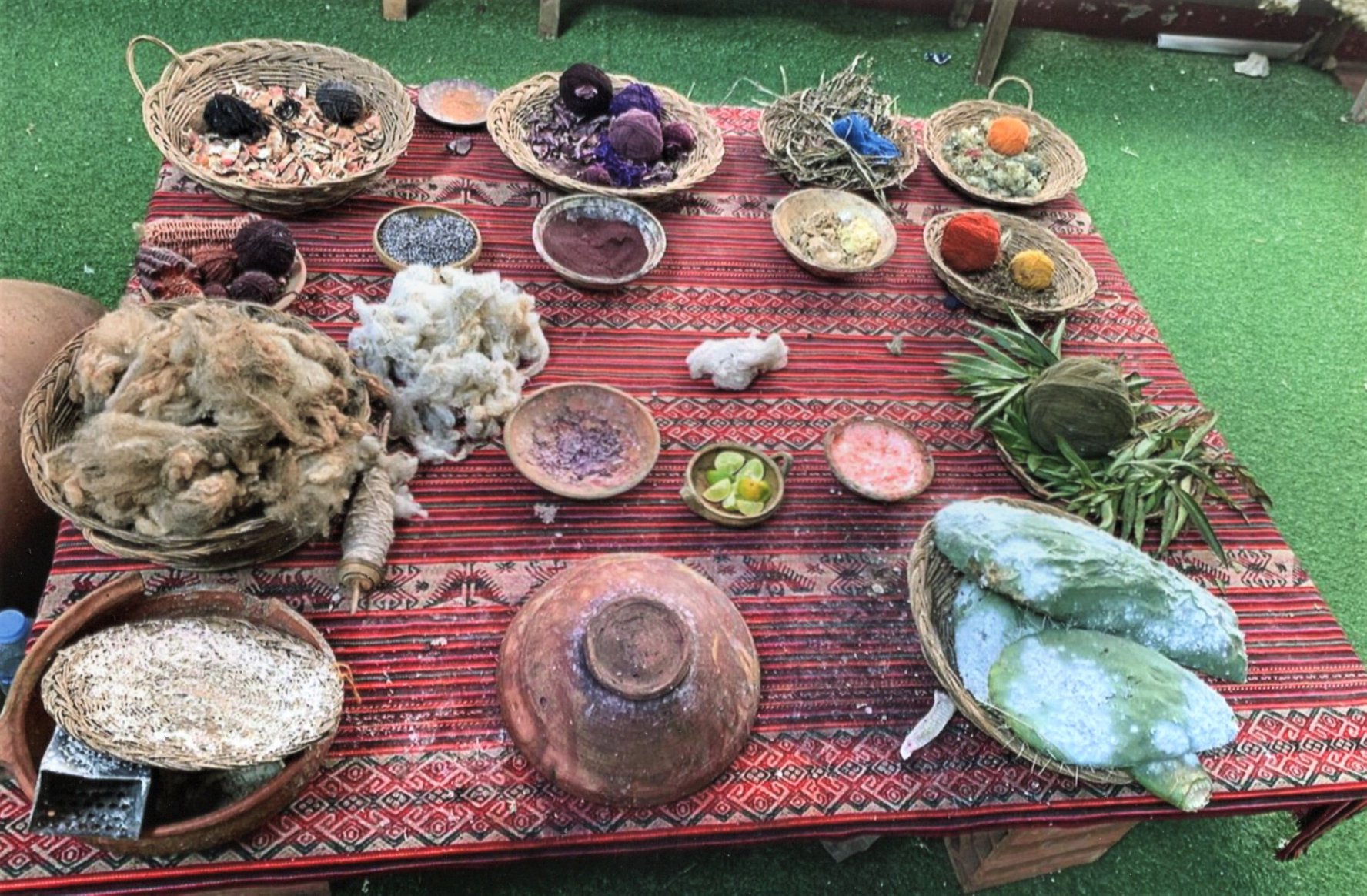
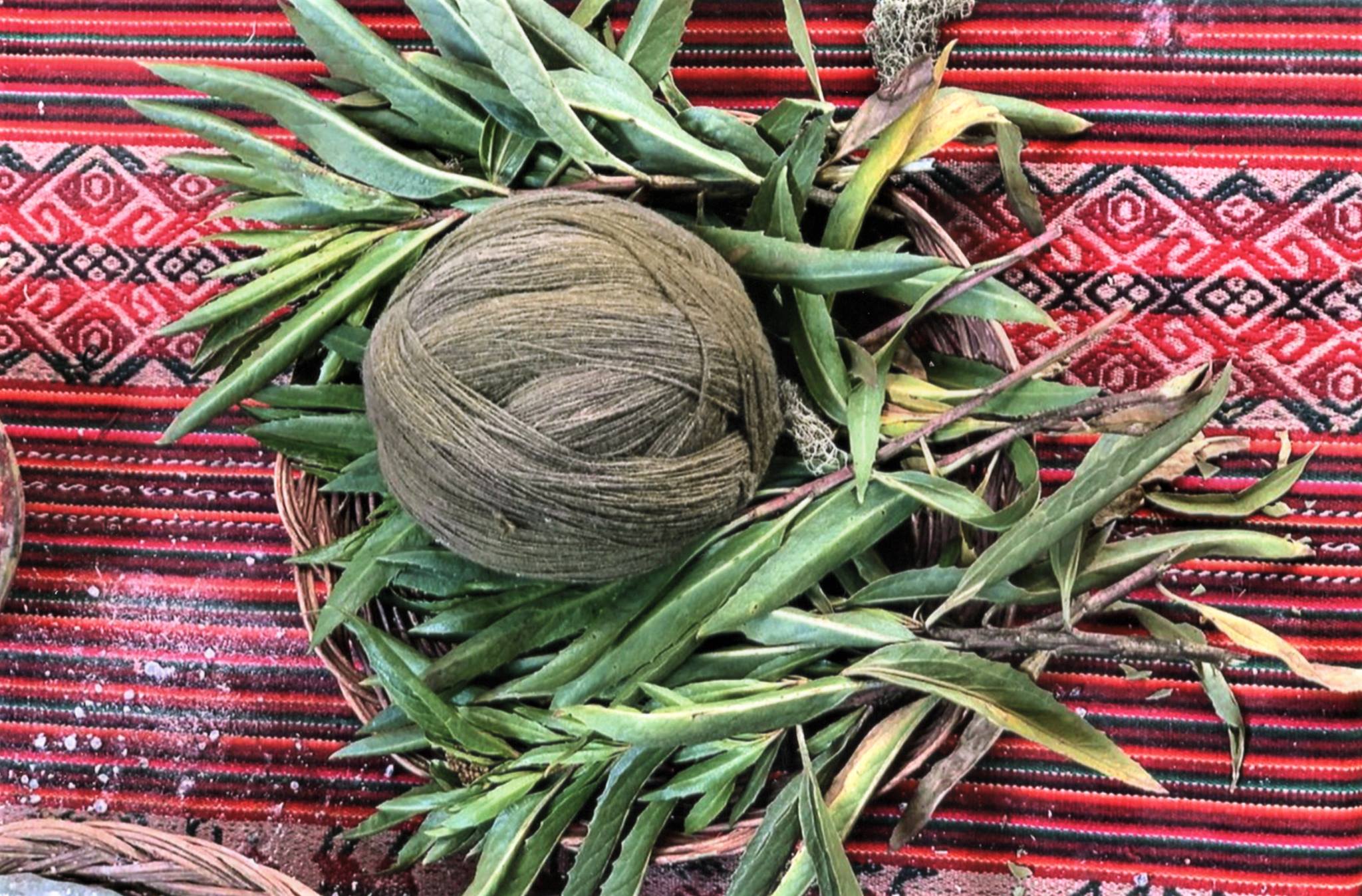

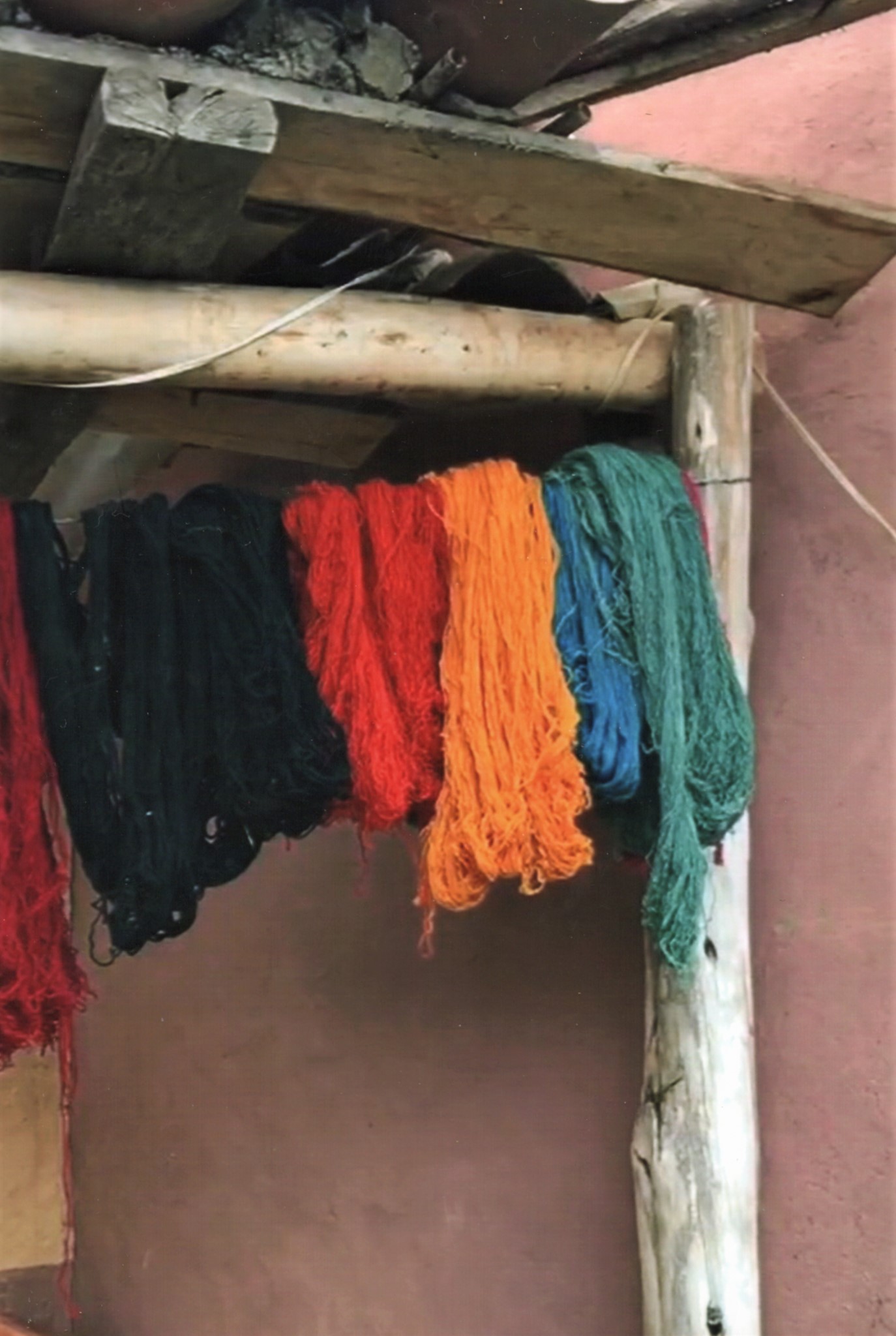
A wonderful presentation was given today at RHS by Maggie O'Reilly on "Fair Trade Threads." Maggie is the owner of The MAYTA Collection, which offers one-of-a-kind hand-crafted artisan items from Peru and Morocco.
Maggie grew up in Beverly and she and her husband are now raising their own family here. Her business grew out of her love for travel and other cultures, particularly Latin cultures, and her love of fabrics, color and textures. The MAYTA Collection follows fair trade practices when dealing with the artisans of these other countries – fair wages, safe working conditions, contributions to their communities, and other ethical practices.
Maggie was joined by her father-in-law, Vidal Gomez Pando, who is visiting for the holidays from Peru. She shared interesting photos of the artisans at work at their homes in the Andes Mountains. They do all the work locally – sheer the sheep for the wool, spin it into yarn, color the yarn with natural dyes, and weave beautiful fabrics. The fabrics are used for the bags and purses, and pillows and blankets, that The MAYTA Collection brings to the U.S.
This program was part of the "Threads of Imagination" exhibit which explores the intersection of fashion, art and business. The exhibit will be up through January 17, 2020.
This will be a five-installment post over the next few days. To access the entire story, visit the Ridge Historical Society Facebook page.
Part I. RHS usually shares upbeat stories, but the Ridge also saw its share of tragedy. As we enter the New Year, this entry is a reminder that every day is a gift.
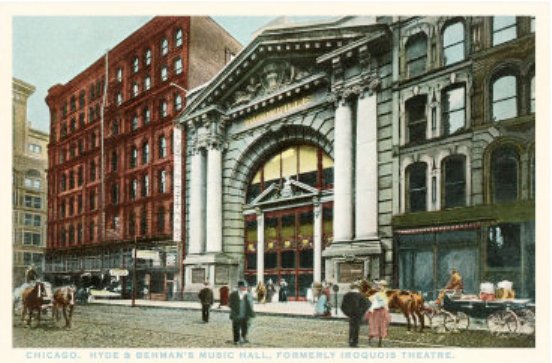
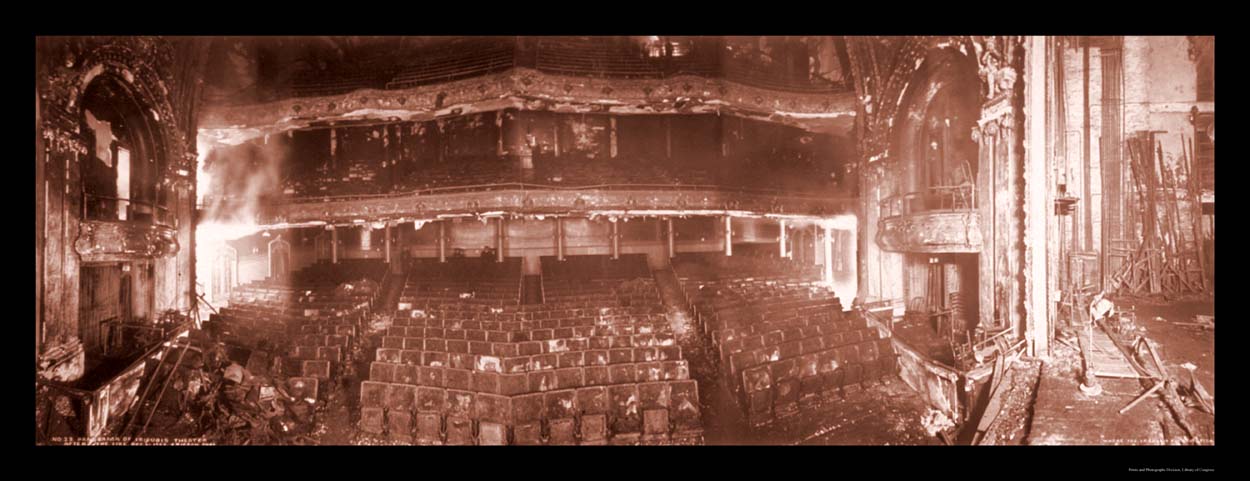
The holidays didn’t always bring “glad tidings of comfort and joy.” On December 30, 1903, one of the biggest tragedies in Chicago’s history occurred. The Iroquois Theater caught fire, resulting in an estimated 602 deaths. This remains the deadliest theater fire and deadliest single-building fire in U. S. history. There were twice as many fatalities with this fire as with the Great Chicago Fire of 1871.
The theater had opened to much fanfare just the month before. It was considered architecturally beautiful and was advertised as “absolutely fireproof.” But in reality there were numerous safety deficiencies that were known by the builders and owners, city officials, fire inspectors and fire department.
The afternoon matinee of the musical play “Mr. Bluebeard, Jr.” on that fateful Wednesday was packed with almost 2,200 people. Most were women with children, enjoying an outing during school break.
Sparks from a stage light, believed to have been caused by a short circuit, ignited a curtain. Seeing the fire, the audience panicked. Many people were trapped – just one safety flaw among many was that the doors at the Iroquois opened inward with locks the people could not operate. The crush of people trying to exit kept the doors pushed shut. People were trampled, asphyxiated and/or burned.
There isn’t space here to recount the horrors inside the theater, or the many acts of heroism that occurred. There are numerous accounts of the fire that can be accessed on-line.
A police officer on patrol saw people running from the theater with their clothes on fire and raised the fire alarm. After the fire was extinguished, the gruesome task of recovering and identifying the victims began. Many were burned beyond recognition.
Investigations led to criminal charges that were later dismissed. Numerous new safety laws were implemented throughout the world as a result of this fire. Just one example that we take for granted today is that exit doors are required to open outward, with crash bars to deactivate the locks.
The Iroquois Theater later reopened as the Colonial Theater and was demolished in 1925. Today, the Oriental Theater occupies that site on Randolph St. between State and Dearborn Streets.
The next installments will cover some of the connections between the Ridge and the Iroquois Theater fire.
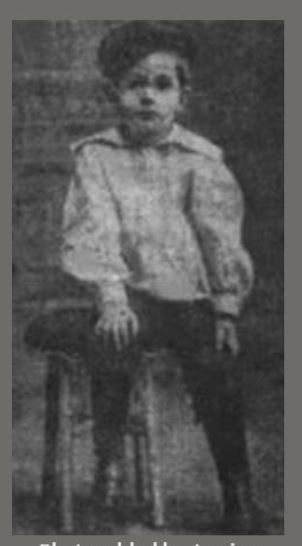
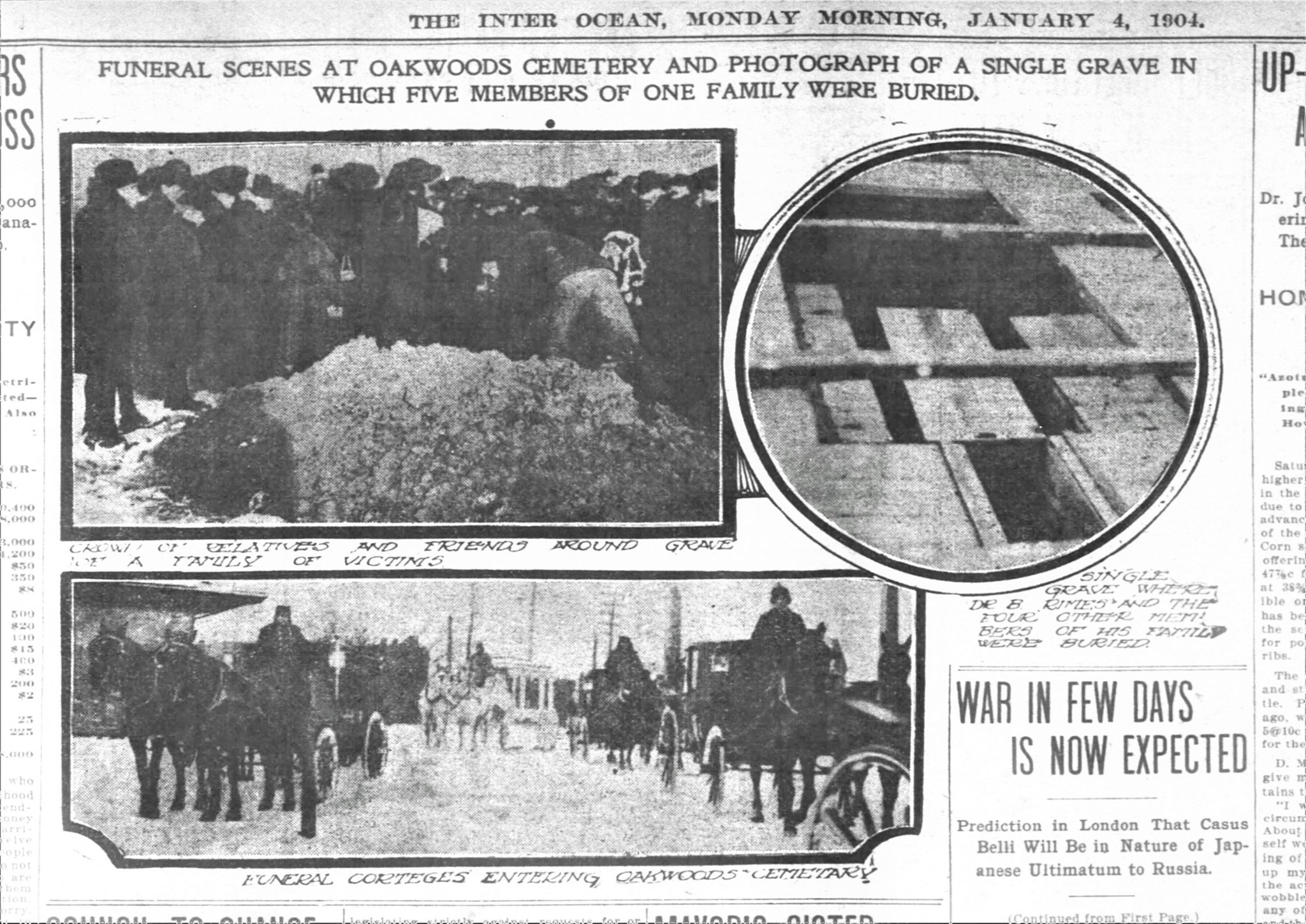
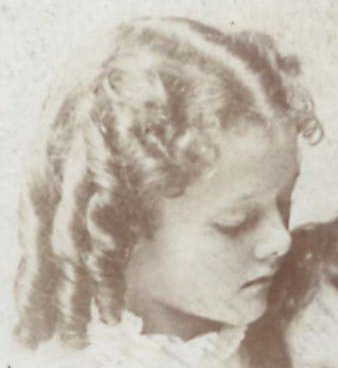
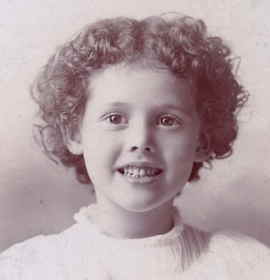
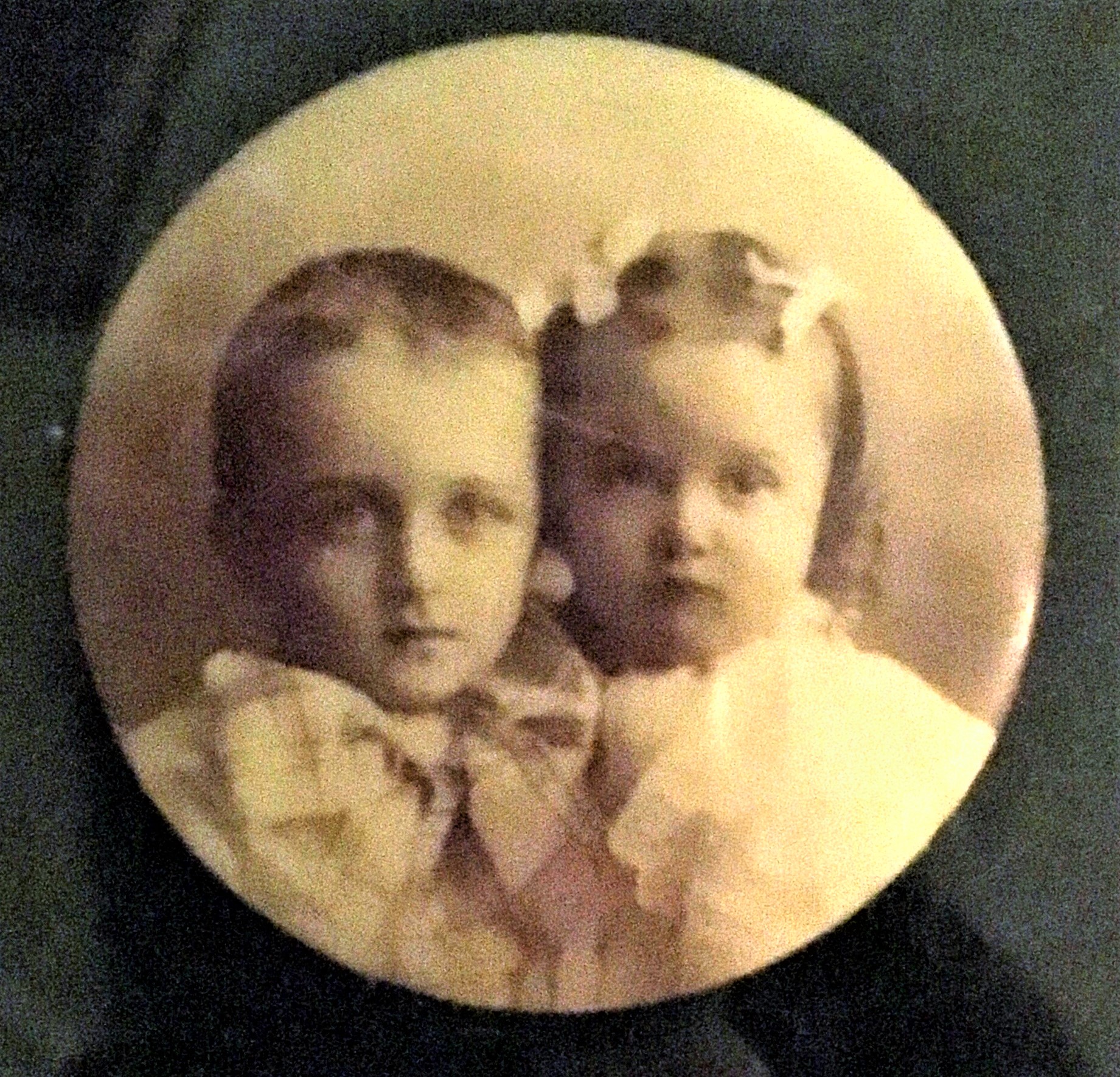
This is a five-installment post about the connections between the Ridge and the Iroquois Theater fire. To read the entire story go to the Ridge Historical Society Facebook page.
Part 2. Entire families were lost in the Iroquois Theater fire on December 30, 1903. What started for some families as a delightful, much-anticipated holiday event, going downtown to see the musical “Mr. Bluebeard, Jr.” at the new theater, turned into a devastating tragedy.
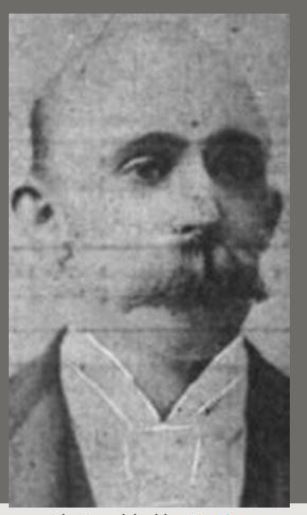
One case was that of a prominent dentist from Englewood, Dr. Mervin B. Rimes, 36. He and his wife Bertha and their three sons, Myron, 10, Thomas, 7, and Lloyd, 5, all perished. According to the history passed down by the family, they were identified by their socks, knitted with their initials by their grandmother as Christmas presents. A 3-year old daughter left at home was the only remaining family member.
The Rimes family was originally scheduled to attend the play with relatives, but that family cancelled due to illness. It appears Dr. Rimes then invited another Englewood dentist, Dr. Albert Oakey, and his daughters Lucile, 13, and Marian, 11. All three Oakeys died that day, also.
The relatives of the Rimes family who cancelled that day were Emma Francis, cousin of Bertha Rimes, and her children, Arthur (Art), 10, and Flora, 7, who had fallen ill. Husband/father John W. Francis had a dry goods establishment in Englewood called The Fair Store. It was a fixture in that community for many years. Emma’s great grandfather was Richard Bingle, who settled on the Ridge in 1842. John and Emma are buried in Mount Greenwood Cemetery.
Art and his family moved to Beverly. Linda Lamberty, RHS Historian, is Art’s granddaughter.
Said Linda, “I recently looked around at a large Christmas gathering of cousins descended from Aunt Flora and it hit me that, by falling ill and causing her mother, brother and herself to miss the play at the Iroquois theater, she saved all of our lives. Had the three of them attended, likely none of us descendants would be alive today.
“But the Oakeys then apparently used those tickets. There is the sobering thought that their descendants never had a chance to exist. Of course, it was not the fault of any of these people that the fire occurred. The dangerous conditions within the theater led to this tragedy.”
The next installments will share more connections to the Ridge.
This is a five-installment post about the connections between the Ridge and the Iroquois Theater fire. To read all the posts go to the Ridge Historical Society Facebook page.
Part 3. Poignant reminders of the Iroquois Theater fire tragedy that occurred on December 30, 1903, are the family gravesites of the victims found in many Chicago cemeteries.
Mt. Greenwood Cemetery at 2900 West 111th Street has documented the graves of victims buried there. It is likely other victims are buried in other Ridge cemeteries.
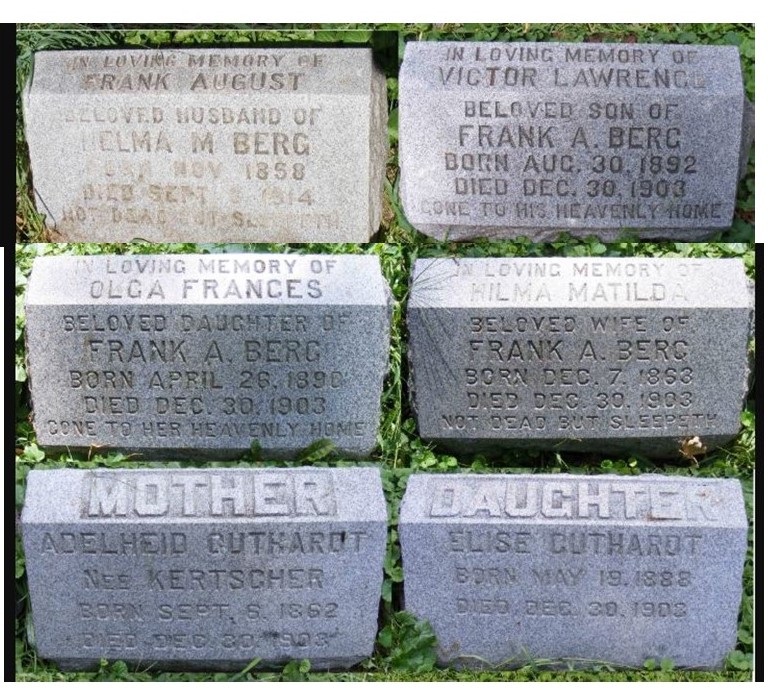
One of the touching sites at Mt. Greenwood Cemetery is the Berg/Guthardt family plot. Frank A. Berg, an immigrant from Sweden in the real estate business, lost his entire family to the fire – his wife, Hilma, also from Sweden, and both of their children, Olga, 13, and Victor, 11.
Buried in the same plot are Adelheid Guthardt and her daughter, Elise (“Libby”), 15. These were neighbors of the Bergs, and assumedly, the mothers and children went to the play together, perished together, and the gravesite was started by the two families together. The Guthardts were from Germany and husband/father John was a machinist. Two sons remained.
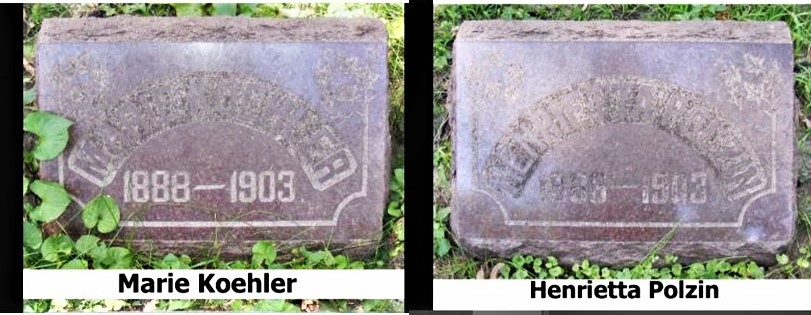
Also buried together at Mt. Greenwood Cemetery are cousins who perished together in the fire, Henrietta (“Etta”) Polzin, 17, and Marie Koehler, 15. The Koehlers lived at 9900 S. Vincennes Ave. and kept a saloon, and the Polzins lived in Lyons, Illinois. The girls’ mothers, Elizabeth Polzin and Bertha Polzin Koehler, sister of Etta’s father, were with their daughters at the theater, but many family members became separated in the crowds trying to escape. Both mothers were burned but survived, according to the website iroquoistheater.com.
Two other victims of the fire buried in Mt. Greenwood Cemetery were young men and their stories are also found on the website iroquoistheater.com.
Arthur Caville, 24, was a tenor from New York, originally from England. He was at the Iroquois Theater that day to apply for a job. The production he had been in at the Illinois Theater had just closed two days before due to the star’s untimely death from pneumonia, putting the cast out of work. He was waiting for the manager in the auditorium when the fire broke out. He reportedly died trying to save a child. His young widow could not afford to transport his body back to New York for burial.
John Steve Hartman was 22 and attended the performance with his step-mother and, likely, some younger siblings, all of whom survived the inferno. He was an apprentice engineer, and the family lived on the 5700 block of South Halsted, where they ran a harness business. He was buried in Mt. Greenwood Cemetery next to his father, Andrew Hartman, who had died in 1893.
Next installment: The aftermath of the fire.