
Explore the RHS Facebook Archives, a rich repository of local history written by Carol Flynn. For two decades, Carol brought a deeply dedicated voice to public education at RHS. Her role as Facebook administrator through mid-2025 naturally extended her prolific research into meticulously detailed articles, most notably her multi-part historical series posts. Today, Carol continues her local history writing for The Beverly Review and other outlets.
All Posts
The Ridge Historical Society
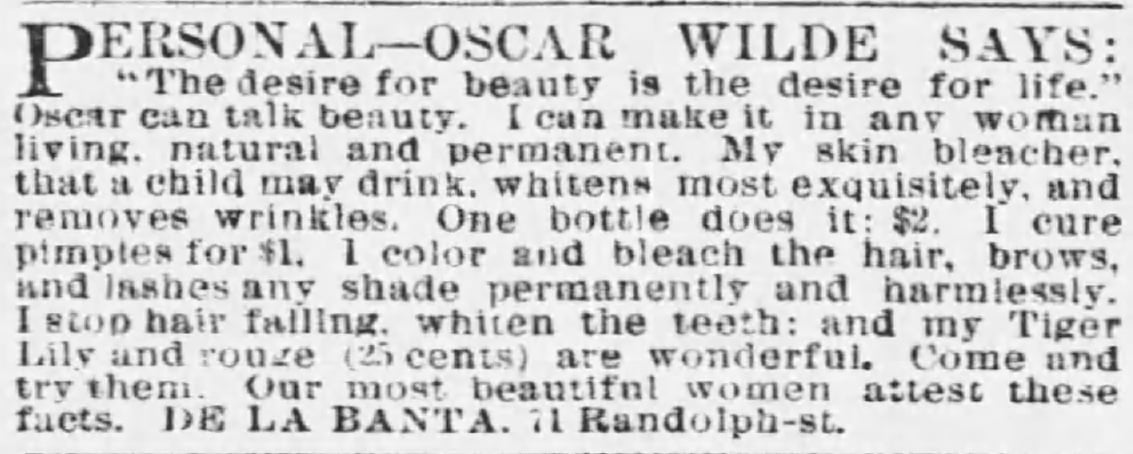
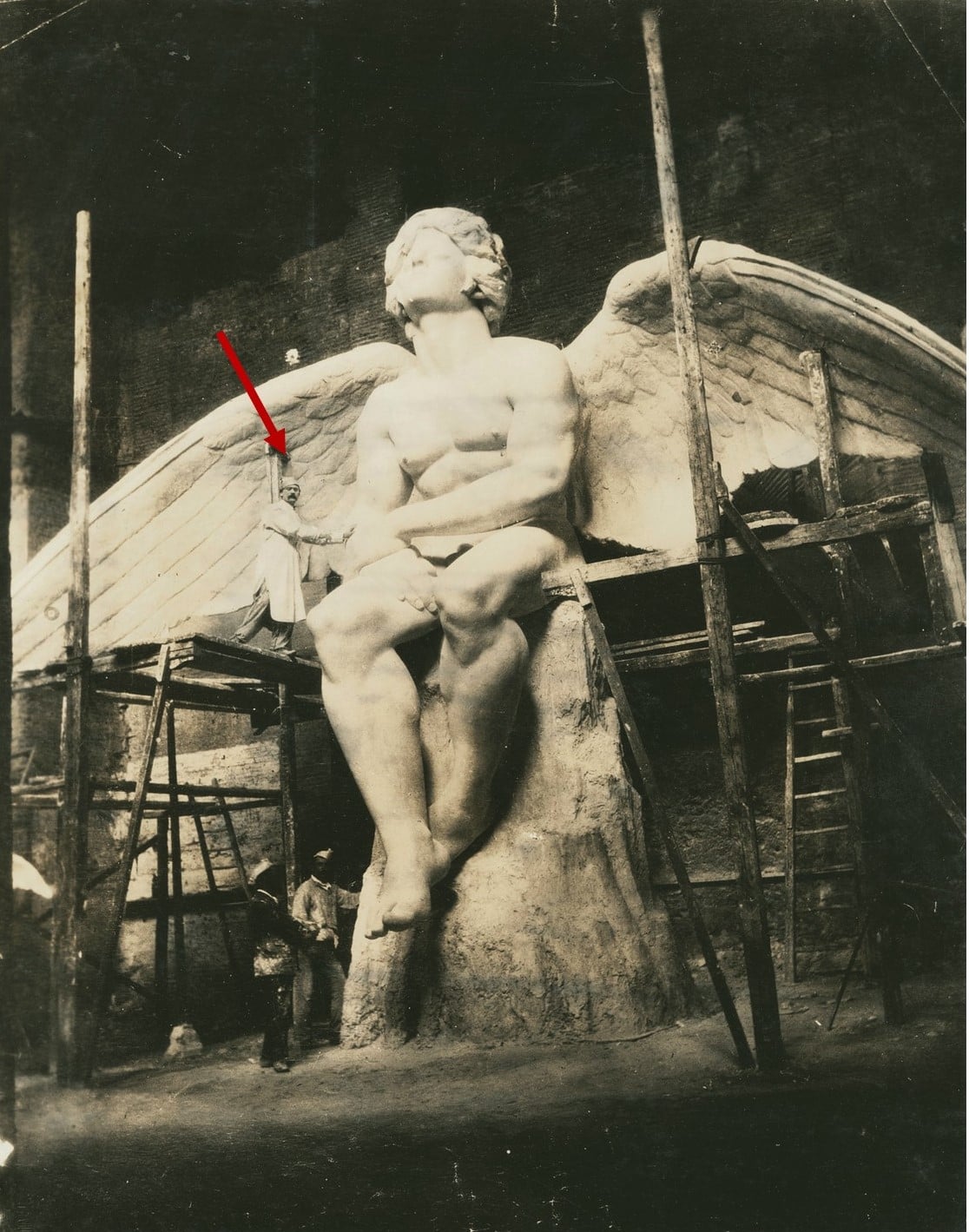
March 2021 – Oscar Wilde’s Visit to Chicago – Part 2
By Carol Flynn
Oscar Wilde is one of Ireland’s most regarded writers. Before his literary career took off, however, he was already a celebrity and media star.
During his years at Oxford University (1874-78), he became a follower of the aesthetic movement, which promoted pleasing the senses and emotions through “beauty.” Primarily an art movement, aestheticism advocated “art for art’s sake,” that is, the arts – fine art, decorative art, literature, music – should exist and be enjoyed and appreciated for the pure beauty of the works, not for other purposes like political statements or moral lessons.
After graduating from Oxford, Wilde first returned to Dublin, where he reconnected with a childhood sweetheart, Florence Balcombe. She married another Irish writer, Bram Stoker, who twenty years later would publish a masterpiece that gave the world one of its most famous characters – Dracula.
Wilde wrote that his time with Balcombe was “the sweetest years of all my youth.” He announced he was returning to England probably for good, and he only returned to Ireland for two brief visits after that.
Moving to London, he set himself up in a bachelor flat and “entered society.” He soon became known for his charming wit, biting sarcasm, and brilliant conversational skills. He was mentioned and quoted frequently in the newspapers and society journals.
He had published poetry and lyrics during his college years, and now produced a book of poems, “Poems,” which sold out, although it was panned by the critics.
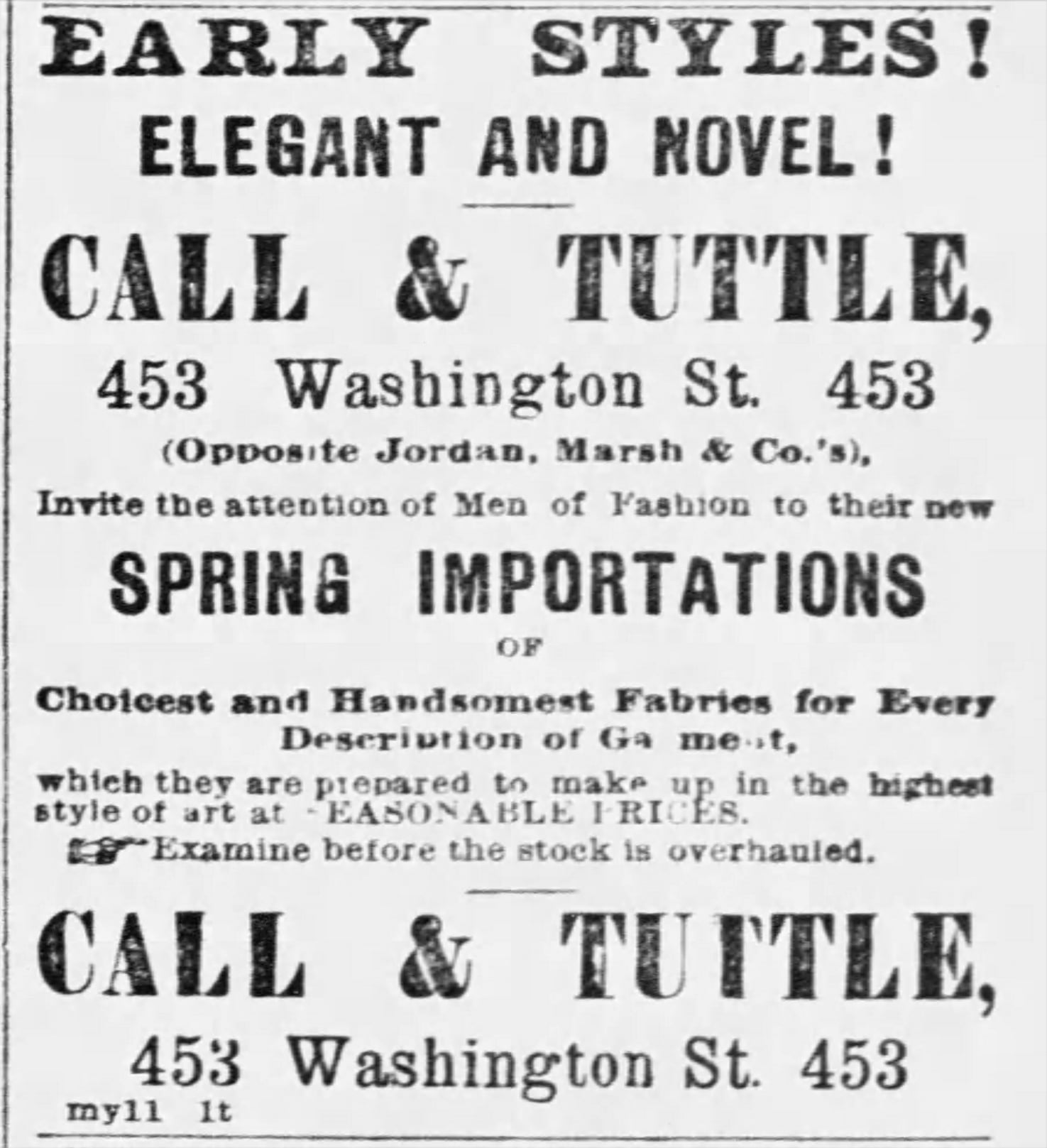
He continued his aesthetic lifestyle, and tailors began producing “high-art clothing” for men based on Wilde’s outfits – britches that ended at the knees tied with bows; silk, satin, and velvet jackets and pants; colorful neckties, handkerchiefs, and stockings; fur coats; outsized hats; and fancy shoes.
Soon Wilde was setting, not following, aesthetic trends. The newspapers called him the “apostle of the aesthetic school.” He began lecturing and writing on aestheticism with topics such as philosophy, fine and decorative arts, architecture, and fashion.
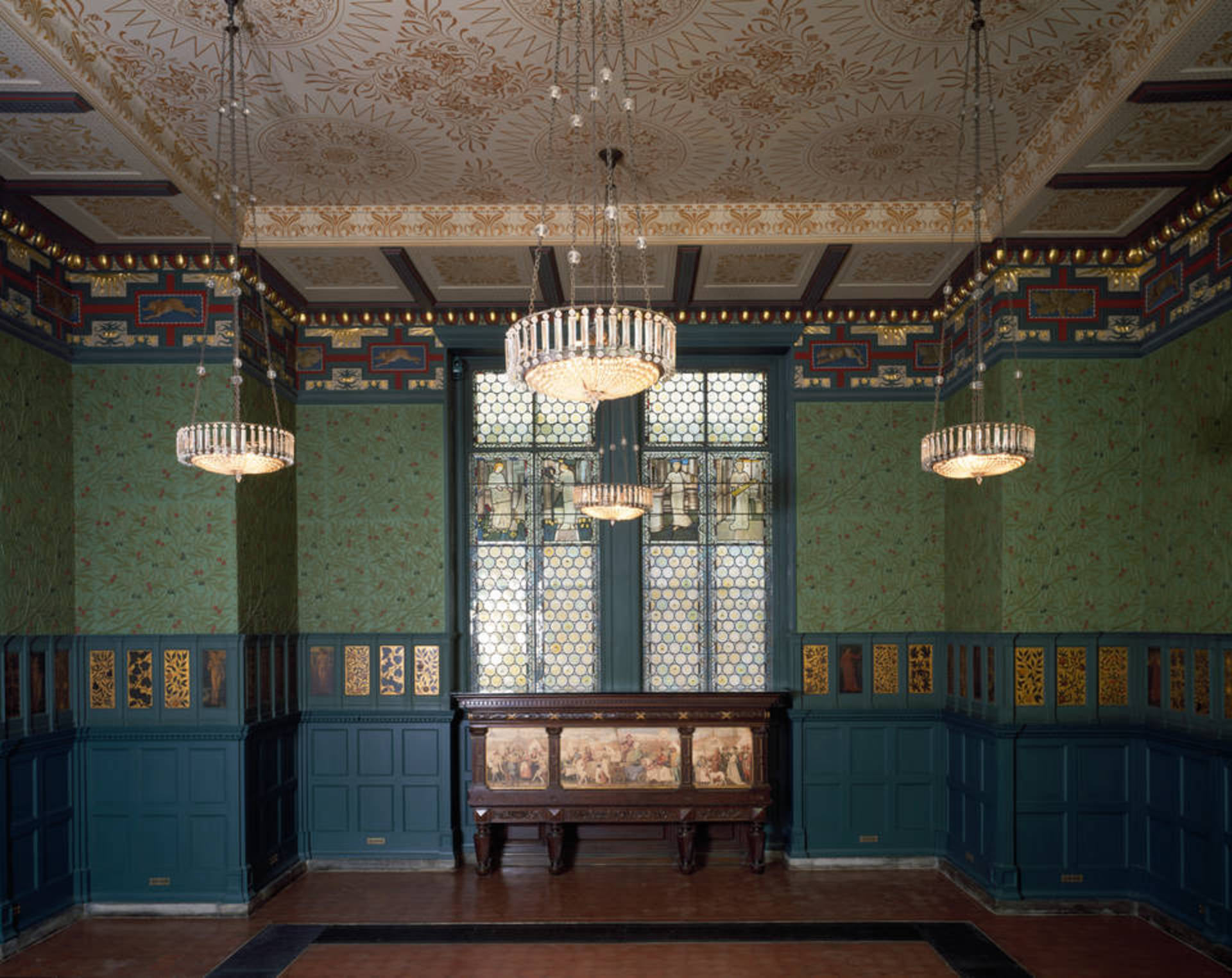
Wilde was not the only aesthete in London society – there were many, including the artist Edward Burne-Jones, whose artwork included stained glass, oil painting, ceramic tiles, jewelry, tapestries, and mosaics. Burne-Jones had worked with William Morris to create the tearoom at the Victoria and Albert Museum in the 1860s which remains famous today as a design from the early days of the aesthetic movement.
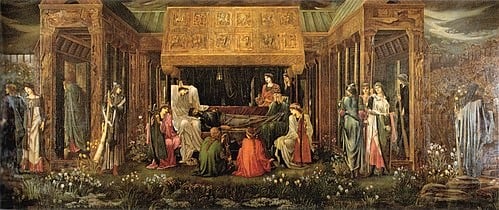
Said Burne-Jones about his art, which captures the essence of the aesthetic movement: “I mean by a picture a beautiful, romantic dream of something that never was, never will be – in a light better than any light that ever shone – in a land no one can define or remember, only desire – and the forms divinely beautiful.”
Wilde was the most flamboyant and outspoken of the aesthetes, however. As one newspaper said in 1881, “Two years and a half ago he came to London, and on being told to not say anything unconventional he did exactly the opposite; the consequence was that he became the fashion.”
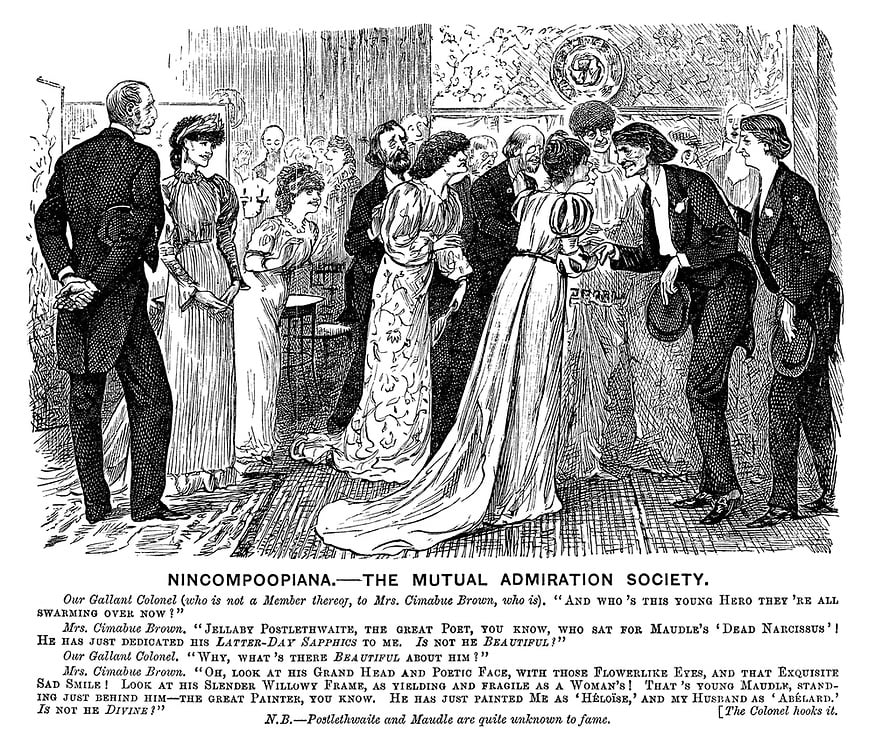
Wilde, as well as all aesthetes, were controversial figures, with as many critics as fans. Their beliefs and behaviors contradicted the traditional moral values of the Victorian era. The term “decadent” became associated with the aesthetic lifestyle.
George Du Maurier, a cartoonist and writer for Punch and Harper’s, leading magazines that helped bring the aesthetic movement to the U.S., often caricatured Wilde.
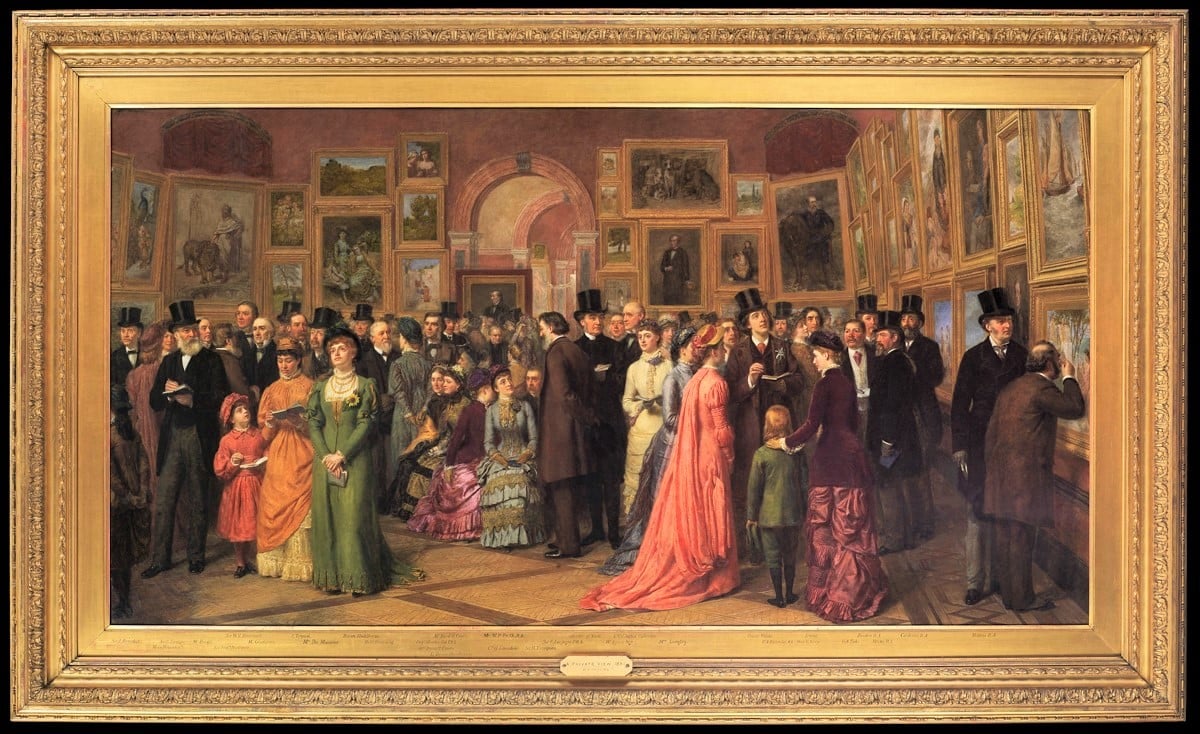
Artist William Powell Frith produced a painting titled “The Private View at the Royal Academy, 1881,” depicting Wilde with his followers viewing artwork, while his critics stand behind him, observing him. Aesthetic women’s fashions, with their bright colors and softer, flowing lines, contrast with traditional attire, which used somber colors and features like bustles.
Dramatist W. S. Gilbert and composer Arthur Sullivan, the creators of comic operas such as the “Pirates of Penzance,” parodied the aesthetic movement in a new play, “Patience.” They modeled one of the characters on Wilde.
To promote the play in the U.S., their theatrical producer Richard D'Oyly Carte talked Wilde into a trip to America to lecture about aestheticism.
It was in this context, the role of ambassador for aestheticism, that Oscar Wilde visited the United States in 1882 on a lecture tour. Soon, the Gilbert and Sullivan play stopped being the focal point, and Wilde’s visit in and of itself became the noteworthy historical phenomenon. The trip was originally planned for four months but was extended to almost a year because it was so commercially successful.
The tour included two visits to Chicago, which made a memorable impact on the city.
Next post: Oscar Wilde’s visit to Chicago.
The Ridge Historical Society
March 2021 – Oscar Wilde’s Visit to Chicago – Part 3
By Carol Flynn
Oscar Wilde visited the United States in 1882 to lecture on aestheticism. He was 27 years old. He had not yet published any of the plays or fiction for which he would become famous as a writer. He was, however, already famous for this wit, sarcasm, opinions, and conversation skills. He was famous for his flamboyant dress, “decadent” lifestyle, and love of “beauty” as the guiding principle of life.
He had agreed to the trip to the U.S. which was arranged as a promotion for the new Gilbert and Sullivan play, “Patience,” a parody of aestheticism. However, the play was soon eclipsed by Wilde himself. The trip was scheduled for four months, but was extended to almost a year because it was so commercially successful.
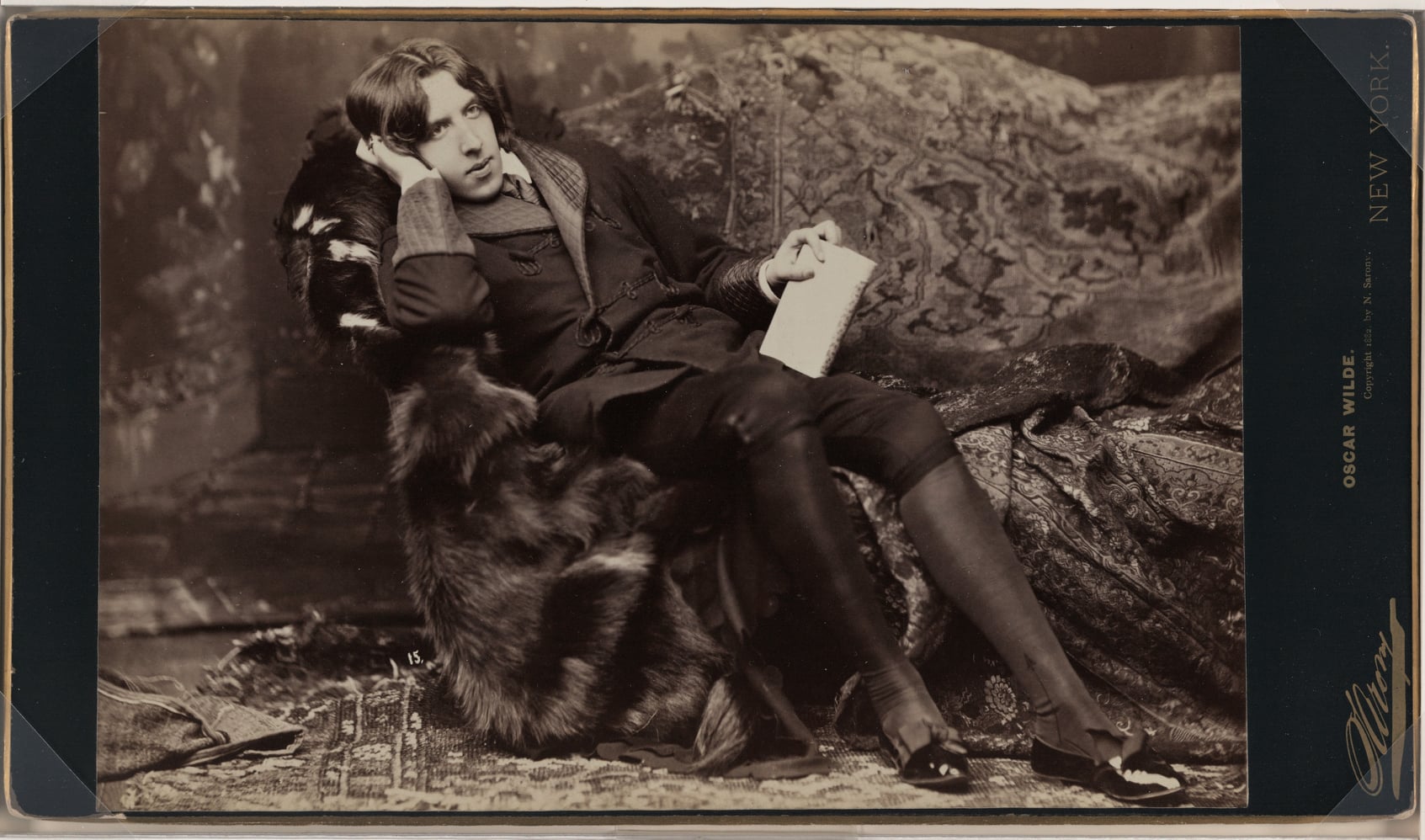
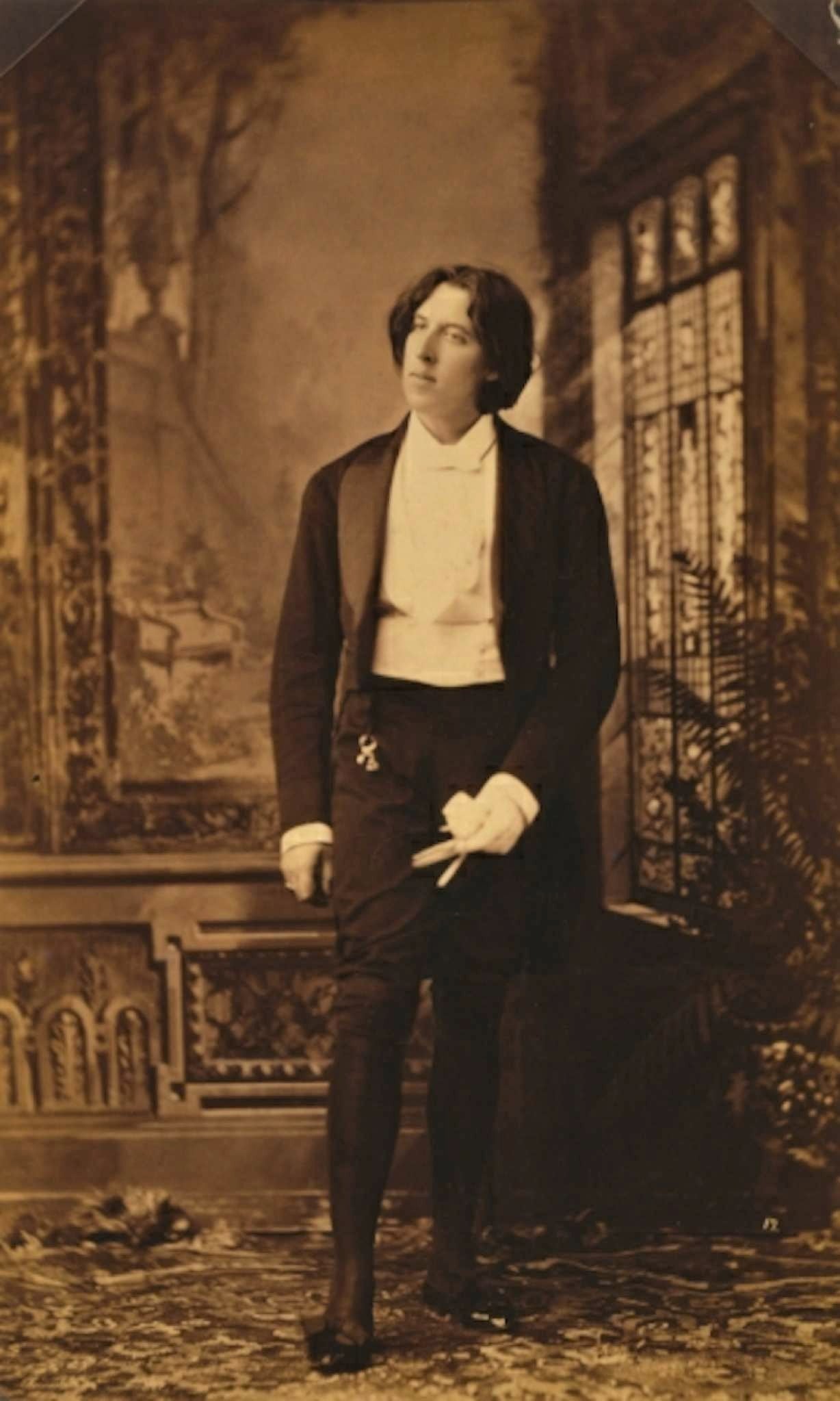
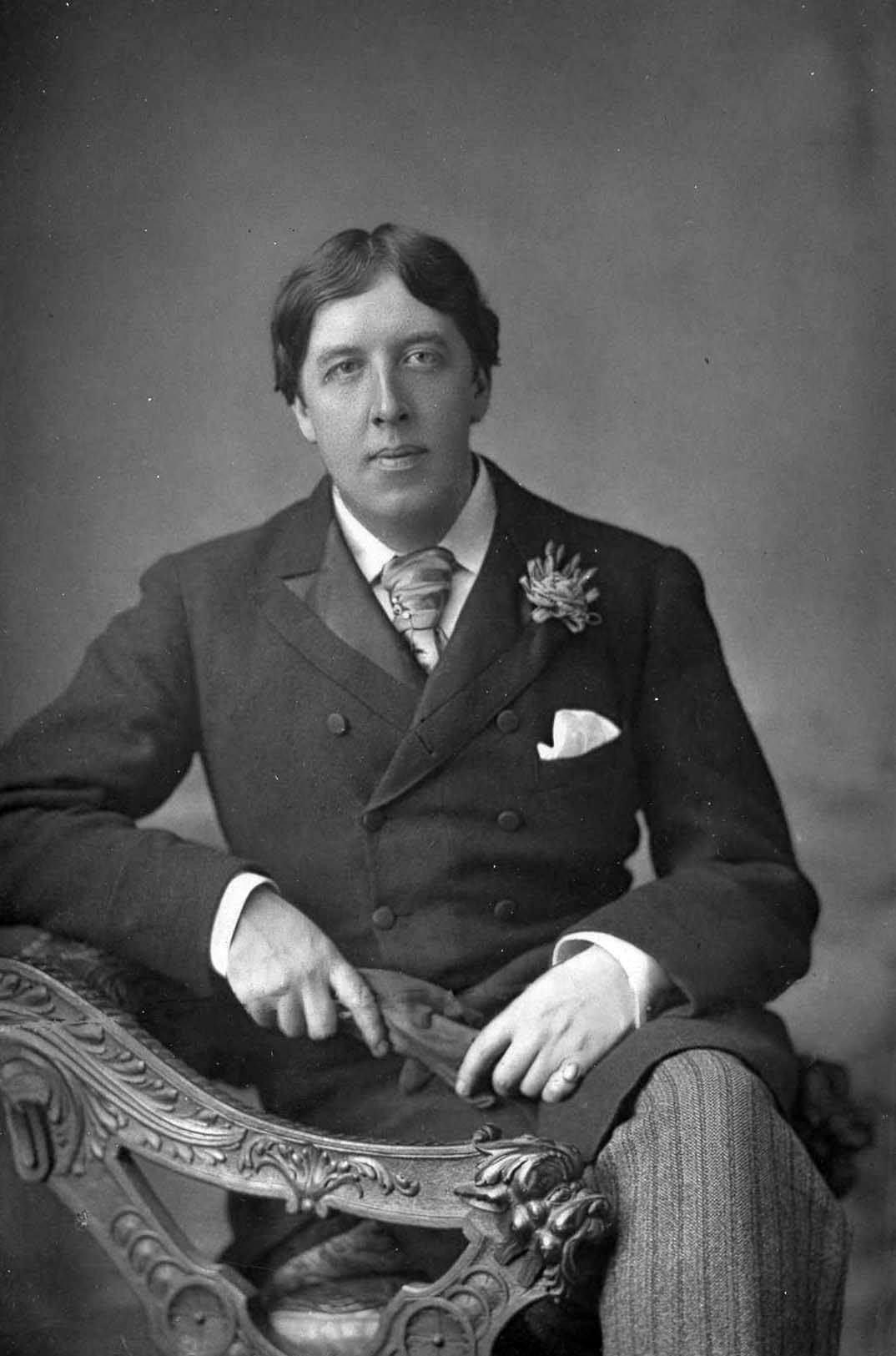
Wilde arrived in New York City on January 3, 1882. Within days, he posed in full aesthetic look for photographs taken by Napoleon Sarony, the leading portrait photographer of the day. These photographs define Oscar Wilde to this day.
After working his way through New York, Boston, Washington, D.C., and Philadelphia, and smaller cities like New Haven, Albany, and Buffalo, he arrived in Chicago on February 12.
The American press loved to hate Wilde. They reported his every move, outfit, and comment, while at the same time declaring him irrelevant. The newspapers in Chicago were no different. The articles in the Chicago papers offered detailed scenes of Wilde’s visit, almost like the plays he would later author.
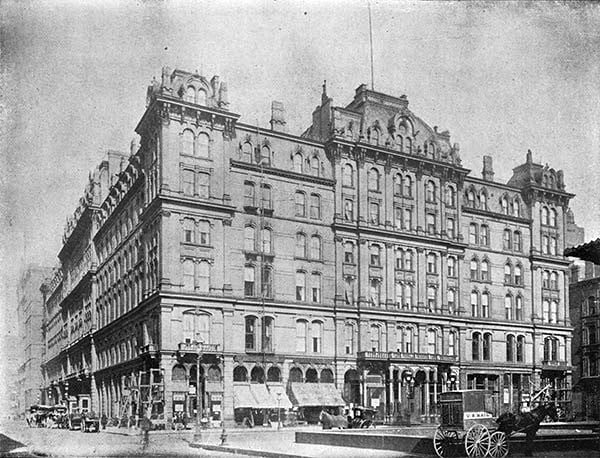
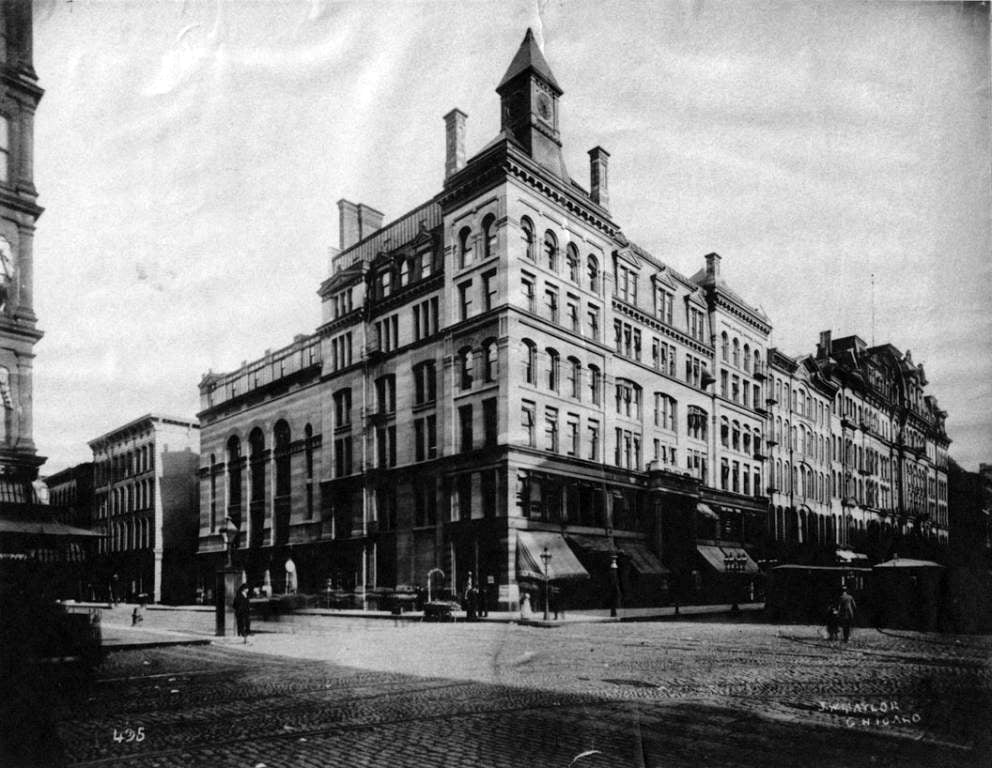
Chicagoans had their first glimpse of Wilde when a reporter from the Inter Ocean newspaper interviewed him at the Grand Pacific, the luxury hotel he was staying at, now long gone.
Wilde’s room was decorated with rare old books and an antique desk with inlaid pearl done in Japanese style, a popular aesthetic trend. The “skins of wild beasts,” identified in another newspaper as buffalo, and a gold silk fringed shawl were draped on the sofa, which had been pulled up to an angle with the bright coal fire blazing in the grate.
Wilde reclined on the sofa, smoking Turkish cigarettes. He wore a quilted black silk smoking jacket with scarlet collar and lapels, with matching black “pantaloons” with scarlet piping down the side. The outfit was completed with matching scarlet necktie, handkerchief, and stockings.
He greeted the reporter with “languid grace.” The first question put to him was what he thought of Chicago.
“That is a difficult question to answer,” replied Wilde. “I don’t pretend to have seen the city yet, I have been here too short a time; but from what I have seen I like it much better than New York. It is wonderful to think how you have built such a large city in so short a time, especially after such a great calamity as your great fire. But of course it is a little sad to think of all the millions of money spent on buildings and so little architecture. But that will come in time, no doubt.”
When asked if he had seen any art yet in Chicago, Wilde replied he had seen the work of a sculptor named John Donoghue. He praised the work as “of the highest artistic quality, more beautiful than the work of any sculptor I have seen yet.” He said Chicago should be proud of this young artist.
Wilde showed the reporter a plaque with a medallion of a young girl that Donoghue created to illustrate one of Wilde’s poems from the book “Poems” he had published in London the year before. He gave gifts of the book out frequently.
[A few weeks later, the newspaper reported that Wilde offered to advance Donoghue the funds to have one of the artist’s works cast in bronze and exhibited in London. He also ordered more of the medallions to give as gifts.]
He was asked how he liked the American people, and he responded the people on the East coast were very cosmopolitan; he expected to find “real American life” in the West. He said he found the audiences in the large cities to be “intelligent, courteous, and sympathetic.” There had been a few instances of disturbances in smaller, “provincial towns,” but “the good sense and good feeling of the majority entirely stopped” the disturbances.
Wilde was asked about the results of the tour financially, at which he showed “surprise” at the “outrageous question.” He was even asked outright how much he was making per night, but he did answer the questions. He was making $1000 per night in the big cities, less in the smaller cities.
He said that he was surprised by many comments of the newspapers. “They think it a strange and awful thing that I should want to make a few dollars by lecturing. Why, money making is necessary for art. Money builds cities and makes them beautiful. Money buys art and furnishes it an incentive. Is it strange that I should want to make money?”
That concluded his first published interview in Chicago.
During this first visit, Wilde was the guest of honor at luncheons, dinners, and receptions where he interacted with prominent Chicagoans like Marshall Field. He “talked very pleasantly on the subjects of dress, dancing, etc.” He was pronounced “perfectly charming” by the ladies.
When asked how he liked Chicago’s top social circles, Wilde replied, “I like your society people very much. They have all apologized to me for their newspapers. Your newspapers are comic without being amusing. English papers are founded on facts, while American papers are founded on imagination.”
Wilde might have charmed Chicago’s social circles, but he had less success with its cab drivers.
Wilde was the guest of honor at a society reception on Michigan Avenue, and a cab had been hired to then transport him to the Prairie Avenue district to be the guest at another house, that of architect John Wellborn Root, the partner of Daniel Burnham. Root was the creative genius of the team, and his designs using steel support beams would later pave the way for modern skyscrapers.
It was a dark and chilly night, and the driver, Frank Trudell, the foreman of Beardsley’s livery stables, could not find the address. The cab bounced around the muddy, unpaved streets, much to Wilde’s annoyance.
“I say, you ought to know where this is,” said Wilde, sticking his head out the cab’s window.
“Yes, I ought to know a good many things,” retorted Trudell.
Finally, Trudell pulled to the curb and told Wilde he had to get out of the cab and hold the horses while he, the driver, looked for the house. Wilde balked at the suggestion. What did the driver take him for? He was no hostler.
Trudell said he was not going to drive up and down the street all night. Either Wilde held the horses, or they headed back to downtown.
“Oh come, I say now, you wouldn’t do that,” said Wilde.
“Oh yes I will,” replied the cab driver.
Wilde “stepped out into the bleak night in knee breeches and dress coat” and fine shoes with silver buckles, and held the horses.
The house was located, and Wilde, still irritated, told Trudell to wait to take him back to his hotel. After waiting an hour and a half in the cold with restless horses, Trudell knocked on the door and sent a message to Wilde. If he wanted a ride back downtown, he had to leave then because Trudell would wait no longer.
Wilde came out and they left.
Next post: Oscar Wilde’s Memorable Lecture in Chicago.
Ridge Historical Society
By Carol Flynn
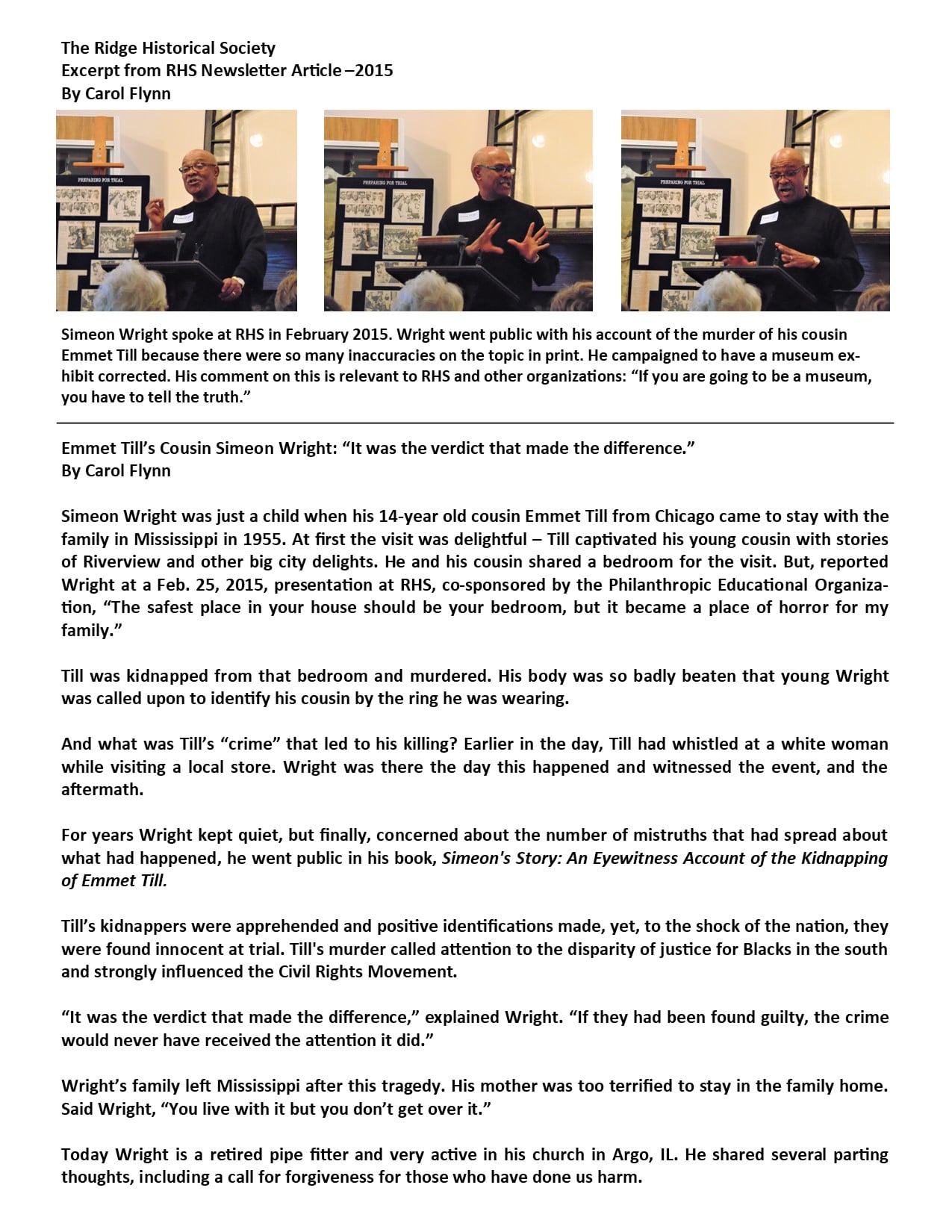
One of the proposed museums affected by the now-withdrawn zoning proposal is the Emmett Till House.
Emmett Till's cousin, Spencer Wright, gave a presentation at RHS in 2015. This was a newsletter article written at the time. Wright passed away in 2017.
Emmett Till's story needs constant retelling.
The Ridge Historical Society
March 2021 – Oscar Wilde’s Visit to Chicago – Part 4
By Carol Flynn
At the age of 27, Oscar Wilde was a trend-setter in the aesthetic movement, which emphasized the appreciation of beauty in life in general, and the arts in particular. He was outspoken about his ideas for art and architecture, which led to a lecture tour of the United States in 1882.
There were many critics of aestheticism because it went against the moral values of Victorian times. The term “decadent” became associated with the aesthetic lifestyle.
Wilde started on the east coast with a prepared lecture on the “English Renaissance” which covered the art movement in England. However, his audience in the U.S. found this too lengthy and theoretical, so he revised it into a lecture on “The Decorative Arts,” which he premiered in Chicago on February 13, 1882.
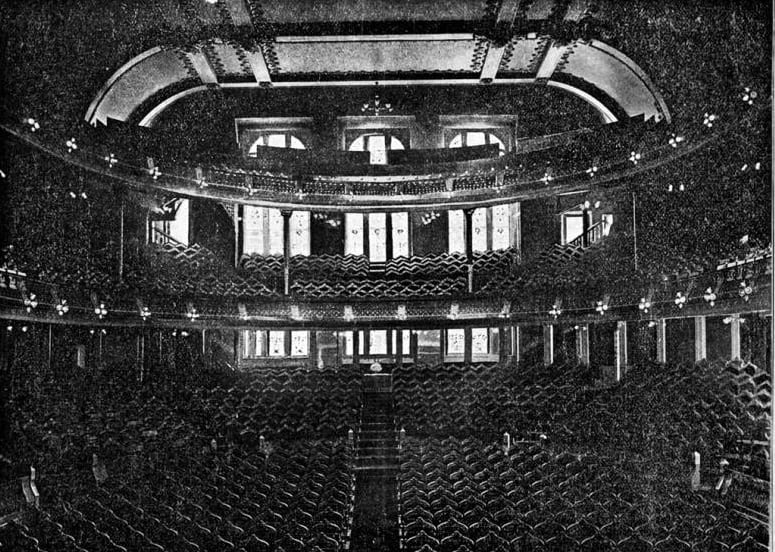
He appeared to a standing-room-only crowd at the Central Music Hall, a commercial building and theater designed by the architect Dankmar Adler (of Adler and Sullivan fame) which was located at State and Randolph. The theater, which sat 2000, was known for its excellent acoustics design, which Adler would further refine for the Auditorium Theater. The Central Music Hall was torn down in 1900 to make way for the Marshall Field building.
The newspapers, forever wanting to be critical of Wilde, dismissed the large attendance. Wrote the Chicago Tribune, “Actuated probably more by motives of curiosity than any expectation of learning very much that was new, a large crowd of fashionable people gathered at Central Music Hall last evening to greet the much-advertised Oscar Wilde.” However, the newspaper still had to admit that for the 2000+ in attendance, “there was not the slightest suggestion of rowdyism or ridicule.”
The newspapers carried the entire text of Wilde’s lecture the next day. He started by praising the handicraftsmen who brought art to decorative items, and he was intolerant of machine-made items. His themes included developing “local schools of art” that would encourage and support young and emerging artists and craftsmen, and would foster an appreciation of art in all of the population, rich and poor alike. He was not opposed to commercialism in art, as “commercial men” had built the most artistic cities of the world. He believed that the nation which absorbed the artistic spirit into its heart would create such treasures as had never been seen before.
Wilde usually brought in local references based on his tours and observations of the host city. He did that in Chicago.
His first local reference, met by loud applause, was to the relief efforts from other cities after the Great Chicago Fire: “The swift legion of fiery-footed engines that bore to the ruins of your burning city the love, health and generous treasures of the world – that was as noble and as beautiful as any golden troop of angels that had ever fed the hungry or clothed the naked in the antique time.”
The second local reference made a more lasting impression on Chicagoans. To this day, Oscar Wilde has not been forgiven or forgotten for these comments.
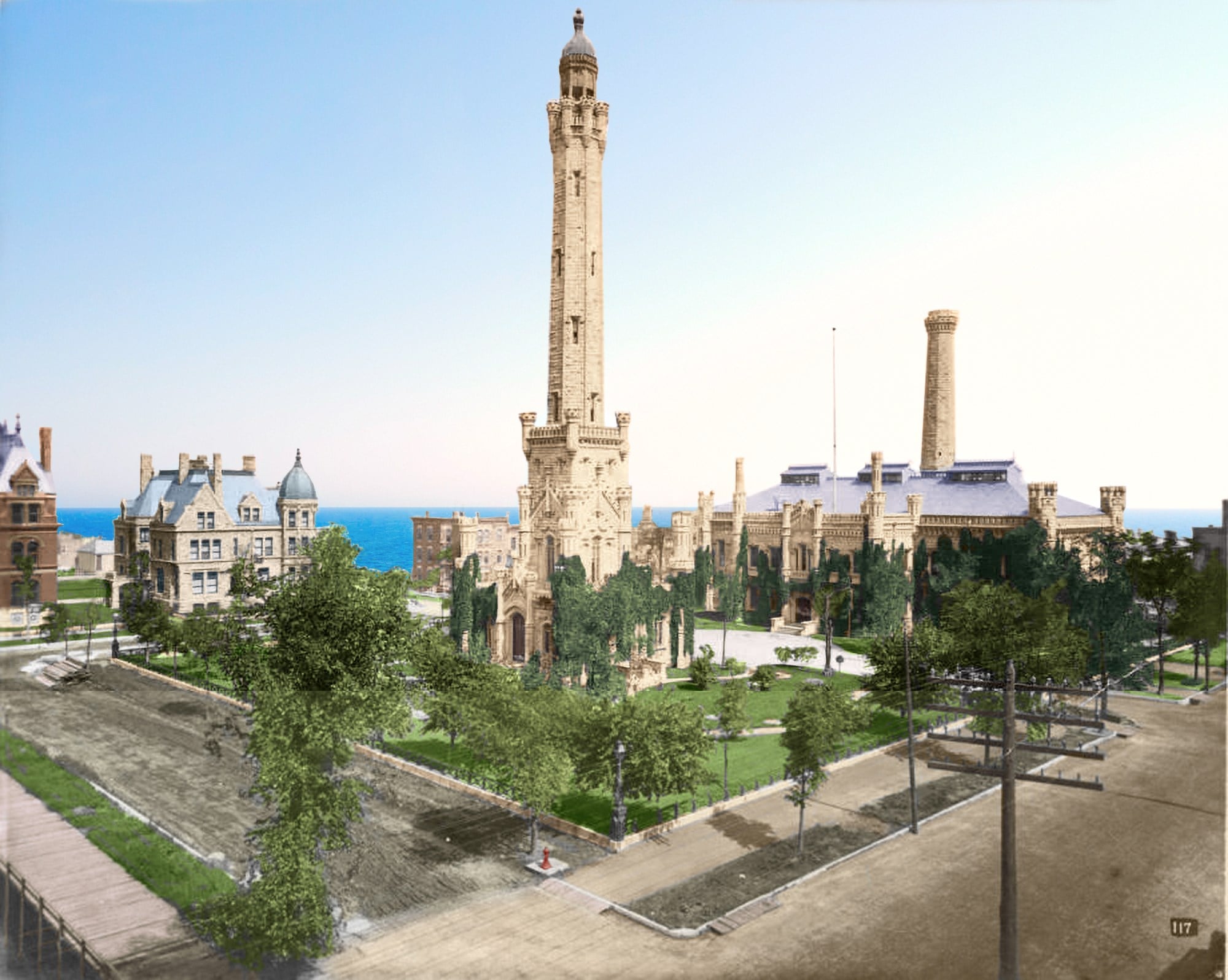
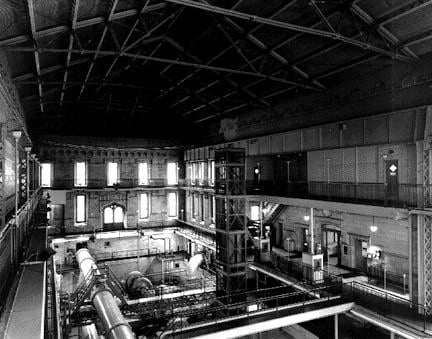
Wilde praised the mechanics of the Chicago Avenue Pumping Station, then he said, “but when I came out and saw your water tower, that castellated monstrosity, with pepper-boxes stuck all over it, I felt amazed and grieved that you should so misuse gothic art, and that when you built a water tower you should try to make it as unlike a water tower as possible, and make it look like a medieval fortress.”
He was, of course, speaking about the structure that has become one of Chicago’s most famous and most loved landmarks, the Chicago Water Tower at 806 N. Michigan Avenue. Built in 1869, today it is listed on the National Register of Historic Places.
The audience laughed and applauded his comments at the time, but the next day, a Chicago Tribune reporter took to task the “prophet of the beautiful” for his remarks that “wounded the pride of Chicago’s best citizens.”
“I can’t help that,” replied Wilde. “It’s really too absurd. If you build a water tower, why don’t you build it for water and make a simple structure of it, instead of building it like a castle, where one expects to see mailed knights peering out of every part?”
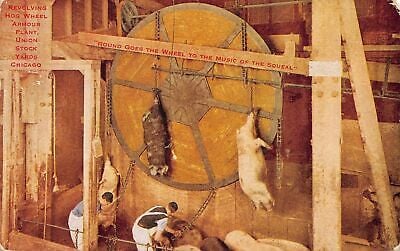
The conversation wrapped up when a horrified Wilde declined a visit to the Chicago stockyards to view the slaughter of pigs, one of Chicago’s popular tourist attractions of the day. As scheduled, he left the next afternoon to tour other cities.
In later notes that he wrote on his “Impressions of America,” he went into more detail about the pumping works. He said, “There is no country in the world where machinery is so lovely as in America. I have always wished to believe that the line of strength and the line of beauty are one. It was not until I had seen the waterworks at Chicago that I realized the wonders of machinery; the rise and fall of the steel rods, the symmetrical motion of the great wheels is the most beautifully rhythmic thing I have ever seen.”
Wilde spoke in other Midwest cities before returning to Chicago on March 11 for a few more days.
Next post: Wilde’s second visit to Chicago.
The Ridge Historical Society
March 2021 – Oscar Wilde’s Visit to Chicago – Part 5 – Conclusion
By Carol Flynn
Oscar Wilde left Chicago on February 15, 1882, to take his lectures on aestheticism to other Midwestern cities, including Detroit, Cleveland, Indianapolis, St. Louis, Milwaukee, and Dubuque. In Illinois, he made stops in Springfield, Rockford, Aurora, Joliet, Peoria, and several other small cities before he returned to Chicago on March 11.
He stayed again at the Grand Pacific, and that evening, gave another lecture at the Central Music Hall. The weather was bad, so this time the house was about two-thirds full. The Chicago Tribune described the audience as “cultured.”
Wilde wore a black velvet suit with knee britches, black silk stockings, a white lace tie, and white kid gloves. His topic was “Interior and Exterior House Decoration.” This was a new lecture he put together to premiere in Chicago, the first city he visited twice, necessitating a second lecture. This lecture would be later called “The House Beautiful.”
In this lecture, Wilde shared his views for proper architectural details. He said yes to terra cotta embellishments; he said no to iron railings. He liked red brick and brass door knockers.
He also discussed home furnishings and decorating. He said keynotes and gradations of colors should appear in rooms like the answering calls in a symphony of music. He said yes to area rugs and no to heavy furniture. He liked plenty of flowers and candlelight. He said china should be used, not kept hidden away in a closet. He said the only thing worse than no art was bad art.
Although this time he did not create the same kind of controversy as he had with his comments about the Water Tower, he was critical of Americans and their home decorations. His opinion was that much of it was “second class.” He was not advocating that people buy expensive items, but rather ones that were handmade, well-made, and pleasing to look at.
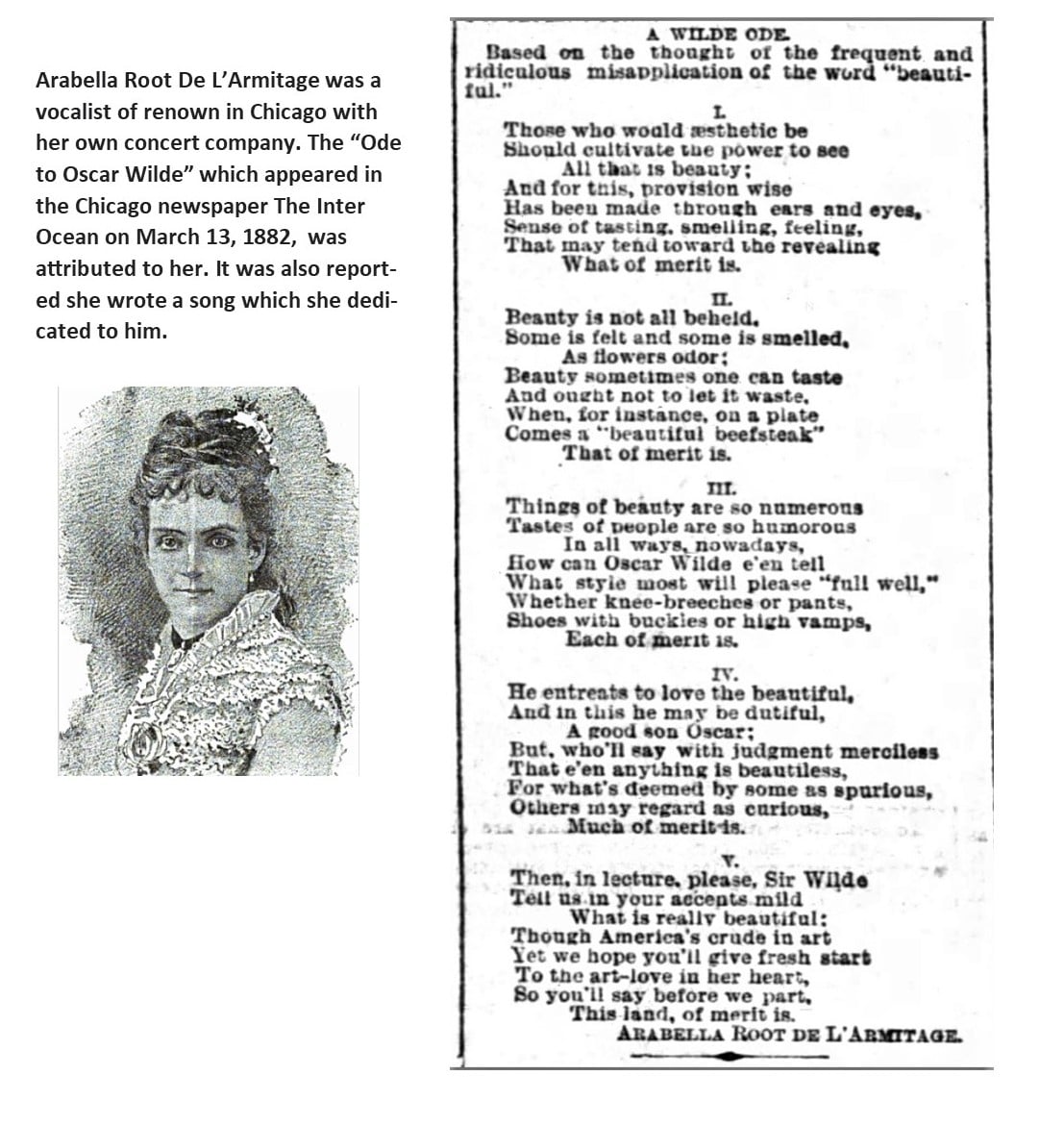
Following the presentation, there were two curious newspaper articles concerning a woman named Arabella Root De L’Armitage. She was a highly regarded vocalist with her own concert company.
The first article appeared in the Inter Ocean newspaper on March 13. It was a letter critical of Wilde’s talk on decoration, followed by a sarcastic poem, all attributed to Mrs. De L’Armitage. She said Wilde’s talk was full of “little nothings, idle visions, and absurd doctrines.” Her poem included lines like, “He entreats to love the beautiful, and in this he may be dutiful, a good son Oscar.”
Yet, the second article, in the Inter Ocean on March 18, reported that during this second stay, Wilde visited the Lyon and Healy piano rooms to hear her perform a new aesthetic piece, “Sunflower Song.” She wished to dedicate the song to Wilde if it pleased him.
Wilde displayed his considerable charm in the letter he wrote to her in response: “Your song, whose dedication is so courteously offered, I accept with rare pleasure, for what could come from a nightingale but what is beautiful.”
The true nature of Mrs. De L’Armitage’s feelings for Wilde are hard to interpret with these conflicting articles. Perhaps the song was a parody of aestheticism.
Scheduled to leave Chicago for his next commitment, Wilde sent a “pleasant letter of regret” to the Irish American Club in response to its invitation to attend a St. Patrick’s Day banquet. He spent that day in St. Paul, Minnesota, where he gave an impromptu speech on Irish patriotism, the only time he is known to have spoken on this topic, although it was a topic very dear to his mother, Lady Jane Wilde.
On March 19, the Chicago Tribune ran a surprising article. After being critical of Wilde for months, it stated: “It is humiliating to confess, but nevertheless true, that when a stranger visits Chicago his host has nothing to show him but that ‘castellated monstrosity’ – the water-tower, a number of high buildings, a labyrinth of dirty streets, hog-killing by machinery at the Stock-Yards…. Oscar Wilde was a personified caricature of the vagaries of art, but his criticisms of Chicago’s deficiencies in the artistic and beautiful were fair and timely…. Chicago should have an opera-house, an art-gallery, a museum, a great library, and schools of music, painting, architecture, and polytechnics ….”
Of course, Chicago would get all of these things with time – and they are among the best cultural institutions in the world.
Wilde spent the next eight months touring Canada and the western and southern sections of the U.S., then returning to New York. Of all places, he was a big hit with the rugged miners in western camps. In one escipade, he was challenged to a drinking contest by several of them. He left them passed out on the floor while he exited on his own two feet.
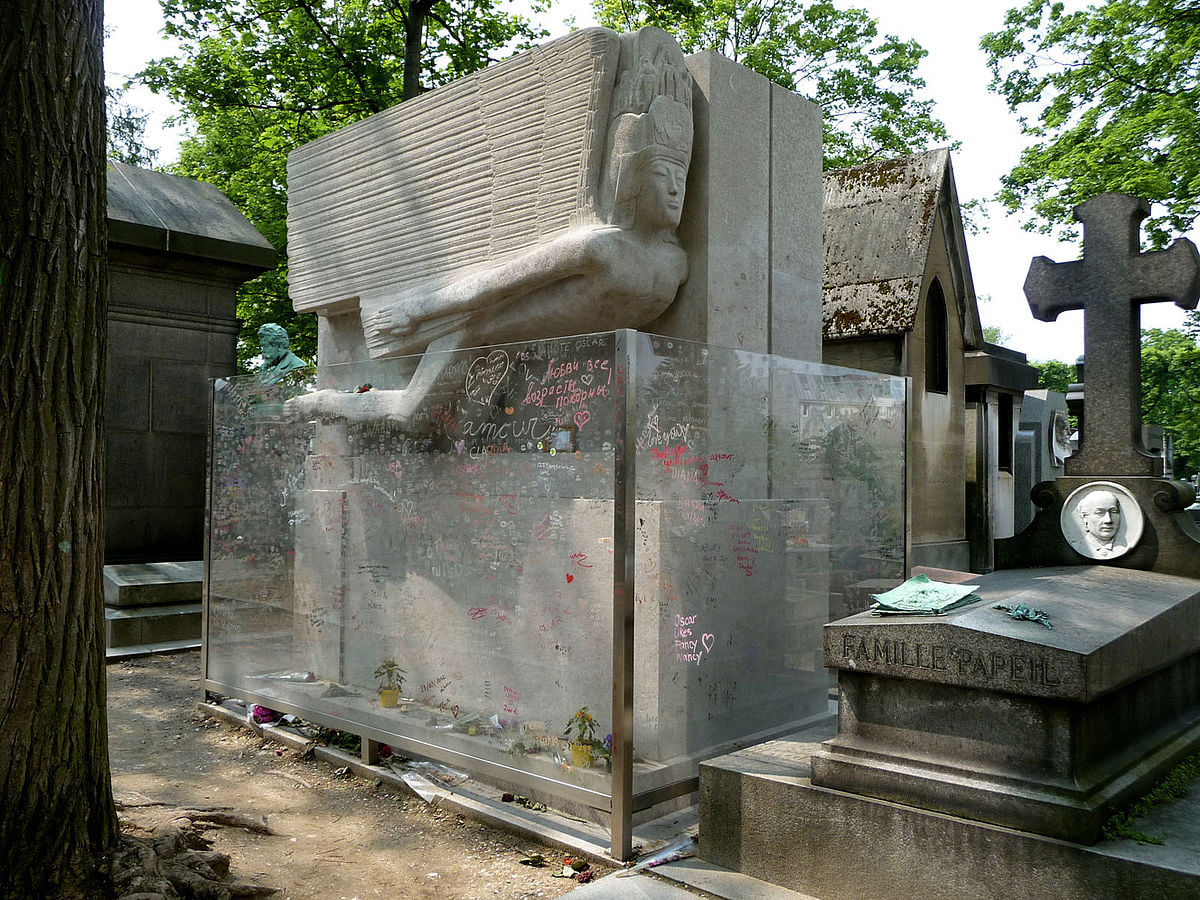
Returning to England, Wilde wrote his famous works. He married Constance Lloyd and they had two sons. But his career came to an end when he served two years in prison for homosexual acts. After that, he went into exile in France, where he died in November 1900 of meningitis at the age of 46. His gravesite with its modernistic sculpture had to be enclosed in glass to protect it from a constant stream of visitors.
In 2017, he was among approximately 50,000 men pardoned for homosexual “crimes” that no longer exist in British law.
The aesthetic movement tapered off with Wilde’s death in 1900. It did leave the world some “beautiful” art, literature, and decorative items. Many of the influences and leaders of this movement continued into the Arts and Crafts and the City Beautiful Movements of the early 20th century.
Preservation movements to save historical and cultural structures were also influenced by aesthetic principles. The irony that he inadvertently helped Chicago’s “castellated monstrosity” survive to today would have been appreciated by Oscar Wilde.
In conclusion, Oscar Wilde said about himself: “Yes, I am a dreamer. For a dreamer is one who can only find his way by moonlight, and his punishment is that he sees the dawn before the rest of the world.”
The Ridge Historical Society
Easter Sunday 2021
By Carol Flynn
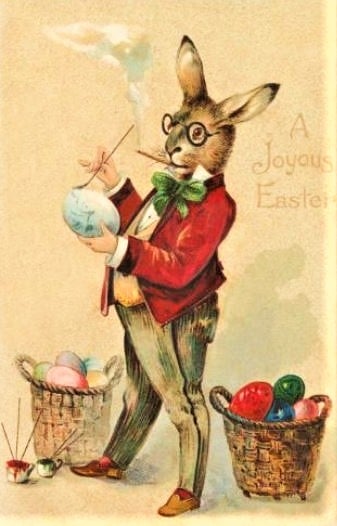
Here are some vintage postcards for Easter.
I always wonder on a day like today as we compare the true meaning of the day, a religious holy day, and the secular, commercial aspect.
Who is the bigger hero on Easter? Jesus Christ or the Easter Bunny?
Happy Easter.
The Ridge Historical Society
Native Americans in the South Side Communities
By Carol Flynn
Seeking: People from the Blue Island Ridge communities and other south/southwest Chicagoland areas who are of Native American descent who would be willing to talk to me about their perspectives and experiences living in this area.
Why?
What we are working on: We are currently finishing up a background paper on the history of Native Americans in the Blue Island Ridge communities that can serve as a beginning point for local groups or individuals writing Land Acknowledgement Statements, or putting together any kind of programs on the topic, etc. This will be available to anyone who wants it. We will run this as a series on Facebook, also. This will be a constant "work in progress" updated and enhanced regularly. It is not an exhaustive document, it is a beginning point to help people get familiar with the history and issues.
I have plenty of historical resources – we've been in touch with the American Indian Center, Newberry Library, we have resources from the University of Chicago, plenty of books and articles and old maps and local history resources. I am looking for real, everyday people to talk to.
I intend to turn this into a general article for the Daily Southtown newspaper, expanding the information to include points west and south of the Ridge – Palos, Will County, Thornton, etc.
It is reported that there are around 65,000 Native Americans representing 175 Nations in the Chicago area, but most of these people are concentrated on the North Side. There is very little Native American presence reported in the Blue Island Ridge communities. Depending on the source, the population of Native Americans or “Other” which includes Native Americans is always given as less than 2%. One source lists 0% for Mount Greenwood and Washington Heights, 0.4% for Beverly, 0.9% for Morgan Park, and 0.8% for Blue Island.
My guess is that there are people with some Native American ancestry who are counted in the other groups.
So I would love to "meet" some people of Native American ancestry who would agree to be interviewed. They can contact me personally through Messenger, or through the RHS Facebook page – I see the messages but they are not made public. Please feel free to share this request with anyone you know.
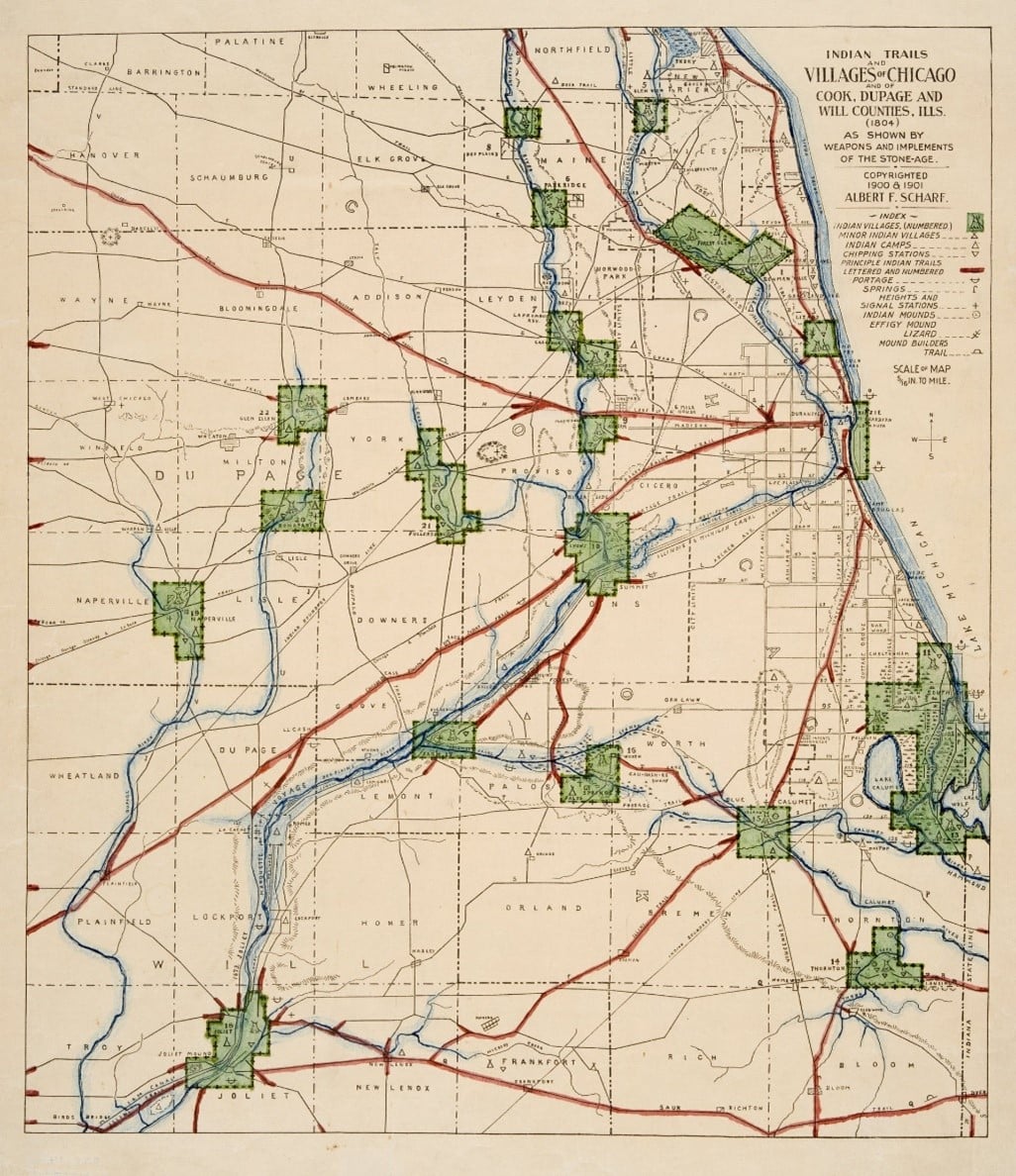
Here is a very interesting map, going back to 1804, updated and reproduced in 1900-01, showing Indian trails and sites in the area. Note the outline of the Blue Island and the sites in the area.
The Ridge Historical Society
“Harvesting Ethnic Roots”
By Carol Flynn
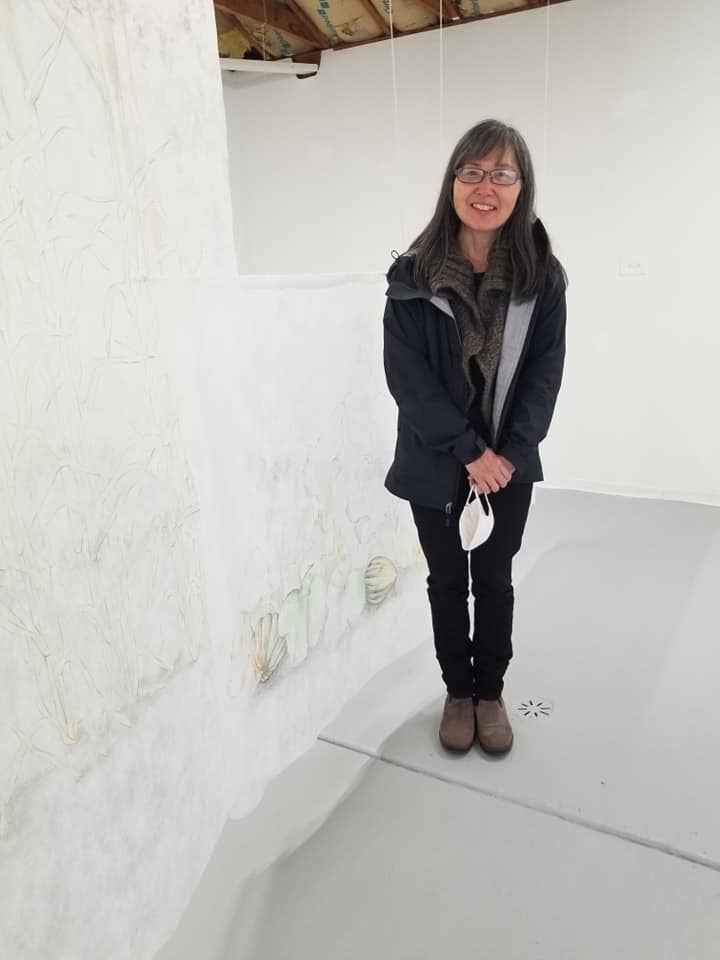
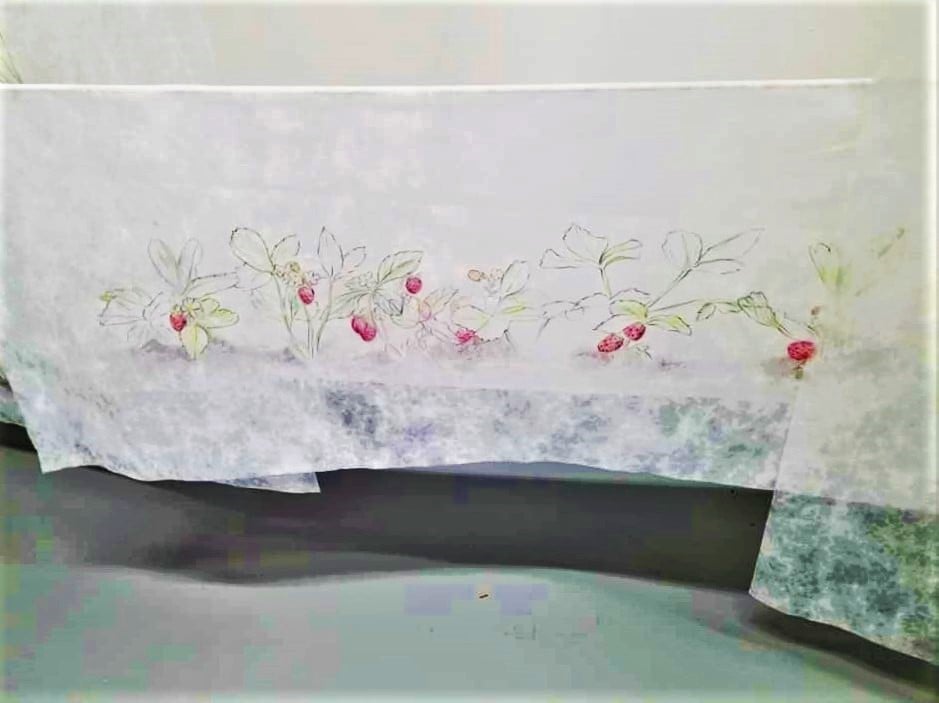
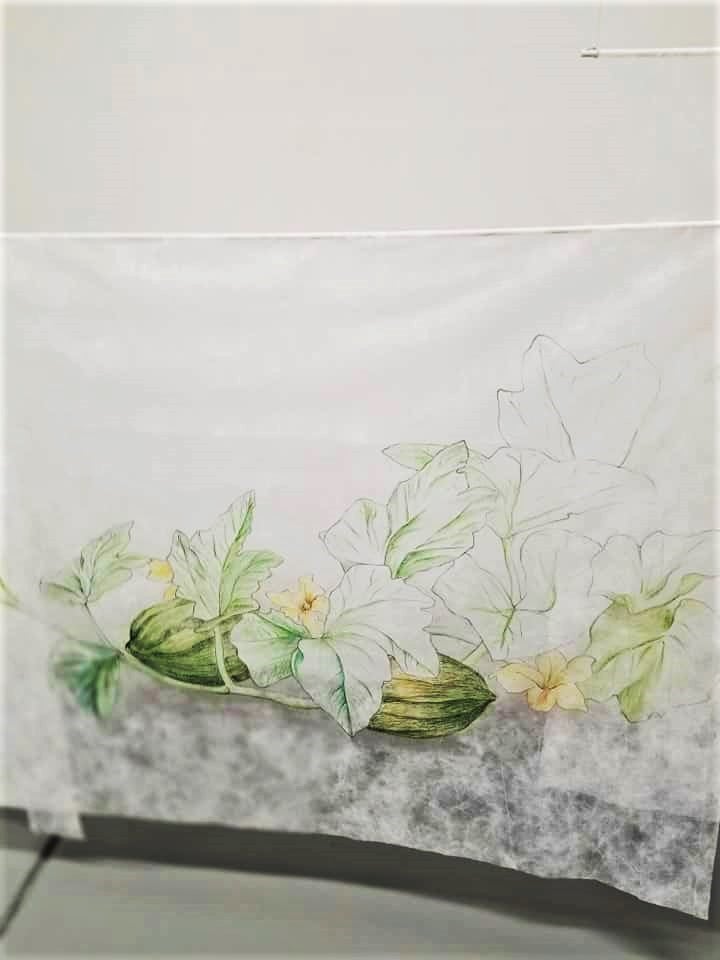
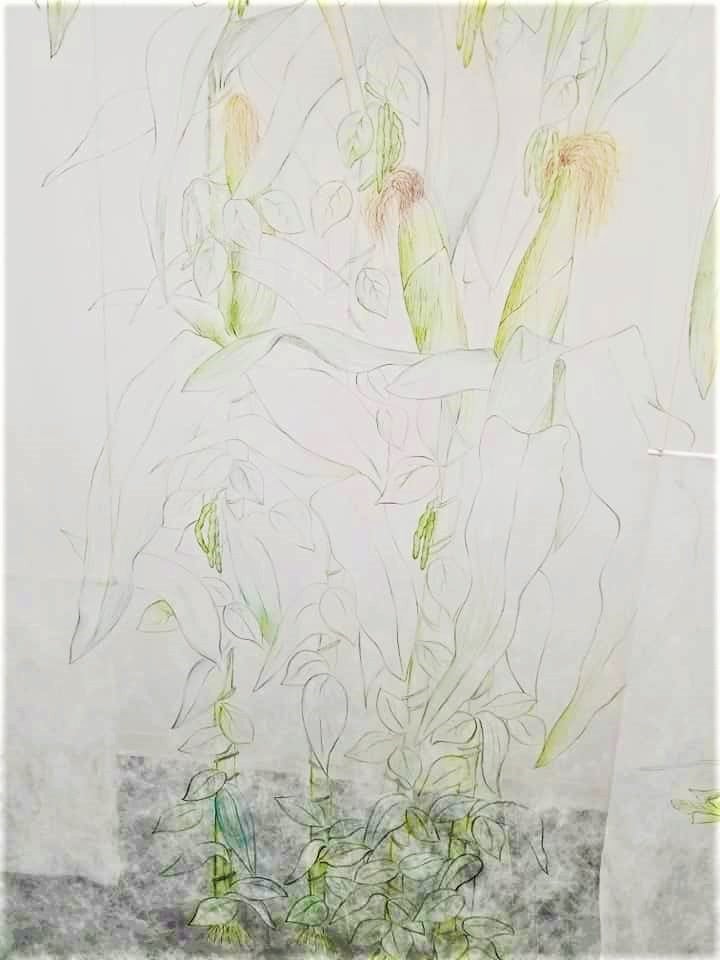
Chicago artist Joanne Aono opened a new exhibit today at boundary. The exhibit is called “Harvesting Ethnic Roots” and it represents the cultural food identity and history of the diverse peoples who settled in the Ridge area. In fact, Joanne used the Ridge Historical Society (RHS) and RHS Historian Linda Lamberty as research resources while she developed the concept of the project.
Joanne is interested in food sovereignty and immigration experiences. Food sovereignty is the right of peoples to healthy and culturally appropriate food produced through ecologically sound and sustainable methods. Joanne and her husband have a 10-acre holistic farm.
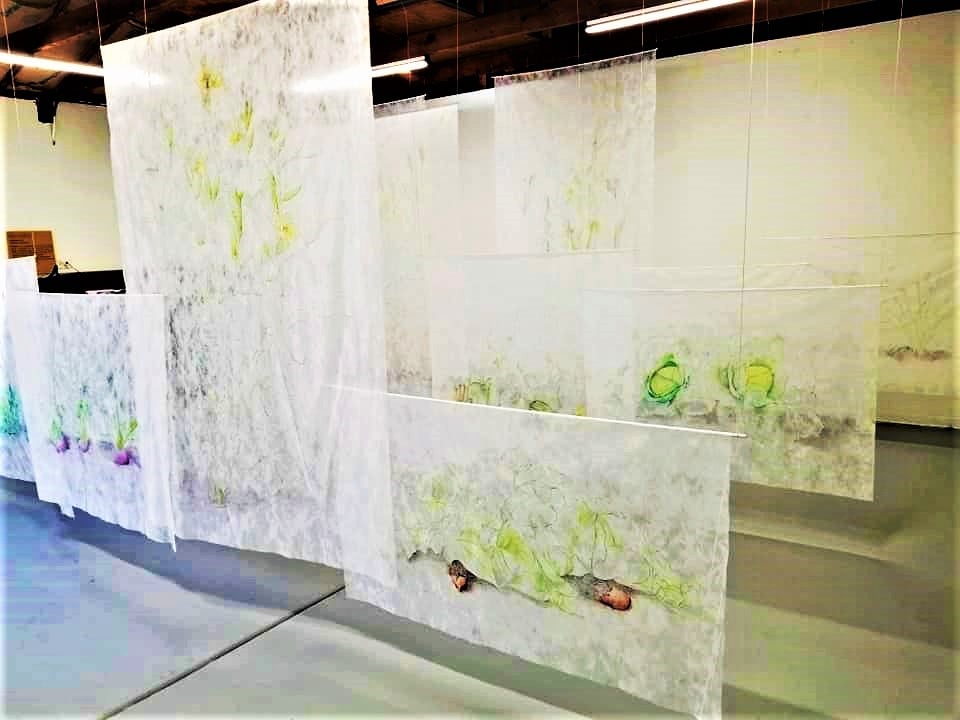
In this exhibit, large drawings depict foods gathered or cultivated in the Ridge communities by inhabitants during three historical periods. The back row of drawings depicts the foods gathered and grown by Indigenous Peoples who lived in the area until 1835. These include wild rice, strawberries and onions; and cultivated corn, beans and squash.
The middle row depicts the foods raised by the European settlers, who arrived in the 1830s. Rye and lettuce are two of the crops depicted.
The front row depicts the food items grown by Black Americans who settled in the Chicago area after the U.S. Civil War, many of them descendants of slaves. Collards and okra are two of the items included.
The images are created in pencil, colored pencil, and marker, on sheer material that is used to cover crops. The panels are hung to overlap and sway in the breeze as the viewer walks through them. The delicate drawings and white sheer material create a ghostly, dreamlike experience of days past when the Ridge was natural and rural and some of the land was used for raising and gathering food.
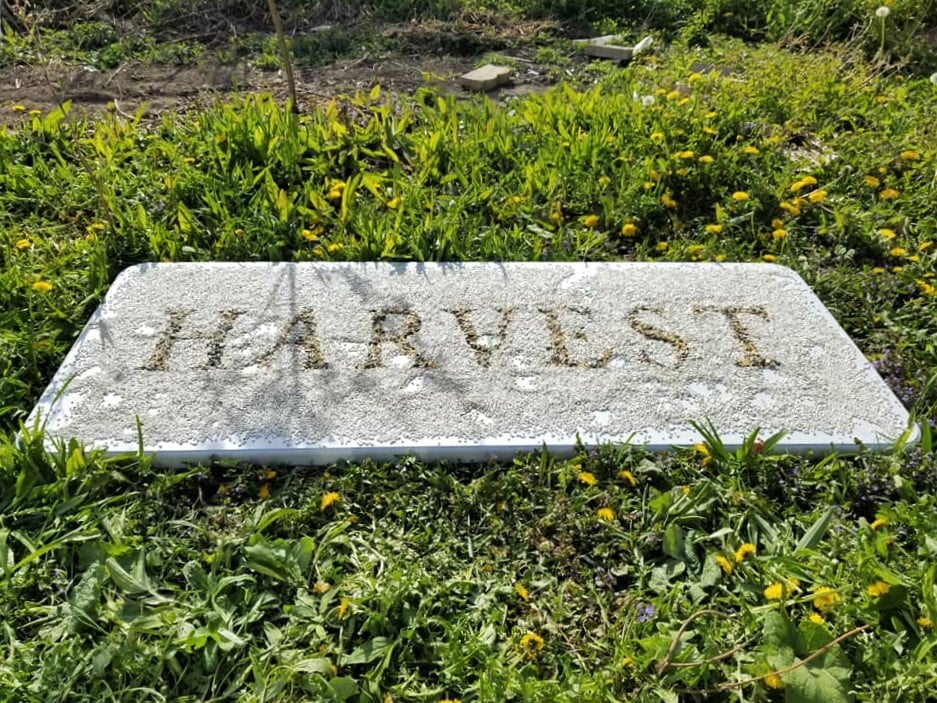
A second part of the exhibit is an outside installation called “Harvest” and consists of a base covered with seeds. Nature – animals, birds, wind and weather – will scatter the seeds and eventually reveal a quote underneath, by Fannie Lou Hamer, a sharecropper and civil rights activist. To learn the quote, you’ll have to visit the exhibit.
Joanne’s website is www.JoanneAono.com.
boundary is a visual arts project space located in a renovated garage on the Ridge, at 2334 West 111th Place, Chicago. The owner is Susannah Papish. The exhibit will run until June. Gallery hours are Saturdays, 12-4 p.m., or by appointment. Go to boundarychicago.space to book an appointment.
My photos do not do justice to the exhibit. The drawings are very delicate and dreamlike, and the details and colors are not caught well in these photos, so I did a lot of enhancing. I‘ll try to get better pictures – or better yet, get over to the exhibit to see it for yourself.


The Ridge Historical Society
Anniversary of Tornado
By Carol Flynn
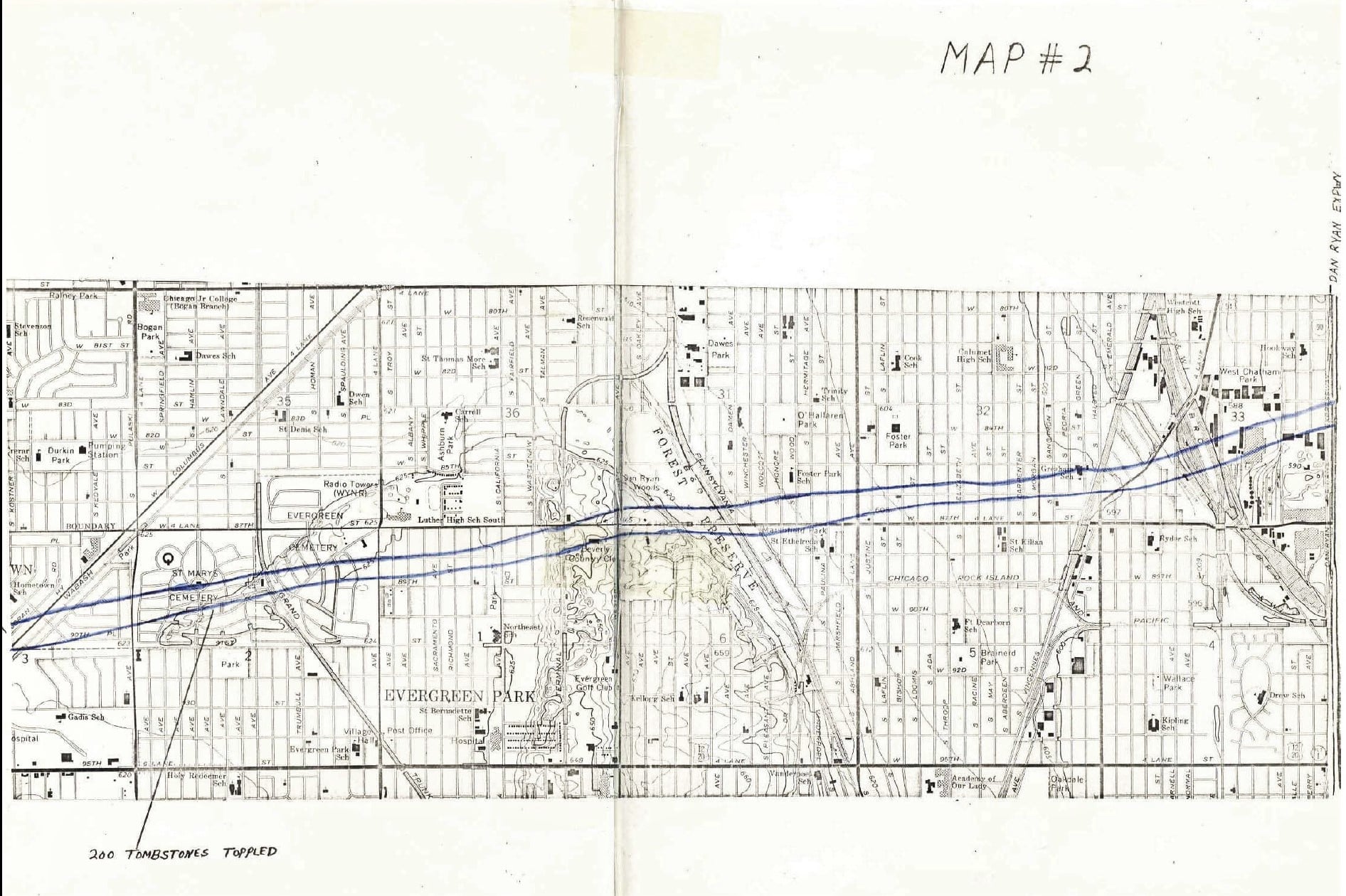
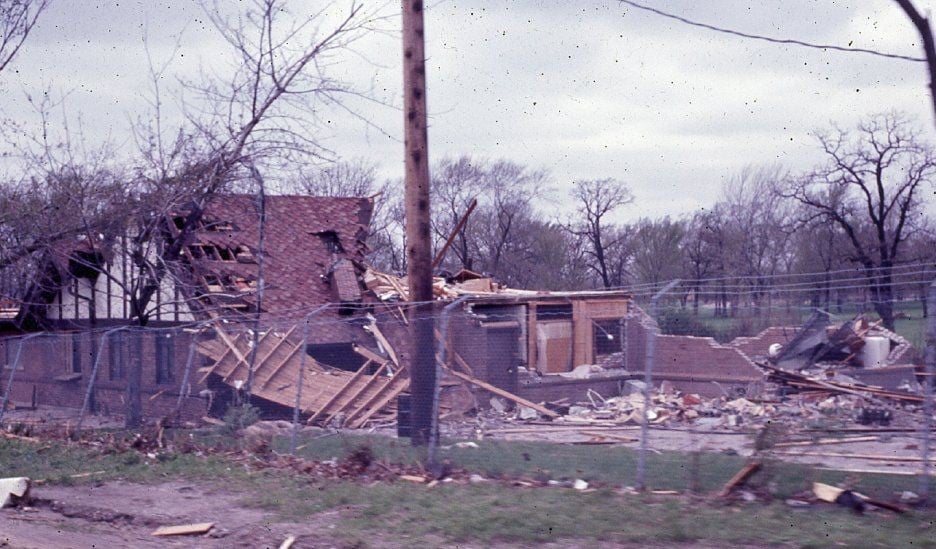
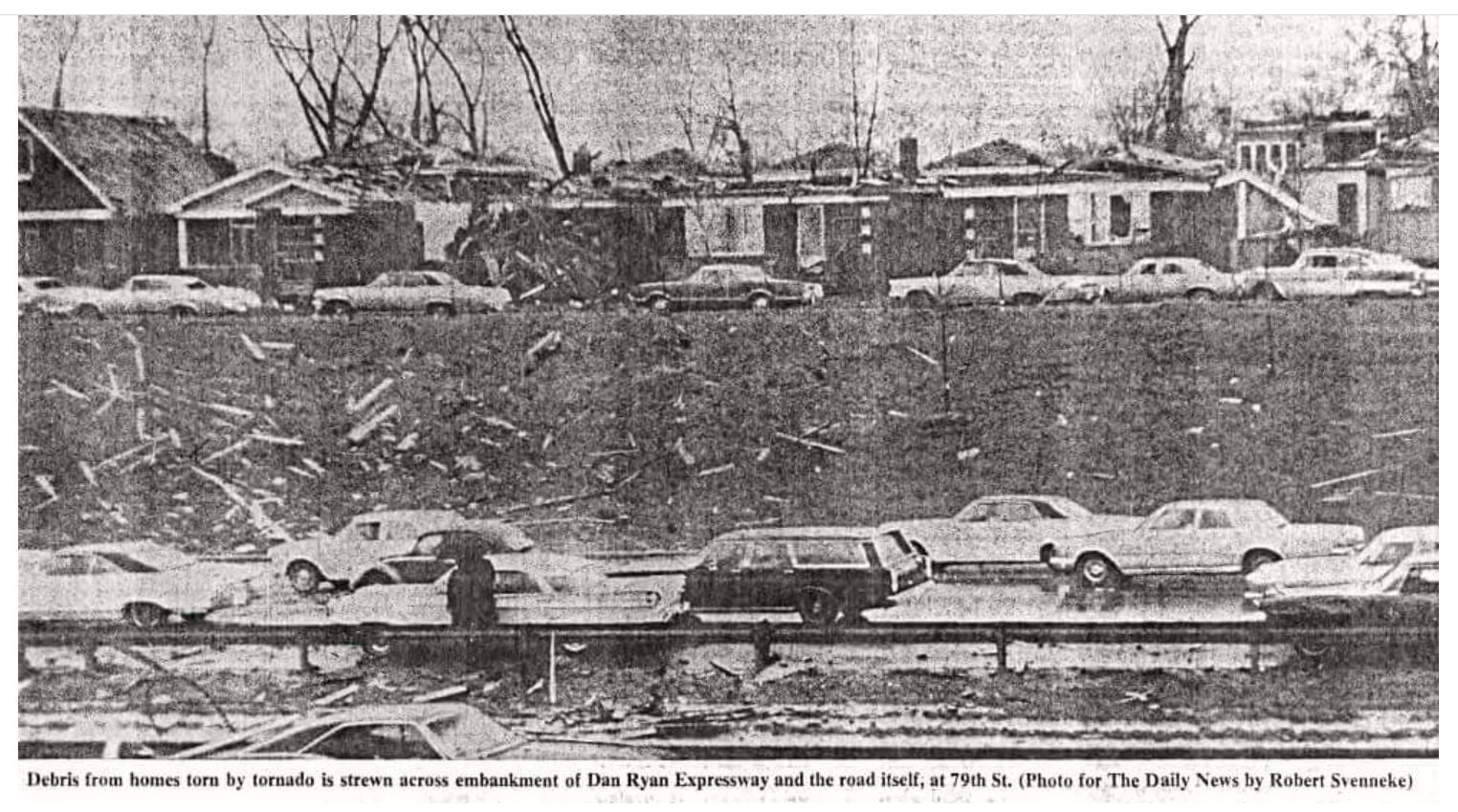
On April 21, 1967, the deadliest tornado in the history of northern Illinois came through the area right at evening rush hour.
At 5:24 p.m., the twister touched down in Palos Hills by 106th Street and 88th Avenue where Moraine Valley Community College is now, and started moving east-northeast. It reached its maximum size and intensity as it passed through Oak Lawn, Hometown and Evergreen Park.
The funnel continued along 87th Street, destroying a building at the Beverly Country Club, and tore through Dan Ryan Woods, uprooting and damaging hundreds of trees.
It continued northeast, weakening, until it moved into the lake as a waterspout at Rainbow Beach around 79th Street.
The tornado caused 33 fatalities and over 1,000 injuries, and more than $50 million in property damage. Beverly was largely spared because of the forest preserve’s location. Our sympathies continue to this day to be extended to the communities devasted by this natural disaster.

The Ridge Historical Society
Earth Day 2021
By Carol Flynn
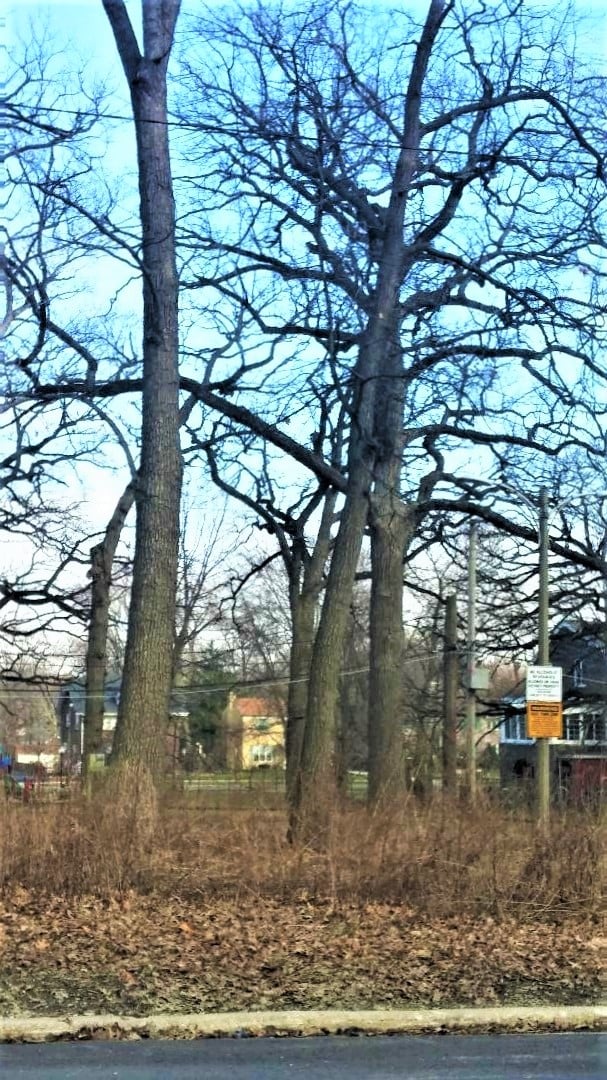
Edited: I did not mention Dan Ryan Woods in my original post! Of course, the forest preserve connects us to Earth Day and the "Wild Ridge." That is an obvious example. The upper woods are an example of "Open Woodlands," an ecosystem that was prevalent in the area. Water drained from the top of the Ridge to the east into the lower woodlands where the water pooled into wet areas before being absorbed into the ground. Descriptions of the "island" itself reported that the sides were heavily wooded and much of the top of the table of land was prairie.
Following is information about the other ecosystems of which there are still remnants in the Ridge area.
Thursday, April 22, is Earth Day. It is a global event established in 1970 to support environmental protection. The theme this year is Restore Our Earth.
This is a good opportunity to once again share a favorite history topic – the “Wild Ridge.” This is a look back at the natural environment of the Ridge before it was “developed” by European settlers. There are a few remnants of the land left from the days when it was the ancestral homelands of Native Americans.
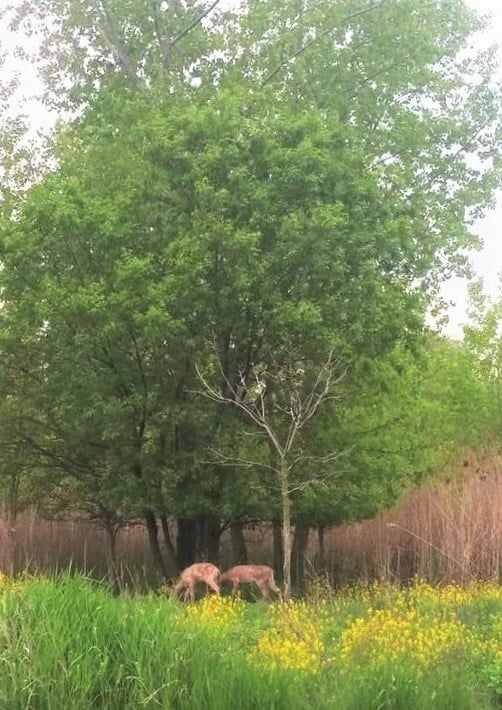
The Ridge Wetlands is a teeny-tiny remnant of the marshes and sloughs that predominated in the land between the Ridge area and Lake Michigan. This land provided abundant nourishment and other life necessities for wildlife and Indigenous Peoples – wild rice, berry brambles, and other food plants; stop-overs and breeding grounds for migratory waterfowl; ecosystem for fur-bearing animals like beaver and muskrats.
Note that this is why so many lawns and basements to the east of the Ridge flood – they are built on natural wetlands and there is no place for the water to go. The water is supposed to be there – houses are not!
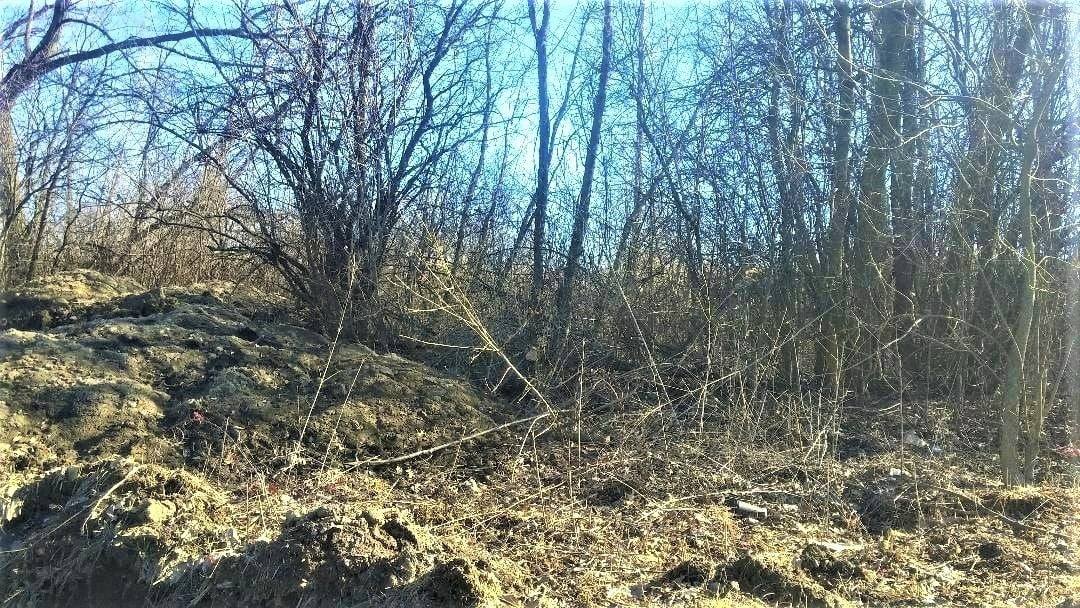
The Oak Savannah remnant at Hurley Park. The drier areas had numerous groves of timber, predominated by oak. Also included were fruit trees like apples and plums, nut trees like walnuts and hickories, and birch trees good for making canoes. Numerous species of birds and small mammals made their homes in the trees. Deer and bears and lynx found refuge there.
Note that many of the heritage oak trees in the Ridge areas are reaching the end of their lifespans, about 200 years. They have not been replaced. Within the next 50 years, a lot of these trees will die, and the tree canopy will be gone.
Vast stretches of prairie land were the migration path for buffalo, as well as the home for countless species of birds and small mammals, and wild food plants, including the wild onion or garlic that gave Chicago its name.
Any substantial prairie land is gone from this area. Some prairie remnants can be seen in local cemeteries.
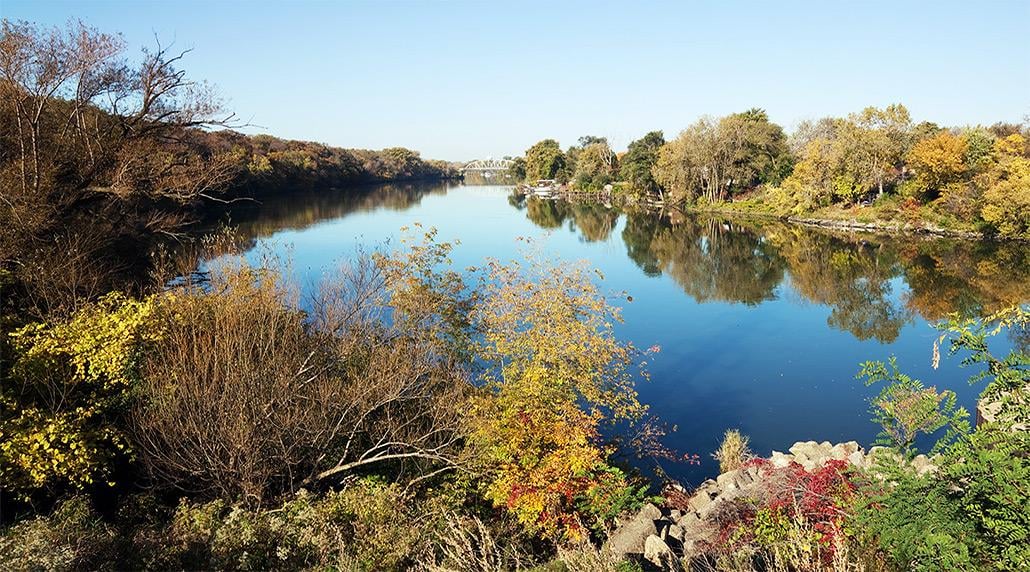
The waterways, the Calumet River system and Stony Creek at the southern edge of the Ridge, teemed with fish – trout, pike, bass, perch, etc.
Stony Creek was absorbed into the Cal-Sag Channel. The Illinois Department of Public Health puts severe restrictions on eating fish caught from the Calumet system due to contamination.
The sand dunes which formed on the western side of the Blue Island, which can still be seen today in the cemeteries along that ancient shoreline, also had their own ecosystem of plants, birds, and other animals. Wolves built their dens there, in the well-drained soil.