
Explore the RHS Facebook Archives, a rich repository of local history written by Carol Flynn. For two decades, Carol brought a deeply dedicated voice to public education at RHS. Her role as Facebook administrator through mid-2025 naturally extended her prolific research into meticulously detailed articles, most notably her multi-part historical series posts. Today, Carol continues her local history writing for The Beverly Review and other outlets.
All Posts
The Ridge Historical Society
National Poetry Month – Part 6 on the Hofer Sisters
By Carol Flynn
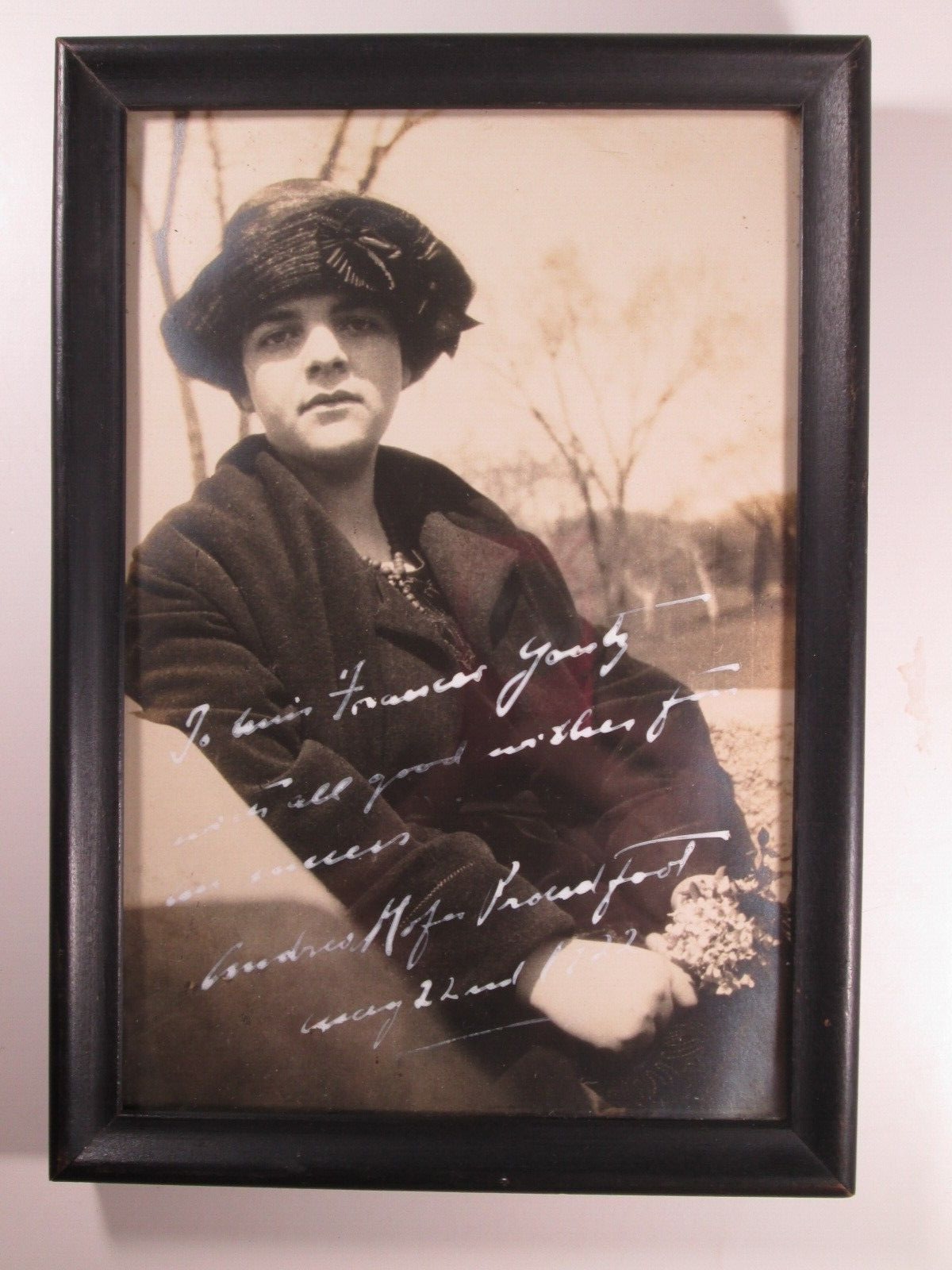
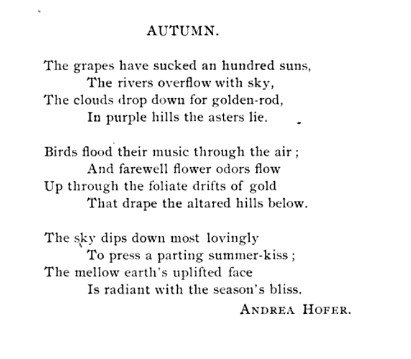
Continuing our series on the Hofer sisters of Beverly, this post presents Andrea Hofer Proudfoot (1866 – 1949), the fourth of the five sisters. Like her sisters, she was a pioneer in the kindergarten movement. She was also the poet in the family, a timely story for National Poetry Month in April.
In the mid-1880s, Andrea joined her sisters in moving to Chicago from Iowa for education and career opportunities.
Documentation of her education has not been found yet, but was likely similar to her sisters’. Theirs included attending the Chicago Kindergarten College and doing graduate work at the University of Chicago and other universities, and at least one of them, Bertha, studied in Germany at a kindergarten college run by the niece of Friedrich Froebel, the pioneer educator in the kindergarten movement. The kindergartens in the U.S. were based on Froebel’s system, and the Hofers were strong advocates of his teachings.
Andrea was a writer, and was interested in the publishing field, which she and her brothers and sisters learned about at the newspaper their father ran in Iowa.
In 1889, Kindergarten Magazine was started, offering professional articles and practical tips for kindergarten teachers. The magazine was also designed to appeal to mothers of young children. It quickly became important in the field, with well-regarded educators like Elizabeth Peabody and Francis W. Parker involved.
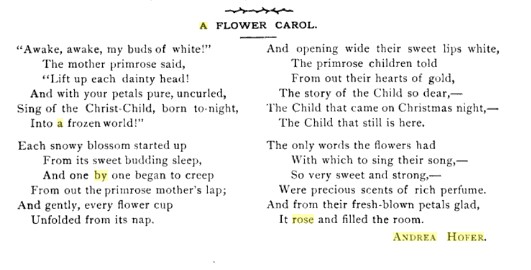
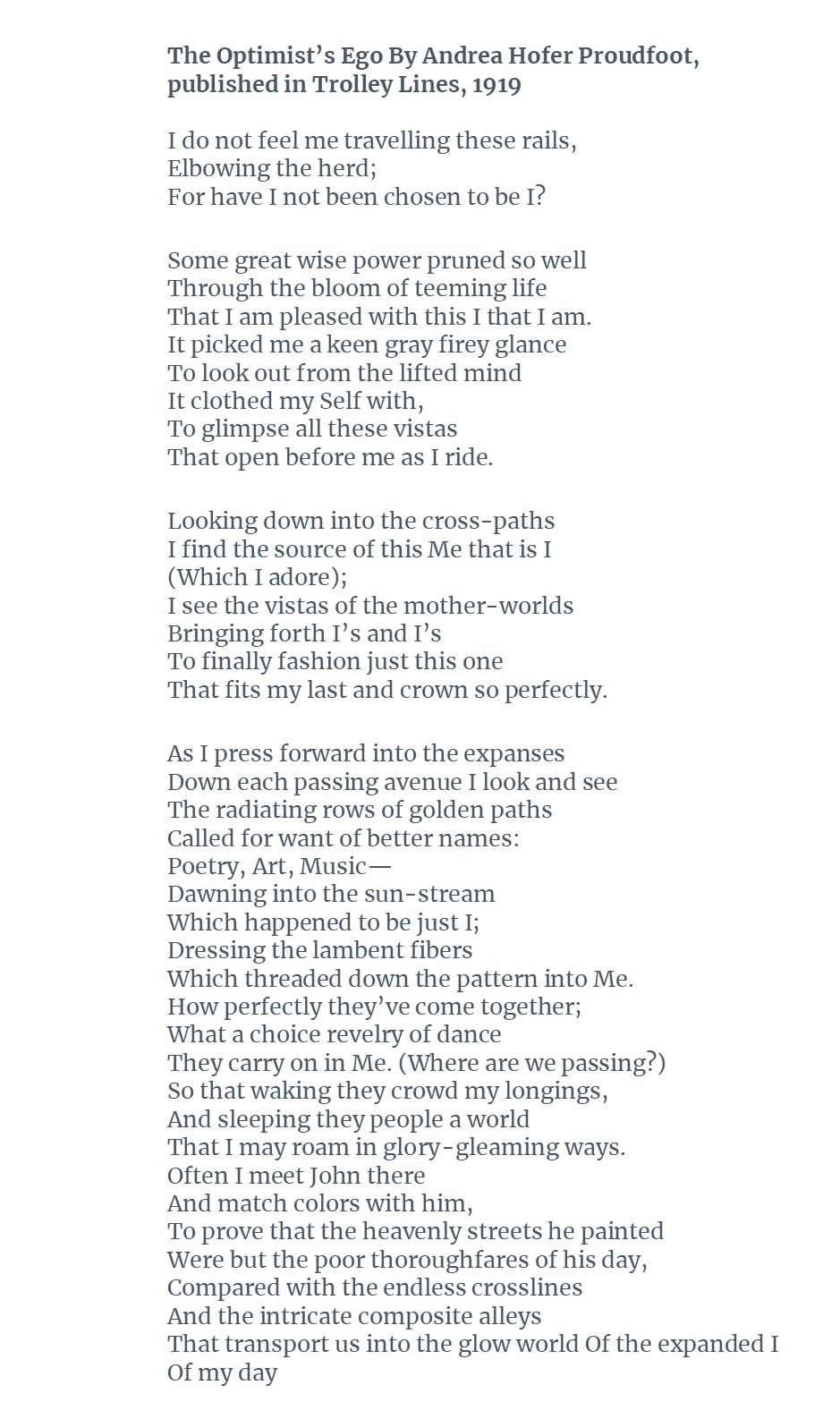
Andrea volunteered as assistant editor for Kindergarten Magazine in 1890-91, and several of her articles and poems appeared in the magazine. Examples were “Lessons in Zoology,” “Francois Delsarte – His Life Work,” “A Morning’s Talk for Froebel’s Birthday,” “Don’t Say Don’t,” and “The Labor Problem and the Child.” Her poem, “A Flower Carol,” is presented here.
Andrea also wrote articles on kindergarten that appeared in other journals, like the Northwest Journal of Education. One example in 1893 was “Kindergarten – A Little Talk on Literature for Children,” which discussed gift-book giving for children. The article started with the statement, “’There is nothing too good for the children,’ is the rule of the Kindergarten.”
In 1892, Andrea and her older sister Amalie bought Kindergarten Magazine, and on January 1, 1893, their new corporation, the Kindergarten Literature Company, was started. They were listed as co-editors of the magazine. Their parents and other supporters contributed financially to the magazine. Andrea, Amalie, and older sister Mari Hofer, the musician in the family, all contributed significantly to the content of the magazine, and it became the premier publication in the kindergarten field.
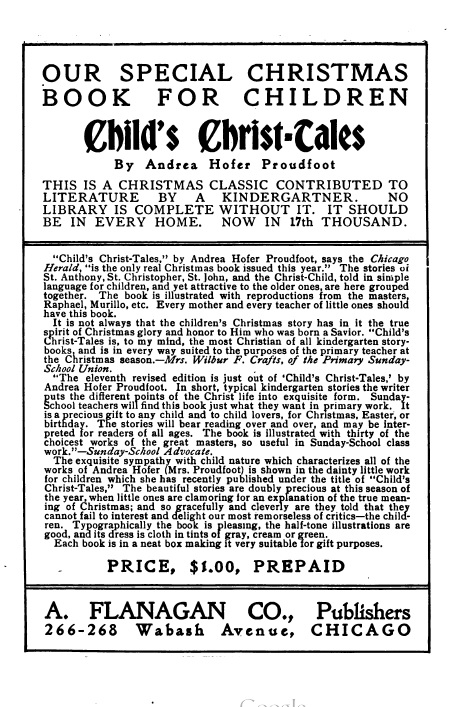
Andrea wrote a small book, Child’s Christ Tales, with stories, poems, and illustrations about the birth and childhood of Jesus, that was published in 1892. Much of her writing had a religious theme to it.
On November 9, 1893, Andrea married Frederick William Proudfoot, a lawyer from Englewood whose practice included legal work with the Chicago Board of Trade. His younger sister, Mary Proudfoot, was a kindergarten director and art teacher who rose to some prominence in the field. Mary wrote articles for Kindergarten Magazine; one example was “Day by Day with Nature – For the Kindergarten and Primary Grades.”
One of Proudfoot’s wedding gifts to Andrea was an estate in North Beverly known as “Oakhurst.” This became the site of a kindergarten training school she founded with her younger sister, Elsa, called The Froebellian School for Young Women. In the summers, they ran the school as the Longwood Summer School.
Andrea also started an organization in Beverly called the League of American Mothers.
The next post will look at Andrea’s and Elsa’s Beverly-based operations.
The Ridge Historical Society
National Library Week
By Carol Flynn
April 23 to 29 is National Library Week, and this year’s theme is “There’s More to the Story.” The theme refers to all of the benefits that libraires offer in addition to books, including programming that brings communities together, lending items like museum passes and musical instruments, helping people enhance their literacy skills, and now, offering technology services.
That theme can be expanded to include that there is always more to the historical stories posted on this Facebook page, also. Here’s some of the stories behind the libraries on the Ridge.
According to “The First Hundred Years – A Story of Blue Island 1835-1935” by John H. Volp, books and magazines were not plentiful in the early days of settlement on the Ridge, the 1840s-50s. Available reading material consisted of the books each family brought along when they settled here, and occasional copies of Chicago newspapers that found their way to the Blue Island.
One scholarly gentleman in the Village of Blue Island, Thomas McClintock, had a large collection of better books on history and travel locations. Known for his philanthropic ways, he readily agreed to permit the loan of his books to the villagers when requested to do so by a village committee.
A system was worked out to allow people to borrow books for a certain number of days at a slight fee, creating Blue Island’s first circulating library. There were about one hundred books available.
In 1854, a new school was built, and a fine library was established, with 800 volumes on history, science, travel, and fiction. The principal, Professor Rodney Welch, saw to it that there was no “trash” in the collection. The collection was available to the villagers.
According to the Blue Island Historical Society, in the 1870s, a formal library was opened in a storefront on Western Avenue.
In 1890, the Current Topics Club, a forerunner of the Blue Island Woman’s Club, raised money to expand the library, and the Blue Island Library Association was chartered. The library had hired a librarian and moved to a larger location, and the collection had grown to 1,600 books, when a fire destroyed the central business district, including the library, in 1896.
All that was left were the 84 books out on loan at the time. Within a week, the library had reopened in a private home, and Blue Islanders contributed books, equipment, and funding to reestablish the library.
In 1897, the voters of Blue Island approved the establishment of a free public library, with a public assessment. The ground floor of the Village Hall was remodeled for use as the library. The large, comfortable reading room became a popular place.
In 1902, the city purchased the property on the south side of York Street from J. P. Young for the site of a new public library. That is the site the Blue Island Public Library sits on today.
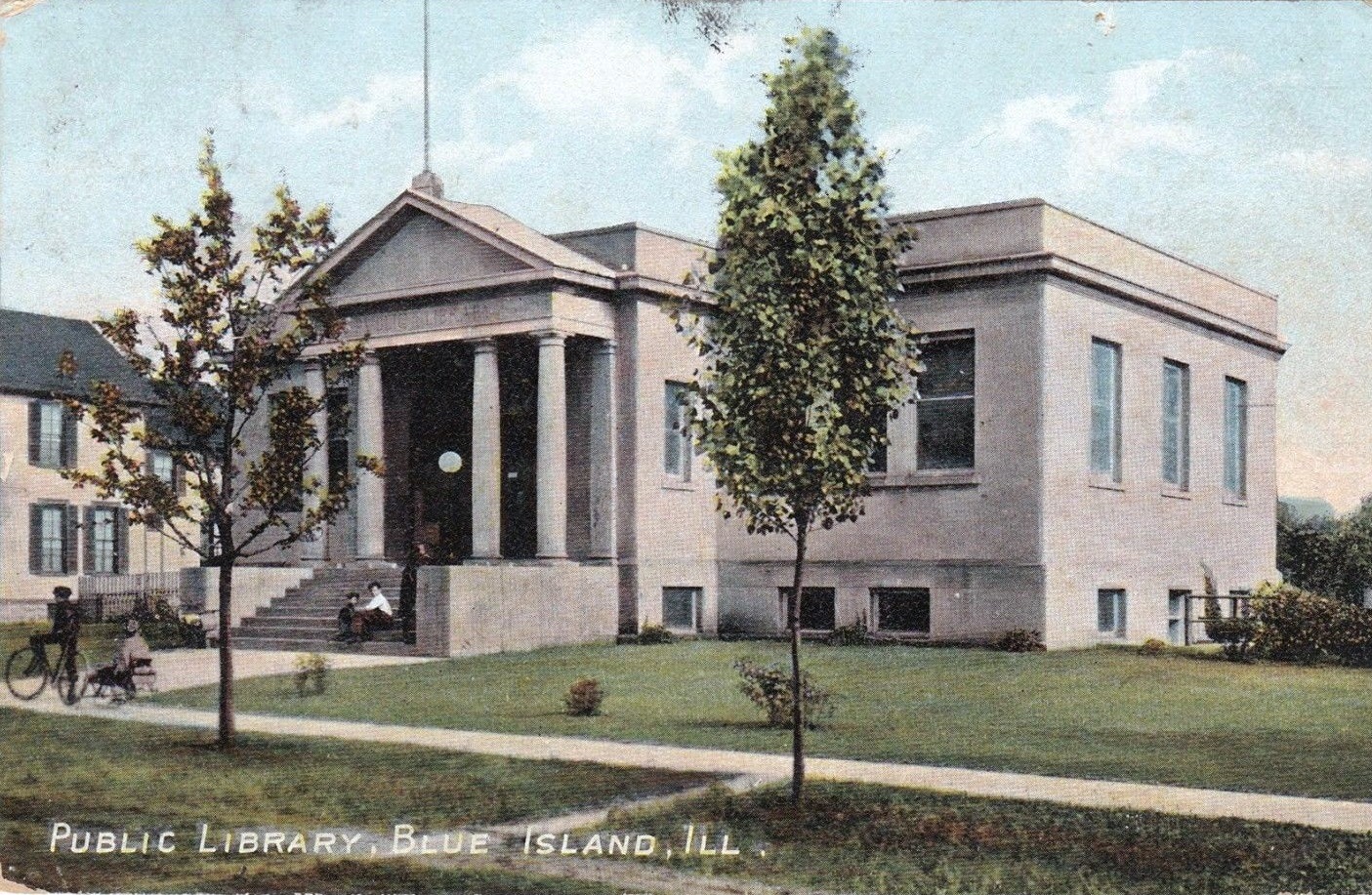
Andrew Carnegie, the wealthy industrialist and philanthropist, was financing the building of public libraries in municipalities that committed land and funding for this purpose. Blue Island accepted his offer to build a grand library of stone with marble accents and oak paneled walls on the York Street site. This building was referred to as the “Carnegie” by Blue Islanders.
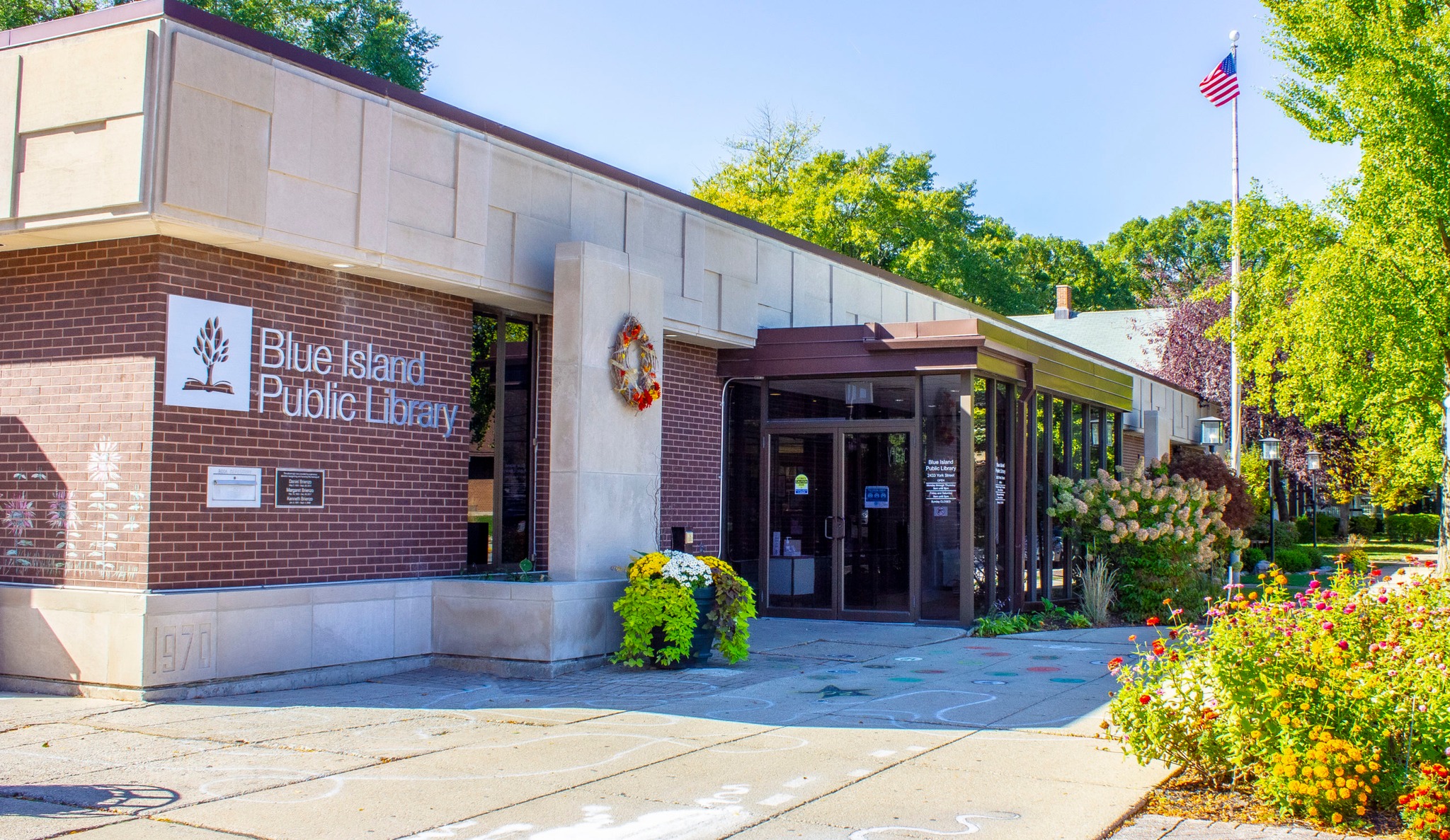
This original “classical” library building was replaced by the current “modern” one in 1969.
Next post: The Walker Library is founded in Morgan Park.
The Ridge Historical Society
National Library Week – The Walker Branch Library
By Carol Flynn
April 23 to 29 was National Library Week, and we’re looking at the history of the libraries on the Ridge. The previous post covered the first library on the Ridge, the Blue Island Public Library. This post will look at the Walker Branch Library in Morgan Park.
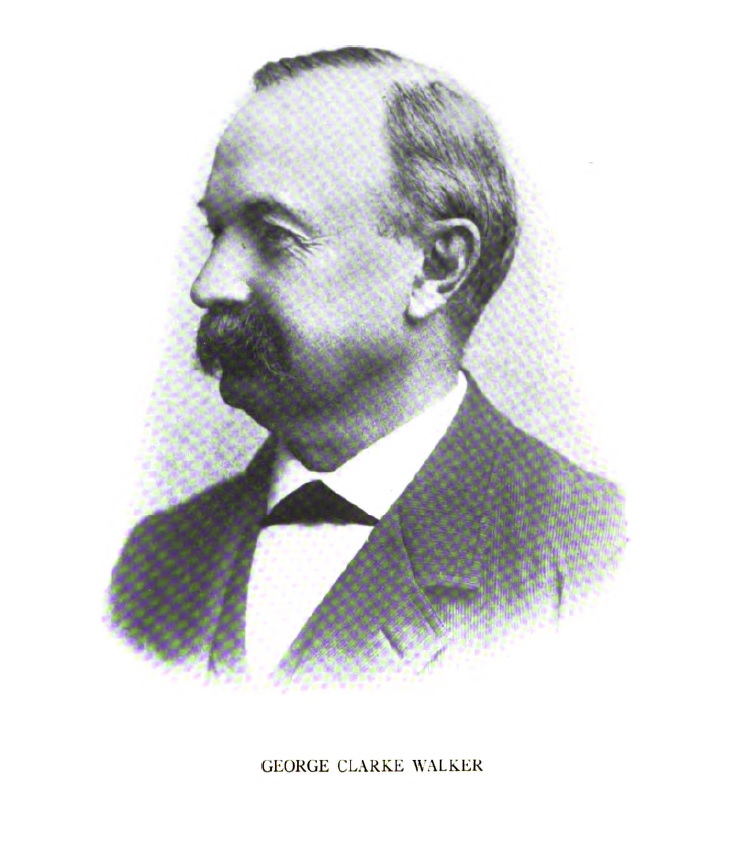
George Clarke Walker (1835 – 1905), a prominent merchant and financier, gave Morgan Park its library.
Walker was born in New York, and came to Chicago at the age of 12. His father rose to prominence in Chicago as a grain merchant who helped establish the Board of Trade, the “old” University of Chicago, and the city’s first railroads. Walker took after his father with his acumen for business and community development. He was a founder of the Chicago Academy of Sciences, the Illinois Humane Society, and the South Park system (which merged into the Chicago Park District).
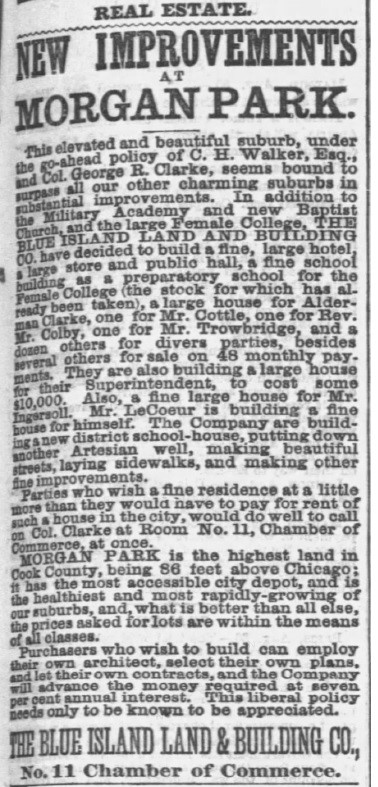
In 1861, Walker organized the Blue Island Land and Building Company (BILBC), which was deemed “one of the great business undertakings of his life” and which “occupied nearly half his life.”
In 1869, BILBC bought much of the land of the original Thomas Morgan estate for development. They planned a community they called “Morgan Park” and hired Englishman Thomas F. Nichols to lay out the land to look like an English village. Beginning in 1873, the development was marketed to the public.
Morgan Park was positioned as an education, religious, and temperance community, and a good library was a necessity. In 1889, the Morgan Park Library Association was formed, headed by three of the leading residents, Isaac S. Blackwelder, Frank P. Silva, and Charles O. Ten Broeke. Other trustees included Dr. William H. German and Austin W. Wiswell. Subscriptions lists, or memberships, were started, and the growing community responded – there were 121 subscriptions within a few months. Many early community libraries were established as private undertakings, financed by membership fees and donations.
Although Walker never lived in Morgan Park, he was heavily invested in the area and supportive of improvements, and was behind the plans for the library. He personally financed the building of the library.
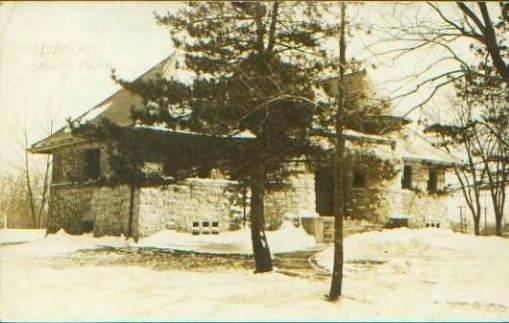
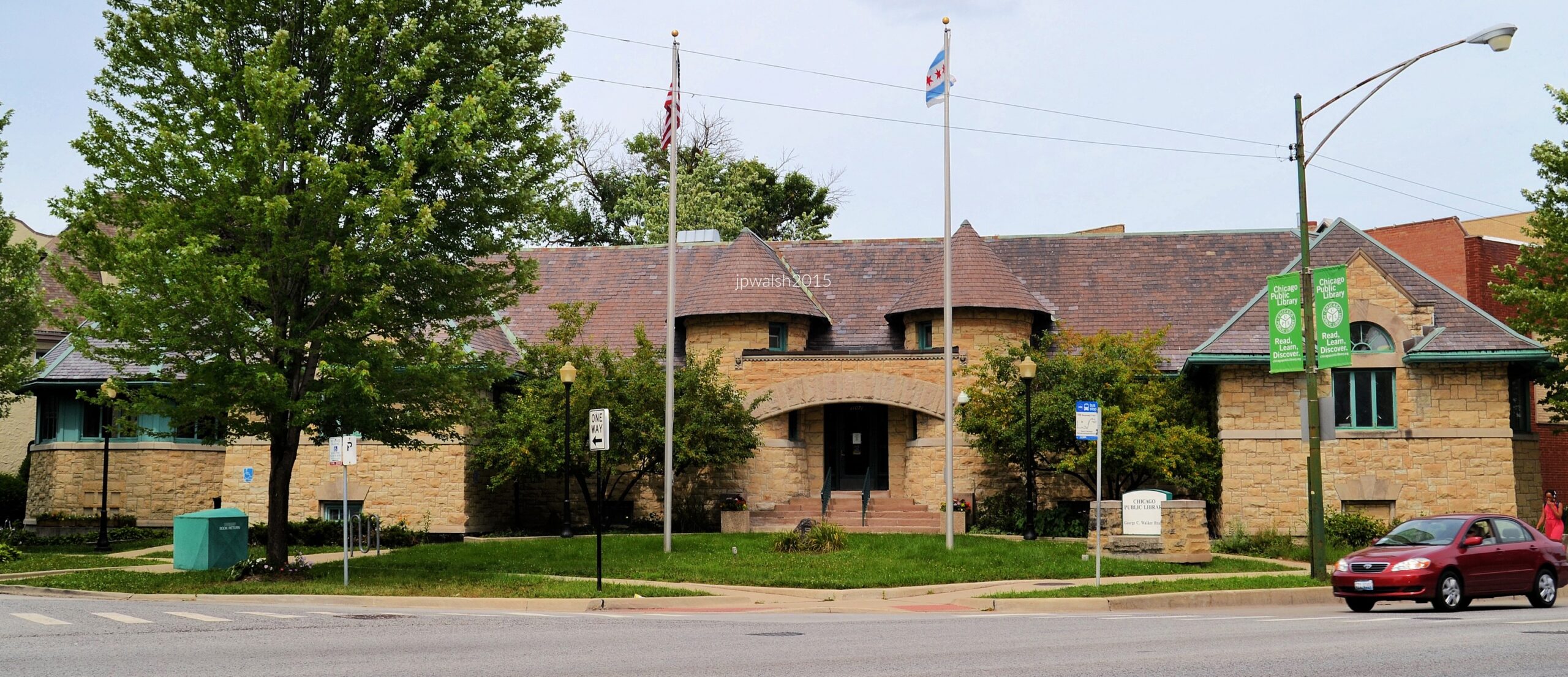
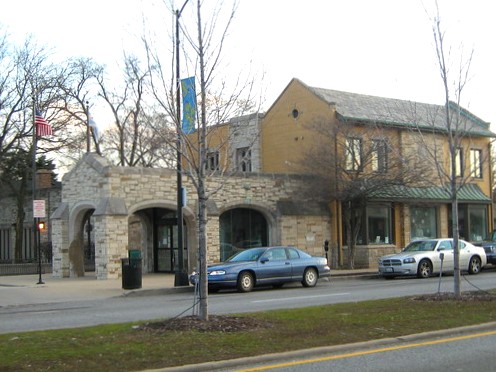
Walker hired architect Charles Sumner Frost to design the plans, and the Romanesque-style structure was built in 1889-90 from limestone quarried in Joliet. The builder was M.E. Baldwin. The building cost Walker about $10,000, quite a sum for the day. Walker also donated the beginnings of the book collection. The library opened on April 22, 1890.
Miss Mills was the first librarian. She was known for her attention to detail and accurate record keeping. The library got off to a good start, with about a thousand visitors in the first six months.
The library became part of the Chicago Public Library (CPL) system when Morgan Park annexed to the City of Chicago in 1914. The original exterior limestone walls are the oldest structure owned by the CPL.
The library facilities were allowed to be used for other purposes. In its very first year, for example, the Presbyterian Association of Morgan Park held its services there. During World War II, the library was used as the headquarters for local defense operations.
The building is a contributing structure to the Ridge Historic District on the National Register of Historic Places. The additions were built in 1929 -1933 and major renovations went on in 1995.
The Walker Branch Library is located at 111th Street and Hoyne Avenue.
The Ridge Historical Society
National Library Week – Mount Greenwood and Beverly Libraries
By Carol Flynn
Wrapping up National Library Week, the other two libraries on the Ridge, Mount Greenwood and Beverly, are much more recent additions.
Mount Greenwood annexed to the City of Chicago in 1927. Its early years were served by the Walker Branch Library in Morgan Park.
The population continued to grow, however, and in 1960, the Chicago Public Library (CPL) opened a sub-branch of a library in a store front in Mount Greenwood that was open for five hours per day.
In 1964, the CPL opened a full branch in a one-story building, a storefront at 10961 S. Kedzie Avenue. At the time, the CPL was finding it more economical to rent and adapt store fronts for libraries than to build new buildings. This branch consisted of reading rooms for adults and children, but no meeting or display rooms were available. The branch was very busy, and offered Saturday story hours and summer reading programs.
In 1991, Mount Greenwood received a newly built library, the one now in use at 11010 S. Kedzie.
The Beverly Branch Library also started as a storefront library to serve the Beverly and Brainerd areas, replacing a mobile library traveling unit that visited various locations. For instance, on October 22, 1961, the local newspaper announced the mobile library would be stationed at 95th and Charles Streets from 2:00 to 8:00 p.m.
In 1969, the CPL rented a vacant storefront at 2114-16 West 95th Street that was renovated into a library, with 30,000 newly purchased books. When the library finally opened its doors in May of 1970, over 4,000 books and other materials were borrowed in the first three days. In about a decade, the library outgrew this building. The location is now Top Notch Beefburgers.
The Beverly library became part of local folklore when it moved into an old funeral parlor in 1981. The CPL secured the existing building at 2121 West 95th Street to renovate into a new Beverly Branch Library. For decades, this building was the Beverly Chapel, then Lain and Son, funeral home. The renovations cost about $1.5 million, and the library opened in the spring of 1981.
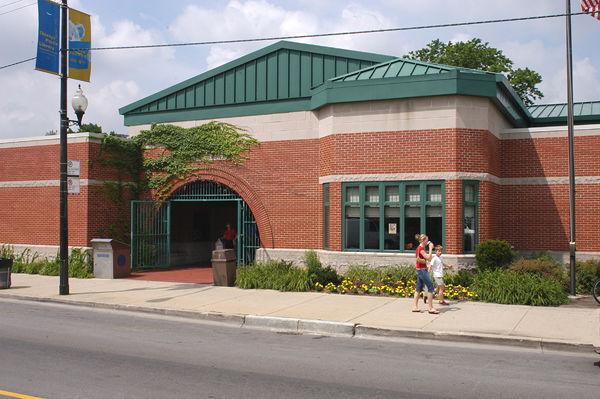
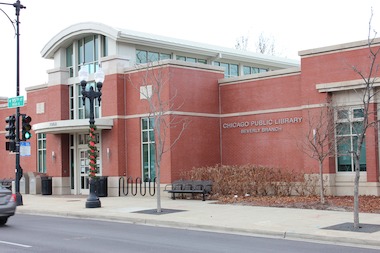
On June 8, 2009, a newly built Beverly Branch Library, the one in use today, opened at 1962 West 95th Street. According to CPL, the branch features environmentally sustainable construction as determined by the Leadership in Energy and Environmental Design (LEED) Green Building Rating System developed by the U.S. Green Building Council.
Sunday, MAY 7, 2023 – 2pm
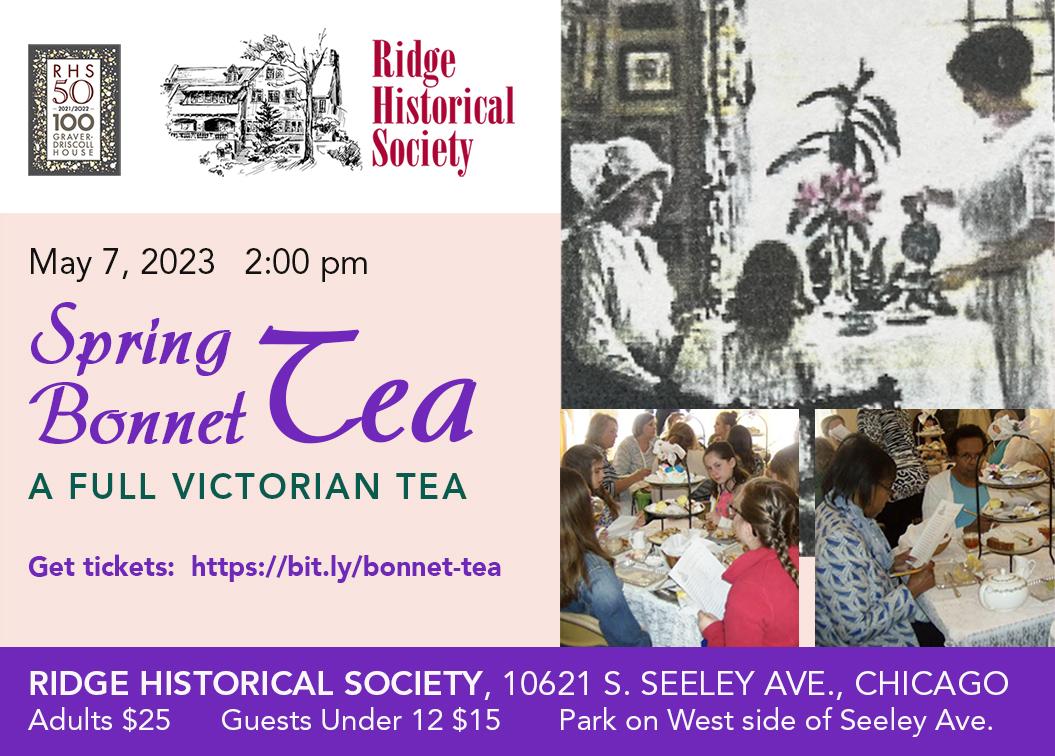
Spring Bonnet Tea
Reservations close tomorrow, May 4
RHS is happy to be able to hold this annual fundraiser event again. Join us for a Full Victorian Tea featuring a fine selection of savories, scones and pastries. Ladies, please wear a spring hat or bonnet!
A wonderful multi-generational event — bring your daughters or granddaughters!
This Full Victorian Tea is set in the Historic Graver-Driscoll House, on the Ridge in the Beverly Hills neighborhood of Chicago.
Adults $25 Guests Under 12 $15
Get tickets online: https://bit.ly/bonnet-tea
RSVP: ridgehistory@hotmail.com 773.881.1675

Ridge Historical Society
Cinco de Mayo
By Carol Flynn
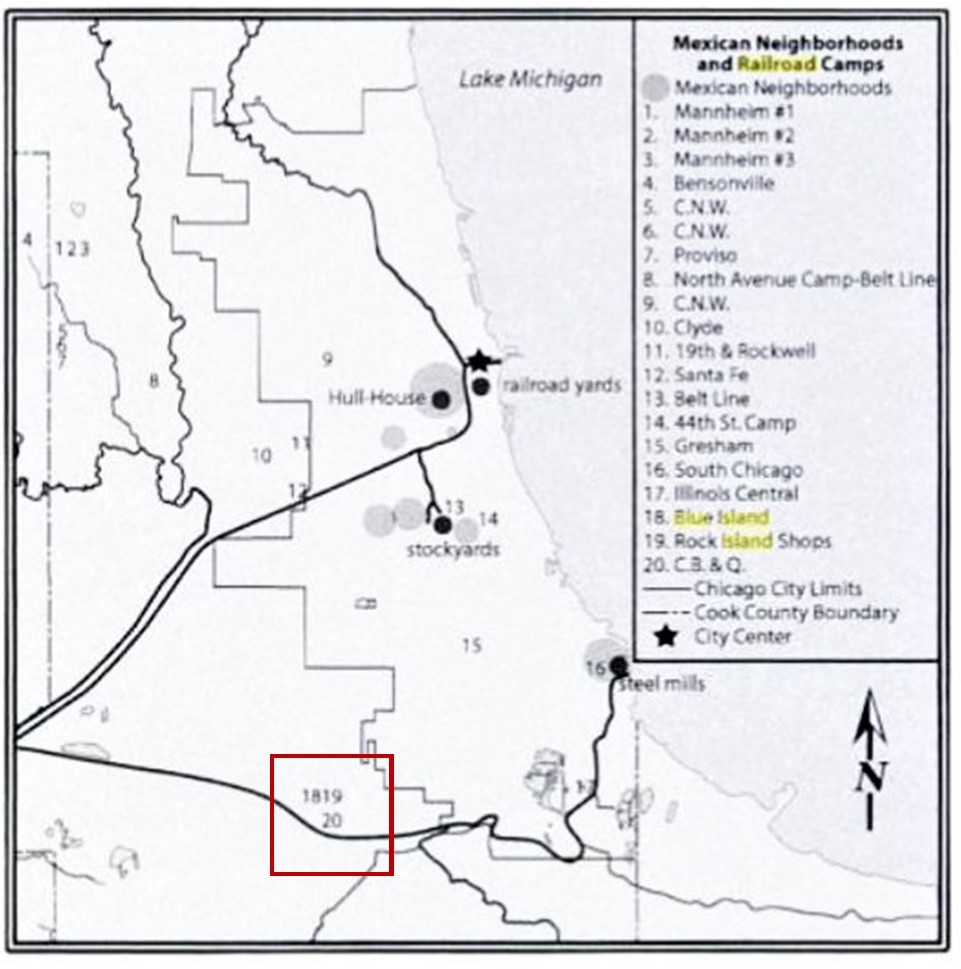
Today the Ridge Historical Society looks at the history of the Mexican community on the Ridge – and those train whistles that can be heard day and night from trains going into and out of our neighbor to the south, the City of Blue Island, with whom we share the Blue Island Ridge.
Cinco de Mayo, or May 5th, is an annual celebration of Mexican American culture. The origin of the day commemorates the Mexican army’s victory over the French at a battle in 1862. The success of the smaller Mexican army was a morale booster for the Mexicans, even though eventually Mexico City fell to the invaders.
With time, the day took on more significance in the U.S. than in Mexico to showcase the traditions and pride of Mexican immigrants. Cinco de Mayo should not be confused with Mexico’s Independence Day, September 16, which is more important in Mexico.
Historically, the Mexican community was not that prevalent in the early days of Beverly/Morgan Park, although it is well represented now. However, Mexicans played a vital role in the development of the City of Blue Island. Today, Blue Island’s population is about 50% Hispanic.
Blue Island first developed as a “river city” located on the Calumet River and Stony Creek, and of course the building of the Cal-Sag Channel was very important for commerce. With the coming of the railroads in the mid-1800s, Blue Island became a “railroad hub.”
Many ethnic groups worked on the U. S. railroads – the Chinese, European immigrants, African Americans. But it has long gone unrecognized that over 50% of the tracks in many areas of the country were laid by Mexican workers.
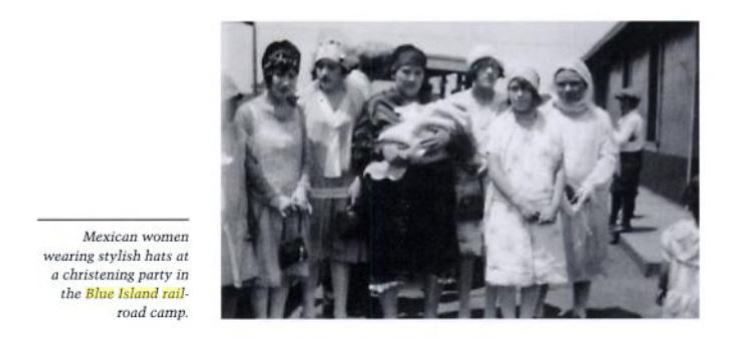
In the early 1900s, the railroad companies sent recruiters into Mexico to entice the people to come to the States to work for the railroads. The recruiters promised nice housing and a high standard of living. The reality for the families that came, however, was very different. They lived in boxcars on the railroad yards, with wooden bunks and no windows, in dangerous conditions, with no running water and no fuel for heat.
The first “railroad camp” in the Chicago area was established in Blue Island in 1917 to house the “traqueros,” or track and maintenance workers, who came here, often with their young families. This was set up around 123rd Street and Winchester Ave. The camp developed the reputation as one of the worst in the country.
With time, as with most immigrant groups, the Mexican workers moved into other jobs and established their own businesses and communities. It is a tribute to this hard-working group of people that they overcame not only the destitute conditions forced upon them but also extreme prejudice to flourish in the country that invited them to move here and became dependent upon them for both the railroad and agriculture industries.
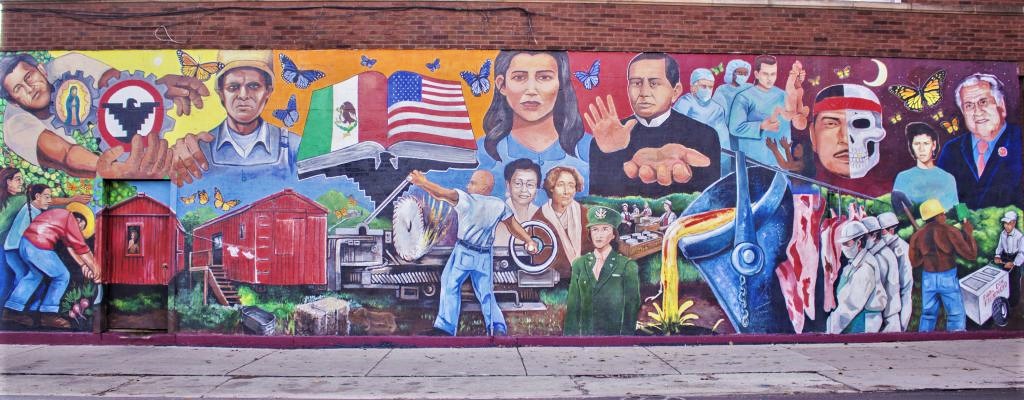
In 1974, the Blue Island city council banned the painting of a mural at 13337 Old Western Ave. that depicted the history of Mexican laborers. The city claimed it was against zoning laws for advertising signs. The U.S. District Court found in favor of the mural painters, stating it portrayed “an idea,” not an advertisement. The mural was completed.
With time, the mural faded, but it was repainted in 2016 as a community project, a vibrant reminder of the history of the Mexican community on the Ridge.
Updated from an original 2020 post.
Posted by a neighbor this morning, here is a fox visiting the Ridge Historical Society. Urban wildlife is a sign of a flourishing environment.
And there is always a history story to be told. Before the European settlers "developed" the Ridge, the area teemed with wildlife and natural resources. Predators like wolves and fox were prevalent, along with the occasional bear and cougar. There were plenty of smaller prey animals, rabbits, squirrels, etc.
The sky would be blackened by the millions of passenger pigeons flying overhead – now they are extinct. Prairie chickens, quail, grouse, song birds, wild turkeys, and birds of prey populated the prairies and forests surrounding the Ridge. The prairie grasses were taller than men and teams of horses.
Streams cut through the Ridge, draining into the wetlands to the east. Migratory waterfowl stopped in the wetlands during their journeys to feast on the wild rice that grew there.
Sand hill cranes built their nests in the local sloughs. The water was so deep in a slough at what is now 107th and Wood Streets that it was impassable.
Deer and earlier, buffalo, were larger grazing animals. Paths like the Vincennes Trail originated as animal trails, as they skirted the wetlands, keeping to high ground.
Forests and savannahs included many species of oaks, birch, and other trees. Wild fruit and nut trees and bushes were numerous. The wild berry brambles were so thick native snakes could be observed travelling along the tops. Edible plants like wild artichokes and wild garlic (that gave Chicago its name) were plentiful, as were medicinal plants known to the Native Americans who lived here.
The streams and rivers to the south of the Ridge – Stony Creek and the Little Calumet River – teemed with fish like pike.
The Blue Island Ridge was paradise.
Ridge Historical Society
National Teacher Appreciation Week – Catherine A. Burke
By Carol Flynn; research collaboration by Tim Blackburn
May 7 to 13 is National Teacher Appreciation Week. An official event since 1984, the week reminds us that educators deserve our support, respect, and gratitude for all they contribute to society.
Many educators have called the Ridge home, and the city and the local community have recognized some of the trailblazers who lived here. Alice Barnard, Bessie Sutherland, and Kate Starr Kellogg have schools named for them. John H. Vanderpoel has a street and a school named for him, plus a memorial association, founded in his name, to collect art.
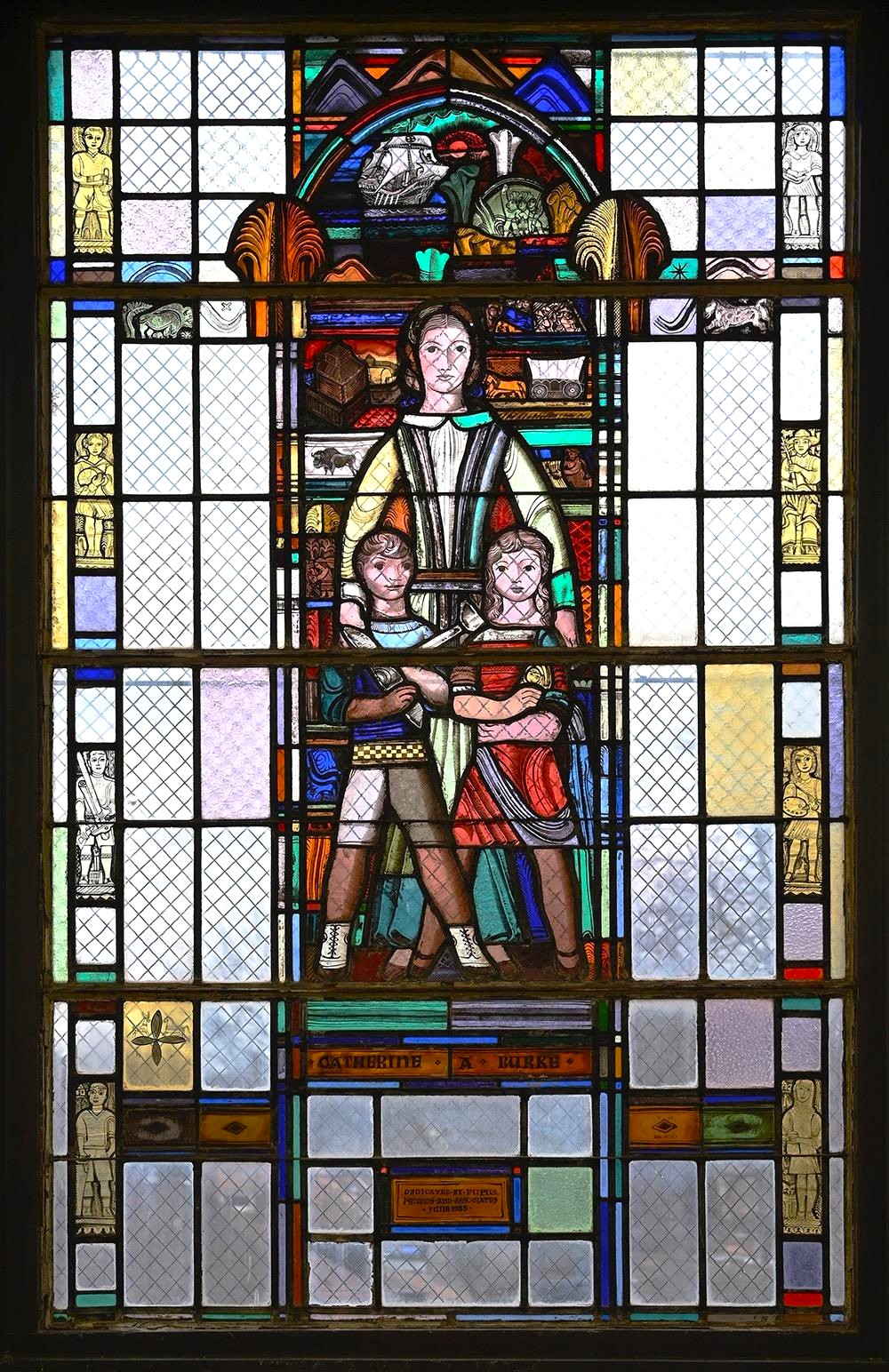
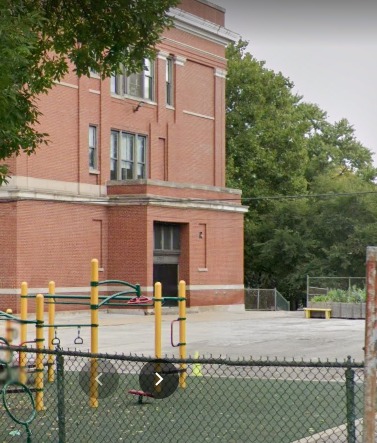
Many other remembrances have been lost to time. Recently, one was rediscovered and brought to RHS’s attention. This is the stained-glass window at the John H. Vanderpoel Humanities Academy at 9510 S. Prospect Avenue that is dedicated to Catherine A. Burke.
The window was rediscovered by Katharine Konopasek, a Beverly resident who is a retired Chicago Public School (CPS) principal who continues to help by substitute teaching. Katharine was subbing at Vanderpoel when she saw “rainbow colors” coming from behind a shade covering a window on the third floor of the school. Pulling aside the shade, she found the window, which is inscribed “Catherine A. Burke,” and “Dedicated by pupils, friends and associates – June 1935.”
Curious about the history of the window, Katherine tried to find information through CPS and the school. When no information was available in those files, she contacted the Vanderpoel Art Association, which started its collection in that school. The Vanderpoel volunteers didn’t know about the window, but they arranged to have it photographed.
Katherine then reached out to RHS, and we started researching it. This is the story we’ve uncovered so far.
Catherine A. Burke was the first principal of the Vanderpoel School, serving from 1912 to 1929.
Catherine was born in Joliet, Illinois, on June 7, 1862. Her parents were Patrick and Elizabeth Burke, both from Ireland. When Patrick died in 1905, the Joliet Evening Herald newspaper described him as “one of the best known of the Joliet pioneers.” He worked for a railroad and then for a company in the Joliet limestone industry. He was best known for being a leader in the temperance movement. He was also described as a “lover of good literature” who enjoyed discussing books and authors.
There were at least six Burke children, and Catherine and her older sister Mary became teachers. They graduated from the Joliet high school. Many high schools in those days prepared girls for careers as grade school teachers. Later, Catherine and Mary both studied at the University of Chicago.
Both women earned good reputations as instructors at the Eastern Avenue school in Joliet. By 1900, the parents and these two daughters had moved to Chicago so that Mary and Catherine could take “a high place as teachers in the public schools.” They rented a house at 3800 S. Indiana Avenue. After the father died, the mother and daughters moved to 453 Oakwood Boulevard, where they rented an apartment in a two-flat.
Catherine was employed as a teacher in the CPS schools. A 1906 Chicago Tribune article reported that the school board approved a salary promotion for Catherine because she held a principal’s certificate. This meant she had taken coursework and passed an exam, which qualified her for promotion within the school system. Her promotion had been recommended by Ella Flagg Young, who had been a District Superintendent of CPS and would become the first woman superintendent of CPS, and the first woman superintendent of any large school system in the country, in 1909.
Young advocated for employment rights for female teachers, addressing issues like employing married women as teachers, advancement opportunities for women in the Chicago schools, and pay equity between female and male teachers. Other Progressive women were also involved in the school system by then – famous social worker and reformer Jane Addams of Hull House was a member of the school board.
In 1912, Young appointed Catherine as the first principal of a new school opening in Beverly at 95th Street and Prospect Avenue. At the time, Catherine was reported as a teacher at the Willard School. She had held previous positions at the Park Manor School and the Brenan School.
The original name of the new school in Beverly was the John Farson School, named for a well-known Chicago banker, lay religious leader, and philanthropist, whose sister Elizabeth Farson was a CPS principal. Farson had no connection to Beverly; his name had been chosen by the president of the school board.
The Beverly community wanted the school named for John H. Vanderpoel, the artist who had been head instructor at the School of the Art Institute of Chicago. Vanderpoel, who had lived in North Beverly, had died in 1911. The school board president said it was too late to change the name of the school because Farson’s name already had been, literally, carved in stone on the front of the school.
However, in 1913, with the support of Farson’s widow, the name of the school was changed to Vanderpoel’s name.
In 1914, the Vanderpoel Memorial Association (today’s Vanderpoel Art Association) was founded by the artist’s friends and fans. They started an art collection which was installed in the school. The first piece obtained for the collection was “The Buttermakers” by Vanderpoel. Artists and collectors donated hundreds of pieces of artwork for the collection.
Displaying artwork in schools was the usual practice back then. The collections were often managed by the local women’s clubs. When the current Morgan Park High School was established in 1914 – 1916, prominent clubwoman Gertrude Blackwelder oversaw the acquisition of artwork for the school, with the assistance of the Morgan Park Woman’s Club. The situation at Vanderpoel was unique, with the emphasis on the collection as a memorial to the late artist/educator.
Catherine Burke served as a vice president of the Vanderpoel Memorial Association. The art collection was a very important part of the school.
Next post: Catherine Burke’s years as a school principal in Beverly, and the stained-glass window.
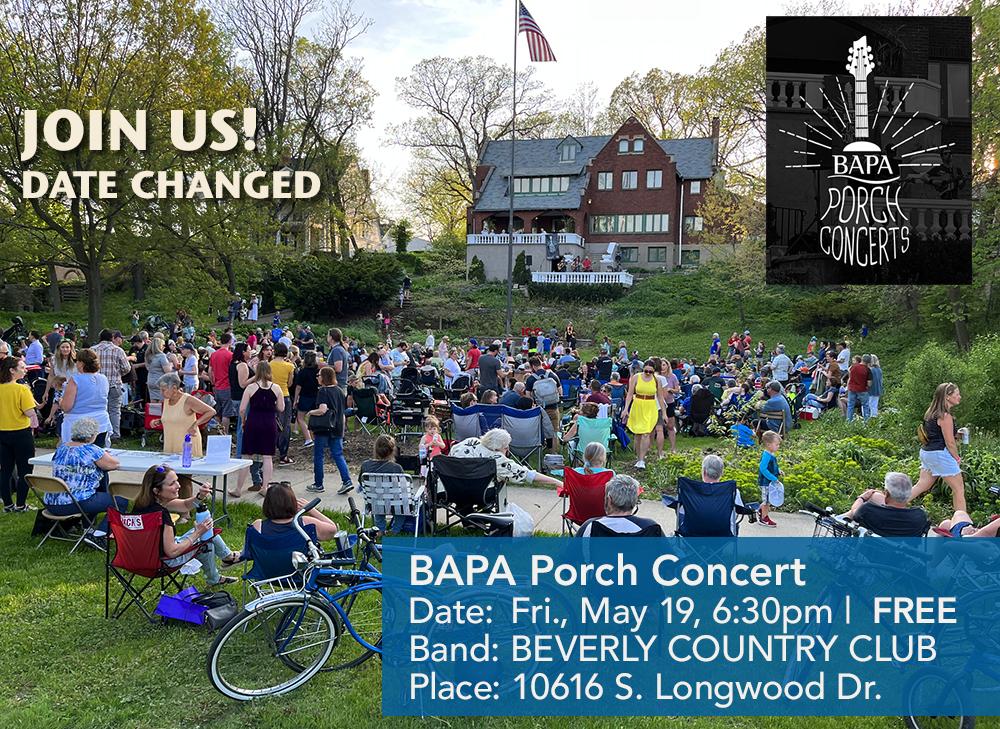
The BAPA porch concerts are about to begin another season! And the first one will be held at RHS.
The Beverly Country Club band will play at RHS, 10616 Longwood Drive, on Friday evening, May 19 (rescheduled from May 12), starting at 6:30 p.m. The event is free, just bring your own lawn chairs to sit in.
RHS requests that people approach the building from the Longwood Drive side. The Seeley Avenue entrance and driveway may be blocked by equipment trucks.
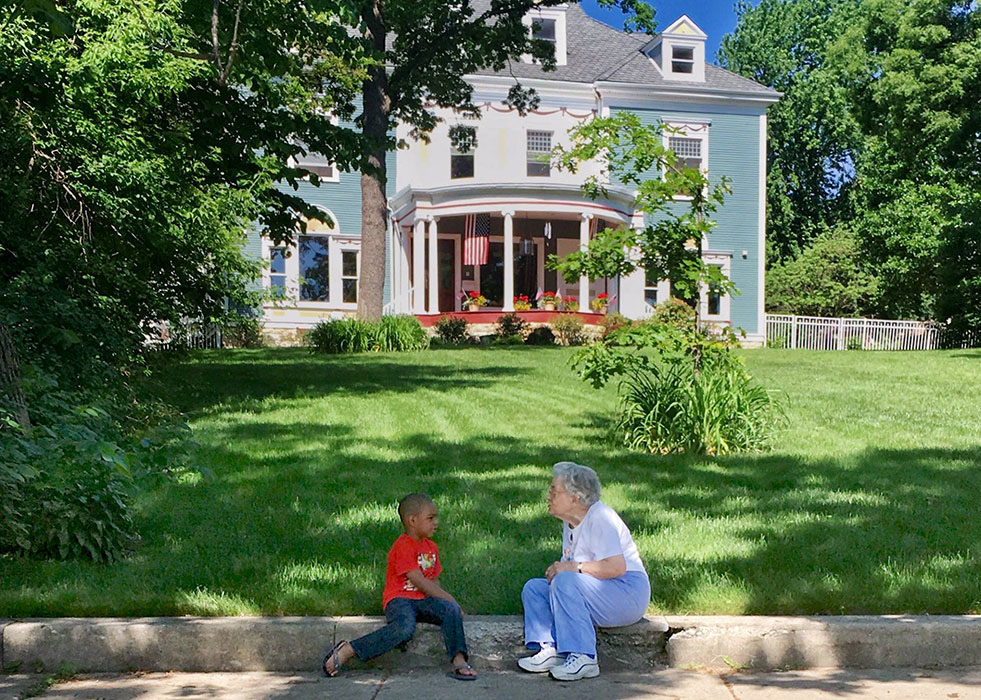
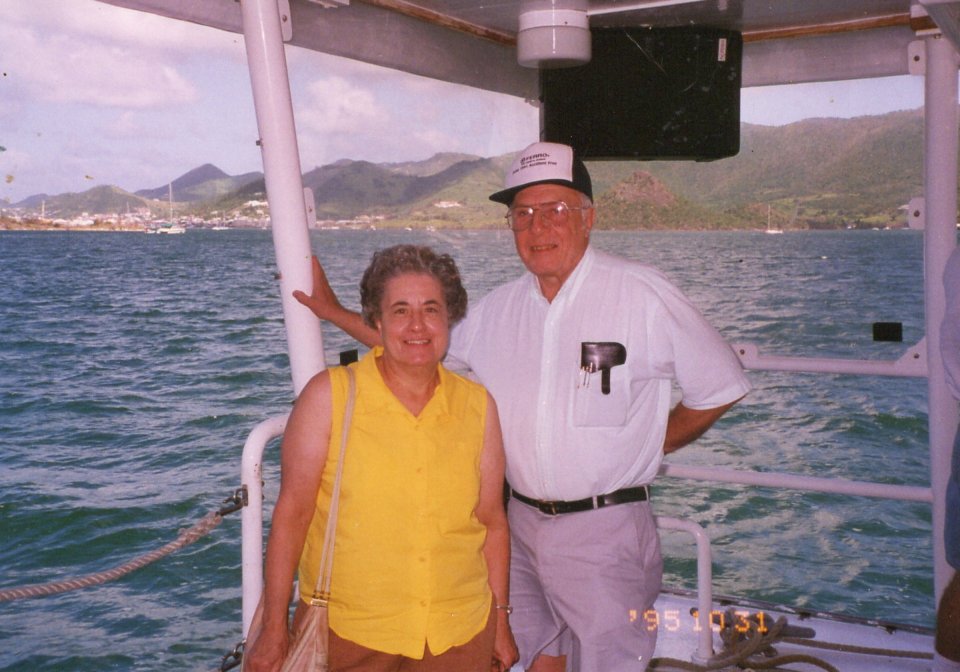
In Memory of Marie Sandstrom
There’s a photo on the Beverly Area Planning Association website from the 2016 Memorial Day Parade that shows an older white woman talking with a young Black boy, while they sit together on the curb in front of the Horton House on Longwood Drive.
That woman was Marie Sandstrom, and that was the kind of thing that Marie did – reach out to people and engage with them in a kind, genuine, straight-forward way.
The Ridge Historical Society was saddened to learn that Marie passed away on April 23, 2023, at 94 years of age.
Marie and her husband, Bill Sandstrom, were a major presence at RHS for many years. Bill passed away in 2019, after serving as RHS president and treasurer.
Marie was part of the Social Committee at RHS; in fact, for some time she was the entire Social Committee. Marie could always be counted on to help at an event, setting up the buffet table, making the coffee, greeting and serving people, cleaning up. If attendees were lucky, Marie made her famous lemon bars to be served that day.
As part of her self-assigned duties, Marie took care of household tasks around the Graver-Driscoll House, things that many people just took for granted – buying paper towels and toilet paper and coffee; arranging for the place to be cleaned; laundering the curtains.
A physically small woman, Marie’s head barely cleared the steering wheel of her car. To the unpracticed eye, it would look like a driverless car had just pulled into the parking area.
However, although she was small, she was mighty. Marie was no push-over; she held her ground for what she thought was right.
The Sandstroms were dedicated members of Bethany Union Church, where Marie was usually in charge of the kitchen. The church’s annual spaghetti dinners under the direction of “Mama Marie” were unforgettable, drawing in large crowds for Marie’s homemade spaghetti sauce.
They were also active members of the Kiwanis and the Chicago Art Deco Society.
The real passion that Marie and Bill shared, though, was dancing. Bill took dancing lessons as a young World War II veteran so he could meet girls at dances. One young lady he asked to dance was Marie Bianchi. They got married in 1952. They had two children and the family moved to Beverly in 1965.
Marie and Bill became members of the Cotillion Club in Beverly, which had formed in 1939. “Cotillions” are formal balls, and the club held regular formal dances at local country clubs and other venues. As late as 2018, the Sandstroms, both in their 90s, were on the Club’s Dance Committee. Some of the dances at cotillions have specific moves and steps that the dancers need to be proficient in, and the Sandstroms shared the floor with the best.
At Bill’s memorial service, one of their grandsons related a favorite family story about the couple’s dancing. While in Pasadena for that grandson’s graduation, the family was out for an evening of entertainment. Bill requested a song from the jazz piano player and singer, and he and Marie began to dance. Other patrons came over to watch this elderly, accomplished couple perform, and began depositing money in an empty water glass in the center of the table. At the end of the dance, the singer came over to tell them she had never seen anything like this in all her years; their dancing together was beautiful. Noticing the monetary donations, she laughed and told them, “You two should come back every night – you could really make a living at this!”
Bill was eulogized for his loyalty, kindness, and service, but it’s more accurate to say that like dancing, it was a team effort, made possible by Marie and Bill working together.
There is a saying that “service is the rent we pay for being.” Marie and Bill surely paid enough rent through their service to others to now be dancing together forever in the finest heavenly mansion.