Explore the RHS Facebook Archives, a rich repository of local history written by Carol Flynn. For two decades, Carol brought a deeply dedicated voice to public education at RHS. Her role as Facebook administrator through mid-2025 naturally extended her prolific research into meticulously detailed articles, most notably her multi-part historical series posts. Today, Carol continues her local history writing for The Beverly Review and other outlets.
2019
The Ridge Historical Society supports the efforts to restore the Givins Castle, Beverly Hills/Morgan Park area's most recognized landmark. A series of world folk music concerts have gone on since last Fall at the Castle, with the proceeds (after a few expenses) all going to the Castle Restoration Fund. The series was underwritten by the late Dean Miller, in memory of his late wife, Martha Herriott Swift. The last concert of the series (with the money going to the Castle) for this year will be held on Saturday, April 27, at 7:00 p.m. at the Castle, 10244 S. Longwood Drive. The performers are the group Come Sunday.
A description of the group: "Come Sunday is a Chicago-based Jazz septet heavily influenced by the musical genres indigenous to North America: jazz, blues, folk. In Come Sunday the genres are melded together into one swingin’ good time, then delivered by four powerful singers and the deep grooves of a crazy-good rhythm section."
The band has a Facebook page so you can check them out. Come Sunday
The concert series is arranged by John Devens, who owned/operated the World Folk Music Center on 103rd Street for many years. People were very upset when that venue closed, but they can still enjoy the concerts John books through this series. And the one thing everyone agrees on is that John Devens knows the best talent from the Chicago music scene.
To reserve a seat for this concert, you can just respond to this post THROUGH THE RIDGE HISTORICAL SOCIETY (NOT ANY "SHARES" WHICH RHS WON'T SEE), and we'll get the info to the Castle. Please give name and number of seats you want. The suggested donation is $20 per person and you can pay at the door. Thank you. For information on the Castle restoration itself, visit that page. Givins Beverly Castle
For some reason I cannot figure out, this post will not share. If you want to send it to someone else, let me know and I can send it.
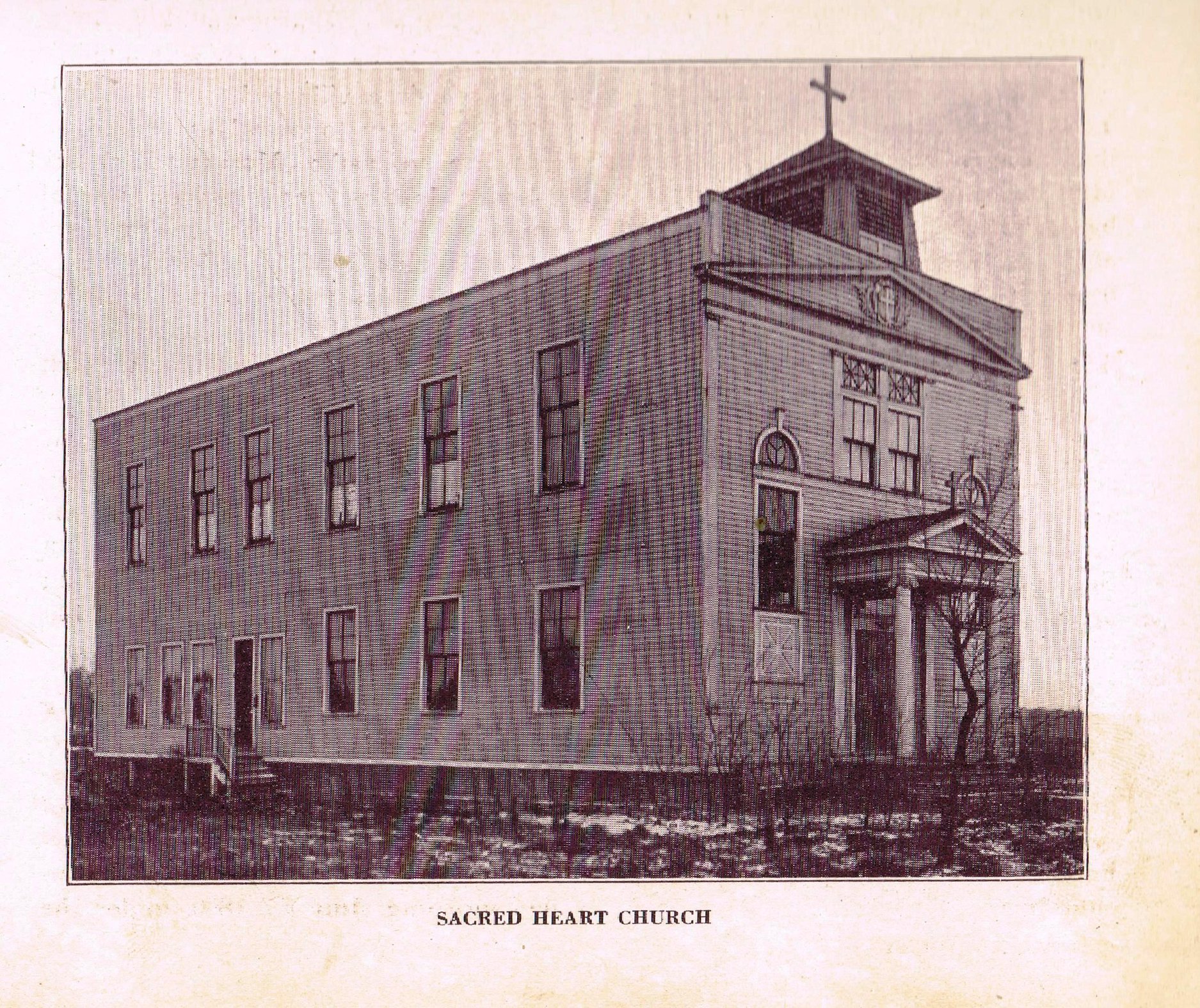
The unfortunate fire in Notre Dame Cathedral got me thinking about the "French connection" to the Blue Island Ridge. We had an early group of settlers here, and their legacy to the community is also a church – the historic and charming Sacred Heart Church at 11652 S. Church St.
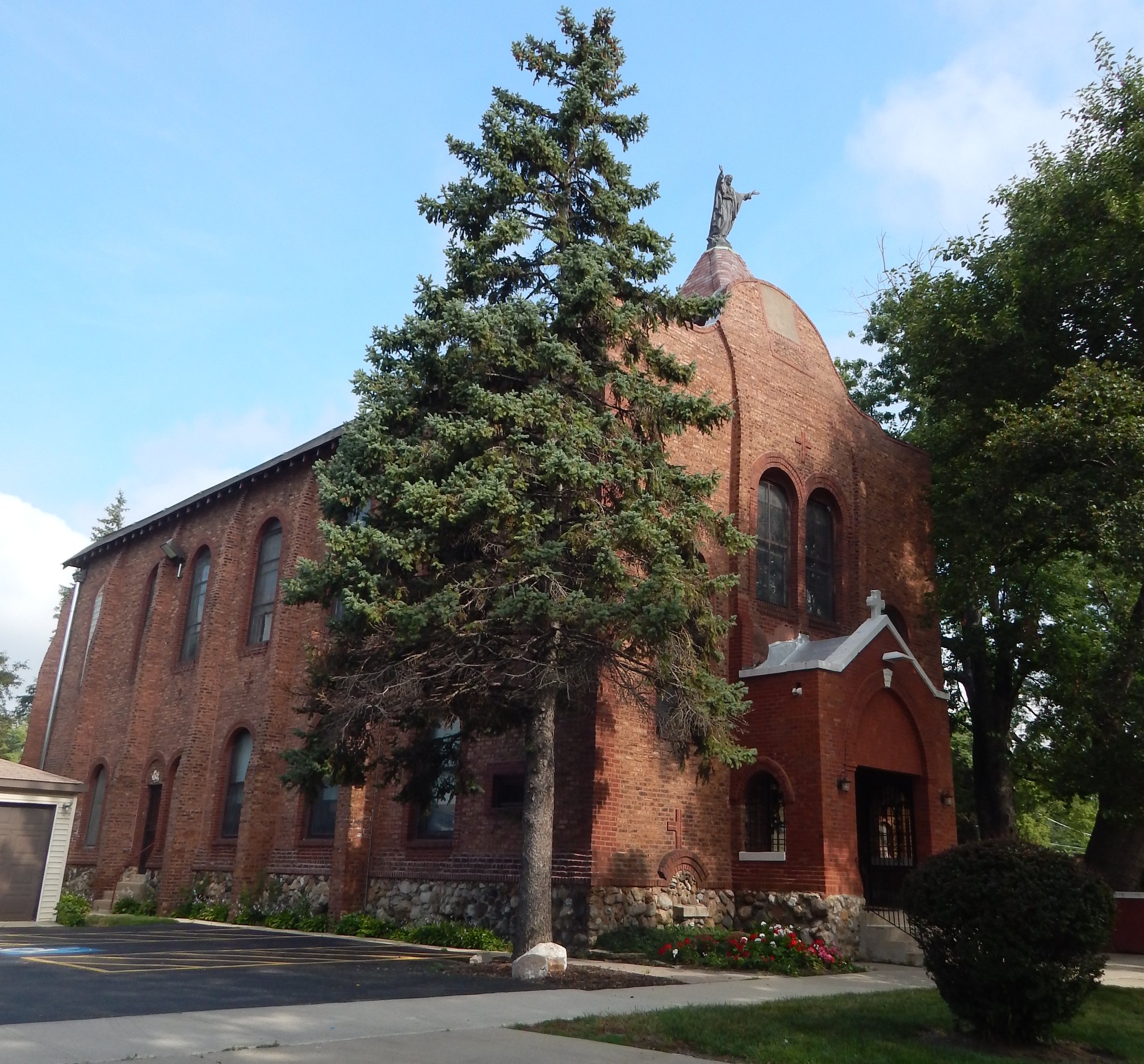
Sacred Heart was originally founded in Alsip in 1892. After another unfortunate fire, the church moved to its current location to be closer to the Purington Brick Yards at 119th and Vincennes, where many of the French people worked. The current church was built in 1904-5 and originally appeared as a wooden frame church, built on posts in a swamp. The church was established as a “national church” which meant it would serve a particular nationality, not a defined geographic area. The story goes that the workers hid bricks in their clothing and brought them over from the brick yard, one or two at a time, and in 1922, the present brick facade was added. The church as it stands now is actually the old frame church clad with this "donated" brick.
Father Raymond DeNorus, a missionary priest born in France, became pastor in 1912. From all accounts, he was a very charismatic man. He loved a good time, yet he was a man deeply devoted to his faith. He dispensed medicine, holy water and blessings from his side door. Numerous miracle cures were reported to have taken place over the years. Crutches, canes and braces left abandoned at the church were hung on the side walls. Services at the church drew large crowds and it became a place for pilgrimages. During this time the church became known as the Shrine of the Sacred Heart, a shrine being a special place of devotion that attracts travelers from afar. Fr. DeNorus retired in 1935. With time, most of the French families moved on and were replaced by German and Irish workers.
In 1979, the Archdiocese of Chicago under John Cardinal Cody decided to close and demolish Sacred Heart, citing as its main reasons a shortage of priests and the expense of construction needed to correct building code violations. Members of the congregation rallied to restore and preserve the church. The church was closed from 1979-1982. But then Cardinal Cody died, and the new Archbishop, Joseph Bernardin, agreed to review the matter. He reopened the church and celebrated Mass there in 1983. The church was reestablished as a "mission church" operating as part of the Holy Name of Mary Parish in Morgan Park.
The devotion to the Sacred Heart of Jesus originated in France in the late 1600s when a nun, Saint Margaret Mary Alacoque, claimed that during a series of apparitions, Jesus promised certain blessings to those who practiced devotion to his Sacred Heart. The Vatican’s position is that the manifestation and promises are true. So the name Sacred Heart was very fitting for a French mission church.
[NOTE: Amendment to this story: The wife of the man from the Sacred Heart congregation who originally told me the story of the bricks posted this: "The brick masons were given permission to take the bricks that were used to line the ovens as those bricks were marked with black spots and therefore not fit to sell." Thank you for sharing more interesting local folklore with us! – Carol Flynn, RHS Communications]
Picture 1 is the original church ca. 1913 before the brick facade was added. The side door at which Fr. DeNorus greeted visitors is visible. Photo from the RHS newspaper archives.
Picture 2 is the church today covered with the Purington bricks. Photo by C. Flynn.
The world lost important cultural and religious history today with the extensive fire damage to the Notre Dame Cathedral in Paris. We express our condolences and support to the French people. Through the ages, we have lost countless historical buildings and sites, and I do mean too many to count. Most are gone forever. Here's hoping the resiliency and courage of the French people will get them through this and they will rebuild their beloved Cathedral.
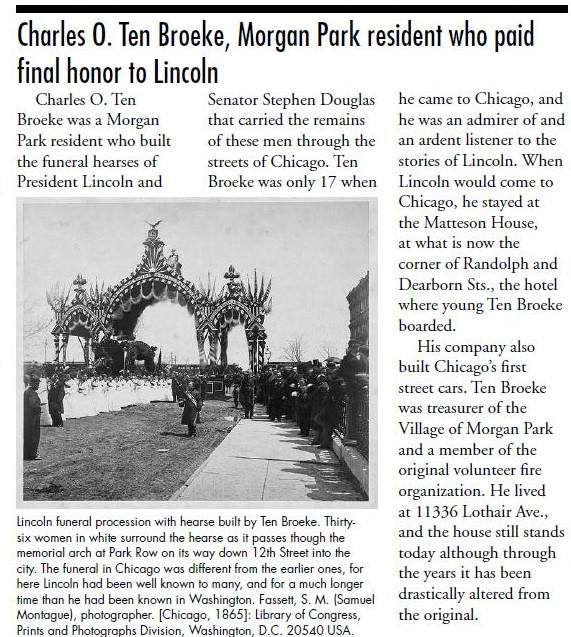
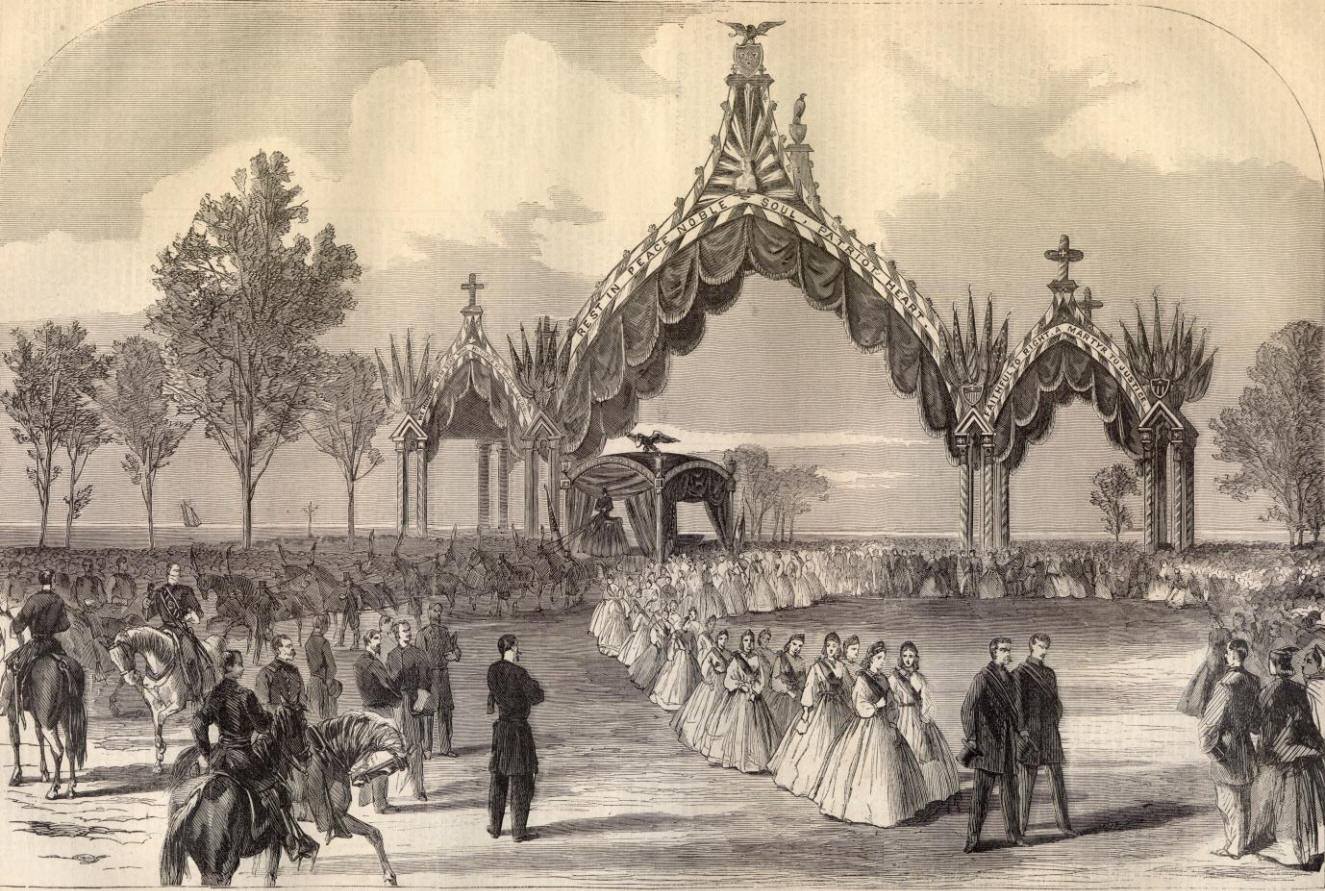
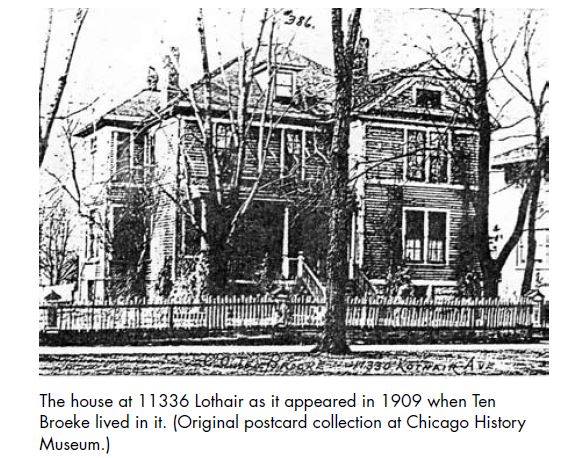
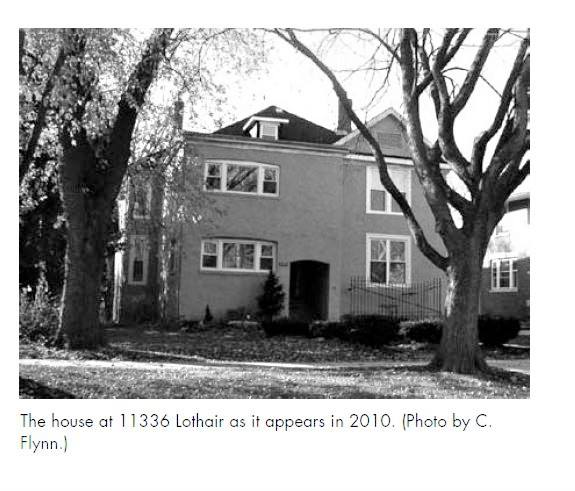
Abraham Lincoln was assassinated on Good Friday, April 14, 1865. His body was brought home to Illinois by private train, where it laid in state in Chicago before being moved to Springfield for burial. Here is an article that appeared in a past newsletter of the Ridge Historical Society explaining that a Morgan Park resident by the name of Charles O. Ten Broeke built the catafalque or hearse for carrying Lincoln's coffin through the streets of Chicago. Also posted is an illustration from the May 20, 1865 Harper's Weekly (magazine), depicting the scene. And the last two pictures are of the house Ten Broeke lived in, from his time and the present.
The Civil War was declared officially over on April 9, 1865. After four years of terrible bloodshed and the deaths of 620,000 Americans, celebrations were going on throughout Washington, D.C., and the north. Of course, many of those supportive of the Confederate cause loathed President Abraham Lincoln, which was reflected in the obsessions of John Wilkes Booth and his co-conspirators who were plotting the murders not only of Lincoln but other government leaders as well.
Five days later, on April 14, 1865, Good Friday, the nation was shocked at the assassination of the President who had worked so hard to preserve the United States.
Illinois is the Land of Lincoln. Although born in Kentucky, Lincoln grew to manhood in Illinois, teaching himself about law and starting a law practice in Springfield. He often came to Chicago, both for law and for politics. He rose to prominence in this state, culminating in his election as President. After he was killed, he was brought home to be buried here.
The Ridge has strong connections to Lincoln, which we will explore in several posts.
Ebenezer Peck (1805-1881) was a well-known consultant to Lincoln. He was a very powerful man in Chicago, a lawyer and an elected legislator, serving in both the Illinois Senate and the Illinois House. Lincoln often called upon Peck for advice. Peck was part of the delegation that informed Lincoln he was nominated for the Presidency. Lincoln met at Peck’s house following the election to plan his cabinet appointments. Peck accompanied President-elect Lincoln in his private train when Lincoln left Springfield for Washington, D. C. Peck made at least three visits to D. C. during Lincoln’s first term. Peck went to the White House in the summer of 1864 and told Lincoln: “Your reelection is necessary to save the Union, and no man must stand in the way of that success.“
Ebenezer Peck had a magnificent home just northwest of what is now 95th St. and Western Ave. It was one of the earliest houses on the Ridge, but destroyed by fire before 1844. He later lived in the Lake View area.
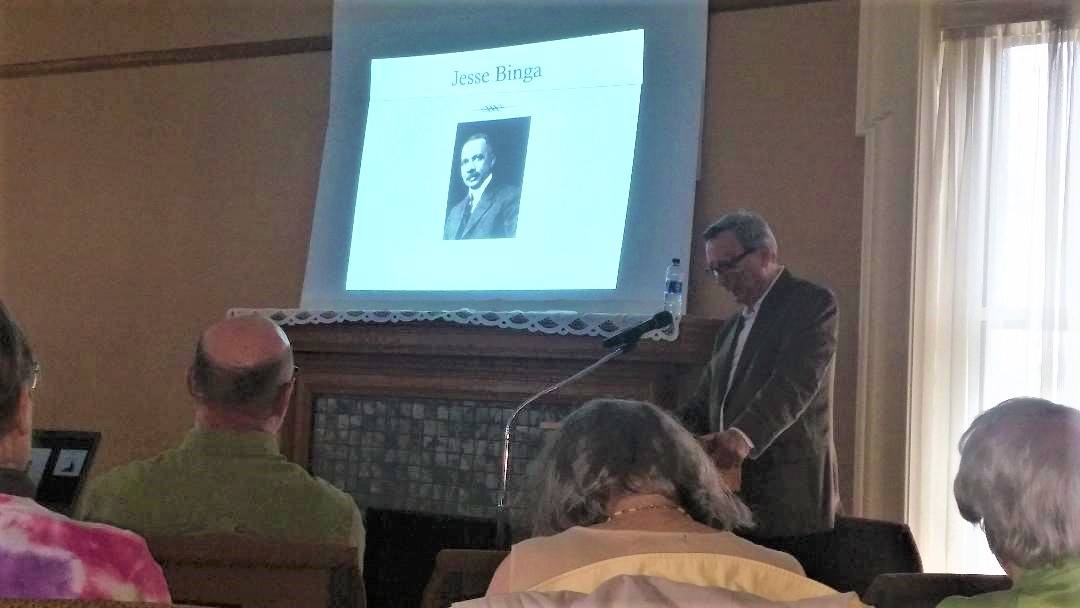
Don Hayner, Beverly resident and retired editor-in-chief of the Chicago Sun-Times, giving his presentation at the Givins Castle today, April 7. Haynor spoke on the topic of his upcoming book, Jesse Binga, the first African American banker in Chicago. This is the type of program that helps put the history of race relations and Chicago's hyper-segregated South Side into perspective. Thank you, Mr. Hayner, for sharing your research with us. The program was put on by the Ridge Historical Society and the proceeds went to the Castle restoration fund.
Join us tomorrow, Sunday, April 7, at the Givins Castle – 10244 S. Longwood Drive (corner of 103rd Street and Longwood Drive – you can't miss it, it's Chicago's only Castle) at 2:00 p.m. for Don Hayner's presentation on his book, Binga, The Rise and Fall of Chicago’s First Black Banker, scheduled for release in November 2019.
Hayner is retired editor-in-chief of the Chicago Sun-Times newspaper and a Beverly resident. The money raised for this presentation will go to the Castle restoration fund. The Castle, built in 1886-87, needs preservation work on the turrets. The money raised will not be used for church operations of the Castle's current owner, the Beverly Unitarian Church.
Jesse Binga was a black real estate tycoon who opened the first African American bank in Chicago to serve his clients not welcomed at white-owned banks.
This program offers the chance to see and support the Castle – tours will be available after the presentation; to meet Don Hayner; to learn more about a very important part of Chicago's history and the history of the South Side; and to learn more about the Ridge Historical Society,
The cost of the program is $10 per person and refreshments will be served. Reservations are not needed – just come!
This is how it happens. History was made today in Chicago and on the Ridge. The first African American gay woman was elected as Mayor.
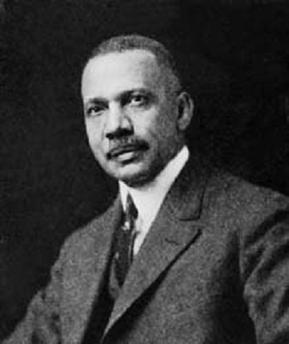

Message from the Ridge Historical Society: A big reminder – this Sunday, April 7, is the program "Binga, The Rise and Fall of Chicago’s First Black Banker." The program will be at the Givins Castle, 10244 S. Longwood Drive, starting at 2:00 p.m. The presenter is Don Hayner, a lifelong Chicagoan living in Beverly, who retired as editor-in-chief of the Chicago Sun-Times newspaper in 2012. His book about Binga (same title as presentation) is due to be released in November.
Jesse Binga came to Chicago from Detroit just before the 1893 World's Fair. He was a savvy businessman, starting a real estate business to serve the growing African American community in the city. As black people were denied mortgages and other services at white-owned banks, Binga started the first African-American bank in the city.
African Americans, historically largely confined to the "Black Belt" on the near South Side, began expanding into new areas. This caused alarming tensions with the white community and led to violent race riots in 1919. Binga himself moved into a white neighborhood and his properties were bombed numerous times.
Today Chicago is one of the most segregated cities in the country, with many areas of the South Side "hyper-segregated" – some neighborhoods as much as 99% black.
According to Hayner, while Jesse Binga was a towering symbol of success in Chicago’s “Black Belt” in the early 20th Century, he was also one of the most hated men in the city.
“Binga, The Rise and Fall of Chicago’s First Black Banker, tells the story of the beginning of a sad saga that Chicagoans have lived through for more than a century. It's the story of racial change in the neighborhoods of a city, which is one of the most segregated in America, but at its core, it's a story of how Jesse Binga represented hope to a community shut out and isolated by racial animosity,” said Hayner in a description of this program.
Don Hayner started out practicing law but switched his career to journalism. Working his way up from reporter, he retired as editor-in-chief of the Chicago Sun-Times newspaper in 2012. During his tenure, the paper won multiple national and local awards for investigative reporting and breaking news, including the Pulitzer Prize for local reporting in 2011. Hayner has co-authored three books including Streetwise Chicago, A History of Chicago Street Names.
Hayner completed a fellowship at the University of Maryland’s Knight Center for Specialized Journalism on race, class and ethnicity. As a reporter at the Sun-Times he co-authored, with Columnist Mary Mitchell, an award-winning series, “The Great Divide: Racial Attitudes in Chicago.” As part of that project, Hayner helped design the largest poll on race relations ever done in the Chicago region.
The cost of the program is $10 per person and all proceeds will go to the Castle Restoration Fund. The Beverly Unitarian Church, owner of the Castle, has started an initiative to raise money for repairs to the Castle turrets. Donations to this fund will be used for preservation of the Castle, not for church operations.
As space is limited, reservations are suggested, and may be made by calling RHS at 773/881-1675 or emailing ridgehistory@hotmail.com. Tours of the Castle will be available following the program. Light refreshments will be served.
Pic 1: Jesse Binga
Pic 2: Don Hayner
There was another event in March – World Wildlife Day was Sunday, March 3. The Blue Island Ridge has a long and very interesting history when it comes to wildlife. There were animals here in abundance before "development" – wolves were all around; deer were plentiful; birds, waterfowl, small animals, fish in the Calumet River and creeks, native reptiles – it was a paradise.
Thomas Morgan, for whom Morgan Park is named, even bought game animals and hunting greyhounds with him from England, on his own ship The Emmanuel. He populated the woods around his estate Upwood with his imported deer and pheasants, and had hunting parties to chase down the wolves. His estate was on the top of the Ridge around 91st Street and Longwood Drive.
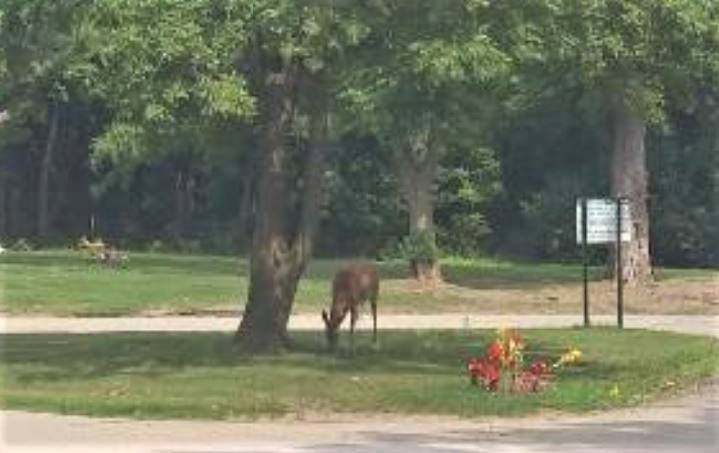
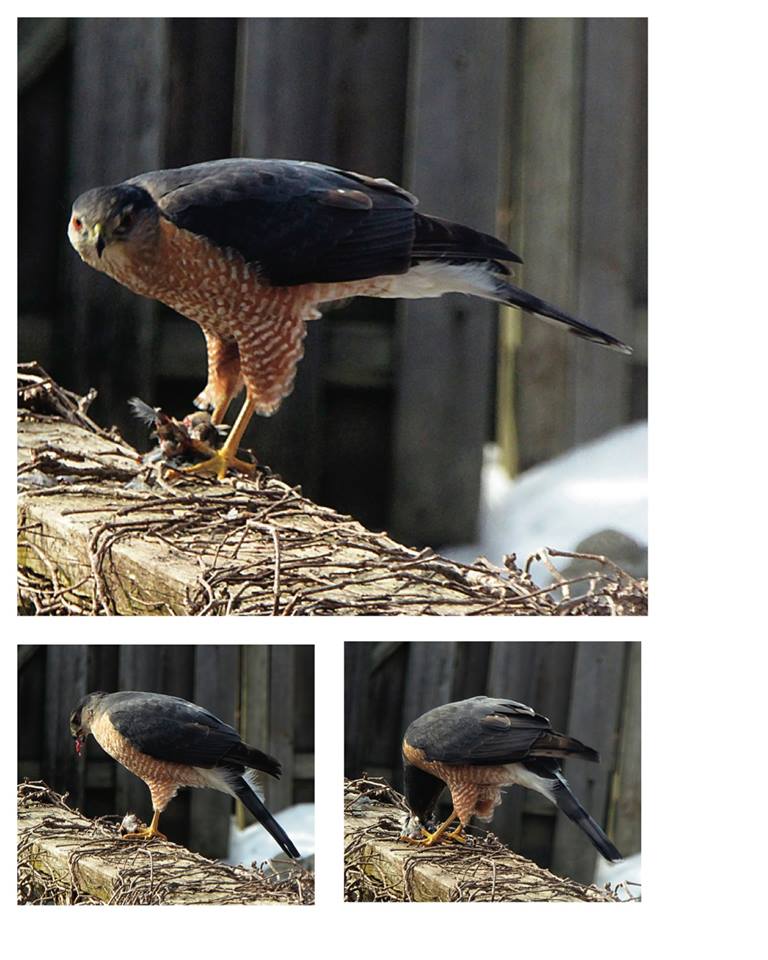
Today, we co-exist in Beverly/Morgan Park with wildlife – raccoon, opossum, fox, coyotes, birds of prey are all spotted. There are deer in the cemeteries to the west of us.
This will be the first of several postings about the "wild Ridge" and the Ridge Historical Society hopes others will share stories and pictures.
Here are two pictures of recent sightings. The first is of deer in Mt. Hope Cemetery last summer, photo by C. Flynn, RHS. The second is of a hawk in the yard of artist Judie Anderson just this year.