
Explore the RHS Facebook Archives, a rich repository of local history written by Carol Flynn. For two decades, Carol brought a deeply dedicated voice to public education at RHS. Her role as Facebook administrator through mid-2025 naturally extended her prolific research into meticulously detailed articles, most notably her multi-part historical series posts. Today, Carol continues her local history writing for The Beverly Review and other outlets.
2019
In addition to Women's History Month and Irish American Heritage Month, March is also National Nutrition Month. This is a very busy month!
When you think of good nutrition, fresh healthy fruits and vegetables come to mind. It might be surprising that not that long ago, the Ridge area was full of farms growing and selling produce locally.
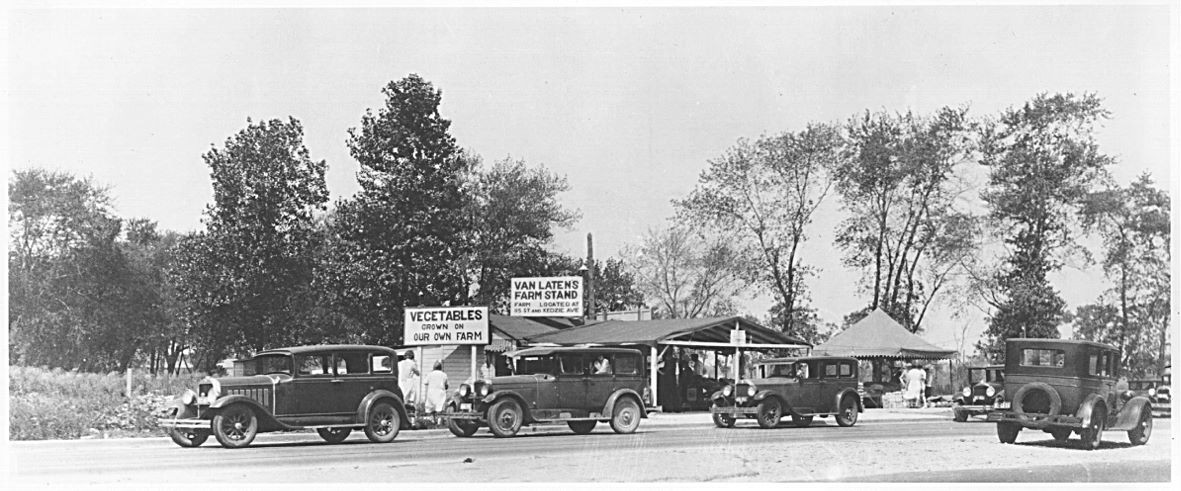
For 55 years, the Van Laten farm stand was a fixture at 101st and Western Avenue.
The Van Latens came from the Netherlands in the late 1800s. They settled in Chicago and started a poultry farm. They eventually rented many acres of land in the area, including around 115th and Western, the area now built up as Merrionette Park, and the strip mall at 115th and Kedzie. That was farmland up until the 1950s.
The Van Latens were part of the "last working farm in Chicago" that was on the grounds now housing the Chicago High School for Agricultural Sciences.
Other farmers on the land included the Martens, Aggens and Langlands. This is a very interesting story – the founding and building of that high school in the 1970s-1980s – and we will cover it another day.
Author Therese Ragen remembered walking up to Van Laten's stand, where they would pick out "fresh tomatoes and lettuce and corn on the cob, and carrots and peaches and plums. Mrs. Van Laten would take her pencil out from behind her ear, adding up the prices in a column on a paper bag." They would pay for the goods and leave their address and the Van Latens would later deliver the produce to their home.
This picture from the Ridge Historical Society archives is of the Van Laten farm stand on Western Ave.

The Ridge Historical Society is sponsoring an upcoming program at the Givins Castle that is sure to be excellent. On Sunday, April 7, at 2:00 p.m., presenter Don Hayner will discuss his book, "Binga, The Rise and Fall of Chicago’s First Black Banker," scheduled for release in November 2019.
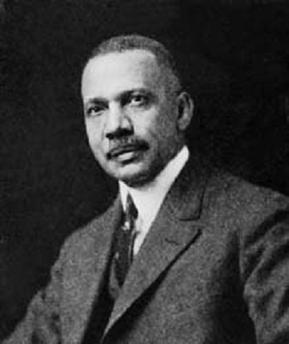
Jesse Binga (1865 – 1950) was a prominent real estate businessman who founded the first privately owned African-American bank in Chicago in 1908 to serve black clients denied service at white-owned banks. Binga built a home in a white area and his house and offices were bombed numerous times. Animosity between whites and blacks led to a major Chicago race riot in 1919.
Binga's bank closed when the Great Depression hit. He refused to seize the property of the black churches and societies that could not meet their mortgage payments. He was accused and convicted of embezzlement and served time in prison. He received a full pardon in 1941. He died in poverty and is buried in Oak Woods Cemetery.
Author Don Hayner, a lifelong Chicagoan living in Beverly, retired as editor-in-chief of the Chicago Sun-Times newspaper in 2012. During his tenure, the paper won multiple national and local awards for investigative reporting and breaking news, including the Pulitzer Prize for local reporting in 2011. He has co-authored three books including "Streetwise Chicago, A History of Chicago Street Names."
“'Binga, The Rise and Fall of Chicago’s First Black Banker,' tells the story of the beginning of a sad saga that Chicagoans have lived through for more than a century. It's the story of racial change in the neighborhoods of a city, which is one of the most segregated in America, but at its core, it's a story of how Jesse Binga represented hope to a community shut out and isolated by racial animosity,” said Hayner in a description of this program.
The cost of the program is $10 per person and all proceeds will go to the Castle Restoration Fund. The Beverly Unitarian Church, owner of the Castle, has started an initiative to raise money for repairs to the Castle turrets. Donations to this fund will be used for preservation of the Castle, not for church operations. The BUC has already raised more than $400,000 in donations and pledges from its own members. A total of at least $800,000 is needed for the beginning work. RHS supports the preservation of this most iconic of all local landmarks.
As space is limited, reservations are suggested, and may be made by calling RHS at 773/881-1675 or emailing ridgehistory@hotmail.com. Tours of the Castle will be available following the program. Light refreshments will be served. The address of the Castle is 10244 S. Longwood Drive, Chicago.
Photo1: Jesse Binga, the first African-American banker in Chicago.
Photo 2: Don Hayner, presenter, author of upcoming book on Jesse Binga and retired editor-in-chief of the Chicago Sun-Times.
Leading off from the post on Gertrude Blackwelder.
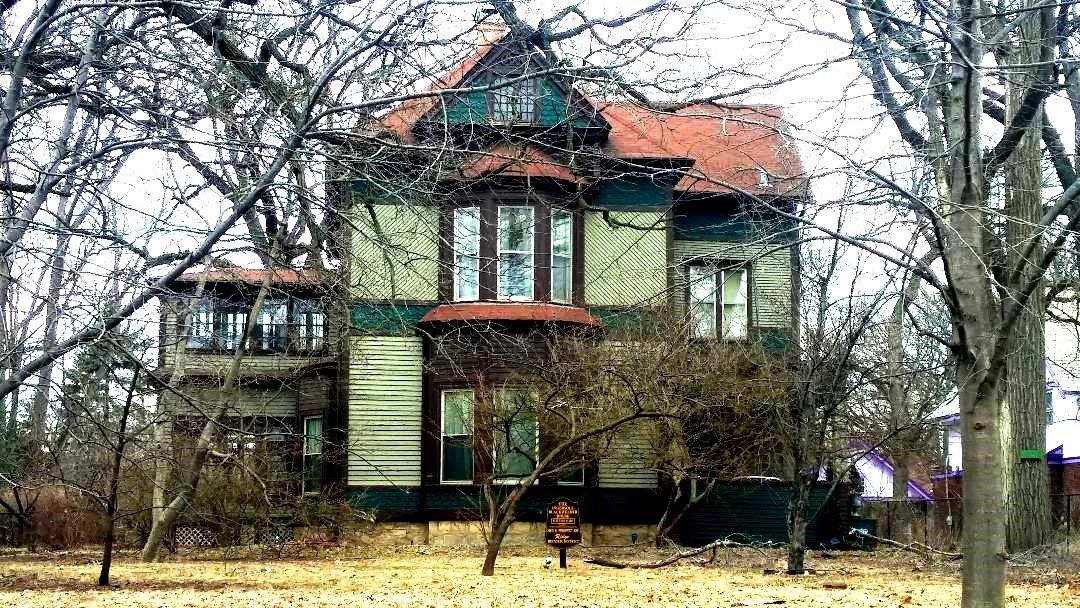
This is the Ingersoll-Blackwelder-Simmerling House as it looks today. And I really mean TODAY – March 7, 2019. I took this picture this morning. While the landscape looks barren, it's good to get these pictures before all the new plant growth comes in in the Spring and blocks the view of the house.
Houses are named for the person for whom the house was originally built. Then you can add additional hyphenated names if famous people lived there. The house was built in 1874 for grain broker John Ingersoll. The Blackwelders added the Queen Anne front in 1877.
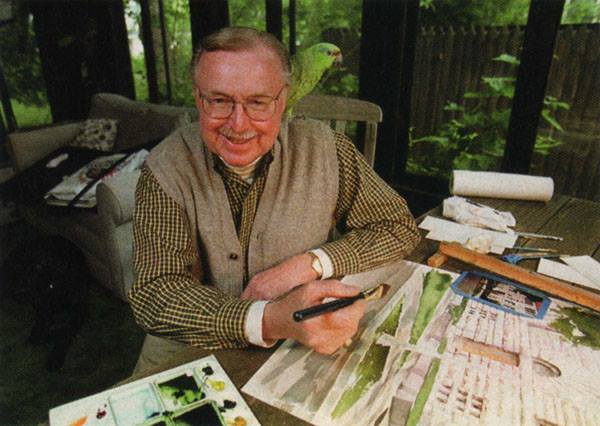
There were other owners, but the house was allowed to fall into real disrepair. Then along came artist Jack Simmerling. Jack was a wonderful man, very concerned about preservation of Chicago's historic homes. He bought the dilapidated house and lovingly restored it, and his family lived there for many years. He told the story that at the time of purchase, the roof had caved in, and the main internal staircase was so covered with ice and snow you could literally sled down the stairs from the second floor bedrooms. When Jack died in 2013, the family sold the house.
Jack owned the Heritage Gallery on 103rd St., which is now run by his daughter Vicki. He was a founder of the Ridge Historical Society. This picture of Jack is from the Glessner House Museum website, which now houses his collection of artifacts from many of the Prairie Avenue mansions, demolished long ago.
– Carol Flynn, Ridge Historical Society Communications @ridgehistoricalsociety
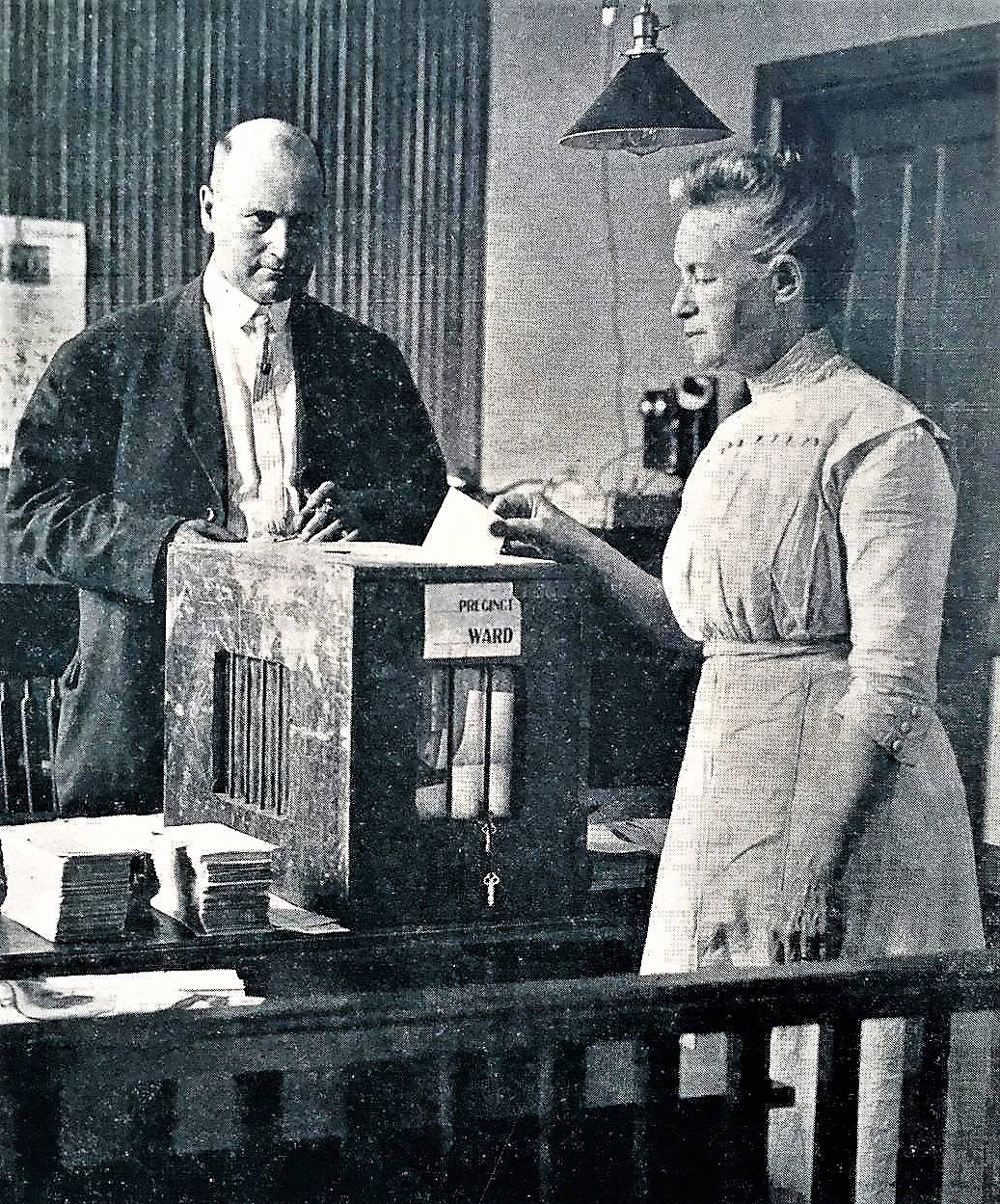
March is Women's History Month. This year the Ridge Historical Society salutes Gertrude Blackwelder, a remarkable woman who lived during the Progressive Era and worked tirelessly for women's suffrage and education reform. Mrs. Blackwelder made history by being the first woman to cast a vote in Cook County when women won expanded voting rights in 1913.
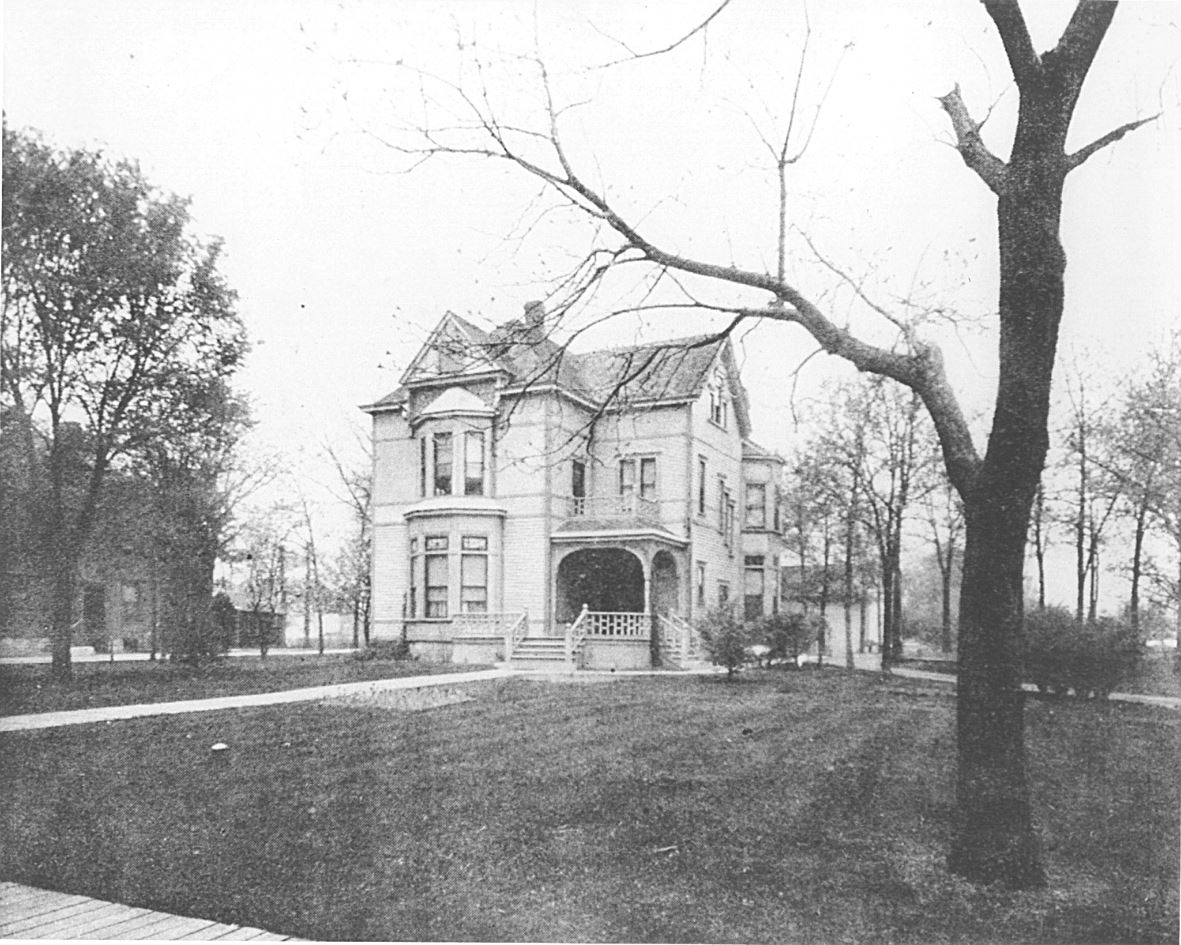
Gertrude and her husband, I.S. Blackwelder, were early settlers in Morgan Park, where I.S. served as president of the Village Board. Gertrude co-founded the Morgan Park Woman's Club in 1889, the oldest such club still in existence in Chicago. The Blackwelders were instrumental in establishing the Morgan Park High School, which opened in 1916. Their house is one of the most famous historical residences in the neighborhood – the Ingersoll-Blackwelder-Simmerling House on Prospect.
We've just entered a major feature on Mrs. Blackwelder on the RHS website so go here for more information: www.ridgehistorical.org.
Pictures: Mrs. Blackwelder voting, from the Chicago Tribune in 1913.
The Ingersoll-Blackwelder House as it appeared when the Blackwelders lived there – RHS archives.
Jazz is a uniquely American art form. Originating in the African-American community of New Orleans in the early 1900s, jazz has its roots in ragtime and the blues. As jazz spread it was influenced by other cultures, leading to the many subgenres of today. But key to all types of jazz is improvisation.
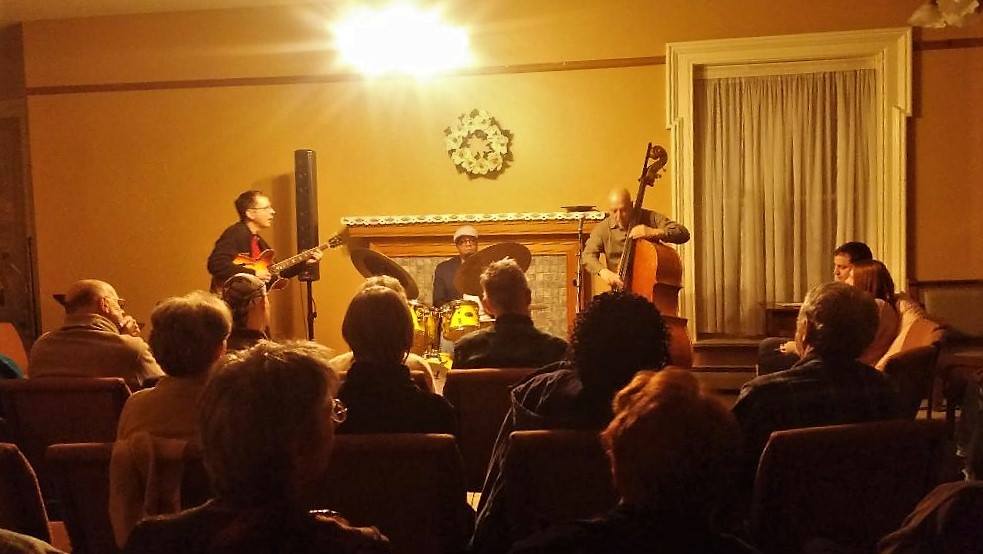
Tonight was a simply brilliant jazz performance at the Givins Castle (103rd St. and Longwood Drive, Chicago) by the Larry Gray Trio, pictured here. That's Larry on the right, drummer Charles "Rick" Heath, and guitarist John Moulder.
This is a plug for the music series going on in the Beverly/Morgan Park community this year. The series creator is John Devens, previously the proprietor of the World Folk Music Co. on 103rd St. Since Fall 2018, he has arranged memorable concerts at the Castle and the Heritage Gallery (1907 W. 103rd St.).
Three more events will take place this Spring. On March 30, Michael Peter Smith will perform at the Heritage Gallery.
On April 27, the septet Come Sunday will appear at the Castle.
Contemporary folk singer-songwriter Anne Hill will appear at the Heritage Gallery on May 18.
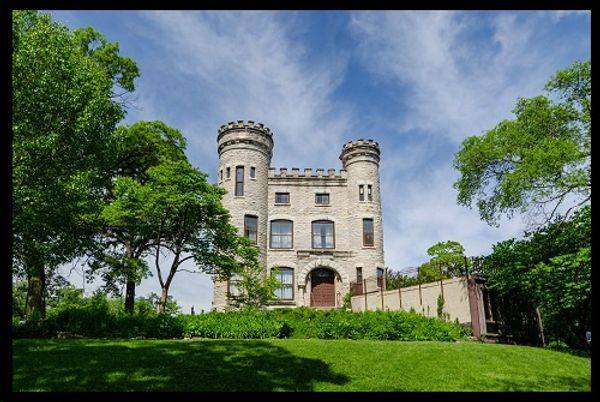
There is an added historical preservation bonus to this series. The suggested donation for a ticket is $20. The proceeds from the events at the Castle are donated to the Castle building restoration fund. The 1886-87 historic structure (second picture) is feeling its age and needs repair work on the turrets.
The concerts were underwritten by the late Dean Miller, in memory of his late wife Martha Herriott Swift.
For more information on the concerts call (773) 466-9339 or visit https://www.heritagecastleconcerts.org.
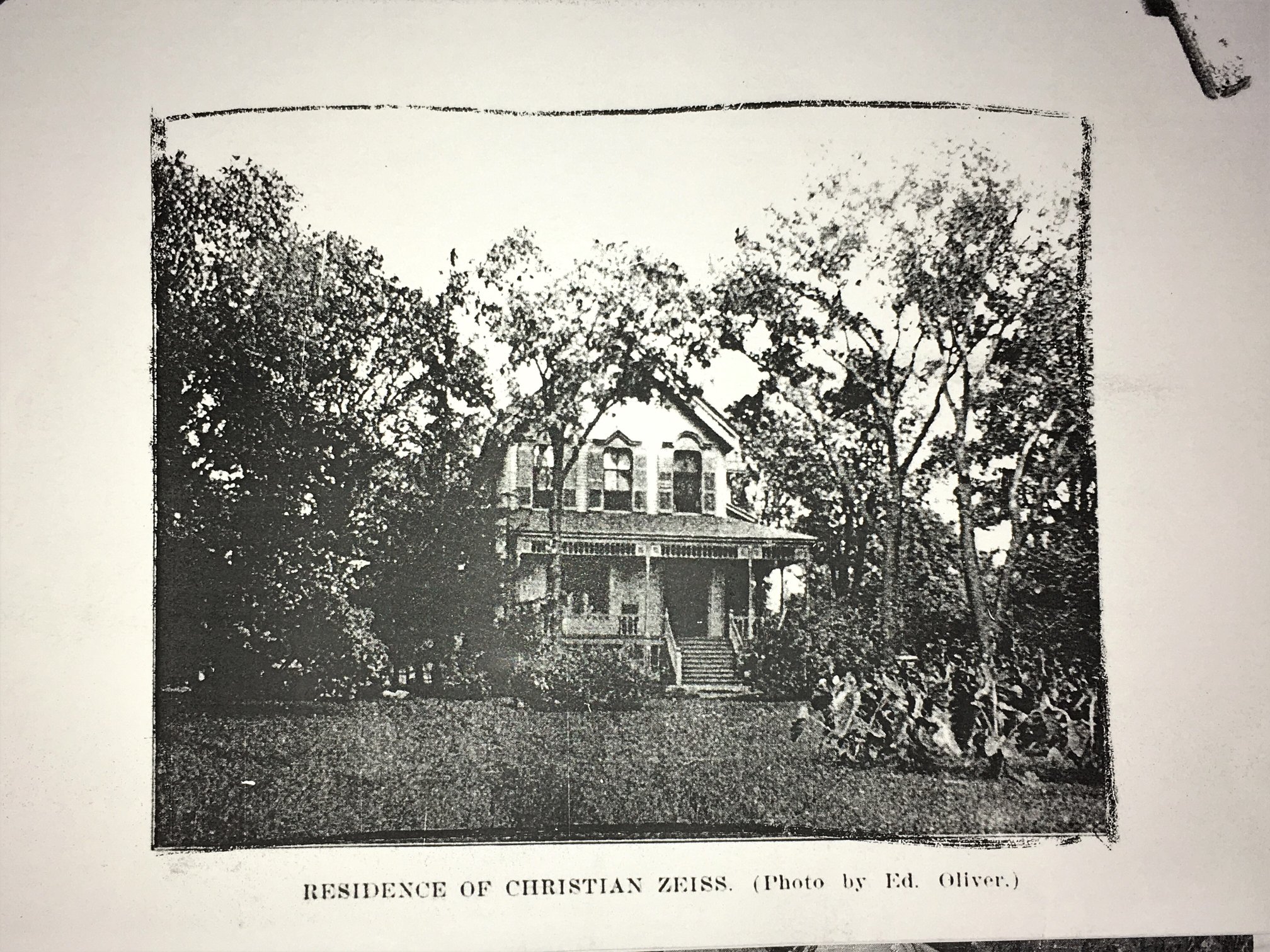
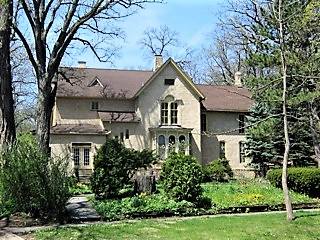
One of the duties of a legitimate history organization like the Ridge Historical Society is to investigate and either verify or "debunk" local myths and legends to maintain historical accuracy. It's not always easy to get to the truth, and it can be dismaying and downright upsetting to the public to find out something they have believed for years is just not accurate.
Case in point for Morgan Park: The widespread belief that the Hopkinson-Platt House on 108th and Drew was a stop on the Underground Railroad. As we finish up Black History Month, let's take a look at this local urban myth, which someone referred to on an RHS post last week.
The Underground Railroad was a network of safe stops where escaping slaves could find refuge and help as they made their way north to freedom. The locations were passed along by word of mouth and secret symbols.
The Blue Island Land and Building Co. began platting and selling the land bordered by today's Western Ave., Ashland Ave., 107th St., and 119th St., in 1869, after the U.S. Civil War ended. William Hopkinson purchased that land at 108th and Drew and built that house in 1871, too late for the Underground Railroad.
The Platts owned the house in later years. What appears to have happened is that a man investigating an ancestor's escape to freedom using the Underground Railroad told Mrs. Platt that the ancestor's journal described a house with windows like the ones on the Hopkinson-Platt House. From this, Ms. Platt drew the conclusion this was the house. But the dates just do not confirm this.
There are oral histories that confirm that escaping slaves passed through Beverly/Morgan Park and hid in barns. And there are several verified Underground Railroad stops on the South Side. But, unfortunately, the Platt House was not one of them.
So what about the "hidden room?" Well, it could have been a storage area, or changes could have been made to the house at any time along the way. It could have been used in any number of ways. Prohibition?
Does this lessen the historical significance of the house? Not at all. It is one of the earliest structures in Morgan Park, and has a fascinating history. Its nearly three acres of never-developed land make it a prime spot to study for potential significance to the Native Americans who lived in the area.
Two pictures here show, first, the house in its early years, then owned by Christian Zeiss, when the front entrance faced Prospect Ave. As land around the house was sold off, the house was remodeled to create the entrance on the Drew Ave. side, which is shown in the second photo, the way the house looks now.
– Carol Flynn, RHS Communications @ridgehistoricalsociety
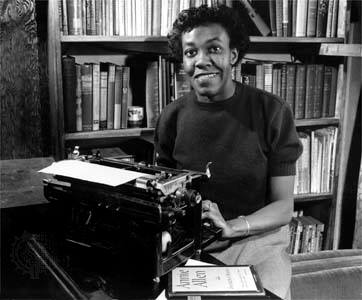
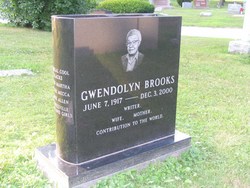
In celebration of Black History Month: The Ridge area includes one of Chicagoland’s most historic African American cemeteries, Lincoln Cemetery at 12300 S. Kedzie Avenue.
By the early 1900s, the growing population and the encroachment of segregationist ‘Jim Crow’ laws from the South had made it increasingly difficult for blacks to find burial plots in white cemeteries. So as many ethnic groups were doing, African Americans established their own cemeteries. In 1911, a group of black undertakers approached the owners of Oak Hill Cemetery on Kedzie Avenue, established in 1902 for Swedish families, to ask if some of their unused land could be opened to African Americans. The request was agreed to and Lincoln Cemetery was founded.
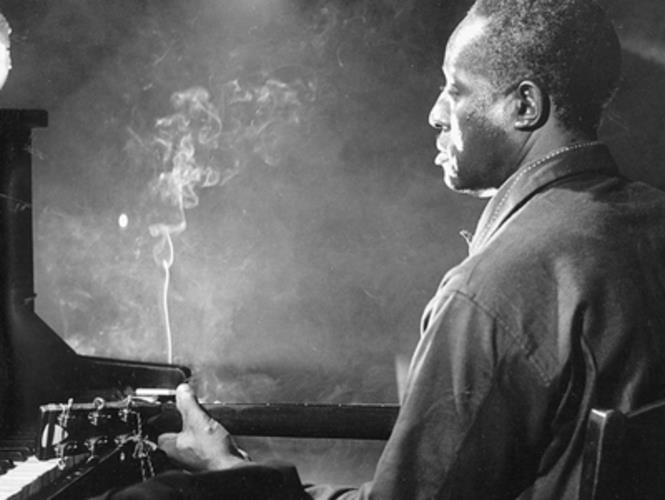
This is the final resting place for notable musicians and other personalities associated with blues music, including Big Bill Broonzy, Mathis James ‘Jimmy’ Reed, Jack L. Cooper, Lillian ‘Lil’ Hardin Armstrong, and several others.
A number of men connected to the Negro Baseball Leagues are buried there.
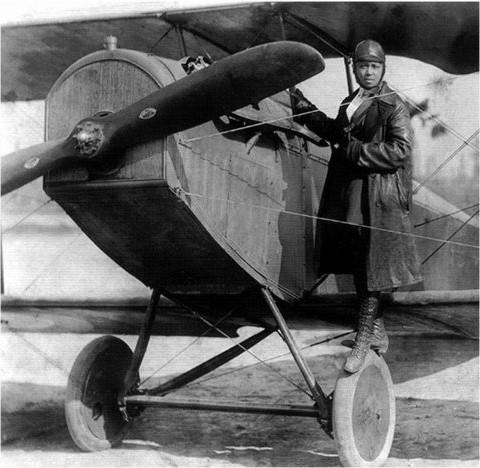
Bessie Coleman (1892-1926), the first woman of African-American descent and the first woman of Native American descent to earn a pilot’s license, is buried there. She was a successful air show pilot but died in a crash while testing a new plane.
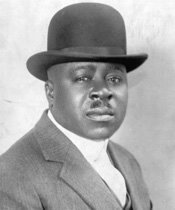
Robert Sengstacke Abbott (1870 – 1940), lawyer and newspaper publisher, is buried there. He founded The Chicago Defender in 1905 and started the Bud Billiken Parade and Picnic in 1929.
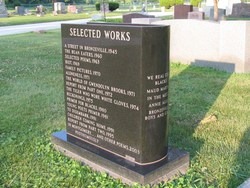
The most famous person buried in Lincoln Cemetery is the poet Gwendolyn Brooks (1917 – 2000). She won the Pulitzer Prize for Poetry in 1950 and was appointed Poet Laureate of Illinois in 1968 and Poet Laureate Consultant in Poetry to the Library of Congress in 1985. Her tombstone is a marble book.
Pictures: Gwendolyn Brooks, and the grave of Ms. Brooks; Big Bill Broonzy, Bessie Coleman, Robert S. Abbott.
February is Black History Month. Few people realize that Morgan Park is home to one of Chicago's pioneer black communities, dating back to the 1880s.
The earliest days of Morgan Park included a small settlement of African Americans, some of whom were former slaves and others descended from Southern slave families, who migrated north after the Civil War. They settled east of Vincennes Ave., near the main line of the Rock Island railroad. Families continued to settle there, and by 1920, almost 12% of Morgan Park residents were black.
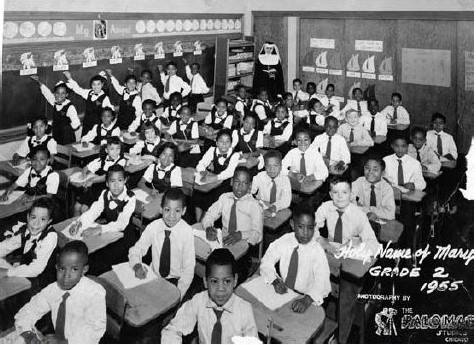
They established their own churches, beginning with Beth Eden in 1891, and in 1940, the Catholic parish of Holy Name of Mary was formed. Public institutions such as Morgan Park High School (built in 1916) and the Walker Branch Library (founded in 1890) were always integrated.
Interstate 57, built during the 1960s, isolated the original black settlement. At the same time, racial integration throughout the Morgan Park area was increasing.
About ten years ago, under the direction of the late Sue Delves, the Ridge Historical Society worked extensively with members of this community to preserve their history through pictures, other documents and recorded interviews. Many of the participants were third and fourth generation residents. This information is part of the RHS collection.
This photo of second grade at Holy Name of Mary School is from 1955.
The Ridge Historical Society has several events coming up. First, this Sunday, February 24, is the annual meeting of the members, starting at 2:00 p.m. Evites went out to members.
This week is the last chance to view the "Art of Ethel Wirtshafter" exhibit. It will be dismantled next week. What a wonderful exhibit it has been, with participation with so many members of the community. You can still catch the exhibit if you hurry – call RHS at 773/881-1675 to arrange a visit.
Two very interesting programs are coming up in early March. On Friday, March 8 at 7:00 p.m., John Langer will present “Planning a Nation, a State, a Town.” Langer is with the Friends of the Chicago Portage, and will discuss the connection between the Chicago Portage and the Northwest Territory; the shape and boundaries of the State of Illinois; and the original Plat of Survey for the City of Chicago. This is a "must" program for anyone interested in the earliest days of exploration of the Chicago area.
On Sunday, March 10, at 2:00 p.m., author Chris Fogarty will discuss his 2015 book, “Ireland 1845-1850: The Perfect Holocaust, and Who Kept it ‘Perfect.’” The author explores the conditions that led to the “Great Hunger” resulting in the deaths or emigration of millions of the Irish people.
RHS is located in the historic Graver-Driscoll House at 10621 S. Seeley Ave. There is parking on the street, then walk down the drive to the house. The cost for the programs is $5 per RHS member, and $10 for non-members. Light refreshments will be served. There will be more detailed information posted under Events.
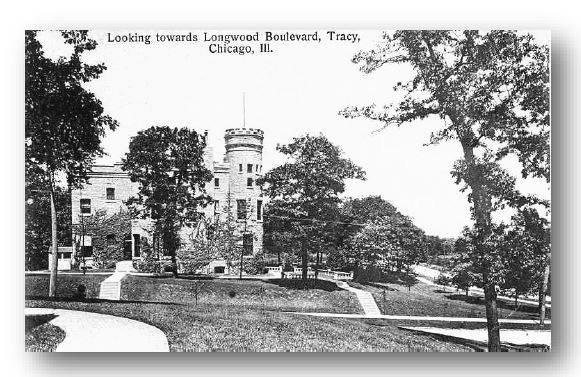
Tomorrow is Valentine’s Day, which brings to mind tales of love and devotion. Beverly/Morgan Park has its share of love stories (and a few scandals, but that is for another day). One of the most compelling surely has to be that a man built an actual castle for his new bride. We’re talking about the Givins Castle at 103rd Street and Longwood Drive, of course. This entire story has a lot of urban myth attached to it, and here are the real facts.
Robert Cartwright Givins was a very popular man in Chicago, very well-liked. The newspapers often referred to him as “Bob,” something unusual for the formal times of the late 1800s. He was a real estate developer, a lawyer, a writer of romance and science fiction novels, a world traveler, and the biggest booster of Chicago to be found. Bob Givins was even proposed for mayor. He had moved to Chicago from Canada, and his family came from Northern Ireland Protestant descendancy.
Givins lost his first wife and three of his four children at an early age. Only one son, Robert Saltern Givins, made it to adulthood – and he was involved in one of the scandals we will save until later.
On August 17, 1884, the Inter Ocean newspaper ran this little blurb: “Mr. Robert C. Givins has gone to St. Paul and Lake Minnetonka. Will he come back alone?”
Givins came back with a new wife, the former Emma Steen. Emma was a Chicago school teacher, 13 years younger than Givins, and of Norwegian descent. They built the Castle on the hill in Tracy, as the area was then known, in 1886-87. Tracy was the name of the street that would become 103rd Street.
Now we get to some of the myths. First, that Givins visited Ireland, saw this castle on the River Dee, and came home and built it for his new wife. Well, there is no documentation of this that we have found – yet. It seems the first time this was mentioned was about 50 years after the Castle was built. It actually could be highly likely that the Castle was built due to Masonic influence – the Givinses were very active in the Knights Templar of the Masons.
Second, there is a myth that the Givinses never lived in the Castle. They most certainly did. There are numerous newspaper articles about their activities there, and their involvement in the local community. They even brought a trendy new game to the Ridge: “pin-the-tail-on-the-donkey.” During the winters, they took up rooms in downtown hotels, which is something the rich living outside the city often did to avoid the commute downtown for business and social activities.
Givins was in favor of the annexation of Washington Heights, which included Beverly, to Chicago in 1890. He sat on the finance committee for the first Church of the Mediator at 110th St. and Hoyne Ave.
Emma Givins was a strong supporter of education for women and teachers’ rights. She was a founder of an early domestic science school through the Chicago Woman’s Club. This was a forerunner of today’s Family and Consumer Sciences programs.
The Castle was sold in 1909. The Givinses divided their time between the north suburbs and Sarasota, Florida. Emma died in 1914 at the age of 56. Bob died the following year, age 69. They are buried in Rosehill Cemetery on Chicago’s north side.
– Carol Flynn, RHS Communications @ridgehistoricalociety