
Explore the RHS Facebook Archives, a rich repository of local history written by Carol Flynn. For two decades, Carol brought a deeply dedicated voice to public education at RHS. Her role as Facebook administrator through mid-2025 naturally extended her prolific research into meticulously detailed articles, most notably her multi-part historical series posts. Today, Carol continues her local history writing for The Beverly Review and other outlets.
2019
Today is National Hot Dog Day, established by the National Hot Dog and Sausage Council. It’s a marketing ploy, although it’s hard to believe that hot dogs need marketing. They are considered one of the “all-American” foods and, by one estimate; Americans eat 20 billion hot dogs each year.
The origin of hot dogs is obscure but most likely they grew out of the pork sausages developed in Frankfort, Germany, in the 1200s, which were commonly called “frankfurters.” Then they travelled to Vienna, Austria, in the 1600s, where beef was added to the mixture and these were known as “wieners.” They came to the USA with German immigrants in the 1800s.
Who first put them on a bun is disputed. One claim is that this happened at the 1893 World’s Fair in Chicago, and we’ll go with that for this post since we are in Chicago. (Other claims are Coney Island in New York as early as the 1860s; St. Louis, MO, street vendors in the 1880s; and the St. Louis World Fair in 1904.)
Also not known with certainty is how they got the name “hot dog.” The term “dog” was used for sausage going back to the 1800s because in Germany some sausage makers did use dog meat in sausage. Another theory is that they were called this after the little German dachshunds. And they were served hot. By 1900, “hot dog” and “red hot” were in common usage.
Hot dogs became firmly and forever entrenched in American culture when they became associated with America’s “pastime” – baseball. Today, they are a critical part of “Chicago street cuisine.”
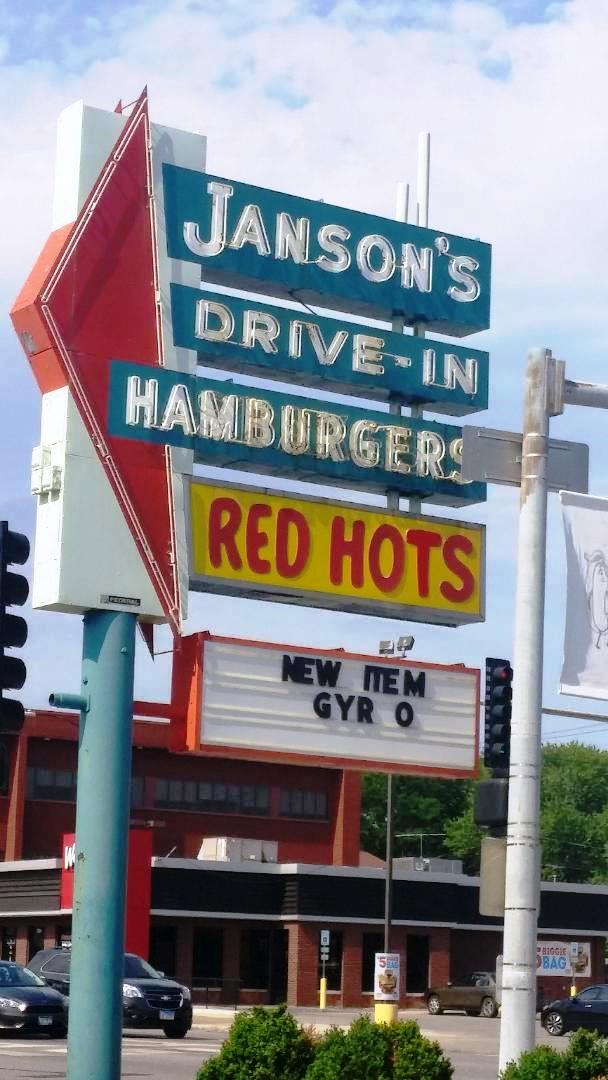
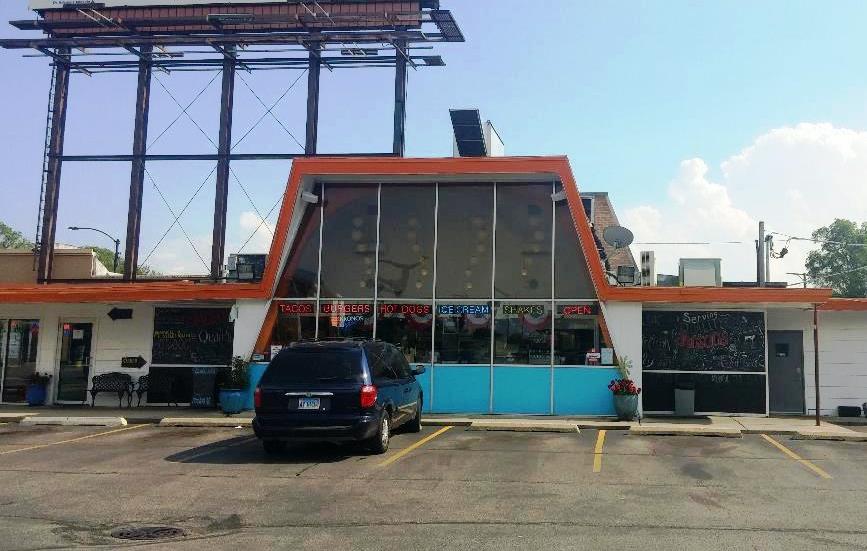
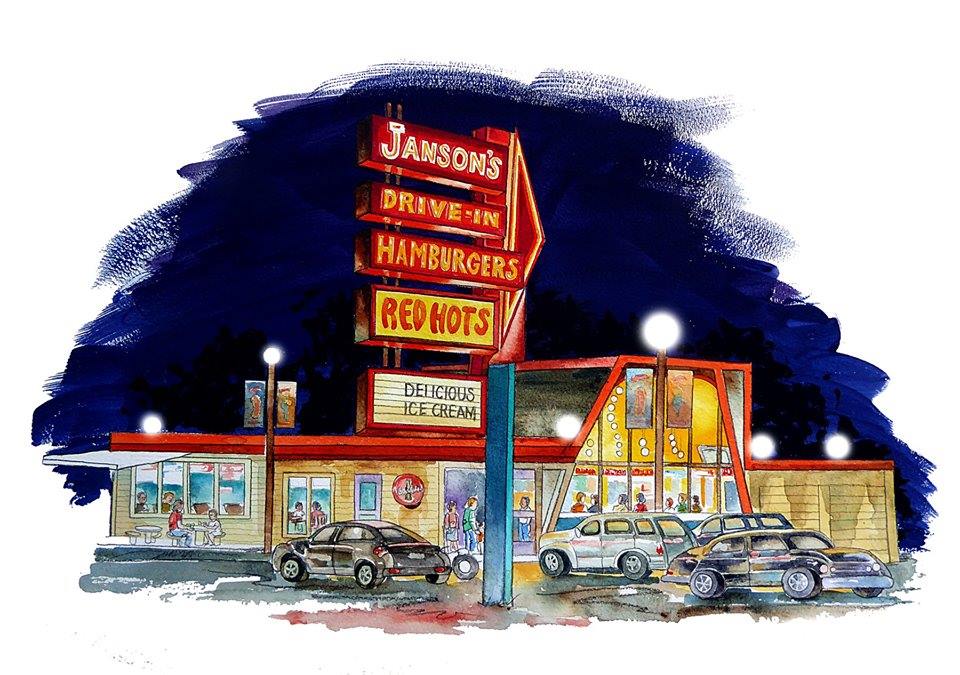
And what better place to enjoy a hot dog on the Ridge than the historic Janson’s Drive-In at 9900 S. Western Ave.? The Beverly Review ran an announcement for the opening of this new “fast-food drive-in” restaurant in 1960. The house specialty, a banana milkshake, cost 50 cents.
Janson’s remains a true drive-in today, with no indoor seating in its distinctive A-frame building with the orange roof line. The neon sign still lights up the night sky. Bright, flashing neon signs reached their peak in the 1950s–1960s, then began to decline due to the expense of production. Janson’s frequently shows up today on lists of “roadside attractions,” places worth stopping to visit.
Janson’s made television history when it appeared in the TV series Crime Story starring the late Dennis Farina, Chicago police officer turned actor. The opening scene of the first episode was filmed at Janson’s with Del Shannon’s song “Runaway” playing in the background. The clip can be viewed on YouTube; just enter “crime story opening scene.”
These photos of Janson’s are from today, taken by C. Flynn. The water color painting is the creation of Beverly resident and artist Judie Anderson.
We’ve got trouble! Right here in Morgan Park! With a capital T and that rhymes with P and that stands for pool!
Where were Professor Harold Hill and Marion the Librarian when you needed them?
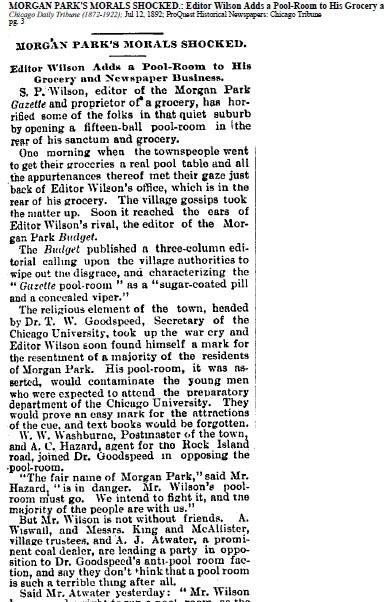
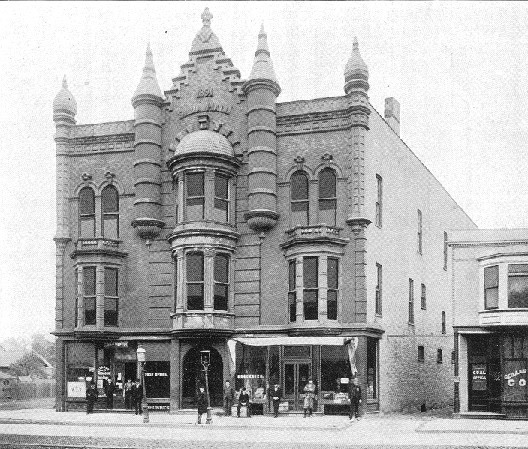
The attached newspaper article about a pool table in Morgan Park was published 127 years ago today – July 12, 1892. The incident occurred at Silva Hall (see photo, RHS collection), which was on Hale just north of 111th St. The first floor of the hall was for businesses, and where the grocery store was located. The second floor housed the Morgan Park branch of the Calumet Club, one of the oldest men’s clubs in the city. A theater was on the third floor. Silva Hall was built in 1891 and burned down in 1907.
Public pool halls were controversial. The common belief was that hanging around a pool hall tempted young men to worse evils like drinking alcohol. But while some people considered playing pool a vice, at the same time many of the prestigious men’s clubs had pool rooms. Chicago had rules for licensing pool tables, but they were not enforced with any regularity. One of the biggest producers of pool tables, Brunswick, was located in Chicago.
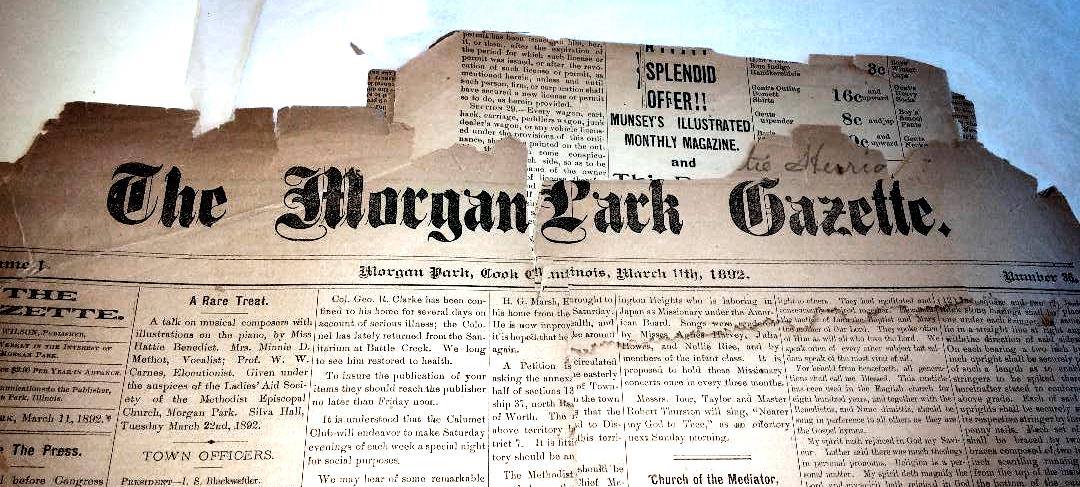
In Morgan Park, even though many of the citizens might have wanted the pool table banned, it was supported by men who were on the village council board and members of the Calumet Club. RHS has very fragile remnants of two issues of the Morgan Park Gazette (see photo by C. Flynn), put out by S. P. Wilson, who also ran the grocery store and was a fellow member of the Calumet Club.
Pool was not banned from Morgan Park. In 1894, the village council established ordinances including that a pool table operated for profit had to be licensed. The cost of the license was $5 per table. The new ordinances also came with the firm warning that “no place where any billiard or pool table is kept shall be allowed to become the resort of dissolute or disreputable persons, or be carried on in a disorderly or improper manner.”
The play “The Music Man” is currently being performed at the Goodman Theater. This is a case of art imitating life.
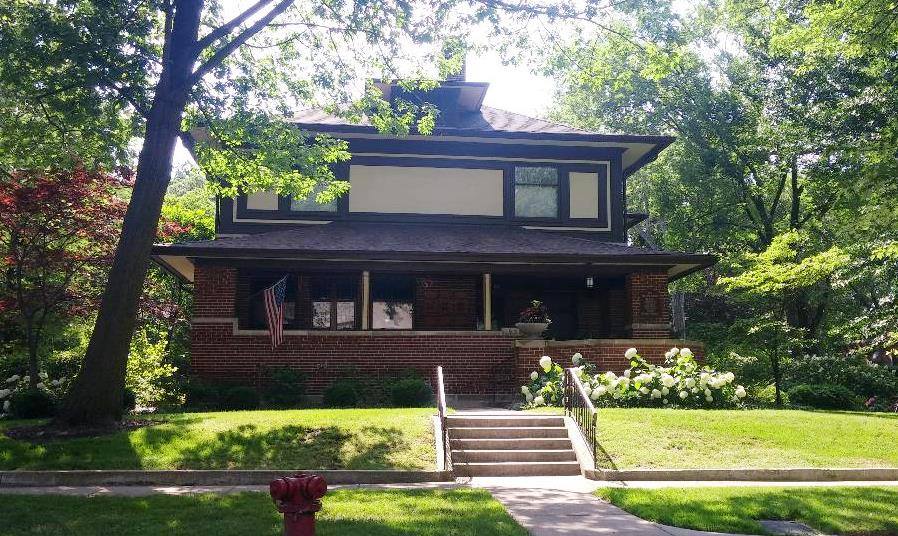
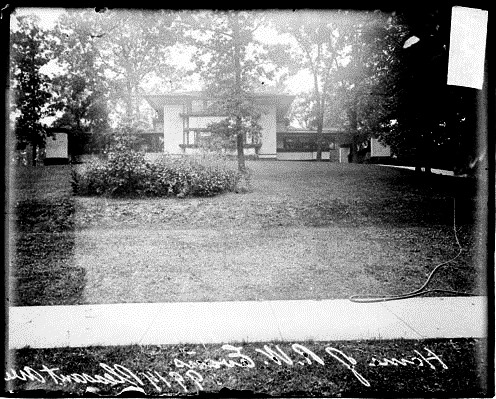
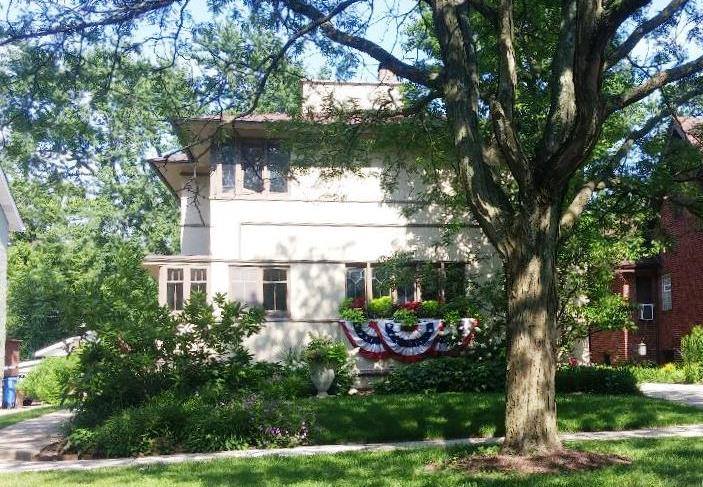
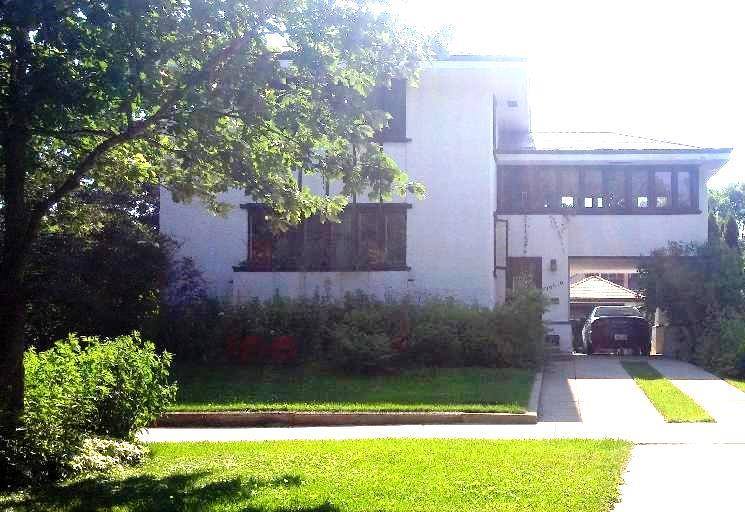
Just today, UNESCO, the United Nations Educational, Scientific and Cultural Organization, announced that it added eight of architect Frank Lloyd Wright's buildings to the UNESCO World Heritage List, elevating them to the same status as the Pyramids and the Statue of Liberty. Two of the buildings are right here in the Chicago area – the Robie House in Hyde Park, Chicago, and the Unity Temple in Oak Park.
The UNESCO inscription included: “These buildings reflect the ‘organic architecture’ developed by Wright, which includes an open plan, a blurring of the boundaries between exterior and interior and the unprecedented use of materials such as steel and concrete. Each of these buildings offers innovative solutions to the needs for housing, worship, work or leisure.”
Although his personal life and business behavior were controversial, Wright (1867 – 1959) was called the greatest American architect of all time by the American Institute of Architects in 1991.
The Ridge boasts four Frank Lloyd Wright residences. First is the William and Jesse Adams House at 9326 S. Pleasant Ave. Built in 1900, the style was not consistent with other houses Wright was designing at the time, leading some scholars to speculate that William Adams, who served as the contractor for some of Wright’s other houses, may have designed the house himself. Wright’s name is printed on one of the original drawings and at the very least, the house’s widely overhanging roofs suggest Wright’s influence.
In 1908, the Raymond W. Evans House was built at 9914 S. Longwood Drive. Wright designed this house in his “Prairie Style,” that is, to complement the native Midwestern landscape. The style is characterized by horizontal lines, low-pitched roofs, overhanging eaves, and rows of windows. The long, low lines of the Evans house blend in well with its setting on the hill. The house is based on plans that Wright called “Fireproof Houses for $5000” that used concrete and steel. The plans for the Evans House were expanded to include an extra wing for servants, an enclosed porch and a covered driveway. The house was originally covered with stucco; a later owner added the stone veneer.
Then there are the two American System-Built Houses, the H. Howard Hyde House at 10541 S. Hoyne, and the Guy C. Smith House at 10410 S. Hoyne. These were built from plans developed by Wright in 1916 for affordable middle-class housing using pre-cut lumber but built on-site by certified contractors. Originally, an entire sub-division of these homes was planned – it was to be called “Ridge Homes” – but World War I intervened, bringing a shortage of building materials.
Although listed in many sources, all of these houses are private residences and should be respected as such.
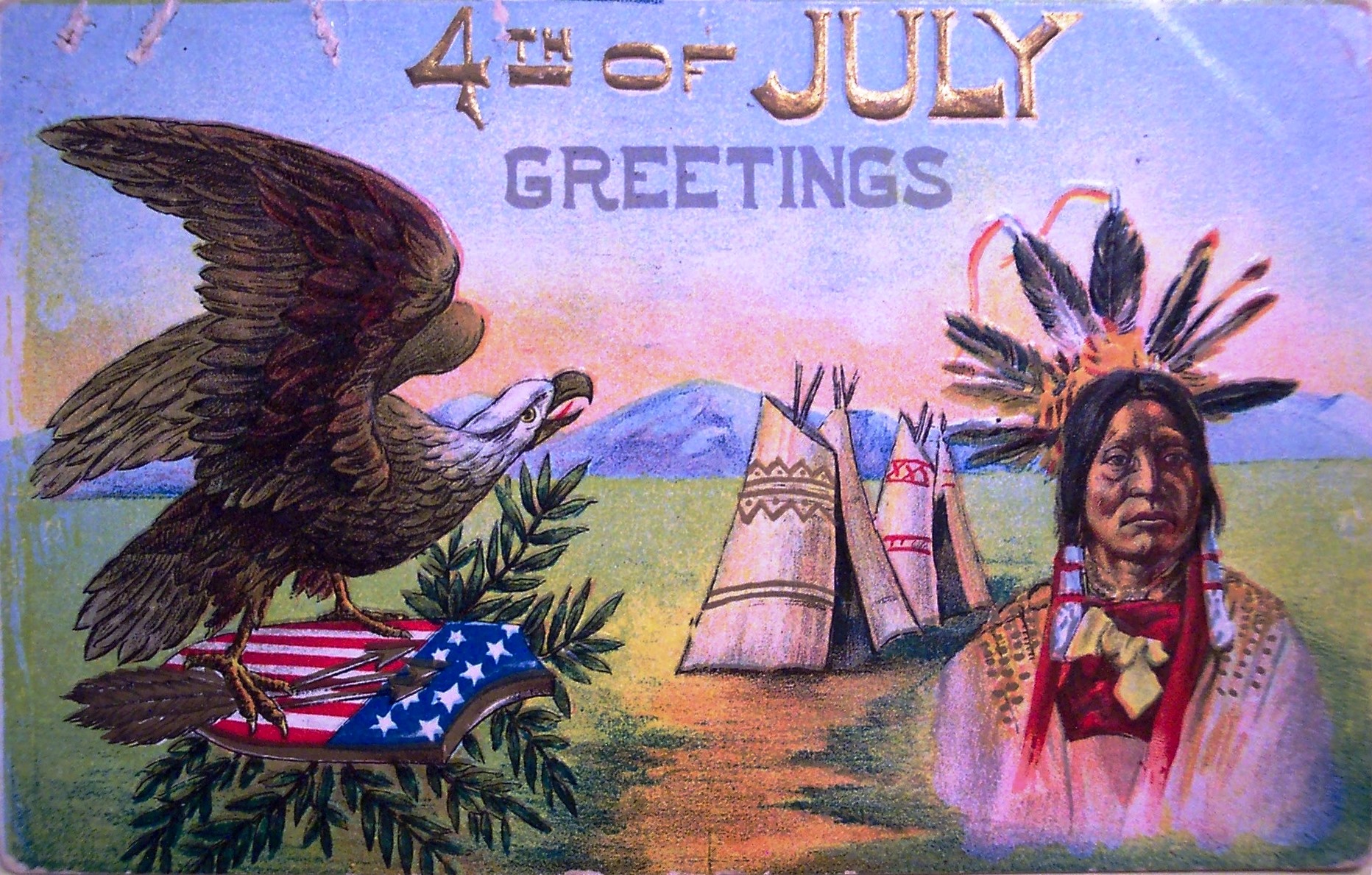
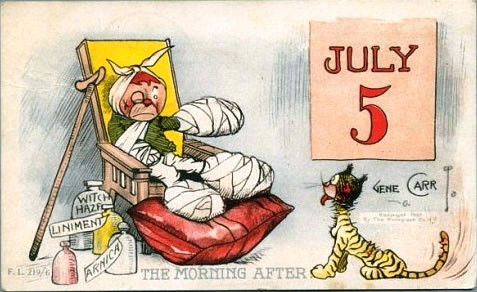
Vintage postcards for the 4th of July. These are a little different so they are of particular interest. The first one uses a depiction of a Native American to celebrate the holiday, which seems curious because Native American issues are rarely considered in discussing the English colonists' rebellion against the crown. The intent seems to be the preservation of the legacy of the original land, but we all know how that turned out for the Native Americans.
As far as the history of the Ridge goes, there was a strong historic presence of Native Americans in the area, especially along the Calumet River. Archaeological excavations are currently going on in local forest preserves. But the Treaty of Chicago in 1833 led to the withdrawal of the remaining Potowatomi to west of the Mississippi River.
The second postcard is actually for July 5, the day after the holiday. It shows a child and pet recovering from fire cracker injuries. While this might have had a humorous intent, it also serves as a warning to be very careful with home fireworks displays.
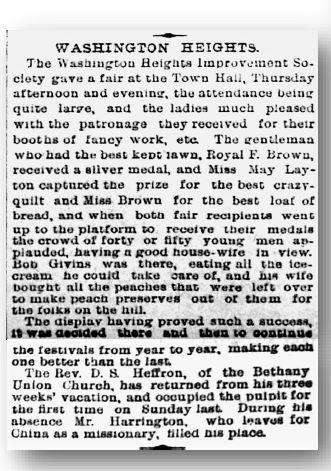
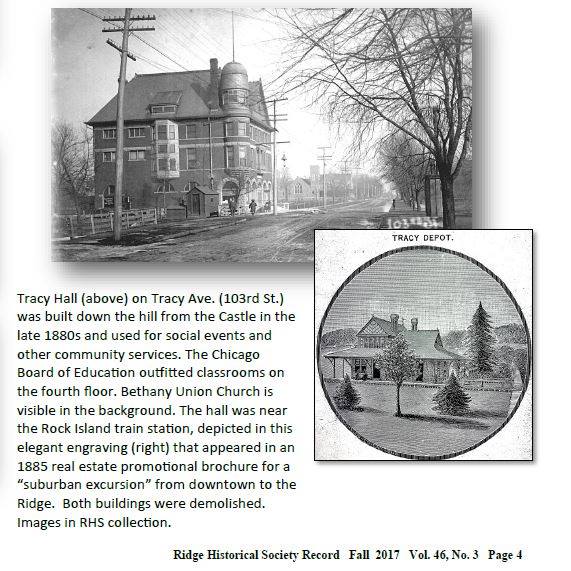
Here's a little article from The Inter Ocean from summer of 1886 giving news of a "fest" in Washington Heights, which included the area we know as Beverly now. The town hall referred to in the article is likely Tracy Hall. Bob Givins is, of course, the builder of the Castle at 103rd St. and Longwood Drive. The newspapers loved Bob Givins; he was a real Chicago personality back in his day.
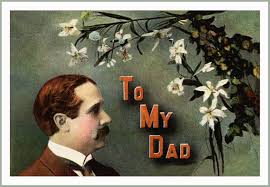
Father’s Day
Here is some trivia about Father's Day that I included in an article several years ago.
Father’s Day is an old concept. It has been celebrated on March 19, St. Joseph’s Day, in Europe since the Middle Ages.
In the U. S., the idea of a day to recognize fathers started to receive attention in the early 1900s. There were attempts made around the country to establish such a day, including one for Chicago proposed by Jane Addams of Hull House in 1911. The city turned her down.
In 1910, a woman in Spokane, WA , began promoting a day of recognition for all that fathers do. She and her siblings had been raised by their father after their mother died. She worked for this day on-and-off for decades. The idea was actually treated with ridicule by the press, law makers and the public. Mother’s Day had come under fire for evolving into a day of crass commercialism. The general belief was that this would be the same fate for Father’s Day. And there was validity to this concern – it was groups like the Associated Men's Wear Retailers that strongly promoted the day.
It took until 1966 for Father’s Day to be proclaimed a national day of recognition, by President Lyndon B. Johnson. It was finally signed into law in 1972. Through the years, other dates were proposed for the day, but the third Sunday in June stuck. By then that day had been promoted for decades by merchants pushing gift ideas. The number one gift on Father’s Day has always been – and curiously still continues to be – a necktie.
Studies and surveys have revealed what men really think of Father’s Day. A lot of men are actually uncomfortable with the day. They believe they are just doing what they should be doing – supporting and providing for their families – and there is no need to call special attention to this or for their children to give gifts in gratitude.
When dads are asked what they would like as a gift, the answer often is, "Nothing, save your money for school." Hence the fallback position to a necktie. But many men would rather see their children act responsibly and respectfully than give them gifts. It means more to many fathers to have their offspring volunteer to help with mowing the lawn than it does to receive those neckties.
However, there is one “gift” men report they would welcome. This is more personal time to pursue their own interests – an uninterrupted afternoon working on a craft project or reading a good history book or watching sports on T.V. The operative word here is “uninterrupted.”
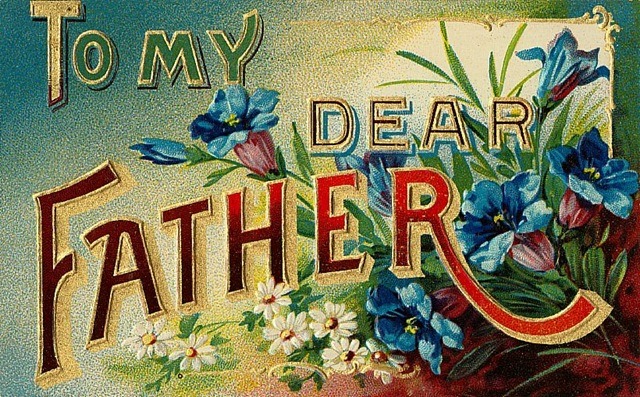
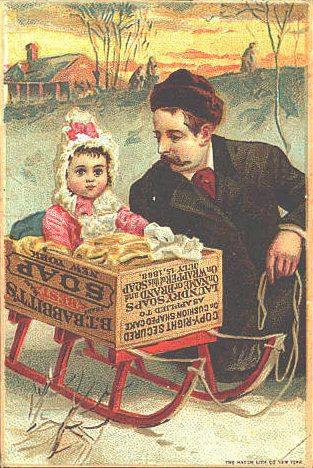
Here are a few vintage postcards celebrating Father’s Day. To anyone who has served or is serving in a fathering role, thank you.
– C. Flynn, RHS Communications
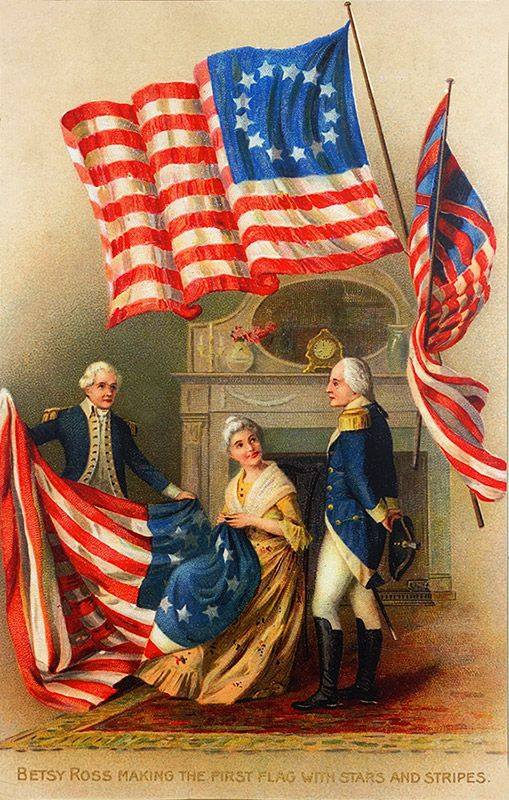
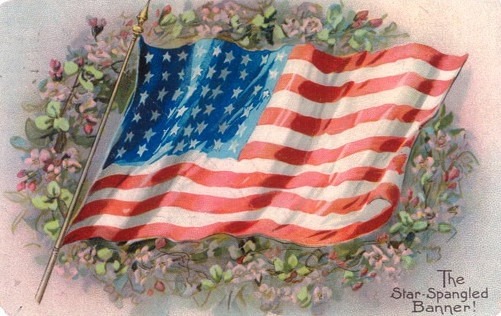
Today is Flag Day in the United States, commemorating the adoption of the U. S. flag on June 14, 1777. President Woodrow Wilson declared this day by proclamation in 1916, and in 1949 an Act of Congress created National Flag Day. Here are some vintage postcards honoring the flag.
Elizabeth Griscom Ross Ashburn Claypoole ("Betsy" to her friends) is credited with making the first American flag, supposedly advising George Washington as to the design. This story is not substantiated by any historical record but comes from the writings of her grandson 100 years after the fact. We do know for certain that Betsy Ross was in the upholstery business, and she did make flags for the Pennsylvania Navy for use on ships during the Revolutionary War. Benjamin Franklin oversaw the committee for this endeavor. Those flags incorporated red and white stripes and blue spaces.
Part 2: June is National Homeownership Month. (That's how they write it – all one word.) It was founded by the federal government and is led by the Department of Housing and Urban Development. The purpose is to raise awareness of the benefits of owning a home and to help Americans achieve this goal.
Owning one's own home has always been part of the "American Dream." It is an investment, not just financially, but also socially and psychologically/emotionally. Home ownership helps build and sustain communities. This has certainly been the case for Beverly and Morgan Park.
Some communities form due to an industrial site – the business came first and the homes popped up around it. Not so in Beverly and Morgan Park. For the most part, they were intentionally settled as scenic areas in which to build homes and churches and schools, to raise families, to build a community.
This year, the theme of National Homeownership Month is "Find Your Place." For those of you who own a home in Beverly, Morgan Park, Washington Heights and Mt. Greenwood, the Ridge communities represented by RHS, how did you "find your place" here? What does home ownership here mean to you?
We're looking for people to interview for an article on this topic this month. If you would like to share your story, please send a message to this RHS Facebook page. We look forward to hearing from you!
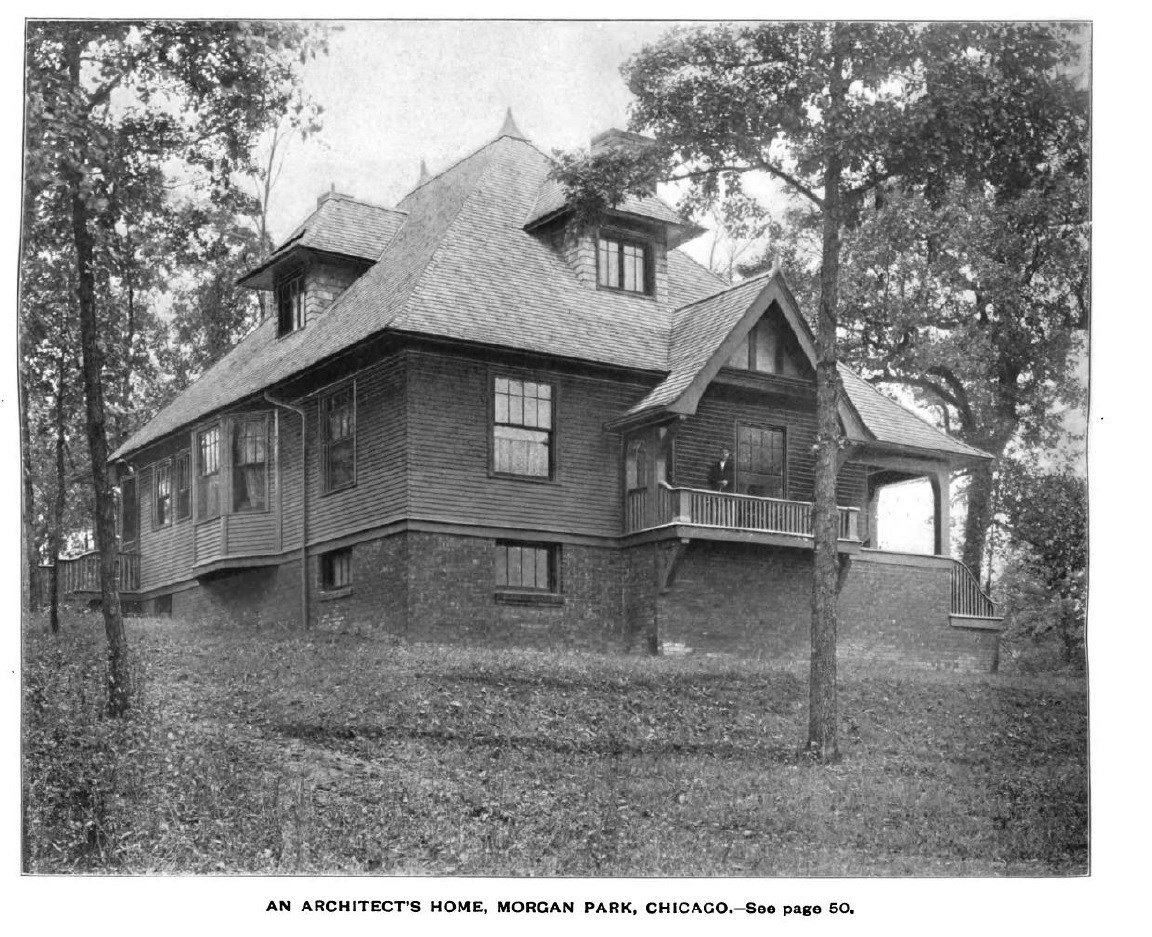
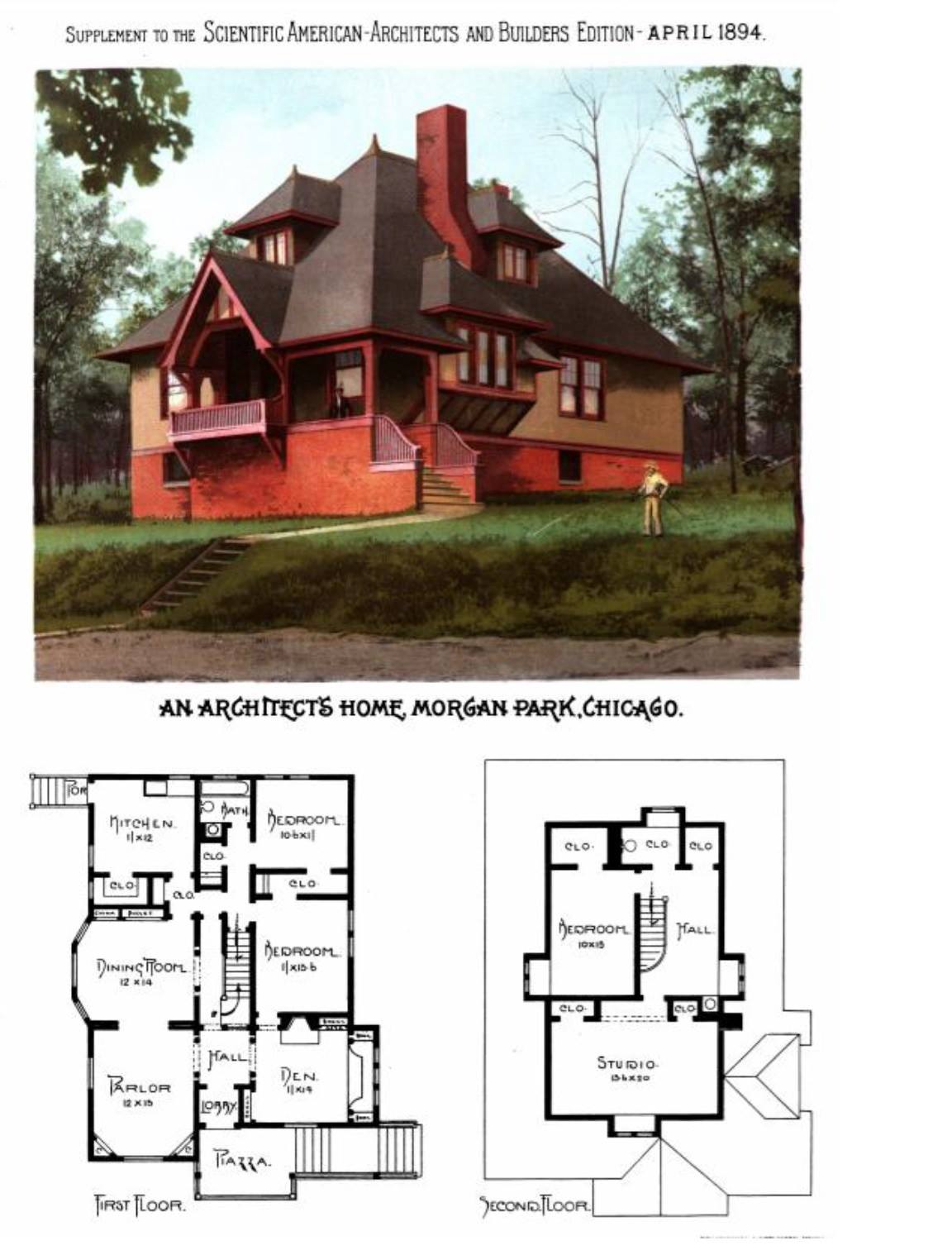
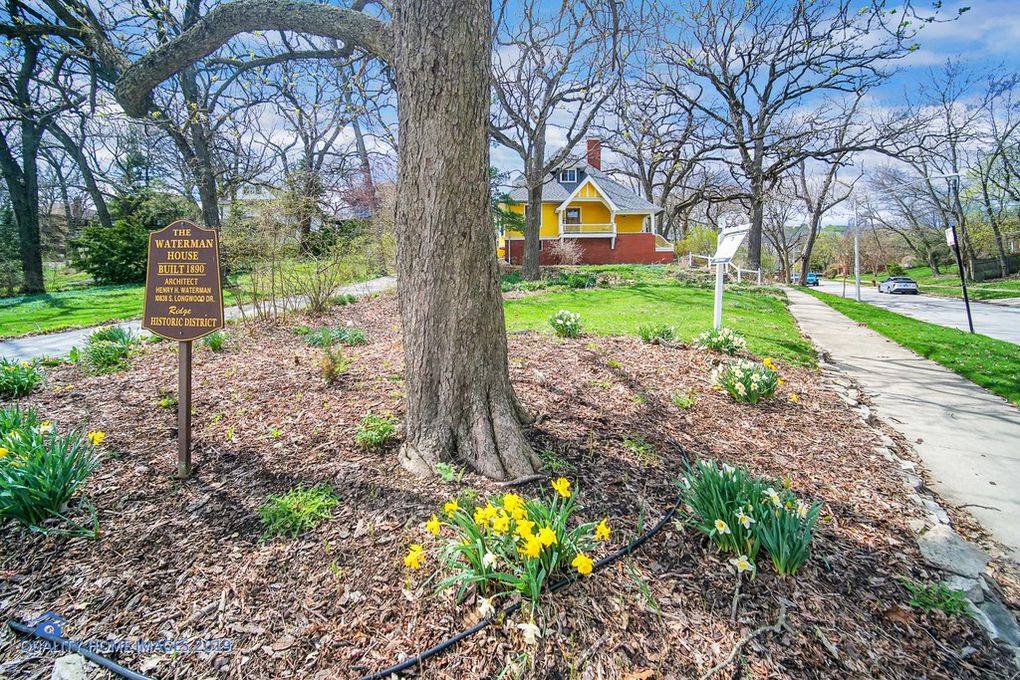
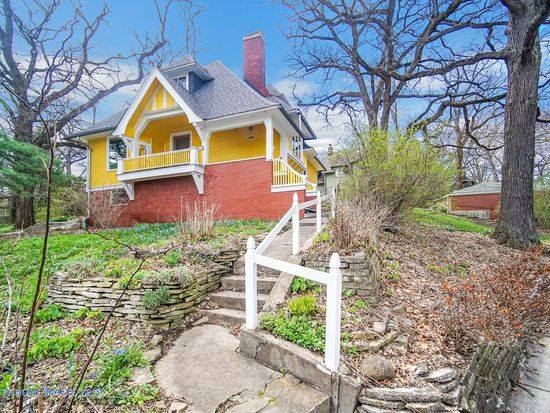
Part I: June is National Homeownership Month. (That's how they write it – all one word.) It was founded by the federal government and is led by the Department of Housing and Urban Development. The purpose is to raise awareness of the benefits of owning a home and to help Americans achieve this goal.
The Ridge communities are known for their number and variety of architecturally and historically significant homes. The Ridge Historic District, a national designation, is one of the largest urban historic districts in the country. Locally, architecture led to establishing the Longwood Drive Historic District and the Walter Burley Griffin Place Historic District. The neighborhood always had the best in buildings – even the train stations were designated the Beverly/Morgan Park Railroad Station Historic District.
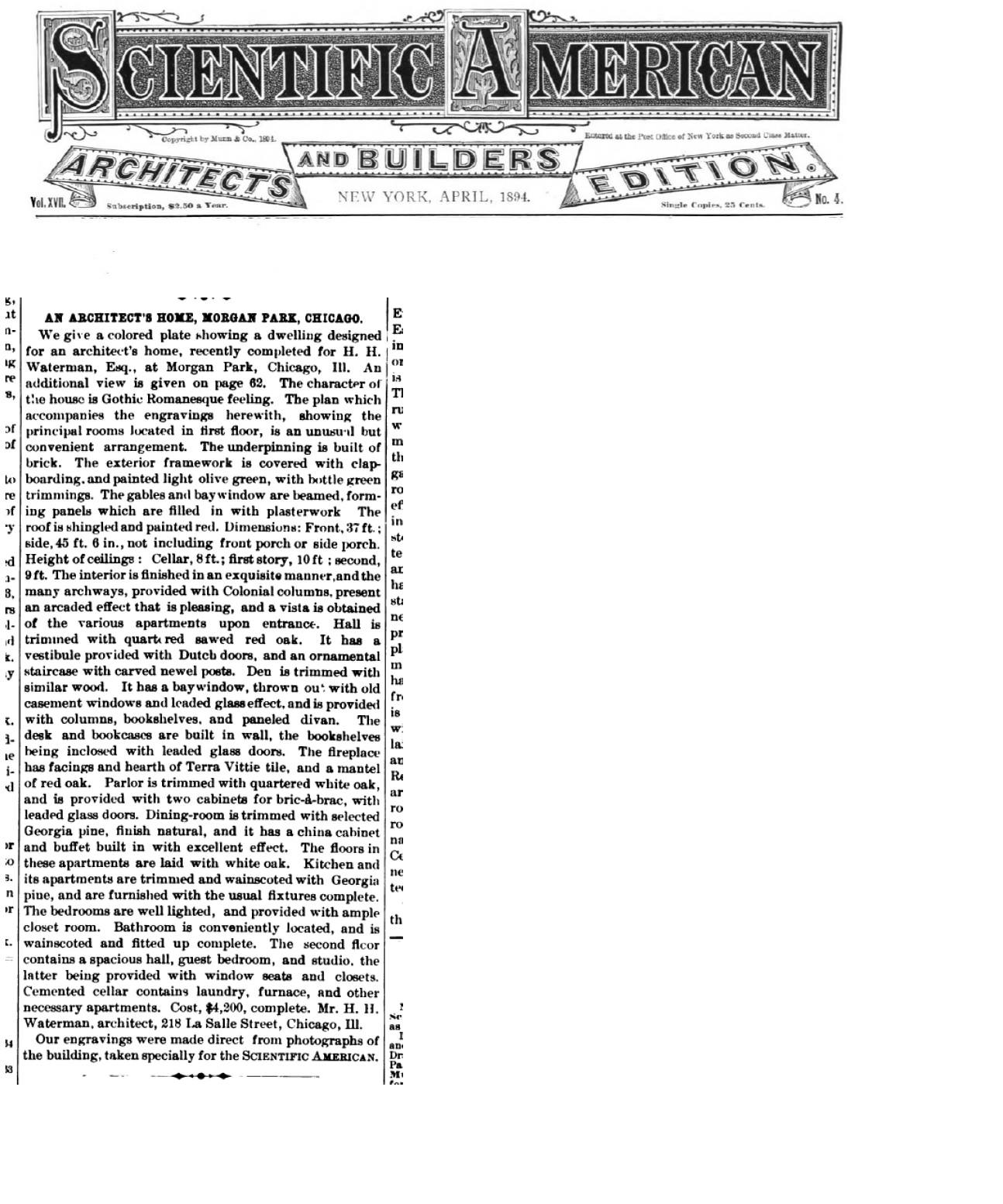
Harry Hale (H. H.) Waterman (1869 – 1948) was a prolific architect on the Ridge. At least 35 local houses, churches and other buildings are credited to him. He and Frank Lloyd Wright were friends; in fact, the two of them would often put on boxing gloves and spar. But unlike his friend Wright, Waterman did not concentrate on just one style of architecture. He worked in many historical styles to build homes for his wealthy clients. In Morgan Park, he was affectionately known as the "Village Architect."
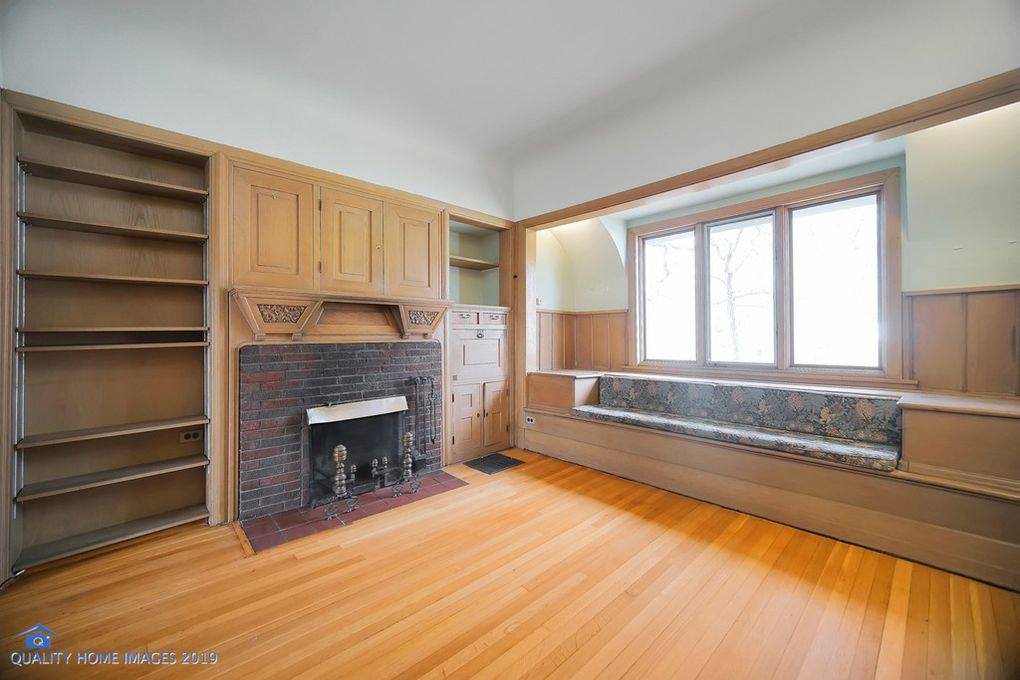
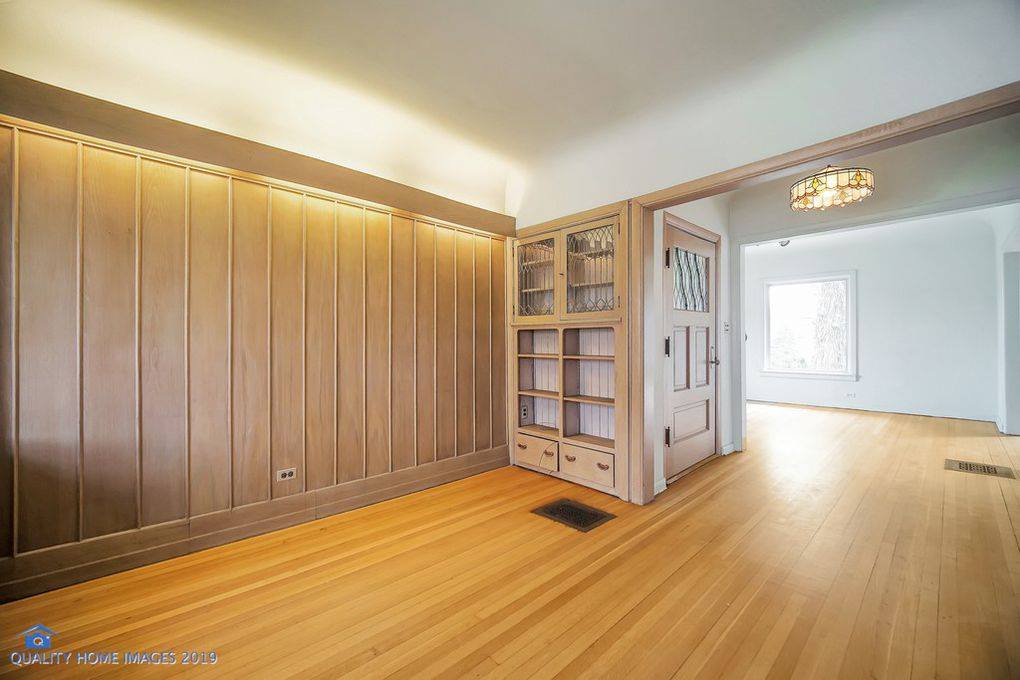
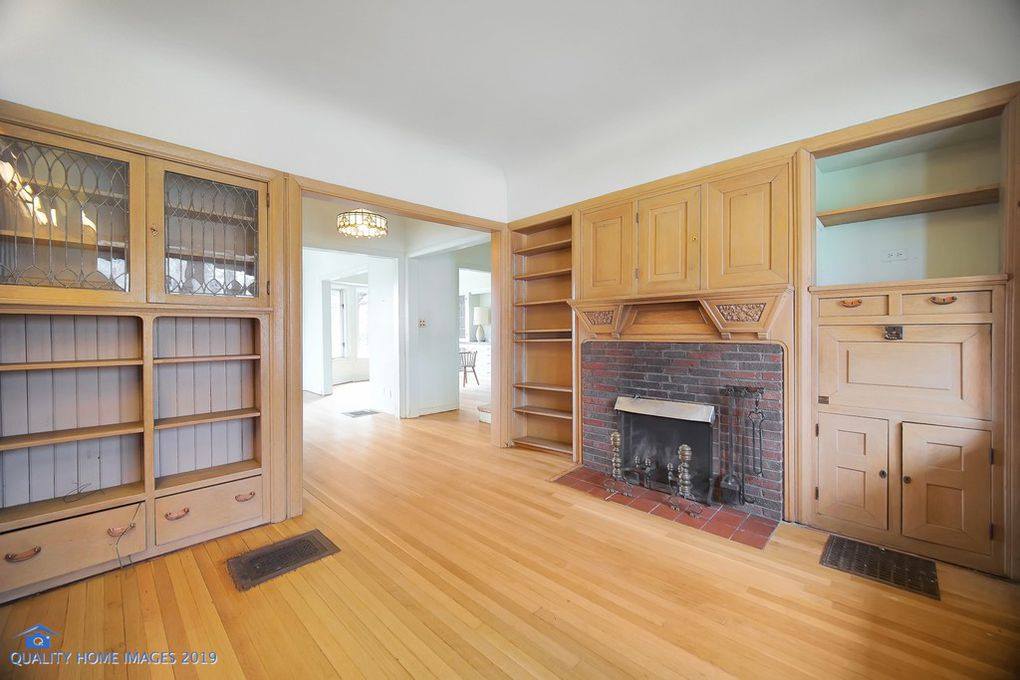
One of the most charming houses he designed was for himself and his first wife, Ida. This is the Harry Hale Waterman House at 10838 S. Longwood Drive, often referred to as the "Honeymoon Cottage." The house was built in 1893. Ida and H.H. were married in 1891, and they had one daughter, Waterman's only child, Louise. Ida died in 1896 at the age of 24. Waterman sold the cottage at that time.
The Waterman House is currently up for sale. Here are interesting pictures and documents for the house, starting with the historic to the present. The wonderful den in the house is shown in the last pictures.
This is just to let everyone know that the Beverly/Morgan Park/Washington Heights History Page has been discontinued because we decided it was redundant. We were really doing the same posts to each page. So if you joined, the name has disappeared from your list of groups. If you would like to share something history-wise with the community, please send the information to the RHS page admin and we will be happy to share. Thank you so much for all the support you are showing to this history page! We are hoping to reach 1000 followers by the end of the year. We have 815 so far – 185 to go!