Explore the RHS Facebook Archives, a rich repository of local history written by Carol Flynn. For two decades, Carol brought a deeply dedicated voice to public education at RHS. Her role as Facebook administrator through mid-2025 naturally extended her prolific research into meticulously detailed articles, most notably her multi-part historical series posts. Today, Carol continues her local history writing for The Beverly Review and other outlets.
2020
The Paranormal Ridge: Part 1 – The History of Ghost Stories
By Carol Flynn
Ghost and paranormal stories have been around forever. Every culture and every nationality and every religion have their versions of ghost folklore. Every one, from the Vikings to Tibetan Buddhists.
The intent of this series, as was stated in the previous post, is to share information on the ghost stories connected to Givins Beverly Castle at 103rd and Longwood, which were covered last year in a presentation at the Castle. Some general information on the history of paranormal stories will help put those surrounding the Givins Beverly Castle into perspective.
In Egypt, archaeologists discovered 4,000-year-old pottery fragments with a ghost story recorded on them. In this story, a high priest encountered a restless spirit whose tomb had collapsed.
A tomb was considered not just the final resting place for a person’s physical remains, but the home of his spirit as well, and therefore tombs needed to be maintained like any house would be. While interactions with ghosts were not considered horrifying supernatural occurrences, the living still wanted the dead to stay content so they would not become a nuisance.
In the story, the priest promised to build a new tomb, but the ghost was skeptical because others had promised but failed to do so. Some pieces of the story are missing, but then the priest sent out three men to find a good location for a new tomb. They found one and reported back to the priest. The last shard states the priest declared his intent to build the tomb. No further parts of the story have been discovered but it is assumed the priest kept his promise.
Religious people like saints often reported paranormal experiences – apparitions, dreams, messages from the supernatural.
A personal favorite story is a little piece about St. Paul of the Cross who was born in 1694 in Italy. A series of visions led him to establish the religious order called the Passionists.
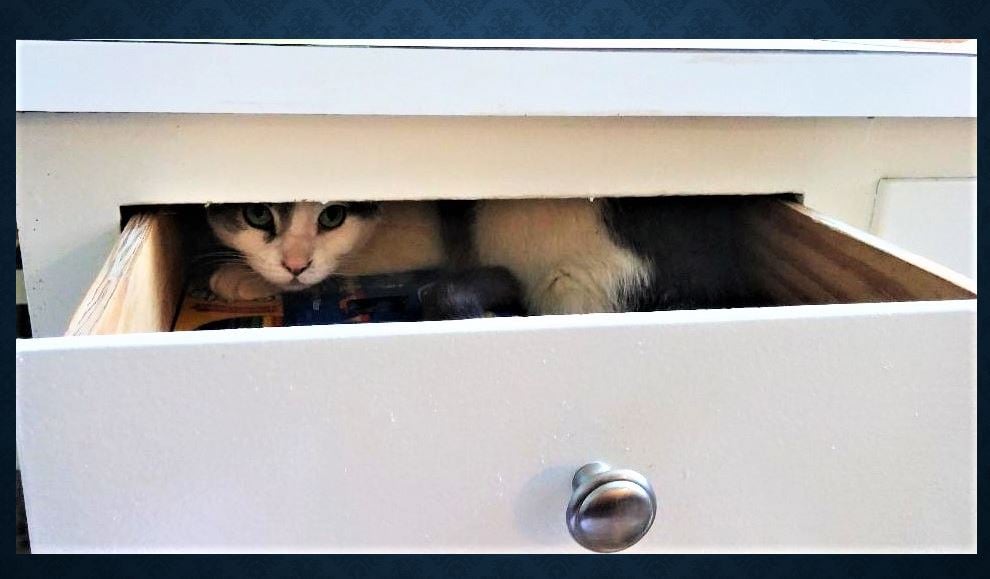
Paul claimed that demons in the form of cats often walked across his bed while he was trying to sleep, keeping him awake. Anyone who has cats knows this is the kind of thing cats indeed do.
One cat owner asked a member of the clergy, “My cats walk across the bed all the time when I’m trying to sleep. How did Paul know these weren’t just regular cats?”
The clergyman replied, “How do you know your cats aren’t demons?”
This might off a new perspective for some cat owners.
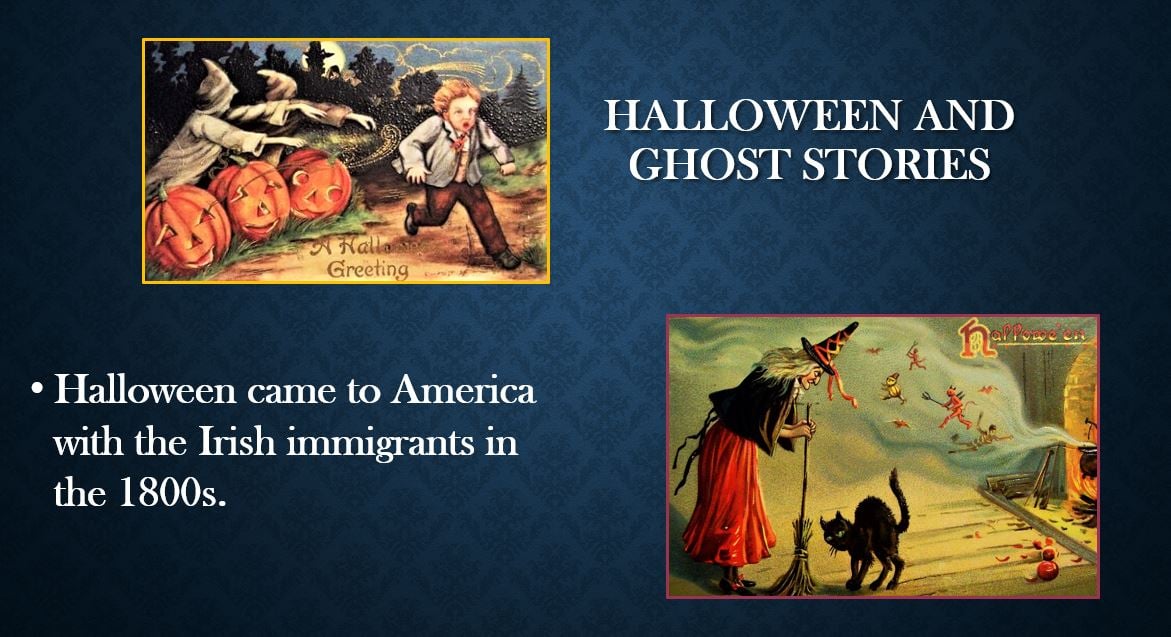
This is the time of the year, Halloween, when imagination turns to ghosts. Halloween is an old Celtic tradition, and it came over to America with the Irish and Scots in the 1800s. Its origins are likely in the Gaelic pagan harvest festival Samhain, Old Irish for “summer’s end.” It was believed this was one of the times of the year, in between the harvest and the coming of winter, when the barrier between the physical and spiritual worlds was thinnest, and it was easier for the spirits of the dead as well as non-human entities like demons and fairies to cross over into the living human world. With time, many of the pagan holidays were adapted to Christianity, and Samhain apparently evolved into All Souls’ Day and All Saints’ Day.
The Celts welcomed the spirits of their deceased loved ones into their homes; they even set places at the dinner table for them.
But the non-human spirits, the demons and the fairies, were another matter. The Celts did things to keep these beings at bay and these became some of our American Halloween traditions.
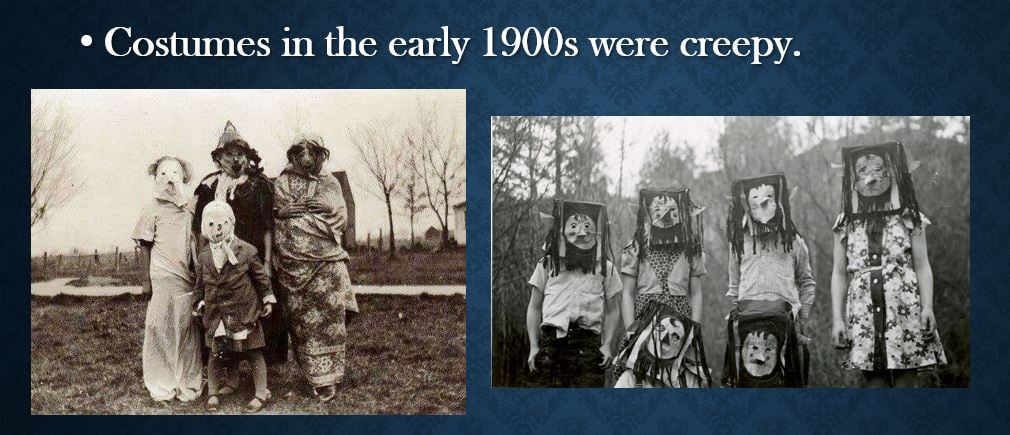
First, the Celts dressed up like frightful demons so the real spirits would be confused and leave them alone. This is where costumes came from. Starting in the 16th century, “mumming” became popular – dressing in costumes and going door to door reciting verses or singing, in exchange for food or offerings on behalf of the spirits. Costumes in the U.S. around 1900 were homemade and “creepy” by today’s standards. They had to be creepy to represent or drive off the spirits. It would be decades before princess and superhero costumes became the norm.
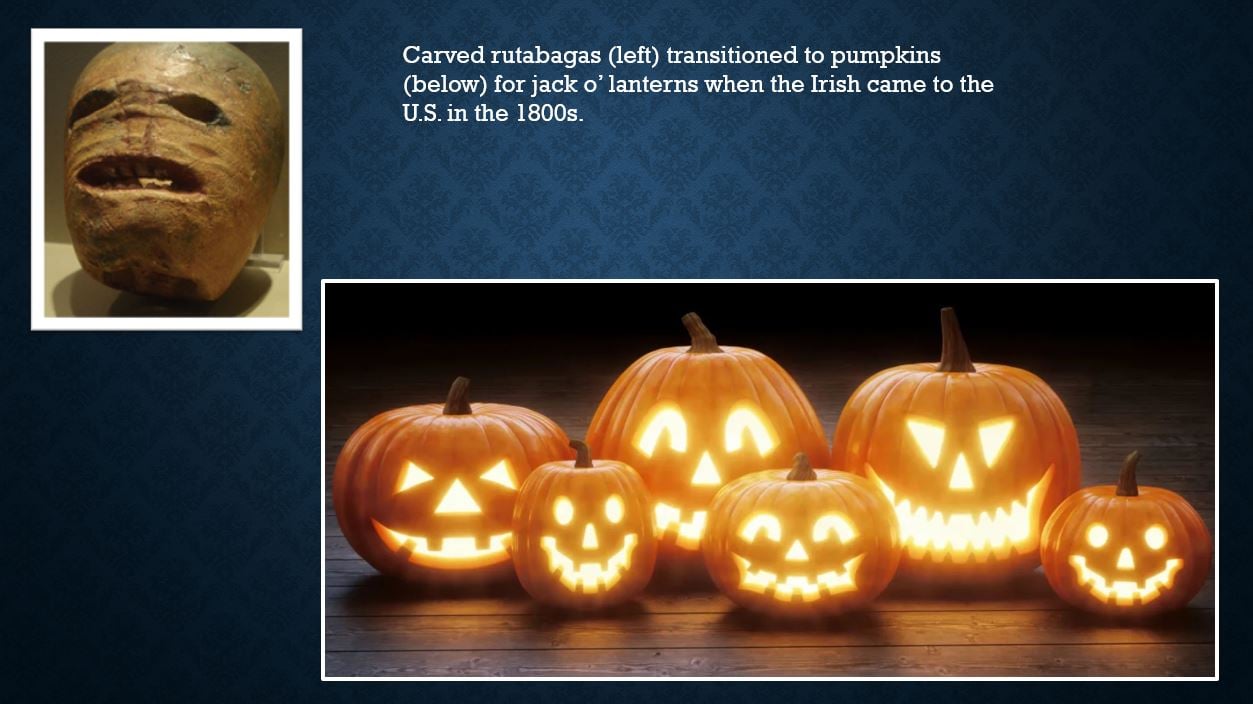
The Celts carved gruesome faces in rutabagas (yellow turnips) and lit them from inside with candles and put them on their stoops or in their windows to scare away spirits. When they got to America, they switched over to pumpkins, a native vegetable that was very plentiful. These are jack o’ lanterns, of course. One Irishman recently new to the U.S. said that he was happy to find that pumpkins are much easier to carve than rutabagas.
The Irish also left out treats of food and beverages so the fairies would not play tricks on them but would instead help them and their farm animals survive through winter. This, plus mumming, led to trick or treating.
A few years ago, a ghost explorer from Chicago was invited to a farm in another state that reportedly is a portal where fairies cross over from their world. As an experiment, they left out a variety of food items to see what the fairies preferred. The favorites were chocolate brownies and Starbucks Frappuccinos. Fairies apparently like sweets.
Fairies are much more common in Ireland and England but sometimes they pop up over here. There is evidence we have visits from the fairy folk here on the Ridge.
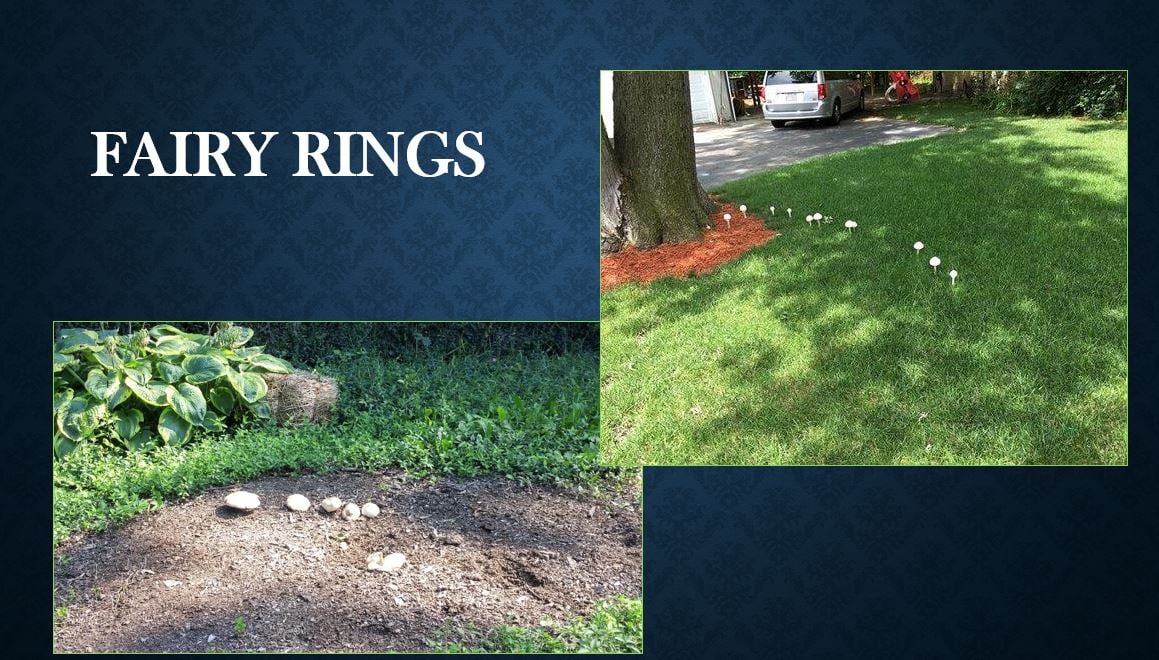
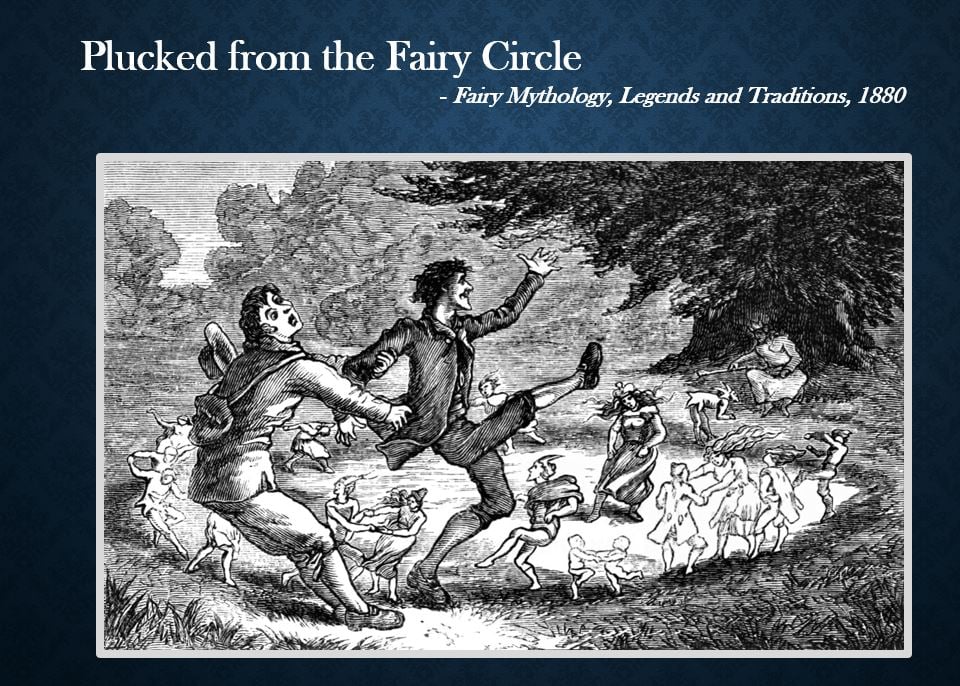
Sightings of “fairy rings” on lawns in the Ridge area are not uncommon. These are mushrooms that grow in an arc or a circle. Sometimes the fungus is underground and displays as a circle of thick or tall grass. There are a lot of superstitions about fairy rings. Folklore says these are made by fairies dancing. Fairies use these rings to trap humans. If a human steps in a fairy ring, he or she may be stuck in the fairy world forever dancing. It is considered bad luck to destroy a fairy ring.
Part 2 will look at the Victorian love for ghost stories.
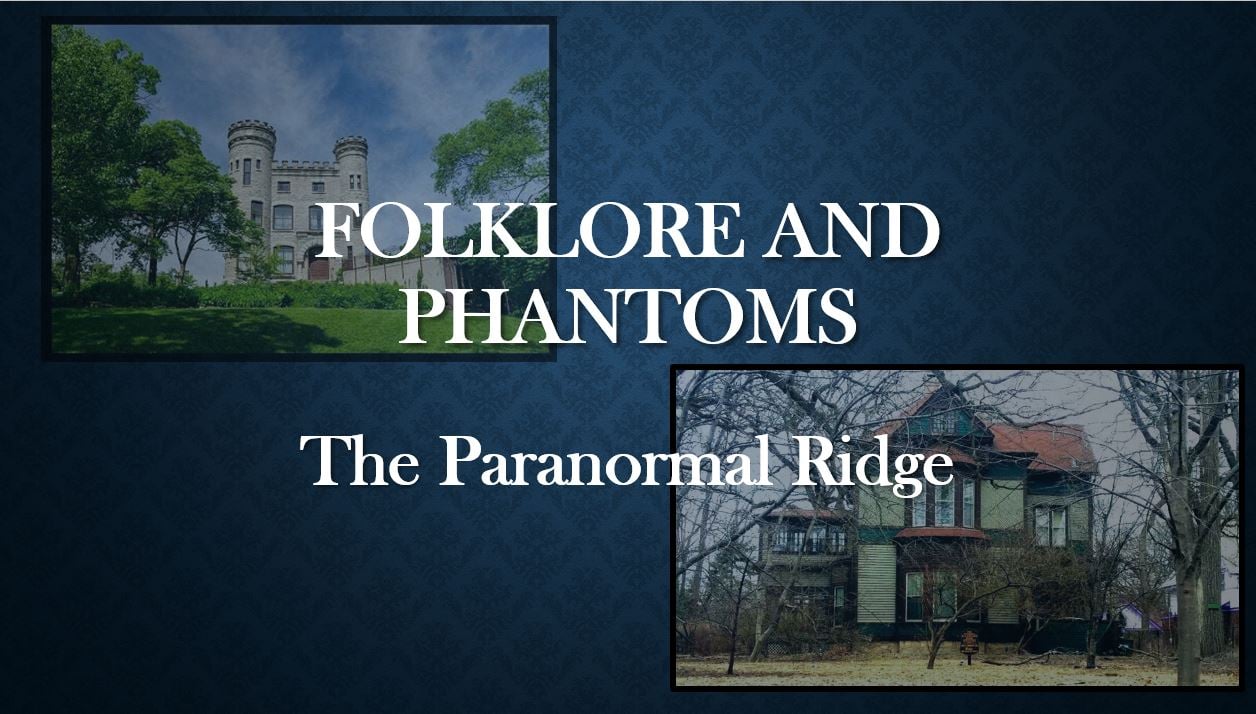
The Paranormal Ridge
By Carol Flynn
Halloween. It’s that time of the year when our imaginations turn to ghosts and goblins.
As many of you know, in addition to my work researching and writing about local history for the Ridge Historical Society, I also collect local ghost stories and tales of the paranormal. So far I have a good 70 stories from the Ridge and close by – everything from little children ghosts who like to play, to home owners and employees who never left their physical domains, to beloved pets who stayed behind to still be with their owners.
I collect these stories as urban folklore. I record stories that living people have experienced. I am not here to prove or disprove the existence of the spirit world. I am not a “ghost hunter.” In fact, I do not condone harassing and conjuring up the deceased – I think they should be left in peace, they are the souls of our loved ones, and they do not exist to be entertainment for us. I resist all requests to write a haunted guide to the Ridge and to help alleged “ghost hunters” get into private residences. Any stories told to me are kept confidential unless the people have gone public themselves with their stories. I may speak of experiences in general terms, but I NEVER reveal a private name or address without permission.
The last two years I did in-person events about “The Paranormal Ridge.” The first year it was at Open Outcry Brewing Company and we had about 200 people attend – thanks, John Brand. The second year it was at the Givins Beverly Castle, the site of many local stories – thank you, Beverly Unitarian Church. This year, it was going to be at Mount Greenwood Cemetery – a perfect place for such an event – but we are postponing that until we can safely do a group meeting again. We will do that event some time this year, Halloween 2021 at the latest, and my thanks to Paula Everett.
I love to hear from people of the Ridge who have had unusual experiences. If you have a story you would be willing to share with me in complete confidence, please send me a private message or an email to cflynn2013@yahoo.com. I will follow up with an interview.
This year, during October, I will recap my research and presentation about the ghost stories at the Givins Beverly Castle – what people have really reported they experienced and what is myth.
Starting tomorrow, October 1: Part 1 – The history of ghost stories.
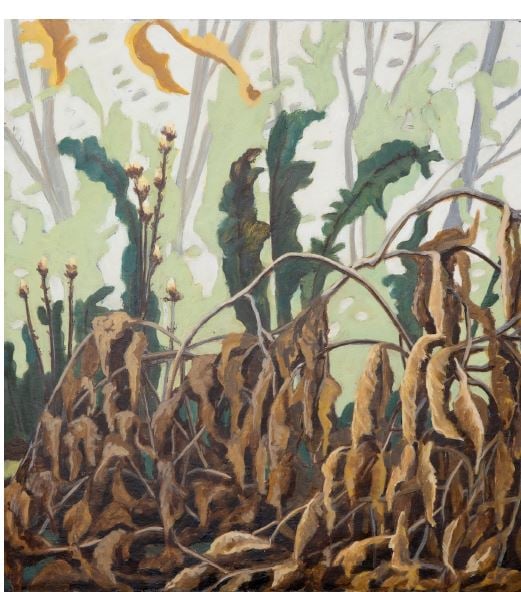
Local artist Elaine Miller is premiering a new exhibit at the Beverly Arts Center called “Remnants and Remains” based on the landscape and vegetation of Dan Ryan Woods. The opening reception is this Friday, September 25, from 6 to 8 p.m. The Beverly Arts Center (BAC) is located at 2407 West 111th Street, the corner of Western Avenue and 111th Street. The exhibit will run from September 25 to November 8. The hours at BAC are Monday from 4 to 8 p.m., and Tuesday through Friday from 4 to 6 p.m., but always call ahead to verify that they will really be open before you head over there. The number is 773-445-3838. All coronavirus precautions will be followed so bring your mask.
The Ridge Historical Society just finished the long series on the history of Dan Ryan Woods. We will be participating in Elaine’s exhibit by having a print copy of the series on display at the exhibit so visitors may read through it. Carol Flynn, the author of the RHS Facebook series, will be at the opening reception, and will follow up with a Patch and RHS article on the exhibit and what are sure to be very dramatic and wonderful paintings by a very talented artist! This picture is “Regenerate” and will be in the exhibit.
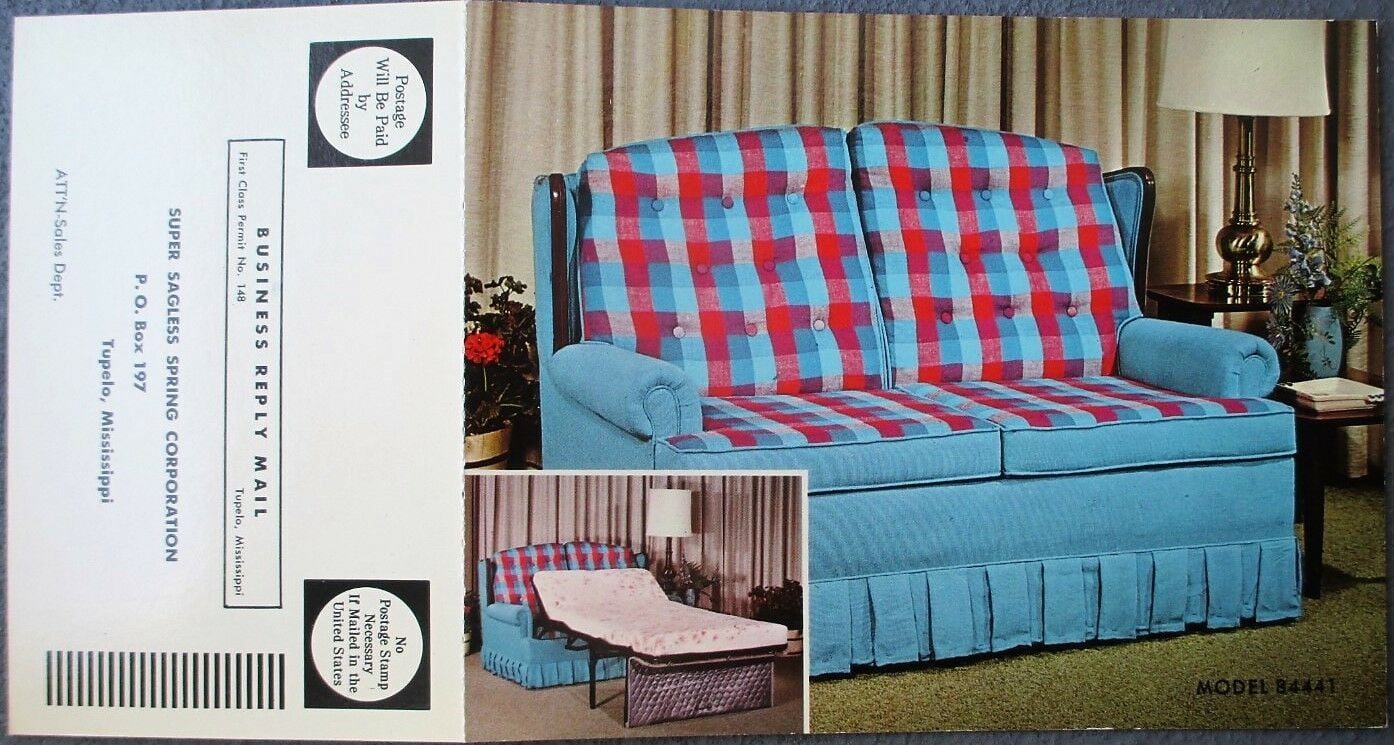
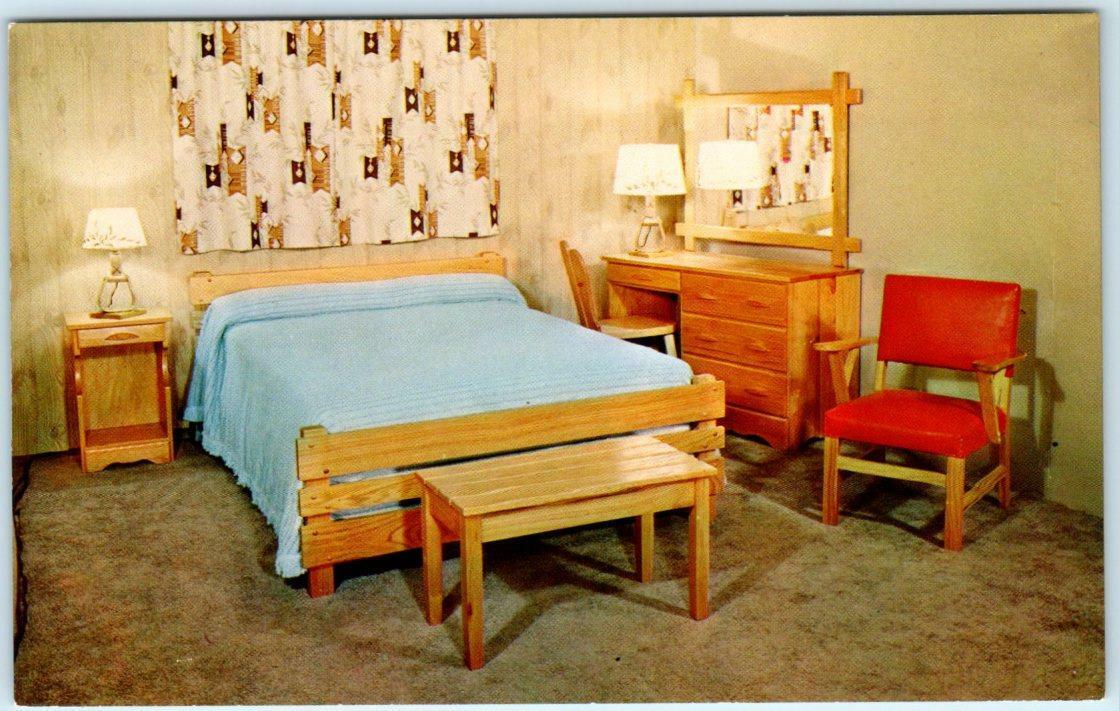
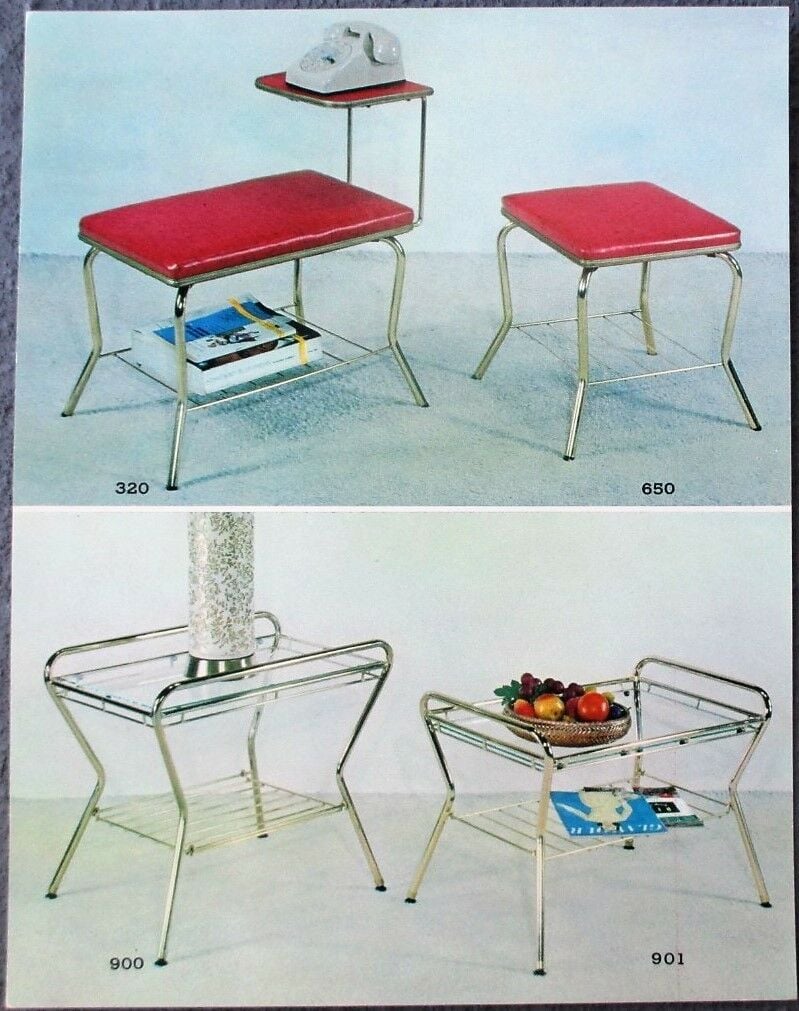
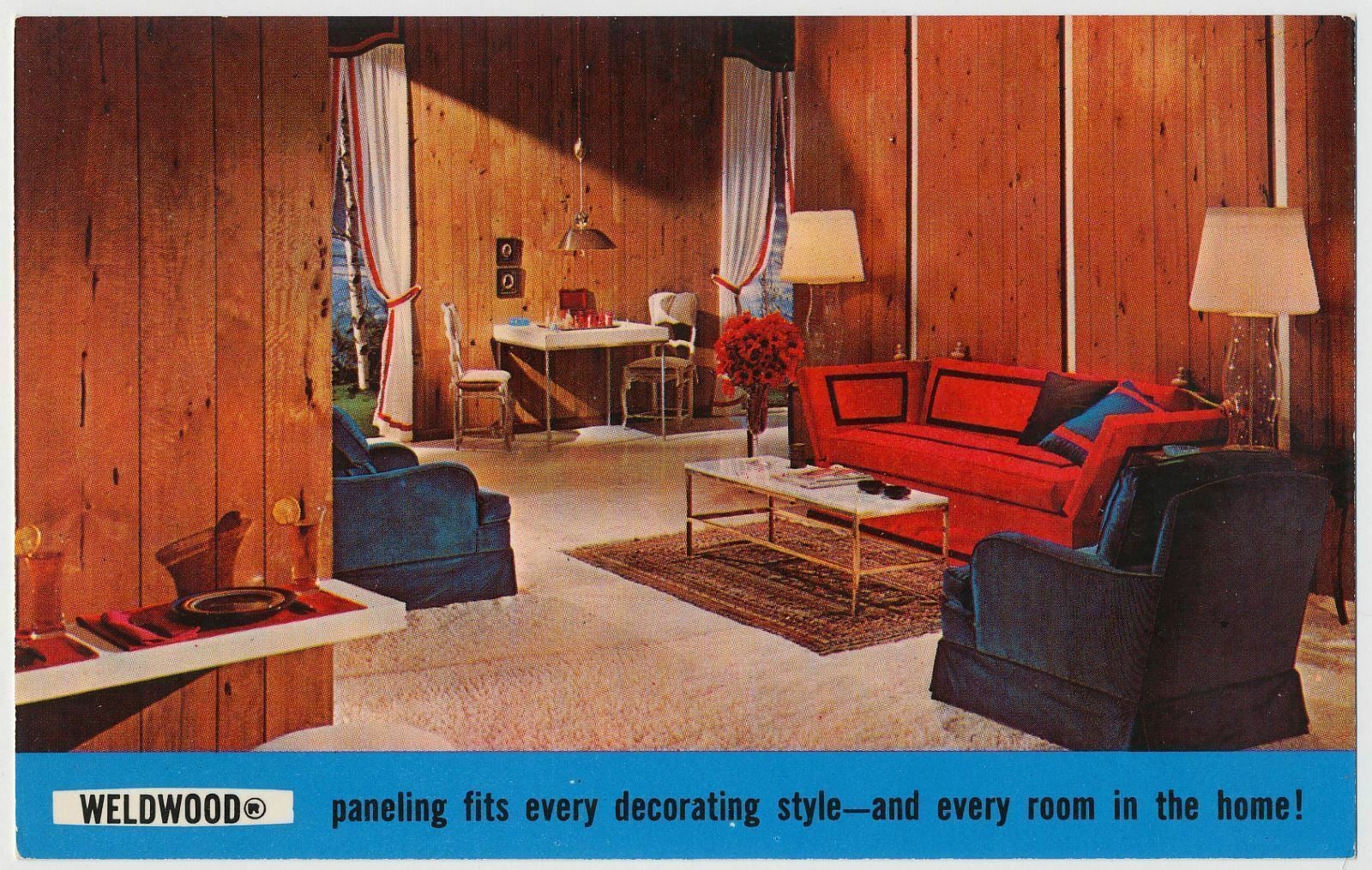
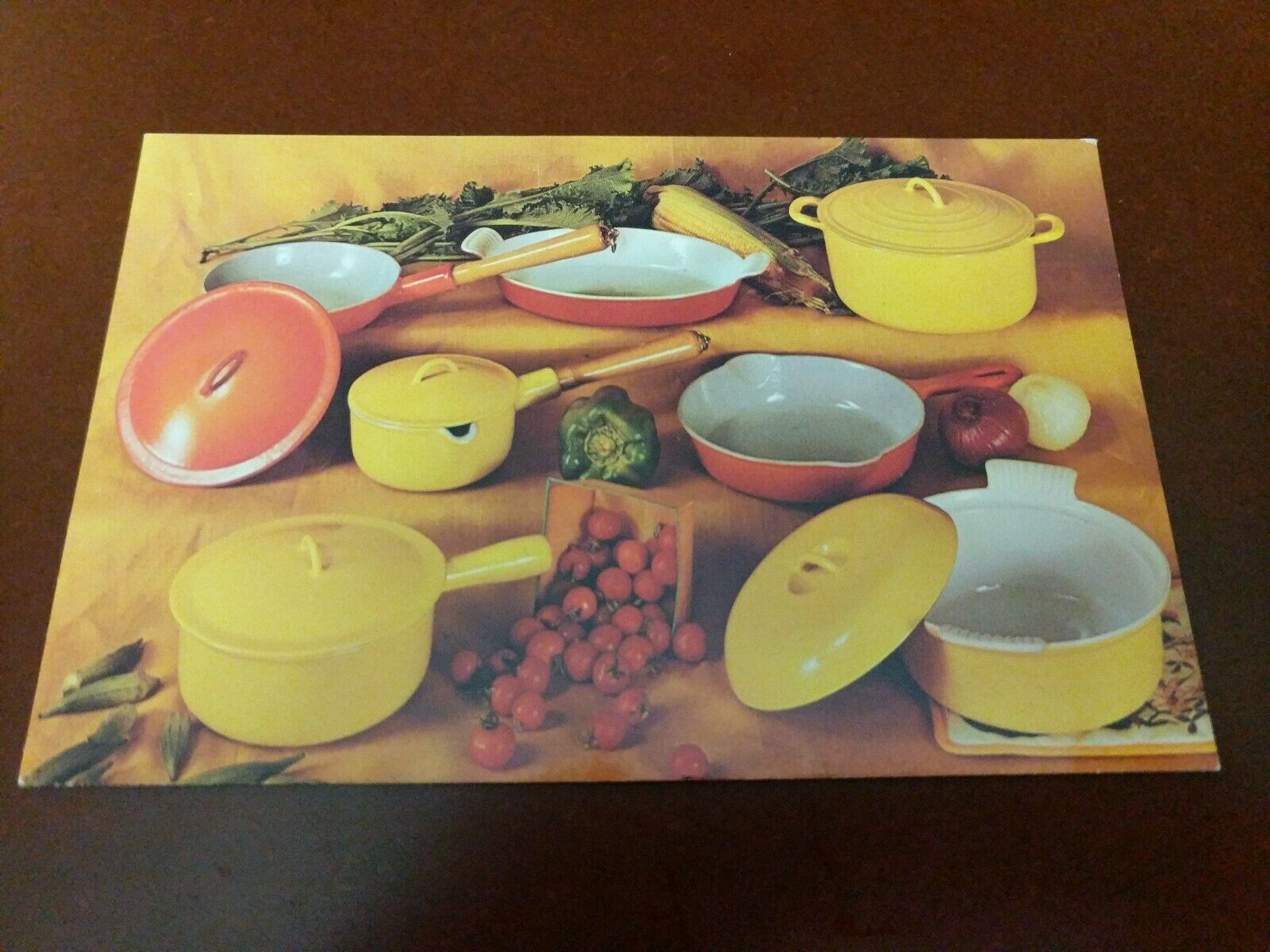
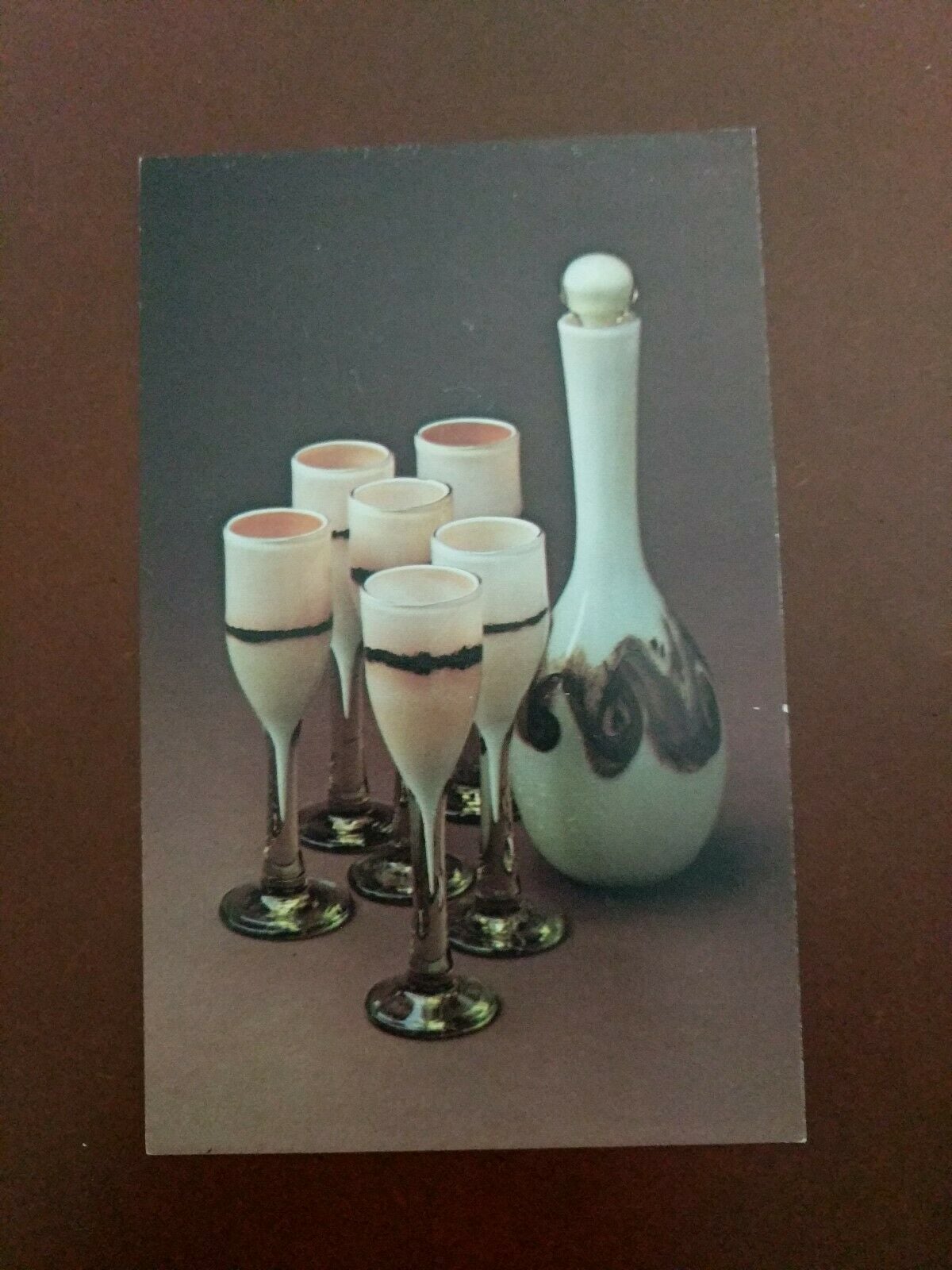
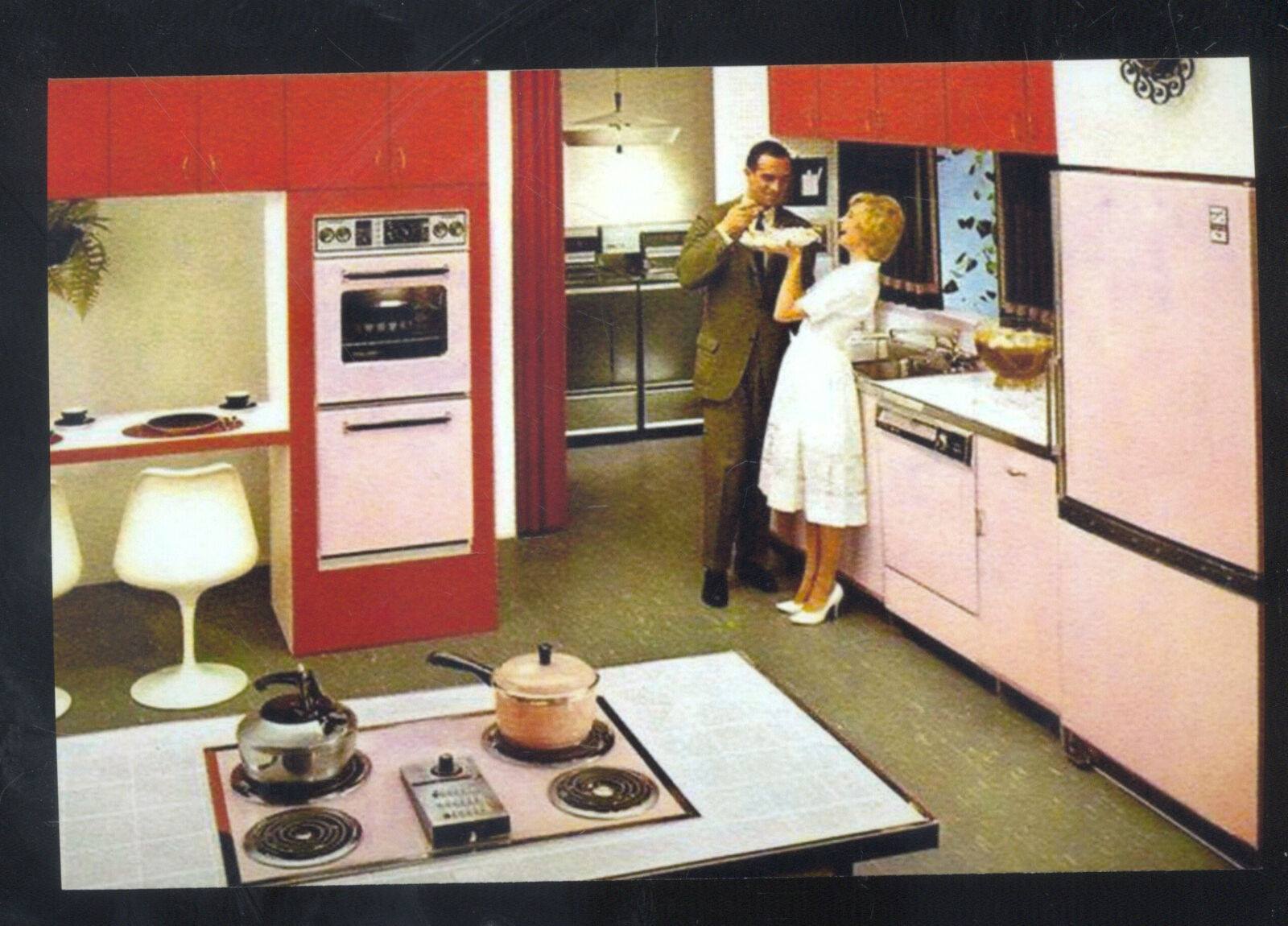
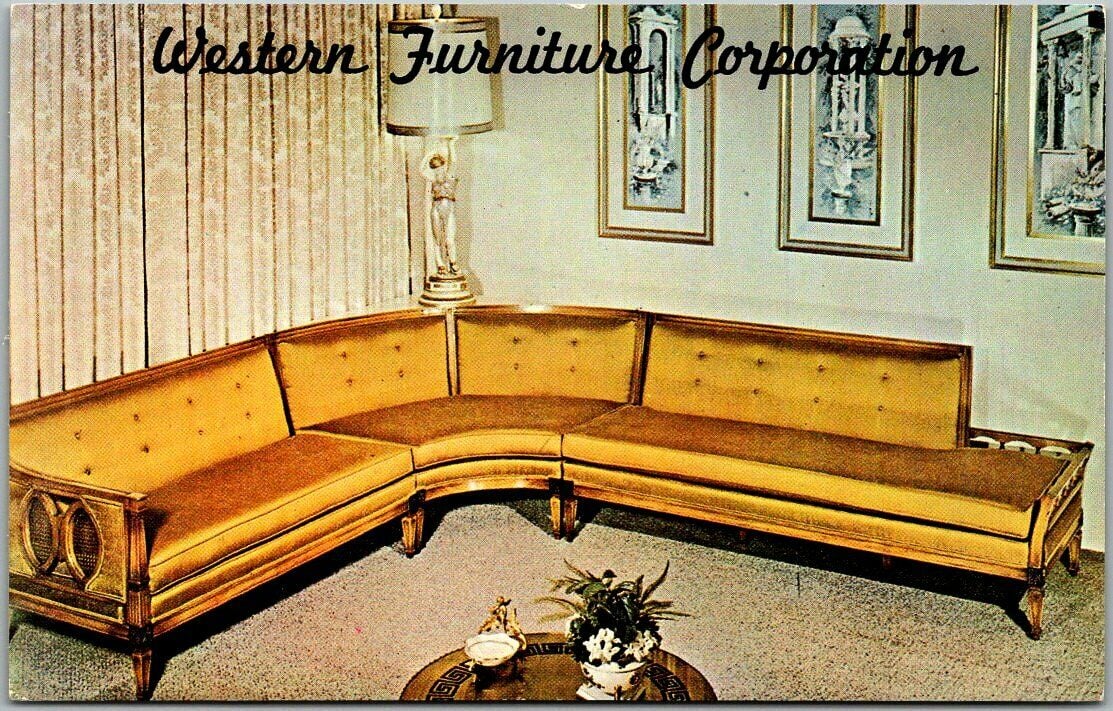
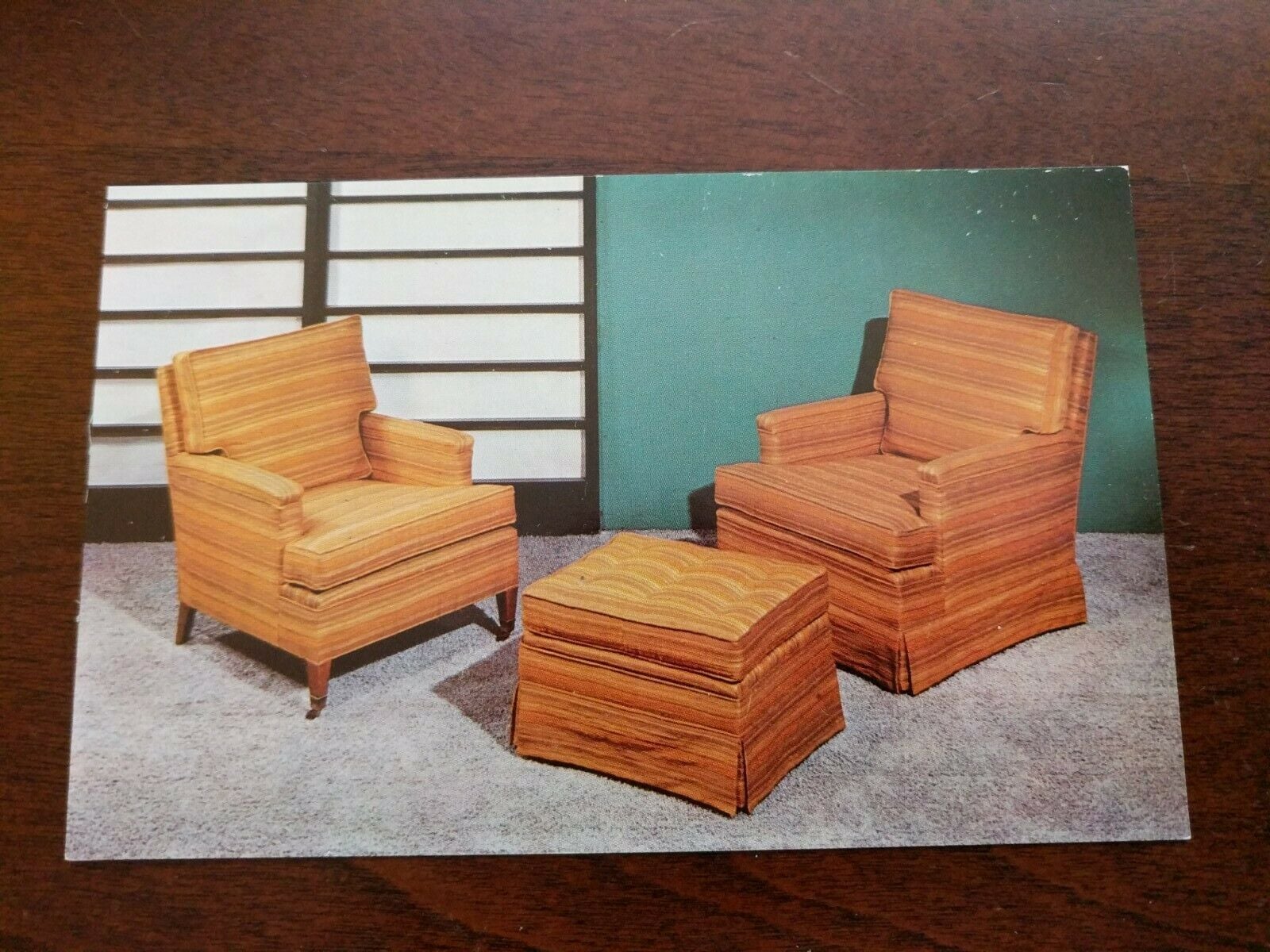
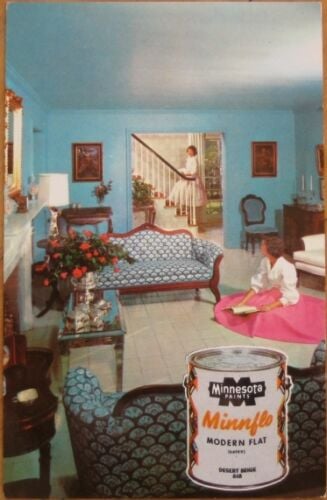
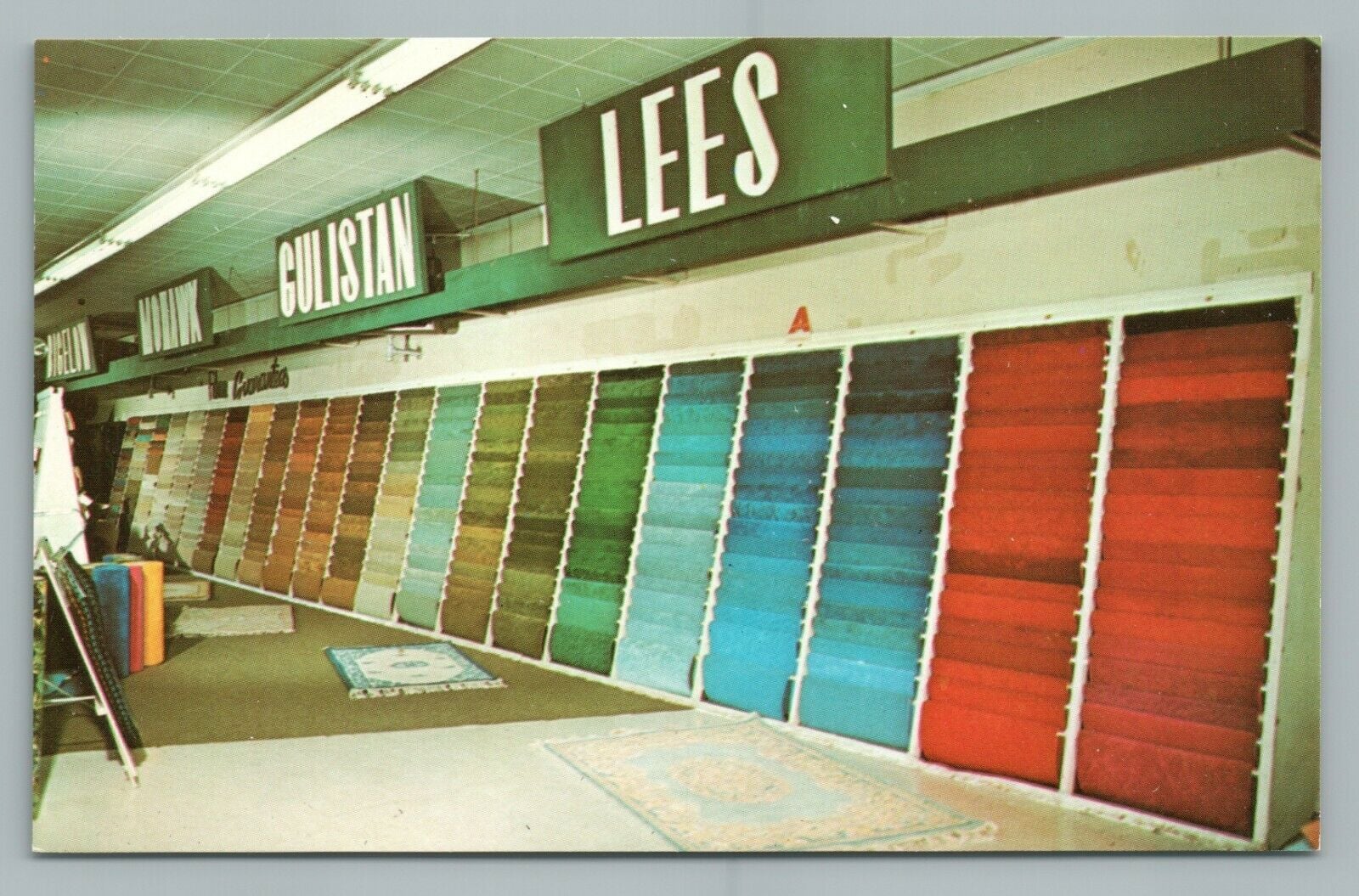
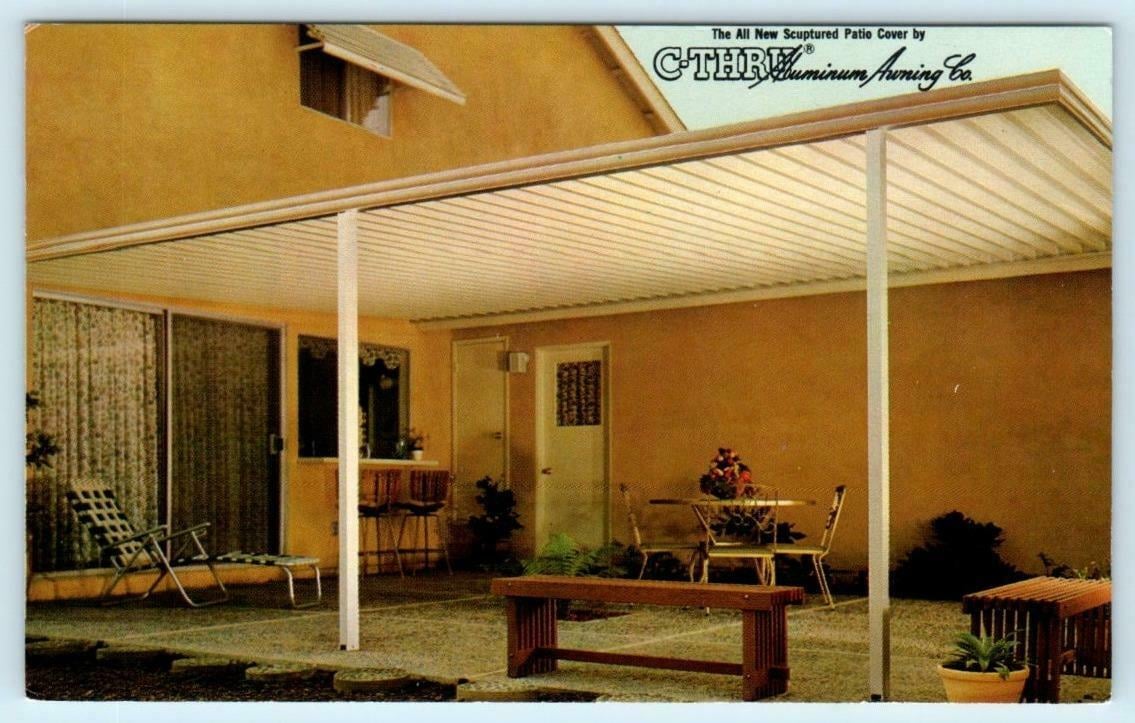

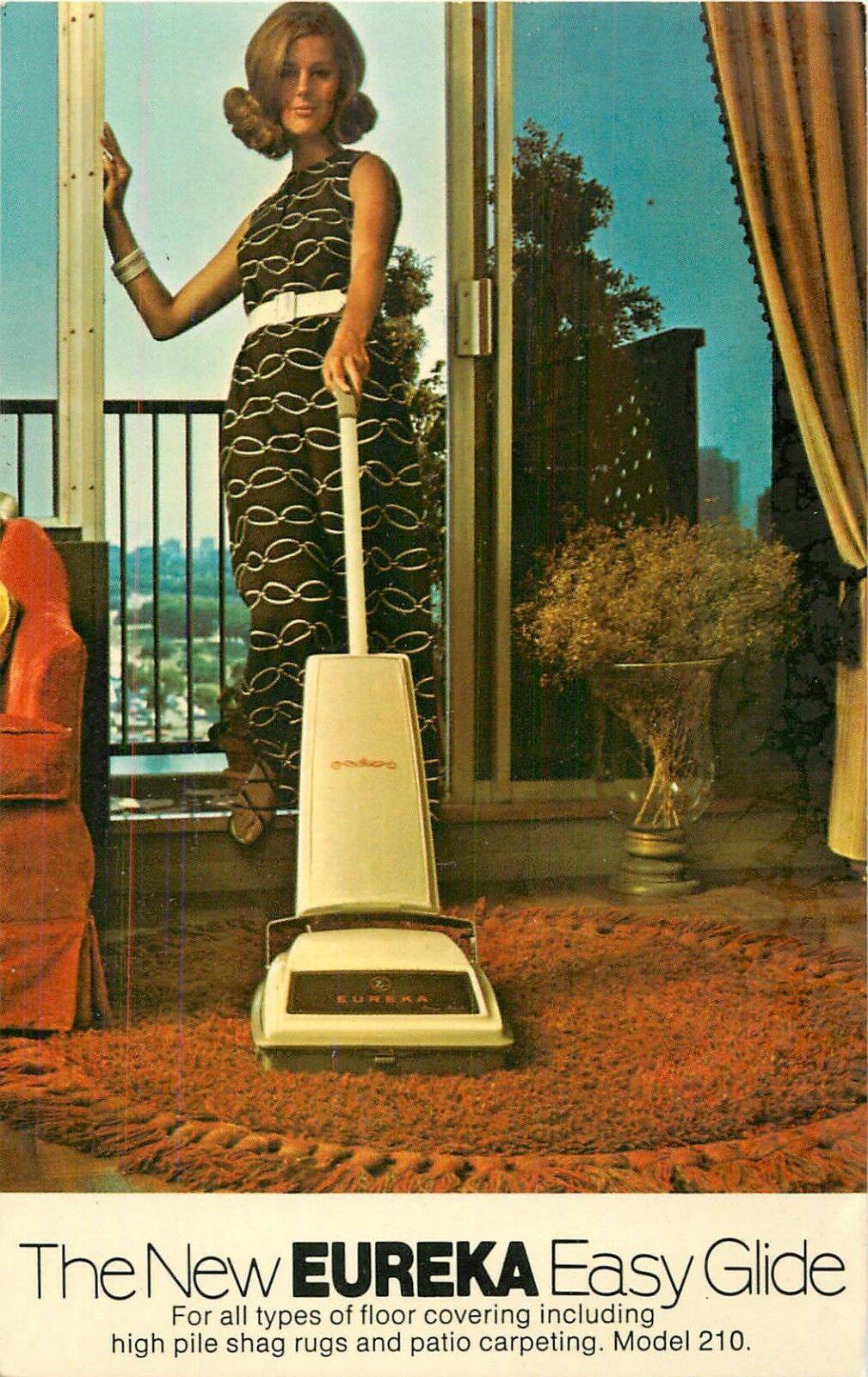
A few days ago we posted advertising postcards of home decor and remodeling items from 100 years ago. Today we are sharing advertising from 1960-70. If you were redoing your house 50 years ago, this is what you would be seeing.
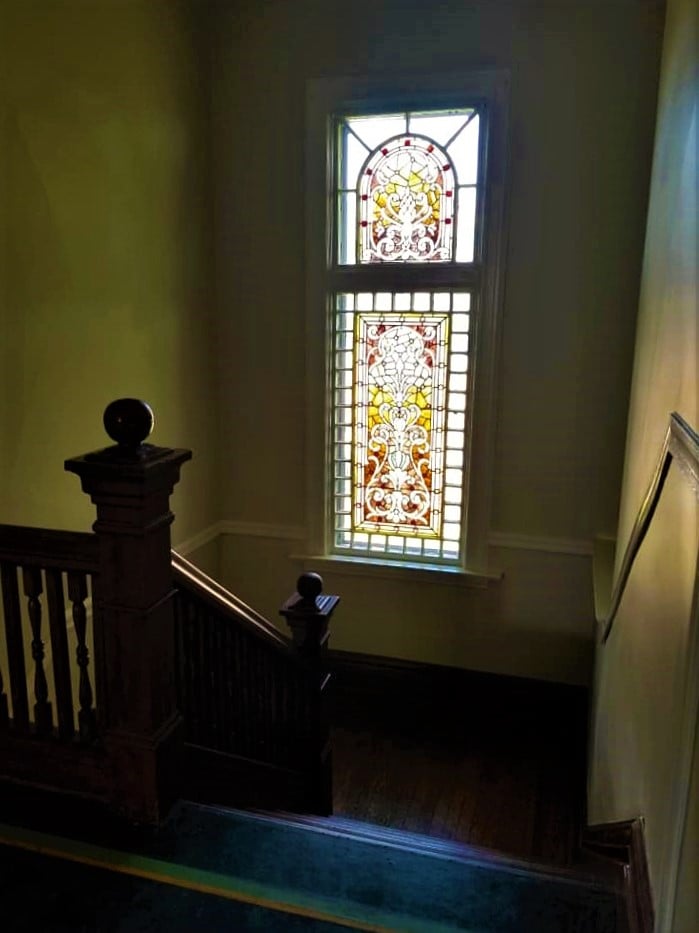
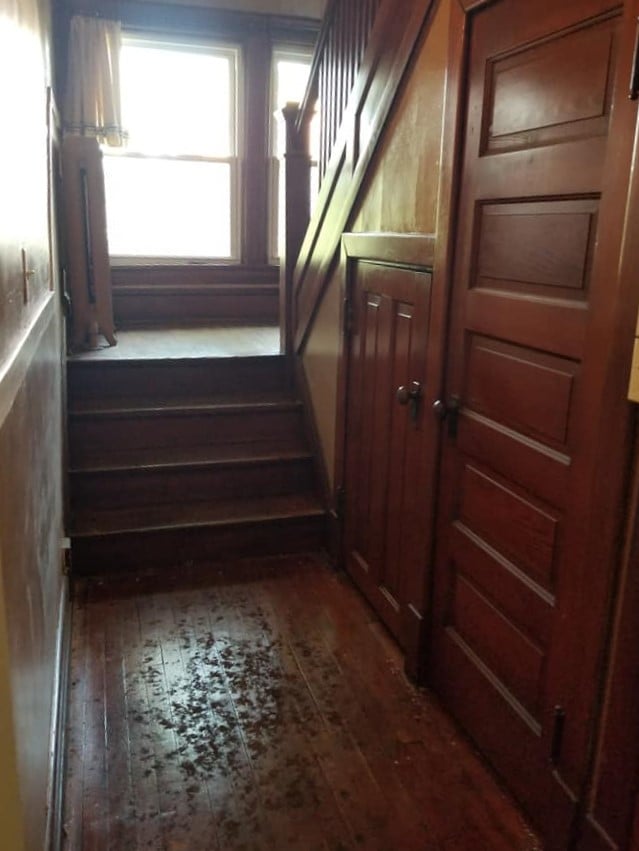
We had a nice visit today to a historic home we are helping to research. I will write more about this at a later date. But these are two pictures I took that I like – they capture some of the best historic features plus they are rather dramatic. But the house is not at all dark and ominous – in fact these are more of an aberration than the norm for this house.
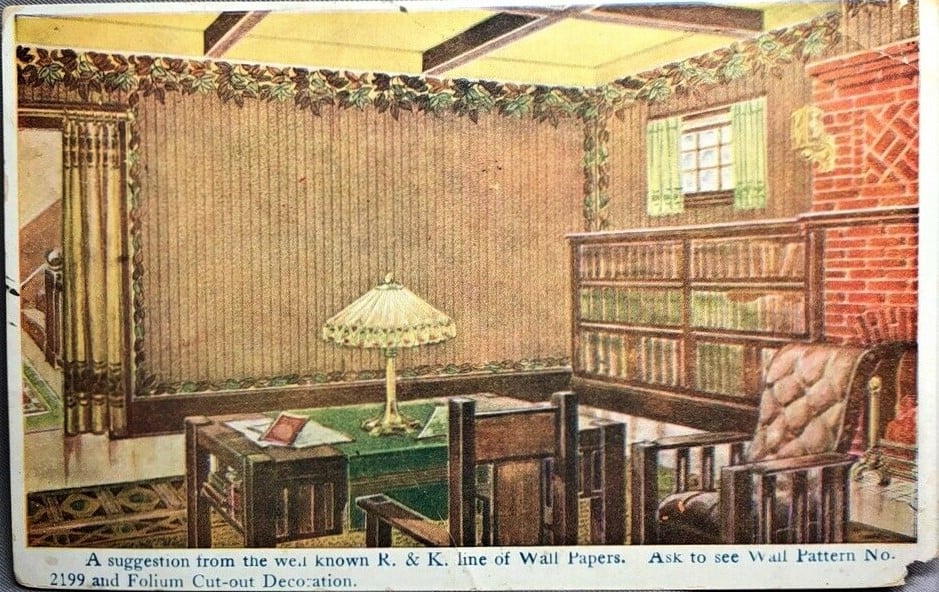
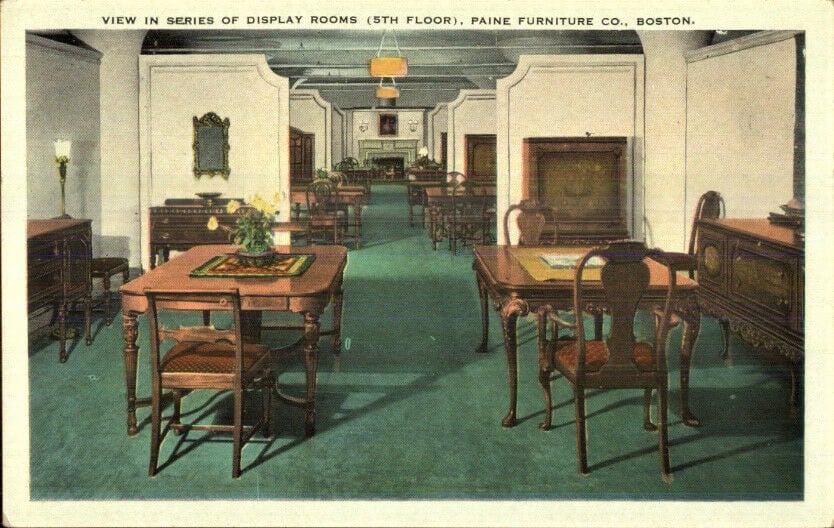
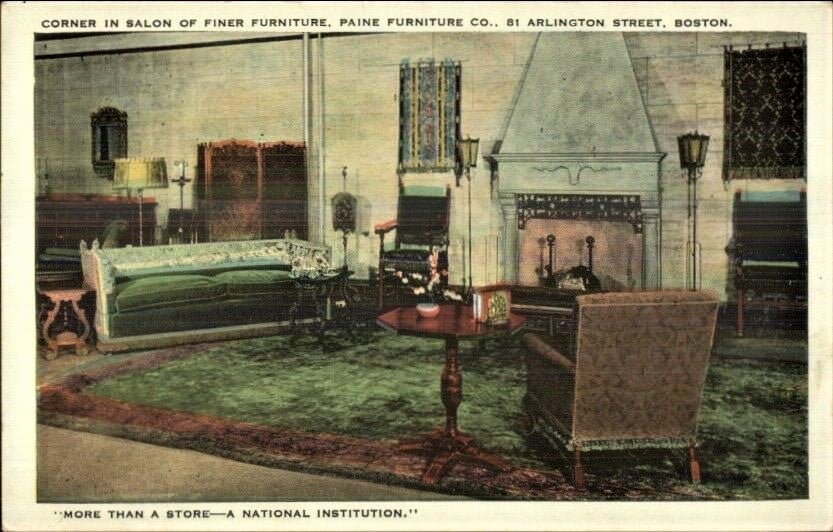
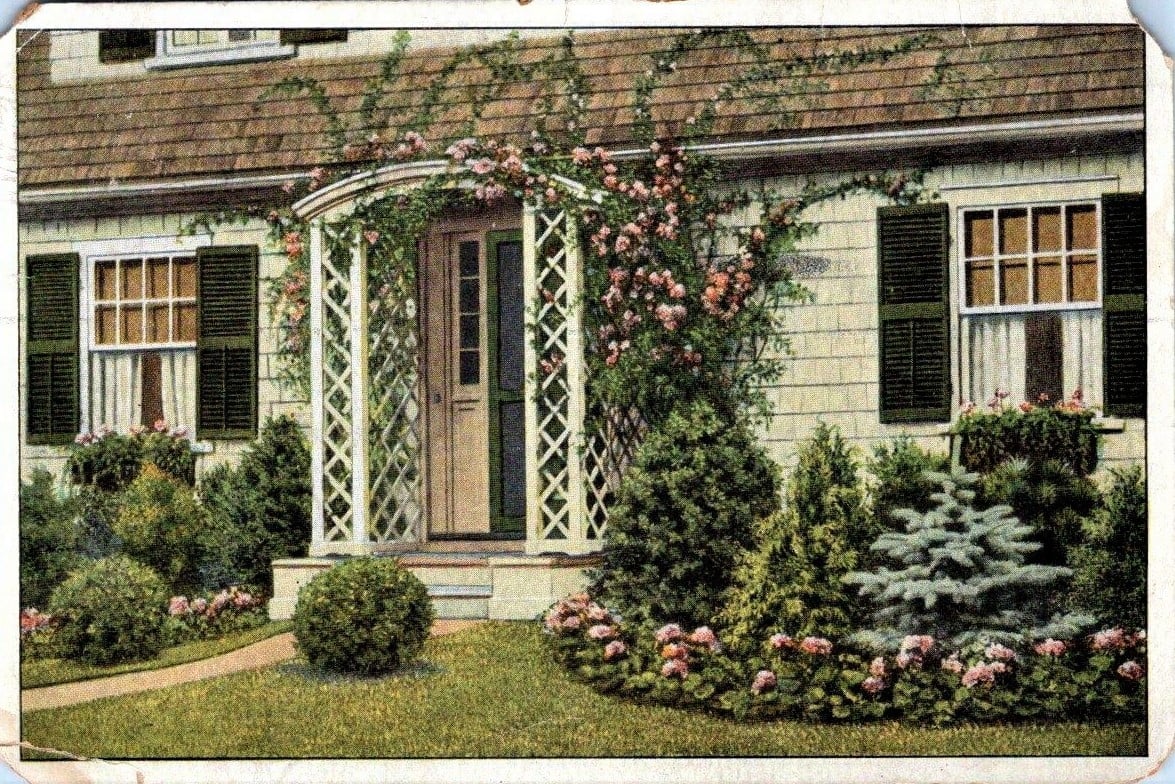
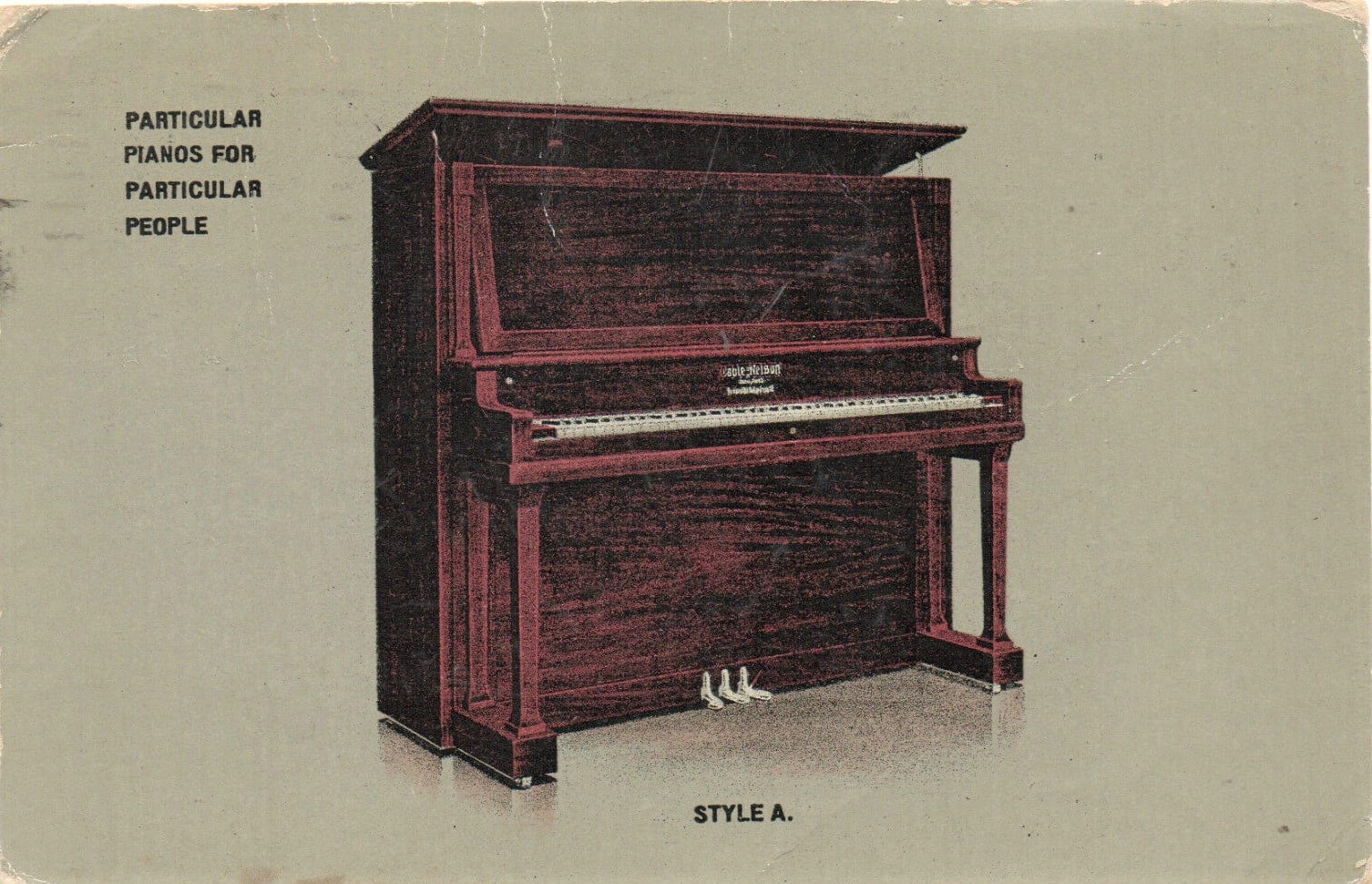
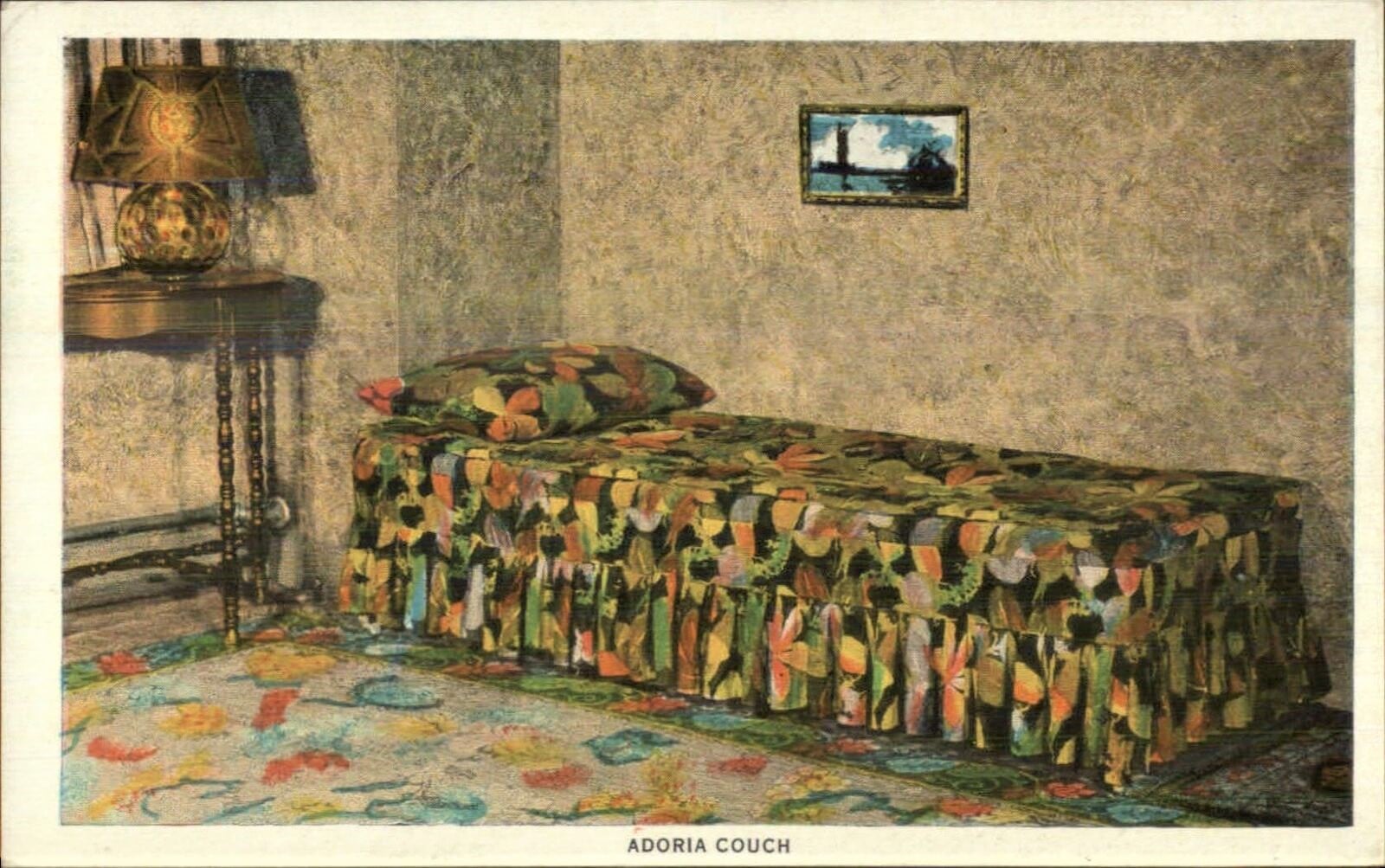
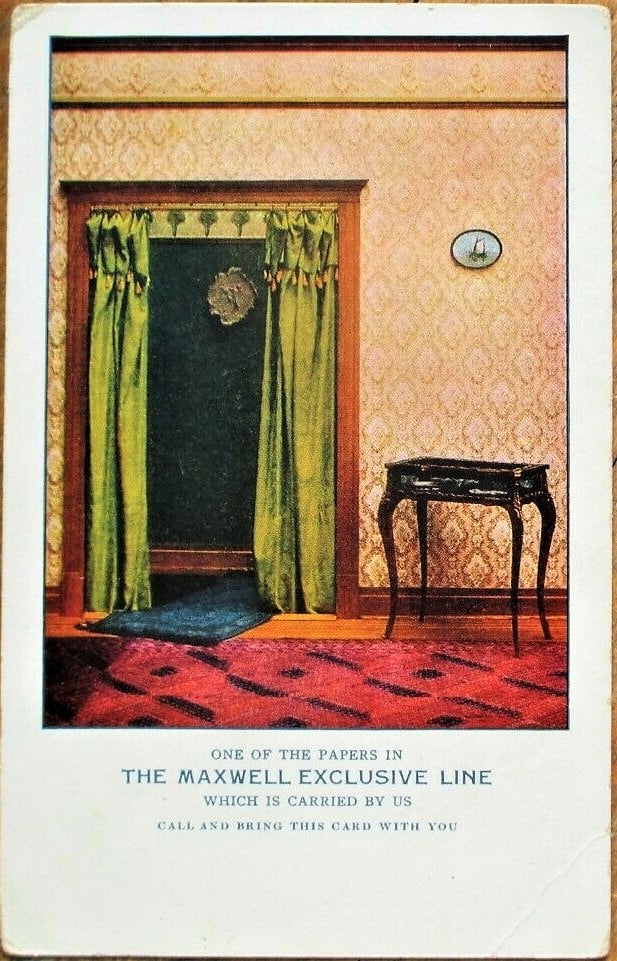
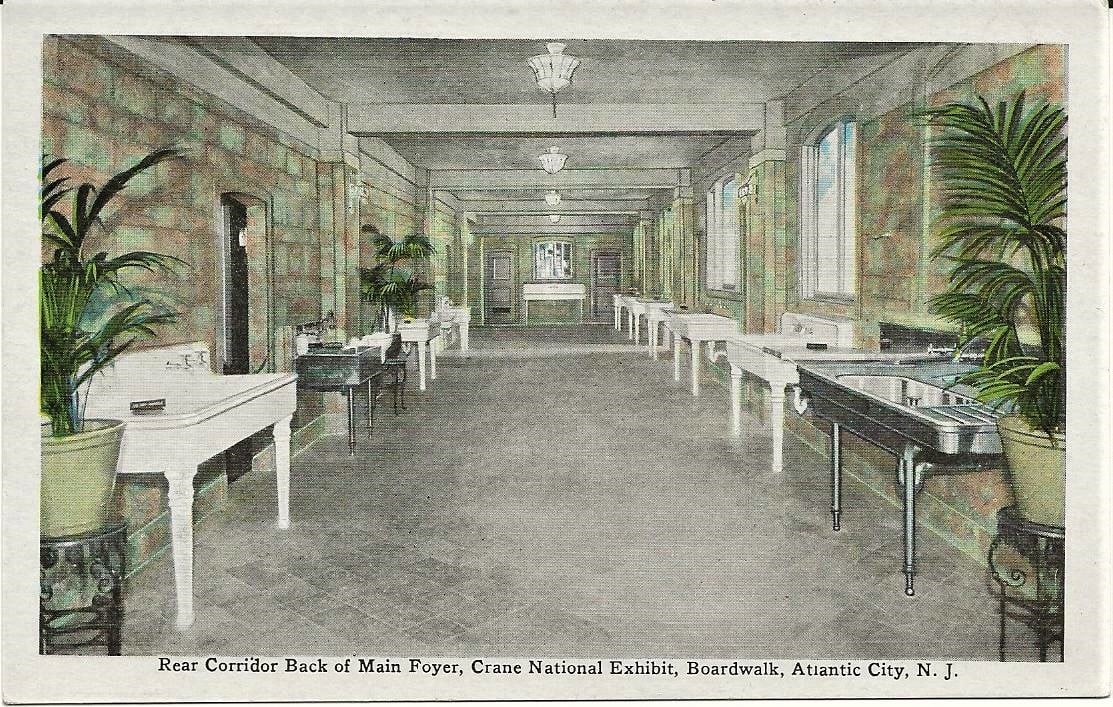
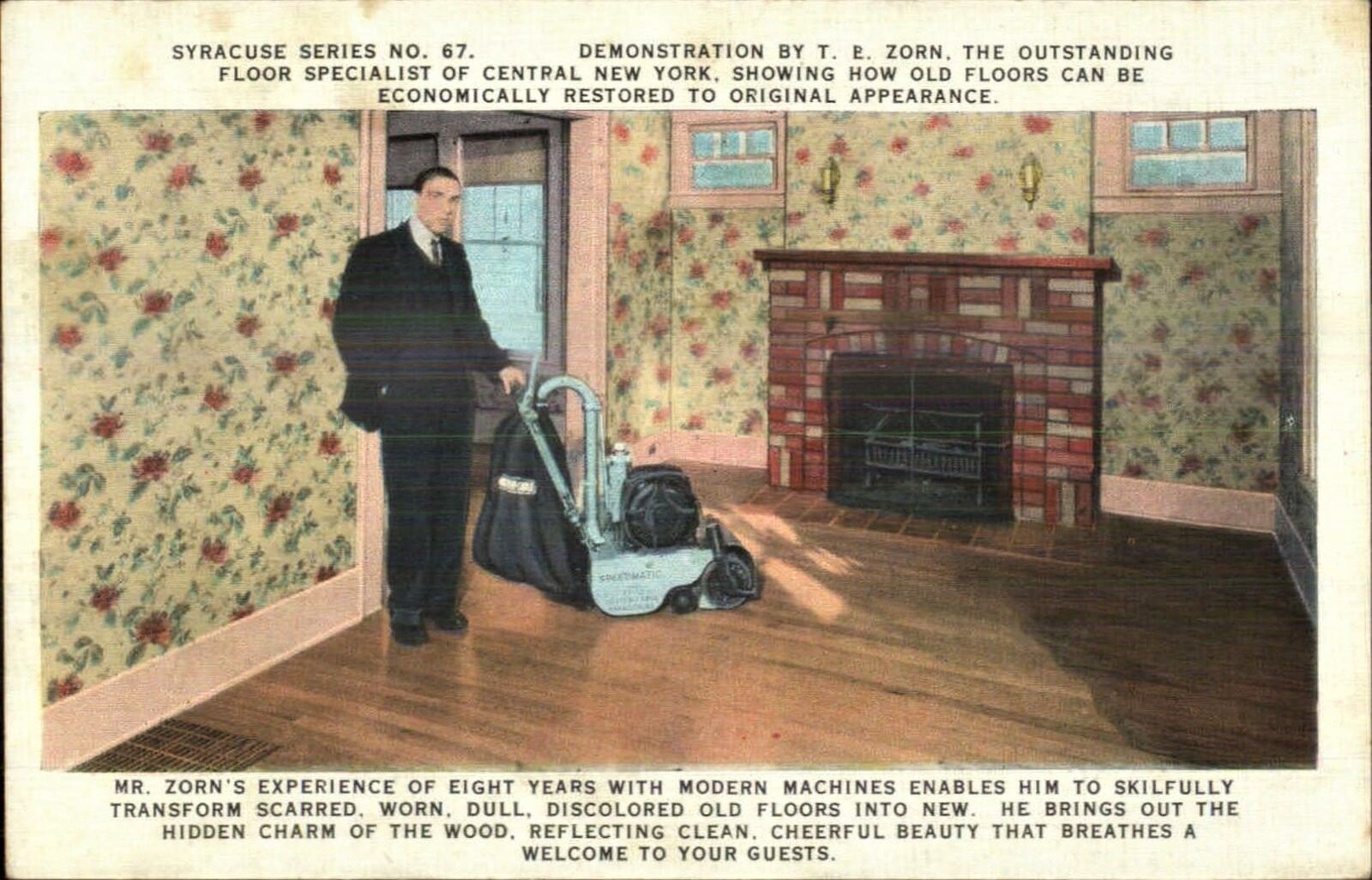
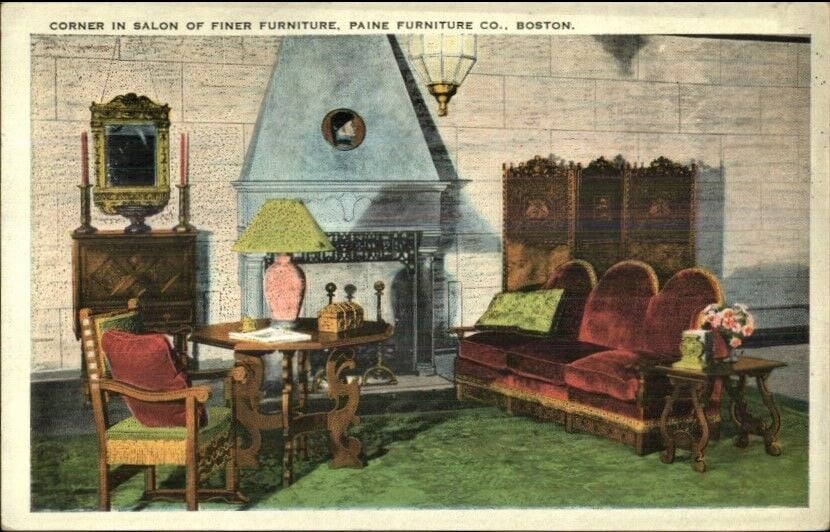
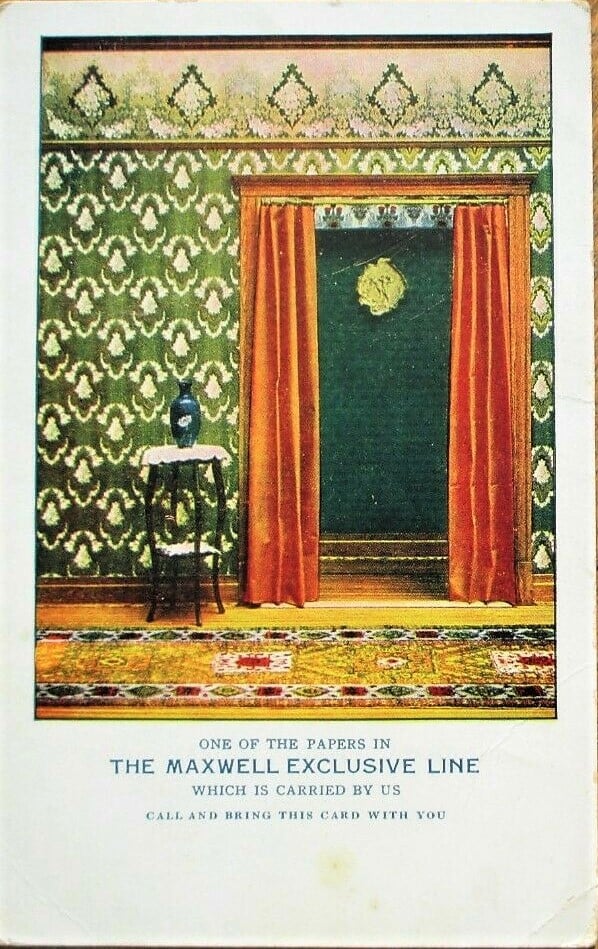
Here's a fun post, motivated by all the people doing home improvement and redecorating projects right now. If it were 1920, one hundred years ago, here are some postcard advertisements that might come your way.
– Carol Flynn
Morgan Park Days – Part 5
By Carol Flynn
The Chicago Tribune wrote on Labor Day, Monday, September 7, 1908: “Morgan Park will pat itself on the back today.” That was the peak year for Morgan Park Days, and what a grand event it was.
David Herriott, the local postmaster, published the Morgan Park Post newspaper from 1905 to 1917. Herriott was a prolific and eloquent writer who gave detailed and accurate accounts of local history. He covered the 1908 Morgan Park Day in great detail.
Herriott wrote that after two years of “innocuous desuetude,” which essentially translates to mean the day had simply run out of steam, the Village struggled with whether to hold the event at all. A group of businessmen came forward to plan, raise money for, and manage the day. They formed the Morgan Park Day Committee (MPDC), independent of the Morgan Park Improvement Association. The committee members who inspired the community to revive the event for a few more years were H. Clay Russell, who was in publishing; England J. Barker (business machines); Charles E. Lackore (undertaker); William. S. Kiskaddon (grocer); Luther S. Dickey (grain merchant); and Franklyn Hobbs (advertising).
Like the other years, the planners encouraged residents to invite their friends and relatives from all over to come for the day, and to decorate all houses, not just those along the parade route. House parties were held throughout the Village. The population of Morgan Park at the time was about 5,000, and 10,000 people were expected to attend. The Chicago Tribune reported that 20,000 people showed up.
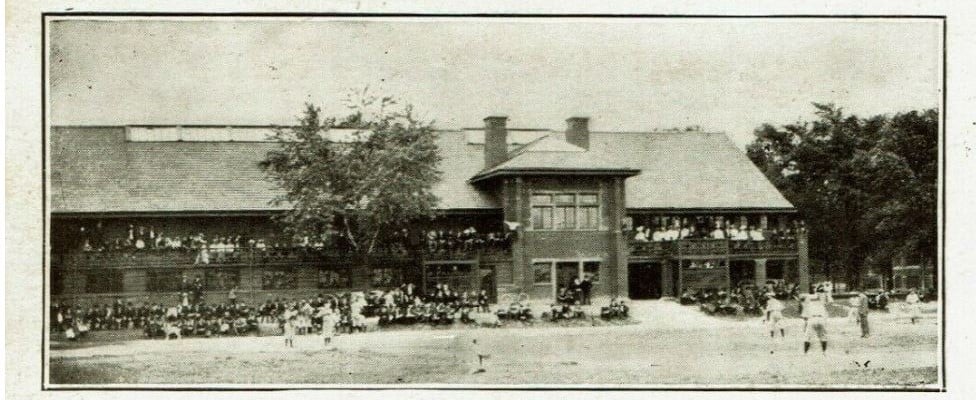
Most of the events took place on the Morgan Park Academy grounds. The athletic events and contests were numerous. Footraces, pole vaulting, and broad jumps, as well as bicycle races, were included as in previous years. In addition to the serious events, three-legged races, potato and sack races, and races for burro carts and roller skaters were held. Monetary prizes, which came largely from donations, were awarded to the winners. There were baseball games between Morgan Avenue (111th Street) and Commercial Avenue (Hale Avenue) businessmen, and between the members of several of the churches.
The church women, as always, were in charge of the food. According to the Post, booths were set up to sell “peanuts, popcorn, crackerjack, pork and beans, chop suey, pop, lemonade and orange cider, coffee, doughnuts and milk, candy, pies, fruit, sandwiches and red-hots.”
Other booths sold postcards and souvenirs. Adults strolled around with decorated canes and children with red balloons. Adults and children alike waved pennants and banners.
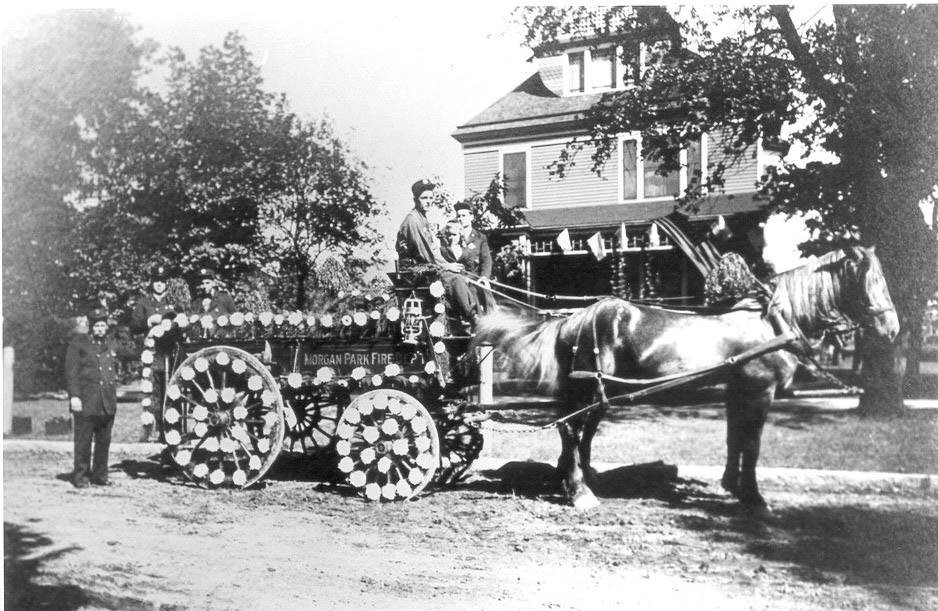
The parade was the longest ever, stretching for two miles. For the first time, in addition to private carriages, police and fire department wagons, and floats entered by organizations, an invitation was extended to business and industry for floats, and for trade and farm wagons to enter. The Post described the entries as “tandems and singles, roadsters and gigs, autos and cowboys, horses and ponies, drug store floats and grocery store floats.”
That year’s major speech was on “Morgan Park, Past and Present,” delivered by Henry B. Baldwin, a prominent Chicago lawyer who lived in Morgan Park.
Evening entertainment included a chorus of 50 members, led by Edward T. Clissold. Clissold was the son of Henry Clissold (for whom Clissold School is named) and part of the family publishing business, and he was known for his beautiful voice and leadership of fine choral groups. Leading up to the day, public practice sessions were held so residents would be ready to sing along. Musical entertainment was supplied by the 25-member First Calvary Band, I. N. G. (Illinois National Guard), considered “one of the best in the land and worth the money,” which was $200, according to The Post.
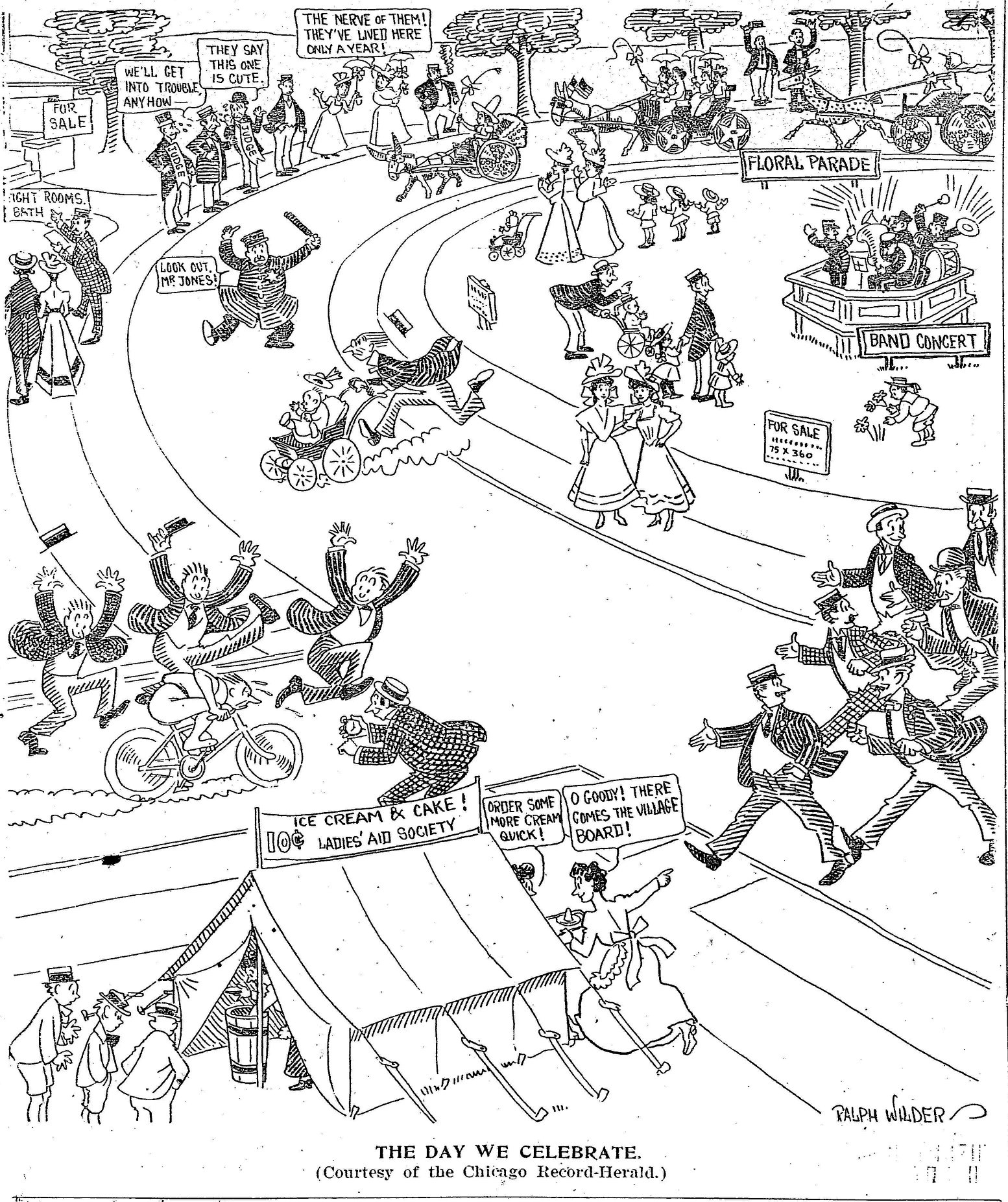
Ralph Wilder, a cartoonist for the Chicago Record-Herald newspaper who lived in the Village, served on the Morgan Park Day publicity committee. A cartoon he drew that captured the spirit of the day was reprinted in the Post. Wrote Herriott, “Ralph Wilder’s cartoon is not at all overdrawn. This is just how we all feel about it, regardless of who, which and what we are. It is our day – the people’s day – ‘of, for and by’ them, with nobody to say them nay.” The cartoon is included in the attachments.
A few weeks before the event, Herriott had written these prophetic words about that year’s Morgan Park Day: “We are not boastful, but all indications point to the fact that the Village of Morgan Park, beautiful as even the Garden of Eden, will on that day give a reason for the faith that is in it. Local patriotism is in the saddle for sure and all that it needs is a fair day, for it already has a clear course.”
It appears the last official Morgan Park Day took place in 1911. The Village actually voted to annex to the City of Chicago that year, but some residents blocked that with legal action. The next vote took place in 1914, and finally went through – Morgan Park became part of Chicago. In 1917, Labor Day events focused on honoring men joining the “new national army,” as the country had joined World War I efforts in April of that year.
Happy Labor Day and Happy Morgan Park Day!
Morgan Park Days – Part 4
By Carol Flynn
From the first Morgan Park Days in 1900 and 1901, the event grew in size and popularity over the next few years. In 1904, 5000 people attended. Morgan Park residents invited out-of-town guests to spend the day and make house parties out of the event. The official programming ran from 9 a.m. to 9 p.m. and were followed by dances.
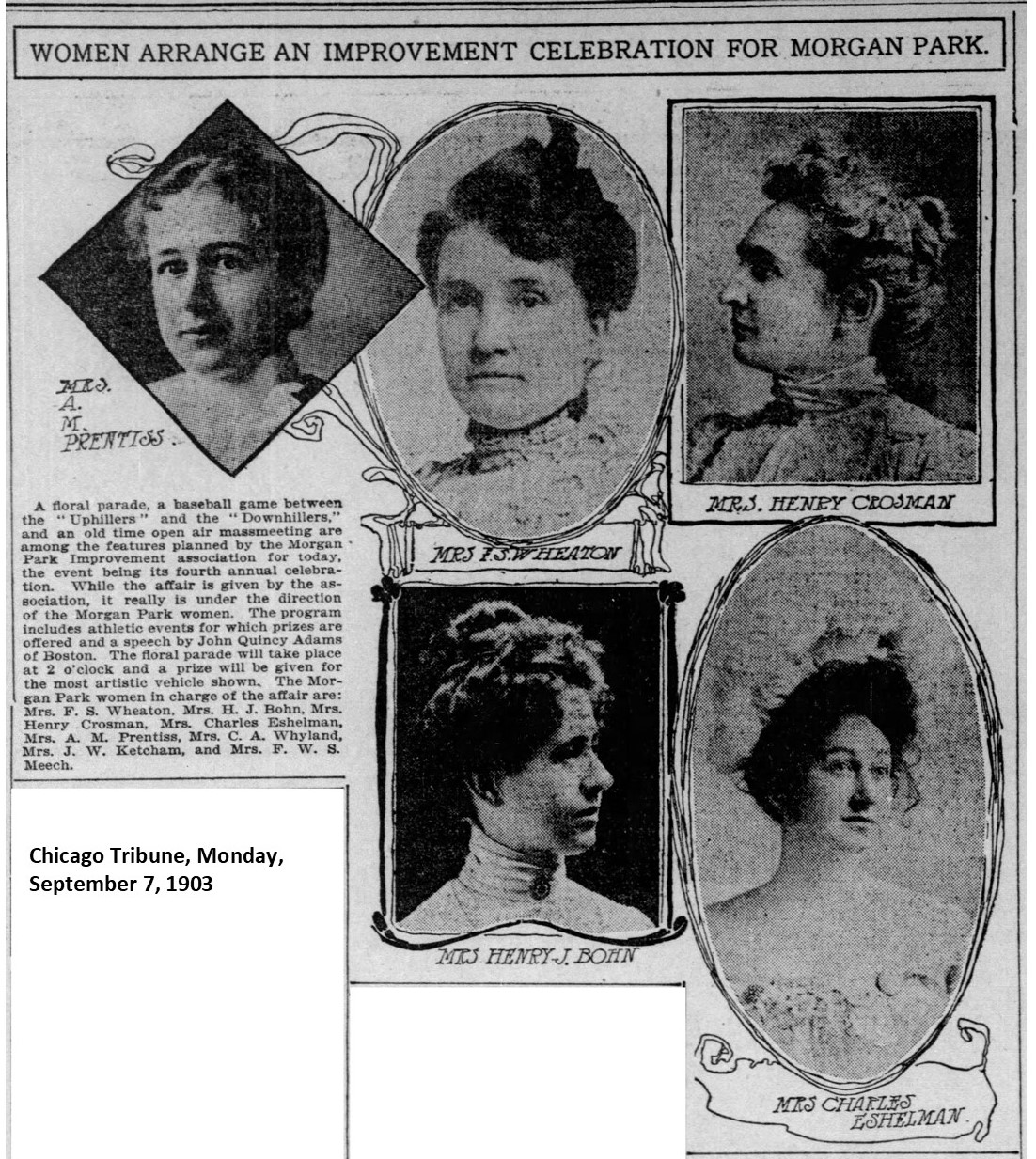
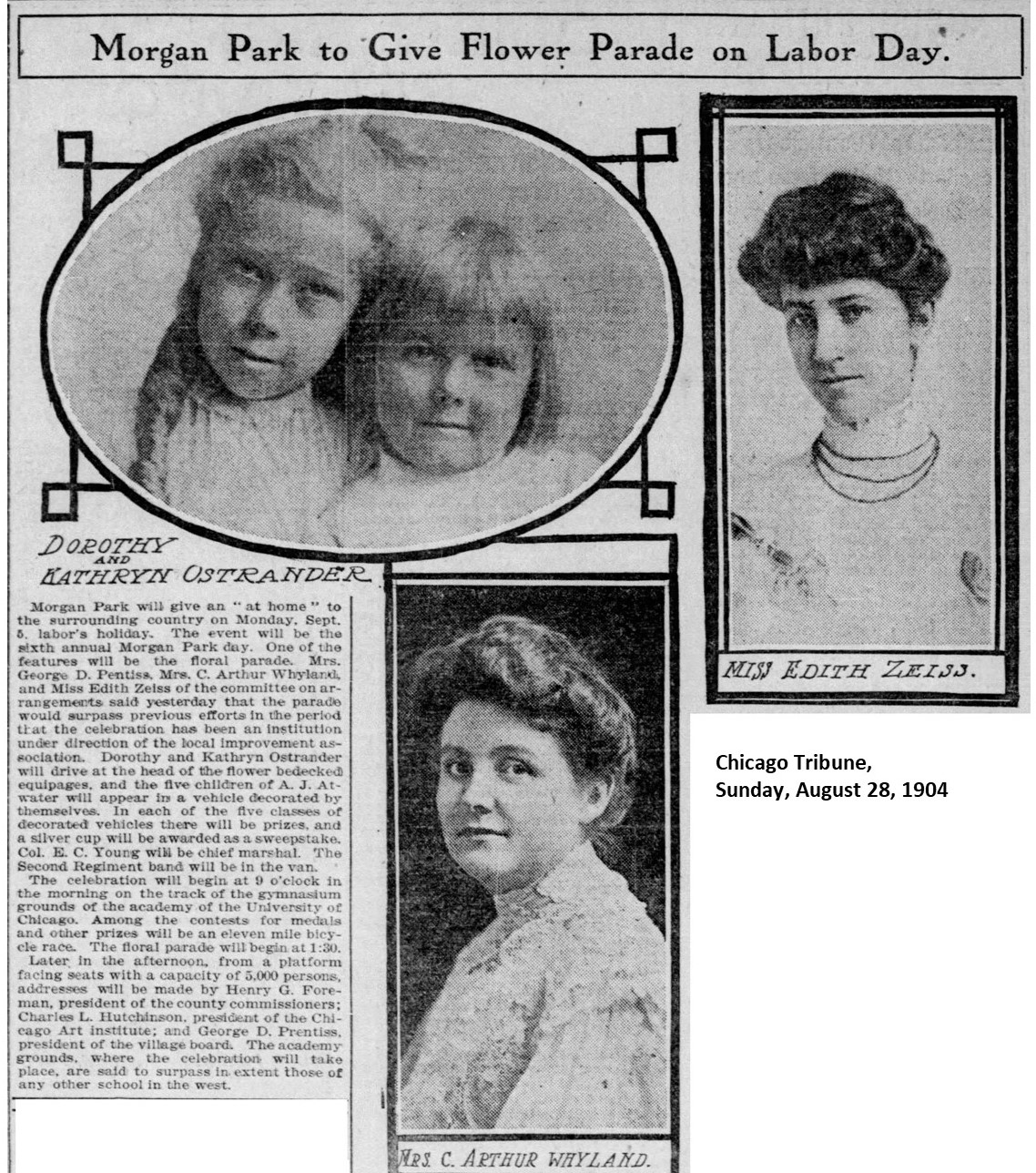
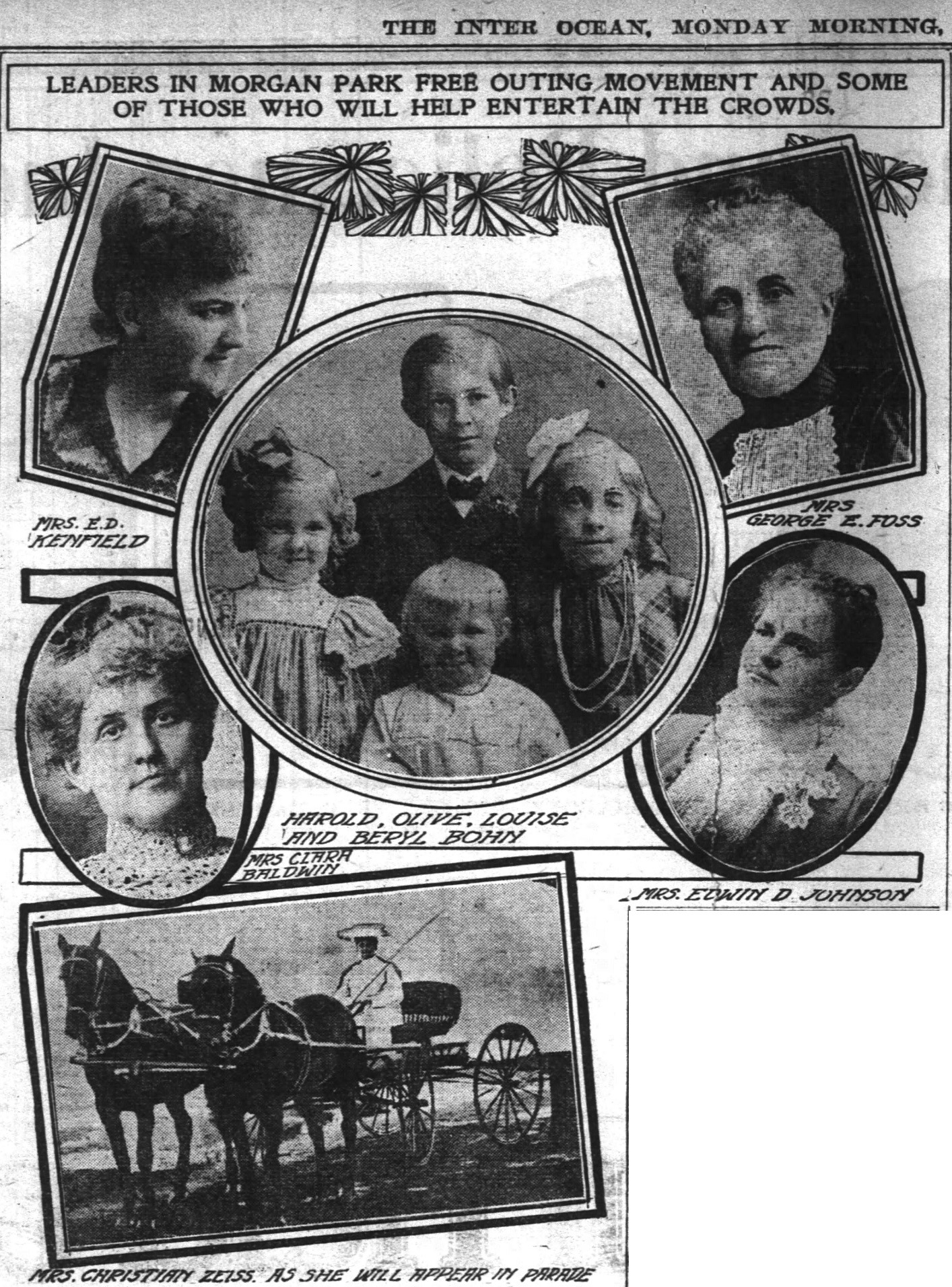
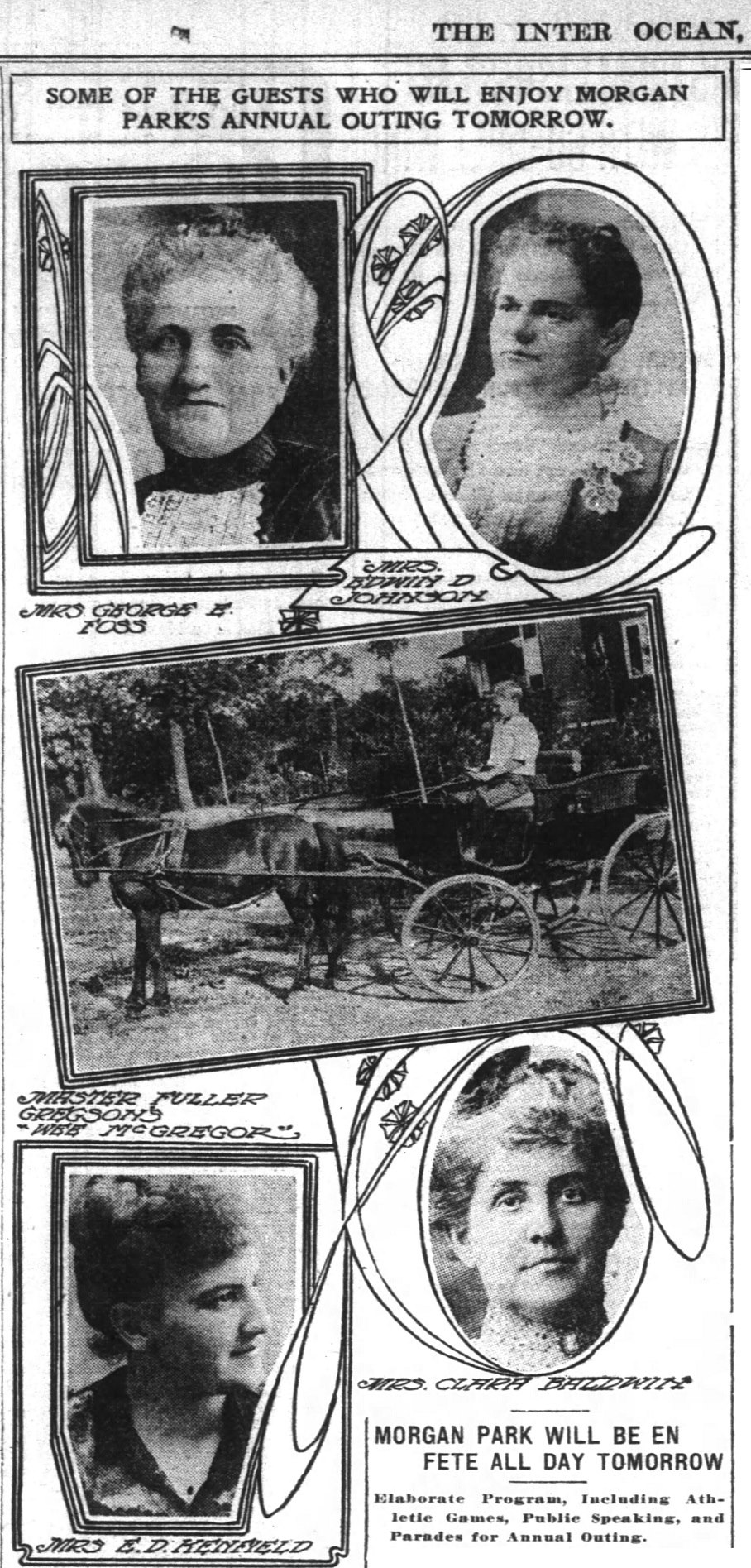
Although the day was attributed to the Morgan Park Improvement Association (MPIA), and chaired by prominent businessmen, it was readily acknowledged that the major part of the work was done by the Morgan Park Woman’s Club. The newspapers carried illustrations and pictures of the women who volunteered their time to make the day a success.
The athletic events held on the grounds of the Morgan Park Academy became significant competitions, attracting the best athletes from all around the Chicago area. Sports included bicycle races as well as track and field events like footraces, hurdles, high jumps, and pole vaults.
Fun events were added for children and adults. In 1905, a relay race was held between the various churches. The Baptists, Methodists, Congregationalists, and Presbyterians participated. According to one newspaper, “the Baptists won easily and the Methodists finished far in the rear.”
Continuing in major importance for Morgan Park Days were the afternoon speeches that concentrated on civic improvement topics. Morgan Park brought in prominent and influential people to be keynote speakers. These speakers included Congressman Henry S. Boutell from Chicago; Dr. John Quincy Adams from Philadelphia (no relation to the U.S. President); Charles L. Hutchinson, president of the Art Institute of Chicago; Henry G. Foremen, president of the Cook County Board; Dwight E. Perkins, architect and city planner; and Judge Orrin N. Carter, who would become chief justice of the Illinois Supreme Court.
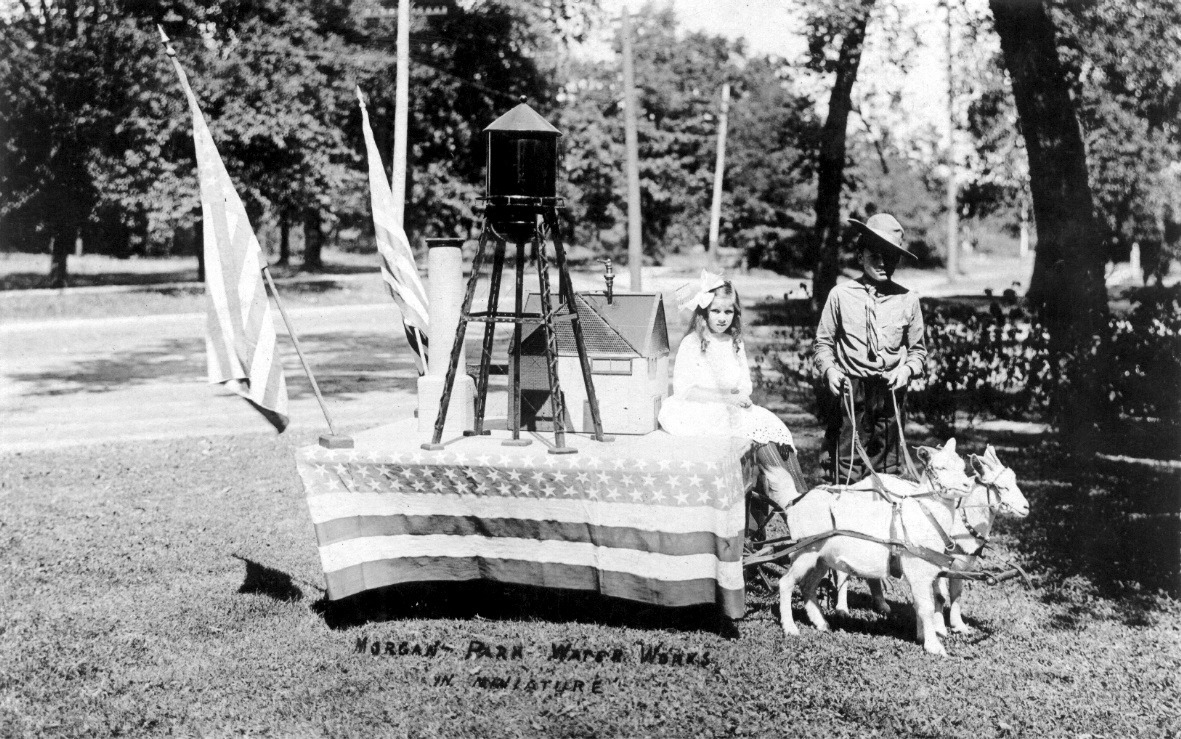
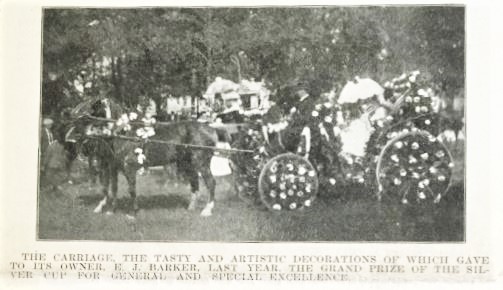
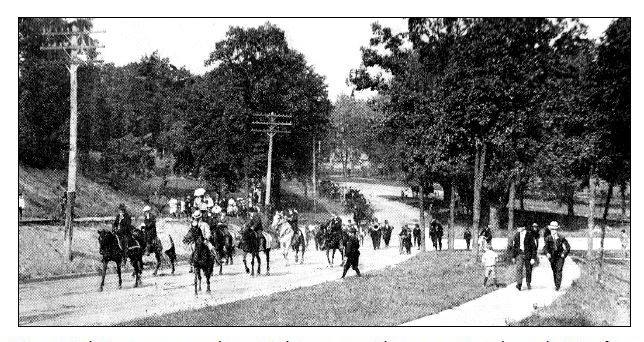
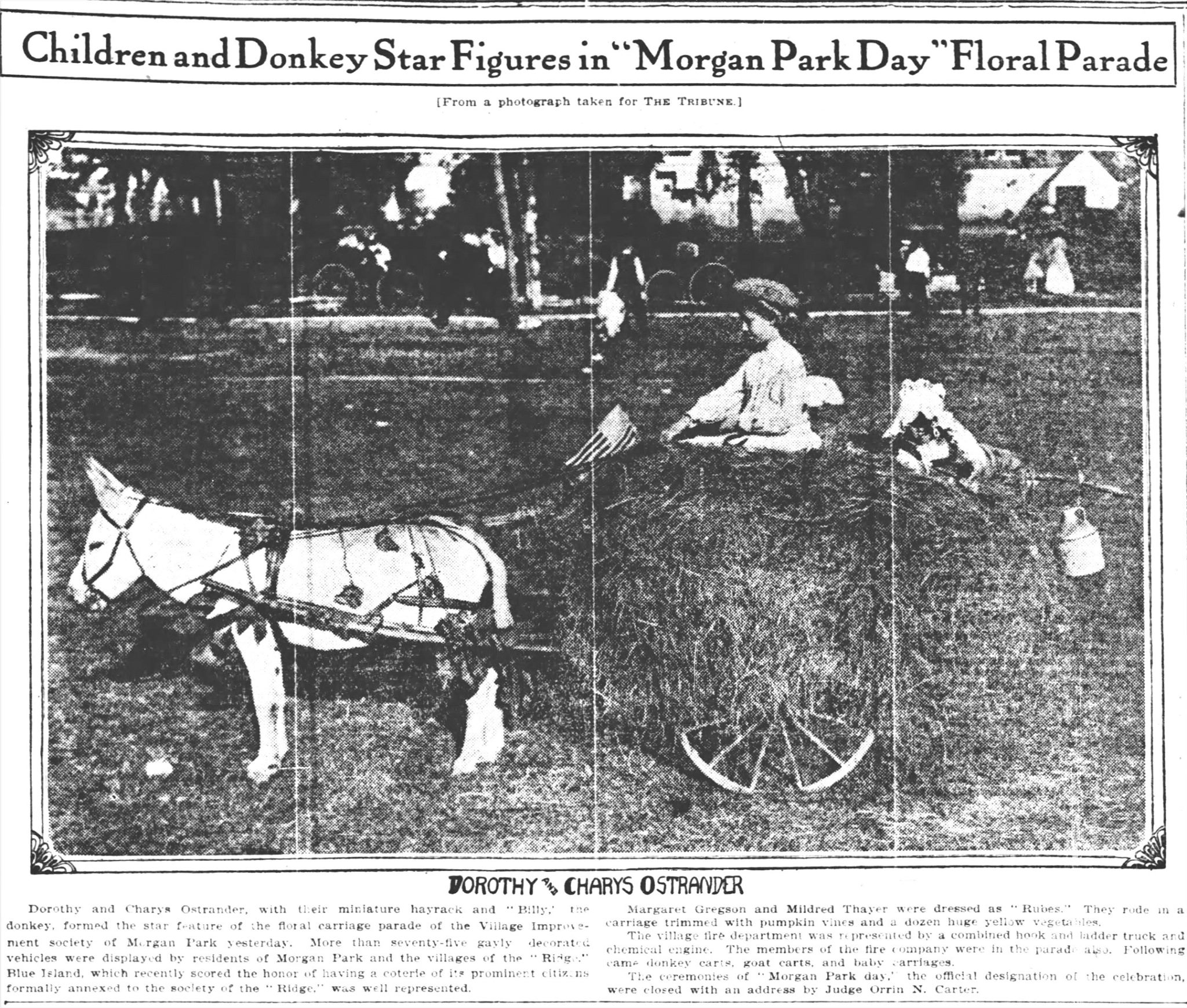
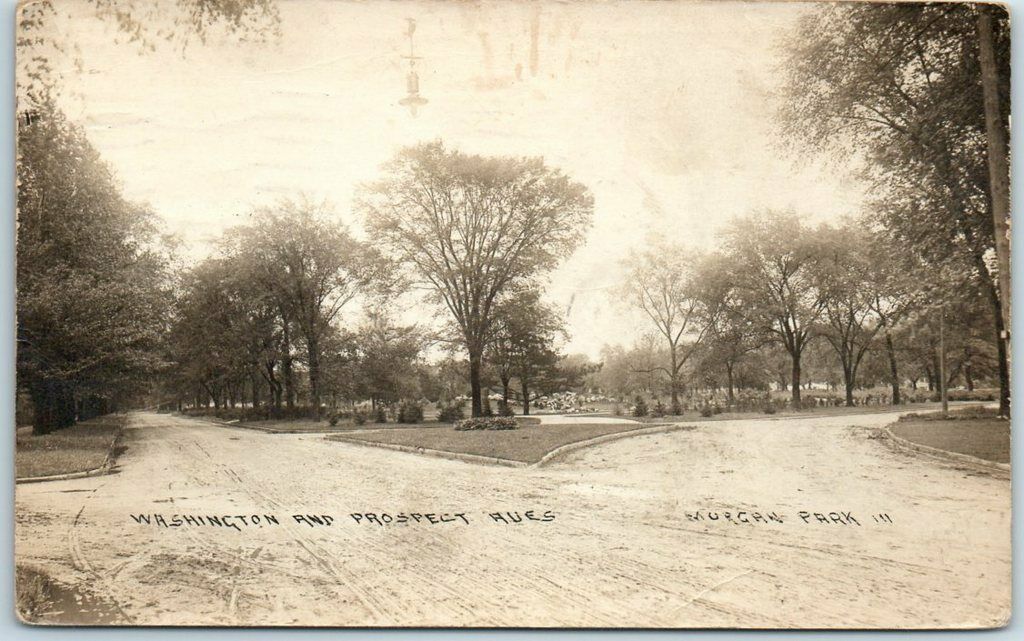
In 1902 or 1903, Morgan Park Day started what probably became its most popular feature for direct participation by the residents of the community – a parade of floral-decorated conveyances pulled by horses, ponies, and donkeys. The parade started at Prospect Park and wound its way through the streets of Morgan Park. Within a few years, over 1000 entries took part in the parade, and one newspaper described the event as: “… floats, pony carts, and carriages all of which were partly concealed beneath huge bouquets of flowers, fancy floral wreaths, and large ornamental horse shoes.” Children loved to participate, decorating their carts drawn by goats and burros.
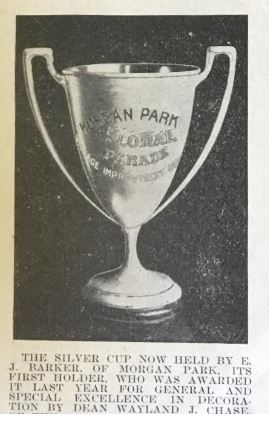
In 1904, the parade had become important enough that a silver loving cup was made to be handed out as the first-place award. The cup was kept by the winner for a year, then passed to the next year’s winner.
The first winner of the cup was England J. Barker, the founder of UARCO, the company that made automatic registers that issued multiple carbon copies of receipts, who lived at 108th and Western Avenue at the time. He would build his house at 107th and Longwood Drive, which became the Beacon School, a few years later. Runners up that first year included other prominent citizens – Austin Wiswall, U.S. Civil War hero and real estate businessman; W. W. Barnard, from one of the first families and the owner of the Barnard seed company at 103rd and Longwood Drive; and William L. Gregson, meat packer and member of the board of trade. One of the judges was William French, executive director of the Art Institute of Chicago, who lived in Beverly.
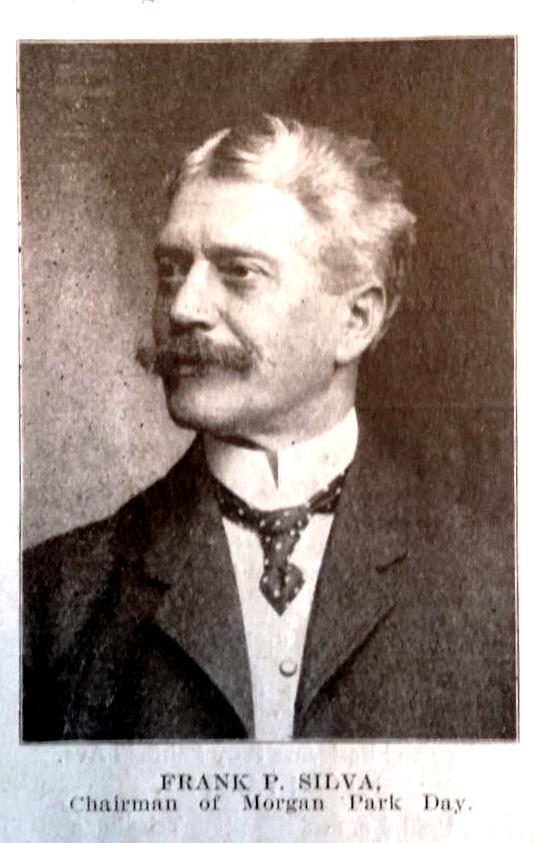
In 1905, the first-place winner was Cornelia Silva, who drove a spider phaeton decorated with purple asters. Cornelia’s husband was Frank Silva, who, with his brother, was very successful in the real estate business. Frank was the chairman for the 1905 Morgan Park Day.
Fuller Gregson, son of William L. Gregson, who lived at 116th and Longwood Drive, took first prize in the pony carriage competition. The Ostrander children took first place in the donkey cart competition, “with a peaceful looking burro that received great applause.” The donkey cart was decorated with pumpkins and pumpkins vines. James H. Ostrander, the father, was an optician who provided eyeglasses for two U.S. Presidents, William McKinley and Theodore Roosevelt.
Food and refreshments were always an important part of any group event. Beginning in 1904, the churches set up tables to sell and serve food all day, and dinner into the evening. It became highly competitive between the churches as to which made the most money from their members’ home cooking.
Entertainment throughout the day and evening came from the local brass band and guest bands, and glee clubs and choral groups. In 1904, the evening offered two dances, one at the new Ridge Park Country Club which had been founded in 1902; and one at the Morgan Park Academy gymnasium sponsored by the Morgan Park Athletic Club.
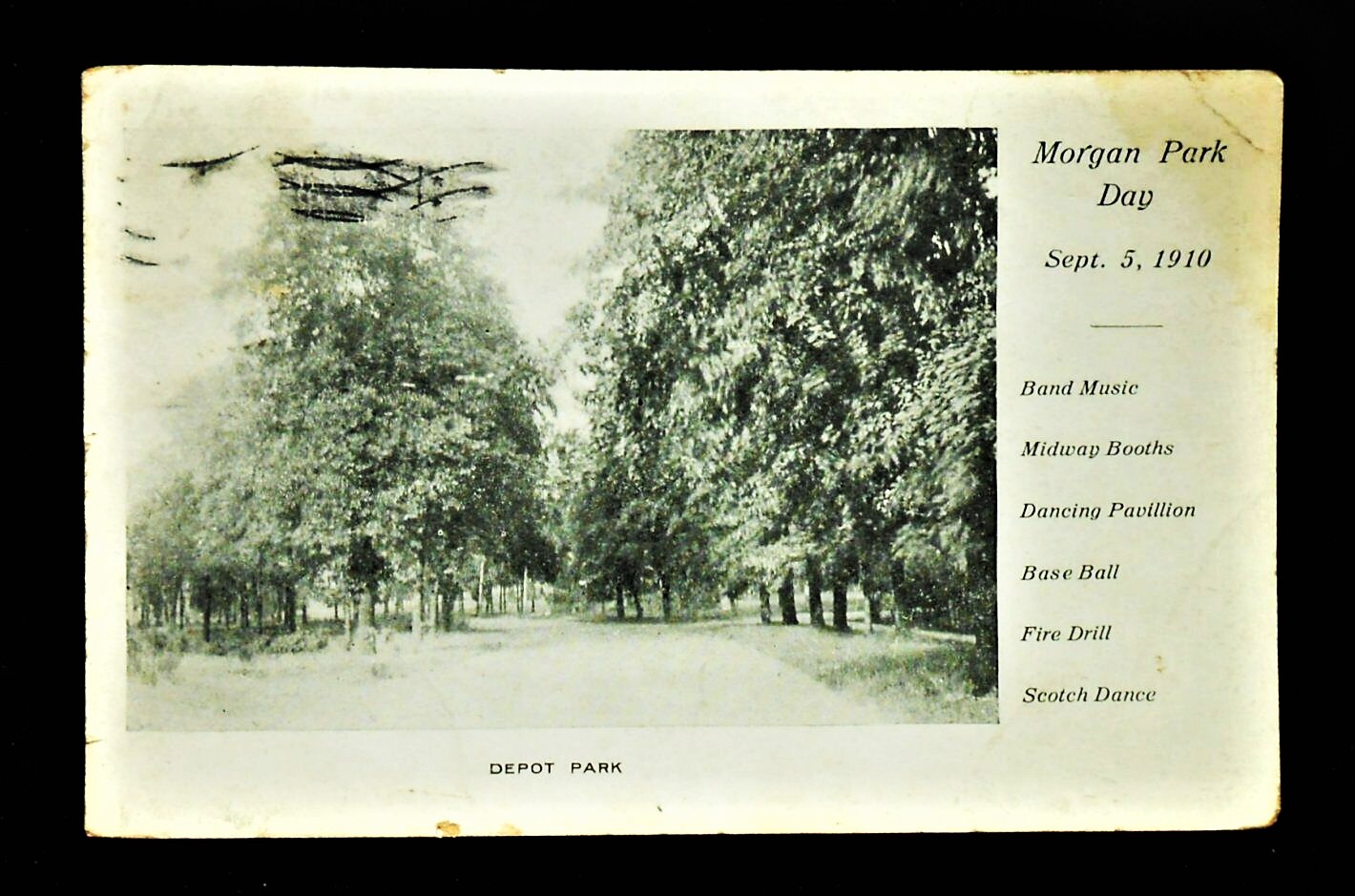
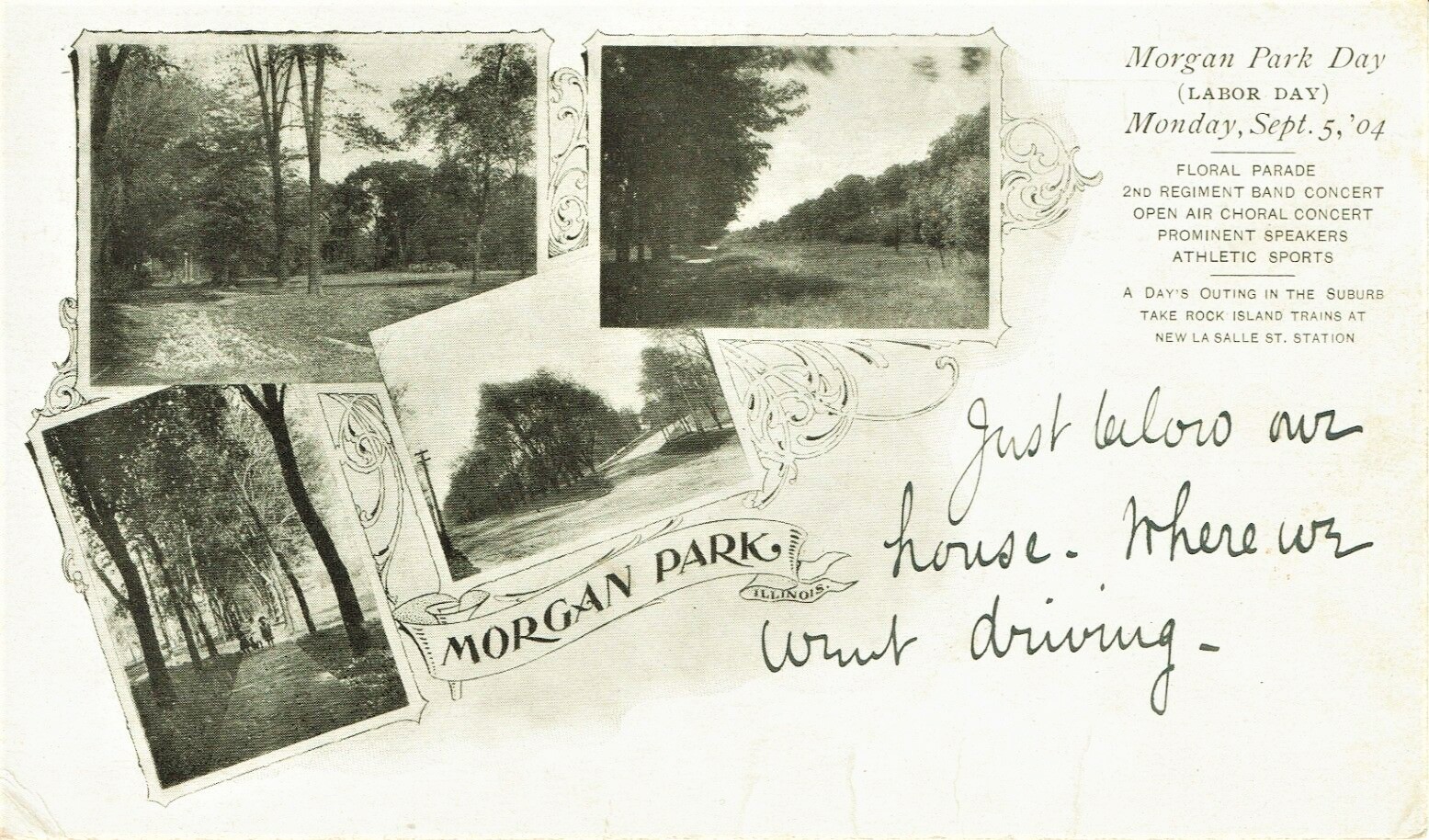
In 1904, souvenir postcards with scenes from Morgan Park were sent out by the thousands as invitations. Special trains ran on the Rock Island line to accommodate the extra crowd.
The funding for Morgan Park Day was raised through volunteer donations, and everything but the food was free. The Chicago Tribune noted that “the promoters assert that [Morgan Park Day] is entirely free from any mercenary aims, the purpose being to bring about, foster, and develop a closer acquaintance with and local pride in the beautifying of the suburb.”
In 1904, magazines and newspapers published as far away as San Francisco declared “Morgan Park one of the most desirable suburban residence districts around Chicago.” This was based on the success of the fifth annual Morgan Park Day which had taken place on Labor Day, September 5.
Enthusiasm for Morgan Park Day started to wan in 1906 and 1907, but then there was a campaign to revive the day, and 1908 saw the best Morgan Park Day ever.
Next: The 1908 Morgan Park Day
Morgan Park Days – Part 3
By Carol Flynn
The Morgan Park Improvement Association (MPIA) held its regular meetings in May 1901 at Blake Hall on the Morgan Park Academy (MPA) campus. The public meeting was attended by more than 200 people.
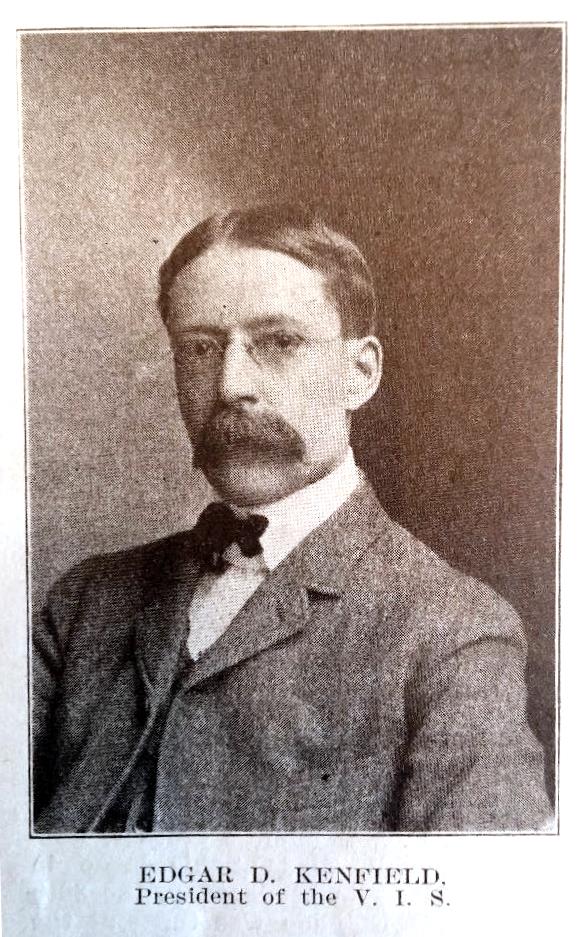
E. D. Kenfield, elected to a second term as President, challenged the residents of the village to make Morgan Park the most beautiful suburb of Chicago. He assured homeowners the value of their real estate would double if they carried out this plan.
Kenfield expressed concern that the churches and schools should improve their grounds. He hoped to have a committee of children in each block to keep the sidewalks and streets clean. He also reported that a man was hired to sprinkle the streets [to keep down dust] and to trim the grass and weeds in vacant lots.
Mrs. Alice Earl Crosman, President of the Morgan Park Woman’s Club, gave some tips for beautifying homes through gardening. Among her nuggets of wisdom were: “Don’t put little beds of flowers all over your yard and make it look as if it had the chickenpox;” and, “Don’t forget the moral side of all your work. The love of flowers is an enemy to sin.”
The attendees discussed putting in cement sidewalks and waste baskets on street corners. They also grappled with the controversial question of building a gas plant in the Village but, as much as they wanted gas service for light and heat, they did not reach a decision on this topic.
MPIA held Morgan Park Day on September 2, Labor Day, on the athletic grounds of the MPA. There were twenty athletic contests including running high jump, hammer throw, pole vault, bicycle races and foot races. Flag exercises were performed by the children of the public schools.
During the day there was choral singing by fifty voices, and music, presumably by the Morgan Park band. No doubt the usual confection and lemonade tables were set up.
The keynote speaker was Professor Charles Zueblin, a controversial sociologist of the University of Chicago, and President of the National League of Improvement Associations, the name of which he changed that year to the American League for Civic Improvement. He spoke on “Public Beauty.” He called for developing a park system for the city and outlying areas, including the rivers, bluffs, and ravines that surrounded much of the city.
Over 2,000 people attended the event. The City of Blue Island had started its own civic group by then and the president of the Blue Island Improvement Association participated in the Morgan Park festivities.
On October 5, a conference was held at the Art Institute of Chicago of all the civic improvement associations in Cook County, attended by 200 people. One of the speakers was Gertrude Blackwelder, a well-known education, art, and women’s rights leader from Morgan Park, who “described the effective and typical efforts of the MPIA.”
The keynote speaker was Dwight E. Perkins who spoke about “municipal engineering” to create planned cities that would have adequate power, transportation, communications, recreation, etc. Perkins was an architect of the Prairie School of design and a reformer, and is considered the founding father of the Cook County forest preserves.
Next: Morgan Park Days take on more significance
Morgan Park Days – Part 2
By Carol Flynn
Edgar D. Kenfield became the next president of the Morgan Park Improvement Association (MPIA) in 1900. He was an executive with Eastman and Brothers Company which manufactured and sold perfumed soaps. He lived on Morgan Street, which became 111th Street when Morgan Park annexed to Chicago. His house was near the Walker Library, but is no longer standing.
In August of 1900, the Chicago Tribune reported that MPIA members, “armed with scythes, rakes, and other implements, attacked Canada thistles and other weeds in the park and along the streets.” Some of the most prominent citizens were out there, including Isaac Blackwelder and his son Paul, and Henry Bohn. Blackwelder was an insurance executive living at 10910 S. Prospect Ave., and Bohn was a publisher living at 10980 S. Prospect Ave. Both of their houses are still standing. “After blistering their hands and wrenching their backs a few hours” they called it a day. They intended to plan a “Morgan Park day” at their next meeting. And they did exactly that.
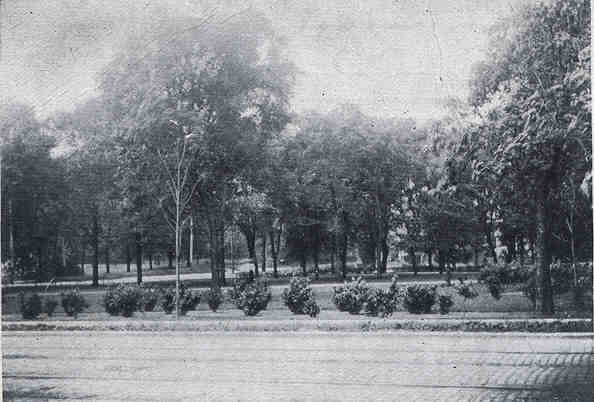
The first official Village of Morgan Park holiday was held on September 15, 1900. The Inter-Ocean newspaper covered the event in detail. The stores closed and the children were given a half-holiday from school. The Morgan Park village band, “with its gold-laced uniforms, marched through the clean and well-shaded streets to a stand erected for it on the sloping hillside near the village park, and played a lively march, to which the villagers kept step.” The children begged their parents for pennies to buy confections at the tables that were set up, while they all wandered under the cherry trees at the “grove” that was at Longwood Drive between 110th and 111th Streets.
The afternoon was allocated to speakers, who all had the theme of the improvement of Morgan Park. One of the most interesting speeches, according to the paper, was that of Mrs. N. O. Freeman of the Morgan Park Woman’s Club, who urged that cherry and apple trees and blackberry bushes be cultivated in unoccupied places so that the children might have fresh fruit.
Mr. Bohn said that Morgan Park should have “one day in the year devoted solely to the village, where the people could meet on common ground, their only creed being universal brotherhood.” Part of the land this first event was held on, at the time called the “common,” would become Depot Park, which would be designed by famous landscape architect Jens Jensen in 1906. It would then be renamed Bohn Park in 1933, the name it has today. Bohn served as president of the Calumet Park District when it formed in 1903. In 1934, Calumet Park District merged with the Chicago Park District.
President Kenfield said, “Our object is to beautify the village, create civic interest, and make happier as well as more ornamental homes.” He listed the successes of the year – the park was beautified; waste paper, garbage and weeds on the streets and in vacant lots were lessened; and unsightly sign-boards had been removed.
Mrs. Frances Copley Seavey said, “A village with the many natural advantages found here should have vines and flowers and trees. And there should be birds and squirrels, and laws and police to protect them.” Frances Copley Seavey was an artist and horticulturalist, and a prolific writer on landscape gardening as part of civic improvement. She lived in the South Shore section of Chicago and was an early user of audio-visual aids, incorporating stereo opticons into her presentations.
Reverend George C. Williams said it was easy to tell where Chicago left off and Morgan Park commenced by the appearance of the streets and the surroundings. The beautifying of the village was a laudable undertaking, and bore a close relationship to theology.
The speeches were interspersed with music by the band and songs by a quartet. At the end of the speeches, the band led the way to tables under the shade trees where “neatly-dressed women” served lemonade.
Morgan Park always aimed to be a model suburb, from its founding in the 1870s. The MPIA worked to establish and promote that image. The Chicago Tribune reported of this event that since the founding of MPIA much had been done to beautify the town. Trees had been planted and other municipal improvements made. The article said “it is intended by the society to make everything in Morgan Park artistic.” The day had been set aside for “jubilation by the residents of the suburb” after a year’s hard work.
Next: Labor Day becomes Morgan Park Day