Explore the RHS Facebook Archives, a rich repository of local history written by Carol Flynn. For two decades, Carol brought a deeply dedicated voice to public education at RHS. Her role as Facebook administrator through mid-2025 naturally extended her prolific research into meticulously detailed articles, most notably her multi-part historical series posts. Today, Carol continues her local history writing for The Beverly Review and other outlets.
2021
Ridge Historical Society
Halloween – October 31, 3021: The “Tombstone House”
By Carol Flynn
It’s Halloween, so it is a good day to look at the macabre in the neighborhood. This isn’t a ghost story – in fact, it’s pretty much the opposite, a “debunking” story. But it also illustrates that true history can be as interesting – and strange – as legends.
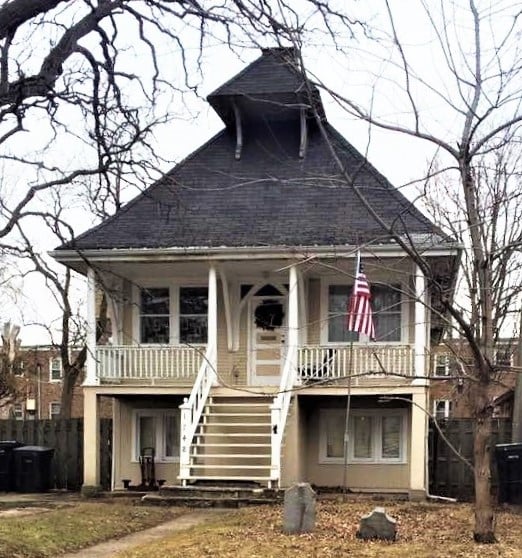
The Ridge Historical Society (RHS) is regularly asked about the tombstones that are on the front lawn of a house in the 1700 block of West 96th Street. Are they real? Yes. Are people buried there? Not very likely. Was that a cemetery? No. How did the tombstones get there? That’s a good question and the answer remains elusive.
Here is the information RHS has gathered to date. Let’s start with the house. The house was actually originally a church.
St. Paul’s Bible Church at 94th and Winchester started as a Sunday school in the Longwood train station at 95th Street, then the congregation used a tent. One of the founders of the church was William Merchant Richardson French, the first executive director of the Art Institute of Chicago, whose historic house still stands in north Beverly.
In 1893, the congregation built a small wooden church. This wooden church was replaced by a stone church in 1902-3. The wooden church was moved and became a private home on 96th Street.
Moving houses was not uncommon in the past. They were placed on rollers and dragged to the new location by horses. It could take days to move a house but it was easier than building a new one.
Now, the tombstones. The names on them are Johan Sandtner, d. 1914; and Barbara Sandtner, b. 1859 d. 1915. RHS researchers located death and burial records for these people. These markers belonged to a couple that is buried in St. Mary’s Cemetery at 87th Street and Pulaski Road. Their names are recorded as John and Barbara Santner. John died at 4313 Lake Park on March 9, 1914, and Barbara died at 5836 Princeton on May 11, 1915.
It was not unusual to have multiple spellings of names in the past. Sometimes people changed their names to be more Anglicized. One conjecture is that the tombstones were replaced to correct or change the names from Sandtner to Santner, and from Johan to John. Then the old gravestones were discarded.
What is still the question is exactly how the tombstones wound up in front of the relocated church-turned-house on 96th Street. They’ve been there for decades. In the 1980s, the owner or resident of the house told the RHS Historian that he placed the markers there, but he would not say where he got them originally.
A few years ago, another person reported to RHS that he was told by the man there that the tombstones were found in the basement of the house when he moved in, and he put them out in front. The man at the house said that perhaps there had been a graveyard there with the church.
That seems very unlikely because there is no documentation that that building was ever a church at that address, only a private residence. If St. Paul’s had a graveyard, it would have been at the church site a few blocks to the north.
So are people buried on 96th Street? Well, the Santners are not, and there is no record of any kind of cemetery ever being there. THAT much can be confirmed.
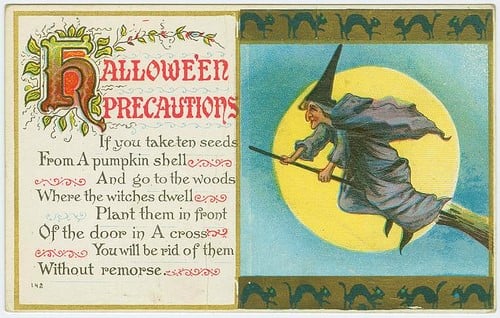
Happy Halloween from the Ridge Historical Society. Here is a vintage postcard with some sage old folklore advice. Of course, it depends if it is a good witch or a bad witch ….
October is Squirrel Awareness Month. Love 'em or hate 'em, they are part of the fabric of the community. I'm looking for anyone who has spotted, and preferably managed to photograph or videotape, the white squirrel(s) that live in Beverly Park (103rd Street, Chicago) for an article I am working on. Any pictures or stories to share about these little guys?
The Ridge Historical Society
History of the Chicago Wards – Post 2: The Beginning
By Carol Flynn
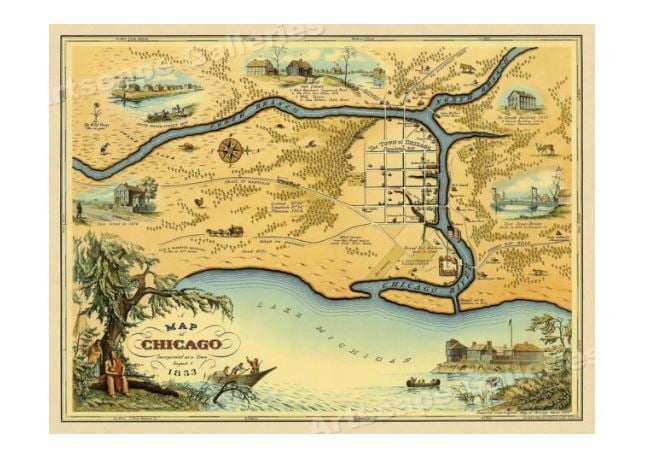
In 1830, Chicago was not yet a city, and Cook County did not exist. For voting in State of Illinois elections, the Chicago area was considered a precinct of Peoria County. Cook County was formed in 1831, and the unincorporated Fort Dearborn settlement at the juncture of the Chicago River and Lake Michigan became the county seat. The area continued to grow, and Chicago incorporated as a city in 1837 and became the county seat.
There are a variety of models for U.S. city governments. Chicago uses a variation of a system brought over from England where wards were administrative units centered around castles. Many American municipalities used the early model of a city council made up of aldermen elected by local citizens to represent geographic units of the city called wards. The council is led by a full-time, paid mayor elected separately, that is, not chosen from or by the aldermen.
Other cities now use other models such as paid city managers or small governing boards with commissioners. The ward system is considered democratic, but can also be cumbersome and result in gridlock. Other systems are considered more efficient, but some are less representative of the will of the people.
The Act of Incorporation for the City of Chicago, 1837, established the city’s form of government, which is the only form the city has ever known. The charter specified as officers an elected mayor heading a “common council” made up of the aldermen from the city wards. Other city officers included a Clerk, a Treasurer, Collectors (for taxes and assessments), and others to be established.
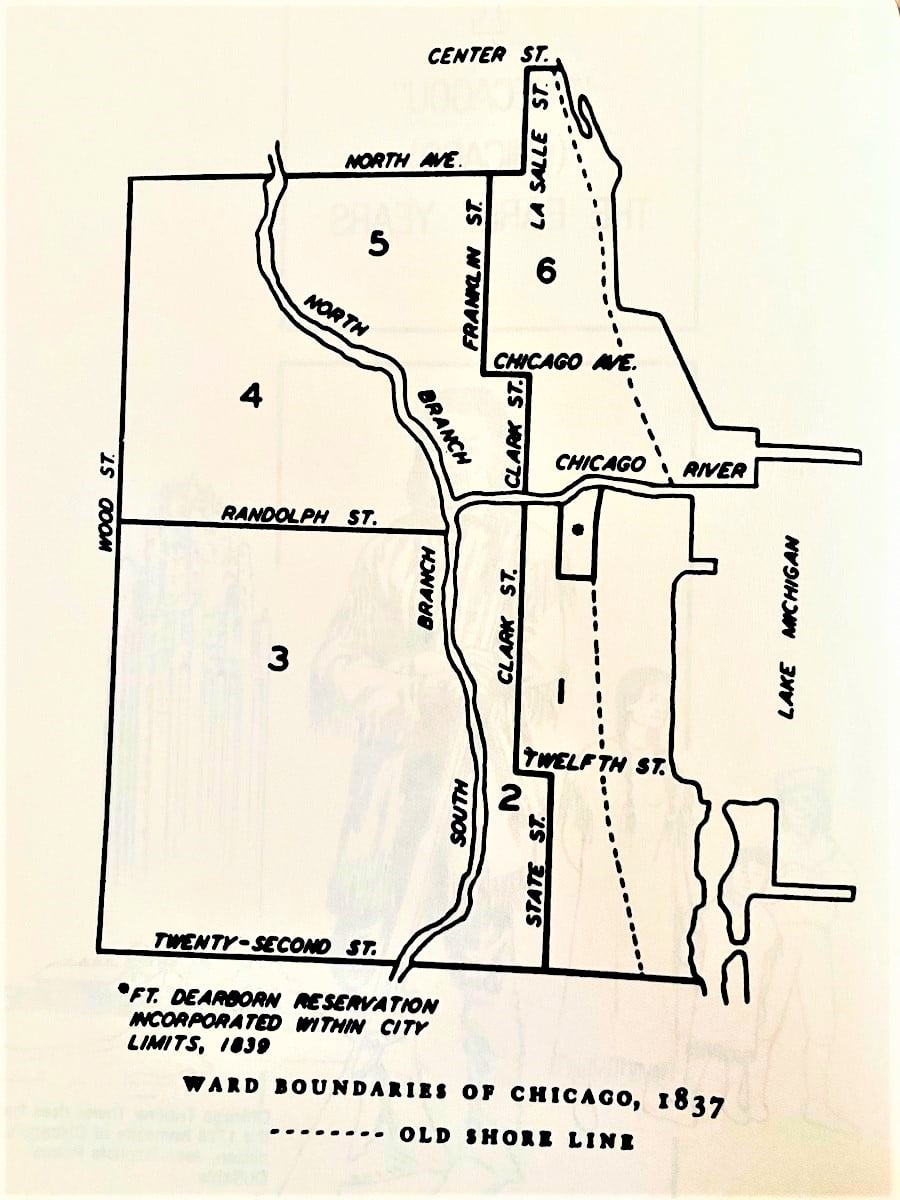
Initially, there were six wards. Two aldermen and one assessor from each ward were elected. Annual elections on the first Tuesday in March for all the offices were mandated.
The “common council” was empowered to handle all aspects of city management, ranging from the control of city finances and property to “preventing the rolling of hoops, playing at ball or flying of kites or any other amusement … having a tendency to annoy persons … or to frighten horses.”
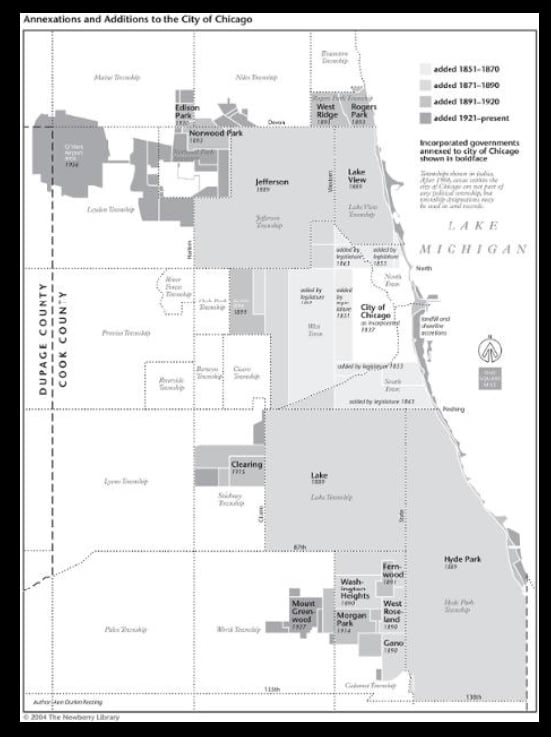
The first six wards were clustered around the site of Fort Dearborn. However, the city didn’t stay small for long. As the city expanded due to population growth and annexation of neighboring communities, the number of wards increased. Also, by 1860, the city had begun to further divide the wards into election precincts. Major acquisition and annexation of land to Chicago occurred during the 1800s, and by 1890, when the Blue Island Ridge territories began to annex, the city was up to 34 wards and 68 aldermen.
Wards were theoretically established based on population size, and determining the boundaries of wards was always a political ordeal.
For example, in 1859, a group proposed that the number of wards be increased from ten to twenty-one because, it was alleged, the wards were too large both population- and geography-wise for efficient voting, resulting in some people having to travel miles to a voting place, and others being denied the opportunity to vote because the lines were so long. The Chicago Tribune called this “brazen lies” and reported the redistribution carved the city into “parallelograms, rhomboids, polygons, diamonds, triangles, and trapezoids, wholly regardless of population, property or propriety.” The paper stated that the “Graveyard on the North Side” (now Lincoln Park) was laid out as a ward in the new system. The proposal went nowhere.
Next post: Washington Heights, including Beverly, is annexed to the City of Chicago and joins the ward system.
The Ridge Historical Society
Native Americans and the Blue Island Ridge – Part 18: Conclusion – Land Acknowledgement Statement
By Carol Flynn
A suggested Land Acknowledgement Statement for an organization, business, or individual on the Ridge (like the Ridge Historical Society) would be:
“We acknowledge that we are located on the ancestral homelands of the Potawatomi tribe, a member of the Council of Three Fires with the Ojibwe and Odawa Peoples. Other tribes that lived in the Blue Island area include the Miami and the Illinois Confederation. Many additional tribes including the Fox, Sauk, Winnebago, Menominee, Meskwaki, and Kickapoo lived nearby and accessed the area for trading and portage routes.”
The rationale for this statement is that the Potawatomi were the dominant Native Americans living around the Blue Island area in 1833 at the time of the signing of the Treaty of Chicago. The Council of Three Fires, a confederation of the Ojibwe, Odawa, and Potawatomi tribes, ceded the land to the U.S. Government at that time. The Miami tribe also had a presence here, concurrent with the Potawatomi, and before that, until the late 1700s, tribes from the Illinois Confederation lived in the area until driven out by the Miami and Potawatomi.
Many other tribes lived nearby. This land is located on the Vincennes Trace and Calumet waterways, and the land and water routes were used for trading and transportation/migration. These tribes included the Fox, Sauk, Winnebago, Menominee, Meskwaki, and Kickapoo.
Just this month, a research article in the journal Science reported that fossilized footprints found at White Sands National Park, New Mexico, date back 21,000 to 23,000 years. This puts humans in North America thousands of years earlier than thought.
However, Native Americans are not relics of the past. The 2020 U.S. Census reported 9.7 million American Indians and Alaska Natives in the U.S. population.
Understanding the history of Native Americans is critical, and sharing information like this series to educate the community is the role of an organization like RHS. Other organizations, businesses, schools, churches, and individuals share the responsibility to evaluate their commitment to the present and future issues of this group of American citizens.
Image:
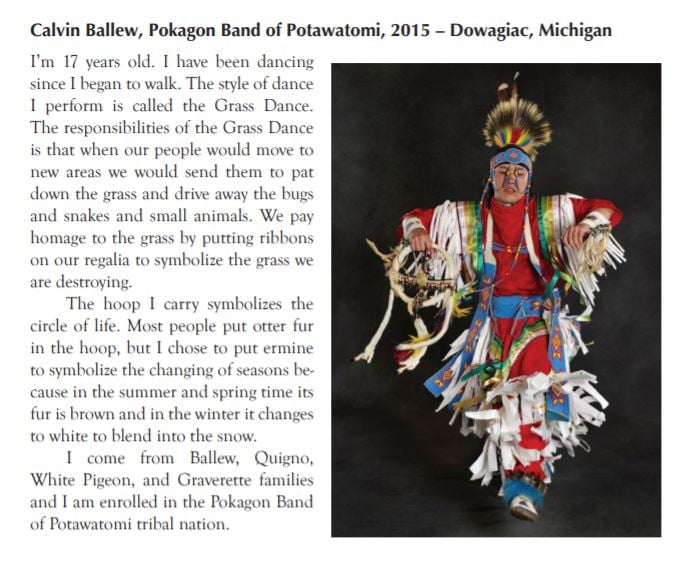
Sharon Hoogstraten, a professional photographer who now lives in Chicago, is a tribal member of the Citizen Potawatomi Nation. Through her exhibit “Dancing for My Tribe” she documented and preserved Potawatomi culture.
The exhibit, made up of individual portraits of contemporary Potawatomi in their regalia, conveys the story of a modern people preserving the traditional dress of their ancestors. Regalia is traditional tribal dress that identifies a person and tells his or her individual story, not a costume for pretense. No two examples of regalia are alike.
The exhibit premiered in 2014 at Rockefeller Memorial Chapel at the University of Chicago.
This is one entry from the exhibit, from the Artist’s Statement. The Pokagon Band of Potawatomi in Michigan is the group living closest to Chicago.
The Ridge Historical Society
National Gold Star Mother’s and Family’s Day
By Carol Flynn
Sunday, September 26, the last Sunday in September, is National Gold Star Mother’s and Family’s Day. On this day, we recognize the women whose sons and daughters died during or because of active service in the U.S. military.
The Gold Star designation started during World War I. Families with members in the service displayed a service flag in their windows. A blue star meant that the person was in active service. The entire community mourned if the star was changed to gold, signifying that person had died. By the time the war ended in November 1918, over 110,000 Americans had lost their lives.
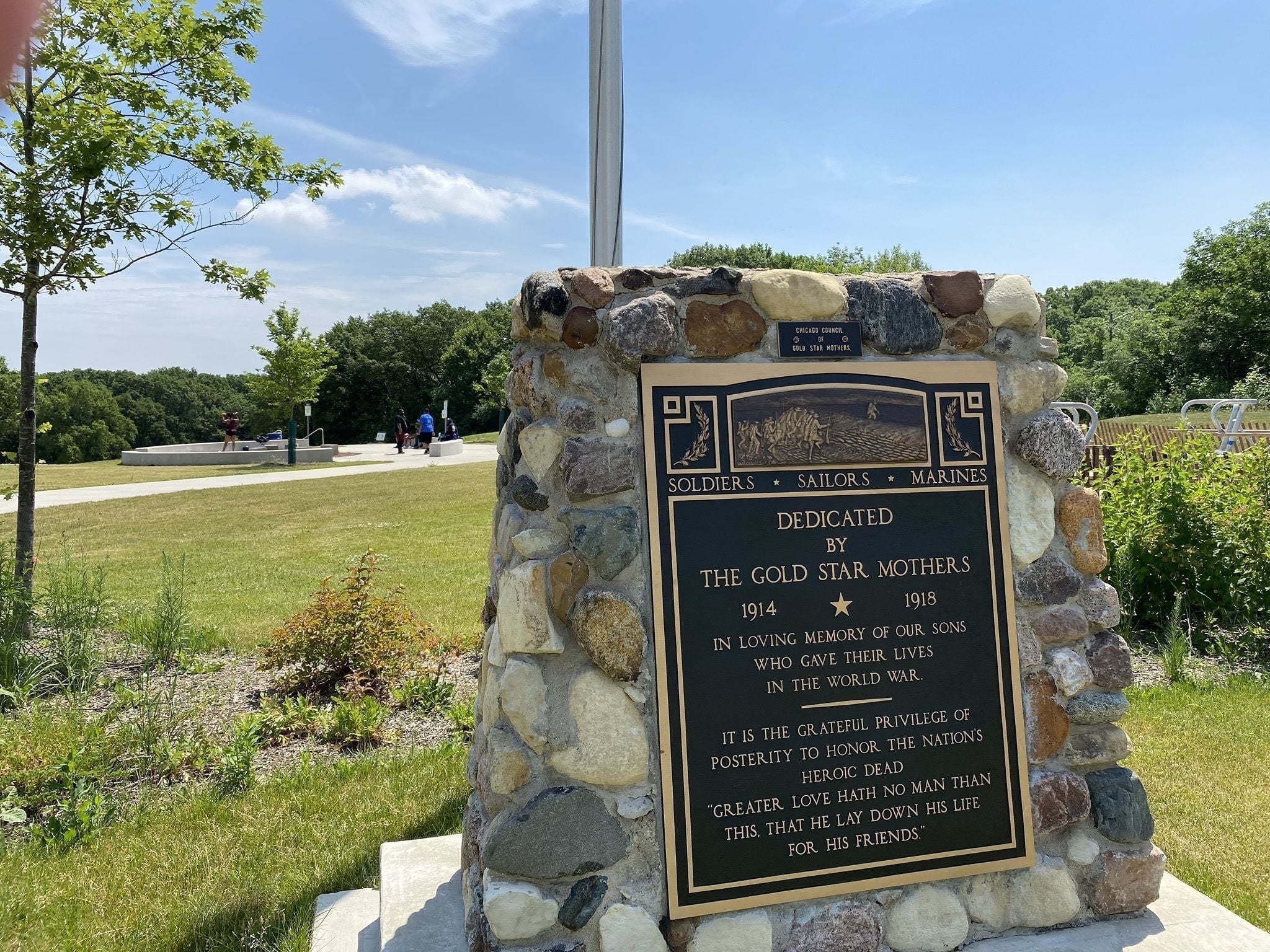
Gold Star Mothers joined together to raise funds to help other Gold Star Mothers, some of whom, dependent upon their sons for their living, were left destitute with their loss. Gold Star Mothers also helped servicemen returning from Europe. The Chicago Council of Gold Star Mothers started in 1918. The grassroots movement led to the formation of the American Gold Star Mothers, a national membership organization, in 1928.
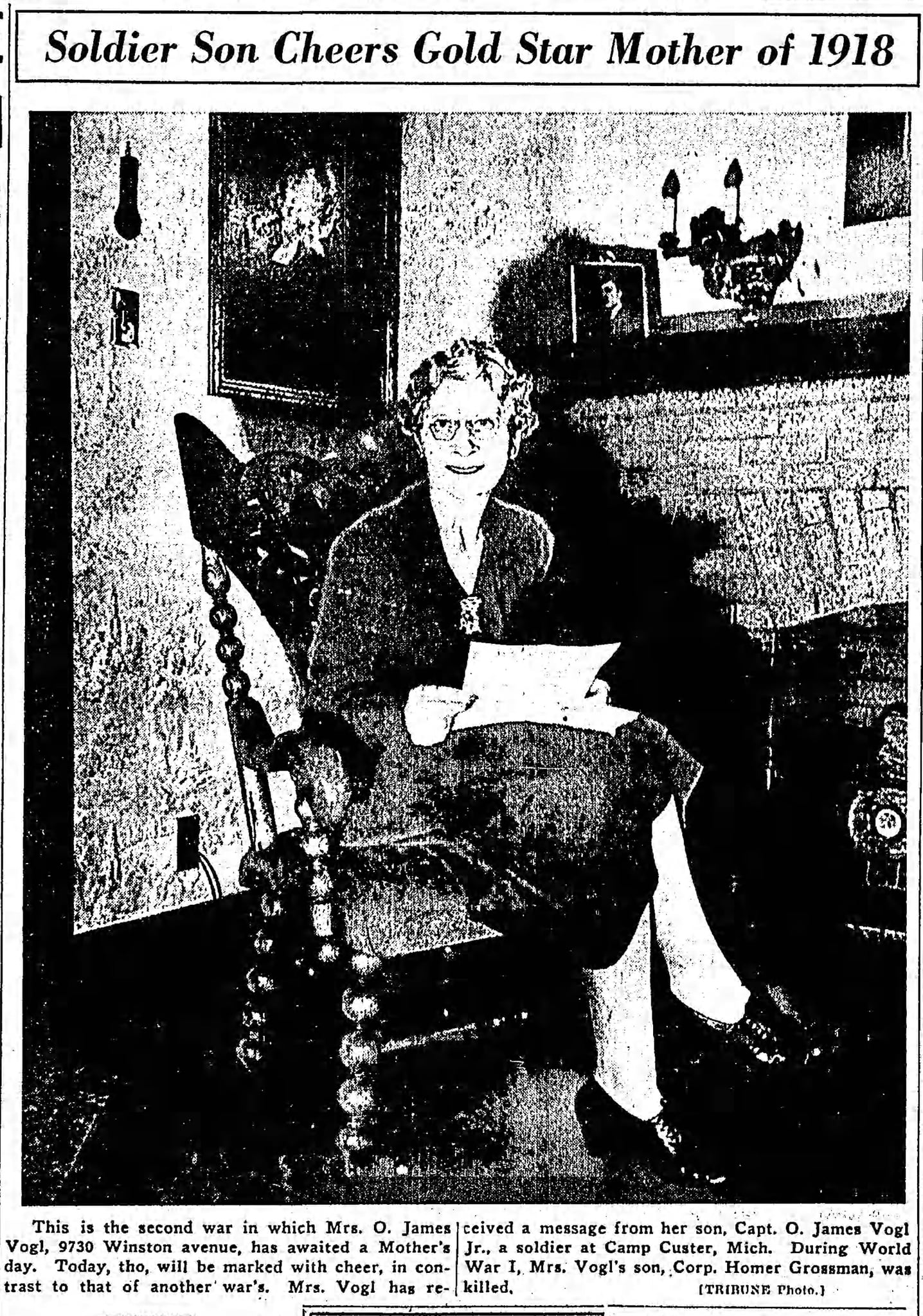
The Ridge has a long affiliation with the Gold Star Mothers movement. The Chicago Council was founded by a woman named Jeannette (Mrs. Oscar J.) Sachs Grossman Vogl, who served as the first president. Her son from her first marriage, Corp. Homer Grossman, 19, was killed and buried in France.
Mrs. Vogl and her family moved from Chicago for her husband’s business career around 1920 and returned in the late 1930s, settling in Beverly, first on 105th Street by Hale Avenue, then on 97th Street and Winston Ave. Their son, Oscar J. Vogl, Jr., graduated from Morgan Park Military Academy and served in and survived World War II. She was written about in the newspapers for having sons who served in both wars. Mrs. Vogl was active in local organizations, and eventually moved to California where her son lived. She died in 1960.
In 1920, the planting of “memorial trees” to honor the WWI dead began, and many were planted in the Forest Preserves of Cook County. Several monuments were also installed in the preserves.
Dan Ryan served as President of the Cook County Board in 1921-22. He had four sons who served in the war. During his tenure, it was proposed to place captured German tanks in the preserves, but Ryan opposed this, stating the preserves should remain “peaceful.” However, he allowed the Gold Star groups to continue to place markers.
Ryan stated in a letter that appeared in the Tribune:
“We have paid tribute to the glorious memory of our men who fell in battle by our actions in authorizing the erection by Gold Star mothers and fathers of bronze tablets and the planting of memorial trees in several of the tracts within the boundaries of the district.”
A monument was installed in the woods that would be renamed for Dan Ryan, at 87th Street and Western Ave. We have not been able to find the exact date that the monument was installed although it was there before August 1932 when it was the site of a picnic mentioned in the Chicago Tribune.
By the mid-2010s, the monument in Dan Ryan Woods had deteriorated into a public eyesore. Beverly resident Tim Noonan, now a member of the RHS Board, led the efforts to restore the monument. The Dan Ryan Woods monument was rededicated in 2018, with the participation of local Gold Star Mothers.
In recent weeks, thanks to introductions by Tim Noonan, four American Gold Star Mothers were interviewed for a feature story in the Daily Southtown newspaper of the Chicago Tribune.
https://www.chicagotribune.com/suburbs/daily-southtown/ct-sta-gold-star-mothers-st-0923-20210924-cdkzfvwbuzh5zlezr3go6g2zd4-story.html
The Ridge Historical Society
The History of The City Wards in The Ridge Communities – Part I: The Current Picture
By Carol Flynn
As we wrap up one series, the Native Americans on the Ridge, we will also start a new one on the history of the city wards on the Ridge. This series will not be posted on other pages – readers who are interested in this topic are encouraged to follow the Ridge Historical Society page.
“Redistricting” is one of the hot topics in Chicago politics right now, so it’s the perfect time to look at the history of the city ward system in relationship to the neighborhoods that RHS covers. We will start with a review of the situation as it stands today.
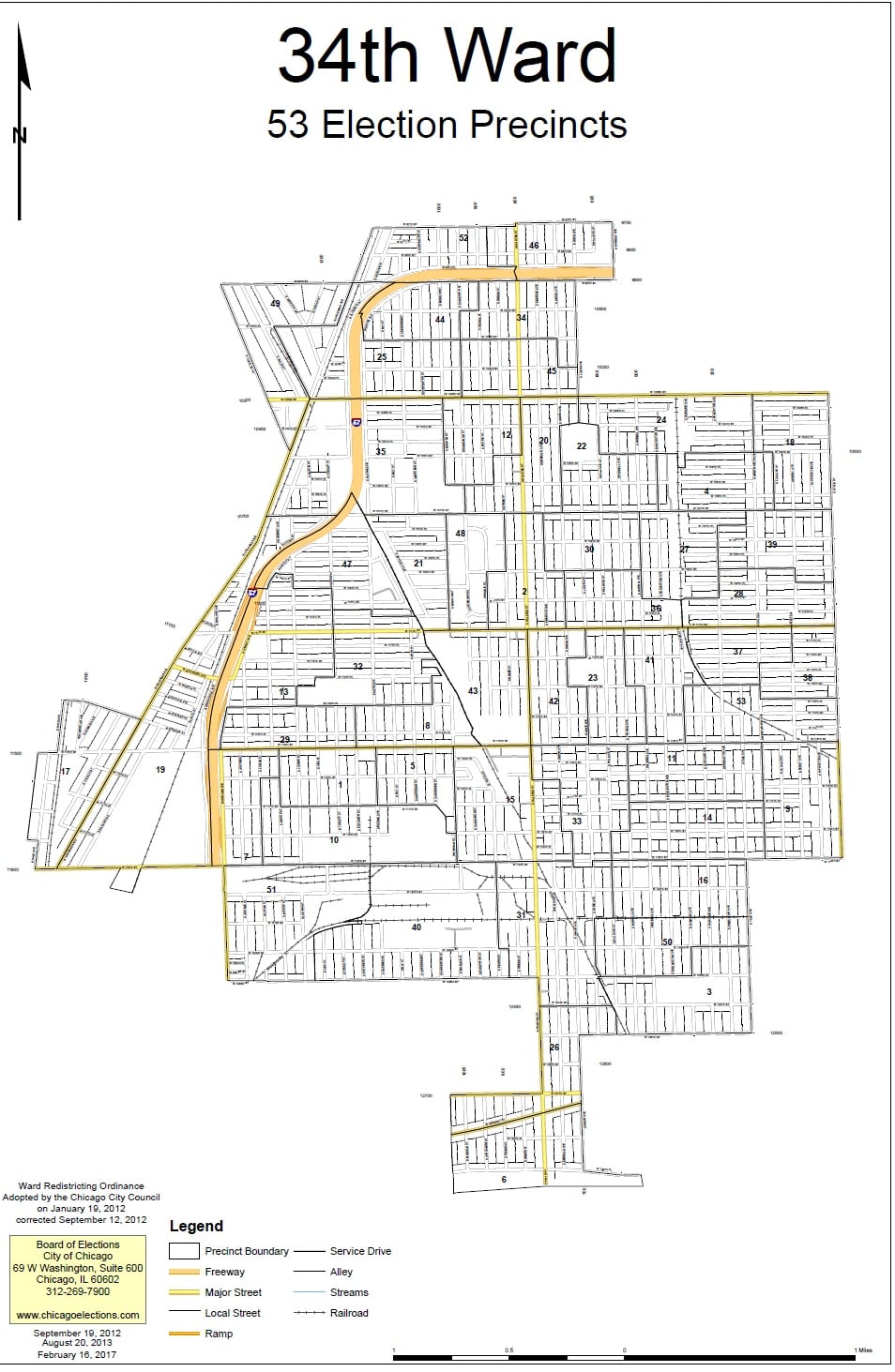
The City of Chicago is divided into 50 legislative units called wards. The voters in each ward elect an alderman every four years to represent them on the Chicago City Council, the legislative branch of the city government. The presiding officer of the Chicago City Council is the Mayor, currently Lori E. Lightfoot, and the City Clerk of Chicago, currently Anna M. Valencia, is the secretary. The aldermen elect a President Pro Tempore from within their ranks to serve in the absence of the Mayor. This position is currently held by Brendan Reilly, the alderman of the 42nd ward.
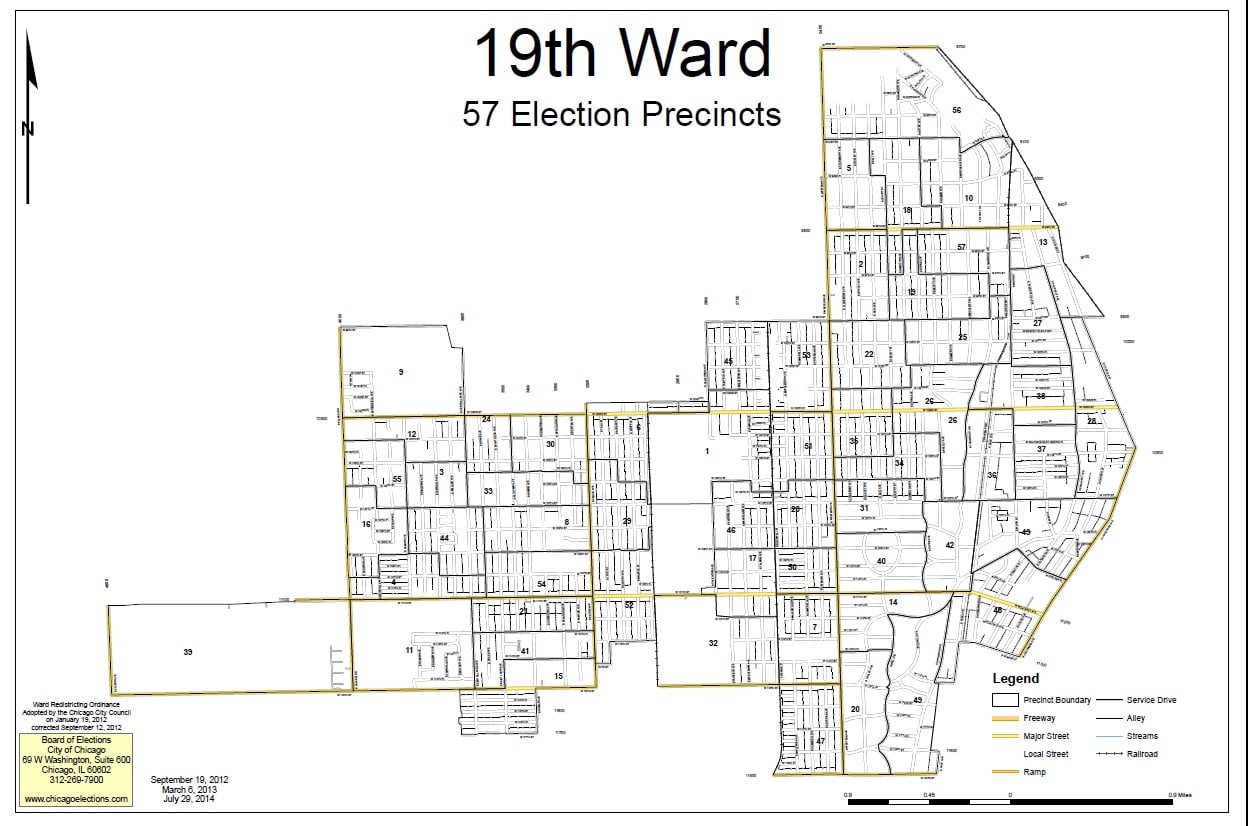
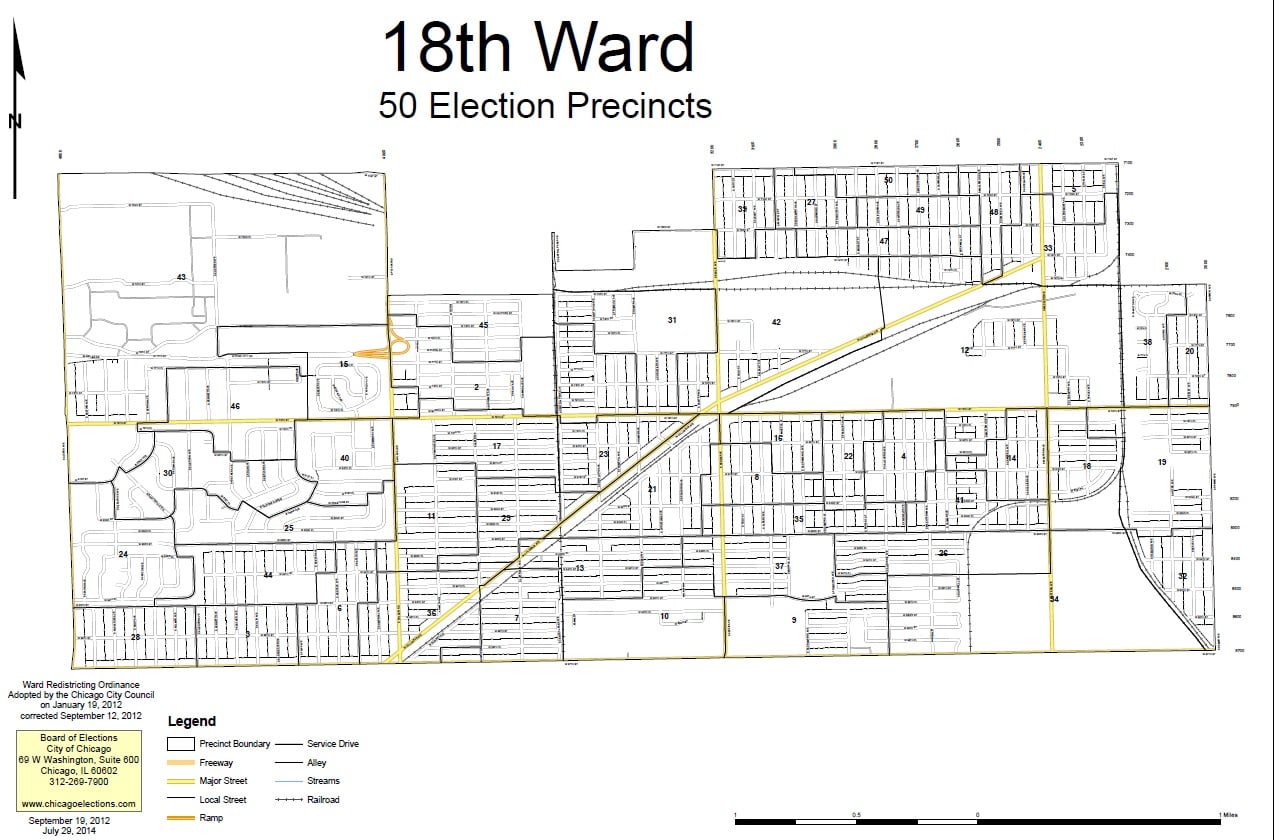
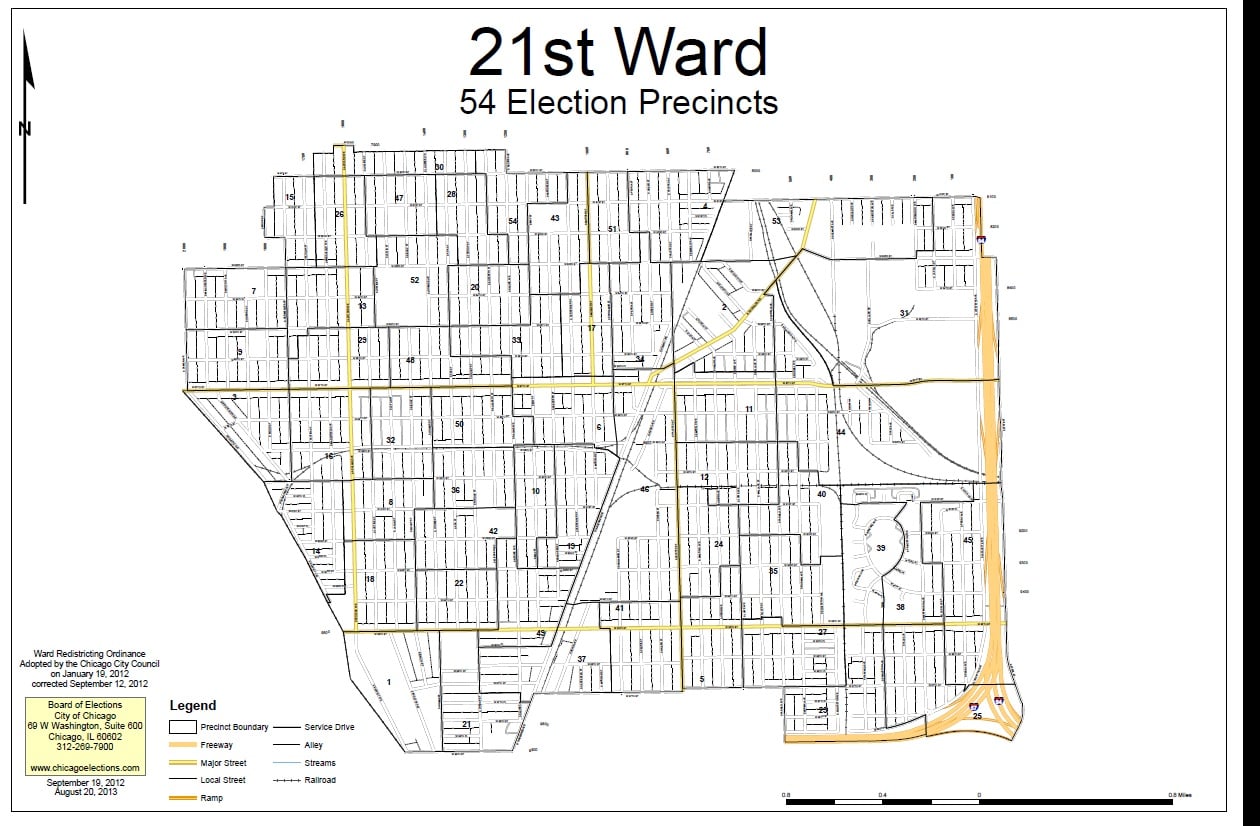
The historical communities represented by the Ridge Historical Society, that is, Washington Heights, Beverly Hills, Morgan Park, and Mount Greenwood, currently fall into four wards – 18 (Derrick G. Curtis, alderman), 19 (Matthew O’Shea, alderman), 21 (Howard Bookins, Jr., alderman), and 34 (Carrie M. Austin, alderman). All of these aldermen are up for re-election in 2023.
Establishing wards and deciding their boundaries have always been intense political exercises in Chicago. The City redraws the ward map every ten years based on population changes reported in the U.S. Census. The goal is to have fifty wards of roughly the same number of residents. Ward boundaries are different from “neighborhood” boundaries, police districts, school districts, etc. All of these geographical – really, geopolitical – divisions are arrived at separately.
If 41 of the 50 aldermen approve a new ward map by an official vote of the City Council, then there is no public referendum on the issue. If no map gets this required support, then voters decide between competing proposals.
Next post: The Origins of The Ward System
The Ridge Historical Society
Native Americans and the Blue Island Ridge – Part 17: Native Americans after the 1830s
By Carol Flynn
According to John H. Volp in his book “The First Hundred Years – 1835 to 1935 – Historical Review of Blue Island, Illinois,” many young Native Americans started moving west before the 1830s, and most of the Native Americans left the Chicago area in 1835. However, some of those living around the Blue Island Ridge clung to their ancestral grounds until 1847, when a caravan of thirty-five to forty wagons departed the area.
Up until the 1860s, some returned to visit their seasonal homes. In 1835, the Potawatomi who left Chicago moved to Council Bluffs, Iowa. From there, some migrated to Wisconsin and Michigan.
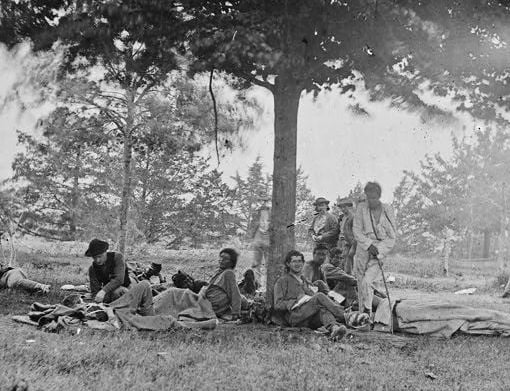
Native Americans fought on both sides of the U.S. Civil War. The most famous Native American unit in the Union army in the east was Company K of the 1st Michigan Sharpshooters. Most of this unit were Ojibwa, Ottawa, and Potawatomi – the Council of Three Fires. There is a likelihood they included Indians who had lived in or were descended from those who had lived in Chicago.
Company K was known for its marksmanship and strategic fighting capabilities. The Indians taught the white soldiers how to camouflage themselves and infiltrate the enemy. They were highly esteemed for their service.
Native Americans had a presence at the 1893 Chicago World’s Fair, also known as the Columbian Expedition. Many of the exhibits that involved Native Americans that were staged by whites, including the independent Buffalo Bill Cody’s Wild West Show, portrayed negative stereotypes of American Indians as primitive, savage aggressors.
However, several Native American groups used the Fair to represent themselves, their cultures, and their handiwork. The Inuit people set up their own village outside of the fairgrounds, and the Navajo weavers made decent money selling their rugs. Other tribes also sold work to collectors.
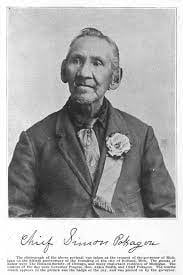
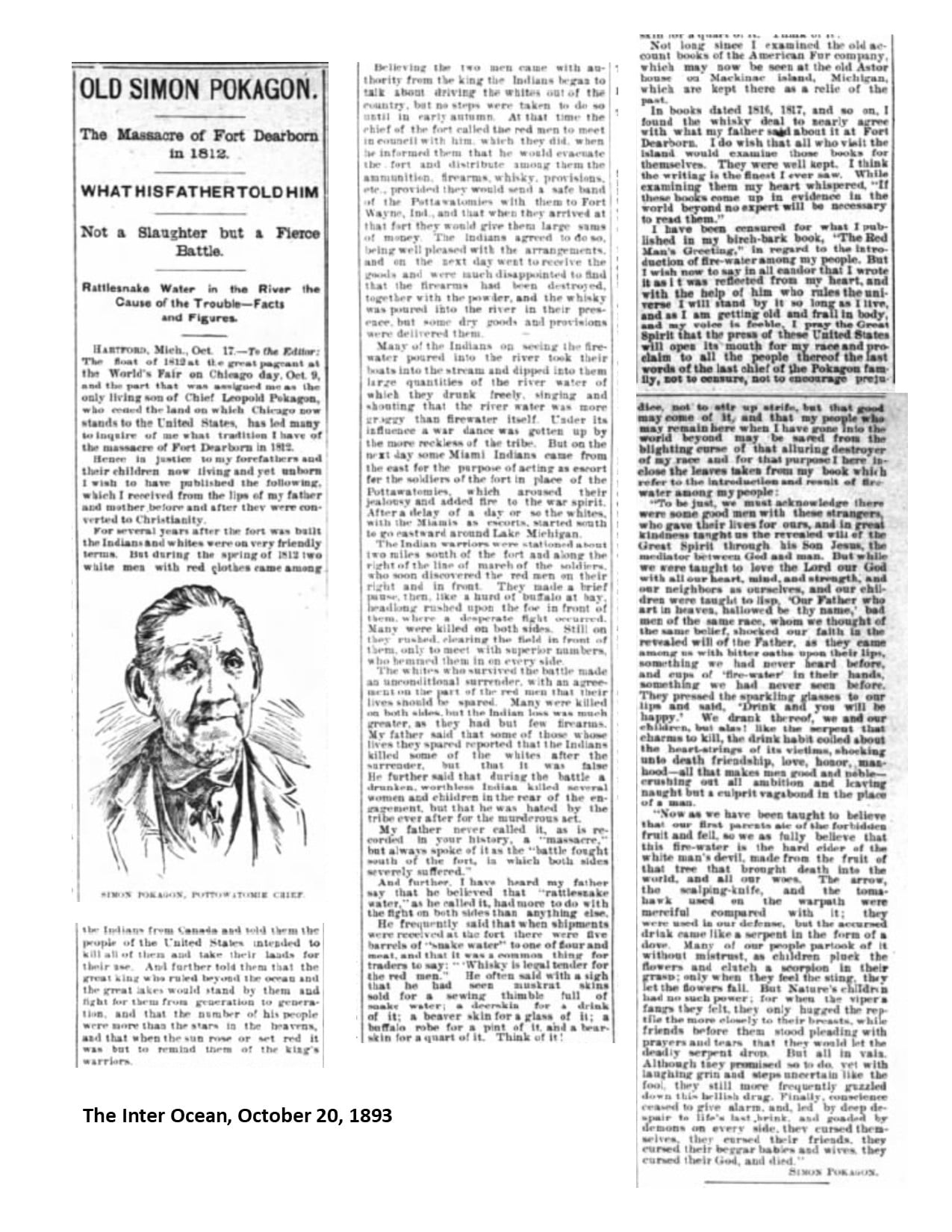
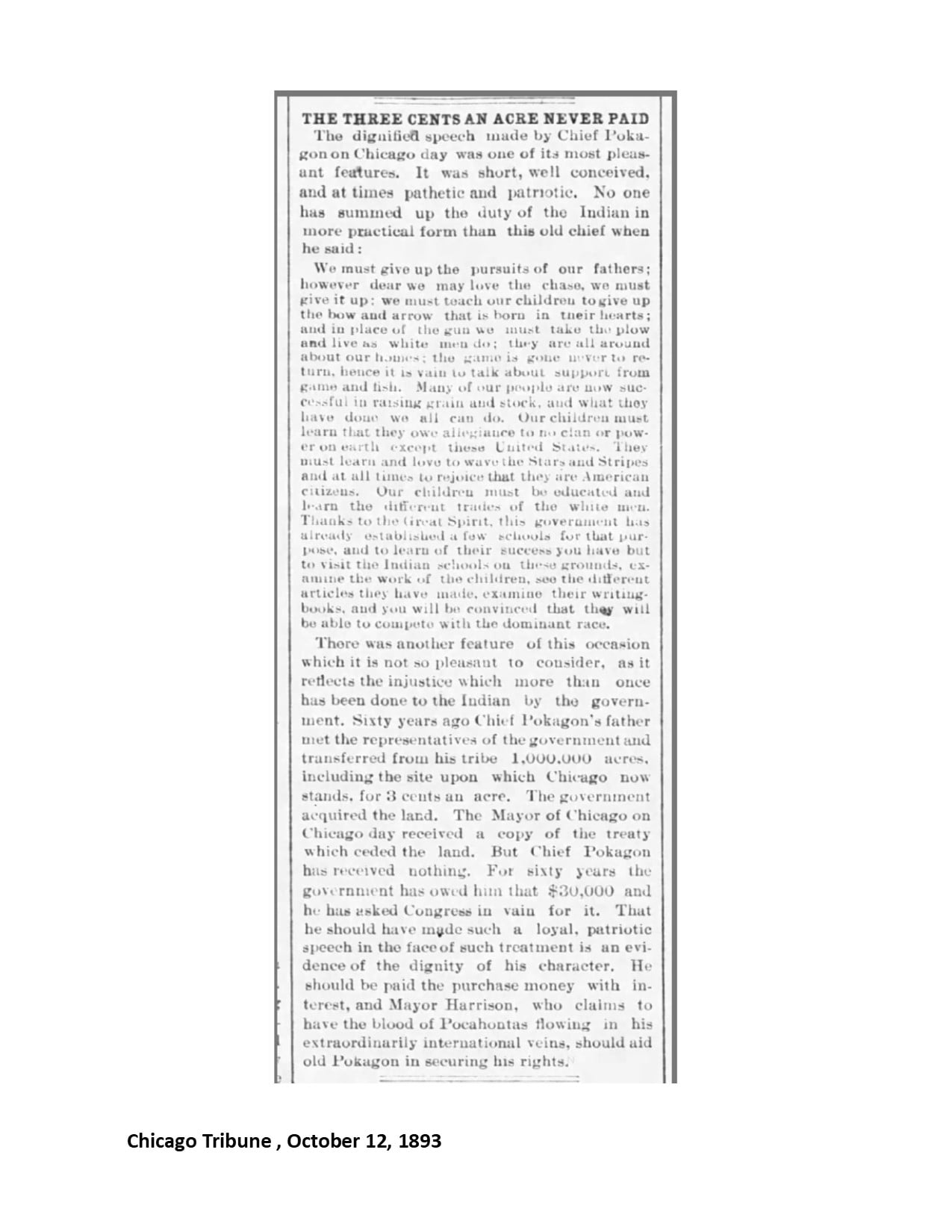
Simon Pokagon, the chief of the Pokagon Band of Potawatomi Indians in Michigan, was a celebrity at the Fair, popular with the high society of Chicago. He was an author and activist trying to get the U.S. government to honor the treaties that had been signed with Native Americans. He gave a speech to 75,000 people that was published in the Chicago Tribune.
Pokagon began pressing land claims to the lakefront on behalf of the Potawatomi people. The area in question was the section known as Streeterville, built on landfill. The land claims were carried on after Pokagon’s death in 1899, but the U.S. never recognized any ownership of that land by Native Americans.
While there were always Native Americans in Chicago, the Indian Relocation Act of 1956 brought Native Americans back to Chicago in significant numbers. The intent of this law was to encourage Native Americans to leave reservations and their traditional lands and assimilate into the general population in urban areas. The tribal status of numerous groups was terminated at this time.
Chicago was an obvious relocation city, supposedly offering employment, education, and housing opportunities. However, Native Americans across the country quickly learned that not only were the opportunities not there, they faced discrimination in employment and housing. The American Indian Center was founded in Chicago to provide both social services and a gathering place for people faced with drastic life changes.
Today, it is reported that 65,000 Native Americans representing 175 tribes live in the greater metropolitan area of Chicago. The majority lives on the North Side.
As for Native Americans in the Ridge communities, depending on the source, the population of Native Americans or “Other” which includes Native Americans is less than 1%. One source lists 0% for Mount Greenwood and Washington Heights, 0.4% for Beverly, 0.9% for Morgan Park, and 0.8% for Blue Island.
Many Native Americans intermarried with other nationalities and may identify with other groups on census forms. The people of Native American heritage in Ridge communities who have introduced themselves to the Ridge Historical Society are of mixed-race background and assimilated into mainstream business and society, and also celebrate their Native American roots.
Next post: Conclusion, Land Acknowledgement Statement for the Ridge
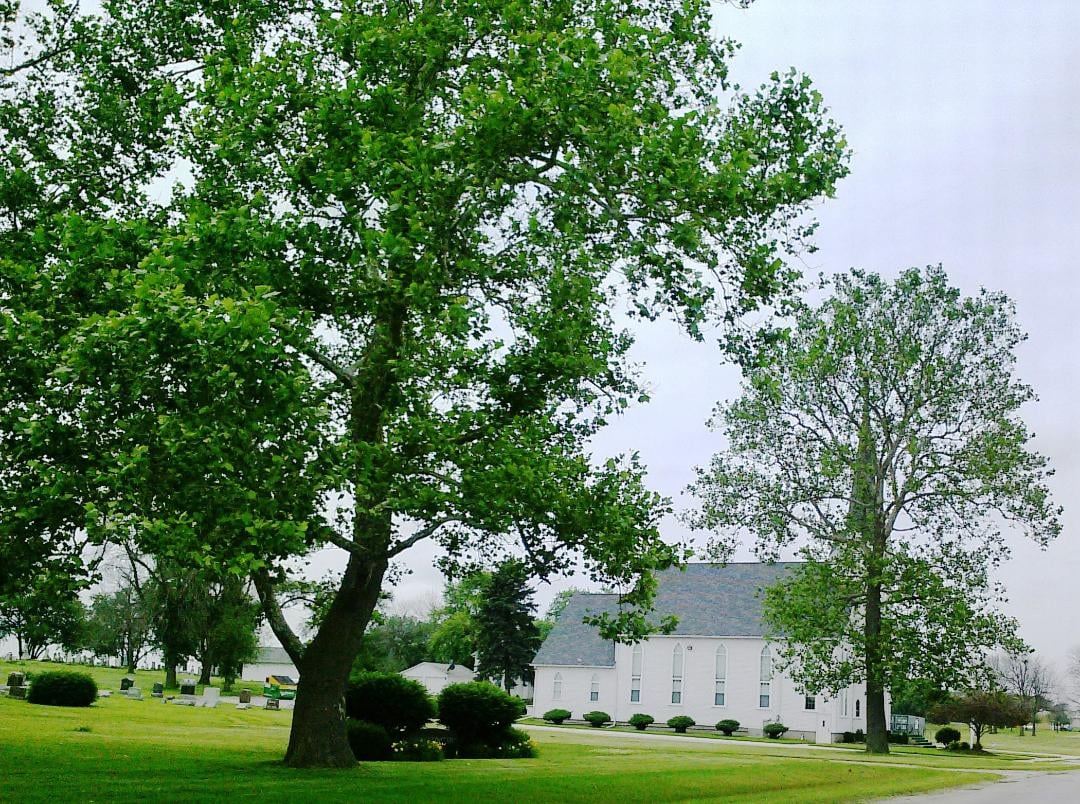
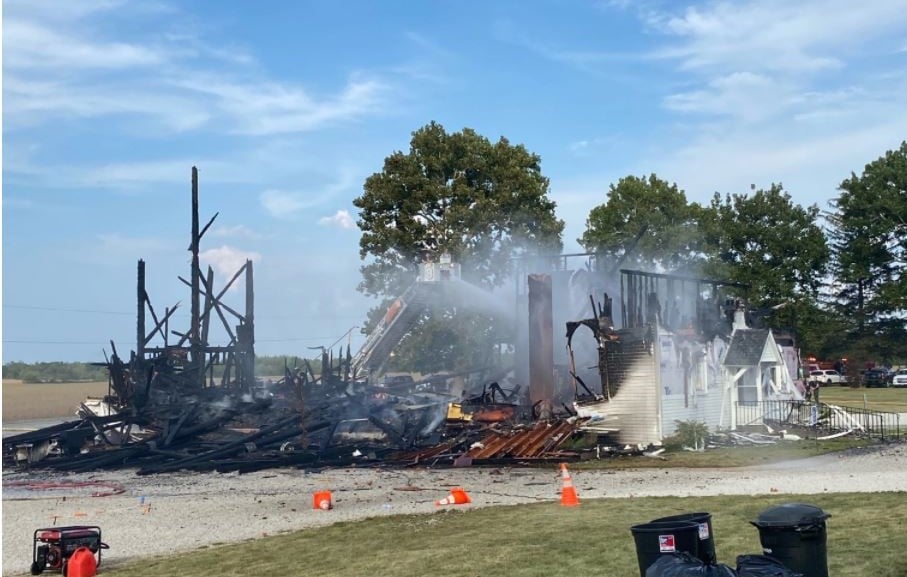
The Ridge Historical Society mourns the loss of a historic church to the south of us, St. Paul's Lutheran Church in Beecher, Illinois, along the old Dixie Highway. The church was destroyed by fire yesterday.
This church was featured in the movie "Road to Perdition" with Tom Hanks and Paul Newman, and was a site on the annual Drivin' the Dixie tour.
The Ridge Historical Society
Native Americans and the Blue Island Ridge – Part 16: Captain Billy Caldwell aka Chief Sauganash
By Carol Flynn
While there is documentation of Native American sites all around the Blue Island Ridge, no historical records have been located that identify individual Indians who lived in the area. However, there are references that the area was frequented by Captain Billy Caldwell, also known as Chief Sauganash, a notable figure from Chicago’s earliest days.
Caldwell was born in the early 1780s near Fort Niagara in New York, from a marriage between a high-ranking Native American woman, variously identified as Potawatomi or Mohawk, and a Scots-Irish officer in the British Army during the Revolutionary War. This type of union was not uncommon, but such marriages were rarely recognized as “legitimate” in the white community. Caldwell’s father later settled in Canada, married a white woman from settler stock, and raised a white family. Billy was taken to live with the white family and received formal education. He forged his own life and left Canada after his father’s death.
Caldwell was commissioned as a captain in the Indian Department of Canada during the War of 1812. He made his way to Chicago where he was accepted by the local Potawatomis and he befriended the earliest white settlers. The name Sauganash was given to him by the Indians, loosely translated as “one who speaks English.” He was known to the European traders and settlers as the “Irish Indian.” He was well respected, referred to as Captain Caldwell. Being well-educated and speaking English, French, and several Native American dialects well, his services as a guide and translator were often sought out.
Although his life story is rich, we will only concentrate on Caldwell’s known involvement with the Blue Island Ridge.
According to James Bucklin, chief engineer of the I & M Canal project, Caldwell originated the idea of the Cal-Sag Channel. A passageway between the Great Lakes and the Mississippi River had long been sought. The I & M Canal was built to connect the Chicago River to the Illinois River as one leg of the journey. Feeder canals were built to keep water flowing into the canal, and one came from the Calumet River in Blue Island. Bucklin wrote in a report referring to the 1830s: “From Billy Caldwell, a half-breed with some education and great intelligence, who had explored the country in every direction, I often procured valuable information during my exploration. It was he who first suggested making a feeder of the Calumet River.”
Caldwell helped survey the Vincennes road in 1832-33. This was the earliest road that ran through the Blue Island area and connected Chicago with trading posts to the east.
A recounting of a survey party by J. P. Hathaway, Jr., dated July 23, 1833, documents just one visit to the Blue Island by Captain Caldwell others. They found a log house on the Ridge, and the owners not being home, milked the cows and made dinner with ham and bread. They continued south to Stony Creek, at the southern tip of the Blue Island, “a delightful place, commanding a view of thousands of acres of prairie and patches of timber. At this point, there were Indian graves.”
They forded the creek in the area around what is now Western Avenue. Later, returning north, they decided to recross opposite their first encampment. However, the horse got away and their wagon was swamped, and they lost most of their provisions. Continuing north, they found the folks of the log cabin at home, and purchased a pan of milk for supper. They spent a wet night on the ground, keeping the fire going all night. They were back in Chicago by eight o’clock the next night “with keen appetites for regular living again.”
In 1870, John D. Caton, a lawyer and judge on the Illinois Supreme Court, read a paper before the Chicago Historical Society on “The Last of the Illinois, and a Sketch of the Pottawatomies.” In this first-person account, he related, “…[W]hen riding over the prairie south of Blue Island, in 1833, with Billy Caldwell, … the old chief as usual was answering my questions about the past and what portion of the country he had visited. …[H]e commenced giving an account of an expedition of the British from Canada across to Ohio, of which he and a number of his warriors formed a part ….”
Caldwell was instrumental in negotiating the 1833 Treaty of Chicago that led the Potawatomi to peacefully leave the area. He moved with them to Council Bluffs, Iowa, where he reportedly died in the early 1840s, although his gravesite is not known.
Both his white and Indian names grace locations around the Chicago area, including Caldwell Woods, Billy Caldwell Golf Course, Caldwell Avenue, the Sauganash neighborhood on the North side, and Sauganash Park.
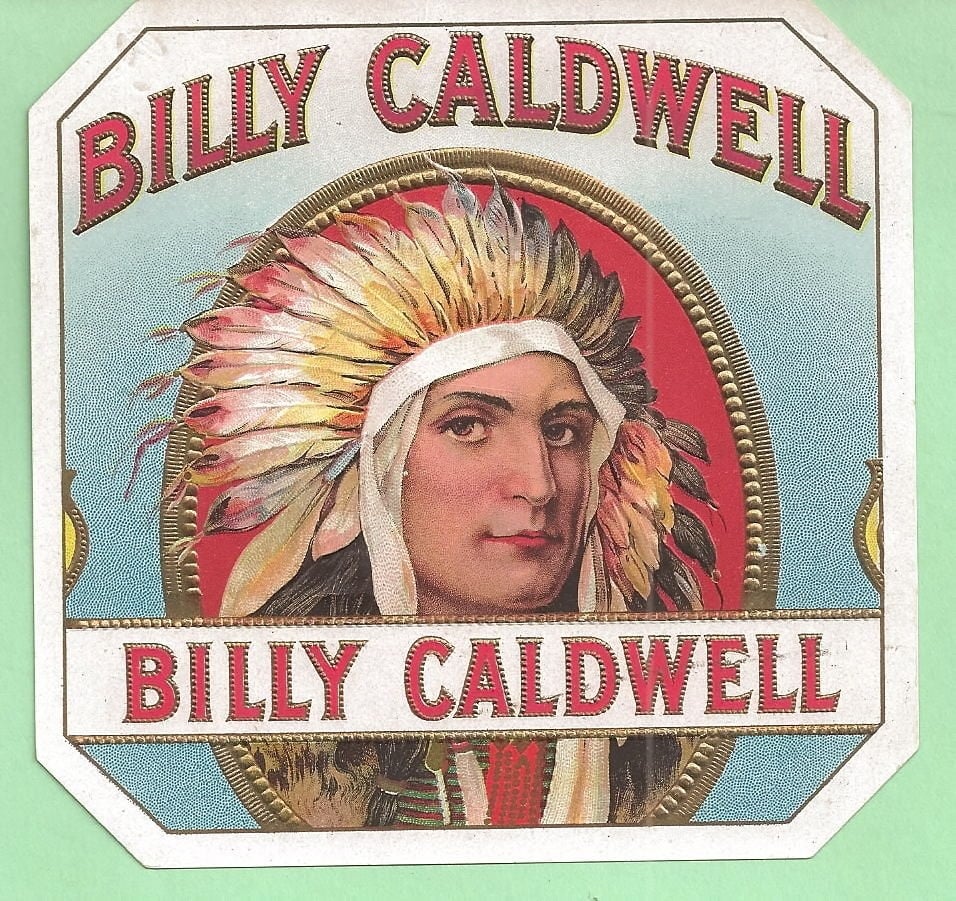
There are no photographs to be found of Billy Caldwell. There were some sketches and paintings done after his death. This likeness was invented for a cigar brand made by a Chicago company. From the collection of C. Flynn.
The tobacco and cigar industry was very important in the past. By the 1860s, there were more than 200 cigar makers in Chicago. By 1900, there were over 40,000 cigar makers in the country. Many of these were small operations out of homes. But the numbers started to decline in the 1930s for several reasons – the Great Depression, increased use of machinery replacing hand-rolling, rationing of tobacco during World War II, the release of cancer studies, and the embargo on doing business with Cuba which led many cigar makers to leave the country.
Next: Native Americans after the 1830s