
Explore the RHS Facebook Archives, a rich repository of local history written by Carol Flynn. For two decades, Carol brought a deeply dedicated voice to public education at RHS. Her role as Facebook administrator through mid-2025 naturally extended her prolific research into meticulously detailed articles, most notably her multi-part historical series posts. Today, Carol continues her local history writing for The Beverly Review and other outlets.
2022
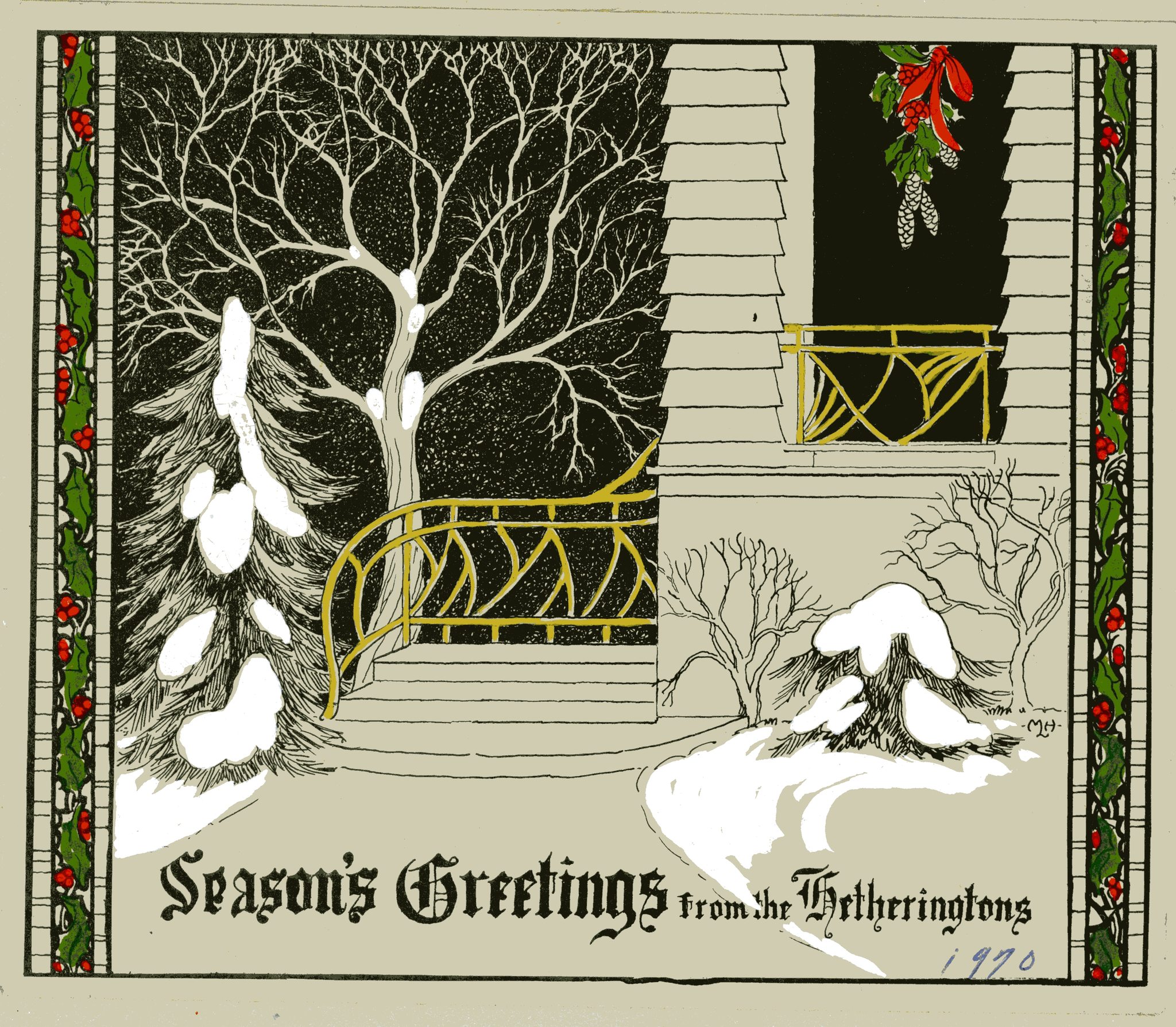
The Ridge Historical Society – Christmas Comes to RHS
A special Christmas feature is being added to the current exhibit on the Hetherington Design Dynasty at RHS.
Images of a variety of Christmas cards designed by artist Mildred Lyon Hetherington will join the display for the holidays.
The Hetheringtons – John Todd, his son Murray, and his grandson Jack – were the family of architects who designed scores of houses and other buildings in the Ridge communities, including the Graver-Driscoll House, which is RHS Headquarters.
Mildred Lyon Hetherington, Murray's wife and Jack's mother, was a well-known local artist famous for her portraits and illustrations in children’s publications.
For the next few weeks, we will share some of the Christmas cards Mildred designed and sent to family and friends. This first one, from 1970, is of the front porch of their house on Prospect Avenue.
The Ridge Historical Society is located at 10621 S. Seeley Avenue and is open free of charge on Tuesday and Sunday afternoons from 1:00 to 4:00 p.m.
The Hetherington Design Dynasty exhibit will run until early January. If you have been putting off a visit, now is the time to stop by!
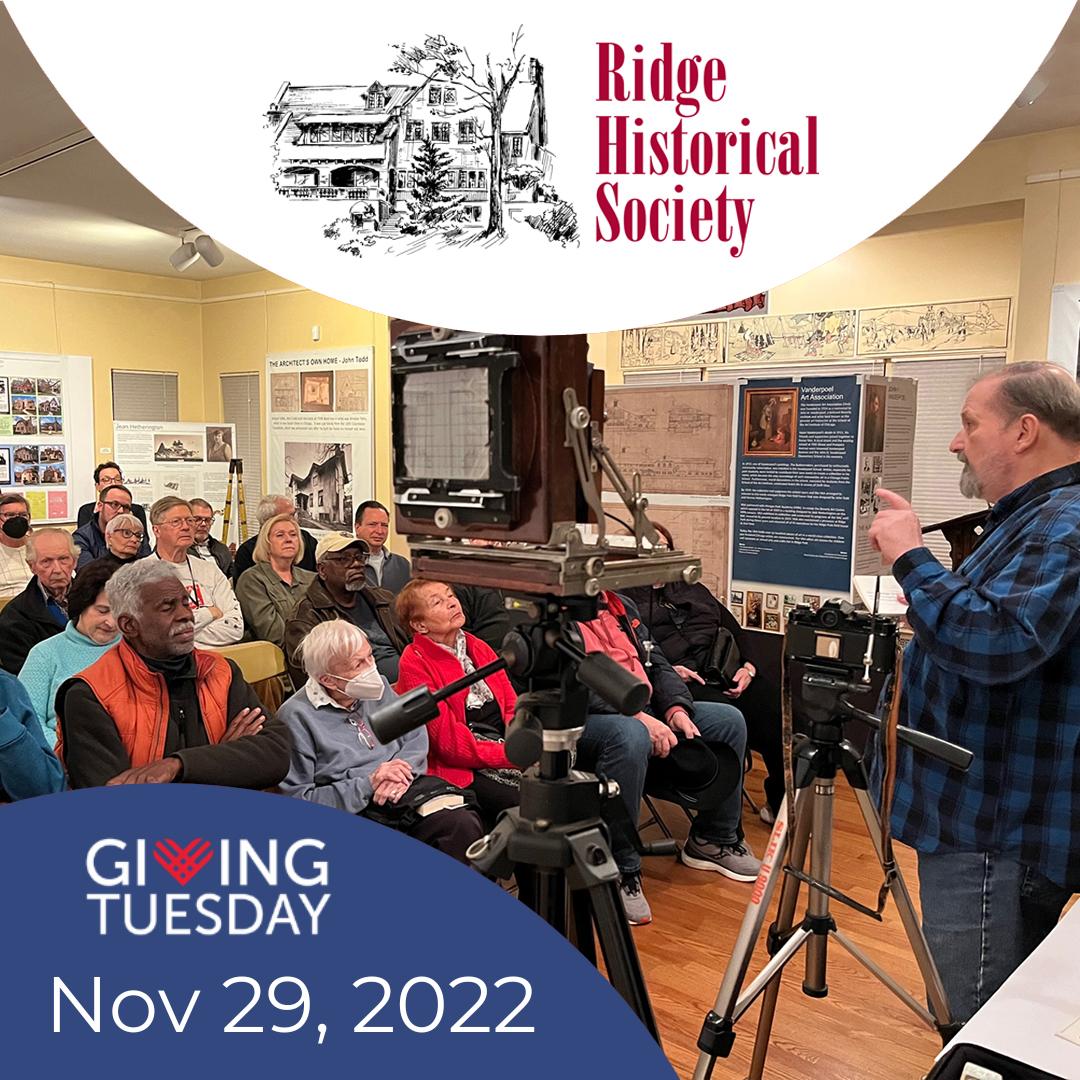
This year the Ridge Historical Society made substantial contributions to the community.
At our suggestion, the BAPA house tour featured homes and buildings designed by the Hetherington family of architects. Our own Hetherington-designed house, the Graver-Driscoll House, served as the starting location for the house tour.
We mounted an exhibit on the Hetherington Design Dynasty that showcases the scores of homes and buildings designed by John Todd Hetherington, his son and his grandson. This exhibit will run through early January and may be viewed free of charge. We offered three education programs as part of the Hetherington project.
We assisted scores of people in house history and other research projects, again, free of charge.
We published numerous Facebook posts and local newspaper stories on local history.
We initiated the campaign to save the historic Eugene S. Pike House and submitted the application to Landmarks Illinois to have the house declared "endangered."
We were a featured partner for the Beverly Art Walk and we represented the community for Open House Chicago.
We restarted open hours on Tuesday and Sunday afternoons with free admission for the public.
We hosted the first BAPA porch concert for the year for free to the public.
We are a not-for-profit organization that relies on private fund-raising, memberships, and occasional small fees for programs. We do not receive government funding.
This year we celebrated RHS's fiftieth anniversary as the Beverly/Morgan Park organization dedicated to researching, preserving, and educating on the community's rich history, including the noteworthy architecture of the area.
Help us continue to serve the community. Please consider a donation today, Giving Tuesday.
You may donate through this secure link:
https://bit.ly/RHS-donation
Every penny helps. Thank you – and feel free to contact us with any of your history questions. We love hearing from you!
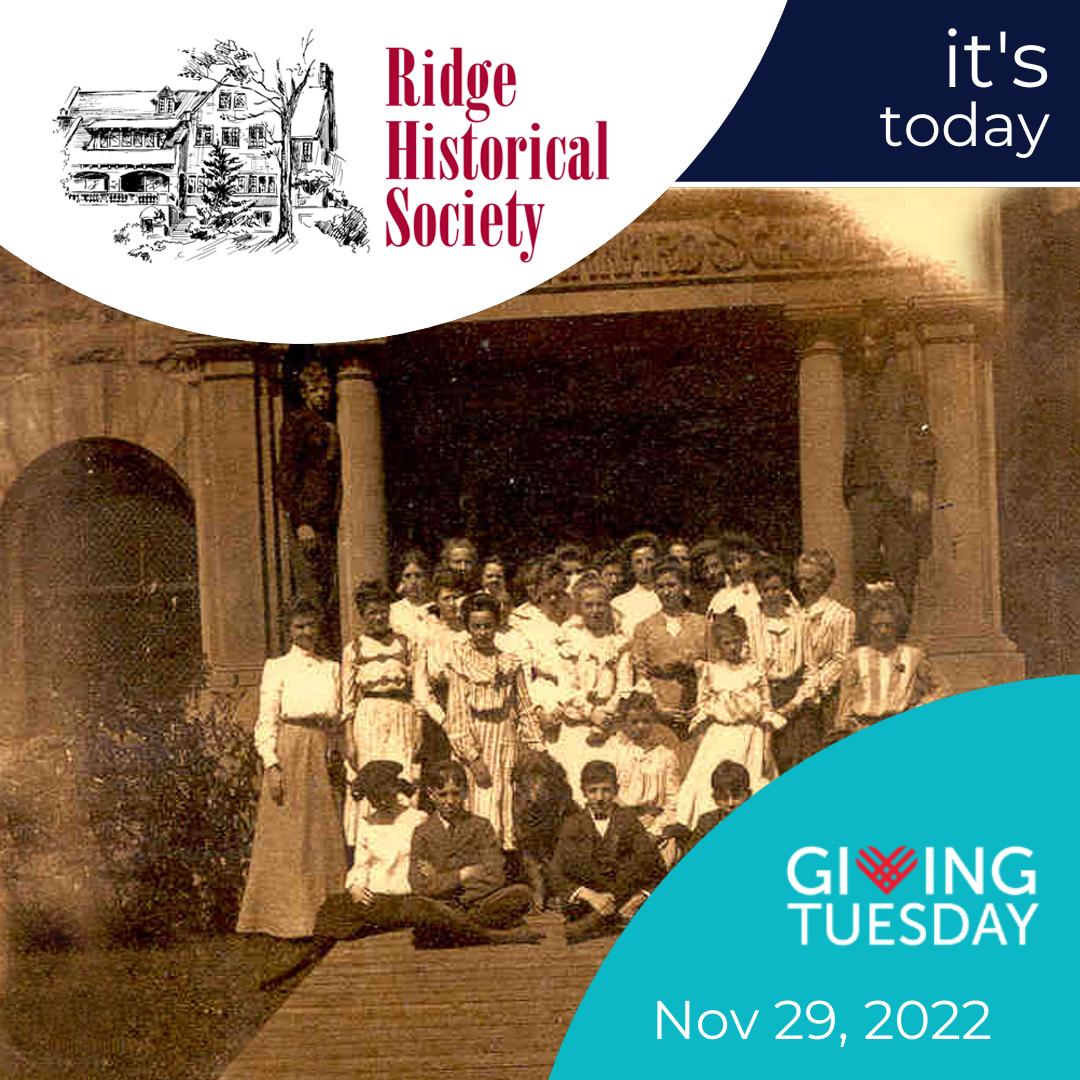
Today is Giving Tuesday – please consider a gift to the Ridge Historical Society in support of our efforts for preservation and education about the history of our local communities.
The current exhibit "Hetherington Design Dynasty" will run through early January. Your gift will help RHS continue to provide research, exhibits, programs, and publications. Admission is free on Tuesday and Sunday afternoons from 1 to 4 p.m.
To donate securely through Paypal: https://bit.ly/RHS-donation
Thank you!
The Ridge Historical Society is the only organization in the Beverly/Morgan Park community dedicated to preserving the community's history.
As a 501(c)3 not-for-profit corporation, our mission is to EDUCATE the community on history. We do this by extensive, thorough, and accurate research; offering quality exhibits, education programs, and articles (the Facebook page, local newspapers, history papers);
and assisting others with research, such as house histories.
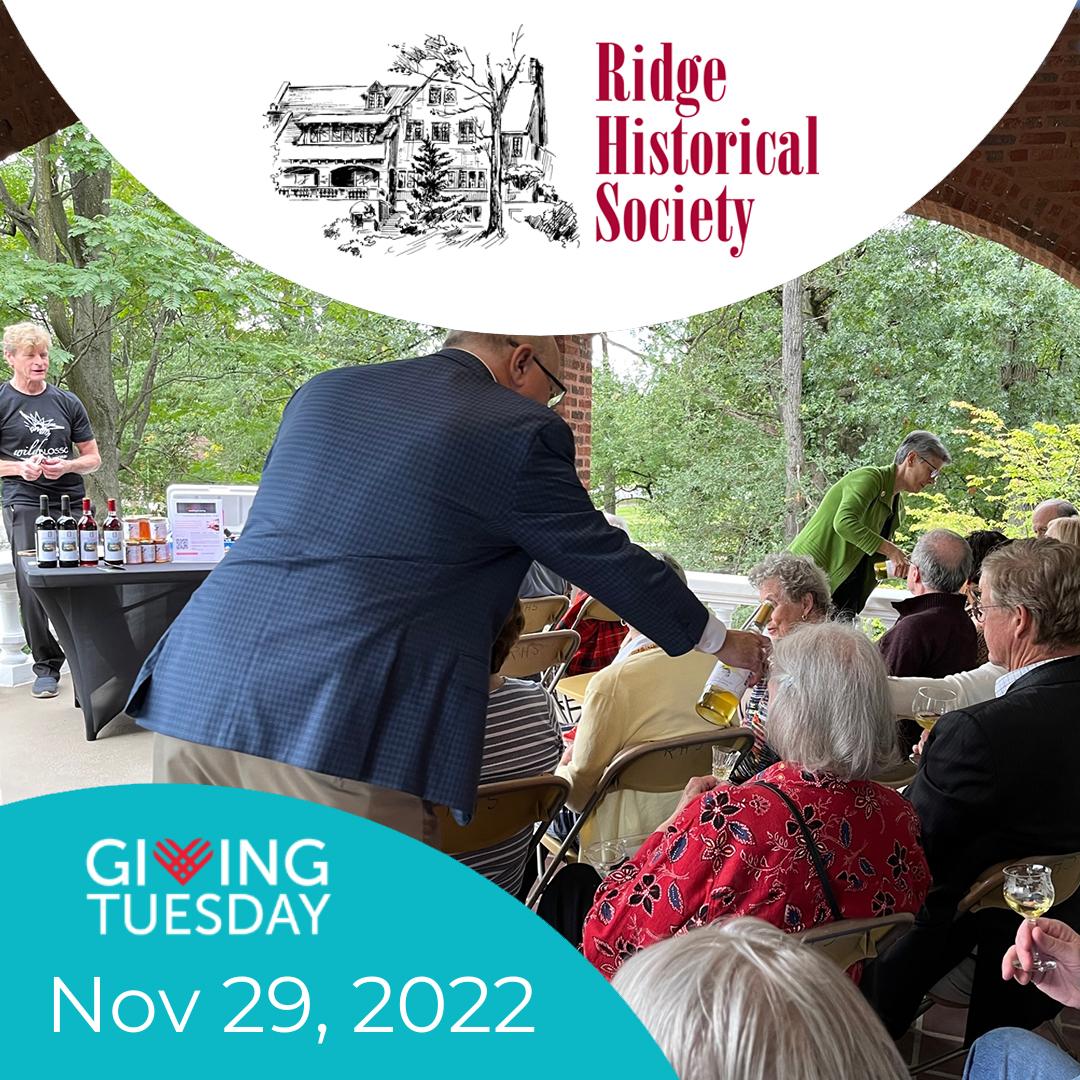
We also offer social activities that support the community. For example, we hosted the first BAPA Porch Concert this year. We also held a fund raiser with Wild Blossom Meadery and Winery, pictured here, which is producing a specialty alcoholic beverage in RHS's name.
We are still recovering from eighteen months of closure due to the pandemic, and we are in the midst of strategic planning for 2023.
Giving Tuesday is tomorrow, November 29th.
If you enjoy the Facebook posts, if you support continued work in the community's history, please consider a gift to the Ridge Historical Society.
Donate here:
https://bit.ly/RHS-donation
Thank you.
The Ridge Historical Society
The History of the Graver-Driscoll House – Part 6: Herbert Spencer Graver, Jr.
By Carol Flynn
This post returns to the series on the history of the owners of the Graver-Driscoll House, the house the Ridge Historical Society owns and uses as its headquarters and to store the community’s historic resources at 10616 S. Longwood Drive/10621 S. Seeley Avenue in the Beverly area of Chicago.
One theme of RHS is that “every house has a history” and this series illustrates the interesting stories that can be found when researching a house.
The Graver House was designed by architect John Todd Hetherington and built in 1921-22 for Herbert Spencer Graver and his family.
Herbert was born on August 29, 1880, in Pennsylvania to William and Christina Graver. He was the sixth of seven children. His father owned and operated the Graver Tank Company, which hand produced metal tanks for grain and oil storage and for hot water boilers. Around the year Herbert was born, the company started using steam-powered machinery to produce the tanks.
When Herbert was four years old, the family and business relocated to Chicago. The family lived in Englewood.
According to the Chicago Tribune in 1900, Herbert was one of the five athletes at Englewood High School who could be depended on to sustain the school’s reputation as a championship track and field team. Herbert’s sports were the hammer throw (112 feet) and the high jump (5.33 feet). The Olympic high scores for these sports in 1900 were 167.35 feet and 6.23 feet, respectively.
Herbert attended the University of Michigan in Ann Arbor, where he graduated with a degree in engineering in 1904. His younger brother, Alexander Mc Donald Graver, graduated with a degree in engineering in 1905. The brothers appeared to be close, and shared lodgings while in college.
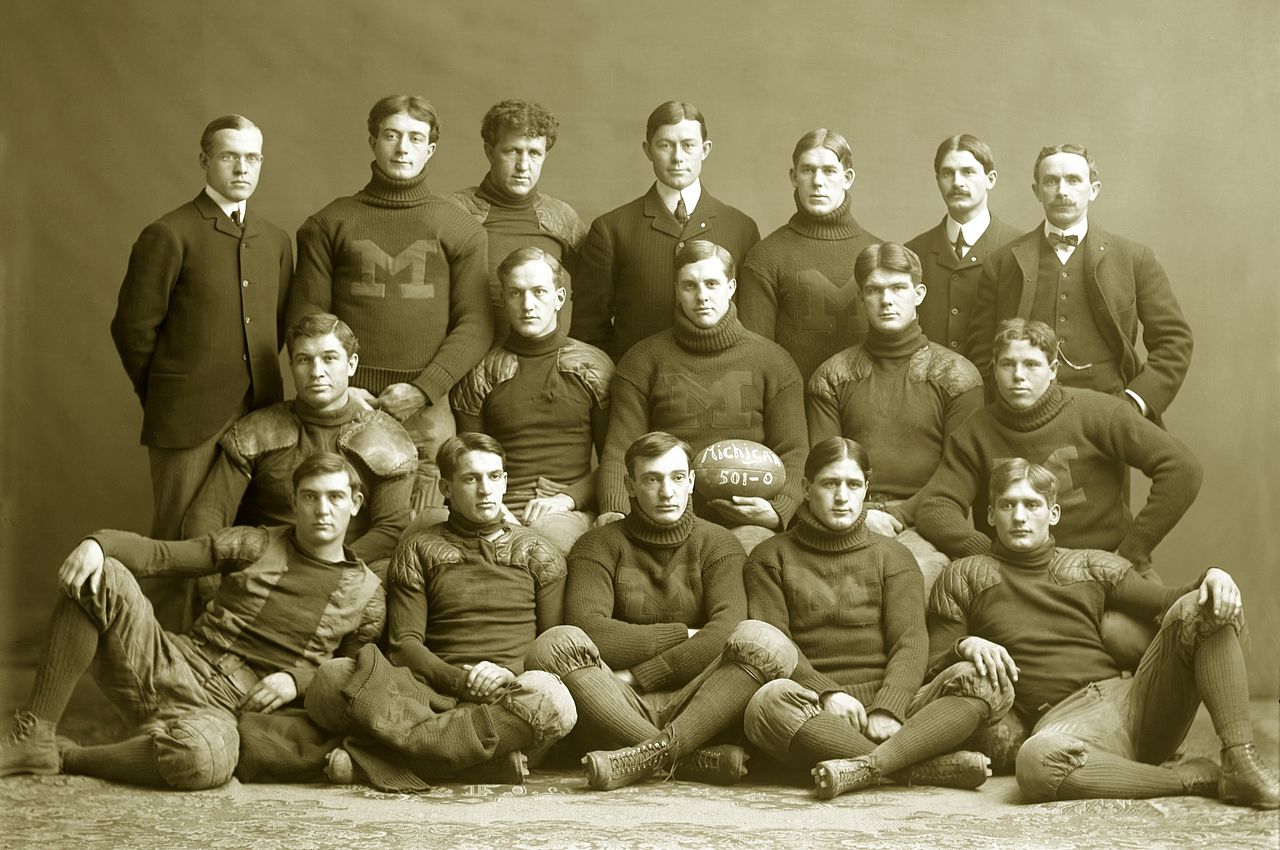
Herbert earned fame as a football star in college, which stayed with him the rest of his life. His team played in the first football game in what would become the Rose Bowl in Pasadena, California. This was an exhibition game played on January 1, 1902, arranged to offset the costs of the lavish parade and sporting event known as the Tournament of Roses put on as a promotional event for Pasadena.
The undefeated University of Michigan team was invited for an all-expenses-paid trip to Pasadena to play against Stanford University of Stanford, California. Michigan won by a score of 49 to 0. Stanford asked to end the game early. About 8,000 people attended the game, purchasing tickets for $.50 to $1.00.
Herbert was a substitute player, and he didn’t actually take to the field during the Pasadena game, but he had already earned the reputation as a stellar player. One newspaper article called him “the best utility man in the west,” and considered him superior in some skills to the men he replaced. The paper reported he was “a tower of strength behind the line.”
Herbert was voted All American. As a college senior, he was chosen for the Board of Control which oversaw athletic sports at the university.
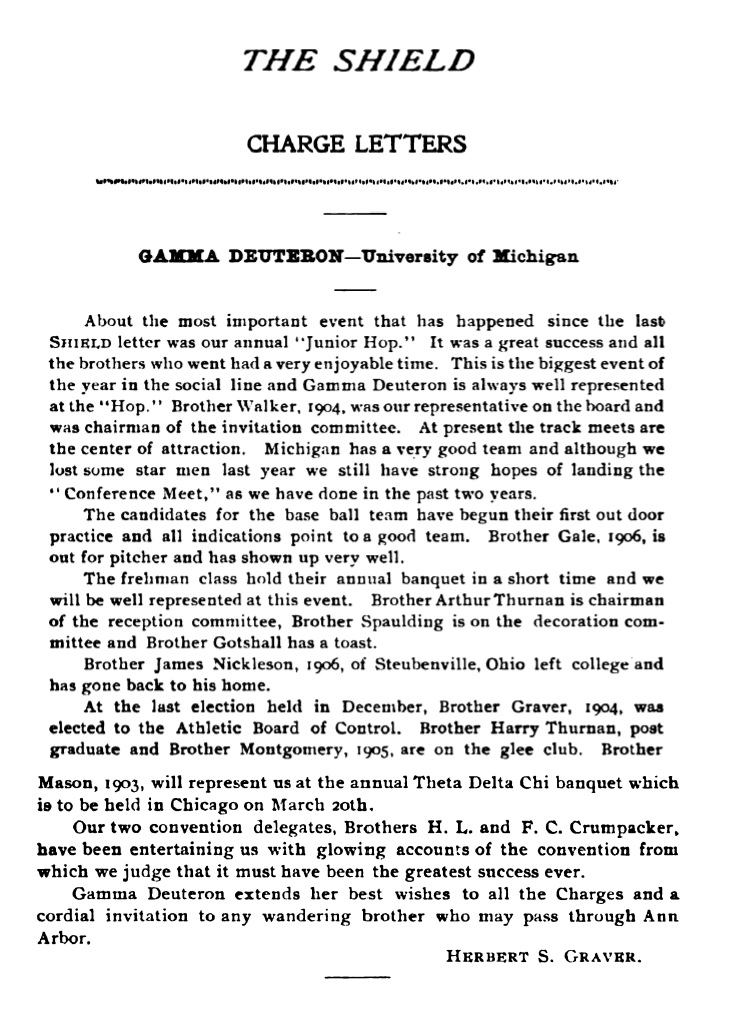
In 1903-04, Herbert was the correspondent from his campus fraternity for reporting to the national organization of Theta Delta Chi. One of his reports is an attachment to this post.
He became a member of the “Tribe of Michigamua,” the University of Michigan senior honor society, and attended events of the Chicago chapter. He also made appearances as a “football legend” at exhibition games and sporting events for the rest of his life.
After graduation, Herbert worked for a year as a college coach in Ohio. He then joined his father and brothers at the Graver tank business. Herbert held the office of corporate secretary and later he was vice president.
Herbert married Anna T. Thorne in 1910 and they had one son, Herbert S., Jr., in April of 1921.
All five of the Graver brothers worked for the family company and built homes in Beverly. The two Graver sisters and their husbands were not involved in the business and did not live on the Ridge.
The youngest brother Alexander was living on 99th and Longwood when he died of influenza in 1920. Herbert wrote his brother’s obituary for the trade publications.
Graver Park on 102nd Place off of Prospect Avenue in Beverly was named for Herbert’s brother Philip Sheridan Graver (1878-1945) in the 1950s. Philip was a commissioner and then vice-president of the Chicago Park District. Hetherington and Sons designed the field house and landscape layout of that park in 1929-30.
Herbert stayed with the Graver company after the family sold it in 1930. He was still working as a sales manager at age 74 when he suffered a fatal heart attack while watching wrestling matches at the International Amphitheater, the indoor arena located at 42nd Street and Halsted Avenue that was demolished in 1999.
Herbert was buried in Mount Hope Cemetery on the Ridge. He was the last of the Graver brothers.
In 1940, Herbert and Anna Graver sold the house to the Fenn Family. Their story will be in the next post.
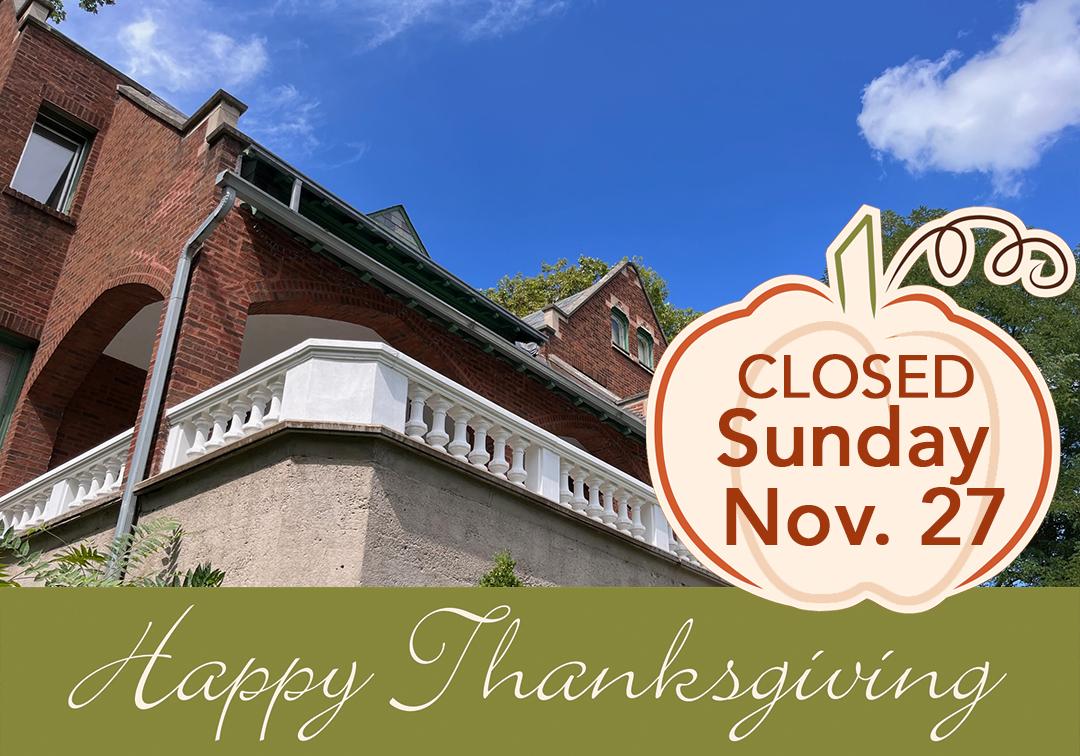
The Ridge Historical Society will be closed tomorrow, Sunday, November 27, 2022. We will be open on Tuesday afternoon, November 29, from 1 to 4 p.m. The address is 10621 S. Seeley Avenue, Chicago.
The Ridge Historical Society
Thanksgiving Week on the Ridge- Part 4
By Carol Flynn
Thanksgiving has come and gone for another year.
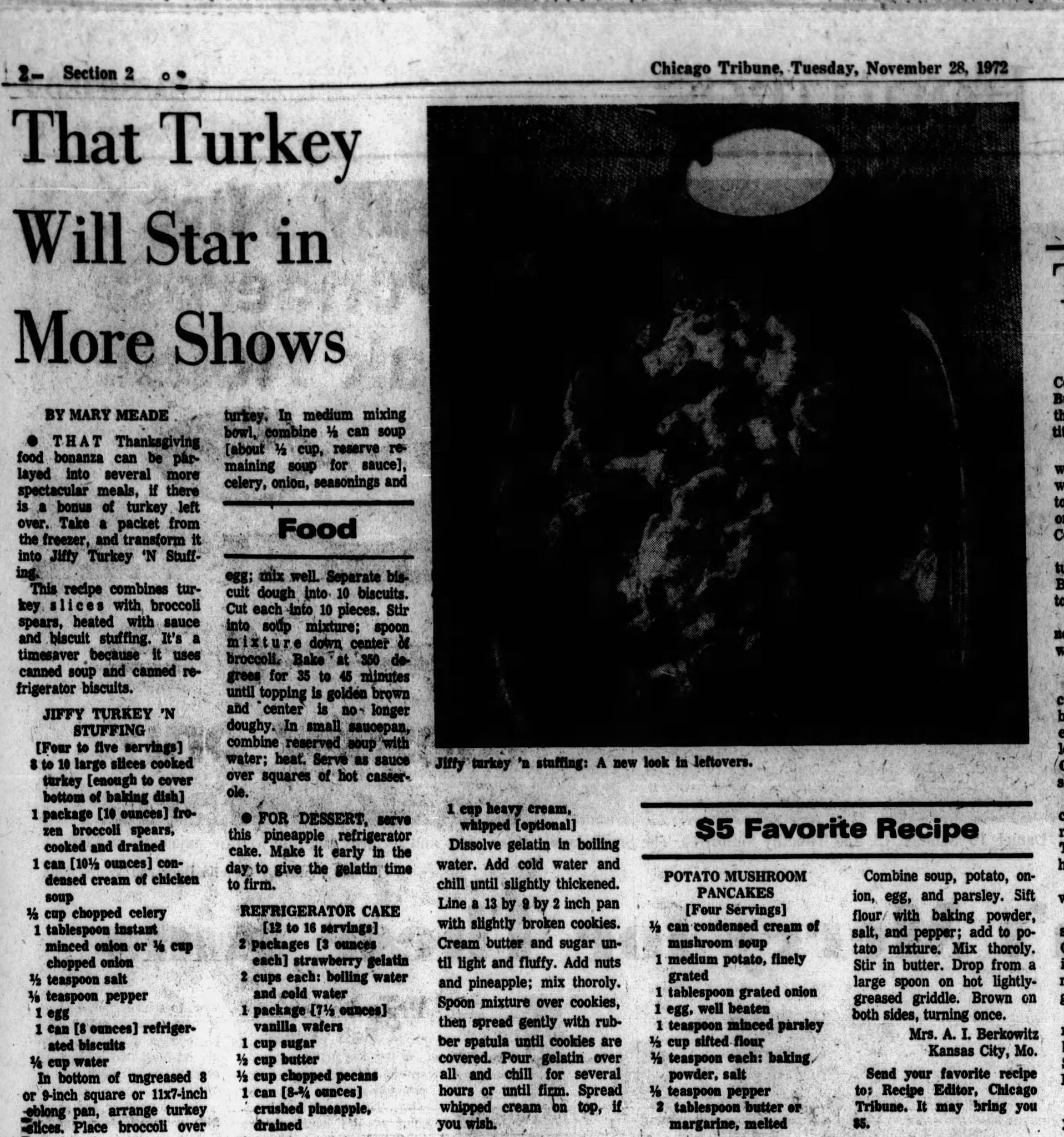
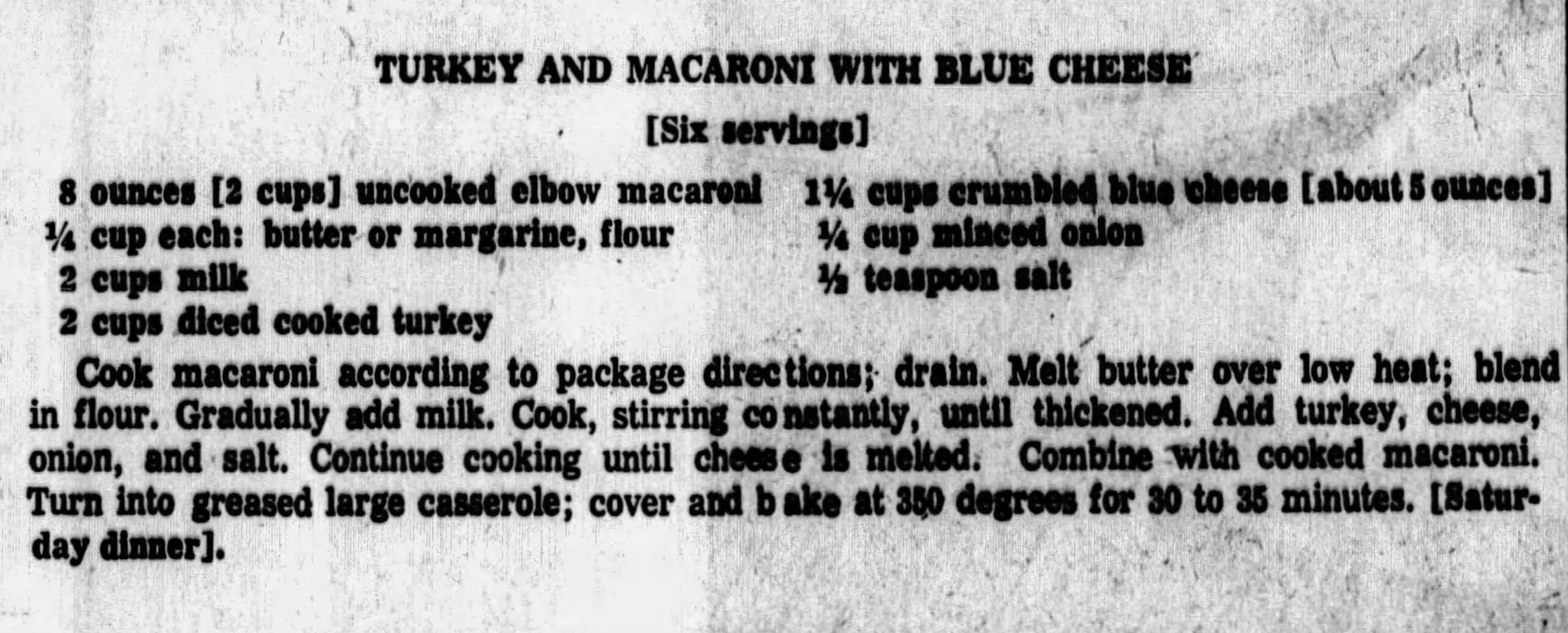
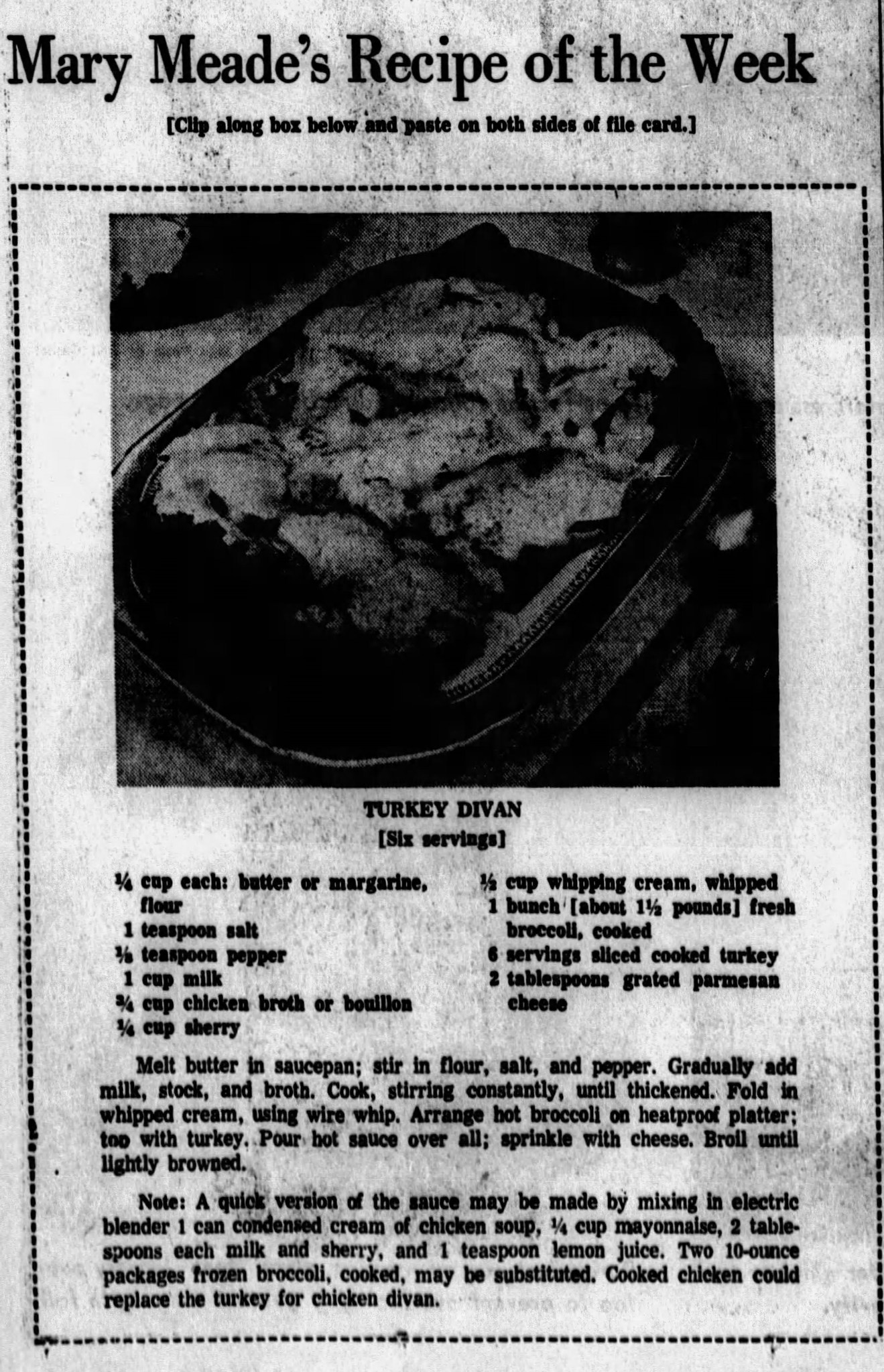
As we promised a few days ago, here are some recipes for left-over turkey.
They were published in the Chicago Tribune during the years the position of Mary Meade, the food editor, was held by Beverly resident Ruth Ellen Church.
These are from 1972 and they show the culinary whims of fifty years ago.
Happy Thanksgiving from the Ridge Historical Society
Part 3 of Thanksgiving week on the Ridge
November is also Native American Heritage Month.
Let’s take a moment to recognize and reflect on the Indigenous People who populated this land for 20,000 years before the European settlers came here.
The Land Acknowledgement Statement for the Blue Island Ridge is:
“We acknowledge that we are located on the ancestral homelands of the Potawatomi tribe, a member of the Council of Three Fires. Other tribes that lived in the Blue Island Ridge area in the 18th – 19th century include the Miami and the Illinois Confederation. Many additional tribes including the Fox, Sauk, Winnebago, Menominee, Meskwaki, and Kickapoo lived nearby and accessed the area for trading and portage routes.”
This week began a new series in the Beverly Review on the history of Native Americans on the Ridge. The first installment can be found at: https://www.beverlyreview.net/news/community_news/article_00f2f326-6a80-11ed-bda0-67d5ab1d8cc4.html
There would not have been a first Thanksgiving feast in 1621 for the Pilgrims from the Mayflower if the Wampanoag tribe hadn’t taught them how to secure food in their “New World.”
The Wampanoag showed the Pilgrims how to fish and hunt in the area, and how to cultivate the native food plants and gather fruit. Some items we take for granted now were not around 400 years ago. For starters, there were no sweet or white potatoes. Potatoes did not come up to North America from South America for another 100 years.
Also, the Pilgrims had not yet planted wheat fields so there were no pies and no bread. The sugar rations and almost all the food they brought with them had quickly been depleted on the journey over, so there were no jellies or sweet desserts to be made.
The Pilgrims had brought no large livestock with them on the Mayflower, only chickens, and a few pigs and goats, so there were no dairy products except maybe goats’ milk. Dairy cows would come later.
Plus, no ovens had been constructed yet for baking, so all cooking was done over open fires.
An early journal has the colonists going fowl hunting for this harvest feast. Duck, geese, swans, and turkeys were all plentiful. The Wampanoag guests brought an offering of five deer to the celebration, so venison, probably some roasted and some served in a hearty stew, was without doubt on the menu.
Historians also believe that seafood was a major component of the feast, this being New England by the coast. Mussels, lobster, bass, clams, and oysters were readily available. The first Thanksgiving was very heavy on animal protein.
The vegetables cultivated at the time included corn, pumpkins, squash, turnips, garlic, onions, beans, carrots, lettuce, spinach and cabbage. The pumpkins would have been roasted. Fruits available for gathering included blueberries, plums, grapes and gooseberries. Cranberries were there but it was another 50 years before there were reports of boiling them with sugar to make a jelly.
Flint corn, the multi-colored Indian corn, was plentiful at the first harvest. Most likely, the corn was turned into cornmeal, which was boiled and pounded into a thick corn mush or porridge that was occasionally sweetened with molasses, which was made from sugar cane, which came from the Caribbean. This was called Indian pudding, a take on the English fondness for “hasty pudding.”
Herbs, and nuts like chestnuts, walnuts and beechnuts, were plentiful from the forests. Along with onion, these would have been used for stuffing the fowl and flavoring dishes.
The celebration itself was a three-day event, with feasting, ball games, singing and dancing. Assumedly, grace was said before meals, but it was several years later that an official prayer service was added to the annual harvest celebration to give thanks for rain after a two-month drought.
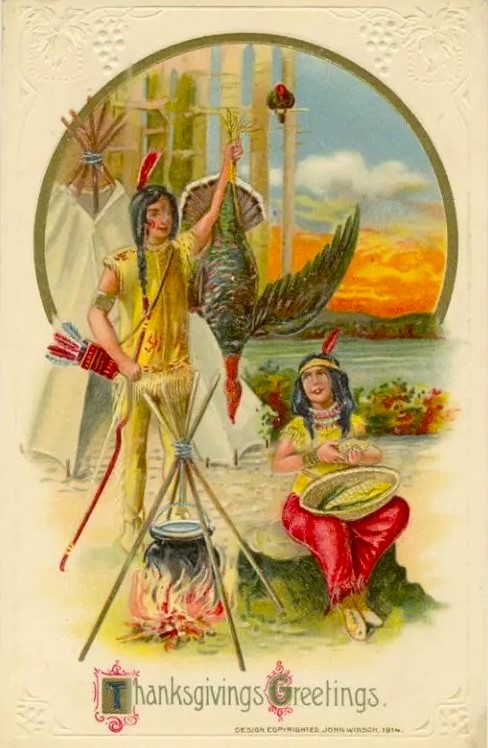
Here is a vintage postcard recognizing the role of Native Americans in the first Thanksgiving.
The Ridge Historical Society
Thanksgiving Week – Part 2
By Carol Flynn
Thanksgiving week is also National Game and Puzzle Week. The timing is intentional, as this holiday kicks off the next six weeks of friends and family gathering to socialize and celebrate. And after the winter holidays come a few months of cold weather perfect for indoor activities.
Puzzles and games are a time-honored way to entertain, engage, and bring together people of all ages. Tabletop boardgames fell out of favor when video games became popular, but the COVID pandemic brought a resurgence of interest in tabletop board games as people looked for fun activities while they were confined to home.
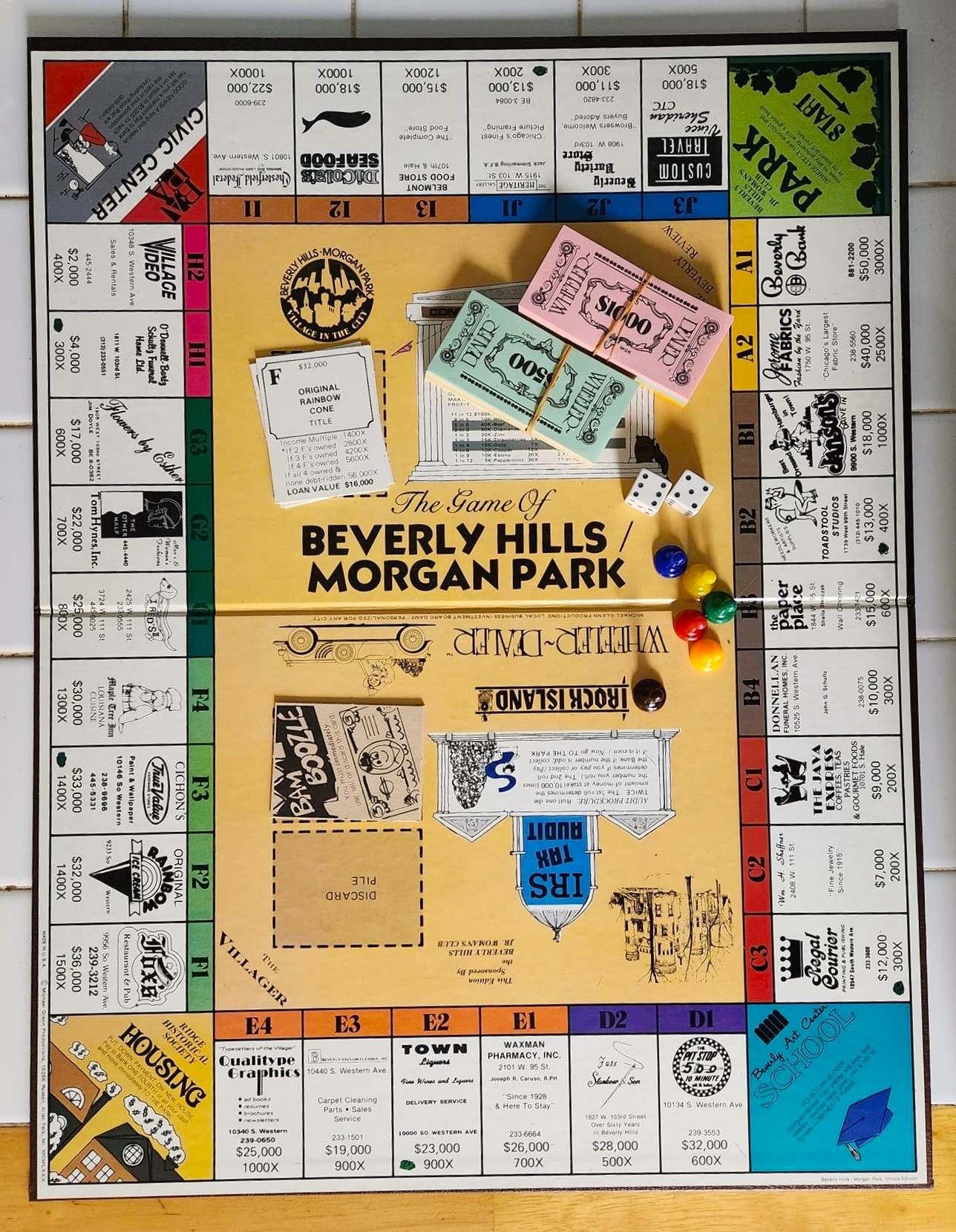
Forty years ago, the Beverly Hills Junior Woman’s Club came out with a boardgame for this community. “The Game of Beverly Hills/Morgan Park” was a fund raiser, likely for nursing school scholarships. The game, based on Monopoly, was a customized product from a company in Michigan. You can read all about it in this week’s Beverly Review at: https://www.beverlyreview.net/news/community_news/article_ce5223bc-6a82-11ed-89bb-8f4a686346d3.html
People bought the game as a keepsake. Janice Bruno Griffin of Morgan Park recently reminded RHS of the game when she contacted an RHS representative about the copy she had. Copies of this game are likely to be found in homes throughout the community.
It’s interesting to note which businesses on the game board are still around today and which are only part of memory now. The game is a snapshot in time, both recording history and becoming a part of history.
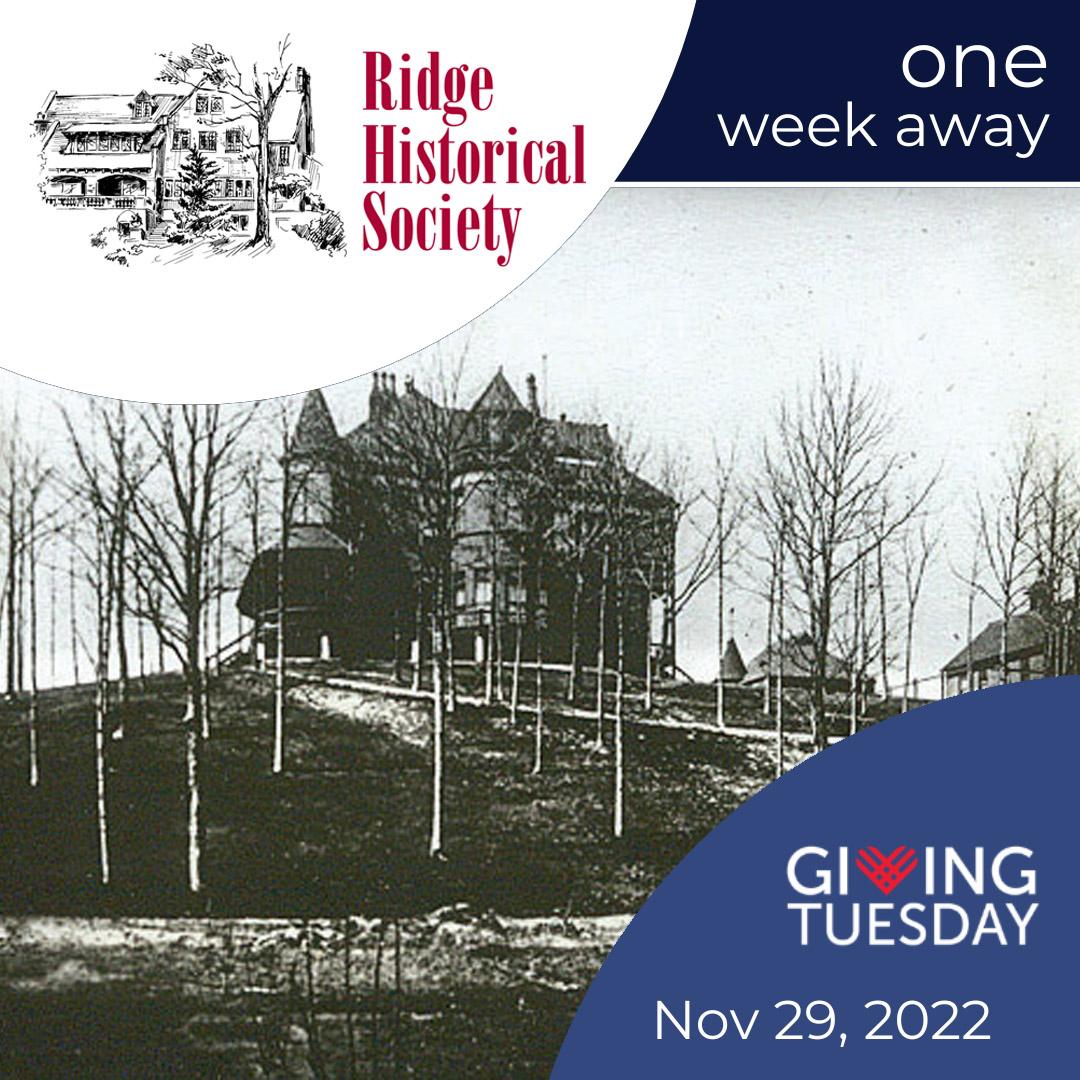
One Week to GivingTuesday!
For the first time, the Ridge Historical Society (RHS) is participating in GivingTuesday, and your donations support so much that we do for our communities. Donations made to RHS for the GivingTuesday campaign will help us continue to offer quality exhibits, local history and home research, affordable educational and social programs and keeping free admittance to RHS for all – as well as building maintenance and technology upgrades.
We have a goal of $3,000 – can you help us get there?
Here is the link: https://bit.ly/RHS-donation